fbpx

December 2, 2021

Face to Face: The Way Jews Were Meant to Be

It was a warm, dark night as I walked up the stairs to a beautiful outdoor deck overlooking the lights of downtown Los Angeles, toward the lights and the music—the perfect background to the main sound, the hum of unmuffled voices. People from the school were excited to see each other, truly see one another, not masked in the carpool line—many for the first time in more than a year. Hundreds of people were gathered. All have presented not only proof of vaccination, but also negative COVID test results taken that day. (Test kits were sent home in advance of the event.) This was an unfortunate added expense—and one many deemed unnecessary—but can you really put a price on seeing people’s whole faces? 

During a recent Shabbat service, our new Senior Rabbi Mari Chernow pointed out the recurring theme of the panim, or face, in Jacob’s story. She concluded that the panim represents more than just the physical face. After many months of seeing faces partially covered by masks, we now know this to be true. When we see each other’s faces, finally, it is so much more than simply what we see with our eyes.

The challenge of this current moment of COVID is the gray area—the varying levels of comfort, the way nothing feels totally normal with masks and nothing feels completely comfortable without them.   Our committee wholeheartedly believed that removing this barrier was integral to the success of our first large in-person event. Operating according to the most COVID-careful common denominator allowed everyone to feel safe while participating. In fact, over 80% of the parents in our school attended. 

Two weeks later and the community is still buzzing. Even after the emails stopped coming in, moms at dance class marvel about what a thrill it was to be together; parents on the soccer field remark about how badly we all needed that night, how long it had been. The night was successful from every angle. It was a community builder; plans made for playdates and business lunches and date nights, numbers and jokes exchanged. It was also a profitable fundraiser, proceeds hitting target goals and gifts continuing to pour in following the event.

Any night out is better than another night of sweatpants and Netflix. Perhaps many of us are not even aware of just how badly we need to be back together—even if it is not without challenges or flaws.

Another notable side effect of the event? We haven’t heard any complaints—really and truly, not one. Do I think this is because the evening was exceptional? Yes. But there is also a new appreciation for the challenges that go into executing such an evening. And any night out is better than another night of sweatpants and Netflix. Perhaps many of us are not even aware of just how badly we need to be back together—even if it is not without challenges or flaws.

What luxuries we have in Southern California! Not only the weather, but the sheer amount of camera and film expertise. Providing COVID-safe Jewish experiences to those in person and at home is possible. Parking lot Shabbat is just the beginning. Our sports field doubled as our sanctuary for a beautiful outdoor Simchat Torah celebration. Torah scrolls covered on folding tables were lit by our cell phone flashlights. Who would have thought we would be running High Holy Day worship plans past a team of doctors and film directors and camera operators? These extra efforts clearly paid off. Hundreds joined safely in person with masks and proof of vaccination, and hundreds more joined remotely and received a spiritual experience from home. We have also had success with outdoor yoga led by our multi-talented Executive Director Zach Lasker, in our courtyard, while a small, modified “Parent and Me” class happens in the next space. It’s not perfect, considering the roaring traffic in the background, but it’s perfect for now. 

We proved to ourselves, and maybe to a few others, that we are ready. Again, it is not perfect, and requires mental, financial and medical gymnastics as well as a bit of suspension of fundraising and event planning norms, but it is time to slowly bring our people together. In person. It is time to do Jewish the way Jewish was intended, in community—panim el panim.


Stephanie Bressler is the VP of Development on the Board of Trustees of Temple Israel of Hollywood, and works in Advancement for PJ Library and the Harold Grinspoon Foundation. 

Face to Face: The Way Jews Were Meant to Be Read More »

Shoah Foundation Panel Promotes the Healing Power of Music

USC Shoah Foundation convened a panel on November 17 to illustrate the power of music to heal people who have experienced trauma. The online event was hosted by the Willesden Project, a global initiative from USC Shoah Foundation, The Koret Foundation, and Hold On To Your Music that aims to “bring the power of music and story to young people to contribute to their development as empathetic, knowledgeable and resilient individuals” and reshape Holocaust education. The panel featured experts in music, education and psychology.

One panelist, Mona Golabek, shared the story of how music helped her mother Lisa Jura survive the Holocaust as a 14-year-old. Golabek is a concert pianist, actress and the co-author of the book, “The Children of Willesden Lane,” which is about her mother’s experience fleeing Vienna on the Kindertransport to England before the Nazis invaded.

“My mother’s story is all about how the music saved her life and gave her the strength to survive,” Golabek told the Journal. “Any time there was pain or uncertainty or darkness, she would escape into the music. She told me when Kristallnacht took place and she saw through a window her father being beaten and made to wash the streets, my grandma was so desperate, she went into the room where the piano was and she played ‘Clair de Lune’ by [Claude] Debussy in an effort to calm my mother.”

“My mother’s story is all about how the music saved her life and gave her the strength to survive.” — Mona Golabek

Golabek now travels the world and performs a live stage show for students studying the Holocaust. She plays the piano and shares her mother’s story to illustrate that through the darkness, music brought hope. 

Another panelist, Dr. Beth Meyerowitz, a professor emerita of psychology at USC, shared statistics about the prevalence of trauma in young people in the United States. She pointed to several national studies that indicate that by the end of adolescence, a majority of young people (between 60-70%) will have experienced a traumatic event.

“[Trauma] changes our bodies at every level,” Meyerowitz said. “It changes how we think, it changes how our nervous system operates, our hormones operate. It puts us in survival mode. Our body puts all its resources toward helping that event, that life-threatening scary event. That means we’re not thinking broadly. We’re narrowing our perspective. We’re operating in survival mode.”  

Meyerowitz went on to explain that there is science that supports the healing powers of music. She indicated that there’s a whole body of research that documents that listening to music lowers stress hormones, improves immune functioning and calms thinking. Music counteracts the very survivor mode responses. 

During the pandemic, Meyerowitz said, surveys show that there is an even higher rate of traumatizing events, affecting upwards of 80-90% of adolescents. Many of these include anxieties about adolescents’ own health and that of their family and friends, financial difficulties and an overarching anxiety about meaning in a world wrought with such pervasive threats. And of course, they’re experiencing the perils of remote learning during such an important time of socialization in their lives. 

Dr. Monika Wiley, the director of fine arts for Clayton County Public Schools in Georgia, talked about not only teaching music to children, but having them comprehend and relate to the meaning behind every note and word, appreciate music history and understand the idea that music heals the soul. 

Alejandro Perez, Jr., creative consultant for Journeyman Ink, also spoke about the power of music in helping children learn. “Music was the catalyst for retaining large amounts of information in small amounts of time,” the former kindergarten teacher said.    

Ultimately, the panel’s message was focused on creating avenues for youth to be exposed to music, since at some point, it will inevitably be needed to help them work through a traumatic experience. 

“[As] the children of survivors, we inherit subconsciously the feelings of our parents,” Golabek said. “The message they gave me is you take something dark in life and you go to the light. You walk a positive path. Instinctively I learned from them to be worthy of the gifts, make it count, make your path count.”

Shoah Foundation Panel Promotes the Healing Power of Music Read More »

Getting to Know Your Candles – a Hanukkah Writing Workshop with Emily Stern – NIGHT 5 2020

In this series of videos for Hanukkah, Emily offers a different teaching and writing exercise for “getting to know your candles” before lighting Hanukkah candles each night. Corresponding to the number of candles we light each night, these teachings and writing prompts are to help you get in touch with your personal intention and cultivate a unique relationship with your candles each night. The 5th night of Hanukkah reminded Emily of the hamsa, the sign of the protecting hand of God. Let’s  commune with the archangels, protection, and our guidance before lighting our 5 candles.

Getting to Know Your Candles – a Hanukkah Writing Workshop with Emily Stern – NIGHT 5 2020 Read More »

LevLA Offers Free Housing and Support for Medical Patients

Just six weeks after Galit Horowitz gave birth to twin daughters, her husband Noam was diagnosed with heart failure. Though he was able to get a heart transplant, he soon contracted West Nile Virus, which affected his brain and put him into a coma.   

“We went from hospital to hospital and nursing homes for care,” said Galit. “My twins were involved because they were with me.”

During the three-and-a-half years Noam was in treatment, Galit would travel back and forth from her home in the San Fernando Valley to hospitals in the city such as Kaiser Permanente on Sunset and Cedars-Sinai on San Vicente. She’d spend Shabbat and holidays with her twins and Noam in the hospital, or, if she were lucky, a friend would let Galit stay at her house.

“When I could go to my friend’s house near the hospital, I’d feel a little different,” she said. “I’d fill up my batteries and then go and take care of my daughters.”

The Horowitz family

Unfortunately, after the several year-long battle, Noam passed away. But, as Galit said, God performed a miracle and brought her second husband, Shlomo Horowitz, into her life. Together, they’re raising the girls and have a 13-month-old boy as well. And now, they’re on a mission: to provide accommodations and food, as well as support, to individuals and families who are going through a medical crisis. 

Two years ago, they started LevLA, which is an organization that offers 100% free hospitality to individuals in critical condition along with their family members and caregivers. They came up with the idea because they’ve both always been passionate about hosting, and Galit saw what kind of effect having a friend to talk to after going through her experience had. 

“When we started dating, the first thing we talked about is how Galit loves to have guests for Shabbat, and she was already doing that even as a single mom,” said Shlomo. “I understood right away that this was a good shidduch.” 

The Horowitz family lives in Pico-Robertson, and in their backyard there are five suites that house the families that come from all around the world to go to renowned hospitals like Cedars-Sinai and UCLA for care. Each unit comes with its own entrance, two to three bedrooms, a kitchen, a common area and 24-hour breakfast and refreshments. It is within walking distance of many shuls and stores, too.

The Horowitzes also host the families for Shabbat and the holidays, and their children share their toys and play with the kids that are staying there. Galit, who is a teacher at Gindi Maimonides Academy, talks with the families if they want someone to lean on during their time of need.

“My wife is really giving them emotional support,” said Shlomo. “She gives them chizuk. She’s a real tzadeikes.” 

One family, the Mors, came from Israel to LevLA because the father, Deke Mor, has a rare type of cancer. The only option for him is experimental treatment, so he’s taken up residence with the Horowitzes for an unknown amount of time with his wife, Keren, and three small children.

“We were received with much love and everything we needed was taken care of,” said Keren. “This was a great help in the difficult times we are going through. Shlomi and Galit are amazing with [their] never-ending kindness and giving. We thank God we found them.”

Milly Cohen, another LevLA guest, had to travel to L.A. from Mexico so that her husband, Ezra Charbati, could get spinal surgery. “It was a very difficult and trying time,” said Cohen. “After two weeks in the hospital we were released, but we needed to stay in Los Angeles for an additional four weeks awaiting his next surgery. We called Shlomo and Galit Horowitz at LevLA. They welcomed us with open arms. We have no words to thank them for all the attention they afforded us. They are like our forefathers, Avraham and Sara, who [accepted] their guests with joy.”

Guests find LevLA in different ways. In the case of the Mor family, Deke’s mother-in-law works in Israel, and she had a colleague who learned once a week with a rabbi in Thailand. She asked him if he knew anyone in L.A. He did: Shlomo. 

Because of the Cohens, word has spread about LevLA in the Jewish community in Mexico. Bikur Cholim, a Jewish health care and social support organization, sends families to the Horowitzes, who then network with local rabbis and community leaders, including Rabbi Jason Weiner, senior rabbi and director of the Spiritual Care Department at Cedars-Sinai and rabbi of Knesset Israel Synagogue of Beverlywood.

“It has become an invaluable resource in our community.” – Rabbi Jason Weiner

“[The Horowitzes] told me about LevLA when they first came up with the idea to ask me what I think about it and for advice,” he said. “I loved the idea because I saw the need, and I was impressed by their sincerity, dedication and the way they wanted to provide more than a bed, but real care and warmth and to help people feel at home, safe and able to navigate Los Angeles and the healthcare system.  Their dream has turned into a reality and they are doing an incredible job of it. It has become an invaluable resource in our community.”

Yosef Miller, a supporter who worked in nonprofits for many years, said that sometimes when you donate money, you don’t know where it goes. “But with LevLA, you see exactly how every dollar is spent. It’s a phenomenal concept and a necessity, and my goal is to really let people know this exists. I think if they do, they will also support it.”

In the future, the Horowitzes envision being able to provide transportation to the hospitals and offer guests food for the hospital if they’re stuck there for Shabbat.

Even though Galit has been through heartbreak and pain, she sees the positive that has come from it through LevLA. 

“Hashem gives a challenge to a person, and they can sink into that challenge or grow from it,” she said. “Baruch Hashem, I have the merit that Hashem gave me the strength to grow from it and use it to help other people going through hard situations. I want to help them and give them strength.”  

Learn more about LevLA and donate at https://www.lev-la.org.

LevLA Offers Free Housing and Support for Medical Patients Read More »

Shine A Light Aims to Spread Awareness About Antisemitism – And Light – This Hanukkah

There’s no question that antisemitism is on the rise throughout the United States. According to the FBI, Jews, who make up 2% of the U.S. population, were the target of 58% of religious hate crimes in 2020. 

Now, in an effort to educate about antisemitism through community partnerships, advocacy, the media and workplace engagement, 60 American and Canadian organizations and corporations, Jewish and non-Jewish, are introducing “Shine A Light,” a new initiative that’s arriving just in time for Hanukkah.

“We realized that this rise in Jewish hate was something that many people didn’t recognize and didn’t know how to respond to, and many Jews were feeling increasingly alone,” said Carly Maisel, from the Shine A Light Coalition. “We wanted to engage with the American public and look to shine a light on this issue—and the incredibly powerful festival of Hanukkah was the perfect opportunity.”

Throughout the holiday, a number of events will be taking place in cities including Los Angeles, New York City, Washington, D.C., Miami, Toronto, Dallas and Cleveland. Shine A Light is providing antisemitism resources to corporate partners to include in their Diversity, Equity, Accessibility and Inclusion (DEAI) programming, creating lesson plans for teachers, parents and school districts and running social media campaigns on TikTok, Twitter, Instagram and Facebook. On November 28, they will also be lighting iconic buildings across the U.S. yellow, including 3 World Trade Center and the Oculus in New York City, US Bank Tower in LA and 100 Peachtree in Atlanta.

“Our hope is that the events draw people to recognize that antisemitism is still very present, and help empower them to take action.” – Carly Maisel

“Our hope is that the events draw people to recognize that antisemitism is still very present, and help empower them to take action,” said Maisel. 

In LA, Shine A Light will hold two events. On December 1, The Braid and Fuente Latina are hosting a performance of “True Colors,” a virtual event where Jews of Color are going to talk about their yearning for belonging and the complicated and rich question of identity. On December 3 at 9 a.m., The Jewish Federation of Greater Los Angeles will host the 2021 Community Leaders Hanukkah Candle Lighting in Downtown L.A. Mayor Eric Garcetti, County Supervisor Kathryn Barger and City Attorney Mike Feuer are among those who will be in attendance. 

“Shine A Light events in Los Angeles are beautifully specific to the LA community while communicating the broader message of Shine A Light—that modern forms of antisemitism persist all around us, and we need to spotlight it and know we can take steps to respond, no matter where we are: at work, in school or online,” said Maisel.

The organizations and corporations involved in the new initiative include ADL (Anti-Defamation League), American Jewish Committee (AJC), the Jewish Federations of North America (JFNA), the National Black Empowerment Council (NBEC), Philos Project, American Eagle Outfitters Inc., Chelsea Football Club, iHeartMedia, National Football League (NFL) and YouTube.

Darius Jones, NBEC founder and CEO, said, “Now more than ever, we need to stand up for one another—and that means African Americans and Jews continuing to nourish a powerful and mutually supportive relationship. We are stronger together than we are apart, as Shine A Light will show.”

Even though antisemitism is a serious issue, through education and programming, Maisel hopes that the Shine A Light coalition can light up the world and spread awareness and understanding. 

“Hanukkah  is the perfect theme, because it’s all about the power of light, and how it can dispel darkness—the kind we can see and the kind we can’t,” she said. “Just like the story of Hanukkah teaches us what one flame can do, we’re empowering people to believe in their own single flame. It can make more of a difference than they know.”

Visit shinealighton.com for a full slate of events, resources and tools.

Shine A Light Aims to Spread Awareness About Antisemitism – And Light – This Hanukkah Read More »

Rabbi Lord Jonathan Sacks Honored Posthumously With Genesis Lifetime Achievement Award

The late Rabbi Lord Jonathan Sacks was posthumously honored with The Genesis Lifetime Achievement Award, a global award that celebrates Jewish achievement and contribution to humanity. It was presented at a special event celebrating the life and legacy of Sacks on Nov. 22 by Israel’s President Isaac Herzog to mark the first anniversary of the rabbi’s passing. Lady Elaine Sacks accepted on behalf of her late husband.

“Rabbi Sacks became a masterful articulator of the Jewish foundation of universal values, while unapologetically verbalizing a proud, dignified Jewish identity,” Herzog said. “His innate, God-given power of expression gave voice to the contribution of Judaism and the State of Israel to humanity at large. Rabbi Sacks represented the history, the moral code and the spirit of Judaism with dignity and adoration.”

“Rabbi Sacks became a masterful articulator of the Jewish foundation of universal values, while unapologetically verbalizing a proud, dignified Jewish identity.” – Isaac Herzog

In selecting Sacks for the award, The Genesis Prize Foundation said in a statement: “The award recognizes Lord Sacks for his extraordinary role in inspiring the next generation of Jews, and his illustrious life-long work as a teacher of Jewish values and an advocate of inter-religious and inter-cultural dialogue.”

Stan Polovets, the Co-founder and Chairman of The Genesis Prize Foundation, added that  “for decades, Rabbi Sacks and his teachings, remarkable in their wisdom and moral clarity, served as a guiding light to millions. The Genesis Lifetime Achievement Award is a declaration of profound gratitude from the global Jewish community, and an expression of our common desire to keep this light shining for future generations.”

Sacks is the 10th Genesis honoree, and only the second recipient of the Genesis Lifetime Achievement Award. The inaugural award was presented to Supreme Court Justice Ruth Bader Ginsburg when she visited Israel in July 2018. 

Rabbi Sacks served as the chief rabbi of the United Hebrew Congregations of the Commonwealth between 1991 and 2013. He gained global recognition as a scholar, ambassador of Judaism and Jewish values, theologian, philosopher, prolific author and proponent of interfaith dialogue. 

The award was presented at a gala dinner in London which drew an audience of more than 150 leaders of the UK and international Jewry and friends of the Jewish community. Attending were former Prime Minister of the United Kingdom Theresa May, the Chief Rabbi of the United Hebrew Congregations of the Commonwealth Ephraim Mirvis, Israel’s Ambassador to the UK Tzipi Hotovely, the UK Ambassador to Israel Neil Wigan and Charge d’affaires of Israel’s Embassy in France Ronit Ben Dor. Two Genesis Prize laureates, Sir Anish Kapoor and Natan Sharansky also attended, along with two finalists for the 2022 Genesis Prize, Pfizer Chairman and CEO Albert Bourla and legendary Nazi hunter Serge Klarsfeld. 

Previous Genesis Prize laureates include former New York City Mayor and philanthropist Michael Bloomberg (2014); actor, producer and peace activist Michael Douglas (2015); Itzhak Perlman, virtuoso violinist and advocate for individuals with special needs (2016); sculptor and advocate for the rights of refugees Sir Anish Kapoor (2017); Oscar-winning actress and social activist Natalie Portman (2018); owner of New England Patriots and founder of a new foundation to combat antisemitism Robert Kraft (2019); Jewish leader and human rights activist Natan Sharansky (2020) and filmmaker Steven Spielberg (2021). 

In a prerecorded video message, HRH The Prince of Wales addressed the audience, saying: “Rabbi Lord Sacks combined the sacred and the secular, rooted to his particular faith yet remaining open to the universal wisdom of humankind. Rabbi Sacks was an eloquent and moral presence in our lives. He was a global ambassador par excellence for the Jewish people and moral values. He personified and lived, as he described, ‘a Judaism engaged with the world.’ It is for these reasons, and many others, that I am so delighted to see Rabbi Sacks be posthumously recognized with a Lifetime Achievement Award by The Genesis Prize Foundation.”  

The Genesis Prize awarded by the Genesis Prize Foundation. Its mission is to foster Jewish identity, inspire Jewish pride and strengthen the bond between Israel and the Diaspora. The Prize celebrates Jewish talent and achievement, honoring individuals for their accomplishments and commitment to Jewish values, inspiring Jews to connect to their heritage and to Israel.

Rabbi Lord Jonathan Sacks Honored Posthumously With Genesis Lifetime Achievement Award Read More »

The Essence of Almond Cake

Many, many years ago, whenever my grandparents would land at LAX from Sydney, Australia, their first stop was at the Culver City cottage of Trinh Le. Trinh Le was a petite old lady who packed a powerful punch. She was a devout Buddhist who had run an orphanage in Vietnam. Widowed in the Vietnam War, she brought her daughter and orphaned niece to Los Angeles, where she became acupuncturist to the stars. Madonna was a regular and Sylvester Stallone would fly her to be on location whenever he was making a Rambo movie. 

One hot day, I dropped my grandparents for an appointment at Trin Le’s house. I greeted her “I really want to lose weight.”

“No bread, no pasta for you!” she replied in her blunt, no nonsense way. 

That night, Rachel and I were walking on the Third Street Promenade and I relayed the story. “She said no bread and no pasta. Do you think I can eat cake?” I joked. 

Over the years, Trinh Le helped Rachel and I and some of our friends on our journeys to motherhood. 

Then she retired to devote herself to her Buddhist worship and her garden. I needed to find a new acupuncturist for my last pregnancy. My husband decided he also wanted to try acupuncture in an effort to lose weight and boost his immunity. The new acupuncturist told him the same thing. No bread. No pasta. No white flour. 

Alan is much more disciplined than I and he began living a (mostly) gluten-free life. Ezekiel bread became his best friend. And I had to change my baking repertoire. 

For desserts, I started making a fabulous chocolate torte, pavlova with berries, Rocky Road and chocolate bark. I explored baking with almond flour. I made plain almond cakes and almond cakes with dried apricots and crushed walnuts, pecans and pistachios. Following in the footsteps of many Sephardic bakers before me, I always used orange juice as the liquid in my cakes. — Sharon

About ten years ago, I was at my cousin Rachel’s home for Thanksgiving and one of the guests, Fabienne, brought the most delicious almond cake. She is an amazing baker who prepares the desserts at Shiloh’s Steakhouse on Pico Boulevard, where her beautiful and talented daughter Chloe Nesbuth is the executive chef.

Fabienne graciously gave me the recipe and I started baking almond cakes all the time. Over the years, I’ve adjusted the recipe to make the cake bigger by adding more eggs and more almond flour and a bit healthier by using a little less sugar.

My daughter Rebekah took over the baking in our house. Hers is even better than mine, more like the famous and very popular French almond cake Financier.

Of course, in France the cake is made with delicious butter which we can’t use. Rebekah likes to make hers with coconut oil, but the recipe works with avocado oil as well.

For centuries, Sephardic women have soaked almonds and ground them to make almond cakes.

For centuries, Sephardic women have soaked almonds and ground them to make almond cakes.

I’m sure Trinh Le would have approved of almond cake (occasionally)! — Rachel

Almond Cake Recipe

4 large eggs
1/2 cup sugar
1/2 cup coconut or avocado oil
1 teaspoon almond extract
2 cups almond flour
1 teaspoon baking powder
Confectioners sugar, for garnish

  • Preheat oven to 350°F.
  • In a large mixing bowl, whisk eggs, then add sugar.
  • Beat to a creamy consistency, then add oil and mix well.
  • Add almond extract, almond flour and baking powder and mix to a smooth batter.
  • Pour the batter into a springform cake pan lined with parchment paper.
  • Bake for 15-20 minutes until golden.
  • Let cool and sprinkle with confectioners sugar.

Tips
Vary the flavor of this cake by adding lemon zest, vanilla extract, chocolate chips, dried fruit or nuts.

Perfect for Passover and gluten-free guests.


Rachel Sheff and Sharon Gomperts have been friends since high school. They love cooking and sharing recipes. They have collaborated on Sephardic Educational Center projects and community cooking classes. Follow them on Instagram @sephardicspicegirls and on Facebook at Sephardic Spice SEC Food. Website: sephardicspicegirls.com/full-recipes

The Essence of Almond Cake Read More »

Table for Five: Miketz

One verse, five voices. Edited by Salvador Litvak, the Accidental Talmudist

So Pharaoh sent for Joseph, and they rushed him from the dungeon, and he had his hair cut and changed his clothes, and then he appeared before Pharaoh.

-Genesis 41:14


Aliza Lipkin
Writer and educator, Maaleh Adumim, Israel

It’s perplexing that this week’s Parsha refers to the dungeon Joseph was released from as bor (pit) when in the previous Parsha it is called Beit Hatzohar (prison) no less than eight times. 

The word bor (pit) harkens back to when Joseph’s brothers cast him into a bor (pit) due to their jealousy after he relayed his dreams foretelling that they will bow to him in the future. The use of the word bor indicates a connection between the stories. Perhaps it is to indicate that the period of time from when Joseph was thrown into the pit until he was released by Pharaoh was to achieve one purpose. It was Joseph’s hubris that led him to brag about his dreams causing the brothers jealousy and hatred which led to their actions. Joseph was then humbled repeatedly as he was nearly murdered by his brothers, sexually harassed, jailed by his employer, and left forgotten and alone in prison. This array of travails helped him achieve the humility and gratitude to Hashem necessary to fulfil his mission in Egypt and actualize his dreams. 

Sometimes in life, we are stuck in painful situations that keep us from our aspirations. Joseph’s story gives us the fortitude to take each difficulty as an opportunity to grow in character and humbly acknowledge that it is God Who created and runs the world. It is He who endows us with our talents and abilities and it is to Him we owe all our success.


Rabbi Shlomo Seidenfeld
Scholar In Residence, JMI/AISH

Mark Twain once said that “Clothes make the man. Naked people have little or no influence on society.” Over the years, Twain’s words have been used to emphasize just how important dress is to the psyche of people. My question is, REALLY? Are our psyches so impressionable and so easily manipulated that the threads we wear have a profound effect on our self-worth? More importantly, does our clothing project anything of substance about our truest selves? 

If there’s one character in the Torah whose life is a strong refutation of this maxim, it’s Joseph. His life was the quintessential riches to rags to riches story. One moment Yosef was gifted a brilliant multi-colored coat from his father, the next he was being sold into slavery. One moment Yosef was languishing in Egypt and the next he was being rushed to an audience with Pharoah. Talk about pivoting! To the trained eye, it’s clear that despite a gut-wrenching betrayal and despite circumstances that could have demoralized him, Joseph’s faith never wavered. Instead of painfully ruminating on the clothes he once wore versus the dehumanizing rags he now donned, Joseph remained eternally optimistic and ever loyal to his divine calling. 

Joseph’s humility, humanity and honor were not in the least bit influenced by the clothes he wore or the positions he held. His psyche and essential identity were derived from the higher purpose he pursued wherever he found himself. Clothes don’t make the man/woman. The values they wear, do. 


Rabbi Natan Halevy
Kahal Joseph Congregation

The Torah teaches that the winemaker denigrated Yosef to Pharoah. Nevertheless, Hashem placed the favor of Yosef in Pharaoh’s heart, thereby hastening his redemption. Pharoah only related part of his dreams to Yosef, nevertheless he was able to interpret them perfectly. 

Pharaoh was testing Yosef’s ability and he passed with flying colors. 

One of the strongest messages in Judaism is to never lose hope. Yosef’s story illustrates how easily a situation can change in this world. From being in a distressed situation, Yosef came to a place of expansion. From being despised and in darkness, he came to light. From the depths, he was uplifted. The salvation of Hashem arrives in a moment. The suffering Yosef experienced led to his rise. 

This is a powerful lesson: we mustn’t be discouraged by challenging and painful situations. Hashem made a covenant with the salt that was always used to prepare the meat, and for other purposes in the Temple. Hashem promises us that there is a covenant with suffering. Like salt, suffering empowers and strengthens us. We don’t need to seek suffering, as life is full of challenges. A positive attitude through life’s challenges enables us to overcome these difficulties and reach higher levels of spirituality. 

This is one of the lessons we learn from Yosef: never give up. Always have a positive attitude and maintain hope for the future. Simultaneously, by working on ourselves and refining our characters, learning, and growing, we prepare ourselves for the elevation when the opportunity arrives.


Rabbi Mari Chernow
Senior Rabbi, Temple Israel of Hollywood

Twenty-three days felt like forever to go without a shower. I was on a backpacking course after college. Its triumphs and challenges (including no shower) were life changing. Through a great many enduring lessons, it influenced my life, my leadership, and my deep love of God’s green earth. 

Rick was our instructor.  He dispensed wisdom on wide-ranging topics such as how to dry wool socks and how to make decisions as a diverse group of wilderness travelers. Rick’s long hair was much longer than mine at the time. I remember a nugget he shared one day, “When you’d give anything for a shower, give your hair and teeth and extra brush. It will change everything.” 

Joseph didn’t have much time. Pharaoh sent for him with royal urgency. Yet, he knew that he had to transform. From passive to active. From prisoner to trusted advisor. From self-oriented individual to national leader. 

Small acts of personal grooming do not necessarily precipitate change. However, they can signal – to ourselves and to others – meaningful growth. In the right moment, as Rick taught us, they can change everything. 

What did fresh clothes and a haircut mean for Joseph? Self-care? Dignity? A newfound balance of humility and courage? His life would turn on this meeting with Pharaoh. It had turned once before on a beautiful coat. It was time to shed the appearance of the favored boy, the servant, the victim, and the prisoner. He was a new man, prepared to save a nation. And himself. 


Chana Margulies
Author of “Jumping in Puddles,” chanamargulies.org 

B”H 

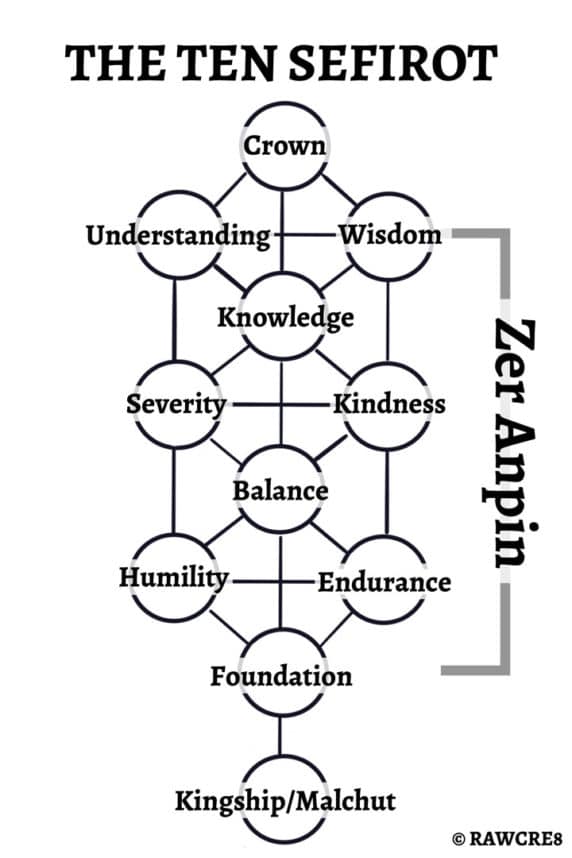
Kabbalistically speaking, Yosef represents Zer Anpin, the six emotive attributes of the sefirot. 

Hair is a symbol of arrogance. It is directly connected to its source, yet doesn’t feel connected. That is why haircuts don’t cause pain. Hair symbolizes tzimtzum, a constriction of G-dly energy that causes creations’ sense of self-reliance, unaware of the G-dly energy animating it. 

Yosef is preparing to meet the king, an expression of the sefira of Malchut. He cuts his hair, wanting to feel directly enlivened by his source. This new humility empowers him to approach the king as a humble servant of Hashem, instead of a dream-interpreting, self-made hotshot. 

Being Zer Anpin, he desires to go upwards and merge into the higher sefirot. But to actualize his potential, he needs to descend into Malchut. Cutting his hair–feeling closer to his source–empowers him to step into his life’s mission. 

Yosef teaches how connecting to our source is the first step towards material success. Mitzvahs are the wifi password. Divinity is what we want to download. Being the CEO of the universe, Hashem has all the connections. When we connect, all doors open. Yosef teaches us that the path to success is not taking credit for our gifts. Rather, we feel how it all flows through us, and then we can face the king and step into our power–our unique life’s mission. True humility isn’t about being hidden, it’s about stepping into our power, and knowing the source of all power is Hashem.

Table for Five: Miketz Read More »

Constructive Ambivalence

Ambivalence has a bad reputation for very good reasons. It is associated with fear and failure, the Hamletesque desire to deliberate rather than decide. On the battlefield, an ambivalent soldier is a dangerous liability; in a relationship, ambivalence erodes commitment, and pulls the couple apart. It is difficult to be decisive, because every decision carries risk; but strong leaders need to be courageous, and push forward anyway.

Our Torah reading offers a different picture of ambivalence. Every commentary wonders: what was Yoseph’s plan after meeting his brothers? Over the course of five chapters, we watch an unusual plot unfold, a long and twisting narrative that resists interpretation. Multiple commentaries labor strenuously to organize Yoseph’s actions into a coherent plan. Perhaps Yoseph was motivated by vengeance. Perhaps he was testing the brothers to see if they had changed. Perhaps he wanted to bring Binyamin to live with him in Egypt. Or, as the Ramban suggests, Yoseph felt compelled to fulfill his childhood dreams, and was manipulating his family in order to bring his father and brothers to Egypt and bow to him.

These competing theories arise because Yoseph’s behavior is so perplexing; there is no obvious motivation for his actions. Yoseph constantly vacillates. At times he is a harsh Egyptian viceroy prosecuting suspected spies; at other times, he is a kind brother who releases them from jail, overfills their bags, and returns their money.  On their second visit, Yoseph invites the brothers for a meal in his home and gives them gifts, and returns their money once again; at the same time he frames Binyamin as a thief. During each visit Yoseph is moved to tears by his reawakened love for his brothers; but he immediately turns aside and covers up the tears. Yoseph is the very picture of a man torn in two.

I would argue that ambivalence is the best explanation for Yoseph’s behaviour. Surprised by his brothers, Yoseph found himself of two minds, uncertain which direction to take. Emotionally, he felt both rage at, and love for, his brothers. More significantly, with the brothers arrival, Yoseph’s social standing was threatened; the powerful Egyptian viceroy was afraid of being exposed as a Hebrew, who were despised by Egyptians.

Yoseph was the first crypto-Jew, a hidden Hebrew in the court of Pharaoh. During the nine years that he was in power, Yoseph made no attempt to reach out to his father Yaakov. The simplest explanation for this is the most obvious one: Yoseph didn’t want to reunite with his father, and preferred to leave his past behind. David Henschke points out the Midrash Tanchuma, which remarks that Yoseph settles right in when he arrives in Egypt, and proudly forgets his father’s home. Yoseph’s desire to burn bridges with the past is reflected in the name of his first-born Menassheh, which means “God has made me forget my hardship and my parental home.” And forget is exactly what Yoseph does. When interpreting Pharaoh’s dreams, he confidently says “as for Pharaoh having had the same dream twice, it means that…God will soon carry it out”, oblivious to the fact that thirteen years earlier, he himself had also had the same dream twice, yet nothing happened. Yoseph left behind a traumatic childhood, and replaced it with amnesia and affluence.

Then the brothers arrive, and Yoseph is confronted with repressed memories. He is torn between his desire to protect his status and an unexpected longing for his family. Now he wants to take two opposing courses of action at the same time; he wants to remain anonymous, yet at the same time ensure that the brothers keep returning to him. Yoseph betrays his inner worries when he charges his brothers with being spies; like spies, his brothers know sensitive secrets about him. And so Yoseph vacillates, sometimes speaking like an Egyptian, and at other times like a Jew. He takes an oath to Pharaoh’s life, and declares that his goblet was used for divination, a pagan practice forbidden by the Torah. At other times, when he is more compassionate, Yoseph speaks about how he fears God. Yoseph alternates between the theological language of Egypt and Israel.

The perfect metaphor for Yoseph’s split identity is found in the eating arrangements when he shares a meal with his brothers. The Hebrews and Egyptians sit apart, per Egyptian custom, which treats Hebrews as inferior. But Yoseph sits alone, in a no man’s land between the Egyptians and the Hebrews, unable to eat with either. Yoseph is ambivalent, uncertain if he belongs with Egyptian royalty or with his brothers.

Yet it is precisely because of this ambivalence that Yoseph can reunite with his family. After nine years in power, after twenty-two years apart from his family, Yoseph refuses to make the quick decision to send his brothers away. Yes, Yoseph’s ambivalence is turbulent and frightening; but it is also constructive, and sets the stage for an exceptional conclusion to the story. For Yoseph, ambivalence is the way-station on the road to repentance.  

Ambivalence can be constructive. Hesitation, deliberation, and vacillation are often the first stops on the road to personal change.

Ambivalence can be constructive. Hesitation, deliberation, and vacillation are often the first stops on the road to personal change. Transformation begins when a person accepts a new perspective; most of the time, that only happens gradually. Before making a change, people will hold more than one point of view at the same time, and jump between them. Ralph Waldo Emerson, when critiquing thoughtless conformity, said “a foolish consistency is the hobgoblin of little minds, adored by little statesmen and philosophers and divines. With consistency a great soul has simply nothing to do.” There is a limit to the value of decisiveness; it can often hold people back from solving problems and considering new possibilities. Without ambivalence, change is often impossible.

In a leadership driven culture like our own, ambivalence seems weak and cowardly, the product of passivity and procrastination. We respect quick and clear decisions, and the Mishnah’s recommendation ‘to be slow to judgment” seems too wishy washy. And sometimes it is. But sometimes it isn’t; and the value of ambivalence is that it offers an opportunity to consider alternatives, resist conformity, and embrace innovation. Yoseph teaches us that change is only possible when a person is unafraid to be of two minds.


Rabbi Chaim Steinmetz is the Senior Rabbi of Congregation Kehilath Jeshurun in New York.

Constructive Ambivalence Read More »

Group of Men Target London Bus of Chabad Teens Celebrating Hanukkah

A group of men targeted an open-top bus in London filled with a group of Jewish teenagers celebrating the first night of Hanukkah with spitting and obscene gestures, among other things.

The Jewish Chronicle (JC) and Jewish News reported that the men were also pointing their middle fingers at the bus and started hitting the bus; one of the men also shouted, “Free Palestine!” As the bus drove away, the men started hitting the bus with their shows and one banged on a window with his fist.

Chabad Israeli Centre Golders Green Rabbi Shneor Glitsenstein told The JC that it “not something you expect to see in the middle of London” but added that the incident would not deter them from openly celebrating Hanukkah. “The mission of Israel is to bring light and goodness,” Glitsenstein said. “We don’t want to let them win by being intimidated.”

London Mayor Sadiq Khan condemned the incident in a tweet. “Antisemitism has no place whatsoever in society and I utterly condemn these disgusting acts,” he wrote. “No one should have to experience this.”

Board of Deputies of British Jews President Marie van der Zyl said in a statement, “We are appalled by the horrifying footage of Jewish people targeted on Oxford Street. We note that besides attempts to spit at them, at least one of the perpetrators appears to be performing a Nazi salute. We hope the police will swiftly identify and arrest those involved in this disgusting incident.”

British journalist David Collier tweeted, “The UK will wake up one day and find their Jews have fled. It is no good just making statements when the hate is caught on camera. It is not even hiding anymore. It is there in the heart of our capital. Those Jew hating thugs are confident because they have been allowed to be.”

Other Jewish groups also weighed in.

“Shocking to see these blatant acts of #antisemitism, including the Nazi salute, directed at Jews on their way to celebrate the first night of Hanukkah,” the Anti-Defamation League tweeted. “We hope this incident will be investigated as a hate crime.”

The American Jewish Committee tweeted that the video was “horrifying” and called “on authorities to investigate this vile display of hate and prosecute those responsible.”

The Simon Wiesenthal Center wrote that the incident was an example of “antisemitism unleashed.” “Assaults, insults, spitting, physical attacks against Jews in the UK are regular occurrences,” they added.

Scottish journalist and Zionist activist Eve Barlow tweeted, “The people being attacked here are not Israelis in Jerusalem, no. These are Jews on a bus in Oxford Street, London. If this got worse, in the Diaspora we don’t have the protection we’d have in Israel. That’s a fact.”

She added in a subsequent tweet: “If this was a group of Jews spitting and punching the windows of a group of [Black, Indigenous and People of Color] people, or Muslims, it would go viral. But good luck finding it because it will never exist.”

Group of Men Target London Bus of Chabad Teens Celebrating Hanukkah Read More »