fbpx

November 5, 2021

Some Gulf Countries, Israel Ready to Vaccinate Children Against COVID-19

Some Gulf countries have granted emergency approval to use the Pfizer vaccine against the coronavirus for children ages 5-11. Meanwhile, a panel of experts from Israel’s Health Ministry began meeting to discuss and vote on vaccinating children.

The decisions come after the US Centers for Disease Control and Prevention on Tuesday voted to recommend the Pfizer vaccine for children ages 5-11. The US Food and Drug Administration authorized the Pfizer vaccine on Friday.

“In clinical trials, vaccination was found to be nearly 91% effective in preventing COVID-19 among children ages 5 to 11. In clinical trials, vaccine side effects were mild, self-limiting. The most common side effect was a sore arm,” CDC director Dr. Rochelle Walensky said during a news conference.

“Together, with science leading the charge, we have taken another important step forward in our nation’s fight against the virus that causes COVID-19. We know millions of parents are eager to get their children vaccinated and with this decision, we now have recommended that about 28 million children receive a COVID-19 vaccine. As a mom, I encourage parents with questions to talk to their pediatrician, school nurse or local pharmacist to learn more about the vaccine and the importance of getting their children vaccinated,” Walensky said in a statement.

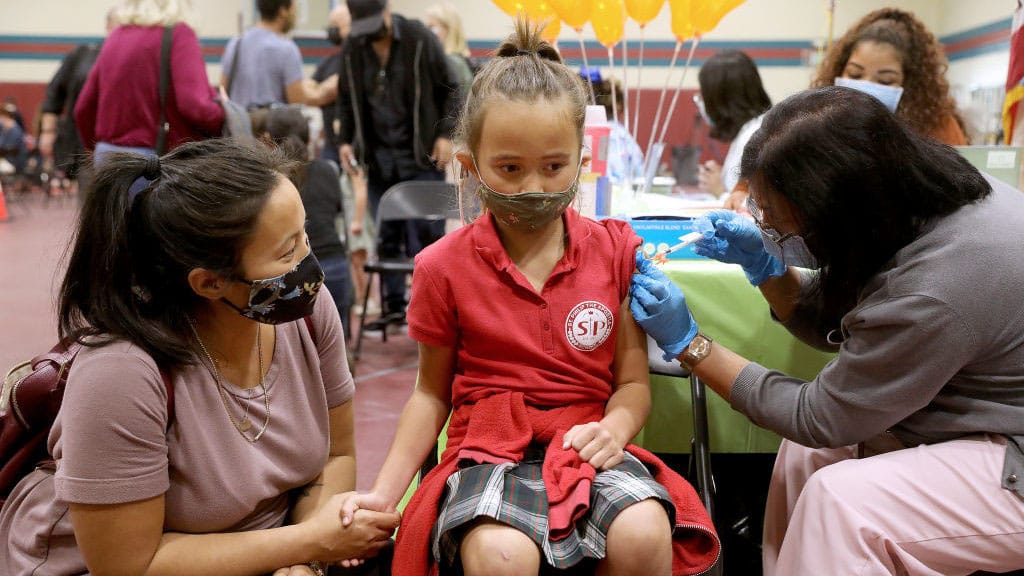
Children in some places in the United States began receiving their vaccinations on Wednesday. Distribution of pediatric vaccinations across the United States started this week, with plans to scale up to full capacity starting the week of November 8.

The vaccine dose for children ages 5-11 is two inoculations of 10 micrograms administered 21 days apart, instead of the 30-microgram dose administered to adults. This is the “preferred dose for safety, tolerability and immunogenicity in children 5 to 11 years of age,” Pfizer said in a statement.

The Coronavirus Pandemic Response Team, which advises Israel’s Health Ministry, on Thursday began a public session on giving vaccines against the coronavirus to children ages 5-11. As part of the meeting, which was streamed live on several platforms, members presented information regarding the efficacy and other medical aspects of the vaccine, they were also set to address questions sent in by the public. Twenty members of the public also were to be given the opportunity to speak for three minutes, including those against the idea of giving children a vaccine against the coronavirus.

The panel was not planning to make a final decision during the public session on Thursday.

Bahrain on Tuesday granted emergency approval to use the Pfizer vaccine against the coronavirus for children ages 5-11. The country will receive doses in the appropriate amount for children beginning in 2022, Reuters first reported, citing the Bahraini government. The kingdom last week approved the use of the Sinopharm vaccine for children ages 3-11.

Saudi Arabia’s Food and Drug Authority on Wednesday announced its approval of the Pfizer coronavirus vaccine for children between the ages of 5-11. The authority said that the vaccine “met the special regulatory requirements.”

Moderna on Monday announced that interim data from the Phase 2/3 study of its coronavirus vaccine in children ages 6 to 11, at half the adult dose, showed “a robust neutralizing antibody response … with a favorable safety profile.” It has not yet asked for emergency use approval.

Here are the latest COVID-19 numbers for the Middle East and North Africa as of 6:30 a.m. Greenwich Mean Time (UTC±0) on Thursday.

Country

Confirmed Cases Deaths Recovered Active Cases
Afghanistan 156,323 7,284 128,848 20,191
Algeria 206,754 5,931 141,889 58,934
Bahrain 276,956 1,393 275,183 380
Cyprus 123,439 576 90,755 32,108
Djibouti 13,487 183 13,259 45
Egypt 333,840 18,832 280,562 34,446
Iran 5,954,962 126,763 5,547,349 280,850
Iraq 2,058,914 23,248 2,008,082 27,584
Israel 1,332,247 8,109 1,316,968 7,170
Jordan 868,493 11,077 834,956 22,460
Kuwait 412,752 2,462 409,957 333
Lebanon 643,749 8,522 617,676 17,551
Libya 359,019 5,157 301,835 52,027
Mauritania 37,489 799 36,041 649
Morocco 946,766 14,689 927,745 4,332
Oman 304,318 4,112 299,670 536
Pakistan 1,275,158 28,496 1,224,085 22,577
Palestinian Territories 424,443 4,429 415,413 4,601
Qatar 239,646 611 237,739 1,296
Saudi Arabia 548,760 8,799 537,690 2,271
Somalia 21,269 1,180 9,927 10,162
Sudan 40,238 3,099 32,905 4,234
Syria 44,191 2,590 26,652 14,949
Tunisia 712,982 25,254 686,505 1,223
Turkey 8,121,226 71,298 7,582,624 467,304
United Arab Emirates 740,136 2,137 734,450 3,549
Yemen 9,810 1,897 6,463 1,450
Total 26,207,367 388,927 24,725,228 1,093,212


Ben Zabelshansky contributed to this report.

Some Gulf Countries, Israel Ready to Vaccinate Children Against COVID-19 Read More »
Two Israeli Bookstores Pull Sally Rooney Book

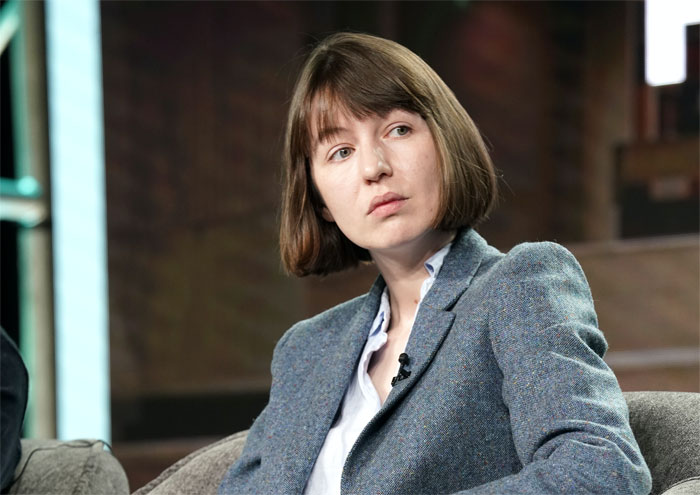
Two large Israeli bookstore chains announced on November 4 that they will not be selling author Sally Rooney’s new novel after she said she would only allow her book to be published by publishers that comply with the Boycott, Divestment and Sanctions (BDS) movement.

In an October 12 statement, Rooney said that it didn’t feel “right” for her “to accept a new contract with an Israeli company that does not publicly distance itself from apartheid” for her book “Beautiful World, Where Are You?” “The Hebrew-language translation rights to my new novel are still available, and if I can find a way to sell these rights that is compliant with the BDS movement’s institutional boycott guidelines, I would be very pleased to do so. In the meantime I would like to express once again my solidarity with the Palestinian people in their struggle for freedom, justice and equality.”

The two Israeli bookstore chains, Steimatzky and Tzomet Sefarim, told The Times of Israel that they will be pulling Rooney’s book from their stores and their websites. The two bookstores have more than 200 stores throughout the Jewish State.

“The Steimatzky chain is a literary stage and a warm and embracing home for any literary work with a love of the written word,” the bookstore said in a statement to The Guardian. “From the moment the subject was brought to our attention, as an immediate step, we removed the books from the site.”

Yoseph Haddad, an Israeli-Arab activist who heads Together – Vouch for Each Other, told The Guardian that he was “very pleased” that his lobbying efforts to get the bookstores to pull Rooney’s book succeeded.

Human rights lawyer Arsen Ostrovsky, CEO of the International Legal Forum, tweeted praise for the Israeli bookstores. “Good! Let’s boycott the boycotters!”

Michael Kelly, editor for The Irish Catholic, tweeted, “I hate this kind of book banning…but it’s the inevitable consequence of Ms. Rooney’s boycott.”


The Palestinian Campaign for the Academic and Cultural Boycott of Israel told The Guardian that they are continuing to support Rooney.

Two Israeli Bookstores Pull Sally Rooney Book Read More »

NY Pregnant Jewish Woman Attacked

A pregnant Jewish woman was reportedly attacked on November 3 in Brooklyn, NY.

A spokesperson for the New York Police Department (NYPD) told the Journal that the woman, 33, had a drink thrown in her face in Eastern Parkway by an unidentified male; the suspect also hurled a “derogatory comment” at her. The woman then fled. The NYPD Hate Crimes Task Force is investigating the matter.

According to the Anti-Defamation League (ADL) New York / New Jersey, the man also attempted to hit the woman. They are offering a $10,000 reward for anyone with information about the incident.

“We are appalled and outraged by the vileness of this attack,” ADL New York / New Jersey Regional Director Scott Richman said in a statement. “ADL is offering this award to send the unmistakable message that hate-motivated violence and harassment is unacceptable. No one should be threatened by attack while going about their daily life.”

A report from the NYPD released in July found that antisemitic incidents spiked by 69% in New York City over the past year.

NY Pregnant Jewish Woman Attacked Read More »

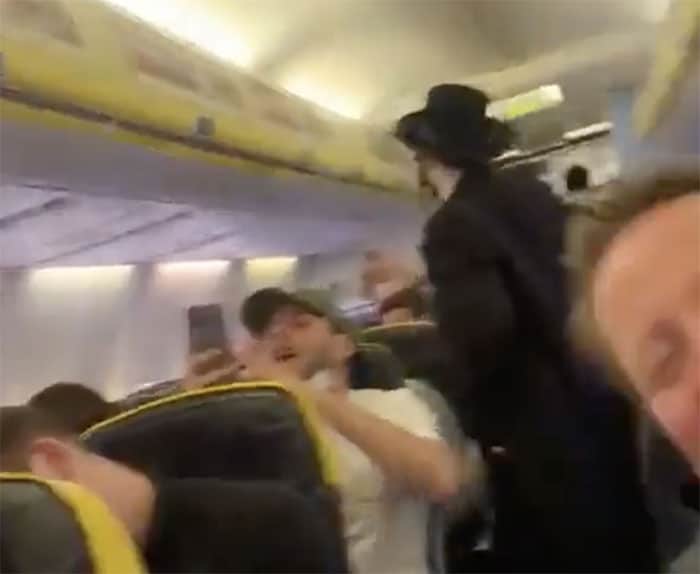
Orthodox Jewish Man Subjected to “I’ve Got a Foreskin, Haven’t You F—ing Jew” Chants on Airplane

An Orthodox Jewish man was subjected to chants of “I’ve got a foreskin, haven’t you f—ing Jew” while on an airplane.

The video of the chant was posted to social media on November 4; according to The Jewish Chronicle (JC), the chanting took place on a Ryanair flight to Belgium among fans of the London-based West Ham United Football Club.

A 55-year-old man was arrested when the plane landed in Belgium and faces hate crime charges, the Jewish News reported. Essex Police Chief Superintendent Tom Simons told the Jewish News, “Essex Police will not tolerate racism or discrimination of any kind. Having been made aware of the incident this morning, officers worked quickly to secure an arrest at the earliest possible opportunity.”

West Ham United released a statement saying they were “appalled” by the chanting. 

“We have a zero-tolerance approach to any form of discrimination,” they said. “Any individuals identified will be issued with an indefinite ban from the club. Equality, diversity and inclusion are at the heart of the football club and we do not welcome any individuals who do not share those values.”

David Moyes, who coaches the team, told ESPN, “We have incredible supporters who follow us home and away but I don’t want any labels connected to this whatsoever — discrimination or racism, none at all. We don’t want to be associated with supporters like this. I want us to fully move on from this.”

British Home Secretary Priti Patel also denounced the chanting in a statement to The JC. “There is no place in football or our country for this vile, racist, antisemitic abuse,” she said. “In the UK, we have some of the toughest laws in the world to deal with hate crime, and the police and West Ham Football Club have my full backing to take the toughest possible action against these individuals.”

Stephen Silverman, Director of Investigations and Enforcement for the Campaign Against Antisemitism, wrote a letter to Ryanair asking “what your crew did to protect the Jewish victim from the abuse and humiliation inflicted on him by these racist thugs, and confirm whether Ryanair alerted the police.” He also asked if the airline is working with West Ham United “to identify the individuals responsible so the club can fulfill its pledge to ban these fans for life.”

Ryanair did not respond to the Journal’s requests for comment.

Orthodox Jewish Man Subjected to “I’ve Got a Foreskin, Haven’t You F—ing Jew” Chants on Airplane Read More »

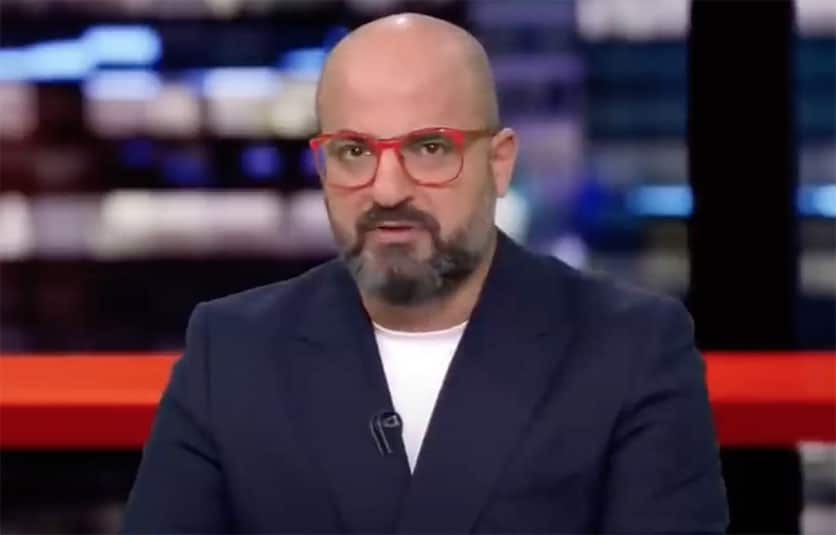
Lebanese Journalist Calls for Peace with Israel, Accuses Hezbollah of Holding Lebanon “Hostage” to Anti-Israel Narrative

Shi’ite Lebanese journalist Nadim Koteich wrote a recent op-ed calling for the Lebanese people to free themselves of Hezbollah and forge a peace agreement with Israel.

According to a November 2 MEMRI [Middle East Media Research Institute] report, Koteich, writing in the London outlet Al-Sharq Al-Awsa, noted that the Lebanese media and politicians are currently investigating whether gas delivered to Lebanon via Egypt and Jordan was “contamine” with Israeli molecules. Koteich called it “militaristic nonsense,” as Lebanon is currently in a “severe and perpetual crisis, which is deteriorating by every realistic standard.”

“Why does Lebanon need to bring in gas by this circuitous route, from Al-‘Arish in Egypt through Jordan and Syria, when, as a country on the Mediterranean, it could immediately start drilling and tapping its [own] gas [fields], adjacent to the Israeli ones?” he asked. “Alternatively, it could reach practical understandings with Israel and discuss joint energy projects with it, like the ones Israel has with Egypt, Cyprus, and Greece, or at least reach internationally-brokered understandings [with Israel] about dividing the natural resources in accordance with international law. Why do we not hear Nicosia or Athens complaining about ‘Israeli greed’ with respect to their natural resources, or at least not to the extent that we hear this in Lebanon?”

Koteich proceeded to accuse Hezbollah of perpetuating a “conflict first” mentality with Israel. “Lebanon insists on ignoring the fact that the most conspicuous wave of changes in the Middle East is the recent wave of peace [with Israel], which was spearheaded by the [United Arab Emirates] and joined by the kingdoms of Bahrain and Morocco and by Sudan, and which was welcomed [even] by Arab capitals that did not join the peace [agreements],” he wrote. “Thanks to this peace, Morocco made a series of important [achievements involving] recognition of its sovereignty over the Sahara … Thanks to this peace, a strategic economic conference was held on Sudan, following which many of its debts were forgiven and an economic roadmap was drawn for [the country]… As a result it has started to recover and is becoming one of the most promising countries in Africa, according to reports by the World Bank.”

The journalist also noted that Lebanon is no longer under Israeli occupation and Israel has no interest in annexing the country; the Israel-Lebanon dispute is merely “technical” regarding territorial ownership. He concluded his piece by calling a potential Israel-Lebanon peace agreement “one of the most reasonable moves in the overall context of Israeli-Arab relations.” “What no Lebanese must accept is that Lebanon is being prevented from [utilizing all its] options, with the aim of perpetuating the weapons of the Hizbullah militia and the factors that enable it to justify itself. It is unacceptable to keep Lebanon hostage to the Hizbullah militia’s narrative on the conflict with Israel, and to preoccupy the Lebanese with divining the ‘identity’ of each molecule of gas they beg [from other countries], while the Lebanese gas [still buried] in the Mediterranean is slowly being dropped from the gas equations in the Middle East.”

Jewish groups praised Koteich’s op-ed. The Simon Wiesenthal Center called Koteich “a voice of reason from Lebanon where the Lebanese people continue to suffer under the yoke of Iran lackey #Hezbollah as it careens towards horrific war with Israel.”

StandWithUs similarly tweeted that Koteich is “an important voice sharing an important message of peace. We look forward to the day when peace between #Israel and #Lebanon will be actualized.”

MEMRI noted that Koteich has also called for peace between Israel and Lebanon in a 2020 article and accused Hezbollah of being the main obstacle to peace.


Lebanese Journalist Calls for Peace with Israel, Accuses Hezbollah of Holding Lebanon “Hostage” to Anti-Israel Narrative Read More »

Unscrolled Toldot: Living Water

Reading Genesis, it can seem as though Isaac isn’t a main character in his own story. Dwarfed by his father Abraham and defined mainly by his experience as a passive offering on the altar, he holds little narrative weight and becomes lost to the grander narratives that precede and follow him.

This is even true in Parashat Toldot, the portion that is purportedly dedicated to telling the history of Isaac. The spotlight in Toldot is repeatedly stolen by Isaac’s sons, Jacob and Esau. Even when Isaac is the subject of the story, it seems as though he is merely acting out a script left to him by his late father.

Toldot follows Isaac as he sojourns in the desert city of Be’er Sheva, digging up wells that his father had once dug and rededicating them.

The work of re-digging Abraham’s wells feels like a repetition. It’s easy to see why. This portion is an uncanny redux of the Abrahamic story cycle. The same wells are dug. The “sister-wife” narrative of Abraham and Sarah is repeated almost verbatim, and the city of Be’er Sheva is named, as if for the first time, but actually for the second time.

The story is only a repetition, however, from our perspective as all-seeing readers of the text. We shouldn’t forget that from the perspective of Isaac, it is a story of discovery. Not a story of novelty, but one of newness nonetheless.

In the show “Six Feet Under,” the character George Sibley describes just such an experience of newness. After buying a house built over a stream, he had decided to put in a new floor. He pulled up the linoleum and then finally made it down to the original boards. When he lifted them up, there was the stream coursing underneath the home.

“I’d always known it was there,” he says, “but there it was … There it really was. This live, sparkling water flowing right underneath my house.”

No show has ever succeeded so much in capturing the mystical dimension of the ordinary as “Six Feet Under” and it is with such an eye that we should approach the tale of Isaac digging old wells and finding “living water.”

Yes, this well is not new. Yes, this story is not new. Yes, we “always knew” that the water was there. But now it is time for Isaac to discover it for himself, to see the “live, sparkling water” with his own eyes.

Yes, this story is not new. Yes, we “always knew” that the water was there. But now it is time for Isaac to discover it for himself, to see the “live, sparkling water” with his own eyes.

This is the story of every Jew who comes to the Torah to dig. This is the story of every Jew who goes to the holy land to explore. This is the story of every Jew who decides to learn the history of his or her family, community, people.

In 2009, when I was studying abroad in Jerusalem, Isaac’s wells acquired new relevance for me. Twenty years old, visiting Beer Sheva with new friends, I felt dizzied by the idea that those wells could be anywhere. We didn’t know much about the city. We wandered around a bit and got lost, finally stopping into a bowling alley to play a few rounds and drink some beers. It was a Friday night.

We stumbled out of the bowling alley later in the evening and asked a cab to take us back to the bus station so that we could head back to Jerusalem. He informed us that there were no buses because it was Shabbat, but that he could take us himself for an exorbitant cost.

We were new in the country and had no idea we would be stranded because of the sabbath. We deliberated what to do when someone nearby approached us and offered to help.

He was a young man, a student, who lived in town. He mentioned that we could come over and have dinner with him and sleep in his living room. We leapt at the offer.

His apartment was small and cozy. I remember the delicious dinner he cooked for us. I remember that he worked as a guide on nature tours for at-risk youth out in the desert, and that the taxidermy falcon on his bookshelf was a creature he had found out there with his group. I remember laughing. I remember that we were listening to the album “Gently Disturbed” by the Avishai Cohen Trio, which still evokes that sweet, unexpected night every time I listen to it.

I remember also the strange and captivating feeling that I had found myself, quite suddenly, living in the unfolding story of the Torah.

Like Isaac, I had traced my forefathers’ footsteps to the city of Beer Sheva and had uncovered living water.


Matthew Schultz is the author of the essay collection “What Came Before” (2020). He is a rabbinical student at Hebrew College in Newton, Massachusetts.

Unscrolled Toldot: Living Water Read More »