fbpx

October 8, 2021

Santa Monica College Chabad Rabbi’s Car Vandalized with Swastika Graffiti

Chabad at Santa Monica College (SMC) Rabbi Eli M. Levitansky’s car was vandalized with a swastika on one car window as well as a Star of David and the words “Is Illegal” on another window on October 7.

In a phone interview with the Journal, Levitansky said that the vandalism was “a shock” and that “it obviously was a targeted crime” since only his car was vandalized and it took place in front of his place of residence, the Chabad, while he was in the process of taking down a sukkah. Levitansky also said that he couldn’t think of a prior incident that could have precipitated the vandalism. He reported the incident to the police.

Levitansky decided to issue a post from the Chabad’s Facebook page encouraging people to conduct a mitzvah in response to the vandalism, suggesting putting of tefillin, lighting Shabbat candles and giving to charity. He also set up a table in front of the Chabad to distribute challahs and Shabbat candles and also helped some men put on tefillin.

“The idea was really to give this message that, in such an event, the best response is to combat it with action and with positivity,” Levitansky said, adding that the community has responded by deciding to take such positive action. “People have written that they will be lighting Shabbat candles because of this, or they will be doing charity because of this, things of that nature. That is very, very heartwarming to see… it’s not just an outpouring support, which is nice to see, but it’s an outpouring with the next step, with action taken.”

Michael Tuitasi, Vice President of Student Affairs, said in a statement to the Journal that he was “sickened” by the “horrible, hateful incident” and called Levitansky “a great mentor to the Jewish students at Santa Monica College and whom I consider an integral part of the extended college community.” “While the incident did not occur at the college, it is felt by our community and strongly condemned.”

Tuitasi added that SMC is forming “a space for students who may have been impacted by this incident” and urged students to contact the SMC Center for Wellness and & Wellbeing.

“At Santa Monica College, there is no room for hate,” he said. “SMC stands firmly against antisemitism just as the college stands against all forms of discrimination and hate. While we cannot control hateful actions that take place away from Santa Monica College, this college is dedicated to creating a safe environment for all our students, and denounces hate speech or actions.” Tuitasi also called Levitansky’s response to the vandalism “inspiring.” “Instead of letting this act of darkness take him away from efforts to do good during the Jewish holidays, he has redoubled his efforts to help the community come together and spread light.”

Jewish groups condemned the vandalism.

“StandWithUs condemns this heinous act of anti-Jewish racism,” StandWithUs CEO and Co-Founder Roz Rothstein said in a statement to the Journal.  “It is extremely disturbing that the vandals knew that this car belonged to a Jew and targeted him and his property based on his identity. No member of a campus community should fear for their safety simply for being Jewish. We stand with the SMC Chabad Rabbi during this difficult time.”

American Jewish Committee Los Angeles Regional Director Richard S. Hirschhaut similarly said in a statement to the Journal, “It is deeply disturbing that the personal property of the Chabad Rabbi was defaced with swastikas and other antisemitic epithets. This deliberate act of hate is intended to intimidate and sow fear in the Jewish community at Santa Monica College and beyond. Instead, let the bigots who committed this cowardly crime be put on notice that such expressions of hate will not be met with impunity.

“We urge public safety officials, on and off campus, to leave no stone unturned in their investigation, which hopefully will lead to the apprehension and prosecution of the perpetrators.”

The Simon Wiesenthal Center tweeted, “Despicable acts of #Antisemitism meant to demonize and degrade Jews. Thanks to @Chabad Rabbis on [SMC] campus and around the world who lead by example to never be cowered by the haters but to always be proud Jews and lovers of Zion.”

Stop Antisemitism Executive Director Liora Rez said in a statement to the Journal, “A mere 80 years since the onset of the Holocaust, we see daily reminders in America of the same hatred that engulfed our grandparents’ worlds in Europe and think to ourselves – how did we get here again?”

Levitansky said that people shouldn’t just “feel bad” or have “fear” but instead “do something about it.” “Everybody is included in this, bringing a more positive environment and atmosphere to the world and that starts with us doing something. It means to actually add another good deed in our daily life.”

Santa Monica College Chabad Rabbi’s Car Vandalized with Swastika Graffiti Read More »
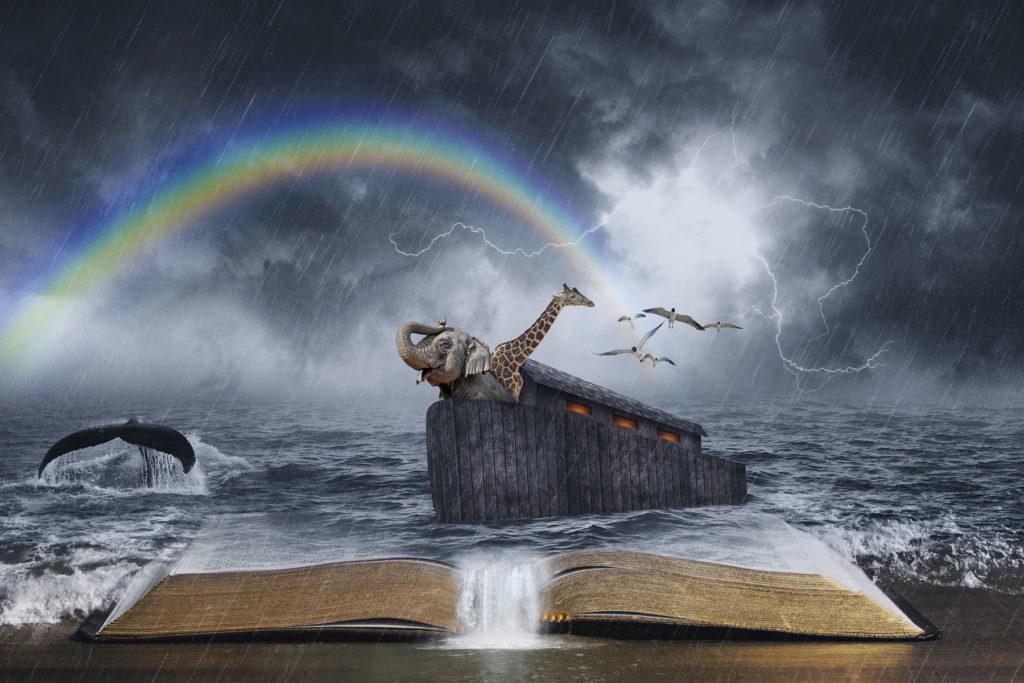
Destruction and Regeneration Thoughts on Torah Portion Noah


Destruction and Regeneration

Thoughts on Torah Portion Noah (adapted from previous versions)

I imagine warring bands of murderous maniacs, spreading ruination everywhere they went. Anyone who stood up to them was hacked down. Just about everyone eventually joined the frenzy. Something like the zombie shows, except in this case, the zombies win, and the murderous hordes are not zombies. These mobs are human beings like us, but have gone very, very bad.

I see this humanity gone bad when I study the depredations of Nazism and the bloodlust reigns of Stalin, Mao, Imperial Japan, the Kims of North Korea and Saddam. I see this in the genocides in Rwanda, Myanmar, and the Balkans. I see it in the crazed viciousness of ISIS, Al Qaeda and the Taliban. The rampant crusades of Christians and the Jihads of Islam. The incredible violence in some parts of our own Bible. Every time I dig into world history, I see it. The Armenian genocide, Cambodia, Bangladesh. The Mongols. The list is long.

Imagine each of these maniacal tribes has won its war against humanity and is closing in to murder the remaining other tribes and everyone in its path. You might write, as the Bible does, that “the world had become corrupt and was filled with violence.” If you believed in a God that acted in history, you might pray that this powerful God would wipe out this heinous humanity and all its cruelty. (If you have trouble imagining this, go watch Darren Aronofky’s movie “Noah.”)

The Bible imagines this depravity and its consequence in its own way. Humanity, the Bible tells us, has been an awful error. Human beings, made from earth and water and animated by spirit, would be dissolved back into the earth from which they came, and ultimately into the abyss of water that existed before creation. The spirit, trapped in this form that became monstrous, would be released back to God. The spirit of God would hover silently again over the face of the waters. Cries of savagery would be stilled.

The bone chilling story of an ancient flood seemed to inhabit the minds in the ancient world of the Middle East. The “Black Sea Deluge” theory holds that the Mediterranean Sea broke through the Bosporus around 5600 BCE, flooding an ancient littoral civilization within months. Others believe that the Mesopotamian rivers overflowed and deluged the cradle of civilization for centuries. Plato taught that the ancient island city of Atlantis fell out of favor with the gods and sank into the Atlantic Ocean (of all places). Whatever the source of the ancient Middle Eastern cultural memory of the flooding, The Deluge became part of the collective memory of that part of the world. Everyone knew it happened. But why?

The biblical author(s) held that this flood was an act of God to reverse creation. In other words, the Bible rewove an ancient tradition of a flood to support its theory that, referring to the human being, “every form of the thoughts of his heart are all bad, all the time” (Genesis 6:5). It took 10 generations from Adam to Noah for such a complete human degeneration that would require that creation would be reversed to a watery silence.

As in other flood stories there was a “last good man.” In some flood stories, this person was hidden to survive the flood by a renegade god, much to the displeasure of the other gods who wanted to do away with humanity.

In the biblical story, it is the one God who is looking for the righteous person, the one who walks with God, to regenerate humanity out of the havoc and debris. The regeneration is bizarre and seems to forebode something awful. On one hand we have a rainbow. On the other hand, Noah gets blind drunk as soon as the first grape harvest comes in.

The God of the Bible has apparently learned a lesson and waits patiently, 10 full generations, for the next chapter of the regeneration of humankind. “No more floods,” God seems to be reminding God’s self. I think that the rainbow wasn’t there for us. The rainbow seems to function as fringes on the garment of heaven, to remind God to follow God’s own commandments. (The Bible often tells us that God tends to forget to be God-like.)

There would be 10 generations from Noah to Abraham. Abraham could “walk before God and be whole.” Abraham would teach his descendants, spiritual and biological, to keep God’s way and the righteous law. The Bible, as literature and philosophic psychology, sees the human being as fallen but also able to stand up again. To achieve moral standing, however, we would need a teaching – a vision and a path so strong and clear that this teaching would guide us in turning back the flood of destructiveness.

People would learn to stand up against hordes that want to destroy humanity. We would also learn to turn back the destructive flood that rises within each of us and among us. It is in our nature to be destructive, but it is also within our nature to transcend our nature. Chaos, too, can be reversed. Entropy is not the ultimate law of the universe.

A new tribe would come into being, teaching the vision and the way.

Destruction and Regeneration Thoughts on Torah Portion Noah Read More »

Exploring Seattle: Altitude and Attitude: through History, Art and the Space Needle

Lisa and Mia in Seattle

I love to explore a city by foot. I feel like I understand a place better. I was thrilled when my friend, Mia, offered to guide me around her hometown and show me the sights. I hope you get to visit Seattle soon because there is so much to see and do.

At Seattle Center, we saw kids playing in the giant fountain in the middle of the park. It was a very sunny Saturday at the end of August and every one was happy to be enjoying the outdoors.

We bought tickets at the Space Needle for it as well as Chihuly Garden and Glass. It is cheaper to buy the combo ticket and the glass museum is Mia’s favorite!

We went to the Space Needle first. We stood in line to take the elevator up and up and up. There is no talking in the elevator for the 41 second ride which is a COVID precaution to minimize any particles spreading. The elevator gets fresh air from the outside which is very unusual for an elevator. There are far-UV-C lights inside the elevator which sanitize the air.

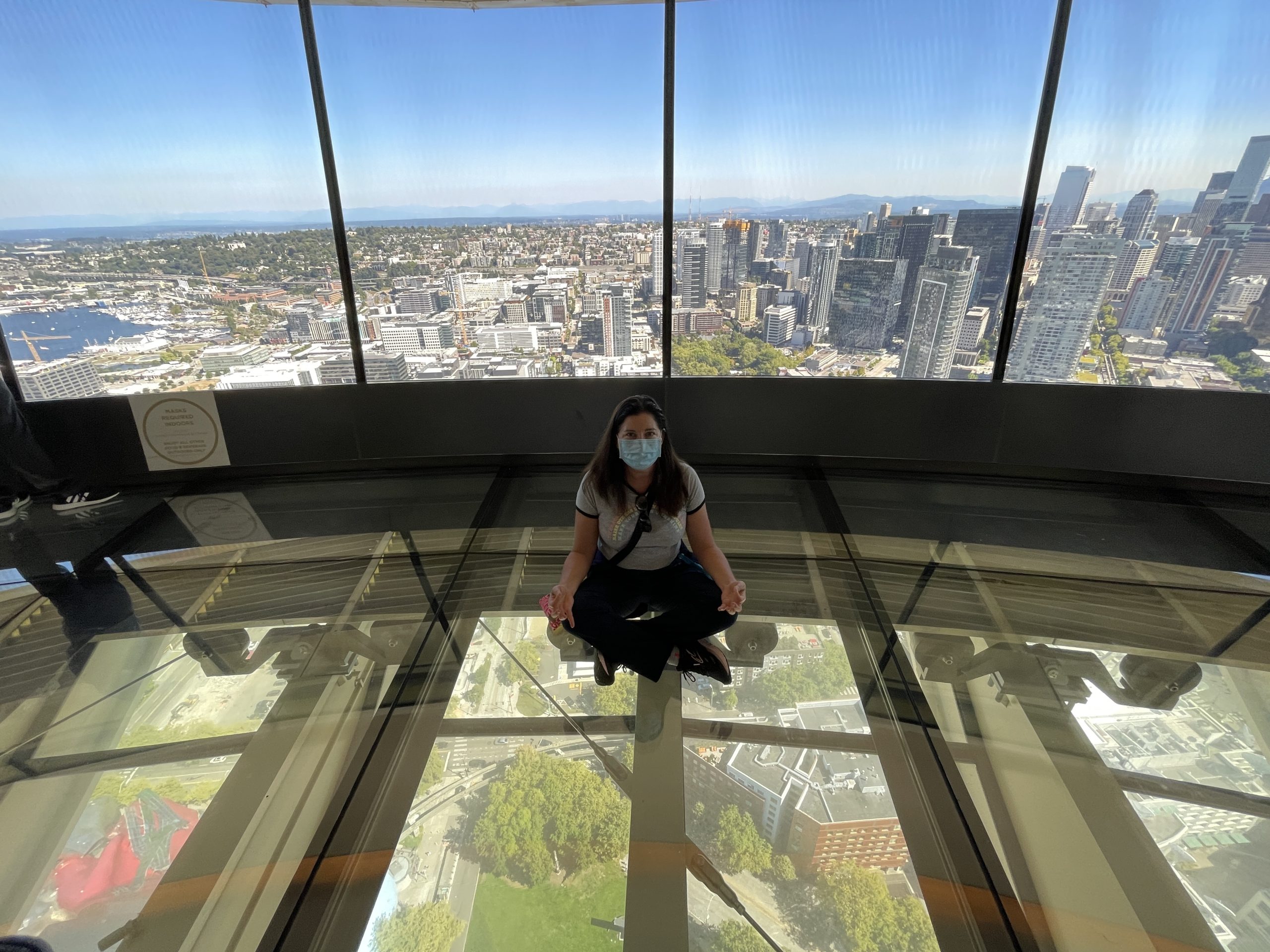
Space Needle observation deck. OHM!

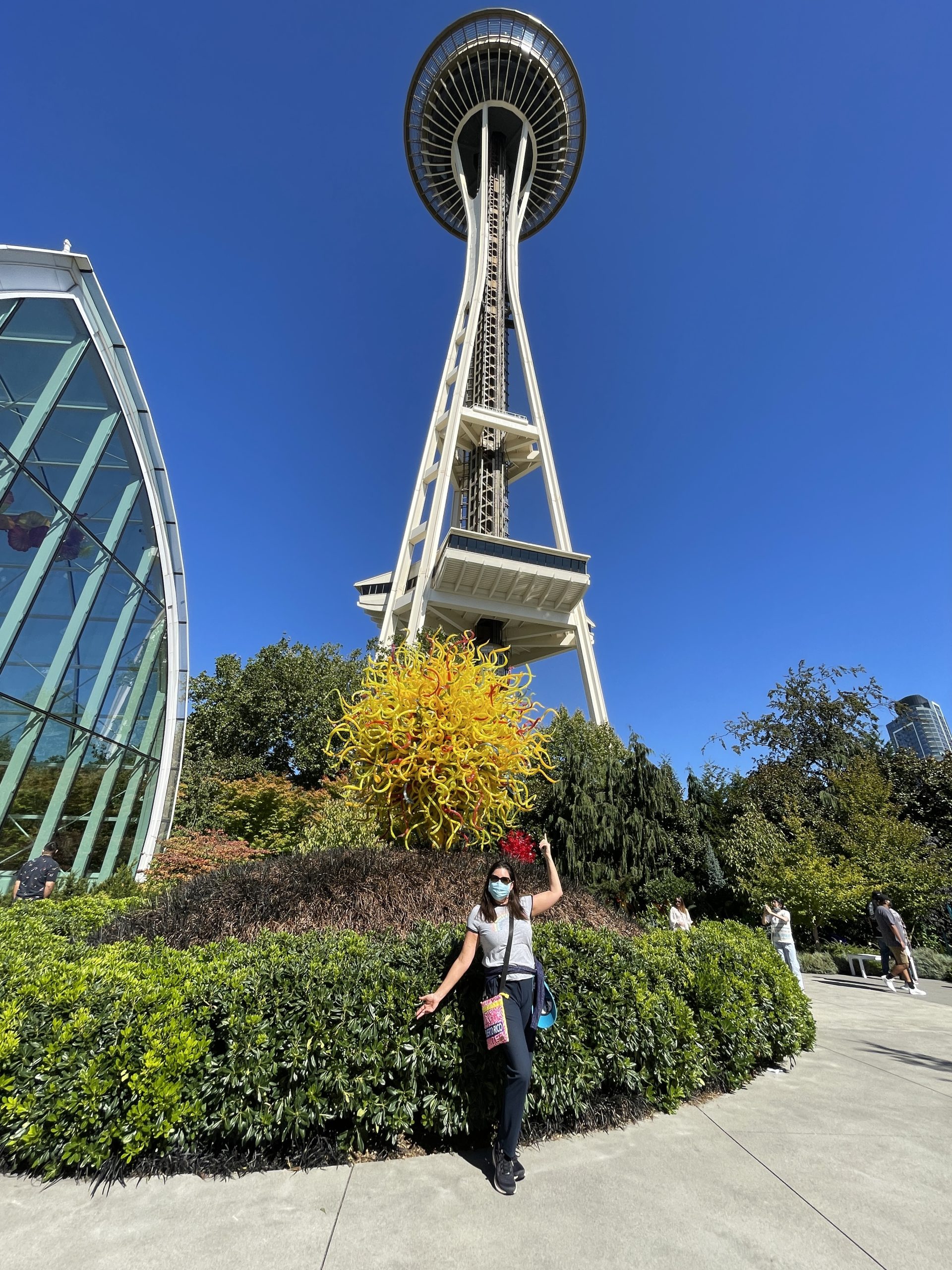
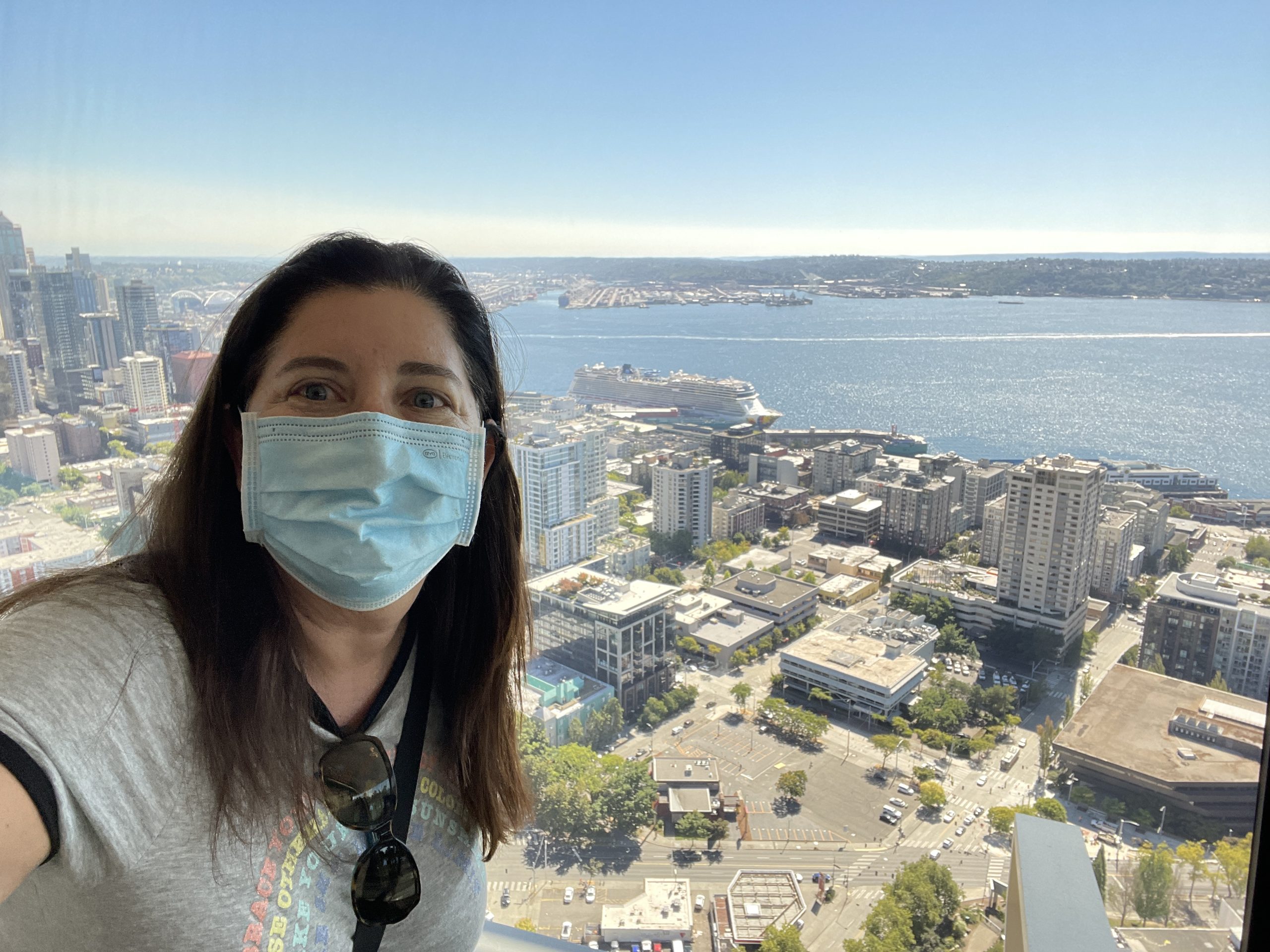
The Space Needle officially opened to the public on April 21, 1962 for the Century 21 Exposition, a space age-themed world’s fair. It used to be that 1.3 million guests would visit the Space Needle per year, and nearly 60 million visitors have visited the tower since it opened in 1962. It is 605 feet tall and has 360-degree views from an indoor observation deck and open-air viewing area. We saw other people in the enclosed/indoor observation deck lie on the floor–I said–I want to do that too. I loved how the floor turned round and round! The views are spectacular!

If you or someone in your family is not sure about going to the viewing deck of the fourth tallest observation tower in the USA, you can test it out by watching the webcam: https://www.spaceneedle.com/webcam

Chihuly Garden and Glass is an amazing indoor and outdoor museum of glass art creations. I really wanted to touch the art but you are not allowed to touch anything. I loved the art in the ceiling and the giant flowers and the enormous boat. It is all very unique and creative. It made me want to learn to blow glass and we did watch the glass blowing demonstrations outside. Mia took me to look at all the collections in the cafe. Next time, I want to go to the Museum of Glass in Tacoma!

We took the monorail from Seattle Center to get back to my hotel, Fairmont Olympic! We could have walked but we were saving our steps for The “Beneath The Streets: After Hours Red Light District Tour” to learn about the underground city. We chose the adults only 18+ tour but during the day there is a family friendly version. The tour explores several sections of Seattle’s historic underground and discusses the history behind these passageways that were constructed in the 1890’s and then abandoned less than 20 years later. I was amazed to learn how the city evolved and to actually walk underground. I loved it!

After the tour, we walked along the water at sunset. The ferris wheel looked beautiful all lit up.

WHERE DID WE EAT?

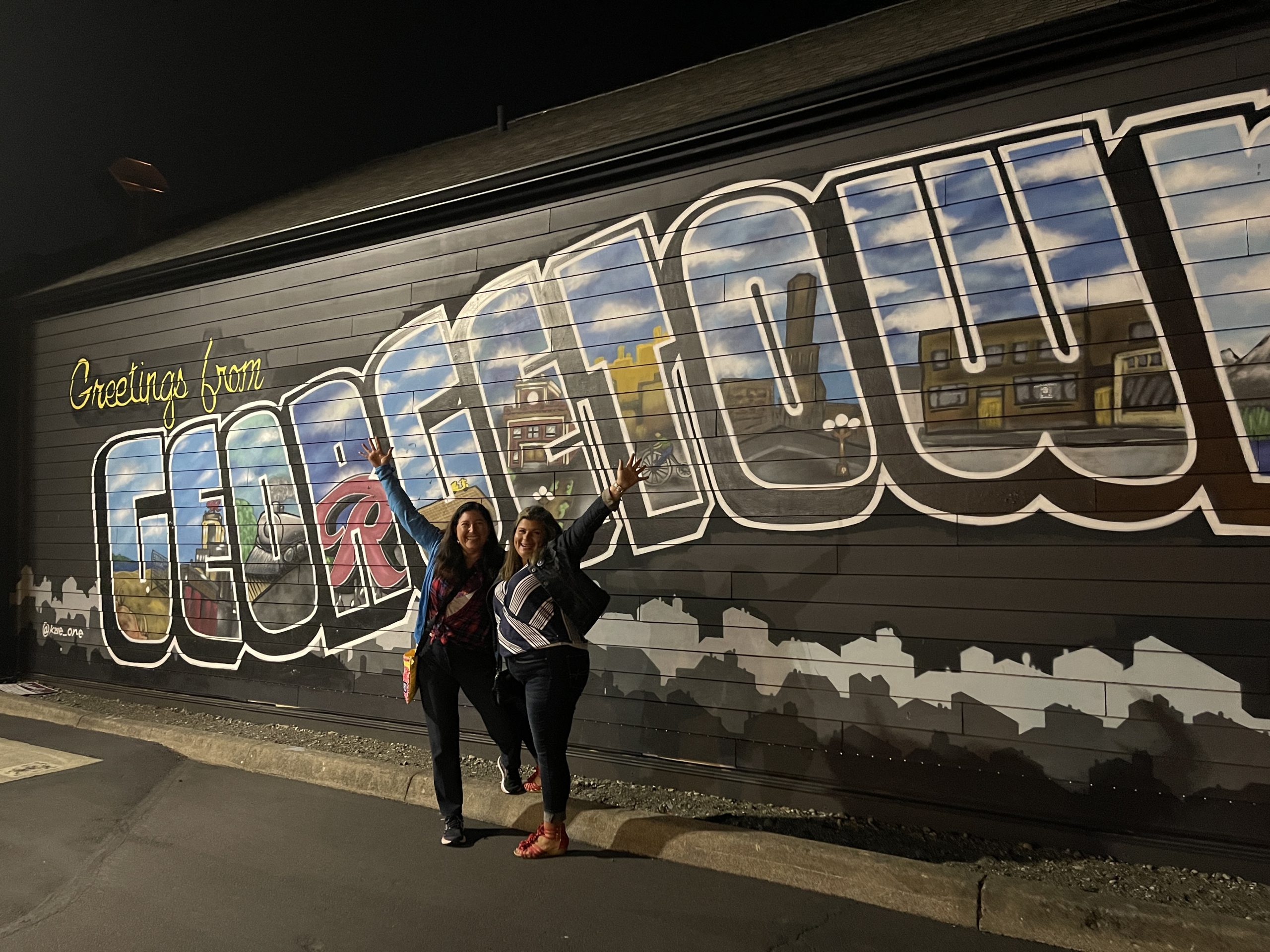
We ate beignets for breakfast at the iconic Toulouse Petit, had afternoon tea at the Fairmont Olympic Hotel and marvelous Mexican for dinner in Georgetown at Fonda La Catrina!

I look forward to visiting Seattle again. I loved my stay before my cruise to Alaska on the Majestic Princess.

THANK YOU MIA

See all of my videos from Seattle and Alaska:

Exploring Seattle: Altitude and Attitude: through History, Art and the Space Needle Read More »

Unscrolled Noach: In the Beginning, Again

What started with light had become dark.

Whatever God had dreamed when He dreamed of creation, had gotten away from Him. Adam and Chava had sinned, tarnishing the perfection of the Garden of Eden. In slaying his brother Abel, Cain had ushered violence and murder into the world. These aberrations, like God’s own creations, came about from nothing: ex nihilo. God had not willed them, and yet they were here.

Moreover, they now threatened to consume everything else.

The people became very wicked. They filled the earth with violence, tearing at one another like beasts. Through their sin, they corrupted the earth.

And so, God decided to begin again.

First, He had to undo what had already been done.

Stitch by stitch, the work of creation was unknit.

Dark clouds concealed the light.

The waters above and the waters below were rejoined—brought back to their primordial unity by the deluge that poured from the heavens down to the earth.

The seas, once discrete, gathered together and covered the land.

The soil loosened and the earth’s vegetation, unmoored, drifted into the stormy sea.

The animals drowned.

The people died.

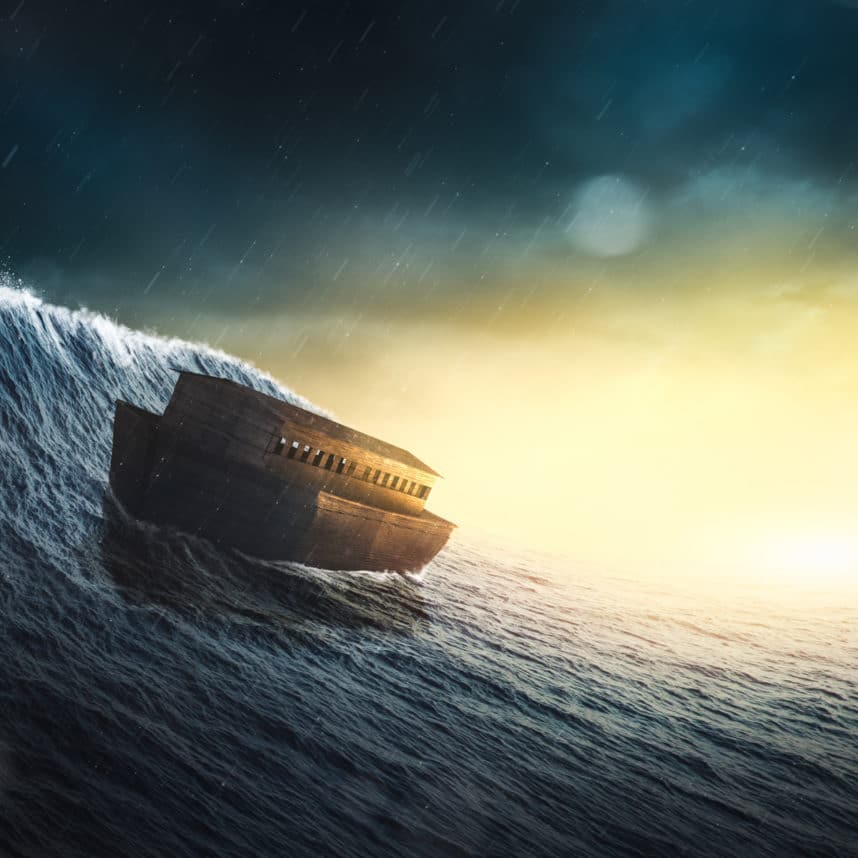
Not all life, however, was extinguished. Just when it seems as though we had returned to un-being, to the darkness that came before light, we spot a candle flickering in the distance, though it is very dim indeed. Out there, on the surface of this endless ocean, is a sealed cask.

Just when it seems as though we had returned to un-being, to the darkness that came before light, we spot a candle flickering in the distance, though it is very dim indeed.

It is battered by rain above and tossed by waves below.

It is an ark, coated in pitch, in which a family dwells in darkness.

Subdivided into many rooms, the ark is cramped and fetid. It has a window, yes, but that will not be opened to the brilliance of light until many days and nights have passed, until the rain has abated and the dove is sent out to search for land.

For now, it is lightless, and the reek of animals fills the cabins. The family grows insensate to the deafening sound of the animals’ bellowing out for relief or the clatter of hooves on the wooden boards.

Crickets, cockroaches, ants and spiders coat the floors, the walls. Noah and his family huddle close to one another and wait.

Is this Eden in a time capsule? Indeed, inside that dark cell, snakes slither to and fro, winding themselves around one’s legs, constricting and hissing, terrifying and tempting.

But perhaps it is not Eden.

Perhaps, rather, it should be likened to a seed, in which the genetic material of all creation lies coiled, dormant, unrealized.

When the waters abate, Noah expresses his gratitude to the lord with a sacrifice.

He slaughters an animal. The smell is pleasing to God, who vows to never destroy the earth by flood again.

God then permits humans to consume meat.

“Every creature that lives shall be yours to eat; as with the green grasses, I give you all these. You must not, however, eat flesh with its life-blood in it” (Genesis 9:3-4).

We are no longer in Eden. We are no longer in our first draft. This is a revised edition, worked over with a red pen so much that the original text is no longer visible. It is a world of moral compromise, in which violence is to be mitigated but not eliminated, in which God realizes that creation is an act of letting go, of accepting that what you create can never be fully yours to control, in which you learn the hard way, over and over again, that what you create, creates you.

“Whoever sheds the blood of man,

By man shall his blood be shed;

For in His image

Did God make man” (Ibid 9:6).


Matthew Schultz is the author of the essay collection “What Came Before” (2020). He is a rabbinical student at Hebrew College in Newton, Massachusetts.

Unscrolled Noach: In the Beginning, Again Read More »