fbpx

September 14, 2021

Never Alone: Finding a Jewish Community for Holy Days

Back in the ’70s when I was a hippie art student at a college where the two biggest movements were women’s and gay rights, I had a girlfriend who was a Zionist. When she met my gentile boyfriend with whom I was deeply in love, she insisted I dump him and find a Jewish guy. I now had to hide my loved one from not only my mother but also my girlfriend.

As I was about to embark on a trip around Europe by myself for the summer after I graduated, the same girlfriend told me, “Gila, (that’s my name in Hebrew which she started calling me) wherever you go if you need anything find the local synagogue.”

I nodded, just to please her but had no intention of doing so. My Jewish experience in my youth did not leave me wanting more.

I set off on my journey with a passport, Eurail pass and traveler’s checks tucked in a pouch under my shirt. When a complete stranger came up to me in France and asked, “You Juif?” I was shocked. He was curious, as he had never met a Jew.

A few evenings later when I was dancing at a discotheque in Paris, an older man came over to me and asked the same question. I realized then that I had a symbolic Star of David on my forehead.

After leaving my Jewish enclave on Long Island, retaining my bump on my nose and my long dark, curly hair, my ethnic identity was clear to many. The French man, who didn’t speak English, handed me his business card and used a friend to translate. He insisted that if I needed anything I should come to him. He shared he was Jewish, too.

It was the first time in my life that I felt part of a group who was there to help each other. It was comforting to know that if I did need assistance, someone was there.

Decades later, after thousands of miles traveled around the world, I’ve sought out the Jewish community. I now feel an immediate connection and want to learn about my community.

When it’s the High Holidays, and I’m traveling, I find a congregation to join in the celebration. I don’t have to look too far to find a Chabad. As of 2020 there were over 3,500 Chabad centers in 100 countries. They never require a ticket and never turn you away no matter your affiliation.

This year I decided to take a road trip for a few days to Maine to explore and photograph. I knew my first day there would be Erev Rosh Hashanah. I discovered two congregations. Chabad was also offering a couple of dinners. How could I say no to food?

This year I decided to take a road trip for a few days to Maine to explore and photograph. I knew my first day there would be Erev Rosh Hashanah. I discovered two congregations. Chabad was also offering a couple of dinners. How could I say no to food?

I scouted them in advance so I knew where I’d be going later. When I entered their space, I met the 30-year-old, red-headed, kind Rabbi Lefkowitz, his beautiful wife, Draizy, and their three little children, ages two, four and six. There were a couple of Lubavitch young men who came up from NYC and other folks working hard to prepare for the evening service and meal. Draizy had one eye on her children and the other on her food prep. I was impressed by how organized she was. There were tins filled with baked fresh salmon stacked one on top of the other. She took me up on my offer to help and I returned a couple of hours later to do so. I had no idea I had stepped into a gourmet kitchen. I was chopping and slicing fresh vegetables and fruits for a variety of salads.

The rabbi grew up in Monsey, NY. His father opened up the Chabad in Suffern, and Draizy grew up in Portland, Maine, where her father opened up the Chabad Center.

I had the opportunity to meet an engaging group of people including college professors from Bowdoin, artists, lawyers, and blue collar workers. Most were born Jewish, some were not.

As I was savoring each dish, each delicacy that Draizy had prepared, a regular attendant who was born and raised in Kiryat Arbat, an Israeli settlement right next to Hebron, alerted me that this is where you go for the best food in Maine.

I saw so much love between the rabbi, his wife and children. When his young daughter was crying in the middle of his service, he lifted her up, and held her in his arms as he continued.

Due to this Chabad, I made friends with a couple of the guests, who each reached out to me, and we got together during my four-day stay. The rebbetzin called to ask if I wanted any of her recipes. I had hemmed and hawed about how much I loved her food. 

I never realized how tough it is particularly for those Rabbis and their wives who decide to open up a center in an area like Brunswick. 

After the holiday, I spoke to the rabbi and learned they moved there three years prior and began offering activities and services to the public and the local colleges. There are no Jewish schools in Brunswick other than what they offer, no kosher restaurants, and a very small Jewish population. Although I had visited several Chabads in the world, I never realized how tough it is particularly for those rabbis and their wives who decide to open up a center in an area like Brunswick. They have to educate their children themselves or online, in addition to providing kosher food and activities for their families and community.

Did I mention that there is no charge to attend these events and feasts? It’s the responsibility of the rabbi to fundraise. As an independent documentary filmmaker for years, the biggest thing I dreaded was raising money. I’m so impressed and grateful for the kindness and generosity of Chabad and particularly of my new friends, Rabbi Lefkowitz and Rebbetzin Draizy. Thanks to them, I must say my new year has started off quite well.


Gayle Kirschenbaum is an Emmy Award-winning filmmaker, TV producer, photographer, writer and TEDx speaker. Her documentary “Look at Us Now, Mother!” can be found at lookatusnowmother.com. She’s writing a memoir based on this film.

Never Alone: Finding a Jewish Community for Holy Days Read More »
The First Day of School

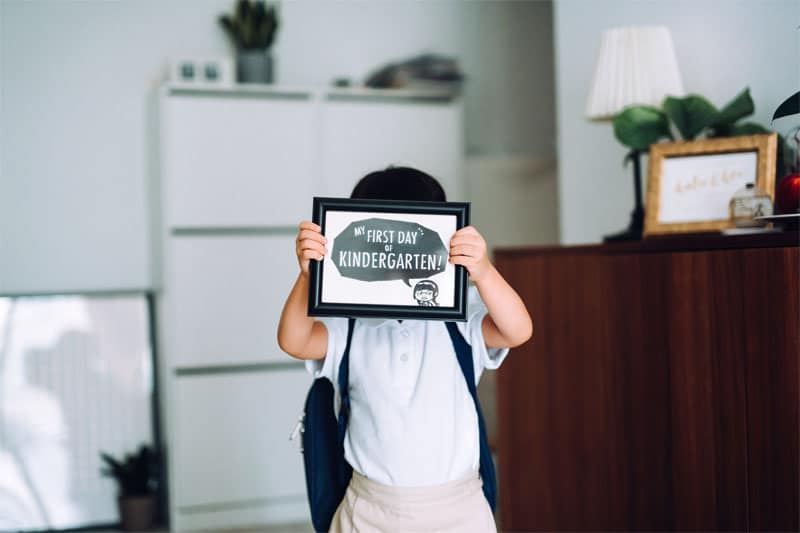
In the beginning of September, thousands of children marched off to their first day of school. We are blessed to call this our “popcorn” year, with four grandchildren starting first grade.

But I didn’t post their photos on Facebook or Instagram. I didn’t WhatsApp them to any groups, beyond our family.

Because I know that, the world over, there are thousands of people, women and men, who watch these children marching off to school and a knife pierces their heart. Do we also have to shove it in their faces on social media?

This is a shout-out to my friends who are not blessed with biological or adopted children; some may yet know that bleSsing.

This is a shout-out to my friends who are not blessed with biological or adopted children; some may yet know that blessing. Others may not. Yet all of them have spiritual children, who have learned from them or been influenced by them in some way. Perhaps in a classroom, perhaps in another framework, or perhaps they have read a book or seen a film, a play, or heard a song, or witnessed acts of great kindness, by someone, that changed their life forever. 

In honor of those friends, I share here an excerpt from the conclusion to my M.A. thesis that I wrote for Bar Ilan University in 2011, “Performing Ruth: Dramatic Exegesis in Religious Women’s Theater Groups, With an emphasis on the character of Naomi,” under the superb mentorship of Professor Susan Handelman. 

I also had the privilege of studying under the late biblical scholar, Professor Nehama Leibowitz, in the late 1960’s. “Nehama,” as she was called, had thousands of students — hundreds of thousands probably, including those who read her books — yet she had no biological children. I include her ideas in this excerpt:

I believe that part of the message in Megillat Ruth lies in the fact that Oved is not really of the flesh and blood of Naomi and Elimelech.  

What this indicates is that what we leave behind in this world, what we give to this world, is not just a matter of biology. Naomi is a facilitator; no magic in the world will turn her into the mother or grandmother of Oved, who engenders the Davidic line leading to the Messiah. 

Like Job, Naomi – by extension – achieves a new family of sorts, but they can never replace the loved ones she has lost, just as the Jewish people, after pogroms, the Shoah, or terror, move on with spirit and create new families, but those who they have lost are not forgotten. They will always be backstage. The underpinning of sorrow remains.

What is the role of the mother-facilitator? 

Nehama Leibowitz cites the Akedat Yitzhak, a commentator who explains the reasons for Eve having two names –“Isha” (woman) and “Hava” (Eve), the “Isha” referring to her ability “to understand and become wise with words of intelligence and kindness” and the “Hava” referring to her biologically giving “life” (being the “eim kol hai” – mother of all living) to children, which the Akadat Yitzhak calls “the lesser of the two roles.” Or, as it says in Sifrei Ve’Ethanan, “You are children to the Lord your God” (Devarim 14:1), means that “[Your] students are called [your] children.” 

The idea of “children” is an egocentric one according to the Lebanese Christian author Khalil Gibran, who wrote in “The Prophet,” “They come through you but not from you.” 

We are all merely facilitators, whether biological, spiritual, intellectual or national…

The message of Naomi is that, whether her goal is to facilitate the achieving of personal resolution, tribal resolution, religious resolution or family coexistence, life is extremely imperfect and challenging, and the goal of the individual must be to overcome adversity and sorrow to achieve meaning for himself and for others, whoever those others are.

A different mother figure was that of Deborah, who also had no children, but who was called “Eim b’Yisrael” (“Mother in Israel”). Her persona was one of … national action, leadership and victory. 

Are the mothers of Israel today Naomi’s or are they Deborah’s? Perhaps both. 

May this be a sweet, healthy and joyful year for us all. G’mar tov and hag sameah.


Toby Klein Greenwald is an award-winning journalist, director of the biblical Raise Your Spirits Theatre, and editor-in-chief of WholeFamily.com

The First Day of School Read More »

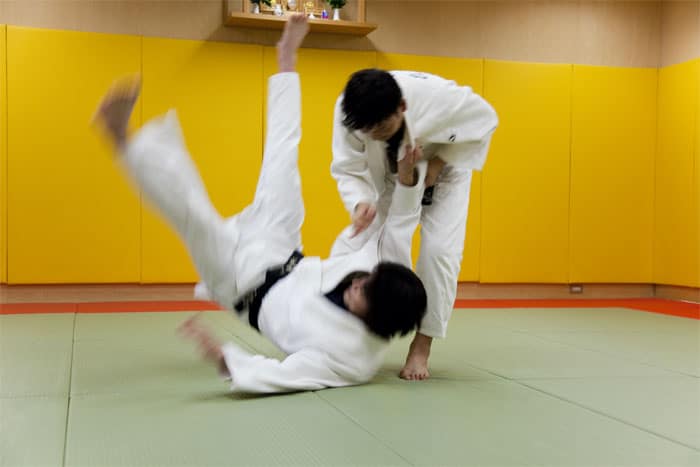
Algerian Judoka, Coach Banned for 10 Years After Refusing to Fight Israeli

The International Judo Federation (IJF) announced on September 10 that the Algerian judoka and coach who forfeited a match to avoid fighting an Israeli have been banned from participating in the league for 10 years.

In a statement, the IJF said that the judoka, Fethi Nourine and Amar Benikhlef, had “malicious intent” to use “the Olympic Games as a platform for protest and promotion of political and religious propaganda, which is a clear and serious breach of the IJF Statutes, the IJF Code of Ethics and the Olympic Charter.” Nourine had thrown his scheduled July 26 match against his opponent, Sudanese judoka Mohamed Abalrasool, since the winner would have had to fight Israeli judoka Tohar Butbol. “The Palestinian cause is bigger than all of this,” Nourine told Algerian television.

“Therefore, no other penalty than a severe suspension can be imposed in this case,” the IJF statement concluded.

The American Jewish Committee tweeted, “Thank you, @Judo, for taking a strong stand against antisemitism!”

Abdalrasool also didn’t show up for his match against Butbul; Butbul told the Associated Press that he was told that Abdalrasool had an injured shoulder, but the Israeli team was skeptical. Butbul ultimately finished in seventh place.

Judoka Saied Mollaei, a defector from Iran, dedicated his silver medal to Israel. “Thank you to Israel for the good energy,” Mollaei told an Israeli sports channel on July 27. “This medal is also dedicated to Israel. I hope the Israelis are happy with this win.” He concluded his remarks by saying “todah,” Hebrew for “thank you.”

Algerian Judoka, Coach Banned for 10 Years After Refusing to Fight Israeli Read More »

Memorializing Our Grief

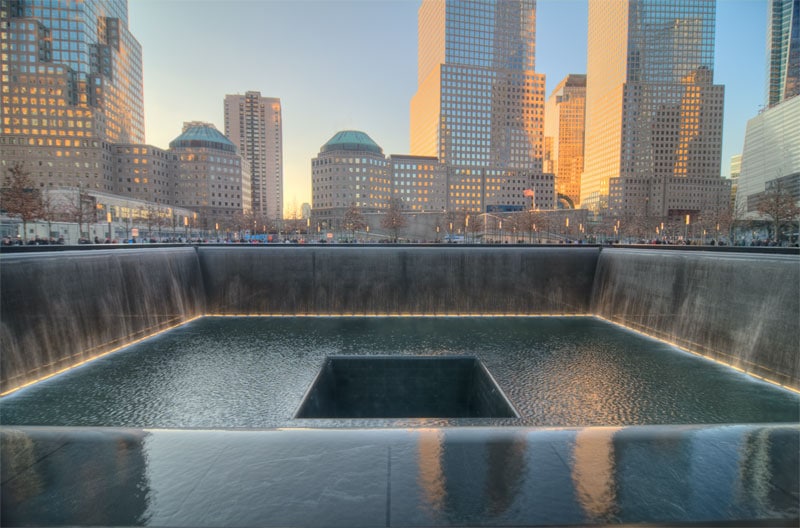
September 11 fell on Shabbat this year. That timing gave us the benefit not only for rest but for reflection, for the opportunity to avoid the distractions of the work week and to think back and remember what that tragic and seminal day meant to us — and what it did to us. 

Now that the retrospectives and memorials have concluded, and most of us who were fortunate enough not to lose a loved one in the attacks will now put our grief aside for another year or five, when we’re once again reminded that we all have an obligation to join the mourners for whom every day is 9/11.

For the vast majority of Americans, those who did not have a friend or family member perish that day, our sense of loss is less personal and more communal. But unfortunately, that makes it more fleeting as well. Twenty years after radical jihadists flew planes into the World Trade Center and the Pentagon, the commemorative events are a bit less central to the national conversation as our memories of the fear and fury we experienced that day grow gradually dimmer. I worry that soon they may begin to feel slightly strained and somewhat obligatory, and before long only those who lost a spouse or a child or a parent will still feel the hole inside themselves that we all once felt.

I was fortunate to have the invaluable opportunity last week to moderate a panel discussion for the Holocaust Museum Los Angeles “Building Bridges” program on this topic, at which the extraordinary Stephen Smith of USC’s Shoah Foundation helped us understand the importance of memorializing our grief. He explained why confronting painful memories and hearing stories of survivors and witnesses can help us better understand a terrible experience, so we can confront and process our suffering and so we can recognize the impact it has had on us.

Dr. Smith explained that the point was not September 11, but September 12. He told us that the days and years that follow an atrocity provide us an opportunity not simply to relive it but to learn how it has shaped us. But that self-education requires us to face up to those difficult memories and to be willing to re-examine and reconsider them, rather than to relegate them to pages in history books and museum exhibits as the years pass.

The dedicated women and men at the Holocaust Museum and the Shoah Foundation work tirelessly to prevent the worst of human history from becoming filed away into the past, and to helping those who were too young to experience the horrors of the Holocaust to understand its relevance to our present and our future. But despite the heroic work of these two organizations and many others with similarly inspiring and necessary missions, every year that passes takes us just a little bit further away from the pain of Auschwitz and the devastation of Dachau.

It also means that we are one year further away from the founding of the modern state of Israel, and public opinion polling shows that American Jews have gradually begun to emotionally distance ourselves from the Jewish state. That separation is developing largely along generational lines. Older Jews, who survived the Holocaust or who heard the stories directly from their parents, are much more likely to recognize the importance of Israel to the Jewish experience. Younger people, for whom the brutality and barbarism of Nazi Germany are more remote and antique abstractions, tend to feel less of an affinity.

History is merciless… it can wipe away even the strongest and most important memories if we don’t fight to keep them with us. 

For most of our lives, we tell each other that we must “Never Forget”. But history is merciless, and it can wipe away even the strongest and most important memories if we don’t fight to keep them with us. The legacy of 9/11 begins to slip between our fingers, the echoes of the Holocaust grow fainter, and the only thing that can preserve those memories is our own determination not to let them fade.

Ernest Hemingway said that we can be strong at the broken places. Confronting the horror, facing up to the pain and understanding its impact on us is excruciatingly difficult. Never forgetting is the first step. But emphatically and insistently remembering is just as necessary, for our own healing and growth but because that’s the only way to pass on the memory to those who follow us.


Dan Schnur is a Professor at the University of California – Berkeley, USC and Pepperdine. Join Dan for his weekly webinar “Politics in the Time of Coronavirus” (www/lawac.org) on Tuesdays at 5 PM.

Memorializing Our Grief Read More »

Burlington City Council Votes to Withdraw BDS Resolution

The Burlington City Council in Vermont voted to withdraw a resolution supporting the Boycott, Divestment and Sanctions (BDS) movement on September 13 by a margin of 6-5.

The resolution called for Israel to be boycotted until it ends “the occupation and colonialization of all Arab lands,” removes the security barrier and implements the right of return for Palestinian refugees to return to their homes.

City Councilor Dieng Ward, who co-sponsored the resolution, advocated for withdrawing the resolution because “it was one-sided and failed to recognize the discrimination Jewish residents face,” VT Digger reported.

Councilor Karen Paul voted against withdrawal because she wanted the resolution soundly defeated instead of being tabled for a later date. “We’ve got to be able to find common ground. BDS is not about finding common ground,” she said, calling the movement antisemitic.

Paul also argued that “this is what happens when you bring people into a firestorm of controversy about something that they passionately care about. You don’t need to do this.” Throughout the meeting, pro-Palestinian protesters chanted “Free Palestine!” and “Equal rights human rights” while pro-Israel protesters shouted, “Then tell Hamas,” according to the Vermont newspaper Seven Days.

Jewish groups praised the city council for withdrawing the resolution.

“This resolution was based on carefully curated information, deprived of context and designed to create a false and deceptive portrait of Israel and its supporters. Such tactics feed polarization, defeat prospects for peace, and inspire hate,” American Jewish Committee New England Director Robert Leikind said in a statement. “Thousands of people appealed to members of the City Council to reject this morally troubling BDS resolution. It appears that they were heard.”

He added: “The outcome of the Burlington City Council hearing on this BDS resolution was a constructive step that we hope will cool extreme rhetoric and contribute to a more productive climate where difficult issues can be discussed. This is needed in Burlington, across our country and in the Middle East, where we can only hope that the conversation will turn from rejection to a discourse that advances peace.”

Anti-Defamation League New England thanked Paul for her “leadership in stopping a resolution designed to delegitimize Israel’s right to exist. ADL is grateful for the rejection of BDS, not only from the City Council, but from Burlington and across the country who made their voices heard with 2000+ emails.”

Prior to the meeting, Burlington Mayor Miro Weinberger issued a statement opposing the resolution. “I find the Resolution as written to be an inappropriate and counterproductive declaration for our local legislative body, and find it very unfortunate that the sponsors have brought it forward during Rosh Hashanah and Yom Kippur, the holiest days of the year for our Jewish residents who are engaged in worship and acts of charity.” He went on to call the BDS movement “divisive” and urged the City Council to instead “pass a resolution that espouses the shared values of our Burlington community, including peace, security and a positive economic environment.”

Arno Rosenfeld, writer for The Forward, tweeted that while Dieng has been getting flak for sponsoring the resolution, Dieng had “worked closely [with] pro-Israel groups over the weekend, now wants to visit Israel and said he’s learned a ton about antisemitism. If that’s not a victory for anti-BDS folks, what is?”

Burlington City Council Votes to Withdraw BDS Resolution Read More »

From the Shadow to the Comforting Shade – Thoughts on the Days of Awe and the Days of Joy

The Days of Awe and Days of Joy (Rosh HaShanah, the 10 Days of Turning, Yom Kippur and Sukkot) form a powerful spiritual path, a three-act play, if you will. This play takes us from the structure of our moral and spiritual lives, into our shadow-self, and then into the Divine Shade of the Sukkah.

The shadow haunts us – this is an inexorable truth we learn throughout the Days of Awe. In the first act of the Days of Awe, Rosh HaShanah, we commit ourselves to the values and virtues, truths and axioms that should govern our lives. Something is sovereign in our lives beyond the will of the ego self. Rosh HaShanah, which celebrates the Sovereignty of the Divine, is a crucial first step in returning to the path of truth, but only a first step.

In the Days of Returning between Rosh HaShanah and Yom Kippur, we try to seek out the inner parts that resist those same values and virtues, truths and axioms to which we commit ourselves. People see themselves by the values they hold, but often don’t see that they act in ways that are contrary to their values, even destructive of those values. For example, people often say to me that their deepest value is family. When they carefully examine how they speak and behave, they see that something inside of them has tenaciously dismantled that same value. People commit themselves to virtue, but some inner force gnaws away at our will to manage our thoughts, speech and behavior.

One thing that is hard for us to realize is that values require prodigious effort, great vision, will and skill. Saying that you hold a given value might help in creating a sense of identity, but asking yourself continuously how to realize that value in the face of resistance is another matter altogether. We do have to commit ourselves consciously to values, but then we must also examine the parts of our ego selves that are not on board. In the days after Rosh HaShanah, culminating in Yom Kippur, we are asked to courageously enter into what Carl Jung called the shadow self, the grotto where the Yetzer HaRa (destructive patterns) resides, the place where forces that defy our values live – and conspire.

Yom Kippur, the second act of the Days of Awe and the Days of Joy, with its focus on confession, has us enter directly into the shadow self. Bringing the light of consciousness into the shadow self can make us very ill at ease. We see things we may not want to see. Bringing light into hidden chambers may make us look at our life’s story differently; we may have to redefine ourselves, admit that we are flawed characters on the hero’s journey. Perhaps we are not the ultimate cause of our greatest suffering – some of us truly have been traumatized by life, oftentimes by other people. In the shadow of the brutalized self, though, there can be a hidden decision to stay depressed, injured, paralyzed. All rehabilitation is painful and we tend to avoid it, whether it’s the spine or the spirit.

Yom Kippur is not sufficient to have us work through the shadow, but that day, or some day like it, is absolutely necessary and is the place from which we can pivot. From rappelling down into that grotto and bringing the light of consciousness into its damp and eerie atmosphere, something beautiful can happen. Some damaged part of the soul can call out, “Heal me.”

If we can take at least one thing out of the shadow through our work on Yom Kippur, we can have the strange sense of a miracle beginning to happen, the miracle of transformation. As hard as we might work on whatever has been haunting us, nothing is guaranteed. There can be, however, an unexpected moment when the work translates into healing, or the beginning of healing.

For many of us, that experience of the truth of “tikkun ha-nefesh,” the repair of the soul, that experience of the truth of teshuvah, finding our way back to the true path, can fill us with extraordinary gratitude. Gratitude to what, exactly? To our tradition and its preservers for bequeathing to us these Days of Awe and Joy? To our teachers? For God’s guidance? For the beauty of the light, for the strength of our souls?

We spend Yom Kippur in the shadow-self. This day is experienced as a guide on how to do this inner work and remind us that we must do this work. After Yom Kippur, we then move, in the third act of the Days of Awe and Joy, into Sukkot. We move from the shadow into the comforting shade of the Sukkah (Sukkot begins Monday night, September 20th).

The spiritual tradition calls the Sukkah (in Aramaic) “tzilah d’heimanuta”– the Covering Shade of Faith. Physically, we don’t move from Yom Kippur directly into our homes and take up life as usual. Many of us actually build a Sukkah and spend some time there as a way station, a half-way house, from the exhausting work of the Days of Awe toward the Shade of Faith. In that way station of the Sukkah, we focus on acknowledgment, gratitude and joy. We rest a bit, connect with our spiritual home. Even if you don’t have a Sukkah, you can take this concept into your life. Maybe the beach, a park, a hike – as long as you don’t go right away back into your schedule. If you’ve done the work, you might feel a bit raw, a bit drained. We need a pause, a spiritual (or actual) spa, rejuvenating medicinal spring waters.

Each of our holidays contains its own teaching for ongoing spiritual work. Supreme among those days are the Days of Awe, which culminate in Sukkot, Shemini Atzeret and Simchat Torah. We are now entering the culmination of this holy season – from virtue and values, through the painful work of confronting the shadow, and now into the holy shade of gratitude and joy.

From the Shadow to the Comforting Shade – Thoughts on the Days of Awe and the Days of Joy Read More »