fbpx

September 9, 2021

A Bisl Torah: Walk the Walk

My favorite mitzvah of the year comes immediately after Yom Kippur. As the last shofar blast pierces the night, we are supposed to run home and start building our sukkah. The first nail hammered into the ground to symbolize an urgency to begin our year with action.

Rosh Hashana and Yom Kippur are brimming with words. For hours we pray, confess, promise, plead, hope and dream. We forgive, mourn, regret, rage, challenge and encourage. And for the most part, we remain rooted in place, teaching our heart a curriculum of compassion and change for the upcoming year. But moments after Yom Kippur ends, the biggest choice resides in our hands. Talk the talk or walk the walk?

Walking the walk is leaving Yom Kippur services with a bit more patience as the traffic in the parking lot begins to build up. Walking the walk is seeing the person with whom we disagree and offering a humbling hello. Walking the walk is determining whether our words lift or crush another’s soul. Walking the walk is living as an active partner in God’s ongoing creation of the world.

We will spend ten beautiful, sacred days praying, singing, talking. May we spend the remainder of this year loving, building, giving, walking.

So lace up those shoes and get ready.

Shabbat shalom


Rabbi Nicole Guzik is a rabbi at Sinai Temple. She can be reached at her Facebook page at Rabbi Nicole Guzik. For more writings, visit Rabbi Guzik’s blog section from Sinai Temple’s website.

A Bisl Torah: Walk the Walk Read More »

Magen Am: Defending and Protecting the L.A. Jewish Community

When Rabbi Yossi Eilfort got his rabbinic ordination in 2012, his life plan and passion was to serve the Jewish community as a rabbi and teacher.  

He then developed a second passion: martial arts. 

While employed at his father’s Chabad center, he filled his spare time honing his martial arts skills at local gyms. “One day a gym owner asked me to be a sponsored fighter for local competitions. From then on, my interest in martial arts grew even stronger,” Eilfort said. 

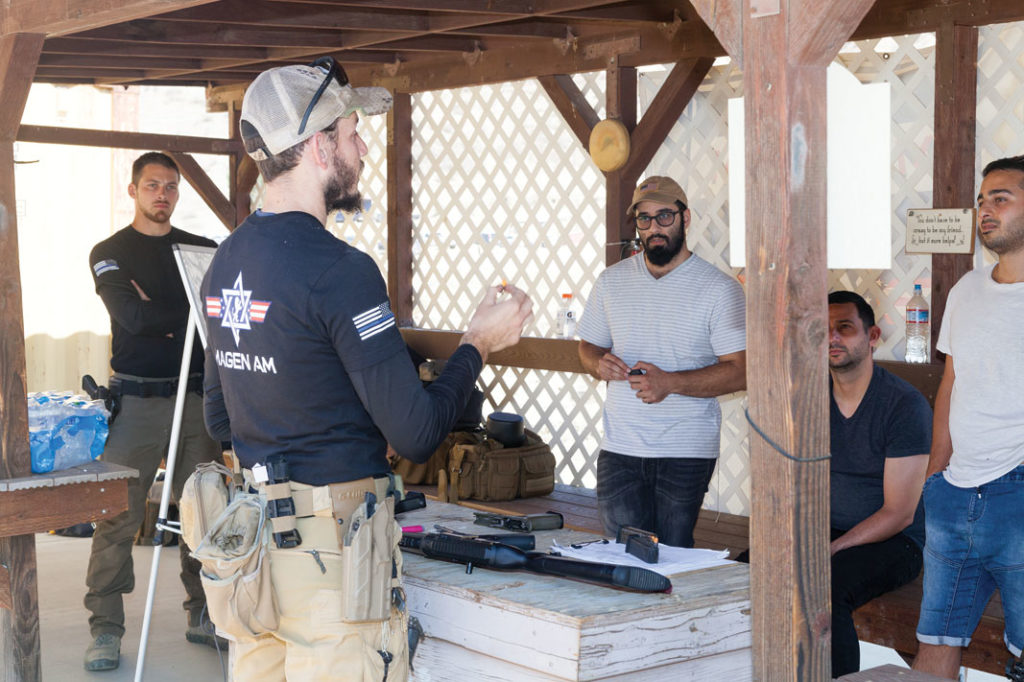
His enthusiasm for self-defense led him and a group of friends to undergo firearms training with former Marines, SWAT instructors and retired Special Operations Forces from various branches including the IDF, U.S. Green Berets and Navy Seals.  

It didn’t take long for Eilfort to realize that his destiny for serving the Jewish community would take a different path. He formed the L.A.-based nonprofit Magen Am (Hebrew for Nation’s Shield)USA, which defines itself as: “an organization dedicated to the creation of essential armed security teams within the Jewish community.”

“Considering the size of the L.A Jewish community, with so many kosher restaurants, synagogues and Jewish institutions, effective security requires more than simply placing ‘hired guards’ outside a store or synagogue. It requires a holistic approach of training, on-site security and education.”

A mere five years old, Magen Am provides a wide-range of training and security services. “Considering the size of the L.A Jewish community, with so many kosher restaurants, synagogues and Jewish institutions, effective security requires more than simply placing ‘hired guards’ outside a store or synagogue,” Eilfort said. “It requires a holistic approach of training, on-site security and education.”

When the Israel-Hamas conflict broke out several months ago, it put the issue of antisemitism front and center on the minds of American Jewry. The Anti-Defamation League reported that 41% of American Jews surveyed said they are concerned about their personal safety. And locally, data from the Los Angeles Police Department shows that antisemitic hate crimes have increased by nearly 60% thus far in 2021. For Magen Am, this was all the more reason the Jewish community needed their services. 

The organization currently provides security services for 14 synagogues and six Jewish schools in the L.A. area. For synagogue protection on Shabbat and holidays, its Community Team program utilizes one or more synagogue members who are trained by Magen Am. These uniformed Team member volunteers provide assistance to Magen Am staff by screening synagogue attendees, many of whom they know.  

Although EIlfort didn’t serve in the military, he believes his lack for a formal military background helped keep his ego in check. “Starting from the vantage point of a rabbi and community member has allowed me to learn from security military experts in a way that better fits community security,” Eilfort said. “It’s proved to be more effective than starting with a military mindset and putting that into a community environment.”  

Seven days a week, 24 hours a day, Magen Am can be seen patrolling the streets, standing guard at synagogues, Jewish schools and restaurants. They currently are focused in the Hancock Park area but according to Eilfort, they will be expanding imminently to Pico-Robertson and the Valley.

The organization prides itself on having a strong relationship with local police, often undergoing joint training with the LAPD.

The organization prides itself on having a strong relationship with local police, often undergoing joint training with the LAPD. “When an incident occurs and we are on scene, the first thing we do is make sure law enforcement has been notified,” Eilfort said. “We then do our best to maintain the scene until they arrive — should they be needed. When possible, we work to deter, diffuse and de-escalate a situation so that it doesn’t come to a use of force.”

An example of Magen Am’s patrol capabilities occurred recently when a 12-year yeshiva boy was punched in the face on Melrose Avenue in the Fairfax district. Magen Am was first on the scene for the antisemitic incident that garnered considerable media attention. Magen Am put the suspect in custody until LAPD arrived and arrested him.

Magen Am staffers consist primarily of former U.S. and IDF military personnel which led to creating its Veterans Team Program.  “We soon realized many former IDF and U.S. military return from service and want to protect the Jewish community, but don’t have the opportunity,” Eilfort said. “Our Veterans division guards shuls, schools and private events. It is a win-win. These dedicated veterans, most of whom are Jewish, have the opportunity to utilize their training and skills to do what they love – protect the Jewish community.”

On an individual basis, Magen Am offers Community Training and Educational Programs for public firearms training and is working to also offer self-defense and hand-to-hand combat classes. To date, about 500 students have undergone this training. 

An obvious question might be — is there a difference between a Jewish organization defending the Jewish community and a secular security firm doing the same? “I think there is a difference,” Eilfort said. “With many of our security personnel being Jewish, there is a special connection with who we are protecting. We know antisemitism first-hand, and we understand how it feels to be targeted as a Jew.”

Eilfort believes his rabbinic training gives him a good foundation for creating an organization dedicated to protecting the Jewish community.  

“There is a verse in Psalms that says: ‘Praise be to the LORD my Rock, who trains my hands for war, my fingers for battle,’” Eilfort said. “While I am blessed to be part of this organization, I look forward to a time when the Jewish community won’t need to worry about defending itself.”

Magen Am: Defending and Protecting the L.A. Jewish Community Read More »

Local Nurse Educates on COVID Vaccines With New Program

When the COVID-19 pandemic started, Registered Nurse Boaz Hepner, who works at Providence Saint John’s Health Center, took to the Jewish Journal blogs to write about best practices for staying healthy. He also discussed the vaccines with over 80 doctors and epidemiologists, and every single one of them said they had been vaccinated.

Armed with this information, Boaz talked to his patients and their family members about getting vaccinated. He would ask patients and their family members if they’d had the shot, and when they said no, he’d initiate an open dialogue about it. 

“My next move was not to talk down to them or yell at them but say, ‘Well, I happen to be extremely well-versed in this. Would you like to ask me any questions about it?’” Hepner, who lives in Pico-Robertson, told the Journal.

Hepner answered questions about the shot and dispelled misinformation, like that it could affect a woman’s fertility or that the side effects from the shot were worse than the side effects from COVID. Out of the 20 people who had not been vaccinated, Hepner convinced 17 of them to get the shot. He said he believes that people trust the media over doctors, and if they just had the chance to have a personal conversation with a healthcare provider, they’d get the vaccine.

“What I hope to see is a world that returns to trusting science more and stops relying on their social media feed or some random video of a random doctor.”
— Boaz Hepner

“What I hope to see is a world that returns to trusting science more and stops relying on their social media feed or some random video of a random doctor somewhere and instead trusts the actual scientific community. I’m not talking about trusting government. I’m asking people to trust scientific communities, which are all on the same page with this.”

Along with speaking one-on-one with patients and families, Hepner ran a 12-hour program for 40 of his colleagues in his unit at the hospital that informed them about the vaccine. His workplace had been giving the vaccines to patients, but he and his colleagues hadn’t received formal training regarding talking to patients about it.

“I told [my colleagues] these are the most common questions you’ll get and the reasons why people are not getting the vaccine,” Hepner said. “Out of the nine people who took my seminar who were not vaccinated, eight people got it afterwards. This was before California put a mandate on all healthcare workers to get it anyway.”

One of Hepner’s colleagues who was hesitant to get the vaccine is Hana Yemaneberhan, because she knew people who had COVID symptoms from the shot. But after seeing Hepner’s statistics that showed that getting infected with COVID was far worse than the vaccine side effects, she ended up getting vaccinated. 

“I had body aches and I was tired for a couple of days, but I survived,” she said. “I’m glad I got it. If the vaccine protects us, that’s the main thing.”

While Hepner would like to continue doing his program, so far, he’s faced some red tape. “This was an extremely successful pilot program tested on our unit,” he said. “What’s frustrating me is because this is a big hospital it’s so far not gone beyond that. I have people approaching me every day, including doctors, saying, ‘When are you going to get to the rest of the hospital?’ I’m waiting for them to tell me when I can do it.”

In the meantime, Hepner is continuing to educate himself about COVID and the vaccines. He’s also open to doing the program at other places. “I would absolutely love to have Cedars-Sinai and other hospitals reach out to me to do this.” 

He said that his goal to get as many people vaccinated as he can because, “I know that the vaccines work. I know that the more people who get it, the better, whether we need boosters or not. That’s OK with me if it gets the job done.”

Local Nurse Educates on COVID Vaccines With New Program Read More »

Arizona Treasurer Announces Divestment from Ben & Jerry’s

Arizona Treasurer Kimberly Yee announced in a September 7 press release that the state government will be divesting from Ben & Jerry’s over the ice cream company’s recent Israel decision.

In a September 2 letter to Unilever, Ben & Jerry’s parent company, Yee wrote that while she appreciated Unilever’s opposition to boycotts of Israel, the fact is that Ben & Jerry’s is in violation of Arizona’s anti-Boycott, Divestment and Sanctions (BDS) law. Arizona’s law defines “boycotts” as “refusal to deal, terminating business activities, or performing other actions that are intended to limit commercial relations with entities doing business in Israel or in territories controlled by Israel” based on discriminatory purposes rather than a “valid business reason.” On July 19, Ben & Jerry’s announced that they would cease operating in the “Occupied Palestinian Territory” as a means of protesting Israel’s occupation of the West Bank.

“Therefore, our office has no choice but to divest from Unilever PLC on the list of firms that are participating in a boycott of the State of Israel until such time as Ben & Jerry’s reverses its boycott decision or Unilever divests itself,” Yee wrote. “Our investments in Unilever have been reduced from $143 million as of June 30, 2021 to $50 million today and will be zero by September 21, 2021 after our last investment in Unilever matures.”

Yee said in a statement in the press release, “It does not matter how much investment Unilever PLC has in Israel, with Ben & Jerry’s decision to no longer sell its product in the West Bank, the companies are in violation of the law in Arizona. Arizona will not do business with companies that are attempting to undermine Israel’s economy and blatantly disregarding Arizona’s law.”

She hailed Israel as “a major trading partner of Arizona.” “I stand with Israel and will not allow taxpayer dollars to go towards anti-Semitic, discriminatory efforts against Israel.”

Jewish and pro-Israel Twitter users applauded Yee.

“Thank you, Arizona!” StandWithUs CEO and Co-Founder Roz Rothstein tweeted.

“Bravo #Arizona!” Arsen Ostrovsky, human rights lawyer and CEO of International Legal Forum, tweeted. “Thank you for standing with #Israel, thank you for your principled response in the face of @benandjerrys antisemitic boycott of Israel.”

Sussex Friends of Israel also tweeted, “BDS’ing the BDS. Is this that irony thing I’ve been told so much about?”

Arizona Treasurer Announces Divestment from Ben & Jerry’s Read More »

Iranian Women’s Rights Activist Masih Alinejad to Speak on Yom Kippur

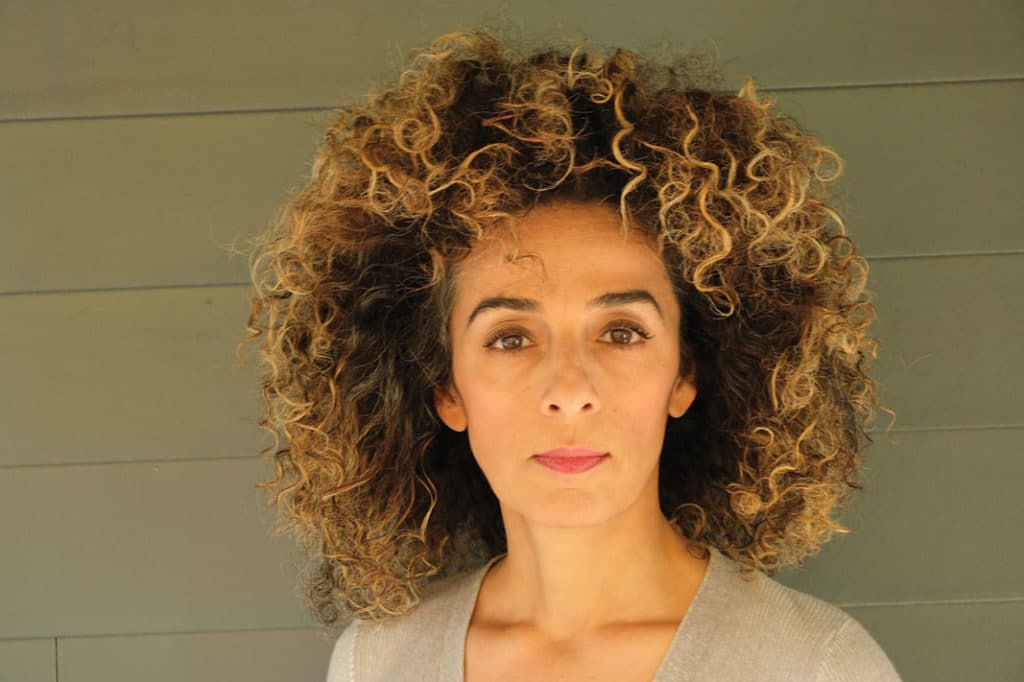
Masih Alinejad, the prolific New York-based Iranian women’s rights activist and journalist who was at the center of a recent kidnapping attempt by Iranian operatives, will speak as part of a “Living Sermon” during Yom Kippur services, September 15 and 16, at the Beverly Hills Temple of the Arts at the Saban Theatre on Wilshire Boulevard.

The yearly sermon, which is the brainchild of synagogue founder Rabbi David Baron, invites extraordinary individuals, Jewish or not, who uphold values of freedom and courage to connect with worshippers through a shared humanity.

“I was deeply moved upon learning of Alinejad’s heroism on behalf of the women of Iran,” Baron told the Journal. “Standing up to a brutal repressive regime takes an inordinate amount of courage and sets an example for us to stand up against ‘cancel culture’ and those who would stifle dissent and free expression.”

Alinejad, who has lived in self-imposed exile since 2009, is the founder of the largest civil disobedience campaign in the history of Iran, which encourages Iranian women to film and document their harassment and stories of oppression at the hands of regime enforcers.

Alinejad, who has lived in self-imposed exile since 2009, currently hosts the weekly satirical show “Tablet” on Voice of America Persian News and is the author of “The Wind in My Hair: My Fight for Freedom in Modern Iran.” She is the founder of the largest civil disobedience campaign in the history of Iran, which encourages Iranian women to film and document their harassment and stories of oppression at the hands of regime enforcers, particularly for when they refuse to comply with the rules of the mandatory hijab, or Islamic head covering. 

The regime began forcing females in Iran as young as five years old to wear the hijab after the 1979 Islamic Revolution that ousted Shah Mohammed Reza Pahlavi and turned the country into a fanatic theocracy. Described by The New York Times as “the woman whose hair frightens Iran,” Alinejad reaches millions of followers in Iran and around the world.

This past July, four Iranian intelligence agents were charged with conspiring to kidnap Alinejad on American soil, according to the Justice Department. They had planned to kidnap the journalist to Venezuela before taking her back to Iran, where she most likely would have faced execution. Other exiled journalists have been killed by the regime in a similar manner.

“This most solemn of Jewish holy days is a humble reminder to take inventory of our lives to recognize and rectify the mistakes we have made so that we get a second chance in life,” Alinejad, who is not Jewish, told the Journal. “We do not live in a perfect world. There are failures and failings all around us. The way out is to work harder to eradicate the errors and to repair ourselves and the world. I look at the Yom Kippur message as a call to action, to do our part in the real world to set things right.”

Mona Golabek, a Grammy-nominated concert pianist and author who will discuss her mother’s poignant story as a child survivor of the Holocaust, will join Alinejad. Golabek’s mother, Lisa Jura, was a Viennese child piano prodigy who was brought to England as part of the Kindertransport (children’s transport) rescue operation. Her father, Michel Golabek, was a French resistance fighter, and her grandparents perished at Auschwitz. Before they were separated, Golabek’s grandmother, Malka, told her daughter: “Lisa, hold on to your music. It will be your friend and I will be with you always through the music.”

Golabek’s mother is the subject of several acclaimed books, including “The Children of Willesden Lane,” “Lisa of Willesden Lane,” and the illustrated book, “Hold on To Your Music.” She is currently working with the USC Shoah Foundation on a Holocaust educational program through the Hold On to Your Music Foundation (Golabek is founder and president of the latter foundation). She will speak about her family’s journey and also perform excerpts from her one-woman show, “The Pianist of Willesden Lane.”

“On this most holy day, I share my parents’ story,” Golabek said. “In doing so, I am reminded that compassion and humanity should forever be the guiding principles of our lives.”

Joe Buchanan
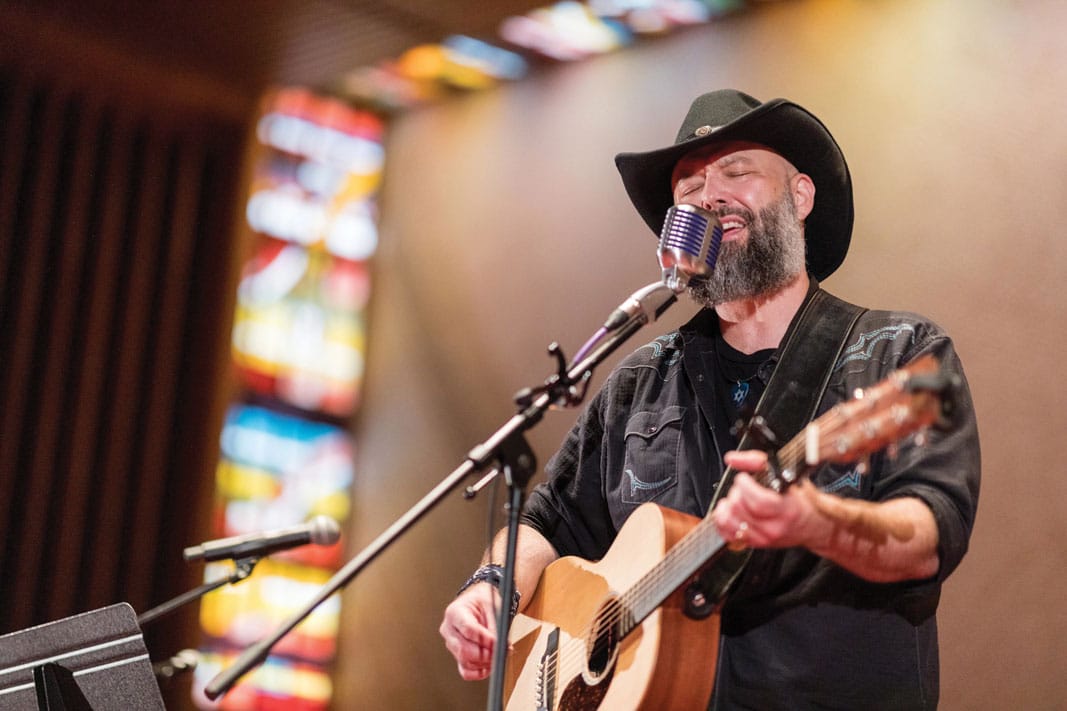
Joe Buchanan, a Texas-born composer, singer and guitarist who converted to Judaism and makes country music inspired by Torah values, will be at Temple of the Arts as well. Each will speak separately during Kol Nidre evening services starting at 8 p.m. on Wednesday, and again during daytime services the following day, beginning at 10 a.m. (Alinejad will speak at 2:30 p.m. on Thursday).

“I love this time of year and all of the opportunities it represents,” Buchanan said. “When I converted to Judaism, the High Holy Days were so incredibly inspiring because they highlight the fact that we are empowered by our Creator to turn our lives around. I spent so long feeling powerless and living outside of my own life. Judaism helped me see how to live in it and now I just want to share that healing with as many folks as I can.”

Consul General of Israel in Los Angeles Dr. Hillel Newman will also speak during daytime services about the current state of the Middle East, as well as Israel’s COVID-19 response, at 2 p.m. on Thursday.

Admission to hear speakers is free, but RSVPs are required in advance (at edgar@templeofthearts.org). Attendees will be asked to provide a photo ID, comply with a temperature check and wear a face mask. Yom Kippur performers and services readers include an array of cantors, vocalists (including several young singers), activists, entertainment executives and television personalities. Temple of the Arts is the largest arts and entertainment synagogue in the country.

“Yom Kippur is a day we are commanded to set aside for prayer, forgiveness and reflection on our purpose as human beings in this shared life journey,” Baron said. “Bonding with others who strive for freedom and decency elevates our humanity.”


Tabby Refael is a Los Angeles-based writer, speaker and civic action activist. Follow her on Twitter @RefaelTabby


Iranian Women’s Rights Activist Masih Alinejad to Speak on Yom Kippur Read More »

A Kaparot Story for Yom Kippur

Beverly Cohen grew up on a chicken farm. 

Her grandparents were emigres from Russia. They landed in Cleveland, Ohio and then settled in Los Angeles, where they started a chicken farm. Their daughter, Pat, was abandoned by Beverly’s father soon after she was born, so she returned to her parents farm, where little Beverly grew up surrounded by her aunts and uncles. She remembers that her grandfather rode a horse and buggy, selling chickens house to house. 

Pat remarried and had three more children, but tragically her young husband passed away. Determined that her children never go hungry, Pat did something unheard of in Los Angeles of the 1950’s—she opened a live kosher chicken store. At Pat’s Poultry, located on Santa Monica Boulevard in West Hollywood, customers would pick a live chicken to be ritually slaughtered by the Rabbi, then feathered and cleaned. Every year, a day or two before Yom Kippur, when Rachel’s husband Neil was a young boy, he would go with his mother and grandparents to Pat’s Poultry. The revered leader of the Rhodesli community Rabbi Solomon Mizrahi would be there, swinging live chickens over people’s heads, performing the ritual Kaparot service. 

Beverly describes her mother Pat as a beautiful, elegant, hardworking entrepreneur. The same adjectives could be used to describe Beverly, who along with her husband, Bob Cohen, is a powerhouse of the Los Angeles charity scene, where they are known for their generosity and vision. Their association with the Sephardic Educational Center goes back to the very beginning ,when they were the Chairpersons for the first International Gala at the Century Plaza Hotel in 1984. 

Rachel’s Turn: Recently I called my cousin Alia, who lives in New Caledonia, and asked her “What do you remember about Kaparot in Morocco?”

She laughed and said “I was just telling my husband Dimitri about Kaparot because for the last few days our neighbor’s chicken has been coming into our backyard.”

We reminisced how my mother and aunt would pack all seven of us kids into the car, headed for the kosher butcher. In the back of the butcher’s shop, there were many chickens running around, foraging in the dirt. Monsieur Milo would ask your name, then grab a chicken by the feet and pass it over your head and chant a prayer. 

We kids would be freaked out but we accepted it as part of the holiday tradition. 

Some of the chickens would be dispatched with Tzedakah, charity, for the poor and needy. The rest of the chickens would be cooked before the Yom Kippur fast and for the Sukkot holiday. 

Alia and I reminisced about my mother’s delicious food, especially her drool worthy Poulet Farci. This stuffed chicken dish involved deboning the chicken in one piece without tearing the skin. The skin and flesh would be stuffed with ground chicken, almonds and hard boiled eggs. She would sew it closed and poach it in a light aromatic saffron broth. When the chicken was sliced, there was a beautiful pattern from the egg yolks and whites. She would serve it warm with Letrea, saffron egg noodles, or cold with all the Moroccan salads. 

It’s at the top of my list for recipes to tackle. 

Kaparot literally means atonements, just as Yom Kippur means Day of Atonement. 

Sharon’s Turn: Kaparot literally means atonements, just as Yom Kippur means Day of Atonement. From late Talmudic times, it has been a Jewish custom to perform the kaparot ritual, where the chicken is passed over the person’s head three times while reciting the Kaparot prayer. We ask Hashem that any harsh decrees be passed to the chicken. The chicken, or the monetary value, is given to charity. 

I remember Kaparot happening as a young girl in my grandparents back yard in Rose Bay, a posh suburb of Sydney, Australia. I remember the headless chickens running around the yard. I remember being so relieved when my grandfather switched to handfuls of heavy Aussie coins to say the Kaparot prayer over my head. 

Every year, I host my extended family and guests for the Seudah Mafseket, the pre-fast meal. I make chicken, potatoes, sweet potatoes and rice. I make two huge pots of chicken soup. One of them is a traditional matzo ball soup and one of them I call my Moroccan soup because it includes butternut squash, Mexican squash and garbanzo beans. I could happily eat ten bowls in a row. I cook my garbanzos beans in a separate pot after soaking overnight. The soup pots simmer on my stove top all day. I leave the pots, each filled with fluffy matzo balls, creamy, nutty garbanzo beans and steaming golden broth and let my guests happily serve themselves.

Sharon’s Moroccan Soup

12 cups water
1 chicken, cut into 8 pieces
2 teaspoons kosher salt
1/4 teaspoon white pepper
2 teaspoons turmeric
1 whole head of celery including leafy tops, washed and cut into
1/4 inch pieces
2 large onions, diced
6 medium carrots, peeled and cut into 1/4 inch rounds
Eight cloves garlic, peeled and chopped in half
1 large butternut squash, peeled and diced into 2 inch pieces
1 large parsnip, peeled and chopped into 1/4 inch rounds
8 white squash, washed and cut into half inch rounds
2 bunches dill, washed
1 bunch cilantro, washed

Set a large pot filled with 12 cups of water over medium heat. Add chicken and salt and bring to a boil, then simmer for 30 minutes. 

Add pepper and turmeric. 

Add celery, onion, carrots, garlic, butternut, parsnip, and white squash.

Add dill and cilantro on top of the vegetables. 

Cover pot and simmer for 2 hours. 

Discard dill and cilantro. 

Serve broth with shredded chicken, vegetables and garbanzo beans cooked according to package directions. 


Rachel Sheff and Sharon Gomperts have been friends since high school. They love cooking and sharing recipes. They have collaborated on Sephardic Educational Center projects and community cooking classes. Follow them on Instagram @sephardicspicegirls and on Facebook at Sephardic Spice SEC Food.

A Kaparot Story for Yom Kippur Read More »

Table for Five: Special Yom Kippur Edition

One verse, five voices. Edited by Salvador Litvak, the Accidental Talmudist

On Rosh Hashanah it will be inscribed, and on Yom Kippur it will be sealed, how many will pass from the Earth and how many will be created, who will live and who will die, who will die at his time and who before his time…


Rabbi Miriam E. Hamrell
MHL, M. Ed. ahavattorahla.org

I joined a friend to watch a TV show with her named, “Married at First Sight.” In this reality program a couple is getting married with a partner they never met before. In this episode, the father advises his son to treat the relationship with his new wife like a bank account. “You want to put in more than you take out. Your deposits should be greater than your withdrawals. That is how you develop relationship savings for a rainy day.” A smart father! 

Unetaneh Tokef is a Piyut, religious poem, that we chant during the High Holy Days. It is chanted with such awe and fear that even the heavenly angels are trembling and running around in terror. Why? Because during the Ten Days between Rosh HaShanah and Yom Kippur our “bank account” is put on the scale of THE accountant, God. 

Are my deposits of good deeds going to be enough? Am I withdrawing too much of my account by my wrongdoings? Am I able to look at myself in total honesty and take responsibility for my revealed and hidden deeds? At the Neilah service at the end of Yom Kippur is my balance zero? Am I ethically bankrupted? 

May we be able to build a loving and nourishing relationship with our accountant, God. Amen. May our “deposits be greater than our withdrawals.” Amen. And may we all be able to put into our spiritual bank accounts above and beyond that which we take out. Amen. 


David Sacks
Podcast “Spiritual Tools for an Outrageous World” weekly at Torahonitunes.com

Who do you think the Messiah descends from? Someone perfect? Or someone who did wrong, and then had the strength to fix it? If you ask me, I’d say that the Messiah descends from someone perfect. Amazingly, the Torah teaches otherwise. 

The Messiah will descend from King David, someone who fell spiritually, and then never stopped returning to G-d. Do you understand the profundity of this? It means that redemption isn’t contingent on perfection. Rather, it finds its source in endless striving. Or, to think of it a different way, the question isn’t will I ever make a mistake? The question is, after I make a mistake, what do I do next? 

I once learned that if you break a vase and put it back together it never looks as good as it originally did. But in the eyes of heaven, if you break a vase and put it back to together, it looks even better than it did to begin with. Everybody knows there are 365 days in a year. In Hebrew, the name for the accuser (the Satan) has the numerical value of 364. That means that “one day” out of the year is free from evil, and that day is Yom Kippur. 

The Midrash identifies this one day, Yom Echad, with the very first day of creation. In other words, from the very first day of creation, Hashem was already providing His children with a day of forgiveness! 

Hashem understands and loves us so much! 


Rabbi Natan Halevy
Kahal Joseph Congregation

Rosh Hashanah begins the ten days of repentance when Hashem determines the life flow of all of creation, and the whole world is judged. These ten days correspond to our ten soul powers. By rectifying each day, we rectify each of these spiritual powers. 

We cry to Hashem, as stated, ‘seek Hashem when he is found, call him when he is close.’ With our prayers and blessings on Rosh Hashanah, we hope to influence Hashem to rule over the world with mercy. The special meals of Rosh Hashanah commemorate our strong faith in Hashem’s eternal blessing. 

Hashem comes closer in the month of Elul, when ‘the king is in the field’. Elul stands for ‘I am to my beloved as he is to me’, which strengthens our prayer and teshuva (returning to Hashem). Elul is also connected to our rededication to Torah, and the empowerment this brings to our lives. By preparing for the High Holidays in Elul with prayer, repentance and charity, we strengthen Hashem’s desire to judge us favorably on Rosh Hashanah, and seal us for a good year on Yom Kippur. ‘Love causes one to forgive all blemishes’. The love Hashem has for us helps him forgive us for our sins. May we be blessed with a sweet new year.


Sara Brudoley
Torah Teacher and Lecturer

Rosh Hashanah is the day of judgement, and Yom Kippur is the day of atonement and forgiveness. Rabbi Israel of Salant asked, “Why does the day of judgement come before the day of atonement? Since Hashem loves Bnai Israel, and wants the best for them, He should first let them atone for their sins, and then judge them. However, Hashem knows that human beings, by nature, are not easily connected to spiritual matters, so on Rosh Hashanah, Hashem first judges us on things we understand and know, material, physical things, income, health, and life. Now these things really touch a person. This he understands. His heart is moved, and he realizes what’s at stake. Now he can open up to more spiritual paths, getting closer to Hashem and doing teshuva on Yom Kippur. Though we are judged on Rosh Hashanah, the judgement is not sealed until Yom Kippur, which gives us time to repent and atone, and sweeten our judgement. 

The “Netivot Shalom” explains the saying of our sages, that 3 books are opened on Rosh Hashanah, for the righteous, for evil people, and for average people, meaning, these books are opened before each person, and everyone is allowed to write themself in which ever book they choose. Knowing that according to his past deeds, one must tremble on the day of judgement, yet behold, the book of the righteous is open before him, and he can inscribe himself in that book, by clinging to Hashem from now on.


Aliza Lipkin
Writer, educator, Maaleh Adumim Israel

The parallels between Yom Kippur and Purim are manifold and too uncanny to be ignored. One pertinent example is the king’s decree of the fate of the Jewish people. In both cases, the fate of the Jewish nation has been written, signed, and sealed. It would seem futile to attempt any further course of action. 

As Yom Kippur comes to a close, our fate has been “sealed” by our Father, the King. Surely, despite the fast day, not every individual is pardoned for their sins! In the past, ambivalence washed over me after every Yom Kippur. I rejoiced that I made it through, but had a nagging concern about the ensuing year…. Until I saw the parallels to Purim. 

The Jews of Shushan were able to change a decree that was signed, sealed, and delivered just by fasting! However, Mordechai understood that in order to secure the new decree, the Jewish people require more than prayer and fasting. It is necessary to connect in acts of appreciation for God’s Kindness and Mercy. 

In sharing our joy through festive meals with family and friends and giving gifts to the poor, we do our part not only in increasing our length of days, but more importantly we increase the quality of the time given to us. By supporting one another and enjoying our gifts from God together, we bring the Shechina into our midst and merit His assistance in all we do. Thereby, meriting not only life but a blessed life.

Table for Five: Special Yom Kippur Edition Read More »

The Real Meaning of Durban

In 2018, Layla Ghandour was taken to a protest at the Israeli-Gaza border against President Trump’s decision to move the U.S.-Israeli embassy to Jerusalem. In the throes of dissent, Ghandour was exposed to tear gas, and hours later, she was pronounced dead. A photograph of Ghandour, no more than 8 months old, lying dead in her mother’s  arms, was soon published in mainstream news outlets. The mother weeps in agony over the lifeless innocent, who is positioned at the center of a halo of light that contrasts starkly with the shadows surrounding her. Hamas distributed the photograph widely, Layla’s body was buried in a Palestinian flag, and Fatah erected a shrine to her and Mahmoud Abbas near her home. Like clockwork,  journalists, activists and politicians condemned Israel for its disproportionate use of force at the border, and Ghandour was forever enshrined in martyrdom. 

Several months later, a less convenient story came to light. It seemed that Ghandour had been diagnosed  with a rare genetic blood condition that made her body significantly more vulnerable to the effects of tear gas. It was discovered that Hamas had paid the Ghandour family thousands of shekels to tell journalists that the IDF had murdered their youngest daughter, and to not disclose her pre-existing conditions. 

What interests me about the Ghandour story is not that Hamas did everything in their power to exploit a deceased child who should not have been anywhere near the Gaza-Israel border (that wouldn’t be anything out of the ordinary), but rather the photograph that exploded across the global press. I cannot help but notice the striking resemblance that photos of Ghandour bear to artistic depictions of Jesus Christ throughout history. In interpretations of the crucifixion, Christ is usually cloaked in an embrace of light to convey his holiness, but also to contrast a dark, sinful, and villainous world. The visual composition of the Christian messiah as pure and his deceivers as putrid fueled anti-Jewish sentiments for centuries. 

Of course, the circumstances of the deaths of Jesus and Ghandour are quite different, but the sacrificial and messianic undertones in depictions of both are clear. The subtext of both is that someone pure and innocent was sacrificed—murdered by sinister forces. Particularly in the case of Ghandour, this subtext fuels existing prejudices and serves to shape an anti-Jewish political agenda. 

By depicting Ghandour as a sacrificial victim in the same vein as the Christian messiah, the stakes are raised considerably. Ghandour becomes not just a victim, symbolic of all Palestinian people, but also a sacralized figure, on whose behalf mobs must rally against the perpetrators: the Jews.  

It’s hard to imagine such parallels are a coincidence. But it also wouldn’t be the first time that Arab or Palestinian victimhood was misrepresented to further a political agenda.

At the United Nations General Assembly in 1975, the Soviet Union orchestrated the adoption of Resolution 3379, which classified Zionism as a form of racism, inverting the hatefulness of Arab rejectionism into the lie of Arab victimhood. Could there be a more perfect formula for extending antisemitism into the post-Holocaust era? Not thirty years had passed since the gas chambers, and yet once again the tiniest people stood accused of disproportionate power and a conspiratorial agenda. 

David Ben-Gurion was known to refer to the United Nations as “Um-Shmumm,” a Hebrew play-on-words with the letters “UN” and a subsequent expression of dismissal. To Ben-Gurion, nothing that happened at the UN could be of pressing importance. Indeed, the UN had been inflicting double standards against the Jewish state for decades. But had Israel’s founding father lived to see the day Resolution 3379 was passed, perhaps he would have raised an eyebrow. The decades-long physical campaign against Israel collapsed after the Israeli victory in the 1973 Yom Kippur War. But in 1975, 3379 launched a political campaign against Israel, an assault that could not be defeated with tanks and guns. Its soldiers were college professors, its pilots were the executives of human rights organizations, and its navy captains were journalists. The strategy would prove more robust in the fight to dismantle the Jewish state than anything Gamal Abdel Nasser could have dreamed of. 

The perversion of truth in asserting that “Zionism is racism” would long survive the USSR, proving Professor Ruth Wisse’s hypothesis that antisemitism is in fact the most successful European ideology: it has outlived feudalism, fascism, communism, and in some countries, liberal democracy.

Whenever the Jews—the collective personification of tolerance, pluralism, and democracy—are attacked, the foundational tenets of the United States are also under fire. 

Soviet propaganda, or as some call it now, “anti-Zionism,” culminated at the 2001 United Nations World Conference against Racial Discrimination, Xenophobia and Related Intolerance in Durban, South Africa. The location was of great symbolism, considering the apartheid regime, the epitome of racism, had collapsed just a decade earlier. Days before the September 11 attacks on the World Trade Center, an orgy of anti-Jewish bigotry disguised as legitimate opposition to Israeli policy commenced at what was intended to be a conference on international racism and what could be done to mitigate it. The timing was prescient, considering that whenever the Jews—the collective personification of tolerance, pluralism, and democracy—are attacked, the foundational tenets of the United States are also under fire.

The juxtaposition of Durban and 9/11 was a dark omen for the future of the virus of antisemitism, which officially mutated in order to win the support of the Enlightened western masses. 

The juxtaposition of Durban and 9/11 was a dark omen for the future of the virus of antisemitism, which officially mutated in order to win the support of the Enlightened western masses. Not only has the rise in Islamic extremism endangered Jewish communities in Europe, but also tendencies to view terrorism as a justified rejection of imperialism have infiltrated the body politic of the far-left, with Jeremy Corbyn going so far as to refer to Hezbollah as his “friends,” and of course, the refusal of left-wing organizations and activists to outrightly condemn Hamas during Operation Guardian of the Walls. Sociologist David Hirsh, author of “Contemporary Left Antisemitism,” has drawn attention to the impending imperilment of the Jewish people should Israel be lumped together with the colonialist west and regarded as a worthy target of so-called anti-colonialist freedom-fighters. 

Perhaps when Congresswoman Rashida Tlaib tweets favorable words for Mai Afana, a woman who attempted to ram her car into Israelis and then stab them, we should pay more attention.

At Durban, in the name of anti-racism, copies of “The Protocols of the Elders of Zion” and flyers of Hitler saying “If Only I Had Won” were distributed. In the name of tolerance, protestors marched toward the Durban Jewish club chanting “Zionism is Nazism.”

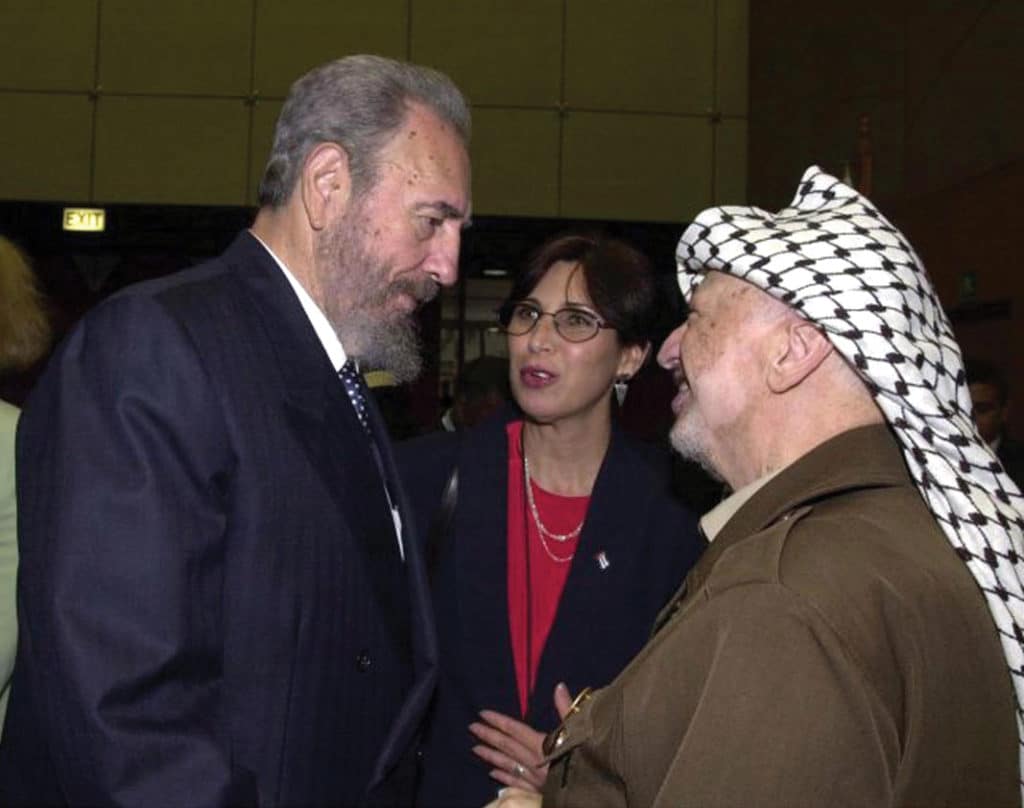
At Durban, in the name of anti-racism, copies of “The Protocols of the Elders of Zion” and flyers of Hitler saying “If Only I Had Won” were distributed. In the name of tolerance, protestors marched toward the Durban Jewish club chanting “Zionism is Nazism.” In the name of progress, cartoons depicting hooked nose Jews sinking their blood-stained teeth into Palestinian children were distributed. Jewish activists were surrounded with chants of “You don’t belong to the Human Race,” and countless speakers, including Yasser Arafat and Fidel Castro, called for the boycotting of Israel as a pariah state. Victims of atrocities from Mexico to Siberia were silenced in the pursuit of spotlighting only the Palestinian struggle, and in accordance with the contemporary bias of the United Nations, notorious human rights abusers were placated while Israeli lawyers were evacuated. Jewish students and interns were traumatized. 

After Durban came the Second Intifada, the globalization of the Boycott, Divestment, and Sanctions movement in academia and in entertainment, and then the clear shift in progressive culture toward anti-Israelism. Many Jews from London to New York have whiplash. We are seeing the impossibility of exterminating the Jews unless the butcher is framed as the blessed.

Anti-Israel activists resurrected the rabid antisemitism of Medieval priests by twisting the language of human rights, our era’s holiest of the holy, and depicting Jews as the ultimate betrayers of all that is just.

At Durban, anti-Israel activists resurrected the rabid antisemitism of Medieval priests by twisting the language of human rights, our era’s holiest of the holy, and depicting Jews as the ultimate betrayers of all that is just. The figure of Judas Iscariot, for example, has taken the form of Jewish heretics depriving Christian peasants of salvation, of Jewish capitalists crushing the proletariat worker, of Jewish communists toppling the business owners. It is not difficult to twist his image once again into the Jewish Zionist depriving the Palestinian Arab of land.

This month, the twentieth anniversary of Durban is set to be celebrated in New York City, even though the United States and over fifteen countries have boycotted the conference.

This month, the twentieth anniversary of Durban is set to be celebrated in New York City, even though the United States and over 15 countries announced boycotts to the event. Expect the usual hijinks to ensue. As the Taliban flexes its muscles over Afghanistan, Israel will no doubt be accused of war crimes, of apartheid as Uighur civil society is decimated by China, and of genocide as Cubans clamor at the altar of a Pfizer vaccine. But it’s not so much the event of “Durban IV” about which I am most concerned, but rather the fact that on campus, young people witness Durban every year. 

The Students for Justice in Palestine chapters who launch BDS and Deadly Exchange Resolutions at our universities are well aware that their activism is futile in inflicting pain upon Israel. This organization is far more concerned with carrying the torch of Resolution 3379 and the torch of Durban: they will spearhead impeachment campaigns against Jewish student government representatives, call for the defunding of Jewish student organizations, boycott Jewish professors and Israeli scholarship, and unleash mobs on social media to decimate the reputation of pro-Israel students. They will do this by calling us racists and white supremacists, brilliantly  reinforcing their fraudulent victimhood. It is an unbeatable strategy, securing a future for these activists and their ideology in law, education, entertainment and politics.

Walking through The Metropolitan Museum of Art in New York earlier this week, I couldn’t help but notice that dozens of visitors surrounded the spectacular paintings of Christ, images that have transfixed half the world for two millennia. After leaving the Christian galleries, I noticed there were no visitors gathered around the ancient Haggadah on the bottom floor. Obviously—for who among us can resist the powerful meaning of that thorny, blood-stained crown? That is the meaning of Durban: nothing more, nothing less, than the millennia-old and tremendously attractive lie of oppression at the hands of the Jews.

Earlier this year at an anti-Israel protest in London, a young man marched with a sign depicting Jesus carrying a cross.  “Don’t let them do it again,” his caption read.


Blake Flayton is New Media Director and columnist at the Jewish Journal.

The Real Meaning of Durban Read More »

Treating Arab Israelis

The change in dynamics of the political relations between Jews and Arabs in Israel is “the most fascinating aspect” of Israel’s politics today. Thus, the new Annual Assessment on the state of the Jewish People, by the Jewish People Policy Institute, summarizes a multifaceted trend that keeps Israel on its toes. Strangely, last year Israel also witnessed a violent crisis in Jewish-Arab relations in Israel, the most severe since year 2000. 

Why the riots happened when Arab Israelis seem to be progressing towards better integration and a more comfortable state of coexistence? No one can say for sure, but a fast-spreading culture of violent crime is certainly a contributing factor. Israel’s Arab citizens are – on average – at the bottom of the education and income ladder. They are chronically underserved by their municipalities, suffer underbudgeting in various areas, and most notably in recent years, have to contend with a high and growing levels of crime and sectoral violence. 

In 2020, the share of Arabs involved in Israeli crime was about forty percent, almost double their share of the population.

The numbers are devastating: In 2020, the share of Arabs involved in Israeli crime was about forty percent, almost double their share of the population. When it comes to the most serious crimes, Arabs are involved in more than sixty percent of murders. The annual ratio of murders among Israeli Arabs is almost 6 Murders per 100,000 citizens. And as one Arab activist commented, that’s higher than the corresponding ratio in countries known for violence such as Sudan and close to the ratio in a country like Bolivia. 

Arabs are also involved in more than sixty percent of arson incidents, almost sixty percent of weapons offenses, almost fifty percent of robberies and about forty percent of extortion offenses. It is almost impossible to write with confidence how many Arabs were killed by criminals this year, because by the time you read it, the numbers will grow (As I write, the number of Arab killed in crime related incidents in 2021 was close to 90). Last Thursday, two Arab youngsters were murdered in the Sharon area. That was a merely a day after President Isaac Herzog warned of “the horrific wave of murders that befall the country in general and Arab society in particular”. He was right, it is heartbreaking.

Who’s to blame for these statistics and this reality? Here’s how politics and identity mix with analysis. Ask many Arabs, and especially their leaders, and they will blame the state for economically neglecting the Arab population. Ask the police, and you’ll hear stories about Arab leaders sabotaging any attempt to improve the situation. Ask members of previous governments, and they will say tell you that the country cannot do much for the Arabs if the Arabs do not cooperate with the attempt to tame corruption and criminals. Ask me and you will get the frustrating answer: all of the above. 

For years, policing problems in Arab cities and in Arab neighborhoods were well-known but unaddressed. The government bears considerable responsibility in this matter, but so does the Arab political representation. The Arab leadership conveys conflicting messages on the issue of law and order. On the one hand, it expresses a desire for more aggressive policing in the Arab sector. On the other hand, it expresses suspicion and sometimes hostility toward the police, and frequently alleges over-policing of Arabs. Ultimately, you can’t have it both ways. Either you let the police function – or you don’t. If police commanders realize that once they operate among Arabs they will be exposed to allegations of racism, heavy handedness, bias, and will not have a strong political backing, the easy path for them is to stay away from trouble. 

You might ask: so why wouldn’t the police include more Arabs as part of its law-enforcement units? The answer is: because a large share of Arabs does not wish to wear the Israeli uniform. Their society is not always welcoming to the uniformed professional.

The result is a stalemate. Everyone knows that there is a crisis. Everyone pretends to want something “done” to resolve it. Everyone looks to the others to be the one doing something. The new government, less ideological and more pragmatic than previous coalitions, could turn its focus to the issue. But it relies on a fragile coalition, and hence, can do nothing that could complicate the ability of its Arab members to keep supporting it. Arab Knesset Members, now in the coalition, have the power to demand more funds and resources. But no one trusts them to also support the policy once the police begin to clash with violent elements in Arab towns. 

Still, if you’d want this article to end on an optimistic note, remember that crisis sometimes presents an opportunity. A justified panic over the potential severity of the situation could motivate the leadership to make a more determined effort toward a life without violence.

Something I wrote in Hebrew

Here I will share paragraphs from what I write in Hebrew (mostly for themadad.com). Last week I published the full list, from best to worst relations, of US Presidents and Israelis PM’s. Here’s what I wrote about the current duo after their first meeting, and the top two couples:

A relationship is built over time, and out of dealing with common challenges. How many of these will Biden and Bennett have? It is not clear. Clinton and Yitzhak Rabin had a significant joint project that occupied both of them. George W. Bush and Ehud Olmert had a short but close relationship. In the parade of couples – who are the presidents and the prime ministers who got along best with each other – it seems to me that these two couples are on top. Itzhak and Bill, George and Ehud. 

A Week’s Numbers

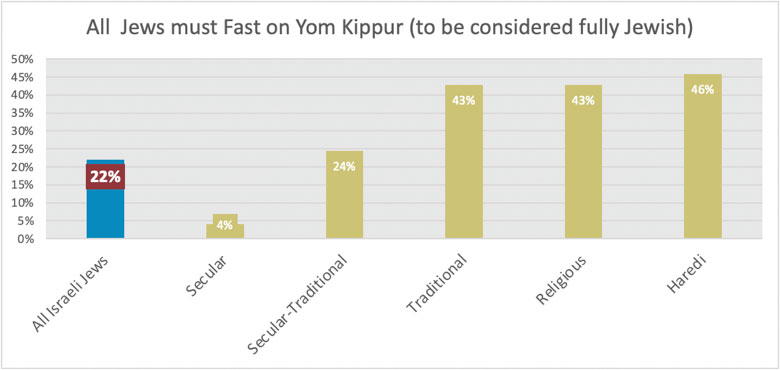
The Who is a Jew project of TheMadad.com asked what “all Jews must do (and if they don’t then they are ‘less Jewish’)”. One of the options was “fast on Yom Kippur”. As you can see, most Israeli Jews (two thirds of which fast on Yom Kippur), would not make this practice a conditional test of Jewishness. 

A Reader’s Response:

Commenting on my conversation on Rosner’s Podcast with historian Andrew Porwancher, about the possibility of Alexander Hamilton being Jewish, Mitchell Barak wrote the following (on Facebook):

“My understanding is that Hamilton’s mother’s husband Johann Michael Lavien was of German origin…. If her [Hamilton’s mother] husband was not practicing and did not live as a Jew, it seems unlikely that his estranged Scottish wife would adopt such practices. On the other hand, if Lavien was Jewish, his wife would have had to convert before marrying him under Danish law at the time. I think the only thing we can say is there is not enough record to say definitively either way.”


Shmuel Rosner is senior political editor. For more analysis of Israeli and international politics, visit Rosner’s Domain at jewishjournal.com/rosnersdomain.

Treating Arab Israelis Read More »

How Not to Do Teshuvah

The message on my phone reads, “If I’ve done anything to offend you in the last year, please forgive me.”  The Teshuva Text. This is what forgiveness before Yom Kippur has come to.

The sentiment (or lack thereof) isn’t a product of the smartphone format. I’ve been receiving phone calls or having awkward in-person conversations of a similar nature for years. You’re put on the spot by a friend, family member or acquaintance—perhaps you don’t even remember the person’s name—to grant their atonement so they can be sealed in the Book of Life for another year. What can you do, right? So you respond, “Of course! And if there’s anything I did, please forgive me!” before continuing on with the superficial relationship.

It may sound glib to take issue with something so seemingly innocuous, but this thoughtless act is troubling for so many reasons. Most importantly, it completely misses what teshuvah is about. Poorly mistranslated as repentance, teshuvah literally means “return.” Judaism believes human beings are inherently good. Our “sins” (also a poor translation) don’t so much “make us bad” but instead function to create a barrier to our relationship with God. The same is true with the people in our lives, except for us the divide is tangible. Religious and spiritual ramifications aside, the act of teshuvah creates a special time where sincerely seeking out forgiveness is far more welcome by offended parties. 

Let’s look at the superficial apology again.

“If I’ve done anything to offend you …” 

Let’s assume there is something you’ve done wrong.

If the relationship is worth continuing, one would hope it is also worth deepening. How do you make something deeper? You dig. Chances are if you give it a few minutes’ thought, you’ll find something. You were late, you forgot to use a coaster, you disagreed publicly on a Facebook forum, humiliating them by lambasting their point of view. You know, the small stuff. If nothing comes up, then consider changes in their behavior such as: instances of awkwardness, unease in conversation, etc., and meditate on those. Unusual moments you overlooked may unlock clues you’ve been subconsciously avoiding. 

“… please forgive me.”

Once you’ve pinpointed what it is you have done to offend someone, you may feel the person is wrongly offended. Their fixation on some little thing you did is surely an indication of their obsession. Now, that may be the case, but part of this process is the effort to understand their point of view. That’s the growth part of teshuvah. You don’t have to agree, but at least try to see the other side. 

Let’s say you go through this process, but you just can’t come up with anything. Fine, go back to the template, “If I did anything in the last year to offend you …” 

But this time don’t say you’re sorry. Instead finish that sentence, “Please tell me what I did.” Maybe even add, “It’s the only way I will grow and better understand you.”

By using this format, you’ve opened the door for the offended party to be authentic and to actually create that change. It also shows you care and want to make sure your relationship is solid. Maybe you’ve got nothing to worry about. But maybe you learn that you did something of which you were unaware, something that was a problem whether you realized it or not.

Teshuvah is about reflecting on your life, contemplating the traps you all-too-frequently fall into, and then deciding to make a change.

Teshuvah is about reflecting on your life, contemplating the traps you all-too-frequently fall into, and then deciding to make a change. To do it with God is hard enough, but we know He is going to forgive us, so there’s no risk of backlash. But that’s not the case for our relationships, especially when family is involved. 

When you go through the process of teshuvah properly, you not only learn about yourself, but you also learn about the other person. Why do you keep doing the thing that upsets them? Do you really care about their feelings?

When you go through the process of teshuvah properly, you not only learn about yourself, but you also learn about the other person. Why do you keep doing the thing that upsets them? Do you really care about their feelings? Are you still mad about something you didn’t even realize and it’s coming out in ways you haven’t realized because the issue is unresolved? It’s when you put that effort into the relationship that you become closer than if you had never upset them at all because you have a deeper understanding of all parties involved. From that approach, a transgression can become a merit, and a relationship can be resurrected.


Benjamin Elterman is a screenwriter, blogger and speech coach who has worked for Aish.com, OpenDor Media, as well as his own blog SixDegreesOfKosherBacon.com. He is also the founder of MitzvahSpeeches.com, where he works one-on-one with students to craft moving and personal bar and bat mitzvah speeches.

How Not to Do Teshuvah Read More »