fbpx

September 9, 2021

Taliban Says They’re Open to Relations with US But Not Israel

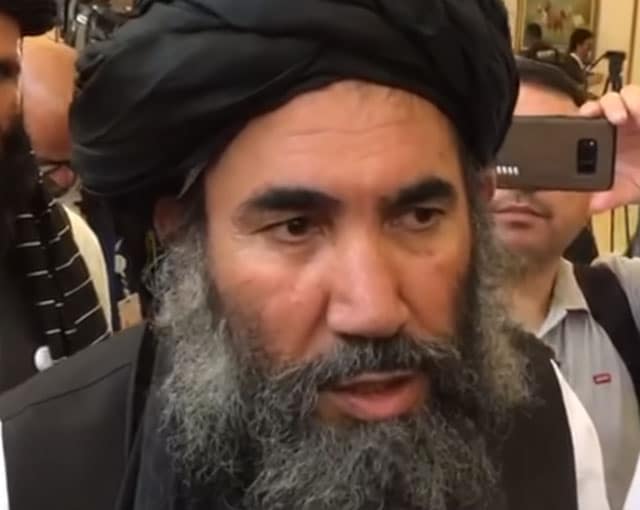
A spokesperson for the Taliban said on September 7 that they’re open to establishing relations with all countries, including the United States, but not Israel.

The Times of Israel reported that the spokesperson, Suhail Shaheen told Sputnik News, “In a new chapter if America wants to have a relation with us, which could be in the interest of both countries and both peoples, and if they want to participate in the reconstruction of Afghanistan, they are welcome.”

He added: “Of course, we won’t have any relation with Israel. We want to have relations with other countries, Israel is not among these countries.”

Various Jewish and Israeli Twitter users weighed in.

“I’m sure #Israel is just heartbroken not to have diplomatic relations with the Taliban,” Club Z tweeted.

“Israel should be honored that the Taliban doesn’t want to establish relations with the Jewish state,” Mark Dubowitz, CEO of Foundation for Defense of Democracies, tweeted. “Any country that does establish relations with this murderous terror group should be ashamed.”

Attorney David Lurie noted in a tweet that “the Taliban, whose government is led by allies of Al Qaeda, does desire a close relationship with the government of China, which is embarked [in] a massive genocide of Muslims living adjacent to the Afghan border.”

Author David Hazony tweeted, “A really easy red flag for deep anti-Semitism is anyone who would rather deal with their sworn enemies than with Jews.”

Former Miss Iraq Sarah Idan argued in a tweet that the U.S. “will ALWAYS be ‘Big Satan’ and Israel ‘Little Satan’ to radical Islamists. This ceasefire is so they can grow bigger and stronger then guess who will they attack first when they’re powerful?”

https://twitter.com/RealSarahIdan/status/1435330496674754560?s=20

The Times of Israel noted that Shaheen conducted an interview with a journalist from the Israeli public broadcasting network Kan in August, although Shaheen claimed that he had no idea he was speaking to an Israeli.

The Taliban has taken over the Afghan government since the Biden administration withdrew U.S. forces from Afghanistan. A spokesperson for the State Department said they were perturbed that the Taliban government “consists exclusively of individuals who are members of the Taliban or their close associates and no women” and that the Taliban needs to “ensure that Afghan soil is not used to threaten any other countries and allow humanitarian access in support of the Afghan people.”

Taliban Says They’re Open to Relations with US But Not Israel Read More »

Finding Spiritual Healing During Days of Awe

[SCROLL TO BOTTOM FOR RABBI EVA’S MEDITATION]

There is a reason many people gained weight during COVID — they were feeding their anxiety, eating and drinking to numb the pain. Depression and mental illness increased forty percent this past year. In a world full of chaos, where the environment is disintegrating, individuals have become combatants; bodies are threatened by a powerful virus; stress, fear and insecurity are running rampant. We live in an upside-down world that challenges our sense of balance and groundedness.

But it is precisely in times of stress, conflict or confusion that we need to be tranquil and centered so that we can tolerate difficulty, hold disparity and dissonance, and be able to respond with strength and serenity.

While craving comfort food, we must find purpose in this shattered world, knowing there are some things we cannot control. What we do have is the power to change ourselves and find ways to support our well-being, including a different kind of comfort food: spiritual nourishment. 

It is precisely because of the overwhelming stressors in our physical and political environment that we must turn to our tradition, to pray, to call out and express our deep anguish. We long to find meaning in suffering and light in the darkness. We want to feel centered and whole in the midst of the terror that swirls around us. 

Now, as we enter the holy days before us, is when we need to enter sacred time to find solace, to seek answers, to lift up our eyes so we can see the world with some semblance of wonder and discover a moment to celebrate. As Roald Dahl taught, “Above all, watch with glittering eyes the whole world around you because the greatest secrets are always hidden in the most unlikely places.” It is a time to shift our vision from calamity to possibility. 

Our sages understood stress and chaos because they lived it. Yet, they marked the year with Holy Days as touchstones for connection, for memory and honoring the past, for reviving the present and instilling hope for the future. They created opportunities to share with others in psycho-spiritual renewal through ritual, prayer, study and song, each offering a different vision for Jewish growth. 

Rosh Hashanah and Yom Kippur together encapsulate all of life, from birth to death, from celebration to grief…the days in between are for change—learning who we are, how we have behaved, where we missed the mark, who we have hurt and how to redeem ourselves. 

Rosh Hashanah and Yom Kippur together encapsulate all of life, from birth to death, from celebration to grief. Rosh Hashanah is the Birthday of the World and the first human, while Yom Kippur is the acknowledgement of our end, a rehearsal for our death. The days in between are for change—learning who we are, how we have behaved, where we missed the mark, who we have hurt and how to redeem ourselves.

These Days of Awe are a microcosm of life, beginning in birth and celebration, tapping into gratitude and humility before the vast infinitude of Creation and its Source, what Kabbalah refers to as “Ayn Sof,” that which is without end. We take an accounting of ourselves and spend ten days rebuilding our relationships, realizing we have agency for change. Then on Yom Kippur we come, after making personal reconciliation, in white shrouds, brought to our knees in weakness, aware of our mortality. “Adam y’sodo mey-afar v’sofo leh-afar,” “Our origin is dust and our end is dust.”

If there was a time to engage in a healing ritual it is now, when we are stripped down to our basic core, fragile, hungry, dehydrated, calling out and praying—whether on Zoom or at the beach.

If there was a time to engage in a healing ritual it is now, when we are stripped down to our basic core, fragile, hungry, dehydrated, calling out and praying—whether on Zoom or at the beach. It is on this day that we fall on our face, prone on the floor, the ultimate surrender, whether to the Judge, King, Father or the Shepherd, or the Shechinah, the Queen, the Mother or the Shepherdess. The language is ancient, but the images provoke the existential reality we all confront, the need for acceptance, love and compassion. The desire to be forgiven for both intentional and unintentional behaviors that caused others pain. To face the guilt and shame we bury inside, renewed and re-invigorated for the coming year.

Rabbi Simcha Bunim of Peshischa would keep two pieces of paper in his pockets at all times. One said, “I am a speck of dust,” and the other, “The world was created for me.” In moments of arrogance he would look at the first paper, reminding himself of his place in the universe, that he was just a speck of dust, and in moments when he felt worthless, he looked at the other paper, reminded that he was born with a purpose and the world was created for him. These statements represent Rosh Hashana and Yom Kippur. We are reminded, as we celebrate the New Year, that God wanted us in this world, and to celebrate the majesty of such a miracle. On Yom Kippur, despite all we acquire or accomplish, in the end we are but a speck of dust. It is what we do in between that impacts the outcome of our life.

We all die; we just don’t know when or how. All we can do is make every moment count. As Psalm 90 expresses it, “Teach us to count our days.” It means that we should make our days count.

We all die; we just don’t know when or how. All we can do is make every moment count. As Psalm 90 expresses it, “Teach us to count our days.” It means that we should make our days count. Through engagement with soul searching, study, prayer, meditation and deeds of loving-kindness, we elevate ourselves and attach ourselves to God, the spiritual skeleton that holds us up, keeps us steady, and reminds us that we are not alone. 

These Days of Awe shimmer with magnificent liminal moments, with mystery, and extraordinary beauty, if only to let a few musical notes pierce your heart and release a tear. As Abraham Heschel teaches, “One must be overawed … ready to perceive eternity in a single moment.” In that moment, we are reminded of our humanity—both our vulnerability and our capacity for transformation. 

I offer you a gift, a brief meditation to help you find peace in these trying times. To feel the breath of life and connection to Creation and its source, the Holy One. May you enter these “awesome” days and find new vision and vitality for the coming year.

Shana Tova.


Eva Robbins is a rabbi, cantor, artist and the author of “Spiritual Surgery: A Journey of Healing Mind, Body and Spirit.”

Finding Spiritual Healing During Days of Awe Read More »

Standing Against Amazon Shul

In June, Blair and I and the kids travelled to Miami to meet some of our closest friends, the Koettlers, a family we befriended when we lived in Jerusalem.  We visit with them each time we visit Jerusalem, and we usually travel with them to the beach in Tel Aviv.  This time we all travelled to the beach in Miami.  After the lockdown of the Pandemic, both families wanted to get out and for the kids to have fun so an itinerary was created that included a trip to the Florida Everglades.

So both, our family of 5 and their 7, our families drove up in a 12 passenger van to the swamps.  We walked down a raised wooden pier and boarded a big airboat.  An airboat is basically a large flat metal 30 person bathtub with a giant propeller on the back.

We met Gary, our swamp guide, who was born and raised in that area.  He knew everything about the wildlife.  We saw turtles from a distance.  And then he blew a kind of duck whistle and threw fish onto the water and low and behold, within moments, two giant alligators appeared next to our boat.  In my opinion, way too close for comfort.  In Gary’s opinion, we were fine because most alligators are usually friendly.  Long story short, we all survived.

In fact, we enjoyed it so much that after the boat trip, I asked Gary if my family could take a picture with him.  It was a great photo.  And then the Koettlers asked me to take a picture of them.  Because they have 7 people, and their kids are younger and don’t smush together as easily, I stepped back to get everybody in the picture, and then I stepped back again… And I fell back right off the wooden pier.

As I’m falling, and I don’t know if I’m going to land in the swamp or the grass hill, I take my phone and throw it off to the side behind me, hoping that it wouldn’t get wet.  As it turns out, I landed on my back on the grass incline a few feet below the pier.  Everybody – my wife Blair especially – was laughing their heads off.  Then I noticed that my phone bounced off of the grass hill and landed in the swamp water.  Without even thinking, I immediately reach out my right hand toward the water, and every swamp guide started screaming for me to stop.

Why am I sharing this story with you?  Our phones are not just phones.  They represent all the technology in the world.  Emails, libraries, Zoom, YouTube, Amazon Prime are all on our phones.  It’s the tool we use to communicate, shop, entertain, and access information.  In many ways, unfortunately, our phones are our lives.

Even in an alligator infested swamp, I didn’t hesitate to reach out to try to save my phone.  I admit that I reached for the wrong connection.

Unlike me in that swamp, I want to thank all of us here today and watching at home – engaged in the service – I offer my wholehearted Kol HaKavod to all of us collectively for reaching for the right connect, for reaching for synagogue life.

The reason I bring this up today is because I sense that that the larger Jewish world stands at a precipice.  We find ourselves falling in a precarious position.  If we’re not careful, technology may soon devour most of what we know as synagogue life.

When we decided to begin Zooming Shabbat services at the outset of the pandemic, I warned the community of a Pandora’s Box nature of the decision, wherein we should expect unexpected repercussions.  It’s true that the streaming is successful and provides access to those who are home with health concerns.  I’m so proud that this synagogue has managed to maintain a bond with those of us who remain home sick or immunocompromised.  For that reason we engaged with this tool.  And I still believe it was the right thing to do.  We provided relationship for those of us at home and we still provide a connection for those of us who are hesitant to return because of health concerns.

Yet, one of the unintended consequences is that many people prefer accessing synagogue services from the comfort and certainty of their own home at the time of their choosing.  In this way, streaming services is no different than Netflix, or Apple Music, or YouTube.  We watch services when we want, where we want.  Don’t get me wrong, I understand the appeal of waking up late, not getting dressed, not fighting traffic, and not looking for parking.  But there’s also a danger.  If we’re not careful, all of services will be streamed.  More and more, synagogue buildings will disappear.  And I think that would be a tremendous loss.

I understand the appeal of waking up late, not getting dressed, not fighting traffic, and not looking for parking.  But there’s also a danger.

Last year, on an episode of my YouTube program the “The Rabbi’s Neighborhood” with Rabbi Ed Feinstein, we discussed the role of the bookstore in a community.  Does everybody remember the old fashioned bookstore with shelves and books of somebody else’s choosing?  By and large, they’re gone.  We didn’t realize bookstores were in jeopardy.  Nobody warned us.  So, for the most part, we didn’t fight for bookstores.

The New Yorker published an article in 2012, almost a decade ago, titled “The Bookstore Brain” by Sam Sacks where he stated that “bookstores are human places…” Sacks explained that “The chance of discovery is vital to the act of book-browsing.”

Here, in this community, I love seeing congregants involved in “the chance of discovery” whether it be looking at another page of the Siddur or Machzor, or learning new concepts in our adult education courses, or bumping into friends at a program.  It’s hard to bump into anybody on Zoom.  I believed in discovery when I began the Yom Kippur Book Club.  Our tradition is wide and varied, and we need different access points to engage.  This “chance of discovery” is part of what makes this community so special.

It’s hard to bump into anybody on Zoom…This “chance of discovery” is part of what makes this community so special.

Last year, I argued that our community is more than a building.  I stand by that argument.  This year, I’ll add onto that speech that virtual communities are not the same as real life communities.  All I have to do is point to my Facebook account with thousands of friends, but very few who I’ve ever met or really know IRL – In Real Life.

Synagogues are also human places.  I don’t think I’m telling you a lot of new information.  I’m sure that you can feel much of society shifting this way.  Work life is changing.  School is changing.

I get one chance to ring a bell to raise your awareness on an issue.  I usually do it today.  I’d like to discuss the issue of synagogue life before it goes the way of book stores, and Blockbuster, and soon movie theaters and so many other parts of our social fabric.

We have to advocate for synagogue life.  And, we have to start prioritizing it now.

For if we don’t make synagogue a priority, and we don’t show up, then we could very easily and very quickly find ourselves in Amazon Shuls.  What do I mean by an Amazon shul?

Amazon currently operates approximately 20 Go Stores, and 26 Go Grocery Stores in the country.  The Amazon Go Store which contains what you’d imagine as similar to a 7-11, has no employees in the store.  You simply walk in and the app on your phone recognizes what you take and charges your credit card on file.  All human interaction has been stripped away.  It fosters efficiency.  It’s catered to what you want.  And I think it’s a shame.

In just a few weeks we will read at the beginning of the Torah, God looks at humankind and says,

לֹא־ט֛וֹב הֱי֥וֹת הָֽאָדָ֖ם לְבַדּ֑וֹ

Usually translated as “It’s not good for man to be LEVAD alone.” (Gen 2)

Today for this purpose, I suggest reading the Hebrew word VAD, as cloth or fabric, meaning that “It’s not good for a human to always be cut in his or her own cloth.”  We must be part of a larger social fabric.

We’re losing the human interactions of our collective social fabric in favor of a more technological, more isolated, more partisan, more extreme experience.  Today, Apple Music only plays me preselected songs I like when I want – Beatles, Billy Joel, James Taylor, and Elton John – might be the only music I ever listen to for the rest of my life.  I’ll be trapped.  It’s terrible.  There’s no more chance for me to encounter new music on the radio.  When we shop for groceries online, our previous orders pop up to expedite the process, so we order the same foods over and over again.  There’s little chance of discovery.  Our news is curated for us from sources whose views we prefer so we don’t become aggravated.  I’d argue that we also don’t grow.  The physical bookstore, the library, offers us a chance to see the book we didn’t know existed.

The American Jewish community spent decades, even generations, building beautiful synagogue communities – Conservative, Reform, and Orthodox – that all served crucial roles during the pandemic.  Now, as the pandemic begins to lift, many face similar challenges of personal convenience whether it be the role of technology or a small neighborhood backyard minyan.

The American Jewish community spent decades, even generations, building beautiful synagogue communities – Conservative, Reform, and Orthodox – that all served crucial roles during the pandemic.  Now, as the pandemic begins to lift, many face similar challenges of personal convenience whether it be the role of technology or a small neighborhood backyard minyan.

HaAretz published an article on May 4, 2021, about the work of Mouna Maroun, the first Israeli-Arab woman to become a professor of neurobiology and to head an Israeli University Department in Neuroscience.  In the article she observed that, “I think that children are the population group that was most affected by the pandemic. They suffered the greatest damage in the past year: They had minimal social interaction, they did their learning via Zoom, they were glued to screens. I believe that in the future we will see impairment of their social abilities as well as emotional problems.”

I think adults have been affected as well.  On August 22, 2021, The Wall Street Journal published an article titled “Remote Work May Now Last for Two Years, Worrying Some Bosses.” It observed that executives are worried that the longer employees work form home the less willing they are to return to offices, ever.

Don’t get me wrong, the streaming will continue here as it’s intended to provide access for those still worried about the health conditions.  We understand the pandemic is not yet over, new strands still emerge, and the technology allows us all to remain together.  And that’s crucial.

But, the pandemic will be over one day, and most are forgetting the significance of knowing our neighbor, and the chit chat with our coworker outside of meetings, and our ability to make new friends and hear new stories, the special feeling we sense when we pray together or learn together, the meaning of the hugs we receive in Shul.

And for those of us who do get it, and I believe most of us do which is why we’re engaged, it’s time to explain to others, why our synagogue community is so important to us.

For if we don’t fight for synagogues, then they’ll go away like bookstores.  Before too long, you might see Cantor Schatz and I standing in front of a green screen and we will lead High Holidays in front of a digital background of our beautiful sanctuary or perhaps a rendering of the Holy Temple.  No hassle of getting dressed or parking.  No building fee for the facility.  It will be available at your leisure.  We have to ask ourselves now, is that what we really want?

The good news is that it’s not too late.  We are a community of dreamers and doers.  We dreamed up Shabbat Across Adat.  We dreamed up Film Screenings about Jewish Identity.  We dreamed up musical concerts.

It’s time to dream again.  Not about if they’re going to happen, but how they will happen again soon.  Shabbat Across Adat will return.  And some of us will feel comfortable in backyards and some of us will feel comfortable in one another’s homes, while some of us might still prefer Zoom.  A new option will be that some of us can utilize this patio.  The synagogue will begin providing space for groups to meet for Shabbat dinner, for Sukkot get togethers.  Keep an eye out for more details.

Our virtual trips to Jerusalem and our upcoming virtual trips to Tel Aviv, cannot replace our synagogue trip to Israel.  We’re going to have to recommit ourselves to that trip as soon as the time is right.

But all of us have to champion the very simple notion that the synagogue, in particular this synagogue, as a house of Jewish life and spirituality must be important to us.  I know how amazing it is for many to attend services at synagogues around the world on YouTube.  It’s the blessing of technology.  But the blessing of humanity, of a home synagogue community, is the ability to celebrate Simchas together with encouragement and hugs of Mazel Tov, and to console one another, sitting together in times of mourning.  You can’t get that through virtual attendance of synagogues halfway around the world.

I’m not afraid of change.  I am afraid of loss without warning.  So, here’s the warning.  Synagogue life will irreparably change unless we support it.

We stand here on Rosh Hashanah and the liturgy tells us that our fate is not sealed.  Today we acknowledge we can help direct our future.

So here’s my simple suggestion, join me in supporting this synagogue.  Some of us feel like we’ve been falling for the last year, maybe more.  Let’s not reach for our technology.  Let’s reach for our humanity.  Let’s reach for one another.  Let’s reach for this community, for Torah, for learning, for our sense of togetherness.

Someday soon, you will see articles about the giant synagogues in Los Angeles, who have been converted into Jewish content creation studios without much human experience.  They will be lauded for their ability to adapt.  I don’t want that for Adat Shalom.  And judging by your engagement today, I don’t think you do either.

Let’s decide today that Adat Shalom will be an outlier.  Let’s celebrate our nature, our size, and our campus.  Let them tell the story of the great synagogue community of Adat Shalom that fought for the basic notion of Jewish community in real life.

For someday soon, there will be Jews in Wyoming who will be lying in their pajamas in bed on a Tuesday evening while streaming Shabbat services from their Synagogue in Los Angeles, using a virtual background of Jerusalem.

Let us be the Shul that prioritizes Shabbat Dinner on Friday Night in person, accessible in different ways, but always cognizant of the fact that our tradition wanted us all – us all – to surround the candles at that exact moment, so that Divine flicker could illuminate within us a sense of our tradition, a sense of one another, a sense of the power of our togetherness.

Shanah Tovah – may this year be one filled with health, happiness, humanity, compassion, and the chance of discovery. Happy 5782!


Rabbi Nolan Lebovitz is the Rabbi at Adat Shalom in Los Angeles, directed the documentary “Roadmap Jerusalem” and is pursuing his PhD at Claremont Graduate University.

Standing Against Amazon Shul Read More »

“Celebrating” 20 Years Since the UN Durban Hatefest

In early September 2001, the great and the good of the world’s human rights community gathered in Durban, South Africa for a conference called to eliminate racism and discrimination. They met just a few days after an inhuman atrocity in Jerusalem which killed and maimed Israelis in a pizzeria filled with teenagers and young families. But the Durban participants made no mention of Palestinian bombings or of the victims; for the self-proclaimed leaders of international morality, Israelis do not have human rights. Instead, participants from the UN and powerful non-governmental organizations (NGOs) focused on demonizing Israel and Zionism. 

Durban was the blueprint for the 21st century antisemitism. Caricatures of Jews with fangs dripping blood were distributed by the Arab Lawyers Union, and delegates picked up copies of the Protocols of the Elders of Zion forgery. 

Durban was the blueprint for the 21st century antisemitism. Caricatures of Jews with fangs dripping blood were distributed by the Arab Lawyers Union, and delegates picked up copies of the Protocols of the Elders of Zion forgery. Hate literature and speeches denouncing Israeli “apartheid” were accompanied by well-organized mass marches through the streets, with placards declaring “Zionism is racism.” 

The late Tom Lantos, a member of Congress from California, Holocaust survivor, and part of the US delegation referred to Durban as “the most sickening display of hate for Jews I have seen since the Nazi period.” Prof Irwin Colter, from the Canadian delegation, later declared, “If 9/11 was the Kristallnacht of terror, then Durban was the Mein Kampf.” Adding to the virulent atmosphere, Yasir Arafat and Palestinian propagandist Hanan Ashwari were flown in to denounce Israeli “apartheid.” 

To their credit, the official American and Israeli delegations walked out of the diplomatic forum, and the Europeans, Canada and others negotiated a softer version of the final text. 

But the UN officials, led by Human Rights High Commissioner Mary Robinson, and her powerful NGO allies, raised no objections — on the contrary, they were active participants in the hatefest. In the workshops and main plenary with 5000 participants, the few NGO delegates who were not part of the anti-Israel network were silenced. 

The UN and NGO leaders were not caught by surprise — far from it. The plan to hijack this was hatched months before, at a UN preparatory conference in Tehran. There, the strategy of equating Israel to apartheid South Africa was developed into a full-scale war plan.

At Durban, the NGO Final Declaration and Program of Action, composed in Tehran, was a battle plan for political war. Israel was labeled as a “racist apartheid state”, guilty of “genocide,” and racist crimes against Palestinians.” All countries were called upon to implement policies for “the complete isolation of Israel as an apartheid state.” After this hate document was adopted, the participants celebrated. 

The Durban process, from before Tehran until the final declaration, was largely directed by powerful NGOs — particularly Human Rights Watch (HRW), and its Palestinian partners. Before the opening sessions, HRW Executive Director, who has a long record of hostility towards Israel, told an interviewer, “Clearly Israeli racist practices are an appropriate topic.”  During the NGO Forum, Reed Brody, who headed the HRW delegation, joined in blocking the participation of Jewish delegates, as noted by Lantos, Professor Anne Bayefsky, and others. Other participants recalled that HRW’s “silence was quite distressing.”

After HRW founder Bob Bernstein and donors voiced criticism, HRW claimed to have condemned the final resolution. Their version was repeated in an April 2021 New York Times article touting the latest HRW “apartheid” campaign, and quoting Brody supposedly telling the Forum that it is “wrong to equate Zionism with racism.” All of the evidence suggests otherwise. 

Indeed, immediately after Durban, the same NGOs and UN allies moved to implement the strategy. HRW led the other groups with allegations of war crimes following every Israeli response to terror, whether from Hamas in Gaza or Hezbollah from Lebanon. In 2021, HRW has continued to publish a flood of “reports” and pushing demonization further with each step. They even invented and promoted a unique definition of apartheid to lobby the International Criminal Court to open investigations against Israelis. In parallel, the HRW and the NGO network promote boycotts targeting Israeli universities and businesses, athletes and cultural events, often joined by church groups with classical theological antisemitic agendas under the banner of BDS (boycotts, divestment and sanctions).

The constant drumbeat from Durban has contributed significantly to violent antisemitic attacks worldwide… Nevertheless, the Durban framework remains on the UN’s permanent agenda.

The constant drumbeat from Durban has contributed significantly to violent antisemitic attacks worldwide. Recent statistics from the US, Britain, and European countries highlight the hate directed against Jews and Jewish or Israeli targets. 

Nevertheless, the Durban framework remains on the UN’s permanent agenda. On September 22, the General Assembly will host Durban 4 — a one day low-profile event in which officials and affiliated NGOs will “celebrate” the successes. To their credit, President Biden and the leaders of Canada, Britain, and a number of European officials announced that their governments will not participate. 

But the echoes of the original anti-racist hatefest continue, with the ongoing antisemitism and obsessive Israel-bashing under the façade of human rights. Now, as in 2001, many of those who claim to speak in the name of morality and law continue to support the perpetrators of inhuman brutality, and erase the victims of terror and injustice. This is the legacy of Durban after 20 years.


Gerald Steinberg is emeritus professor of political science at Bar-Ilan University and heads the Institute for NGO Research in Jerusalem.

“Celebrating” 20 Years Since the UN Durban Hatefest Read More »

A Moment in Time: The Essence of Yom Kippur

Dear all,

As I was prepping comments for Yom Kippur (the Day of Atonement), I was wracking by brain to finds words to express the core meaning of this Holy time.

Yes, it’s about reflection.
Yes, it’s about remembering.
Yes, it’s about repentance.
Yes, it’s about resolutions.
Yes, it’s about revisiting our past and rewriting our future.

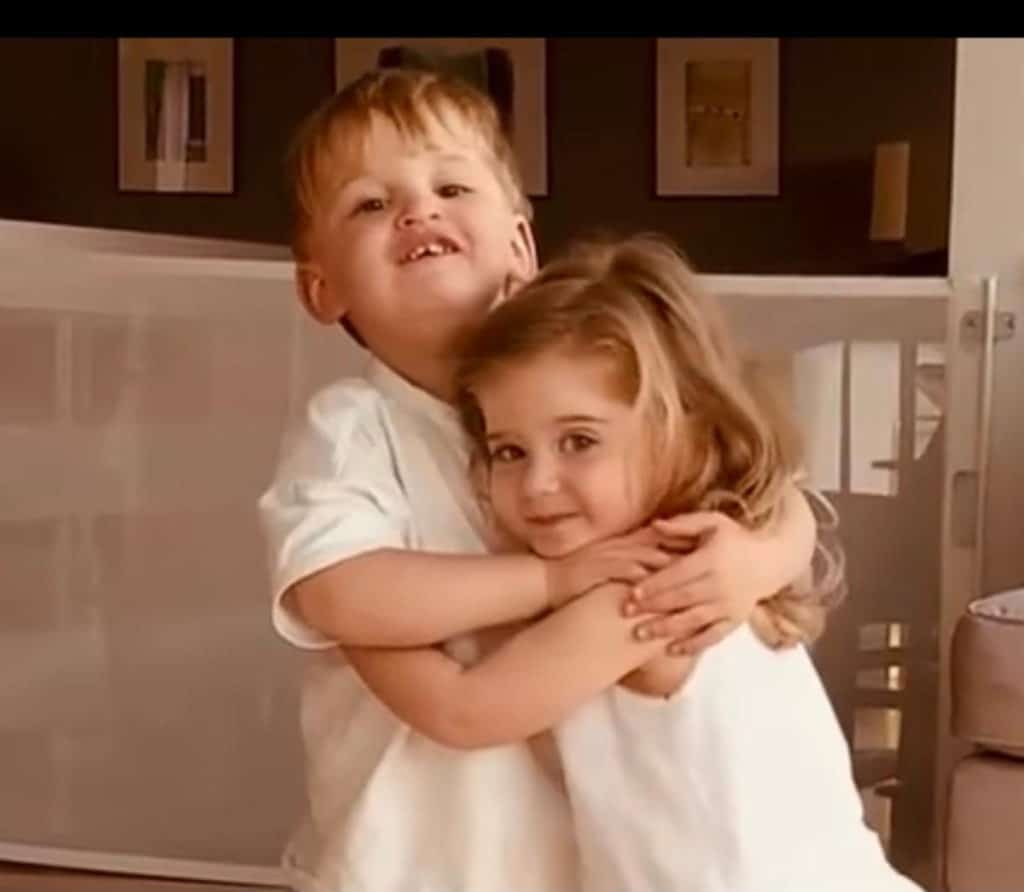
As I wrote, I looked up and saw my dear children hugging one another. And in that moment in time I got it. The essence of Yom Kippur is about relationship building.

Relationships with those we love.
Relationships with our neighbors.
Relationships with our people.
Relationships with ourselves.
Relationships with God.

We’ve all experienced broken relationships. Yom Kippur is a time to mend them.

May it be a day of meaning for all.

Gamar Chatima Tova (may you be sealed with goodness in the Book of Life).


Rabbi Zach Shapiro

A Moment in Time: The Essence of Yom Kippur Read More »

Are You Living Your Eulogy or Your Resume?

When I was younger I had an inspiration: I would call my grandmother every Friday, wherever I was in the world, every Friday afternoon, to wish her Shabbat shalom. When I would think, “Oh I need to call my grandmother, it’s Friday afternoon and she’s expecting it,” the call became utilitarian, a chore to cross off a list. But when, in the middle of our conversation, I would tell a joke and she would laugh and her laughter would make me laugh, and we would delight in each other’s joy, well then, we both forgot this was a chore, a task, an obligation. In those instances, the encounter became its own justification. 

The philosopher Martin Buber had a famous idea to explain the two modes by which people interact with the world. Most of the time we interact with the world—which includes other people—pragmatically, for what we can get out of the relationship. That practical kind of relationship he calls “I-It.” An I-It relationship is one in which we treat what we are relating to as an object for utilitarian benefit. Now, Buber says there is nothing wrong with I-It relationships. In fact, most of the time that is the level on which we must live our daily lives.  

But, says Buber, the one thing that is never found in an I-It-relationship is holiness or God. God is found exclusively in what he calls, I-Thou relationships, where both partners are fully present in the moment, fully present as human beings, not as a means to an end, but with relationship and encounter as itself the goal. When I told jokes to my grandmother and we delighted in the happiness of the moment, we were both fully present, we were both experiencing a classic I-Thou moment.

Buber reminds us that our job as people and as Jews is to remain open to the eruption of I-Thou all the time.  

But we can’t become aware that an I-Thou moment is happening. The second we try too hard to create an I-Thou, it starts to become an I-It. 

I-Thou, encounter for its own sake, is where true holiness abides. Buber reminds us that our job as people and as Jews is to remain open to the eruption of I-Thou all the time. We cannot plan for it; we cannot make it happen. We cannot force it. We just remain open at that instant, to be totally present to the one in whose presence we are. Buber insists that this open presence is the only way for holiness to enter our lives.  

We have all slogged through an unprecedented year and a half—emerging coronavirus, sheltering at home, partisan upheaval, global disruption of travel and local disruption of our normal social connections. Many of us went almost a year without getting to hug parents or children, without the comfort of synagogue or gym, without the rhythm of work and weekend. Opportunities for I-Thou were swept away, and we were trapped in a world of I-It. Our practical needs were addressed, but at the cost of isolation, illness, fear and contagion.

This year’s isolation forced me to reflect on what the isolation taught us: just how life-giving our time together is. And isn’t that also the message of this holy season? In the words of the ancient rabbis, in order for God to be crowned as Monarch, there has to be a community. We, and God, come alive when we are together. And that gathering asks us to focus on open encounter and deep connection, rather than using each other for our own benefit.

Many of us went almost a year without getting to hug parents or children, without the comfort of synagogue or gym, without the rhythm of work and weekend. Opportunities for I-Thou were swept away, and we were trapped in a world of I-It. 

In that vein, I heard a remarkable talk—a Ted Talk by David Brooks, a columnist for The New York Times. The title of his talk was: “Are you living your resume, or are you living your eulogy?”  

Resumes are composed of the title that we have held, the institutions with which we have been affiliated, the projects we have participated in or supervised. And much of our waking hours are spent building up our resumes. But I tell you as a rabbi who has performed hundreds of funerals, nobody wants their eulogy to be about how often they missed dinner at home so they could put in extra time at work. Nobody has ever asked me to say during the eulogy: He was in flights so often for business that he made Lifetime Platinum! Because what matters when you give a eulogy is not I-It. What matters at the end is I-Thou: What kind of a friend was this person? What kind of a mother and spouse was this person? What was the quality of their parenting, or their grandparenting? What kind of a mentor were they to people who turned to them? What kind of a presence were they in the community? Did they extend themselves charitably for others? Could we count on them for a smile? Were they there to help make the minyan? Were they there to volunteer for a good cause?  

Those beautiful human things are, interestingly, the things people want to recall at the funeral of a loved one. But if we spend our time focusing only on the resume aspects of our life, that comes at the price of the eulogy part. (I am not saying to disregard our careers. I am all in favor of people earning large sums of money. I am a fundraiser, after all, and I’ll be happy to help you disperse those extra funds!) If all we do is amass money and things, and we don’t reserve time to love, to live, and to encounter, then we don’t actually live. We just pass time transferring assets from one agency to another. There is no gain for such a life.  

And I can tell you what is lost for the people who love us. What they really want from us is to have a meal together. They want a phone call. They want a smile. They want a spontaneous “I thought of you and I got this for you!” What everyone is starving for is, I-Thou, because everyone is starving for real connection, real relationship. Build our resume, do great things in the world. Make a difference professionally. That’s also a core part of human life. And in this regard, I think that Brooks was pushing too hard, for he seemed to suggest that one mode is better than the other. I disagree, and Judaism does too. Let’s be explicit: Judaism commands us—work six days a week and you rest on one day. Work is a mitzvah, but it’s not the same thing as life. And rest is also a commandment.

What [people who love us] really want from us is to have a meal together. They want a phone call. They want a smile. They want a spontaneous “I thought of you and I got this for you!” What everyone is starving for is, I-Thou, because everyone is starving for real connection, real relationship. 

Even our language perpetuates the focus on resume activities rather than eulogy encounters. In English, what is the expression we use for when we are not at work?  That’s “a day off.” Isn’t that nuts? That we are “off” when we are not working? And if you are like most of us, we make ourselves smell and look attractive and put on our good clothing to be with people who are not really part of our lives, and when we come home to hang out with the people we actually care about, we look shlubby.

I want us to use these Holy Days—and to begin to emerge from our social distancing—by living not only our resume, but our eulogy. Because here’s the thing: none of us will be around to decide what goes into the eulogy. And so if we have a good heart, a caring heart, a loving heart, the only way for those things to make it into the eulogy is to make sure that the people who are going to be there to tell the rabbi what’s in our eulogy, have personally experienced that big heart. They won’t know about it by the words that we instruct them to say. They will know it by our countless little acts of caring; they’ll know it by the way we prioritized the people we love; they’ll know it by the way we contained our work so that we could be present for those I-Thou moments that are so fleeting and go by so quickly.  

Now, while we breathe, while we live, while we have the capacity to make choices, let us not forget about the fact that someone is taking notes for our eulogy, and let us be sure to act in such a way that the eulogy will help others to say we truly lived, and to then go and do the same.


Rabbi Dr. Bradley Shavit Artson (www.bradartson.com), a Contributing Writer for The Jewish Journal, holds the Abner and Roslyn Goldstine Dean’s Chair of the Ziegler School of Rabbinic Studies and is Vice President of American Jewish University in Los Angeles. He is also dean of the Zacharias Frankel College in Potsdam, Germany, ordaining Conservative rabbis for Europe. 

Are You Living Your Eulogy or Your Resume? Read More »