fbpx

August 6, 2021

Bennett Officially Nominates Michael Herzog as US Ambassador

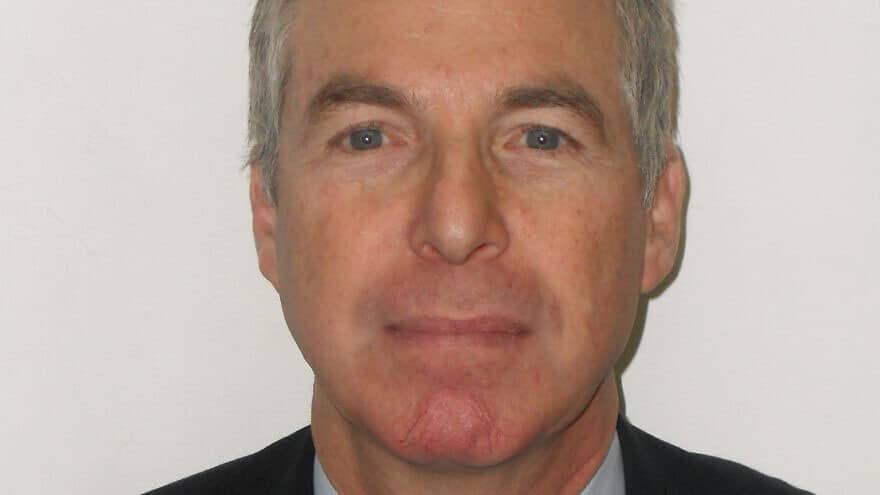
After a brief period of speculation this week, Israeli Prime Minister Naftali Bennett on Friday officially announced the nomination of experienced former peace-process negotiator Michael Herzog to serve as the next Israeli ambassador to the United States.

Herzog, 69, is the older brother of new Israeli President Isaac Herzog and the son of former Israeli President Chaim Herzog.

According to The Jerusalem Post, Herzog’s nomination was agreed upon by Prime Minister Naftali Bennett and Foreign Minister Yair Lapid because he’s seen as someone who could be retained in the position when Lapid takes over as prime minister in September 2023, as outlined in the government’s power-sharing agreement.

According to the Office of the Israeli Prime Minister, Herzog was also chosen because of “his rich and long experience in the security and political arenas, along with his in-depth knowledge of the strategic issues facing the State of Israel, especially the Iranian nuclear program.”

Herzog has served as a fellow at the Washington Institute for Near East Policy and had a lengthy career in the Israel Defense Forces, retiring at the rank of brigadier general and head of strategic planning.

He served as an adviser and chief of staff to numerous defense ministers. Herzog was picked by former Prime Minister Benjamin Netanyahu as a special envoy in the 2009-10 peace process and conducted secret backchannel negotiations between Israel and the Palestinians from 2013-14.

His established relationships with U.S. President Joe Biden, Secretary of State Antony Blinken, National Security Advisor Jake Sullivan and others in the administration through his participation in prior peace talks and summits was a key element that led to Herzog’s selection for the role.

The nomination has been warmly received by those on both sides of the political spectrum.

Following the announcement, Michael Makovsky, president and CEO of the foreign-policy think tank JINSA, said Herzog had an outstanding record of service to Israel and support for the U.S.-Israeli relationship.

“He is a leading Israeli national security expert with an incredible record as soldier, policymaker, peace negotiator and intellectual—an independent thinker respected across the Israeli political spectrum,” Makovsky said in a statement. “He is also an excellent person, unusually modest and self-effacing, and that modesty drives him to read and understand everything related to Israeli national security, including gaining an excellent knowledge of U.S. policy, policy-makers and thinkers.”

Mark Mellman, president of the Democratic Majority for Israel, also applauded the choice.

“Those of us privileged to know him recognize [him] as both a perceptive analyst and an impressive advocate. A frequent interlocutor with Palestinian leadership on behalf of his government, he is deeply respected by Middle East hands in Washington, and I am certain he will earn the respect of leaders in both parties,” said Mellman in a statement.

The Israeli ambassador to the United States seat was vacated in June by Israeli Ambassador to the United Nations Gilad Erdan, who previously served both roles. He has maintained the U.N. portfolio.

According to the Post, Herzog’s nomination is expected to be brought by Bennett for approval from his cabinet on Sunday.

Bennett Officially Nominates Michael Herzog as US Ambassador Read More »

Weissman Well-Suited for Jewish Liaison, Say Those Familiar with Position

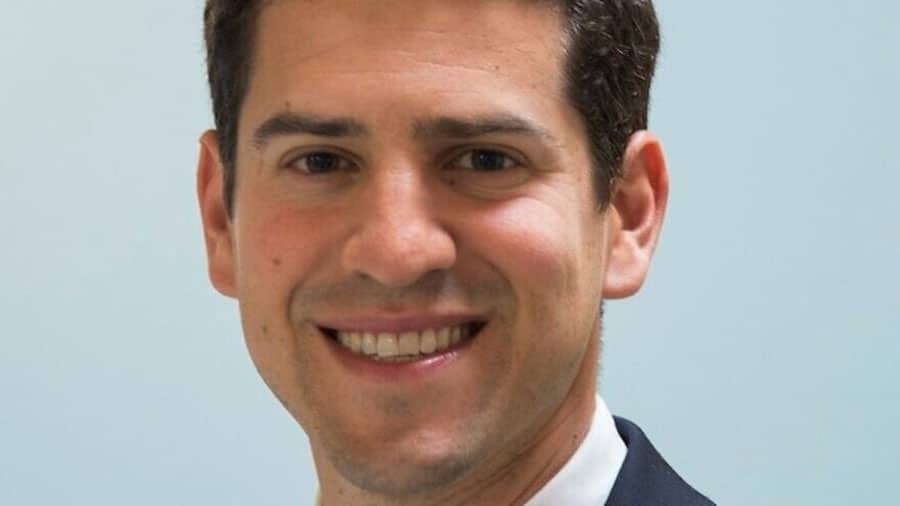
The White House’s announcement on Aug. 5 that Chanan Weissman, a career government staffer and former Jewish liaison under President Barack Obama, was chosen to become the White House liaison to the Jewish community was welcomed by members of the Jewish community who recalled working with him in the previous Democratic administration.

“Happy to see this important position filled, especially by someone well-known and admired in the Jewish community,” American Jewish Committee CEO David Harris said in a statement.

Weissman, 37, is an Orthodox Jew from Maryland who already serves in the Biden administration as the director for technology and democracy on the staff of the National Security Council.

According to Tevi Troy, who served as the White House Jewish liaison in the Bush administration and as a presidential historian, is the author of Fight House: Rivalries in the White House, From Truman to Trump, Weissman’s selection is notable for being the first White House Jewish liaison to have the job twice.

“In my experience, people who have the job once usually don’t want to sign up twice, so it’s interesting,” he said.

Troy said that both in high- and lower-level positions, holding the same job twice has not worked out as well the second time around.

Still, that doesn’t mean it won’t work this time, he said.

“I’m not saying that it is applicable to Chanan at all, but sometimes people feel like, ‘Well, this is the job I had last time,’ ” and feel that they should be moving to another level in the administration, noted Troy.

“But Chanan is a little different because he’s a career official, which is also unusual,” he added. “Usually, the White House liaison is a political appointee.”

The Jewish community’s familiarity with Weissman has been the most mentioned benefit to the appointment so far—one the community has wanted for months.

B’nai B’rith welcomes the reappointment of Chanan Weissman to this key White House position,” said Eric Fusfield, director of legislative affairs for B’nai B’rith International. “At a time of rising anti-Semitism in the U.S. and abroad, as well as rapid change in the Middle East, outreach from the administration to the Jewish community is crucial.”

“We know him from his earlier service,” said Malcolm Hoenlein, vice chairman of the Conference of Presidents of Major American Jewish Organizations. “He is capable and committed, and will facilitate cooperation and communication between the administration and the Jewish community.”

‘Access to people who are making key decisions’

According to Jarrod Bernstein, who held the liaison’s position in the Obama administration prior to Weissman, the choice proves that the Biden administration is not going to forego outreach to any segment of the Jewish community.

“He is an observant Jew; he’s done the job before; he has a quiet competence, even in the face of a lot of noise that comes up from time to time,” said Bernstein.

Bernstein said that Weissman has enough stature to be able to “sit at the table with senior staff and be taken seriously,” but also has the relationships at the U.S. State and Defense departments, which will be useful when it comes to foreign-policy concerns.

“Those are going to be important relationships to make sure that he knows exactly what’s going on and that the community feels like they have access to the people who are making key decisions,” said Bernstein.

Bernstein said Weissman will have to deal with a Jewish community that now disagrees with itself on many key issues, as well as grapple with any fallout after the results of negotiations with Iran to re-enter the 2015 nuclear deal.

He will also have to deal with concerns with the vocal, far-left Democrats criticizing Israel and far-right Republicans who compare COVID-19 regulations to the Holocaust.

“I think that balancing all that in the middle of a pandemic that has hit our community especially hard is going to be challenging,” said Bernstein. “But he is more than equal to the task.”

During the Trump administration, Weissman worked as a hired staff member at the State Department, where he was section chief for the Internet Freedom, Business and Human Rights team in the bureau of Democracy, Human Rights and Labor (DRL). Under the Obama administration, he served as spokesperson for that department.

His first job in government was as a presidential management fellow, working on rotations through various jobs focused on the Middle East.

Weissman holds a bachelor’s degree in journalism, government and politics from the University of Maryland, in addition to a master’s degree from Georgetown University’s School of Foreign Service.

A White House news release notes his first day on the job will be Aug. 16.

Weissman Well-Suited for Jewish Liaison, Say Those Familiar with Position Read More »

End Jew Hatred to Hold NYC Protest Against Ben & Jerry’s

The grassroots organization End Jew Hatred will be holding a march to protest Ben & Jerry’s decision to stop conducting business in the “Occupied Palestinian Territory” on August 12 in New York City.

The protest—titled “No Ice Cream for Jew!”—will take place in front of the New York City Public Library, where attendees will be given “free ice cream and educational materials about the dangerous” Boycott, Divestment and Sanctions (BDS) movement, according to the End Jew Hatred website. Attendees “will then march to Ben & Jerry’s and receive free ice-cream from its competitors who don’t engage in Jew-hatred and discrimination.”

“Ben & Jerry’s illegal boycott is the biggest act of corporate antisemitism since Airbnb—which ended up settling multiple lawsuits and reversing its discriminatory policy,” the organization’s website states. “Ben & Jerry’s act creates an atmosphere where Jew-hatred is legitimized, and emboldens violence against Jews. Just this past weekend, mobs demanding global violence against Jews took to the streets of Brooklyn. This is a consequence of normalizing Jew-hatred, which is what Ben & Jerry’s is doing.”

Among those attending are New York State Democratic Assemblymembers Simcha Eichenstein and Daniel Rosenthal, New York City Councilmember Kalman Yeger, and various Jewish organizations including StandWithUs, The Lawfare Project and Club Z.

The protest comes after 30 Ben & Jerry’s franchisees in the United States urged the company to rescind their decision in a letter. “It has imposed and will to continue to impose, substantial financial costs on all of us,” the letter stated, adding that their respective families and communities “have shamed us personally for doing business not just with a company that draws controversy, but with one that continues to consider the calculated negative affect on its franchisees as acceptable collateral damage.”

End Jew Hatred to Hold NYC Protest Against Ben & Jerry’s Read More »

Universities Must Shift Their Conception of Jewish Students as a Group

As universities and colleges across the country gear up for the academic year, institutional offices of Diversity, Equity, and Inclusion (DEI) are working hard to schedule programs designed to celebrate difference while facilitating greater inclusion and delivering on the promise of equality in higher education. DEI offices usually focus on historically marginalized populations, including racial and ethnic groups that have traditionally experienced discrimination. So it’s strange that in the vast majority of these offices, there is one historically marginalized and oft discriminated-against group that is routinely missing altogether, if not from the mission statement, then certainly from the mission practice.

The Jewish people.

But why the gap? The reason is that universities tend to think about the “Jewish issues” facing students as a subset of “religious issues,” falling under the purview of their Offices of Religious Life, or any of the various clergy groups on campus, as opposed to a racial or ethnic problem better handled by the DEI office. But while it is true that Judaism is a religion, and that Jewish students do sometimes face issues—such as the scheduling of exams on holidays—that might best be defined as religious discrimination and handled by someone with a focus in that area, reflexively putting Jewish issues in an exclusively religious box is both limiting and wrong.

It is also true that for the vast and ever-expanding number of Jewish students encountering antisemitic hatred on campus, their experience has nothing to do with their religious practice, and everything to do with their racial, ethnic or cultural identity. And for the most part, handling this kind of discrimination falls outside the purview and expertise of even the most well-meaning chaplain. Universities need to realize this, adjust their lenses, and plan accordingly, just as they do for other minority groups that might need assistance.

In an age of intersectionality, appreciating that Jewish students can and do hold multiple identities should not be controversial. Federal law, for instance, has already come to this realization and corrected its own definitional understanding for how to properly protect Jewish students.

In an age of intersectionality, appreciating that Jewish students can and do hold multiple identities should not be controversial.

Title VI of the federal Civil Rights Act requires schools to ensure their programs and activities are free from harassment, intimidation and discrimination on the basis of race, color and national origin. Notably, the Act does not give the Department of Education’s Office for Civil Rights jurisdiction to investigate religious bias, and so until 2004, OCR was making the same mistake that university DEI offices are still making today: they were declining to investigate antisemitic complaints under their regular well-established framework for dealing with discrimination against other minorities because they saw Jews as only a religious group, and not a race, ethnicity or type of national origin. Because antisemitism fell outside the bounds of the normal system, it was much easier to get away with.

In 2004, however, OCR issued a series of policy statements announcing that they would henceforth investigate antisemitism complaints, to the extent that they implicate ethnic or ancestral bias. As the policy directive explained, “[g]roups that face discrimination on the basis of shared ethnic characteristics may not be denied the protection of our civil rights laws on the ground that they also share a common faith.” This idea has been confirmed in both Title VI and Title VII cases. It is high time for schools to actually put it into practice on campus as well.

Around the country, antisemitism has become entrenched and systemic, with recent studies showing that the number of Jewish students experiencing antisemitism had spiked to nearly 75 percent, and that Jewish students need and want their schools to be doing more to help them. Under Title VI, administrators have a responsibility to protect students and faculty from acts of hate and bigotry motivated by discriminatory animus—including antisemitism—and to proactively work to create a safe environment for everyone. They must ensure that when people discriminate against Jews for being Jewish (as opposed to their religious practice) it is treated as seriously and as quickly, and with the same procedures and processes in place, as discrimination against any other member of a minority group targeted for their racial or ethnic identity.

A step in the right direction toward shifting the framework through which colleges and universities see their Jewish communities would be to have someone in the DEI office specifically attuned or at the very least paying attention to the different aspects of Jewish life on campus. Jewish students across all spectrums, like any other group, should be celebrated for the diversity they bring, and appreciated for the contributions they make to campus life. At the very least they should feel free to express their full identities without fear, and have proper recourse and a designated someone to turn to if they are in fact excluded.


Dr. Mark Goldfeder, Esq. is Director of the National Jewish Advocacy Center. He served as the Founding Editor of the Cambridge University Press Series on Law and Judaism.

Universities Must Shift Their Conception of Jewish Students as a Group Read More »

Jewish Community Foundation of Los Angeles Awards $1 Million in Grants to Advance Education Equity

The Jewish Community Foundation of Los Angeles today announced it has awarded $1 million to seven local nonprofits that address issues related to education equity.

The recipients are: Antelope Valley Boys & Girls Club, Bridge Builders Foundation, EmpowHer Institute, Girls Club of Los Angeles, Heart of Los Angeles Youth Inc., and Social Justice Learning Institute and Special Needs Network.

The funding supports community-led organizations that connect students with strong mentors, focus on the specific needs of young people of color, increase access to health services for students of color and their families, and empower students to advocate for their educational needs.

“The pandemic has exacerbated existing inequities in our education system that disproportionately affect students of color who lack the resources to successfully learn remotely,” said Marvin I. Schotland, Foundation President and Chief Executive Officer. “This only widens an already-existing education gap which will result in a significant learning loss that will take years to address.”

The distributions are part of the institution’s General Community Grants, which focus on high-priority social issues locally. In recent years, these grants have addressed homelessness, overcoming barriers to employment, human trafficking, as well as sexual and domestic violence.  This new round of awards also builds upon The Foundation’s Racial Equity Grants given last year.


Jewish Community Foundation of Los Angeles Awards $1 Million in Grants to Advance Education Equity Read More »

EU Official Attends Swearing In Ceremony of New Iranian President

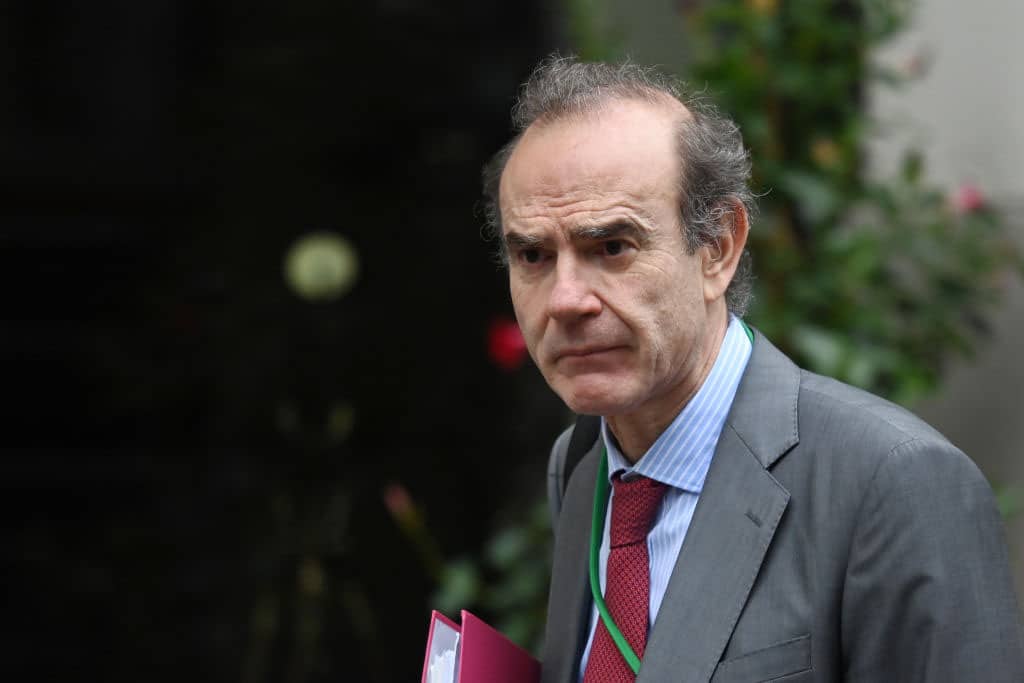
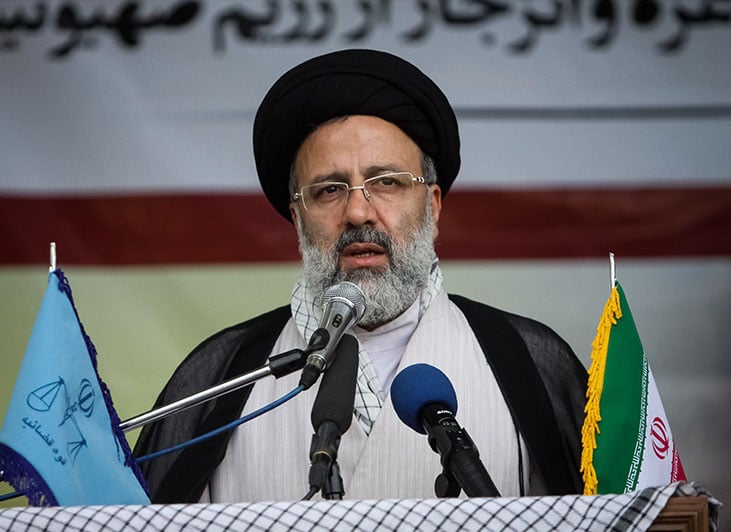
A senior diplomat for the European Union (EU) was spotted at the swearing-in ceremony of incoming Iranian President Ebrahim Raisi on August 5.

The diplomat, European External Action Service (EEAS) Secretary-General Enrique Mora, can be seen sitting alongside leaders from Hamas, Hezbollah and Palestinian Islamic Jihad.

Jewish groups condemned Mora for attending the inauguration.

“A picture for the PHOTO HALL OF SHAME,” American Jewish Committee CEO David Harris tweeted, adding that this is “the same EU that purports to protect human rights, combat terror & fight Jew-hatred!”

The Simon Wiesenthal Center also tweeted, “European Union – Your presence legitimizes a new president with blood on his hands.”

Several Iranian human rights groups also signed a joint statement that read, in part: “The EU is well aware of the fact that this man presided in 1988 and 2019 over the killing and torture of many thousands of people. We urge the EU … to address crimes against humanity, rather than standing with those who commit the crimes.”

A spokesperson for the EEAS told the Euronews television network that Mora was there because “it is crucial to engage diplomatically with the new administration and to pass directly important messages” to ensure that the 2015 Iran nuclear deal is fully implemented.

Anti-Defamation League CEO Jonathan Greenblatt wrote in a June op-ed for Newsweek that Raisi “was one of four judges who, in the late 1980s, oversaw the execution of thousands of members of Iranian opposition groups, including women and children. One analyst recently wrote that his subdued personality and criminal record evokes Hannah Arendt’s notion of the banality of evil.” He added that Raisi, as head of the Astan Quds Razavi Foundation, promulgated antisemitic propaganda from “The Protocols of the Elders of Zion” throughout the country.

Iraj Masadagi, a former political prisoner in Iran, told the Israeli public television network Kan that Raisi once told him “they don’t want to have any more political prisoners. He said that we want to solve the ‘problem,’” rhetoric that Masadagi likened to “the final solution that Hitler made for the Jews.”

EU Official Attends Swearing In Ceremony of New Iranian President Read More »

Rabbi Kraft of The Mitzvah Store Talks Business in a Pandemic

For Jewish entrepreneurs such as Rabbi Shimon Kraft, last year’s timing of the onset of the pandemic—three weeks ahead of the heavy-selling holiday of Passover—was a gut punch.

Not that there ever is a good time for a pandemic, but this one especially stung the owner of The Mitzvah Store, Too, known for its huge volume of religious books and all things Jewish.

“We couldn’t keep our front door open since there was a lockdown,” Rabbi Kraft said recently in his Beverly Boulevard store.

“And so we got mostly stuck with last year’s Pesach merchandise. Economically, it was very hard on us. Painful. You invest in a season and you are not able to sell it.”

The good news this year, said the Kansas City-born rabbi who opened the original Mitzvah Store on Pico Boulevard in 1991, is that he has recovered by selling the leftover Passover merchandise this year. Passover 2021 “was pretty normal,” said Kraft.

“Those were tough times last year, through Pesach and the summer. Lean times. By fall, though, with the High Holidays, it already started picking up.”

One sunny dimension to the pandemic, said Rabbi Kraft, was that “people were doing a lot of reading. As things got better, we were selling even more books than before. People bought many sefarim [Jewish religious books], and they were busy doing a lot of mezuzah-checking. When the Plague hits, you know, people start checking their tefillin and mezuzahs, making sure everything is okay.”

Trained as a sofer (one who evaluates the validity of tefillin and mezuzahs among other duties), “I kept very busy doing that during the pandemic.”

Given that some positive things have happened during an otherwise trying time, the question is whether the pandemic can be seen as beneficial in some ways.

“Uhhhhhhh, no,” Rabbi Kraft said, with a laugh. “Not really. It just changed people, how, when and where they shopped. It just shifted things.”

Adaptation was crucial to keeping The Mitzvah Store, Too, breathing through the pandemic. While the lockdown was decidedly damaging, the store went to its customers instead of the reverse. “People would call or email, and we did a lot of special deliveries,” the rabbi said. “I hired young guys to do the deliveries. Just drivers, Jewish guys who needed a job. They were happy to drive.

Adaptation was crucial to keeping The Mitzvah Store, Too, breathing through the pandemic. While the lockdown was decidedly damaging, the store went to its customers instead of the reverse.

“We did hundreds and hundreds of home deliveries, to Pico, to Westwood, to all over. Seforim, Judaica, tzitzis, yarmulkes, whatever people needed.  That was very helpful. Without that, we really would have been in trouble.”

These days the store does weekly deliveries only. “I am not set up to do it any oftener,” said Rabbi Kraft. “Besides, it’s not like it was during the height of the pandemic. People want to get out again and come into stores.”

With Rosh Hashanah beckoning on Labor Day, its earliest arrival in 27 years, Rabbi Kraft is primed for a successful business season.

“We are [back to] normal,” he happily declared. Almost. “There are mask issues. Some people want to wear a mask, some don’t. Enforcing masks is a problem.”

Like a good American, the rabbi tries “to follow the science. The New England Journal of Medicine says stopping Corona with a mask is like stopping mosquitos with a chain-link fence. I am not a big mask fan. Social distancing, though, does a lot of good regarding infectious diseases. Vaccination does a lot, too.”

When asked if Jews’ learning and reading habits have been altered much in the last year and a half, Rabbi Kraft was more tentative.

“Well, they went to Zoom, and they are doing a lot of home learning,” he said. “Shuls are not the same. I daven at Rabbi Bess’s Shul, where we would have a much more robust learning session at nights. That has not come back yet to the full degree. People have gotten used to staying home in the evenings. Eventually, I think it will come back.

“Kiddushes are back. Simchas are back. Pretty much back to normal.”

Regarding the national debate raging over vaccinations, Rabbi Kraft, a father of five, estimates “a good percentage of the frum [observant] community is vaccinated. They are really good about that.

“I think this is because they are very health-conscious. They have a lot of kids. All the kids are vaccinated for everything right and left. So why shouldn’t they be? People aren’t afraid of vaccinations. They aren’t anti-vaxxers.”

The Mitzvah Store, Too, is approaching its 10th anniversary in the La Brea neighborhood after 25 years in Pico-Robertson.

Rabbi Kraft identified the internet as the most impactful business earthquake he has faced in the last three decades. “It really took a bite out of my business for a long time,” he said. “But …

“The ‘but’ is that we are very service-oriented. About people. About the experience. That is the secret.

“People go online when they want a good deal. But they cannot match that store experience. People love coming in here. We love them. We love to be with people. We love explaining. We love taking time with them. And people appreciate it.

“There is no room for businesses like this unless you are service-oriented. Without the service, nobody will come. They will shop online.”

The businessman-rabbi has learned that “the customer rather than stock is your primary concern. Of course, you want to have the right stock, too. Sometimes I feel like a shadchan [matchmaker]. A person comes in looking for a book or the right things for their wedding, whatever they need. I try to put them together. I help them out, try to guide them.”

Rabbi Kraft said that “we do a lot of kiruv [outreach]. We try to inspire and invite people for Shabbos. We invite tons of customers for Shabbos [meals]. And we have a great time.”

The Mitzvah Store, Too, 7227 Beverly Blvd. (323) 930-1081. Hours: Monday through Thursday, 12-6 p.m. Friday 10 a.m.-2 p.m. Sunday 11 a.m.-6 p.m.

Rabbi Kraft of The Mitzvah Store Talks Business in a Pandemic Read More »

Why Did So Many World Leaders Attend the Inauguration of Iran’s Murderous President?

What would you do if you were a senior European Union diplomat who was invited to the inauguration of a man affectionately known as “The Butcher of Tehran”?

Yes, I’m kidding about the “affectionately” part, but not about “The Butcher of Tehran.” You don’t earn that nickname (as well as “Ayatollah Massacrist”) among Iranian people unless you’ve overseen the arrest, torture and murder of thousands of dissidents and protestors for over 30 years.

If you’re Enrique Mora, a senior E.U. diplomat, you RSVP “yes” to the inauguration of newly-elected Iranian President Ebrahim Raisi, which was held yesterday in Tehran. Mora was joined by representatives from over 70 countries who also said “yes.”

Specifically, the ceremony was attended by “10 presidents, 20 speakers of parliament, 11 foreign ministers, 10 other ministers, envoys of presidents, vice presidents, and parliamentary delegations,” according to a statement by Iranian Parliament spokesman Seyyed Nezam Al-Din Mousavi. For a regime that makes such noise about how many foreign leaders attend an inauguration, it sure is quiet about how many citizens it has murdered.

Is it 176?

No, that was just the number of passengers Iran killed when it shot down a Ukrainian Airlines flight in January 2020. Coincidentally, Raisi was head of the Iranian judiciary then.

Is it 1,500?

No, that was the number of Iranians killed in two weeks of protests against the regime in November 2019 (that number includes 400 women). Coincidentally, Raisi was also head of the judiciary then.

Is it somewhere between 4,000 and 6,000?

No, that’s the number of gays and lesbians allegedly executed by the regime since the 1979 revolution that turned Iran into an Islamic theocracy.

And let’s not forget the 5,000 prisoners Raisi butchered in 1988, when then-Supreme leader Ayatollah Ruhollah Khomeini appointed him and a few others to what became known as “the Death Committee.” Its job? To quickly purge dissidents as the Iran-Iraq War ended and the regime tried to maintain power.

Those dissidents, by the way, were all prosecuted and serving prison terms, or about to complete their sentences. Raisi, then 28, was able to plan and organize their extrajudicial murders in a matter of months. His impressive record of killing Iranians continued until just a few months ago, including during the 2009 “Green Protests.”

As for his track record on Jews, it was Raisi who, in 2016, oversaw the production of a fifty-episode “documentary” that promoted the notoriously antisemitic fabricated text, “The Protocols of the Elders of Zion.” The episodes were not only shown on Iranian television, but also given to millions of pilgrims at the Shrine of Imam Reza in Mashhad, which, before the pandemic, saw 20 million visitors a year. There was even a public contest to see who could answer questions about the program’s contents, including “ways to confront the tricks of Satan.”

To say that the June election that brought Raisi to power was a sham is a laughable understatement. That’s one of many immoral problems with world leaders attending his inauguration; the man wasn’t even elected fairly (most of his top rivals were conveniently disqualified from running).

You’d think someone would notice a red flag and politely decline an invitation to the ceremony. I wonder what an invitation for such an inauguration looks like—was it red, to honor “The Butcher of Tehran”?

You’d think someone would notice a red flag and politely decline an invitation to the ceremony. I wonder what an invitation for such an inauguration looks like—was it red, to honor “The Butcher of Tehran”?

It’s also strange that, in 2020, not a single E.U. representative attended the inauguration of Belarus’s President Alexander Lukashenko. In fact, the E.U. boycotted the ceremony in protest of government crackdowns against opponents. One would think massacring over 5,000 people in Iran would be enough to decline an invitation to Raisi’s inauguration. As it turns out, it wasn’t. Perhaps Iranian lives matter less than those in Belarus.

There’s also the pesky issue of what transpired last week, when Iran ordered a drone strike on an Israeli-operated oil tanker in the Arabian Sea that killed a Romanian and a British national. Perhaps Mora forgot that Romania is part of the E.U. Imagine how validated and safe the mullahs in Tehran must have felt in seeing a senior E.U. official at the inauguration, just seven days after such a belligerent drone attack.

Naturally, Iranian human rights and opposition groups were outraged by Mora’s honoring of a mass murderer. And Mora had plenty of other murderers to schmooze with at the inauguration, such as Hamas head Ismail Haniyeh and Hezbollah Secretary General Naim Qasem. How’s that for an esteemed audience?

“I swear to safeguard the official religion and the establishment of the Islamic Republic and constitution of the nation,” Raisi said in an oath during the ceremony, which also included a tribute to notorious Al-Quds leader Qassem Soleimani, who was targeted during an American airstrike in January 2020.

After the ceremony, Raisi and his colleagues were documented celebrating his success in annihilating dissidents by enjoying ice cream puffs.

I don’t know which image is more ridiculous: world leaders celebrating the inauguration of a mass murderer, or “The Butcher of Tehran” taking measured licks of saffron and rosewater ice cream. Either way, it was all a day’s work in Iran.


Tabby Refael is a Los Angeles-based writer, speaker and civic action activist. Follow her on Twitter @RefaelTabby


Why Did So Many World Leaders Attend the Inauguration of Iran’s Murderous President? Read More »

Larry Elder and the Rise of Black Conservatives

With a dramatic entrance into the upcoming September 14 statewide recall election of Governor Gavin Newsom (D-CA), Republican radio talk show host, author and lawyer Larry Elder offers ideas about education, crime and the economy that challenge longstanding progressive public policy and that are increasingly advocated by Black GOP candidates nationwide.

A late arrival to the race, Elder first had to secure a judicial ruling overturning the California Secretary of State’s controversial decision denying him a place on the ballot.

With that victory in hand, polls reveal that Elder has grabbed a quick lead among some 46 candidates seeking to replace Gov. Newsom, running ahead of a GOP field that includes former San Diego Mayor Kevin Faulconer, 2018 gubernatorial candidate and Rancho Santa Fe businessman John Cox, Assemblyman Kevin Kiley (R-Rocklin), and Caitlyn Jenner, the retired Olympian and media personality.

Gov. Newsom faces a serious challenge to remain in office after some 2 million recall petition signatures were gathered from an energized electorate unhappy with his performance.

Elder has been campaigning throughout the state and in media appearances with his trademark detailed recitation of facts and ideas. These are aimed at convincing registered Independents that Democratic Party legislative dominance has let down minority parents and children who want school choice; average citizens alarmed at the rise of urban crime and homelessness; and “forgotten” workers still struggling under the effects of the strict COVID-19 lockdowns and mandates.

Elder invites voters to consider that even if a “magic wand” could eliminate any vestige of racial discrimination in our nation, Black citizens would still have to overcome progressive policies. Among other things, these policies divert funds from city police budgets, impose punishing regulations, taxes and fees on small businesses, and restrict residential housing availability due to complex environmental regulations that strangle the low- and middle-income real estate markets.

Elder invites voters to consider that even if a “magic wand” could eliminate any vestige of racial discrimination in our nation, Black citizens would still have to overcome progressive policies.

Elder also confronts the breakdown of the Black family (72% of Black children are born without a father in the home); high homicide rates (overwhelmingly Black crime victims suffer at the hands of Black perpetrators); and the unrestrained power of teachers unions. He argues that dealing directly with these issues is more relevant to struggling communities than the rhetoric of Black Lives Matter, critical race theorists and anti-racism activists who blame all social conditions and economic woes on “systemic racism.”

Many activists on the left promote re-segregation of university dorms and graduations, endorse race-based quotas and affirmative action policies, and oppose voter ID laws (which are widely supported by Black voters). However, a variety of right-of-center voices within the Black community has been steadily building economic, social and cultural arguments into an increasingly constructive and appealing alternative to the progressive agenda often featured in the mainstream media.

Elder’s rise is just the latest and most visible example of the emergence of Black conservatives. George S. Schuyler, author of “Black and Conservative,” was an important columnist for the Pittsburgh Courier for decades. Zora Neale Hurston was an essayist for Reader’s Digest and a prominent feminist writer who popularized conservative and libertarian views in the African-American community. And many religious figures in Black churches have long preached social conservatism.

Elder’s rise is just the latest and most visible example of the emergence of Black conservatives.

With the 1975 publication of Thomas Sowell’s “Race and Economics,” a powerful era of Black economic scholarship was launched to challenge liberal orthodoxy on poverty, inner-city crime, family dynamics, and American race relations.

Sowell, featured in the documentary “Thomas Sowell: Common Sense in a Senseless World” (hosted by the Wall Street Journal’s Jason Riley), is widely considered among the foremost public intellectuals in the United States. He rejects the paternalistic and regressive racial approach of the political left, arguing that “racism does not have a good track record. It’s been tried out for a long time and you’d think by now we’d want to put an end to it instead of putting it under new management.”

The impressive list of “founders” of modern Black conservative thought might also include Walter E. Williams, former professor at George Mason University; Robert L. Woodson, Sr., the “godfather” of the neighborhood empowerment movement; Jay Parker of the Lincoln institute for Research and Education and mentor of U.S. Supreme Court Justice Clarence Thomas; and Ward Connerly, chairman of California’s famous Proposition 209 (1996) in which voters rejected race and gender-based employment and contracting.

A diversity of independent thinking is found in the heterodox views of distinguished Black scholars and thinkers like Glenn Loury, Shelby Steele, Wilfred Reilly, John McWhorter, Coleman Hughes, Carol Swain, Armstrong Williams, Colman McCarthy, Amy Holmes, Deneen Borelli, Deroy Murdock, Star Parker, Angela McGlowan and Rev. Jesse Peterson, among many others.

A common thread in the discourse of these social commentators is opposition to Black “victimhood,” and the demand for personal responsibility. Black competitiveness and pathways to success are a function of an improved Black culture, and some truth-telling, for example, about the “oppression” of Blacks in America.

recent study from the Skeptic Research Center reported 31% of those identified as “very liberal” believe that the average number of unarmed Black Americans killed annually by police is “about 1,000.” Fourteen percent believe that this number is “about 10,000,” while almost 8% believe it is more than that. The total number of unarmed Black men shot by police in 2020 was 18.

Conservative Black scholars have been gaining traction by stressing criminal justice reform and the theme of renewed Black family culture, noting the rise of out-of-wedlock birth rates after the establishment of the Great Society welfare state in the 1960s. Many also promote charter schools and stricter enforcement of child support and child neglect laws. Citing the economic success of many minorities in the United States, such as Nigerian immigrants and Indian-Americans, conservative Black urban leaders often promote enterprise zones and tax incentives for small business growth.

Conservative Black scholars have been gaining traction by stressing criminal justice reform and the theme of renewed Black family culture.

While in recent years much attention has been paid to prominent Black voices on the political left such as President Barack Obama, Vice President Kamala Harris, Rep. Ilhan Omar, Al Sharpton and Stacey Abrams, a growing coalition of conservative Black political leadership has arrived in parallel, including Herman Cain, Ben Carson, Allen West, Ken Blackwell, Ron Christie, Niger Innis and Alan Keyes.

Today’s Black political voices on the right feature the widely admired U.S. Senator Tim Scott, Representatives Burgess Owens and Byron Donalds, and state office holders such as Kenneth Paschal (Alabama), Vernon Jones (formerly of Georgia) and former Chief of Police James Craig (Detroit, Michigan).

Rising cultural voices in the Black conservative movement include human rights scholar Ayaan Hirsi Ali, political activist Candace Owens, sports commentators Jason Whitlock and Charles Barkley, and internet sensations Diamond and Silk and The Hodgetwins.

The GOP, founded in 1854 as the successor to the Liberty Party, makes the case that it is the original party of Black liberation and emancipation under President Abraham Lincoln. The Republican Party promoted civil rights legislation and opposed slavery, the KKK, discriminatory Jim Crow laws, and racial segregation enforced by Southern Democrats.

Today, in the face of voices among the left that are increasingly hostile to the Jewish state, Black conservatives remain firm advocates of the U.S.-Israel relationship and willing to confront rising antisemitism.

Elder, who has been a staunch supporter of Israel, is reaching out to more and more Jewish groups as he builds momentum in his run for California Governor and continues his leadership of the growing Black conservative movement.


Larry Greenfield is a Fellow of The Claremont Institute for the Study of Statesmanship & Political Philosophy.

 

Larry Elder and the Rise of Black Conservatives Read More »