fbpx

June 24, 2021

Florida Chaplain: 35 Jews Among the 99 Still Unaccounted For

After making contact with local synagogues and authorities, according to Police Chaplain Mark Rosenberg, it is estimated that 35 Jews are among the 99 people still unaccounted for in the partial collapse of a condo building in Surfside, Florida.

Rosenberg told the Journal that the situation is dire because the primary parts of the building that collapsed contained the bedrooms. The cause of the collapse is currently unknown, although work reportedly was being done to the building’s roof.

Rosenberg told the Journal that the situation is dire because the primary parts of the building that collapsed contained the bedrooms.

Various Jewish groups have offered condolences as well as efforts to provide aid to those afflicted.

“This tragedy has impacted many in the #Miami Jewish community and the @ADL
family,” Anti-Defamation League CEO Jonathan Greenblatt tweeted. “We pray for those lost, and that all those missing will soon be rescued and reunited with their loved ones.”


“AJC is saddened by the devastating building collapse in Surfside, Miami,” the American Jewish Committee similarly tweeted. “Our hearts are with the people of Miami at this difficult time and we extend our condolences to all those affected by this tragic event.”

The Greater Miami Jewish Federation and the Shul of Bal Harbour both have started campaigns to raise funds for those afflicted. Additionally, United Hatzalah of Israel is sending a delegation to Florida to provide aid to the community.

“I am sending my best people on this mission in order to provide as much help as we can,” United Hatzalah President and Founder Eli Beer said in a statement. “We stand with you and we are sending you the best of the best to help. They will be there as soon as regulations permit us to arrive.”

This is a developing story.

Florida Chaplain: 35 Jews Among the 99 Still Unaccounted For Read More »

Jewish Journal Wins Best Jewish Paper in America for Second Year in a Row

The Jewish Journal won best Jewish paper in America for the second year in a row, taking home five American Jewish Press Association (AJPA) Awards at the 40th Annual AJPA Simon Rockower Awards on June 24, which were held virtually this year on Facebook Live.

The awards were:

• Award for General Excellence — Best Newspaper
• 1st Place for the Louis Rapaport Award for Excellence in Commentary (Thane Rosenbaum)
• 2nd Place for the Louis Rapaport Award for Excellence in Commentary (David Suissa)
• 2nd Place for Excellence in Writing about Food and Wine (Erin Ben-Moche)
• Honorable Mention for Excellence in Writing about Seniors (Tabby Rafael)

Commenting on the award for Best Newspaper, the AJPA commended the Jewish Journal on its “excellent design and layout from cover to cover and extraordinary original content from news to opinion writing.”

Founded in 1944, the AJPA is a voluntary not-for-profit professional association for the English-language Jewish Press in North America. Its membership consists of newspapers, magazines, websites, Jewish media organizations, individual journalists and affiliated organizations throughout the United States and Canada.

Jewish Journal Wins Best Jewish Paper in America for Second Year in a Row Read More »

Ofer Kenig

Ofer Kenig: Understanding Israel’s New Government

Shmuel Rosner continues the deep dive into Israel’s new government, this time with the help of Professor Ofer Kenig.

Prof. Ofer Kenig is a senior lecturer at the Ashkelon Academic College and a research fellow at the Israel Democracy Institute. His areas of research include comparative politics, political parties, leadership and candidate selection and Israeli politics.

Follow Shmuel Rosner on Twitter.

Ofer Kenig: Understanding Israel’s New Government Read More »

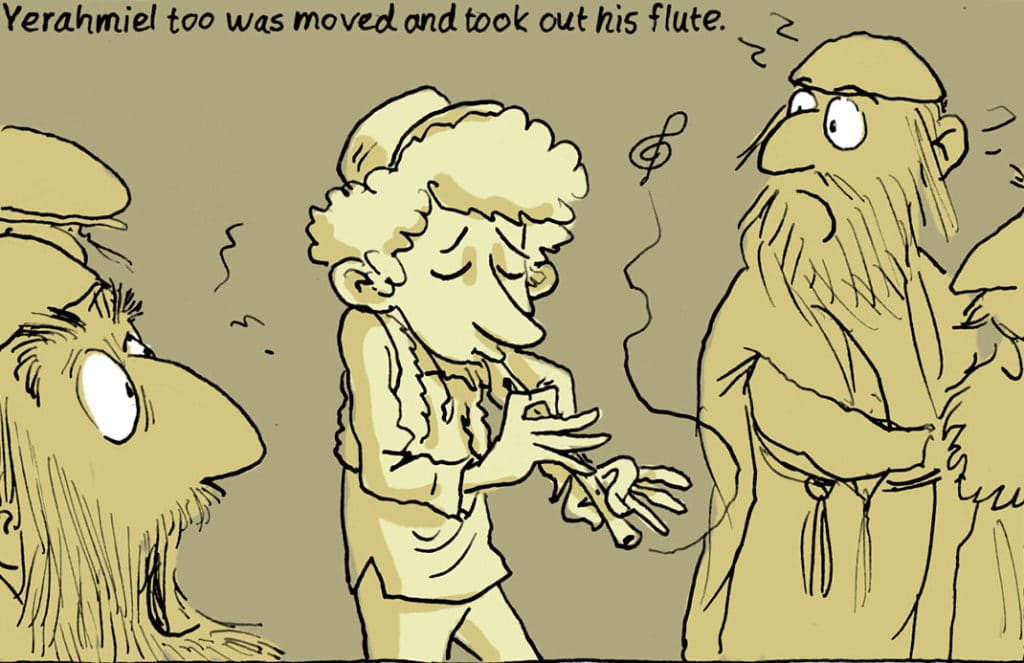
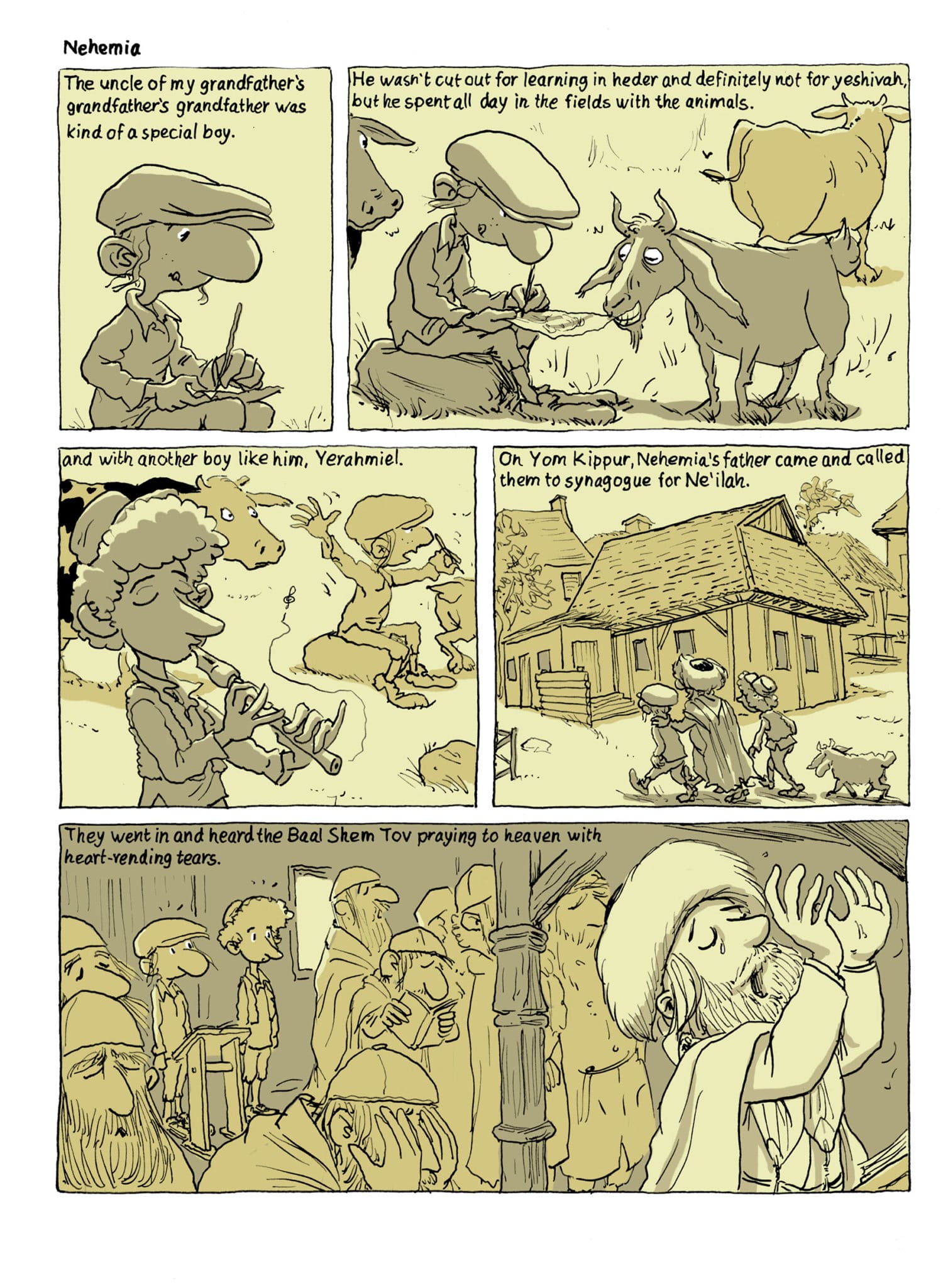
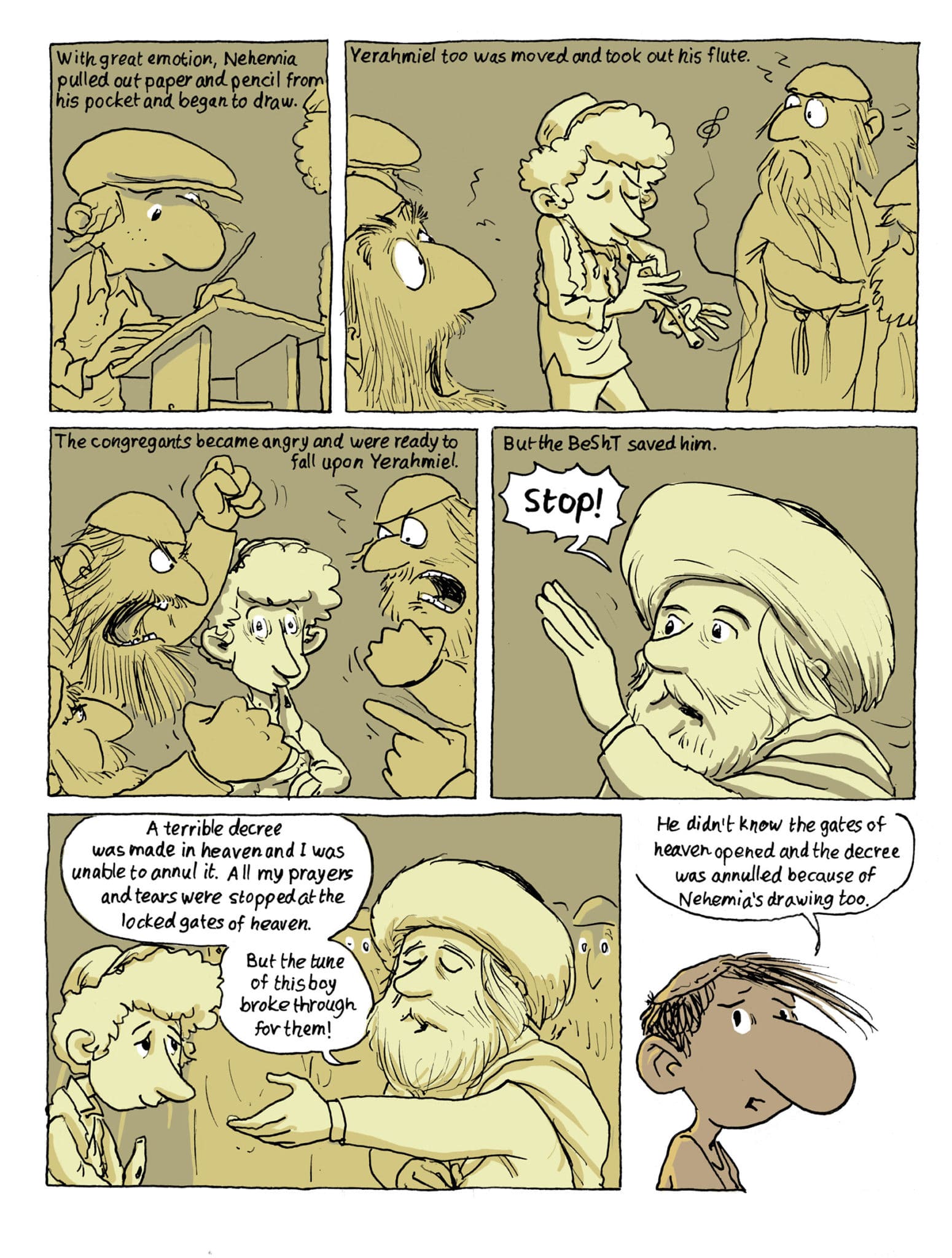
The Magical Images of Israeli Political Cartoonist Shay Charka — “Nehemia”

Shay Charka is one of Israel’s most talented comic book artists and political cartoonists. Dara Horn, writing in TabletMagazine, called “From Foe to Friend,” Charka’s pictorial versions of stories by the Nobel prizewinning author S. Y. Agnon, “miraculous” and “so breathtaking that I almost thought I dreamed it.” Born in 1967, Charka has published twenty graphic novels and cartoon collections, his work drawing playfully and profoundly on Jewish sources such as the Bible and Talmud. His “Jewdyssey,” a graphic-novel retelling of Homer’s “Odyssey” as a Holocaust story, has recently been prepared in English translation. He is the political cartoonist for the Israeli paper Makor Rishon, where his deft and brilliant visual commentary on current events is relished by thousands.

In these three recent “shorts,” Charka meditates on Europe—the “old world.” The first, “Berlin,” captures the haunting experience of the Jewish visitor to that city, figured as the boy from the Warsaw Ghetto photograph. The second, “Nehemia,” mischievously retells the Hasidic tale of the Baal Shem Tov and the boy who played flute on Yom Kippur, making a place for the cartoonist in a story Agnon included in his “Days of Awe.” The third story is an acerbic, affecting reflection on family memories and the impulse to look for our “Roots” in the landscape of post-Holocaust Europe.


Michael Weingrad is a professor of Jewish Studies and lives in Oregon. 

The Magical Images of Israeli Political Cartoonist Shay Charka — “Nehemia” Read More »

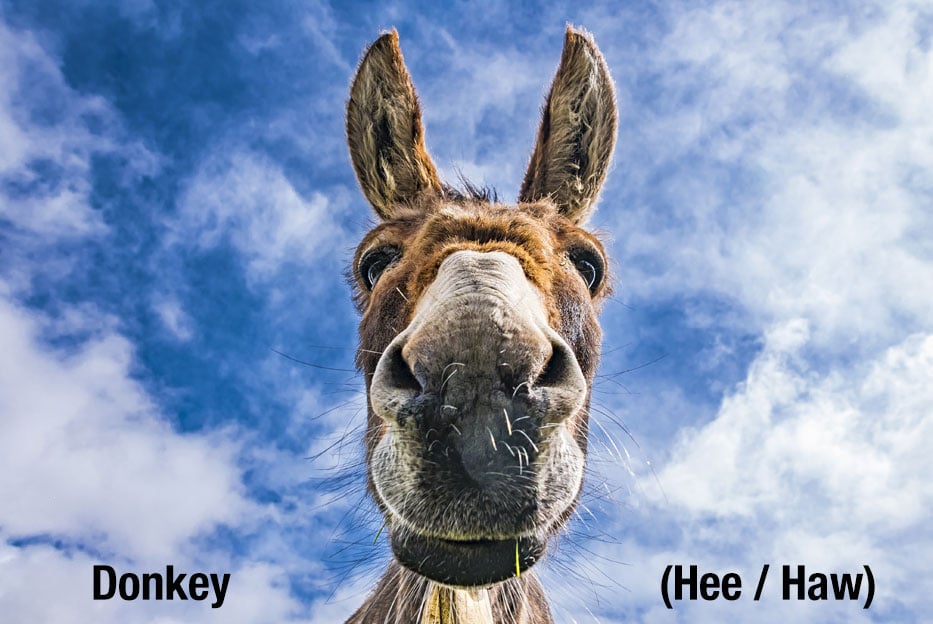
What the Donkey Saw — A poem for Torah Portion Balak

The she-donkey saw the angel…
-Numbers 22:25

Animals sometimes see things we don’t
or don’t yet. They’re the best earthquake predictors.
My cat alone sees things in dimensions
I still don’t believe exist.

The evil in twist ties
the potential of anything to move
and the claws-out imperative to stop it
at all costs.

So it’s no surprise to me that Balaam’s she-donkey
(that is her preferred pronoun) saw an
Angel of the Holy One on the road
on his way to say words put into his mouth.

He beat his donkey (which is not a metaphor)
three times as she cowered before what
she knew was there. I can’t imagine
beating an animal, even one time, for any reason.

And that’s not because of the potential of the
hidden camera. Today our wisdom tells us we shouldn’t
do or say anything we wouldn’t want recorded forever
and scrutinized by all of the internet’s humanity.

Someone I once knew, who, actually, many people
once knew, whose voice we will never stop hearing,
even though we can no longer see her, once said
the person in front of you is a goldmine of potential.

You should assume it’s there, that gold,
in all your interactions, even when your cat
spits up a hairball on the carpet, instead of
the easier to clean nearby tile floor.

Even when they’ve cut you off on the freeway
Even when they haven’t paid your invoice
Even when they’ve stopped on the road in front of you
for reasons you don’t understand.

Pay attention to what the donkey does and says.
It’s a miracle it’s talking at all. And may you always
say the words that were put in your mouth
by your conscience. From them, we will all grow rich.


God Wrestler: a poem for every Torah Portion by Rick LupertLos Angeles poet Rick Lupert created the Poetry Super Highway (an online publication and resource for poets), and hosted the Cobalt Cafe weekly poetry reading for almost 21 years. He’s authored 25 collections of poetry, including “God Wrestler: A Poem for Every Torah Portion“, “I’m a Jew, Are You” (Jewish themed poems) and “Feeding Holy Cats” (Poetry written while a staff member on the first Birthright Israel trip), and most recently “The Tokyo-Van Nuys Express” (Poems written in Japan – Ain’t Got No Press, August 2020) and edited the anthologies “Ekphrastia Gone Wild”, “A Poet’s Haggadah”, and “The Night Goes on All Night.” He writes the daily web comic “Cat and Banana” with fellow Los Angeles poet Brendan Constantine. He’s widely published and reads his poetry wherever they let him.

What the Donkey Saw — A poem for Torah Portion Balak Read More »

Meghan McCain Asks Bernie Sanders If Supporters’ “Anti-Israel Rhetoric” Has Led to Rising Antisemitism

Meghan McCain, co-host of ABC’s “The View,” asked Senator Bernie Sanders (I-VT) if “anti-Israel rhetoric” coming from his “surrogates and supporters” has led to rising antisemitism.

During a June 23 segment on “The View,” McCain said that Sanders is a “vocal critic” of the Israeli government but acknowledges Israel’s right to exist. “But some of your surrogates and supporters have taken things in a different direction, calling Israel an ‘apartheid state,’ publicly pronouncing themselves as anti-Zionist, and implying that Israel is akin to terrorist organizations. Do you agree that this kind of extreme anti-Israel rhetoric—and I want to make it clear again, I am not talking about criticizing specific Israeli policies—has contributed to the rise in attacks against Jewish-Americans?” She added that she recently interviewed Joseph Borgen, who was attacked by a pro-Palestinian mob in May, who “is deeply dissatisfied with the response from Democrats.”

Sanders called antisemitism “a serious and growing problem” worldwide that needs to be fought against. He proceeded to call for an “even-handed” approach to the Israeli-Palestinian conflict. “We have to understand that in Gaza for example, you have 60% youth unemployment. You have a horrendous situation which was only made worse by the recent war. So, what I want to see is our country play an even-handed role, and I want to see the United States work with other countries to try to bring the Israelis and the Palestinians together to bring about some peace in that region.”

Later in the segment, McCain told Sanders that he is “The Godfather of the Squad,” referencing Representatives Alexandria Ocasio-Cortez (D-NY), Ilhan Omar (D-MN) and Rashida Tlaib (D-MI). “It feels like the Squad today has moved even to the left of you. How is it for you to stand by everything AOC, Rashida Tlaib, and Ilhan Omar have said and done, particularly when it comes to Israel, and talking about from the river to the sea and the extermination of Israel as a right to exist, or do you think the movement which you started has moved away from what you envisioned?”

Sanders replied that he didn’t agree with McCain’s characterization of The Squad’s comments on Israel and that “it’s not my job to have to defend any member of Congress any more than it is their job to defend every statement that I make.” He went on to say that his focus is currently on how “the very rich in America have become much richer while working people are struggling.” Sanders also praised “the progressives in the House [of Representatives]” for “doing a very good job standing up for working families. It’s not my job to comment about everything that every member of the House says, any more than it is for them to comment on what I say.”

The Conspiracy Libel tweeted regarding McCain’s questions to Sanders, “Know how it’s done? Like this!”

Quotes provided via transcript from Newsbusters.

Meghan McCain Asks Bernie Sanders If Supporters’ “Anti-Israel Rhetoric” Has Led to Rising Antisemitism Read More »

On Our First Holocaust Survivors Day

We are living today in a world of division.

Politics is angrily polarized, foreign relations are increasingly confrontational, gun violence is frighteningly endemic, and ethnic animus is surging, including violence against Asian Americans, new and awful antisemitism, and our country’s unresolved history of racial oppression.

We need people who can teach us how not to hate.

The good news is that we have some 400,000 of them: the Holocaust survivors who are still with us.

Today is the first-ever Holocaust Survivors Day. It is a day of celebration, first proposed several months ago by Michael Berenbaum, a professor of Jewish studies at the American Jewish University in Los Angeles, and Jonathan Ornstein, founding executive director of JCC Krakow. “Holocaust survivors deserve a day of joy; a day of celebration,” they wrote. “Not a day to share with condemnation of the Nazis, but a day to celebrate their lives they built in response to the Holocaust. Survivors represent the best in all of us, the best of the human spirit.” More than 60 organizations worldwide are joining in these festivities.

I see today as an opportunity not only to honor survivors, but to thank them. For more than 75 years, they have been doing the hard work of bearing witness, sharing wisdom, and teaching us how to transcend hatred and display the power of love.

For more than 75 years, they have been doing the hard work of bearing witness, sharing wisdom, and teaching us how to transcend hatred and display the power of love.

They are the ones who teach us how not to hate.

These men and women experienced the worst evils of the 20th century. And yet in my 25 years as a scholar of genocide, in thousands of conversations with survivors, I can’t recall a single one using the memory of their experience to hate. Instead, they live their lives with dignity and respect. They’ve turned the horrors they experienced into a profound commitment to share their stories and build understanding among the younger generations.

We celebrate them not for surviving; we celebrate them for their humility, their resilience, and their generosity.

When I ran the United Kingdom’s National Holocaust Museum and Center many years ago, we hosted an event on how to confront antisemitism. “We need an army of volunteers,” someone said. “We need to go into schools, talk to children, change their minds.” I knew we already had that army: Holocaust survivors. And as a group, they met the challenge, going and speaking with thousands of children daily. They have made a difference to an entire generation.

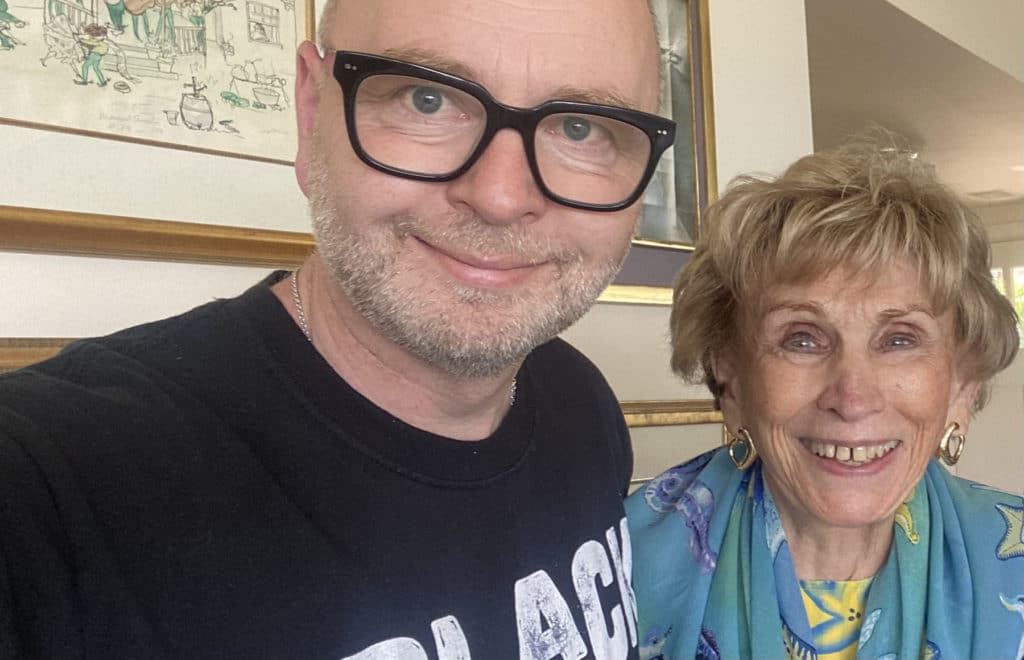
Just a few days ago, I met a survivor in San Diego named Dr. Edith Eva Eger. She is 93 years old, and a practicing psychologist and prolific author. When I went to visit her, she couldn’t meet until noon—she had patients in the morning. She made us lunch, breaded chicken and salad, followed by chocolate ice cream for dessert. (She was most excited about the ice cream.) And we talked.

Born in Hungary, she survived Gunskirchen, a subcamp of Mauthausen in Austria. When the U.S. Army liberated the camp, she was left alive on a pile of corpses. An American G.I. walking by saw her finger move and picked her up. He was the first Black man she’d ever seen.

Today, she gives back—in her work, and in her life. While we ate lunch, a neighbor with cancer, a Hungarian woman significantly younger than her, stopped by. Edie, at 93, is a friend when in need. She reminds me, “Love is not what you feel, it is what you do.”

Holocaust survivors are ordinary people, but they are living extraordinary lives. Only the last generation of survivors is still with us, but they are vibrant, they are engaged, and they still have much to teach us.

On this Holocaust Survivors Day, let’s not treat these remarkable people as artifacts of the past, or as superheroes who did the impossible. Let us instead invite them into our homes, invite them into our communities, give them the support they need when they need it. Let us also heed their guidance, and let us follow their example to help us surmount our polarized times and renewed scourge of antisemitism.

Let us celebrate Holocaust survivors today, let us thank them, and let us walk in their footsteps. They have taught us how to live our best lives, in spite of everything.


Stephen D. Smith is Finci-Viterbi executive director of the USC Shoah Foundation. The first episode of “The Memory Generation” was released on April 15, 2021, and can be found here: https://www.memorygenerationpodcast.com/episodes


On Our First Holocaust Survivors Day Read More »

Cancellation of Israeli Cuisine Food Truck Reveals Deeper Bigotry

One of my favorite Hebrew expressions is “al ta’am v’reiach ein l’hitvakeach”—“there is no point arguing about taste and smell.” If I like brussels sprouts and you don’t, what’s the use of arguing? It’s a matter of taste.

Well here’s something worth arguing about. Last week in Philadelphia, the city of brotherly love, an Israeli food truck was disinvited from the “Eat Up the Borders” food festival. The Moshava Israeli Inspired Cuisine food truck, which was initially included in the event, was asked to bow out because of concerns that it would lead to protests from those who felt it inappropriate to feature Israeli cuisine—at a festival that celebrates food from around the world.

When I first read about the incident, I thought it might have been an article from The Onion, but, sadly, this actually happened in our country this week. (And make no mistake, incidents like these are daily occurrences in the form of statements or resolutions from the UTLA, the Berkeley Rent Stabilization Board, or any number of student organizations at universities across our nation.)

I’ve written and spoken about antisemitism that comes from the political right: white nationalist, Neo-Nazis waving confederate flags, holding tiki torches and chanting, “Jews will not replace us.”

But antisemitism also comes from the political left, where falafel balls and shakshuka on an Israeli food truck are depicted as symbols of occupation and injustice, and where Israeli cuisine is a form of cultural appropriation while Jews are falsely accused of not being indigenous to the Land of Israel. This is the antisemitism that defines Zionism as racism and colonialism and Israel as an apartheid state.

We need to label all such rhetoric for what it is: antisemitism, pure and simple. Food trucks from places like China, Afghanistan, Turkey, and Syria are welcome at such festivals without concerns that their presence will lead to protests notwithstanding the horrendous human rights abuses perpetrated regularly by the governments of each of these countries.

With all we have to worry about in the world today, concerns for the exquisite sensitivity of those who might be triggered by Israeli food is beyond ridiculous.

With all we have to worry about in the world today, concerns for the exquisite sensitivity of those who might be triggered by Israeli food is beyond ridiculous.

As a result of this controversy, the festival was canceled. This is sad, and it’s also a loss for all those who wanted to enjoy their favorite foods at this moment when our cities are finally reopening after 15 months of the pandemic.

But this incident points to something that is a much bigger deal than the cancellation of a local food festival. It demonstrates the insidious nature of bigotry generally and antisemitism particularly. Events like these have become normalized. The exclusion of Jews and Israelis at gay pride events has been happening for years now. Israeli-owned and themed businesses and restaurants are regularly targeted by those who use their concerns about Israeli governmental policies to justify behavior that is simply hateful and xenophobic.

Imagine the outcry if our community banded together to organize a boycott of a local Thai restaurant, for example, because of our opposition to corruption and human rights abuses on the part of the Thai government?

Unlike disagreements over food, the core values at the root of this episode are worth fighting for. When it comes to bigotry, prejudice and antisemitism—yesh l’hitvakeach—we must speak out with all of our might.


Rabbi Yoshi Zweiback is the Senior Rabbi of Stephen Wise Temple in Los Angeles, California.

Cancellation of Israeli Cuisine Food Truck Reveals Deeper Bigotry Read More »

For Democrats, It’s OK to Agree to Disagree on Israel

(New York Jewish Week via JTA) — The two of us have spent most of our lives working for two causes: Israel and the Democratic Party. For a long time we experienced very little dissonance or disagreement. If you were pro-Israel, you were most likely a Democrat. If you were a Democrat, you were most likely pro-Israel.

While the Democratic Party’s 2020 platform is unambiguously pro-Israel, as it has been in years past, there are Democrats who are critical of Israel and want the U.S. government to influence Israel to change its policies. Some of that criticism, such as recent comments by Rep. Ilhan Omar of Minnesota and other members of “the Squad,” has created challenges for the Democratic leadership, who are tasked with keeping the party unified.

There are plenty of reasons for these changing attitudes among Democrats, but there is no doubt about the Democrats’ fundamental position on Israel. As Rep. Jerry Nadler of New York, the dean of Jewish congressional Democrats, wrote recently, “On Israel, there exists a broad, mainstream consensus around a number of core principles.”

Republicans see an opportunity to capitalize on controversies about Israel among Democrats. If they can delegitimize criticism of Israel, their thinking goes, they can skew political giving their way, damage intraparty relationships among Democrats and undermine the broad-based multiracial coalition needed to achieve Democrats’ goals – like fighting climate change, addressing income inequality, healing social and racial divides, and restoring America’s integrity internationally.

In pursuit of their objectives, some Republicans employ accusations of antisemitism as a political weapon. They paint all Democrats with the same broad brush – from progressives like Alexandria Ocasio-Cortez to moderates like Elaine Luria. All the while, they continue to enable true antisemites like those who assaulted Congress waving QAnon flags and wearing sweatshirts glorifying the Holocaust.

The favorite tactic of these Republicans is to manipulate anti-Israel sentiment and conflate criticism of Israeli policies with antisemitism. The challenge for Democrats is to deconflate them and disentangle issues related to Israel from issues related to antisemitism.

To meet this challenge, we must learn to avoid labels. The “pro-Israel” community extends from the left to the right. Harsh criticism of Israel may be difficult to hear; we may not like some of the language used to describe Israeli policies. But that doesn’t automatically make it antisemitic. Yitzhak Rabin once said: “I don’t think it’s possible to contain over the long term — if we don’t want to get to apartheid — a million and a half [more] Arabs inside a Jewish state.” Would we have called him an antisemite?

We must also learn not to automatically label anti-Zionists as antisemites. Anti-Zionism is not necessarily antisemitic any more than opposition to a Palestinian state necessarily derives from hatred of Palestinians. We are Zionists, and we believe in the Jewish people’s right to a homeland. At the same time, there are those who oppose Zionism because they hold it writ large responsible for the occupation of and systemic discrimination against Palestinians.

While anti-Zionist views are not prima facie antisemitic, they do cross the line if they rely on antisemitic tropes or deny the right to self-determination for Jews alone. And when they cross the line, we must call them out.

We have no patience with antisemitism on the left any more than we do with antisemitism on the right.

We also insist on consistency from both the left and the right. In progressive policy circles, there is a growing focus on equality and human rights in the Israeli-Palestinian arena. This is a good thing, so long as the principle of equality is applied on all levels – from personal rights to national rights. Just as Israelis and Palestinians must have equal human rights, civil rights, and civil liberties, so, too, must both Israelis and Palestinians have the right to self-determination.

The two of us continue to devote ourselves to Israel and to the Democratic Party. We do not see the differing and even conflicting views on Israel as liabilities. Indeed, we see them as assets. They afford us opportunities to build relationships across the Democratic political spectrum. And this enhances our ability to help Israel and combat antisemitism.


Karen Adler is a philanthropist and Democratic activist in New York.

Ada Horwich lives in Los Angeles and is on the Executive Committee of the Jewish Democratic Council of America.

For Democrats, It’s OK to Agree to Disagree on Israel Read More »

Chicago Dyke March Changes Cartoon Showing American, Israeli Flags Burning

The Chicago Dyke March changed its cartoon showing American and Israeli flags being burned following backlash.

The cartoon, which was posted to the march’s Instagram account on June 20 to advertise for its upcoming June 26 march, initially showed a woman standing on top of a burning police car with the letters “ACAB”—an apparent reference to the “All Cops Are Bastards” slogan—on her rear end. The woman also can be seen holding an Israeli flag in her left hand and an American flag in her right hand, both of which are burning.

Additionally, the march’s Instagram account also shared an image of playing cards stating “Queers for Palestine” and “Zionism is queerphobic” with an image of someone holding a firearm.

Various Jewish groups condemned the cartoon.

“Israel continues to be a safe haven for LGBTQ people around the world,” the American Jewish Committee (AJC) tweeted. “Meanwhile, the Chicago Dyke March continues to traffic in antisemitism and anti-Israel sentiment. Their despicable and hateful rhetoric must be denounced by all.”

Anti-Defamation League Midwest also released a joint statement with Chicago’s Jewish Community Relations Council as well as AJC Chicago calling the cartoon “deeply troubling.”

“No member of the LGBTQ+ community should be made to feel excluded—or intimidated—by any facet of their identity. In 2017 the Chicago Dyke March made the antisemitic decision to ban ‘Jewish Pride’ flags with Stars of David. Now, four years later, they are doubling down on their exclusionary messaging.”

They added that the cartoon “further fans the flames of hatred and bigotry. It further inflicts harm on members of the LGBTQ+ community who ally or identify as Zionists, for a whom a connection to Israel is part of their Jewish identity, and are seemingly being compelled to choose between important parts of their individual identities.”

Stop Antisemitism also tweeted that there are 12 countries in the Middle East and North Africa “where being gay is legally punishable by death” and yet the march “vilifies” Israel and the United States. “Insanity at its finest.”

The Chicago Dyke March announced in a June 22 Instagram post that Instagram had deleted their prior account because of “social media attacks by Z10N1ST who have bombarded our account with threats of violence, racist, sexist and homophobic comments.” The post was accompanied with a graphic stating: “Israel strategically and actively targets queer Palestinians” as well as accusing Israel of “pinkwashing” to “cover up/wash over Israel’s Apartheid regime and ethnic cleansing.” The cartoon now shows the woman holding plain white flags.


View this post on Instagram


A post shared by @chi_dykemarch


View this post on Instagram


A post shared by @chi_dykemarch

A Wider Bridge, an organization that aims to connect LBTQ+ communities in Israel and the United States, tweeted on June 21 that while the initial cartoon had been removed, “the message remains the same unless we hear otherwise: that dykes who wish to attend the Dyke March must choose between their identities. We Refuse to Choose.” They also announced that they are releasing a new image of a Pride Flag with a Star of David on it.

Blake Flayton, a student at George Washington University and co-founder of New Zionist Congress, also tweeted on June 21: “I’m noticing a familiar trend where the antisemites do something antisemitic, get confronted, and then say they’re being silenced.” In a separate tweet, he wrote that “the term ‘pinkwashing’ is an antisemitic trick used to force gay Jews to relinquish their national pride in order to be accepted in progressive spaces. It’s despicable.”

The Chicago Dyke March did not respond to the Journal’s request for comment.

Chicago Dyke March Changes Cartoon Showing American, Israeli Flags Burning Read More »