fbpx

June 11, 2021

Facebook Takes Down Christian Pro-Israel Page

Facebook removed a popular pro-Israel Christian prayer page on May 18; the founder of the page claims that they were the targets of a cyberterrorism campaign.

The Jerusalem Prayer Team (JPT) page, which led followers in daily prayers for Israel’s safety during the recent conflict with Hamas, had 77 million Facebook followers prior to being shut down. Dr. Mike Evans, who heads the page as well as the Friends of Zion Association, has claimed that “a Jordanian-based cyber-terrorist organization flooded our page with comments like ‘Jews are pigs,’ we’ve never seen anything like it in our lives,” Arutz Sheva reported. Other comments included Adolf Hitler pictures and quotes. The organization allegedly behind the comments then reported those comments to Facebook, Evans claimed.

Christian Broadcasting Network (CBN) reported that various YouTube channels and Facebook pages were urging people to target the page in order to get Facebook to remove it, with some claiming that Facebook was “forcing people to like” the page, per CBN.

“It was a very clever, deceptive plan by Islamic radicals,” Evans told CBN.

According to CBN, when JPT appealed the verdict, Facebook responded by saying: “We can’t review appeals at this time due to a shortage of reviewers caused by the Coronavirus (Covid-19) outbreak. Since you are unable to access the page, this means that appealing is no longer an option.” Evans also claimed that he can no longer access his personal Facebook page.

“America is a democracy, in the United States you are innocent until proven otherwise,” Evans said. “What did we do? What was our crime?”

A spokesperson from Facebook told the New York Post, “We removed Jerusalem Prayer Team’s Facebook Page for violating our rules against spam and inauthentic behavior.” The Journal’s request for comment to Facebook’s press team was not returned.

Writer Jazz Shaw wrote in a May 19 post for the conservative website Hot Air, “Facebook and Twitter have been on a hot streak ever since Hamas resumed its rocket attacks on Israel. Anyone who wants to publicly vent their hatred of Israel, accusing them of ‘war crimes’ or whatever the flavor of the week might be is welcome to do so. That’s just an exercise in ‘free speech,’ you see. But if you’re defending Israel–or perhaps even just praying for the safety of the Jews–your page is engaging in ‘inauthentic behavior’ so you’re violating their terms of service.”

Facebook Takes Down Christian Pro-Israel Page Read More »

A Tale of Two Homes: What It’s Like to Be an Israeli Expat in the US Right Now

It’s another hot summer morning in my Pittsburgh neighborhood of Squirrel Hill–an upscale, multicultural neighborhood and the epicenter of the city’s Jewish community. What has become old is new again. Each time there is a clash in Israel and Gaza, antisemitism becomes a news target.

Every Israeli knows that a rocket can fall any minute and they’ll have to run to the nearest shelter. Israelis deal with these threats collectively, not individually. They walk hand in hand with the fear.

I left Israel because of terrorist attacks but when my family ran to the bomb shelters this past month, I felt torn. Spring was in full bloom, but I felt neither here nor there. I knew what it was like to run to bomb shelters from thirty days of living as “refugees” on the beach during the second Israel-Lebanese war. I felt emotionally displaced. No U.S. crisis hotline could possibly understand what I was going through.

Because I have straddled two different homes for the past 15 years, trying to redefine home in a post-Tree of Life era has become especially challenging. Toward the end of the recent attacks in Israel, I noticed a sign posted by my next-door neighbor. It said, “The U.S. should stop aid to Israel now.”

I was taken aback, shocked. I had never before seen anything like this on our quiet street.

I had no choice but to speak up, and so I mustered all the courage I had and responded by saying, “You realize that the situation is complicated and there are two sides to every story.”

I wanted to tell my neighbor that as an Israeli expat and American Jew, I understand the insider mentality. I wanted to tell her of the rocket that landed in the backyard of our Arab-Christian relatives in the north of Israel and how important it was for me to say, “Stay strong. We are with you” in an act of solidarity. But I kept that part to myself.

“We don’t need to support an inhumane country. Look at what they’re doing to Gaza,” our neighbor shouted back to me.

Trying to stay composed, I said, “I just want you to know that I believe in peace and I am a proud American Israeli. Please do yourself a favor and research the facts.”

The next morning, the sign was gone. The house had gone dark and the neighbor was nowhere to be found. I don’t know if our confrontation prompted her to remove it. Quiet seems to reign again on our moss-filled streets. But something in me has profoundly shifted.

In my new memoir Sand and Steel: A Memoir of Longing and Finding Home, I write, “In the States, we don’t have the daily pressures of an ongoing war, and due to America’s vastness, we are far-flung; our distance separates us, both in space and in values. It’s easier to deal with feelings of stress, and perhaps even denial, privately. In Israel, people reflect the reality of their hardships. They are direct and to the point, and less prone to chitchat and pleasantries.”

And yet, in my own way, these geographical and cultural distinctions I know very well are working against me. On one hand, I’m an American. But on the other hand, I can’t let my fellow Americans beat up and villainize my heart’s home. And because I’m deeply aware of the fact that they are culturally removed from what’s happening in Israel, I feel an even greater need to speak up. It’s a different kind of war I’m fighting.  

On one hand, I’m an American. But on the other hand, I can’t let my fellow Americans beat up and villainize my heart’s home.

For a Jew in the United States, the outside world no longer feels safe, and like a parent protecting a child from a barrage of rockets, I have to protect and defend my country too. I know what it feels like to have your heart’s home under attack. I know what it’s like to run for dear life because you fear you might get blown-up. But does my U.S. neighbor?

The life of an expat is by nature conflicting. Israeli expats like me are not seen and there’s no room in American culture to discuss alienation and isolation. My sister-in-law in Israel summarized my expat condition well: You are an ambassador.

I am learning that the only “home” is the one inside of me. As an American Israeli, I’m realizing that the only way to resolve this inner conflict is to speak up against antisemitism in a country I thought I could reclaim as home.


Dorit Sasson is an SEO consultant and strategist and the author of the newly-released Sand and Steel: A Memoir of Longing and Finding Home and the award-winning memoir Accidental Soldier: A Memoir of Service and Sacrifice in the Israel Defense Forces.

A Tale of Two Homes: What It’s Like to Be an Israeli Expat in the US Right Now Read More »

A Tight Twenty Minutes

It’s 12:30 p.m. Summertime and at least 109 degrees. Downstairs at the craps table, a round man with a fat lip yells, “Come on 7. Please God, one more time.” People pray more in Las Vegas than in a Buddhist monastery in Tibet. At a dimly lighted bar a few feet away, a man in a silk shirt is trying to cut a hooker’s price from $500 to $400 for an hour even though he only needs five minutes. She tells him okay, because she really likes him. He’s slightly drunk, so he believes her.

Meanwhile, in a hotel room high above the Vegas strip, with a view of his name on the hotel marquee, Avi Liberman washes his hands to say the hamotzi. It’s Shabbos in Las Vegas. Avi has a small pot of cholent that’s been cooking since last night. You can smell it in the hallway as it mixes with the marijuana and cheap colognes from other guests walking by.

Fast forward to May 23 at 7:54 p.m., when in the blink of an eye, the following message was sent to Eli Liebowitz, who then forwarded it to me.

“Hi. Sorry to messenger you like this, but I know you know Avi Liberman well and would like to know that he was in a car accident here in Miami. He is now in surgery and is in critical condition. Please pray for his refuah.” Like all of us comedians, Avi has died many times on stage. But this time he almost really died.

Avi was a passenger in a car that got T-boned. He joked that luckily the car he was in was a Volvo. The person driving walked away with a few broken ribs and spent no time in the hospital. Avi, on the other hand, was not so lucky. He remembers none of what happened to him. Fortunately, he was taken to the right hospital where the right doctor did the right operation. He underwent brain surgery and 35 staples were put in his head. He was in the ICU for almost a week. The left side of his face droops a bit, but the doctors all say that, in time, he will make a full recovery. Avi was told that if twenty more minutes had passed before he received medical care, he might have died.

The good news is that he did not die. And more good news is that he’s healing, albeit slowly, but nevertheless healing.

Avi is a religious Jew and a journeyman comedian who travels nonstop from one end of the world to the other just to make people laugh. No matter how many flights and layovers are required to get him to a gig, he rarely complains. He is grateful for the work. He is grateful to be a comic. He is also a serial performer when it comes to benefits. All you have to do is ask him. Avi would perform for a fundraiser even if all you had was postnasal drip.

For many years, Avi has taken a few comedians twice a year to Israel to raise money by performing for The Koby Mandel Foundation. And not just white, Jewish comedians but also black, yellow, Muslim, Christian and gay comedians. His only note to the comics is, “Easy on the lesbian stuff in Jerusalem.” Avi believes if he can just get a comic who’s never been to Israel to go to Israel, that he will make a new friend for life. Much like the Rebbe did, Avi is also changing the world one person at a time.

Mark Schiff with Avi Liberman in Israel (Photo courtesy Mark Schiff)

Avi was born in Israel and has dual citizenship with the U.S. A few years ago, he collected tzedakah (charity) from his friends to distribute in Israel. Avi, three comedians, and I went on that trip. We visited Sderot to distribute the money. At the time of our visit, Hamas was firing bombs into Sderot almost every day. We were warned that if the sirens went off, we would have only 15 seconds to get to a bomb shelter. As part of our tour of Sderot, we were taken on a tour of a home that had been bombed the previous night. Later that day, we all went to different stores and gave away the money Avi collected. In his own way, Avi is a soldier for Israel and the Jewish people. He fights for Israel every day.

In his own way, Avi is a soldier for Israel and the Jewish people. He fights for Israel every day.

It’s been quite a challenging year for Avi. He was one of the first people I know who had COVID-19. For about two weeks every night, he would sweat so much that by morning, his sheets would be soaking wet. Now he knows what his audience feels like when he tries a new bit on them. But now, Avi is struggling with this new challenge.

Still, Avi is on the mend. He told me that right before Shabbos, a couple of Chabad guys came into his hospital room to help him bring in Shabbos. He said, “I friggin lost it.” Avi is a believer in God. He told me that he thought that this accident has a purpose—that it is meant to teach him something. He’s just not sure what that lesson is yet.

He told me that he thought that this accident has a purpose—that it is meant to teach him something. He’s just not sure what that lesson is yet.

I love working with Avi and have missed our time together during COVID.  In the next few months, though, Avi Liberman and I are booked again to do our standup acts together in Las Vegas and Reno. Avi makes Las Vegas and Reno more than tolerable. He also makes those cities fun. And he also works clean, which is rare for a comic these days.

I told Avi that I spoke with Harry Basil, the booker for the Las Vegas and Reno Clubs, a few days ago. Harry said he loves Avi and will wait until the last minute if necessary to replace him. When I told Avi what Harry said, once again, he lost it. The fact that a Las Vegas booker who does not have any obligation to be kind to him but was showing him love, was a big deal to Avi.

Avi has had people praying for him worldwide. He has people texting and calling and stopping by to see him. If he did not know it before, he sure knows it now. “Avi, you need to know you are one of the most beloved guys around. And that’s a good thing. That will help you heal. Maybe that’s one part of what God is trying to tell you.” We all love you Avi.


Mark Schiff is a comedian, actor and writer.

A Tight Twenty Minutes Read More »

“Persian Sunrise, American Sunset” and the Hilarious Stories in Between

At age 12, Farnoush Amiri, an Iranian-American journalist for the Associated Press, was awakened by over half a dozen armed federal agents in her family’s Orange County home shortly after 9/11. Soon thereafter, her family decided to minimize their Muslim and Middle Eastern descent: they stopped speaking Persian in public; her brother, Sohrab, changed his name to “Rob”; her mother no longer said hello to neighbors, and Amiri began chemically straightening her hair and feigning an interest in country music.

Esther Amini, the acclaimed Iranian-Jewish author of “Concealed,” tried to navigate a world in which her father, who lived as a crypto-Jew in Mashhad, resettled in America but continued to distrust friends and strangers. Still, he offered his daughter the security of unconditional love.

Asal Akhondzadeh had never experienced an Ashkenazi Passover seder until she entered the Hillel building at UC Berkeley. At the seder table, she looked around for a plate of scallions as part of the “Dayenu” recitation, during which Iranian Jews slap each other with the tails (and for more merciless warriors, the heads) of the pungent allium. When “Dayenu” came and went, with nary a scallion in sight, she knew she was out of her element. But would it be wise, months after 9/11, to inform her Ashkenazi peers that Iranian Jews effectively beat each other during the seder?

Iranians are nothing if not gifted storytellers. And when they convene to tell stories about the Iranian-American experience, I, for one, always put my phone on mute and reach for some popcorn topped with saffron butter.

And when they convene to tell stories about the Iranian-American experience, I, for one, always put my phone on mute and reach for some popcorn topped with saffron butter.

The aforementioned anecdotes constitute just some of the wonderful stories that will be presented by The Braid (formerly known as Jewish Women’s Theatre), during a virtual program devoted to the stories from a new generation on Iranian-Americans on June 19-28.

The show, which is called “Persian Sunrise, American Sunset,” will have four live performances on Zoom. “The name of the program signifies the ending of one chapter and the beginning of another,” the show’s producer, Ora Yashar, said. “However, there is still a space they occupy together—one is never truly independent of the other.”

The autobiographical narratives are deeply engaging. Some of the stories are hilarious, including one about a group of elderly Iranians who visit Glen Ivy Hot Springs. Others, such as the story of a young Iranian gay man who exercises his power of attorney to end the life and suffering of his terminally ill mother, are heartbreaking. “How do I forgive her for not hugging me when I came home from being bullied at school?” he asks. “How can I forgive her for getting me hormone therapy as a cure for being gay?”

In 2012, Jewish Women’s Theatre was the first theater company to present the stories of Iranian American Jewish women onstage, during a show called “Saffron and Rosewater,” which highlighted stories about escaping Iran after the 1979 Islamic Revolution. The show was a big success on both coasts; at the 92nd Y in New York City, it drew an audience of over 800 people who wanted to know more about the often overlooked experiences of Iranian Jews.

“While ‘Saffron and Rosewater’ was based on the first-generation stories of Iranian Jewish women, ‘Persian Sunrise, American Sunset’ tells the stories of mostly second generation Iranians regardless of religion, gender, etc., and thus provides more diversity of perspective, which is important for our community and those unfamiliar with who we are,” Yashar said.

Yashar is a writer and director who previously worked for Sony and Paramount studios. Growing up in Woodland Hills, she was friends with many Iranian Muslims. “I felt deeply bonded to these women through our Iranian roots and in a different way than I did my Ashkenazi Hebrew school friends,” she said. “I want to show our Iranian community the inherent bond that exists between us, while also highlighting the importance of having empathy for the diversity of our experience.”

The show focuses heavily on millennial voices that offer first-person accounts of a generation that, in many ways, is still struggling to define itself in the United States.

The show focuses heavily on millennial voices that offer first-person accounts of a generation that, in many ways, is still struggling to define itself in the United States.

One such voice is that of Los Angeles-based Rabbi Tarlan Rabizadeh, one of the few Iranian female rabbis in the world. Rabizadeh’s story, which will be featured in “Persian Sunrise, American Sunset,” recounts her efforts as a then high school student to tell her traditional Iranian family about her non-traditional career goals.

“It was a vulnerable piece, that conversation I had with my parents,” Rabizadeh said. “Truthfully, I was hesitant to ever share that conversation publicly. But I wanted people to understand the intense fear that I had to overcome to get here. Sometimes you must follow your own heart, even if it leads to a road never taken or scarier yet—a road of no return. Because if you let other people make your choices in life, whose life then are you living?”

The stories will be performed by Iranian American actors Nima Jafari, Niloo Khodadadeh, and Ava Lalezarzadeh, and the program will feature musical performances by Pontea Banayan.

“I’m so excited to be part of ‘Persian Sunrise, American Sunset’ because I’ve never seen or been part of a piece of theater that showcases the experience of my people—the Persian-Jewish people,” Lalezarzadeh said. “As we’ve seen a collective shift in focusing more on diverse storytelling, I feel compelled to share the vast and nuanced identities that exist within my community.”

Southern California is home to 700,000 Iranians, the largest population in the world outside of Iran. “In Los Angeles, Persians have enriched our city with food, rituals, styles, a strong focus on education and so much more, especially in communal life,” said The Braid’s Artistic Director, Ronda Spinak. “Both Persians and non-Persians will identify with feeling different, breaking free from traditional constraints or not being able to break free, longing for a place one only dreams of, these and other themes grab you. That’s why sharing these stories are of vital importance.”

The program is made possible with support from the Y&S Nazarian Initiative of the Jewish Federation of Greater Los Angeles, the City of Santa Monica, and the Robert Sillins Family Foundation and promotional partnership with 30 Years After, Iranian Hotline, and USC Casden Institute for the Study of the Jewish Role in American Life.

“The show offers a space for understanding, empathy and connection,” said Donna Maher, Assistant Director of the Y&S Nazarian Family Foundation Iranian Community Outreach at The Jewish Federation of Greater Los Angeles. “Whether someone is Persian or not, they can see themselves in these stories in some way or another and have an opportunity to come together as a community to laugh, cry, and feel as the stories of these writers come to life through theatre.”

Maher, whose parents were born in Iran, recognizes that such stories “offer an opportunity to look in a mirror of feelings and thought patterns that are unique to our experience as the children of immigrants who came to America as refugees. It’s a way for our stories to be heard and a statement that our stories are an important part of Jewish history.”

For Yashar, the show’s producer, there’s a lot at stake in accurate and compassionate representations of Iranians.

“We don’t often get to see ourselves portrayed (or portrayed with authenticity) in film, television or media,” she said. “When a community doesn’t see itself portrayed accurately in the larger society, this can be extremely stifling for its collective growth and the mental health of its members. The depths of who we are far surpass any stereotypes, and it’s important for those inside and outside of our community to see us presented in a real human way.”

“Persian Sunrise, American Sunset” will have four live Zoom performances June 19-28. Tickets start at $10. For ticket information, please visit The Braid.


Tabby Refael is a Los Angeles-based writer, speaker and civic action advocate. Follow her on Twitter @RefaelTabby

“Persian Sunrise, American Sunset” and the Hilarious Stories in Between Read More »

Pride Month Program Showcases LGBTQ+ Life in Israel

Raised in a small, politically conservative, Christian town in western Iowa, Quentin Ozeri came out of the closet as a teenager and immediately became involved with the LGBTQ+ movement.

Though he had been raised secularly by a mother who had been adopted and was unaware of her biological parents’ ethnic background, he believes his fiery passion for LGBTQ+ rights were fueled, in part, by a Jewishness that had yet to be confirmed genetically.

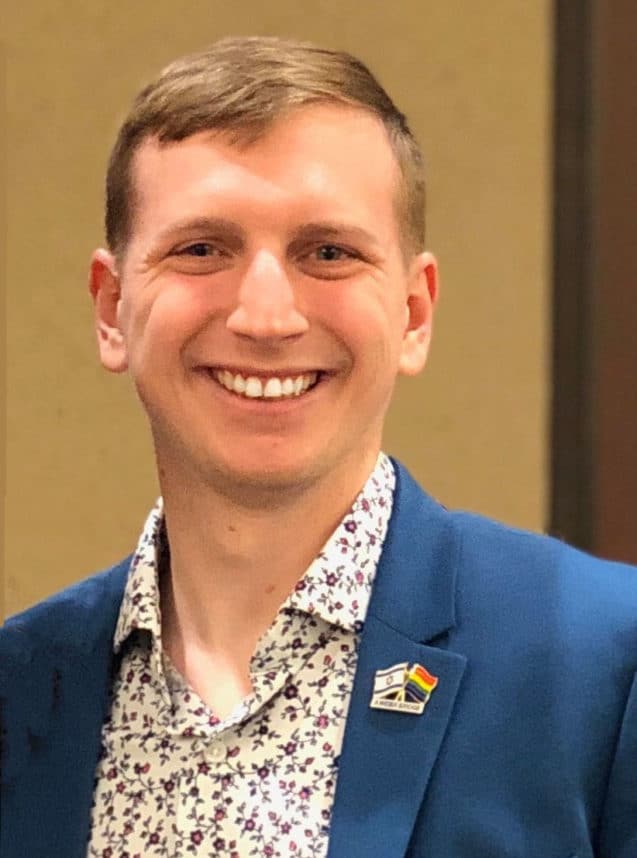
Quentin Ozeri, Associate Director of Jewish National Fund-USA of Los Angeles. Courtesy of Jewish National-Fund-USA.

While in college, he got a DNA test for his mother—”almost as a joke,” he said—and lo-and-behold he discovered he was Jewish. Upon learning this, “I understood where that fire to pursue justice came from,” Ozeri, 28, reflected in a recent phone interview. “This tikkun olam lived inside me, and I realized, ‘These are Jewish values, this is what we are here to do, to make the world a better place.’”

Ozeri, Associate Director of Jewish National Fund-USA (JNF-USA) of Los Angeles, will share his efforts toward fixing the world during his organization’s inaugural LGBTQ+ event, “Pride in the Israeli Frontier: A Virtual Event for Young Professionals,” showcasing LGBTQ+ life in Israel outside of Tel Aviv.

While Tel Aviv is considered one of the most queer-friendly cities in the world—a Middle Eastern mecca of LGBTQ+ rights—the flourishing of LGBTQ+ life in Israel’s more remote cities, from the Galilee in the north to the Negev in the south, is less known, and the program will attempt to shine a light on those communities.

“As wonderful and fabulous as Tel Aviv Pride is, Israel is not only Tel Aviv, and there are other wonderful, vibrant LGBTQ+ communities finding their own voice and space,” Ozeri said.

JNF-USA is holding the virtual event in honor of Pride Month, celebrated every year during the month of June. It is an initiative of JNFuture, JNF-USA’s community of philanthropists ages 22-40. The organization is hoping the program attracts a new generation of young people who love Israel and consider LGBTQ+ acceptance central to their Zionist identities.

“The LGBTQ+ movement is an important connection for many individuals from the Millennial and Gen Z generations when it comes to supporting Israel because it is such an open and welcoming society,” Ozeri said. “As a broad-based organization, it’s important for us to provide programming and content that resonates with our diverse partner base and shows them that JNF-USA remains committed to fostering diversity and inclusion.”

“The LGBTQ+ movement is an important connection for many individuals from the Millennial and Gen Z generations when it comes to supporting Israel because it is such an open and welcoming society,” Ozeri said.

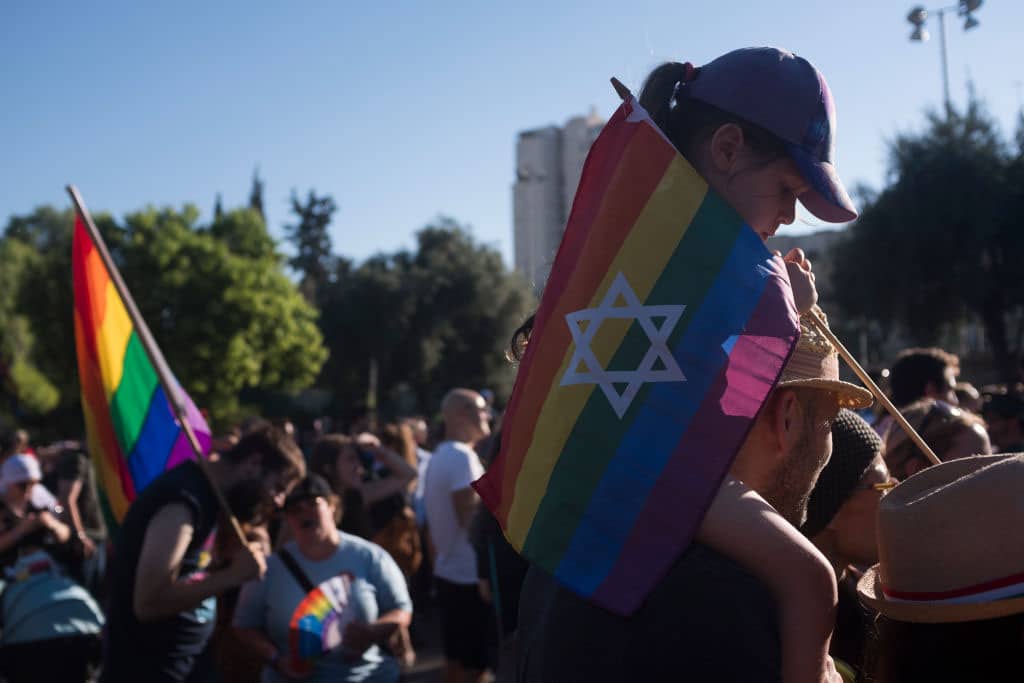
The Israel-focused nonprofit is also hoping the event serves as an antidote to the growing animus toward the Jewish State in progressive spaces, particularly facing Jewish LGBTQ+ activists when expressing their love for Israel. As an example, Ozeri cited the Chicago Dyke March in 2017 when several rally participants attempted to march while waving a rainbow-colored Star of David flag and were told by the march’s organizers to leave.

“So, this is our response to some of our challenges coming up in these spaces. We want to show there is a sizable portion of people in the LGBTQ+ community that are proud of their relationship with Israel,” the JNF-USA professional said. “I think this will be a step into the LGBTQ+ space for JNF-USA.”

Joining Ozeri on the panel are three speakers who are active in the Israeli LGBTQ+ community: Hadas Goldman, co-founder of JNF-USA affiliate MAKOM, a network focused on empowering and revitalizing towns and villages throughout Israel; Gil Elias, CEO of Pride House in Be’er Sheva; and Arnon Allouche, manager of the Haifa Communities’ House for Pride and Tolerance, an LGBTQ+ center located in an integrated Muslim and Jewish neighborhood.

Elias will be speaking about his work in Be’er Sheva, where the Pride House he runs has provided vital services and a sense of “real chosen family” for the LGBTQ+ community in the Negev’s largest city, Elias said in an interview from Israel.

Elias is the language and sexuality researcher at the Hebrew language department at Ben Gurion University of the Negev. He is also a poet. In leading the Pride House, he has tried to incorporate arts and culture programming into the center. Recent Pride Month events have included a queer drag show, a lecture about an ongoing oral history project on Be’er Sheva’s queer community, and the forthcoming June 17 Pride March.

The history of the Pride Parade in Be’er Sheva has been bumpy. When a Pride March in Be’er Sheva was conceived in 2016, the idea was met with resistance by the city’s religious leaders and was diverted from its main route by the city’s police, leading its organizers to instead stage a protest outside the Be’er Sheva municipality. This, in turn, brought more visibility to the city’s LGBTQ+ community than the march would have gotten, and ultimately led to a partnership between the Pride House and the municipality, Elias said.

Eager to share the progress surrounding LGBTQ+ acceptance in his city, Elias said he is hopeful that the upcoming event will be the first of many Be’er Sheva Pride House collaborations with JNF-USA.

To register for the upcoming JNF-USA event on June 13, visit www.jnf.org/jnfuturepride.

Pride Month Program Showcases LGBTQ+ Life in Israel Read More »

Is the Long Hunting Season Over? Is It Okay to Kill Jews Again?

Although published 35 years ago, “The Siege-the Saga of Israel and Zionism,” by the Irish journalist and politician Conor Cruise O’Brien, is a remarkably perceptive description of Israel and the modern Jewish experience. For example, he notes, “The Jewish State, in the conduct of its own internal affairs, is intensely and jealously democratic: so democratic as to be almost unworkable.” Could there be a better description of the recent Israeli political imbroglio involving four general elections in two years?

But, O’Brien isn’t always right. He notes that with the establishment of the State of Israel in 1948, “the Jews of the post-Holocaust world need never again go defenceless to their deaths.” But then, quoting the writer Manès Sperber, he adds that the events of 1948 were “meant to let the whole world know that the long hunting season was over for once and for all.”

Sadly, the recent war (May 10–21, 2021) that broke out between Israel and Hamas in the Gaza Strip is an indication that the long hunting season may not be over. This war, yet another in a series, resulted from a decision by Israel in 2005 to unilaterally vacate the Strip by dismantling 21 settlements. (It is often forgotten that four settlements in the West Bank were evacuated as well.)

Why has this war been so disturbing? After all, looking at the results objectively indicates that Israel won. In spite of over 4000 deadly rockets fired by Hamas and its allies, the damage to Israeli infrastructure and the number of Israelis killed and injured were minimized because of the Iron Dome system. Moreover, Israeli counterattacks were remarkably successful at destroying Hamas infrastructure while minimizing civilian casualties. This is difficult to do because Gaza is densely populated and because Hamas operatives deliberately place their rocket sites in civilian buildings and schools in order to maximize civilian casualties. Even the head of UNRWA, Matthias Schmale, got into trouble for commenting on the precision of Israeli airstrikes. Hamas knows the public relations value of high casualty figures. Yet, if you compare the number of casualties in this latest round to those of the 2014 war, it is clear that the numbers were much lower. Any civilian casualties are unacceptable. But this is the strategy that Hamas uses and Israel can only respond after being attacked, as any other nation would.

Why, then, this feeling of unease and distress among many Jews? Because this war makes it clear that the fighting is not really just about battling Israel and resisting the occupation. It is about killing Jews. This time the sympathy for Hamas by much of the world’s media, including that of the U.S. and Canada, indicates that it is acceptable to do so. It is okay to fire rockets indiscriminately at Israeli civilians but it is not okay to respond because an Israeli response results in an imbalance in casualty numbers. The violent protests against Jews in many North American and European cities tell us that only the numbers count.

Why, then, this feeling of unease and distress among many Jews? Because this war makes it clear that the fighting is not really just about battling Israel and resisting the occupation. It is about killing Jews.

Hamas, a fundamentalist Islamic organization that is hardly different from organizations such as ISIS, Hezbollah and Boko Haram, opposes most every current western societal standard, including gender balance, LGBTQ rights, religious freedom, etc. It has no interest in a two-state solution to the Israeli-Palestinian struggle. Hamas states its intentions openly for anyone to see, and when it comes to Israel its intentions are the elimination of the world’s only Jewish state. The lesson for Israelis of all political persuasions is that a withdrawal from the West Bank will likely result in another Hamas-ruled territory. In a recent Sky News interview, Hamas co-founder Mahmoud al-Zahar, admitted that the Hamas strategy was to target Israeli population centers. When asked if Israel should exist, he replied no.

The number of the rockets and Hamas’s state of preparedness indicates that the tensions and disputes over Jerusalem were merely a pretext for launching an attack. In fact, the occupation is a pretext too. Between 1948 and 1967 there was no occupation. There was no Palestinian state, either. Gaza was administered by Egypt and the West Bank was a part of Jordan. Yet there were numerous yearly cross-border attacks on Israeli civilians, resulting in countless Israeli casualties. Even before Israel existed, during the period of Mandatory Palestine, there were pogroms that resulted in the deaths of many Jews, including the killing of 69 Jews in Hebron in 1929, triggered by a rumor that the Jews were taking over the al-Aqsa Mosque.

Sound familiar?

In fact, even before the onset of modern Zionism, Jews in Palestine led a precarious existence. As an example, in 1834 the Jews of Palestine were caught between Egyptian and Ottoman rivalries and local Arabs took it out on the Jews of Hebron and Safed. The situation in Safed was particularly appalling. Safed’s Jews, who constituted half of the town’s population, experienced a month-long orgy of looting, raping and killing by the local Arab population. Five hundred Jews were killed.

Safed’s Jews, who constituted half of the town’s population, experienced a month-long orgy of looting, raping and killing by the local Arab population.

The words of Bob Dylan’s song about Israel, “Neighborhood Bully,” are especially appropriate: “The neighborhood bully he just lives to survive. He’s criticized and condemned for being alive. He’s not supposed to fight back, he’s supposed to have thick skin. He’s supposed to lay down and die when his door is kicked in.”


Jacob Sivak is a retired scientist affiliated with the University of Waterloo. His work has been published in The Jerusalem Report, The Times of Israel, Algemeiner, The Canadian Jewish News and the Forward.


Is the Long Hunting Season Over? Is It Okay to Kill Jews Again? Read More »

Serious Semite: Politics, Pariahs and Palestinians

These are times of revelation. Hydroxychloroquine may be good for treating coronavirus. The disease may have originated in a Wuhan lab after all, even though apparently it is still good to avoid eating bats, not least because they aren’t kosher. In addition, new horrors have been revealed about a concentration camp that the Nazis operated on the British channel island of Alderney.

Jersey, Guernsey and the tiny Alderney form the Channel Islands, three British territories that are part of an archipelago located 87 miles from the southern coast of England. They are known as “crown dependencies,” although geographically they are far closer to France, just 14 miles off its northern coast. Hitler occupied them as part of his Atlantic Wall, which was intended to protect the European mainland from an allied attack. It was his forward front for Operation Sealion, a planned Nazi invasion of Britain. Wartime Prime Minister Winston Churchill abandoned the islands since they were not deemed of military importance, and given their proximity to France nor were they defensible when the Germans occupied the European mainland.

Fortunately, the Nazis never made it to Britain. There is however a growing sense of antisemitism permeating the nation in response to the current conflict in Israel. Some high-profile British Jewish actors resigned from the actors’ union Equity since the organization issued a statement to support the Palestinian cause, criticizing “the disproportionate actions of the current Israeli government,” with no reference to the Palestinians’ murderous initiative when they started the current war. Equity urged members to financially support the Alrowwad Arts Centre “who advocate for the rights of Palestinian performing artists and entertainers.”

Fortunately, the Nazis never made it to Britain. There is however a growing sense of antisemitism permeating the nation in response to the current conflict in Israel.

UK Actors’ Equity may just as well have said, “We don’t like Jews after all.” As of yet, they have not found the grace of “Incredible Hulk” actor Mark Ruffalo who, a few days after the Equity statement, found the strength of the Incredible Hulk when he publicly retracted his own anti-Israel comments. Perhaps his comments were less strength and more strategy since he realized that public antisemitism is not good for his Hollywood career.

The situation is similarly bad in education since 25 teachers resigned from the UK’s National Education Union due to its allegiance to the Palestinian Solidarity Campaign and refusal to accept the IHRA’s (International Holocaust Remembrance Association) definition of antisemitism. In a perfect world, teachers should teach, actors should act and politicians should politick.

In a perfect world, teachers should teach, actors should act and politicians should politick.

The 25 resigning teachers are all staff members at JFS, the Jewish Free School, which was once the largest Jewish school in the world with 4000 students at the time (it now has 2200). The high school is completely free to attend, paid for by the British government. An unnamed Jewish teacher also resigned from a non-Jewish institution after students filled the school with Palestinian flags and attacked her by trying to stick “free Palestinian” stickers to her hair and clothing. Britain has a long way to go.

At least there are two Jewish-friendly “at leasts” on UK soil. Prime Minister Boris Johnson sends out cheerful video messages prior to significant Jewish holidays with heartwarming attempts at pronouncing Hebrew words. It almost makes me cry every time.

The other “at least” is similarly ironic. Britain’s “traffic light system” of COVID-safe countries to which UK citizens can travel ranges from forbidden red countries, best-avoided amber countries and permitted green countries. Recently the only green countries were Australia and Israel. Australia’s borders remained closed, which meant that Israel was the only place that Brits were allowed to visit. The entire nation is desperate to go away on holiday after a long miserable winter of lockdowns, grey skies and pounding rain. Their only solution is to tuck away their “Free Palestine” bumper stickers and head to the beach in Tel Aviv.

A car rally is planned for this Saturday with potentially hundreds of people driving from Northern England to London in a “Convoy 4 Palestine,” which will gather some of the nation’s most dedicated antisemites. By the time they reach central London, perhaps they will cause a traffic jam and have time to look out of their car windows at the new Holocaust Memorial that is being built in Westminster near the Houses of Parliament that will commemorate the thousands of people killed during the Nazi occupation of the British Channel Islands. One thing they may not realize is that Israel and the Jews want peace more than anything else, and a peaceful and well-governed Palestinian territory is the best possible solution for all of us.


Marcus J Freed is an actor, writer and business consultant. www.marcusjfreed.com

Serious Semite: Politics, Pariahs and Palestinians Read More »

Hunter College CUNY Zoom Lecture Turns Into Pro-Palestinian Protest

A May 20 Zoom lecture at the Silberman School of Social Work at Hunter College-CUNY devolved into a pro-Palestinian protest, leaving several Jewish students wary of returning to campus for in-person classes.

Fox News reported that the lecture, which took place during a “Practice Lab” session, was about the varying manifestations of oppression. Many of the nearly 200 participants on the lecture changed their Zoom user names to “Free Palestine: Decolonization” and put Palestinian flags in their backgrounds. Participants read out statements accusing Israel of engaging “in the ethnic cleansing of indigenous Palestinians from their land” and praising Representative Rashida Tlaib (D-MI) for calling Israel an apartheid state, among other things. The Zoom chat also featured comments like, “The Holocaust has been used as a tool. The fear of anti-Semitism as the fear of ‘this could happen again’ is being used preemptively to oppress and kill others.”

Jewish students told Fox News that professors on the lecture made no effort to stop the protest and one even joined in, and that there wasn’t any opportunity for pro-Israel students to chime in. “I was sick to my stomach,” one student said, adding that “the horrifying thing is that there were professors that were expressing their opinions on it. They’re supposed to be the mediators in the discussion, not the ones who are fueling the fire.”

“The horrifying thing is that there were professors that were expressing their opinions on it. They’re supposed to be the mediators in the discussion, not the ones who are fueling the fire.”

Another student similarly told Fox News, “For professors who are the experts in this anti-oppression curriculum to not stand up or do anything or say anything to intervene was quite shocking. What violence could have taken place if this happened in person? Because it really felt like a virtual mob.”

The school said in a statement to Fox News, “In a recent, end-of-year virtual class on zoom, the discussion went in an unplanned direction as students expressed strong and, at times, heated opposing viewpoints and sentiments about the recent conflict in the Middle East. After this exchange, the lead instructor asked for mutual respect and empathy for all points of view, and reminded students they could continue their discussion in smaller class sections. The virtual course continued to its conclusion as planned.” They added that they “will not tolerate hate speech in any form.”

Jewish groups weighed in. Anti-Defamation League New York / New Jersey Regional Director Scott Richman tweeted, “In a time of rising #antisemitism, an online lecture converted into an anti-Israel hate fest epitomizes the kind of bullying that makes Jewish students feel unsafe. This doesn’t promote peace. It prompts prejudice — and @Hunter_College should condemn it.”

“What happened at Hunter College is going to continue to happen all over the United States in various ways whether it’s Zoom or in-person,” Rabbi Abraham Cooper, Associate Dean and Director of Global Social Action Agenda at the Simon Wiesenthal Center, told the Journal in a phone interview, adding that “it’s sort of like the online revolution of the cultural revolution in China…this is a full-throttled assault on the American Jewish community.” He called for the school to determine who was behind the protest and throw “them the hell out of the school.” “Until universities hold individuals responsible for Jew-hatred sometimes masquerading as anti-Zionism, it will never stop.”

Morton Klein, National President of the Zionist Organization of America, similarly said in a statement to the Journal, “These Jew-hating moronic students must be expelled from their school and any Jew-hating professor fired. Hunter College leaders must be joined by political leaders and have a major press conference condemning these antisemitic actions and make it clear they are disgusting and won’t be tolerated.”

ZOA Center for Law and Justice Director Susan Tuchman also said in a statement to the Journal, “It’s outrageous that an entire class was taken hostage by Israel-bashers.  Especially knowing that Jewish students are now afraid to return to school in the fall, school officials must speak out and publicly condemn everyone who carried out this scheme.  The students involved should be disciplined, as should any professors who encouraged and helped create a hostile environment for Jewish students.”

StandWithUs co-founder and CEO Roz Rothstein said in a statement to the Journal, “While many universities are seeing a rise in hostile attitudes toward Israel, and a related increase in antisemitic activity, this situation was particularly egregious. For students to disrupt and effectively hijack a class session for the purpose of spreading false information about the recent war between Israel and Hamas is bad enough. For professors to support those efforts is an affront to the values of open debate and diversity that should be at the center of any college educational experience. We commend the Jewish and other students who courageously confronted and exposed a hateful and hostile situation and applaud them for highlighting the line between legitimate criticism in political discourse and blatantly antisemitic statements.”

Stop Antisemitism Executive Director Liora Rez also said in a statement to the Journal, “CUNY is once again showing its true antisemitic colors and affirming Jewish students are not safe on their campus, virtually or in person.”


Hunter College CUNY Zoom Lecture Turns Into Pro-Palestinian Protest Read More »

Korach: Hatred or Unity

After the assassination of Yitzhak Rabin in 1995, many Jews felt a profound sense of shock and sorrow. Michael Stanislawski, a professor of Jewish History at Columbia, put it this way: “A Jew  had killed the prime minister of Israel! How could this have happened? How could the religious and political divides within Israel have descended to this low?” Stanislawski tried to get a better understanding of the Rabin assassination by studying previous instances of violence within the Jewish community; but there were very few cases to consider. For the first 1,750 years of exile, there were no instances of ideological violence. However, that changed in 1848 with the murder of Rabbi Abraham Kohn.

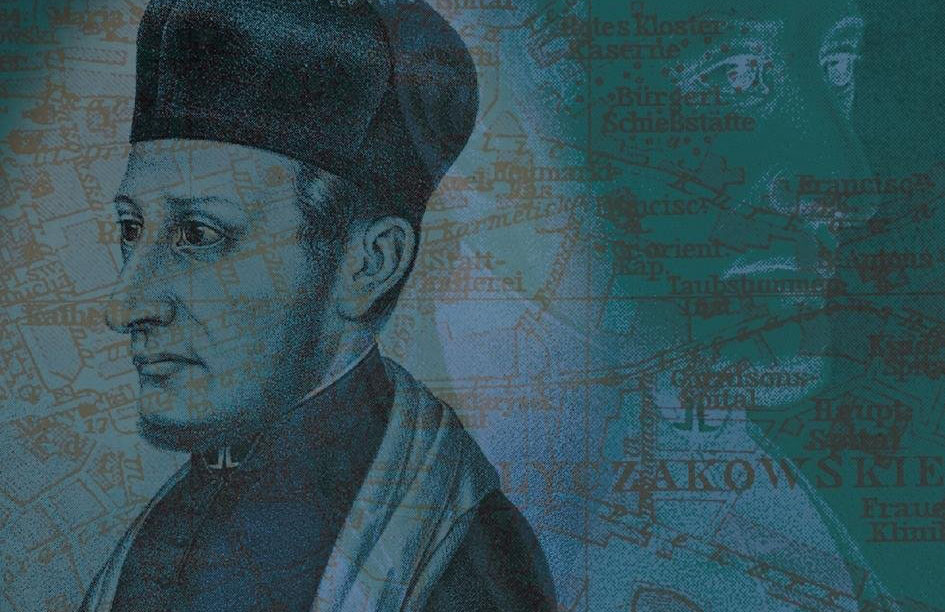
Stanislawski researched this now forgotten event, and published “A Murder in Lemberg: Politics, Religion, and Violence in Modern Jewish History.” It tells the story of Rabbi Abraham Kohn, who was appointed as a rabbi in Lemberg (now Lviv in Ukraine) in 1843. Although he had been ordained by the staunchly Orthodox Rabbi Samuel Landau of Prague, Kohn was a moderate reformer. He ultimately instituted reforms that would not raise any eyebrows today, such as a German language sermon and prayer for the government, abolishing the selling of aliyot, and having a professional cantor for the services. In 1846, a new progressive temple was dedicated, which would then serve as the seat of his rabbinate. Kohn’s sermon that day, which praised Emperor Ferdinand I of the Austro-Hungarian Empire, caught the attention of the authorities, and he was elevated to become the official Chief Rabbi of Lemberg.

Kohn’s new prominence stirred the anger of Orthodox extremists, who saw him as a religious threat. Pamphlets were circulated slandering Kohn as someone who eats non-kosher food and violates Shabbat. Aside from religious conflicts, several of Kohn’s opponents had ulterior motives for opposing him. Rabbi Kohn was lobbying for an end to taxes on kosher meat and candles that the government had levied on the Jewish community. Although these taxes were discriminatory, many powerful Jewish leaders profited from these taxes; they were tax farmers who paid the government a flat fee for the right to levy these taxes on others. Kohn was a financial threat to them as well.

During Pesach in 1848, a mob descended upon the Jewish communal offices demanding that Rabbi Kohn be relieved of his post; there was so much mayhem that the leader of the mob was arrested. At that point, Rabbi Kohn’s wife Magdalena begged him to consider moving away from Lemberg. Kohn’s response was: “I am after all among Jews; what will they do to me in the end?” His naivete is understandable; at that time, Jewish ideological violence was unthinkable.

But the threats to Kohn continued to escalate. At the beginning of September, placards were placed in synagogues declaring Kohn to be a poshea Yisrael, a willful sinner, who needed to be removed from his position. Kohn responded to this intensifying campaign with a call to end violence. His final sermon was preached on the topic of “thou shalt not kill.”

On September 6 1848 Kohn was murdered. A thirty-year-old goldsmith by the name of Abraham Ber Pilpel visited the Kohns’ apartment, sneaked into the kitchen under the guise of lighting his cigar, and poured arsenic into the soup. When the soup was served to the family, Magdalena noticed something was wrong, but the rabbi dismissed the strange taste as too much pepper in the soup, and proceeded to finish his bowl. The entire family became ill right away. Magdalena, suspecting that they might have been poisoned, immediately called for a doctor. However, it was too late, and Kohn and his baby daughter Teresa died.

A subsequent investigation fingered Pilpel as the murderer, but indicated he had colluded with two prominent Orthodox leaders, Jakob Herz Bernstein and Hirsch Orenstein, who were arrested as well. Bernstein and Orenstein had been leaders in the campaign against Kohn, and were also wealthy tax farmers. Sadly the investigation went nowhere, and no one was convicted of the crime. (Even more heartbreaking is that Hirsch Orenstein would become the Chief Rabbi of Lemberg in 1878).

Stanislawski’s review of the files and newly found evidence leads him to the conclusion that Pilpel almost certainly committed the murder, and probably at the instigation of the others. For the first time in 1,800 years, a Jew had murdered another Jew for ideological reasons.  

For the first time in 1,800 years, a Jew had murdered another Jew for ideological reasons.

The rebellion of Korach in our Torah reading is a political battle, with Korach attempting to replace Moshe and Aharon as the leaders of the Jewish people. But the Talmud sees this story as relevant to everyday events, and the rebellion of Korach as simply an unhealthy dispute. The Talmud says that “anyone who perpetuates a dispute violates a prohibition, as it is stated: ‘And you should not be like Korah and his assembly.’” This, according to the 14th-century Italian Rabbi Isaiah ben Elijah di Trani, requires us to be forbearing and understanding in personal disputes. Without a bit of forgiveness, every dispute will end up being as toxic as Korach’s.

Even more fascinating is a passage in the Mishnah which says:

“Every dispute that is for the sake of Heaven, will in the end endure; but one that is not for the sake of Heaven, will not endure. Which is the controversy that is for the sake of Heaven? Such was the controversy of Hillel and Shammai. And which is the controversy that is not for the sake of Heaven? Such was the controversy of Korah and all his congregation.”

This Mishnah is puzzling: what does it mean when it says that the dispute will endure or not endure? Rabbi Yehuda Herzl Henkin notes that we certainly remember Korach’s dispute every year when we read this Parsha; it has endured in the memory of the Jewish people. And as far as Shammai and Hillel, no one continues to argue for Shammai’s views! So what is the Mishnah saying?

Rabbi Henkin explains that the word “endures” refers to whether the two sides will continue to talk to each other and debate the issues. When Moshe reaches out to Korach’s associates Datan and Aviram to come and speak with him, they emphatically respond, “We will not come!” When Shammai and Hillel debated, they continued to talk, and debate, and then debate again with each other; some of the debates took two and half years. All the while, Beit Hillel and Beit Shammai married and socialized with each other. If you are debating for the sake of heaven, you can still love the person you disagree with. This is what the Mishnah means by saying “the dispute will endure”: both parties will still talk, instead of unfriending each other because of the disagreement.

If you are debating for the sake of heaven, you can still love the person you disagree with.

This is a profound insight, and in the growing academic discipline of Conflict Resolution, empathy for the other side is critical to creating a lasting end to conflict. And in marriage therapy, empathy is the anchor that can carry a couple through the most difficult marital conflicts. What gets lost in heated debates is our God-given ability to have compassion for each other.

The relative lack of political violence in the Jewish community during the years of exile is an anomaly. There had been many violent power struggles during the First and Second Temple periods. But it was in exile that violence became taboo because every Jew felt the sting and hurt of discrimination; that made it easy to empathize with other Jews, no matter how different they were, and ideological violence seemed impossible. But in 1848, this taboo was breached; and with the Rabin assassination, it was breached again.

But it was in exile that violence became taboo because every Jew felt the sting and hurt of discrimination; that made it easy to empathize with other Jews, no matter how different they were, and ideological violence seemed impossible.

It is painful to read the Parsha of Korach on a week when the dark clouds of violence are on the horizon once again, and several politicians in Israel now need ‘round-the-clock security due to death threats. Exile has taught us that unity is the only choice for the community; and the Talmud has taught that empathy is the only choice for the future. We must remember these lessons before it’s too late.


Rabbi Chaim Steinmetz is the Senior Rabbi of Congregation Kehilath Jeshurun in New York.

Korach: Hatred or Unity Read More »