fbpx

June 2, 2021

Modern, Meatless, Melted Cabbage

The real creativity of the modern Israeli food scene is the reinvention of fresh vegetables from the Shuk into culinary masterpieces. Grilled cauliflower steaks. Tahini eggplant. Crispy chickpeas. One of our favorites straight off the restaurant menus in Tel Aviv is melted cabbage. It comes with the rich delicious flavor of stuffed cabbage, minus the meat and all that tedious labor.

Going meatless occasionally is good for the planet and even better for your health.

The humble cabbage is a nutritional powerhouse. It’s low in calories but packed with nutrition, including Vitamin K, Vitamin C and Vitamin B6, folate, manganese, magnesium and potassium. It is rich in antioxidants that help to reduce chronic inflammation and the soluble fiber and phytosterols help lower LDL cholesterol (also known as bad cholesterol).

In this recipe, slow braising the cabbage releases the flavor without making the cabbage into wilted mush. The tomato paste is enlivened with fresh garlic, cumin and coriander. We finish off with a generous swirl of Silan, but you could substitute with a tablespoon or two of brown sugar. Some Israeli chefs add feta cheese at the end of baking, but we prefer to keep ours vegan.

So easy, so healthy and so incredibly tasty.

Happy eating!

Photo by Alexandra Gomperts

Melted Cabbage

1/2 cup olive oil, divided
1 green cabbage, cut in wedges
1/2 cup tomato paste
4 garlic cloves, finely chopped
1 teaspoon turmeric
1 teaspoon cumin
1 teaspoon coriander
1 teaspoon paprika
Salt and pepper, to taste
1 1/2 cups of water
Silan, for drizzling

Preheat oven to 350°F.

In an ovenproof skillet, heat half the olive oil and brown the cabbage, about 5 minutes each side.

Transfer to a plate.

Add remaining oil to skillet, and heat over medium flame.

Add tomato paste, garlic and spices and sauté for 5 minutes.

Add water, stir well and bring to a boil.

Place cabbage in the sauce and drizzle with silan.

Bake uncovered for 45 minutes.


Rachel Sheff and Sharon Gomperts have been friends since high school. They love cooking and sharing recipes. They have collaborated on Sephardic Educational Center projects and community cooking classes. Follow them on Instagram @sephardicspicegirls and on Facebook at Sephardic Spice SEC Food.

Modern, Meatless, Melted Cabbage Read More »

Google Says Diversity Head “Will No Longer Be Part of Our Diversity Team”

Google announced in a statement on June 2 that their diversity head “will no longer be part of our diversity team going forward.”

The statement, which was obtained by the Journal, read: “We unequivocally condemn the past writings by a member of our diversity team that are causing deep offense and pain to members of our Jewish community and our LGBTQ+ community. These writings are unquestionably hurtful. The author acknowledges this and has apologized. He will no longer be part of our diversity team going forward and will focus on his STEM [Science Technology Engineering Math] work.

“This has come at a time where we’ve seen an alarming increase in antisemitic attacks. Antisemitism is a vile prejudice that has given rise to unfathomable acts. It has no place in society and we stand with our Jewish community in condemning it.”

Google’s statement comes after a 2007 blog post from Kamau Bobb, Google’s Global Lead for Diversity, Strategy and Research, was unearthed by the Washington Free Beacon. In the post Bobb criticized Israel for invoking “collective punishment” against the Gaza Strip and for “destroying buildings and breaking the glass” in the West Bank before stating: “If I were a Jew I would be concerned about my insatiable appetite for war and killing in defense of myself. Self defense is undoubtedly an instinct, but I would be afraid of my increasing insensitivity to the suffering others.”

Jewish groups lauded Google for the move.

“Google did the right thing,” Associate Dean and Director of Global Social Action Agenda at the Simon Wiesenthal Center (SWC) Rabbi Abraham Cooper said in a statement. “We don’t need anti-Semites lecturing Jewish community while we are under assault by anti-Semites. SWC invites Google leadership to spend a day at our Museum of Tolerance they need it.”


StandWithUs CEO and co-founder Roz Rothstein similarly tweeted, “THANK YOU @Google!! Thank you for saying that antisemitism is a vile and dangerous prejudice. Thank you for standing with the Jewish community. Thank you for taking Kamau Bobb out of your diversity team. Hopefully he is rethinking the words he uses.”


Stop Antisemitism, on the other hand, tweeted that Google greenlit antisemitism. “Rather than doing the right thing and firing Kamou Bobb for his grotesque antisemitism, @Google transfers this vile bigot to a STEM team.  We feel bad for the Jewish employees that are now stuck working with him.”

Former New York Democratic Assemblyman Dov Hikind, who also heads Americans Against Antisemitism, tweeted sarcastically, “Those are some serious consequences for an unabashed Jew-hater! No more diversity work for Kamau Bobb, nope, now he’ll be forced to ‘focus on his STEM work’! That’ll teach him! #Screwgle.”


Sussex Friends of Israel tweeted that it’s “not good enough” for Bobb to give an “‘internal’ apology” to Google. “You’d have thought he would have known that his words affect the entire Jewish community. Apologise to us all.”


Judea Pearl, chancellor professor of computer science at UCLA, National Academy of Sciences member and Daniel Pearl Foundation president, tweeted, “It’s not Google that is at fault, it is ‘diversity’ that corrupts. ‘Diversity professionals’ see themselves qualified, if not obliged, to sort out other people by their ethnicity or culture and to rank them on a good/bad scale, deserving vs. undeserving of ‘diversity’ benefits.”


 This article has been updated.

Google Says Diversity Head “Will No Longer Be Part of Our Diversity Team” Read More »

Table for Five: Shelach

One verse, five voices. Edited by Salvador Litvak, the Accidental Talmudist

All the children of Israel complained against Moses and Aaron, and the entire congregation said, “If only we had died in the land of Egypt, or if only we had died in this desert. Why does the Lord bring us to this land to fall by the sword; our wives and children will be as spoils. Is it not better for us to return to Egypt?” -Num. 14:2-3


Bracha Goetz
Author of 39 spiritual children’s books

Ten princes from the twelve tribes who were sent to scout out the land of Israel reported back to the people that those dwelling in the land were too powerful to overtake militarily. And what they said made sense to us.

Only two of the twelve princes argued that no matter how powerful the inhabitants appeared to be, with the Almighty’s help we could surely be able to overcome their armies and settle in the land of Israel which God had destined for us to inhabit.

It may seem preposterous to us that after all the open miracles that the Jewish people had witnessed, they would doubt that the Almighty would continue to help them. How could they complain and suggest going back to Egypt?

Our Torah is uniquely amazing because it doesn’t shy away from highlighting big mistakes that our great ancestors made – when there is a major lesson for us to learn from them.

Every moment of our lives is full of miracles, including countless blatantly open ones. We have been lifted up again and again, repeatedly freed to grow beyond our perceived limitations. And yet when we are faced with putting in some extra effort, we still often consider returning to the comfort of enslavement, rather than struggling to move forward to the far greater pleasure destined for us.

It is hard to remember, even from one miraculous moment to the next, that an infinitely powerful Source is always behind our best efforts – so anything’s possible!


Rabbi Adam Kligfeld
Senior Rabbi, Temple Beth Am

Before there was the boy who cried wolf, there were Israelites who cried hunger, amidst abundant food. Who cried oppression, even though they had just fled it. Why would God continue to listen to such false alarms?

That begs the question of why narratives so unsympathetic to the Israelites and their relationship with God get spotlit within our sacred text. One answer of the faithful is, “Because that’s how it happened.” But we can be more imaginative; not every datum of the Israelites’ experience is recorded. So why their rebellions? Why their stupendous lack of gratitude, and perspective? Why their whining? How does reading through those verses build national and spiritual character?

Rabbi Simha Bunem of Psysche, riffing off of a Talmudic text saying that once the Temple was destroyed, the gates of prayer were closed, whereas the gates of tears remained open, wonders why there are gates of tears at all? Ought tears not just flow freely? He says, harshly critiquing the Israelites from our verses, that those gates are there to keep out the tears of fools who cry for no reason. For relationship to endure, for emotions to make sense with respect to reality, unfounded gripes and senseless weeping must be blocked, or redirected. Otherwise, the one receiving those tears, whether friend or God, will start to ignore them. And then where will you be when support is most needed? Note and confront the bad, yes. But bless the good, too. Or be prepared to be tuned out.


Lt. (res) Yoni Troy
Israel Defense Force

I write this at 3:12 am Friday, May 21st 2021 on the Gaza border. I was called to reserves for the first time after finishing my Army service in February. An hour ago, Israel and Hamas reached a cease-fire agreement after 11 days of Operation Guardian of the Walls.

After my first major military operation, I feel nowhere close to the ten spies’ despair. From our military capabilities to our intense unity, Israel impressed me tremendously.

From enlisted soldiers to reservists, from family men who work in factories to Tel-Aviv hipsters with piercings and tattoos, we came together with a common goal – to protect our country and bring quiet to the region.

Every day, we received donations from Jews worldwide with beautiful notes strengthening us and wishing us well. Thanks to them, we had as much as we needed, be it underwear and socks or Shavuot cheesecake.

I feel proud to belong to a generation of Jews with a homeland so strong, that even when one of its borders is burning, we don’t fear for our existence: a country powerful enough to pummel our enemies’ infrastructure while minimizing casualties — for us and Palestinian civilians.

Whenever problems arise, we can hear the Spies’ ten ugly voices claiming there is no hope, that life once was better, and that we are doomed.

I write, hoping that we have done enough to ensure quiet from Gaza for years to come, believing, as did Joshua and Caleb, that our future will be brighter.


Rabbi Cheryl Peretz
Associate Dean, Ziegler School of Rabbinic Studies, AJU

Moses sends spies to scout the land. Forty days later they return with frightening reports. On a sleepless night, the people cry out in fear and sadness.

After years of slavery and oppression shouldn’t the Israelites be celebrating freedom? Why are they not marching towards the Promised Land with wonder and jubilation? Instead, weighted by fear, they complain, expressing a desire to return to the land of oppression and spiraling back to slave mentality where humiliation is preferred over self-determination. In the face of adversity, they seek comfort in the known, even if it translates to degradation.

In Egypt, decisions were made for them. They knew the rules and how to live them. They forget that the meager slave rations are provided only to ensure continued servitude, remembering only that they were provided that which they now fear they will lack. Incapable of holding hope in themselves, in Moses, or in God, the people didn’t (yet) understand that hope requires faith. Without it, tears give way to despair resulting in a fantasy that oppression is better than freedom and that death is better than life.

Thankfully, most of us will not experience true slavery. Yet, we know the impulse towards fear that upends our journey towards hope and possibility. Rabbi Jonathan Sacks z”l reminds us of the anecdote: “The Jewish task is not to fear the real world but to enter and transform it, healing some of its wounds and bringing to places often shrouded in darkness fragments of Divine light.”


Michael Berenbaum
Professor of Jewish Studies and Director of the Sigi Ziering Instittute, American Jewish University

Every person raised in Western culture knows the words Pharaoh and Egypt, Moses, crossing the Sea and the Promised Land. Few choose to recall the journey through the desert, but the Torah recounts it detail by detail, stop by stop. It took courage to leave Egypt.

The Israelites knew fear at the Sea. Pharaoh and his mighty warriors were on one side and the Sea on the other. It took less courage to cross the Sea as the alternative was to be slaughtered by the Egyptians. Yet the journey through the dessert was not for the fainthearted. Only two men, Caleb and Joshua, made it from Egypt to Canaan. The rest, including Miriam, Aaron and even Moses could not.

Parashat Shelach and next week’s Korach, are about aspirations, self-image, and achievements. The ten spies perceive themselves as grasshoppers, and the land’s inhabitants as giants. “We can’t do it,” they despair.

Korach proclaims: “The entire people are holy and God dwells among them.” The Torah admonishes us to become holy; only then God will dwell among us.

What was the message of Caleb and Joshua? “We will surely go up and take hold of it for we will surely prevail over it.” We are their descendants.

But let us have some sympathy for the Israelites who yearned for the difficult world they knew and not for the daily struggle to reach an unknown but promised destination. Though many of us would not like to admit it, we are their descendants as well.


Table for Five: Shelach Read More »

Oil Drill Site in Pico-Robertson Found in Violation by Zoning Board

The City of Los Angeles Office of Zoning Administration issued a Letter of Determination (LOD) on June 2 regarding the West Pico Oil Drill Site that has been a source of community contention for decades.

After a year of study, the Zoning Administrator found that the operator of the facility, Pacific Coast Energy Company, was in violation of several conditions imposed by the Board of Zoning Appeal and the 2001 Settlement Agreement.  At the same time, the lengthy letter stated that the operator was in substantial conformance with all of the other conditions previously imposed by the Board of Zoning Appeal.

The massive oil rig tower and facilities that stretch two city blocks at 9101 and adjacent 9151 W. Pico Blvd. just west of Doheny Drive, sit in the heart of the Pico-Robertson Jewish community. It was constructed in 1966 and has functioned as an active oil drill site ever since.

Criticism of the Zoning Administrator’s findings was heated by those who have worked for years to either put tighter restrictions on the site or shut it down entirely.

Fifth District Councilmember Paul Koretz issued the following statement: “My concerns for the health and safety of the community have not been satisfied by the Zoning Administrator’s determination, which found the oil site to be in substantial conformance despite unresolved violations that includes an LAFD Fire/ Life Safety Violation. The Zoning Administrator took nearly a year to issue the Determination and the oil company still failed to resolve compliance issues in that time.  I am weighing my options.”

Rabbi Yonah Bookstein, co-founder of Pico Shul, which is directly across the street from the oil site, and also a member of the Pico Robertson Health and Safety Coalition said, “The ZA (Zoning Administrator) ruling on the West Pico Drill Site is full of contradictions, errors of law, and errors of fact. The ruling highlights the City’s willful disregard for the health and safety of residents, and City and State laws. This ruling will certainly be appealed.”

Sam Yebri, attorney and candidate for Los Angeles City Council District 5 added, “At minimum, the ruling documents numerous violations that endanger neighboring communities and underscores the need for the immediate launch of a robust, fully-funded inspection program for oil drilling sites in Los Angeles.”

“At minimum, the ruling documents numerous violations that endanger neighboring communities and underscores the need for the immediate launch of a robust, fully-funded inspection program for oil drilling sites in Los Angeles.”

Michael Salman, Professor Emeritus of history at UCLA, has been an ardent opponent of the site. “The ZA makes numerous errors of law and fact, and did not conduct the review that is legally mandated by Condition 78 of the 2000 approval,” Salman said.  “Both the oil drill site operations and the ZA are continuing to violate City and State law, as they have been doing since 2000.”

The Zoning Administrator’s findings will become effective after June 17, 2021, unless an appeal is filed with the City Planning Department.  Appeals can be filed at https://planning.lacity.org/development-services/appeal-application-online.


Harvey Farr is a local community reporter for the Jewish Journal.

Oil Drill Site in Pico-Robertson Found in Violation by Zoning Board Read More »

UNRWA Gaza Director Takes “Extended Leave of Absence”

The director for the United Nations Relief and Works Agency (UNRWA) in the Gaza Strip is reportedly on a leave of absence after a recent interview acknowledging that Israel Defense Force (IDF) strikes were precise.

The viral clip, which came from a May 23 interview on Channel 12 News, featured UNRWA Gaza Director Matthias Schmale saying he does not “dispute” the IDF’s claim that their Gaza strikes during the recent escalation were precise. He also said there was “a huge sophistication” in the strikes, but criticized the strikes for being “more vicious” than during the 2014 Gaza War.

The Times of Israel reported that Schmale was “called back to Jerusalem for consultations and had decided to take an extended leave of absence”; Deputy Commissioner-General Leni Stenseth will be heading the Gaza division for the time being. The Jerusalem Post also reported that “Palestinian factions” have deemed Schmale as “persona non grata.”

American Jewish Committee Managing Director of Global Communications Avi Mayer tweeted, “Matthias Schmale has been forced to flee the territory and has apparently been suspended from his position because of this interview, which outraged Hamas and drew protests outside the organization’s offices.”

UN Watch Executive Director Hillel Neuer tweeted, “Every U.N. official, journalist and NGO activist in Gaza knows that this (or worse) will be their fate if they too say the truth.” In a subsequent tweet, he pointed to the fact that “Palestinian groups” targeted a New York Times reporter who noted that Hamas arrested a Palestinian activist.


Israeli diplomat Galit Peleg also tweeted that the “persona non grata” designation was the result of Schmale’s refusal to parrot “#Hamas lies… when will the world wake up & #FreeGazaFromHamas?”

UNRWA Gaza Director Takes “Extended Leave of Absence” Read More »

Palestinian Standard Health Indexes Tell an Unknown Story

A number of progressive publications and social media influencers have spent the past few weeks accusing Israel of “genocide” and “ethnic cleansing.” One prestigious magazine, The New Republic, branded Israel as a “settler colonial” state engaged in a “never-ending war against Palestinian health,” a kind of updated version of the old European charge that Jewish intruders poison their neighbors’ wells. But if all that were true, then wouldn’t these crimes be reflected in the standard health indexes used worldwide to measure a people’s overall physical well-being—such as in Palestinian life expectancy, infant mortality, population growth, and so on? Let’s look at the data.

Life Expectancy

In 1967, the year Israel took over the West Bank and Gaza Strip from Jordan and Egypt, the average Palestinian could expect to live only 49 years, according to a United Nations report by Dr. Wael Ennab of An-Najah National University in the West Bank. Once Israel entered the scene, that expectation climbed to 56 years in 1975, jumped to 66 years in 1984, and has since hovered around 75 years, which is higher than the global average. It is also higher than in Iran, Pakistan, and many Arab countries, including Egypt. It is even higher than several countries in the Americas. Israeli presence in the land, while bemoaned by many Palestinians, nevertheless corresponded with major leaps forward in human longevity.

Infant Mortality

Here again we find improvements in Palestinian well-being since 1967. The Palestinian infant mortality ratio in 1967 was between 152 and 162 per 1,000 births, dropping to 132 per 1,000 in 1974, and plummeting to 53-63 per 1,000 in 1985. Happily, the number has now plunged to 15.6 per 1000, making Palestinian babies safer than those in many other countries. A pregnant woman’s baby stands a better chance of survival in the West Bank and Gaza Strip than in Brazil, Turkey, Egypt, and numerous other nations around the world.   

A pregnant woman’s baby stands a better chance of survival in the West Bank and Gaza Strip than in Brazil, Turkey, Egypt, and numerous other nations around the world.


Birth Rates, Death Rates, Population Growth

As a result of high birth rates and dropping death rates, the West Bank and Gaza Strip are among the world’s top areas in population growth. Add the above data on ever-rising life expectancy and plummeting infant mortality, and a complex picture emerges in which, somehow, amid decades of war against the Jewish state, Palestinian life and health are improving.

Access to Water

If it is true that “water is life,” then Israel has enhanced life for Palestinians by providing increased access to clean drinking water. When Jordan occupied the West Bank, just four out of 708 Palestinian towns and villages had modern water supply systems and running water. Enter the hated Jews and in just five years the network of fresh water sources expanded by 50 percent and continued to grow, thanks to Israel’s introduction of modern water management techniques, extensive pipeline development, and deep wells beside urban centers. By 2004, 96 percent of the West Bank population enjoyed running water, even during months of low rainfall. Palestinian water consumption also consistently rose, exceeding annual increases from population growth. Regrettably, theocratic Hamas’s sewage management and over-pumping of Gaza’s aquifer—and obsession with war—have worsened regional difficulties. But if Palestinians made peace with Israel, then pioneering Israeli conservation technologies would surely offer yet more hope and benefits to Gazans’ water situation.

War Deaths

Given the extensive media coverage and worldwide protests over alleged Israeli war crimes, one might reasonably assume that the Israeli-Palestinian conflict is among the bloodiest disputes on earth, if not in history. But judged in terms of total dead—roughly 30,000 over 100 years—the conflict is in fact a minor skirmish in comparison to the butcher’s bill of South Sudan, Syria, Yemen, Somalia, Iraq, or nearly any European and American wars. Of the 5 million lives lost in the last 70 years of wars in the Middle East and North Africa, the Israeli-Palestinian conflict encompasses less than 1 percent of the total in the region. In the last 10 years, the death toll in Syria’s civil war has proved over ten times worse than the entire history of Israeli-Palestinian fighting. By some estimates, Palestinians are more likely to die in a car accident than at the hands of an Israeli soldier.

I don’t cite the above data in order to justify every Israeli policy regarding the West Bank and regarding the Gaza Strip. Nor do I want to minimize or discount the civilians who suffered in the latest round of Hamas-Israel fighting. My point here is that these decades-long trends of rising Palestinian life expectancy, declining infant mortality, growing populations, increased water supplies, and comparatively low casualty rates disprove the incendiary claims that Israel is committing genocide, guilty of ethnic cleansing, or in a never-ending war against Palestinian health. Such accusations are as false as the old antisemitic charge of well-poisoning, which once sparked medieval riots and pogroms not so unlike today’s attacks against Jews on the streets of Europe and America.

Such accusations are as false as the old antisemitic charge of well-poisoning, which once sparked medieval riots and pogroms not so unlike today’s attacks against Jews on the streets of Europe and America.

Given all the above data, it seems fair to say that if Palestinian leaders hadn’t rejected numerous offers for statehood—in 2000 at Camp David, in 2001 at Taba, in 2008 after the Annapolis Conference, to name just three—then Palestinian health would now be on par with the world’s most flourishing nations. Unfortunately, for many progressive news outlets today, promoting these peace plans isn’t as exciting as decrying genocide and other mythical Jewish crimes, but such compromise proposals remain far more likely to advance Palestinian health and well-being.


Jonah Cohen is communications director for the Committee for Accuracy in Middle East Reporting and Analysis (CAMERA.org).

Palestinian Standard Health Indexes Tell an Unknown Story Read More »

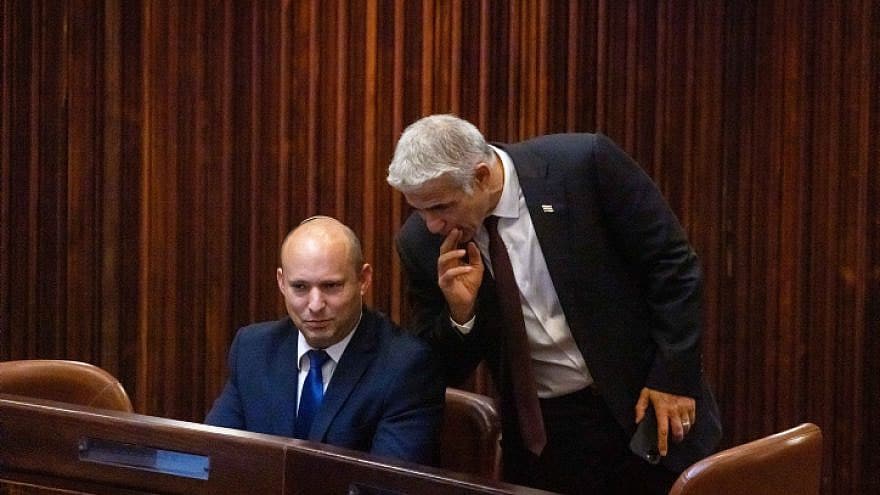
Lapid, Bennett Announce Agreement to Form New Government

Yesh Atid Party head Yair Lapid has informed Israeli President Reuven Rivlin that he has succeeded in an agreement to form a new government, likely ending Israeli Prime Minister Benjamin Netanyahu’s 12-year tenure as the country’s leader.

In an announcement on Twitter in Hebrew, Lapid wrote that the new government “will work in the service of all Israeli citizens, those who voted for it and those who did not. It will respect its opponents and do everything in its power to unite and connect all parts of Israeli society.”

However, in an unprecedented move, Lapid will not serve first as prime minister. Instead, Yamina Party head Naftali Bennett will serve in the top job for two years as part of a rotation deal, while Lapid will serve as the alternate prime minister and foreign minister until September 2023, when he will take over as prime minister until the end of the term in November 2025.

Bennett and Lapid will head a government comprised of seven parties spanning the entire Israeli political spectrum from the left, center and right. It will also be supported by the Ra’am Party, marking the first time that an Arab party has played a role in forming a government. The Jewish parties in the new coalition will include the centrist Yesh Atid and Blue and White, the right-wing Yisrael Beytenu, Yamina and New Hope, while also including the left-wing Labor and Meretz.

Several other notable portfolios proposed in the new government will include Blue and White’s Benny Gantz remaining as defense minister, Yisrael Beiteinu’s Avigdor Lieberman serving as finance minister, New Hope’s Gideon Sa’ar as justice minister, Nitzan Horowitz of Labor as transportation minister and Ayelet Shaked from Yamina as interior minister.

Despite the announcement by Lapid just minutes before his mandate was set to expire, he still faces a number of hurdles. The declaration must be approved by Rivlin and then a vote of confidence in the new government must be held in the Knesset in the coming weeks. Plus, the government is expected to garner a bare majority of votes in the Knesset—likely 61 out of 120—making just one defection needed to collapse the coalition.

In a statement, Rivlin’s office congratulated those involved in the agreement and said that the “Knesset will convene as soon as possible to ratify the government, as required.”

Netanyahu, who failed in his first attempt to form a government earlier this spring, will most likely continue to try to press lawmakers in Yamina and the New Hope Party to defect from the government.

If the new government is sworn in, it will end Netanyahu’s term as the country’s longest-serving prime minister. He has sat at the nation’s helm continuously since 2009 and served for three years in the late 1990s.

Netanyahu, who is on trial for charges of corruption and bribery, has indicated that his Likud Party will go into opposition.

Lapid, Bennett Announce Agreement to Form New Government Read More »

Three Thoughts On Israel’s New Government

(Israel Policy Forum) — In a moment that felt as if a thin line of white smoke should be streaming in the air above the president’s residence, Yair Lapid announced on Wednesday night that he had secured a coalition agreement between his own Yesh Atid and seven other parties to replace Prime Minister Netanyahu after twelve years of uninterrupted power. Yesh Atid, Kachol Lavan, Yamina, Labor, Yisrael Beiteinu, Tikva Hadasha, Meretz, and Ra’am intend to form a new government, which will involve a prime ministerial rotation between Yamina’s Naftali Bennett going first and Lapid going second.

The new government will not be sworn in for at least one more week, providing what amounts to a lifetime in Israeli politics for Netanyahu to pressure the right-wing members of this new coalition to defect and to wreak havoc however he can, so this is not yet a done deal. But if this new government indeed takes power, it is a momentous story after four elections in just under two years. Beyond the obvious observation of the earth-shattering sidelining of Netanyahu, who after a dozen consecutive years in power has come to seem if he will be prime minister for life, and the halt to Likud’s seemingly permanent role as Israel’s governing party, here are three things to consider about what this all means and where it may lead.

Unprecedented unity and unprecedented dysfunction are not mutually exclusive

The first thing to note is the extraordinary and unprecedented nature of this government. It is not only a unity government; it is the broadest government in Israel’s history. Unity governments in Israel usually mean an agreement between the two largest vote getters, which are sometimes ideologically disparate but in recent history are less so. The unity government between Yitzhak Shamir’s Likud and Shimon Peres’s Labor in the 1908s is an example of the former, whereas the 2012 Likud-Kadima government was an agreement between Israel’s dominant right-wing party and the former Likud members who had split off to form Kadima because of a disagreement over the single issue of Gaza disengagement. Similarly, the unity government between Likud and Blue and White that collapsed and led to the recent fourth election was not one created by parties on different ends of the political spectrum, but was a deal struck between the right-wing tentpole party and a centrist party that leaned right but had no firm ideological commitments or even positions.

The Bennett-Lapid government is none of these things. It is not the result of an agreement between the two largest parties, as Likud – the largest party with 30 seats, 13 more than Yesh Atid in second place – is on the outside looking in. It is certainly not an agreement between ideologically compatible parties, but neither is it an agreement between parties that anchor the right-wing camp and left-wing camp. It is a government that encompasses Israel’s most ideologically left-wing party in Meretz, Israel’s most ideologically non-Kahanist right-wing party in Yamina, Israel’s only Islamist party in Ra’am, and everything in between. It is a government that includes religious parties, secular parties, Jewish parties, and an Arab party. The prime minister hails from the fifth largest party, and is the first kippah-wearing observant prime minister in the Jewish state’s history while sitting in a coalition with Israel’s two most famous secular politicians. Calling this government unprecedented does not capture how remarkably inconceivable this all is.

The raison d’etre of this government is ending Israel’s political dysfunction by replacing its main source, Netanyahu. But while Netanyahu is undoubtedly the proximate cause of Israel’s recent dysfunction, the new coalition may end up highlighting a different form of Israeli political dysfunction even more starkly. Were Netanyahu not the Likud chairman, nearly any other potential Likud leader would be able to form a broad right-wing government immediately. If Netanyahu was being replaced internally, it would end Israel’s electoral deadlock and usher in a coalition that would be internally cohesive and fundamentally stable.

The raison d’etre of this government is ending Israel’s political dysfunction by replacing its main source, Netanyahu.

But that is not how Netanyahu is being replaced. He is being replaced by a coalition that is unified only in its conviction that Netanyahu must go. If it also leads to an internal Likud revolt against Netanyahu while in the opposition, it will have solved the electoral dysfunction problem. But the massive dysfunction, fighting, and disagreement that is going to be the inevitable result of a coalition that has accomplished its political goal but can agree on few common governance goals is not going to inspire confidence. There are going to be disagreements over everything, from the budget to construction in the West Bank to judicial appointments to policing. The mutual veto mechanism between Lapid and Bennett means that large controversial initiatives will be impossible, but it also means that tackling some of Israel’s thorniest problems will also be impossible. Israelis will be happy to put an end to the election cycle, but will not be happy if it means being unable to address pressing issues. We saw this exact dynamic after Netanyahu and Benny Gantz formed a government after the third election, which ended in disaster, and the differences between Netanyahu and Gantz are peanuts compared to the gaps between Yamina and Meretz.

Extremism is about more than policy positions

As it became clear a few weeks ago that any coalition replacing Netanyahu would mean Bennett as first in a prime ministerial rotation, there was a raft of commentary warning that people should be careful what they wish for. Bennett is indisputably to Netanyahu’s right on Israeli-Palestinian issues and on territorial maximalism, and is the Israeli politician most responsible for promoting West Bank annexation and bringing it from the fringe to the mainstream. If Netanyahu was always looking for an excuse not to go forward with annexation, Bennett will have no such compunctions.

This view should not be dismissed out of hand, notwithstanding the fact that this coalition is set up to avoid any non-consensus issues and that moving forward with annexation in this configuration will be functionally impossible. But it is critical to remember that there is policy extremism, and there is personal extremism. Netanyahu has spent the better part of a half decade deliberately weakening Israel’s state institutions in order to wiggle out of his personal legal troubles. He has subjected Israel to election after election after election after election for no reason beyond seeking any configuration of 61 MKs that will grant him immunity from prosecution. He purposely boosted Israel’s most dangerous Jewish extremists, the Kahanists who form Otzma Yehudit, and did everything he could to get them into the Knesset and even reserved a spot for their party on his own Likud list. Netanyahu’s preference was to form a government with genuine racist neofascists, whereas Bennett will be helming a government that includes Israel’s peace camp and an Israeli Arab party. Any discussion of extremism that does not recognize that Netanyahu in June 2021 is far more of a dangerous extremist than Bennett has ever been is not looking at the full picture.

Avigdor Liberman is the central player here, even if nobody realizes it

It’s sometimes hard to remember amidst the twists and turns of the past two and a half years that Avigdor Liberman kicked off this entire cycle of chaos by resigning as defense minister, leading to elections being called by Netanyahu early after pressure from some of the remaining parties in the coalition, and then refusing to join Netanyahu’s prospective new coalition after the first election in April 2019. Without that determination to refuse to join a coalition unless issues of religion and state were addressed, we would be over two years into Netanyahu’s fourth consecutive term as prime minister, helming the most right-wing coalition in Israel’s history.

Liberman’s centrality did not end with denying Netanyahu a government after the first election. His recommendations of Gantz to be prime minister represented the first actual defection from Netanyahu’s right-wing bloc, and his insistence that replacing Netanyahu take precedence above all else shaped the narrative and environment in a way that ultimately led to Gideon Sa’ar feeling confident enough to break away from Likud. After the most recent election, Liberman quickly inked a coalition agreement with Lapid once the mandate passed to him in order to get things out of the way. There is no question that Lapid is almost singularly responsible for the new government agreement – from his working to get everyone on board, to his willingness to step aside for Bennett, to his laserlike focus on compromising as needed so long as it meant dislodging Netanyahu – but Liberman has been at the center of events since the beginning.

That will not change going forward despite the fact that the prime minister and alternate prime minister are Bennett and Lapid. Liberman is slated to be the new finance minister and his party will also control the Knesset Finance Committee. The most important thing this new government must do is pass a budget – Israel’s first permanent budget in over three years – and Liberman will shape the process and budgetary priorities more than anyone else. Liberman will also have the power to bring this coalition down whenever he decides the time is right, and while the spotlight will be trained on his more high profile coalition partners with the more high profile jobs, Liberman is going to remain at the center of the action, for which he has an uncanny knack. In a cabinet full of ministers who have never been in government and ministers who have some experience in lower level ministries but not in the more important ones, Liberman has been foreign minister, defense minister, will now add finance minister to his resume, and might have tighter control over his party than any other party chief. He is unlikely to ever be the prime minister of Israel, but he is going to shape Israeli politics and policy as much as any non-prime minister ever has.


Michael Koplow is Israel Policy Forum’s policy director, based in Washington, DC. To contact Michael, please email him at mkoplow@ipforum.org.

Three Thoughts On Israel’s New Government Read More »

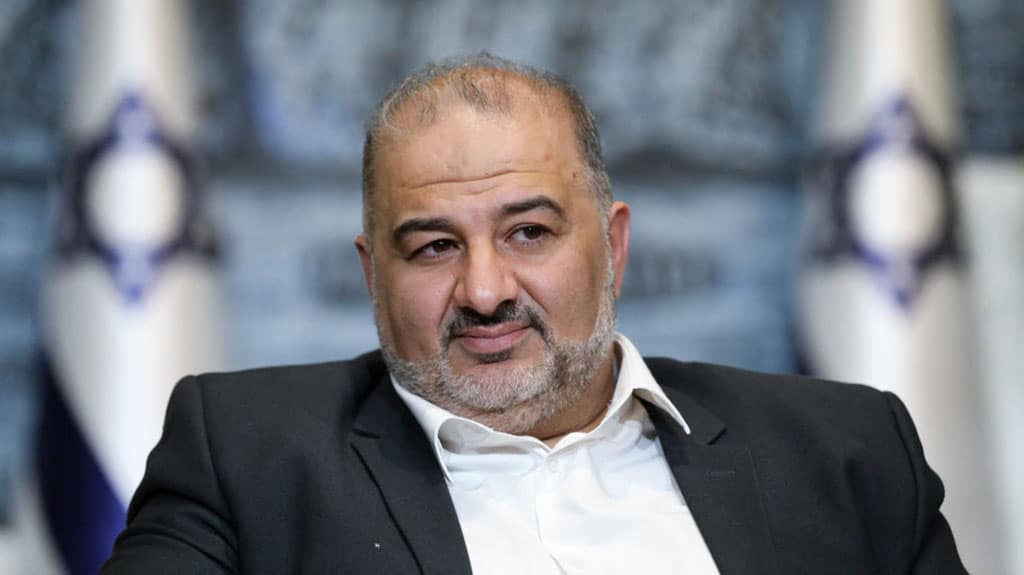
Palestinians In Gaza Outraged as Islamist Party Head Mansour Abbas Agrees to Israeli Government

[Gaza City] The Media Line – With just about one hour before the deadline, Mansour Abbas, the leader of the Islamist Ra’am-United Arab List party signed an agreement to support the coalition government cobbled together by centrist Yesh Atid party leader Yair Lapid, and right-wing Yamina party head Naftali Bennett.

Lapid informed Israel’s President Reuven Rivlin late Wednesday night that he had succeeded in forming a new national unity government, more than two years after the first of four parliamentary elections led to an extended deadlock in Israeli politics.

Palestinians in Gaza accused Abbas of being an “opportunistic” Muslim Brotherhood Islamist.

Gaza resident Ounallah Abusafia, 67, told The Media Line of Abbas that: “As one of the Brotherhood, when the opportunity arises, he seeks his own interests only.”

“During the escalation on the Gaza Strip, [Abbas] stayed away from [Israeli Prime Minister Binyamin] Netanyahu out of fear of the harsh criticism and now he’s with Naftali Bennett. He claims to care and work for the good of the 48-Palestinians,” or Arab Israelis, Abusafia added, “while the truth is he only cares about himself.”

Gaza-based political analyst and expert in Israeli affairs, Hassan Lafi, said Abbas’ motivations run deeper.

“Mansour Abbas is a controversial figure who, obviously, doesn’t represent the 48-Palestinians,” Lafi told The Media Line. “He wants to get in the new government to get as much personal gains as he can, and to create an alternative leadership of the 48-Palestinians, other than the currently existing one.”

Formed ahead of the 2015 elections the Joint List, led by Aymen Odeh, was made up of four of Israel’s Arab-majority parties: Hadash, Ta’al and Balad, and Abbas’ Ra’am, and became the Israeli government’s third largest faction. Ra’am ran separate from the Joint List in the March 23 elections and garnered four seats. The Joint List earned six seats in the last election.

In March, young demonstrators kicked Abbas, who has been a member of Israel’s Knesset since 2019, out of a demonstration condemning “the killings and the complicity of the Israel Police” held in the northern Israeli city of Umm al-Fahm.

Abbas thinks, according to Lafi, that he can coexist with the “Zionist Israeli project” by engaging in its political arena. “I believe this is an elusive goal given the current Israeli attitude,” Lafi said. “For example, Ayelet Shaked, Bennett’s deputy, has totally rejected any kind of Abbas’ influence in the Interior Ministry because she considers it an interference in Israeli features of the state built only for Jews, where no Palestinians or Arab can have any influence.”

Suhair Amer, a Gazan mother, told The Media Line: “It’s shameful that one Palestinian prefers to join the Israeli government in killing his own people. He knows that any decision coming from their side will be against our existence. Anyway, it won’t make a difference on the ground because they will not give him what he wants.”

Palestinians do not expect there to be any fundamental difference in their situation under the new unity government, which comprises a coalition of parties from the center, right, and left, including Yesh Atid, Blue and White, Labor, Yamina, Yisrael Beitenu, Meretz, New Hope, and Ra’am.

“Whether it’s Netanyahu or Bennett or anyone else, it won’t make significant difference for us as Palestinians, especially in Gaza, because Israel’s policy toward us is the same and won’t change ever,” Abdelraouf Alajouri, 45, told The Media Line.

Alajouri expects there to be another round of fighting between Israel and Gaza. “Now Bennett wants to prove he’s strong enough to face the Palestinian revolution especially in Gaza. Maybe more restrictions on our people in the West Bank will take place as a result, too,” he said.

With so many members of the new government coming from the right and far right, the Palestinian’s situation could get worse, Lafi opined.

“The chaotic unrest surrounding the Israeli political scene now will force the [lawmakers in the new government] not to move forward with any strategic decision regarding the Palestinian cause. They will not go on with the two-state solution, for example, nor with a satisfying prisoner swap deal,” he said, claiming that “the leaked political program of [Bennett’s] government shows a focus on the internal economic and social issues only. Nothing is addressing the core Palestinian issues.”

“This absolutely reflects negatively on the Palestinian political future,” he said.

Because the agreed-upon government includes an inconsistent mix of different political and ideological backgrounds, Lafi does not expect it to last very long.

“With that much of ideological differences and disagreements, at the first discussion of a central issue the government will immediately collapse,” he said. “But even if that happens, they are still winners because, in my opinion, everyone’s hidden goal is to remove Netanyahu from the scene.”

Palestinians In Gaza Outraged as Islamist Party Head Mansour Abbas Agrees to Israeli Government Read More »

Vox: “We Don’t Know Why” Antisemitism Is Rising

Vox is currently being criticized for tweeting “we don’t know why” antisemitism is rising in a tweet promoting an article about the recent spate of antisemitic attacks.

The article, written by Zack Beauchamp, states in the subheader: “Violent anti-Semitism spiked in America during the Israel-Hamas war. And we don’t know why.” The article states that the attacks “appear to be linked to the recent flare-up in fighting between Israel and the Palestinian militant group Hamas. In some cases, the perpetrators waved Palestinian flags or shouted pro-Palestinian slogans.” It also cites statistics from the Anti-Defamation League (ADL) that antisemitic incidents “increased by 75 percent during the recent conflict.”

The article proceeds to list three theories for the increased antisemitism. One theory is that the recent spike is an anomaly. “The number of violent assaults targeting Jews every year is very small, in the dozens rather than hundreds. When your sample size is that small, a few incidents can take on outsize importance. The attackers may have claimed to be acting on behalf of the Palestinian cause, but ultimately, there may be no systematic reason to think that the increase in public pro-Palestinian sentiment is in any way linked to anti-Semitic violence.”

Additionally, the article posits that the rising antisemitism could be “a reflection of an upswing in anti-Semitism that began during the Trump campaign and presidency,” noting that “the ADL and other data sources suggest a surge beginning then, most commonly linked to the alt-right’s rise on Trump’s coattails, and continuing for the next four years.” To support this theory, the article cites the shootings at the Tree of Life synagogue and Chabad of Poway as well as the stabbing at a Hanukkah party. The article also points out a 2021 study from Tufts University Professor Eitan Hersh and Harvard doctoral student Laura Royden concluding that those with conservatives were “more likely to display anti-Semitic attitudes”; the study also states that “the connection between anti-Semitism and pro-Palestinian sentiment” is “tenuous at best.”

The third and final theory is that antisemitism in the United States has manifested itself like antisemitism in Europe in “that people with anti-Israel views are increasingly more likely to blame American Jews for what they see as Israeli wrongdoing.” The article notes that in Europe, Muslims are “socially marginalized” while Muslims in the U.S. are “more tightly integrated”; however, the fact that recent antisemitic attacks are connected “to pro-Palestinian events and sentiment” suggests that “it’s possible, if not likely, that the European pattern of violence in Israel causing anti-Semitic violence at home could become a reality in America.”

The article concludes by stating that it’s unclear which theory is correct–though they’re “not necessarily mutually exclusive”–but does conclude that “anti-Semitism is alive and well in America.”

Various pro-Israel Twitter users criticized Vox.

“Jews have been attacked by thugs with Palestinian flags, synagogues have been defaced with ‘Free Palestine,’ and cars with Palestinian flags have gone through Jewish neighborhoods blasting ‘F*ck the Jews, rape their daughters,’” American Jewish Committee Managing Director of Global Communications Avi Mayer tweeted. “See a trend?”


Stop Antisemitism similarly tweeted, “Jew hatred is: 1. Ignored if it stems from the fringe left or Muslim sphere 2. Pacified if it stems from the fringe left or Muslim sphere 3. Encouraged if it stems from the fringe left or Muslim sphere. Silly Rabbit.”


Newsweek Deputy Opinion Editor Batya Ungar-Sargon tweeted, “If only the perpetrators of this violence were carrying signs and flags and screaming at their victims about why they were attacking them, Vox might be able to crack this impenetrable code, figure out this riddle wrapped in a mystery inside an enigma!”

Laura E. Adkins, Opinion Editor of The Forward, noted in a tweet that Anti-Defamation League CEO Jonathan Greenblatt wrote in The Forward last week: “Often, we do not know or are unable to divine the motives of the perpetrators. Not this time.”

“Of course we know why, Vox,” Adkins wrote in a subsequent tweet. “The question is rather, does this indicate a trend, or that violent flare ups in Israel coincide with a rise in antisemitic attacks elsewhere, due to antisemitic thinking that holds all Jews personally liable for the conduct of the Israeli military?” She also tweeted that the third theory listed in the article about antisemitism in the U.S. becoming more like Europe’s antisemitism should have been “the second and final” theory in the article.

Jewish Telegraphic Agency reporter Ben Sales, on the other hand, tweeted that while Vox’s tweet promoting the article was “worded poorly… the article is quite thoughtful and hits many of the right points.”


 Beauchamp replied in a tweet that the various criticisms of his article are in “bad faith so I’ve largely ignored it. I do really appreciate Ben’s corrective though!!”


Vox: “We Don’t Know Why” Antisemitism Is Rising Read More »