fbpx

May 31, 2021

Palestinian Factions Performed ‘Precisely and Proficiently at All Levels’

[Gaza City] The Media Line —The Palestinian movements in Gaza displayed significant capacity and improvement in their military coordination and information security efforts during the latest round of fighting with Israel, according to a security expert based in the coastal enclave.

Dr. Khader Abbas attributes the improved performance to the collective battle management carried out by all Palestinian parties.

“Not only Hamas, but all Palestinian resistance movements participated in the Joint Military Operations Room [the body that ran the operations of 12 military wings of the Palestinian factions] in opposing the latest Israeli aggression on Gaza,” he told The Media Line.

For the first time, Abbas said, “running the fight was done precisely and proficiently at all levels, especially at the operational one, including movement and communication of forces, despite the great disparity in force between Israeland the Palestinian resistance factions.

“Moreover,” he continued, “there was a very good level of technological development so that, sometimes, they were able to intercept some of the Israeli signals. Previously agreed-upon orders were circulated to all members of the Joint Operations Room and everyone stuck to the plans.”

According to Abbas, the judicious conduct of psychological warfare, effectively addressed toward the target audience, and the organized and well-timed distribution of tasks among the armed wings played an extremely important part in the battle, which featured a growing unity among all the Palestinian factions.

Hamas, as the ruler of the Gaza Strip, has certain privileges that enabled it to employ strategies based on dividing the enclave into smaller units, with each run by and protected by an independent brigade, and not only in wartime, in order to minimize the chances of enemy intelligence penetration.

“All countries and armies use this method, including Israel. That’s why the Palestinian resistance movements, particularly Hamas, realized that it is a viable and effective approach, and indeed they implemented it perfectly,” Abbas claimed.

Hamas was keen on doing a better job of ensuring the confidentiality of its information than in past wars, especially as related to its security and military operations, and this was evident in the measures taken during the May 10-21 escalation.

During the mini-war with Israel, Palestinian security and police forces arrested 43 “rumormongers” in Gaza.

“The persons detained spread rumors that would destabilize the homefront, and made fake calls to some houses and residential towers, saying they would be bombed [by the Israeli Air Force],” Iyad al-Buzum, spokesperson for the Hamas-run Gaza Interior Ministry, explained.

During the same period, it was known by all Gazans that approaching certain locations, especially military sites, would probably get them arrested, at best. Interacting with any kind of Israeli attempts to “entrap them,” whether on social media or via mobile phones, was and is prohibited as well.

The information security efforts have continued after the cease-fire.

On Wednesday, Gaza’s Interior Ministry warned the public not to circulate information that might help Israel in any way.

“The occupation is intensifying its efforts after the aggression to collect information to update and reach new targets…, so we call on citizens to raise their security awareness, to act cautiously, and not to transmit any information related to the resistance,” Buzum said.

Additional vigorous measures were taken to ensure improved compliance with the security rules.

All this played a significant role in Palestinian military and security achievements and what Abbas called a resounding Israeli failure.

“In return, for the first time, there were serious political disagreements within the Israeli body itself, even on the military level. The leadership of the Israeli army, the Mossad and the [IDF] Military Intelligence Directorate totally rejected the scenario of going to a ground war with the Palestinian parties in Gaza, though [Prime Minister Binyamin] Netanyahu was brandishing this option in a showy manner,” Abbas said.

This increased tensions on the Israeli homefront as well.

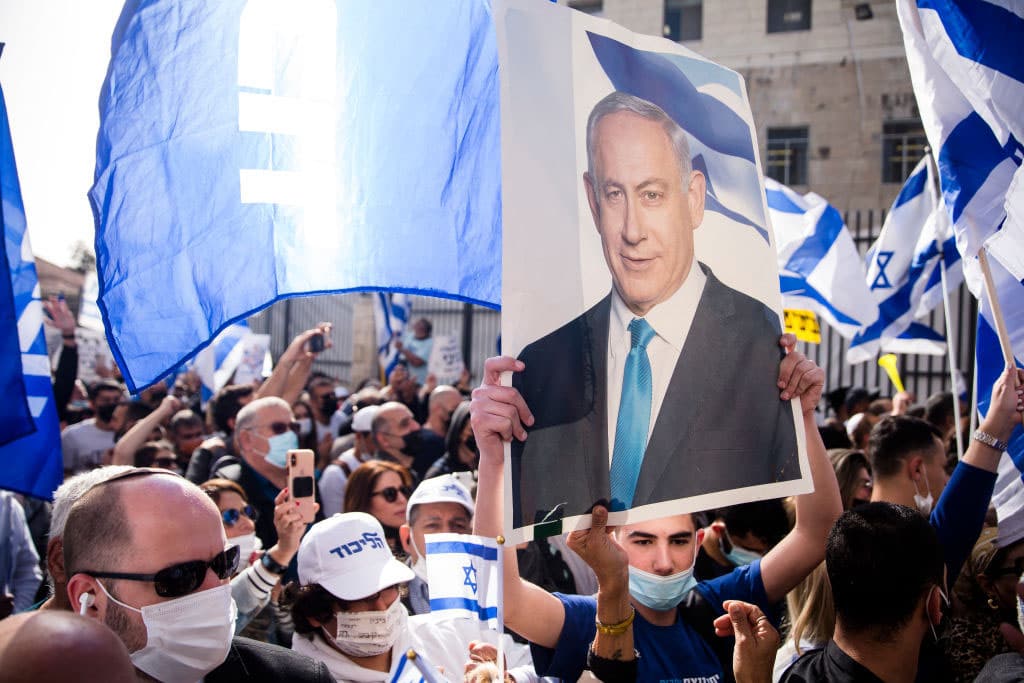
“Nearly a thousand people demonstrated on Balfour Street [in Jerusalem], near Netanyahu’s residence, to demand his resignation,” last Saturday, accusing him of failing to bring security to Israelis, and of dragging Israel into an operation in the Gaza Strip for personal reasons, the Yedioth Ahronoth newspaper reported.

Palestinian Factions Performed ‘Precisely and Proficiently at All Levels’ Read More »

Bibi May Go, But His Policies Will Endure

By this point in his career, Benjamin Netanyahu makes the cat with nine lives look like a slacker by comparison. But if the news out of Israel over the weekend holds up, it’s entirely possible that the curtain may be closing on Bibi’s long-running political magic act.

The emerging partnership between Yesh Atid’s Yair Lapid and Naftali Bennett of Yamina, along with an unprecedented and potentially unwieldy coalition of several smaller parties, appeared to have been derailed during Israel’s recent conflict with Hamas. But now that a cease fire is in place, the potential unity government appears poised to move forward. If Lapid and Bennett and their prospective partners are able to close the deal over the next several days, Netanyahu’s reign over Israeli policy and politics could be over.

If Lapid and Bennett and their prospective partners are able to close the deal over the next several days, Netanyahu’s reign over Israeli policy and politics could be over.

But will it really? There are pronounced differences on Israeli domestic policy between Netanyahu and his successors, and Netanyahu’s own legal fate becomes much more precarious once he no longer holds office. But as it relates to the regional and transnational issues that will shape Israel’s future, neither Bennett nor Lapid are likely to deviate greatly from the current trajectory.

Under the likely power-sharing, Bennett would assume the role of Prime Minister for the next two years. His declared goals on Iran, Gaza and the West Bank are virtually indistinguishable from those that Netanyahu has set. Other right-leaning coalition members such as Gideon Sa’ar of New Hope, Benny Gantz of Blue and White, and Avigdor Lieberman of Yisrael Beiteinu will march in lockstep on these issues as well. All occupy various patches of conservative turf on the ideological landscape and all split from Netanyahu over personal, religious or domestic policy matters more so than over differences on international or security matters.

Even Lapid, who uses somewhat different language than Netanyahu when he talks about Iran and the Palestinians, would not pursue a course on those fronts that departs substantially from that of current leadership. (If anything, that Yesh Atid is described as “center-left” is a mark of how far right-wing Israeli politics have shifted in the post-Labor era.) The most important differences between Lapid and Netanyahu are also on domestic and religious matters, most notably the role of ultra-Orthodox Jews in Israeli society. But even on issues relating to the relationship between Israel and Diaspora Jews, the biggest differences between Lapid and Netanyahu are more tonal than substantive.

The other most significant difference will be an increase in the level of internal discord. The left-leaning Labor and Meretz parties have little in common with the rest of the coalition beyond an antipathy toward Netanyahu. And the critical role of the Arab-Islamist Ra’am Party in creating and maintaining the coalition will make it exceedingly difficult to hold the alliance together on most international issues. Lapid and Bennett suggest that this unity government will focus primarily on domestic matters. But the events of the last few weeks are a strong reminder that politicians don’t always get to make those decisions for themselves.

There’s also little evidence that Israelis are looking for a different approach to dealing with the Palestinians: public opinion polls taken after the ceasefire between Israel and Hamas was implemented show that voters would have preferred that Israel’s military had inflicted greater damage on Hamas before ceasing its operations.

Nor will Netanyahu go gently into that good night. He is already pulling out all stops to peel conservative support away from Bennett and other coalition leaders. He should be expected to emerge as a harsh critic of the new government, creating constant cross-pressure on the conservative members of the coalition and stoking unrest among their followers for any compromises or concessions that will be necessary to maintain the coalition. (And if Netanyahu’s former employee Gideon Sa’ar is named as Justice Minister, as expected, the spectacle of Sa’ar overseeing criminal proceedings against Netanyahu will be raw material for a Netflix soap opera.)

Nor will Netanyahu go gently into that good night. He is already pulling out all stops to peel conservative support away from Bennett and other coalition leaders.

At the time this was written, the likelihood of Bennett’s and Lapid’s success seems to be growing. But even if they do manage to forge a new government, many of Israel’s most important policy debates will continue to reflect a decidedly Bibi-esque footprint. Netanyahu himself may finally be headed toward the exit, but at least on the world stage, Bibi-ism seems likely to drive Israeli politics for some time to come.


Dan Schnur teaches political communications at UC Berkeley, USC and Pepperdine. He hosts the weekly webinar “Politics in the Time of Coronavirus” for the Los Angeles World Affairs Council & Town Hall.

Bibi May Go, But His Policies Will Endure Read More »

Is Bibi Truly Done?

If you wonder whether this is truly the end of an era, whether Prime Minister Netanyahu is truly on his way out, whether a new Israeli government–of right, center and left–is truly materializing, you are up for disappointment. The disappointment of anyone who must wait a tad more for the final word. Yes, all of the above is an option, maybe even a likelihood, but not yet a certainty. There is still time. There are still ways for the likelihood to return to being an impossibility. There are still 50 hours until Yesh Atid’s Yair Lapid mandate expires. And it’s a week or so before the earliest time in which a new government can be sworn in. A whole long week. That’s eternity.

Just remember: two weeks ago the “change government”–that is, a government other than one headed by Netanyahu–was taken off the table by the same person who is currently slated to be the head of it. Naftali Bennett, of the Yamina party, declared the option dead when rockets were flying from Gaza and an Arab-Israeli mob burned cars and stores and synagogues. He said it is dead, and we all believed it is dead because the people speaking on his behalf sounded so confident, so sure.

Then he flipped. Or flipped back, or whatever you want to call it. Bennett is a curious player in our political drama, and it isn’t easy to determine whether he is the smartest, most cunning politician on the block (proof: he could be the next PM with just six seats in the Knesset), or an unreliable and erratic leader, with good cards and more than a grain of good luck (everyone is willing to put up with him, to get rid of Netanyahu).

To make a long story short, here is where we are: Bennett is a leader of a right-wing party. He committed himself to join a right-wing government if such a possibility exists. On Sunday evening, he declared that the possibility does not exist, and that he had thus decided to form a unity government with his buddy Lapid and other parties, from right (Yamina and New Hope), to center (Blue and White, Yesh Atid), to left (Labor and Meretz). Support of at least one Arab party, probably Raam would also be necessary to get to 61.

Why did Bennett make the move? There are two options based on two competing narratives. One–because he realized that it is either this or a fifth election. So he decided that this would be the right time to join his ideological rivals to avoid more chaos. Two–because he wants to be the Prime Minister, and thus sabotaged all attempts to form a right-wing government under Netanyahu. In short, some see him as a mature adult who prioritized country before political camp, and others see him as an opportunist who prioritized self before ideology.

Does it matter? Maybe not. What does matter is whether Israel is going to have a government and whether such government can function with a measure of efficiency. The answer to both questions is vague. The week before a government is formed is going to be tense. The right-wing parties will apply as much pressure as they can on MKs from Yamina and New Hope, calling them names and protesting wherever they live because all that’s needed to terminate the planned coalition is one deserter. Just one. A sixty-member coalition can’t form a government.

As for this government’s future, it is much too early to forecast. Clearly, it will be a government whose main common denominator is the fear of the big bear Netanyahu. If Netanyahu is the rival, the coalition has a reason to stick together, lest HE return. And yet, on many other things this coalition is going to be the most complicated to handle since forever. From gay rights to Gaza, from the Supreme Court to state and religion, from the nuclear agreement with Iran to the civics curriculum at middle schools–this coalition agrees on nothing.

As for this government’s future, it is much too early to forecast. Clearly, it will be a government whose main common denominator is the fear of the big bear Netanyahu.

Under such circumstances, one might question why such a government should be formed at all. The answer is to restore stability and have a functioning government for some time; to deal with the most uncontroversial topics, such as road congestion, the price of housing, economics and healthcare (yes, in Israel healthcare is uncontroversial), policing and environmental issues; to look for a common good on which both Labor and New Hope can agree; and to implement policies with which both Meretz and Yamina can live.

Oh, and send Netanyahu packing. That’s the main goal. Some would say this is silly. One does not form an incoherent coalition to get rid of one man who is quite successful at his craft. Others would say that this is the most important thing for Israel right now, because Netanyahu is the obstacle that is clogging Israel’s political system. Let him go first, worry about managing an incoherent government later. Is this really happening? Let’s practice patience–it’s an important quality.


Shmuel Rosner is an Israeli columnist, editor, and researcher. He is the editor of the research and data-journalism website themadad.com and is the political editor of the Jewish Journal.

Is Bibi Truly Done? Read More »

Indie Comedy “Introducing Jodea” a Sweet and Familiar Love Story

You’ve heard the plot before: A dashing man takes a hopeless woman under his wing and transforms her against all odds. He surprises everyone, including himself. And, of course, they fall in love.

Even though the storyline is familiar, the new indie comedy “Introducing Jodea” is a fun and heartwarming ride, and you’re guaranteed to fall head over heels for the lead character Jodea as well.

Written by and starring Chloe Traicos as Jodea, the movie follows the struggling actress who just can’t get a break. When it seems like nothing is going her way, one day, famous director Zac Kawalsky (Jeff Coppage) crashes into her car. One thing leads to another, and eventually he’s making a bet with his agent that he can turn Jodea, who is a horrible actress, into the stunning lead role for his next film.

Written by and starring Chloe Traicos as Jodea, the movie follows the struggling actress who just can’t get a break.

“The initial idea came when I was running an errand for a producer I worked for,” Traicos said, in an interview with the Journal. “He asked me to drop off a package at one of the top agencies. As I was struggling to find a parking spot, the idea came to me: What if a world famous movie director drove into the back of my car?”

“Introducing Jodea,” which premieres at the Laemmle on June 4, has already won Best Comedy at LA Indies and Best Picture at the Florence Film Awards. Traicos, a veteran indie filmmaker and observant Jew who lives in the Pico-Robertson neighborhood of Los Angeles, came up with the idea for the movie a decade ago.

“It was an idea that I had and I scribbled it down, and then I visited LA and I was instantly struck by how huge the gap was between rich and poor over here,” she said. “That was when I really was inspired to sit down and write something. Then I made several movies in between but since I moved to LA, ‘Introducing Jodea’ has really been it. I was always working on it on the side.”

There were some road bumps along the way, however. Traicos went through three different directors, and the original male lead, Judd Nelson, ended up not being able to star in the film. There was also some pushback about the plot.

“The initial goal was to get a really big name as Zac,” she said. “I got a great team together but no big names were biting. I kept being told ‘nobody wants to make a movie about Hollywood’ but I wasn’t buying it. After all, the movie ‘The Artist’ had been a huge hit. The TV series ‘Episodes’ is incredibly popular, so I knew the idea of a movie about Hollywood would sell.”

Eventually, Traicos realized that she would have to shoot it low budget. She found an experienced director, Jon Cohen, who flew in from Australia and shot the film over six weeks. Post-production took nine months, and Cohen said the process was enjoyable for everyone involved.

“Several of the actors had a flair for improvising, so sometimes the greatest challenge was not laughing during the take when they’d run off on an amusing tangent. We had a tight knit crew [with] lots of really hard working people who never stopped giving their best, even if we’d be going all day.”

Traicos, who is originally from Zimbabwe, had to flee her country after she made a controversial documentary about Robert Mugabe, the leader at the time. She wrote two shorts and four feature films including “Unforgivable Sin,” a movie about a serial killer on the run who finds sanctuary with a rabbi and his wife.

Though she wasn’t raised Jewish–she finished a Reform conversion in 2008 and then an Orthodox conversion in 2013–today she said she identifies as a Modern Orthodox Jew. “Some people have said to me, ‘How can you be Orthodox and make movies?’ ‘How can you be Orthodox and kiss a man who’s not your husband?’ To me my career is my job and it is not reflective of what kind of Jew I am. I keep Shabbat, I keep kosher [and I] keep the festivals, so I identify as an Orthodox Jew.”

While the making of “Introducing Jodea” didn’t go exactly how Traicos envisioned it, she kept pressing on and pursuing her passion project, just like she’s done throughout her entire career. Her advice for others trying to make it in Hollywood? Make sure you do the same.

“Just do it,” she said. “Don’t listen to people who say you can’t.”

Introducing Jodea is now available on all platforms, including iTunes, Amazon, Google Play, Microsoft XBox, Vimeo, Vudu, and YouTube. You can watch a trailer here


Kylie Ora Lobell is a writer for the Jewish Journal of Los Angeles, The Forward, Tablet Magazine, Aish, and Chabad.org and the author of the first children’s book for the children of Jewish converts, “Jewish Just Like You.”

Indie Comedy “Introducing Jodea” a Sweet and Familiar Love Story Read More »

America and Israel: A Tale of Two Memorial Days

“Why don’t I have school tomorrow?” I asked my father one Sunday in late May 1990. “Is it Rosh Hashanah?”

“No, that’s in the fall,” he replied.

“Is it Nowruz (Persian New Year)?”

“We already had that in the spring, remember?” he said. I hadn’t remembered; I was only eight and we had just arrived in the United States that previous June. I could barely keep track of the English names of months in the Gregorian calendar.

“Look at these prices!” my father squealed as he held up the coupon section of the Sunday Los Angeles Times. He called my mother over to the dining room table and pointed at a picture: “This lawnmower is half off!”

When my mother reminded my father that we didn’t have a lawn, he turned his attention to pictures of women’s clothes displaying the latest fashions of the new decade. “You want this sequined sweater?” he asked her. “It’s also half-off.”

“Why am I home tomorrow?” I asked again.

“Americans are honoring soldiers who’ve died in their wars,” my father responded. “It’s their Memorial Day.” He looked back at the newspaper and added, “Wow! VCRs are twenty-five percent off!”

I didn’t get it. Were proceeds from lawnmower, sweater and VCR sales going to bereaved families? The next day, we were joined on a crowded beach in Venice by thousands of Angelenos in neon-colored swimsuits who were grilling hot dogs and body-surfing as their boomboxes loudly played Janet Jackson’s “Escapade” and Madonna’s “Vogue.” Naturally, I couldn’t help noticing that it was an unusual way to honor fallen soldiers. Was I missing something?

It seems that unless they’ve lost a loved one who was serving in the military, most Americans aren’t personally touched by Memorial Day. In high school, I learned that America no longer had a mandatory draft, so I didn’t expect to see parades and tributes on every other street in my neighborhood. But I still couldn’t believe that most Americans I knew, including friends who were born here, associated Memorial Day with hamburgers and discounted merchandise.

It seems that unless they’ve lost a loved one who was serving in the military, most Americans aren’t personally touched by Memorial Day.

In hindsight, I was no better, because I was still confused. Once social media became popular, I began posting on the Facebook walls of friends who had served in the army and air force: “On this Memorial Day, thank you for your service.” One of them appropriately commented on my post, “I’m still alive!”

I had confused Memorial Day with Veterans Day.

I later learned that several American cities have fought over bragging rights to the holiday’s origins. Boalsburg, PA touts itself as the birthplace of Memorial Day because a commemoration ceremony was held there in 1864, though the South had already set a precedent for honoring fallen soldiers in 1861, when the grave of the first soldier to die in the Civil War was decorated. In 1868, General John A. Logan, commander-in-chief of the Grand Army of the Republic (a veterans’ organization for former Union soldiers) called for a proclamation of “Decoration Day.” Back then, remembrances were simple and solemn: families especially honored their dead by tending to local cemeteries. When exactly such solemn practices morphed into grilled meat and appliance sales is a whole other matter.

In college, I was excited to plan a Yom Ha’atzmaut (Israel’s Independence Day) celebration at UC San Diego as part of a pro-Israel student group, when some of my Israeli friends told me that we would first have to commemorate Yom Ha’Zikaron (“Day of Remembrance”) for fallen Israeli soldiers and victims of terror. I had never heard of Yom Ha’Zikaron, but I soon learned that in Israel, the two holidays are back-to-back, so that millions of Israelis can remember and honor the fallen immediately before the revelry of fireworks, parties, and plates of falafel with little Israeli-flag toothpicks in them begins.

I’m not saying that all Israelis solemnly honor their Day of Remembrance while Americans compare mustard brands during our Memorial Day picnics; I know many Israelis who are disenchanted with their government (or, after so many elections, lack thereof) and feel that they have to hustle to make ends meet in Israel. But I don’t know a single Israeli who hasn’t been touched by military conflict, mainly due to a few reasons: first, Israel conscripts soldiers, so almost everyone serves; second, it’s a tiny country, and nearly every family knows a fallen soldier or victim of terror; and third, like God himself, Israel’s enemies “neither slumber nor sleep” (Psalm 121), which means that Israel hasn’t existed one day without some neighboring state or terrorist organization trying to wipe it off the map.

For precisely these reasons and more, Israelis stand in honor on Yom Ha’Zikaron. Yes, they actually stand. At 8 p.m. on the eve of the holiday, a one-minute-long siren blasts through the entire country. All drivers stop on freeways and stand outside of their cars (imagine that happening on the 405 freeway in Southern California); shoppers at shuks(outdoor markets) stand perfectly still, and some pray; children hold their mothers’ hands on street corners and look curiously around at people who seem to be frozen like statues. The next day, the siren wails again, at 11 a.m. (for two minutes).

If you watch videos of the siren in Israel, you’ll see that everyone falls in line. There isn’t a car that keeps moving, nor a pedestrian who keeps walking. Indeed, such a person would be, well, yelled at profusely. I love America more than anything, so it pains me to observe that while Israelis keep each other in respectful check on their Day of Remembrance, in America, we ask if someone would like extra beans and coleslaw on their picnic plate.

I love America more than anything, so it pains me to observe that while Israelis keep each other in respectful check on their Day of Remembrance, in America, we ask if someone would like extra beans and coleslaw on their picnic plate.

Israel lost one percent of its population during the 1948 War of Independence. That’s a staggering number, akin to America losing over 3 million people in just one war. For the first two years after Israel was established (1949 and 1950), fallen soldiers were remembered on Independence Day, but many of their families asked for a separate holiday. In 1951, Prime Minister David Ben-Gurion, who was also serving as Minister of Defense (because Israel was so charmingly nascent) established the “Public Council for Soldiers’ Commemoration,” which recommended establishing a “General Memorial Day for the Heroes of the War of Independence” the day before Independence Day.

Back then, Israel couldn’t have known that it would again face existential wars in 1967 and 1973 (not to mention proxy wars with Iran, Syria and Lebanon that continue today), to say nothing of not one, but two intifadas. In 1963, a holiday officially called “Memorial Day for the Fallen Soldiers of the Wars of Israel and Victims of Actions of Terrorism” was enacted.

By law, all entertainment venues in Israel are closed on the night of Yom Ha’Zikaron. Meanwhile, in America, tens of thousands of people flock to concerts over Memorial Day Weekend. When I was at Beverly Hills High School, Memorial Day weekend meant only one thing: prom (Saturday) night, followed by Palm Springs or Las Vegas Sunday or Monday (for those who could afford it). Not surprisingly, I never quite made it to either destination.

In Israel, regular television programming is temporarily suspended so that the names of fallen soldiers and victims of terror (and pogroms in then-Palestine dating back to the 19th century) can be broadcast for twenty-four hours. All over the country, the flag is brought to half-mast. At sundown, at the national military cemetery on Mount Herzl, the flag is returned to full staff and Independence Day begins.

In America, we mostly associate Memorial Day commemorations with Washington, D.C. (including one at Arlington National Cemetery). But because it’s such a small country, everything in Israel is national.

I wish more Americans would watch videos of Israel’s Yom Ha’Zikaron siren; they give me the chills because the sound is so shrill, almost reminding me of sirens I heard outside my house during the Iran-Iraq War. But simply watching videos of people immobilized by the sirens is deeply powerful. I hope that any Americans who watch these videos won’t be tempted to think that Israel is one big, incessant war zone. Forty-eight hours in Tel Aviv (or twenty-four hours at a winery in the Golan) should banish that misconception from their minds.

But here’s a radical idea: perhaps sirens should blare all over America on Memorial Day. Maybe we’re not ready for two sirens—one at night and one the following day—but at least one siren would be a deeply powerful reminder that, as Americans, we’re all in this together. Yes, there are those who wouldn’t stop and stand, especially given the country’s current civil unrest. Of course, they would be free to do so. But the blare of that siren might penetrate even the most hardened heart. America is 448 times bigger than Israel, so the geographical logistics of such sirens would be difficult, but not impossible.

Search engines aren’t great barometers of anything, but try Googling “Memorial Day 2021, Los Angeles,” and you’ll find music and comedy shows at the top of the list, followed by a list of Memorial Day parties on Eventbrite. Add the word, “ceremony” to the search results and you’ll find three local events.

I also believe that every American who has not lost a loved one who served should visit a website that randomly assigns the name of a fallen American soldier, whether it’s one who gave their life during the Revolutionary War, the Iraq War, a training accident in Fort Bragg, or any other military conflict in our nation’s history. We could keep this person in our thoughts throughout the day. And since we’re Americans, we could toast his or her memory and sacrifice over a cold beer on Memorial Day. It’s truly the least we could do.

I’m one of those odd people who, on Memorial Day, thinks about soldiers from the Revolutionary War. If they hadn’t fought for the miraculous vision of men I now consider my American forefathers, I and millions of grateful refugees and immigrants would have lived very different lives. I’m also prone to think of soldiers who lost their lives in World War II, when they saved the world from the clutches of genocidal tyranny. And, as an Iranian American, I can’t help but think of every American soldier who has fallen in the Middle East.

As for Israel, a part of me wishes that rampant commercialism would take hold there on Remembrance Day, not as a sign of disrespect toward fallen soldiers or victims of terror, but as proof that Israel finally has found peace. Of course, all victims of the past must still be honored on Yom Ha’Zikaron (and every day). Sadly, this year’s list now includes the ten Israelis who were killed by Hamas rocket or missile attacks in the past few weeks (including Israeli Arabs).

But how lovely it would be if next year there were no new names to add to the list of the fallen in America or Israel. A long list of discounted appliances or a grocery list of barbeque staples wouldn’t look so bad, after all.


Tabby Refael is a Los Angeles-based writer, speaker and civic action advocate. Follow her on Twitter @RefaelTabby

America and Israel: A Tale of Two Memorial Days Read More »

Diverse Group of Israeli Parties Agree to Form Coalition and Oust Netanyahu

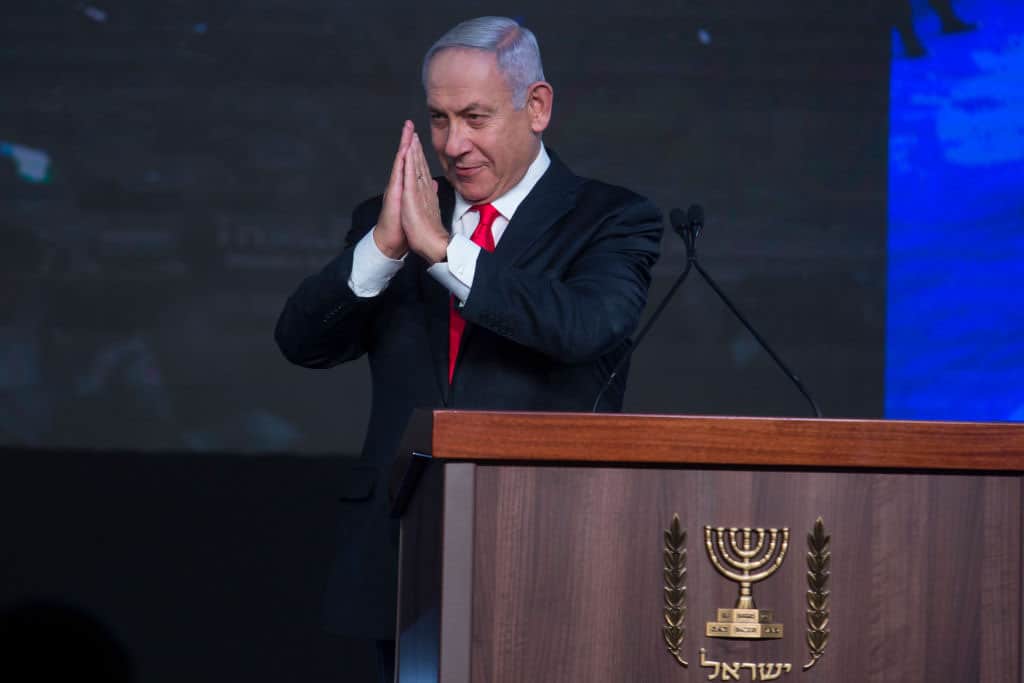
(JTA) — Naftali Bennett, the right-wing leader of an ultranationalist party, accepted an offer from centrist Yair Lapid to lead a new Israeli government, which if the agreement holds would oust Benjamin Netanyahu from power after a record 12 years as prime minister.

“I will do whatever I can to establish a national unity government with my friend Yair Lapid, to save the country from chaos and return it to his path,” Bennett said in a press conference Sunday timed for the Israeli TV news hour.

Lapid, who was tasked with forming a governing coalition after Netanyahu failed to in the wake of a fourth stalemate election in two years, has now cobbled together an unlikely coalition of right-wing, centrist and left-wing parties. He also secured the necessary agreement of an Arab Islamist party, Raam, to support the group from outside the coalition.

Together, the group barely passes the 61 seat threshold needed in Israel’s 120-seat Knesset, or parliament. Lapid has until Wednesday to present the coalition to President Reuven Rivlin, and if any party drops out of the agreement before then, the entire coalition will fall apart.

To earn Bennett’s support, Lapid offered him the prime ministership for the first two years and several months of their government’s 4.5 years parliamentary term.

Bennett, a pro-settler hawk and former Netanyahu ally, dallied in joining Lapid because of the optics of joining forces with leftist and Arab parties. At least one of the seven members of his Yamina Party, which opposes a two-state solution, is threatening to leave the party over his pact with Lapid.

But in the end, Bennett said Sunday that he prioritized a functioning unity government to more rounds of elections and politicking. Raam’s position, which allows it to stay technically outside of the majority coalition but support its proposals, likely made the agreement more palatable to all sides.

“We lost a Jewish state 2,000 years ago because of internal arguments, that will not happen again, not on my watch,” Bennett said. “We can stop the insanity and take responsibility. There is no right-wing government. There is a fifth round of elections [in two years] or a government of national unity.”

After the March 23 elections, Netanyahu was given the first shot at forming a coalition. But Rivlin handed Lapid the mandate after Netanyahu failed because Lapid’s party, Yesh Atid, came in second in the elections, with 17 seats to 30 for Netanyahu’s Likud.

Netanyahu, also addressing the media Sunday, said he hoped to attract defectors from the right-wing parties in the Lapid-Bennett coalition, including among the elected Knesset members in Bennett’s Yamina Party, before Lapid and Bennett had a chance to consolidate the coalition.

In that case, Netanyahu said, he would form a fully right-wing government.

“There will not be a left-wing government, there will be a right-wing government, and there won’t be new elections,” he said.

Diverse Group of Israeli Parties Agree to Form Coalition and Oust Netanyahu Read More »