fbpx

May 7, 2021

Pomona College Student Gov’t Removes Club Divestment from BDS Resolution

The Pomona College student government removed a provision from the recently passed Boycott, Divestment and Sanctions (BDS) resolution that would have denied funding to Jewish and pro-Israel student groups on campus.

The resolution, which was first passed on April 23, had stated that the Associated Students of Pomona College (ASPC) called upon the other Claremont Colleges Student Government Associations to stop funding clubs that “invest in or purchase goods or services from companies that contribute to the settlement and occupation of Palestinian occupied territories by the UN-designated companies or the Israeli state.” The resolution now only focuses on “internal ASPC spending, not club-related expenses,” according to The Claremont Independent.

But Janie Marcus, who heads the Claremont Progressive Israel Alliance, told the Journal that the resolution “remains insulting to Jewish students” and is “highly divisive.” “It terms Israel, the democratic Jewish homeland, ‘unethical’ and equates it to South Africa’s apartheid regime. I am disappointed that the senate passed this bill even after Jewish and Pro-Israel students explained their feelings at the ASPC meeting last week. Dropping the last clause does not erase the history of this bill, which was animated by a desire to target Israel and Jewish students at Pomona.

“As a Jewish student at Pomona, I am beginning to feel uncomfortable and unwelcome on campus,” she added. “And I know I am not alone.”

Other Jewish groups expressed similar concerns.

“While ASPC removed the provision of its resolution threatening to defund Jewish and pro-Israel student groups like Hillel and Chabad because they oppose divestment from companies doing business with Israel, the amended version of the divestment resolution is still an act in furtherance of the antisemitic Boycott campaign,” StandWithUs CEO and co-founder Roz Rothstein said in a statement. “This resolution remains extremely harmful to Jewish and pro-Israel students, and Pomona College must not allow for it to be implemented. We call on its administration to take every step necessary to ensure that this bigotry against Jewish students will not continue and to provide a safe learning environment free from antisemitism.”

AMCHA Initiative Director Tammi Rossman-Benjamin similarly said in a statement to the Journal, “This dangerous and unprecedented resolution still directs the student government to prevent spending ‘that knowingly support the Israeli occupation of Palestine.’ This directive affects what the entire student body can or cannot buy and what events they can or cannot attend, and it incites bigotry against Israel and its on-campus supporters that will undoubtedly lead to harm. This is unacceptable.

“Pomona’s president must immediately nullify this vote. If she can’t or won’t guarantee that all students on her campus will be equally protected against attacks on their freedom of belief and expression, and if she cannot or won’t promise a campus free of harassment where all students can fully participate in campus life, then parents and students should think twice before spending $50,000+ a year to attend Pomona.”

Pomona College did not respond to the Journal’s request for comment.

Pomona College Student Gov’t Removes Club Divestment from BDS Resolution Read More »

The Guardian Lists Support for Balfour Declaration As One of Their “Worst Errors of Judgment”

The Guardian newspaper released a list of their “worst errors of judgment” over the past 200 years on May 7, which included their support of the Balfour Declaration.

The article, which was written by their chief lead writer Randeep Ramesh, stated: “When Arthur Balfour, then Britain’s foreign secretary, promised 104 years ago to help establish a national home for the Jewish people in Palestine, his words changed the world. The Guardian of 1917 supported, celebrated and could even be said to have helped facilitate the Balfour declaration.”

Ramesh goes onto say that the then-editor of The Guardian, CP Scott, was “blinded” to the plight of the Palestinians because he was a Zionist. “Whatever else can be said, Israel today is not the country the Guardian foresaw or would have wanted.”

Jewish groups and pro-Israel Twitter users criticized The Guardian for the piece. “The @Guardian says it regrets supporting the creation of Israel, listing it as one of the ‘worst errors of judgement,’” the American Jewish Committee tweeted. “Throughout history, Jews were murdered without cause. [Israel] is the one place Jews are truly safe. Failure to recognize the necessity of Israel is the true error.”

Associate Dean and Director of Global Social Action Agenda at the Simon Wiesenthal Center Rabbi Abraham Cooper told the Journal, “The people of the United Kingdom should be proud that they had leaders at a pivotal time in history that saw that they had an opportunity to help an indigenous people return to its homeland.”

StandWithUs Israel Executive Director Michael Dickson tweeted, “The amazing, diverse, free and beautiful State of Israel, the world’s only Jewish country ‘is not the country The @Guardian would have wanted.’ Thank God.”

Board of Deputies of British Jews President Marie van der Zyl said in a statement that The Guardian’s decision to list their support for the Balfour Declaration as one of their worst decisions is “breathtakingly ill considered.” “In its eagerness to disassociate itself in any way from its early support for Zionism, the Guardian chooses not to focus on the simple fact that had such a national homeland existed even a decade earlier than 1948, many millions of Jews — our close relatives — murdered in the Holocaust might still be alive.

“Alongside a safe and secure Jewish State, the Board of Deputies supports the creation of a Palestinian State, something the Balfour declaration does not negate. The Guardian would be best advised to advocate for this as well rather than its current position, which seems to be to do everything it can to undermine the legitimacy of the world’s only Jewish state.”

Middle East writer Yoni Michanie tweeted, “If a strong, independent, and self-reliant Jewish state is the source of their disappointment, imagine what living up to their expectations would look like.”

British freelance journalist David Collier also tweeted, “If the British hadn’t backtracked during the Mandate, 100,000s of more Jews could have been saved. Clearly the Guardian is upset Balfour and Zionism saved any Jews at all.”

He added in a subsequent tweet, “The upside is that #Israel will still be flourishing decades from now while the vile rag @guardian – will be gone, forgotten and in the trash where it and its #Antisemitism belongs.”

The Guardian Lists Support for Balfour Declaration As One of Their “Worst Errors of Judgment” Read More »

Israel’s Critics Are Right: “Sheikh Jarrah” Exemplifies the Arab-Israeli Conflict

This past week anti-Israel forces have been in overdrive over the Jerusalem District Court’s decision authorizing the eviction of certain Arab families from homes in the “Sheikh Jarrah” neighborhood of Jerusalem. These critics have aggressively railed against Israel on social media and even started a trending hashtag, “SaveSheikhJarrah,” all while claiming that what is happening in this Jerusalem neighborhood exemplifies the entire Arab-Israeli conflict.

And they are right. The dispute over “Sheikh Jarrah” does illustrate many of the principal features of the entire Arab-Israeli conflict.

But first, some history about this neighborhood is needed. “Sheik Jarrah” is an Arab neighborhood that was established in 1865. And before 1949, there was a separate Jewish neighborhood within it. For about 2000 years before that, this area was known by the name “Shimon HaTzadik” (Simon the Righteous), named after the famous rabbinical sage whose tomb is located there.

For centuries, the Jewish presence in the area revolved around the tomb of Shimon HaTzadik, who was famously one of the last members of the Great Assembly (HaKnesset HaGedolah), the governing body of the Jewish people during the Second Jewish Commonwealth (after the Babylonian Exile). Shimon HaTzadik, whose full name is Shimon ben Yohanan,was so impactful that practically every Jewish kid going back 2000 years learned his most famous verse in Pirkei Avot (Sayings of the Fathers), which was incorporated millennia ago into the Jewish morning prayers: “[t]he world stands on three things: Torah, the service of G-d, and deeds of kindness.”

Because of the tomb and its significance to the Jewish people, the Sephardic Community Committee and the Ashkenazi Assembly of Israel purchased the tomb and its surrounding land (about 4.5 acres) in 1875. Shortly thereafter, it, along with the neighborhood of Kfar Hashiloah in the Silwan area of Jerusalem, became home to many, mostly Yemenite, Jews who had migrated to Jerusalem (Zion) back in 1881. Notably, by 1844, Jews were the largest ethnic population in Jerusalem.

Between 1936 and 1938, and then again in 1948, the British Empire assisted Arabs, incited by raw-Jew hatred, in ripping Jews from their homes  in Shimon HaTzadik (and in Kfar Hashiloah). The Yemeni Jewish community was also expelled from Silwan, for “their own safety,” by the British Office of Social Welfare. Essentially, the British preferred to force Jews out of their own homes rather than expend the resources to protect Jewish families and their property rights in Jerusalem.

Then, in 1949, after TransJordan (now Jordan) invaded Israel as part of an express attempt by the entire Arab League to destroy Israel and “push the Jews into the sea,” TransJordan’s British-created and British-led Arab Legion captured Judea and Samaria, all of the Old City of Jerusalem and many of its surrounding neighborhoods, including the Shimon HaTzadik neighborhood. Then the Arab Legion either killed or ethnically cleansed every last Jew. Not one was allowed to remain. Not one. Even those whose families had lived in the region for centuries before the Arab invasion in the seventh century.

After Israel gained control of all of Jerusalem from the Jordan during the Six Day War, Israel passed a law that allows Jews whose families had been forced out of their homes by the Jordanians or the British to regain control of their family homes if they could provide proof of ownership and the current residents could not provide proof of a valid purchase or transfer of title.  All of the homes that are the subject of these 2021 eviction proceedings, in addition to being on land purchased in 1875 by the Jewish community, were owned by Jewish families that had purchased those homes, and had deeds registered first with the Ottoman Empire (which governed the region from 1517 to 1917) and then with the British authorities (who controlled the area from 1917 to 1948).

These four houses, subject to the pending eviction notice, have already been the subject of extensive litigation in District Court in Israel, with appeals going all the way up to Israel’s very liberal Supreme Court and with all parties receiving representation and due process. The Court determined that these homes must be returned to their legal owners this week and that another four homes shall be returned to their legal owners by the end of the summer. The court further determined that the people currently living in these homes had been illegally squatting in these homes for decades without paying rent or holding proof of ownership.

This is how the current controversy and conflict surrounding the Shimon HaTzadik neighborhood is emblematic of the entire Arab-Israeli conflict:

Shimon HaTzadik is an area that holds deep historical and religious significance to the Jewish people. It is a place where the Jewish people developed — as Ben Gurion said in Israel’s Declaration of Independence — their “spiritual, religious and political identity.” It is a place where the Jewish people “first achieved independence and created a culture of national and universal significance.” It is land that was part of the only independent state that has ever existed west of the Jordan River over the last 2000 years (that wasn’t part of some foreign colonizing empire). All of this, of course, also applies to every inch of the land of Israel.

Shimon HaTzadik is an area that holds deep historical and religious significance to the Jewish people.

Shimon HaTzadik is also where Jewish organizations purchased land and built homes during the Ottoman Empire and British Empire’s control of the region. The Yemenite Jews who moved to the Shimon HaTzadik neighborhood in the 1880’s came with the dream of living in Zion and re-establishing the Jewish homeland. This applies to every Jewish community established in the land of Israel between 1870 and 1947.

Shimon Hatzadik is a neighborhood where Jews and Arab could have lived side by side peacefully had Arabs — incited with anti-Semitic fervor by Nazi ally and collaborator Haj Amin al Husseini and then by five of the most powerful armies of the entire Arab League — not tried to ethnically cleanse all of the Jews living there. This also applies to every Jewish community established in the land of Israel before 1947.

In Shimon HaTzadik, Jews are trying to move back into homes, which were purchased peacefully and legally by their ancestors on land that is part of the Jewish people’s indigenous, historical and religious homeland. They are trying to move back into homes on land that was conquered by a foreign Arab army and renamed to erase the historic Jewish connection and character of the area. This, too, applies to every inch of the land of Israel before 1948.

Shimon HaTzadik and Sheikh Jarrah: the Arab-Israeli conflict in a nutshell.


Micha Danzig served in the Israeli Army and is a former police officer with the NYPD. He is currently an attorney and is very active with numerous Jewish and pro-Israel organizations, including Stand With Us, T.E.A.M. and the FIDF.

Israel’s Critics Are Right: “Sheikh Jarrah” Exemplifies the Arab-Israeli Conflict Read More »

Lighting Candles for the Meron 45

Shortly after 45 Jews were crushed to death at a Lag Ba’Omer festival in Mount Meron, Israel announced that Sunday would be a national day of mourning. Israelis across the country, including secular Jews, lit candles for the ultra-Orthodox worshipers who perished at the festival.

The finality of death concentrates the mind. On that day of national mourning, all of Israel grieved and lit candles. The unspeakable loss of so many human lives transcended all differences, ideological or otherwise. Commissions of inquiry will and must be established to understand what happened, but on that one day at least, it was the grieving that mattered.

So, on Monday, I wondered: How are we grieving here in America?

My first instinct was to write a column expressing our collective grief and solidarity with our Israeli brethren. But the more I wrote, the more I realized that words were not enough– even poignant, powerful words. Shouldn’t we do a little more to honor the memories of those who perished?

Perhaps inspired by the day of mourning and candle lighting in Israel, an idea popped into my head: Why not invite 45 people to each light a candle in honor of one of the victims?

Perhaps inspired by the day of mourning and candle lighting in Israel, an idea popped into my head: Why not invite 45 people to each light a candle in honor of one of the victims?

I ran the idea by a few friends and colleagues, and the reactions were unanimous: “Great idea, I’m in.” I called my friend Roz Rothstein of StandWithUs, and they gladly agreed to co-sponsor.

Then the real work started — putting the actual event together and finding 45 people to honor the victims. We reached out to as broad a group as possible with a simple request: Film yourself on a smartphone lighting a candle for a victim and add some words of comfort. Send us the clip, and we’ll do the rest.

On Thursday, May 13, at 6PM, PST, you can see the results. We will webcast on the Jewish Journal website a virtual ceremony where 45 people will take turns honoring one of the worshipers who lost their lives in Meron. We also will encourage viewers to light their own candles.

We hope the ceremony will serve as a legacy to their memory, and as a reminder that, in the end, recognizing the value of human life is what truly unites us.

Shabbat shalom.

Lighting Candles for the Meron 45 Read More »

Amid Pandemic, India’s Jews Try to Stay Safe While Offering Relief to the Hardest Hit

(JTA) — Nissim Pingle, the head of Mumbai’s Jewish community center, hasn’t left his home since March.

That’s when COVID-19 began to overtake India. A second wave of infections has overwhelmed its health system and is producing a daily death toll of at least 4,000. The country is on track to have the world’s highest death toll by far, as stories pile up of people succumbing to the disease because they cannot access oxygen or hospital beds.

India’s approximately 7,000 Jews, most of whom live in Mumbai, generally belong to the privileged minority with the means to self-isolate. But even within the community, India’s widely celebrated multigenerational households have increased anxiety about the virus’s onslaught.

Pingle’s parents live with him, his wife and their two young sons. So as cases began to rise, he closed up the family home as a bulwark against the pattern he saw playing out around him.

“Younger family members contract the virus, sometimes without symptoms, and transmit it to the elderly people in the household, who are much more vulnerable,” he said.

Now Pingle, 41, is working to turn the JCC he runs, which usually hosts community events,into the base of operations for the aid effort to India by the American Jewish Joint Distribution Committee, which assists with disaster relief worldwide. The JDC, which funds the JCC’s work, is having three ventilators, each costing about $10,000, shipped from Israel to Indian hospitals, according to Pingle.

It’s part of a global effort by Jews in India and beyond to combat what is quickly emerging as a humanitarian crisis of unprecedented proportions. The majority of Indians live on less than $3.10 a day, according to the World Bank, and the absence of basic sanitary conditions in some places, the prevalence of multigenerational households and a lockdown preventing many wage earners from working mean that many Indians are in deep need, even if they and their families survive COVID-19.

“We are Indians first,” said Yael Jirhad, an occupational consultant from Mumbai. “It is heartbreaking.”

Jirhad’s husband, Ralphy, is part of a Rotary Club effort in which members transport food and other essentials to needy residents of the city.

The Mumbai Chabad House, run by Rabbi Israel Kozlovsky and his wife, Chaya, is raising money with donors from around the world who have funded Jewish outreach in the city to deliver food and other essential items to non-Jews living there and in nearby villages, where families largely depend on salaries earned in the city but now on hold due to the lockdown.

Israel’s Foreign Ministry has begun dispatching thousands of oxygen generators to India, among other medical gear items. And ISRAid, an Israeli nonprofit, is also helping in the most affected areas with support from the American Jewish Committee.

On Thursday, UJA Federation-New York, the largest Jewish federation in the United States, announced that it would send $200,000 in relief funds to India.

The contributions represent a drop in the bucket of what’s needed: India is reaching new highs in cases and deaths daily, while its vaccination campaign has slowed. Grim pictures of mass cremations have become impossible to miss in global news coverage. The United States has cut off travel from the country.

While the Jewish community has fared better than many others, there are signs that the crisis is also having an effect on Indian Jews.

The number of people from the Jewish community who asked the JDC for financial support or material aid increased by about 35% over 2019, according to a JDC official. About 160 community members are currently receiving support.

Chabad is seeing a similar increase in requests for help by Jews, Kozlovsky said.

For many Indian Jews, the effects have been more psychological.

Jewish community life in Mumbai has ground to a halt since March. The city has seven active synagogues and three Jewish schools, although two of those have more non-Jewish students than Jewish ones. Mumbai also has a Jewish nursing home, Pingle’s Evelyn Peters JCC and several Jewish cemeteries.

The Jirhads, whose two sons are living abroad, are the only residents of their home in Mumbai, where the average household has five members. Living away from their children and other relatives is at times difficult, Yael said, especially in a society where family is all important.

But during the pandemic it has allowed the Jirhads to volunteer where help is most wanted without fearing that they would thus infect others in their household.

The family of Herzel Simon, a member of the congregation of the Chabad-affiliated synagogue in Mumbai, has been particularly careful not to contract the virus because they live with his father, who had a medical procedure in January, making him especially susceptible to complications of the disease.

But Simon, 46, nonetheless caught the local variant of the bug, which scientists say is especially contagious. Simon displayed no symptoms, and the infection was discovered only after a blood test showed he had antibodies. His father has not displayed symptoms, but Simon said the experience made him worry about his father’s health.

Staying home, even with the knowledge that a crisis rages around them, has had some silver linings for Pingle and his family. His elder son, 12-year-old Aviv, has more time to study for his bar mitzvah with Pingle’s 73-year-old father, Joshua, who for many years served as cantor at his local synagogue.

“Like most Indian Jews, we are certainly better protected than the general population in India. But for my parents, isolation has been difficult because they really don’t go out of the house much at all,” Pingle said.

“Yet it has made us even closer than before. And if we feel like we need to go to synagogue, we can always visit my father’s room. He has so many books there it looks like a shul.”

Amid Pandemic, India’s Jews Try to Stay Safe While Offering Relief to the Hardest Hit Read More »

“Jewish Harper’s Letter” Denounces Viewpoint Suppression On Social Justice

A letter denouncing the “suppression of dissent” by Jewish organizations on “issues of racial justice” was recently published by the Jewish Institute for Liberal Values (JILV). The Institute describes itself as “a new organization that supports the free expression of ideas and helps Jewish organizations that care about true social justice prevent the encroachment of the Critical Social Justice (CSJ) approach in the Jewish world.”

The manifesto, which is being referred to as the “Jewish Harper’s Letter,” argues that America’s “unparalleled protection of freedom of expression” is one the “essential tools by which American minorities––including Jews––have made progress in advancing the causes of equality and justice.” This freedom, argues the missive, is being threatened by an ideology that “insists there is only one way to look at the problems we face” concerning social justice, “and those who disagree must be silenced.”

While the letter never explicitly names this ideology, the organization’s mission statement identifies it as Critical Social Justice, a combination of critical race and gender theories and social justice activism that JILV believes poses a threat to America’s “democratic liberal values.” In order to “counter the imposition” of the (CSJ) approach “in the Jewish community,” the organization aims to defend the “liberal principles of free thought and expression” and advance the “viewpoint diversity” that CSJ forecloses.

JILV’s Founder and CEO is David Bernstein, formerly the President and CEO of Jewish Council for Public Affairs, and its board members include Bret Stephens, the Pulitzer Prize-winning opinion columnist at The New York Times, and Dr. Misha Galperin, CEO of the National Museum of American Jewish History. The letter’s original signatories include Natan Sharansky, Former Head of the Jewish Agency, journalists Bari Weiss and Izabella Tabarovsky, author Jonathan Haidt and author and former refusenik Maxim D. Shrayer.

JILV’s call to “defend liberal principles, preserve Jewish civic life in the democratic tradition, oppose suppression of dissent” and “challenge collective moral guilt” has already been denounced by some, like Jewish Currents, edited by Peter Beinart. But such debate and dissent is precisely what the letter hopes to encourage in relation to the passionate discussions within the Jewish community about racial, gender, and social equality that have promulgated rapidly since the death of George Floyd last summer. Such “safeguarding” of “the marketplace of ideas,” argues JILV, is necessary to accomplish the difficult work of “curtailing racism and inequality” in this country, which must be undertaken “in a spirit of intellectual honesty and integrity.”

Such “safeguarding” of “the marketplace of ideas,” argues JILV, is necessary to accomplish the difficult work of “curtailing racism and inequality” in this country.

The letter argues that such “open discourse” is a vital part of the Jewish tradition, which “cherishes debate, respects disagreement, and values questions as well as answers.” Ancient Jewish institutions like the Beit Midrash ––the House of Study –– encouraged passionate argument “for the sake of heaven.” “The dominant social justice ideology” that “holds that individuals bear collective moral guilt or innocence based on the current conception of group identity” stands in direct opposition to Jewish tradition, which insists “that we only judge and be judged by our own deeds”: “A son shall not bear the iniquity of the father, and a father shall not bear the iniquity of the son; the righteousness of the righteous shall be upon himself, and the wickedness of the wicked shall be upon himself” (Ezekiel 18:20).

The letter also raises concerns over the potentially antisemitic implications and results of CSJ, which “encourages pernicious notions of ‘Jewish privilege,’ even implicating Jews in “white supremacy.” Given the American Jewish community’s long involvement with the fight against “rampant discrimination and the disenfranchisement of Black Americans,” as well as its own victimization at the hands of White supremacy throughout American history, such implications often result in gaslighting American Jews into renouncing their experience and cultural memory in order to be allowed to participate in discussions around CSJ.

The inclusion of several former refuseniks and Soviet Jews among the letter’s signatories also serve as a subtle reminder that not so long ago, millions of Jews were trapped in a totalitarian society that presented itself as a social justice utopia, espousing an ideology eerily similar to the one being put forward today in the name of greater racial and gender equality.

“Jewish Harper’s Letter” Denounces Viewpoint Suppression On Social Justice Read More »

The Holocaust Survivor Fighting Antisemitism, One Story at a Time

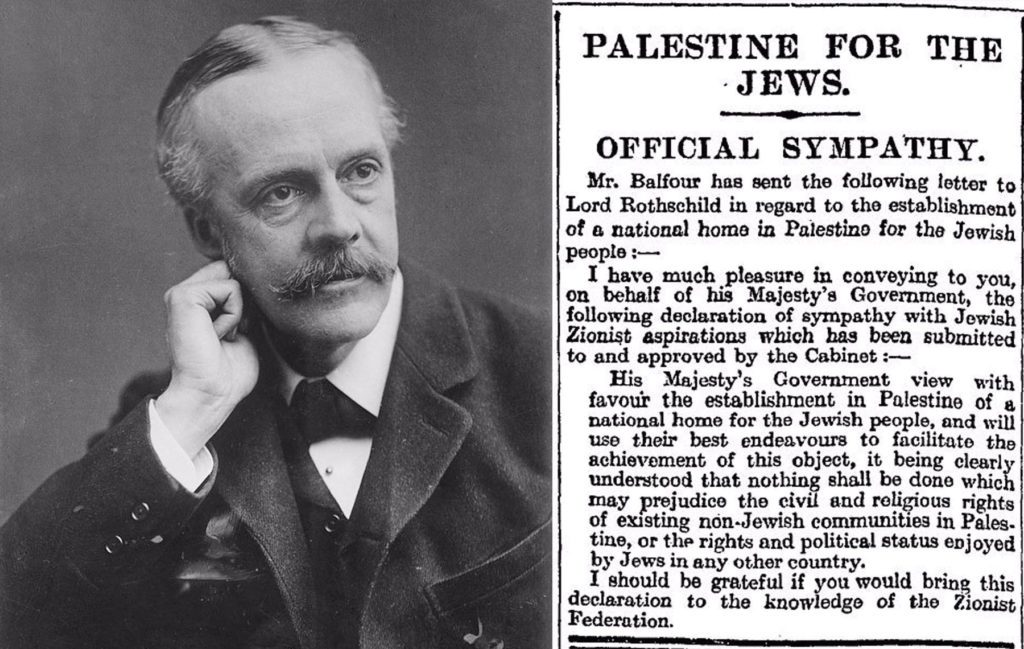
David Lenga, a 93-year-old Holocaust survivor, likes to share his story with as many people as possible to help combat rising antisemitism worldwide.

In a Zoom interview with the Journal, Lenga explained that he had a “wonderful life” in the city of Łódź, Poland before the Holocaust, where “Jewish life was vibrant.” And yet, “there was an underlying layer of antisemitism right just beneath the surface,” Lenga said, “and you could feel it.”

Lenga recalled that when he was playing with his non-Jewish friends, they would hurl slurs like “you scabby Jew” or “you G-d d— Jew” whenever he said something that displeased them. He added that at that time, Poland had a quota system restricting the number of Jews accepted into universities, law schools, medical schools and the like.

Lenga attributed that spread of antisemitism in Poland to the churches. “In the churches, the priests were at every opportunity telling their congregants that it is the Jews that are responsible for the death of Christ… and so therefore they need to be punished in accordance to the Bible.” The form of punishment was for the Jews not to be considered as equals of Polish society. Consequently, the Jewish community in Poland started relying on each other instead of on the Polish authorities.

Lenga attributed that spread of antisemitism in Poland to the churches.

“We created an incredible infrastructure of our own organizations,” Lenga said, pointing to the establishment of rabbinical courts as an example — where Jews who were in a dispute would turn to instead of the regular Polish courts — as well as their own schools, orphanages and lending institutions. “We were trying to rely on our own power because we, as a minority in Poland, had no power…. [We] were always small, tiny minorities among huge majorities and [we] were at their mercy.”

Everything seemed to be fine for Lenga and the Jewish community in Łódź until the Nazis invaded Poland on September 1, 1939. On that day, Lenga recalled running errands with his mom in their car when sirens started blaring. An armada of Nazi planes swooped in and unleashed a bevy of machine gun fire onto the population.

“Within seconds, I saw a river of blood on the street,” Lenga said. “I saw body parts flying. I saw screams and yells and panic and people running in every direction into nearby homes to seek shelter, and I was one of them. And I was just so frightened out of my mind, I couldn’t understand it, I couldn’t wrap my head around what had just happened… I was just in total fear.”

Shortly thereafter, the Polish currency became worthless, sparking massive food shortages in a country that normally produced an abundance of food due to fertile land. The result: rations through food coupons.

A few days later, the Nazis took Lenga’s father to the Gestapo headquarters because the Nazis had seized his factory, forcing Lenga’s father to produce leather, fur and clothing for the Nazi army. Lenga’s father said he needed his family with him in order to work properly; the Nazis acquiesced but didn’t allow Lenga and his family to take anything with them. Lenga’s father also quickly learned that the Nazis would only let you live if you were employable, so he requested 50% more employees than he actually needed.

For the next couple of years, Lenga’s family lived within a perimeter established by the Nazis, and they never were allowed to leave — a virtual ghetto. “A lot of people died over during those two years because they initiated a deliberate policy of malnutrition,” Lenga said, adding that there were no doctors or medicine available for anyone who fell ill. “That was their implementation of solving the Jewish question, by killing the people this way. But in the meantime, they were squeezing out every ounce of their labor.”

Over time, the Nazis consolidated their ghettos into larger ghettos and began killing the Jews who were unable to work. Lenga described the conditions in the larger ghetto as “horrendous” since it was “tight” and “uncomfortable.” With his father falling ill — so much so that Lenga thought he had his father had died throughout the Holocaust — Lenga’s uncle taught him how to became an adequate tailor, which helped save Lenga’s life numerous times throughout the Holocaust.

Later in 1942, Nazis lined up everyone in the ghetto and separated the able-bodied from those who were unable to work.  Lenga’s mother was still able-bodied, but Lenga and his younger siblings were not due to their age. All of those deemed non-able bodied were taken to a warehouse, and miraculously, a big burly man called Lenga to the front and told him to run back to the ghetto, thus sparing his life. The Nazis killed the rest of the Jews in the warehouse.

Unbeknownst to Lenga at the time, his uncle, who headed the factory, was able to pull some strings to save Lenga’s life but was unable to save his brother, as he was too young. Also unbeknownst to Lenga was that his mother had gone back to the warehouse because she didn’t want to be separated from her children. Lenga never saw his mother and siblings again.

Lenga subsequently became suicidal and attempted to jump out of window, only to be thwarted by his aunt. His aunt told him that he could not lose hope, otherwise there truly was nothing. The suicidal thoughts didn’t dissipate, but his aunt continued to watch over him. Lenga said that the fact that he had to work in order to eat ghetto was a “silver lining” “because it made every day go by.” Working made him realize that he had to make do with what he had in order to survive. “So I went on living and working and being hungry all the time.”

Working made him realize that he had to make do with what he had in order to survive.

He noticed that everyone in the ghetto was starving, including children with “swollen bellies.” “We were devoid of human emotions all of a sudden,” Lenga said, adding that everyone had become “zombies” due to the forced malnutrition.

In 1944, the Russian army appeared to be close toward liberating the ghetto, prompting the Nazis to panic. The Nazis forced everyone in the ghetto to be deported to the death camps; Lenga decided to stay behind and hide in the ghetto, thinking that he would soon be freed by the Russians. But if the Nazis caught him hiding, he would be shot on the spot. So Lenga hid, as the sole person remaining in the ghetto, and scavenged for food at night in abandoned buildings.

But Lenga soon realized that the Russians weren’t coming — for political reasons, they decided to pull back on their advancement into Poland. He discovered a hole between the rafters and planks of an abandoned building to hide in for the time being. During a night of scavenging, Lenga found a whole potato and cooked it through traditional wood and fire, which he soon realized was a mistake because the Nazis noticed the smoke. Lenga hid in his hole “and stopped breathing.” Just before the Nazis were on the verge of discovering of him, the sirens blared, signaling an imminent attack, prompting the Nazis to evacuate the building. Lenga called it a “miracle.”

The next day, he saw men in white sweeping the sidewalks; when he asked them who they were, they told Lenga that they were Jews under Nazi orders to sweep out the remains of the ghetto so no one would discover what had happened there. “Only German minds can think of that,” Lenga said. Lenga decided to join them.

After a couple of days, they were put into cattle cars, where they were “squeezed like sardines” for days, Lenga said. When the train stopped, Lenga saw prisoners wearing striped uniforms. He asked one of them if they were in Germany, where the Nazis had said they were going. The prisoner replied: “No, no, no, you’re not. You’re in Auschwitz.”

That was the first time Lenga had ever heard of Auschwitz. When he asked what it was, the prisoner pointed him to a chimney with black smoke coming out of it, and told him, “This is you wind up.” Lenga was in a state of disbelief and said that he didn’t understand, prompting the prisoner to reply, “You will soon.”

Lenga described Auschwitz as “a hermetically closed prison,” as the death camp was surrounded by electric barbed wire and Nazi guards with machine guns and dogs. “There was no escape from Auschwitz.”

After a few days, Lenga was assigned to bring soup to the deemed able-bodied, and he used that opportunity to hide amongst the crowd of able-bodied, which was around 200 men. When cattle cars arrived to take able-bodied men elsewhere, Lenga made sure that he was the first one on board. But the Nazis kept records — once there were 200 people in the car, they cut it off. Lenga could hear someone shouting outside, “But I was selected! I was selected!” to no avail.

“I didn’t know who this man was,” Lenga said. “I had no idea what he looked like. I have no knowledge about this person at all. All I know is I took his place. I tried to save my life. It was the scent of self-preservation, and it drove me. I had no pity, I had no compassion, I had no feeling of regret — all I wanted to do is survive the night.”

Lenga then found himself in Dachau, where “they clean-shaved us, they showered us, they gave us ill-fitted striped clothing, ill-fitted shoes that were taken from other prisoners… it was horrible, it was terrible, but at least I’m still alive.”

All the prisoners at the camp were required to fill out registration forms under the penalty of death; on the form, Lenga claimed he was two years older than he actually was to increase his odds of survival. Lenga was subsequently taken to Kaufering, one of Dachau’s sub-camps, which he said was “basically a slave labor camp.” While at Kaufering, Lenga stood in wet cement while operating machinery that hardened cement. “God forbid I lose my balance or I fall into this wet cement, that’s it, that’s the end of me, and nobody cared.”

Lenga said he was “witnessing deaths by the hundreds” and found that people who were sleeping in the bunks next to him would be dead the next morning. “We just didn’t react. We couldn’t. Our heart, our soul was petrified. These were the conditions.”

“We just didn’t react. We couldn’t. Our heart, our soul was petrified. These were the conditions.”

By the spring of 1945, the Allied Forces had gained momentum, prompting the Nazis to eliminate their southern death camps and move the prisoners in Kaufering toward Bergen-Belson. A couple of hours into the train ride, the train suddenly stopped in Bavaria, as did an adjacent train that was full of weapons. Overhead were U.S. jet planes firing machine guns at both trains, thinking that both were military trains. “So many people died because [there was] no roof in our train,” Lenga said. He and two of his friends decided to jump out of the cattle cars and into the nearby forest, prompting the Americans to stop the raid.

The war was coming to end, but Lenga and the other prisoners didn’t know, as they were surrounded by Nazi soldiers in the middle of the forest for a few days. One day, the prisoners woke up to find that the Nazi soldiers had completely abandoned them for unknown reasons.

Lenga and two of his friends wandered through the forest and into the countryside, and discovered what appeared to be shelter, only to find it “swarmed with German military.” Lenga, who was fluent in German, explained to a Nazi official that they were abandoned in the forest and were wondering what to do next, prompting the official to tell them to walk back to where they came from. As Lenga and his friends walked out, a German farm owner told that the war was almost over and offered to let them stay at the farm. While at the farm, they were liberated by American forces, who brought them to a refugee camp.

After the war, Lenga decided to move to Sweden, as he didn’t think that anyone he knew in Łódź had survived. In Sweden, he met his wife, who is also a Holocaust survivor. He later found out that his father had survived and reunited with him in 1953 — almost 12 years since they were separated. Lenga and his family moved to Los Angeles when the Korean War broke out due to fears of the Soviet Union spreading to Sweden.

Lenga added that while socialist Sweden was “wonderful,” there were too many restrictions to open a business, whereas the United States gave him the opportunity to spread his wings and work as a designer and a real estate investor. Today he has three children, seven grandchildren and seven great-grandchildren. He continues to talk to audiences about his experience during the Holocaust.

“My experiences are not just a flash in the pan,” Lenga said. “The lessons learned from [them] are as valid today as they ever were, unfortunately. We see what is happening with antisemitism. We see what’s happened with the invasion of the Capital, we see what’s happening all around us, the tremendous rise in antisemitism. We try to combat it by educating the younger generation. At least they should know what happened and try do everything in their power to prevent it from happening again, because it’s going to touch everybody.

“I said to them, ‘You cannot afford to be apathetic. You cannot afford to be indifferent. When you see evil, do something. Speak up. Go to the street. Have placards. Protest. Do everything you can to stop this evil from spreading or gaining power, because if it does, it is like a deadly virus. It may not immediately touch you but if you just let it go… it will eventually touch you.’”

The Holocaust Survivor Fighting Antisemitism, One Story at a Time Read More »

A Bisl Torah — Etchings of Your Heart

This week I attended an in-person shloshim. While it is powerful hearing someone say “Amen” to your prayers, it is equally as powerful listening to the story of the deceased, letting their soul touch yours. We come to the house of the mourner offering comfort and yet, forget about the magic in absorbing someone else’s life. I experienced that magic in hearing about Homa.

I learned how Homa would sneak out of her home in Iran to work because it was rare for a woman to have a job outside the home. I smiled when I heard about her love story with her then, boyfriend, later, husband. They were neighbors; secretly dating between the two floors of the house in which they both resided. As most marriages were arranged, their love shook the neighborhood. But Homa wasn’t deterred.

Her vivaciousness and independence shone brightly in a world that desperately wanted to hold her back. And yet, Homa continued forward.

Bahram, her son, closed with the following: the Wednesday evening before Nowruz, the Persian New Year is a celebration called, “Chaharshanbe Suri”. Translated, this means, “Festival of Fire”. The ritual involves mini-bonfires, with a ceremonious “jumping over” the fire to thwart off negativity and bad luck in the coming year. It is an evening that focuses on light, healing and new beginnings. In her final days, Homa insisted on celebrating Chaharshanbe Suri. Her children knew it was pointless trying to convince her otherwise. So, there was Homa, walker and all, jumping over the bonfires. Not once, but twice. A woman with failing sight, grasping life until the very end.

In the Torah reading, the word “chok” is used to signify a law or rule. Chok also comes from the word “to engrave.” That Torah should be engraved on our hearts, shaping our very beings, building our essence through its verses, values, stories, and lessons. And so too, a human being’s story has the power to engrave our hearts, changing our spirit in the mere listening of how they chose to live their life.

Homa, your story is engraved in mine. I will jump over fires while others choose to sit still. I will lead a life of independence, vibrancy, light and love.

Notice the etchings of your heart. Remember how your story is shaped: letting memories build the foundation of your spirit.

Shabbat Shalom


Rabbi Nicole Guzik is a rabbi at Sinai Temple. She can be reached at her Facebook page at Rabbi Nicole Guzik. For more writings, visit Rabbi Guzik’s blog section from Sinai Temple’s website.

A Bisl Torah — Etchings of Your Heart Read More »

Mount Meron and Metaphysics

Metaphysics, or abstract theory beyond human rationality, is the last refuge for religious reactionaries. It is, by definition, impossible to argue with them on a rational basis. That is why no argument can convince the vast majority of Haredim, and most certainly their leaders, that the tragedy that led to the death of 45 people and the injuries of hundreds at Mt. Meron was entirely avoidable.

That is why there cannot be a rejoinder to the argument that the 93-year-old Rabbi Chaim Kanievsky, a leading authority in Israel’s Ashkenazi Haredi community, reportedly put forward to explain the tragedy. Rabbi Yitzhak Shaul, a son of the aged rabbi, issued a letter quoting his father that there could be no explaining God’s way. The disaster was a “decree from Heaven.” Nevertheless, reported R. Yitzhak Shaul, his father felt that there were ways to “rectify” the situation.

In particular, R. Kanievsky reportedly stated repeatedly that it was critical to “strengthen oneself in Torah and in the assiduous study of Torah.” Moreover, R. Yitzhak Shaul related, “women should intensify their modesty.” Additionally, his father repeated several times that people were not punctilious with respect to the laws prescribing the proper way to ritually wash hands prior to meals.

Finally, R. Kanievsky reportedly emphasized the importance of concentrating when uttering blessings so as to “feel God’s immanence.” R. Yitzhak Shaul then offered citations to buttress his father’s argument. In particular, he referenced a statement in the fourteenth century code (colloquially called “the Tur”) by Rabbi Yaakov ben Asher, whose work provided the structure upon which Rabbi Yosef Karo based his far better known code of Jewish Law, the Shulhan Aruch. R. Yaakov wrote that the Rabbinic requirement to utter one hundred blessings each day derived from the urgent need to put an end to the plague, reported in Samuel II, that was causing the death of 100 people each day.

Leaving aside the fact that the Tur’s statement is merely aggadic, the link to the deaths in Meron is nothing more than a non sequitur. Yet by offering a metaphysical “explanation” to the tragedy, the two Rabbis Kanievsky deflected blame from where it should be placed.

By offering a metaphysical “explanation” to the tragedy, the two Rabbis Kanievsky deflected blame from where it should be placed.

Blame belongs at the feet of a religious leadership that did not dissuade its Haredi followers from endangering the lives of celebrants on Lag Ba’Omer, on Haredi politicians, who pressed for lifting any limits on the numbers permitted on Mt. Meron, and on the cynical prime minister who cared more about Haredi votes than Haredi lives.

This is not the first tragedy to take place at Meron. A century ago on Lag Ba’Omer night (May 15, 1911), a balcony railing at Rabbi Shimon Bar Yochai’s Meron gravesite collapsed, killing eleven people and injuring dozens of others. The rabbis of the earlier time asserted that the tragedy was result of men and women comingling at Meron — similar to the  explanation the Rabbis Kanievsky offered.

Metaphysics are an easy way for the Haredi world to avoid coming to terms with its own shortcomings. In this case the consequences were nothing less than fatal. Haredim love to speak about “cheshbon hanefesh,” analyzing and evaluating one’s behavior. It is time they took their advice seriously — about themselves, their leaders and their politicians — and recognize that when tragedies occur due to their own indifference, cynicism or simply a desire not to follow the State of Israel’s rules, the blame lies with no one other than themselves.


Dov S. Zakheim was U.S. Under Secretary of Defense (2001-2004) and Deputy Under Secretary of Defense (1985-87). He writes and speaks on issues relating to U.S. National Security, the Middle East, Halacha and Jewish History. His most recent book is “Nehemiah: Statesman and Sage.”

Mount Meron and Metaphysics Read More »