fbpx

April 20, 2021

Corporate Sustainability: To B or Not to B

In recent years, more than 3,900 companies around the world have received B Corps certification, a badge awarded to businesses and organizations for sustainable business performances. But only four are Israeli companies. Why are they the only ones and what are they expected to gain from this move in the near future?

In recent months, our lives have become gradually more dictated by marked certificates due to the ongoing COVID-19 pandemic. Whether it is the purple certificate granting jobs and businesses to operate in the shadow of the corona crisis, or the green certificate allowing vaccinated persons to return to businesses and indoor establishments, our societal conduct has had to adapt to the changing times. However, acquiring proper credentials in order to do certain things is nothing new.

One innovative standard that is gaining momentum around the world today is B Corporation, or B Corps, a certification awarded to profit businesses and organizations that meet higher social and environmental performance targets among other sustainable principles. Despite more than 3,900 companies and organizations from 74 different countries receiving the certification, only four Israeli companies appear on the list. Does this make many Israeli companies appear as non-environmental, or do sustainability issues simply not interest them?
B Corps Players

The B Corp certification is awarded to companies that meet a wide range of standards related to their social and environmental conduct, including the use of renewable energy, monitoring waste production, integration of women, minorities, and people with disabilities, community involvement, public transparency and more. The certification is given by B Lab, a non-profit organization established in 2006 for this purpose.

To qualify for B Corps status, a company must complete lengthy questionnaires that contain a wide range of specific issues on various aspects of its conduct and provide evidence that their answers are correct and not misleading. Receipt of the certificate is conditional on an annual fee of $1,000 or more, depending on the volume of sales of the business, and the certification must be renewed every three years.

The list of companies that have received the certification include, among others, well-known names such as the ice cream company Ben & Jerry’s, the online fundraising platform Kickstarter, and the clothing company Patagonia.

“The B Corps award is given out of a desire for people to care about the social and environmental aspects of company operations,” says Liat Zvi, an environmental strategy expert. “The certification also creates visibility and a positive image for the consumer to show that companies are doing the right thing.”

As mentioned, there are only four entities that have been B Corps certified in Israel: UBQ Materials, which produces environmentally friendly plastics from household waste for industrial use, Shamaym, which provides teams with an organizational learning interface to improve work performance, and two impact investment funds that aim to create positive sustainable outcomes alongside profit, 2B-Community and Impact First. In this context, it should also be noted the New York digital insurance company, Lemonade, which does not operate in Israel but was founded by Israelis, was also B Corps certified.

B-Cause it’s Good for Business

According to the Israeli companies and organizations that have received the award, there are benefits to having the B Corps status.

“This certification conveys to customers, investors, and stakeholders the message that this is a company that is absolutely committed to sustainability,” said Rachel Malka Bar, Vice President of Sustainability at UBQ Materials. “It gives customers and other parties confirmation that they can trust what we say, because aspects of sustainability in our operations have been carefully examined at the organizational level.”

“I am sure we benefit from the certification because it is given by a completely objective body, which is very hard and rigid, which tests the organization according to many parameters and gives it its stamp,” adds Shelly Dvir, Strategy Manager at 2B-Friendly from the 2B-Community.

According to Nina Rauch, Director of Social Impact at Lemonade, the B Corps certification enriches the company’s image through the eyes of consumers worldwide.

“I get a lot of supportive emails from clients on the subject, and I see a lot of reactions on social media that because we are in B Corps, it influences our clients’ choices and encourages them to choose us,” she says. “We can totally see from our customers that being a good social company is good for business.”

Israel is Not a Priority

If B Corps certification is so great for business, why are there only four companies and organizations in Israel that are classified as such?

“This is a very difficult road,” says Dvir. “B Lab is very much focused on New York and the United States, and they do not have an international department or a qualified Israeli entity to facilitate those connections. Getting an answer from them involves blood, sweat, and tears—you almost have to force them to serve you.”

“The questions that need to be answered in order to get the certification are worded in very professional English and understanding it can be very difficult, especially for those who do not speak English as their native language,” adds Cecile Blilious, founder and former director of Impact First. “Israeli companies need help to answer them. They cannot do it alone, but there is no one to ask for help.”

According to Dvir, the certification requirements are not necessarily adapted to Israel either. “For example, B Corps examines things that are taken for granted in Israel, such as maternity leave. In the United States maternity leave is not guaranteed, but here it’s legal.”

“Israel is not a priority for B Lab, so they did not make any effort to enter the local market and become better known here,” says Blilious. “It did not interest them.”

According to Dvir, another factor that is holding back Israeli companies from becoming B Corps certified is the question of whether the effort will even be worth it at all.

“From what I understood from many Israeli companies that I spoke to; they do not see value in adopting the certification. Israeli consumers do not reward companies that have B Corps certification—it does not cause them to direct their consumption to one company over another,” she says. “Most local consumers do not know what B Corps is at all.”

According to Blilious, in various parts of the world, companies are choosing to become B Corps certified in order to receive funding from impact investors who are familiar with the certification—but not in Israel.

“The world of impact investments has not yet been so adopted in Israel. Israeli companies are not looking to raise money from impact investors, so it is not entirely clear to them why they would bother and try to achieve B Corps status,” she says.

Consumer Power

In Blilious’s opinion however, despite all the difficulties, commercial companies should make the effort and apply for B Corps status.

“The wave of impact investments is growing stronger everywhere today. More and more investors will demand B Corps certification, and Israeli companies will slowly discover that they are unable to raise money without them,” she says.

“Israelis must enter the game. You cannot continue to think that it won’t reach us—it is already coming.” According to her, B Corps should be treated like ISO standards – a series of internationally accepted standards for organizations, technologies, and products upheld by many companies and required by various governments. “B Corps is the certification that caught on, and it’s worth it to be in the same club as everyone else,” she says.

For her part, Dvir believes that a local Israeli certification should also be created, one that would be specifically adapted to Israel. “We tried to establish the 2B-Friendly benchmark, which includes considerations for environment, sustainability, and accessibility issues, etc.,” she says.

Currently active is a separate Israeli benchmark called the green municipal badge, which is given by the Tel Aviv-Yafo municipality for companies and organizations that abide to criteria concerning waste reduction and both energy and water savings.

According to Dvir, however, in order for such certifications to succeed and in order for businesses to operate more sustainably, it is necessary to raise awareness of the issue among consumers. “If there is a strong consumer force for implementing proper social and environmental conduct, businesses will adapt,” she concludes.

ZAVIT – Science and Environment News Agency

Corporate Sustainability: To B or Not to B Read More »

Jewish Groups Praise Chauvin Conviction

Several Jewish groups have praised the conviction of Officer Derek Chauvin in the killing of George Floyd, a Black man. On April 20, a jury convicted Chauvin of second-degree murder, third-degree murder and second-degree manslaughter. Chauvin could face up to 40 years in prison.

The Anti-Defamation League (ADL) said in a statement that while the verdict was “critically necessary,” it doesn’t “change the fact that George Floyd — and Breonna Taylor, Daunte Wright, Adam Toledo, and too many others — should be alive today. Our country’s policing and criminal ​legal systems ​have targeted and devalued Black, brown, and Indigenous lives for centuries. The issue is much bigger than one traffic stop, one no-knock raid, one police shooting, one department, or one city. It is long past time for our country to tackle systemic racism, reimagine what public safety looks like, and create transformational change to ensure justice and fair treatment for all people.”

The American Jewish Committee tweeted, “Nothing can bring back the life of George Floyd. But, at the very least, justice has been served today.”


Democratic Majority for Israel (DMFI) similarly said in a statement, “Mr. Floyd cannot be returned to his family and loved ones, so justice can never be fully done, but we hope today’s conviction brings them some comfort and allows them to begin healing. This verdict represents an important step toward addressing the grave injustices he and so many other people of color have suffered. DMFI will continue to advocate for policies that will dismantle the systemic racism that still plagues our country.”

Stosh Cotler, CEO of Bend the Arc: Jewish Action, said in a statement there will never be justice for Floyd “as long as this racist system of police violence continues to exist. We call for our Jewish community, especially white Jews, to rise up for Black lives and dismantle the centuries-old structures of white supremacy that take the lives of too many. We rise in solidarity with Black and brown people — including Jews of color — resisting in the Twin Cities, in Brooklyn Center, in our Jewish communities, and across the country.”

Jewish Groups Praise Chauvin Conviction Read More »

Mystical Mikvah: Old Traditions for New Beginnings

On the morning of my son Sam’s wedding in Cancun, all the female guests woke up bright and early and dressed in white to accompany Estrella, his beautiful bride to the mikvah. 

We drove away from our hotel to a secluded rainforest. This was not a typical mikvah, with fluorescent lighting, white tiles, railed steps to a heated pool and a Mikvah lady holding a terry cloth robe. Our bride was dipping in the Cenotes, the caves of Mexico’s Riviera Maya. Cenotes are natural pits that result from collapsed limestone bedrock that filters the rainwater to form blue swimming pools of crystal clear, fresh water.

Cenote Elvira, Quintana Roo Puerto Morelos

We enjoyed a delicious breakfast arranged by Estrella’s mother Denisse. The Rabbi’s wife explained the significance of the mikvah, the ritual purification ceremony. 

Estrella’s mother, her grandmother Telly and her sister Ariella, the Rabbi’s wife and I, accompanied her down the steep, steep steps to the edge of the water. 

We turned around to give her some privacy. She jumped into the water and submerged herself under the cool water. She came up and said the beracha, the blessing, then dunked another two times.

I closed my eyes and prayed that this would be the magical beginning of a long, healthy and fruitful marriage for my son and his beautiful bride. 

When she emerged from the water, we hugged and kissed her and wished her well. The water was so tempting that Estrella’s friends came down to the water’s edge and pulled her back in for another swim.

Then we performed the traditional Syrian Mikvah ceremony, so thoughtfully organized by Estrella’s aunt Olga. We lit the bride’s candle and her close female relatives each lit a candle from her candle. We also read a prayer for the bride and groom wishing them much love, children, a happy home and long life. Mystically, we did not blow out the candles, but extinguished them. These candles were given to the bride for her to light the Shabbat candles in her home. 

In a beautiful box, brought all the way from Mexico City, there is a huge Magen David ka’ak (crispy, salty cookie), surrounded by 52 smaller ka’ak cookies. Estrella’s mother and I take the large ka’ak and break it over the brides’s head. Estrella says the beracha “Bore mi’ne mezonot” and all the guests eat a piece of this traditional Syrian savory cookie. At this time, the bride blesses her friends and family with all their heart’s desires.

Rachel sheff and Denisse Levy breaking Ka’ak over bride Estrella Levy Sheff’s head.

The Sages say that a Magen David resembles a couple, with one side back and waist and on the other side, back and waist. Just as the Star is united, the newlywed couple should also be united for 120 years. Breaking the Star also reminds us of the destruction of the Beit Ha’Mikdash, the Holy Temple. The bride has the privilege of praying that it will be rebuilt soon. Symbolically, if there is an evil eye, the moment that we break the bread, the evil is also shattered. 

The 52 smaller cookies represent the doubling of the numerical value of G-d’s name, Hashem, and that symbolizes that He should bring much beracha to the bride and groom. 

Estrella’s talented grandmother made delicious marzipan confections and chocolate walnut balls and there were other cakes to ensure a marriage of sweetness, understanding and communication. 

Every community has different traditions surrounding the Mikvah, but I really loved this Syrian Mikvah ceremony because it included everyone. When I married Neil, I went to the Mikvah alone with my mother and the rabbi’s wife. At our Henna party, some of the Rhodesli women made a Rosca, sweet bread in the shape of a hand. They also broke it over my head. Estrella’s family comes from Mexico City, where there’s a large Syrian Jewish community and it’s wonderful that they have maintained these old traditions. It was filled with emotion and meaning, love and joy to have friends and family there. A perfect way to start the first day of the rest of your life. 

Ka’ak Recipe

Ka’ak or Kahqa is the Arabic word for biscuit, but usually refers to a dry, hardened, crispy, salty, spiced ring-shaped cookie. The cookie appears simple to the naked eye, but the subtle flavor and flaky crunchiness makes them incredibly appealing and delicious. Ka’ak was described by the 11th century scholar and rabbi Hai Gaon as a hardened dry biscuit, with or without spices. Ka’ak are popular in Syria, Lebanon, Iraq, Egypt and even Indonesia, among Jews, Christians and Moslems.

Based on Poopa Dweck’s recipe from Aromas of Aleppo.

3 tablespoons fresh yeast or 4 packages active dry yeast
2 tablespoons kosher salt
2 1/2 cups lukewarm water
8 cups all-purpose flour
1/3 cup anise seeds
1 teaspoon finely crushed mahlab (sour cherry pit can purchase on Amazon), optional
1 teaspoon ground coriander
1 teaspoon ground cumin
2 teaspoons nigella seeds
2 tablespoons vegetable oil
1 teaspoon sugar
1 cup Earth Balance
1 egg
¼ cup sesame seeds

In a mixing bowl, sprinkle yeast and salt over 2½ cups lukewarm water. Let the mixture stand for about 5 to 10 minutes, until bubbles appear on the surface of the mixture.

Put flour in a large mixing bowl and form a well in the center.

Add the anise seed, mahlab, coriander seed, cumin, vegetable oil, sugar and vegetable shortening and stir until well combined.

Then slowly incorporate the yeast mixture into the well, absorbing flour and mix thoroughly, by hand.

Knead the dough for about 10 minutes until it is soft and smooth. Dough should not stick to the sides of the bowl. If the dough is sticky, gradually add one tablespoon of flour until texture is smooth.

Cover the dough with plastic wrap and a towel. Let the dough rise for 1½ hours in a warm place in your kitchen.

Preheat oven to 400°F.

On a lightly floured work surface, punch down the dough and divide it in 4.

Roll a piece of the dough into a 2-inch-diameter log.

Cut the log into ½-inch rounds and roll each of the rounds to a length of about 4 inch rope. You can crimp the edges of the ka’ak to give them a pretty and traditional appearance, with a sharp knife, make 1/8-inch notches along one long edge of each dough strip.

Shape each strip into a ring, crimped edges facing outward. Brush each ring of dough lightly with the egg wash. Then dip each dough ring in sesame seeds.

Place the ka’ak on a parchment-lined baking tray in rows.

Bake for 10 minutes, use all the racks in your oven and rotate the trays during the baking.

When all the ka’ak are completely baked, reduce the oven temperature to 250°F and bake for an additional 20 minutes.

Then crisp the ka’ak by reducing oven temperature to 200°F for 20 minutes. This stage is essential to produce the crunch and texture desired.

The ka’ak should appear golden and crisp.

Let cool and store in an airtight container.


Rachel Sheff and Sharon Gomperts have been friends since high school. They love cooking and sharing recipes. They have collaborated on Sephardic Educational Center projects and community cooking classes. Follow them on Instagram @sephardicspicegirls and on Facebook at Sephardic Spice SEC Food.

Mystical Mikvah: Old Traditions for New Beginnings Read More »

Sudan Annuls Its Israel Boycott Law

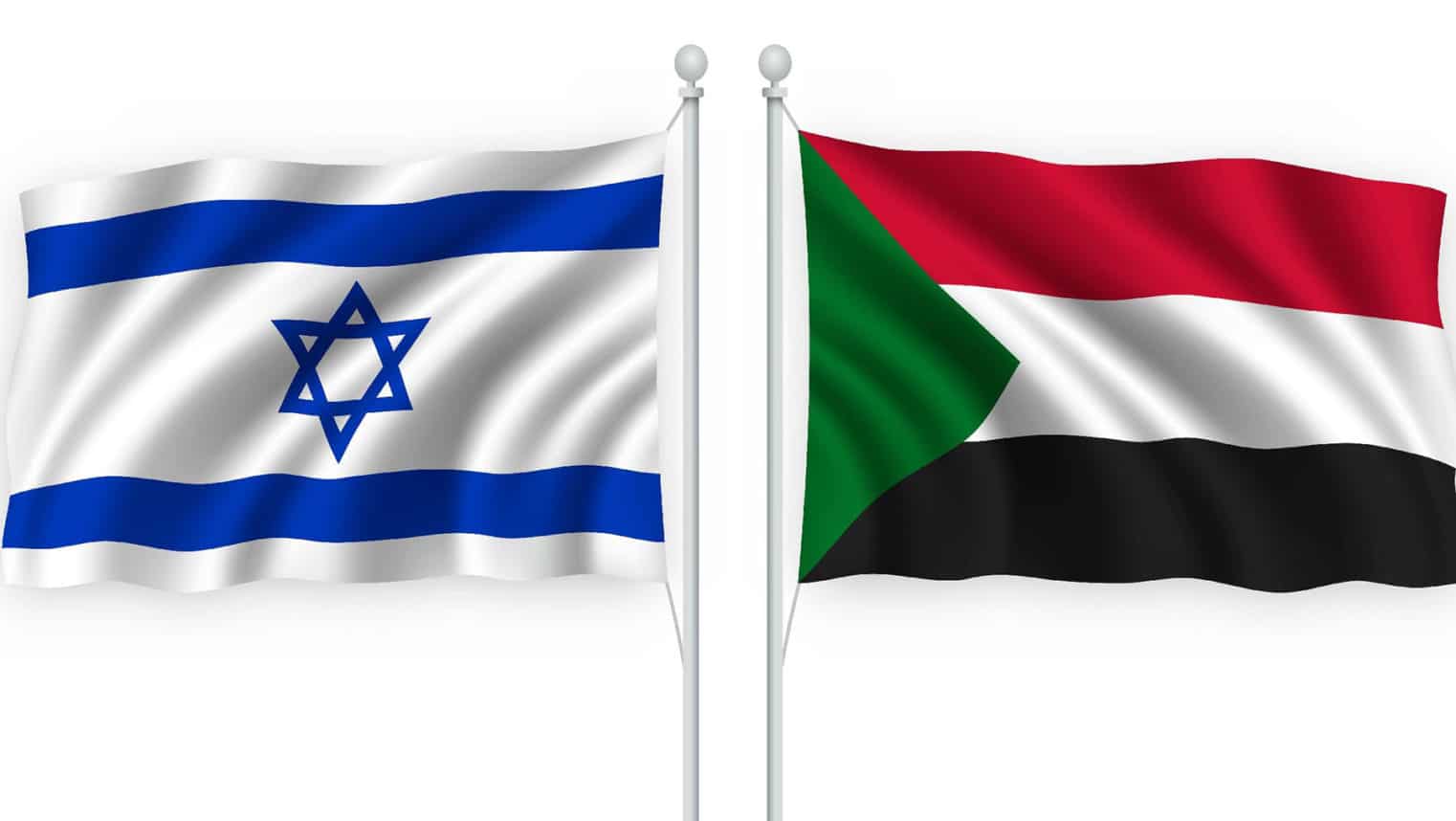
(The Media Line) The Sovereign Council and the cabinet of Sudan’s interim government gave its final approval to the annulment of the country’s Israel boycott law, which had prohibited the establishment of diplomatic ties with the Jewish state and forbid business relations between Israeli and Sudanese entities.

The annulment approved on Monday is another step on the path to normalization, which began with a meeting between Israeli Prime Minister Binyamin Netanyahu and the head of the Sovereignty Council of Sudan, Abdel Fattah al-Burhan, in February 2020.

The countries officially declared in October 2020 that they would normalize relations, and Sudan joined the Abraham Accords in January. In the ensuing months there has been continued communication between the countries that included visits to Sudan by Israeli delegations, but relations have not been normalized and a peace agreement has not been signed. Meanwhile, the annulment of the law is vital to the progression of relations between the countries.

Ambassador Haim Koren, Israel’s former ambassador to Egypt and the country’s first ambassador to South Sudan, who currently serves as a senior research fellow at the Interdisciplinary Center Herzilya, says the annulment of the boycott has symbolic value.

“First of all, there’s a significance here beyond the boycott, an opening to a symbolic recognition of Israel,” he told The Media Line.

Sudan, which has a long history of supporting al-Qaida, was notable in its hostility to Israel. The Arab League convened in the Sudanese capital of Khartoum in 1967, where it reached the famous ‘Three Nos’ resolution: “no peace with Israel, no recognition of Israel, no negotiations with Israel.”

The peace process between Israel and the African country are part of the larger framework of the Abraham Accords. These accords, named after the shared patriarch of Arabs and Jews according to both Jewish and Islamic tradition, are normalization agreements mediated by the United States under then-President Donald Trump, between Israel, the UAE and Bahrain, which were signed in September 2020. Sudan and Morocco joined months later. The historical agreement facilitated the first peace agreement between an Arab country and Israel since its 1994 peace treaty with Jordan.

While the benefits of normalization between two of the strongest economies in the Middle East, the UAE and Israel, seem obvious, what Sudan and the Jewish state stand to gain from their renewed ties may appear less clear.

Dr. Joshua Krasna, a Middle East expert at Tel Aviv University’s Moshe Dayan Center, and a senior fellow at the Foreign Policy Research Institute’s Program on the Middle East, explained that, for Israel, international recognition has always been of vital importance, “even more so with Muslim countries, and even more so with members of the Arab League,” he told The Media Line. Sudan ticks both boxes. Any progress that Israel makes in this sphere improves its international standing, and this agreement is doubly important as it “breaks the Arab front that is opposed to the existence of Israel and to recognizing it.”

Krasna also adds that inner political considerations contributed to the agreement’s importance within Israel. March saw the country’s fourth election in two years and politicians seeking to improve their image gain political points from such advances. Although, he stresses, this does not belittle the importance of the diplomatic achievements secured recently for Israel.

Koren highlighted the geostrategic importance of the agreement for Israel.

“What we want more than anything is presence and a geostrategic bloc” of allies on the Red Sea, he said.

The Red Sea is a vital conduit of trade, connecting Europe and the Middle East to the Far East. Countries are racing to secure their presence in the area and – with Egypt, Eritrea, Ethiopia, South Sudan and, now, Sudan – Israel has a continuous stretch of allies which helps strengthen its presence in the region and protect its trade interests. Additionally, Koren explains that it is important for Western and Israeli security that Israel be able to better keep an eye on the activities of Islamist militias such as Boko Haram, while both parties strive to maintain stability in the region. An agreement with Sudan will enable that.

The recent normalization agreement with Sudan, in addition to the treaties with the UAE, Bahrain and Morocco, contributes to Israel’s international prestige, as a country courted by potential allies, Koren adds.

Khartoum is extremely interested in Israel’s advanced agricultural technology and its expertise in solar energy production, said Koren, who once represented Israel in the region. Sudan could be an agricultural powerhouse, and Israeli technologies could certainly help with that, he added.

The Sudanese also see Israel as a path to international acceptance and good relations with Washington. Sudan’s past relations with terror organizations has made it a pariah in the international arena, and the country was included on the US State Sponsors of Terrorism list. The international sanctions it faced, combined with the limit on aid it could receive, has brought Sudan’s economy to its knees. Economic aid and international relations that would help its economy are critically important to Khartoum, explains Koren, and peace with Israel is the way forward.

Krasna also emphasized the relationship with Washington as a main reason for Khartoum’s pursuit of normalization with Israel.

“They wanted to improve their relationship with the US … and the Americans’ condition was relations with Israel,” he said. Indeed, as part of the process, Sudan was removed from the State Sponsors of Terrorism list in December 2020 after 27 years.

While views on the agreement in Sudan are divided, despite its benefits, Koren believes that the Sudanese government is certainly interested in furthering the agreement, and is simply acting slowly and carefully, with political uncertainty affecting both the African country and its possible ally on the shores of the Mediterranean.

Sudan Annuls Its Israel Boycott Law Read More »

Sanders, Warren: U.S. Should Restrict Military Aid to Israel

Senators Bernie Sanders (I-VT) and Elizabeth Warren (D-MA) called for the United States to leverage military aid to Israel in order to get the Israeli government to “adjust course” from its current activity in the West Bank.

Sanders and Warren both made their remarks during J Street’s national virtual conference on April 18 and 19. Sanders said that it’s “totally appropriate for the United States to say what that aid may and may not be used for” and that “the American people do not want to see that money being used to support policies that violate human rights and treat the Palestinian people as second-class human beings.” Warren similarly argued that it’s important for the United States to look at every option to curb the expansion of Israeli settlements in the West Bank in order to preserve the possibility of a two-state solution.

“The Netanyahu government may have put aside formal annexation for now, but the continued growth of these settlements and the destruction of Palestinian homes amounts to de facto annexation,” Warren said.

Some Jewish groups criticized Sanders and Warren’s comments. “@SenSanders lost family in Nazi Holocaust. Instead of calling to cut US aid to Israel, home to 7 million Jews/Holocaust survivors, he should demand sanctions against tyrant @khamenei_ir who denies Shoah and plots destruction of Jewish state,” the Simon Wiesenthal Center tweeted.

Democratic Majority for Israel (DMFI) tweeted to Sanders, “Did you know the U.S. already has a say in how its aid is used by Israel?” and pointed to a November 2020 Congressional Research Service paper. The organization’s second question to Sanders: “Do you believe U.S. aid to the Palestinian Authority should pay special salaries & benefits to terrorists who murder Americans & Israelis?”

Matt Brooks, the executive director of the Republican Jewish Coalition (RJC), said in a statement, “To advocate, as Sen. Warren does, that the US pressure Israel to make concessions to the Palestinians while the Palestinian Authority condemns Israel’s existence, incites violence against Israel and Jews everywhere, continues its ‘Pay for Slay’ salaries to terrorists and their families, is disgusting.

“The RJC maintains that the United States has been and should be firmly committed to supporting Israel as a legitimate, permanent state in the Middle East, with the same rights to self-determination and self-defense as any other state. Most Americans — and the vast majority of Republicans — agree. Sen. Warren and her radical comrades do not.”


The progressive group IfNotNow, on the other hand, tweeted that Sanders and Warren “are representing the views of the majority of Democratic voters and making it clear that Israel hawks no longer control the debate on where our tax-dollars go.” In a subsequent tweet, the group pointed to polls from Gallup and Center for American Progress.


Warren also called on the Knesset to vote out Israeli Prime Minister Benjamin Netanyahu, calling him “a corrupt leader who puts his own interests ahead of those of his country.” The Stop Antisemitism.org watchdog tweeted that Palestinian Authority President Mahmoud Abbas “has been in power since 2006. There has been ZERO election[s] since then. Did Elizabeth Warren have any brilliant advice about this or did she save her wisdom solely for the Jew?” Warren did criticize Abbas as “corrupt and increasingly authoritarian” during her J Street remarks.


Writer Yoni Michanie tweeted that Warren’s remarks about Netanyahu “were unbelievably ignorant and insulting. Israelis vote their leaders into office and we do not need foreign leaders to tell us how to be ruled. Jews are no longer a colonized people — we determine our own path forward.”

Sanders, Warren: U.S. Should Restrict Military Aid to Israel Read More »

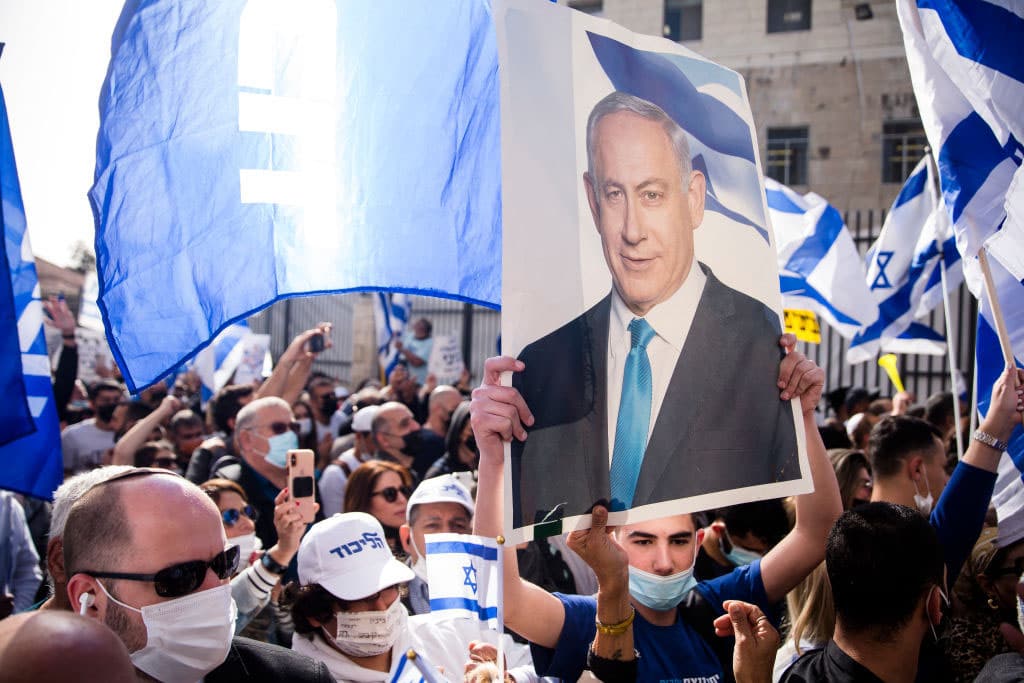
Netanyahu, Head of the Opposition?

After twelve years in power, Netanyahu as head of the opposition is now a possibility. In fact, it is a likelihood more than a possibility. Prime Minister of Israel Benjamin Netanyahu has two weeks to form a coalition before his mandate expires, and his options are: let someone else from within his own camp be the prime minister, or become the head of the opposition. Forming a coalition and a government no longer seems a realistic option.

Can you believe it? You’d have to get used to it, but for Netanyahu this will be his third time as head of the opposition. He was there when Prime Ministers Yitzhak Rabin and Shimon Peres ran the country in the early nineties. He was there when Prime Minister Ehud Olmert ran the country until 2009. He might have to readjust to this position, this time while standing trial.

For Netanyahu this will be his third time as head of the opposition.

How did this happen? The election forced Netanyahu to find more partners than his usual camp of supporters. He needed to recruit Naftali Bennett’s Yamina party — when Bennett was running to replace him. He needed to retain the support of the hawkish Religious Zionist party. And he needed Islamist Raam to get to more than 60 seats. The short story is that the Religious Zionist party refused to sit with Raam. Netanyahu tried to lure the New Hope party in as substitute, but this also failed. He then floated a new idea: a quick special election only for the job of prime minister. But on Monday, Netanyahu’s bloc was ambushed by the “camp of change” and lost control of forming Knesset committees. Raam closed a deal with opposition leader Yair Lapid and voted against Netanyahu.

That was a final reality check. Netanyahu does not have a majority and is unlikely to have one in the next two weeks. If he does nothing, the other camp will get a shot at forming an uneasy coalition of rivals. Hawkish Bennett and Gideon Saar, centrist Yair Lapid and Avigdor Lieberman, leftist Labor and Meretz and, finally, Islamist Raam. This will be a narrow coalition and one that is ideologically incoherent. Its goal would be to unseat Netanyahu and focus on uncontroversial policies. It might be formed or it might not; it might survive for more than a few months or it might not. Bennett would likely start as the prime minister, followed by Lapid after two years, if the coalition doesn’t collapse under its own weight. Netanyahu is going to blast it daily, calling it a left-wing coalition, denigrating it as illegitimate (Bennett, with seven seats, as the prime minister? It’s not illegitimate, but it is slightly weird).

Netanyahu’s other option is to hand someone else in Likud the key to forming a coalition. But he is smart enough to know that this key will not be easily returned. He is also smart enough to know that being the leader of the opposition is not as powerful a position as being the prime minister. If a Bennett-Lapid government survives for more than a few months, the grumble of Likud members could lead to revolt against him.

Then again, his cards are few and weak. For now, he will prepare for the following scenarios:

Best case (for him): The other coalition also doesn’t form, and Israel goes to a fifth election.

Second best: A coalition forms but collapses after a short time, when Netanyahu still controls Likud.

Third option: Netanyahu is the head of the opposition and has to fight against his rivals’ government, the prosecutors at the court and a revolt within Likud.

Netanyahu, Head of the Opposition? Read More »

Poems Born in Bergen-Belsen

In honor of the 76th Anniversary of liberation: April 15, 1945.

Theodor Adorno famously wrote, “To write poetry after Auschwitz is barbaric.” And yet, poetry has been written, even Nobel Prize-winning poetry (by Nelly Sachs), and poetry must be written if words are to be used to grapple with the unique evil that was Auschwitz.

But Adorno was right in some respects. The task of using language — concise language, precise language, intense language, suggestive language, allegorical language — to confront the abyss must not be undertaken lightly. It requires skill, understanding, empathy. The journey into barbarism can indeed become barbaric, yet it need not be.

Menachem Rosensaft, a Second Generation leader, exemplifies how to strike that balance. Rosensaft was born in the Displaced Persons Camp of Bergen-Belsen to parents who had survived Auschwitz. His mother preserved the lives of many children at Bergen-Belsen, and his father was a prominent, charismatic political leader in the DP camps who restored dignity to the survivors while making them an important symbol of need for a Jewish State. Living up to his parents’ incredible legacy is not easy, made ever more difficult by being named “Menachem,” named for his grandfather but a consolation for Benjamin, the five-year-old brother he never knew, who was taken to the crematoria at Birkenau.

Rosensaft, known as a political activist and human rights advocate, is now general counsel for the World Jewish Congress. But one would be surprised to discover that he is a poet by night, whose fierce writing wrestles with the darkness again and again. His newest work, “Poems Born in Bergen-Belsen” (April 2021), reveals something essential about his own existence: although he left Bergen-Belsen, Bergen-Belsen has never left him.

Liberated 76 years ago on April 15, 1945 by the British, Bergen-Belsen was overwhelmingly a place of death. So virulent was the typhus epidemic there that 13,000 died after liberation and the concentration camp had to be burned to the ground — but only after its corpses were bulldozed into mass graves. But Bergen-Belsen was also a place of life, born and reborn. Rosensaft’s parents, who both had spouses that were murdered in Auschwitz, remarried and dared bring new life into the world, still not knowing where they would live and the shape of the world in which they would bring their children.

He writes of the Second Generation

true, we are the children
of a nocturnal twilight
the heir of Auschwitz and Ponar
but ours is also the rainbow
in us the storm meets sunlight
to create new colors
as we add defiant sparks
to an eternal fire

His words challenge God and humanity, Christianity and Creation. His credo:

I BELIEVE

Yes, I believe that
Jesus was God’s child
one son – not The.
nor His eldest
nor His heir;
and murdering a man
is still a greater crime
than deicide

Genesis, Post Scriptum

and on the eighth day
the devil became master
of the universe
by creating man’s soul
in God’s image

There is anger in Rosensaft’s poetry, an anger most reminiscent of the early writing of survivors, before they were tempered by the blessings of life renewed — children and grandchildren, careers, accomplishments, love — and before they learned that to bear witness they could neither scream nor remain mute, but speak and write with a gentle fierceness or a fierce gentleness.

There is anger in Rosensaft’s poetry, an anger most reminiscent of the early writing of survivors.

Rosensaft wrestles with God and appreciates the paradox that even after Auschwitz, Jews, believers, heretics and skeptics continue the traditions of Israel — wrestling with God.

Meditation

the miracle
after god did not respond
to cries from the depths of Auschwitz
is that Jews
continue to pray
despite auschwitz

And yet there is hope, not the innocent, simplistic hope of Anne Frank’s diary, completed before she died on typhus at Bergen-Belsen, but a defiant hope that, even while confronting and understanding evil, is determined not to give death and destruction the final word. Rosensaft writes:

blessed is the soul
that emerged from Auschwitz and Bergen-Belsen
to create hope
not fears
to teach life
not sorrow

But what is wonderful in Rosensaft’s writing is that he fights intensely for Jewish rights — but not exclusively. He defends the uniqueness of the Holocaust, not to place it on the mountain top as the Olympus of suffering and evil, but to use it as a spiritual push to be sensitive to all suffering and all evil. The concluding poem of the book was written after the past summer and speaks to the extinguished life of George Floyd.

Black Lives Matter  

of course Black lives matter
and if we want
us
any of us
to remember
Jewish lives extinguished at Auschwitz
Bosniak lives at Srebrenica
Tutsi lives in Butare
Serbian lives at Jasenovac
Armenian lives at Musa Dagh
Fur lives in Darfur
Rohingya lives in Myanmar
then we must now all shout
that Black lives matter
until no child of God ever again dies gasping
“I can’t breathe”

Survivors and the best of their descendants often embody simple truth, basic values that form the core of human decency. Contrary to the Messianic pretentions of apocalyptic violence against their Arab neighbors, Rosensaft’s vision is infused with a commitment to the sanctity of all human life.

The Messiah Will Not Come

the messiah will not come
God will not leave Her seclusion
until Jerusalem’s bearded
rabbis imams priests
teach daily that each
Jewish child
Palestinian infant
is created with one
only one
always the same
divine spark

From the pen of a sophisticated man come a plea for simple truths that should be — must be — at the core of all true religions. In this slim but moving volume, we can witness an encounter with barbarity and its memory that does not descend but ascends. It uses language to enrich, enhance and inspire.


Michael Berenbaum is director of the Sigi Ziering Institute and a professor of Jewish Studies at American Jewish University.

Poems Born in Bergen-Belsen Read More »

Obituaries: April 3, 2021

Arlene Allen died March 20 at 83. Survived by daughter Stacie (Len) Jablon; sons David (Su) Freedland,  Randy (Amy) Fortel; 4 grandchildren; 1 great-grandchild; brothers Mel (Linda) Levine; Marty Levine. Malinow and Silverman

Sherafat Bakhshian died March 28 at 91. Survived by daughters Taraneh (Haghnazar), Shohreh (Adib); 5 grandchildren; 6 great-grandchildren; sister Behjat; brother Ardeshir. Hillside

Henry Bittmann died April 7 at 97. Survived by daughters Beth (Matthew), Lisa (Jeff); brother Kurt; 5 grandchildren. Hillside

Harriett Cohen died March 21 at 89. Survived by husband Mitchell; daughters Shelley Kaplan, Lynn Kaplan; stepdaughter Allison (Scott) Myer; son Bill (Rachel) Kaplan; stepsons Greg (Chris), Gary (Jamie); 7 grandchildren; 8 step-grandchildren; 1 great-grand child. Mount Sinai

Edmond Dasteel died April 2 at 96. Survived by wife Joan; sons Jeffrey, Jeb; stepdaughters Joyce Smith, Michelle Redmond;  stepson Richard Levy. Malinow and Silverman 

Irvin Bert Eifer died March 25 at 98. Survived by wife Elaine; daughter Laura (Tim) May; 5 grandchildren; 2 great grand-children; daughter-in-law Linda. Malinow and Silverman

Leonard Feldman died April 7 at 97. Survived by daughter Sharon (Craig); sons Steve (Laurel), Michael (Bat-sheva); 8 grandchildren; 6 great-grandchildren. Hillside

Marlene Freedman died March 29 at 75. Survived by husband William; daughter Carrie (Robert); son Christopher (Nele); 4 grandchildren. Hillside

Mildred Friedman died April 9 at 99. Survived by sons Lawrence “Larry” (Lesley), Brian; 4 grandchildren. Malinow and Silverman

Heather Funderburk died Oct. 18 at 41. Survived by daughter Charlotte; sons Wyatt, Benjamin,  Matthew (Alexis); mother Maxine; brother Howard. Hillside

Irwin Gerst died March 19 at 94. Survived by wife Yola; daughter Sharon Chipman; sister Sally Sommer. Malinow and Silverman

Nathan Gilbert died March 23 at 100. Survived by wife Ana. Malinow and Silverman

Lola Grunwald died March 25 at 90. Survived by daughter Sylvia; son George; 5 grandchildren; 5 great-grandchildren. Hillside

Michelle Kram Heller died March 19 at 53. Survived by sons Daniel, Benjamin; brothers Michael, Allan (Karishma). Hillside

Lois Hubbs died March 24 at 74. Survived by sister Julie. Hillside

Dionna Kaufman died March 15 at 44. Survived by husband Isaac; sons Ilan, Oren, Erez, Amir; father James Harris; sister Brandy Harris; brother David Harris. Malinow and Silverman

Brenda Kopin died March 19 at 94. Survived by daughters Barbara, Marilyn. Hillside

Lyn Krinsky died March 25 at 94. Survived by sons David (Cathy), Jeffrey (Clarie), Glenn (Miriam); 8 grandchildren; 3 great-grandchildren.

Lorraine Lefkowitz died April 4 at 91. Survived by daughters Joy (Michael Kaelin) Swift; son Terry (Maria “Angie”); 2 grandchildren; brothers Larry (Randy) Glazer, Stewart Glazer. Malinow and Silverman

Gail Levy died March 13 at 61. Survived by husband Robert; daughters Rachel-Ann, Rebecca, Hannah. Hillside

Louise Marak died March 24 at 68. Survived by son Samuel; mother Etta; sisters Cheryl (Ron), Rachelle (Brian). Hillside

Lionel Nosanov died April 7 at 89. Survived by wife Frances; daughters Sandee, Debra Klein, Harriet (Ricardo) Arteaga, Nancy (John) Grandinetti; 4 grandchildren; 1 great-grandchild; bother Jerry. Malinow and Silverman

Lou Schotland died April 8 at 99. Survived by daughter Tess (Bruce) Wilkoff; son Marvin (Sandy); 6 grandchildren; 8 great-grandchildren. Harbor Lawn-Mt. Olive Memorial Park, Costa Mesa

Ian Nanak Partap Singh Suri died March 15 at 29. Survived by mother Robina; father Manindar; brother K.E.M.S. Suri. Malinow and Silverman

Obituaries: April 3, 2021 Read More »

Celebrating Israel — at a Drive-In

For nearly a decade, the Los Angeles chapter of the Israeli-American Council held its annual Yom HaAtzmaut festival, Celebrate Israel, every year at Rancho Park in West Los Angeles.

The all-day affair typically drew more than 10,000 attendees, Jewish, pro-Israel community members of all ages and backgrounds who would show their love for the Jewish State by marching from the park to the Museum of Tolerance; enjoying the festival’s carnival with their little ones; sipping beer and cocktails at an outdoor young professionals bar; browsing booths staffed by representatives of Jewish organizations and nonprofits that gave away free swag (if only you would take a moment to hear about the vital work their group does); and by dancing the night away at a live concert featuring popular bands from Israel.

In 2020, because of COVID-19, there was no Celebrate Israel festival. I occasionally jog around Rancho Park, and early on in the pandemic, I noticed a rotting Celebrate Israel parking sign leaning against the Rancho Park fence. In the pandemic times, the neglected sign appeared to be an apt metaphor of the Jewish life that had once flourished at the park every Yom HaAtzmaut but had since faded away.

This year, as COVID-19 cases have decreased and vaccination rates have increased, life in Los Angeles has slowly begun returning to normal, and the IAC opted to organize Celebrate Israel once again, albeit tweaked and COVID-friendly.

“We had to find a solution,” Shoham Nicolet, co-founder and CEO of the IAC, said. “How do you make it safe to connect the community? This is the compromise.” The IAC opted for a drive-in event on April 18, with an evening concert as the main feature. More than 400 vehicles parked in two adjacent outdoor parking lots in Woodland Hills and watched streamed performances by Israeli bands, including the Idan Raichel Project, Rami Kleinstein and T-Slam. Members of Tzofim — Israeli scouts — went car to car serving concessions.

The IAC held similar events nationwide, in cities including Atlanta, Boston, Denver and Las Vegas. “It was critical for us to find an innovative way to bring Israel to the heart of our community in a safe way,” IAC Chairman Naty Saidoff said. “Watching the sense of togetherness, especially with many young kids, celebrating the Jewish state as a united community, is heartwarming and inspiring.”

“It was critical for us to find an innovative way to bring Israel to the heart of our community in a safe way.”

And I joined the festivities firsthand. Around 6:30 p.m., I drove into the parking lot on Canoga Avenue and entered the festival grounds. A staff member approached my car, greeting me in Hebrew, and when I replied in poor Hebrew, “Ani loh medaber ivrit,” she switched to English, explaining she needed to take my temperature.

Cleared for takeoff, I parked, put on my mask and explored. A couple of parking spaces from my Honda Civic, 12-year-old twin sisters Emma and Ella Yeshua cuddled together in the trunk of their father’s Porsche, waiting for the excitement to start. “I came to celebrate Israel’s birthday and to have fun,” Emma, a student at Hale Charter Academy in Woodland Hills, told me.

Attendees of the IAC’s Celebrate Israel drive-in take in the entertainment from the hood of their car. Courtesy of the Israeli-American Council.

The evening began with remarks from city leaders, including Los Angeles City Councilmember Bob Blumenfield, who shared how he was a proud Zionist long before he was ever an elected official. Soon after, Israeli actress Noa Tishby, a recognizable face in the Los Angeles Jewish community, appeared on the large inflatable screen facing the parking lot, as she was hosting the event from a remote location. A timeline of major historical events in Israel’s history followed, as did remarks from Israeli President Reuven Rivlin.

There was a stage in one of the two parking lots, and despite instructions from organizers to remain in your vehicles or stay in your designated area, people flocked to the stage as if they had never heard of COVID-19. Apparently, after more than a year of separation, people were eager to come together, see old friends and celebrate their love for Israel with fellow members of the community.

I talked to another fellow guest, Elie Mafouda, who turned out with his wife, Minda. Originally from Israel, Mafouda was wounded while fighting with the Golani infantry brigade in the Yom Kippur War. Although he has been living in the United States for close to 35 years, Israel remains close to his heart.

“Today is a special day of Yom HaAtzmaut, Independence Day, and we are here in America, in Los Angeles, and I am happy to celebrate that with all my buddies, all my Jewish, Israeli friends, and it’s very good to have a day like this, not just to skip it,” he told me.

Minda echoed his enthusiasm. “This seems like a wonderful event and something to do that is COVID-friendly, and yet we get to go out after so many months,” Minda, a teacher at the Spivak Educational Center, an Orthodox day school, said.

Around 8:30 p.m., just as Israeli vocalist Sarit Hadad’s performance began playing onscreen, I departed. As I pulled out of the lot and onto Canoga, I could not shake the hopeful feeling that for all the discussion about how the pandemic has accelerated the transition to virtual forms of activity, life in the Los Angeles Jewish community will go on. We will congregate like we did once before, and after a year of lockdown, we will shake ourselves free and arise from the dust collecting on our unused wardrobes.

Leave it to the Israelis, known for boldness in action, talent for innovation and improbable achievement against all odds, to show the community the path forward.

Celebrating Israel — at a Drive-In Read More »

A Refugee Solution for Biden — From 1944

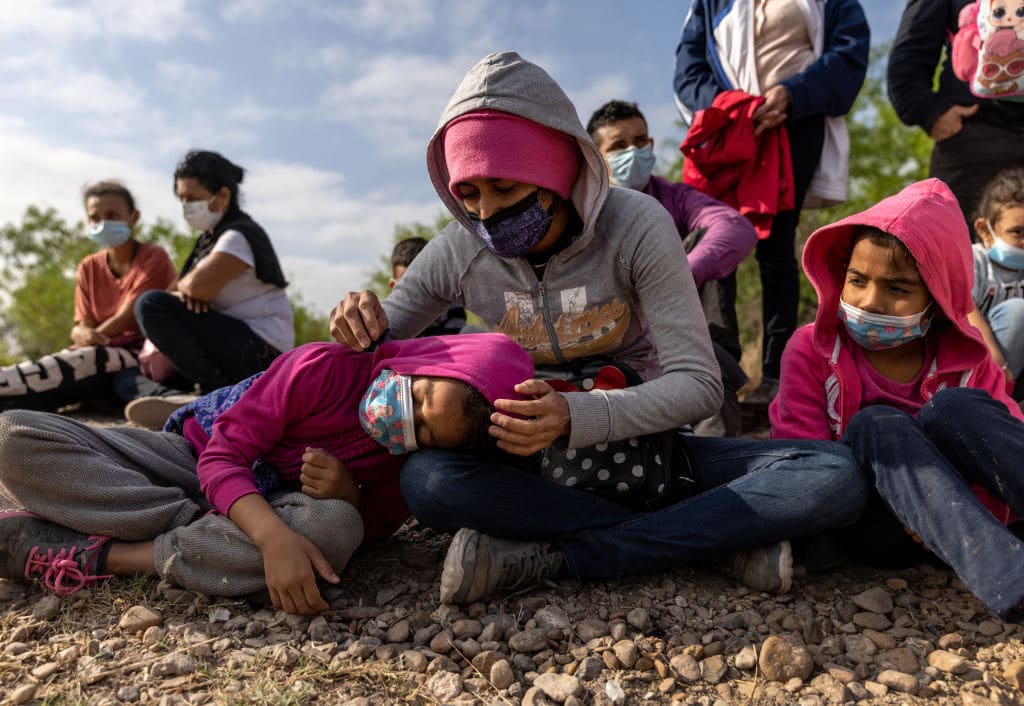
In the span of a single day, the Biden administration announced that it would not increase this year’s cap on refugee admissions from 15,000 — then promptly reversed its position.  The administration’s flip-flop has ignited protests from both liberal refugee advocates, who hope the new president will adopt a more generous policy, and conservatives, who want to maintain the low number established by President Trump.

But whether the refugee cap is increased to 125,000 annually, as President Biden originally promised in February, or kept at the 15,000 level set by his predecessor, or ends up somewhere in between — as now seems likely — America’s policy of admitting refugees remains inadequate for meeting the human rights challenges of our era. Perhaps the time has come for a new approach — one based on a proposal first made in 1943-44.

Current U.S. and international law define a refugee as someone who is compelled to leave their country “because of persecution or a well-founded fear of persecution on account of race, religion, nationality, membership in a particular social group, or political opinion.” Refugee admissions are processed separately from regular immigration.

Since 1980, the annual maximum number of people admitted as refugees has been set by the president. In most years, it has ranged between 50,000 and 100,000. This policy is consistent with America’s noble tradition of welcoming the oppressed, and it stands in welcome contrast to U.S. policy in the 1930s and 1940s, when President Franklin D. Roosevelt shut America’s doors to most Jews fleeing the Nazis.

But the current system is not an adequate response to large-scale human rights emergencies. The vetting process for refugees typically takes years, and the number admitted almost certainly would fall short in a crisis involving mass atrocities. To make matters worse, each year’s presidential determination usually includes limits on the number of refugees admitted from specific regions of the world, without any way of knowing, in advance, where the need will be greatest.

Even when the number of refugees to be admitted each year has been only in the tens of thousands, there has been backlash from those who claim that financial or social conditions in the U.S. should preclude greater refugee admissions. Some opponents even see the entry of refugees as a plot to “replace” American voters with foreigners.

President Biden’s fear of such backlash reportedly contributed to the administration’s slide from his initial promise of 125,000 — made in a presidential address on February 4 — to 62,500 in a State Department memorandum a week later, to 15,000 last week.

History offers a bipartisan alternative to constant public controversies and policy reversals.

At the end of 1942, the Allies publicly confirmed that the Nazis’ killings of Jews in occupied Europe were not random wartime atrocities but rather a “bestial policy of cold-blood extermination.” In mass shootings, then in gas chambers in death camps, the Germans and their collaborators were carrying out the systematic slaughter of millions of innocent Jews.

In the months to follow, American Jewish organizations and other refugee advocates began promoting a novel idea — that the Allies should create “temporary sanctuaries” in the United States and elsewhere, where European Jews could stay until the end of the war.

The campaign picked up important bipartisan momentum in the autumn of 1943. The presidents of the National Democratic Club and the National Republic Club called for allowing the entry of anyone seeking “to avoid religious persecution” for the duration of the war. Representative Samuel Dickstein (D-NY) introduced a resolution urging temporary haven in the United States for all victims of Nazi persecution. In the Senate, W. Warren Barbour (R-NJ) proposed admitting 100,000 refugees from Nazism until the end of the war.

A key flip-flop by President Roosevelt moved the proposal closer to reality. Until the end of 1943, FDR’s position was that nothing could be done to rescue European Jews except to win the war. But under strong pressure from Congress, the Treasury Department and Jewish groups, FDR belatedly reversed course and, in January 1944, agreed to create a new government agency, the War Refugee Board, to rescue the very people he had claimed couldn’t be rescued.

One of the first proposals made to the president by the Board, in early 1944, was to create “temporary havens of refuge” in the United States for Jews fleeing Hitler. “It is essential that we and our allies convince the world of our sincerity and our willingness to bear our share of the burden,” Josiah E. DuBois, Jr., one of the leaders of the Board, argued. Even if those admitted were treated no differently from prisoners of war, “it would be better to treat the Jews as prisoners of war than to let them die.”

Leading Democrats and Republicans lined up in support of the War Refugee Board’s proposal, as did numerous labor unions, religious bodies and important voices in the media. Syndicated columnist Samuel Grafton coined the term “Free Ports for Refugees.” “A ‘free port’ is a small bit of land… into which foreign goods may be brought without paying customs duties… for temporary storage,” Grafton explained. “Why couldn’t we have a system of free ports for refugees fleeing the Hitler terror?… We do it for cases of beans… it should not be impossible to do it for people.”

There were opponents of the proposal, of course — Secretary of War Henry Stimson, for example. He believed Jewish refugees were “unassimilable” and would negatively affect America’s “racial stock.

The White House privately commissioned a Gallup poll to gauge public opinion on the issue. The results were startling. The American public, which by wide margins had long opposed additional immigration, now favored giving “temporary protection and refuge” to European Jewish refugees by 70% to 23%. The difference between temporary and permanent admission seems to have been the most important factor in bringing about this dramatic shift in public opinion. Foreigners who would stay for the duration of the war, and would reside in special facilities, were not perceived by the public as posing a threat to America’s economy or culture.

Sadly, however, President Roosevelt agreed to admit just one group of 982 refugees. They arrived in August 1944 and were housed in an abandoned army camp in upstate New York. The Washington Post, in an editorial, decried the paltry number admitted as “a drop in the bucket compared with the needs.”

But America, today, can do better. Instead of basing all admission of refugees on the principle that their stay will be permanent, temporary havens would offer a supplemental option for those in need of immediate protection. This would go considerably beyond current U.S. policy, under which “Temporary Protected Status” may be granted to individuals who have already reached the United States on their own. Temporary havens, by contrast, would specifically contribute to mass rescue from state-sponsored persecution, with the refugees brought to the United States until it is safe for them to go home. Such a policy would be based not on arbitrary numerical caps and regional limitations but instead on actual refugee crises around the world.

Temporary havens would offer a supplemental option for those in need of immediate protection.

It’s not a one-size-fits-all solution. In some situations, different strategies might be more effective, such as temporary havens in countries closer to the scene, or the use of military action against the persecutors, as the United States and its allies undertook in the Balkans and Libya. Each human rights crisis would have to be evaluated on a case-by-case basis to determine if bringing refugees to the United States temporarily would be the most helpful approach in those circumstances.

And there are aspects to this policy that would need to be ironed out, such as who would bear the cost for transporting the refugees; where the refugees would reside; how long refugees would be allowed to stay in the United States in the event of a protracted crisis in their native country; and how their employment options and freedom of movement would be defined.

Those details can be resolved if we start talking about them now, instead of waiting until the next genocide is already underway. As the Holocaust and subsequent genocides have demonstrated, there always seems to be another mass human rights crisis just around the corner. Let’s get ahead of the curve by coming up with an innovative refugee policy, such as temporary havens, that will truly reflect American’s humanitarian values.


Dr. Medoff is founding director of The David S. Wyman Institute for Holocaust Studies and author of more than twenty books on the Holocaust and Jewish history.

A Refugee Solution for Biden — From 1944 Read More »