fbpx

March 8, 2021

More Than 100 People Protest Anti-Semitism in Ethnic Studies

More than 100 people showed up to protest anti-Semitism in the Ethnic Studies Model Curriculum (ESMC) and in education more broadly on the afternoon of March 7.

The “Teach Love Not Hate” protest, which was sponsored by End Jew Hatred, Yad Yamin, the Simon Wiesenthal Center and The Lawfare Project, among others, took place in front of the West Los Angeles Federal Building on Wilshire Boulevard.

Naya Lekht, director of education at Club Z, said at the protest that the ESMC teaches students to look at the world “through systems of oppression,” resulting in viewing Jews and Israel as “guilty” of their success. This is why, she argued, the fact that the ESMC has a lesson plan about Jews of color is not enough to solve the systemic problems with the curriculum. “It is a band-aid and contributes to the problem as it sows division among us. We are not Jews of color or LGBTQ Jews, we are Jews from Judea, we are one people!” She urged California Governor Gavin Newsom, a Democrat, to “say no, dismantle or fix” the ESMC.

Joshua Washington, executive director of the Institute for Black Solidarity with Israel, pointed out that a day before his assassination, Martin Luther King Jr said that there was increasing radicalization among some in the Black community that “there are some who are color-consumed and see a kind of mystique in being colored, and anything non-colored is condemned.” King, he added, explicitly rejected that line of thinking. “What we are saying now with this Critical Ethnic Studies curriculum is an academic reiteration of the color consumption he described. This is part of why many like Dr. King are excised from the curriculum and Dr. King himself lambasted and belittled as weak and docile.”
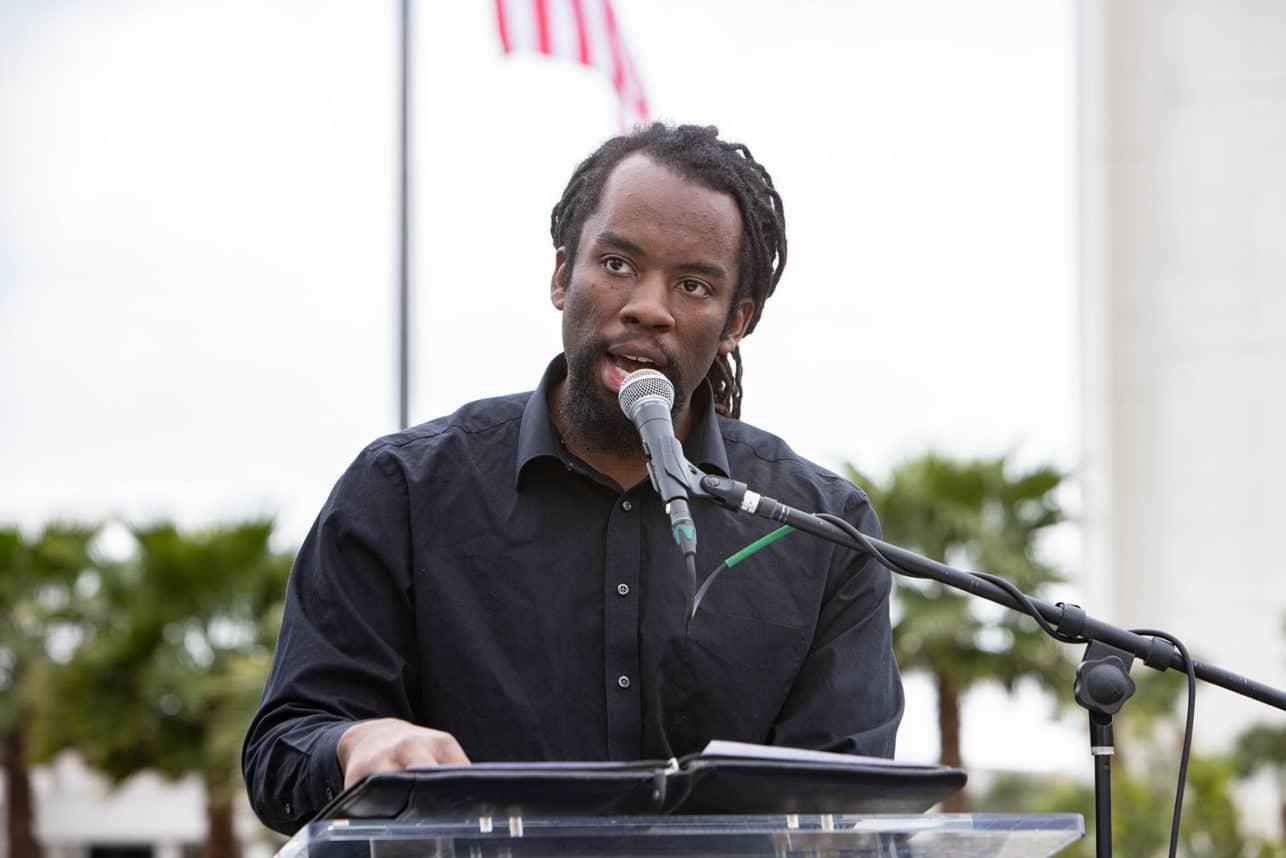
Joshua Washington (Photo courtesy End Jew Hatred)

Washington added that several civil rights leaders are ignored and disparaged in the curriculum while it glorifies “militant violence.” He also said that the history of Jews and the Black-Jewish alliance is underrepresented in the curriculum, while Arab studies are overrepresented and fail to mention “the centuries long slave trade of Africans that still continues today.” Washington warned that more than 20 school districts in California have adopted the first ESMC draft that many Jewish groups viewed as problematic.

“If your school district is one of those districts, it is up to you to apply serious pressure on your child’s school to get rid of this,” Washington said. “Apart from espousing poisonous doctrine, the curriculum is filled with lies and half-truths and complete distortions. It isn’t a celebration of different culture; it’s a celebration of a single destructive ideology.” He added that “no revision can redeem this Ethnic Studies Model Curriculum. What can redeem it is a return to the drawing board with a new group of authors with more diversity of thought and not a group of people with the clear and obvious anti-Jewish, anti-Black and anti-peace agenda.”

“No revision can redeem this Ethnic Studies Model Curriculum.”

Another speaker was Dr. Sheila Nazarian, a Los Angeles-based plastic surgeon and Iranian-American immigrant. She said she felt like she needed to speak out since one of her daughters is about to enter high school and is four years away from college.

“Lots of the worst parts of the curriculum have been changed… but it’s not enough,” Nazarian said, explaining that the ESMC “put Jews into a neat little box” as “privileged,” “white,” and “powerful and different and not to be trusted. That attitude is the problem – the Jew-hatred. And that is much harder than changing the curriculum.” In order to truly end Jew hatred, Nazarian said that people needed to feel the Jewish people’s right to exist, not just understand it through facts and logic.

“That starts when you believe in your own right to exist,” she said. “It starts when you look in the mirror and you like what you see. It starts when you transform, when you heal and when you speak up… we have been silent for too long and you know what? It’s left a vacuum. And that’s our own fault.”

Following Nazarian was Jennifer Karlan, a California high school student and member of Club Z. Karlan argued that the Jewish community is an “afterthought” in the ESMC. “How is this possible? How is it that we can teach about ethnic minorities and ignore the history and persecution of the Jewish people?”

She said that she has friends who have been called a “k—” in 2021 and have had hidden their Jewish identity due to concerns about being ostracized for loving Israel. “How can we end hatred if we first do not acknowledge it in classrooms? How can we change history if we first do not teach it?

“California, as a senior, as a student, I urge you: do not let Jewish students be told that their stories don’t matter. Do not let Jewish students be told that their suffering doesn’t exist. Protect Jewish students.”

Photo courtesy End Jew Hatred

Pro-Israel activist Micha Danzig argued during his speech that the current ESMC draft still has myriad issues, including that “it still lionizes even more Jew-haters” like Representative Ilhan Omar (D-Minn.) and Linda Sarsour and perpetuates an oppressor vs. oppressed narrative. “For centuries, anti-Semitism has largely been a conspiracy theory about ‘all powerful, nefarious’ Jews who seek to oppress people. Any curriculum that embraces these concepts is inherently dangerous for Jews.”

Jewish Journal Editor-In-Chief David Suissa also spoke during the protest, arguing that his main issue with the ESMC was that it inculcates students with the notion that their core identity is based on their ethnicity rather than their individuality.

More Than 100 People Protest Anti-Semitism in Ethnic Studies Read More »

Mouthwatering Moroccan Matbucha

When my twin nephews Luca and Nico were little boys, they loved Matbucha. At Friday night dinners, they would chime together “Maman, can we have Moroccan ketchup?”

It was so cute and so heartwarming at the same time.

Throughout the years, I would make Matbucha the traditional way. The way that my mother and our good friend Sharona Shabtay make it. It was unquestionably delicious, but so much work. The traditional Matbucha recipe calls for parboiling and peeling pounds of fresh tomatoes. So much work discouraged me from making Matbucha, so I would leave it for my mother to make.

Then last year, I saw a video of Danielle Renov, a popular Instagram influencer @peaslovencarrots.com and best-selling author of the cookbook Peas Love & Carrots, making Salade Cuite. Instead of using fresh tomatoes, Renov uses canned tomatoes. This revelation rocked my world. I started experimenting and combined parts of her method with my mother’s recipe. Now, I make Matbucha every other week, freezing a batch for the following week and the leftovers are perfect for Sunday morning Shakshuka. I start cooking in the morning and let it simmer all day. The tomatoes are dark red and the peppers are smoky. The flavor is intensely rich, sweet and flavorful with just enough fire.

A Star of the Maghreb kitchen, Matbucha, a dish of cooked tomatoes, roasted peppers, garlic and chili peppers, literally means cooked in Arabic. Also known as Salade Cuite, (“cooked salad” in French), Matbucha is part of the meze table, the Middle Eastern appetizer course. Brought to Israel by North African immigrants from Morocco, Tunisia, Algeria and Libya, Matbucha is almost as popular as chummus, served at many restaurants and on supermarket shelves.

Make a batch of healthy, antioxidant-rich Matbucha for Pesach. It’s delicious on its own or on matzo and it also makes a wonderful base for Shakshuka, tagines and fish dishes.

We are certain that you’ll love this “Moroccan Ketchup”!


Rachel’s Matbucha Recipe

¼ cup olive oil
10 large cloves of garlic, peeled and chopped
4 28 oz cans of whole peeled San Marzano tomatoes
4 large red bell peppers
1 large green bell pepper
2 spicy green peppers or 1 small can of fire roasted green diced chiles or 2 teaspoons red chili flakes.
1 teaspoon salt
1 teaspoon paprika

Roast the red, green and chili peppers, in the oven or on the barbecue.

Seed the peppers and peel off the charred skin. (A simple method is to immediately place the roasted peppers into a paper bag and let them steam for 20 minutes, causing the skins to fall away easily. Leave more seeds if you prefer a spicier matbucha or add more chili peppers to your pot.) Chop the peppers into long strips and set aside.

Heat oil in a heavy pot over low heat, then add chopped garlic.

Drain the canned tomatoes, setting the liquid aside.

Cut the tomatoes into large chunks and add to the pot and bring to a simmer over medium heat.

When the mixture starts to bubble, cover the pot and reduce heat to low.

Keep stirring the tomatoes every 30 minutes, adding some of the reserved tomato juice if the tomatoes become too dry.

After cooking the tomatoes for 4-5 hours, the mixture will be quite thick.

Add the roasted peppers, salt and paprika and simmer for another 30 minutes.


Rachel Sheff and Sharon Gomperts have been friends since high school. They love cooking and sharing recipes. They have collaborated on Sephardic Educational Center projects and community cooking classes. Follow them on Instagram @sephardicspicegirls and on Facebook at Sephardic Spice SEC Food.

Mouthwatering Moroccan Matbucha Read More »

Fela Shapell, 9/23/1922 – 2/11/2021

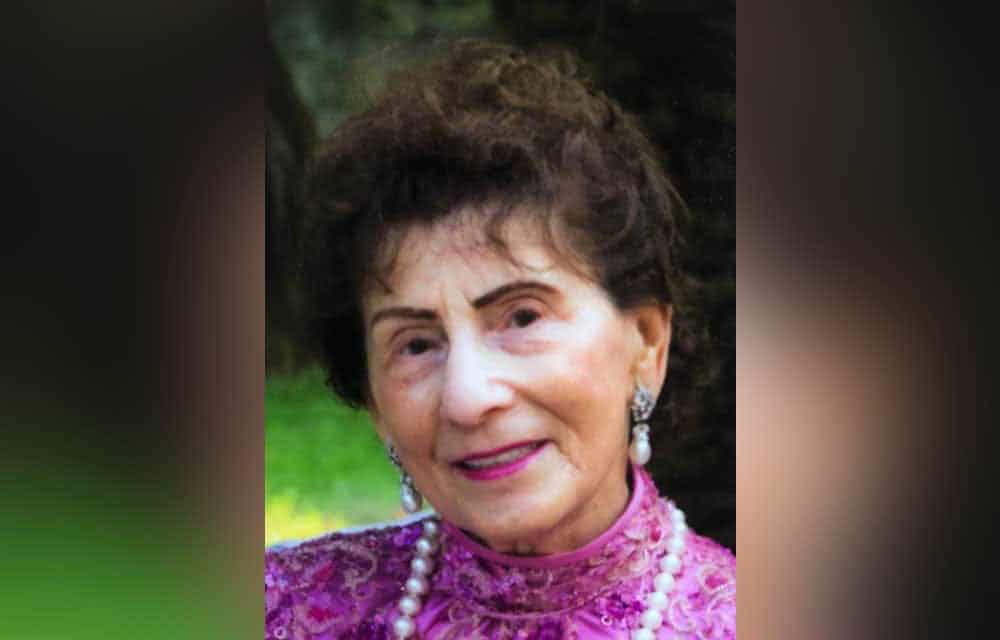
Fela Shapell, beloved mother, grandmother, and great-grandmother, devoted wife of 65 years, Holocaust survivor, and philanthropist, passed away peacefully in her home in Los Angeles on February 11, 2021. She was 98 years old.

Fela will be lovingly remembered, among countless reasons, for her boundless love for her family, her perseverance and inner strength, her passion for music and dancing, her elegance and radiant energy, and her generosity and kindness to those in need.

Born on September 23, 1922, in Oswiecim (Auschwitz), Poland, Fela was one of six siblings. The family lived in a multifamily building on the central square of the city. Fela had wonderful memories of her childhood, especially of her loving parents, Rachel and Yitzchak.

During the Holocaust, Fela and her family were forcibly relocated from their home to a ghetto. Fela was subsequently transferred to a series of labor camps and concentration camps. She was ultimately liberated from Bergen-Belsen concentration camp in 1945. Severely ill with typhus, Fela was transported to Sweden for medical care. For nearly two years following her recovery, she worked in Sweden as a nurse.

While in Sweden, Fela learned that her parents and two of her brothers had been brutally murdered in the Holocaust. She also received word that two brothers and a sister had survived, and she reunited with them in Germany.

Fela met David Shapell in Germany, and they married in 1949. Fela and David immigrated to the United States in 1950, first living in Detroit near family members, and then settling in Los Angeles, where Fela and David raised three children and lived joyfully together until David passed away in 2015.

After their children were grown, Fela and David devoted themselves to family and to charitable causes. They supported a vast array of organizations, particularly those that championed Holocaust remembrance, Jewish education, and Israel. They also traveled the world together, always ready to explore both new and familiar locations.

Fela is survived by daughter Rochelle (Lorne Buchman); sons Benjamin (Susan) and Irvin (Kathy); 13 grandchildren and step-grandchildren; and 14 great-grandchildren. Fela’s beloved grandson, Jacob, predeceased her.

The family expresses its enormous gratitude to Vilma and Nelson Tolentino, whose loving care of Fela over the past 12 years was instrumental in maintaining her health, comfort, and wellbeing. Many thanks as well to Dyon Maki, Inga Zukus, and Stan Kubrin for their invaluable assistance to Fela over the years.

Please consider making a donation in Fela’s memory to one of the following organizations: American Society for Yad Vashem; United States Holocaust Memorial Museum; Beth Jacob Congregation of Beverly Hills; Friends of the Israel Defense Forces; or a charitable organization of your choice.

Fela Shapell, 9/23/1922 – 2/11/2021 Read More »

Keshet: A Place of Belonging

There is not a minute that goes by where I don’t think about what makes the Keshet community special. Keshet is a place of belonging for everyone; it embodies my dream of what the world should be for us all. Those who know me know that I think about inclusion just about every minute of the day. Making our community inclusive is not just a mission of mine, but it is something I am determined to make happen. Our community carries out this mission every day in all that we do. Making this happen is not just something we talk about, it is our mindset.

I often think about what it means to feel like you are part of something. Not all adults are able to have a voice at the table or are capable of speaking up for themselves. I am so proud and happy that our adults have been heard even more over the past year as we have created new opportunities and experiences in response to the pandemic Keshet creates space for everyone and values each person’s unique gifts, ensuring that our adults have the choice to participate in ways that are meaningful to them.

Our adults have become great advocates for themselves. The skills they have learned extend far beyond Keshet’s walls. I can see it in the clear voices of our team members at GADOL and our residents every day. We worked hard to build this culture of belonging. The impact is huge, and has been a priority since the time our adults were young people at Keshet.

Inclusion provides our adults with opportunities to makes choices built around what they want to do, who they are, and who they want to be. It begins with interests they have, enables them to learn more, gives them opportunities to teach others, and develop relationships with others who have shared interests. Inclusion says that you belong to something that matters to you and others; it says you are part of something. It is what is right and natural.

Now is the time for us to stop just talking about inclusion, and to show the world what belonging is. Keshet is a community that provides opportunities for all. We know that this is just the start of creating a world where everyone has the freedom to choose to live a life of meaning and value.

Jennifer Phillips is an accomplished special education professional with more than 28 years of experience in classroom, recreational and residential settings. She is currently the Chief Executive Officer of Keshet. 

Keshet: A Place of Belonging Read More »

‘Chicago 7’ ‘Palm Springs,’ ‘Schitt’s Creek’ and Jerry Seinfeld Win Critics’ Choice Awards

With a new hybrid at-home award show season in full swing, Sunday night’s Critics’ Choice Awards celebrated what the critics felt was the best of TV and film this year.

Those who thought Golden Globe winners from the previous week would also win big in the Critics’ eyes were mistaken when watching the event which was televised on the CW. “Mank,” led with 12 nominations, but only won an award for best production design. Aaron Sorkin’s courtroom drama “The Trial of the Chicago 7,” nominated for six awards, won two for best editing and acting ensemble. Sacha Baron Cohen, who played Abbie Hoffman, accepted the award on behalf of the cast and paid tribute to Sorkin and the real participants of the trial.

“When we began shooting the film, each of us knew the power and the relevance of this story… Thank you Aaron Sorkin for the power of your words and characters and a message that resonates today,” Baron Cohen said. “Most of all thank you to Tom Hayden, to Rennie Davis, to Abbie Hoffman, to Jerry Rubin, to David Dellinger, to John Froines, to Lee Weiner and Bobby Seal for standing up, for being so bold, for changing history. History, they say, has a tendency to repeat itself, and it will continue to do so unless we learn from it by telling its most salient stories. We are humbled and grateful to have been a part of telling this one.”

Jewish entertainers, series and specials also celebrated wins in the comedy categories.

Andy Samberg was excited to accept best comedy for his summer time-warp flick “Palm Springs.” During his acceptance speech, he told the part virtual part live audience that it was a big accomplishment because every movie in the comedy category was released during the pandemic.

“I saw all your movies, guys and they’re just super funny and I ride with comedy till the end,” Samberg said.

As a final send-off for the series, “Schitt’s Creek” celebrated two wins out of its five nominations. Catherine O’Hara who plays Moira Rose on the show won for best supporting actress in a comedy series while showrunner Daniel Levy won for best supporting actor in a comedy series. During Levy’s acceptance speech, he thanked the critics for “supporting and championing” his character David Rose.

“I have so appreciated reading all of your thoughtful and encouraging words over the years,” he said. Sometimes when you don’t often see yourself represented that much on screen, you have to take a risk and make it happen for yourself. So thank you so much for this, it really means the world.”

Comedy legend Jerry Seinfeld tied with Michelle Buteau for best comedy special. Seinfeld’s special, “Jerry Seinfeld: 23 Hours to Kill” came out in May 2020 and was his first stand-up special since 1998. Recorded before COVID-19, Seinfeld’s jokes in the special—especially praising the audience for overcoming mundane obstacles to see him perform and the pains of going out in general—land differently as many this week mark a year in quarantine. The comedian notes this in his speech and tells the crowd he can’t wait to get back to doing what he loves.

“As much as it’s nice to get this, I know what we really want is, speaking for [fellow comedians nominated] we want to be on stage somewhere making people smile and laugh,” Seinfeld said. “That’s what we want more than anything and we hope to be back doing that soon.”

‘Chicago 7’ ‘Palm Springs,’ ‘Schitt’s Creek’ and Jerry Seinfeld Win Critics’ Choice Awards Read More »

Senator Manchin: Biden’s Ambassador to the GOP

President Joe Biden has not yet appointed his ambassador to Israel. He has not selected key envoys to represent the United States to China, Russia or to the plum diplomatic postings of France, Italy or the Court of St. James. But before making those announcements, there may be another decision that will greatly serve his interests as well. Perhaps Biden should appoint Senator Joe Manchin as his ambassador to the Republican Party.

After the widely-covered meeting Biden had with ten Republican Senators early February to discuss his COVID-19 relief package, the White House seemed to have cut off diplomatic relations with the GOP. Buoyed by poll numbers showing overwhelming public support for the stimulus legislation, Biden’s advisors decided that while bipartisan backing for the bill would be helpful, it was not necessary for its passage. So they moved forward on a straight party-line vote, knowing that slim majorities in both houses would be sufficient for victory.

But neither party is a monolith. Centrist Democrats began to voice their concerns about the relief package, many of which reflected the objections that Republicans had raised with Biden in their February summit. As a result, Biden was forced to make several concessions to ensure unified Democratic support.

First to go was Biden’s proposal to increase the minimum wage to $15 per hour. Although many Republicans had indicated a willingness to raise the wage by a smaller amount, Biden’s all-or-nothing decision led a parliamentary ruling that removed any minimum wage component from the bill.

The more puzzling aspect of Biden’s strategy became apparent when several Democratic senators voted against the wage increase. Senators Manchin and Kyrsten Sinema (D-AZ) got most of the attention, but no fewer than eight Democrats opposed the $15 proposal, and twelve senate Democrats declined to support a stand-alone bill the previous week on the same subject. Reasonable people can disagree on this issue, but when only 38 Democratic senators support the $15 option, brinksmanship might not have been the best approach.

Manchin’s role became clearer as other last-minute changes were made to the COVID-19 package. After the minimum wage hike was dropped, Manchin and other centrist Democrats forced a narrowing of eligibility for stimulus payments, fought to maintain unemployment benefits at current levels and sought more specific guidelines for state and local government aid. All of these asks had been Republican priorities as well. The bill that ultimately passed the Senate also included billions of dollars for rural health care and infrastructure projects, both of which greatly benefit GOP constituencies.

The result is that Biden has managed to achieve a bipartisan bill without any Republican support. After deciding not to negotiate with congressional Republicans early on, the White House ended up negotiating with Manchin and his allies on most of the same points. Had Biden come to similar agreements with the GOP, the relief legislation would have likely included a minimum wage increase (albeit a smaller one) and would have allowed him to claim the unifying victory he had called for during his campaign.

Biden has managed to achieve a bipartisan bill without any Republican support.

Make no mistake: Even with Manchin’s changes, the COVID-19 bill is still a testament to a liberal vision for expanded government. It represents the largest sum of domestic government spending and the most targeted expansion of aid to low-income Americans in more than fifty years. Senator Bernie Sanders (I-VT) tweeted that the legislation was “the most progressive bill he’s seen pass since he’s been here.” (Biden cited Sanders’s tweet in his own remarks after the bill passed.)

It’s possible that Biden could not have attracted sufficient Republican support even had he continued their meetings. But the concessions he made to Manchin raise the question as to whether nine-tenths of a loaf might have been enough for him to still achieve a historic accomplishment with support from both sides.

Further compromise wasn’t necessary this time. But Manchin has already promised he will not support Biden’s prized infrastructure proposal without Republican involvement, and similar upcoming intra-party challenges on priorities such as climate change, immigration and police reform might necessitate a different approach — one that will require Ambassador Manchin to broker talks between Biden and the GOP.


Dan Schnur teaches political communications at UC Berkeley, USC and Pepperdine. He hosts the weekly webinar “Politics in the Time of Coronavirus” for the Los Angeles World Affairs Council & Town Hall.

Senator Manchin: Biden’s Ambassador to the GOP Read More »

Short on Representation, Israel’s Political Parties Rush to Celebrate International Women’s Day

(The Media Line) Out of the 12 parties with a realistic chance of clinching parliament seats in Israel’s March 24 general elections, a woman chairs only one. Yet despite this discouraging fact, or perhaps because of it, Israel’s various candidates and political hopefuls hurried to celebrate and commemorate International Women’s Day on Monday, holding a string of special events and rallies.

Yesh Atid, headed by Opposition Leader Yair Lapid and currently expected to be the largest party in the bloc opposed to Prime Minister Binyamin Netanyahu after the elections, held a special “women’s meeting.”

Hosted by Lapid’s wife, Lihi, the online get-together featured the party’s female MKs and candidates, who introduced their legislative achievements in promoting gender equality in past parliaments while outlining their agenda for the future.

“We have a lot of work ahead of us, there are political parties still today who ban women from running on their ticket. Netanyahu calls them his ‘natural partners,’” Lapid said in his opening remarks, referring to the ultra-Orthodox parties, before vacating the stage “for those who really matter today.”

Ayelet Shaked, second in command of the right-wing Yamina party, released a video skewering Netanyahu for his latest comments after the prime minister viciously mocked her.

Last week, an unedited clip of Shaked recording a song as part of an International Women’s Day initiative to raise awareness for violence against women, was leaked. Netanyahu and others have since ridiculed her online repeatedly for her vocals.

Yamina’s competitor for anti-Netanyahu right-wing votes, New Hope, held a special “women’s march of hope and unity” in Jerusalem. The party’s female candidates for the Knesset, led by No. 2 on the list Yifat Shasha-Biton, toured the streets of the capital, met with residents and answered their questions.

“I hope they can be trusted, I hope it’s not just something they do once a year and then forget about,” Einat, a Jerusalemite, told The Media Line of the various promises made by politicians on Monday.

Yael, a teenager who attended the Jerusalem march, was also skeptical. “If everyone is so pro-women, why are all the party leaders men? How does that happen again and again?”

Heading into the home stretch of its fourth election in two years, Israel’s parliamentary female representation leaves much to be desired.

In Netanyahu’s Likud party, expected to garner close to 30 seats, three female candidates can be found in the first 10 slots, and only four in the top 20. Lapid’s Yesh Atid boasts three women in its top 5 spots, and eight in the first 20, approximately the number of seats projected for the party in the latest polls.

After holding party primaries last month, Labor reshuffled its list using the “zipper system,” alternating between men and women.

“We will lead the Pink-Collar Revolution to pull Israel out of the coronavirus crisis,” Michaeli said in a statement to The Media Line, accusing Netanyahu of leaving women behind during the past year’s struggles.

“Seventy percent of all those fired are women. Women are more exposed than ever before to domestic and sexual violence,” she said.

“We will invest in teachers, nurses, social workers, psychologists in the public service, kindergarten teachers,” she promised. “Labor will give them the status, the terms and the pay needed so that women finally get the equality they deserve.”

Holding a Zoom Bat Mitzvah event for hundreds of girls who could not celebrate their special day this year due to the pandemic restrictions, Michaeli spoke with leading female artists and activists in Israel about the uphill battle women face.

The party competing with Labor for the few remaining left-wing voters, Meretz, also offers an equal list of male and female candidates. The veteran, fast-shrinking party, which in recent polls has failed to earn enough seats to enter parliament, held its own International Women’s Day event Monday evening.

“Everyone is talking about women’s rights today, but we’ve been working hard at it for 30 years,” former party chair and current second-in-command Tamar Zandberg said, listing Meretz’s track record, which includes passing bills cementing equal pay and assistance to sexual assault victims.

“Not just when it’s trendy, or as a campaign slogan, or for some international day, but every day. Every day is Women’s Day.”

Short on Representation, Israel’s Political Parties Rush to Celebrate International Women’s Day Read More »

Israel’s Debate is not About Reform Conversion: It’s About Orthodox Conversion

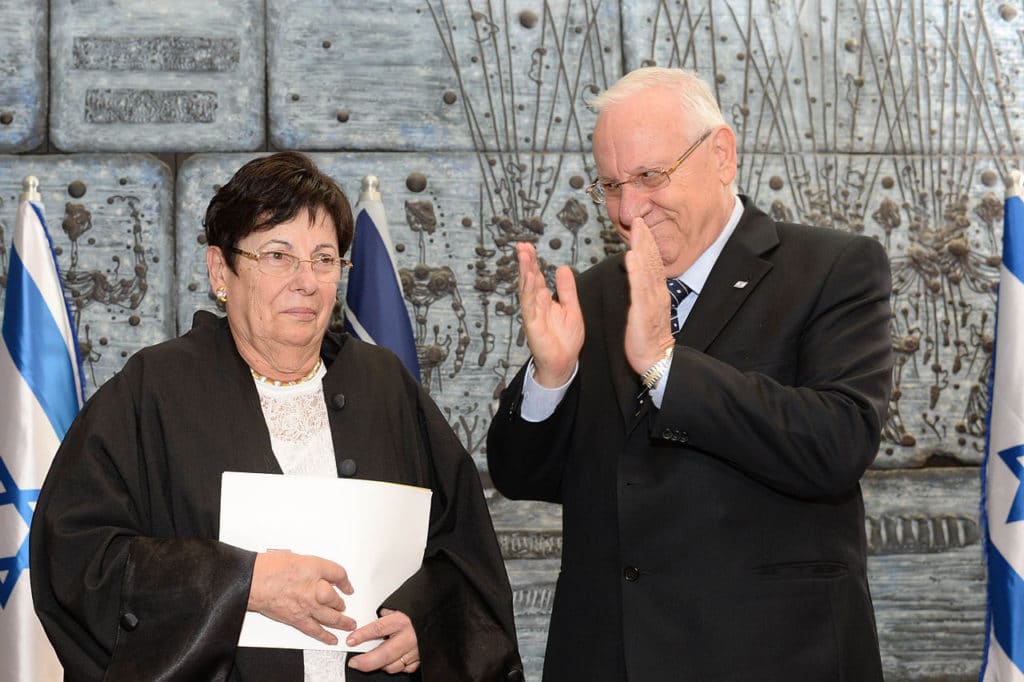
Israel’s High Court ruling on Reform Conversion, which caused a stir last week, was practically written and signed five years ago, at the end of March 2016. The 2016 ruling, written by the Chief Justice Miriam Naor, who retired long ago, was about Martina Ragacova, a Czech citizen who came to Israel as a tourist and stayed when her visa expired. While staying illegally, she converted to Judaism. Not through Reform authorities, but instead through Rabbi Karelitz’s Haredi Orthodox Court in Bnei Brak.

That case resulted in a landmark decision. The court ruled that people who converted by private conversion courts must be counted as Jewish when it comes to the Law of Return. Simply put, they become Israeli citizens as Jews. What happened last week, five years later, is nothing but a predetermined end to an old affair. First, the court made a decision concerning an Orthodox private court — now it is a Reform private court.

Anyone who bothered to take an interest in the matter, including Prime Minister Benjamin Netanyahu, knew how the case was going to end. That’s why Netanyahu appointed a committee to preempt the decision, but since his remedy was not accepted, he gave up and surrendered. Let the court decide. Let the politicians criticize the court for a decision they could have easily avoided by accepting a compromise.

In this story, as in many others, the High Court has served in its traditional role as a distraction. A convenient target for frustrated, incompetent politicians. The ruling was written five years ago.

In this story, as in many others, Reform Jews were also a distraction. A convenient target for frustrated, incompetent politicians. The Reform movement wants you to think that it is the main player in this drama — because the little court victory is sweet. But they are not that. They are a minor actor in somebody else’s drama.

The real battle for conversion in Israel takes place between two Orthodox factions. It is a struggle of ultra-Orthodox against Orthodox. A struggle between Zionist religionists and non-Zionist religionists. The Black Hats against the Knitted Kippahs. And it is an interesting struggle that involves two deep, fascinating questions about the nature of Judaism and the role of the Jewish state.

The real battle for conversion in Israel takes place between two Orthodox factions.

On one side are religious Zionists, who see the state as the dawn of redemption. For them, the role of the state means two things. One: adapting a conversion process that serves the political needs of the state. Two: making a state institution, such as the rabbinate, the official conversion body of the state.

On the other side of the ideological barrier are the ultra-Orthodox. They live in Israel, use its resources, love it for what it is but also see it as a direct continuation of the life of exile. For them, Israel is not a sacred state. It is a secular entity that has little to do with what they consider to be Judaism. This means that conversion processes should not accommodate the needs of the state. The kingdom is not a holy kingdom, and its needs do not allow for religious flexibility. Moreover, it is inappropriate to entrust the conversion to a state tool like the Chief Rabbinate.

Simply put, the Knesset cannot agree on a conversion law but not because of the Reform movement. Those who stand in the way of Orthodox politicians are other Orthodox politicians. Knesset Members Naftali Bennett (Zionist Orthodox) and Moshe Gafni (Haredi) cannot agree. But for both of them, it is a matter of convenience to blame the Reform movement and the court for a mess that is completely their own making.

Why the court hastened to legislate now, a mere weeks before Election Day, is a good question but not a dramatic one. The court waited a long time between its real decision in 2016 and this one, the aftermath of the earlier decision. Maybe it got tired of waiting.

In any case, in the ruling, the judges mention the obvious: If the Knesset enacts a new law of conversion, the ruling will not stand. The justices almost beg the Knesset to legislate. But rest assured, it will not. Again, not because of the Reform movement or because of the objections of American Jews. The Knesset will not legislate for the same reason it did not legislate thus far. The Orthodox factions cannot agree on a solution. Any attempt to legislate a strange formula that only Orthodox conversion is allowed will merely replace the question “who is a Jew?” with the question “who is Orthodox?” And again, the court will have no choice but to accept all court conversions, unless the Knesset agrees on one specific license to convert and the institution in charge of such a license. We shouldn’t hold our breath.

Israel’s Debate is not About Reform Conversion: It’s About Orthodox Conversion Read More »

Protesting the Ethnic Studies Model Curriculum

Yesterday, the End Jew Hatred (EJH) Movement, a grassroots civil rights movement fighting Jew-hatred, held at a protest at the Federal Building in Los Angeles, where I was honored to be one of the speakers. The reason for the EJH protest? The proposed Ethnic Studies Model Curriculum (ESMC) and the continued rise of systemic Jew hatred in academia and education.

The below is adapted from the speech I gave yesterday at the protest:

                                     ******************

I am the father of a current California high school student.

Like most people, I wear far more than one so-called “hat,” and like most people, my bio corresponds to quite a few “titles” or “identities” — attorney, writer, ex-cop, huge fan of Italian food, etc. But two of the identities that have mattered most to me include the one I was born with — “Jew” — and another I was blessed to first acquire almost 26 years ago — “father.”

As a father, I have always tried to keep in mind the quote by famed Israeli child psychologist Dr. Chaim Ginott: “Children are like wet cement: whatever falls on them makes an impression.”

As a Jew who grew up with a Savta (Grandma) who was the only person in her extended family to survive the Holocaust, and as a Jew who remembers hearing my first anti-Semitic slur when I was a 5- or 6-year-old boy walking home from synagogue in Chicago, I have always wanted to protect my children as much as I can from Jew-hatred.

Ultimately, that is what this protest is about: protecting impressionable children.  Not just Jewish children, but all children. For while the virus of anti-Semitism certainly paints a big target on the backs of Jews, we all know that what starts with the Jews never ends with the Jews. Societies that become too infected with the Jew-hatred virus ultimately become too sick to survive, let alone thrive.

This is also what the controversy over the ESMC is about. It is about Jews, and our allies in the fight against Jew-hatred, saying that enough is enough. Saying loudly and proudly that we are no longer going to stand by and let people gaslight us about systemic Jew-hatred in education and in so-called “academia.”

After all, anyone paying any attention to what it’s like to be a proud Jew on most American college campuses knows how widespread Jew-hatred is in academia. For decades now, on most college campuses in the United States and certainly in Europe, Jews have been told that they have to check their Jewish identity and pride at the door if they want to be accepted.

Jews have been told that they have to check their Jewish identity at the door if they want to be accepted.

It is why Rose Ritch, who identified as proud progressive Jew at USC, was forced to resign from her position in student government after a relentless anti-Semitic cyber-bullying campaign. It is why a 2014 Survey of American Jewish college students found that 54% of Jewish students reported experiencing or witnessing anti-Semitism on campus — that’s over half of Jewish college students in America experiencing Jew-hatred on campus. Does that sound like a systemic problem?

So by 2014, it was known that over half of the Jewish students on college campuses in America were experiencing antisemitism. And for any of our California legislators who have been paying attention, it has also not been a secret that there has been a 72% increase in anti-Semitic hate crimes in California over the last three years.

Yet, despite this backdrop, when our state government was tasked with the noble goal of creating an ethnic studies curriculum for kids in California, they assigned that task to several anti-Semitic academics in California — the very people helping to make so many college campuses “no-go” zones for proud Jews.

That is why the first draft of the ESMC was riddled with anti-Semitism. That is why, in a curriculum intended to be about the diverse history of ethnic minorities in California, only one foreign country was repeatedly blasted for existing — Israel — and only one ethnic minority was lambasted for being “privileged” — Jews.

Barely a month ago, one of the “experts” selected to draft the ESMC (Theresa Montano of Cal-State Northridge) literally called the Anti-Defamation League (ADL) a “white supremacist organization.” How anti-Semitic — and how removed from reality — does one have to be, in order to consider the ADL a “white supremacist organization?

Because it was so plainly anti-Semitic, the draft ESMC was sent back to the drawing board twice. And while much of the over-the-top and overt anti-Semitism was excised from the third draft, it remains deeply flawed: it still lionizes even more Jew-haters, such as:

  • Congresswoman Ilhan Omar, who has been widely criticizedfor multiple anti-Semitic comments and for her promotion and use of anti-Semitic tropes.
  • Linda Sarsour, who has a long record of anti-Semitic actionsand statements, as well close ties to the infamous Jew-hater Louis Farrakhan.
  • Jack Shaheen, who accusedIsrael of manipulating Hollywood in a manner that mimics anti-Semitic slurs about Jews allegedly running Hollywood and controlling the media.
  • Helen Thomas, who infamously said that all Jews need to be forced out of Israel and forced to live in our former killing fields in Europe.
  • Congresswoman Rashida Tlaib, who has been widely criticized for her anti-Semitic commentsthat also mirror and promote dangerous anti-Semitic tropes.

The reason why the third version of the ESMC still venerates Jew-haters is because it was built by anti-Semitic architects. It is also dangerous because it embraces an idea that leads to anti-Semitism, the idea of people who are innately “oppressors” and people who are the victims of those oppressors. For centuries, anti-Semitism has largely been a conspiracy theory about “all powerful, nefarious” Jews who seek to oppress people. Any curriculum that embraces these concepts is inherently dangerous for Jews.

But despite these problems with the ESMC, there are many who claim this third version is good enough. That since we were able to get so much of the over-the-top Jew-hatred out of the ESMC, we need to accept this latest draft, lest the earlier versions be adopted.

We must reject this false choice. First: Nothing because prevents school districts from adopting the earlier — more anti-Semitic versions (something the original authors of the ESMC said is their goal). Second: Since when is “it’s only a little anti-Semitic” acceptable?

The late great Rabbi Sacks (z”l) spoke and wrote often about the importance of education. One of my favorite quotes was this:

Long ago the Jewish people came to the conclusion that to defend a country you need an army. But to defend a civilization you need schools. The single most important social institution is the place where we hand on our values to the next generation — where we tell our children where we’ve come from, what ideals we fought for, and what we learned on the way. Schools are where we make children our partners in the long and open-ended task of making a more gracious world.

California is one of the most diverse states in the United States. It is a state that the Jewish people have contributed to mightily and in innumerable ways. We have a right to demand that ethnic studies programs in this state combat all bigotry and racism, including Jew-hatred. That way, we can all help “make all of children our partners in the long and open-ended task of making a more gracious world.

California’s children deserve no less.

Protesting the Ethnic Studies Model Curriculum Read More »

Lisa Niver & Girls On The Air for International Women’s Day

Thank you to Traci Baldwin and Karen Campbell for including me on your Radio Show, Girls on The Air, for International Women’s Day! Listen to the show here!

Congratulations to Pauline Lockridge who won the radio giveaway for a 2-night stay at Hotel Erwin. We are able to offer a DISCOUNT for ALL LISTENERS! Use code: TRAVELNOW to book a room for 30% off their standard rates.

Hotel Erwin is where I stayed for my birthday staycation! Click here to read about it. Watch my video:

The ONLY rooftop Igloos are at High Rooftop Lounge and are available for 6 of your favorite friends – bring your bubble to the rooftop bubble!  It is a beautiful way to celebrate the night, under the lights!

See more on GIRLS ON THE AIR’s Facebook post about our Hotel Erwin Giveaway for International Women’s Day!


Lisa Niver & Girls On The Air for International Women’s Day Read More »