
fbpx

February 16, 2021

Ethiopians Immigrating to Israel Face Many Obstacles

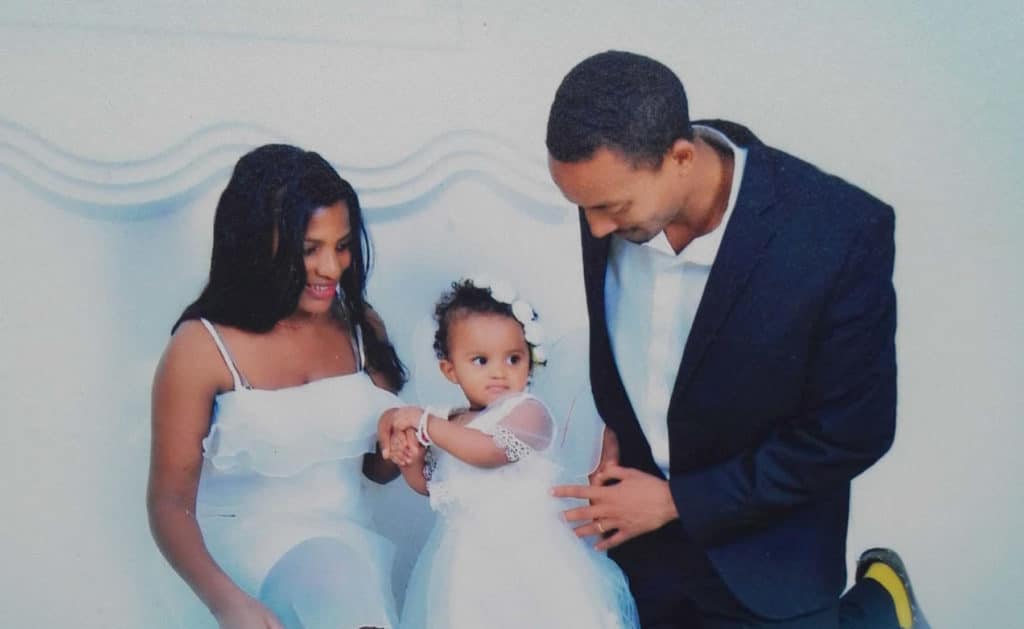
Masresha Dessie and his family were finally approved for immigration after having spent six years in camps in Ethiopia designated for Jews who wish to move to Israel.

Or so they were told.

“In 2004, all of our family members were invited to make aliyah [immigrate to Israel]. We had vaccinations and carried out all the needed procedures, but 10 hours before the flight, we were told that we didn’t have approval from Jerusalem. They told us to wait a week,” he told The Media Line.

That week turned into another 15 years’ wait. Dessie, today a young physician, immigrated on March 27, 2019, together with his mother, brother and sister, some 22 years after first entering the camps.

The Genesis 123 Foundation, an organization that seeks to build bridges between Jews and Christians, is launching the latest interfaith initiative on Wednesday to help Ethiopian Jews like Dessie immigrate to Israel and assist them once they arrive.

“Aliyah in general is a realization of prophecy, that Jews were going to be dispersed but eventually come home,” Genesis 123 Foundation’s president, Jonathan Feldstein, told The Media Line. “The fact that they’re black Jews … makes it exotic and a different touch point through which people can connect, particularly black Christians.”

While the Genesis 123 initiative is new, Christians and Jews have been working for years to bring Ethiopian Jewry to Israel.

One such Christian-Jewish partnership bore fruit on Friday, as 302 Ethiopian Jews sponsored by the Jewish Agency and the International Christian Embassy Jerusalem (ICEJ) arrived at Ben-Gurion Airport, despite the near-total closure of Israel’s main international entry point in an effort to keep out COVID-19 variants.

David Parsons, president and senior spokesman of ICEJ, explained why it was important for his organization to assist in the process.

“There is the whole humanitarian aspect of being reunited with their families here in Israel,” he told The Media Line. “We think these people have proven their desire to not only be here with their families but to be a part of Israel and a part of the Jewish people.”

There are approximately 14,000 Jews left in Ethiopia, of whom about 57% are the descendants of Jews who were converted, often forcibly, known as Falash Mura. Israel’s Chief Rabbinate does not consider the latter group Jewish but most are considered eligible for aliyah by the Israeli government. Still, the government has generally made it challenging for them to immigrate.

Many have been waiting in camps in rural Gondar Province or in Ethiopia’s capital Addis Ababa, some for over 20 years, for the Israeli government to approve their arrival.

The majority of Ethiopian Israelis are members of the Beta Israel community, who are considered to be Jews under most Orthodox interpretations. Many came to Israel in the 1980s and 1990s in Operations Moses and Solomon.

Delie Hailu, who immigrated to Israel in 2011 with his wife after waiting 12 years in Gondar camp, left behind his mother, two sisters and three brothers. While Hailu’s late father was Beta Israel, his mother is not and as such, they could not come to Israel.
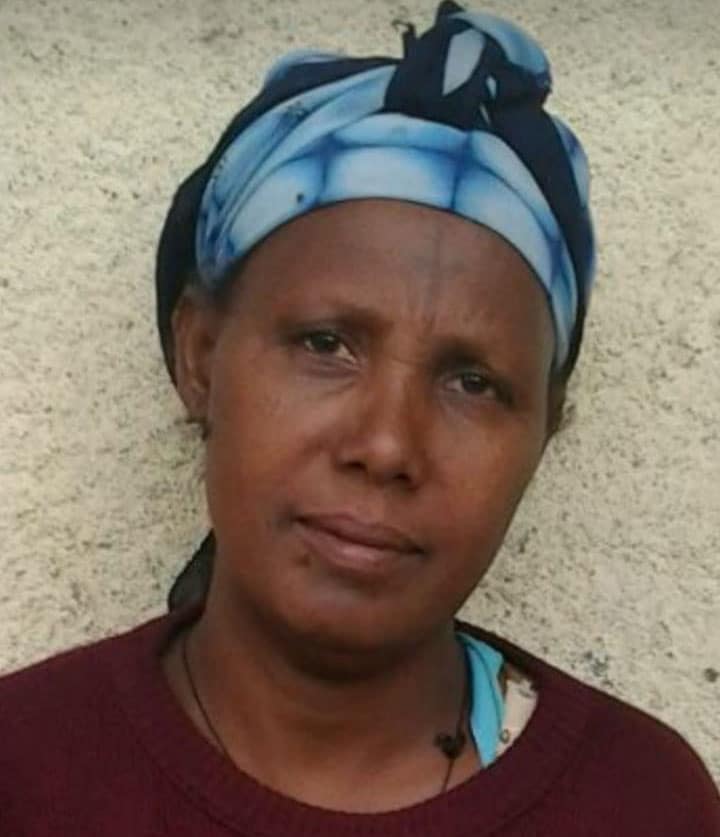
Delie Hailu’s mother, Awagash Tegegn (Courtesy)

He has tried everything he can to bring them to Israel, without success; like many Ethiopian Israelis, he is upset by what he says is the government’s ambivalence, at best, toward allowing the rest of the community to come on aliyah.

“I have inquired so many times about bringing my family over, but they don’t care,” Hailu told The Media Line. “They think we are liars. There are people in Addis and Gondar that they don’t consider Beta Israel, but they are.”

Life in Israel also presents challenges for Hailu, who helps his family in the camps by sending money he earns as a temporary worker.

“I have married and have two daughters but I don’t keep all the money. I send some to my family, to Ethiopia,” he said. “There is starvation there and a shortage of medicines. Large families are crammed into 3 meter by 3 meter ‘houses.’”

In October 2020, Prime Minister Binyamin Netanyahu tweeted that he had told Ethiopian Prime Minister Abiy Ahmed about an initiative to bring 2,000 Ethiopian Jews on aliyah, the brainchild of Immigration and Absorption Minister Pnina Tamano-Shata, the first Ethiopian Israeli cabinet member.

In 2015, Netanyahu directed the government to bring the rest of the Ethiopian Jews in the camps to Israel by 2020, a directive that was not implemented.

Bruk Woruk, who came to Israel with most of his family 23 years ago, has an uncle still waiting in the camps in Addis, who came to visit the Jewish state a few years ago.

“He met with the prime minister, who promised … that he would bring him to the country, but it hasn’t happened yet,” Woruk told The Media Line through a translator.

His uncle Beyaa Tessa and his wife had two children, one of whom recently died from an infection, aged 8 days. Both Tessa and his wife have relatives in Israel.
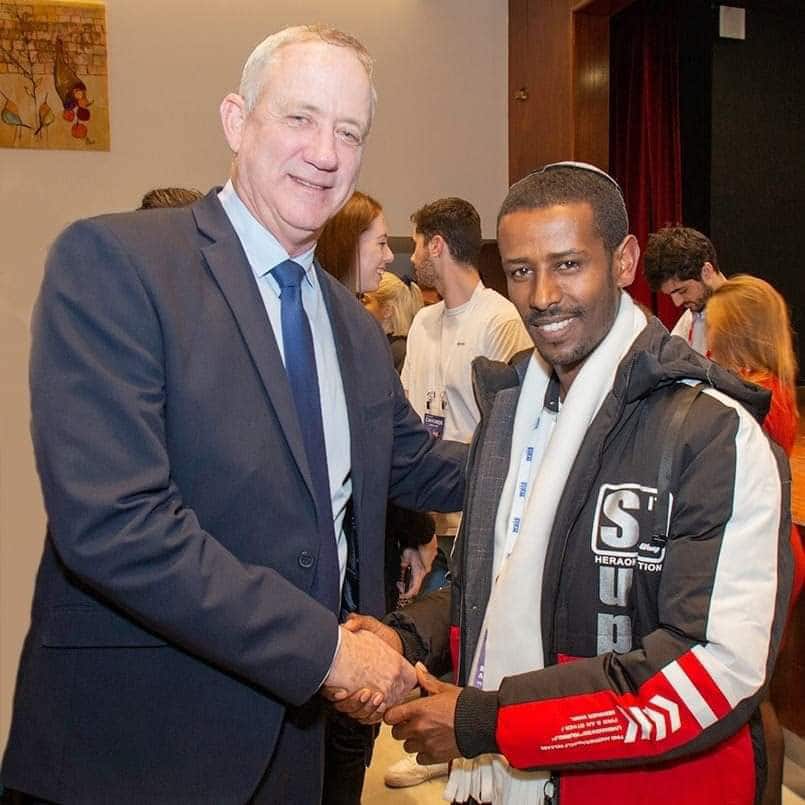
Beyaa Tessa, the uncle of Bruk Woruk, who made aliyah 23 years ago, is still waiting in a camp in Addis Ababa to come to Israel. Tessa is pictured with Israeli Alternate Prime Minister Benny Gantz in this undated photo. (Courtesy)

The government selects who comes to Israel based on criteria such as having family members already in the country, and provides assistance after arrival, usually for around two years.

The Jewish Agency is the primary organization that arranges the flights once Ethiopian Israelis are approved for aliyah and delivers state-funded assistance once they arrive.

Organizations like ICEJ assist the Jewish Agency with its efforts.

“We work with the Israeli social workers on programs that have a little more long-term projection to keep many from falling through the tracks,” Parsons told The Media Line. “We have helped with a lot of absorption projects over the years, including scholarships for students. We’ve helped with a trauma center that helps these immigrants all the way back to the 1980s. … We’ve been giving computers to a lot of Ethiopian students in grade school who need to learn remotely.”

Feldstein said schooling is where Ethiopian Israeli immigrants require the most assistance.

“If you ask me, the greatest needs are in education from elementary through university,” he said. “That’s a critical stage to give them the tools to be successful, to be productive members of society.”

It is also vital to help Ethiopian Jews in the camps, where they live in destitution, he said.

“There is sadly a decent amount of malnutrition. Therefore a lot of programs in Ethiopia include free lunch so at least kids can come receive a hot and nutritious meal,” Feldstein said.

Dessie described life in the camps:

“It was quite challenging; sometimes we didn’t have anything to eat,” he told The Media Line, having spent three years in Gondar and 19 years in the Addis camps. “Even at the starting point, we were not accepted into governmental schools in Ethiopia, because we were supposed to be Israelis.”

The doctor faced many trials in getting to Israel.

After first being told he would be allowed to immigrate with his family in 2004, he was again approached 15 years later about aliyah. However, in the interlude, he had married and had a child.

“When I explained that I have new family members, they said that ‘we don’t recognize [eligibility] like this.’ They said I could either immigrate to Israel or go my own way,” he said.

“My mother was separated from her parents for more than 16 years. If I didn’t make aliyah, none of the family would make aliyah and my mother would suffer,” Dessie added.

He was forced to leave his wife, Beza, and his 3-year-old daughter Yan behind.

Dessie blames bias against Ethiopians for the separation and his 22-year wait.

“For my [ulpan] course, I went to Beit Canada in Ashdod and … in the class we were talking about issues related to the aliyah process. The people from other countries could fly to Israel whenever they wanted and they could apply without waiting,” Dessie said. “We don’t have these rights in Ethiopia.

“We had our own houses, our own land where we were born; we had had a whole life,” he added. “We left this in order to make aliyah, in order to be with our brothers in Israel.

“There are people whom I lived and studied with and who waited like us for over 20 years, and they’re still waiting,” Dessie said.

Gene Rubel, who has been involved in Ethiopian aliyah for years and ran an organization that was performing medical screening of Jews in Gondar before they came to Israel, agrees that racism is to blame for the delay in bringing Ethiopian Jews to Israel.

“For some reason, when we have the tremendous need to get new citizens from France or England or Scandinavia or America, they’re great, but when we want to Jews from Ethiopia somehow they’re not so desirable,” he told The Media Line. “From my perspective, it’s racism at its worst and classism, and it’s terrible.

“The argument is that it costs too much money. Well, it didn’t cost too much money when new citizens were coming from Tunisia and Morocco in 1948,” Rubel said. “Israel has plenty of money and it’s a national scandal that this is happening.”

Dessie is now awaiting the results of his medical licensing exam, after which he plans to start on his specialization in cardiac surgery at Shaare Zedek Medical Center in Jerusalem.

“We suffered a lot from this. We don’t have any medical treatments there [in the camps]. I wanted to be a medical doctor to help my community,” he said.

Ethiopians Immigrating to Israel Face Many Obstacles Read More »
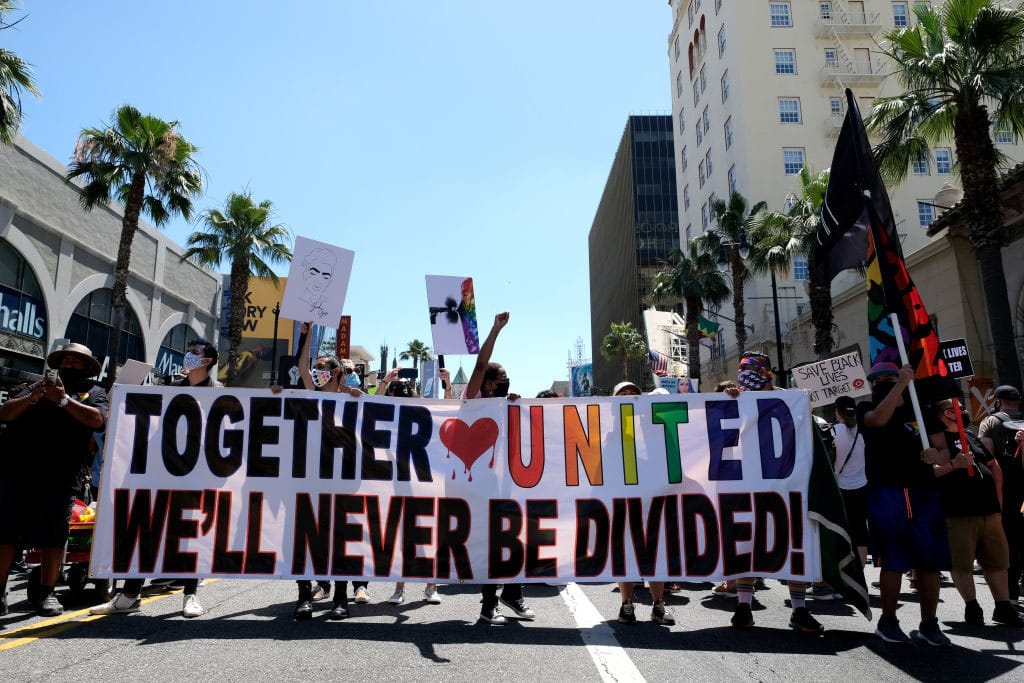
The Jewish Crusade Against Racial Injustice

This Thursday night, the World Values Network will be hosting our annual gala dedicated to Black-Jewish friendship. Unfortunately, the gala is being attacked by people on the left, who say that Jews don’t care enough about racial injustice, and those on the right, who are saying that Black Lives Matter unfairly attacks Israel.

But Black-Jewish relations is not something new to me. It’s something I’ve been passionate about my whole life. By now, nearly everyone knows that I have been close friends with Senator Cory Booker for nearly a quarter century and that our disagreement over the Iran nuclear agreement harmed our relationship. It was only something as serious as the threat of genocide that could come between us.

My friendship with Cory, going back to when he served as my student president in Oxford in 1993, was distinguished by our efforts to rise above our respective identities and experience the other’s community. For Cory, that meant learning thousands of hours of Torah with me and visiting synagogues throughout the United States. For me, it meant immersing myself in the history of the civil rights movement and speaking at African American churches, culminating in my becoming the first white radio personality to serve as morning host on America’s legacy African American radio station, WWRL 1600AM. Peter Noel, my co-host, became and remains a brother to me.

There are those who say that Blacks and Jews never really had a deep and abiding kinship. Battling against the mutual enemy of prejudice and working toward the shared goals of equality and integration, they say, was a relationship of convenience that was further augmented by Jews’ need to feel better about themselves in relation to other whites, and by Blacks’ need for allies of any stripe in their struggle for civil rights.

I disagree. Black-Jewish brotherhood was built historically on shared faith rather than shared oppression, a common destiny rather than a common history, shared values rather than shared interests and a mutual commitment to social justice rather than being mutually alienated from the mainstream.

Black-Jewish brotherhood was built historically on shared faith rather than shared oppression.

The central pillar of the Black community has always been its faith. The civil rights movement, far from simply being a political response to injustice and oppression, was a religious movement, conceived in churches, led by ministers and marched to the sounds of spirituals.

The soldiers of the civil rights movement were fueled by faith and sustained by sacrifice. That is the secret of why they succeeded. Other liberation movements either succumbed to the battling egos of their leaders or simply replaced one form of oppression with another: Czar Nicholas with Lenin and Stalin, Batista with Fidel Castro, white-ruled Rhodesia for Mugabe-controlled Zimbabwe.

But the leaders of the civil rights movement, being men of deep faith and spiritual conviction, put the interest of the people before their own lust for power. Walter Abernathy and Fred Shuttlesworth could easily have begrudged Martin Luther King Jr. his high profile; King could have wanted more for himself than to die on a lonely balcony in Memphis. But since their objective was to lead God’s children into a promised land of equal rights and human dignity, they put their people before their egos and placed reconciliation ahead of divisiveness.

The chains of slavery that bound Jews in ancient Egypt and Blacks in the New World may have imprisoned our bodies but liberated our spirits. Those chains taught Jews and Blacks, above all else, to rely on God for their salvation rather than on any professed human liberator, be he as righteous as Moses or as sacrificial as Lincoln. Both became nations to whom faith was endemic and sustaining.

For most people, religion teaches them how to gain entry into the afterlife, how to avoid hell. For Blacks and Jews, religion taught them to find hope and comfort in this life so that their earthly existence could transcend hell. Other religions kept the faithful oppressed by instructing them in the divine right of kings. But Jews and Blacks taught that no man was born subject to another, for all men were princes.

Other people’s religion taught them to accept their suffering in this world because the comforts of paradise would more than compensate. But the faith of Jews and Blacks inspired them to challenge existing prejudice because man was not born to suffer. Man dare not await the paradise of Eden. His highest obligation is to create heaven on earth.

Almost a millennium ago, the foremost Jewish scholar of the age, Maimonides, wrote that “the Jewish people are believers, the children of believers.” The same idea was given expression by Elie Wiesel, who said: “A Jew can love God. A Jew can hate God. But a Jew can never ignore God.” In modern times the only other nation that fits that criteria is the African American community.

As a Jew, my attachment to King’s speeches is not only connected to the injustice of segregation, to which I was thankfully never subject, and largely to do with a modern preacher who brought the ancient Hebrew prophets to life. While studying at yeshiva, I related to Isaiah, Jeremiah and Micah as characters in a book. But through King, I related to them as living figures who emboldened and animated the opponents of injustice. Like Moses, King never reached the promised land but found redemption in a life of service over adventure, righteousness over recognition.

Blacks and Jews have imparted to the world the idea of being free on the inside even if chained on the outside, the belief that light will always triumph over darkness, the need for humans to dedicate themselves toward the eradication of all suffering and the centrality of God to the dignity of the human person. Both Blacks and Jews have taught the world that with liberty comes responsibility, and with freedom comes obligations.

This is a legacy that this coming Thursday night we will celebrate, however much we are attacked for it from the left and the right.


Rabbi Shmuley Boteach, whom the Washington Post calls “the most famous Rabbi in America,” is founder of the World Values Network and the international best-selling author of 30 books, including “Judaism for Everyone.” Follow him on Twitter and Facebook @RabbiShmuley. The Champions of Jewish Values Gala can be attended or watched at www.theworldgala.com.

The Jewish Crusade Against Racial Injustice Read More »

The Enduring Story of Esther in America

For Jonathan Kirsch’s book review of Rabbi Stuart Halpern’s “Esther in America,” click here.

Before masking and social distancing came to America, they dwelled in ancient Shushan. As the megillah of Esther recounts, the Jews in the kingdom of King Ahasuerus were both part of and apart from the wider society. They were active and contributing residents of the public square who nonetheless lived at constant risk of prejudice and antagonism by those who were unaccepting of their unique beliefs and practices. With their Jewish identities partially obscured, Queen Esther and her cousin Mordecai had to navigate a path of connection to their fellow citizens amidst a fraught and dangerous time.

Although, of course, the Jews in the time of Esther faced a different kind of annihilation — not from an unseen virus but from Ahasuerus’ advisor Haman’s genocidal intent — the tensions that Mordecai and Esther withstood are not unlike our own. Their story of courageously saving their people by taking pride in their identity while remaining loyal to their country has long inspired Jewish Americans and the United States as a whole.

Americans have long found in Esther a model for how to navigate questions of recognition and pluralism. Roger Williams, the seventeenth-century Puritan minister and founder of Rhode Island, saw in Ahasuerus’ eventual tolerance of Jews as a model of religious freedom that should be replicated in America. “Liberty of conscience” was a principle which Williams himself helped popularize.

And in 1825, Mordecai Manuel Noah tried, like the biblical Mordecai, to ensure the survival and flourishing of his people. A proud American, a renowned playwright, sheriff and one-time U.S. ambassador, Manuel Noah believed that a secure Jewish people would benefit the American project. He therefore purchased Grand Island in upstate New York, hoping that it would serve as a homeland to the Jews and a means of ensuring their protection from anti-Semitism. From this homeland-in-exile, the Jews could contribute to the economic, religious and societal development of their fellow citizens. Noah’s plan did not come to fruition, despite an elaborate ceremonial launch and a public campaign. Yet his struggle to ensure the protection of his people in an era in which dwelling securely in the land of Israel was not an option mirrors that of his ancient namesake. Both Mordecais felt a responsibility to balance national and tribal loyalties while living in the diaspora, believing firmly that one loyalty enhanced the other.

In the early twentieth century, Esther again served as a prism for Jewish acceptance. As the LA Times reported in 1915, at the largest open-air event of its kind in Selig (now Luna) Park in Los Angeles, a cast of over 100 presented the “Pageant of the World’s Birth,” a dramatic spectacle depicting six biblical scenes, including “Queen Esther in her glory,” organized by the Roosevelt Auxiliary to benefit United Spanish War Veterans.

In response to the launch of the Miss America beauty pageants founded in Atlantic City in 1921, Jews launched high-profile “Queen Esther” contests, sponsored by the Jewish National Workers’ Alliance to celebrate Jewish beauty. Thus, on Purim in 1933, Katherine Spector was crowned “Prettiest U.S. Jewess” in front of 22,000 people in Manhattan’s Madison Square Garden. These initiatives, an amalgam of civic pride, self-preservation and tolerance, were yet another echo of Esther.

The modern era continues to see deep interest in the heroes, and even minor characters, of the Purim story. Books like “The Cry of Mordecai: Awakening An Esther Generation in a Haman Age” by the evangelical leader Bishop Robert Stearns sit alongside renowned Jewish educator Dr. Erica Brown’s “Esther: Power, Fate, and Fragility in Exile.” They join the recent children’s book “Queen Vashti’s Comfy Pants” and the novel “The Book of V,” both of which portray Vashti, the queen who Ahasuerus deposed before he married Esther, as an early feminist heroine. Gal Gadot’s portrayal of Wonder Woman has drawn comparisons to Esther in her navigation of questions of identity and belonging.

The modern era continues to see deep interest in the heroes of the Purim story.

In another year in which we must wear masks on Purim — not as costumes but as protective measures — and in a year in which tensions of religious liberty, anti-Semitism and toleration have been ever-present, we turn, once again, to Esther’s story. In 2021, Esther reminds us that a society can only flourish if it allows others to wear their identities proudly. It reminds us that tribal loyalty can enhance loyalty to one’s home country. And it reminds us that to provide redemption, all it takes is the courageous moral actions of individuals.

Purim Sameach.


Rabbi Dr. Stuart Halpern is the Senior Advisor to the Provost and Senior Program Officer of the Straus Center for Torah and Western Thought at Yeshiva University, and the editor of “Esther in America” (Maggid Books)

The Enduring Story of Esther in America Read More »