
fbpx

February 11, 2021

How Jewish Constituents of Greene and Boebert Describe Their Congresswomen

(JTA) — About a year after the Pittsburgh synagogue shooting, a white supremacist in western Colorado plotted to attack another Jewish congregation.

The FBI arrested the white supremacist in November 2019 and his plans never came to fruition. He pleaded guilty to the charges against him in October.

One month after that guilty plea, the president of the synagogue voted for a congressional candidate whose policies he believed would help protect the local Jewish community: Lauren Boebert, the freshman Republican representative.

Boebert, a restaurant owner and gun-rights enthusiast, has made headlines for the kind words she’s offered about QAnon, the pro-Donald Trump conspiracy theory with anti-Semitic overtones.

But the synagogue leader, Michael Atlas-Acuna, does not believe Boebert is an anti-Semite. He says she’s “spunky,” and he hasn’t read much about her statements on QAnon. Atlas-Acuna feels pro-gun policies will help protect his synagogue from future would-be attackers. His synagogue, Temple Emanuel of Pueblo, has several members who come to services carrying weapons.

“I believe in the right to carry a firearm,” said Atlas-Acuna, who does not personally carry a weapon to synagogue. “And I like the idea that we have members that are responsible, that carry. I pity anybody who ever came through that door because they would be real surprised.

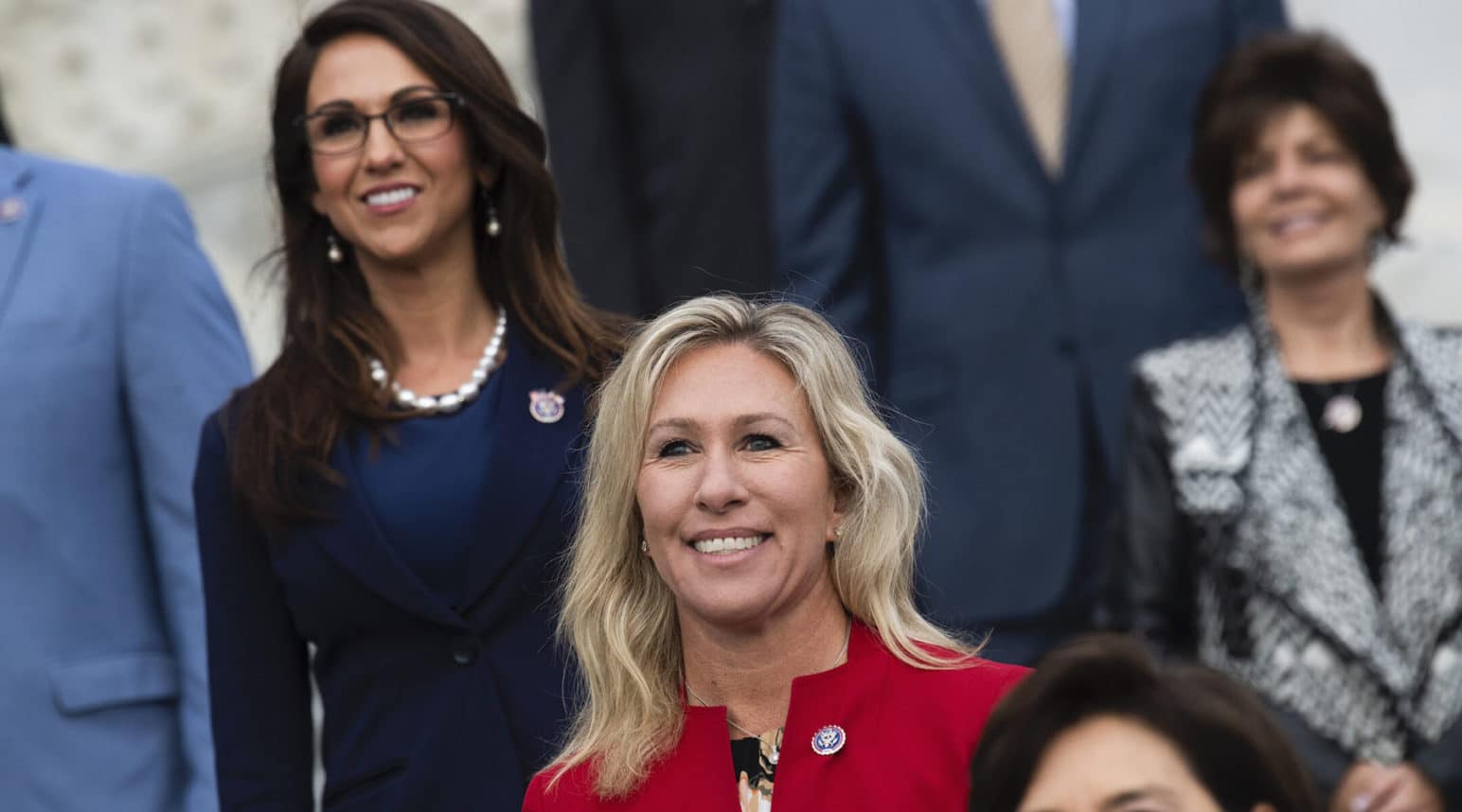
Atlas-Acuna is one of the relatively few Jews who lives in one of the two congressional districts being represented now by those who have praised or affiliated with QAnon in recent years. The other district, in northwest Georgia, is represented by Marjorie Taylor Greene, who has also shared explicitly anti-Semitic and Islamophobic stereotypes on social media, in addition to echoing a range of conspiracy theories.

Greene’s social media posts led to an unprecedented vote in Congress last week to strip her of her committee assignments. Boebert, who has said that she does not personally support QAnon, has not faced the same degree of backlash.

Some Jews in both districts, like Atlas-Acuna, continue to support their congresswomen and said they were more worried about anti-Semitism on the left.

Other Jews in both districts — which are geographically distant and quite different from one another — told the Jewish Telegraphic Agency that the two lawmakers scare them. According to a 2014 study, Greene’s district has only a couple hundred Jews, while Boebert’s has some 2,000.

Jews in the districts said that they did not feel like they live in anti-Semitic areas and doubted that anti-Semitism drove their neighbors to vote for Greene or Boebert. Rather some feared that Boebert and Greene signify a broader threat that exists across the country.

“She just has hateful rhetoric,” said Shelly Peller of Rome, which sits in Greene’s district. “She is propagating a false narrative. And she’s dangerous. It’s particularly hurtful that there are anti-Semitic comments. But I can’t say that those were the worst comments that she made.”

Temple Emanuel in Pueblo, Colo., was targeted in a bombing plot by a white supremacist whose plans never came to fruition. (Screenshot from Google Maps Street View)

Peller believes that Greene won the general election simply because she’s a Republican. Her district, in Georgia’s northwest corner, hasn’t been represented by a Democrat for decades. So Greene’s string of posts questioning a school shooting or the veracity of 9/11, or endorsing calls for Democratic officials to be murdered, did not prevent her from victory in November, when she ran unopposed after her Democratic opponent dropped out.

In a recent speech on the House floor, Greene said that she no longer supports QAnon, that “school shootings are absolutely real” and that “9/11 absolutely happened.”

“It’s not that we feel that we live in a hate-filled, anti-Semitic district,” Peller said. “People are going to vote on single issues, whether it’s gun rights, whether it’s abortion.”

Following reports of a post that Greene wrote in 2018 blaming California wildfires on lasers from space controlled in part by the Rothschild family, Peller’s synagogue, the Reform Rodeph Sholom Congregation in Rome, put out a statement condemning anti-Semitism by elected officials. The statement did not name Greene specifically, so that it could apply to bigoted rhetoric more broadly. It’s the only synagogue in Greene’s district.

“It is especially heinous when any elected official singles out a specific group and engages in false narratives regarding them,” the statement said.

Beyond that, members of Rodeph Sholom don’t plan to speak out as a community. Some worry that extended coverage of Greene’s statements will end up bolstering her profile and influence.

“All of the negative publicity that she’s getting, she’s using it, she’s milking it,” said Anne Lewinson, who also lives in Greene’s district and is a member of Rodeph Sholom. “She can play into the narrative of, oh, the poor, oppressed, conservative, [saying,] oh, look at how people, how the media is picking on her. And she’s milking it as a way to get more money, to get tons of support.”

Jewish residents of Greene’s district also believe it is a mistake to focus on her specifically, as opposed to the broader national constituency to which she belongs. Millions of Americans support QAnon, while substantial minorities have embraced other conspiracy theories.

“For me it is distressing, it’s anxiety provoking and it’s actually scary because I don’t think that she is a single entity,” said Peller’s husband, Jeff. “I think that there’s good reason to believe that there’s some additional number of people out there who share these feelings. And for what it’s worth, when a person espouses some conspiracy theory, they’re not making it up themselves.”

The Pellers are now asking themselves if residents of their district have been drawn in by QAnon and anti-Semitic conspiracies, though they said there were many kind people there who believe in inclusion and multiculturalism. Shelly Peller said that in the wake of reports on Greene, Christian friends have reached out to see how she’s doing.

But Rodeph Sholom has been attacked by anti-Semites before, and in recent years a white supremacist group posted anti-Semitic flyers on the building. Synagogue leaders were reluctant to share a photo of the building for this article because they did not want to expose its address and identifying features to hate groups.

“When we live our lives here on a day-by-day basis, we have not been experiencing any hateful, negative experiences” Jeff Peller said, adding however that the support Greene has garnered “makes us wonder.”

“But we don’t have any proof of what people are feeling. And it is very peculiar,” he said.

Rabbi Emily Segal of the Aspen Jewish Congregation, in Boebert’s district, is similarly unsure how much Boebert’s voters know about or identify with her QAnon comments.

Segal wonders “whether her beliefs are reflective of half or more than half of the people who voted, or whether those beliefs aren’t reflective of the voters, but voters believe she would do the best job and were willing to accept those beliefs.”

Boebert won comfortably in November in a district that has been represented in the House of Representatives by a Republican for more than a decade. Segal said some of her members are particularly concerned that Boebert doesn’t support public health policies designed to reduce COVID-19 cases.

Western Colorado is more diverse politically than northwest Georgia. Most of the Aspen synagogue’s members grew up outside of the region, and about one-third or one-half live in the ski town seasonally. Segal said the same is true of other resort areas that dot the region, though she noted that people who actually work in the service industries tied to the resorts tend to have lower incomes and live there full-time.

But as in Greene’s district, Boebert’s Jewish constituents said that anti-Semitism is far less common than unfamiliarity with Jews and Jewish practice.

“Most of the people in this area have never met a Jew,” said Lesley, a local Jew who declined to give her last name because she was concerned for her privacy. “They know nothing about Judaism, so when they do meet you, they don’t know what to say. There’s not any overt anti-Semitism in this area.”

Atlas-Acuna also feels comfortable as a Jew in the district, and said he’s “not concerned at all about Lauren Boebert.” Instead, like most Republican Jews, he’s worried about anti-Semitism on the other side of the political spectrum. He mentioned two advocates of boycotting Israel, Reps. Ilhan Omar and Rashida Tlaib, as well as Alexandria Ocasio-Cortez, the New York congresswoman who is their ideological ally but has not advocated an Israel boycott.

“I’m more concerned about the left-wing piece of the Democratic Party, the anti-Semites that we have in Congress today on the left side,” Atlas-Acuna said. “[Ilhan] Omar, AOC and [Rashida Tlaib] to me are the problem, not somebody who carries a gun.”

Ira Levy, who lives in northwest Georgia, feels the same way. He wouldn’t say who he voted for, but believes Greene should be given a chance now that she’s in Congress and should not be disqualified by statements made years ago. He also thinks people need to pay more attention to anti-Semitism on the left.

“She apologized for what she said, it’s in the past and she’s looking to make a new start,” Levy said, adding that he doesn’t believe in “singling her out when there’s plenty of other people that have said a lot worse things than what she said.”

Lewinson, who said Greene is “supporting wackadoodle ideas” and is “horrific,” said she isn’t sure whether Greene recognized that the conspiracy theories she was amplifying were anti-Semitic.

“I think we probably have no real information on what she actually thinks about Jewish people,” she said.

Likewise, Lewinson assumes that some portion of her district believes in conspiracy theories about George Soros and the Rothschild family, but might not know that they’re echoing age-old anti-Jewish rhetoric.

“I think it’s something where you have to actually have a way to sit down with them and explain to them here’s why what you’re saying is actually perpetuating negative attitudes and negative ideas about Jewish people,” Lewinson said. “They would not particularly realize or put together the fact that when you start talking about financiers and throw in Jewish names, that what you’re doing is anti-Semitic.”

Jewish leaders in both districts have not reached out to their new representatives on behalf of their communities, according to Segal and Nancy Brant, the president of Rodeph Sholom. Brant said she’s not interested in meeting Greene because “I don’t believe anything she says.”

“Even if we were to reach out to her, what we would get is something she would be coached into saying,” said Brant, who does not live in the district and said she was speaking in a personal capacity. “I don’t think any of us in the temple have any desire to engage with her in any capacity.”

But Shelly Peller is worried that Greene is the vanguard of a conspiratorial and bigoted movement that will only grow. The highest priority, she said, should be defeating Greene in 2022. But she’s under no illusion that Greene is alone.

“She was one of two voted in on this round,” Peller said, referring to Greene and Boebert. “But what’s going to happen the next round? Is this a movement that we’re going to see in our country? And that’s the scary part.”

How Jewish Constituents of Greene and Boebert Describe Their Congresswomen Read More »

UCI Student Senate Passes BDS Resolution

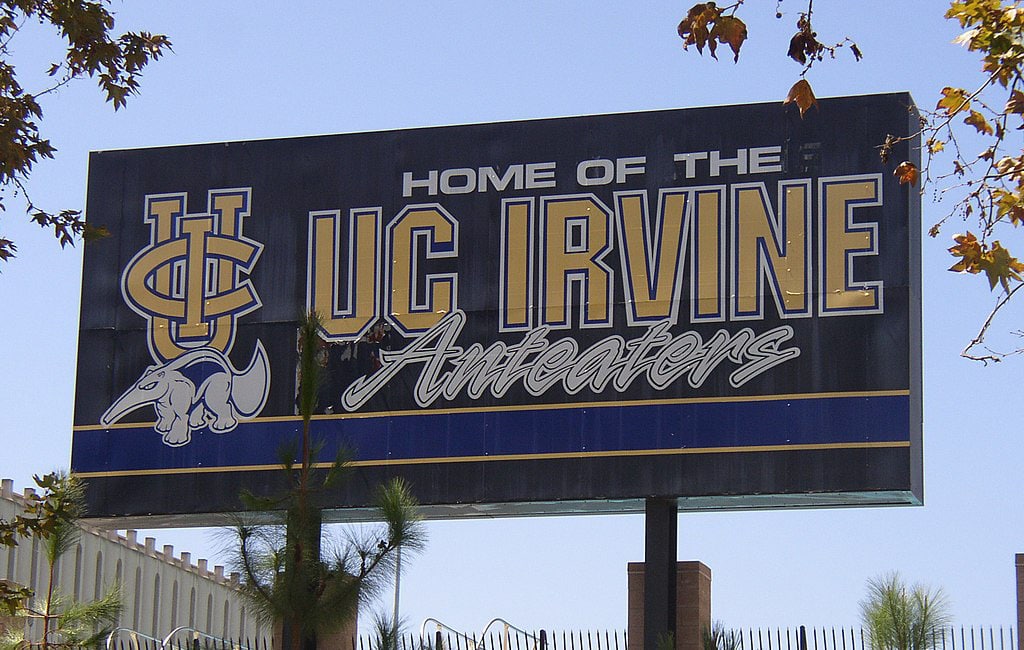
The UC Irvine student senate passed a resolution on February 9 calling on the university to divest from companies that conduct business with Israel.

The Jerusalem Post reported that the resolution passed by a 19-3 margin. The resolution does acknowledge and condemn rising anti-Semitism, but it claims that there’s a difference between denouncing “Israeli apartheid” and Jewish history in the country. The resolution also accuses Israel of terrorizing Palestinians and alleged that the Likud Party spied on Arab voters in 2019 as a means of suppression.

Jewish groups condemned the resolution’s passage. “You can’t just SAY that the antisemitic thing that you’re doing isn’t antisemitic. That isn’t how this works,” the American Jewish Committee tweeted. “@ASUCI passed a BDS bill last night claiming BDS is ‘in no way related to Judaism.’ 80% of American Jews disagree. An appalling display of ignorance, @UCIrvine.”

StandWithUs co-founder and CEO Roz Rothstein said in a statement, “We are proud of the students who stood up to this campaign of hate. It is shameful that the Senate passed a resolution with such hateful and misleading language. This does nothing to help Israelis or Palestinians, and will only deepen divisions and hostility against Jewish students on campus.”

AMCHA Initiative Director Tammi Rossman-Benjamin also said in a statement to the Journal, “While BDS resolutions carry zero weight, members of anti-Zionist student groups like SJP seize these student government opportunities to spew anti-Zionism on campus and marginalize and silence all pro-Israel voices, largely Jewish students who are repeatedly the casualties, long after the resolutions are over. It’s important to note that this resolution stresses it is all about Israel and ‘no way related to Judaism.’ This trend of decoupling Judaism from Zionism and undermining the global acceptance of anti-Zionism as a form of anti-Semitism is extremely dangerous and one that we’ve seen really pick up over the past two years. The goal is to mask anti-Zionism as political speech. However, we all know that you can’t uncouple the two, and once resolutions are introduced or professors spew anti-Zionism, swastikas appear, assaults happen, and Jewish students are targeted, alienated and ostracized.”

Jack Saltzberg, president and founder of The Israel Group, similarly said in a statement to the Journal, “Of course this divestment from Israel is related to Judaism! When UC Irvine (and all other schools) begins to divest from human rights-violating countries such as Saudi Arabia, China, Sudan, et al. — and not only against the single Jewish country in the world — then we’ll consider that ‘no way is it related to Judaism.’”

Johannah Sohn, executive director of The Hillel Foundation Orange County, said in a statement to the Journal that they were “disheartened” about the BDS resolution’s passage. “Many of the clauses in the statement are factually misleading, deliberately taken out of context and reduce important historical and political debates to binaries,” she said. “We were further dismayed that participants used antisemitic tropes and canards in discussing the world’s only Jewish state and the Jewish people. [Orange County] Hillel is committed to developing programs that share a broader understanding of Israel’s history, culture and people and engaging the UCI campus community in constructive dialogue.”

Jewish Twitter users also denounced the resolution’s passage.

“As an Israeli, I can tell you that BDS [Boycott, Divestment and Sanctions] votes on college campuses have no effect on me,” Israel-based writer Hen Mazzig tweeted. “BDS does effect Jewish students, who are always accused of dual loyalty, policed for their connection to the holiest sites in their culture, and separated into ‘good’ & ‘bad’ Jews.”

Blake Flayton, an avowed progressive Zionist student at George Washington University, similarly tweeted that BDS resolutions often have nothing to do with the Israeli-Palestinain conflict. “What’s important is screaming at the top of your lungs that Israel is an apartheid state killing Palestinian children and corrupting institutions all over the world. Proponents employ the antisemite’s triangle: blood, money, and conspiracy.”

He added that Israel is constantly singled out and scapegoated for the world’s ills on college campuses. “Jewish college students can no longer be afraid to call this virus what it is. It’s not normal to be attacked, by so-called liberal people, for your culture and identity. It’s not normal to feel ashamed of your people. Stand up for yourself. Because nobody else will.”

Judea Pearl, chancellor professor of computer science at UCLA, National Academy of Sciences member and Daniel Pearl Foundation president, also tweeted, “The problem is not in *passing* such resolutions; they cause irreparable damage even when defeated, poisoning gullible students with fabricated anti-Israel accusations. The question is why we do not hear of counter-resolutions, exposing the racist character of the fabricators.”


Sheri Ledbetter, UC Irvine’s communications officer, said in a statement to the Journal, “As one of the world’s top research universities, UCI encourages the lively exchange of ideas from diverse voices, cultures and backgrounds. The resolution passed last night by an independent student government group, which cites the Israeli-Palestinian conflict and calls for the elimination of certain investments, has no impact on UCI’s operations, does not reflect the university’s views, and is not aligned with the investment policies of the University of California.”

While the resolution was being debated on Zoom, there were messages in the chat accusing Israelis of ethnic cleansing, creating an ethnostate and painting “the swastikas on yourselves to play the victim,” according to a screenshot sent to the Journal.

Courtesy Hen Mazzig

UCI Student Senate Passes BDS Resolution Read More »

New Picture Book Tells the Mysterious Tale of Talmud-Era Rabbi

In 2009, Mitch Pilcer was doing construction on his bed-and-breakfast in Tzippori, an ancient city in the Lower Galilee in Israel, when he stumbled upon tombs. One of the tombs was inscribed with the words “Here is the tomb of Rabbi Yehoshua Ben Levi.”

Pilcer was intrigued, and he soon learned Rabbi Ben Levi’s fascinating story. He was part of the first generation of Amoraim, the sages who interpreted the Mishnah after Rabbi Judah ha-Nassi put it together and edited it. Also known as the Ribal, Ben Levi would learn Torah with the Prophet Elijah and speak with the souls of prior sages who had passed on. When an infectious disease struck his town and people were avoiding the sick, the Ribal visited them and taught them Torah because he believed it was the best cure for their ailments. He also wrestled with the Angel of Death and came out victorious, and when he died, he went into the afterlife while he was still alive.

Now Pilcer, in collaboration with renowned artist Avi Katz, has released a new picture book titled “The Legend of Rabbi Ben Levi.” It contains Katz’s original mosaic paintings, which are accompanied by a poem about the Ribal’s encounter with the Angel of Death, written by nineteenth-century American poet Henry Wadsworth Longfellow, and quotations from the original Aramaic Talmud text.

(R) Mitch Pilcer (Courtesy Mitch Pilcer)

“The whole adventure of the rabbi and the Angel of Death occurred because of the plague of Tzippori 1,750 years ago,” said Pilcer in an interview with the Journal. “When you read this story in the Talmud, the sages are talking about what you can do to avoid the plague, which is relevant to today. One rabbi says you can’t be in the same village [as the infected] or get fruits and vegetables from them. They even give you this Talmudic recipe for medicine to get rid of the plague. Then you get to Rabbi Ben Levi, and he says he meets the people who have the plague and teaches them Torah because it protects them.”

Pilcer, who is an artist, wanted to create a mosaic that showed the epic battle of the rabbi and the Angel of Death. He wasn’t happy with his sketches, so he contacted Katz, whom Pilcer said is “the best illustrator in Israel.” The two worked together on the mosaic, and afterwards, Pilcer found the poem by Longfellow in The Atlantic, a publication that the poet had co-founded.

“Avi understood the potential right away,” said Pilcer. “It was perfect for a picture book, and he started doing the drawings. The poem is naturally divided into 12 stanzas, so Avi made an illustration of each. We then brought it to a publisher, Geffen, and they were excited about it right away.”

“The Legend of Rabbi Ben Levi” is marketed as an art book and a children’s book. When people visit Pilcer’s bed-and-breakfast, which is called Zippori Village Country Cottages, they can give a donation of 50 shekels, or $14, and receive the book in return. “I sell a lot of copies of the book here, because one of the traditions when you visit a holy site is to give charity,” he said.

When Pilcer, who made aliyah from New York in 1978, discovered the tombs, he went through a long legal battle with the Israel Antiquities Authority to keep it on his property. He said they wanted to put it in a museum, but he argued that they couldn’t disturb a grave for no reason. If that precedent was set, what would stop them from taking anyone’s grave and putting it wherever they wanted?

“We understood at the beginning that it was a special place, and we would do everything we could to protect it,” he said.

Today, people can stop by Pilcer’s bed-and-breakfast and see the rabbi’s tomb for free. He keeps it open at all times, and sometimes visitors come in the middle of the night to light candles and leave notes and requests.

Over the last 25 years that Pilcer and his family have lived in Tzippori, he’s felt like the rabbi has been protecting them. “We thought we would watch over him, and he’d watch over us,” he said. “Thank G-d we’re happy and we make a good parnassah, whether it’s from hard work or whether it’s from someone who is watching over us and helping us.”


Kylie Ora Lobell is a writer for the Jewish Journal of Los Angeles, The Forward, Tablet Magazine, Aish, and Chabad.org and the author of the first children’s book for the children of Jewish converts, “Jewish Just Like You.”

New Picture Book Tells the Mysterious Tale of Talmud-Era Rabbi Read More »

What To Do When Israel Is Not The Center Of The World

(Israel Policy Forum) — If there has been an abiding theme to President Biden’s Israel policy so far, it has been that, for good or bad, the road to Washington does not run through Jerusalem. Israel’s centrality was a dominant component of the Trump administration’s foreign policy, whether it was President Trump’s own focus on an Israeli-Palestinian peace agreement and his visit to Israel on his first trip overseas, the touting of pro-Israel positions and policies as a critical component of Trump’s political appeal and that of future candidates such as Mike Pompeo and Nikki Haley, or the elevation of the Abraham Accords as the administration’s signature foreign policy accomplishment. Israel was central to the Obama administration as well but with a very different flavor, manifesting in an early call between President Obama and Prime Minister Olmert but also much effort expended on getting Prime Minister Netanyahu to agree to a temporary settlement freeze, the nearly year-long Kerry peace effort, and the high-level fighting over the JCPOA.

The Biden administration has taken a different tack, and one that appears to be setting Israeli officials on edge. While Tony Blinken, Lloyd Austin, and Jake Sullivan have spoken to their Israeli counterparts, there has been no call yet between Biden and Netanyahu. Biden’s first foreign policy address, given last week at the State Department, did not mention Israel at all. The administration has made it clear that deciding whether and how to reenter the JCPOA is its top Middle East priority, and that it has little interest in brokering Israeli-Palestinian peace. Blinken has confirmed that Biden has no desire to move the embassy from Jerusalem back to Tel Aviv, has been more ambiguous on whether the U.S. will formally rescind its recognition of Israeli sovereignty over the Golan Heights while stating that the U.S. believes that Israel must continue to control the territory for security purposes, and has been silent on settlements despite the Israeli government turning up the volume with recent moves in particularly sensitive areas. The overall effect has been to send the message that Israel is an important ally, but that the U.S. has bigger fish to fry.

The overall effect has been to send the message that Israel is an important ally, but that the U.S. has bigger fish to fry.

This has led to an angst in Israeli political circles that must feel unprecedented for the current iteration of Israeli leaders given how unusual it has been for Israel to be on the backburner in Washington. Netanyahu has been peppered with questions about why Biden has not called yet and issued a statement on the Golan in response to Blinken that recalled confrontational missives from the Obama era but was ignored by the State Department. Recently replaced former Israeli Ambassador to the United Nations Danny Danon went so far as to tweet Netanyahu’s phone number to Biden on Wednesday morning in urging him to give the prime minister a call, though in this case it may be motivated as much by internal Likud jostling during an election season as it is by genuine concern for Israel’s standing with the new American president. For a country that has been accustomed to being the center of attention, being moved down the priority list may be even more jarring than fighting with an administration that is perceived as unfriendly or unsympathetic.

Netanyahu and the Israeli government will have to figure out how to successfully navigate these new waters, but there is another immediate question closer to home, which is how the U.S. itself should approach Israeli-Palestinian policy given this new environment where the issue is generally deprioritized. Hewing to the formulaic shibboleth of calling for the two sides to reengage through negotiations is not only unwise policy but out of sync with what is realistic in the current moment. Instead, what the Biden administration and Congress should do is hone in on the basics of our policy toward Israel, the Palestinians, and the conflict more widely, and how American objectives can be accomplished within a set of broad priorities.

The first is strengthening U.S.-Israel relations and ensuring Israel’s security, both of which have been longstanding hallmarks of our regional policy and that will guide an American approach irrespective of whether Israel is front and center in an administration’s foreign policy. Israeli security is intimately linked to ours, and Israel will be a critical regional security and intelligence partner no matter what else is going on. This means not only supporting Israel’s security directly in the context of a robust U.S.-Israel relationship, from security assistance to safeguarding Israel from one-sided actions in venues such as the International Criminal Court, but also supporting the security of other actors who contribute to regional stability. This includes support for Palestinian Authority Security Forces to ensure security coordination with Israel and the continued viability of the PA in the West Bank rather than risk a Hamas takeover, and support for and coordination with Jordan and Egypt and recognition of the important roles they play in East Jerusalem and Gaza respectively. Whatever disagreements the U.S. has with Israel over its policies with regard to the Palestinians, a strong U.S.-Israel relationship is always going to be an abiding U.S. interest.

Whatever disagreements the U.S. has with Israel over its policies with regard to the Palestinians, a strong U.S.-Israel relationship is always going to be an abiding U.S. interest.

Restoring the U.S. relationship with the Palestinians is another priority in the current environment. That the U.S. is not looking to restart negotiations between the two sides makes this a particularly apt opportunity to reset our approach, since it need not and should not be entirely a function of the Israeli-Palestinian conflict, or nothing more than a corollary to our Israel policy. Resuming humanitarian assistance to the West Bank and Gaza and reestablishing our diplomatic presence to the Palestinians make sense in order to rebuild our ability to influence the Palestinian leadership and give us some positive leverage. The flip side of that coin is that pushing hard on the Palestinians to reform their martyr and prisoner payments system and to reform their basic governance is also important and cannot be waved away. Our relationship with the Palestinians needs to be rebalanced away from the extremes that have sometimes characterized it, where we overlook anything and everything in our desire to get them to negotiate with Israel or we try to bludgeon them into submission.

Ignoring the new formalized regional alignment would be foolhardy, not only because it represents an opportunity to build on a genuine Trump administration success but because supporting Israel’s acceptance in the Middle East has always been an American principle. The Abraham Accords may not be as durable as its crafters intended, but that only provides a reason for the U.S. to encourage further normalization agreements that can withstand pressure and last on their own merits. The U.S. should also follow the path set by the United Arab Emirates in encouraging leveraging the promise of normalization for positive change on the ground; while Abu Dhabi used diplomatic relations as the hook for suspending unilateral West Bank annexation, future agreements can easily take into account measures that will not only benefit Palestinian quality of life but build facts on the ground that encourage momentum toward two states.

This last point is critical, since even without a focus on resolving the Israeli-Palestinian conflict, U.S. policy should be aimed at fostering a more conducive environment for talks on a two-state outcome to one day succeed. Without actual negotiations on the agenda, this means recalibrating expectations on both the Israeli and Palestinian sides about what the U.S. is likely to prioritize and support, making sure both sides refrain from steps—West Bank annexation or unilateral declarations of statehood, for instance—that will send things spiraling out of control, and doing everything possible to arrest deterioration on the ground that erodes freedom, security, and prosperity for both sides rather than enhances it. Biden is neither Trump nor Obama, and that means that it is equally unlikely for there to be a drumbeat of public statements over every announcement of new settlement planning and construction as it is for there to be a greenlight behind the scenes for the Israeli government to do whatever it pleases. It is equally unrealistic to expect the U.S. to withhold all assistance from Palestinians because it wants to abolish the notion of Palestinian refugeehood as it is to expect the U.S. to turn a blind eye to Palestinian attempts to use international law and international institutions to create a sanctions regime on Israel. Not focusing on resolving the Israeli-Palestinian conflict today does not mean ignoring it entirely or trying only to mitigate the daily damage; it means focusing on a smaller set of short and medium term goals that are critical to eventually getting to the long term one.

There will undoubtedly be upsides and downsides for Israel and for the Palestinians to not be at the center of things. Whether or not either side likes it, that is the reality of the situation for the foreseeable future in a Biden White House, and U.S. policy should adapt accordingly to focus on what is important in the current moment.


Michael Koplow is Israel Policy Forum’s policy director, based in Washington, DC. To contact Michael, please email him at mkoplow@ipforum.org.

What To Do When Israel Is Not The Center Of The World Read More »

Satirical Semite: Vaccination Procrastination

Britain is in a tizzy. Brexit was a long divorce process, where Europe tried to hang on to the relationship but within two weeks of the breakup became an angry, jilted lover. The United Kingdom left with a final French kiss and packed up some sauerkrauts from the now-sour krauts. Europe screamed, “I hate you! Don’t leave me! J’adore!” before playing Gloria Gaynor. “Go on now go, walk out ze door!”

Lady Europe was out for revenge. She couldn’t bear us becoming hot, single and ready to mingle. (Maybe “hot” is an exaggeration. It happened amidst an English winter, with its miserable permacloud. We should have taken the Spanish sunshine.)

Our ex, the buxom Madam Europe, tried to lure us back, but we were already flirting with America. We didn’t care if it meant jumping into the White House bed with Trump or Biden, as long as we could rest our head on the pillow for sweet American dreams, enjoy bottomless cups of coffee, plentiful supplies of Coke (or Pepsi) and have a nice place to dunk our donuts.

Meanwhile, back in Europe, Brexit immediately morphed into a disagreement over COVID-19 vaccines. Britain rapidly produced Oxford AstraZeneca vaccines and paid for 3.5 million doses of the Pfizer vaccine from a factory in Belgium several months before the European Union ordered its own supply. European plants were slow in producing the AstraZeneca vaccines and even slower placing orders from Pfizer. The E.U. moved with the speed of an ocean liner compared to Britain’s speedboat, which raced ahead. England isn’t usually this competent.

Patients wait after receiving their Covid-19 jabs at a vaccination centre at Salisbury Cathedral on February 11, 2021 in Salisbury, England. (Photo by Dan Kitwood/Getty Images)

This divergence has poured oil on the bonfire of an ugly divorce. Dr. Peter Liese, a senior member of the European Parliament (MEP) from German Chancellor Angela Merkel’s ruling party, wanted to stop the British-bound vaccine exports from Belgium, threatened Britain with a trade war, and said “the UK better think twice” and that “if we see Europe is not treated well, not by the United States and not by the UK, then we have to show our weapons…you will suffer for this.”

Germany threatening Britain and attempting to control another nation? This was a major factor when many, many residents of Great Britain voted to leave the union. British sovereignty is central to our national identity, and the Germans tried to dominate us twice last century.

The lead up to the Brexit vote in June 2016 was a time of inner conflict. Most of my close friends were “remainers,” voting to stay within the European Union. They saw post-EU Britain becoming an economic wasteland, unable to survive outside of the alliance. Yet Britain’s exit was like a sudden weight loss, a winner of “The Biggest Loser,” shedding the flab of European legislative red tape that demands decisions are made by its 27 member states, a process that takes time, effort and bags full of wasted Euros.

The vote happened, “remainers” lost, and the British message to the mainland was a polite auf widersehn et vaffanculo.

But the only way to prevent the United Kingdom from receiving its vaccines — apart from violating a treaty —  would be to draw a hard border between European member state Eire (the southern half of the country of Ireland) and Northern Ireland, which is part of the United Kingdom. Keeping Ireland borderless was an essential part of the Brexit agreement since many years of Irish border unrest finally ended with the Good Friday Agreement of 1998. For the most part, peace reigns, and every day since then has been St. Patrick’s Day, although you may have to switch euros for pounds if you drive across the border to stock up Guinness.

Sometimes, a jilted lover acknowledges that the relationship was just not meant to be. We like German MEP Dr. Gunmar Beck, who saw the foolishness of his college Dr Liese and acknowledged “how you Brits must be breathing a sigh of relief that your lives are no longer run by bungling European bureaucrats.” What a nice man. The Inuits have 50 words for snow; Jews have 27 words for complaining; Germans have 12 types of sausage. We must invite him over for some schnapps, bratwurst and a little wiener schnitzel.
Sometimes, a jilted lover acknowledges that the relationship was just not meant to be.

French President Macron claimed on January 29 that the Oxford AstraZeneca vaccine is “quasi-ineffective” for elderly people. He sounded quasi-bitter about European’s vaccine headache. I wasn’t thrilled either. My 76-year-old father had just received his first AstraZeneca jab, and then he received this second jab from Macron, who may have just been preparing a marketing push for the French-based Sanofi vaccine, which has yet to be approved.

Fortunately, European Commission President Ursula von der Leyen ditched the whole thing and apologized to Boris Johnson. Apology accepted. When this is over, let’s all meet on the Irish border and have an international whiskey tasting along with a good old-fashioned bar fight.


Marcus J Freed is British. His entire nation is currently single and open to a relationship, possibly a fun short-term treaty or two, but not yet ready for another long-term commitment. www.marcusjfreed.com @marcusjfreed

Satirical Semite: Vaccination Procrastination Read More »

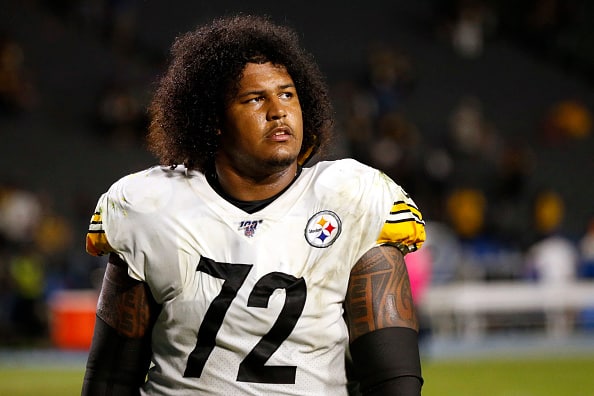
Athletes Join Zach Banner for Panel on Combatting Anti-Semitism and White Supremacy

Pittsburgh Steelers offensive lineman Zach Banner is hosting a two-part conversation titled, “Athletes Against Antisemitism” on Feb. 17 about combatting anti-Semitism, fighting for racial justice and moving forward in unity. The event is also hosted by Washington Nationals first baseman Josh Bell and Washington Mystics WNBA champion Alysha Clark.

Banner, who was behind the virtual panel idea, made headlines over the summer in a viral Twitter video where he called for an end to anti-Semitic rhetoric and for  unity between the Black and Jewish communities.

The athlete and activist has since formed numerous relationships within the Pittsburgh community — including the Challah Back Girls — in building bridges to strengthen understanding. Most recently, on Feb. 1, Banner, along with 170 high-profile figures, joined the Black-Jewish Entertainment Alliance devoted to tackling anti-Semitism and racism in the United States.

“I’ve learned so much this year about what it really means to use my platform and do the work. The tweet I posted earlier this season doesn’t mean much if I don’t continue to be engaged in the work of combatting anti-Semitism and fighting for equity,” Banner told the Journal in an email. “The community of Pittsburgh, and our whole country, has a lot of work to do when it comes to fighting anti-Semitism and white supremacy. Whether you’re an athlete, politician, CEO or school teacher, there’s a part everyone can play in that fight. I’m looking forward to this panel, which will further the discussion around what we each can do to participate in this work.”

“Whether you’re an athlete, politician, CEO or school teacher, there’s a part everyone can play in that fight.” — Zach Banner

The 90-minute program will be broken into two parts. The first will center on the Pittsburgh community, featuring Tree of Life Synagogue Rabbi Hazzan Jeffrey Myers and Jasiri X, hip hop artist and co-founder of the activist group 1Hood. The conversation will focus on the current crisis of anti-Semitism and white supremacy, ongoing unified efforts in Pittsburgh to combat hate and important tools, resources and next steps to engage more citizens in this movement.

Myers told the Journal via email that he’s learned a number of important lessons since the Oct. 27 shooting. One of the lessons he’s learned is that ending hate speech and anti-Semitism requires work from “all of us, regardless of faith, race, ethnicity and sexual orientation.”

“I always welcome the opportunity to build new relationships and find common ground, which is why I’m so excited about this opportunity to continue working with athletes like Zach Banner,” Myers said. “Through his work on and off the football field, Zach has demonstrated not merely by words, but by deeds, that the only way to effect positive change is by working together and foster greater collaboration between the Black and Jewish communities.”

The second half of the event will feature Banner alongside Bell and Clark. They will discuss the power of athlete activism, their role and responsibility in engaging in these movements and their priorities in this work as team leaders, national figures and community members.

The program will be moderated by Holocaust Center of Pittsburgh Director Dr. Lauren Apter Bairnsfather.

“We look forward to being a part of this excellent panel to discuss an extremely important topic,” The Tree of Life synagogue said on Twitter on Feb. 10. “Words matter. Empathy matters.”

“We are so excited to be a part of this necessary conversation as we continue to build community and safety,” 1Hood also shared.

“Athletes Against Antisemitism” is presented in partnership with the Tree of Life Synagogue, the Holocaust Center of Pittsburgh and 1Hood Media. The streamed event takes place on Feb. 17 at 4:30 p.m. PT. Register here for a direct link to the panel stream or watch live on Facebook, YouTube and Twitch.

This story was updated on Feb. 11 to include a quote from Tree of Life Synagogue Rabbi Hazzan Jeffrey Myers. 

Athletes Join Zach Banner for Panel on Combatting Anti-Semitism and White Supremacy Read More »

The Ladies Who Breakfast

Jobs come and go; dogs die; husbands behave badly; occasionally a brilliant child flunks kindergarten. I’ve learned to expect the unexpected in this cold cruel world. But for the last 20 years, I could count on one sure thing: Every other Friday morning at 9 A.M., eight to ten women would meet for breakfast — all members of the Underemployed Women’s Club of Silverlake/Los Feliz. Together we munched, we sipped, and we felt better when we left.

The thread that wove us together in the early 1990s was our children’s pre-school, the neighborhood JCC. Back when our biggest worry was making it to Friday morning Shabbat on time — with our little challahs fresh from the oven — we bonded over holidays and fundraisers at the JCC.

But the club really launched in 2003, around the time the kids were in high school. Finally we had the time to meet for an hour or so before the workday began to sort through our children’s latest accomplishments. “This one’s a basketball star! Did you hear that little Maggie is playing Nathan Detroit in the non-binary revival of Guys and Dolls at school?” Some of us even ate big breakfasts before heading off to our demanding jobs. It was a fun, social way to end another time-crunched week.

Many of us held jobs in creative fields. The group included a Disney artist, advertising art director, new technology expert, fashion college creative director, news photographer, college professor, children’s book editor, social worker and, of course, a therapist to supervise and make sure no one fell overboard. We were all educated white women. As such, we expected to balance career and family — and have fascinating hobbies on the side. Many of us didn’t have the help of extended family since we had escaped to California from colder places like Canada or New York, so the club became a surrogate. We carried on through our fifties, adding Pilates or Yoga to the schedule as needed.

Once the kids took off for college, the club became our go-to community. We helped each other get through the big transitions — job losses, terrible accidents, several breast cancers, children who moved very far away and weight gain, to name a few indignities. Knowing you could report it all to the group at the next meeting made aging feel more bearable. We were doing it all together! During the worst of times, all that maternal energy could still get whipped into an organized frenzy of hot meal deliveries or extravagantly hosted home parties.

Knowing you could report it all to the group at the next meeting made aging feel more bearable.

As the clock ticked, college graduations brought the relief of tuition bills paid as well as the anxiety of the empty nest. It also brought our sixties. In a cruel twist of fate, at the moment when many were at the top of their games professionally and finally had the time to focus, we had the rug pulled out from under our formerly pretty feet.

Those in the artistic or creative industries either lost their jobs to younger, hipper versions of themselves or they settled for lower-level jobs. Art directors became graphic designers; artists became high school teachers or adjunct professors; book editors became proofreaders. Only the social workers, shrinks and tenured professors were able to maintain their positions as the world got younger. It’s smart to be wise.

Now, in our mid-sixties to seventies, we’re mostly retired, a hard word for this group to say out loud. Weren’t we all supposed to pursue our professions until we decided to stop — if ever? As powerful women, weren’t we in charge of our destinies? Were we, who had witnessed the dawning of the Age of Aquarius duped?

Fissures based on economics have become more noticeable. Pre-COVID-19, a few friends were feverishly travelling abroad — signing up for group tours to anywhere several times a year. Working down their lists. Others started studying languages, mentoring a child or getting deeply involved with politics, even hitting the road to register voters. Jealousy regarding economic resources, adult children’s ability to launch and having grandchildren is more apparent now. No matter. The breakfast club has reached forever status.

The last in-person meeting of the Underemployed Women’s Club took place on Friday, March 15, 2020. A hard rain was falling in Los Angeles when we met at a new place on Sunset. No one knew how much the world was about to change. The madness of politics was still our obsession back then.

Courtesy author

But the Underemployed Women’s Club remains; like a best friend, she will always be there. Though the group meets less frequently — there’s not that much news to report — a few of us meet regularly for masked walks or patio visits. On a boisterous text thread, we blast out the latest Randy Rainbow videos, political outrage and silly Internet memes (you want Bernie Sanders in mittens?). In fact, when vaccinations opened up for oldsters in California, guess where I heard it first? Along with a link to sign up. These ladies are hooked up!

As for breakfast, we still meet about once a month on Zoom. From the comfort of our homes, sans makeup, wearing cozy sweats and timeworn T-shirts, with uncombed hair and eating very little, we continue to bear witness to each other’s lives as we have for nearly 20 years.

Although the parking is great, I’m looking forward to meeting my community again in person — at the latest hipster café, over buckets of coffee, with unlimited avocado toast and big warm hugs.


Los Angeles food writer Helene Siegel is the author of 40 cookbooks, including the “Totally Cookbook” series and “Pure Chocolate.” She runs the Pastry Session blog. During COVID-19, she shared Sunday morning baking lessons over Zoom with her granddaughter, eight-year-old Piper of Austin, Texas.

The Ladies Who Breakfast Read More »

Life Interrupted: Pandemic Life Parallels Jewish Mourning

On three separate occasions over the past decade, my comfortable reality was completely shattered. The first two experiences were very personal — losing my father and then my mother. Then, last March, the entire world experienced a paradigm shift. I reacted to each of these events with a profound sense of disbelief, despite my awareness that all were likely to happen. As the long months of quarantine marched on, it dawned on me that living in lockdown had many parallels to the two separate years I spent mourning my parents according to the customs of the Jewish tradition.

My parents died over six years apart, both at the age of ninety-two. Although I knew intellectually that their chronic health conditions made their situations precarious, I still felt a huge emotional jolt when both passed. The same was true with the onset of the COVID-19 lockdown. On the evening of March 11, 2020, I stayed in downtown Chicago after teaching my law school classes to have dinner with one of my daughters. At that time, neither of us really believed this would be the last time we would hug one other for over a year or that her wedding plans, which we joyfully discussed that night, would not materialize. On the way home, I learned that my university was closing immediately. I knew a shutdown was a strong possibility, but when faced with the actual reality of the closure, I was in shock.

After my parents’ death, I opted to follow most of the Jewish mourning rituals, not only because I felt it was the right thing to do but also because I knew this path would provide me with the comfort and direction I craved. For example, by requiring the quickest burial possible, Jewish tradition affords mourners a strong boost to their grieving spirit and facilitates a sense of closure. Even so, the interim period between a close relative’s death and the funeral, known as aninut, is extremely stressful, even if all of the arrangements have been made in advance of death. For this reason, Jewish law provides that a person in aninut is exempt from performing many of the positive commandments, such as saying routine prayers.

Following the shutdown, I experienced a period parallel to the aninut, but this time, it lasted far longer than a couple of days. I remember feeling stressed and confused during this time, on both a personal and professional level. As I desperately struggled to master the basics of online teaching, I also grappled with mundane issues, such as whether to go to the grocery store, a normal event that suddenly became a source of fear and anxiety. The fact that Passover was looming and that I still had more things to purchase for the holiday only exacerbated the pressure.

But during the earliest weeks of lockdown, I felt as though everyone I knew was sitting shiva together. I remember reaching out to many relatives and friends to check on them, and others did the same for me. In time, the clarity and routine I longed for became a reality. And much of that reality involved a highly constrained lifestyle that essentially eliminated some of the same activities that are off-limits during the year one mourns for a parent. For instance, as a mourner, I avoided music (even listening to the radio) and dancing. This was also true for most of this past year, although for different reasons. Usually, I listen to music while driving alone, but I have rarely been alone in my car this year since I have nowhere to go. As for dancing, I recall only one time over the past year when I danced in a group setting — Mother’s Day 2020, when my youngest daughter treated me to a Zoom Zumba class.

During the earliest weeks of lockdown, I felt as though everyone I knew was sitting shiva together.

And then there is the matter of buying clothing. During my years as a mourner, I followed the tradition of refraining from purchasing or wearing new clothes. But now, although I can freely purchase anything online, there is actually little incentive to shop since I have no occasion to wear anything other than my typical COVID-19 uniform (athleisure and nice tops for Zoom).

Of course, one stark difference between the past year and my years as a mourner is that I have not entered a synagogue for over a year, a marked departure from my routine in mourning, when I attended services daily to recite the Mourner’s Kaddish. Although many Jews currently in mourning are still finding ways to say the Kaddish during, for me, even socially distanced services are uncomfortable, and Zoom represents work rather than prayer.

At the end of both of my years of as a mourner, I felt ready to reenter the world and resume my life as before. I still miss my parents, but having honored them in the way I did, I felt ready to move on, even though I knew my world would never be quite the same. Today, as all of us begin to contemplate a new chapter with a greater degree of normalcy, we cannot help but wonder how this pandemic permanently changed our lives and our larger world.

Currently, our weekly Torah reading is from the Book of Exodus. In Chapter 28, we learn that G-d instructs Moses to select those who are “wise-hearted” to make the garments for Aaron, the high priest. A wise heart is an emotionally intelligent heart. By requiring this quality to be present in those charged with one of the most sacred tasks, the Torah contains an important message for everyone as we go forth in the weeks and months ahead:

The pandemic has forced many of us into a slower pace of life that is conducive to being more emotionally present for our family and friends, even if we cannot be with them physically. When the immediate danger of the pandemic is over, there will still be so many people coping with a great deal of pain and loss. As we resume a fuller existence, we all must strive to be wise-hearted and continue to be emotionally present for those in our communities and beyond.


Roberta Rosenthal Kwall is the Raymond P. Niro Professor at DePaul University College of Law. She is the author of “Remix Judaism: Transmitting Tradition in a Diverse World” (Rowman & Littlefield, 2020), “The Myth of the Cultural Jew” (Oxford University Press, 2015) and “The Soul of Creativity” (Stanford University Press, 2010).

Life Interrupted: Pandemic Life Parallels Jewish Mourning Read More »