fbpx

January 15, 2021

Jews on Edge Ahead of Inauguration Day

(JTA) — The alert, tweeted by a college student, was vague: A man in a MAGA hat near West Virginia University was apparently asking for the locations of local synagogues and mosques.

On Thursday, a day after the tweet made the rounds of campus social media accounts, police didn’t know much more. A spokesman for the city of Morgantown, where the university is located, confirmed on Thursday that law enforcement was investigating the matter, but had no idea who the man in question was or even definitive confirmation that the interaction took place.

As it turns out, the interaction did not take place as described. The man in question never mentioned a synagogue, according to the police chief of Granville, the nearby town where the incident took place. Responding to an inquiry from Thursday on Friday morning, the chief, Craig Corkrean, confirmed that someone wearing what appeared to be a Trump or MAGA hat asked someone for the location of the nearest mosque, and walked away.

Police are investigating the man’s identity “to cover all of our bases,” Corkrean said, but he stressed that asking for the location of a mosque isn’t a crime.

“I think some people got a little ahead of themselves,” Corkrean told JTA Friday. “I don’t know where this threat against the Jewish community came from, but it did not happen.”

But coming just a week after a pro-Trump mob stormed the U.S. Capitol, the rumor that had spread on Wednesday and Thursday was enough to spur action. The Morgantown Police Department increased patrols around synagogues and mosques. The director of the campus Hillel moved the building’s lone Torah scroll off the premises.

“With all the anti-Semitism and everything else that’s going on, especially now, you have to take that stuff seriously,” said Richard Gutmann, the Hillel director. “Are they going to vent their anger on soft targets like synagogues and mosques? I think that’s a legitimate concern.”

“Are they going to vent their anger on soft targets like synagogues and mosques? I think that’s a legitimate concern.”

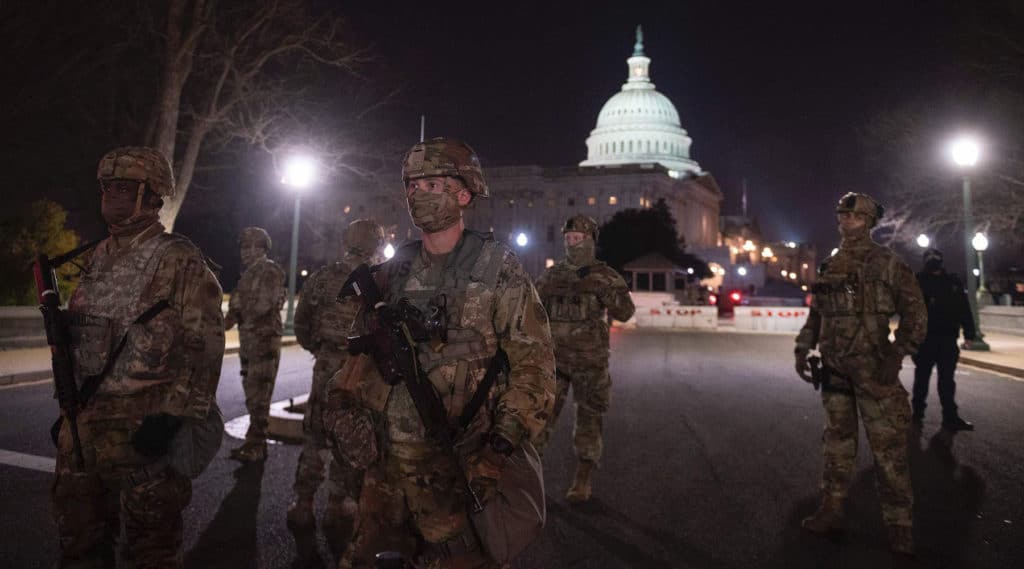
Gutmann could have been voicing the anxiety of the country, which is still absorbing the shock of the Capitol insurrection even as it fears more violence to come. Ahead of President-elect Joe Biden’s inauguration on Wednesday, 20,000 troops have been deployed to Washington, D.C.

Extremists online — including on the social media platform Parler, before it was shut down — chatted about a “Million Militia March” in the days before the inauguration. Other accounts on the network, popular with extremists, accused Vice President Mike Pence of treason and pedophilia and shared pictures of nooses. Social media users promoting the pro-Trump QAnon conspiracy theory posted in coded language to avoid content moderators.

An FBI memo warned of armed protests at all 50 state capitol buildings starting this weekend to protest Biden becoming president. A flyer cited by the Anti-Defamation League, calling for a march in Washington and state capitols on Sunday, reads “When democracy is destroyed, refuse to be silenced.”

And on Telegram, a secure messaging app popular with the far right, channels focused on QAnon broadcast their usual confidence that President Donald Trump was about to reveal a massive criminal operation to bring down Biden.

“Rest assured, President Trump won yugely,” read one post from Wednesday on a QAnon channel with 25,000 members. “This means we won, together. Now it’s time to clean house, and drain the swamp.”

The ongoing far-right chatter comes as large tech companies have taken steps to boot extremists — and the president many of them admire — off their platforms. Trump was banned from Facebook and Twitter last week, and this week Twitter banned 70,000 accounts promoting the QAnon conspiracy theory. At midnight between Sunday and Monday, Parler was kicked off its web hosting service after being removed from the Google and Apple app stores.

Advocates for combating hate online are split on whether these moves will effectively reduce anti-Semitism online or in the real world.

Some say the decision to ban Trump and sniff out the conspiracy theorists who admire him is long overdue and insufficient. Others worry that once extremists are off platforms that are accessible to researchers, their organizing will be harder to track during a tense and unpredictable time.

“A lot of this stuff has gone dark in places very few people can trace it at the worst possible moment,” said Joel Finkelstein, director of the Network Contagion Research Institute, which studies how hate spreads online. “The stage is set. No one can trace these people on these encrypted apps. They’re violent, and they just exiled all of them off the radar.”

Yfat Barak-Cheney, the director of international affairs for the World Jewish Congress, has worked with Facebook on efforts like banning Holocaust denial and praised the companies for taking “proactive measures to limit the spread of  hate speech and misinformation that inspire extremism and violence.”

The Anti-Defamation League also has long called on social media giants, particularly Facebook, to do more to fight hate. But while the ADL praised the banning of Trump, it saw the decision as part of a pattern where social media sites act only after it’s too late.

“I think it is potentially the most extreme example of the crisis PR response to content moderation that we see on most of the major platforms,” said Daniel Kelley, associate director of the ADL’s Center for Technology and Society. “It’s infuriating. Blood is spilled, bodies hit the ground and then suddenly platforms feel motivated to act.”

Kelley said that while removing Trump may lessen incitement to violence, the platforms still need to do a better job tracking, reporting and auditing ground-level extremists. He said that when it comes to deplatforming Parler and taking extremist accounts off mainstream sites, the benefits outweigh the costs.

On Wednesday, the ADL called on the Justice Department to investigate Gab, another social network popular with extremists, for aiding and abetting the Capitol insurrection.

“The collective good that comes in shutting down these spaces is more powerful than the surveillance element,” he said. “A space that isn’t accessible by the Apple Store or Play Store is no longer accessible to a curious individual who’s on the cusp of being radicalized.”

Those who have already been radicalized are likely to gather in large cities in the states that tipped the election to Biden in November, said Finkelstein, based on what his team has been able to monitor. But he said unrest could happen across the country.

Morgantown, a progressive college town south of Pittsburgh, was not expected to be a flashpoint. But with even a whiff of alleged anti-Semitism, Gutmann said he wasn’t taking chances.

“Under normal circumstances, you might say it’s just some kookball,” he said. But this week, Gutmann added, “I’m not fooling around.”

Jews on Edge Ahead of Inauguration Day Read More »
The Anti-Zionist Glee at Sheldon Adelson’s Death

When the former Conservative British Prime Minister Margaret Thatcher died in 2013, there were some on the left who regarded her passing as a moment for celebration. Social-media channels filled up with jokes and messages that were variously gleeful, mocking or vengeful, all posted by individuals who, if you asked them, would confidently tell you that they were fighting for a more just and equitable world.

This sinister wave of joy at Thatcher’s death was shocking to many, including the late political theorist Professor Norman Geras of the University of Manchester. As a man of the left, Geras had been an arch-opponent of Thatcher on every major issue to confront Britain during the turbulent 1980s. But the sheer pleasure of some left-wingers at her death more than 20 years after the day she left office—“a day on which many, including me, were delighted to see her go,” wrote Geras—left him little short of disgusted.

I thought of Geras’s riposte to those who rejoiced at Thatcher’s death, which I’ll be quoting from momentarily, when I saw some of the reaction to the sad passing of Sheldon Adelson, the billionaire Jewish philanthropist, on Jan. 11. Specifically, I noticed the kind of abuse that was piled on Thatcher after she died, also written and posted by people who would confidently tell you, if you asked them, that they were fighting for a more just and equitable world.

As the observations in this piece are primarily directed at those who mocked and insulted Adelson on the very day that he passed, regrettably I have to cite some of what they said.

Rebecca Vilkomerson, the former executive director of Jewish Voice for Peace—an organization whose benign-sounding name masks the fact that its sole purpose to advocate for Israel’s elimination—posted on an otherwise censorious Twitter that Adelson’s death was “a present for my birthday.” Another user tweeted, “Now do Kissinger,” referring to the 97-year-old Jewish former U.S. Secretary of State. In response, the left-wing group IfNotNow chimed in with Bimheira B’yameinu—a Hebrew phrase meaning “speedily in our days” that appears frequently in Jewish liturgy, in reference to the rebuilding of Jerusalem.

That was right after the same group issued a blood-chilling cry of joy at the news that Adelson had died. “Adelson dedicated his life and wealth to empowering the far-right in the U.S. and in Israel,” IfNotNow foamed on Twitter. “Yimakh shemo. May his legacy be erased.”

For those who don’t know, the Hebrew words yimakh shemo mean “may his name be erased.” I remember my grandfather telling me when I was a kid that these were not words to be used lightly; they were reserved for the historic persecutors of the Jewish people, individuals like Martin Luther, Bogdan Chmielnicki and Adolf Hitler. I suspect that many other readers were given the same counsel. The idea of uttering these words in relation to another Jew whose politics you don’t like, or to an elected politician you campaigned against, is anathema to the Jewish ethical tradition that groups like IfNotNow apparently believe they represent.

Back, then, to Norman Geras’s dissection of those who celebrated the death of Thatcher, shortly after she suffered from a stroke itself triggered by a lengthy and exhausting bout of illness. “[W]hen Margaret Thatcher died she was an old and ill woman, with people around her who cared about her,” he observed. “To take pleasure at this is an inhumanity that does no credit to those who so indulge themselves. They forget the simplest and most enduring of human truths for an ugly temporary pleasure.”

That does not mean, of course, that extraordinary political leaders and business moguls like Thatcher and Adelson cannot be criticized. “A person’s death is typically the time when his or her life is written about and assessed most actively,” wrote Geras. “Some of the assessments are positive and no one asks that these should be toned down or made neutral. There is, equally, no reason for negative, or disparaging, even damning, judgments of the same record to be avoided. It is a political or other reputation and legacy that is being judged, and it would be ‘stacking the deck’ of public discussion to regard the expression of positive viewpoints about the life of the deceased as legitimate but critical opinions as out of order.”

However, argued Geras, “[T]o publicly rejoice at the death of a democratic political opponent, talk of dancing on her grave, hold street parties for the occasion, and so forth, is contemptible. It says more about the morality inspiring those who engage in such activities than it does about the object of them.”

Heaping a curse traditionally reserved for the genocidal foes of the Jewish people upon Adelson—as IfNotNow shamefully did—is reminiscent of the online mob that laughed about “dancing on Thatcher’s grave.” In the process, as Geras pointed out, we learn far more about those who utter the curse than about the person or persons on the receiving end.

Their shrieks of hatred were not about Thatcher’s relentless campaign against the organized labor movement, or Adelson’s financial backing of Donald Trump—legitimate, relevant elements of the debate about their legacies that will earn rebuke on the left as much as they will win admiration on the right.

These fanatics are far more primeval than that. For there is a disturbing pattern on the far-left of the Jewish community of sadistically celebrating the deaths of mainstream communal figures who are generally respected and often revered. When the great writer and Holocaust survivor Elie Wiesel died in 2016, other stalwarts of the anti-Zionist left stepped forward to express satisfaction at the news. With Wiesel as with Adelson, their invective was soaked in a hostility to the Zionist movement that seeped into a frankly disturbing detestation of the deceased person.

That such sentiments were expressed about Adelson less than a week after a far-right mob attempted to sack the U.S. Capitol is a salutary reminder that the same squealing delight at an adversary’s pain or suffering or loss can be found on the extreme left.

“Consider that one day it will be you who are dying, and whatever you have done or failed to do in your life, you will deserve the love of those who feel it for you and something better than cruel glee from those who don’t,” Geras advised those who enjoyed themselves at Thatcher’s passing. Those who did the same with Sheldon Adelson, z”l, should pay heed.


Ben Cohen is a New York City-based journalist and author who writes a weekly column on Jewish and international affairs for JNS.

The Anti-Zionist Glee at Sheldon Adelson’s Death Read More »

A Bisl Torah — Are You There, God?

Across the globe, it feels as if we are treading water. Part of us submerged, hearing more about who has Covid and the staggering consequences of the disease. And yet, part of us is out of the water, face towards the sun, seeing more people receive the vaccine, a symbol of hope that floating on the water’s surface may be closer than we think. But until that full reality comes to fruition, we continue to struggle out of the water.

This week, the Torah allows us to eavesdrop on a conversation between Moses and God. God reminds Moses that God’s revelation during the Exodus story is truly extraordinary. God says, “I appeared to Abraham, Isaac and Jacob as El Shadai but I did not make Myself known to them by my name of Adonai.” Meaning, with our patriarchs, God was revealed in one way and to Moses, another. To some of our Biblical characters, God speaks through a dream or prophesy. To other figures, God has direct conversations. But the lesson is clear: God reaches each of us through a different method of communication. Some exchanges are poignant, coherent, and resolute. Others feel hidden, confusing, left for indeterminable interpretation. And even through God’s inconsistency, there is a comfort in knowing that God is trying to speak with each of us. God wants us to know that through our struggles, we are not experiencing the world, treading alone.

Are you there, God? It may be hard to hear God’s voice through the cacophonous rumblings of our anxiety. The loud beating of our heart often takes precedence over the soothing lullaby God may be crooning. The persistent noise of the news and belabored pings on our cellphones may overshadow the ever-present signs that God wants us to see. God spoke to our ancestors with different messages through different mediums. But somehow, they heard. I must believe God is speaking to us. But are we present enough to be able to hear?

Dear God, let me feel you in the ways in which I need.
Quiet my fears. Still my ever-racing thoughts.
I am still treading water, allowing your sun to warm my face and fill my soul.
Hold me. Guide me. Help me to open my heart to what it is I am supposed to hear. Amen.

Shabbat Shalom


Rabbi Nicole Guzik is a rabbi at Sinai Temple. She can be reached at her Facebook page at Rabbi Nicole Guzik.

A Bisl Torah — Are You There, God? Read More »

CSUN Student Government Adopts IHRA Definition of Anti-Semitism

The student government at California State University Northridge (CSUN) unanimously passed a resolution adopting the International Holocaust Remembrance Alliance (IHRA) definition of anti-Semitism on December 7.

The resolution states that anti-Semitic incidents have increased in the United States by 12% from 2018 to 2019 and that in 2018, there was graffiti threatening a mass shooting with a swastika underneath it. The resolution went on to state that the student government “denounces all forms of Antisemitism, no matter what political party it is from” and “is committed to fighting all forms of anti-semitism on campus.”

CSUN Associated Student Senator Jonathan Hay, who spearheaded the effort to pass the resolution, said in a statement to the Journal, “I am very happy how smoothly the resolution was able to be passed through senate. I am grateful to be surrounded by senators who understand the growing threat of anti-Semitism and sound proudly with the Jewish CSUN students.”

Matt Baram, executive director of Hillel 818, also said in a statement to the Journal that the resolution’s passage “makes clear once again that the CSUN community embraces, nurtures, and protects its 4,000+ Jewish undergraduate students, as well as its Jewish faculty, alumni, and community friends. At many universities, resolutions like this have received pushback and been enveloped in controversy. At CSUN, this resolution was emphatically passed with barely a peep.”

He added, “We are so proud of students Jonathan Hay and Zachary Schimke for taking the initiative to get this resolution passed. Jews throughout all of Greater Los Angeles should know that CSUN is a wonderful place to be Jewish.”

CSUN Student Government Adopts IHRA Definition of Anti-Semitism Read More »

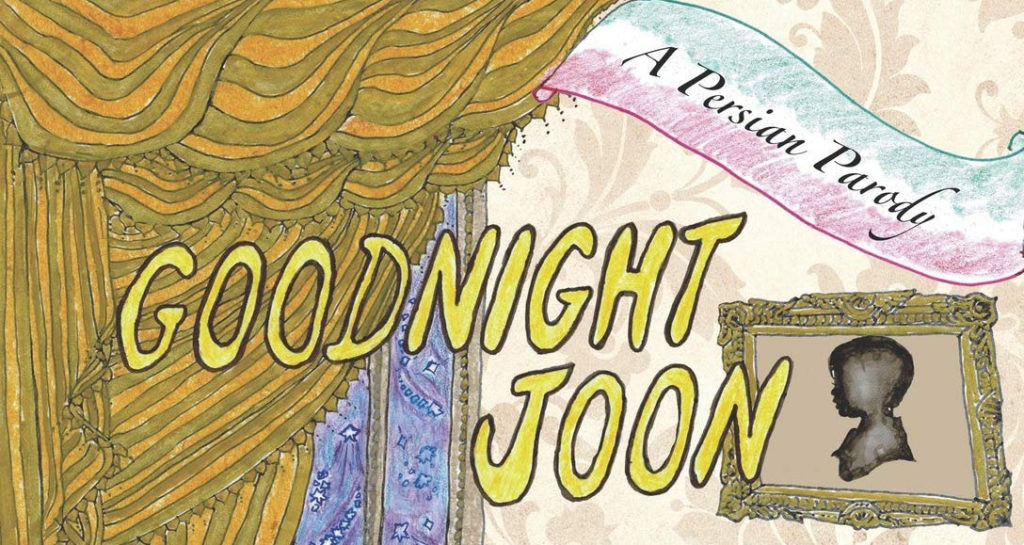
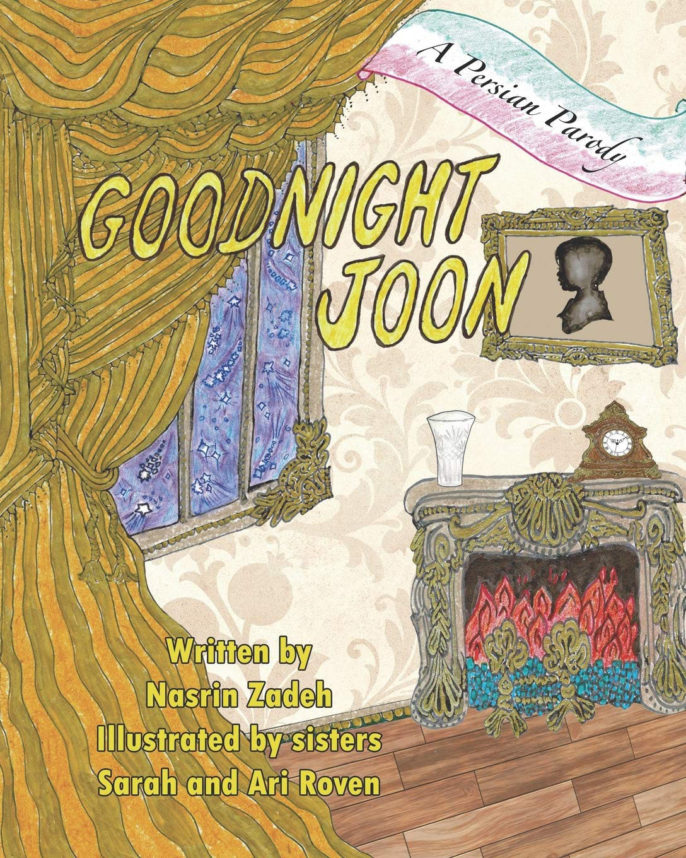
Finally, a Persian Version of “Goodnight Moon”

“Goodnight Moon,” the 1947 classic written by Margaret Wise Brown and illustrated by Clement Hurd, was one of the first children’s books I bought when I became a mother. My kids loved (and still love) the simple characters and sentiments and how the pages take readers on a bedtime tour from the macro (a bunny in a large bedroom) to the micro (a close-up illustration of a painting) and back to the macro.

In our home, there was only one consistent problem with initial readings of “Goodnight Moon”: Nearly every time I read the book to my kids, one of them implored me to pause on the page with the words, “Goodnight mush.” He then pointed to an illustration of something in a bowl and said, “Mama, what’s mush?”

My first mistake was to tell him that mush was like porridge, but given the quizzical look on his face, I soon remembered we aren’t Scottish, British or bears.

I tried telling him mush was like oatmeal, but he reminded me that my oatmeal is never mushy (but shamefully lumpy).

I finally gave up and told him it was “too-delee,” the Persian equivalent of soft, fluffy stuffing, which Iranians traditionally pack inside chicken using basmati rice, onion, turmeric, saffron and other divine ingredients. My kids eat the stuff by the handful.

“Too-delee!” they shouted one night, when I read the words, “Goodnight mush.” Bingo.

Last month, a new children’s picture book made my job of literary cultural ambassador a little easier. Its name? “Goodnight Joon.”

In Persian, “joon” means “life” and is often used to convey to loved ones, especially children, the dramatically loving sentiment, “You’re my entire life.” For all intents and purposes, its closest English equivalent is “dear.”

“Ten years ago, I was talking to my friend on the phone and said, ‘Good night, joon.’ That night, I stayed up until 3 A.M. writing a poem about Persian culture and titled it ‘Goodnight, Joon,’” Ari Roven, one of the book’s co-authors, told the Journal. She shared her poem with her sister-in-law, Sarah Roven. “Sarah loved the poem so much, but it was mainly for adults, as children wouldn’t understand the nuances. She had the idea and the gumption to really make this into a [parody] book appropriate for children.”

Neither Ari nor Sarah is Iranian, but having been born and raised in Los Angeles, they counted Iranians as close friends and embraced Persian culture. “I’ve always had very close Persian friends,” said Ari. “They are simply the best. I always loved attending their family Shabbat dinners and especially their weddings! The warmth and graciousness from the entire family, the delicious food, the music, the vibrant colors of the decor in the home, the abundance of warmth and kindness I felt when I was around them gave me such a deep admiration for the culture.”

This is the first children’s book for both Ari and Sarah. Ari, 35, worked in private equity before becoming a full-time mother to her eighteen-month-old daughter. Sarah, 32, recruited for a software company but loved drawing for her children (ages five, three and eighteen-months) and dreamt of one day illustrating a children’s book. Both gifted artists, they knew they could collaborate on the illustrations to bring “Goodnight Joon” to life. There was only one problem: neither of them spoke Persian.

That’s where Natalie Zangan, a Tehran-born psychotherapist and children’s activist based in Encino, stepped in. Sarah had previously met Natalie through the Los Angeles Jewish community. Natalie offered the critical cultural nuance that makes the book so relatable to Iranian readers. When Sarah and Ari illustrated a real mouse, as per the “young mouse” in the original “Goodnight Moon,” Natalie reminded them that while Americans might consider mice cute and charming, the creatures are practically ritually impure for Iranians. “We compromised on a toy mouse for the little baby in the book to play with,” Sarah said.

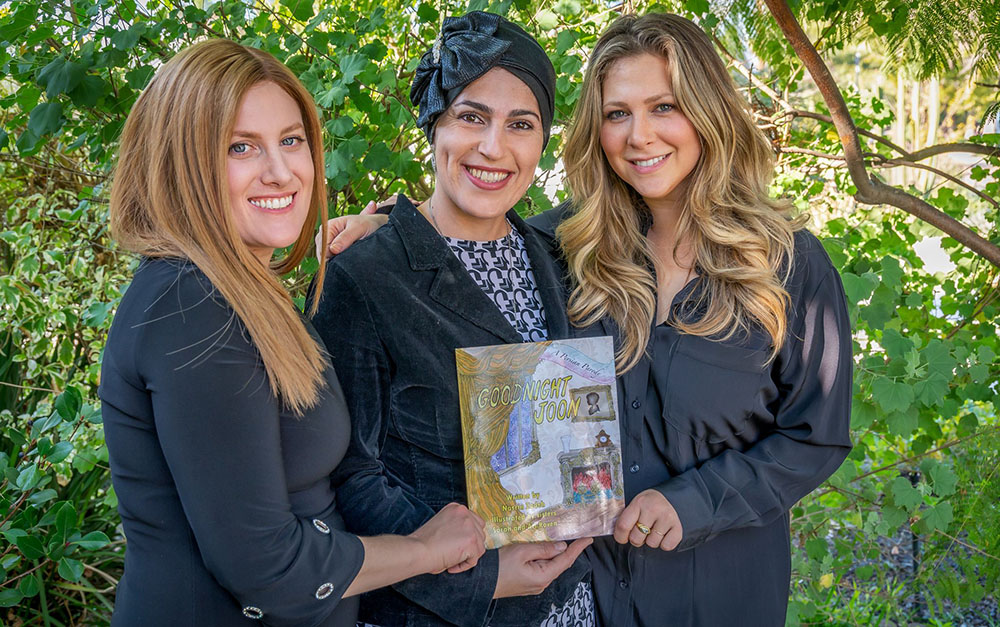
“Goodnight Joon” authors (Photo: Romain Hini-Szlos/RHS Photos)

To merely describe the book in words is to deprive it of its deliciously vibrant humor and energy. Whereas the original version focuses on a small rabbit — who readers assume is being cared for by his grandmother — as he falls asleep in his parents’ bedroom, “Goodnight Joon” takes us through a tour of a traditional Iranian home that could be anywhere in the world, from Los Angeles to Toronto. The text is mostly comprised of English, with a few words in transliterated Persian. All the familiar comforts are there: the Persian rugs, luminous chandeliers, bowls of fresh fruit and nuts at every turn and, at the center of it all, a doting grandmother (“Mamani), grandfather (“Babaie”) and baby (“Joon”). There’s even a small dog, “Pashmak” (“Fluffy” in Persian), named after one of Natalie’s own pooches. When I read the grandparents’ names, I was deeply moved. Those were the exact same nicknames I used to refer to my maternal grandparents, both of whom escaped Iran to live in Israel.

In reading the book to my children, I felt as if I was in the care of my own grandparents, three of whom I never saw again after I left Iran, but whose love and comforting presence I recognized in “Goodnight Joon.”

In reading the book to my children, I felt as if I was in the care of my own grandparents.

“We realized this was one of the only books written in both Persian and English for bilingual Iranian children,” Sarah said. “With over one million Persians living in the United States, this is a pathetic statistic.”

For her part, Natalie hoped to share the warmth and beauty of Iranian culture. “I believe that learning about other cultures as a child brings more understanding,” she said. “The inclusion of all children is so important within a community, and there isn’t enough recognition and representation of children from minority cultures or children with disabilities.”

“Goodnight Joon” is Natalie’s first attempt at writing a children’s book. She always dreamt of writing but was deterred by a learning disability that left her feeling insecure and vulnerable. “English was my third language after Persian and Hebrew, and for my whole life, it’s been very challenging for me to express myself properly through writing,” she said. “But I persisted. Ari and Sarah helped me push past my barriers to see that my struggles are there to make me stronger.”

Upon its release in December 2020, “Goodnight Joon” was number one on Amazon’s list of best sellers for new releases of children’s nursery rhyme books. The book is self-published. According to Sarah, reader response has been astounding. “Persian mothers have told us multiple times that they feel like they finally have a favorite book for their children from their own culture,” she said.

Natalie, however, was concerned about how the book would be received. “For many years after moving to America, I felt so isolated and alone because people would make fun of my accent,” she said. Her difficult childhood experiences with language had such an effect on her that she only agreed to publish “Goodnight Joon” using a nom de plume, “Nasrin Zadeh.”

But after learning about the book’s success and reader acclaim, Natalie felt comfortable sharing her real name, even though the book cover still states “Nasrin Zadeh” as the author. “I wish this book existed when I was young and new in America,” said Natalie, who has two sets of twins, ages 9 and four-and-a-half.

Sarah and Ari have plans for a series of “Goodnight Moon” parodies that reflect different cultures and their accompanying languages, including a forthcoming Russian and Israeli version. The series will be called “Goodnight Baby.” “By the end of 2021, we’re hoping to have a book for almost every culture group in the United States,” said Sarah.

Concerned over legal issues with the original “Goodnight Moon,” Sarah hired a copyright lawyer, only to learn that parodies of the book are not considered copyright infringement because they don’t take away sales from the original book. “It basically boils down to the fact that the owners of ‘Goodnight Moon’ don’t seem to care about parodies — and that is why there are so many,” Sarah said. In fact, there are dozens of parodies by other authors, including “Goodnight Mom,” “Goodnight iPad,” and “Goodnight Boobs” (an adult parody).

Although she is not Iranian, Ari’s daughter is “captivated” by the book, and Sarah’s children love it as well. For Natalie, the book reminds her children of their grandparents, whom they’ve been unable to see due to the pandemic.

A tireless advocate for Jewish children in the foster care system, Natalie has witnessed firsthand the power of books in bringing children comfort and stability. “Books are the greatest gifts when children are detained and placed in a new, unfamiliar home environment,” she said. “Children are very aware and understand more than we think.  Books are the best way to help them put words to feelings to have a greater understanding of what’s happening around them.”

She’s right. “Goodnight Joon” has given my children a sense of ownership over their Iranian customs, giving them access to a literary and illustrative mirror with which to understand a part of their world. In our home, we still love “Goodnight Moon,” but when we read the new, charming parody, there’s one page my children understand more than any other: The one that depicts a big bowl of green mush, with the words, “Goodnight, ghormeh sabzi.”


Tabby Refael is a Los Angeles-based writer, speaker and activist.

Finally, a Persian Version of “Goodnight Moon” Read More »

Honoring the Departed

I like to call my friends on their birthdays, but until yesterday, it never dawned on me to also call them on the anniversary of the passing of a loved one.

Yesterday was the anniversary of my father’s passing. When I mentioned that to a rabbi friend, he told me that two other people we both know well were also observing the anniversary of the passing of a loved one.

On a whim, I called both of them.

The conversations went deep very quickly. My friends welcomed the chance to talk about the loved one they lost. So did I. We were in the same boat. We shared memories. We told stories. It was our simple way of honoring those no longer physically with us — and it felt really good.

Talking about my father made his memory come alive. As much as I valued reciting the mourner’s Kaddish in synagogue that morning, I was touched even more deeply by the memories of a man who had a unique influence on me.

When the phone conversations ended, I was struck by the power of memory to sustain us. My father taught me the joy of Judaism, the value of family and tradition and the importance of patience. I had made a vow when he passed away that I would honor him by embracing what he taught me. Bringing all that up yesterday was like an injection of goodness into my life.

When the phone conversations ended, I was struck by the power of memory to sustain us.

It was as if I was receiving and making a mini “shivah call.”

The seven days of shivah after the passing of a loved one is one of Judaism’s most inspired traditions. The immediate pain is so sharp we need a full week of consolation to soften the blow. For seven days, we are immersed and consumed with the person who passed away. We tell stories, we reminisce, we cry.

But as the years go by and we move further away from that wrenching moment, we still have one day a year — the anniversary, or the yartzeit — when we can honor them. It’s our chance to keep their memories alive.

If it meant so much to me and my friends to reflect on our departed ones yesterday, I’m sure it would mean a lot to my other friends, too. So I plan to add some new dates on my Google calendar besides birthdays.

May the memories of our beloved departed continue to nourish us.

Honoring the Departed Read More »

Complete Nuremberg Trials Recordings Online For the First Time

(JTA) — At the opening of his trial in Nuremberg, Julius Streicher made several uncharacteristically friendly statements about Jews — a people he had devoted his professional life to demonize.

Streicher, editor in chief of the Der Sturmer anti-Semitic weekly, claimed that he’d always viewed German Jews as legitimate compatriots and long supported Zionism.

“So the Jewish question was for me solved in Germany, but I believed that another international solution will come, that we should meet with Zionists, listen to their demands,” he said on April 26, 1946 at the military tribunal where he stood trial with other Nazi officials for crimes against humanity.

His equivocations, standing in sharp contrast to his genocidal editorial line reflected in slogans like “Germany will live as long as it sees the Jews as the mortal enemy of mankind,” are now available online for the first time along with hundreds of additional hours of audio and video recordings from the trials of 24 Nazis that ended 1946, nearly 75 years ago.

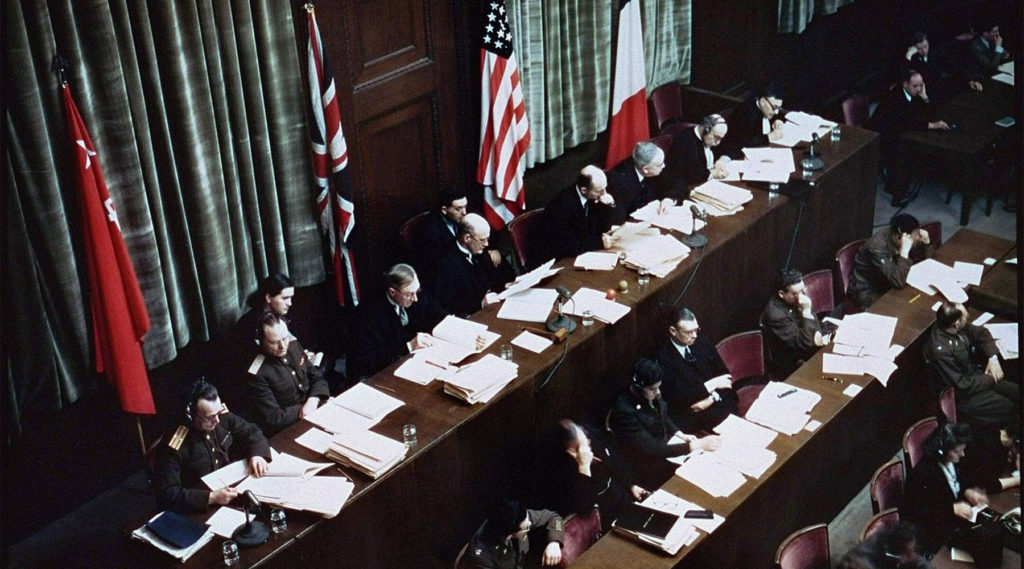
This week, the U.S. Holocaust Memorial Museum placed online more than 700 hours of audio recordings from the trials, as well as 37 reels of film introduced as evidence. The trials, conducted at a military tribunal with judges from Allied nations including the Soviet Union, were a seminal milestone in the creation of modern international law in general and the prosecution of crimes against humanity.

Streicher’s paper was a symbol for how Nazi propaganda methodically dehumanized Jews and used mass media to ready non-Jewish Germans to carry out the Holocaust. Streicher was executed in 1946 by hanging along with nine other Nazis, including Hans Frank, the highest-ranking Nazi officer in occupied Poland. Two of the 24 defendants died during the trials, including Hermann Goring, commander of Nazi Germany’s air force, who committed suicide. Another man was sentenced to death in absentia. Three were acquitted and the rest given long prison sentences.

The recordings, many of them in German without translation, offer an insight into the mood, mindset and history of people like Frank and Streicher, who spoke at length about his personal history growing up in a small village in Bavaria as the youngest of nine children.

He also recalls how, for a time, he followed in his father’s footsteps to become a school principal before he became politically radicalized and joined Adolf Hitler’s Nazi Party, which he said he believed offered the best path to recovering Germany’s ailing economy and improving its international status after its devastating defeat in World War I.

Complete Nuremberg Trials Recordings Online For the First Time Read More »

Top Biden Nominee Says She Erred in Inviting Anti-Semite to Speak While In College

(JTA) — Kristen Clarke, President-elect Joe Biden’s nominee to head the civil rights division at the Justice Department, said it was a mistake to have invited the author of an anti-Semitic screed to speak at Harvard when she headed a black student group there.

In 1994, Clarke as the leader of a Black Student Association invited Tony Martin, author of a book called “The Jewish Onslaught,” to speak and defended him afterward. Jews on campus at the time were appalled by the invitation.

“Giving someone like him a platform, it’s not something I would do again,” she told the Forward on Thursday.

Clarke, the president of the Lawyers’ Committee for Civil Rights Under Law, has worked closely in recent years with Jewish groups in combatting white supremacists.

Biden announced his choice of Clarke on Monday, which earned praise from the Anti-Defamation League.

The following day Tucker Carlson, a Fox News Channel host, uncovered 1994 stories in the Harvard Crimson about the Martin controversy. Subsequently, statements from liberal Jewish groups backing Clarke were more pointed in rejecting the bid to stigmatize her with actions she took as a student.

“This week, Kristen Clarke acknowledged she made a mistake when, as a student at Harvard, she gave a professor who promoted antisemitic conspiracy theories a platform,” Bend the Arc: Jewish Action said Thursday on Twitter. “She unequivocally denounces anti-Semitism — and acts upon that commitment in fighting religious discrimination.”

Also praising Clarke on Thursday for her work combatting anti-Semitism were the National Council of Jewish Women, the Jewish Democratic Council of America, and Joel Rubin, the American Jewish Congress executive director.

Rabbi Jill Jacobs, who directs T’ruah, a rabbinical human rights group, said in an interview that Clarke’s statement this week was a “model of teshuvah,” or repentance, and derided those on the right who would stigmatize someone for something they said as a teenager.

Some of Carlson’s attacks on Clarke include remarks by Clarke, ripped from context, about white supremacy during her Harvard years, when she contrasted it with black supremacy.

“It’s not accidental that people on the right are specifically going after women of color and trying to dig up anything from their past even if it’s something that happened when they’re 19,” Jacobs said.

The Zionist Organization of America called for Biden to withdraw Clarke’s nomination because of her past actions and statements. “Clarke’s longstanding and recent promotion of antisemitism and racism disqualifies her to head a government office entrusted with combating these scourges,” said a ZOA release.

Top Biden Nominee Says She Erred in Inviting Anti-Semite to Speak While In College Read More »

We Don’t Have Adequate Tools to Combat Domestic Terrorism. Biden Should Change That.

(JTA) – The Capitol riot should be a wake-up call for those who did not hear the alarm four years ago at Charlottesville. The riot wasn’t just an assault on the seat of America’s government, although it is surely that, but also a development that if not forcefully addressed may endanger Americans throughout the 50 states.

More than 70 people connected with the Capitol riot have already been charged, and the Justice Department expects the number to increase into the hundreds. Congress and the Justice Department are right to address the issue of insurrection first.

It is now increasingly clear that many in the riot aimed to undermine American democracy. When the dust clears, President-elect Joe Biden and Congress must also address the threat to all of us: The rioters clearly signaled that they mean to harm not only elected officials but ordinary Americans.

A proper response must protect all of the groups to whom the rioters intend harm. Many rioters were motivated by racial hatred and anti-Semitic beliefs. Several displayed known symbols of hate: Confederate flags, signaling anti-Black racism, or the white nationalist “Kekistan” flag, or a Three Percenters flag, reflecting hatred of Muslims and immigrants. One rioter even wore a “Camp Auschwitz” shirt.

The Capitol riot, however, was just the tip of the iceberg. The latest FBI hate crimes report, issued in November, shows that hate crimes in 2019 surged to their highest level in a decade. The report documents 7,314 hate crimes committed in a single year, including a record number of hate murders. These figures are simply too high. So what do we do about it?

Some are now arguing for hate speech laws, but this would actually undermine our work. Richard Stengel, the transition team leader for the U.S. Agency for Global Media, has urged new legislation to curb Quran burning and misinformation about Russian election interference. Such speech laws raise multiple dangers, including political bias, governmental favoritism and outright censorship.

Some progressives may relish the idea of suppressing right-wing hate speech. But they should consider that future conservative governments, given the same weapons, may restrict progressive speech. Consider, for example, Poland’s use of hate-speech laws to persecute LGBTQ activists who criticize the Catholic Church.

Instead, begin by beefing up police departments. Calls to “defund the police,” proliferating in the light of the Black Lives Matter movement, can undermine efforts to protect minority civil rights. Basic law enforcement is needed to protect all populations, including the most vulnerable, from physical violence. The funds need not go to exotic initiatives. What is needed is basic law enforcement.

A recent report from the U.S. Commission on Civil Rights, which I directed over a decade ago, urged funding police departments to improve data reporting on hate crimes. Conservative commissioners dissented from the report, observing that it overemphasized right-wing crimes.

The dissenters are correct to insist on evenhandedness in a field that is too often politicized. At the same time, in order to adequately respond to hate crimes committed in this country, we have to understand where, why and how often they are happening.

Improved reporting is also needed at colleges and universities. Swastika vandalism, for example, has been underreported based on dubious guidance from federal bureaucrats. The Department of Education recently rescinded that guidance, but still permits colleges to rely on it.

We also must do more to combat domestic terrorism. This year, a joint report by the Anti-Defamation League and the George Washington University Program on Extremism revealed the dearth of reliable data on domestic terrorism. The report’s primary focus is white supremacy, and the report noted that the National Counterterrorism Center, which was created to produce integrated, interagency assessments on terrorism issues, is troublingly not permitted to do so with respect to domestic terrorism. The report also urged the FBI to provide clear data on its efforts to understand white supremacist violence.

If left unchecked, this type of hate can also fester within American higher education. A comprehensive response must address places at which young Americans are radicalized. This includes not only right-wing white supremacist organizations, but also left-wing university activities that promote violence.

Consider, for example, that convicted hijacker Leila Khaled, a leader in the designated-terrorist organization Popular Front for the Liberation of Palestine, was just this year invited to speak at San Francisco State University, New York University and the University of Hawaii at Manoa (remotely). Khaled’s events were canceled only when Zoom refused to cooperate, understanding that allowing the events to be hosted on its platform could violate anti-terrorism laws.

At Northeastern University, Students for Justice in Palestine announced an event to study the PFLP’s “strategies and theory.” At this event, students expected to learn how to conduct “armed struggle taking the form of guerrilla warfare at first and developing in the direction of the protracted people’s liberation war” against their “enemies.” Their enemies include the “world Zionist movement,” as well as Israel, Arab moderates and “world imperialism” (read: the United States and its European allies). In other words, they would learn that the proper response to political disagreement is not civil dialogue but “armed struggle.”

What America needs, in the wake of the Capitol riot, is not for political dissidents — whether they come from the left or the right — to preach armed violence.

We should not pretend that such adulation of terrorism has no impact on real life any more than we can pretend that online white supremacy groups are harmless. At the University of Illinois, mandatory diversity training last year included praise for the terrorist Khaled. It is unlikely a coincidence that this campus has also experienced an uptick in anti-Semitic incidents. It was announced recently that the U.S. Department of Education’s Office for Civil Rights will investigate the university based on an anti-Semitism complaint backed by the Louis D. Brandeis Center for Human Rights, the organization that I founded and now run. The university has pledged to address the problem. Time will tell whether it delivers.

Back in April, on the campaign trail, Biden marked the one-year anniversary of the deadly shooting at a synagogue in Poway, Calif. with a commitment and plan to combat hate crimes. If the president-elect is serious about this commitment, his new attorney general cannot permit hate and terrorist activity to fester. After the Capitol riot, this must be priority No. 1.


Kenneth L. Marcus is Chairman of the Louis D. Brandeis Center for Human Rights Under Law and author of The Definition of Anti-Semitism. He served as Assistant Secretary of Education for Civil Rights (2018-2020).

We Don’t Have Adequate Tools to Combat Domestic Terrorism. Biden Should Change That. Read More »

Sheldon Adelson: His Own Man

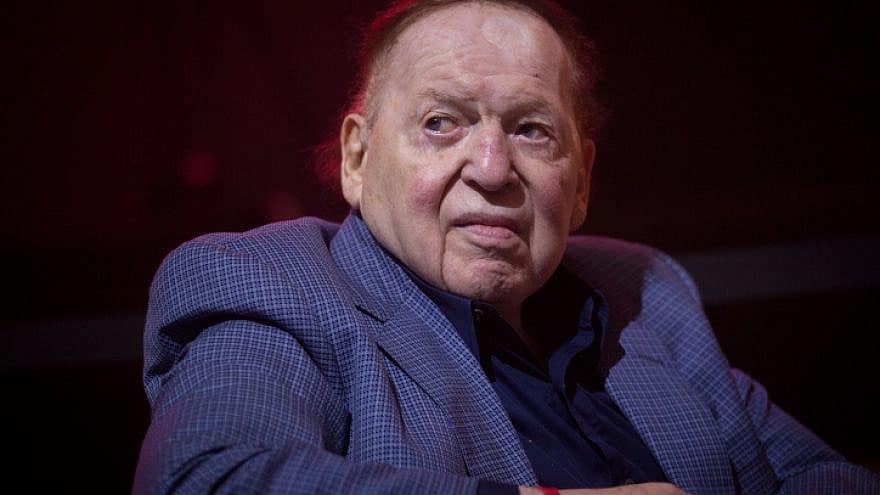
With the passing of Sheldon Adelson, the Jewish people has lost a true hero.

In these hyper-partisan times, it is almost impossible to see beyond a man’s political legacy. Sheldon Adelson poured capital into Republican politics to a degree previously unseen in America. He also backed politicians on the Israeli right, and even launched a newspaper, Israel Hayom, to give the Israeli right a comprehensive voice in journalism.

But while we often disagreed about politics, we were united by one thing: our deep love for, and commitment to, the future of the Jewish people.

Sheldon and I first met in the early 2000s at an event at Tel Aviv University where we were both being honored. We hit it off immediately. As hard-charging businessmen, we shared a certain impatience with the hidebound bureaucratic approach of established American Jewish institutions, and their failure to engender a strong sense of Jewish identity among younger non-Orthodox Jews. We agreed about the need for a completely new approach to engaging them with Israel.

Every time Sheldon came to New York, we’d meet for lunch at Barney Greengrass on Amsterdam Avenue. We saw each other at least twice a year, and in between I’d send him care packages that included the restaurant’s famed pickled herring and smoked salmon, which he loved. He was a casino mogul who never gambled, a man of infinite vigor who met difficult physical challenges as he aged. One thing my wife Judy and I saw immediately was how much Sheldon loved his family, especially his wife Miri. Theirs was a full partnership built on a depth of love that you could sense the first time you met them.

But his love was not just for his family. He loved the Jewish people as well, and expressed it through his philanthropy: He was a major donor to Yad Vashem and to the Israeli-American Council. But above all, he expressed it through his heroic commitment to Birthright Israel, the most successful single program for building Diaspora Jewish identity in modern history.

Charles Bronfman and I started Birthright in 1999 along with a group of donors who each committed $5 million over five years, with a similar gift from the Israeli government and a smaller contribution from the federations. Birthright quickly became immensely popular, overcoming the challenges of institutional skepticism and the fears caused in the early 2000s among American Jewish parents by the Palestinian Intifada. Tens of thousands of young Jews came to Israel each year.

But it never faced a tougher challenge than the financial crisis of 2008, when the Israeli government slashed its contribution to the program, and neither the Jewish community nor private donors felt they could pick up the slack. It was Sheldon who stepped in, without being asked, and poured millions of dollars into keeping it going. He single-handedly saved Birthright.

It was Sheldon who stepped in, without being asked, and poured millions of dollars into keeping it going. He single-handedly saved Birthright.

By the time he passed away, Sheldon had given more than $400 million of his own money to Birthright, making him by far the biggest single donor in its history, and one of the biggest Jewish donors to any single project in our people’s history.

There were people who saw Sheldon’s support for Birthright as proof that it had somehow become a “right-wing” program. But the truth was quite the opposite. If you ask Charles Bronfman — hardly a right-winger — he’ll agree that at no point did Sheldon even hint at trying to influence the program ideologically.

Why did he do it? Because he saw Birthright for what it was: An incredibly powerful tool for building a healthy sense of Jewish pride among young Jews from across the diaspora. While so many people criticized Birthright as too shallow, too short, and a waste of communal money, Sheldon believed in it. Over the years, when studies showed that the trip had major long-term impact, not just on participants’ relationship with Israel, but with their overall Jewish commitment—his investment was proven right. Sheldon helped turn Birthright into a ritual in the lives of nearly a million Jews.

Sheldon was possibly the proudest Jew I ever met. And he acted on that pride. Though his actions and statements sometimes rubbed liberal Jews the wrong way, there was a great deal to learn from his unwavering Jewish pride and his willingness to stand up to anti-Zionists and anti-Semites with conviction and courage.

Sheldon was possibly the proudest Jew I ever met. And he acted on that pride.

We were not always of one mind on philanthropic questions. For years, I wanted Birthright to explore follow-up projects that would harness the enthusiasm created by the trip. Sheldon disagreed. “It’s all about the trip,” he would say. He had incredibly acute business instincts—pretty much all his business efforts were successful—and he understood Birthright through this entrepreneurial lens. He understood the secret of its success. And as a canny investor, he would put his money only into something he knew would pay off.

In a Jewish world where turf-conscious bureaucrats run the show and most private philanthropists are concerned more with social status and the plaques and plaudits of other Jews, Sheldon was one of a kind. He didn’t care about any of that. Sheldon was his own man, and I admired him for it. He trusted his own judgment, he didn’t give a fig about what other people thought of him, and above all, he took action. An energetic street fighter of a kind that used to be more common among Diaspora Jews, he didn’t have the benefits of a large inheritance or an elite education. He built an empire with his own hands and used the wealth he had created to help his fellow Jews.

Every Jew who cares about the future of our people should mourn the loss of Sheldon Adelson. We are unlikely to see another like him.


Michael H. Steinhardt is the Chair of the Steinhardt Foundation for Jewish Life.

Sheldon Adelson: His Own Man Read More »