fbpx

January 12, 2021

Hearty Lentil Soup

One of the greatest treasures I possessed as a child was a brightly colored book called Bible Stories for Jewish children. It faithfully recounted every Parsha of the five Books of Moses. And I faithfully read each story from the Torah over and over. The illustrations by Laszlo Matulay were captivating and distilled the essence of each story so beautifully. Adam and Eve and the snake in the Garden. Abraham and the three angels. Rebecca and the camels by the well. Jacob and the ladder. Joseph and his coat and his dreams. Moses and Pharoah and the Plagues. Aaron with the brightly lit Menorah in the Beit Mishkan (Tabernacle).

To this day, I can visualize the picture of Jacob stirring the pot of lentil soup over an open fire. A famished Esau comes in from a day of hunting in the fields, begging Jacob to sell him the soup. Jacob tells him that he will trade it for his birthright and Esau retorts “What is my birthright worth, if I die from hunger?”

Luckily, nowadays we don’t need to sell our birthright for a bowl of lentil soup, because we can easily whip up a big pot in our own kitchens.

Rachel’s Turn: I adapted this Creamy Red Lentil Soup from a Claudia Rodin recipe that I saw a long time ago. Neil and I love lentils, but our kids refused to touch them. So I decided to blend the soup and the kids have no idea that they are in fact eating lentils. It’s perfect for a weeknight dinner with a nice sourdough bread and a big green salad. When I serve it to my guests, I fancy it up with crispy caramelized onions on top.

Sharon’s Turn: I love that lentils are such a great source of protein and fiber and full of iron, folate, phosphorus and potassium. And I feel better knowing that lentils are a healthy, eco-conscious substitute for meat. My recipe for Brown Lentil Soup is hearty and satisfying. And using cardamom in a recipe is always a pleasant reminder of my grandmother.

Lentils pair nicely with a range of flavors and spices and are most often found in soups or stews. They also feature in rice dishes like the Midddle Eastern favorite mejadra, Iraqi kitchri and Indian kitchari. Unlike beans, their legume cousins, lentils don’t require soaking or other special treatment.

Enjoy!


Rachel’s Creamy Red Lentil Soup

Ingredients

2 tablespoons olive oil
2 onions, finely chopped
1 1/2 pounds of red lentils, picked and rinsed
12 cups of boiling water
6 tablespoons tomato paste
2 bay leaves
1 teaspoon turmeric
1 teaspoon cumin
Salt and pepper to taste

Place the olive oil in a 6 quart Dutch oven over medium heat.

Add the onions and sauté until the onions are translucent.

Add the lentils, tomato paste, water, bay leaf and spices and stir well.

Increase the heat and bring to a boil.

Reduce the heat to low and cover the pot.

Cook at a low simmer until the lentils are soft, about 30-40 minutes, be sure to stir a few times.

Blend with an immersion blender till puréed.

Can be served with some fresh green baby spinach tossed in and allowed to wilt.

Sharon’s Brown Lentil Soup

Sharon’s Hearty Brown Lentil Soup

Ingredients

2 tablespoons olive oil
One large onion, finely chopped
One large carrot, finely chopped
4 celery stalks, finely chopped
2 teaspoons salt
1 pound lentils, picked and rinsed
4 Roma tomatoes, finely chopped
4 garlic cloves, finely chopped
8 cups of water
1 bay leaf
1/2 teaspoon coriander
1/2 teaspoon cumin
1/2 teaspoon cardamom
1/2 teaspoon freshly ground black pepper

Place the olive oil in a 6 quart Dutch oven over medium heat.

Add the onion, carrot, celery and salt and sauté until the onions are translucent.

Add the lentils, tomatoes, garlic, water, bay leaf and spices and stir well.

Increase the heat and bring to a boil.

Reduce the heat to low and cover the pot.

Cook at a low simmer until the lentils are soft, about 30-40 minutes.


Rachel Sheff and Sharon Gomperts have been friends since high school. They love cooking and sharing recipes. They have collaborated on Sephardic Educational Center projects and community cooking classes. Follow them on Instagram @sephardicspicegirls and on Facebook at Sephardic Spice SEC Food.

Hearty Lentil Soup Read More »

Adelson: Jewish Giant, American Colossus

There was rarely a time when I saw Sheldon Adelson that I did not kiss him on the cheek in greeting, as he did the same in return. There was rarely a time when I greeted him, with my wife Debbie, that he did not tease her in some way as to the whereabouts of our nine children. And there was never a time when I called him every Friday to wish him “Shabbat Shalom” that he did not take the call, however busy, and warmly return the greeting.

That was Sheldon Adelson. Corporate titan. Billionaire businessman. The world’s foremost Jewish philanthropist. But through and through, the warmest man with the biggest heart.

Hearing the news today that Sheldon had passed way, even while I knew he had been ill, was shocking. How can a man who was larger than life have been snatched away by death? How could anything have conquered Sheldon Adelson, a living legend?

As the day progressed, I grew increasingly depressed and morose. My wife Debbie summed it up. “I can’t believe that we’re never going to see Sheldon again.”

Neither can I.

Sheldon Adelson was an American colossus. A visionary who transformed Las Vegas and Macau into some of the most visited places on earth. Together with his wife Miri, he envisioned the re-creation of the world’s most serene city, Venice, right in the sands of the Nevada desert. He dreamed big for Israel, believing that the United could and should recognize the tiny desert nation as its most important ally. By the time of his death, today at the age of 87, he had realized his dream. Only a Sheldon Adelson could have foreseen Israel rising as a global technological and intelligence superpower, becoming the most indispensable global friend of the United States of America.

And Sheldon was generous, a supernova of Jewish giving, earning his place among history’s most legendary Jewish philanthropists like the Rothschilds and Montefiores.

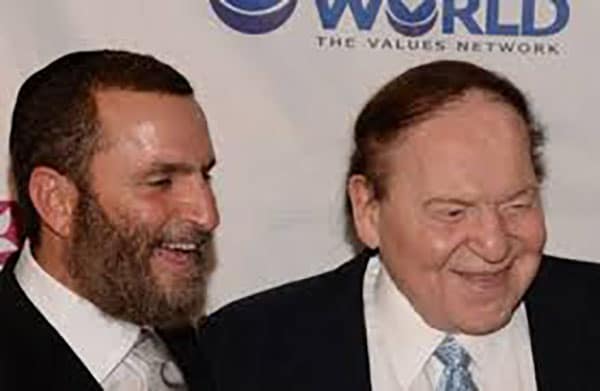
Shmuley Boteach and Sheldon Adelson

As a birthday gift Debbie and I once bought him a silver tzedakah (charity) box. As he opened the gift, he told me that when he was a child his father, a Boston taxi driver, used to come home at night and put coins in the JNF pushke. Sheldon asked him what he was doing. “Giving money to the poor,” his father replied. “But we’re poor,” Sheldon responded.” His father said, “There is always someone poorer.” The lesson stuck. By the time Sheldon’s genius and industriousness led him to create the integrated resorts industry – synthesizing entertainment, exhibition, and convention facilities – he was giving billions to causes of every stripe. Medical research and hospitals. Clinics fighting drug addiction. America’s wounded warriors. Holocaust education and memory. And of course, organizations dedicated to protecting his beloved Israel. To Birthright Israel alone he contributed – together with Miri – nearly half a billion dollars, affording young Jews the world over the privilege his own father did not have the funds to realize, a chance to see the promised land.

To the extent that he gained huge influence as America’s most generous political benefactor, he leveraged that influence to promote American interests and protect the Jewish people. Although Miri was born in Israel, her mother’s family had been largely annihilated in Poland during the holocaust. Sheldon never forgot the lesson. The Jews must be strong if they are to survive and flourish.

All this is already quite well-known about the public Sheldon Adelson, including the moving story he told about how he had worn his late father’s shoes upon his own first visit to Israel so that an impoverished taxi driver, who never had the financial resources to witness the Jewish state, could at least have his shoes trod where the patriarchs walked.

But what is not well-known – and what impressed me the most – was the private Sheldon Adelson. The man whom, whenever I traveled with him, was always holding his wife Miri’s hand. The tycoon who would interrupt meetings to call Miri and sing romantic tunes. The business magnate whose lock screen on his phone was of his two young sons, Adam and Matan, at so tender an age. I watched how in meetings, however critical, he would never fail to take his sons and daughters phone calls.

Sheldon Adelson was, above all else, a family man who adored his wife and children like few I have witnessed.

And he was a loyal and loving friend. Once, after a professional setback, when I was licking my wounds and feeling low, he called me and said, “Friendship is all about shared values. You and I will always be friends because we believe in important things.” Some billionaires only have billionaire friends. But at Sheldon’s birthday parties and family celebrations, the wealthy guests were the exception rather than the rule. He surrounded himself with communal activists whose work he supported, doctors and nurses whose practices he funded, Rabbis and teachers whose educational efforts he supported, and artists and musicians whose creativity he helped to realize. And always, there were his children’s friends.

I have worked as a Rabbi for more than thirty years. But seldom have I met a man like Sheldon who oozed Jewish pride from every pore. He was traditional rather than orthodox, sentimental about his faith rather than a strict adherent. And yet to Sheldon, Jewish pride was an uncompromising article of faith, an absolute religion. Sometimes I would look at him in awe wondering how one man could so devote himself to the protection and needs of his people.

His office was a turnstile of world leaders seeking his wisdom and advice and he was a Jewish light unto the nations.

Once I walked alongside his wheelchair-scooter as he departed his office toward a waiting car. He was flanked by security as he whizzed through the Venetian lobby, guests of the hotel staring on in awe at the legendary entrepreneur. To a humble Rabbi like me, it was an awesome display of might and power. But to Sheldon it was just another opportunity to arrive at his car and insist I get in with him to hitch a ride alongside.

In Miri he found his perfect soul-mate, someone equally motivated to protect Israel in the highest ideals of American love for human-rights abiding democracies and free societies.

In Miri he found his perfect soul-mate, someone equally motivated to protect Israel in the highest ideals of American love for human-rights abiding democracies and free societies.

When Miri read in The New York Times of an Islamic couple in Afghanistan whom the Times had dubbed the Afghani Romeo and Juliet and were threatened with murder for dating outside their tribe, Miri undertook a years-long and successful effort to help save their lives and deliver them from danger. Sheldon watched enraptured. “My wife,” he told an influential person on the other end of the phone whom he had called to enlist their help, “is a hopeless romantic. We must save the couple lives.”

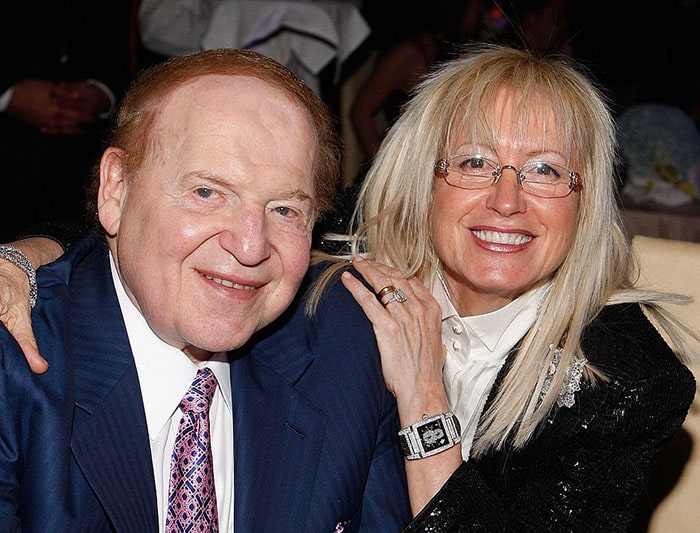
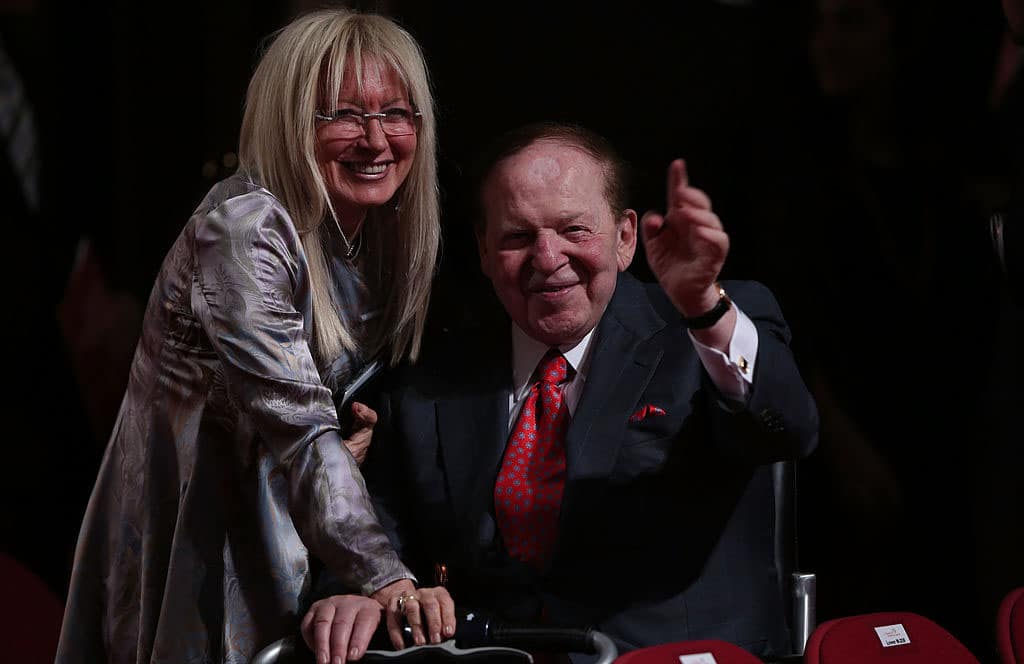
Sheldon Adelson with his wife Dr. Miriam Adelson (Photo by Isaac Brekken/Getty Images)

It sickens me to see fools on the internet who are criticizing Sheldon in death for his political engagement when those critics know nothing of how he lived to see Jerusalem recognized as Israel’s eternal capital, how he despised Iran for their genocidal plans against his people, and how he pledged himself to a moral foreign policy opposing every American enemy who murdered our troops, in whose ranks he had himself once served. His political contributions – which were utterly dwarfed by his philanthropy – were dedicated to upholding the America-Israel alliance, protecting innocent life, and ensuring that a second holocaust would remain an impossibility.

It is a sign of what a special man Sheldon was that my children called me today, one after the other, to say how much they will miss him and how tenderly they remembered him. It is a great comfort to know that his wife, Dr. Miriam Adelson, his full partner in business and philanthropy, will continue their shared legacy as the greatest Jewish philanthropists of our times.

Two years ago, at his 85th birthday celebrations in Nevada, Sheldon arranged for his assembled friends to visit the Grand Canyon, a few hours drive from his Las Vegas home. Little did we all realize how symbolic the visit would be. For Sheldon Adelson would leave a chasm just as large in the fabric of global Jewish living. That was Sheldon Adelson. An American colossus. A Jewish giant. Utterly irreplaceable.

May Sheldon’s memory be an eternal blessing and may God comfort his wife, his children, and the entire nation of Israel.


Rabbi Shmuley Boteach, “America’s Rabbi,” whom the Washington Post calls “the most famous Rabbi in America,” is the founder of the World Values Network and the international best-selling author of more than 30 books, including “The Israel Warrior.” Follow him on Instagram and Twitter @RabbiShmuley.

Adelson: Jewish Giant, American Colossus Read More »

UCR Professor: “Zionism Politically Toxified Our Schools”

A UC Riverside professor tweeted on January 12 that “Zionism politically toxified our schools.”

The tweet in question came regarding a debate on Twitter over the #DefendEthnicStudies. Groups that support the Boycott, Divestment and Sanctions movement like Jewish Voice for Peace had planned to use the hashtag calling for the California Ethnic Studies Model Curriculum to include Arab American Studies; pro-Israel groups such as StandWithUs and the American Jewish Committee countered by using the hashtag to argue that anti-Israel groups are pressuring the state to insert their bias into the curriculum.

Dylan Rodríguez, a Media and Cultural Studies professor at UC Riverside and the 2020-21 president of the American Studies Association, weighed in on the matter by tweeting, “Most California public education administrators don’t understand how Zionism politically toxified our schools and curricula. It prevents us from teaching historical material about entire populations. This must not continue.”

He added in a subsequent tweet: “A number of Zionist organizations want to convince us that Arab American Studies is ‘anti-semitic.’ This is not only intellectually insulting but is also an inherently racist position.”

Jewish groups denounced Rodríguez’s tweet.

“Jewish self-determination is a right enshrined in international law, not a toxic subject to be avoided,” Anti-Defamation League (ADL) Los Angeles Deputy Director Ariella Lowenstein said in a statement to the Journal. “Education should seek to broaden understanding, not disparage other points of view. And contrived positions featuring wild accusations will not improve the Ethnic Studies Model Curriculum, which ADL has long supported. It is lamentable that some would prefer to advance a radical political agenda and promote bias, rather than teach about the rich diversity and bring increased understanding of our communities and histories.

“ADL does not oppose Arab American Studies. What we oppose is the teaching of bigotry against Jews or Israel under any banner or subject heading.”

Associate Dean and Director of Global Social Action Agenda at the Simon Wiesenthal Center Rabbi Abraham Cooper told the Journal in a phone interview that the Ethnic Studies issue is part of a broader campaign to “demonize Zionism” and tell Jews that they have to leave behind their Zionism if they want to engage in social justice issues.

“This is very instructive about how certain movements and groups and individuals will always seek to move the goalposts,” Cooper said, adding that ideally, the curriculum would reflect the diversity of California’s population as a whole, including Arabs and Jews.

“What this professor is putting forward, at least he’s doing it honestly,” Cooper continued. “It’s not enough to have Arab-Americans in whatever comes out at the end. God forbid it should include American Jews and their love for Israel! That’s about as honest of a statement of where things are heading.”

Carly F. Gammill, director of the StandWithUs Center for Combating Antisemitism, similarly said in a statement to the Journal, “This is exactly the type of hate that we must keep out of California’s ethnic studies model curriculum (ESMC). Zionism is a central part of identity for many Jews, the vast majority of whom naturally support their people’s right to self-determination in their ancestral home. To suggest that Jews and others ‘toxify’ schools or somehow silence others by expressing their identity or supporting basic Jewish rights is dehumanizing and abhorrent.

“UC Riverside should strongly condemn this professor’s statement and California education officials should take note of what to guard against as they finalize the ESMC.”

AMCHA Initiative Director Tammi Rossman-Benjamin similarly said in a statement to the Journal that the #DefendEthnicStudies hashtag “is used by activists aggressively campaigning to require students — both in high school and college ± to take a course in ethnic studies to graduate. These ‘courses’ are disguised as education, but in reality are based on a narrow and radical form of ethnic studies called, ‘Critical’ Ethnic Studies, a highly divisive and politically-motivated discipline that aims to indoctrinate students into a specific ideological vision and promotes political activism, including anti-Zionism and BDS.”

She added that Rodríguez’s “offensive” tweets shows the importance of adding safeguards to the curriculum “to ensure faculty are not permitted to use their classrooms to indoctrinate students and mobilize political activism, including anti-Zionism.”

The Stop Antisemitism.org watchdog tweeted, “Imagine being THAT obsessed with hating on Jews that you think an entire state’s educational curriculum is set up in their favor!”

When asked to respond to Stop Antisemitism.org’s tweet, Rodríguez responded: “I reject the premises enabling their weaponization of the terms ‘anti-Semitism’ and ‘hate.’ Ironically, their tweet trolls exemplify the very toxicity I referenced in my original post.”

The university declined to comment on the matter.

In November, various Jewish groups praised changes to the ESMC that included removing language that accused Jews of having “racial privilege” and included a lesson on “Antisemitism and Middle Eastern Jewish Americans.” The deadline for a final ESMC draft is March 2021.

UCR Professor: “Zionism Politically Toxified Our Schools” Read More »

WhatsApp Privacy Changes Roil Users, Governments

The Media Line — The Facebook-owned messaging platform WhatsApp on Monday lost a prominent user, when Turkish President Recep Tayyip Erdogan announced he was quitting the popular app because of the latest changes in its privacy policy.

Ankara’s premier has hardly been the only one. The Turkish alternative to WhatsApp, called BiP, which Erdogan promised he would migrate to, gained close to 1.5 million users in the past 48 hours alone. More popular messaging services like Signal and Telegram have attracted hundreds of millions of users around the world as well.

Yet these platforms can hardly compete with the Facebook-owned behemoth – currently boasting close to 2 billion users –which has for years dominated the messaging-service market.

In recent days, WhatsApp has required users to approve its latest privacy policy update. The seemingly routine procedure for the update slated to take effect on February 8, will enable the app to share its users’ data with parent company Facebook and its other subsidiaries such as Instagram and Messenger.

“These changes mean that all the data that WhatsApp has – such as location metadata, who you chatted with (but not the chat content), groups, and all other data – will be shared with the vast Facebook ad system,” Ran Bar-Zik, a prominent Israeli tech blogger and technology journalist for Haaretz, told The Media Line.

“It is not the first attempt by WhatsApp to integrate the user data into their system, but now this is mandatory – agree or you’re out,” he said.

“This is big,” Bar-Zik said of the change. He explains that while Facebook has over the years compiled massive amounts of information via its site and its “like” buttons and tags code spread across myriad websites, “this is a channel to a vast, valuable quantity of data [that will enable] Facebook to tighten its grip on us, to develop better tools and techniques to keep us glued to its endless feed and develop better, more effective ads.”

“People used to just download and click accept, accept, accept. Now, all of a sudden, they’re presented with an option to either approve the changes or quit the app.”

Yuval Dror, a technology sociologist and the former dean of the College of Management Academic Studies’ School of Media Studies, sees things differently.

“It’s not like before this change the Great Wall of China was separating WhatsApp and Facebook,” he told The Media Line. “People used to just download and click accept, accept, accept. Now, all of a sudden, they’re presented with an option to either approve the changes or quit the app.”

The new terms of use constitute a significant step in Facebook’s apparent attempt to consolidate its assets and make it harder for authorities to break up the tech giant.

If successful, Mark Zuckerberg’s company will be able to monetize WhatsApp, eventually allowing businesses to contact users and sell products via the platform.

Last month, United States’ federal and state regulators joined to file landmark antitrust lawsuits against the conglomerate.

Yet while Erdogan’s office on Sunday vowed not to use WhatsApp for government business, Israeli authorities seemed less concerned.

“The latest change is only privacy-related, and doesn’t expose users to cyberattacks,” Libby Oz, spokesperson for Israel’s National Cyber Directorate, told The Media Line.

“There are more complex questions here – should government employees use only government-issued phones? Should WhatsApp be used by public officials for personal issues?” Oz said. “But as to the latest policy update, that’s not something we can do much about.”

Dror argues that while there is no clear national security threat in Facebook’s increasing dominance, Israel’s regulators should take notice of its monopolization.

“They’ve been totally impotent, it’s incredible,” he said of Israeli lawmakers. “The government has intentionally avoided dealing with Facebook, for political reasons, among others.”

The few bill proposals intended to limit Facebook’s powers that have been brought to a vote were shot down by Prime Minister Binyamin Netanyahu and his Likud party, Dror said, “who are very satisfied with their cooperation with Facebook and don’t want to harm it.”

“I don’t see any regulator or lawmaker taking it upon themselves to lead this battle,” he said.

Over the years, competing instant messaging platforms have cropped up, offering more secure and encrypted services.

Signal, initially released in 2014, has gained a following in recent years by cybersecurity experts and government officials, ranging from the US Senate’s Sergeant-at-Arms to the European Commission, while also being used by journalists, whistleblowers and protesters worldwide.

An open-source, non-for-profit service, Signal has more than 10 million downloads on Android.

The even-more popular Telegram was launched in 2013 by two Russian brothers, programmers who wished to form a messaging platform safe from government censorship. It currently has over 400 million active monthly users.

In Israel, over 90% of cellphone holders use WhatsApp as their main messaging service.

“It’s the network effect – once it reaches a critical mass of users, the value of that network grows. At a certain point, it becomes virtually impossible to migrate to competing platforms,” Dror explained.

“Is it possible for Israelis to leave WhatsApp en masse? Yes, but it’ll be extremely difficult,” he said.

As for possible changes in official Israeli policy toward WhatsApp, similar to the latest Turkish government’s pivot to homegrown brands, Bar-Zik is skeptical.

“Creating a government system to ‘replace’ WhatsApp is a horrible idea,” he said. “I don’t trust Facebook, but I trust government apps much less.”

Is it possible for Israelis to leave WhatsApp en masse? Yes, but it’ll be extremely difficult

Asked if he believes the Israeli government should mandate its employees to use more secure services like Signal or Telegram for government business, Bar-Zik was clear: “On government phones? Yes, of course. On private property? No.”

Experts recommend that users back up their WhatsApp chats data before transferring to a new platform.

  • iPhone users should use iCloud: Go to WhatsApp Settings > Chat Settings > Chat Backup (In some versions, Settings > Backup), and tapping on the “Back Up Now” button.
  • For Android users, the same can be done with Google Drive: Go to Whatsapp Settings > Chat > Chat Backup, and tap “Back Up” to save an immediate copy of your WhatsApp chats.

Users wishing to restore their chat history when returning to WhatsApp must reinstall the app. Devices will automatically detect previous backup files and will provide an option to restore them. Simply tap on the “Restore Chat History” or the “Restore Backup” option.

WhatsApp Privacy Changes Roil Users, Governments Read More »

My Two Memories of Sheldon Adelson

Like many people involved in Jewish causes, I had many occasions over the years to meet Sheldon Adelson, who passed away today at the age of 87. Our conversations were pretty short. I admired all of his accomplishments, but I can’t say I knew him well.

But two memories in particular stood out. One occurred about eight years ago, when we were part of a group being initiated as honorary “brothers” in the AEPI Jewish fraternity. The event was in one of the smaller ballrooms of his Venetian Hotel and Casino in Las Vegas. By luck of the draw, I stood right next to him.

I remember the moment well not because of anything he said, but because of how he acted. It wasn’t easy for him to stand up, but he did so anyway. He patiently and carefully followed every step of the long ritual. Here is a supremely powerful billionaire philanthropist, I thought, and he’s acting just like everyone else. No special privileges.

Here is a supremely powerful billionaire philanthropist, I thought, and he’s acting just like everyone else. No special privileges.

My second memory is one word he emphasized at a pro-Israel event — “ambivalence.” His message was that real love should not be tainted by ambivalence. When you truly love someone or something, there shouldn’t be any second thoughts.

He was speaking about Israel. His love for Israel had no ambivalence. It didn’t mean he agreed with everything Israel did; it meant his love was iron-clad and permanent, just as we might love a child. “No ambivalence,” he repeated a few times to a large crowd.

Those two words may end up shaping his legacy. Whether he was asked to stand up with difficulty to honor a ritual, or whether he was called upon to assist his beloved Israel and the Jewish people, he had a genius for showing no ambivalence.

May his memory be a blessing.

My Two Memories of Sheldon Adelson Read More »

Jewish Groups React to Passing of Sheldon Adelson

Several Jewish groups issued statements mourning the death of GOP megadonor and Jewish philanthropist Sheldon Adelson on January 12.

Adelson, 87, died after suffering complications from his treatment for non-Hodgkin’s lymphoma; he had taken a leave of absence for the treatment on January 7. Adelson’s widow, Miriam, said in a statement that her husband donated “to charitable causes that may literally be countless, as he expected no credit and often preferred anonymity” and “crafted the course of nations. Some of the historical changes that he helped effect — in the United States, Israel and elsewhere — are publicly known. Others are not.” She concluded by calling his loss “colossal. Farewell, my darling, my one true love. After gaining and giving so much, you have earned this rest.”

Jewish groups also paid tribute to Adelson.

“I always told Sheldon that he’s the modern-day Moses Montefiore of our generation. Just as he who broke barriers and built Jerusalem, so did Adelson in Jewish education and connection to Israel,” Jewish Agency Chairman Isaac Herzog said in a statement. “I had the honor of a close relationship with him for many years and he was no doubt among the greatest leaders of the Jewish people throughout this generation. His generosity, openness, modesty and accessibility always stood out. Even when we had differences of opinion, I always loved him.”

The Simon Wiesenthal Center tweeted, “We join in mourning the passing of Sheldon Adelson whose philanthropy aided untold people in need, charitable organizations and above all his beloved Israel. Our condolences to his beloved wife and children.”


StandWithUs similarly said in a statement, “The generosity of Sheldon Adelson has resulted in support for vital medical research, advances in academia and solid support for initiatives that strengthen Jewish identity, invest in the future of the Jewish State and bring people closer to Israel. During the pandemic, and despite the effects of it on the hospitality sector, Sheldon Adelson ensured that his staff continued to receive salaries and benefits. He was a proud American and a proud Jew.”

Republican Jewish Coalition (RJC) National Chairman and Executive Director Matt Brooks hailed Adelson, who was a member of the RJC Board of Directors,  as “one of the most consequential figures in American Jewish history” and noted that the Adelsons “gave generously of their wealth, knowledge, and time to support causes they were passionate about, including education, addiction recovery, and medical research, as well as supporting pro-free market and pro-Israel candidates and organizations.”

They later added that the RJC “benefited not only from Mr. Adelson’s generous financial support, but very significantly from his leadership and his counsel. His friendship, encouragement, and wisdom will be sorely missed. His death leaves an empty place where a vibrant, committed, and caring man once stood. We are all diminished by his passing.”

Zionist Organization of America (ZOA) President Morton Klein issued a statement calling Adelson “the proudest Jew I ever knew.” He noted many don’t know that the Adelsons have “funded hundreds of millions of dollars of medical research to fight cancer, heart disease, and other human ailments. His director for medical research (a high school classmate of mine) told me that Sheldon’s and Miri’s devotion to stamping out disease was almost as great as their unbounded love of Israel and the Jewish people.”

Klein added that Adelson had long wished to see the United States embassy in Jerusalem and recalled how Adelson “very excitedly told me that Donald Trump had just promised him he would move the US Embassy to Jerusalem during his term in office. And he did. And Sheldon deserves a great deal of credit for that historic achievement.”

The ZOA president also praised Adelson’s work in “fighting against anti-Semitism, fighting on campuses against the anti-Israel propaganda, combatting lies against Israel and Jews, and making sure that we never forget the horrors of the Holocaust. A part of his legacy was to insure there would never be another Holocaust. Sheldon’s wife Miri lost many of her family members in the Holocaust, and was Sheldon’s partner in their commitment to ‘Never Again’ allow such a horror to happen.”

Toward the end of the statement, Klein said: “There was no one like Sheldon Adelson in all the world ­— even throughout history. The world can never be the same without the activism and force of nature that Sheldon Adelson was. People say that Sheldon was the Rothschild of this era. I say that Rothschild was the Adelson of his era.”

Former New York Democratic Assemblyman Dov Hikind, who also heads the Americans Against Anti-Semitism watchdog, tweeted, “Sheldon Adelson was a champion of Conservative, American and Jewish values and he never wavered despite endless challenges. He was a force that will be sorely missed. Baruch Dayan HaEmes.”

Bryan Leib, chairman of the Jewish millennials organization HaShevet and an insider for the conservative news outlet Newsmax, also tweeted: “To me, [Adelson] will always be a mega-human who used his wealth to support Israel, Jewish institutions, conservative politics & cancer research. BDE Sheldon Gary Adelson. We will never forget you.”


Students Supporting Israel praised Adelson as “an icon to the Jewish community. His generosity & kindness has made the world a better place. His legacy will continue on, and his memory will forever be a blessing. Thank you, Sheldon, for everything.”


IfNotNow, a Jewish group that calls for an end to the Israeli occupation of the West Bank, tweeted, “Adelson dedicated his life and wealth to empowering the far right in the US and in Israel. But our collective work—the work of building solidarity, of fighting for freedom and dignity for all—can undo that harm. Yimakh shemo. May his legacy be erased. And may we do it together.” This prompted Jewish writer Sarah Tuttle-Singer to respond: “It is one thing to disagree w/another human being, & Adelson’s legacy is complex. But to write something like this after his death is vile & antithetical to the peace & justice movement Israelis & Palestinians need.”


Similarly, former Jewish Voice for Peace Executive Director Rebecca Vilkomerson tweeted that Adelson’s death is “a present for my birthday.” Democratic Majority for Israel retorted, “I fought Sheldon Adelson in campaign after campaign & issue after issue. But I refuse to rejoice at the death of any human being-especially one who’s also done good There is sickness at the heart of your organization. You’ve nothing to do w/peace. Remove this appalling tweet.”

Adelson’s funeral will be held in Israel — where Miriam was born — and a memorial will be held in Las Vegas on a date that has yet to be determined.

Jewish Groups React to Passing of Sheldon Adelson Read More »

FBI Raids Home of Orthodox Man in Capitol Mob

(JTA) — Aaron Mostofsky, an Orthodox Jewish man who participated in the Capitol mob last week wearing fur pelts and a bulletproof vest, was arrested by the FBI at his home in Brooklyn Tuesday morning.

Videos circulating on social media Tuesday morning showed several FBI agents outside his home. One video showed an FBI agent carrying a fur pelt out of the home. State police officers were also visible in the videos.

The FBI confirmed the arrest Tuesday afternoon and said Mostofsky would be charged by the U.S. Attorney’s Office in Washington, D.C. According to ABC7 New York, Mostofsky would face four charges, including felony theft of government property.

The arrest comes amid a nationwide crackdown on the Trump supporters who stormed the Capitol building last week. While police on the scene initially allowed most people who breached the building to leave, many are now being arrested in their home cities, often after efforts by online sleuths to identify them from the videos and photographs that emerged during the violent and chaotic siege.

Mostofsky was one of dozens of “persons of interest” sought by Washington police for unlawful entry to the building. He was among the Orthodox Jews who came to the Capitol to protest, telling the New York Post that he wanted “to express my opinion as a free American that this election was stolen” from President Donald Trump.

Mostofsky is the son of Steven (Shlomo) Mostofsky, a Kings County Supreme Court Judge and former president of the National Council of Young Israel, an Orthodox synagogue association that has been outspokenly pro-Trump in the past. Mostofsky’s brother, Nachman, who serves as executive director of Chovevei Zion, a politically conservative Orthodox Jewish advocacy organization, also attended the protest in Washington last Wednesday but said he left before the mob entered the Capitol.

“No conservative will condone what happened today, the actual storming of the Capitol … it was unpatriotic,” Nachman told the Jewish Telegraphic Agency on the day of the riots, before his brother was publicly identified as a participant in the violence. “But we heard for months during the summer when people don’t feel heard, this is what happens.”

FBI Raids Home of Orthodox Man in Capitol Mob Read More »

Protesting is Democratic Until it Turns Violent

Across the world, we watched in disbelief as the news unfolded, and took in live video of the protesters, as they breached the Congress of the United States of America. From Azerbaijan, I held my hand to my face, and called for my daughter to witness the news. She is grown up now – aware of the world and all that is happening, and yet with everything she has learned about the United States, I don’t know if she would have believed this unless she saw it with her own eyes. 

We share an unabashed reverence for the United States; it represents a nation of freedom, of uncompromising justice, and as a strong ally to our own nation – we see America as a nation of peace. 

Yet the actions that occurred on January 6 in the wake of President-Elect Biden’s officiation, seem far removed from the American values and identity we cherish and celebrate. Of course, America is inseparable from her own history of revolution, of protest against tyranny, and all that entailed, yet the world over, and most Americans as I understand it, know that is not what took place at the Capitol on Friday. This was an act of unbridled radicalism, a plot of violence and anti-democracy that seems to be the most un-American thing imaginable. Violence is something the rest of the world knows all too well – it is neither a novel or revolutionary action – it is the weight that keeps people and entire nations buried in the past and unable to move forward into a brighter future. It simply has no place in the America I know and love. 

But as we all know, the world has been in unmatchable turmoil for some time now, and like so many other alarming new patterns, there has been an uptick of incidents of violence as a means of protest in the United States. Only last July, a violent protest took place in West Los Angeles, in front of the building housing the Consulate General of Azerbaijan as well as other Consulates. That protest, staged by the Armenian National Committee of America and the Armenian Youth Federation, resulted in violent attacks by hundreds of radicalized Armenians against a small group of Azerbaijanis, leading to nine Azerbaijanis injured, including five hospitalizations. A Los Angeles police officer was also wounded and his assailant was arrested. The LAPD is investigating the incident as a hate crime. Just a few months later, the same Armenian groups staged a protest at the same building, only this time against the Consulate General of Israel, calling out Israel for supporting her ally Azerbaijan, and equating Israel to Nazi Germany.

Only a few weeks later in early November, following the Armenian Prime Minister, Nikol Pashinyan’s announcement of a ceasefire deal, which included Armenia’s withdrawal from Azerbaijan’s occupied districts, hundreds of Armenians stormed the Parliament and other government buildings in Yerevan, breaking windows, beating the Speaker of the Parliament unconscious and ransacking Pashinyan’s office. Pashinyan survived by hiding in an undisclosed location. Later, the same mob rushed the Yerevan office of America’s Radio Free Europe/Radio Liberty (RFL/RL), which the radio’s acting President Daisy Sindelar described as “a reprehensible assault on the essential duty of journalists to serve as impartial witnesses during major news events.”

Whether in Armenia or anywhere else in the world, when radicalized violence is at play, every facet of freedom is at risk, and so it is both terrifying and unsurprising that the mob attacked both the government and the free press at once. 

The example of the protest against Azerbaijan is useful because it showcases what is possible in the United States – radicalized Armenians were protesting against Azerbaijan, while it’s Armenia that invaded and ethnically cleansed Azerbaijan’s Karabakh region, in violation of the international law and the UN Security Council resolutions. In the United States, they are entitled to protest, even under such a twisted banner as supporting a criminal war of aggression and occupation, because their freedom of speech is so protected. Yet when it became violent, they were no longer operating within a framework that supports the cherished values that have protected their speech in the first place. The protesters in Washington, D.C. were entitled to rally and make sure their message would be heard, but when they turned violent and breached the police barricades, they too were no longer operating within the framework of democracy. 

As someone who has has endured the most depraved form of violence, as a survivor of torture and as an advocate for peace, I can say firsthand that there is no security in democracy when violence and lawlessness take hold. I lived in a democracy, and when my town was overtaken by radicalized invaders, every semblance of my freedom and safety were gone, as if they had never existed. Thankfully, I survived and was returned to my homeland, as a refugee from the occupied region I had once called home. My example involves foreign invaders yet the principle applies just the same – where unmitigated and hate driven violence is allowed to fester and grow, it will eventually impact everything around it –  and change the scope of freedom and democracy with each violent step. As we face this new year, as a global community committed to peace and progress and our whole recovery from this devastating pandemic, let us renew our commitment to protecting our democracy by universally condemning those acts that threaten its very existence.

Protesting is Democratic Until it Turns Violent Read More »

Biden Should Keep Trump Anti-Semitism Envoy

The new Congress passed legislation elevating the U.S. State Department’s special envoy to monitor and combat anti-Semitism to the rank of ambassador. Jewish Democrats are already jockeying for the job in the Biden administration, but this would be an excellent opportunity to show his commitment to bipartisanship and desire to change the toxic atmosphere in Washington by reappointing Elan Carr.

So far, Biden has not appointed any Republicans to senior positions, which has not been a positive sign of his goodwill. Like most new presidents, he is expected to reward his loyalists and any job that goes to a Republican, no matter how qualified, angers his supporters. This is likely to be especially true for Biden, who has been fighting a rearguard action against the progressive wing of the party.

Nevertheless, he has an opportunity to reassure the Jewish community about his commitment to fighting anti-Semitism and add a Republican to his administration that has no political downside. The position is not important to the Democratic Party’s ideologues, and is not being fought over by the party’s warring factions and diversity advocates. Jewish Democrats hoping for the job will just have to live with disappointment or look for another position in an administration that will have no shortage of Jews (he’s already named Jews as his chief of staff, secretaries of treasury, state and homeland security, and director of the Centers for Disease Control and Prevention).

Biden has an opportunity to reassure the Jewish community about his commitment to fighting anti-Semitism and add a Republican to his administration that has no political downside.

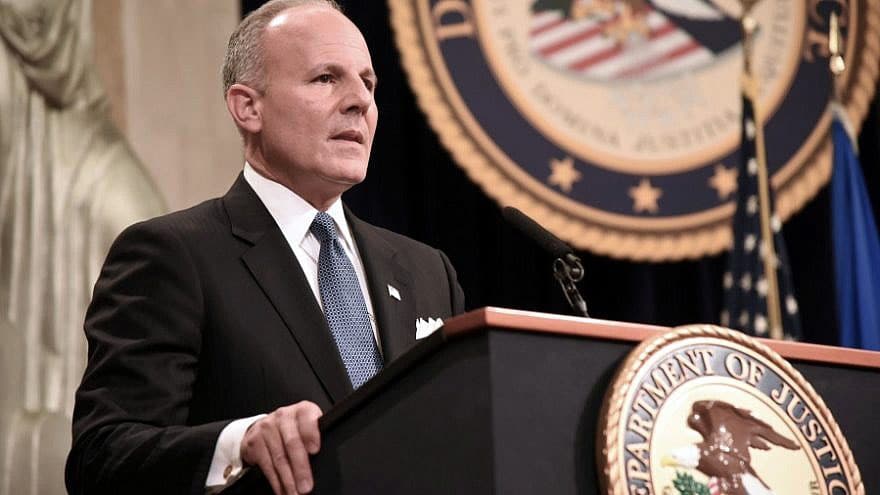
For those who don’t know him, since his role did not give him a high profile in the United States, Carr is a brilliant speaker, tactful diplomat, committed Jew and one who has given many years of his life to public service.

Carr served as a JAG Corps officer in the U.S. Army Reserve and was deployed to Iraq in 2003-04, where he helped track down and prosecute terrorists who attacked American troops. He also assisted efforts to establish an independent Iraqi judiciary, and trained Iraqi judges and lawyers on constitutional law and criminal defense. Carr loves to tell the story of leading a celebration of Hanukkah in what had been Saddam Hussein’s presidential palace.

Carr is no ideologue, and is an exemplary representative of the United States and the American commitment to fight anti-Semitism on a global scale. Before being asked to join the Trump administration, he was already heavily involved in Jewish affairs and the fight against the delegitimization of Israel. As president of the AEPi fraternity, Carr was a charismatic leader who helped inspire the brothers to make the nearly 200 chapters among the most active and effective pro-Israel student organizations in North America, educating their peers, promoting Yisrael Hayafah, and fighting BDS and other anti-Semitic campaigns on campuses across the country.

In just two years as special envoy to monitor and combat anti-Semitism, Carr has traveled around the world to convey the U.S. commitment to fight Jew-hatred. One goal of his public diplomacy has been to broaden the consensus on the definition of anti-Semitism because, without one, you cannot fight it. He has done this by encouraging other governments and international organizations to use the working definition adopted by the 31 member states of the International Holocaust Remembrance Alliance (IHRA). Since taking office, the definition has been endorsed or adopted by a dozen countries: Hungary, Canada, Luxembourg, Greece, France, Cyprus, Italy, Uruguay, Serbia, Argentina, Spain and Albania.

Carr has also managed to convince all but the most fringe groups to understand that anti-Semitism is a phenomenon driven by the far right, the radical left and militant Islam.

It was no surprise given Carr’s advocacy that Secretary of State Mike Pompeo announced in November that it is the position of the U.S. government that “anti-Zionism is anti-Semitism,” and that America is “committed to countering the Global BDS Campaign as a manifestation of anti-Semitism.” Carr is the person responsible for implementing “the policy of the United States to combat anti-Semitism everywhere in the world and in whatever form it appears, including all forms of discrimination and hatred rooted in anti-Semitism.”

Another example of Carr’s skillful diplomacy was the negotiation of an unprecedented agreement with the King Hamad Global Center for Peaceful Coexistence in Bahrain to work with the United States to combat anti-Semitism in the Middle East and to develop educational programs for children to teach tolerance. The center, which reflects the views of King Hamad Bin Isa Al Khalifa, is the first Arab institution to adopt the IHRA definition.

One major focus during Carr’s service has been online anti-Semitism. He organized the first-ever U.S. government conference focused on combating online anti-Semitism and developing practical responses for governments and civil society.

The envoy’s role is to focus on the broad issue of anti-Semitism, but Carr was also involved in helping countries deal with specific incidents, marches and even intervened on behalf of individual Jews, including a doctor in Sweden. In his meetings with officials, which included prime ministers, he lobbied governments to devote greater resources to protect Jews and their property and institutions.

Although his mandate was to work abroad, the White House also called on him to contribute to the domestic fight against anti-Semitism, so while he was involved, for example, in discussing enforcement of hate-crimes laws in countries like Germany, he also worked with law enforcement in the United States. He represented the White House at one of the funerals for a victim of the shooting at Chabad of Poway, Calif., and has condemned the anti-Semitic elements of the proposed ethnic-studies curriculum in California. He also prioritized fighting anti-Semitism on campus, which was reflected in the president’s executive order including the IHRA definition and prohibiting discrimination against Jews.

Most attention in the fight against anti-Semitism is reactive; however, Carr launched a series of “philosemitic initiatives,” including curricula and public information campaigns to promote an appreciation of Jews and their heritage. Programs have been created in the United States, Germany and Russia.

The job of monitoring and combating anti-Semitism should be a nonpartisan position, like FBI director, with a term that crosses administrations. The mission is too important to be held up by quadrennial confirmation votes and Jews fighting for the one position in the government that is essentially (though it need not be) a Jewish job.

I don’t know if Carr wants to stay in the position, but as someone committed to public service, I have no doubt he would be willing to serve at the pleasure of the new president to continue to fight for the safety of Jews around world. Jews of both parties should want the best person for the job, and I can think of none better than Elan Carr.


Mitchell Bard is a foreign-policy analyst and an authority on U.S.-Israel relations who has written and edited 22 books, including “The Arab Lobby, Death to the Infidels: Radical Islam’s War Against the Jews” and “After Anatevka: Tevye in Palestine.”

Biden Should Keep Trump Anti-Semitism Envoy Read More »

Why I Only Speak English

It’s nice to speak more than one language — but I don’t. My father spoke seven languages. My mother four. I only speak English.

But this wasn’t an accident. It was designed that way.

As children, my parents were interred in places with names like Dachau, Buchenwald, Auschwitz and Bergen-Belsen, where they were berated, humiliated, beaten, tortured and starved. In spring 1945, both of my parents, near-death, were liberated by the Allies. They survived with the aid of army medics and Red Cross hospitals. Most of their family members were not so lucky.

They tried going “home” but found that their family houses were no longer theirs, occupied now by their former “friends” and neighbors. So, like other displaced persons (DPs), my parents found their way to the Allied-established DP camps in Germany, where, as teenagers, they married under the chuppah.

A few years later, with the help of a Los Angeles based businessman, they were “invited” to come and settle in the United States. And in 1949, they left Germany aboard the USS General Blatchford, a military frigate now commissioned to take them to their new home in New York City. Barely beyond teenagers, they were overcome with the excitement of a new beginning — sheltered by the safety of a country they already loved.

After a week at sea, they sailed into New York harbor, and from the deck of the Blatchford, they stood in awe of a woman with a torch, adorned with words inscribed by a Jewish American girl, not much older than them at the time: “Give me your tired, your poor, your huddled masses, yearning to breathe free, the wretched refuse of your teeming shore. Send these, the homeless, tempest-tossed to me, I lift my lamp beside the golden door!”

They were home. Safe and sound.

Filled with pride and protected by American democracy, my parents were happy and built productive lives with their three sons. My brothers and I were walked to school by heavily accented immigrants — and while their English certainly wasn’t perfect, they never allowed us to learn or speak any of the other languages they were more comfortable with and decisively more fluent in.

Disappointed in never having learned one of “their” languages, I later asked my mother why she and my father never encouraged it. Her answer was simple but complex. “We wanted you to be Americans.” She didn’t have to say more. I knew the rest.

Unlike her childhood, my mother wanted her children protected by American truth and values. She understood and cherished the strength and value of American democracy and the laws that are created, upheld and sustained in our nation’s capital, especially in that building, the one with the dome. The one that represented her safety and her freedom. The one that had given birth to the General Blatchford. And the one that she maintained comfort with, knowing that if asked, her children would respond without doubt or hesitation, “I am American.”

Unlike her childhood, my mother wanted her children protected by American truth and values.

On January 6, a president, whom my parents would have never supported, incited a mob to “be strong” and storm the Capitol. His son insisted that the Republican party belonged to his father and that anyone who disobeyed him would be dealt with severely.

Along with millions around the world, I watched in horror as the mob took over the Capitol building, the nucleus of my parents’ safety. The Proud Boys and others — adorned with shirts which read, “Camp Auschwitz” — were now in charge. They sat in the vice president’s chair. They flew the racist flag of the Confederacy. These Brownshirts were defiling our nation’s Capitol. And our president, seething with pride over it all, told them, “We love you. You are very special.” His daughter called them “Patriots” in a now-deleted tweet.

I watched as shocked CNN commentator David Axelrod said, “I am the son of an immigrant who fled a country because of things like this, who came to the United States because this was a country of laws … I am in tears today.” I thought, yes David, you are not alone … so am I. How would this ever be explained to my parents?

Then it occurred to me. My parents may not have spoken perfect English, but they made sure that their son did. They knew to raise an American with a voice tempered by their experiences and bold enough to speak out against such a man the minute he uttered dangerous untruths about “Mexicans.” One savvy enough to understand that hearing, “he will be good for our country” was an electrode pinned to my psyche, only because those same ominous words had been professed nearly 100 years before. And one smart enough to recognize at the onset that such an egomaniacal demagogue is critically dangerous.

Yes, like many, I was shaken and rattled. But I’m buoyed by knowing that my parents would want me to speak up to say that one man’s actions do not a country make, even if he is president. They continue to call to me from beyond the grave to insist that the cherished but fragile words of the woman in the harbor, so meaningful to them and so many others, still matter. And that these words must be upheld at any cost — even if it means forcefully calling out danger the minute it rears its ugly head.

I can only hope that you can hear them too.


Richard David lives in Culver City, CA, with his wife Rulla and their mashugana dog Molly. He attained his MBA from Loyola Marymount University and enjoys writing part-time. 


Why I Only Speak English Read More »