fbpx

January 12, 2021

Cambria Gordon’s Book Reminds Us of Our Destiny

For an interview with the author, click here.

A good book grips you, pulling you along until the very end. A great book catapults you, launching you into a different universe. “The Poetry of Secrets” by Cambria Gordon is a good book in the sense that from the moment you meet the protagonist Isabel Perez, you care about her and those around her, you share her worries and her dreams, and you remain anxious to see how it all works out. But it is a great book because it plunges you into Medieval Spain, a world you haven’t thought much about lately, if ever — specifically, Gordon takes the reader to Trujillo in 1481, just as the evil Spanish Inquisition begins.

Within the book’s first few pages, the reader is in on Isabel’s two big secrets. The first she shares with other family members. They act like New Christians but are actually conversos, practicing whatever they can of Judaism, their true religion, in their wine cellar. The second secret, which Isabel doesn’t share with her family, is that she is already sneaking out of the house to attend poetry readings at the tender age of sixteen.

We also quickly meet Isabel’s two love interests. Diego is the dashing, broad-shouldered son of the town grandees, prominent Catholics who would never approve of a marriage to a New Christian of a lower class. Alas, Isabel is betrothed by her nervous father to the older, repulsive, yellow-teethed Don Sancho del Aguila, with the hope that as town constable, he will be the family’s insurance policy against the Inquisition.

As the plot plays out, the reader will benefit from Gordon’s deep research and meticulous attention to detail, enjoying a taste of what daily life was like for Jews and conversos, sincere New Christians and long-established Catholics. But rather than simply focusing on the stresses of life back then, Gordon deftly uses her story to address relevant, universal issues: the suffocating fear oppression imposes, the meaning Judaism brings to your life and the tensions between belief in God and people’s free choice, between dreams of self-fulfillment and duty to family and between marrying out of convenience or marrying — and living — for love.

Gordon cleverly makes Isabel’s father, Señor Perez, a respected, prosperous winemaker, with a mother, wife and two teenage daughters, all living happily while still mourning the death of a younger son. Their relatively comfortable place in society enhances the sense of loss as the Inquisition’s noose tightens around them. Perez clearly enjoys his deal with the devil to squelch some of his inner Jewish life so his family can flourish in society. But we discover the bitterness that this choice engenders when the Cohens, the Perez’s family friends, host them for Sukkot in the suffocating Jewish Quarter. “How do you stomach it,” Cohen wonders, sneering that the Perez family’s public piety as New Christians, especially their church attendance, “Reminds me of the time our idolater ancestors worshipped the golden calf.”

“I have never abandoned God,” Perez replies, deeply offended. “We are anusim, forced to convert under duress.”

The friendship ruptures when Cohen sneers — reflecting his own pain — “your son died for your sins.”

Observing this conversation, Isabel, while wanting “to cry for the way her innocent baby brother’s name was used for adult gain,” does wonder if her parents prefer “to have it both ways?”

It quickly becomes apparent that the Perez family isn’t just fiddling on the roof — they are juggling while dancing all together on the ridge, adding one increasingly dangerous object after another as the Inquisition gets closer to them.

Yet, while “The Poetry of Secrets” helps us understand oppression, the book is never the downer it could be. That’s because as the burdens grow, as the fear cascades, as the marriage to the older constable looms, Isabel is also doubly euphoric. She is falling in love with Diego while falling in love with Judaism itself. Guided by a forbidden volume of Talmud and her loving grandmother, Isabel shows American Jewish readers, who have Americanized so intensely and have become so lacking in basic Jewish literacy or passion, just what we’re missing by ignoring our roots, our story, our community. Gordon makes her point so deftly, so organically, that you don’t feel guilt-tripped or bullied, just intrigued.

While “The Poetry of Secrets” helps us understand oppression, it is never the downer it could be.

Ultimately, Gordon helps us understand the power of history, the blessings and burdens of remaining a link in the chain of Jewish destiny and the need to take responsibility to keep Judaism alive and thriving. Gordon observes, “History is bound to repeat itself unless we learn from our mistakes.”

The book is a “Young Adult” novel for ages 12 and up. Not being a young adult, I can’t say what reading “The Poetry of Secrets” might do for them. But all I can say is that this older adult read the book in one sitting and walked away grateful to Cambria Gordon for recapturing the prose of medieval Europe to illuminate the poetry of secrets, express the lyricism of our Jewish heritage and uncover the underlying ideological, theological and intellectual melodies that can enhance our lives.


Gil Troy is a distinguished scholar in North American History at McGill University. The author of 10 books on presidential history, his latest works include “The Age of Clinton: America in the 1990s,” and editing the updated version of Arthur Meier Schlesinger, Jr. and Fred L. Israel’s “History of American Presidential Elections.”

Cambria Gordon’s Book Reminds Us of Our Destiny Read More »

A Fifth Israeli Election?

So, who is winning the Israeli election?

It is 70 days to Election Day in Israel. The fourth election in two years. And you must be wondering who is winning, who is losing and what coalition is expected in April or May, when the dust settles.

The answer is no one. No one is winning, and this means that everybody is losing. So much so that a casual talk about a fifth election has become an everyday occurrence. As if it is normal to have an election without a conclusion. As if it is normal to have not four election cycles in two years but even five in two-and-a-half years.

And yet, this is where we are. To explain why, we need two levels of analysis.

One is the big picture story of Israel. In two years of electioneering, the country hasn’t changed much. Divisions between right and left remain the same, social trends are slower than political twists and turns and demographic developments are known and unchanged. Israel has a certain number of Arab voters; it has a certain number of Haredi voters; it has a certain share of right-wing voters (close to two-thirds of Jews). Religious and traditional voters go right, secular voters go left. The prime minister is dominant and cunning. All of these facts were true two years ago and are true today. If two years ago, no one could form a stable coalition, there is no reason why anyone could form a coalition today.

If no one could form a stable coalition two years ago, there is no reason why anyone could form a coalition today.

The second layer to understanding the election is one of the smaller changes in the political arena. Here, the data we assess are the maneuvers of politicians and the developments in the polls. We know that the main challenger to Likud of the last two years — the Blue and White party — is a mere shadow of its previous self. It no longer presents itself as an alternative to the ruling party. Other parties are striving to become the main alternative — Tikvah Hadasha, led by Gideon Saar, Yamina, led by Naftali Bennett and Yesh Atid, led by Yair Lapid. We know that these three leaders want to become Prime Minister and that polls give them a projected number of seats significantly lower than the number of seats expected for Likud.

Israel is a country ruled by a coalition of parties, and coalitions are always difficult. They become more difficult when half of the parties, or more, boycott other parties or their leaders. Here is the list:

Parties who refuse to sit under Netanyahu: Blue and White, Yesh Atid, the Israelis, Meretz, Israel Beitenu, the Joint List and Tikvah Hadasha. The just-not-Bibi bloc has a slight majority in the polls — about 63 projected seats. But it cannot form a coalition. Why? Because Tikvah Hadasha and the Joint List will not sit together. And Meretz is much more to the left than Tikvah Hadasha.

There are other options for possible coalitions. The Netanyahu coalition — the classic right-religious coalition — includes Likud, Shas, United Torah Judaism (UTJ) and the parties of the religious Zionist voters (Naftali Bennett and Bezalel Smotrich of Yamina). This coalition is too small to form a coalition. Less than 60 seats.

What about a coalition of the right, but without Likud? We can imagine two such options. The first is right-wing parties and religious parties: Saar, Bennett and Smotrich’s parties, as well as Shas, UTJ and possibly Israel Beitenu. The only problem with this coalition is that it does not have a majority, and Israel Beitenu’s Avigdor Lieberman will not sit with the ultra-Orthodox parties. It’s also unclear if Smotrich and the Haredi parties are ready to ditch Netanyahu. So this doesn’t seem to be a viable coalition.

The other option is a coalition of the right and the center. Saar and Bennett’s parties, Yesh Atid, the Israelis, Israel Beiteinu and Blue and White. Is such an arrangement possible? The current average of such a coalition is currently close to 61 seats. That’s very tight. Also, it is not clear if Bennett would join such a coalition. Further, there is no agreed-upon leader to this coalition, with at least three contenders for the role. This will make life very difficult for those in charge of determining how a coalition of these parties will function in real life.

That’s it.

These are the options, and as you can see, they are all problematic. That’s why Israelis are casually talking about a fifth election, as if such talk is normal.

Is there a way out of this situation? I can see three:

One — one of the blocs (or at least a leading party) suddenly gets a boost. This will not be easy because of the aforementioned trends.

Two — the parties change their taste after Election Day and agree to join a coalition that wasn’t an option beforehand. This will not be tempting because of the Blue and White example. They tried it, and their reward was elimination as a major political force.

Three — Netanyahu quits. That’s the easiest path to forming a coalition. But Netanyahu doesn’t seem to entertain such an option.

A Fifth Israeli Election? Read More »

david suissa podcast curious times

Pandemic Times Episode 116: How Israel Moved So Fast on the Vaccine

New David Suissa Podcast Every Tuesday and Friday.

Shaare Zedek President Jonathan Halevy discusses the COVID-19 vaccine miracle.

How do we manage our lives during the coronavirus crisis? How do we keep our sanity? How do we use this quarantine to bring out the best in ourselves? Tune in and share your stories with podcast@jewishjournal.com.

Listen on Apple Podcasts

Listen on Spotify

Listen on Stitcher

Follow David Suissa on FacebookTwitter and Instagram

Pandemic Times Episode 116: How Israel Moved So Fast on the Vaccine Read More »

Israel Explores Providing Vaccines to Holocaust Survivors Worldwide

Omer Yankelevich, the Israeli minister of diaspora affairs, announced on January 12 that she is launching an extensive operation to vaccinate Holocaust survivors around the world.

The Israeli cabinet minister directed Shalom Corps, the international youth service non-profit, to convene and coordinate partners around this effort. This project will ensure that all Holocaust survivors around the world are vaccinated and provided proper guidance and support.

According to a press release given to the Journal, the initial plan is to establish inoculation centers in designated countries. Medical personnel and volunteers will travel directly to the residence of recipients to perform the vaccination. There will be no charge to any survivor for this service.

“During this global crisis, we have an opportunity to support Holocaust survivors whose resilience continues to guide and inspire humanity today,” Yankelevich said. “It is our collective obligation to safeguard this treasured yet vulnerable population in the spirit of mutual responsibility.”

Yankelevich, who is an Israeli attorney, educator, social activist and politician for the Blue and White Party, has been a member of the Knesset since 2019. She made history as the first Haredi woman to serve as a cabinet minister. This past November, she visited Los Angeles for a 72 hour-trip to meetings on college campuses, including the University of Southern California, and with officials from the Simon Wiesenthal Center and the Anti-Defamation League.

Omer Yankelevich (Photo from Wikimedia Commons)

She told Jewish Insider following the trip that she wanted to create a “global Jewish education hub” for Jews around the world who have been impacted by COVID-19.

As of now, there is no definite plan to finance and manage the vaccination project, including the involvement of Jewish philanthropic networks. Solutions for other expected hurdles, such as obtaining permits from foreign governments and the purchase of vaccines by the ministry, are also being examined. The release also notes that vaccines for this initiative will be acquired separately and in addition to Israel’s current supply.

There are approximately 190,000 Holocaust survivors in Israel and 130,000 more around the world. The Health Ministry told Reuters on January 10 that 19.5% of the Israeli population has been vaccinated, “including more than 72 percent of the over-60s.”

There are approximately 190,000 Holocaust survivors in Israel and 130,000 more around the world.

The Holocaust Survivors Vaccination Operation will be administered through Shalom Corps and will operate globally. Shalom Corps is active in several fields including education, agriculture, teen leadership development, health and female empowerment. Founded as a joint initiative of the Diaspora Affairs Ministry, the Jewish Agency and private donors, Shalom Corps reaches thousands of Jewish volunteers worldwide.

While Yankelevich hasn’t been able to meet with the Jewish diaspora due to the pandemic, she is hoping she can partner with Jewish institutions from every city internationally to provide aid to Holocaust survivors in each community.

“Now is the time for all of us, Jewish institutions and leaders from across the world, to come together in this operation,” the Haredi Knesset member added. “Together, we can ensure that Holocaust survivors are efficiently vaccinated, wherever they live.”

Israel Explores Providing Vaccines to Holocaust Survivors Worldwide Read More »

Will Biden See Trump Impeachment as a Benefit or an Obstacle?

Like many Americans, I’ve spent a lot of time in recent days trying to make sense of the tragic events that took place in the U.S. Capitol last week.

We should think of the Capitol as a metaphor for our democracy. It was much more vulnerable than we thought it was, but it survived last week’s assault. And although we don’t know the extent of the damage, there will be a lot of repair work and rebuilding ahead.

In the immediate future, there are carpenters and electricians who will put the building back together. That part doesn’t concern me. But fixing a broken democracy is a much more complicated and much more time-consuming task. And I’m not sure who to call to make that happen.

The traditional tools for healing breaches, such as bipartisanship and reconciliation, seem outmatched against the current challenge. But the debate over another impeachment of President Trump provides a tangible framework within which to consider the best path to recovery. Many leading Democrats — and some Republicans — argue that justice must come before conciliation. But there are voices on both sides of the aisle who make the case just as strongly that the nation will not be able to move forward to solve our many current challenges if we are still condemning each other.

Even many of Donald Trump’s erstwhile defenders agree that he crossed an unforgivable line when he urged a collection of his most ardent followers to take their fight to the Capitol, and some of his strongest allies despaired when he resisted their pleadings to denounce the violence that resulted. But the discussion over the most suitable consequences for his behavior has become more complicated. Many of his fellow Republicans have called for Trump to resign; others have decided that simply dealing with Vice President Mike Pence as if he were the commander in chief until January 20 would have the same practical impact. A small number have joined the call for Trump to be impeached, even if the process were not to be completed until after he leaves office.

Regardless, congressional Democrats are moving forward. Most understand realistically that even if the House of Representatives does act quickly, the Senate would not vote on conviction until after Joe Biden is sworn into office. That belated action would prevent Trump from seeking public office again in the future, and it would also send a clear message that Trump’s actions represented a fundamental threat to the nation’s democracy that could not be allowed to stand without severe punishment.

But Biden has an aggressive policy agenda that will require bipartisan support to be successful. And even beyond specific pieces of legislation, the incoming president predicated his candidacy last year on the premise of bringing the country back together. That broader message of unity and the more practical challenge of passing legislation on COVID-19, economic growth, infrastructure development and other policy goals could be much more difficult in the context of what many Americans would see as a partisan exercise.

Biden has an aggressive policy agenda that will require bipartisan support to be successful.

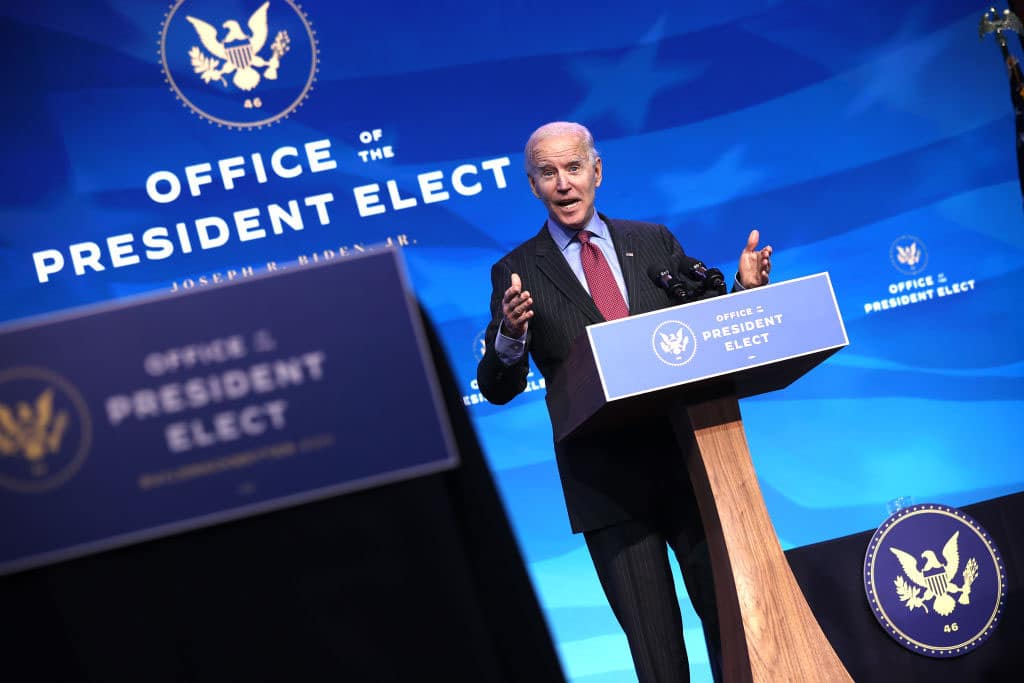
While Biden himself has not spoken publicly against the possible impeachment, his body language suggests that he sees such a step as more of an obstacle to his work than a benefit. His announcement on Monday that he hoped the Senate could set aside specific days on which to pursue the case against Trump and leave others for his issue priorities did not sound particularly enthusiastic. But the president-elect must tread carefully, at the risk of demotivating a Democratic base already suspicious about his centrist tendencies.

Biden understands that our country cannot continue down this steady decline into factionalism and blame-laying. He understands that a revenge-seeking Democratic majority will simply lay the groundwork for even more bloodthirsty Republican retribution when the GOP regains control. But given the current realities of a balkanized political landscape, he cannot say those things out loud.

I have quoted Nelson Mandela in this space before. After the end of apartheid, when Mandela became South Africa’s leader, many of his supporters urged retribution against their longtime oppressors.

Mandela explained the reason for his preferred approach: “If you want to make peace with your enemy, you have to work with your enemy. Then he becomes your partner.”

The Mandela approach doesn’t always work. But the alternative is always doomed to failure.


Dan Schnur teaches political communications at UC Berkeley, USC and Pepperdine. He hosts the weekly webinar “Politics in the Time of Coronavirus” for the Los Angeles World Affairs Council & Town Hall.

Will Biden See Trump Impeachment as a Benefit or an Obstacle? Read More »

Sheldon Adelson, Megadonor to Israel and Republicans, is Dead at 87

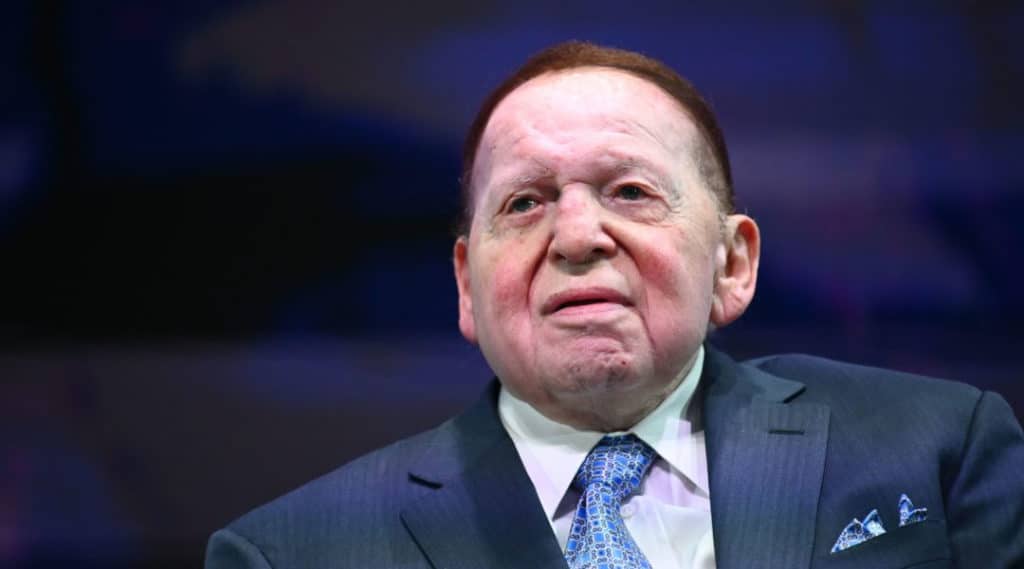
(JTA) — Sheldon Adelson, the billionaire casino magnate whose philanthropy had an unparalleled influence on American and Israeli politics and Jewish causes, has died at 87.

One of the world’s richest people and a megadonor who set records for his political giving, Adelson was known for his deep and polarizing involvement in local, national and international politics, especially his support for Israel and the Republican Party.

The chief executive of the Las Vegas Sands Corporation, Adelson’s giving to causes and institutions he believed in has few equals in American philanthropy. He was the largest donor to Trump’s 2016 presidential bid, chipping in $25 million, and was the nation’s largest political donor in the 2012 election, at nearly $93 million. A newspaper he owns, the Las Vegas Review-Journal, was one of the only newspapers to endorse Trump in 2016.

He also gave enormous sums of money to pro-Israel causes. He has donated $127 million to Jewish identity-building program Birthright Israel since 2007 according to IRS filingscited by the Center for Public Integrity. And he was a major backer of Israel’s Yad Vashem Holocaust Memorial Museum. Earlier in his career, he was a major funder of the American Israel Public Affairs Committee, until he shifted his giving to more conservative pro-Israel organizations.

He was a major backer of Israeli Prime Minister Benjamin Netanyahu with his support of Israel Hayom, a free daily newspaper seen as supportive of the Israeli leader. He was also a major funder of the Israeli-American Council, a group for Israelis in the United States that has also engaged in political advocacy, and the Zionist Organization of America, a staunchly right-wing pro-Israel group.

His aggressive approach resulted in conflict at times: In 2019, a federal judge ordered him to pay millions of dollars in fees to the National Jewish Democratic Council for using what the judge called “legal sadism” to effectively put the group out of business. The NJDC had linked in an ad to an Associated Press report outlining an allegation that Adelson had allowed prostitution at one of his casinos. The courts agreed with the NJDC, which argued that allowing litigants to punish people for linking to verified reporting would have been a dangerous imposition on free expression, but Adelson doggedly pursued the issue through appeals.

Adelson was certain of his moral convictions — sometimes to a fault. In 2012, his resort hosted what was to have been a polite debate between Jewish Republicans and Democrats. Adelson walked into the room, took over the proceedings, and called President Barack Obama a “crybaby” who should “be in diapers,” infuriating the Democrats in the room.

A major donor to the American Israel Public Affairs Committee, Adelson breached the unofficial custom of its donors of entrusting policy to the lobby’s seasoned professional staff. If Adelson was giving money, he made clear, he got to determine policy to its minutest detail.

In 2007, AIPAC supported an initiative to increase U.S. funding to the Palestinians as a means of accelerating peace talks favored by the Bush administration. That led to an ugly showdown and a split in the relationship just months after Adelson’s name had graced the lobby’s gleaming new headquarters. Adelson likened AIPAC to a friend assisting Israel’s suicide.

“If someone is going to jump off a bridge, it is incumbent upon their friends to dissuade them,” Adelson told JTA at the time. He added, “I love and admire the concept of AIPAC.”

After the fight, Adelson turned to funding IAC because he saw it as a means of filling the vacuum he believed AIPAC and would robustly defend Israel’s positions.

Sheldon Adelson

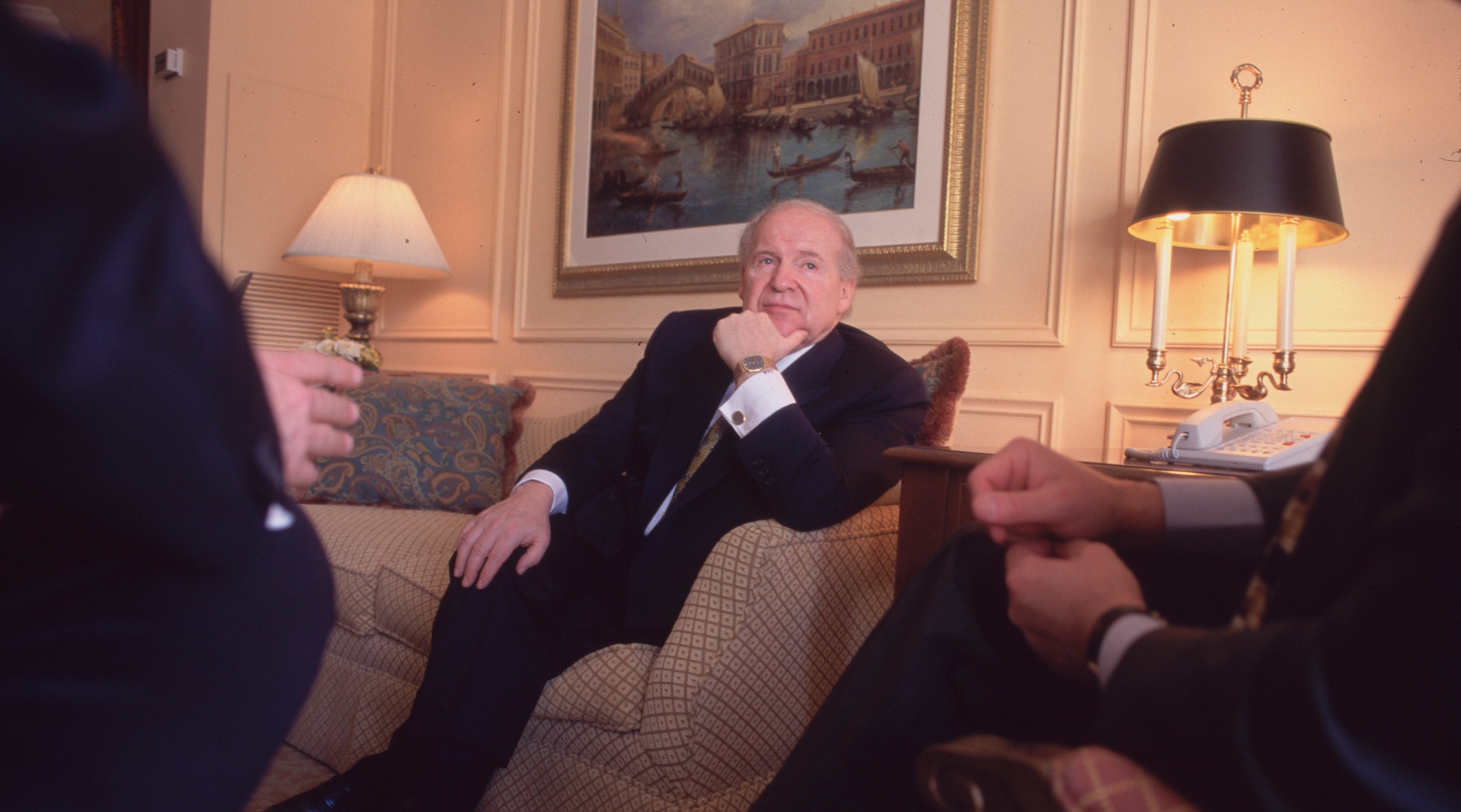
Sheldon Adelson in Las Vegas in 1998. (Mark Peterson/Corbis via Getty Images)

His working class Boston roots cropped up in his blunt, some would say offensive, manner. He and his wife, Miriam Adelson, liked to tell young people participating in  Birthright, the free trip to Israel organization he funded, that he expected them to procreate.

He also made controversial statements over the years. In 2013, he suggested that the United States drop a nuclear bomb on the Iranian desert as a negotiating tactic. The next year, at a conference of the Israeli-American Council, he said:  “The purpose of the existence of Palestinians is to destroy Israel,” and added, “So Israel won’t be a democratic state, so what?”

Adelson admired the Israeli sensibility, interpolating his remarks with Hebrew phrases his wife taught him. He was a major funder of the Israeli scouts movement, Tzofim, in the United States. The Adelsons assumed control of a Las Vegas Jewish school and reshaped it according to the famed Haifa Reali school where Miriam Adelson was educated. What is now called the Adelson Educational Campus emphasizes a Jewish identity that is less religious than in most Jewish day schools — and more nationalistic.

And ahead of last year’s presidential election, Adelson reportedly fell out of favor with Trump over the size of his gifts. In one of his final big purchases, Adelson reportedly paid $67 million for the mansion in Israel that was the American ambassador’s residence until Trump moved the U.S. Embassy from Tel Aviv to Jerusalem.

During the coronavirus pandemic, Adelson also gained attention for continuing to pay his casino employees long after other Las Vegas casinos cut off paychecks to their workers. The Adelsons had an especially outsized influence in the city, the seat of his global gaming empire where many Jewish institutions are named after him.

In 2007, Adelson started Israel Hayom to compete with other dailies that are less friendly to the Israeli right. Its popularity — it became Israel’s most-read paper — has been considered instrumental to Netanyahu’s continued success.

His millions also transformed smaller Israeli projects. In 2014, he gave $16.4 million to SpaceIL, a nonprofit that attempted to land a small spacecraft on the Moon.

Adelson was also a major supporter of drug addiction programs, a speciality of his wife Miriam, a physician who specialized in treating addiction. A drug abuse treatment clinic in Las Vegas is named for the couple.

“Sheldon was the love of my life,” Miriam Adelson said in a statement Tuesday. “He was my partner in romance, philanthropy, political activism and enterprise. He was my soulmate. To me – as to his children, grandchildren, and his legions of friends and admirers, employees and colleagues – he is utterly irreplaceable.”

Adelson and Miriam had two children together. He also adopted his first wife’s three children, one of whom predeceased him.

Sheldon Adelson, Megadonor to Israel and Republicans, is Dead at 87 Read More »

Jews Have a Profound Stake in America

Words are simply not adequate to define or contain the emotions following the assault on January 6 on the U.S. Capitol and American democracy.

We Jews have a profound stake in this nation. We were here from the very beginnings of this experiment in democracy. Washington’s extraordinary letter to the Jews of Newport, Rhode Island, in August 1790 affirms this unique connection:

Everyone shall sit safely under his own vine and fig tree, and there shall be none to make him afraid…For happily the Government of the United States gives to bigotry no sanction, to persecution no assistance, requires only that they who live under its protection should demean themselves as good citizens, in giving it on all occasions their effectual support.

Over the course of our nation’s history, we have helped to frame a political contract that defines our relationship to the American story, celebrating its liberties and experiencing its freedoms while being present to serve and defend our fellow citizens. We had come to understand this relationship as a political experiment, representing something so different from any previous experience in the history of governance.

A number of factors contribute to the uniqueness of the American enterprise, which I detailed in my book, “The Quest for Power,” published in 2014. The country’s commitment to cultural diversity and religious pluralism, for example, enhanced the development of Jewish political activism. The Constitution provides a legal framework that promotes free religious expression as framed in the First Amendment and ensures that no religious tests are imposed on those seeking public office (Article VI).

The legal system of the United States was not constructed around a distinctive set of ideological beliefs but rather evolved organically out of a political tradition comprised of federalism, representative democracy and communitarian values.  Further, this society focused on the dreams and possibilities of constructing an aspirational future, which in many ways aligned with the ideals of the Jewish prophetic tradition.

Drawing upon our religious tradition, historically Jews adhered to the supremacy of the “Law.”  If the Torah was the center of gravity for Judaism’s legal orientation, then for Jewish Americans, the U.S. Constitution and our system of laws would serve as a natural bridge, affirming our community’s commitment in celebrating the values and ideals of Americanism.

The Jewish values of Kehillah (Community), Kedoshim (Sacred), Tzedakah (Justice) and Shalom (Pursuit of Peace/Happiness) were social values seen as being in alignment with the American concepts of nation-building, loyalty, sacred duty and civil liberties. More directly, the notion of “life, liberty, and the pursuit of happiness” were joined together with the traditional Hebrew principles.

Some of the Founders applied the Jewish messianic notions of “Zion” and the idea of returning to Jerusalem when describing the uniqueness of the American experience. The introduction of biblical names for American cities gave tangible evidence that America was seen by those fleeing persecution as the “new Zion.”

But with the assault on the Capitol so at odds with Jewish values and democratic values, many might ask: Did our contract with America come to end on January 6? What did this moment mean for Jewish Americans?

Did our contract with America come to end on January 6?

These events represented an assault on that sacred space that we, along with our fellow citizens, had helped to create and protect. Now, we, the inheritors of this American legacy, must be present to reclaim this democracy bestowed upon us and the generations that will follow.

This extraordinary American story is aligned with our sense of who we are as Jews. In this society, we would recalibrate our Judaism to conform to our Americanism.These civic principles and others, inspired by our religious tradition and drawn from our American experience, would serve to define our collective vision for this nation: 

  • We affirm the dignity of the individual.
  • We acknowledge American diversity. 
  • We defend and protect civil liberties for all. 
  • We repudiate racism, sexism and anti-Semitism. 
  • We embrace the idea of “truth.” 
  • We identify “communalism” as a strong asset of democracy. 
  • We affirm the importance of transparency in government.
  • We are committed to hearing and understanding those who differ with our vision of America. 
  • We celebrate the principle of compromise. 
  • We are invested in the public square and civic engagement.

No, the events on January 6, as threatening and unnerving as they appeared before us, did not — will not — deter our abiding connection and commitment to this republic. As we push back against this nightmare, we affirm our contract with America!


Steven Windmueller is the Rabbi Alfred Gottschalk Emeritus Professor of Jewish Communal Service at the Jack H. Skirball Campus of HUC-JIR, Los Angeles.  His writings can be found on his website, www.thewindreport.com

Jews Have a Profound Stake in America Read More »