fbpx

January 7, 2021

A Moment in Time: Response to Washington. Our Rights – and Responsibilities as Decent Human Beings

Dear all,

Each year (save this year because of COVID), the students of Temple Akiba travel to Washington D.C. to lobby before our elected officials on behalf of Reform Judaism. With such pride, we pose in front of the Capitol building to have our photo taken.

This majestic image is so starkly different from the grim travesty that occurred at the Capitol on January 6. There are so many feelings, it’s often difficult to express them without going into an emotional tailspin.

Our nation has endured so much recently. So much. People have been given liberty to act on their impulses without using common decency. It will take incredible wherewithal to build trust, to regain vision, and to write the next chapter of our country. We must look within to begin the process.

For my moment in time today, I therefore off the following:

I once thought it was my right to speak up.

I now understand it is also my responsibility to first listen.

I once thought it was my right to protest.

I now understand it is also my responsibility to take a breath.

I once thought it was my right to share my thoughts freely.

I now understand it is also my responsibility to use a filter.

I once thought it was my right to do whatever it takes to protect my freedom.

I now understand it is also my responsibility to do whatever it takes to create shalom.


Rabbi Zach Shapiro

A Moment in Time: Response to Washington. Our Rights – and Responsibilities as Decent Human Beings Read More »

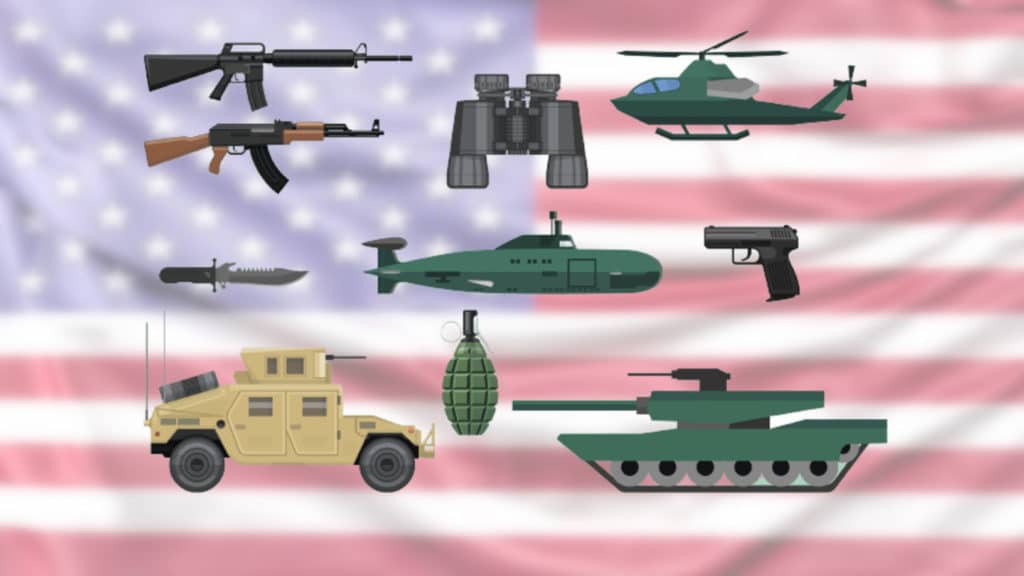
Arab World Inundated With Weaponry as Trump Term Nears End

The Media Line — The United Arab Emirates on Tuesday announced a new arms deal with Sweden’s Saab Group defense company, coming soon after the Gulf nation’s mammoth F-35 fighter jet deal with the United States.

The $1 billion contract between Abu Dhabi and Saab Group (it split from the eponymous automobile firm in the 1990s) essentially extends a five-year pact signed in 2015 and includes two additional GlobalEye airborne surveillance systems, bringing the total number owned by the UAE to five.

“We are proud that the UAE continues to show great trust in Saab,” the company’s CEO Micael Johansson said. “It shows that Saab remains on the cutting edge regarding advanced technology.”

According to the manufacturer’s website, GlobalEye is a “multi-domain Airborne Early Warning & Control solution” and employs a mix of active and passive sensors that can detect and track long-range objects in the air, at sea and over land.

Tuesday’s deal follows the landmark sale of F-35 jets to the UAE by the US. Last month, the US Senate failed to pass resolutions blocking the $23 billion agreement, signed after the Gulf state agreed to normalize relations with Israel in early August.

Several days later, the White House announced yet another arms deal, this time with Morocco, which had decided to upgrade its diplomatic relations with the Jewish state the previous day. The $1 billion contract includes advanced US drones and precision-guided munitions.

The flurry of weapon buys by Arab countries was capped last week with the State Department’s authorization of a relatively modest $290 million sale of 3,000 precision-guided bombs to Saudi Arabia, which will be added to the $500 million purchase of state-of-the-art air-to-ground armaments by Riyadh, announced two weeks earlier.

The shopping spree has picked up as the four-year term of US President Donald Trump draws to a close, and may shape the Middle East in irreversible ways.

“The US is the largest weapons exporter in the world, using every chance it gets to control other markets. Selling strategic arms like drones, air defense and other systems, beyond the financial benefits, allows it to exert political leverage on its clients,” Ami Rojkes Dombe, a defense and technology analyst and editor at Israel Defense magazine, told The Media Line.

“In a larger geopolitical context, these moves … are a response to Russian and Chinese expansion in the Middle East and Africa. These deals are a form of planting a flag in the Sahara and Persian Gulf by Washington,” he said.

“It will be interesting to see whether Moscow or Beijing answer with their own large attack drones.”

Dombe sees clear differences in the contracts recently signed.

“The Moroccan deal includes mostly drones and precision arms. These kinds of weapons allow the Moroccan army to combat the asymmetrical warfare currently waged by the Polisario Front,” the rebel movement looking to end the Moroccan presence in Western Sahara,” he said.

“This undoubtedly gives Rabat a leg up in this battle compared with neighboring Algeria, which relies on Russian munitions [and which is the main supporter of the Polisario Front],” he added. “It will be interesting to see whether Moscow or Beijing answer with their own large attack drones.”

As for the latest sale of precision bombs to Riyadh, Dombe explains that the ongoing war in Yemen, where the Saudi-led collation of Arab states is combatting the Iran-backed Houthi movement, has demanded mostly aerial attacks, as Saudi forces have suffered significant defeats on the ground.

“The UAE is involved in conflicts with terror organizations in Libya, Yemen and other places, and also relies heavily on air raids and supplying local proxy forces. So broadening its aircraft fleet will allow it to gather more information, direct fighter jet strikes and gain an aerial foothold at specific interest points.”

“The transaction between the UAE and Saab is similar,” he noted. “The UAE is involved in conflicts with terror organizations in Libya, Yemen and other places, and also relies heavily on air raids and supplying local proxy forces. So broadening its aircraft fleet will allow it to gather more information, direct fighter jet strikes and gain an aerial foothold at specific interest points.”

“The sale of the F-35, in particular, has the potential to lead to a significant escalation of an arms race in the region, not even just with Iran trying to match capabilities, but with other US partners wanting the same advanced equipment.”

Seth Binder, advocacy officer at the Project on Middle East Democracy, told The Media Line the UAE deals would have the greatest impact on the region.

Arab World Inundated With Weaponry as Trump Term Nears End Read More »

Wednesday in Washington was Outrageous and Unacceptable

Not since 1954, when four Puerto Rican nationalists shot 30 semi-automatic rounds from the gallery of the U.S. House in support of independence for their homeland — injuring five — has chaos reigned in the U.S. Capitol building as it did Wednesday.

I have had the high honor of working in those halls for decades — particularly in the 1970s and 1980s but also since — and I have never seen anything remotely like that remarkable and despicable day.

I have always had great respect for the U.S. Capitol Police — notwithstanding the routine inconvenience of standing in line to pass through their metal detectors or other necessary security precautions I have often felt burdened by — and for their leadership and the Sergeants at Arms to whom they report. But Wednesday showed a different side to the Capitol police, as I watched them protect individual members of Congress, many of whom took cover under desks and chairs on the floor of the House or literally hid in their respective offices. Some members barricaded their doors — and who could blame them? It was all truly unbelievable, even for a Hill veteran.

I first came to Washington in the summer of 1975, having finished only one year of college, to work for my hometown Arizona congressman,  then the chair of the House Interior Committee and a former pro basketball player, a tall, lanky man, who was no doubt the single funniest member of Congress ever. I became his national youth coordinator at age 18, only to see him come in second in nearly every Democratic presidential primary to some Georgia peanut farmer.

After college, I returned to Washington to work for a string of more losing presidential candidates — my childhood friends called me “The Kiss of Death.” I could work on two or three losing campaigns in the same cycle: one in the primary and another in the general. But my luck changed when I worked for another non-Washingtonian — the sitting governor of Arkansas — in 1992, and I subsequently followed him to Washington as something of a combination press aide and ultimate advance person/image decisor.

Having worked on the other end of Pennsylvania Ave. for a time, I can tell you nothing like what happened Wednesday at the Capitol building could ever have happened at that big white house. Well, not something that didn’t also involve British troops, anyway. And that was WAY before I was born (not just three years before). You breach the fence there — you don’t get told to stop; you get shot.

In all my time in DC, I have never seen nor imagined anything such as Wednesday.

As for Wednesday’s criminal “protesters” — let’s call them what they really were: rioters. I have seen my share of terrible stuff in the 45 years I have been in Washington, including more than a few protests, a lot of behind-the-scenes security, plenty of the politics-of-strange-bedfellows and even self-described political crusades. But in all my time here, I have never seen nor imagined anything such as Wednesday. It was sickening, even for someone with a cast-iron stomach. Neither TV nor a bad movie could realistically have depicted such a scene.

I truly hope the rioters get the justice they deserve — soon, or maybe beginning in a couple of weeks — and for those who egged them on, you are who are. And for all whom they represent — denying the true results of November’s presidential election and trying to overturn it, seeking every possible recount and supporting every ridiculous court challenge, conspiracy theory and endless presidential lie — these are not just your compatriots and fellow countrymen; this is your reflection in the political mirror.

You must be very proud.


Steve Rabinowitz is founder and president of Bluelight Strategies, a Washington, DC public affairs firm, and a veteran of the national staffs of nine U.S. presidential campaigns. @steverabinowitz

Wednesday in Washington was Outrageous and Unacceptable Read More »

Anatomy of the NGO Vaccine Libel

Powerful organizations claiming moral agendas have increasingly gained political influence, especially through human rights and international law. In particular, non-governmental organizations (NGOs) with massive budgets for public relations and lobbying have focused worldwide attention on favored targets — in some cases with justification, but in others to promote hate and conflict.

Israel has long been a target for demonization based on false claims, and the template NGOs use is familiar. It begins when NGO officials with a history of Israel-bashing launch a campaign based on allegations of dastardly deeds. The facts are twisted or invented, but since they are made by ostensible “experts,” the media — from fringe groups dedicated to the anti-Israel cause to mainstream journalists — repeat and amplify these falsities.

NGOs’ latest accusation is that Israel is violating its legal obligations by failing to provide vaccines to the Palestinians that live under Israeli occupation. As Israel’s success vaccinating its citizens became more visible and gained praise from around the world, the NGO conspiracy machine went into action, applying their standard template used so successfully in the past twenty years.

NGOs ignored convenient truths, such as the fact that the Palestinian Authority had no interest in Israeli assistance and had already ordered vaccines, in part via Russia and in part through the World Health Organization. Organizations and the media also dismissed the Oslo framework agreement governing relations between Israel and the Palestinian Authority, which states that “Powers and responsibilities in the sphere of Health in the West Bank and the Gaza Strip will be transferred to the Palestinian side, including the health insurance system.” Acknowledging the reality would have aborted the political campaign before it could get off the ground.

The NGO attack involved numerous organizations, many funded by European governments under the façade of promoting human rights, democracy and international law. The Palestinian Centre for Human Rights and Al Mezan took the lead, issuing a statement under the heading “Israel must provide necessary vaccines to Palestinian health care systems” and including the hand waving claims attributed to international law.

Officials of both organizations are involved with or linked to the Popular Front for the Liberation of Palestine, a recognized terror group by the United States, the European Union (EU), Canada and other governments. These connections notwithstanding, both NGOs are funded primarily by the EU and western European governments and act as policy subcontractors. In addition, a number of Israeli opposition NGOs promoting the Palestinian narrative and also funded by Europe joined the public relations push.

To get the vaccine campaign out of the fringe anti-Israel arena, global NGO superpowers must enter the fray. Human Rights Watch (HRW) and Amnesty International did exactly that, repeating the accusations word for word. Kenneth Roth, the head of HRW with a long record of singling out Israel tweeted the package of libels to his 350,000 Twitter followers, declaring, “the Israeli government has already vaccinated 10% of its citizens ….but as the occupying power it has not vaccinated a single Palestinian.” Roth’s second tweet went for the emotional jugular by falsely invoking discrimination: “Someone doesn’t want you to know about Israel’s discriminatory treatment of Palestinians in the West Bank and Gaza in distributing the Covid vaccine.” Presumably, Roth’s followers will not know that Israel’s Arab citizens are receiving vaccinations exactly as their Jewish neighbors do, and that Palestinians outside of Israel are not citizens and have their own government and health system.

To get the vaccine campaign out of the fringe anti-Israel arena, global NGO superpowers must enter the fray.

At this point, the propaganda campaign jumped the tracks to the mainstream media, and from there, was ready to be quoted in the United Nations and by diplomats and politicians. Some outlets and journalists cited the various NGO accusations against Israel verbatim, without bothering to examine their accuracy or relevance. One headline in The Guardian read “Palestinians excluded from Israeli Covid vaccine rollout as jabs go to settlers.” Others were more circumspect in their coverage, referring to anonymous “Legal experts and human rights activists [who] said Israel was obliged to provide the Palestinians with vaccines.”

Like many previous NGO campaigns on Israel, the COVID-19 vaccination conspiracy theory is likely to remain and be cited for many years, regardless of the facts or the absence thereof. In 2002, during the height of Palestinian terror bombings, many of the same NGOs led the false allegation of an Israeli “massacre” and “war crimes” in the Jenin refugee camp. These attacks remain on their websites and in Wikipedia entries, available for student papers.  The same is true for many similar examples in the intervening years, all following the same pattern.

The result is not only more hate directed at Israel and Jews, contributing to violent attacks, but also the continuing erosion of human rights and international law as little more than propaganda tools. For those remaining committed to these principles, confronting the abuses of the ideological NGO industry is essential.


Gerald M. Steinberg is emeritus professor of political science at Bar Ilan University in Israel, and heads the Institute for NGO Research in Jerusalem. 

Anatomy of the NGO Vaccine Libel Read More »

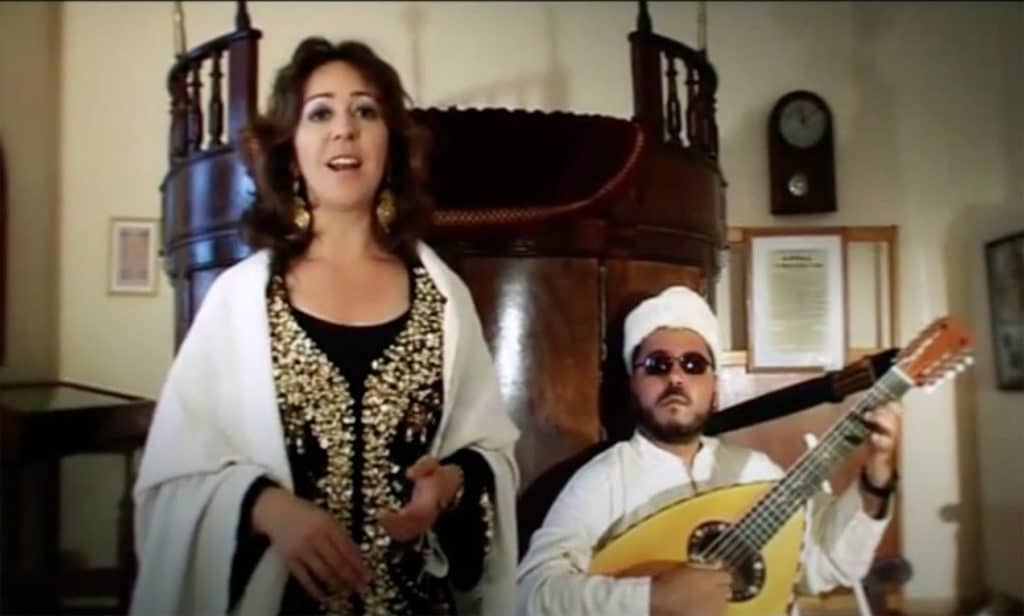
The Hidden Meanings of Ladino Music and Poetry

Fifteen years ago, when I was living in Los Angeles, I never imagined that the provocative questions I had about the hidden meanings of Ladino music and poetry would take me to working and teaching at Cambridge University, where I find myself today.

My own Sephardi background and ancestry from northern Morocco were always present, propelling me in my journey. As a performer of Ladino music in the Los Angeles area, I directed a choir founded by members of the Sephardic Havurah from Sephardic Temple Tiferet Israel. I spent my Shabbat dinners with a group of Canadian and Israeli Moroccans, and I went to synagogue in what was an almost private shtibl recreating a Moroccan synagogue on the corner of Olympic and La Cienega. It was clear to me that no matter where in the world a small Moroccan community formed, the transmission of its culture and identity remained strong.

My experiences and perceptions drastically changed when I was awarded a Senior Fulbright Research Fellowship to Tangier to study the Judeo-Spanish music of Northern Morocco in an obscure language that nobody talked about — Haketia, or Moroccan Judeo-Spanish.

Since then, collecting, researching and performing the music of the Jews of Morocco has consumed my waking hours. Suddenly, I was able to hear the songs of my maternal ancestors, which had been almost completely forgotten after they emigrated to South America in the nineteenth century. I reconnected to an ancient part of my own history, which prompted a slew of questions: How does one enter the unspoken messages of a community’s subconscious through its music? How can I, as a researcher and performer, transmit the depth and beauty of this millenary community’s sounds — especially when the news cycle and political concerns dominate the discourse?

I began my research by investigating the songs that Moroccan Jews sung to their children while putting them to sleep, the soft humming of a woman preparing Shabbat dinner and the melodies sung around the Shabbat table or during Havdalah. These are the songs that generations carry with them across their migrations, forming the sonic backbone of Moroccan Jewish communities in Madrid, Toronto, Caracas and Paris.

In contrast to the celebratory public music that Jews sing at Muslim and Jewish weddings and on national television and radio, these private repertoires tell another story. They are usually stories of belief in tsaddikim, humorous or satiric stories from the community’s history or fictional depictions of violent episodes following a breach of the strict boundaries around women’s sexuality and marital faithfulness. These songs tell the inner story of who the Jews are for the Jews — not who they are for their Muslim friends and neighbors.

These songs tell the inner story of who the Jews are for the Jews.

During the ten years I lived in Morocco, certain pieces of my life went into fast forward: I married a Jewish music producer from Casablanca, finished a Ph.D. at the Sorbonne in Paris, had three children, started a sound archive (KHOYA: Jewish Morocco Sound Archive), founded a Jewish film festival and sang for ambassadors, counselors to the palace, ministers and diplomats, artists, filmmakers and national festivals of diversity.

And what I discovered in those ten years was that music in Morocco is split along gendered lines. Only men or non-marriageable women sing the public sphere repertoires in the public sphere — whereas the reputable matriarchs of the generation transmit music in the private sphere. This tradition brings the message of Jewish transmission and continuity squarely onto the laps of women singers. They sing about sexual boundaries, fertility and love of God. I have been fortunate enough to witness a grandmother sing a wedding song to her grandson while wrapping a ribbon around a dollop of henna on his palm on the morning of his Bar Mitzvah; and I have watched an aunt sing a humorous song about a difficult mother-in-law to a young bride on the night of her mikveh immersion.

In these intimate moments of transition between life cycle periods, women’s singing infuses the younger generation with the bracha, or baraka in Morocco’s Arabic (blessing), they need to protect and bless their lives. Surprisingly (or not), the community’s soundtrack has a varied playlist: Hebrew liturgical music as well as Judeo-Spanish, Judeo-Arabic and Judeo-Amazigh humorous and moralistic songs. Moroccan Jews listen, sing and dance to a splendid porousness of classic Moroccan Andalusian; popular chaabi music; French, Spanish, Israeli, Latin American, American and British pop; and the songs of Édith Piaf, Abdel Wahab, Enrico Macias, Sarita Montiel and John Lennon — confirming that a very Jewish cosmopolitanism and multilingualism is ever present.

A few months after receiving my Ph.D. in Arts, Literature and Civilization, I applied to a research position at Cambridge University to form part of a team of researchers working on the musical encounters across the strait of Gibraltar. I proposed focusing on the use of the Jewish voice in the region’s musical and cultural diplomacy. I got the job and have been in Cambridge since 2018. Fittingly, my college affiliation is with Peterhouse, Cambridge’s oldest college, founded in 1287 on a Jewish merchant’s land — only three years before the expulsion of the Jews from England. Tradition, ritual, knowledge and Judaism continue to intermingle in my Cambridge life.

In the Spring of 2021, I will build the pilot project for the KHOYA archive, an online exhibit of Jewish Saharan women’s songs for birth funded by Cambridge University’s Arts and Humanities Impact Fund. The exhibit will demonstrate how women’s songs of the private sphere are at the heart of deep ancestral identity transmission. Other women’s songs, which I recently released on Spotify, do the same, they include:

  • “Al pasar por Casablanca.” This song about averted incest discusses the kidnapping of a young woman during the Reconquista Wars between Christians and Muslims and her rescue by a suitor who she discovers is her long-lost brother.
  • “Abraham Avinu – Shalom Aleihem” is the “hymn” of Sephardi Jewry, sung on Friday nights before dinner on a tune that was introduced to Morocco in the early twentieth century from Spanish Zarzuela.
  • “Habibi Elyahu” is a Judeo-Arabic song with a text reminiscent of “Ehad Mi Yodea,” but sung for Havdalah in Marrakesh and Fez.
  • “En la Ciudad de Toledo y Granada” is a Spanish romance text that reiterates the primacy of love over money in choosing a marriage partner. Young women in Tetuán and Tangier sang this song until the mid-twentieth century.
  • “Melisenda Insomne,” a song now lost from the tradition, tells the story of Charlemagne’s daughter brazenly declaring her love to Conde Niño, refusing to lose her youth waiting for the proper suitor.

Fifteen years ago, I thought that the synagogue held the deepest part of Jewish transmission in Morocco. But today, I know it to be the songs from home. I can only imagine what the next fifteen years will bring in my quest for the musical heart of our people.


Dr. Vanessa Paloma Elbaz is a Research Associate at the Faculty of Music of the University of Cambridge. She has a Ph.D. from the Center for Middle Eastern and Mediterranean Studies of Sorbonne Paris Cité University and was a Senior Fulbright Research Fellow to Morocco. She has been described by the New York Times as “a kind of one-woman roving museum of her own.”

The Hidden Meanings of Ladino Music and Poetry Read More »

Learning Humility From Rabbi Zvi Ryzman

On March 17, the doctors at Miami University Hospital told me that the coronavirus had gotten into my lungs and that they would have to sedate me. At the time, I hadn’t yet heard of anyone who had suffered from the disease as I had. Other people I knew who had contracted the disease were mildly sick. I thought that there was no chance that this could happen to me. I was so careful, and I was doing good things for Am Yisrael in raising money for United Hatzalah, a volunteer Emergency Medical Service organization that I founded. My whole life has been dedicated to saving others, so how could this happen to me?

In the last video I sent to everyone from my hospital bed, I begged people to pray for me and to do good deeds as a merit for my recovery. The doctors then put me into an induced coma. I recall them putting an injection in my arm and coming with the blade of the intubation tube to intubate me.

That is the last thing I remember.

Nearly 30 days later, I woke up, and the world had changed. It wasn’t the same world that I knew before. When I walked into the hospital, everything in the world was normal, open and functioning. When I woke up, everything was shut down.

It took me two days to come back to myself. I couldn’t even open my phone. The only communication I had was a few phone calls with my wife and children through the hospital phone, and I was too weak to talk. I had tubes everywhere, and I wasn’t able to walk or even talk. I had lost 36 pounds of muscle and body weight.

One of the things that hit me hardest was when I saw a notice that a close friend of mine and one of the greatest people I know, Rabbi Zvi Ryzman, was also in serious condition at Cedars-Sinai Hospital in Los Angeles. Rabbi Ryzman is a humble man, successful businessman and one of the greatest Torah scholars that I have had the pleasure of knowing. He was a big supporter of so many great organizations, including United Hatzalah. I used to talk to him quite often, and I was very close to him. He was a very strong man physically, and I never heard of him suffering from anything. That is when it hit me — other people were suffering from what I suffered from, too.

I called up one of Rabbi Ryzman’s sons, and he told me that most of the family was sick with COVID-19, but most weren’t in critical condition. At one point, the doctors in Los Angeles almost gave up on Ryzman, until the President of the Shaare Zedek Medical Center in Jerusalem, Professor Jonathan Halevy, called up Rabbi Ryzman’s wife and doctors and provided medical advice. Upon hearing this, I decided that I needed to pray for him.

I started praying for him multiple times per day. I knew that he was praying for me when I got sick, so it was the least I could do to return the favor.

I knew that he was praying for me when I got sick, so it was the least I could do to return the favor.

Two weeks later, to my great relief, he woke up. I knew about the difficulty of the recuperation process firsthand and was so thrilled when he got better. I know that Hashem can’t give up on people like him, even though he faced tremendous challenges in this disease and recovery process.

Sometime later, he called me up to thank me for praying for him. I was so humbled and replied that I was just one of many thousands of people who were praying for him. He told me that he was calling everyone who prayed for him.

A few weeks ago, I was in Los Angeles, and I called Rabbi Ryzman to tell him that I was in town. He invited me for Shabbat, and we spent a few hours talking about our stories and our similar experiences. We also talked about how we can help Am Yisrael, now that we both survived. I told him that I want to save more lives. He told me that he wants to write more books on Jewish thought (sefarim) and help more organizations.

I am honored that people like Rabbi Zvi and his wife Betty are my friends and support the lifesaving mission I have undertaken with United Hatzalah. When we were able to take a photo on Saturday night after Shabbat was over, I reflected on just how many miracles occurred in making the picture, just how much each of us had to go through in order to be standing next to each other. I am going to hang the photo up in my office and keep it with me always.

Rabbi Ryzman and I survived some of the hardest experiences that this disease could throw at us. And in so doing, I learned what it means to be successful in achieving your goals and in maintaining a level of humility that can allow you to be approachable by anyone. I am so thankful that God chose to spare both of us so that we may each return to our respective missions with renewed vigor and continue to help the people of Israel.

Thank you, Rabbi Zvi Ryzman.


Eli Beer is the President of United Hatzalah in Israel, the volunteer paramedic organization.

Learning Humility From Rabbi Zvi Ryzman Read More »

The Challenge of Solidifying the Abraham Accords

(Israel Policy Forum) — On Wednesday, the Sudanese government officially signed the Abraham Accords, confirming that it would embark on a normalization process with Israel. This was the latest in a string of reasons for Israelis to celebrate their newfound acceptance among Arab-majority states in the Middle East and North Africa. Israelis have understandably chafed against an unfair double standard that has contributed to a siege mentality since Israel’s founding in 1948, and to many this feels like the dawning of a new age. Given the deep American involvement in these agreements, whether because they were brokered directly by the U.S. or because they involved U.S. policy concessions, President Trump has been heralded as a regional peacemaker and a champion of Israel’s future.

It is accepted wisdom that the Abraham Accords, to which the United Arab Emirates and Bahrain were already party, and the separate agreement with Morocco represent the triumph of interests over ideology. Arab states have a confluence of shared interests and shared threats with Israel and no longer want their foreign policies held hostage to the lack of resolution to the Israeli-Palestinian conflict, which they do not view as a core or existential interest. This is correct, but it is incomplete. To see why, it is critical to note the other interests that have been advanced by these agreements and what it portends for deep and lasting relationships between Israel and Arab states. While it is true that Arab states are advancing their own interests by normalizing ties with Israel, the evidence suggests that they require significant additional incentives to do so, muddying the narrative of Israel’s burgeoning popularity. This has implications for the strength and durability of these agreements, and opens them to challenge under a set of plausible circumstances.

While it is true that Arab states are advancing their own interests by normalizing ties with Israel, the evidence suggests that they require significant additional incentives to do so, muddying the narrative of Israel’s burgeoning popularity.

Of the deals that have been announced so far, the Israel-UAE rapprochement is the one that is most insulated from outside events despite coming with a significant corollary. The Israeli-Emirati relationship is one that truly meets Israelis’ expectations of being welcomed in previously inhospitable places. Israelis are swarming to Abu Dhabi and Dubai to conduct business and go on vacation, and it seems as if every week brings a new announcement of cross-border investment or cooperation. The potential for economic gains on both sides is not a theoretical one but has already come to fruition, and Emirati public opinion also seems most accommodating to warm relations with Israel without causing any substantial headaches for the Emirati government.

Yet along with the Abraham Accords came another agreement, this one for the U.S. to sell the UAE fifty F-35s and eighteen Reaper drones, both of which the UAE had long sought and had been previously denied. While all parties have gone to great lengths to deny a connection between normalization and arms sales, the timing and the fact that Congress was not notified of the sale until the Israeli government publicly dropped any objections to it suggest otherwise, and in fact Israel is now reportedly lobbying Congress in the sale’s favor. It is possible that normalization would have taken place irrespective of the U.S. arms sale as a sweetener, but the sequence that unfolded suggests that it was a necessary prerequisite. While it becomes harder with each passing day to envision normalization breaking down should a wrench be thrown into the weapons sale, that it was needed in the first place does introduce a note of caution into the most prominent of the agreements so far concluded.

In Sudan’s case, the story is far clearer. The announcement that Sudan would begin the process of normalization with Israel included the simultaneous American pledge to remove Sudan from its list of state sponsors of terrorism, leaving no ambiguity that the former depended on the latter. And in fact, Sudan threatened to pull out of the deal, not because of any actions taken by Israel but because of Congress’s failure to pass legislation shielding Sudan from lawsuits brought by victims of previous terror attacks. Congress’s inclusion of a measure in the end-of-year spending bill protecting Sudan from all non-9/11 related terrorism lawsuits removed the immediate threat of the normalization process with Israel falling apart, but the way events unfolded demonstrated the precariousness of the diplomatic rapprochement. Sudan does indeed view normalizing with Israel as being in its interests, but primarily as a way of extracting favorable policy concessions from the U.S. and not because it has overcome all of its previous reservations about establishing ties with its erstwhile foe. The fact that the deal signed yesterday was not between Sudan and Israel but between Sudan and the U.S. demonstrates both the oddity of the situation and how Sudan views the framework of the agreement.

The Morocco case paints a more muted but similar picture. Despite the absence of full diplomatic relations, Israel and Morocco have had strong societal ties due to the one million Jews of Moroccan descent who live in Israel, and the situation for Jews in Morocco has not been as dire as in other Arab states. Israel and Morocco maintained diplomatic offices before the Second Intifada, and thus the resumption of these ties is not a peace deal or a new normalization agreement but a return to the status quo ante. Morocco did not agree to a public signing ceremony or to open an embassy in Israel but did agree to reopen its shuttered diplomatic liaison office, and while this falls short of the precedent set between Israel and the UAE, it still constitutes a tangible improvement from the state of Israeli-Moroccan relations that reigned during the past two decades.

But the announcement of a resumption in relations also came with the publicly announced and explicit quid pro quo of American recognition of Moroccan control over the disputed territory of Western Sahara, which is an enormous foreign policy victory for Morocco that simultaneously complicates the U.S.’s ability to oppose annexation of other territories conquered by force, with Russia’s annexation of Crimea being a pressing example. Not simultaneously announced but subsequently reported was that the U.S. would be selling drones to Morocco as part of a $1 billion arms package that it has also long sought but was unable to secure until now. Once again, an Arab state that has independent reasons to establish ties with Israel revealed a willingness to do so only if it was able to secure a win from the U.S. on other unrelated fronts. The previous relationship between Israel and Morocco makes this development more worrisome, as there should have theoretically been a lower barrier to overcome. It also serves as a reminder that this is not the first time that Israel has heralded new ties with Arab states, and that those ties proved to be more prone to rupture than many hoped.

None of this may matter to Israelis, who will benefit from this unprecedented flood of new relationships and new opportunities. But it should. Agreements to recognize Israel that are contingent upon unrelated policy moves from a third actor are inherently fleeting and subject to being rolled back, as already demonstrated by immediate complication with Sudan. Given the whiplash in foreign policy that took place when Trump replaced President Barack Obama and that is now expected to happen again with the shift to President Biden, American commitments in particular are in doubt in ways that were previously unthinkable. Any normalization agreements that depend on continuity in U.S. foreign policy in order to guarantee them may be fleeting. Open questions remain about how normalization with the UAE might be impacted if the arms package gets delayed or altered in the future, or how normalization with Morocco will proceed if a future administration withdraws recognition of Moroccan sovereignty over Western Sahara. Relations that are built on self-interest can be lasting, but only if that interest is squarely in the relationship itself rather than on tangential issues.

The Biden administration should pursue the continuation of this process. Normalization between Israel and its former foes not only benefits Israel but benefits American interests and regional stability as well, and puts to rest an ugly boycott that delegitimizes Israel’s fundamental right to self-determined sovereignty. The challenge for Biden and his team will be to help broker agreements between Israel and its regional neighbors that rest on their own strength, and do not require the U.S. to guarantee their stability and durability with completely unrelated incentives and conditions that may ultimately challenge Israel’s newfound regional inclusion.


Michael Koplow is Israel Policy Forum’s policy director, based in Washington, DC. To contact Michael, please email him at mkoplow@ipforum.org.

The Challenge of Solidifying the Abraham Accords Read More »

Les Madeleines

We are a family of cookie lovers. Strawberry thumbprints, apricot coconut haystacks, butterscotch blondies, marbled pinwheels, petit cheesecakes, chocolate espresso drops, chocolate chips — you name it, we love them all. Still, I was surprised when my granddaughter, Piper, requested a madeleine for our next Pastry Session. So precocious!

Then I realized that thanks to Starbucks, the one American chain store I can’t resist, these spongy little cookies are as familiar as Cheez-Its to American kids. What mom in a hurry hasn’t ducked into Starbucks and nabbed a pack for the kids while waiting for her caffeine fix? As a bribe, they’re a steal at three for $2.89.

Luckily, I happen to have a quick, easy madeleine recipe. It comes from “Pure Chocolate,” the 2004 cookbook I worked on with Fran Bigelow, the founder of Seattle’s beloved chocolate shops. Yes, that’s the same Fran who had a moment when President Obama chose her perfectly salted caramels as his favorite, the same Fran who single-handedly gave birth to the high-end premium candy bar category with her brilliant Coconut Gold Bar, a high-end homage to Mounds bars.

I admit I was a little nervous teaching this beloved cookie recipe. I had only made madeleines a couple of times since my own style is a bit less exacting. But when Piper asks, Grandma delivers. I vaguely remembered that when we tested the recipe for the book, these madeleines were transcendent when eaten right out of the oven. The delectable chocolate pillows bore little resemblance to those cold, dry items sitting on coffee shop counters.

When I collaborated with Fran on the book, it was a bit of a yin-yang situation. She had spent long, hard years attending the California Culinary Academy and training with a French chef. By the time she decided to open her first shop, she was determined to apply only the highest standards to every aspect of her chocolate empire. Not exactly a Gene Wilder Willy Wonka type, she was more like Olivia Colman in “The Crown.”

Temperamentally, we were night and day. I’m more of a spontaneous type when it comes to baked goods. The type who is self-taught and sometimes settles for less than perfect in the interests of having a life. Or, as Piper once said, “Grandma likes to break the rules.” How does she know?
Since I was hired to supply the warm, cozy stories that were to accompany Fran’s perfect recipes, we needed to spend time together, eating and drinking. It usually took about four hours to warm her up and get the chat flowing. I, on the other hand, can bavarde with the best of them. As my husband often asks in wonderment, “Where do all the words come from?”

In hindsight, that may have been the reason we were matched up by a wiley literary agent in the first place. I could channel Fran’s bottled-up stories into warm words while she could continue to express herself through melted chocolate. As long as I remained invisible, all went well. In fairness, my year spent eating chocolate did have some benefits. Generous overnight deliveries arrived at my doorstep weekly. Inside, lovingly packed, were cakes with exotic names like L’Orange and Pavé Josephine, sacks of chocolate-stuffed figs, delicate chocolate meringues, sablés and wafers — all wrapped in crinkly tissue paper. Salted caramels were arriving by the bucketful to feed the addiction that fueled my writing towards the end. My children were delirious during this period.

Our differences boiled over when we were putting the finishing touches on the manuscript. I wrote Fran a warmer, more personal introduction than the one she evidently wanted. It contained all of her darling little stories, like the one about the 82-year-old French woman with whom she took cooking classes in San Francisco and the chef’s accordion-playing husband. I still smile thinking about it.

But when she returned the intro to me with every word crossed out,  including my name, which belonged on the cover, I had had enough. As I told my shrink at the time, if I’m miserable sucking on caramels all day long and writing about it, my food-writing career must be over. After I got my name back on the cover, I never looked back.

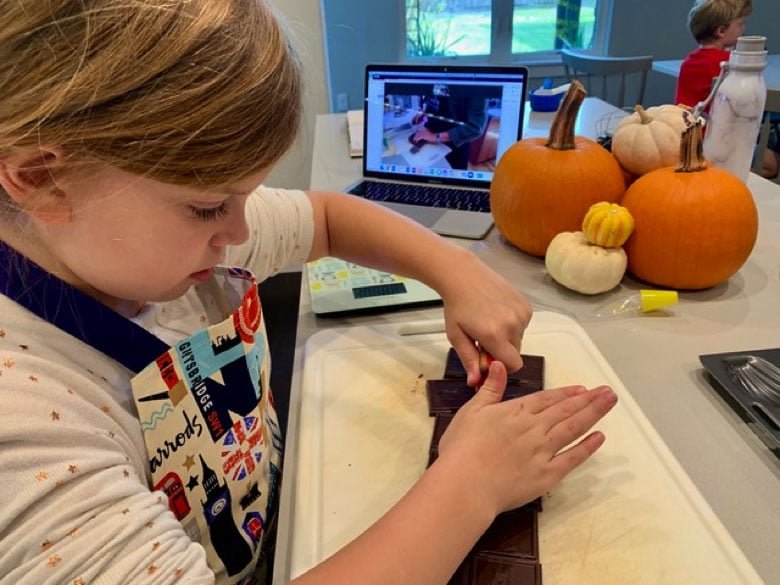
Piper brought no such baggage to our Sunday morning madeleine-making session. That week, I sent Piper’s father, Joe, a shopping list that included special equipment: a pastry bag with plain tips and, of course, a madeleine tin with shell-shaped little troughs to hold the batter. Piper was not intimidated at all by the idea of using a pastry bag for the first time. I, on the other hand, still become anxious around any fancy tool or technique.

But Piper’s love for chocolate is pure. Watching her make madeleines on screen, I was impressed by how much her skills had improved since we started eight months ago. Her pastry-piping technique was perhaps better than mine. Just by watching and repeating, my little girl was now piping a batter with little to no help and making perfect madeleines. All while staying calm, collected and keeping up her end of the conversation. Quelle jeune fille!

Postscript: In the next week’s debrief Piper told me “the second batch came out much better than the first.” An extra minute in the oven can make the difference between moist and dry, as bakers know. Pas grand chose. Just eat the first batch immediately and wash down with milk, coffee, or a Proustian cup of tea!

Recipe from “Pure Chocolate” by Fran Bigelow with Helene Siegel

RECIPE

Chocolate Madeleines

1 ½ sticks unsalted butter
2 Tbsps butter for coating
6 ounces semisweet chocolate, finely chopped
3 large eggs
1/2 cup plus 2 Tbsps sugar
1 tsp vanilla
1 cup cake flour
1/2 tsp baking powder
1/4 cup Dutch cocoa

Generously coat the madeleine pan with butter, even the non-stick variety.

Melt the butter and set aside to cool.

Melt the chocolate in the top of a double boiler. Set aside to cool.

In a mixer with balloon whisk, add the eggs and sugar. Whisk on high speed until thick and pale yellow, 3 to 5 minutes. Whisk in the vanilla.

Remove the bowl, and with a rubber spatulam fold in melted chocolate.

In another bowl, sift together cake flour, baking powder, and cocoa. Gently fold into the chocolate mixture. Add cooled butter and fold until the batter is smooth and uniform. Cover and chill for 20 minutes.

Move the rack to the middle of the oven. Preheat oven to 425F.

Place chilled batter in a pastry bag fitted with a large tip, about 1/2 inch. If you don’t have a tip, just cut a slit in the bottom point of the bag.

Holding the bag vertically and, twisting the top to create pressure, pipe the batter into the molds until 3/4 full.

Place in the oven and bake for 7 to 10 mins, until peaked in the center and crisp on the edges. Immediately turn out of pans onto racks to cool. Store in sealed containers.


Los Angeles food writer Helene Siegel is the author of 40 cookbooks, including the “Totally Cookbook” series and “Pure Chocolate.” She runs the Pastry Session blog. During COVID-19, she shared Sunday morning baking lessons over Zoom with her granddaughter, eight-year-old Piper of Austin, Texas.

Les Madeleines Read More »

Rosner’s Torah Talk: Parshat Shemot with Julia Knobloch

Julia Knobloch is a student at the Ziegler school. And a poet.

This week’s Torah Portion – Parashat Shemot (Exodus 1:1-6:1) – features the beginning of the epic story of Moses and the exodus from Egypt. The portion features a description of the oppression of the people of Israel by Pharaoh, the birth of Moses, his flee to Midian, the story of the burning bush, and Moses’ return to Egypt. Our discussion focuses on why a new Pharaoh changed the policy and decided to oppress the Israelites.

Previous Torah Talks on Shemot

Rabbi Amy Eilberg

Rabbi Nina Mandel

Rabbi Sybil Sheridan

Rabbi Jeffrey Salkin

Rabbi Sharon Sobel

Rabbi Rick Rheins

Rabbi Ben Greenfield


Rosner’s Torah Talk: Parshat Shemot with Julia Knobloch Read More »