fbpx

January 4, 2021

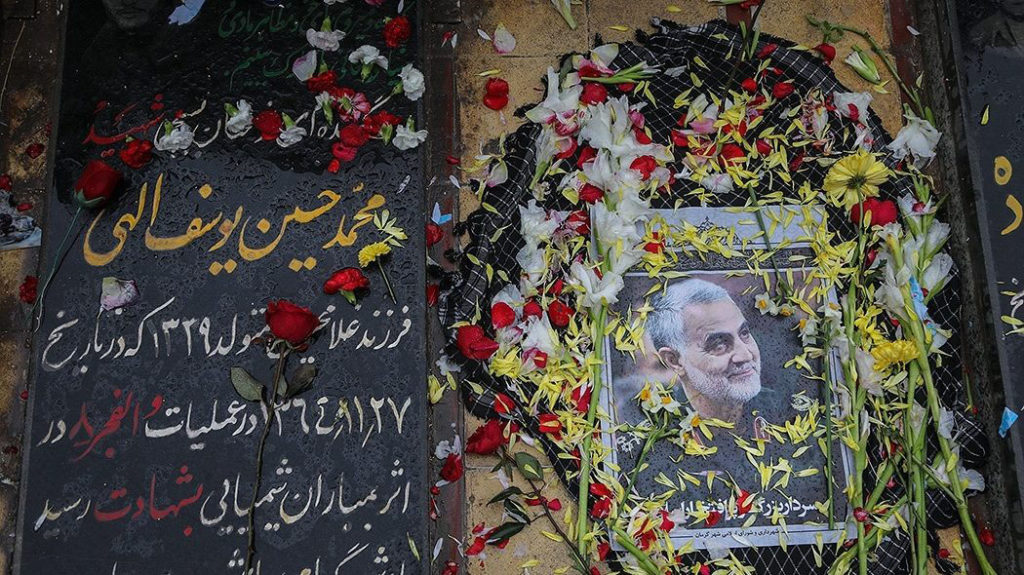
Looking at the Soleimani Assassination, One Year Later

The Media Line — One year ago, two US MQ-9 Reaper drones fired Hellfire missiles that killed Iran’s Maj. Gen. Qasem Soleimani. This brazen assassination at the international airport in Baghdad also resulted in the deaths of the deputy head of Iraq’s Popular Mobilization Units and eight others. President Donald Trump boasted that he took care of “two for the price of one” and he spent the majority of 2020 on the campaign trail pointing to the killing of the “sadistic mass murderer” as a major foreign policy success.

Many supporters of Trump’s “maximum pressure” campaign claim that the assassination of Soleimani established US deterrence over Iran. However, a number of facts undermine this argument. Last month, the Trump Administration along with Israel deployed aircraft carriers, B-52 bombers, submarines and other military assets to the Gulf to “deter Iranian attacks on US troops.” On December 23, Trump tweeted that “if one American is killed [in Iraq], I will hold Iran responsible.” It’s worth asking, why is such a huge movement of US military assets to the region necessary to deter Iran if the Soleimani killing achieved that objective? Furthermore, over the past 12 months, Iran has engaged in activities that it would not have done, had Trump’s foreign policy effectively established any real deterrence over Tehran.

On January 8, 2020, only five days after Soleimani’s killing, the Iranians hit two military bases that housed American troops in Iraq with ballistic missiles. The Islamic Revolutionary Guard Corps said this move, which resulted in no deaths, was a “partial retaliation.” Then, on March 11, 2020, 18 rockets struck Iraq’s Camp Taji base, located north of Baghdad, killing two US service members and one Brit, and wounding roughly 12 others. On April 15, 2020, the Islamic Revolutionary Guard Corps Navy made a “dangerous and provocative” move by sending 11 of its vessels very close to US Navy and Coast Guard ships in international waters. On June 18, 2020, Iranian-backed Iraqi militias fired rockets that struck the Green Zone in Baghdad, marking the fifth such attack within 10 days.

Iran also has benefited from ways in which Soleimani’s killing impacted Iraq’s political environment. With many Iraqi lawmakers not wanting any potential intensification of US-Iran brinkmanship to spiral out of control on their country’s soil, they have pressured Washington into reducing the US military presence in Iraq. Threats from US Secretary of State Mike Pompeo to close the US Embassy in Iraq if officials in Baghdad do not stop Iran-sponsored groups from waging more attacks against the compound mean that Tehran could gain even greater clout in Iraq if the US takes this step. This move “would place US diplomats out of harm’s way but could jeopardize years of efforts to both stabilize the Iraqi government and keep it from becoming too dependent on neighboring Iran,” according to The New York Times.

Biden and the Impact of Soleimani’s Killing

The Trump administration’s decision to assassinate Soleimani will have an impact that plays out in the Middle East and in US-Iran relations far into the post-Trump period. There is no denying that the killing’s illegality will undermine Washington’s ability to use international law as a means of holding Tehran accountable for Iran’s “malign” activities in the future.

Looking at the Soleimani Assassination, One Year Later Read More »

Ephraim Shoham-Steiner

Ephraim Shoham-Steiner: Jews and Crime in Medieval Europe

Shmuel Rosner and Ephraim Shoham-Steiner discuss Shoham-Steiner’s latest book: Jews and Crime in Medieval Europe.
Prof. Ephraim Shoham-Steiner is a historian specializing in Medieval Jewish History. He is an associate professor at the Department of Jewish History at Ben-Gurion University of the Negev in Be’er-Shevah. He is also the director of The Center for the Study of Conversion and Inter-Religious Encounters at BGU.

Follow Shmuel Rosner on Twitter.

Ephraim Shoham-Steiner: Jews and Crime in Medieval Europe Read More »

New Book of Short Stories Reflects Contemporary Women’s Experiences

Corie Adjmi’s life reads like a book: She grew up in New Orleans for most of her childhood until her family moved back to Brooklyn to be closer to their Syrian Jewish community. Adjmi fell in love and married a fellow Syrian Jew, had five kids with him and worked as an elementary school teacher at a neighborhood yeshiva. While she was still nursing her fifth child, she took some time off for a continuing education writing class. Now, two decades after walking into that class, she’s the award-winning author of her first book, “Life and Other Shortcomings.”

“I took the class just to have something for myself,” Adjmi said in a phone interview with the Journal. “I had no idea it would turn out to be the career I cared about for the rest of my life.”

“Life and Other Shortcomings,” which won the short story category of the 2020 American Fiction Awards, is Adjmi’s collection of fictional short stories that focus on the experiences of different women. The stories take place in locations like New York City, New Orleans and Madrid from 1970 to the present day. Some of the women are married, others are divorced or single, and some work while others don’t. A running theme is the patriarchy in the pre- and post-Me Too worlds.

There are Jewish subjects and characters throughout the book, too. In one story, Adjmi uses the Jewish calendar to tell time, mentioning Yom Kippur, Hanukkah and Passover. In another story titled “The Devil Makes Three,” the main character, Iris, struggles with her faith and with attending the mikvah.

“I think people want a good story, and these are entertaining and humorous but also pack a punch,” Adjmi said. “Some are about identity, some are about domestic abuse, and the patriarchy exists throughout these pages. While the subject matter can be intense, the stories are written in a way that is relatable, honest and entertaining.”

“The stories are written in a way that is relatable, honest and entertaining.” — Corie Adjmi

One story, titled “Shadows and Partially Lit Faces,” highlights patriarchal thinking. A husband is entitled because he believes that he “is able to compartmentalize his life by having an affair while still being able to keep his life with his wife/family,” said Adjmi. “[This is] something that is still all too common.”

Adjmi started writing the stories for “Life and Other Shortcomings” when she first became a writer in the early 2000s. She got the standalone pieces published but said she “felt like [these characters] would know each other. They needed to be connected. That was a really fun process.”

Now a grandmother, Adjmi — who lives in Manhattan with her husband and still goes back to Brooklyn for Shabbat — has more time to write. But when she was first starting out, she said she “wrote whenever I had a free moment. A special day would be to go to a café, get a coffee and sit by myself for short periods of time.”

Over the past 20 years, Adjmi wrote two novels as well. One of them, called “The Marriage Box,” is coming out this spring. “It’s based on my real life, but it’s totally 100% made up,” she said. “It’s based on a young girl who grows up in New Orleans, and because of things she’s done, she’s gotten into trouble, and her family is moving back to Brooklyn. It’s culture shock. I’d like to think of it as ‘Unorthodox’ meets ‘Crazy Rich Asians.’”

The author has also recently written on her Instagram about how contracting COVID-19 has had long-term effects on her and how she now acts and feels weird sometimes out of nowhere. “I talk about my COVID brain and pandemic fatigue,” she said.

Until her novel comes out, Adjmi is focusing on “Life and Other Shortcomings” and how women all around the world, who have been finding their own power as of late, can relate to it.

“It turned out this was a good time [to release the book],” she said. “Women are rising. They’re joining forces. There’s a sisterhood thing happening. People are paying attention to these issues in different ways. It feels timely to me.”

New Book of Short Stories Reflects Contemporary Women’s Experiences Read More »

Judicial System is Next Front in Battle For Israel’s Right-Wing Votes

The Media Line — With less than 80 days left until Israelis head to the polls for the fourth time in two years, Prime Minister Binyamin Netanyahu’s strongest challenger introduced a noticeable addition to his political roster and promised a string of major reforms if elected.

Gideon Saar, the former longtime Likud lawmaker who last month made a splash by forming his own party, over the weekend pulled off a significant coup, adding late prime minister and Likud chair Yitzhak Shamir’s granddaughter to his party.

Shamir, who was a prominent figure in Israel’s establishment and preceded Netanyahu’s first term as prime minister, serving from 1983 to 1984 and from 1986 to 1992, is considered one of the founding fathers of the right-wing party.

On Saturday, Shamir’s granddaughter, Michal Diamant, announced that she was renouncing her membership in the Likud party and would run for office as part of Saar’s New Hope party.

“Israel’s prime minister should be motivated by principles and ideals, not just political calculations.”

“The Likud is no longer the party I knew and grew up in,” Diamant said. “One of the most important things my grandfather strived for was unity within our people. Today’s leadership is trying to instill the exact opposite,” she also said.

“He wouldn’t be happy with the current situation, I’m sure,” Diamant added. “Israel’s prime minister should be motivated by principles and ideals, not just political calculations.”

Transportation Minister Miri Regev, a Likud party lawmaker, responded to Diamant’s defection, telling her: “If your grandfather would have seen you today, he would have turned in his grave.”

Saar announced that Diamant, an attorney, would spearhead the party’s judicial reform initiatives, and would be in charge of putting together New Hope’s policy platform on the subject.

Two major issues the former interior and education minister promises to fundamentally change are the nomination process for supreme court justices, and the authority and scope of Israel’s attorney general.

Over the years, the subject of the justice system’s independence and reach has come under major scrutiny, with right-wing parties demanding the power of the supreme court and attorney general be curbed and limited, blaming them for hyper-activism and for harboring a liberal agenda.

Netanyahu, long a staunch defender of the courts’ independence, has in recent years – and more so after his indictment for charges of bribery, fraud and breach of trust – spearheaded the growing criticism.

“During his 15-year reign, Netanyahu neglected the judicial system, and failed to enact even one reform,” a New Hope spokesperson told The Media Line. “Saar, meanwhile, passed important laws on the matter. Our system needs fixing, not destroying. There is a lot to do, and we will actually get it done.”

Israel’s nomination process is one of the best in the world. Our system is extremely professional and independent

Judicial System is Next Front in Battle For Israel’s Right-Wing Votes Read More »

Will Politics Get Better… or Worse? We’re About to Find Out.

The central question of the relationship between Donald Trump and the virulent strain of populism that has raged in our country has been frequently raised and never conclusively answered: is Trump a symptom of these passions or the cause of them?

Was the soon-to-be-former president an instigator of the anti-establishment anger that has characterized our recent history or the product of it? Did he just happen across the landscape at the right time to benefit from the same resentments that led to Brexit in the United Kingdom, the Golden Dawn uprising in Greece and similar movements sweeping across the European continent in Poland, Hungary, Germany, Italy and other counties? Or did he astutely recognize the political potential in these emotions and purposefully capitalize on them?

Could Trump-ism have existed without Trump? And will it survive without him?

We’re about to find out.

When Trump leaves office on January 20, after a flagrantly atypical and unprecedentedly raucous transition period, the populist resentments and rages that now characterize American public debate will not disappear. We are a more confrontational country, a sharper-edged and shriller nation, a less tolerant society than we used to be. Loyal partisans from both parties will leap to condemn their opponents for this deterioration, but the truth is that there is more than enough blame and shame to go around.

Joe Biden has spent the weeks since his election became official arguing that the American people are still capable of unifying to confront a horrific series of common threats. There are sizable numbers of voters in both parties who are hopeful that he’s right and no shortage of others who dismiss him as hopelessly naive.

Can Biden’s collaborative instincts, his memories of a less-divided country and a time-weathered affability provide him with the skills to stitch us back together? Or will he end up with tread marks on his back when hardened ideologues in both parties stampede past his calls for unity back to their more familiar hyper-polarized turf?

We’re about to find out.

Will the Republicans standing with Trump as he fights to the very bitter end stay loyal to him even once he is out of office? Will his most committed supporters maintain their fervor and demand that GOP elected officials continue the scorched-earth politics they have practiced since Trump’s election? Will progressive activists allow Biden to attempt to govern from the center, or will they insist that congressional Democrats withhold votes from compromise legislation and hold out for more ideologically pure alternatives?

Will Senator Mitch McConnell find issues on which he can work with Biden? Will Speaker Nancy Pelosi be able to navigate the challenges of a painfully-thin House majority? Will Representatives Alexandria Ocasio-Cortez and Kevin McCarthy incite their party’s ideological bases toward further political brutality, or will they leverage their hard-earned grassroots credibility to convince skeptics that an occasional truce can be tolerated? How many members on both sides will spend the next two years looking nervously over their shoulders for possible primary challenges, and how many will decide that winning a primary is of little use if it marginalizes you in a general election?

The truth is that we have no idea what’s coming next. We have no way of guessing whether the country’s political divisions will further deepen or whether past historical cycles of balkanization followed by reconciliation can be repeated today — an era in which every one of us is empowered with technological tools that allow us to ignore, mock or threaten those who dare to disagree with us.

The truth is that we have no idea what’s coming next.

American history is filled with examples of hate-filled combatants realizing that the only way to move forward is to set aside their mutual contempt and animosity — even grudgingly and temporarily — to meet a moment that requires something better. Do the rest of us, who have worked so hard to isolate ourselves from the other half of the country that votes for the wrong people, have it in ourselves to take those same steps forward, at least for a short time until we’re back on track?

Or will we continue to convince ourselves that because we’re right and the other side is wrong, because we are smart and good and they are stupid and evil, that no such ceasefire is possible?

We’re about to find out.


Dan Schnur teaches political communications at UC Berkeley, USC and Pepperdine. He hosts the weekly webinar “Politics in the Time of Coronavirus” for the Los Angeles World Affairs Council & Town Hall.

Will Politics Get Better… or Worse? We’re About to Find Out. Read More »

Grenell Prepares for Holocaust Memorial Council

The Media Line — Richard Grenell went from being US ambassador to Germany to serving as acting head of national intelligence and has now been nominated to sit on the Holocaust Memorial Council. Ambassador Grenell spoke with The Media Line’s Felice Friedson about calling-out Iran-backed Hizbullah as a terrorist organization; the underutilization of US embassies; sitting down with anti-Semites and explaining why foreign policy should matter to Americans.

The interview took place on December 31, 2020.

To hear the interview, go to The Hill on the Middle East podcast. A transcript of the interview follows.

TML: Richard Grenell wasted no time during his tenure as America’s ambassador to Germany. Newly appointed, he criticized his host country’s open-border policies for Syrian refugees and Germany’s policy vis-à-vis Iran. Despite the criticism he drew from his actions, Ambassador Grenell has earned high praise from others, notably Israeli diplomats who laud his willingness in the fight against terror and for human rights. He served as acting director of intelligence and has now been nominated for a seat on the Holocaust Memorial Council.

Ambassador, thank you for joining us on the Hill on the Middle East.

Ambassador Grenell: I am so excited to be here. Thank you for asking and it’s a real pleasure.

TML: Well, nice to have you with us! Ambassador Grenell, you developed quite a reputation for undiplomatic diplomacy. You let Chancellor Merkel know in no uncertain terms how you differed on her open borders policy and Iran. Was that undiplomatic?

Ambassador Grenell: Look, I actually think… look, we spent a long, long time actually talking about diplomacy is and what the purpose of diplomat is, and I think that the purpose of diplomat is to represent your country’s views and to make progress on both views. Too many people actually think being a diplomat means a lot of dinner parties and promoting the country to which you go to. And I’ve just never really viewed that, and the reason why is because I feel really strongly that the US State Department and diplomats are designed to avoid war and to make sure that we make progress on all of the issues that we’re faced with.

I could talk a long time about America First policy which is I believe is a policy which every single country around the world embraces. It’s Germany First. It’s Israel First. It’s the UK First; for all of these countries. I’ve been in thousands of diplomatic negotiations, but have never been in a single one where someone from the other side doesn’t ask the United States to do something for them. This is the selfishness of the diplomacy is actually a daily thing and the United States is the only country that gets in trouble for acting for progress from other countries on issues that are important to them.

So, I went to Germany as America’s ambassador with really the full intention of just making progress on US policies and the first day I showed up was a change in policy on Iran. We were going to implement full sanctions and we’re asking our allies to join us and the reality is Felice, that Germany is a great ally for the United States. We provide a lot of financial help in terms of troops and NATO spending. Germans do not pay their fair share at NATO. They are probably the country that gets the most benefit from NATO and it’s something that multiple administrations, multiple US governments have been asking the Germans to do, so I see it in a very kind way, a very thoughtful way, but a very direct way and I think the directness of asking for something that the American people had been asking for and drawing a line.

This is important for us. This is an important issue that the American people are feeling like the Germans are being hypocritical on not supporting us on Iran, or not supporting us on NATO policies. I think when you say it with passion and clarity, and you also say it as a priority message, not as an afterthought but a top priority message, then it does shake people in a way that [they go] “Wow, this is really blunt.”

And so, I don’t find that to be undiplomatic at all. I think that that feeds successful diplomacy to the American people.

TML: So you’re known for calling a spade a spade, and recently you’ve talked about the underutilization of the embassies that are throughout the world on behalf of the United States. Can you elaborate on that?

Ambassador Grenell: Yeah, I really… This is an issue that I’m really passionate about. I spent more than 11 years at the State Department, at the US State Department, so I know them really well, and we have wonderful diplomats at the State Department, some of America’s smartest people, young people, join the foreign service and really are passionate about making a difference. And I want to turn that passion and that expertise into youthfulness. You know, there’s the term many MBA types use which is nice-to-know versus a need-to-know content. And for me, I think that the State Department has now been entrapped in a whole bunch of content that’s just nice to know. And I’ll give you an example in running the embassy in Berlin. We would have a lot of our political officers go out and time in the fields gathering political content about the different political parties that are trying to understand how the German process was working and while it’s super interesting and incredibly important for political scientists, it’s largely useless for the American people. It doesn’t benefit them. They can actually read all of that information a couple of days later in news reports if they really wanted to.

And what I think we have to do still to build up our economic department in the State Department, is that we have to recognize that trying to push American jobs overseas creates American jobs, creates a better economy for the American people. That’s why foreign embassy officers and cadets exist; to serve the American people. And I think that we’ve just got to figure out how do we make our embassies, many US offices overseas, how do we serve [the] American people better? How do we make our national security stronger? Our economy stronger? Because our economy and our national security are definitely tied together.

TML: One of the areas where you’ve been highly praised is your efforts to get European governments not to recognize the Hizbullah terrorist organization. In fact, to label Hizbullah a terrorist organization exposing Iran’s malign influence and allowing the fiction of terrorist organizations such as Hizbullah having political and military arms. How do you convince the Germans?

Ambassador Grenell: Well, this was a top priority for me and I go back to what I said previously. We make issues a priority, not an afterthought. I think that there is a recognition that this is an important issue and as allies, the Americans and the Germans, we really did want to find ways to work together and so I articulated to [Chancellor] Angela Merkel and to the entire team there that we felt that it was pretty hypocritical to pretend that Hizbullah could be split into two. They, obviously Hizbullah does not do that themselves, so why would Europeans allow that to happen?

And so, we had a team sort of goal-focused and so we had a great team, people who I put in charge. I said this is the team and we’re going to benchmark ourselves. How do we get the German government to move towards banning Hizbullah? And so, it took us more than a year, about a year and a half, but our team did a great job. And every morning when we met, we would say, “What’s next? Who can do what? What department can bring it up again?” And it was much like what we did on bringing the Nazi prison guard home from New York back to Germany. It was the same thing. We really pushed and had a team every day.

When it comes to Hizbullah, I think we were able to find that the missing piece was that the Germans didn’t believe that they had the authority, the legal authority within the German government system and the German rule of law system to do it. And so, we ended up hiring a German lawyer to map it out with us, and we presented a white paper that we did, that my team did. And when we presented this paper to top German authorities, interestingly enough, they liked it. And they said, “Yeah, I think this is true. This is, this is a path.” And they use that to then go out and begin to make it happen. And then it was a long process of political trying to make way politically with the Bundestag and that took more time. But eventually I think what we had laid out is that Hizbullah would be using front companies and money laundering schemes to raise the funds for their terrorist projects in Germany. And we proved that this was happening within the country. And, and then of course the Germans wanted to stop that and so they reacted accordingly. When the German did ban Hizbullah, we asked them to take the same team and the issues to Brussels and I traveled to Brussels a couple of times to meet with the committees and try and further this German step at and try to get the EU to do it.

We were starting to make some progress, and then the president asked me the temporary DNI job, but I did when I was at DNI pick this up with the EU and we have a team at DNI that’s also pushing for a Europe-wide ban on Hizbullah. I hope that there’s still being a meeting and pushing on this issue. France of course, is a country that we really need to push and make progress on because, I think what works is to prove that Hizbullah is doing these activities within the country, so that Hizbullah is doing money laundering, Hizbullah is doing front companies within France. We know that they are. We can give specific examples, and when we show that, then I think you get a reaction from the French government and from any European government that this shouldn’t be happening in their country.

TML: Do you feel you actually influenced other nations to try to decipher whether they should come on board?

Ambassador Grenell: Well, I leave that to others. I certainly just focus on what our goals were, as the US government. We believe Hizbullah is a terrorist organization clear cut, and that they are working in Europe. And so European governments should look at the facts and we push them hard to say, join us, join us as Western allies and stopping Hizbullah, squeezing them. You know, there is this idea that I would say excuse that was pushed back on us originally and we had to confront it and I’ve seen it now the same excuse in many other countries in Europe is that they don’t want to destabilize Lebanon. And so, there’s this concern that if you squeeze too hard on Hizbullah, that somehow that’s going to affect or impact on Lebanon. And so, what the arguments that we made back is, well, first of all, the United States is one of the largest donors, if not the largest donor, I think, to Lebanon.

And we bifurcate Hizbullah from the Lebanese government. We are able to say, we’re not giving money to certain agencies or the secretaries that are linked to Hizbullah. And so, we were able to already distinguish between the two and bifurcate them. And so, does the UK government. And to be honest, the Germans were doing that as well. And so, I think the point is, is that we all know who is Hizbullah and who was linked to Hizbullah in Lebanon. And so, we’re already doing this in practical form. We should just solidify it by just not giving the money and finding ways to support Lebanon without supporting Hizbullah.

TML: We’re speaking with Richard Grenell, Ambassador Richard Grenell, who will be heading the Holocaust Memorial Council. [He was] appointed to sit on a seat there. When President Trump appointed you acting director of intelligence, were you able to see evidence of results from your earlier actions?

Ambassador Grenell: Well, I can say that progress is being made throughout the US government, so yes, we do see progress, certainly. I was also the president’s envoy for Kosovo-Serbia negotiations, and we could see progress there and it was encouraging. I tried to also set up teams of people and really empower the teams that were working on these issues. People carry their passion to whatever job they go to next, so it wasn’t that unusual or surprising for the intel community to see that my passion for Kosovo and Serbia and the Balkan region, and for progress, for economic progress, economic normalization would become a priority at DNI as was the Israeli team and the teams in the Middle East recognize that I really wanted to make progress on Hizbullah.

I’m also passionate that the president put me in charge also of the decriminalization of homosexuality around the world. And so, I led that charge for the US government. And that too, I think, is also one of the issues that the intel community can really make progress on because we need to be able to work with countries and share information and work as allies with countries progressing on certain issues that we care about. And we need to make sure that countries are not criminalizing homosexuality. That somehow, you’re not thrown in jail for being gay, or in some instances pushed off buildings or killed simply because you’re gay.

This is barbaric and, and we shouldn’t be making, countries completely change their laws just because we want them to. We need to show these countries that having these policies makes them less safe, and we need to make it a priority for us to say, we encourage you to make changes because this is really barbaric behavior.

TML: Your work to fight against anti-Semitism and for human rights is legend. Is it the same fight?

Ambassador Grenell: Absolutely! I think, for me as a gay man, I’m passionate about anti-Semitism because quickly behind anti-Semitism, or maybe it’s in front, or maybe they’re right next to each other, there’s homophobia, and I’ve seen it firsthand. There are groups in Germany that are doing great work fighting anti-Semitism, and they will tell you when you get down and you have conversations, I’ve participated in conversations with young men and women who were raised to hate Jews, and yet have seen the light and they realized that the way that they were trained was just an awful way.

And it’s so fascinating to sit down with these converts. And that’s what I call them is converts, because they’re young people who have through education and through meeting new people, have realized that the way that they were trained and raised by their parents to hate is just not helpful and not right. And to sit down with these folks, which I did on multiple occasions in Germany; there are some really great organizations doing good work, they would say, you know, there was a moment where I had to challenge my parents, and I don’t want to do that because I honor my parents, I love them. And of course, we all understand that emotion, but they realized that they were trained, in a terrible way. And they have to reject their family training.

I think it’s pretty powerful, but I remember one instance where one young man in talking about being raised to hate Jews, also said gays. He said, “I’m sitting with a gay man and you’re normal,” and that was a surprise for him. And so, I think that when it comes to all of these issues, we have to remember that it seems scary to people who are raised in ways to hate, and they feel comfortable with that because it’s, for whatever reason, they think that’s the right path.

And when they meet people and it challenges the way that they were raised, I think it’s a pretty powerful moment and they need time to overcome and challenge their parents. And so, the work that we do on human rights, I think has to be individual and has to meet people where they are. It’s tough work. I think we need to support the people that do it because it’s emotional. I just don’t think that we live in a world where you can have politicians call out anti-Semitism. I used to say this at the embassy all the time, when we see a homophobic or an anti-Semitic act and we call it out, it’s incredibly important to call it out, but it’s also really empty. It feels too late to me. And I don’t get a lot of joy out of just calling out an anti-Semite or anti-Semitic behavior or act.

I feel empowered to do something more, to kind of catch it before it happens. And I think of this line that I learned in the Bush Administration about 9/11, which is if you wait until the person is climbing into the cockpit, it’s too late. It’s too late to stop the acts of terror. You’ve got to get them much sooner. And so, I think of anti-Semitism and homophobia and all these human rights abuses that way is that it’s important to have a human rights council that would be effective. The worst thing in the world is to rubberstamp councils and human rights organizations as authorities, and then they not use that authority to call out the acts, because then that gives aid and comfort to those who are making those attacks. And so, I want to work with the organizations that are actually trying to educate and get to people so we get them before they climb in the cockpit.

TML: Speaking about attacks. You were recently attacked. You were accused of being a Nazi sympathizer by a political foe. What did you think when this happened?

Ambassador Grenell: You know, I’m so used to attacks that I’ve got really thick-skinned. It doesn’t bother me. I try to use humor to show the outrageousness of it, and the idea that someone like me would be a Nazi sympathizer is ridiculous. I think it’s pretty clear that it’s a political attack, and then you look at the person who made it. She’s a hardcore, left, progressive who just hates the fact that I’m a gay conservative and I think that many times that’s kind of at the heart is that the visceral and emotional attacks on me are generally like, how could this gay guy be a conservative? It’s an affront to everything that they see because identity politics is all they have.

So, whether it’s a Black conservative, Hispanic conservative, female conservative, these are issues for the far left that they feel very strongly that all of those groups should be progressive far left. And so, when they see somebody like a gay conservative, it really could then mean that somehow, I’m a traitor to the gay community. And I, I actually could talk all day about how ridiculous that is and how much progress we’ve made but the reality is that we are everywhere and gay is not an ideology and I’m a vocal conservative,

TML: You’re listening to the Hill on the Middle East. We’re speaking with Ambassador Richard Grenell. What do you feel you’ll be able to accomplish as a member of the Holocaust Memorial Council?

Ambassador Grenell: I have so many ideas. I want to work with my colleagues there on what their priorities are, and I want to be a productive member of the group. Howard Lorber, who is the chair, is an amazing leader, and I’m so excited to be working with him. What I bring, I think, to the table is just a unique perspective on human rights. I’ve spent eight years at the UN, [and] certainly know the failures of the UN, but there are some programs that work and we need to be able to go and find the programs that work and double down on those and find ways to support them. I’ll give you one example. I’m a Christian and I’m a big fan of Dietrich Bonhoeffer who was hanged and murdered in Flossenbürg concentration camp.

He was a part of a group that felt compelled, and this is super fascinating Christian theology, but he felt compelled by God to be a part of a group that would assassinate Hitler as a Christian minister in Germany. He saw what was happening and the evilness of it, and felt that the end justifies the means. He was caught and by order of Hitler was sent to a concentration camp and then moved to Flossenbürg.

When I was in Germany, I traced a lot of Dietrich Bonhoeffer steps and went to his church many times, spoke at his church. I spoke at his church on Christmas Eve, which is one of the highlights of my career there. And we developed a program at Flossenbürg for visitors to Flossenbürg to have an audio tour and understand that Dietrich Bonhoeffer was there and what his impact was on Hitler and the Holocaust. And I think it’s incredibly important to tell these types of stories because somebody like Dietrich Bonhoeffer is going to bring in a whole new generation and a whole different group of people in to see and learn about the Holocaust. If we’re going to say never again, then I think that we have to do the hard work of educating people so that they’re outraged so that their never again statements are more than just a tweet or social media posts, but that they feel it and are moved to action when things start to bubble up. And when we start to see somebody learning to climb into the cockpit, we’ve got to find them early, and I think educating people and moving them to action early is really the goal.

TML: Then my next question to you is how is today’s anti-Semitism different from past versions or is it?

Ambassador Grenell: I don’t think it is different. I think that it’s a human problem, and I don’t think it’s a generational problem. I don’t think it’s unique to any one country. I see it rear its head. It’s a human problem. And frankly, Felice, it’s taught because you can’t teach children. Children naturally do not hate, you have to teach children to hate, and so I believe that it’s an all-encompassing human problem that we need to recognize and therefore keep to it early on.

TML: What do you say to critics who charge that American foreign policy is in shambles?

Ambassador Grenell: Well, I wrote a very long intellectual piece for Carnegie Mellon [University’s] Institute of Politics that I would refer people to because that’s a really long answer to show all of the great things that the Trump Administration has done. It’s a defense of America First. I will finish by saying that I believe that America First has unleashed such popular sentiment across America, that the America First foreign policy of Donald Trump will never be put into a bottle again.

It will be front and center for every administration. People have now learned what it means to put America first when it comes to national security and foreign policy. And too many elite in Washington, DC have tried to capture America’s foreign policy [and] keep it in Washington, keep it amongst a small group and pretend that the American people don’t need to know about it because they can’t understand it. And what Donald Trump has done is really demonstrate that America First impacts everyday Americans. He’s brought foreign policy and national security to every single home in a way that they understand the importance of putting America first, that knowledge, that education, can never be taken away. It will never be put back, because now we have millions of people in America that understand the foreign policy and that national security is assessable to them through the America First lens. And they will not back down.

TML: If the Biden Administration readdresses the Iranian nuclear agreement, what do you think the result might be?

Ambassador Grenell: I hope that we don’t allow Europeans and the UN Security Council to dictate US policy, because when we enter into this idea of consensus with people that don’t share our values or don’t share our policies, then we water down our own policy and we leave it to others to change. And that’s not America First.

America First means that we push hard on our policy with the Europeans or with the UN, and we say this is our policy. Too many times diplomats have walked into a room to find consensus just means splitting everything in half and I think that’s a really easy thing to do. We wouldn’t really need diplomats to travel and have their kids’ education paid for and housing paid for overseas, if all they’re going to do is walk into a room and cut in half what the policies should be. That seems like a mathematical equation, not a diplomatic negotiation. And so, I hope that the Biden Administration understands that asking for consensus of people that don’t share our values is a dangerous thing.

TML: Ambassador Richard Grenell, it’s been a pleasure having you on the Hill on the Middle East. And thank you so much for shedding light on the role of US foreign diplomats. Much luck with your seat on the Holocaust Memorial Council!

Ambassador Grenell: Thank you for having me!

Grenell Prepares for Holocaust Memorial Council Read More »

Dem Congressman Ends Prayer With “Amen and Awoman”

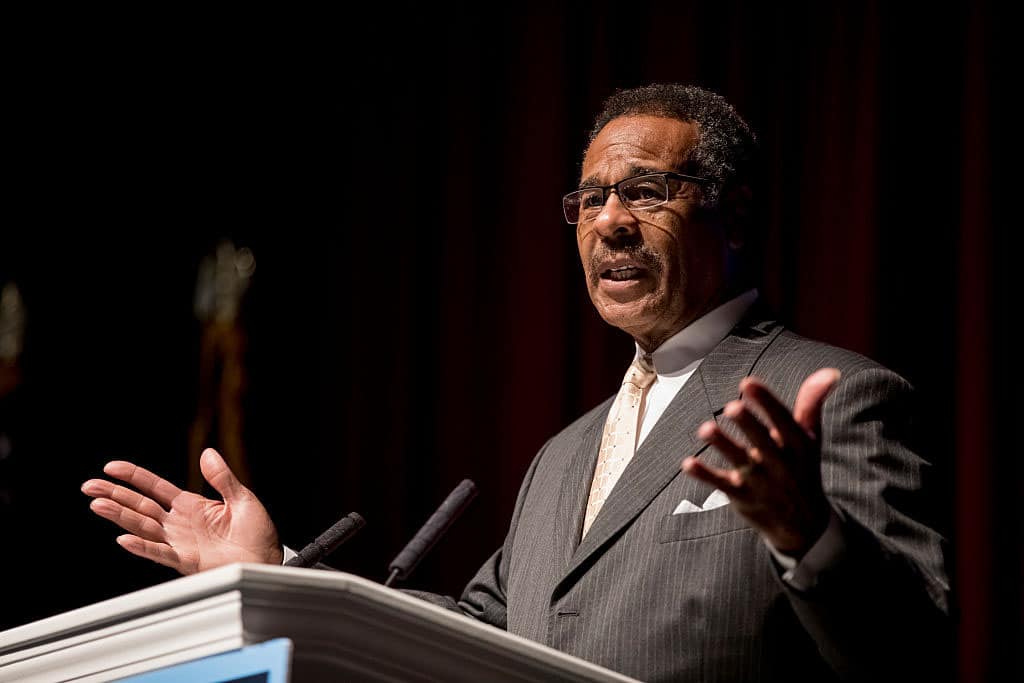
On January 3, Representative Emanuel Cleaver (D-Mo.) ended the opening prayer in the House of Representatives with the words “amen and awoman,” causing social media to erupt.

Cleaver, who is a pastor, called for “peace” in his prayer and concluded by saying, “We ask it in the name of the monotheistic God, Brahma, and ‘God’ known by many names by many different faiths. Amen and awoman.”

The alteration to the traditional prayer ending sparked a series of reactions on Twitter.

“Amen is a Biblical Hebrew word,” Ben Shapiro, editor emeritus of The Daily Wire tweeted, adding that it means “‘may it be so.’ It has nothing to do with the word ‘man’ or ‘woman’ because it is FROM HEBREW. This is some of the dumbest s*** I have ever seen in my life.”


Fleur Hassan-Nahoum, the deputy mayor Jerusalem, similarly tweeted that “to change it to awoman which means nothing is the most moronic thing ever.”

Many Twitter users used the word alteration for jokes and meme fodder.


Ron Kampeas, the Washington bureau chief for Jewish Telegraphic Agency, tweeted sarcastically that Cleaver’s word choice “is definitely the scandal that need[s] to preoccupy Congress this week.”

The “awomen” remark comes after Speaker of the House Nancy Pelosi proposed a series of rule changes that included using only gender-neutral terms like “parent,” “child” and “sibling.”

Dem Congressman Ends Prayer With “Amen and Awoman” Read More »

Mourning and Joy — At The Same Time

There are passages of the Talmud that you learn in the sacred books and are purely theoretical, and then there are pieces of Torah that become your reality in the blink of an eye.

The famous teaching from Masechet Ketubot, for example, instructs, “If a funeral procession and a wedding procession meet at an intersection, the wedding procession goes first.”

Last Wednesday, this teaching was not Rabbinic advice, but the reality I lived. My beloved aunt, Rachel Durlacher (z”l), passed away in Israel. At 16, she made Aliyah from Philadelphia, met her husband on Kibbutz Sde Eliyahu and had ten children and thirty-seven grandchildren. She truly loved the land and the Jewish people. If you have ever traveled to Israel with me, personally or professionally, there was a 100% chance you met Aunt Rachel.

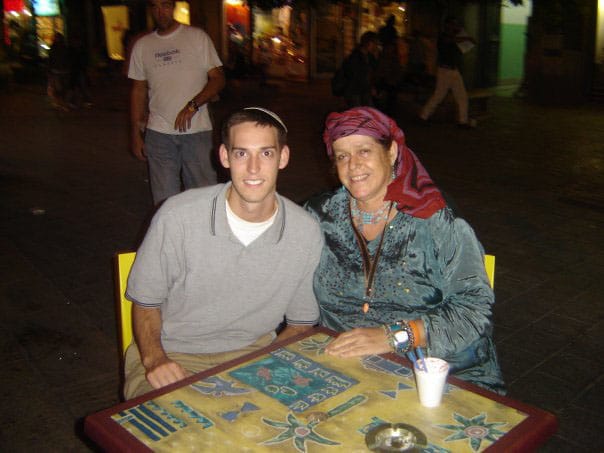
The author with his aunt

Rachel never left home without her chalil, a simple wooden flute, which she used to serenade God’s world with her voice, with her songs, with her heart and with her soul. She never left home without a paintbrush and canvas, putting the beauty of God’s world on paper for all of us to witness. And she never left home without something to give to someone in need: a shekel, a gift, a snack, a piece of Torah.

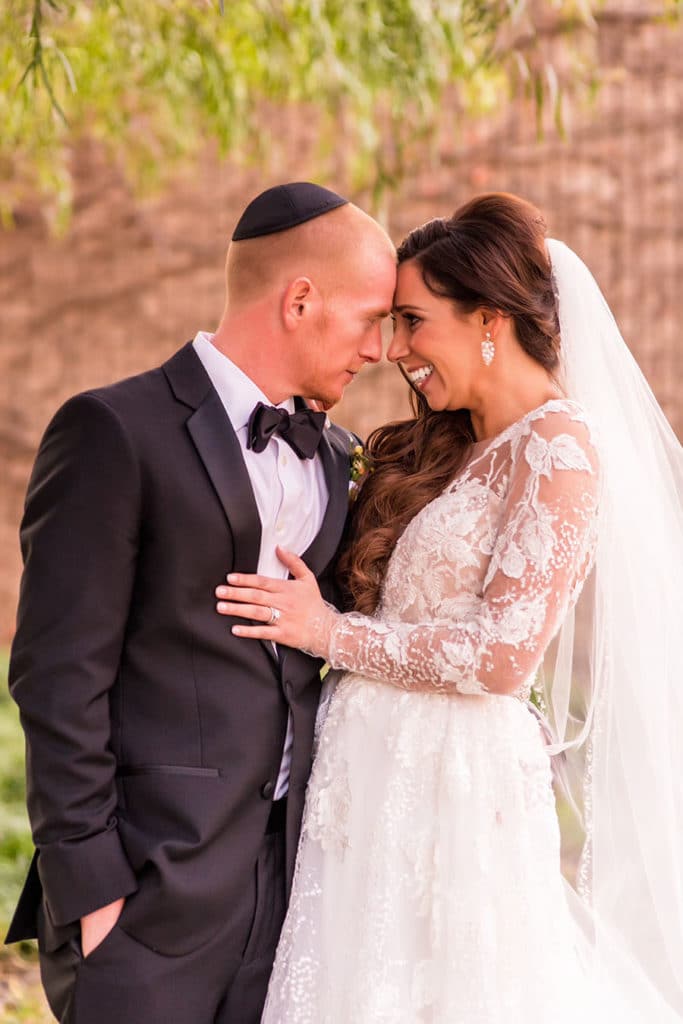
Jamie and Nitza

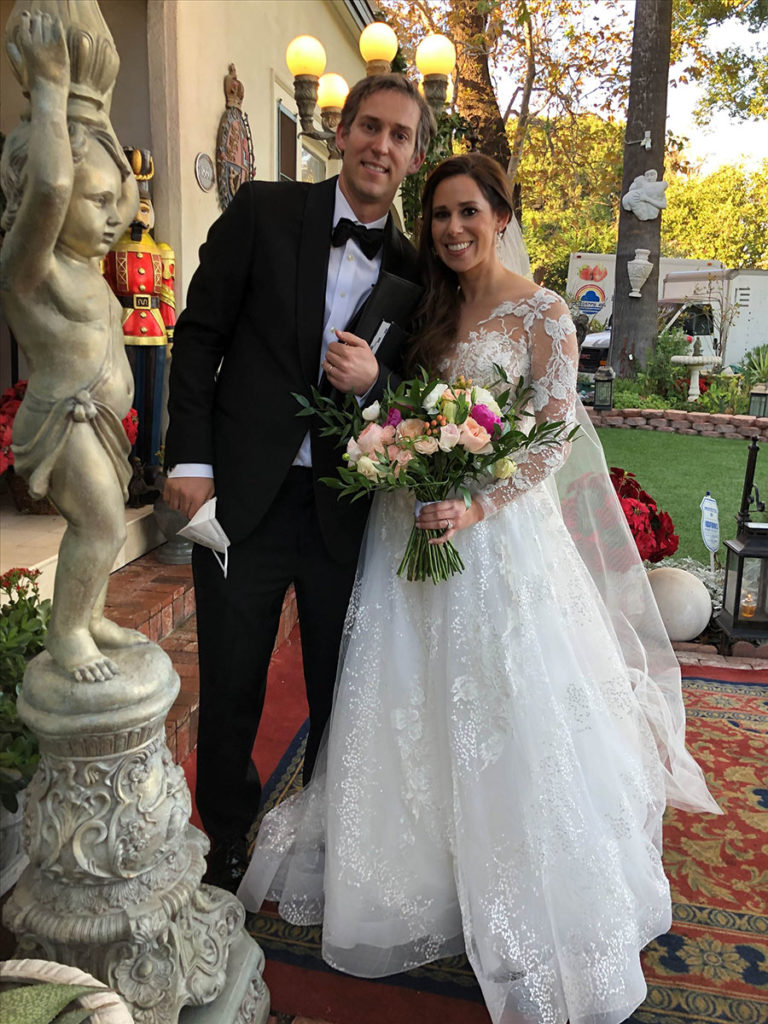
With the miracle of Zoom, our family gathered from the four corners of the earth — at 4:30 A.M. in Los Angeles and 1:30 P.M. in Israel — to remember her sacred life. But just hours later, we were scheduled, also with the miracle of technology, to celebrate my sister’s wedding. Nitza and her fiancé Jamie had waited patiently as COVID-19 postponed the original chupa date. As they watched world circumstances deteriorate, they rescheduled the wedding, providing us with a moment to find joy in challenging times.

And we did. For life must continue, and joy must be recognized and not delayed. Seven different family members around the world recited sheva brachot, toasts and speeches through a screen. At the end of the evening, a bride and groom rejoiced uvchutzot yerushalayim, in the streets of Jerusalem.

Life must continue, and joy must be recognized and not delayed.

As I laid my head to sleep on Wednesday night, I could not help but marvel at the wisdom of our tradition. Every morning, we recite the Psalm, hafachta mispdi lmachol li, pitachta saki vatazreni simcha — God, You turn my mourning into dancing, You change my sackcloth into robes of joy. And that Wednesday, as one part of my family sat shiva, the other part recited sheva brachot.

At each wedding I officiate, I explain the significance of the number seven, a number of wholeness and holiness. Shabbat is on the seventh day, a number of peace and of completeness. And yet, as we uttered the sheva brachot in a moment of completeness, my family across the world was also broken.

When we conclude a Jewish wedding with the smashing of the glass, we are reminded of the broken souls who yet wait for a day of celebration and joy. At the same time our cousins tore their garments for keriah in Israel, we broke a glass in Los Angeles. Two symbols of brokenness, and yet two rituals of rebuilding.

Our extended family has a WhatsApp group. It is constantly in action, with family members around the world, 10 hours apart, talking. These last seven days have been particularly active, with memories that created our present and recent pictures that will create our future together.

The author and his sister Nitza

This year has been a challenge for each one of us. There has been mourning and joy all at once, too many times to count. As a Rabbi, I have learned to officiate Zoom baby namings, b’nai mitzvah, funerals and weddings. From Zoom room to Zoom room, families stare at me over a screen in preparation for these life cycle events, skeptical that any meaning can come without physical touch.

But then I receive letters, week after week, of grateful members of our community, who now do not need to imagine a grandparent across the country having an Aliyah at a bar mitzvah or a cousin sharing a story they have never heard at a shiva. Community works, despite physical distance, because of social and spiritual closeness.

Twelve hours: a funeral and a wedding; Sheva brachot and shiva; tears of mourning, tears of joy; a soul remembered and two souls. It is who we are, and who we must be.


Rabbi Erez Sherman is a rabbi at Sinai Temple.

Mourning and Joy — At The Same Time Read More »

Q&A With MK Cotler-Wunsh

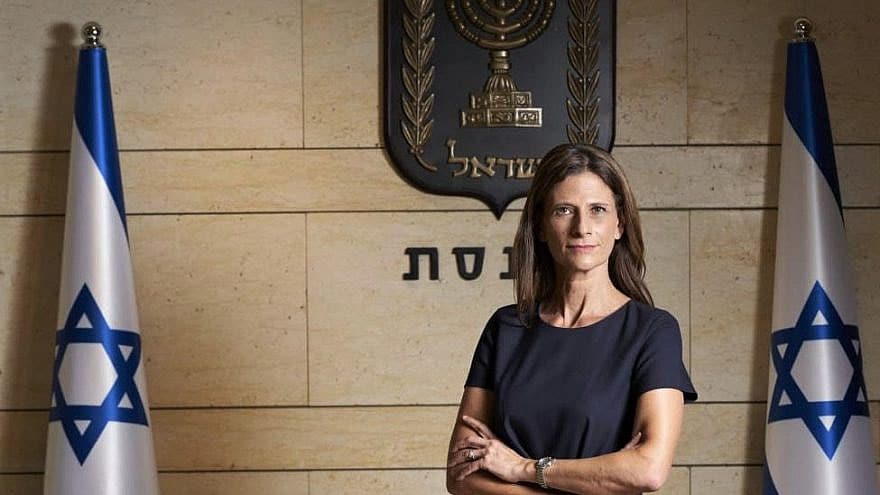
 Michal Cotler-Wunsh is an Israeli-Canadian member of Knesset currently serving within the Blue and White Party, though just announced that she will not run with Blue and White in the upcoming elections—Israel’s fourth round in two years—slated for March 23. She entered the Knesset in June as a replacement for Alon Schuster, who resigned his seat under the Norwegian Law after being appointed to the cabinet.

Though she was born in Jerusalem and returned to Israel eight years ago with her spouse and four children, Cotler-Wunsh spent her formative years in Canada and made aliyah to join the IDF as a lone soldier, serving as an officer in various training and command positions.

An international-law, human-rights and free-speech expert, she earned degrees from the Hebrew University Faculty of Law in Jerusalem and at McGill University Faculty of Law in Montreal. She has held a number of legal positions, and during her years in Canada worked in mediation, formal and informal education, and extensive public activity. Her other experience has included bridging the religious-secular divide, countering terrorism and anti-Semitism, increasing legal services to nonprofits and preventing sexual harassment in the workplace.

In her Knesset role, Cotler-Wunsh has headed efforts to plan, develop and strengthen connections between Israel and the Diaspora, raising awareness and providing exposure of both challenges and opportunities for new immigrants (olim) to Israel.

This interview has been edited for brevity and clarity.

Q: Can you describe your early influences and journey to the Knesset?

A: My influences are people and historic events, including many that shaped my legal and political understanding before Knesset, and that were an amalgamation of my own identity, being born in Israel and being present in the Knesset on the night of the Mahapach (a dramatic 1977 Israeli political upheaval that led to an economic, social, political and cultural transformation of Israeli society). Others are some of the giants of Israel and Zionist history, as well as the Jewish people—from Ze’ev Jabotinsky’s five memim (his belief that taxes collected by the state should be used to provide its citizens with five necessities, which all start with the Hebrew letter mem: food, lodging, clothing, education and well-being), which intersects with my own understanding of human rights—to understanding [former Israeli Prime Minister] Menachem Begin’s commitment to statesmanship, humility and the values he embodied.

During my childhood, I would pop over to have milk and cookies next door with Begin’s wife, Eliza, until my mom, who served as Begin’s parliamentary aide, came home from work. He was a visionary and a statesman for the Jewish people. These are leadership qualities that are perhaps underappreciated but so important in a leader; they are even spoken about in the biblical context of Moses’ virtue of humility.

Then I moved to Canada after my mother married Irwin Cotler, a human-rights activist champion and warrior who is haunted by the proposition that our commitment to never again should fail in a world of again and again. As a child, this discussion was part and parcel for our Shabbat dinners, discussing Soviet Jewry, Sharansky, Mandela, Sakharov … the genocide happening in Rwanda … to understand that to prevent the genocide of others is also to prevent ours.

These all contributed to the continuation of my legal and political understanding, in everything I do—not just in Knesset. These are what brought me here after my legal and social activism, to improve Israel’s resiliency and Israel-Diaspora relations—to renew that covenant and create a paradigm shift in Israel’s standing in the international arena. To speak the language of rights in order to rise to the docket of the accused.

Q: Can you tell me more about what you are doing to renew the covenant between Israel and the Diaspora, and the paradigm shift you mention? 

A: There is a very important opportunity and responsibility with the relationship between Israel and the Diaspora, and I have been honored to host discussions on this at the committee level as the Chair of the Subcommittee on Israel-Diaspora Relations.

The coronavirus has shed light on things that we missed and that we must be aware of, as is the case for the shift in the relationship paradigm … the voice of the Diaspora must be heard around the decision-making tables, to engage with Knesset members, and Knesset members should acknowledge and recognize these challenges. Not one side telling and one side giving.

Anglo olim—a community that has informed identity—also has a very important voice that must be sounded.

Q: Speaking of the role that olim like yourself play in politics and Knesset, what is it like to work within the Knesset, given that you have seen other political systems such as Canada’s, and what changes would you make within the political system if you could?

A: The miracle that is the State of Israel is only 72 years old, and we have the responsibility to create the processes for the next 72 years. That said, COVID-19 has highlighted the need to transition in our own role of government. We need clear, whole and transparent long-term plans, using consistent key performance indicators to measure the duties that ministries are charged with, based on the principles that our founding fathers and mothers laid. In the committees that I chair, such as the subcommittee on Israel’s relations with the Diaspora and also internal issues like the special committee for dealing with drugs and alcohol, I urge for data collection that informs policy and vice versa. It is imperative that long-term plans are applied consistently. That is our role in our generation.

Also seeing the Canadian processes, it is important that more seasoned democracies inform what we need to implement, which includes transparency and due process. Canada has stated online its clear and transparent policy regarding non-Canadian immediate family members visiting the country; Israel has not. You must have the public’s trust, and to deserve it, create a transparency of the information and make it accessible, and even communicate the logic behind policies, even if they change. The Israeli public is very savvy, and I believe in it. We have the responsibility to create change that the public deserves.

Q: Speaking of changes, what would you like to do to serve the public in the future, given the changes we might be seeing soon in Israel’s political arena?

A: A dysfunctional government is worse than elections. I supported the unity government at the time, and my aspirations in Knesset have always been to fulfill my mission with courage and humility for the sake of Israeli public and Jewish people. If I can do it in Knesset, I will. If not, I will do it in another platform where policy is made and can be challenged, and where paradigms can shift—where I can bring my professional knowledge, academic expertise, voice and identities as an Israeli and Canadian that must be heard around the table in this very historic time for the State of Israel.

Q: How have these dysfunctions affected olim and Israel’s citizens?

A: The dysfunctions we see in the government unfortunately indeed affect olim, as they do all Israel’s citizens. For example, the fact that the Ministerial Committee has not met for months has delayed the passing of important legislation, including a bill I proposed that would eliminate the double social security payments paid by new immigrants that live in Israel but work abroad in countries, such as the United States, that Israel does not have bipartisan agreements with on this issue. Always and more so as we go to elections again, it is important for olim to sound their voices and the viewpoint diversity they bring with them, informing decision-makers of issues that must be addressed. I am committed to continuing to engage and represent these voices of olim, with the hope to continue raising them in Knesset, as I have had the honor and responsibility to do throughout the past six months.

Q: You have played a major role in the lives of olim in Israel, becoming a voice for them in the Knesset. What are you working on currently in this regard?

A: I advocated for visitation of family members when we closed the borders—for lone soldiers, b’not sheirut, for parents of olim who are having babies … a Band-Aid approach, as my preferred way is a holistic policy. Olim who have been here for four years are now supposed to have visitation rights from first-degree family members, and we are insisting that the government authorities follow through on what was promised to the public. These are challenges that are emotional—and our responsibility is that much greater because many olim are here alone and haven’t seen their family members in a long time.

We also cannot talk about the importance of aliyah separately from that of the Diaspora. Aliyah was a value of the State of Israel inscribed in its Declaration of Independence. Our role is to identify hurdles preventing aliyah. A quarter of a million new immigrants have come from all over the world, and we have a duty to ensure not just their initial arrival and absorption, but to enable successful integration. I am completely committed to enabling olim to make us aware of the hurdles to address them.

Q: These are indeed challenges that new immigrants face within Israel. What do you believe are Israel’s greatest challenges as a whole?

A: Israel’s challenges intersect with global challenges. I did my doctoral studies about free speech on university campuses, and I would underscore those global processes as they affect Israel, such as cancel culture, or understanding the [rejection] of free speech moving online, onto digital platforms. Anti-Semitism is but one example, the question of the very legitimacy of Israel as a Jewish and democratic state as it was founded.

Today, war is declared utilizing tools of public opinion. There is a war against the State of Israel of double standards. The U.N. General Assembly just condemned Israel 17 times with only seven resolutions against the rest of the world—and look at who sits on the U.N. Human Rights Council. The International Criminal Court is in dire need of reform. Those institutions are failing.

Anti-Semitism is the canary in the mine shaft; this is not just undermining of international law. And I want to point out that criticism is not the same as delegitimization. There has been not one other country in the world whose right to exist is in question.

Q&A With MK Cotler-Wunsh Read More »