fbpx

December 7, 2020

GOP Rep Calls for Tlaib’s Removal from House Committees Over Anti-Semitism

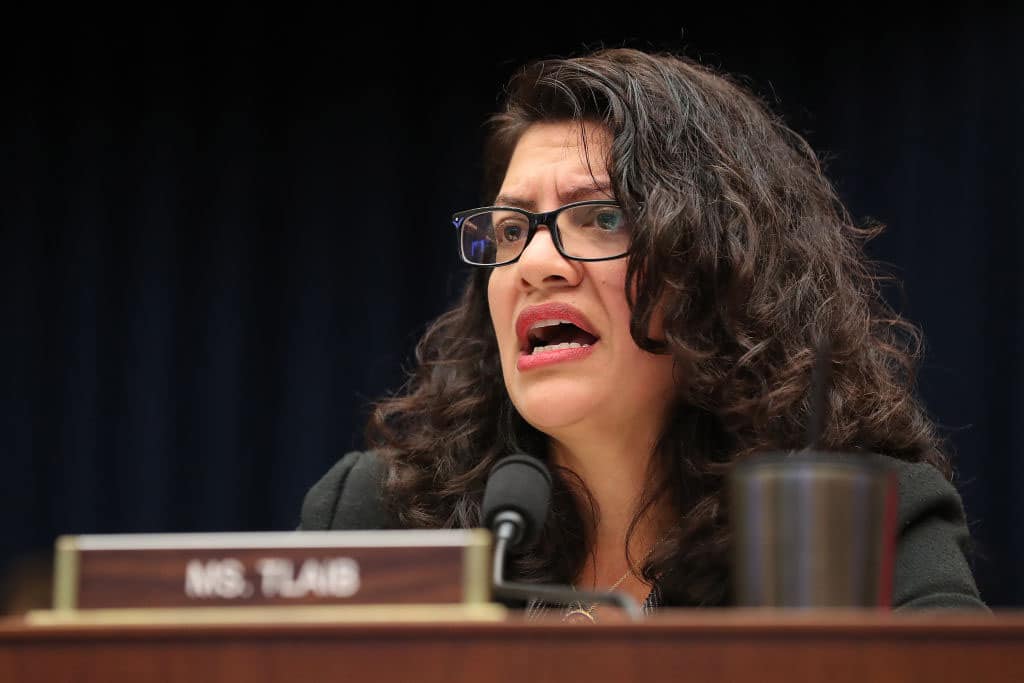
Representative Guy Reschenthaler (R-Penn.) issued a statement on December 4 calling for Representative Rashida Tlaib (D-Mich.) to be removed from all congressional committee assignments over her “disturbing pattern of anti-Semitism.”

The statement, which was provided to the conservative news site Breitbart News, cited Tlaib’s participation in the Americans for Muslims in Palestine (AMP) virtual conference on November 27-29. Reschenthaler called AMP “one of the nation’s most anti-Israel advocacy groups” and alleged that the conference “featured other participants with reported connections to Hamas, terrorism financiers, and the Boycott, Divestment, and Sanctions (BDS) movement.” Reschenthaler also pointed to Tlaib’s since-deleted November 29 retweet of a tweet stating, “From the river to the sea Palestine will be free” as “the latest examples of a deeply disturbing pattern of anti-Semitism that has been on display since she was elected. Yet Speaker [Nancy] Pelosi and House Democrats refuse to condemn her heinous behavior.”

He added that the 2018 shooting at the Tree of Life synagogue in Pittsburgh is what happens when anti-Semitism is allowed to fester.

“The day after this cowardly act of violence, I stood in solidarity with Americans of all religions, races, and ethnicities at a vigil honoring the victims of this heinous crime, and the first time I ever spoke on the House floor was to denounce hatred and bigotry in all forms,” Reschenthaler said.

The Pennsylvania congressman noted that House Republicans immediately stripped then-Rep. Steve King (R-Iowa) from his committee assignments in 2019 after making “inexcusable racist remarks,” referencing when King asked The New York Times when the term white supremacist “became offensive.”

“By failing to act and hold Rep. Tlaib accountable, Pelosi is emboldening her and others to continue spreading and escalating this dangerous, hateful bigotry,” Reschenthaler said. “It is past time we show the American people that there is no place in Congress, or anywhere, for this shameful intolerance. I call on my colleagues across the aisle to join me in calling for Rep. Tlaib to immediately lose her committee assignments.”

The Stop Antisemitism.org watchdog thanked Rescenthaler for his statement.

“Thank you @GReschenthaler for standing against #antisemitism & radical Jew hating bigots like Tlaib,” the Jewish group tweeted. “We all know what the #FreePalestine movement entails – nothing to do with assisting Palestinians & EVERYTHING to do w/the full erasure of the Jewish state.”

A Twitter user named AdinaZ tweeted that Reschenthaler is so far “the only congressperson calling out @RashidaTlaib for her persistent antisemitic comments. Has anyone else in Congress said anything?”

Some, such as writer Peter Beinart, have defended Tlaib, arguing that she “has been clear that Jews + Palestinians deserve equality. Suggesting otherwise is a smear.”

GOP Rep Calls for Tlaib’s Removal from House Committees Over Anti-Semitism Read More »

‘Jewish-American’ Streaming Service Jewzy.TV Launches in Time for the Holidays

Streaming services are booming in 2020 especially when the movie theater experience is nonexistent because of the pandemic. Netflix, Hulu, Amazon Prime and HBOMax will now have to make room for Jewzy Cinema & TV (Jewzy.TV), the newest Jewish streaming service.

Founded by former Reuters and CBS-TV Senior Producer Jeremy Wootliff, Jewzy.TV aims to bring Jews from all backgrounds around the country together with the shared experience of binging more than 100 Jew-ish TV shows and films. He said he was frustrated there was no one-stop-shop for “exciting, cool, high-quality Jewish entertainment” on TV.

After surveying Jews around the country, he found that more than 70 percent of Jewish Americans would watch and pay for a service if it existed. From his home, he built a small team from Hollywood to Tel Aviv and three years later, JEWZY Cinema & .TV is now available for screens large and small around the U.S.

“Jewzy.TV aims to inspire and excite 21st-century Jewish-American identity with comedy, culture, glamor, showbiz and Hollywood,” Wootliff said in a statement to the Journal. “It’s all about entertainment, a timely and positive way to be a proud Jewish American. It will celebrate our common history and Israel’s exciting cinema and TV revolution while helping to keep alive the memory of the Holocaust.”

“Jewzy.TV aims to inspire and excite 21st-century Jewish-American identity with comedy, culture, glamor, showbiz and Hollywood.” — Jeremy Wootliff

Each month Jewzy subscribers can enjoy more than 100 Jewish titles spanning various genres including comedy, thrillers, documentaries, comedy specials and dramas including “The Double,” “Dummy” and “Dark Horse,” featuring Jesse Eisenberg, Rachel Weisz, Adrian Brody, Christopher Walken and Mia Farrow, among others.

Like other streaming services, Wootliff says Jewzy also plans to commission original content. Its first original Israeli-American stand-up special “Happy Monday” was released on Dec. 1. Also like the major outlets, Jewzy is compliant on Roku, Apple TV, Android TV, Amazon Fire, Google Play and the App Store. A monthly subscription is $7.99 and a yearly subscription is $59.99.

“With community centers and synagogues forced to curtail their activities as a result of the global pandemic, JEWZY Cinema & .TV will be a new way to connect to and celebrate our heritage now and long after this crisis,” he added. “The Jewish American world has changed; like it or not, we experience more on-line. JEWZY.TV is the beginning of our new virtual Jewish community. Let’s keep the dream alive. If we nurture it carefully, it can be an exciting practical benefit for all Jewish people.”

For more information visit their website.

‘Jewish-American’ Streaming Service Jewzy.TV Launches in Time for the Holidays Read More »

Adam Schiff’s Path to Higher Office

Congressman Adam Schiff would make a fine United States Senator. It is unlikely that we’ll see that happen, at least not for many years. But given recent events, he could end up as California’s next Attorney General.

As Gavin Newsom considers Vice President-elect Kamala Harris’ potential successor, he is facing immense pressure from across the ideological and demographic spectrum. Organizations representing the African American, Latino, Asian Pacific and LGBTQ communities have all weighed in on behalf of candidates from their respective groups, and many of California’s leading feminist voices have stressed the importance of being represented by a woman of color.

Newsom has appropriately devoted more of his time over the last several weeks to dealing with resurging COVID-19 cases and has carefully avoided any public comments that would tip his hand. But Secretary of State Alex Padilla has emerged as the perceived front-runner, and he received an important boost last week when Senator Dianne Feinstein endorsed her former staffer as the best person to take Harris’ place.

Feinstein’s public advocacy for Padilla may have been intended to give Newsom some flexibility. Her recent decision to step down as the top Democrat on the Senate Judiciary Committee under heavy pressure from party progressives — and her stated justification that she was doing so to focus on drought and wildfire issues — has regenerated ongoing rumors that the 87-year-old Feinstein might decide to resign her Senate seat before her term expires in 2024.

This would give Newsom an unprecedented two Senate appointments, allowing him to satisfy two of the most insistent constituencies rather than just one. Choosing Padilla or another state officer like State Controller Betty Yee or State Treasurer Fiona Ma would give him yet another opportunity to appoint their replacement, as well.

But if Attorney General Xavier Becerra does not get snagged in the state’s growing scandal regarding unemployment benefits being delivered to Death Row inmates and is confirmed as Joe Biden’s Secretary of Health and Human Services, Newsom would then have no fewer than four statewide appointments to hand out. This is where Schiff’s opportunity could arise.

The Senate seats are the biggest prizes. With just one vacancy, Newsom might be tempted to consider a Latina, allowing him to make history by simultaneously appointing the state’s first Hispanic American Senator and filling Harris’ seat with another woman of color. (My choice would be Monica Lozano, the former chair of the University of California Board of Regents and the longtime publisher of La Opinion). But given that the pressure is more narrowly focused on appointing an African American woman, two open Senate seats would allow Newsom to make a groundbreaking appointment of his longtime ally Padilla as well as a Black woman such as Representative Karen Bass or San Francisco Mayor London Breed. Then the governor could make even more history by appointing an LGBTQ leader like Long Beach Mayor Robert Garcia or State Senate President Toni Atkins to Padilla’s position.

The likelihood of either of those Senate seats being given to a white male such as Schiff is approximately the same as me pitching for the Dodgers on Opening Day.  But a constitutional office is another story. There are a number of suitable female and minority candidates for the Attorney General position, as well. Newsom enjoys making history, and appointing the state’s first Asian Pacific AG (someone like Representative Ted Lieu or State Assemblymember Rob Bonta) would allow him that opportunity. But a female leader, such as Oakland Mayor Libby Schiff or former state legislator Martha Escutia, also remains a strong possibility.

If Newsom is able to satisfy political and demographic pressures with his Senate appointments, a well-qualified leader like Schiff becomes a more plausible pick. Schiff would need to decide that he wants the job even if it were offered. There is rampant speculation that he could succeed Nancy Pelosi as Speaker if she steps down in two years. But there, too, demographics could present an obstacle if he were to face Democratic Caucus Chair Hakeem Jeffries or Assistant Speaker Katherine Clark.

If Newsom satisfies political and demographic pressures with his Senate appointments, Schiff becomes a more plausible pick.

If Schiff were to decide that a return to Sacramento makes sense, and if Newsom feels that his other choices could satisfy the other constituencies, then this appointment would provide Schiff with a platform to run for either governor or senator in the future. Giving up a high-profile post in Washington under a new administration might be difficult, but it could also lead him to something even bigger.


Dan Schnur teaches political communications at UC Berkeley, USC and Pepperdine. He hosts the weekly webinar “Politics in the Time of Coronavirus” for the Los Angeles World Affairs Council & Town Hall.

Adam Schiff’s Path to Higher Office Read More »

Israeli-World Jewry Relations: From Negation to Celebration

Before our eyes, Israel is undergoing a miraculous transformation in the way it views its relationship with world Jewry.

Today, we in the Knesset and throughout Israel mark “Diaspora Day,” a day to honor Jewish communities around the world, and to strengthen the bonds between us. This day is one of a series of measures that the State of Israel, under the leadership of the Ministry of Diaspora Affairs, is taking in order to create a new paradigm for the Israeli-world Jewry relationship.

The starting point for these measures is the State of Israel’s decision to take formal responsibility for its side of the relationship between the Jewish State and the Jewish People. We understand that ensuring the continuity and vitality of this relationship requires more than symbolism and rhetoric.

Ensuring the continuity and vitality of the relationship between Israel and the world Jewry requires more than symbolism and rhetoric.

In fact, it requires three simultaneous efforts: The first effort will require weaving a new national story, one that combines the Israeli and diasporic vision. In the past century, the shared experience of the Holocaust and the establishment of the State of Israel served as a common narrative for the vast majority of Jews. However, now that there is strong State of Israel and thriving Jewish communities, these two pillars no longer suffice.

Contemporary Israeli-Jewish identity is grounded in Israeli experience and culture. Outside of Israel, Jewish identity often informs political activism which at times can be at odds with the Israeli mindset. Neither version leaves room for a shared Jewish identity or sense of peoplehood.

The new story of the Jewish people must be one grounded in connecting the Jewish people based on our shared heritage, texts, traditions and perhaps most importantly  — our shared destiny to lift up our world.

Telling this new story will require the collective talents of writers, musicians, storytellers and educators to inspire our contemporary relationship and center the diverse contributions of Jews from all backgrounds. Let us create this story together.

The second effort involves building a new framework to ensure a meaningful dialogue between us. This effort started with the passage of a Government Resolution in July to create a comprehensive strategic framework for Israel’s activities to ensure the future of the Jewish People. This was an important step in the assumption of the State of Israel’s formal responsibility for its side in the Israel-Diaspora relationship. This framework’s implementation continues with my ministry’s decision to advance a bill requiring consultation with world Jewry on matters that will impact it.

We are now hosting a series of roundtable discussions on this effort with a diverse set of Jewish voices. This process represents the most significant instance of Israel requesting the world Jewry’s feedback since Prime Minister Ben-Gurion’s 1958 letter to 51 Jewish scholars regarding the question of “Who is a Jew?” In parallel, we are launching a “Peoplehood Center” in Israel to strengthen the awareness and identification of Israeli Jews with the wider Jewish People.

The third effort is to enable and empower young people to engage with their Jewish identity on their own terms. In this spirit, initiatives such as Shalom Corps, the global Jewish peace service that combines the values of Jewish Peoplehood and tikkun olam, are the key to our children’s shared future.

As we develop such opportunities with partners from around the world, we must remember that the metrics of contemporary Jewish engagement are not those of our parents’ generation. It is the obligation of all who care about the future to meet the rising generation where they stand.

These three efforts will take place within an ecosystem that requires every Jewish individual, institution and leader to take on this mission through their own lens. As minister of Diaspora Affairs, I see my office as a natural convener for this work.

Creating such a paradigm shift will not be a simple task. However, it is the critical mission of this generation of the Jewish People, in line with our tradition of setting lofty and ambitious goals. When the State of Israel and world Jewry each commit to elevating our shared people, ultimately we are setting the foundation to elevate our entire world.


Omer Yankelevitch is the State of Israel’s Minister of Diaspora Affairs and member of the Knesset. A lawyer and community organizer, Minister Yankelevitch was a dedicated public servant for many years before entering politics. Yankelevitch is the first female Haredi (ultra-Orthodox) minister to serve in the Government of Israel. She and her husband, Yaron, live in Beit Shemesh with their five children.

Israeli-World Jewry Relations: From Negation to Celebration Read More »

Gene Simmons, Elon Gold to Appear at Virtual Anti-Semitism Gala

StandWithUs, the nonprofit organization dedicated to supporting Israel and fighting anti-Semitism around the world, will present its annual Hanukkah “Festival of Lights” gala virtually this year, on Dec. 13 at 5 p.m. PST. Gene Simmons, bassist and co-founder of KISS, and comedians Elon Gold and Jay Leno will appear at the event, which Gold will host.

Simmons, born in Haifa, Israel to a mother who survived the Holocaust, immediately agreed to participate, saying, “We need to wake up and stop hating each other. Join us, this is a wonderful time to change the world.”

Gold, a longtime StandWithUs supporter and Festival of Lights host, will emcee for the 13th year, and Special Envoy to Monitor anti-Semitism, Elan Carr, is the keynote speaker. Joshua Washington, director of the Institute for Black Solidarity with Israel (IBSI) and the Hebrew Project, will premiere the new song “Oh Jerusalem.”

The event is free, but registration is required to attend and participate in the auction. Click here for details.

Gene Simmons, Elon Gold to Appear at Virtual Anti-Semitism Gala Read More »

Why Saudi Arabia Should Make Peace with Israel Now

I spent the weekend reading Ben Hubbard’s book “MBS,” about Saudi Crown Prince Mohamed bin Salman. Hubbard, the New York Times Beirut bureau chief, paints both a flattering and damning portrait of the crown prince. Flattering because it’s clear that MBS is a visionary who had the courage to take on the kingdom’s Wahhabi religious fanatics, who effectively controlled the kingdom since 1979. The liberal reforms the prince has made are extraordinary — allowing women to drive, opening movie theaters, permitting concert venues to show operas and slowly opening to the West. Damning because Hubbard alleges that MBS has not improved, and may have worsened, Saudi Arabia’s human rights record; the murder of Jamal Khashoggi — whom Hubbard exposes as having been largely run by a Qatari operative — being the prime example.

The net portrayal of MBS in Hubbard’s book? A flawed visionary who might just succeed in dragging Saudi Arabia kicking and screaming into the modern world and saving its economy from being based on the diminishing returns of fossil fuels.

But the most interesting part of the biography as it pertains to the Middle East is the portrayal of MBS as someone with zero animus toward Israel. In fact, Hubbard confirms that MBS sees Israel as a country that is technologically, economically and militarily a great potential ally. For years, the media has been rife with reports of security cooperation between Israel and Saudi Arabia. There even was a speculative report that MBS visited Tel Aviv last year.

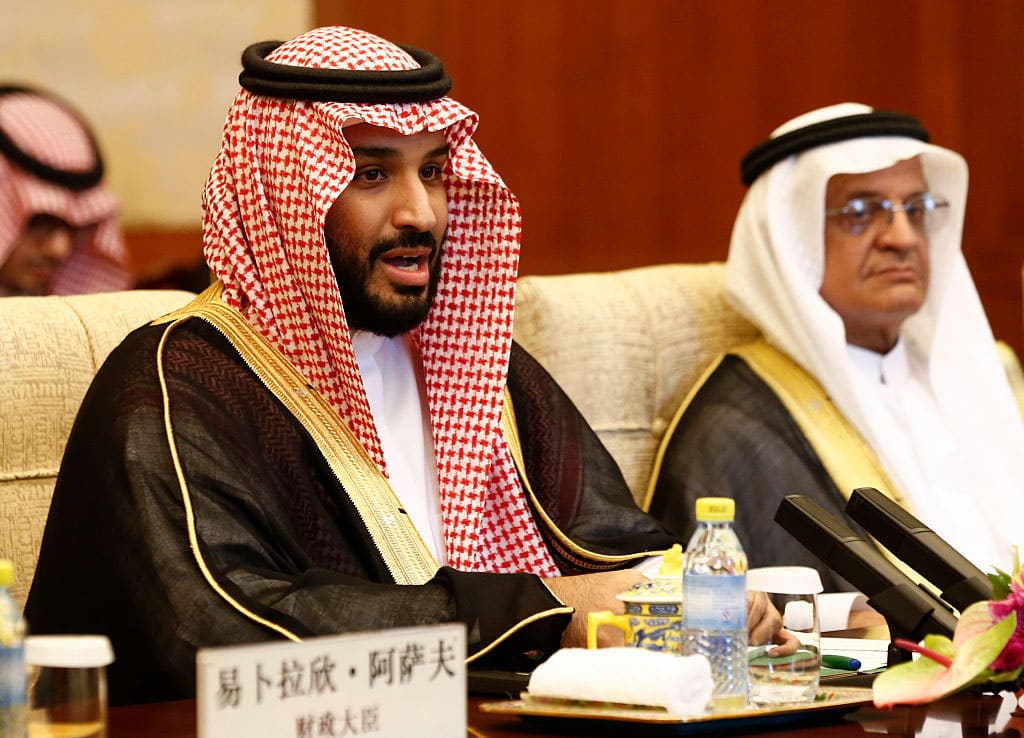
Saudi Arabia Deputy Crown Prince Mohammed bin Salman speaks during a meeting at the Diaoyutai State guest house on August 31, 2016 in Beijing, China. (Photo by Rolex – Pool/Getty Images)

This should be welcome news to the American Jewish community, who should accept the prince’s outreach to Israel and do everything in their power to encourage the prince to make peace with Israel prior to President Trump’s exit from office. MBS may wish to wait for a new administration and use a potential peace treaty with Israel as leverage for other Saudi needs. But this would be a mistake.

Trump’s coalition consists of two key demographics that are vital to America’s relationship with Saudi Arabia: pro-Israel Jews and evangelical Christians. Both groups wield enormous political influence and, should Saudi Arabia normalize relations with Israel, would go to bat for Saudi Arabia politically in the United States.

The same is not true of many of Biden’s core constituents for whom Israel is — falsely, of course — a human-rights abusing occupier. And although this is not true for Biden himself — he has always been, with the exception of his lobbying for Obama’s Iran deal, a great friend of the Jewish state — it is certainly true for so many of those around him.

If MBS made peace with Israel now, instead of letting it become a negotiation that goes on for years, he would lock in support and deep gratitude from these two vocal and influential constituencies.

If MBS made peace with Israel now, he would lock in support from two vocal and influential constituencies.

And make no mistake: Saudi Arabia is the whole ball game. Not only is Saudi Arabia the richest and most influential Arab country, but it is also quite literally the epicenter of Islam and the focus of world Islamic pilgrimage. In one sweep, a Saudi peace with Israel would have Muslims around the world thinking differently about Israel, even as extremists who hate Saudi Arabia and want to see it toppled would dig in their heals, thereby exposing just how far out of the mainstream they are.

In Israel, Saudi Arabia would gain a valuable ally against their existential enemy Iran, who has its sights fully fixed on the kingdom. Saudi Arabia, in fact, faces a far greater threat from Iran than even Israel does.

To be sure, anti-Semitic and genocidal Iran, with its illegal and secret nuclear program, is a direct threat to Israel’s existence. If it could, Iran would murder every Jew on earth, especially the six million congregated in Israel, which it repeatedly threatens to do. But Iran also knows that if it ever dropped a bomb on Israel, God forbid, they would face massive retaliation that would wipe them off the earth. So any nuclear attack on Israel — which could kill millions of Jews — would also be the end of Iran.

This is not the case with Saudi Arabia. The Iranians would not drop nuclear bombs on the Saudis. They would simply invade to take control of the oil fields and rescue their cratering economy. Saudi Arabia does not have an army strong enough to repel Iran. And unlike Israel, it does not have nuclear weapons that can be employed in a retaliatory strike. The Saudis would therefore have to rely on the United States, or an American-led coalition, to evict Iran, like the one President George H.W. Bush put together to evict the Iraqis from Kuwait.

There is scant American stomach for such an action, and no doubt, MBS is well aware of that.

But in a peace treaty with Israel, MBS would cement an economic, diplomatic and military alliance with the Middle East’s strongest nation, whose air force alone could decimate much of Iran’s critical air defenses and infrastructure.

I am not suggesting that Israel fight Saudi Arabia’s battles. I am suggesting that with a peace treaty between Israel and Saudi Arabia, the Mullahs in Iran would be well aware that they are now ringed by allies acting in concert to stop their aggression and their undisguised attempt at Middle East hegemony. They will think twice before they embark on any kind of military adventurism.

Would Joe Biden come to Saudi Arabia’s rescue? Now that America is the world’s foremost producer of oil, it’s much more doubtful.

But under Trump, a Saudi Arabia that has made peace with Israel would have two boisterous political friends: evangelical Christians and the pro-Israel Jews.

It shows you how far our world has come that we’re discussing American Jews, rather than American Muslims, potentially advocating for Saudi Arabia. Just a few years ago, Saudi Arabia was the center of extremist Wahhabi ideology that exported its fanatical dogma to the rest of the world, with millions funding madrasas and indoctrinating Muslim youth. Now, MBS, who purchased Leonardo Da Vinci’s “Salvatore Mundi,” is leading a cultural revolution in Saudi Arabia that is purging it of its soul-destroying censorship and is reaching out to the West. On November 22, he played host to Israeli Prime Minister Benjamin Netanyahu. And if that isn’t revolutionary, nothing is.

In November 2017, when “the last Leonardo” was being auctioned by Sotheby’s in New York City, I happened to pass the auction house when it was open to spectators. I, who loves everything Leonardo and attended the 500th Anniversary exhibition in the Louvre in Paris last winter, could have walked in and seen it. I thought I’d go the next day, not realizing the auction was set for the next afternoon. That was it. Never got to see it.

So I, and no doubt so many other Da Vinci enthusiasts, would welcome a trip to Saudi Arabia — having newly made peace with the ancient Jewish homeland and ushered in a new era of Middle Eastern understanding — to see glorious art, beautiful Arab culture and proof of the eternal brotherhood of all of God’s children.


Shmuley Boteach, “America’s Rabbi,” whom The Washington Post calls “the most famous Rabbi in America,” and is the author of “The Israel Warrior,” is the international best-selling author of 33 books. Follow him on Twitter and Instagram @RabbiShmuley.

Why Saudi Arabia Should Make Peace with Israel Now Read More »

NYT Criticized for Running “Saying Goodbye to Hanukkah” Op-Ed

The New York Times was criticized on Twitter for running an op-ed on December 4 titled “Saying Goodbye to Hanukkah.”

The author of the piece, Sarah Prager, wrote that Hanukkah was the only Jewish holiday she celebrated with her family growing up, as they mostly celebrated secular holidays otherwise. Prager wrote that her family’s Hanukkah celebrations always seemed “forced” and once she and her sister went to college, her family stopped celebrating Hanukkah altogether. When Prager married her wife (who was raised Catholic but doesn’t really identify with any religion), they decided to raise their children with only secular holidays.

“Discontinuing my family’s Hanukkah celebration fits right in with our family’s tradition of bucking tradition,” Prager wrote. “Most families do this in some way, even if just adjusting the Tooth Fairy’s gift for inflation. As a queer person, I know my kids will grow up alongside other children whose families created their own way of doing things because the old way hurt or didn’t fit.” She concluded her op-ed by stating “that forcing a tradition just because it was a part of my childhood is not what my kids need. They need love and connection — no menorah required.”

Various Jewish Twitter users denounced the op-ed. American Jewish Committee CEO David Harris tweeted that the Prager op-ed was “bizarre” and noted that in 2018 the Times ran an op-ed called “The Hypocrisy of Hanukkah.”

“Is this the paper’s skepticism about all faiths & their holidays?” Harris asked. “Or is it solely reserved for Jewish holidays?”

The Stop Antisemitism.org watchdog also tweeted, “With #antisemitism skyrocketing this year, why is the New York Times giving column space to Sarah Prager, a woman who identifies as Christian, to trash Hanukkah?!”

[/speakr-mute]Rabbi Jill Jacobs, executive director of T’ruah, an organization seeking to advance human rights, tweeted that she hasn’t been able to find any Times op-eds celebrating Hanukkah, only op-eds deriding the holiday.

“Can NYT not find anyone with actual Jewish knowledge to write a thoughtful piece?” Jacobs wrote. She added in a subsequent tweet: “Can you imagine if almost every Christmas op-ed for 10 yrs called the holiday is silly and complained that Santa doesn’t exist?”

Batya Ungar-Sargon, deputy opinion editor for The Forward, tweeted, “Truly impossible to imagine @nytopinion allowing a random white person to appropriate the religion of any other minority – and purely for the purpose of discarding it. Gross – and revealing – on so many levels.”

Andrew Silow-Carroll, the editor-in-chief of The New York Jewish Week, wrote in a December 7 op-ed for the Jewish Week that he didn’t understand the significance of Prager’s piece. “Prager’s article reads like the confession of a life-long vegetarian who once ate meat as a child, and doesn’t really miss it,” he wrote.

Silow-Carroll added that the Prager op-ed, as well as the Times’ past op-eds on Hanukkah, have been “lost opportunities to reflect on Chanukah and Jewish tradition in ways that are neither sermonic and pious, nor secular and snarky. There are plenty of Jewish voices who can frame Chanukah within the context of modernity, critiquing its uncomfortable aspects while preserving the ways it has been reimagined according to a modern, even liberal, Jewish understanding of religious freedom and the dilemmas of assimilation.”

Prager defended her piece in a December 7 Twitter thread, explaining that it was “a personal essay” published in the Times’ Parenting section.

“If I had known it would cause pain for some I may have reconsidered,” Prager tweeted. “I did not say there was anything bad about Hanukkah or Judaism, simply that they aren’t ultimately a fit for my non-religious family even though I celebrated as a child.”

She added in a later tweet: “Everyone should choose religious traditions that are right for them and I respect those choices. I genuinely wish a very happy Hanukkah to all those who celebrate.”


Joshua Leifer, assistant editor at Jewish Currents, defended Prager in a tweet. “If a personal essay about losing connection to ritual is scandalous to you, then you are extremely out of touch with the conversations many young American Jews are having about the place of ritual and religion in their lives,” he wrote.

The Times did not respond to the Journal’s request for comment.

NYT Criticized for Running “Saying Goodbye to Hanukkah” Op-Ed Read More »

Twenty of the Best 2020 (Non-Holiday) Jewish Books for Kids

The year 2020 wasn’t a great one for the majority of America’s children. But the same cannot be said for this year’s crop of children’s and young adult literature. Here’s a list of excellent 2020 books that we hope will not be overlooked due to shuttered schools, libraries and bookstores. These talented authors had the poor luck of having their work published in a year where they could not travel to promote it. Readers also would not be able to see these fine books as they browsed the “new arrivals” shelves at stores and most libraries. So, take a look at what may pique the interest of that young reader on your holiday list.

Picture Books:

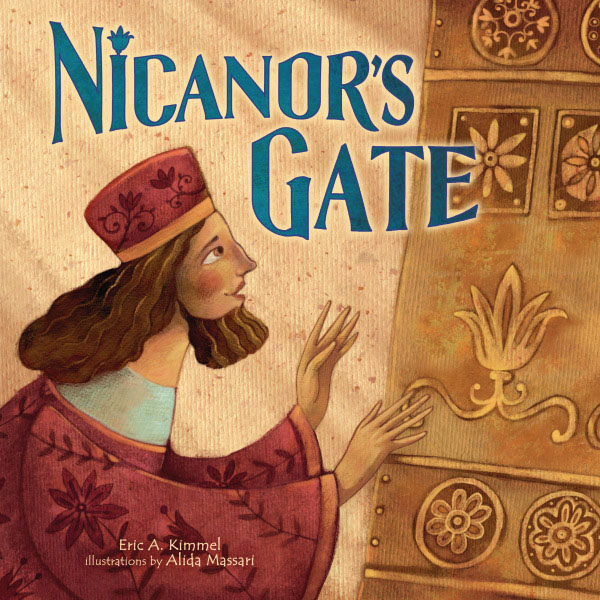
  1. “Nicanor’s Gate” by Eric A. Kimmel.

Nicanor is thrilled when King Herod calls on him to assist in rebuilding the ruined Temple in Jerusalem. After he orders massive, beautifully intricate doors to be built, the gates are lost while being shipped from Alexandria to Jerusalem. A beautiful retelling of a Talmudic story.

  1. “The Generous Fish” by Jacqueline Jules.

In a wonderfully illustrated tale inspired by Jewish folklore, a giant talking fish gives away his golden scales to greedy villagers until young Reuven stands up to them to save his brightly colored friend.

  1. “Miriam at the River” by Jane Yolen.

Baby Moses is given a loving send-off by his big sister in this poetic retelling of the famous biblical story. Bright colors and marvelous illustrations provide a glimpse as to how this story would be seen from a sister’s point of view.

  1. “A Basket Full of Figs” by Ori Elon.

Who knew the co-creator of the TV show “Shtisel” wrote a children’s book? Ori Elon recreates the beautiful Midrashic tale about the importance of caring for each other along with caring for the environment as an old man plants a fig tree that he may never live to see bear fruit.

  1. “A Zombie Vacation” by Lisa Rose.

When a stressed-out, funny-looking zombie wants to get away for some R&R in Israel, he finds that the Dead Sea sounds very inviting in this hilarious and silly book for kids who like a gentle scare or two. 

Picture Book Biographies for Older Readers:

  1. “Behind the Bookcase: Miep Gies, Anne Frank, and the Hiding Place” by Barbara Lowell.

Miep Gies, one of the protectors of Anne Frank’s family and the one who recovered Anne’s diary, led a difficult early life, and her story has not previously been told for children. The perspective of a righteous gentile is surely an important aspect of this world-renowned story.

  1. “The Polio Pioneer: Dr. Jonas Salk and the Polio Vaccine” by Linda Elovitz Marshall.

Children should know the importance of vaccines and the name of Dr. Jonas Salk, who made this his life’s work. This kid-friendly book tells you about his life and also includes info about his Jewish background. He made the world a better place for all of us.

  1. “Itzhak: A Boy Who Loved the Violin” by Tracy Newman.

From his impoverished Tel Aviv roots as a boy who loved music and a near-fatal bout with polio, Itzhak Perlman never gave up and eventually became an internationally acclaimed violin virtuoso. His story will inspire everyone.

  1. “No Steps Behind: Beate Sirota Gordon’s Battle for Women’s Rights in Japan” by Jeff Gottesfeld.

A young Jewish woman who grew up in Japan in the early twentieth century returns later as a translator with THE American military and becomes a leading advocate for equal rights for all women.

  1. “Ruth Objects: The Life of Ruth Bader Ginsburg” by Doreen Rappaport.

This book is part of the award-winning “Big Words” series of wonderfully illustrated biographies for children. Kids will be fascinated by the life of teacher, lawyer and Supreme Court Justice Ruth Bader Ginsburg, who dedicated her life to the pursuit of equality.

Middle Grade Chapter Books:

  1. “Chance: Escape From the Holocaust” by Uri Shulevitz.

Multi-award-winning picture-book creator Uri Shulevitz details the eight-year odyssey of how he and his Jewish family escaped the Nazis by fleeing Poland for stints in Soviet labor camps and Turkestan. The powerful illustrations, photos and poignantly remembered details make this a good choice for middle grade readers.

  1. “A Ceiling Made of Eggshells” by Gail Carson Levine.

Historical fiction by a Newbery-winning author about the expulsion of Jews from Spain starring a plucky Jewish heroine. Readers will learn a lot about those turbulent times along with falling in love with Loma and her adventures with her intimidating grandfather as she grows from age seven to 16.

  1. “Letters From Cuba” by Ruth Behar.

Acclaimed children’s author Ruth Behar based her inspiring epistolary story on her own grandmother’s immigration journey. Eleven-year-old Esther is a young Jewish girl who escapes Poland to make a new life in Cuba, then helps her father earn enough money for the rest of their family to join them by making custom dresses for many islanders.
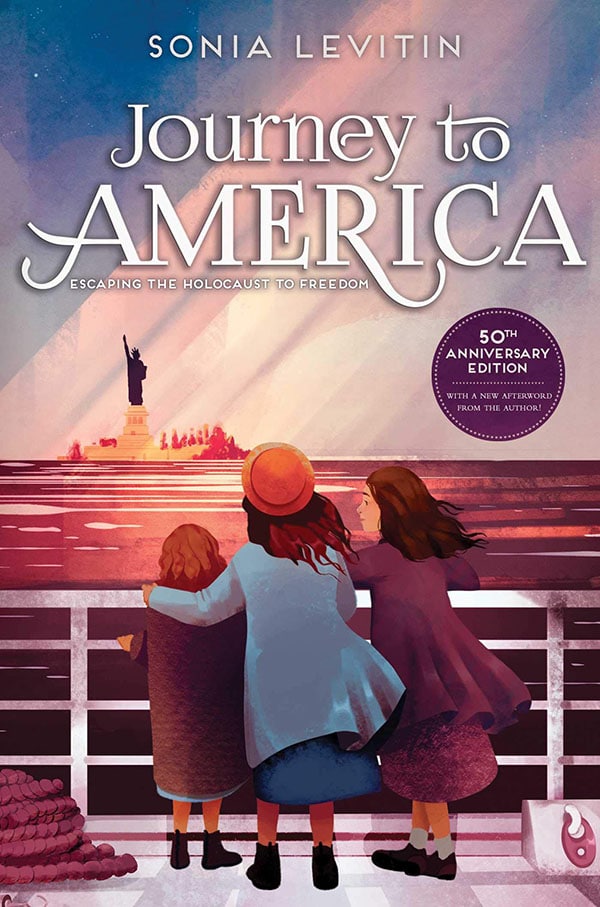
  1. “Journey to America—50th Anniversary Edition” by Sonia Levitan.

A modern classic is given a new cover and preface in this fiftieth-anniversary edition of Sonia Levitan’s beloved novel based on her own experiences fleeing Germany with her family when she was a young girl in 1938. Winner of both the National Jewish Book Award and the Sydney Taylor Award.

  1. “Turtle Boy” by M. Evan Wolkenstein.

This strong debut novel will appeal to young readers, especially those who feel “different” from their peers. Seventh-grader Will Levine is used to being bullied because of his odd-looking chin and his desire to mostly hang out in his room with his turtles. His choice of a bar mitzvah community service project turns his life around as he learns what it means to be brave.
Young Adult Books:

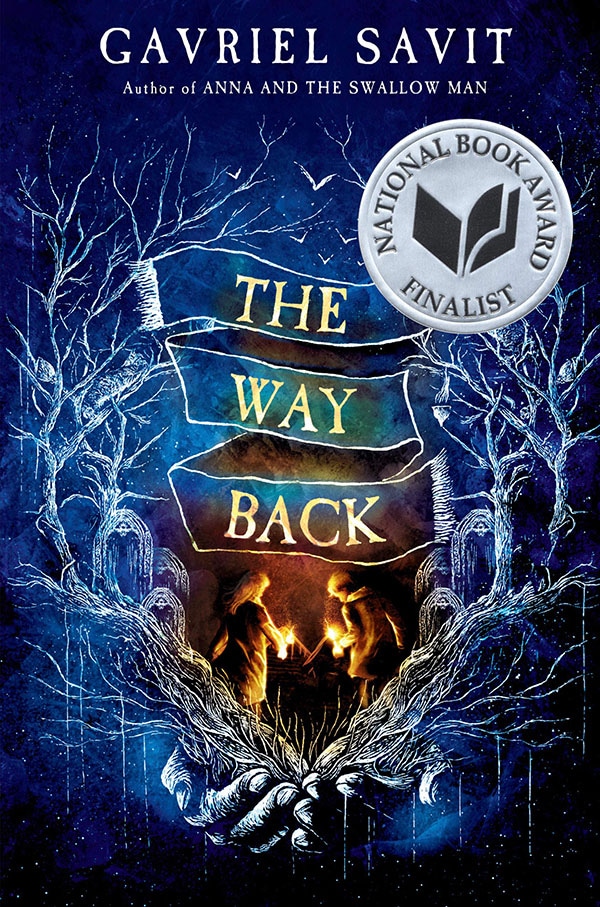
  1. “The Way Back” by Gavriel Savit.

This National Book Award finalist is a compelling fantasy that draws inspiration from Jewish folklore, where Eastern European Jews believe in real demons. Two young people journey from their small village to the Far Country in order to save their shtetl from the curse of Death.

  1. “They Went Left” by Monica Hesse.

A gripping historical mystery about a young Polish heroine who sets out to find her lost younger brother after being liberated from a concentration camp in 1945, knowing that the two of them were the only survivors.

  1. “The Light in Hidden Places” by Sharon Cameron.

The incredible true story of Stefania Podgorska, a Polish Catholic teenager who exemplified bravery and defiance by hiding 13 Jews in her attic during WWII while Nazi officers requisitioned her house for the German army.

  1. “The Enigma Game” by Elizabeth Wein.

The popular author is back with an exciting new historical novel in a Scottish setting, featuring beloved characters from “Code Name Verity” and “The Pearl Thief” and introducing fifteen-year-old Louisa Adair. When a German pilot lands in Scotland under mysterious circumstances, Louisa finds an Enigma machine that translates German code.

For the Whole Family:

“Honey on the Page” translated by Miriam Udel, with forward by Jack Zipes.

This choice is multi-generational — not really for kids — since it is more of a scholarly tome, but it is still a remarkable achievement that should not be missed. Emory University scholar Miriam Udel has translated literature that first appeared long ago in Yiddish (from different countries), enabling children of today access to a delightful treasury of Yiddish children’s stories, folktales and poems. The humorous and child-friendly illustrations throughout by Paula Cohen enhance the reading, which would provide a lovely shared experience between generations.

Lisa Silverman is the former director of the Burton Sperber Jewish Community Library located at American Jewish University.

Twenty of the Best 2020 (Non-Holiday) Jewish Books for Kids Read More »

Whitewashing FDR’s Abandonment of the Jews

President Franklin D. Roosevelt is widely remembered as a strong leader who boldly led America out of the Great Depression and to the brink of victory in World War II. Yet when it comes to the Holocaust, some defenders of FDR’s record would like us to believe he was not responsible for keeping Jewish refugees out of America — that it was all the handiwork of the State Department, which supposedly ran U.S. immigration and foreign policy independently of the president’s wishes.

This is a disingenuous framing of FDR’s legacy. Especially in a time like today, when immigration policy is a topic of so much interest, it’s important to recognize that it is the president who makes the final decisions, not his appointees.

Yet, in a recent speech at the University of Oklahoma, Professor Daniel Greene continued to perpetuate the implausible notion that President Roosevelt was too hapless to make his own foreign policy. Remarkably, Greene spoke for nearly an hour about America’s response to Nazism and the Holocaust yet barely mentioned the president.

Greene’s tendentious approach is consistent with the theme of the controversial exhibit on “Americans and the Holocaust” at the U.S. Holocaust Memorial Museum (for which Greene was senior curator). Many scholars have criticized the exhibit for downplaying President Roosevelt’s abandonment of European Jewry.

Greene told his Oklahoma audience that the reason so few German Jews were admitted to the United States in the 1930s was because of “bureaucratic walls put in place by the State Department” — as if the White House had no occupant.

What actually happened is that the State Department implemented Roosevelt’s policy of restricting immigration far below what the existing law allowed. The annual quota of German immigrants — about 26,000 — was filled only once in FDR’s twelve years in office; in most of those years, it was less than 25% filled.

There are letters from the president himself at the time, in which he acknowledged and defended the fact that visas were, as he put it, “considerably under-issued.” There are documents showing that State Department officials briefed the president on their efforts to keep refugees out in accordance with his policies.

Equally troubling was Greene’s deeply flawed description of the American response to the Nazis’ Kristallnacht pogrom in 1938. Greene omitted any mention of the offer the governor of the U.S. Virgin Islands made to open his territory to Jewish refugees after the pogrom — which FDRrejected. The exhibit at the museum likewise fails to mention the Virgin Islands as a possible haven for refugees.

The sad truth about FDR and Nazi Germany in the 1930s — which Greene and the U.S. HolocaustMuseum never mention — is that FDR consistently sought to maintain good relations with the Hitler regime prior to the war.

FDR consistently sought to maintain good relations with the Hitler regime prior to the war.

Under President Roosevelt, the U.S. government warmly welcomed the swastika-bedecked German warships Karlsruhe and Emden, which Hitler sent to American ports in 1934–1936 to promote goodwill between the Third Reich and the United States. The warships visited American Atlantic, Pacific, and Gulf Coast ports at a time when Nazi Germany was emerging as a major military power. High-level U.S. military officials openly fraternized with the warships’ officers, helping to legitimize Hitler’s rearmament program, which put all of European Jewry in extreme danger. With the assistance of Roosevelt’s State Department, the U.S. Navy even helped the Nazi warships improve their combat readiness.

In numerous speeches to American business and civic groups, the German warships’ officers aggressively promoted Nazism and Hitler’s expansionist policies. The Roosevelt administration ignored fierce protests by American Jews and trade unionists against the Nazi warships’ visits. The administration’s policy helped Nazi Germany present itself as a respectable member of the community of nations, with many legitimate grievances. Greene mentioned none of this, nor can it be found in the U.S. Holocaust Memorial Museum’s exhibit.

Hosting the Nazi warships was consistent with President Roosevelt’s policy of maintaining cordial, sometimes even friendly, relations with the Nazi regime. From 1933 until the end of 1938, FDR never publicly criticized Hitler’s persecution of German Jews. He never suspended diplomatic or trade relations with Nazi Germany before World War II. And at the same time that many Americans were boycotting German goods in the 1930s, the Roosevelt administration was helping the Hitler regime evade the boycott by allowing it to use deceptive labeling on their goods so that American consumers would not recognize their country of origin.

Toward the end of his talk in Oklahoma, Greene described how the Holocaust Museum’s exhibit was intended especially for younger audiences, so he and his colleagues polled high school students in advance. Greene said he was surprised when “high school students didn’t do well on the question of who was president in World War II.”

Sadly, neither the exhibit nor its roving spokesman is doing much to improve the situation. So long as they depict Roosevelt as the amazing vanishing president — who suddenly goes missing when the embarrassing abandonment of the Jews is discussed — how could high schoolers be expected to know any better?


Dr. Rafael Medoff is founding director of The David S. Wyman Institute for Holocaust Studies; his most recent book is “The Jews Should Keep Quiet: Franklin D. Roosevelt, Rabbi Stephen S. Wise, and the Holocaust.”

Dr. Stephen Norwood is Professor of History and Judaic Studies at the University of Oklahoma; his latest book, which is in press, is “Prologue to Annihilation: Ordinary American and British Jews Challenge the Third Reich.”

Whitewashing FDR’s Abandonment of the Jews Read More »

Gal Gadot, Adam Sandler Among MTV Film & TV Award Winners

Several Jewish stars scored wins at the MOT MTV Film & TV Awards on Sunday, including Gal Gadot, Adam Sandler, Jason Segel, Sarah Michelle Gellar, Selma Blair and Jamie Lee Curtis at a virtual ceremony that honored stars of film and television as GOATs (Greatest of All Time).

Gadot, whose sequel “Wonder Woman 1984” makes its delayed debut on HBO Max on Dec. 25, was named She-Ro GOAT, and Sandler shared the Dynamic Duo GOAT with Drew Barrymore for their rom-coms “The Wedding Singer,” “50 First Dates,” and “Blended.”

Segel and his “Forgetting Sarah Marshall” co-star Kristen Bell were honored with the GOAT for Heartbreaking Break-Up, and Gellar and Blair got the Legendary Lip Lock GOAT for “Cruel Intentions.” Curtis received the Scream Queen GOAT for the “Halloween” franchise.

Other honorees included Kevin Bacon, Kevin Hart, and the late Chadwick Boseman.

Gal Gadot, Adam Sandler Among MTV Film & TV Award Winners Read More »