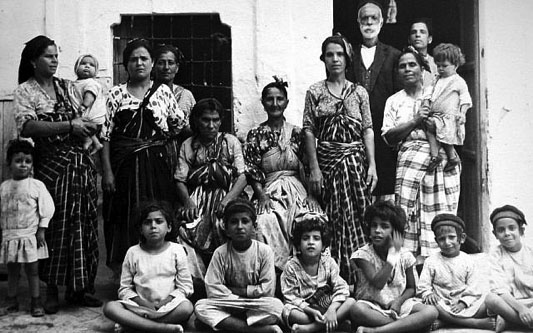
“Brothers and Sisters” in Diplomacy: The Power of Mizrahi Jews in Building Bridges
“Middle Eastern Jewish communities truly are a bridge to peace. Internally, we hear a lot of our speakers say ‘If you had just put Mizrahi Jews at the negotiating table from day one, we would have peace in the Middle East a long time ago.”
Sarah Levin, Executive Director of JIMENA (Jews Indigenous to the Middle East and North Africa) offered these reflections on the power of Mizrahi voices during a November 30 webinar that marked Israel’s Day of Commemoration for Jewish Countries from Arab Countries and Iran. The Facebook live event, titled “Transforming Trauma: How Jewish Voices from Arab Lands and Iran Can be a Bridge to Peace,” featured speakers from the United States and Israel and was hosted by Minister of Knesset Michal Cotler-Wunsh, a legal expert and human rights activist who currently serves in Israel’s Blue and White party.
Thank you @elliecohanim @HenMazzig @JIMENA_Voice @YaaraZered @DavidSuissaJJ @samyebri & @sfrantzman for joining for last night's inspiring and timely discussion marking #JewishRefugeesDay – "Transforming Trauma: How Jewish Voices from Arab Lands & Iran Can Be a Bridge to Peace." pic.twitter.com/GqqDKTKqoY
— מיכל קוטלר-וונש | Michal Cotler-Wunsh (@CotlerWunsh) December 1, 2020
In 2004, Israel adopted a law which designated November 30 as a day to recognize and commemorate the 850,000 Jews who were displaced from Arab and Muslim lands in the twentieth century.
In true Israeli democratic style, Cotler-Wulsh spent part of the program addressing viewers from a polling station, where she was voting on whether to disassemble the current Knesset and send Israel to a new round of elections.
Cotler-Wulsh is the daughter of Irwin Cotler, a former member of the Canadian parliament (1999–2015) and minister of justice (2003–2006).
In her remarks, Levin quoted Cotler, who has previously said that Jews in the Middle East and North Africa suffered from persecution similar to Nazi Germany’s infamous Nuremberg laws, which were enacted against Jews beginning in 1935.
In 2007, Cotler co-authored a refugee policy paper titled “Jewish Refugees from Arab Countries: The Case for Rights and Redress,” in which he said, “Simply put, any narrative on the Middle East that does not include justice for Jewish refugees is a case study in Middle Eastern revisionism. It is an assault on truth, memory and justice.”
A 2009 statistical study of Israel revealed that 50.2% percent of Israeli Jews are of Sephardi or Mizrahi origin. During the event, Cotler-Wunsh described her own family background, which informed her identity and activism. Her grandfather, Moshe, left Iraq as a young boy in 1929 and immigrated to what was then Palestine. She reflected on her grandfather’s professional and personal challenges to find his place in Israel’s then-predominantly socialist environment.
Cotler-Wunsh also commented on the recent Abraham Accords peace agreement between Israel, the United Arab Emirates (UAE), and Bahrain as “a historic moment in time, if we seize the moment and identify the opportunities.” She also recognized Israel’s emerging recognition by Arab countries as a “historic pivot from rejectionism to normalization.”
Another speaker at the event was Ellie Cohanim, who was born in Iran and currently serves as Deputy Special Envoy to Monitor and Combat Anti-Semitism under the Trump administration. Cohanim shed light on the 2,700-year old history of the Jews of Iran (a population of 100,000 before the 1979 revolution that has since dwindled to 5,000-8,000).
Now on Facebook: My remarks today in commemoration of #JewishRefugeeDay, hosted by MK @CotlerWunsh & with fabulous co-panelists @HenMazzig @sfrantzman @DavidSuissaJJ @samyebri @JIMENA_Voice https://t.co/aL3xFpeVDN pic.twitter.com/vNyNxqjCbO
— Ellie Cohanim (@EllieCohanim) December 1, 2020
“My father was threatened to be reported as a Zionist spy,” Cohanim said. The threat prompted her family to flee the Islamic Republic.
“They (the regime) engage in an obsessive anti-Semitism,” she said. “It motivates them through everything that they do: state policy to deny the Holocaust, [threatening to] wipe the Jewish state of Israel off the face of the earth, or calling the [Islamic Revolutionary Guards Corps] special forces the ‘Quds Force’ to liberate Jerusalem from the Jews.” “Quds” is the Arabic name for Jerusalem.
Like Cotler-Wulsh, Cohanim praised the Abraham Accords and emerging opportunities for education and dialogue between Arab states and the West. In October, the State Department signed a Memorandum of Understanding with Bahrain’s King Hamad Global Centre for Peaceful Coexistence to “eradicate anti-Semitism and promote respect and peaceful coexistence between Arab and Jewish people through education and programs.”
Cohanim, who works with Elan Carr, Special Envoy to Combat Anti-Semitism, said she saw firsthand the power of Mizrahi Jews in Arab diplomacy during Israel’s recent outreach to Bahrain. “We have a cultural understanding,” she said. “We have so much in common; we understand each other and it’s really been like cousins getting reunited after a forced exile.”
Cotler-Wunsh also stressed the importance of people-to-people connections in the region, stating that she will soon propose a bill in Israel’s parliament that will ensure that every child in the Jewish state will learn Arabic.
During the webinar, Hen Mazzig, a Senior Fellow at the Tel Aviv Institute and a prominent Mizrahi advocate and social media activist (as well as a regular contributor to the Jewish Journal) discussed how his family came to Israel in the early 1950s from Iraq and Tunisia.
Whether Jews fled North Africa or Iran, Mazzig said, Mizrahi Jews have “one cohesive story. We were oppressed by the same oppressors.”
He expounded on the concept of justice for Mizrahi refugees by referring to his grandmother, who lives in Israel. “We don’t expect to go back to Iraq or Tunisia…we just want to be acknowledged, and once we get this acknowledgement, we’ll have justice.” For his grandmother, Mazzig said, “justice means her story will be acknowledged.”
Although he feels the world is more open to hearing Mizrahi voices, Mazzig still takes issue with the American Jewish community: “Everyone wants to speak today about Jews of Color, but it seems like no one wants to speak about the largest group of Jews of Color in the world, which are Mizrahi and Sephardi Jews.”
Mazzig joined Cotler-Wulsh and Cohanim in recognizing an inherent connection between Jews and Arabs in the Middle East. “We share the same culture, same approach to life as our brothers and sisters in the Middle East…it would be amazing to have a museum for Jewish heritage in the Middle East and North Africa…not in Tel Aviv, but in Dubai,” he said.
“We share the same culture, same approach to life as our brothers and sisters in the Middle East.” — Hen Mazzig
Levin discussed how one of her grandfathers was a Holocaust survivor and the other was a Sephardic Jew whose parents immigrated to the United States from Turkey.
“In my home, both Ashkenazi and Sephardic cultures were embraced, but in a public sphere, my Sephardic heritage was really never reflected back to me,” she said. “I always wanted my Papu’s (grandfather in Greek and Ladino) heritage to be as recognized and integral as my other grandfather who survived the Holocaust. The only place where this happened was in Israel.”
Levin referenced the film, “The Forgotten Refugees,” a short 2005 documentary produced by JIMENA that highlights the plight of Jews who fled countries such as Iraq, Iran, Yemen and Libya in the twentieth century.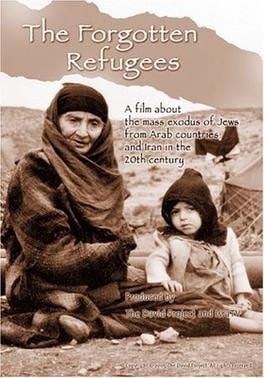
Levin also issued a call to action for Jewish communal leaders, asserting that they “are not able to effectively advocate for the rights of Mizrahi Jews until they know their stories. We know in North America, their stories are not known.”
To that end, JIMENA offers an array of educational materials to leaders and classrooms alike, including a Mizrahi-focused curriculum for Jewish day schools called “Journey to the Mizrach,” an oral history program that captures the stories of Mizrahim and an outreach initiative that teaches the history of Jews from the Middle East and North Africa in Arabic (known as the JIMENA Arabic Program). The organization also advocates for the recognition of Mizrahi Jews at the United Nations and the U.S. Congress.
Arabic language and Arab culture come naturally to many Mizrahi Jews, noted Jewish Journal editor-in-chief David Suissa. “My mother speaks Arabic, and I was raised with the Arabic language in Casablanca [in addition to French],” Suissa remarked during the webinar. “When you come to one of our family weddings, the music [includes] Arabic. As much as my heart and soul is with Israel, it’s very hard for me to forget the deep, deep connection that I have with Morocco.
“My ancestors lived there for centuries, and there’s so much to be said for the atmosphere and the geography,” Suissa continued. “I call it the ‘Judaism of the sun,’ the Judaism of dreamers; we see deserts and beaches and the music and culture.”
Suissa acknowledged that it’s important not to idealize the Jewish experience in Morocco. He also recognized past discrimination against Sephardim and Mizrahim in Israel but was pleased that Mizrahi culture in Israel seems to have moved beyond food and music to influence intellectual and political integration. He cited Fleur Hassan-Nahoum, the Deputy Mayor of Jerusalem who was raised to two Moroccan parents in Gibraltar and who is a founding member of the UAE-Israel Business Council. In October, Hassan-Nahoum led a delegation of Israeli officials and entrepreneurs to tour the UAE and Bahrain. She also launched the inaugural meeting of the Gulf-Israel Women’s Forum that brought together Emirati and Israeli women.
Suissa said he’d like to see more Mizrahi politicians in Israel, especially those who can sit at the table with Arab leaders and speak their language.
Sam Yebri, a candidate for Los Angeles City Council and co-founder and president of 30 Years After, an Iranian-American Jewish civic action organization (of which I am a co-founder), also stressed the role of Mizrahi Jews in combating the pernicious lie that Jews are not indigenous to the land of Israel.
“Leveraging our heritage is a valuable opportunity for community relations work,” said Yebri, who fled Iran with his family when he was one. “To tell Israel’s story more authentically, more richly, we can build bridges with other immigrant and refugee communities, whether in America, internationally or in Israel.”
Yebri also stressed the importance of preserving Iranian Jewish heritage, which, he said, is “a source of endless inspiration and meaning for all Jews.” To capture Iranian Jewish voices, 30 Years After has launched The BenEvri Project, an oral history project that gathers and archives the stories of Iranian Jews in the United States.
“The Iranian Jewish experience is a story of perseverance,” he said. “Who better than Iranian Jews to shed a light on the true nature of the Iranian regime, but also on the goodness of the Iranian people who are yearning to be free?”
Joining the event live from Israel, Nira Levari, Director of Documenting at the Babylonian Jewry Heritage Center, a museum in Or-Yehuda, and Yaara Zered, an Israeli journalist, spoke in Hebrew about the imperative for building Jewish unity through honoring the diversity of the Jewish people.
Seth Frantzman, Oped editor and Middle East affairs analyst at The Jerusalem Post concluded the webinar by offering thoughts on looking forward to building bridges. Frantzman, who has covered wars against the Islamic State in Iraq and Hamas in Gaza, as well as reported from Turkey, Jordan and Egypt, discussed how during several past visits to Arab countries, some local Arab populations expressed support for Israeli Jews, including Kurds whom he met in Northern Iraq and who openly embraced the Jewish state.
For Frantzman, recognizing Mizrahim is a “multiple-front struggle” — one that must address a lack of recognition from within the Jewish community itself, as well as the media’s role in excluding Black Jewish voices in Israel. “The media has made no attempt to include voices from the region, like Ethiopian Jews from Israel, when mentioning Black Jews,” he said.
Frantzman expressed concern for the threats posed by radical states such as Iran and Turkey, but felt hopeful that “the Abraham Accords have koshered the image of Israel for the region.”
Tabby Refael is a Los Angeles-based writer, speaker and activist.
“Brothers and Sisters” in Diplomacy: The Power of Mizrahi Jews in Building Bridges Read More »