Tzvia Rubens, of Hebrew Union in Ohio, is our guest this week, and we discuss Parshat Vayetze which begins when Jacob leaves Canaan and journeys to Charan.
On the way, he goes to sleep and dreams of a ladder connecting heaven and earth, with angels climbing and descending on it. In Haran, Jacob works for his uncle Laban, tending to his sheep. Laban agrees to give him his younger daughter, Rachel in marriage, but on the wedding night gives him his elder daughter, Leah instead.
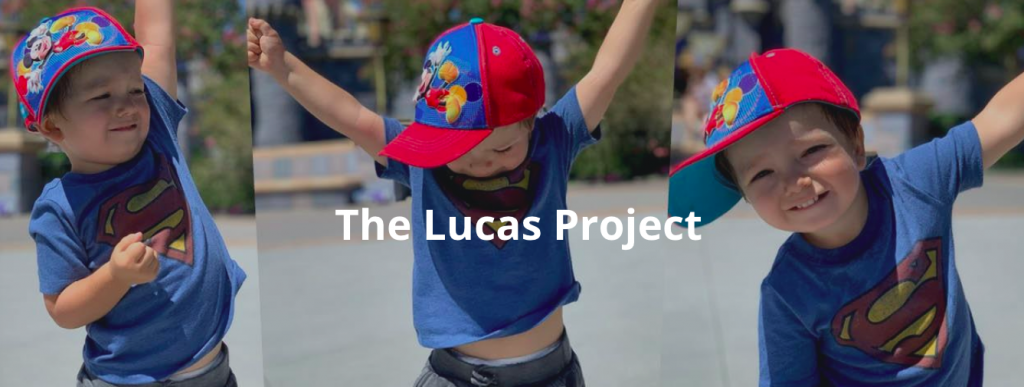
When Lucas was 3 months old we were notified that he tested positive on the newborn screen panel for Adrenoleukodystrophy, otherwise known as ALD. If you were to Google it, you would likely find a movie called “Lorenzo’s Oil”, or stories of young boys diagnosed with ADHD, who then lose their sight, speech, ability to walk and move, and ultimately die from brain lesions by the age of 7. That was the fate of boys diagnosed with this disease until it was added to the newborn screen. Sadly, many states still aren’t testing for ALD and will continue to lose their sons to this horrific disorder. However, the fate of boys with this diagnosis has been dramatically changed. With early detection, boys are living full, long lives. ALD is a rare genetic disorder in which the ALD protein is missing or malfunctioning in cells. When this happens, it creates elevated fatty acid levels that can potentially cause problems. There are many ways this disease can manifest. One is through adrenal dysfunction, also known as Addison’s Disease, which can easily be managed with medication. Another is problems with the spinal cord. It is possible that over time, a person with ALD will have gait and walking issues and/or could potentially be wheelchair bound, but continue to live normal lives. However, there is one very serious form of this disease called Cerebral ALD (cALD) in which the brain is affected and can ultimately take a person’s life quite quickly. cALD usually occurs in childhood with the average onset of 4-10 years old. It is possible for this to occur later in life, but less likely. Tragically, many families before us have lost their sons at a very early age to this disease. However, because of these courageous families, there have been so many advances in treatments. Specialists have found that if we can detect brain lesions early, a child can receive interventions to halt the disease in its tracks. This is the very reason it was added to the newborn screen. Monitoring a baby from birth will allow doctors to catch the disease early and intervene before it becomes problematic. This rare disease was added to the newborn screen panel in California in September 2016. Lucas was born in April of 2017. Had Lucas been born just 8 months earlier, we would never know this information. Currently, there are only 11 states that have added detection for ALD to the newborn screen. We are very grateful that we live in a state that approved it and that Lucas was born at the right time.
So, what now? Lucas will be monitored with bloodwork every 4-6 months and MRIs every 6 months until he is about 12 years old, and then it will move to every year. If Lucas should develop adrenal dysfunction, he will go on medication. If he should develop a brain lesion, he will need to have a bone marrow or stem cell transplant, or he will have gene therapy. This is not a cure, and it’s risky, but it’s a promising treatment. (Consider becoming a marrow donor: http://bahbad.org/) Currently, Lucas is doing very well. No adrenal issues to date and he has had 2 MRIs with all clear results. He is just like any other 3-year-old, but we would argue he is more of a superhero, as nothing holds him back. What can you do?
Lucas is a part of a study on the preventative interventions for ALD. His neurologist, Dr. Van Haren, is a national leader in ALD research and is studying the effects of Vitamin D on the prevention of ALD (among other studies). Lucas currently takes 2,000ius of D per day. Additionally, because of Dr. Van Haren’s advocacy, ALD was added to the newborn screen in California. He played a critical role in allowing us to know about Lucas’ diagnosis. Dr. Van Haren and his team spend countless hours working with ALD patients and researching advancements. We are so grateful that he is leading this and other studies on ALD. This is where we are focusing our efforts. If you could please help us reach our goal, we would be forever grateful as his research can change the fate of lots of boys. Unfortunately, because ALD is a degenerative disease, time is working against us. The more we are able to fund research, the closer we get to finding a cure. Lucas is approaching the window of his life that could affect him most greatly, and we want to do everything in our power to make every advancement possible. There is nothing more valuable to us and we are forever grateful for your support for our family and our sweet Lucas. Love, Nic and Alison #savetheboys
P.S. We have partnered with Dr. Van Haren and his team at Stanford to create the ALD Family Retreat. The retreat will take place at The Painted Turtle that was co-founded by Lucas’ grandparents, Page and Lou Adler. The camp is designed for children facing life-threatening and chronic illnesses. Over the retreat weekend, the ALD community will come together to enjoy all of the amazing activities at camp and share experiences while also empowering families with knowledge and tools for living with an ALD diagnosis. We are inviting specialists in neurology, endocrinology, transplant, nutrition and alternative medicine to discuss the latest findings, best practices, and what the future holds for our loved ones.
Make a gift to Dr. Van Haren’s Research. All donations are 100% tax-deductible.
Please mail checks payable to LPFCH to: Lucile Packard Foundation Attn: Development Services 400 Hamilton Avenue, Suite 340 Palo Alto, CA 94301
Please note: Write-in “The Lucas Project” in the memo section on the check. You can also enclose a separate note with this information if there is insufficient space in the memo line of the check.
ALD Connect is a non-profit organization that brings together patients, families, physicians, scientists, advocates, and industry.
Our mission is to improve health outcomes for patients with X-linked adrenoleukodystrophy (ALD) by empowering patients, raising awareness, and accelerating the translation of scientific advances into better clinical care.
Unlike the Talmudic sage Hillel, no one has ever asked me to teach the essence of the Torah while standing on one foot.
Hillel, who was up to the cheeky challenge, famously responded, “That which is hateful to you, do not do to your fellow. That is the whole Torah, all the rest is commentary.”
My response would have been a bit different. I would have said that to be a Jew is to be unabashedly grateful. And then I would have fallen over. Balance, whether on one leg or in opinionated commentary, isn’t my strong suit.
Gratitude is actually embedded in our namesake as Jews. The word “Yehudi,” which means “Jew” in Hebrew, is derived from “Yehudah,” one of the twelve tribes of Israel. And the root of “Yehudah” is “l’hodot,” which means “to thank.” So, to be a Jew is to be a literal embodiment of gratitude.
It’s with this etymology in mind that I dedicate this column to thanking Councilmember David Ryu of Los Angeles’s fourth district.
In 2015, Ryu became the first Korean American to serve on the Los Angeles City Council. In January 2020, he was named assistant president pro tempore of the city council, making him the first Asian American to serve on city council leadership.
Ryu has made significant and impactful changes in Los Angeles, including his landmark reforms to bring greater transparency to City Hall, but I want to focus on his relationship with the Jewish community.
In response to growing anti-Semitism in the United States, Ryu released a letter in January 2020 in which he offered support and resources for Jewish Angelenos. This came on the heels of anti-Semitic attacks in Poway, Pittsburgh and New Jersey, as well as vandalism against Nessah synagogue in Beverly Hills in December 2019.
In the wake of those attacks, many statements poured in from local elected officials condemning anti-Semitism. But there was something unprecedented about Ryu’s letter: He secured the support of 20 of the core Asian American and Pacific Islander organizations in Los Angeles who signed the letter, taking an important stand against anti-Semitism.
It gets even better: the open letter was released on the same day that Ryu drafted a resolution that urged the FBI to create a special task force to investigate anti-Semitism. He also created a security grants program through his office to get safety resources immediately to Jewish institutions in his district, as many of these smaller institutions could not afford to do so otherwise.
“Growing up in Los Angeles, one of the things I valued most about my City was its diversity and inclusion of all people, no matter what they looked like, how they prayed or who they loved,” Ryu said in a statement. “The AAPI (Asian-American Pacific Islander) community is no stranger to hate and discrimination. I think we feel a shared call to root out hate in all its forms, to protect our diverse cultural fabric, and to stand in solidarity with our Jewish neighbors facing unprecedented attacks. An attack against one of us is an attack against us all.”
The letter joined a call led by the Simon Wiesenthal Center and its dean and founder, Rabbi Marvin Hier, in asking President Donald Trump to direct the FBI to create a task force “in response to a series of attacks against Jews and Jewish religious institutions.”
Four months later, in May 2020, Ryu’s office co-chaired (with Councilmembers Paul Koretz and Bob Blumenfield) a special exhibition as part of Jewish American Heritage Month (JAHM). It was the fourth time Ryu had co-chaired JAHM. In 2017, Ryu spoke at an exhibition titled “From Brooklyn Avenue to Cesar Chavez: Jewish Histories in Multi-Ethnic Boyle Heights,” which was co-sponsored with the Jewish Federation of Greater Los Angeles, UCLA’s Alan D. Leve Center for Jewish Studies and the Jewish Historical Society of Southern California.
Councilmember David E. Ryu (third from left) at the exhibit “Brooklyn Ave. to Cesar Chavez: Jewish Histories in Multiethnic Boyle Heights.” Photo from Councilmember Bob Blumenfeld’s Facebook page
In 2018, Ryu’s office organized another JAHM exhibition, “KLAL: A Celebration of Jewish-Angeleno Culture and Civic Engagement.” That celebration featured Mayor Eric Garcetti, Controller Ron Galperin, City Attorney Mike Feuer and many non-Jewish Councilmembers, elected officials, local Jewish leaders and even a klezmer-Latino band.
There are moments when, as a Jewish Angeleno, I think to myself, “L.A.’s the greatest.” A klezmer-Latino band that sings in Korean, Spanish and Yiddish is a cherry atop such moments.
In 2019, Ryu co-chaired another JAHM celebration, “Being Deborah: A History of Jewish Women Creating Change in Los Angeles.” In May 2020, the annual exhibition was focused on “The Sephardic and Mizrahi Roots of Los Angeles” and, due to COVID-19 safety restrictions, featured a vibrant virtual exhibit and discussion, co-sponsored by the Jewish Federation, the Sephardic Educational Center, JIMENA and many more.
Yesterday, @LACity celebrated our biggest Jewish American Heritage Month celebration yet! "Being Deborah" highlighted Jewish women creating positive change in our City, and the long history of Jews in Los Angeles.
Full disclosure — I was one of the women honored in the 2019 exhibit, “Being Deborah.” I joined 400 people in City Hall to celebrate the contributions of Jewish women to Los Angeles dating back to the early 1900s. Yes, 400 people gathered in City Hall to celebrate Jewish women.
I, a former child refugee, who was forced by radical theocrats to wear a hijab in post-revolutionary Iran, was recognized in the most magnificent and largest chamber of City Hall.
The city that had rescued and redeemed me now recognized me and my civic efforts, especially my involvement with 30 Years After, an Iranian American Jewish civic action organization founded by young professionals.
You made it easier and safer to be a Jew in Los Angeles.
Being honored at City Hall in 2019 was one of the greatest moments of my life. And it was all made possible by a Korean American city councilmember. The exhibit on Jewish women in Los Angeles was so powerful that it even went on tour and was hosted by the Jewish Women’s Theatre, the Silverlake JCC and is currently on exhibit at the American Jewish University.
Ryu didn’t have to organize any such exhibitions, especially given that JAHM coincides with Asian Pacific American Heritage Month. But the mensch in him saw a way to hold a space of dignity and support for both groups.
“Whether it is Asian heritage or Jewish heritage, it is about celebrating diversity,” Ryu said in 2018. “It is about celebrating everybody who makes us Americans.”
Ryu had clarity and compassion. But he also had something no one else had: a visionary Deputy Chief of Staff named Adeena Bleich. She served as director of JAHM.
Bleich’s paternal grandmother escaped Poland on the eve of the Holocaust.
Her husband’s family escaped Syria in the 1960s due to persecution against Jews.
“When I became a bat mitzvah, my mother told me: “Every choice I make, every interaction I have, every moment of kindness or harm that I cause — all of Judaism would be judged for [it]. She asked me whether or not ‘it’s fair that Judaism will be judged by your actions? You must always take seriously that you are and will always be an ambassador of Judaism,’” Bleich recalled to the Journal. “It was a big idea and an even bigger task to put on a 12-year old girl. It is a task I carried forward into everything I ever did, especially in my choices working in politics.”
Ryu, who was born in Seoul, feels a kinship with Jews from many different religious and ethnic backgrounds.“He feels the values of the Jewish community are the same as his own,” Bleich said.
His record is impressive: Ryu’s supported many organizations, including the Jewish Federation, the Los Angeles Museum of the Holocaust, the Anti-Defamation League, IKAR, Temple Israel of Hollywood and Agudath Israel of California (an American ultra-Orthodox organization), to name a few. You can’t work across a wider spectrum than that.
Working together with Ryu, Bleich developed the meaningful exhibitions for JAHM with tremendous creativity, intuition and support from various Jewish organizations, academics and the other Jewish elected officials at City Hall.
On November 3rd, David Ryu was defeated by his challenger, Nithya Raman, an activist who ran as a Democrat but who is closely aligned with the Democratic Socialists of America.
The DSA’s record on supporting Israel and the Jewish community hasn’t exactly been stellar, but that’s for another column.
For now, I only want to say thank you, Councilman Ryu, for your clarity, vision and unflinching support. You made it easier and safer to be a Jew in Los Angeles.
Tabby Refael is a Los Angeles-based writer, speaker and activist.
Thanksgiving used to be the single holiday of the year that was a given. Absolute. Sure. Dependable. Predictable. Throughout my elementary school years, our classes were equally divided into Pilgrims and Indians, and we made headdresses and Pilgrim hats to match our roles. Wearing our colorful construction paper creations, we reenacted the peaceful dinner when natives and newcomers, after harvesting their crops, celebrated the bounty by sharing turkey, stuffing, corn, and pumpkin pie as they agreed to get along peaceably and, in harmony, became the first Americans. It was simple. I felt safe. I felt proud. I felt secure.
In those days, Thanksgiving was always celebrated at my aunt and uncle’s home. They replaced their living room furniture with round tables decorated with cornucopia centerpieces and place cards that the kids made. The dining room table could have been a Norman Rockwell cover of “The Saturday Evening Post.” The enormous silver platter, piled high with beautifully carved turkey, was placed at the center of the table, surrounded by equally elegant platters of giblet stuffing, molded cranberry sauce, heaps of yams, green beans smothered with shimmering sliced almonds, tureens of steaming mushroom gravy, and huge amounts of fresh fruit. The centerpiece, a floral wonder of brilliant fall colors, matched the grandeur of the food that surrounded it, and the flames in the candelabra almost touched the bottom of the chandelier’s crystals, glistening above the whole glorious display.
My uncle welcomed everyone, and his greetings always included words of gratitude for the abundance in our lives. He expressed genuine appreciation for the freedoms and opportunities that came with being Americans. As a child, I associated this abundance and gratitude with the patriotism and pride that I learned at school. It was simple. I felt safe. I felt confident. I felt sure.
A generation later, Thanksgiving dinner is now celebrated at my daughter Ellen’s house with her husband and his family. Logs burn in the fireplace. Fall leaves and candles cover the mantle and all of the tables. The sweet aroma of mulled cider fills the air. Different hands carve the turkey. There is stuffing with sausage instead of giblets, mashed potatoes and butternut squash instead of yams, peas instead of green beans, Parker rolls instead of sour dough and always, always, pies. Ellen offers words of greeting and a prayer of thanks. A nod of permission sends the children running from their chairs to play a joyful game of chase from room to room. The house is filled with warmth and a spirit of gratitude and abundance. It is simple. We are safe. We are confident. We are secure.
But at the beginning of 2020, pre-pandemic, I read “There There” by Tommy Orange. By the second page of the Prologue, I knew that I could never recover the simple pleasures of my elementary school Thanksgiving with the innocence that accompanied me all the way into adulthood. I will never again be able to luxuriate in the naïve notions that I carried around for so many years.
“In 1637,” Orange stated, “anywhere from four to seven hundred Pequot gathered for their annual Green Corn Dance. Colonists surrounded their village, set it on fire, and shot any Pequot who tried to escape. The next day the Massachusetts Bay Colony had a feast in celebration, and the governor declared it a day of thanksgiving. Thanksgivings like these happened everywhere, whenever there were what we have to call ‘successful massacres.’ ”
It has been almost a year since I put the book down. The words of Tommy Orange, a member of the Cheyenne and Arapaho Tribes of Oklahoma, continue to resonate with me as if they were my own: “We are the memories we don’t remember, which live in us, which we feel, which make us sing and dance and pray the way we do, feelings from memories that flare and bloom unexpectedly in our lives…”
This year, as never before, America is facing its history and “the memories we don’t remember” have taken root in us. We are stumbling over our fiction and can no longer ignore our truths. We can no longer play Pilgrims and Indians passing the peace pipe in bonds of fellowship and re-enact the planting and harvesting of corn and sharing a meal as a gesture of benevolent generosity. We can no longer pretend that we conquered a land and ignore the people who already inhabited it with a history and culture of their own.
As if that weren’t enough to change Thanksgiving, we can’t avoid the fact that we are in the eye of a pandemic. COVID-19 will not allow us to cloak the historical inaccuracies of the holiday with the traditional feasts and celebrations we are used to. With the case numbers and warnings swirling around us, conversations about Thanksgiving are less about what people are planning than if they are planning to celebrate it at all. Are they going somewhere or are people coming to them? Can they bear to admit to themselves or to others that they are really going to be alone? It is as if by learning what other people are doing, we can be okay with whatever it is we decide to do.
Instead of wondering if we can squeeze extra chairs around already extended tables, if we should buy two turkeys, or one big one and if we should have three pies or four, our dilemma this year is different. We are wondering what is the maximum number of people we can we safely include at our tables, if we should eat outdoors or, if the weather is cool, should we risk coming inside, if we should order out or cook at home, or if we will allow a single person beyond our immediate household to join us.
A year ago, we were in a dilemma about what to do with too much and too many. This year, our dilemma is what to do, period. The limitations of travel and coping with less have dissipated the spirit of Thanksgiving. The lack of resolution regarding our election has heightened our anxiety and upended the anticipation of holiday festivities that dot our calendars between now and the new year. I’ve been wondering if it’s even possible to preserve the spirit of this holiday at all, in light of everything that has been taken away from it.
A year ago, we were in a dilemma about what to do with too much and too many. This year, our dilemma is what to do, period.
My Thanksgiving, I have learned, isn’t everyone’s Thanksgiving and never was. My American values, I am reminded, aren’t every American’s values.
I am keenly aware that the way our family manages COVID-19 prevention and safety concerns may differ greatly from how others are managing theirs.
Sister Diane Donoghue, a fellow member of UCLA’s Gold Shield Alumnae, used to speak in her gentle voice of having “fierce hope.” I like that expression and have inserted it into my own lexicon of favorites. “Fierce hope.” What better words could animate my thoughts as we enter this season of suspended celebration?
I will repurpose the empty spaces that have been created by the erosion of fabled history, politics, and the pandemic by filling them with fierce hope for aspirational renewal. I will refuel with fierce hope my faith in our country and the people who labor to sustain its promise. I will apply fierce hope that people who step up to dare, care, and share enough will make a difference. I will ignite my imagination with fierce hope to envision what could be, what can be and what will be if I harness my inclinations and translate them into positive actions. I will seek to partner with others who share the necessary energy to rebuild the bridges that span our differences.
Thanksgiving 2020 will be different from any other Thanksgiving we have experienced. With honesty, we will acknowledge that the Thanksgivings of our childhoods were more aspirational than historic. With sincerity, we will continue to offer thanks for abundance and gratitude for opportunity. We will offer a prayer that all of our tables, whatever their size, will finally and truly become a symbol of what we proclaimed them to be over 350 years ago.
This year, may we extend our hands, our hearts and our minds, and next year, once again, our tables. By then, with fierce hope and a lot of effort, we’ll have started the journey to earning our just desserts: Lots, and lots, and lots of pie.
Rochelle Ginsburg, educator, facilitates book group discussions for adult readers.