fbpx

November 10, 2020

At the Time They Are Needed Most, Donor-Advised Funds Empower Charitable Giving

In the realm of trusts-and-estates attorney Paul Gordon Hoffman, planned charitable giving is every bit as personal as it is professional. A founding member of the nationally recognized Los Angeles law firm Hoffman, Sabban & Watenmaker, APC, Paul routinely advises clients on matters related to charitable planning and how it fits into the scheme of their larger estate plans.

Away from the office, the attorney practices what he counsels clients. For Paul and his wife, Sue, giving back plays a prominent role in their lives, and their donor-advised fund (DAF) at the Jewish Community Foundation of Los Angeles (The Foundation) provides the ideal charitable vehicle for doing so.

While the Hoffmans sustain a range of causes of shared importance to them through the DAF they established in 2012, the charitable fund also enables them to respond generously and nimbly in times of crisis, including support in the aftermath of catastrophes such as the Santa Barbara wildfires and Louisiana hurricanes. Most notably, though, it is their giving during the current global pandemic that has taken on personal importance, with the couple stepping up their giving for COVID-19-related response and relief efforts.

“What is our DAF for if not to be used in a once-in-a-lifetime event like the current pandemic?” Paul commented, adding that The Foundation’s online COVID-19 Response Hub provided a source to help them identify vetted causes and programs worthy of support.

He continued: “Our DAF enables us to support a wide range of causes more efficiently and strategically, provides us with a lot of flexibility, and affords us access to The Foundation’s helpful guidance with our giving when we need it, as it has done during the pandemic.”

Why did the Hoffmans, as well as hundreds of others, select Foundation DAFs as the best vehicle to conduct their philanthropy?

Streamline Your Giving

DAFs offer many of the advantages of a private foundation without the costs and administrative complexities of a private foundation.

One of the smartest ways to enhance your philanthropy is by establishing a DAF—essentially a charitable-giving account—at The Foundation.  It provides convenience and flexibility for your donations, allowing you to give more strategically. You can fund a DAF with a variety of assets and can recommend grants to your favorite charities, Jewish or secular, on your own schedule. You may select investment options to potentially grow your fund as The Foundation streamlines the entire process by handling all the administrative responsibilities, freeing you to focus on the joy of giving.

The benefits of a donor advised fund at The Foundation include:

  • With an initial contribution of at least $5,000 in cash, you can create your own donor-advised fund, receive an immediate fair-market-value charitable tax deduction, and have your charitable dollars in one convenient account where you can maintain total privacy about your giving.
  • By using appreciated assets such as marketable stocks and bonds, real estate, or interests in a limited liability company to fund your DAF, in addition to the fair-market-value tax deduction, you will avoid all capital gains tax on your gift. And, through thoughtful pre-planning, a DAF can even help maximize tax benefits in the event of the sale of a business.
  • You can recommend grants of $100 or more to a nearly limitless range of nonprofit organizations, Jewish or secular, locally, nationally, or in Israel via 24/7 online access to your fund. Plus, you can review your fund’s balance and giving history and add to your fund anytime with a credit card or online check.
  • If your fund’s balance is $50,000 or more, you can access several types of investment options providing diversity and potential tax-free growth of your fund’s assets.
  • Additionally, our Center for Designed Philanthropy offers complimentary philanthropic consultations and educational programs on giving more strategically. For example, we can help you determine which causes to support based upon your own passions and fields of interest.
  • Finally, DAFs afford the ability to name your children as successor donor advisors, effectively creating the closest equivalent to a private family foundation without the cost and administrative hassles of establishing and maintaining one.

Multigenerational Giving

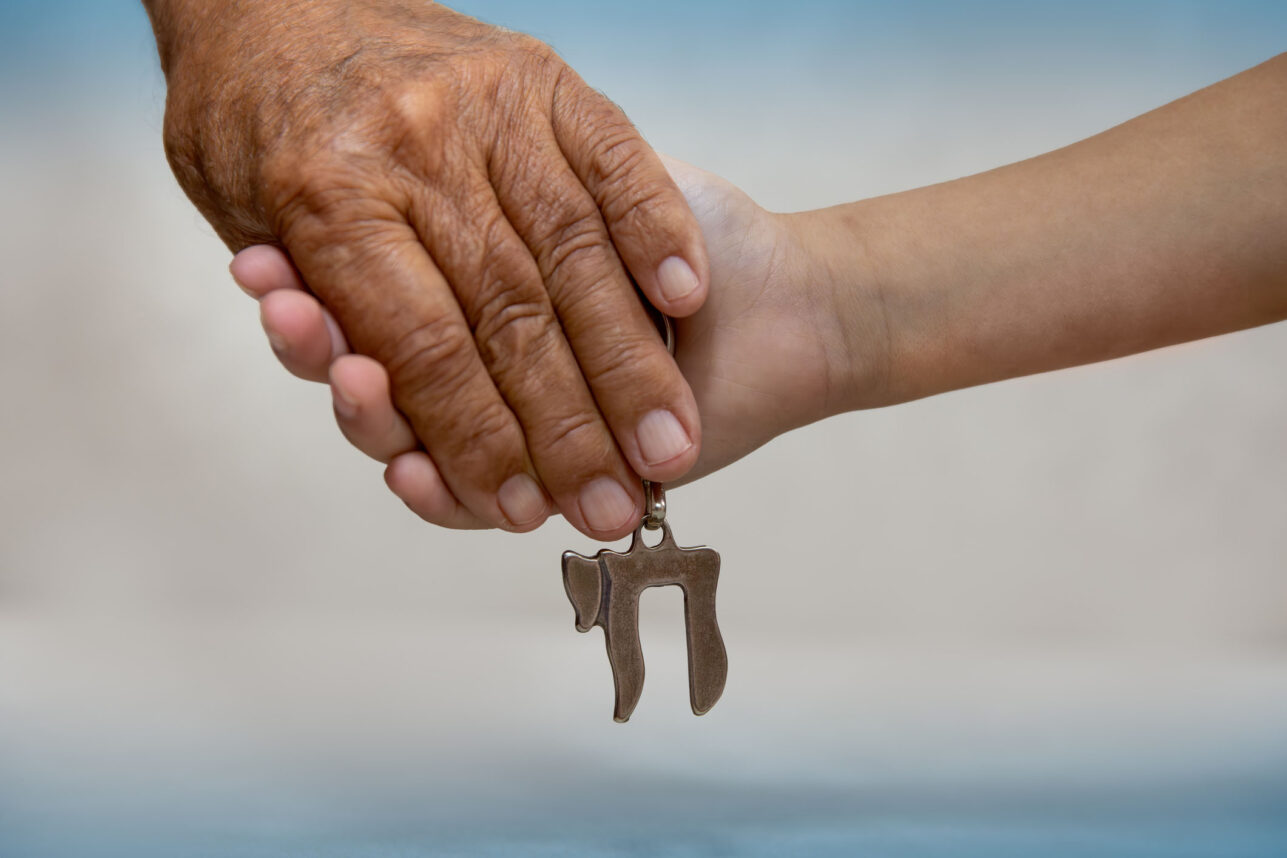
Studies indicate that children whose parents actively discuss giving are significantly more likely to become charitable adults themselves than those with parents who do not.  This same research shows that charitable families volunteer more and consider themselves happier and closer-knit.  That’s why we suggest engaging your family early on to communicate your charitable values and decision-making process.

To encourage their children’s philanthropic values, many Foundation donors have opened DAFs for their children and grandchildren as well, enabling them to experience firsthand the fulfilling power of giving at an early age. Upcoming articles in this four-part series include instilling meaningful giving in future generations of your family, as well as considering charitable legacies.

DAFs, the Tax-Reform Act and Estate Taxes

The income-tax reforms in 2018 changed the standard deduction and raised numerous questions about its impact on charitable giving. The need for well-planned strategies to maximize the tax benefits of your philanthropy is essential. DAFs offer an ideal vehicle for maximizing the deductibility of your donations, including approaches such as charitable-gift “bunching” or via contributions of appreciated assets.

With respect to estate planning, a DAF can be the recipient (upon death) of all or a portion of the donor advisor’s IRA or other retirement plan benefits. The family then controls 100% of those funds for charitable-giving purposes from the DAF.  Comparatively, if the heirs take the retirement funds personally, they would be subject to tax in some degree irrespective of whether estate taxes are applicable.

For the Good of Community

The only cost associated with a DAF at The Foundation is a modest annual fee which covers several important administrative and portfolio management functions.  A portion of that fee is reinvested in The Foundation’s own grantmaking to numerous causes throughout our community—creating, in effect, philanthropic sustainability.

To explore smart giving strategies—and the fulfillment that comes with it—at this time when it matters most, as well as ways to amplify the impact of your giving, please visit www.jewishfoundationla.org or contact us at (323) 761-8704, or development@jewishfoundationla.org.


Steve Gamer is vice president of advancement for the Jewish Community Foundation of Los Angeles, which manages more than $1.3 billion in charitable assets and distributed $129 million in grants in 2019 to causes locally, nationally and around the world. He has 30 years of experience working with individuals, families, corporations and foundations to help them achieve their philanthropic vision.

At the Time They Are Needed Most, Donor-Advised Funds Empower Charitable Giving Read More »

Israeli Female Politicians Delight in US Shattering Another Glass Ceiling

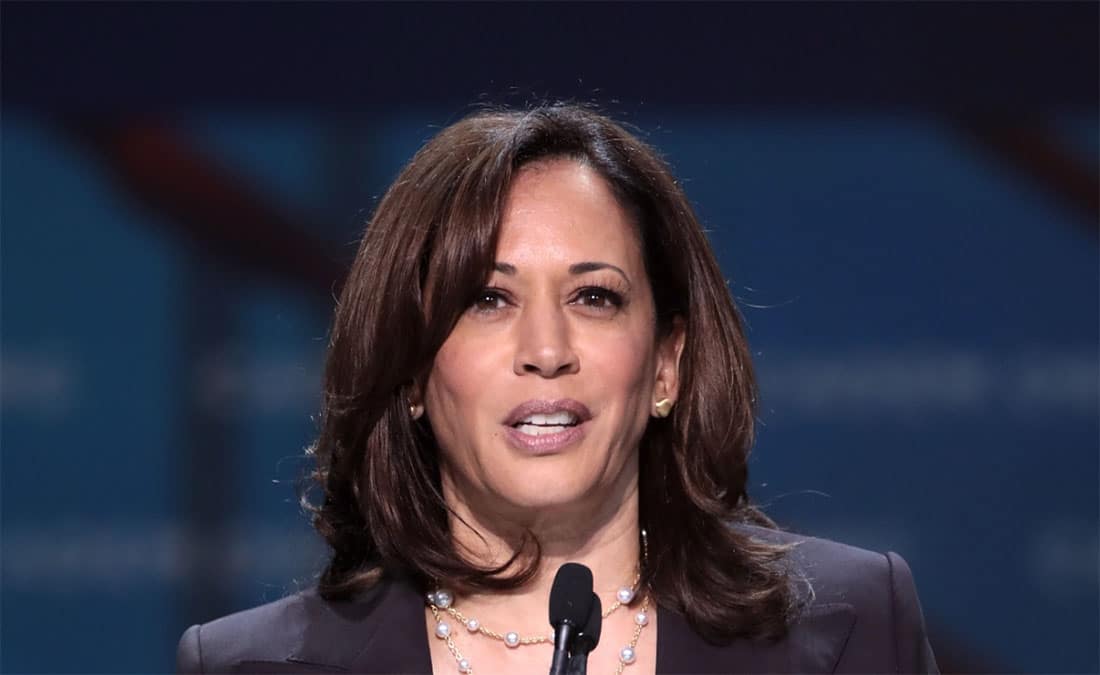
The Media Line — Israeli female leaders of all ideological stripes are lauding the historic 2020 presidential election, in which Senator Kamala Harris of California broke several barriers at once, about to become the first woman, first black and first South Asian to be vice president of the most powerful nation on earth.

“This is a great present we gave ourselves for the 100th anniversary of the 19th Amendment and the vote [for American women].”

“Kamala Harris’ election as VP is a celebration for all women, another big crash through yet another glass ceiling. This is a great present we gave ourselves for the 100th anniversary of the 19th Amendment and the vote [for American women],” MK Merav Michaeli (Labor) told The Media Line. “I have every faith that President Joe Biden and VP Kamala Harris will work to create a much more equal society for all and I am working on following their footsteps to create a better future here in Israel.”

“Although I hold a different point of view and ideology from her, I am very glad she was elected and hope she will be a very proactive vice president.”

“Congratulations to Kamala Harris. It’s amazing to see a woman like Kamala breaking a glass ceiling and reaching such a key position in leadership, as vice president of the USA. Kamala’s story is an inspiration to so many little girls from various ethnicities. Although I hold a different point of view and ideology from her, I am very glad she was elected and hope she will be a very proactive vice president,” MK Sharren Haskel (Likud) told The Media Line.

Male legislators such as MK Oded Forer (Yisrael Beitenu), chairman of the Knesset Committee on the Status of Women and Gender Equality, also expressed their well wishes.

“In addition to the congratulations to the president-elect, I would like to congratulate his vice president, Kamala Harris, who gives hope to girls all over the world and represents the world in which we want to raise our daughters: the world of unlimited opportunities,” Forer told The Media Line.

Israel is ahead of the US in the sense that it can boast having had a woman in its most senior governmental position, with Golda Meir serving as prime minister from 1969 to 1974.

“People look to the US as a kind of trend-setting country. … [While] much of the Western world is well ahead of the United States when it comes to the status of women, this is still a top position and she might even end up being [president].”

“I’m deeply moved and excited,” former MK Einat Wilf told The Media Line about Harris becoming veep. “It has ramifications far beyond the United States. People look to the US as a kind of trend-setting country. … [While] much of the Western world is well ahead of the United States when it comes to the status of women, this is still a top position and she might even end up being [president].”

However, there is debate in Israel on just how much progress Meir represented.

“I wouldn’t say there was such progress before [with the election of Meir]. She was the sole woman, there by herself in the government, and when she left, it was done. There were no more women,” Michal Gera Margaliot, executive director of the Israel Women’s Network, told The Media Line.

“It’s very difficult to talk about gender equality with the same perspective after 50 years, but she didn’t see herself as a feminist and it wasn’t important for her to promote other women. I think that a lot of her legislation involved social policies like laws protecting pregnant women, which I think is feminist, but she didn’t do it from a feminist point of view,” she added.

Margaliot contrasts that point of view with the vice president-elect’s attitude, as indicated in her speech Saturday evening after the race was called for Biden, when Harris said: “While I may be the first woman in this office I will not be the last.”

This indicates the priority she places on helping more women get elected to political office, but also her understanding of her position as a role model for all girls, who now understand that a woman can lead in the executive branch, Margaliot said.

“We know that we can’t be what we can’t see, and the fact that Kamala Harris acknowledged that was inspiring and emotional because she … knows what it means for others. I think it’s incredible,” she said.

While celebrating Harris’s win, Israeli female leaders feel less optimistic about the chances to replicate her success in the political arena at home.

In the 51 years since Meir assumed office, only one other woman has come close to the premiership: Tzipi Livni in 2008-2009.

Wilf said the prime ministerial position has eluded women in part because of the influence the religious parties hold in conservative Israeli politics.

“Even though there is far greater female representation in the parliament since the time of Golda, it has not yet translated into more women in high positions of government and in the Prime Minister’s Office.”

“I think a part of it has to do with the fact that we’ve had quite a few decades of right-wing governments that rested on Haredi parties that tend to be generally anti-women in positions of power,” she said. “… Even though there is far greater female representation in the parliament since the time of Golda, it has not yet translated into more women in high positions of government and in the Prime Minister’s Office.”

The structure of Israel’s parliamentary system makes it more difficult for women to attain these offices than in the US presidential system, Wilf continued.

“If someone decides half of their cabinet is going to be women and they operate in a political system where [he or she] chooses the cabinet ministers, then that person can decide in 2020 and just do so,” she said. “If it’s like the Israeli parliamentary system, where cabinet ministers are a part of the horse-trading between parties, your ability to be a senior minister will depend on the fact that you bring independent political power. You have your own party.

“For example,” she continued, “Tzipi Livni was able to be a senior minister when she had her own party and was able to negotiate with that power base.”

Haskel agrees.

“In my opinion, more parties need to be led by women and to have primaries. The more that happens, the more women will participate in politics,” she said.

While it might be easier for women to gain senior positions in US government, as evidenced by the Biden-Harris win, the recent election results did not yield all positive results for women. A total of 117 women were elected to Congress, which is 10 fewer than two years ago.

In addition, while the most-ever Republican women were elected to the House of Representatives (12), there is still a large gender gap when it comes to women being represented in right-wing politics, something which differentiates the US from Israel.

“One of the differences between US and Israel is that in the US there is a huge gap in representation between the Democrats and Republicans. While there is a gap between Israel’s center-left wing and right wing, the difference is much smaller than in America,” Margaliot said.

In 2018, Republicans comprised approximately 13% of the 102 women elected to the House.

When it comes to the future of Israeli women in politics, Margaliot said the progress is not linear.

The Israeli government sworn in last May included a record number of women (8) as cabinet ministers. However, they did not get the top ministries. Miri Regev was tasked to lead the Transportation Ministry, but she had been angling for the position of foreign minister.

“We see all kinds of progress but unfortunately it’s not linear and it’s not secure, at least not yet, but we will make it happen, We can talk about the right to vote, which I hope is secure forever, but other things like the number of women in parliament and women in senior positions in politics, none of it is secure,” Margaliot said. “And if you don’t pay attention, it just goes back to the status quo [with nearly all men].”

While women were given the right to vote in the US in 1920, they have been enfranchised since Israel’s founding in 1948.

“There has been a sense in recent years [that there has been] a bit of a kind of handmaid’s tale, a sense of setback for women. Even in Israel, there seemed to be a setback with the fact that Blue and White was led by men and felt almost no need to pretend that it cared about female representation. The same goes for Likud.”

Wilf hopes that Harris’s election as vice president marks a return to progress for women, in both Israel and the US.

Another reason why I’m so happy about Kamala Harris is that there has been a sense in recent years [that there has been] a bit of a kind of handmaid’s tale, a sense of setback for women,” she said. “Even in Israel, there seemed to be a setback with the fact that Blue and White was led by men and felt almost no need to pretend that it cared about female representation. The same goes for Likud,” she said.

“I hope her election symbolizes that we are back on tracking, continuing our advancement,” Wilf added.

MK Tamar Zandberg (Meretz) agrees.

“Four years ago, we were close to choosing a woman [former US secretary of state Hillary Clinton] for the most powerful post in the world. However, Donald Trump went in the opposite direction and took America a big step backward in the fight for humans rights, equality for minorities, and the feminist movement,” Zandberg told The Media Line. “I remember how at every rally, as Hillary Clinton got off stage, mothers reached out to her with their daughters to express what an unusual example and inspiration she is to them.”

As for when Israel will get its second female prime minister, Wilf said, “I think ultimately that the more women we are going to have in the Israeli Knesset, the more it will translate into the cabinet and the prime ministership over time.”

Israeli Female Politicians Delight in US Shattering Another Glass Ceiling Read More »

What Can the Pandemic Teach Us About Life?

In 2020, reciting the words “On Rosh Hashana, the year’s decree is written, on Yom Kippur, it is sealed, who will live and who will die” might have resonated more than ever in the midst of a pandemic.

With over 238,000 American lives claimed, and over 10 million people diagnosed, we are collectively facing mortality.

Before the COVID-19 pandemic, many of us were tangled in the busyness of our day, rarely stopping to smell the proverbial roses. Now we can hit the pause button and take stock.

“Death is no longer abstract,” Dr. Ira Byock, a world-renowned palliative care expert and founder and chief medical officer at Providence’s Institute for Human Caring in Gardena, told the Journal. “Throughout history, Jews have dealt with natural disasters and imposed disasters of war and persecution. This pandemic is a natural disaster of biblical proportions. It is a not-so-subtle reminder, we’re in this together.”

Byock raises a core question: What can mortality teach us about life?

“Mortality shows us what matters most. Are there things left undone that should be completed?” Byock said, adding that even with the challenges of a pandemic, we should live life to the fullest. “Use the pandemic as an opportunity to celebrate life and our relationships to one another. That’s the healthiest response to mortality that I know.”

So, start your Great American Novel, plant a vegetable garden, try a Yoga class, and spend quality time with your children.

Unfortunately, not everyone — like frontline and essential workers — has an hour to spare to follow their bliss. Still, Byock said, everyone should find some time for themselves to nurture moments of joy.

Everyone should find some time for themselves to nurture moments of joy.

That includes, for example, reaching out to friends and family. In fact, Byock prefers using the term “Physical Distancing” for staying six feet apart because social closeness is vital for a sense of well-being. “My wife and I have joined virtual Happy Hours and book clubs. We’re more socially connected now than ever before,” he said.

There are plenty of stories about the creative ways people are reaching out: neighbors are meeting on front lawns to listen to music together, and synagogues are conducting services online. One family, as reported in the Journal, even celebrated their son’s “Car Mitzvah,” transforming a parking lot to an outdoor sanctuary, with guests tuning in to the ceremony on their car radios.

Interviewing family members and telling stories are additional ways to connect, said Byock. He invited the public to post their stories and artwork on the Providence Institute’s Coronavirus Chronicles website (www.instituteforhumancaring.org/Hear-Me-Now/Coronavirus-Chronicles).

“There are going to be days when the sadness of the world creeps into our lives,” he noted. “That’s okay too. There are real reasons to be unhappy. Acknowledge the grief and breathe through it. Most importantly, be patient with yourself.”

(If depression becomes overwhelming, call a crisis center, such as the national suicide prevention hotline. 800-273-8255.)

In his “This Pandemic Is Personal” essay in Thrive Global, Byock quoted playwright Robert Anderson: “Death ends a life, but it does not end a relationship.” With that in mind, he and his wife updated their “in case of death” file box to leave for their daughters. Think of an eternity “Go Bag” that includes items such as your will and other important documents, bank account numbers, passwords for financial and social media accounts, and instructions for funeral arrangements.

For many, the pandemic has been a wake-up call to get their personal business in order. Westlake Village attorney Martin Yarnell, for instance, has noticed an uptick in clients seeking help in estate planning.

“It can be an uncomfortable subject. Before the pandemic, people often seemed cavalier about the issue,” he told the Journal. “But with the reality of COVID-19, we are all more mindful of our mortality and want to be responsible and care for our families.”

Yarnell explained that failing to plan for death can result in serious issues. Assets may not be distributed the way you wish; a conservatorship may be needed if you become incapacitated; without a trust, loved ones may have to go through a lengthy and costly probate process.

Estate planning documents typically include a living trust, a will, a durable power of attorney for financial affairs, an Advance Healthcare Directive, and HIPAA authorization. (Yarnell recommended not storing the documents in a safe deposit box, as access can be problematic.) “Self-help programs are limited,” Yarnell cautioned. “A qualified estate planning attorney will tailor the plan to fit your unique circumstances and needs.”

Yarnell noted that some people include a statement of values, passing along their wishes and guiding principles to the next generation. This sort of “Ethical Will” has roots in the Jewish tradition but has become widely used by the general public.

The message from Yarnell and Byock is clear: Don’t wait for the last stages of life to communicate your feelings to loved ones.

“Are there important things left unsaid to the people you love? If so, this is a good day to say them,” Byock said. In his The Four Things That Matter Most book, Byock prescribes simple phrases to jump-start the conversation: “Please forgive me,” “I forgive you,” “Thank you,” and “I love you.”

“‘Asking and offering forgiveness’ is included because no relationship is perfect. Even the most loving relationships can be marked by misunderstandings,” he explained. “Saying ‘thank you’ and ‘I love you’ might be obvious to those who matter to us, but everyone benefits when love and appreciation is expressed out loud.” This concept is grounded in Jewish tradition. After all, forgiveness is a key part of the Yom Kippur service.

Furthermore, Byock pointed out, “The Abrahamic covenant is not merely between God and people. It’s between each of us as individuals and each of us to the community. In the eyes of God, each person has inherent worth and value, and we should treat each other with dignity and compassion.”

What are the lessons he hopes stays with us after the pandemic is over?

“We all matter to one another, and life is a gift — don’t take it for granted.”


Adrienne Wigdortz Anderson is a freelance writer who lives with her family in the Conejo Valley.


What Can the Pandemic Teach Us About Life? Read More »

In the Season of Change

The sun rose in the east today, as it has done every day since the beginning of time. The first season’s rain has cleansed the air, and strong breezes continue to shake dry leaves from their branches. The announcement of a new leader for our country has paralleled the change of season, as heralded by the dramatic drop in temperature outdoors. A new reality is setting into the psyches of both vanquished and victors.

We are exhausted and weary from the election and all its preceding partisanship. We suffer from verbal and ideological fatigue. We are buried under the weighty rubble of rhetoric that invades our minds day and night. We need a spiritual rainfall to wash away the layers of distrust and suspicion that have accumulated inside of us. Rather than shutting down our hearts and minds, we need to expand them to embrace possibilities that may make things better all over the country and world.

So as we naturally lean into the change of seasons, we must lean into this season of change in our nation. Nature demonstrates that each new season is a necessary preface to the one that will follow. The analogy is apparent: the preface to this moment in history has been necessary to the inevitability of change that lies ahead.

Change is the new certainty. I hope that we can resist falling into easy gloating to elevate our elation or seeking blame to sustain our claims. I hope that we will pause our parodies and cease our cheap humor. I hope that we will blunt our verbal swords and swallow mean rhetoric before it emerges from our mouths. I hope that we will resist the temptation to engage in careless commentary.

This is the change I hope to see. I hope to see the emergence of our better selves. I hope that we will listen more carefully to one another so that we will hear and appreciate that what matters to others is as strongly felt as what matters to ourselves — even in the absence of agreement. I hope that the words of our mouths will reflect the yearnings of our hearts. I hope that we will animate through our actions the ideals that we proclaim to cherish. I hope that Lady Liberty, who welcomed each of my parents into New York Harbor, will continue to extend the torch of promise for all Americans.

We have been given a chance to reset. Many fought against this change, and many fought for it. But a choice has been made, and change will prevail. Today, we are in a delicate state of disequilibrium. Setting things right will require strength, sensitivity, and clarity of purpose. As we look outward for leadership, we must look inward, as well, to align our personal desires and biases with genuine acknowledgment and concern for the greater good. I hope that we will honor the potential of this moment by making sure that our expressions and behaviors accurately reflect our most noble aspirations.

We have been given a chance to reset.

As I contemplate this change, the clouds shift outside my window. The wind is gusty, and everything is in motion. The President-elect has spoken to the nation, and in the days, weeks, and months to come, horizons yet unclear will be revealed. A season of change has begun, but one thing remains reassuringly constant: The sun will set in the west each evening, and each day, in the east, it will rise again. May we, as dependably, rise to meet it with firm resolve, courage, and faith.


Rochelle Ginsburg, educator, facilitates book group discussions for adult readers.

In the Season of Change Read More »