fbpx

November 10, 2020

The Not So Humble Chicken Soup

Every culture has a great recipe for chicken soup, but nothing beats a really fluffy matzo ball floating in a rich golden chicken broth. In these tumultuous times, one of the most overused phrases is “comfort food.” But truly, is there any dish more comforting than a hearty Chicken Soup? Could there be a better time to share our recipe for “Jewish Penicillin”?

Rachel’s Turn: Throughout my childhood in Morocco and America, my mother would make a chicken soup with rice and lots of vegetables, including onion, carrot, celery, zucchini, potato, tomato and lots of cilantro. Sometimes she would add noodles shaped like stars and the letters of the alphabet. And sometimes she would add a tiny bit of cream of wheat to the chicken broth to make an incredibly creamy and delicious soup.

Nowadays, I love to make lots of chicken soup for my family. My secret for a flavorful chicken soup is to sauté an onion until it is translucent, then I add the chicken pieces with the skin side down and glaze the chicken for a few minutes. I add all the other vegetables and lots of water and let the pot simmer for an hour or two, then I take out the chicken and set it aside.

While most people boil the matzo balls in a separate pot, I cook mine directly in the soup pot. I find that boiling them in the broth lends them a much fluffier texture and better flavor. This means adding extra water to the soup because the matzoh balls will absorb a lot of the broth. At this point, I add two tablespoons of chicken consommé, which always gives the best flavor. After forming the matzoh balls, I plop them in the pot and let the soup simmer for another hour. My biggest secret is that my matzo balls are gluten-free. They are so light, fluffy and delicious that my parents, my husband and my children are none the wiser. Until they read this article, of course!

When I am making the soup a day or two ahead of serving, I take out the matzoh balls and store them with broth in a separate container.

I boil vermicelli noodles in a separate pot, drain the liquid and put them in a separate dish with a drop of olive oil.

I place the shredded chicken, the vegetables, the noodles and the matzo ball in the bowls and enjoy the pleasure that this bowl of liquid gold creates.

is there any dish more comforting than a hearty Chicken Soup? Could there be a better time to share our recipe for “Jewish Penicillin”?

Sharon’s Turn: By 9:30am on weekday mornings, my grandmother Nana Aziza would be done cooking for the day, with four big pots on the stovetop. She would “sponga” (mop) her kitchen floor and we would set off on the bus for the day’s adventure. We might go shopping in Bondi Junction or for a dip in the waves at Bondi Beach. There would always be something delicious involved, like a cappuccino for her and a chocolate milkshake for me.

She would take a siesta in the afternoon and then be ready to feed her hungry family when they came back from work and school. The first thing she served was a bowl of her delicious chicken soup with lots of vegetables and vermicelli noodles.

I also love to make chicken soup for my friends and family (but definitely not every day). My grandmother used cilantro and tomatoes, which I omit. But like her, I use rutabaga and turnip, parsnip and a whole head of celery and lots of garlic. I use a whole golden brown onion with the skin left on because it imparts a wonderful golden color. I only use pale green Mexican squash which I find much less bitter than zucchini. I am obsessed with using lots of organic dill and Italian parsley, which lend the most fresh and sublime flavor. And of course, big fluffy matzo balls are the happiest treat ever!

Sharon’s Chicken Soup

1 whole chicken, washed

8 chicken wings

2 chicken carcasses

2 teaspoons salt

1/4 teaspoon white pepper

1 tablespoon chicken consommé powder

1 whole head of celery including leafy tops, washed and trimmed

1 large golden brown onion, unpeeled

1 head of garlic, peeled

4 carrots, peeled and chopped, into thin coins

1 whole parsnip, peeled

1 whole turnip, peeled

1 rutabaga, peeled

5 Mexican squash, chopped into 1 inch rings

2 bunches dill, cleaned

2 bunches Italian parsley, cleaned


Fill a large stockpot with 14 cups of cold water, throw in the chicken and bring to a boil, then simmer for 30 minutes.

Skim the chicken “scum” from the pot.

Add salt and pepper and chicken consommé.

Add celery, onion, garlic, carrots, parsnip, turnip and rutabaga.

Cover pot and simmer for 1 hour, then remove whole chicken.

Add squash, dill and parsley and simmer for another 30 minutes.

Discard dill, parsley and chicken carcasses.

Serve broth with shredded chicken, vegetables and matzo balls or vermicelli noodles, made according to package directions.


Rachel Sheff and Sharon Gomperts have been friends since high school. They love cooking and sharing recipes. They have collaborated on Sephardic Educational Center projects and community cooking classes. Follow them on Instagram @sephardicspicegirls and on Facebook at Sephardic Spice SEC Food.

The Not So Humble Chicken Soup Read More »

A Teacher from Afar

For obvious reasons, January 2020 feels like a lifetime ago, but I can nevertheless recall with vivid clarity one evening that month when I heard Rabbi Lord Jonathan Sacks speak at Sephardic Temple. Sacks, the former chief rabbi of the United Kingdom,  died November 7 at the age of 72 after a struggle with cancer.

I remember him as he appeared in January. Sacks stood before a crowd of 600 people in the temple’s sanctuary. There was an air of privilege permeating the pews, a feeling that we were lucky to be hearing live remarks from one of the world’s most prolific and oratorically gifted Jewish leaders for the synagogue’s centennial celebration.

I was reporting on the evening program for the Jewish Journal. I was typing up key points from my seat when the man next to me asked if I could find another way to take notes, as he couldn’t hear Sacks speak over the sounds of my fingers punching the keys. So I found a pen and began scribbling in my notepad the highlights of the lecture.

Here are some of the points Sacks made:

  • The best way to fight anti-Semitism is to wear your identity with pride.
  • Israel is the home of the Jewish people, and this is why we must defend the state of Israel.
  • Anti-Zionism is one form of the new anti-Semitism.

At Sephardic Temple, Sacks had discussed the challenges facing contemporary Jewish life, from the virus that is anti-Semitism to the miracle that is the State of Israel, speaking eloquently in a soft British accent. But it was his statements about how to live a more enriching Jewish life that have stuck with me.

Speaking persuasively about the power of Shabbat, Sacks said, “Shabbat was made for the twenty-first century,” an effective way to unplug from everyday distractions, whether cable news, Facebook feeds, or dating apps. Sacks also described the Daf Yomi (learning one page of Talmud every day) as an “antithesis to our short attention spans. There’s nothing like it — the Jewish commitment to studying and learning.”

But Rabbi Sacks’ impact on my life extended beyond the one event. During the height of the pandemic, Rabbi Sacks made an unexpected appearance in my apartment and continued to teach me about how to incorporate Judaism in my life more meaningfully.

Our interaction began because COVID-19 left me with much more time at home. With my days lacking the structure they once had, I had taken to praying and wrapping tefillin in the mornings. When I first started wrapping, I wasn’t exactly sure how to do it. Which arm do I wrap? How many times do I wrap around the arm? What to do once I’ve wrapped all the way to my palm?

So I did what any millennial does when he or she is trying to do something new but gotten stuck: I Googled it.

One of the top search results was a Chabad video with step-by-step instructions on how to wrap tefillin. Rabbi Sacks appears in the introduction to the clip, explaining the reasons for wrapping tefillin and citing the “V’ahavta,” which says, “You shall love Adonai your God with all your heart…Take these instructions…Bind them as a sign on your head and let them serve as a symbol on your forehead.”

It was an a-ha moment, the rare instance when I’d seen Jews do something all the time, had done it a few times myself, but had never understood why we do it.

And here was Rabbi Sacks explaining why we do it.

I had learned something, and I had Rabbi Sacks to thank for that. Going forward, I will search for the meaning of why I do things in the name of my faith. Sacks reminded me that sometimes it just takes a teacher — whether educating in-person or from afar — to bring that meaning to light. Sacks was that teacher for many, bringing the joy of Judaism and the promise of deep engagement to each Jew he met.

May his memory be a blessing.

A Teacher from Afar Read More »

CA Religious Schools Granted Relief from Newsom School Closure

In an October 28 ruling, a federal judge granted several California religious schools relief from Democratic Governor Gavin Newsom’s school closure order.

In August, three Los Angeles Jewish schools — Gindi Maimonides Academy, Samuel A. Fryer Yavneh Hebrew Academy and Yeshiva Rav Isacsohn Toras Emes Academy — were among the plaintiffs in a lawsuit against Newsom’s order closing both public and private schools that month. The Christian Post reported that the lawsuit argued that Newsom’s order amounted to a religious liberty violation because “tens of thousands of childcare facilities are open for business in the same jurisdictions where religious schools are prevented from opening. Defendants made no effort to discern whether a more tailored, individualized approach to school opening would achieve the same public health outcome while being more protective of fundamental religious liberties.”

U.S. District Court Judge John A. Kronstadt ruled that the plaintiffs’ motion provided “sufficient good cause” for “requested relief.” Consequently, religious schools can reopen so long as they comply with the state’s reopening guidelines to mitigate the spread of COVID-19. Religious schools can also offer religious services, so as long as they comply with the state’s guidelines on the matter.

However, counties can still impose “stricter regulations” on religious schools reopening, Kronstadt ruled.

Rabbi Shlomo Einhorn, rav and dean Yavneh Hebrew Academy, said in a statement to the Journal, “Yavneh is very pleased to have been able to reach a mutually agreeable resolution with the State that provides a path under state law for resumption of in-person education while protecting student and faculty health and well-being. We appreciate Governor Newsom’s office’s openness to engage in this constructive dialogue.”

CA Religious Schools Granted Relief from Newsom School Closure Read More »

Acclaimed Filmmakers Talk Polish Jewish Narratives in Upcoming Webinar

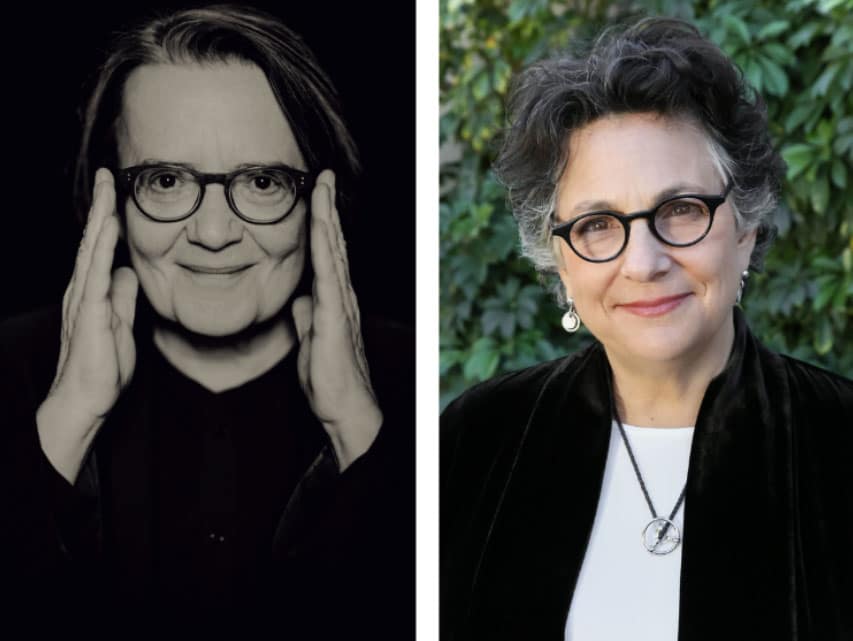
Filmmaker Roberta Grossman (“Who Will Write Our History”) will join Polish filmmaker Agnieszka Holland (“Europa Europa“) for a webinar co-hosted by Taube Center Warsaw and Warsaw Jewish Film Festival Nov. 18 at 11 a.m. PT.

“From Behind the Camera: Polish Jewish Narratives” will be moderated by Shana Penn, executive director of Taube Philanthropies, and will recognize both the many accolades of both Grossman and Holland.

Holland, one of the most celebrated Polish filmmakers and directors made her debut with the film, “Provincial Actors.” It earned her the International Critics Prize at the Cannes Film Festival in 1980. Holland’s work often reflects her Jewish and Catholic roots, dealing with issues of faith, mysticism and humanity. Grossman also is well established in the Polish film industry and has written, directed and produced more than 40 hours of film. She often explores Jewish history and social justice in her projects.

This past October, Grossman was honored with the Taube Philanthropies 2020 Global Jewish Peoplehood Award. The award honored Jewish men and women who have worked to foster pride in Jewish identity and heritage for new generations, making a uniquely Jewish contribution to global culture.

Grossman was recognized for her ground-breaking feature-length documentaries made on Jewish historical subjects, which shed light on important 20th century histories that were otherwise little known to a multi-generational public.

Currently, she’s co-producing “Vishniac,” a feature documentary about photographer Roman Vishniac. Also in development is a film with Dr. Susannah Heschel about her father Abraham Joshua Heschel. With the support of the Righteous Person Foundation and in partnership with longtime Sundance Film Festival lead programmer Caroline Libresco, Grossman is developing a new fund for Jewish films that will launch in 2021.

“Roberta considered pursuing a doctorate and embarking on an academic career, but ultimately regarded filmmaking—and especially documentaries—as a more effective way to engage with historical subjects and convey history to broad and diverse audiences,” Tad Taube, founder and chairman of Taube Philanthropies said in a statement to the Journal. “We applaud her decision to share these compelling 20th century Jewish narratives through the widely accessible art form of feature-length documentary film.”

Notable among Grossman’s films are “Blessed Is the Match: The Life and Death of Hannah Senesh”which won the audience award at 13 Jewish film festivals, was broadcast on PBS, nominated for a Primetime Emmy and and shortlisted for an Academy Award. Grossman also created Hava Nagila: The Movie,” a feature-length documentary with Sophie Sartain, which traces the cultural journey of the popular song, “Hava Nagila,” from Ukraine to YouTube.

To register to the virtual event, click here.

Acclaimed Filmmakers Talk Polish Jewish Narratives in Upcoming Webinar Read More »

Eulogy for a Great Man, Scholar and Teacher

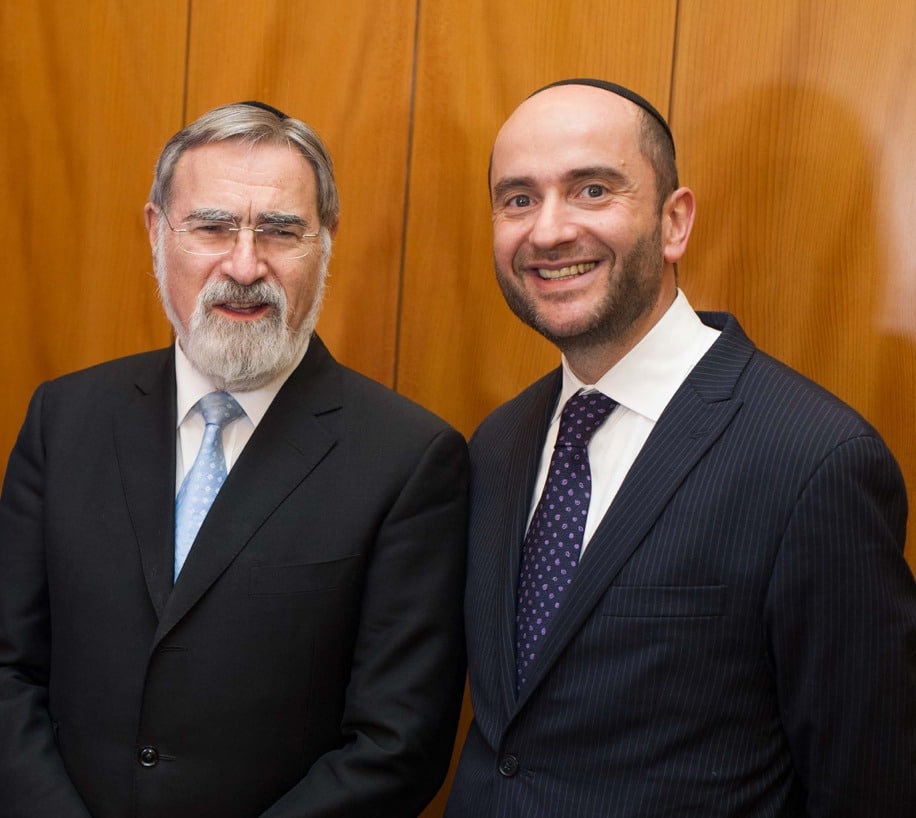
This week, we all grieve the loss of a very great man, scholar, and teacher, Rabbi Lord Jonathan Sacks, Zeicher Tzadik Livracha. Many have spoken and will speak about Rabbi Sacks’ great scholarship as well as his inspirational leadership; I was especially moved by the hespeidim recorded at the funeral and by the very special tribute given by Rabbi Sacks’ daughter Gila. As a non-family member, I would like to pick up where she left off, and to talk about Rabbi Sacks — the man — and Rabbi Sacks — the mensch. And I’m going to do it via the medium that he was a master at — storytelling.

Twenty-nine years ago, in 1991, Rabbi Sacks started out as the Chief Rabbi of the United Kingdom and spent his first Yom Kippur at St. Johns Wood Synagogue in Northwest London. At that time, I was a novice, young, aspiring rabbi (with, I have to admit, a lot more hair). That year, I was hired to run the kids program at St. Johns Wood Synagogue for the High Holiday, and so I heard Rabbi Sacks give his first Kol Nidre drosho as Chief Rabbi.

“My friends,” he said, “you’ve all heard of lightbulb jokes. You know what I mean, how many of this kind of person or that kind of person does it take to change a lightbulb. And you have all definitely heard this lightbulb joke — how many therapists does it take to change a lightbulb? Come on, you can all recite the answer along with me — one, but the lightbulb has got to want to change!”

Everyone laughed. His message that night was that on Yom Kippur you can change, but you have to want to change. But that very first line of his Kol Nidre sermon was actually a description of Rabbi Sacks himself. He started as a traditional, but not particularly Orthodox, Jewish boy in North London; after witnessing the Six-Day War in 1967 and meeting the Lubavitcher Rebbe, Sacks wanted to change. And he did change.

Throughout his rabbinic career, Rabbi Sacks faced public challenges on many occasions that undermined his ability to navigate the complexities of his job. Any lesser man would have given up and thrown in the towel. But that wasn’t Rabbi Sacks — he was made of stronger stuff. He drew from an inner strength, discovered what changes he needed to make to correct the situation, and he went ahead and made those changes. He rebuilt bridges that had been burnt, and went through the hard slog of making sure that all those changes were done and dusted.

That, my friends, is not because he was a great philosopher, or a great Talmudic scholar, or a great public speaker, or a great writer — all of which he undoubtedly was. No. It was because he knew that when change needed to happen, only he could make it happen — and that kind of human strength, that kind of superlative character, is the product of someone who knows that a therapist can never change a lightbulb if the lightbulb does not want to change itself.

he knew that when change needed to happen, only he could make it happen — and that kind of human strength, that kind of superlative character, is the product of someone who knows that a therapist can never change a lightbulb if the lightbulb does not want to change itself.

In 2002, Rabbi Sacks wrote a book called “The Dignity of Difference.” In the book, he wrote that all faiths have truths, and he seemed to imply that each faith community may actually have truths that other faith communities don’t have. My late grandfather, Rabbi Joseph Dunner, who was the presiding rabbi of the Haredi community in London; and the rabbi of Gateshead, the yeshiva town in the north of England, publicly decried the implication of his words.

After hearing of their criticism, Rabbi Sacks immediately withdrew the initial version of the book, reedited it, and reissued it — at great expense. The new version did not mislead readers into thinking he was heterodox or fuzzy on the limits of Jewish theology. But that was not all. Rabbi Sacks arranged for all the rabbis of London to attend a series of personal meetings so that he could explain to them what he had meant, and why it had been misunderstood.

I was in my early thirties and a rabbi in London by then; I attended one of those meetings at his home. I remember thinking at the time: Wow! This is amazing! What an incredible person! Rabbi Sacks could have stubbornly and arrogantly sat on his high horse and dismissed any criticism as unworthy of his attention. But he didn’t. And he could have let others defend him or address those who had criticized him. But he didn’t.

Why did Rabbi Sacks hold those meetings? Because he knew that change was needed, and the change needed to come from him. And that was because he knew that when change needed to happen, only he could make it happen.

There was another aspect of Rabbi Sacks that you might not see written about in the obituaries. Rabbi Sacks was an absolute mensch. Here’s how I know:

Soon after I became involved in the creation of the Saatchi Synagogue in London — an experimental community for young postgraduates in their 20s and 30s — I met Rabbi Sacks at a community function. “When are you going to invite me to speak to your community?” he asked me. I was shocked. Our shul was independent and was not a part of the United Synagogue, the organization over which he presided.

“Will you really come?” I replied. “Of course I will,” he answered, “just call my office, and I’ll make sure it happens.” I called his office the next day, and was totally amazed. Can you believe it? They were expecting my call! He had already told them!

We fixed a Shabbat for his shul visit a couple of months later. I agreed with his office that he would speak before mussaf, and that after davening he would come to our home for lunch. After the basic details of the arrangements were made, the director of his office got on the phone.

“There are three things you need to know,” Pini, she said. “The first is, whatever time davening starts, make sure you are at the front entrance of the shul building five minutes earlier, so you can greet the Chief Rabbi and walk him into shul.” “Sure,” I said.

“Second,” she continued, “when you introduce the Chief Rabbi to speak make sure that you thank him and Elaine for coming to the shul.” “Of course,” I replied.

“And finally, when he comes to you for lunch, you need to make sure that he has vegetarian food — he is a vegetarian,” she noted. “No problem,” I said, “that’s totally fine.”

A week before his visit, I got a call from the Chief Rabbi’s office to go over everything, and again the director of his office got on the line — don’t forget the three things, she warned me: meet him at the entrance. Yes, yes. Thank him and Elaine. Yes, I know. Vegetarian food. Of course, we’ve got it covered. Then on Friday — another call. You’ll remember the three things!! Yes – meet him, thank them, vegetarian – consider it done.

Shabbat morning arrived. Shul started at 9:30. I was there at 9. At 9:20, I trotted toward the entrance, well in time for 9:25 to meet the Chief Rabbi. But before I got to the entrance of the shul, there he was, walking toward me.

“But Chief Rabbi Sacks! I was on my way to meet you at the entrance!” I exclaimed.

He smiled. “Pini! It’s fine! Here I am! We’re going to have a great morning!” And we went into the shul.

When the time came for the Chief Rabbi to speak, I got up to introduce him. “Ladies and gentlemen,” I began, “the Office of the Chief Rabbi was very insistent that I thank the Chief Rabbi and Elaine for joining us this morning. So you need to know, that had the director of his office not told me to thank him and Elaine, I would not have thanked him and Elaine — and therefore, I’m so grateful that they told me, not once, not twice — but three times, that I need to thank him and elaine. And that’s why, from the bottom of my heart, Chief Rabbi Sacks and Elaine — thank you so much for gracing us with your presence at the Saatchi Synagogue this morning.”

Everyone laughed, and no one laughed more heartily than the Chief Rabbi himself. I winked at him, and he gave me a thumbs up.

After davening, we all walked back to my house on Abbey Road and sat down to lunch. My wife Sabine had carefully prepared vegetarian food, as we had been instructed, and she served it to Rabbi Sacks.

“Is there no chulent today?” he asked, looking perplexed. Sabine hesitated, “it’s not vegetarian.” He paused, and then said “Sabine, Sabine, how could I come to your house and not eat your chulent?” And so he ate a bowl of non-vegetarian chulent.

Because despite all the pomp and ceremony associated with his role, Rabbi Sacks was a mensch. He didn’t want to project his position onto others, even if those around him insisted that he did. No. He wanted anyone and everyone to feel comfortable around him. And he knew that he needed to make a conscious effort so that he didn’t intimidate, despite his position and towering intellect. What an amazing trait. Rather than reveling in the spotlight of his fame, he wanted to make others feel totally comfortable in his presence.

Rather than reveling in the spotlight of his fame, he wanted to make others feel totally comfortable in his presence.

That brings me to the subject of his drosho that morning at the Saatchi Synagogue. The story begins many years before, with Desert Island Discs, a weekly BBC radio program that was first broadcast in 1942. On each broadcast, a celebrity guest is asked to choose eight pieces of music, a book, and a luxury item that they would take with them if they were to be cast away on a desert island. In between each choice, the celebrities talk about their lives and the reasons for their choices.

Very soon after he was appointed to be the Chief Rabbi in 1991, Rabbi Sacks was invited to be on Desert Island Discs. One moment that really stuck out during the interview was when Rabbi Sacks told Sue Lawley, the interviewer: “My great ambition in life was to become an accountant.” Of course, the irony was completely lost on the largely gentile audience. But we Jews all knew what he was saying, which Jewish parent wants their son to become a rabbi? They don’t. They want them to become doctors, lawyers, and accountants! But he became a rabbi.

For his musical pieces on Desert Island Discs, Rabbi Sacks chose Mahler, Beethoven, and Brahms. He also chose “Kol Nidre” as sung by Naftali Herstik, and the Lubavitcher classic “Tzomo Lecho Nafshi” — no doubt quite a culture shock for listeners in places like Scunthorpe and Swansea.

But the song that particularly caught my attention was “Od Avinu Chai, Am Yisrael Chai,” a song composed and sung by the great Jewish singer, Rabbi Shlomo Carlebach. I was lucky enough to be very friendly with Rabbi Carlebach. I called him up in New York and asked him if he had ever heard of a man called Rabbi Jonathan Sacks. “No,” he said. So I told him that Rabbi Sacks was the United Kingdom’s new Chief Rabbi, and that he had chosen one of his songs for Desert Island Discs to be broadcasted to millions of listeners across the Britain.

“Next time you come to London,” I told Rabbi Carlebach, “I’ll introduce you to Rabbi Sacks!,”  thinking that it would be easy to arrange a meeting. After all, I had known Rabbi Sacks since childhood, when our families were neighbors in Golders Green. But little did I know that layer upon layer of bureaucracy and minders made arranging meetings with Chief Rabbi Sacks very difficult. I soon discovered that this was a promise that would be very hard for me to fulfil.

I called people here and there, but no one seemed to be able to help me — or was even vaguely interested in helping me — arrange the meeting. But I was young and full of chutzpah, so I decided to take the law into my own hands. I knew that Rabbi Sacks davened every morning at the 7:30 minyan at St. John’s Wood Synagogue. On the second morning of Rabbi Carlebach’s visit, I picked him up from his hotel and drove him to St. John’s Wood Synagogue — after all, anyone can pray at a synagogue, and then they can talk to anyone that’s there — right?

I must confess that Rabbi Carlebach had no idea this was an ambush; if he would have known, he’d never have agreed to go. But there we were, and after the prayers were over, I strode up to the front of the shul —Rabbi Carlebach traipsing behind me — to the place where Chief Rabbi Sacks was standing.

“Good morning, Chief Rabbi!” I said loudly. “Oh, hello, Pini,” he replied, looking surprised to see me. I smiled gingerly. “Er, Chief Rabbi, I’ve brought someone to meet you.” He looked over my shoulder and bunched up his eyebrows as he always did — and then, suddenly, his eyes lit up. “Gosh, it’s Shlomo Carlebach! How amazing to meet you! We sing your songs all the time. I love your music!” He shook Rabbi Carlebach’s hand, who beamed at him in repsonse. They chatted for two or three minutes, and then we left. This was the only time these two inspirational great Jewish heroes ever met.

Seven years later, on that shabbat morning at Saatchi Synagogue, Rabbi Sacks began his speech by telling of meeting Shlomo Carlebach at morning minyan. And then he added something that I will never forget for the rest of my life. “Pini,” he said, “I never thanked you for what you did, for making sure I met one of my heroes. Boy, did I get it in the neck when I got to my office that day — ‘what a chutzpah, that Dunner boy ambushed you in shul.’ But I told them, ‘nonsense, in fact — why didn’t you arrange the meeting?’”

“Pini, I really must apologize to you. Because I never thanked you for doing what you did. It must have been a bit daunting to do that, but you went with your heart, and you did the right thing. So, here I am today, to say thank you.” Everyone applauded. And I felt like a million dollars.

That was Rabbi Jonathan Sacks. That was a side of him that the obituaries won’t even mention. Not the philosopher or the scholar side. Not the great speaker side or the fantastic writer side. It was the side of Rabbi Sacks that encouraged the next generation of rabbis — and not only rabbis — with his scholarship and his brilliance, as well as with his kind words to help them feel good about themselves and inspire them to be the best that they could be.

I have been thinking about that story these past few days since he passed away, and I have realized something very important. We all should have thanked Rabbi Sacks more than we ever did when we had the chance. Not a “yasher koach” thank you for one of his droshos, but a thank you for his kindness, for being a mensch, and for being a human face, even though he was this elevated celebrated personality.

Truthfully, I know what he would have said. He would responded, “Don’t be silly, that’s just me being me!” — and it would have been absolutely true. In any event, perhaps the biggest thank you we can give him, and all the “thank you”s he ever really wanted, is to read his brilliant books and articles, listen to his thought-provoking podcasts, and watch his inspirational videos.

How lucky we are that he left behind such an astounding collection of his sensible yet wise view of life and Judaism. The biggest “thank you” we could ever give him is to make sure that even though he may have died, his legacy and message will never die. That is up to us.

How lucky we are that he left behind such an astounding collection of his sensible yet wise view of life and Judaism.

Before I end, I want to say something personal to the Sacks family. Anyone who had anything to do with Rabbi Sacks knew how much he loved Elaine, his wife. Elaine, in truth, no thanks would or could ever do justice to the incredible support you gave him, and I absolutely know that he truly appreciated it. Josh and Eve, Sina, Gila and Elliot, and all the grandchildren — you were beyond special to him; you were the blood coursing through his veins and the oxygen that gave him life. We are grateful to you all, because without you, we would never have had him. No doubt (and I’m a rabbi, so I know) it took its toll. But we who were on the outside saw the love that he had for you, and how much his loss, far too early, must be so painful for you. May the almighty comfort you among the mourners of Zion and Jerusalem.

In the words of the prophet Isaiah (25:8): “Bila hamavet lanetzach” — may the Almighty destroy death forevermore. “Umacha hashem dima me’al kol panim” — and may the Almighty wipe away the tears from every face.

This week, all our faces are wet with tears at the loss of Rabbi Sacks. But may the sadness caused by the passing of Moreinu Harav Yaakov Tzvi ben Dovid Aryeh, Harav Lord Jonathan Sacks, zeicher tzaddik livracha, soon be replaced by the joy of “techiyat hameitim,” the resurrection of the dead — and may we all merit “biat goel tzedek,” the coming of Moshiach, “bimehera beyameinu,” speedily in our days — Amen ve’Amen.


Rabbi Pini Dunner is the senior spiritual leader at Beverly Hills Synagogue, a member of the Young Israel family of synagogues.

Eulogy for a Great Man, Scholar and Teacher Read More »

halie soifer larry greenfield

The Conservative meets the Democrat: Larry Greenfield and Hailey Soifer

Larry Greenfield is a Fellow at The Claremont Institute for the Study of Statesmanship & Political Philosophy and a frequent columnist with The Jewish Journal. Mr. Greenfield earned his BA at UC Berkeley and his JD at The Georgetown Law Center. He enlisted and served in the Armed Forces of the United States in Naval Intelligence (Res.) (Ret.) Larry was National Executive Director of the Jewish Institute for National Security Affairs and Founding Executive Director of the Reagan Legacy Foundation.

Halie Soifer is a seasoned congressional aide, Obama administration alum, and foreign policy expert, currently serving as Executive Director of the Jewish Democratic Council of America. For more than sixteen years, Soifer served in various national security roles supporting Democrats in the U.S. Senate, House, and executive branch. Most recently, from January 2017 until May 2018, Soifer served as National Security Advisor to Senator Kamala Harris (CA), where she advised the Senator on matters related to foreign policy, defense, veterans, and cybersecurity.

The Conservative meets the Democrat: Larry Greenfield and Hailey Soifer Read More »

Netanyahu Says He Will Not Treat Biden Differently from Trump

Israeli Prime Minister Benjamin Netanyahu insisted on Tuesday that for him “there is no difference if it’s a Republican or Democratic administration.”

“What I see before my eyes is not Democrats and not Republicans. It is just the state of Israel,” Netanyahu said in a speech to Israel’s Knesset, the Associated Press reported. “I am committed to stand behind the interests that are crucial to our future and our existence and this is how I will continue even with the next American administration.”

Netanyahu, who is close with Republican leadership, thanked Donald Trump for his robust support throughout his presidency during a speech before a vote ratifying the country’s recent peace agreement with Bahrain. But unlike many Republicans and some world leaders who back Trump, Netanyahu has also congratulated Joe Biden on his presidential victory, and in his speech he applauded Biden for pledging to support the peace deals that the Trump administration helped broker between Israel and two other neighboring Arab states.

Netanyahu mentioned that he has shared two “unforgettable” moments with Biden, according to the Times of Israel — a conversation after Netanyahu’s father died in 2012 and a long phone call after Biden’s son Beau died in 2015.

“There are things that are above politics and above diplomacy,” Netanyahu said.

While former President Barack Obama’s relationship with Netanyahu was strained, Biden worked to bridge divides between the two leaders’ diplomatic teams as vice president.

“There was a lot less public drama involving Biden,” a source close to the former vice president told the Jewish Telegraphic Agency last month.

Reports are swirling that as president Biden will seek to reenter the Iran nuclear deal, an agreement that Netanyahu despises, claiming that it boosts a regime that calls for Israel’s destruction. Netanyahu did not comment on the Iran deal in his speech Tuesday.

Netanyahu Says He Will Not Treat Biden Differently from Trump Read More »

Time for Europe to Come to Terms with Hezbollah and Iranian Terrorism

On a late Thursday evening in September 1992, in the Wilmersdorf district of Berlin, Germany, a small group of armed Iranian and Lebanese operatives burst into a Greek restaurant and fatally shot Sadegh Sharafkani, leader of the Iranian Democratic Party of Kurdistan, and three of his associates.

Iranian agents had murdered Sharafkani’s predecessor, Abdul Rahman Ghassemlou, three years earlier in Vienna, Austria.

Tehran’s sordid history of attacks against dissidents in Europe in the 1980s and 1990s is the tip of the iceberg. According to the U.S. State Department fact sheet, the Iranian regime carried out assassinations and terrorist attacks in more than 40 countries since the Islamic Republic came into power in 1979.

In recent years, Tehran stepped up these deadly operations on European soil once again. In October 2020, for example, Belgian authorities charged an Iranian diplomat based in Austria for conspiring to commit terrorism by bombing the rally of an Iranian opposition group in Villepinte, France. In 2018, Albania expelled the Iranian ambassador to the country for “supporting terrorism” against Iranian dissidents. That same year, authorities arrested a Norwegian citizen for conducting surveillance for Iranian intelligence, which was planning to attack Ahwazi Iranian opposition leaders in Denmark. And in the Netherlands, Dutch officials suspect Tehran is behind the murders of regime opponents Mohammad-Reza Kolahi Samadi in Almere in 2015 and Ahmad Mola Nissi in The Hague in 2017.

The Lebanese Shiite organization Hezbollah, backed by Iran since its inception in the 1980s, has further expanded Iran’s web of terror across Europe. In 2012, for example, a Hezbollah suicide attacker used ammonium nitrate, a fertilizer also used as a potent explosive, to bomb a tourist bus in Burgas, Bulgaria, killing six civilians. In 2015, Cypriot authorities arrested a Hezbollah operative for storing over eight tons of ammonium nitrate meant for terrorist attacks. Most recently, in August 2020, a massive store of ammonium nitrate ignited and tore through the center of Beirut, Lebanon; the ship that transported the ammonium nitrate has been linked to a Hezbollah-affiliated bank, raising suspicions that its use was intended for bombs.

Nathan Sales, the U.S. State Department Coordinator for Counterterrorism, recently warned that Hezbollah has smuggled ammonium nitrate into France, Greece, Italy, Spain, and Switzerland, raising concerns that the explosion in Beirut might be repeated in a European city.

Despite a plethora of evidence of Hezbollah’s dangerous activities across Europe, the EU distinguishes between the group’s military wing and political wing, only labeling the former a terrorist group.

This year, however, European advocates for blacklisting Hezbollah have made notable progress. In January, the U.K. Treasury announced financial asset freezes against Hezbollah’s political wing, following the country’s blacklisting of Hezbollah last year. In April, Germany followed suit with a full ban. Lithuania, Estonia, Serbia, Kosovo, and the Czech Republic have since announced similar measures. Austria, Switzerland, Slovenia are now considering a comprehensive ban. (Notably, the Netherlands banned Hezbollah in its entirety and has called for the EU to blacklist the group since 2004.) Many European countries, however, rely on the EU’s terrorism list to compose their blacklists.

The EU should join the United States, the Arab League, Canada, Israel, and a growing number of European and Latin American states to designate all of Hezbollah as a terrorist organization. The distinction between military and political branches is artificial: Hezbollah is a unified and hierarchical organization ultimately reporting to its leader, Hassan Nasrallah. As Matthew Levitt and others have extensively documented, Hezbollah operatives engage in money laundering, arms procurement, and criminal enterprises, including even narcotics trafficking — all under the noses of European authorities.

A comprehensive ban would give European states the legal tools they need to shut down illicit activities and organizations posing as legitimate entities. In 2014, for  example, German authorities discovered that the virtuously named charity “Orphaned Children Project-Lebanon” was actually a front for a group that raised 3.3 million euros for Hezbollah’s terrorist activities.

A comprehensive ban would give European states the legal tools they need to shut down illicit activities and organizations posing as legitimate entities.

To protect their citizens and maintain security, European policymakers should confront Iran as well. Fortunately, the United Kingdom, France, and Germany already have significant leverage against Tehran. Under intense pressure from the pandemic and U.S. sanctions, the Iranian rial is at historic lows against the U.S. dollar and the euro. The steep drop in oil prices this past year has added to the economic burden on the regime.

Although these three European countries are eager to keep Tehran in the Iran Nuclear Deal (from which the U.S. withdrew in 2018), they must not let these negotiations overshadow the issue of Iran’s sponsorship of terrorism. The leading European powers in the U.N. Security Council have already abstained from a U.S.-led vote to extend the arms embargo on Iran.

Why should sanctions relief be on the table so long as Iran uses its operatives and proxies to assassinate dissidents and plan terrorist attacks on European soil? Before Iran and Hezbollah shed further blood, European leaders would be wise to draw a red line and enforce it.

Saving the nuclear deal or negotiating a new one will not necessarily stop Iranian and Iran-backed terrorism in the West. Only meaningful diplomatic and economic pressure tethered to this issue — along with banning Hezbollah — can pressure Tehran to halt state-sponsored violence.


Siamak Kordestani is a former aide to Rep. Brad Sherman and the House Foreign Affairs Committee and now is West Coast Director of Friends of the European Leadership Network (ELNET).

Time for Europe to Come to Terms with Hezbollah and Iranian Terrorism Read More »

Cambridge University Adopts IHRA Definition of Anti-Semitism

The University of Cambridge adopted the International Holocaust Remembrance Alliance (IHRA) definition of anti-Semitism on November 4.

According to the Cambridge’s website, the university’s General Board decided to adopt the definition during a board meeting. The website provided the full IHRA definition, which includes accusing Jews of having dual loyalty to Israel and “denying the Jewish people their right to self-determination.”

Additionally, the university acknowledged the importance of freedom of speech, noting that criticism of Israel isn’t anti-Semitic unless there is “additional evidence to suggest anti-Semitic intent.”

Jewish groups praised the university for adopting the IHRA definition.

“We trust that this announcement endows colleges, faculties and departments with the clarity and confidence to take robust action to safeguard Jewish students and we will seek further details on how this decision will be implemented,” Joel Rosen, external affairs officer for the Cambridge University Jewish Society, said in a statement. “No Jewish student or member of staff should face the degrading indignity of antisemitism be it through coded tropes or explicit abuse.”

The American Jewish Committee tweeted “bravo” at the university, stating: “Utilizing this definition is a critical step in combating this age-old hatred on campus and beyond. American campuses should follow Cambridge’s lead.”

StandWithUs U.K. similarly tweeted, “This is a critical step in protecting Jewish students on campus and we call on the remaining universities who are yet to adopt the definition to follow suit.”


In October, British Universities Minister Michelle Donelan warned that the government will take action against universities that don’t adopt the IHRA definition after a September 30 Union for Jewish Students survey found that only 20% of British universities have adopted IHRA. Eighty percent of the British universities that haven’t adopted IHRA said that they don’t plan to adopt the definition.

Cambridge University Adopts IHRA Definition of Anti-Semitism Read More »

david suissa podcast curious times

Pandemic Times Episode 103: An Intellectual Giant Dies, a New Leader Rises

New David Suissa Podcast Every Tuesday and Friday.

Political Editor Shmuel Rosner on the death of Rabbi Lord Jonathan Sacks and the rise of President-elect Joe Biden.

How do we manage our lives during the coronavirus crisis? How do we keep our sanity? How do we use this quarantine to bring out the best in ourselves? Tune in and share your stories with podcast@jewishjournal.com.

Pandemic Times Episode 103: An Intellectual Giant Dies, a New Leader Rises Read More »