fbpx

September 24, 2020

A Road Poem for Haftarah Vayetzei by Rick Lupert

The Pandemic Made the Road Rocky, But I Still Love It

“The road is long
With many a winding turn
That leads us to who knows where …”
-“He Ain’t Heavy He’s My Brother,” the Hollies

“Phone calls long distance
To tell you how you’ve been
Forget about the losses, you exaggerate the wins …”
-“The Road,” Jackson Browne

With all its up and downs, I still love the road. Now that my work has come to a screeching halt and there are no shows, I feel like a drunk in a bar who just heard the clanging of the last-call bell but still wants a few more. 

I was flying high doing gigs. Some were great: staying in the finest hotels and circling the skies in private jets. Some not-so-great: circling my room in a Motel 6; eating dinner off of a 30-year-old, faded Melmac plate; hopping in a cab at 6 a.m. alone on a rainy morning in Mobile, Ala., to do a local radio show; or taking the 2 a.m. mail train out of Philadelphia back to my 300-square-foot New York studio. I didn’t care. A gig is a gig. It’s a simple life. If you test a new joke and it works, it’s a great night. If not, the road is long and lonesome. That was my life.

For 40-plus years, I’ve been a working road comic. I’ve been almost everywhere at least twice. My dream was to do it until I couldn’t do it anymore. Has the pandemic lockdown made that a reality? Maybe. 

Like the Energizer Bunny, working comedians keep going. Mel Brooks said, “If you’re on the merry go round, don’t jump off till it stops.” Redd Foxx, Dick Shawn, Harry Einstein and Al Kelly died while performing. The great George Burns, who lived to be 100, once was asked about retirement. “Retirement at 65 is ridiculous. When I was 65, I still had pimples.” 

Comedy, like any job, can keep you young and vital if you enjoy doing it. Most comics are on a lockdown hiatus. How do we stay sane? How do we not get depressed? How do we not eat ourselves out of our clothes?

At the beginning of the pandemic, I joked about it. After two months, I was getting serious. (A serious comedian is like an upbeat funeral home director: bad for business.) I started to ask myself big questions: Will I die from this? Will my wife be OK? Will my kids have a future? 

When the student was ready, the teacher appeared. I read that there were two new books on Yogi Berra, a catcher who played 18 seasons with the Yankees. I wondered if the great Reb Yogi had something to say that might help me. 

Berra, who died in 2015, was famous for his “Yogi-isms.” For example: “When you come to a fork in the road, take it.” I think he meant just keep going — don’t stand still or go back. Moving forward indicates you believe in the future. 

“I usually take a two-hour nap from 1 to 4.” When you’re not working, it’s easy to forget what time or what day it is. It’s easy to get depressed. A friend told me he knows when it’s Shabbos because that’s the only day of the week he wears pants. 

A serious comedian is like an upbeat funeral home director: bad for business.

“The future ain’t what it used to be.” Reb Yogi meant that we may have to find other ways to grow and be happy; what we thought life was going to be may not be that anymore. 

“You can observe a lot by watching.” He meant that it’s good to shift the focus from yourself toward others; watch and learn how they get through this. 

“The towels are so thick; I could hardly close my suitcase.” Travel light and don’t overpack your brain with scary nonsense, otherwise you may not be able to close it down at night. 

And finally, my favorite: “It ain’t over till it’s over.” Truer words were never spoken. Thanks, Reb Yogi. Now everybody: Play ball! We are all still in this game.


Mark Schiff is a comedian, actor and writer.

The Pandemic Made the Road Rocky, But I Still Love It Read More »

The Sweetness of Yom Kippurs Past

Sharon Gomperts: My family is visiting the apartment building in Israel where my uncles and their families live. I awake in the middle of the night and hear adult conversation in the living room. I jump out of bed to find my parents and my Uncle Naim and Aunt Dalia standing by the second-floor window, looking out onto the main road. They’re very concerned by the convoy of military trucks, some loaded with jeeps, barreling up the main road toward Israel’s northern border. 

I am a little girl visiting from Australia. I have no concept of geopolitics and the impending threat of war. I go back to sleep. 

The next afternoon, my Uncles Naim and Eliyahu are pulled away from their prayers in the synagogue and commanded to join their units. Four weeks before, we all had celebrated the wedding of my Uncle Aryeh. Three weeks before, we had celebrated the brit milah of Naim and Dalia’s baby boy Rafi, who, like my older brother and four other cousins, is named for our late paternal grandfather.

I see my uncles sitting in the kitchen. They break their fast on simple sandwiches of white bread spread with homemade strawberry preserves.

I see my uncles walking away from their homes, wives and young children.

I see them walking through the orange orchards, in khakis with backpacks slung over their shoulders. I see them walk purposefully heading toward what would be known as the Yom Kippur War.

Rachel Sheff: Every year, after the Kol Nidre service, my brothers and I would gather in our Los Angeles living room and my mother and father would regale us with stories of their childhoods in Larache, a port city in Morocco. We would laugh and laugh, long into the late hours of the night.

The next day meant long hours in the synagogue. We’d come home and, before resting, my mother and I would set the table with pretty linens, the finest china plates and crystal glasses. My mother would proudly display the sterling silver cutlery she had brought in her suitcase when my family emigrated from Morocco. 

When the end of Yom Kippur was signaled by the long blast of the shofar, my mother and I would rush home from the synagogue. My mother would whip egg yolks and sugar until they were a creamy pale yellow and I would brew coffee. The minute my father and brothers would walk through the door, my mother would pour the coffee into cups and spoon a generous amount of the whipped egg on top. This Spanish Moroccan custom was the only way to end a long fast: a hot drink to restore the body after fasting and to start the New Year on a sweet note. 

In the past, after our coffee and cookies, we would sit down to eat a hot meal, including soup and a stuffed chicken and letrea (egg noodles). Nowadays, we have adopted my husband’s family tradition of a dairy meal. And we have a new, very American, very beloved-by-our-children tradition: creamy macaroni and cheese with crispy sage and a crunchy panko topping.

Gomperts and Sheff: We are fortunate to know that the meals we eat to break our fasts this year will be filled with delicious treats, such as the babka we ordered from our good friend Mickey Kahtan. Kahtan is from a traditional Iraqi family but, along the way, she perfected the art of the Polish-Lithuanian dessert babka. Very popular in Israel, they are called oogot sh’marim (yeast cakes). They come with various delicious fillings such as cinnamon, chocolate and, like the ones Kahtan baked for us, tangy, creamy, slightly sweet cheese. Follow Kahtan on Instagram @MickeyBakes to see her other delectable, edible works of art. 

@MickeyBakes’ Cheese Babka

We also share our mothers’ recipes: Nana Sue’s Cranberry Almond Biscotti and Maman’s sweet coffee (Ponche De Huevos).

This year, we gratefully celebrate Yom Kippur basking in the knowledge of a new peace agreement with our Arab brethren.

CRANBERRY ALMOND BISCOTTI
3 eggs
1 cup olive oil
2/3 cup sugar
1/2 cup brown sugar
2 teaspoons vanilla
3 cups unbleached flour
1/4 cup cornstarch
1 tablespoon baking powder
3/4 teaspoon salt
3/4 cup slivered almonds
3/4 cup cranberries 

Preheat oven to 350 F.

In large bowl, combine eggs, oil, sugar and vanilla beat until sugar is dissolved.

In another bowl, combine flour, cornstarch, baking powder and salt. Mix well. 

Make a well in dry ingredients and incorporate egg-and-sugar mixture.

Add almonds and cranberries and combine well. 

Line two baking sheets with parchment paper. Shape dough into narrow logs. 

Bake 15-20 minutes. Slice dough with a serrated knife. 

Lower temperature to 275 F and bake until biscotti is golden.

Makes 8-10 biscotti.

PONCHE DE HUEVOS
3 large egg yolks
1/2 cup sugar

Separate yolks into small bowl.

Add sugar and beat briskly with a whisk until sugar dissolved and mix is light pale yellow.

Top your favorite coffee with a generous dollop.


Rachel Sheff and Sharon Gomperts will answer cooking questions on Instagram at SephardicSpiceGirls or on Facebook at Sephardic Spice SEC Food. They have collaborated on Sephardic Educational Center projects and community cooking classes.

The Sweetness of Yom Kippurs Past Read More »

Ha’azinu

I’ve always said go out with a song.
Let it be the last taste in their mouth
the culmination of the experience.
This one’s a little bit wordy but
so are some of the epics of Bob Dylan
and he just won a Nobel Prize
so what do I know?
If you’ve been reading, you know the
answer to that is very little.
I’m going to have to read this
whole thing again. I’m going to have
to memorize the words to this
song, figure out how to play it on guitar
so I can teach it to the Jewish ears of
the San Fernando Valley.
Maybe not the whole thing
at once. Just a little bit every week.
I’ll put the words in front of them.
No one has to know it by heart.
They just have to sing it. The verses
of our triumphs and transgressions.
The stories of everyone who came
before us. The ones we name our
children after. The ones whose
names our American mouths
could never properly pronounce.
This is our song.
Our story and anthem.
Our melody which, now that I
think of it, I have been singing
bits and pieces of since the
moment I wandered into that
first room with my guitar.
I finally know what I’ve been
entrusted with. I’m going to keep
doing this until it’s my turn
to wander up the mountain
and get a glimpse of the future
I’ll never know.
I’m putting this track on autorepeat.
These days, no one has heard of the
rewind button. But rest assured.
We’re going to hear this again.

Ha’azinu Read More »

Jewish MSNBC Commentator: ‘What Is the Difference Between Adolf Hitler and Donald Trump?’

(JTA) — A Jewish television commentator said there is “no difference” between the rhetoric of President Donald Trump and Adolf Hitler, and Jews who support Trump “are not looking back at our history.”

Donnie Deutsch, a former advertising executive and liberal TV personality from New York City, made the comments Wednesday on “Morning Joe” on MSNBC. He was discussing Trump’s Tuesday night rally in Pennsylvania, which he said “to me looked like a rally from the early ’30s.”

“And what is the difference between Adolf Hitler and Donald Trump?” Deutsch said. “I’m not saying there’s a Holocaust, but when you look at the tactics, that is where we are right now.”

He then asked if he could “talk to my Jewish friends who are voting for Donald Trump.”

“How dare you, with what our people have gone through in history,” he said. “You see a man who is a dictator, and once you give a man absolute power he is possible of anything. And if you are a Jew in this country and you are supporting Donald Trump, you are not looking back at our history, and you are blind, and you are walking like a lemming off a cliff.”

He added, “There is no difference from what Donald Trump is preaching from what Adolf Hitler preached in the early ’30s.”

Trump garnered about a quarter of the Jewish vote in 2016, and polls show him winning a similar percentage or a few points higher in November’s election, roughly commensurate with the Jewish vote in past elections.

Jewish MSNBC Commentator: ‘What Is the Difference Between Adolf Hitler and Donald Trump?’ Read More »

IKAR’s Yizkor Memorial Garden: A Space for Memory and Community Connection

IKAR publishes a Yizkor book every year that features members’ stories of loved ones who have died. Reading these reflections during Yom Kippur services — along with the Yizkor service — was a way to connect deeply with other IKARites, and to serve as witnesses to their loss and learn more about how they became the people they are today. 

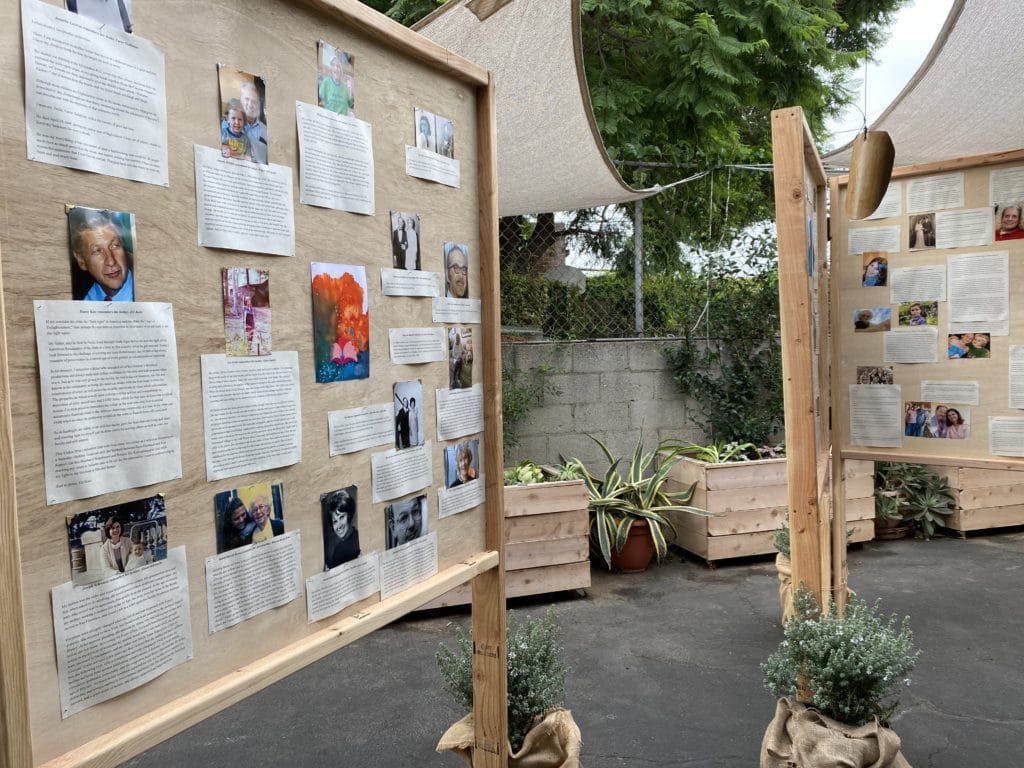
This year, as with everything relating to the High Holy Days in the era of COVID-19, the space that IKAR carves out for grief had to be rethought. The result is IKAR’s Yizkor Memorial Garden, a physical space on IKAR’s patio off La Cienega Boulevard, with an exhibit that holds people’s memories and limits the number of visitors at any one time for health and safety reasons.

IKAR Assistant Rabbi Keilah Lebell, who created the space with co-chairs and IKAR members Samara Hutman and Sarah Goldfinger, said the goal was to create “a way for people to come to a physical space and have a Yizkor moment that didn’t have anything to do with a screen.” 

Photos courtesy of Samara Hutman

Feedback from several mourners shaped a more interactive experience that also adhered to safety guidelines. Hutman, who had been a set decorator for years, suggested a garden, Lebell said, and created “something that’s alive, where people could visit and spend time there.” Lebell credited Goldfinger for knowing “how to create sacred space and a sense of beauty.”  

“[The experience] had to be something touch-free,” Goldfinger said. “How do you create a space that feels interactive even if you’re not touching anything?” 

 “We were groping for how people can be together because it’s been so painful to mourn in isolation.” — Samara Hutman

The team settled on asking visitors to take a stone with them from the entrance and deposit it in a mandala’s spiral before they exit. “When you go to a cemetery, you leave a pebble,” Goldfinger said. “With our stone activity, the idea is to pick one up and carry it through and put it in a spiral in a sacred community of mourners. So even though you didn’t touch anyone, you see people mourning with you.” She added, “The sculptures and mandalas on the ground do the job of ushering you into the space.”

Hutman said, “We were groping for how people can be together because it’s been so painful to mourn in isolation.” 

Lebell noted that one guiding idea was the wall of candles present in many churches. “You might be completely alone but you light a candle and see the other candles that are lit and know that others have been there,” she said. “We are all part of this space together, creating connection between community members.” 

Photos courtesy of Samara Hutman

On Monday afternoon, the garden was empty of people, but the breeze carried sounds that you only hear when human voices are absent: air lightly whipping at sheltering tarps, wind chimes tinkling idiosyncratically, the bubbling fountains creating a spa-like calm. 

“It is a very holy place,” Hutman said. “I myself have been healed here over the course of weeks as we took it from idea to place, to human space with dimension, and quotidian rhythms: pruning the plants and sweeping the paths; listening to the chimes in the wind; watching fiery skies with worry; welcoming the blue sky and the sun back, and [welcoming] purer air back in the last few days.”

At the center of the space, the team installed bulletin boards with 200 photos and 250 written reflections of members’ lost loved ones. “We wanted the boards to be the centerpiece of activity,” Goldfinger said.

The boards tell stories of parents long gone or recently departed; friends taken too soon; beloved grandparents who shared wisdom or took their secrets with them; and the children whose heartbreaking smiles remind you anew of what was lost. Together, the words and images begin to fill out the contours of community. Because of these people, we are the people we are today. 

There’s also an acknowledgment of more global losses, from the Holocaust to the COVID-19 pandemic, and the destruction caused by California’s most recent fires. By the Monday morning after her passing, the volunteers had added a section dedicated to Supreme Court Justice Ruth Bader Ginsburg. 

I took comfort in the silence, and in knowing no one was pressing me to move forward. When others arrived, we talked at a distance, but not in the hushed, reverent tones of a memorial. We are desperate for mask-to-mask conversation, for the third dimension of our community to be restored, so we can stand with one another during challenging moments. 

Goldfinger said she thought a lot about past experiences of “being in a room saying Kaddish with other people and feeling that we’re all in this together, having someone to nuzzle up against. It’s really moving to be able to grieve that way,” as people did before the pandemic, she said. “I didn’t set out at the beginning to replace that feeling, but [the garden is] like a hug.”  

Pamela Jacobson, one of the volunteers who worked to create the space, called it “incredibly therapeutic after being so isolated for several months. It was an unexpectedly powerful and positive experience,” she said. “Reading the stories, seeing the images and working with my hands in collaboration with others to create something so beautiful and meaningful was a gift that brought me a new sense of hope and possibility.” 

Added Hutman, “It is in the symphony of collected stories and faces, in the aching tug of loss and the durability of the connection that remains, that we fully understand the precious fragility of life and the durable power of love.” 

Photos courtesy of Samara Hutman

In keeping with COVID-19 safety guidelines, there are sanitizing stations at the entrance and exits, and visitors must wear masks and maintain 10 feet of distance. Only eight people are permitted in the garden at any one time.

“An important facet of the garden is the way it has reconstituted, in space and place, the soul of our community, through the physicalization of our Jewish commitment to collective memory, grief and prayer,” Hutman said. “At a time when we are required to be apart, this opportunity to gather is a gift for all of us who used our hearts and hands to create it, and for all who will enter and experience it.” 

Seeing my mom in the middle of that collage in a bright yellow shirt, smiling, looking slightly off-camera with delight upon some grandchild who is just out of frame, I like to imagine that she can see me and the other people who are visiting this space, as if it were a two-way mirror. As people pass in front of her photo, I know they are getting a window into her life and impact. Perhaps she’s also getting a window into mine. 

For security reasons, contact Membership@ikar-la.org for hours and information. Those who have been in contact with anyone infected with COVID-19 in the previous 14 days, including anyone who is experiencing or displaying symptoms of COVID-19, are asked not to enter the garden. 

IKAR’s Yizkor Memorial Garden: A Space for Memory and Community Connection Read More »

Watching the Wall Between Church and State Crumble

Americans have been guaranteed the freedom of religion under the First Amendment for more than two centuries, but it’s not a right that we can or should take for granted.

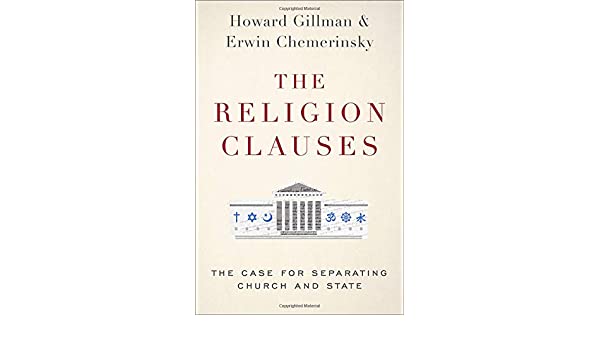
That’s the alarming message in “The Religion Clauses: The Case for Separating Church and State” by Howard Gillman and Erwin Chemerinsky, which is the latest title in the “Inalienable Rights Series” from Oxford University Press. They argue that the conservative majority on the Supreme Court already has signaled that they “reject the idea of a wall separating church and state,” and the authors point out that a tireless champion of freedom of religion under the First Amendment was the beloved dissenter, Justice Ruth Bader Ginsburg, who died Sept. 18 from complications of pancreatic cancer.

The freedom of religion in the First Amendment actually consists of two separate principles. The so-called “Establishment Clause” addresses what the government can and cannot do when it comes to supporting religion, and the “Free Exercise Clause” addresses what the government can and cannot do when it comes to limiting religion. Jurists and commentators who are willing to dismantle the wall between church and state are called “accommodationists,” and those who seek to keep the wall intact are called “separationists.”

Gillman and Chemerinsky declare from the outset of their provocative and deeply well-informed book that they are separationists.

“Under this view, the government should be secular; the place for religion is in people’s lives, their homes, and their places of worship,” they write. “We are convinced … that those who drafted the Constitution, including the Bill of Rights, overwhelmingly wanted a secular government.”

As distinguished scholars — Gillman is a political scientist and Chemerinsky is a constitutional law scholar — the authors do not engage in special pleading for the impact of the First Amendment on Jews, but everything they write about the freedom of religion in America has a special resonance for the Jewish reader. Even in a liberal democracy like England, a practicing Jew could not sit in Parliament until 1858 and, even then, the head of state was (and is) the head of the Church of England. As recently as 1986, they point out, the Supreme Court ruled that an Orthodox Jewish psychiatrist who worked for the U.S. Air Force “was required to abide by its uniform dress requirements even though that meant he could not wear a yarmulke while on duty at a military hospital.”

So, the authors find themselves compelled by the facts of history to point out that “[v]irtually every recent Supreme Court case about the Religion Clauses has involved whether the government can accommodate Christianity” — and the answer has been “yes.” But when it comes to non-Christian religions, the high court has rejected legal arguments based on the First Amendment. Thus, for example, “the five most conservative justices rejected a challenge based on the Religion Clauses” by upholding President Donald Trump’s travel ban “even though he repeatedly declared that his goal was to prevent Muslims from entering the country.”

The dismantling of the wall between church and state by the Supreme Court has required some strange moral and intellectual contortions. When the court ruled in 2019 that a 40-foot cross on a war memorial standing on public property in Maryland was not a violation of the Establishment Clause, Justice Samuel Alito argued that that “the cross has taken on a secular meaning,” and yet he also argued that removing the cross “would be perceived as hostility to religion,” which would violate the Free Exercise Clause.

The defense of freedom of religion fell to Ginsburg and her fellow separationists, who were always in the minority. “By maintaining the Peace Cross on a public highway, the [government] elevates Christianity over other faiths, and religion over nonreligion,” she wrote in one of the dissents for which she is celebrated. “Memorializing the service of American soldiers is an ‘admirable and unquestionably secular’ objective. But the [government] does not serve that objective by displaying a symbol that bears a ‘starkly sectarian message.’ ”

In a rare moment of personal testimony, the authors attest to impact these cases have on Jewish citizens of the United States and, at the same time, they anticipate and rebut any argument that separationists are necessarily hostile to religion.

“Both of us grew up mindful that we were Jewish in a Christian-dominated political system and we believed we were as entitled to the government’s respect as those who had their Christmas holidays formally recognized in our school’s calendar, even though our Jewish holidays were not,” write Gillman and Chemerinsky. “If there were a large Latin cross atop a city hall, those who were not part of religions that accept the cross as a religious symbol would feel that it was not ‘their’ city government.”

To their credit, the authors are plainspoken about their own values and aspirations. The First Amendment, they declare, “was meant to create a wall that separates church and state.” For that reason, “prayer should not be part of government activities, religious symbols do not belong on government property, and the government should be very limited in its ability to give aid directly to religious institutions.” At the same time, “the government can make sure that women have access to contraception and that anti-discrimination laws are enforced,” both of which are issues on which recent Supreme Court cases — Hobby Lobby and Masterpiece Cakeshop — “were wrongly decided.”

Among their many other credentials and achievements, Gillman is chancellor of UC Irvine and Chemerinsky is the dean of the law school at UC Berkeley. Yet they have successfully navigated between scholarship and advocacy in “The Religion Clauses,” which serves as a short course in the constitutional underpinnings of freedom of religion and, at the same time, as an accessible and persuasive argument that, when it comes to the proposition that government must not make any law that impinges upon freedom of religion, no law means no law.


Jonathan Kirsch, author and publishing attorney, is the book editor of the Jewish Journal.

Watching the Wall Between Church and State Crumble Read More »

Albert Dabah Tackles Delicate Family Material in ‘Extra Innings’

Writer-director Albert Dabah knows he’s treading in delicate territory in “Extra Innings,” an autobiographical debut film that dramatizes two family suicides, those of his brother, Morris (Robert Ramos), who overdosed on pills, and then five years later, his sister Vivian (Mara Kassin), who jumped off a cliff.

Violating family privacy heads the list of challenges Dabah faced, but he felt compelled to tell his story nonetheless. The movie was not simply a therapeutic outlet for his own lingering anguish; it also was his way of recognizing and honoring their lives, which seemingly were erased almost from the moment they died.

“No one ever talked about them,” Dabah said during a phone conversation from his New York City home. “It was as if they never existed. I think perhaps I’m the only one who ever really knew them, anyway. I had a close relationship with both.”

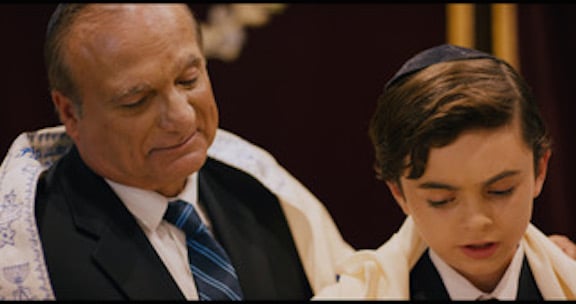
Set in the early 1960s in an insular Jewish Syrian community in Brooklyn, the award-winning “Extra Innings” is at its core a coming-of-age tale, awash in intergenerational culture clash. Young David (Aiden Pierce Brennan), who attends a religious day school, loves baseball and has his sights set on a baseball career. But his father (played by Dabah) has little tolerance for David’s dreams. His immediate concern is David’s upcoming bar mitzvah, and he views baseball as an intrusion. Beyond that, he expects David to join the family business (though it’s never entirely clear what that is) and marry a Jewish woman. He is not at all pleased with David’s non-Jewish friends (and later, a non-Jewish girlfriend). His mandate is simple: “You stick to your own kind.”

The family also includes David’s beleaguered but empathic mom (Geraldine Singer); a goody two-shoes older sister, Rita (Natasha Coppola-Shalom); Vivian, who is living in Los Angeles, a divorced, sexually liberated free spirit always longing for that elusive love; and, most centrally, Morris, a lethargic round man who speaks in a drone when he speaks at all. A diagnosed schizophrenic and arguably an idiot savant, he is brilliant in mathematics, classical music, literature and baseball. His topics range from Dostoevsky to Ty Cobb.

“Extra Innings” endured 12 revisions over 20 years. Dabah recalled that in an earlier draft, his Jewish Syrian community was almost a character, clearly defined and vividly etched. What now emerges on screen is a Jewish world but one that is not singularly Syrian.

“I wanted the story to be more universal, but I was also sensitive to Syrian Jews being an intensely private community,” Dabah said. “My very religious [surviving] sister who still lives in that world begged me not to make the picture. She has seven children and 61 grandchildren and was fearful that if the suicides in our family came to light, her grandchildren would not be viewed as marriageable. Suicide is still that much of a stigma and therefore not talked about.”

One major reason for making the film was to open up the conversation and help lift the stigma. Dabah was careful not to lay blame at anyone’s feet. The family is dysfunctional, but there are no villains. Even the father, who seemingly is the most disconnected, is doing the best he can.

“Playing my father did not really change my view of him, but rather confirmed what I already knew,” Dabah said. “Yet, when I said the lines to David [the older David is played by Alex Walton], as my father said to me, that he would disown me if I married my Christian girlfriend, I broke down all over again. I was sad for me but also sad for him. He was unable to know me.”

Dabah’s father could not reconcile himself to his son’s love of baseball, early career as a psychotherapist and later his stint as an actor. His son’s disaffection with religion was further alienation, though Dabah said he very much identifies as a Jew.

At 69, Dabah is mature for a first time filmmaker, but he insisted he encountered no ageism. For the past 40-plus years, he has headed Simba, his video production company that creates commercials plus educational and promotional materials, among other services. During the course of his career, he has worked with many major names (Meryl Streep, Martin Scorsese) in front of and behind the scenes. His experience with casting directors, for example, showed him what to look for in auditioning actors, not least the ability to do a scene in more than one way. That was the stumbling block among the actors he auditioned to play his dad. Even if they resembled him, they didn’t have the acting chops.

“Jon Lovitz suggested I do it,” Dabah said. “And once I decided I would, I brought on a co-director [Brian Drillinger]. I didn’t feel I could direct myself.”

Dabah never envisioned himself as a writer and director, let alone a co-producer of his own feature film. But like many new screenwriters, he futilely shopped his script around. Responses (from those who bothered to respond at all) were all over the map. “Typically, they wanted me to tell a whole different story — their story,” Dabah said. “One well-known distributor was turned off by the two suicides. He found it implausible, even though it had actually happened.” In the end, Dabah felt that to tell his story the way he wanted, he would have to make the film himself.

Asked to what degree he reshaped the truth in order to make it believable, Dabah said he changed nothing that was fundamentally significant, though he employed dramatic license in recounting some of the more peripheral details. In an effort to hit a contemporary note, his late sister’s lover was portrayed as a woman when in fact it was a Black man. Dabah felt the lesbian relationship would have greater resonance today than an interracial love story.

Dabah would love to write and/or direct another film, though at the moment none is in the hopper. Recently, he took a life-coaching course, toying with the idea of wearing his therapeutic hat again. His attentions now are focused on “Extra Innings” and he hopes that after viewing the film, people are more comfortable talking about mental illness in general and suicide in particular. It’s not that the pain will go away, he stressed.

“There’s no such thing as closure,” he said, debunking the widely held myth. “But I no longer feel guilty for having survived and having had a good life.”

“Extra Innings” is available on Amazon, iTunes, Google Play, Vudu, Fandango, Xbox and InDemand. 


Simi Horwitz is an award-winning feature writer and film reviewer.

Albert Dabah Tackles Delicate Family Material in ‘Extra Innings’ Read More »

NYC’s Jewish Museum to Reopen Oct. 1 Following 6-Month Closure Due to Coronavirus

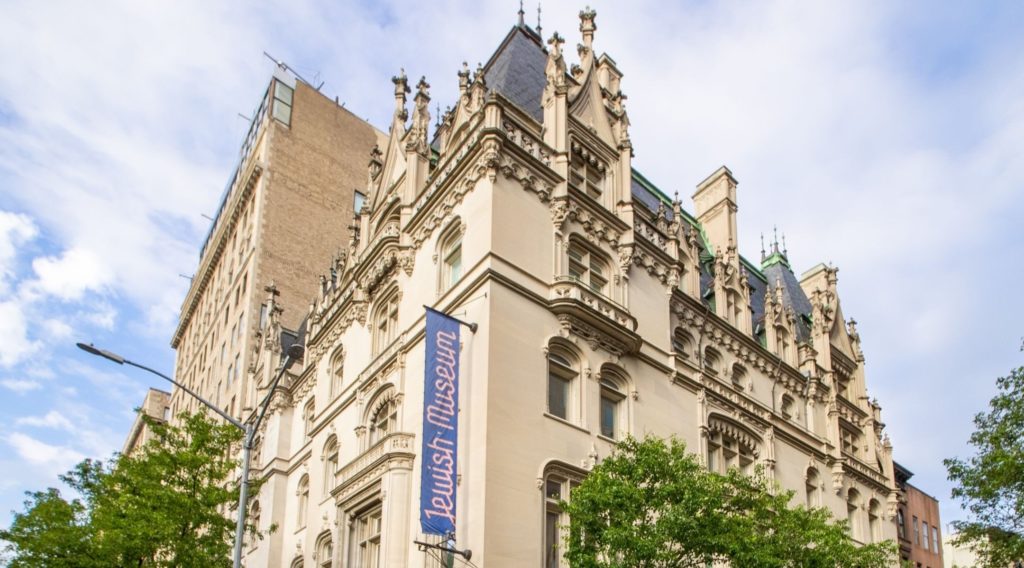
(JTA) — The Jewish Museum in New York City said it will reopen on Oct. 1, more than six months after it closed due to the coronavirus pandemic.

Visits to the museum located on Fifth Avenue in Manhattan will be free through the end of December. The museum will allow special preview visits by members beginning on Thursday.

Museum visitors must order timed tickets, and the number of visitors will be limited to 25% capacity in observance of New York’s coronavirus regulations. In addition, visitors must have their temperature taken before entry and wear a mask during their visit.

NYC’s Jewish Museum to Reopen Oct. 1 Following 6-Month Closure Due to Coronavirus Read More »

Children of Abraham

Efrat settlement

Written during the first intifada, late ’80s

Children of Abraham
both of us
children of Abraham
who walked this holy land
with staff in hand
and faith

Children of Abraham
who offered his son
to God on the holy mount
who we call Isaac
and you call Ishmael
who said to his cousin Lot,

“Let us part ways
in peace.”

Children of Abraham
we never left this land

There were eras
when only a handful survived
while nations came and went

Romans and Greeks and Turks

Byzantian and British

While the children of Abraham
tended fields
wrote in the cities of Safad
and Jerusalem
books of wonder and of wisdom

Children of Abraham
who fought and succumbed
who fought and won
each of us claiming:

“Chosen”
We have danced a dance of death
too long
too long

Children of Abraham
a new age
and we returned home
to the Jerusalem that had never left
our hearts, our prayers, our dreams

We came from the death throes of pogroms
from Europe’s hell
from the lands of your brothers
who had expelled us, penniless and broken

We returned home to till our ancient land
To water our fragile grains with our ancient tears

And you came with terror
and hate

We answered you
with schools
with doctors
with hope

We beckoned to you
in peace

We screamed from the bottom of our souls:
“Peace!”
You answered our pleas
with Munich
and Maalot

You answered our prayers
with pain in the night
no more
no more
can we turn away
no more
no more

Our blood checkered with yours across the fields

Our children, schoolbags full of hope
passing your little shepherd boy on the road we share
your flock mingling with ours
so young, so young
A destiny so old, and so young

Together
we could offer the world a vision
together
we could offer the world a dream

O Children of Abraham

How you will miss
the Children of Abraham
if one day
they are gone.


Toby Klein Greenwald is an award-winning playwright and director of biblical musicals for Raise Your Spirits Theatre. During the first intifada, Greenwald served as a liaison between various American news organizations and journalists, as well as the settler community.

Children of Abraham Read More »

Alan Arkin Will Not Return for Third and Final Season of ‘The Kominsky Method’

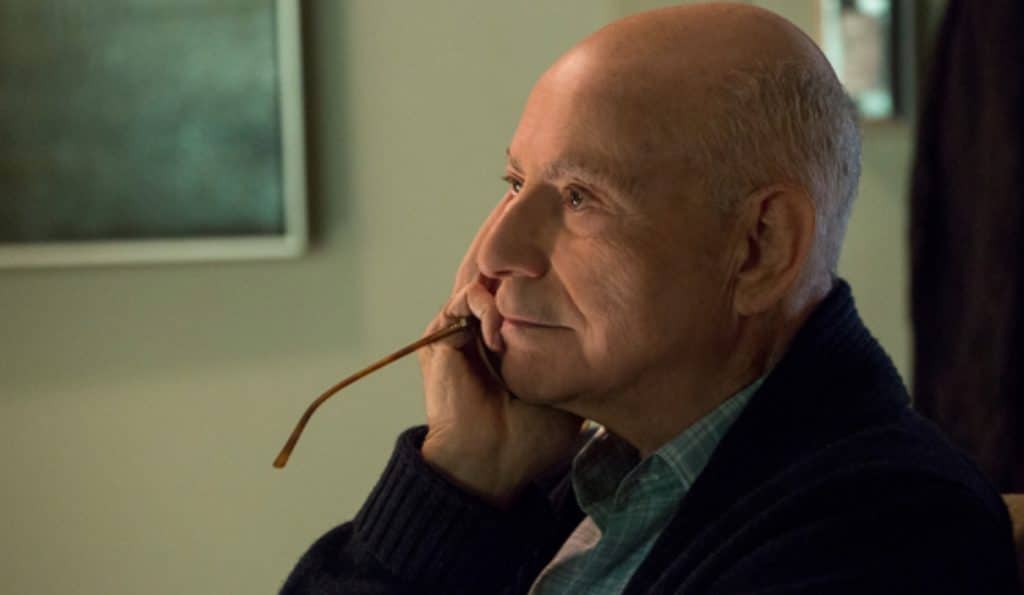
TV’s funniest Jewish buddies are breaking up. Alan Arkin is leaving his role as Norman Newlander, agent and best friend to Michael Douglas’ Sandy Kominsky on Netflix’ “The Kominsky Method” and will not appear in the show’s third and final season.

Deadline reported that Arkin decided to leave some time ago, possibly as early as March. No reason for the departure was given, but the character’s absence will be explained in Season 3 storyline. 

Both Douglas and Arkin were nominated for lead and supporting actor Emmy awards twice for their work on the show, most recently losing to “Schitt’s Creek’s” Eugene and Daniel Levy. 

Alan Arkin Will Not Return for Third and Final Season of ‘The Kominsky Method’ Read More »