fbpx

September 22, 2020

Honduras to Move Embassy to Jerusalem by Year’s End

(JTA) — Honduras will move its embassy to Jerusalem by the end of this year, the Prime Minister’s Office in Israel announced.

The statement Monday followed a telephone conversation the previous day between Prime Minister Benjamin Netanyahu and Honduran President Juan Orlando Hernandez.

Last year, Honduras recognized Jerusalem as the capital of Israel and opened a commercial office in the city. The two nations and the United States had met earlier in the year in Brazil and issued a joint statement in which they agreed to strengthen political ties “and coordinate cooperation on development in Honduras,” as well as to “pursue a plan of action, which includes meetings in their three respective capitals, to advance the process of the decision to open embassies in both Tegucigalpa and Jerusalem.”

Hernandez graduated from an Israeli leadership course from the Foreign Ministry’s Agency for International Development Cooperation, or Mashav, in 1992 at the beginning of his diplomatic career.

“We hope to take this historic step before the end of the year, as long as the pandemic allows it,” Hernandez tweeted about the embassy move to Jerusalem.

Honduras has the second-largest population of Palestinians in Latin America, The Times of Israel reported.


Honduras to Move Embassy to Jerusalem by Year’s End Read More »

YouTube, Google, Apple Music and Spotify Urged to Remove French Rapper’s Songs on Hitler, Jews and Money

(JTA) — France’s oldest anti-racism watchdog group called on internet giants to remove from their platforms newly released hit rap songs that critics say are anti-Semitic.

The International League against Racism and Anti-Semitism, or LICRA, urged YouTube, Google, Apple Music and Spotify to remove works by Issa Lorenzo Diakhaté. The 28-year-old rapper, also known as Freeze Corleone, engages in “anti-Semitism, conspiracy theories, glorification of Hitler and the Third Reich and the terrorist Mullah Omar,” a former leader of the Taliban, LICRA wrote last week on Twitter.

Corleone sings in his 10th album, “The Phantom Threat,” about wanting his children to “live like Jewish investors” and of being “determined like Adolf.”

He also sings “F*** a Rothchild, f*** a Rockefeller, I come determined like Adolf in the ’30s” and “couldn’t care less about the Shoah.”

Corleone’s album has enjoyed considerable commercial success by local standards, selling about 15,000 copies since its release on Sept. 11 – a date some believe he chose deliberately. The album’s 17 songs have been played more than 5 million times on Spotify, according to the magazine Marianne. Corleone has a long history of similar statements in his previous albums, the magazine showed.

LICRA was established in 1927.

Separately, a Paris court last week sentenced the well-known far-right Holocaust denier Hervé Lalin to 17 months in prison for inciting hatred against Jews online, AFP reported.

Also last week, a different court fined another Holocaust denier, Alain Soral, some $6,350 for blaming Jews for the fire that ravaged the Notre Dame church in the French capital in 2019.

YouTube, Google, Apple Music and Spotify Urged to Remove French Rapper’s Songs on Hitler, Jews and Money Read More »

Miracles are Possible After All

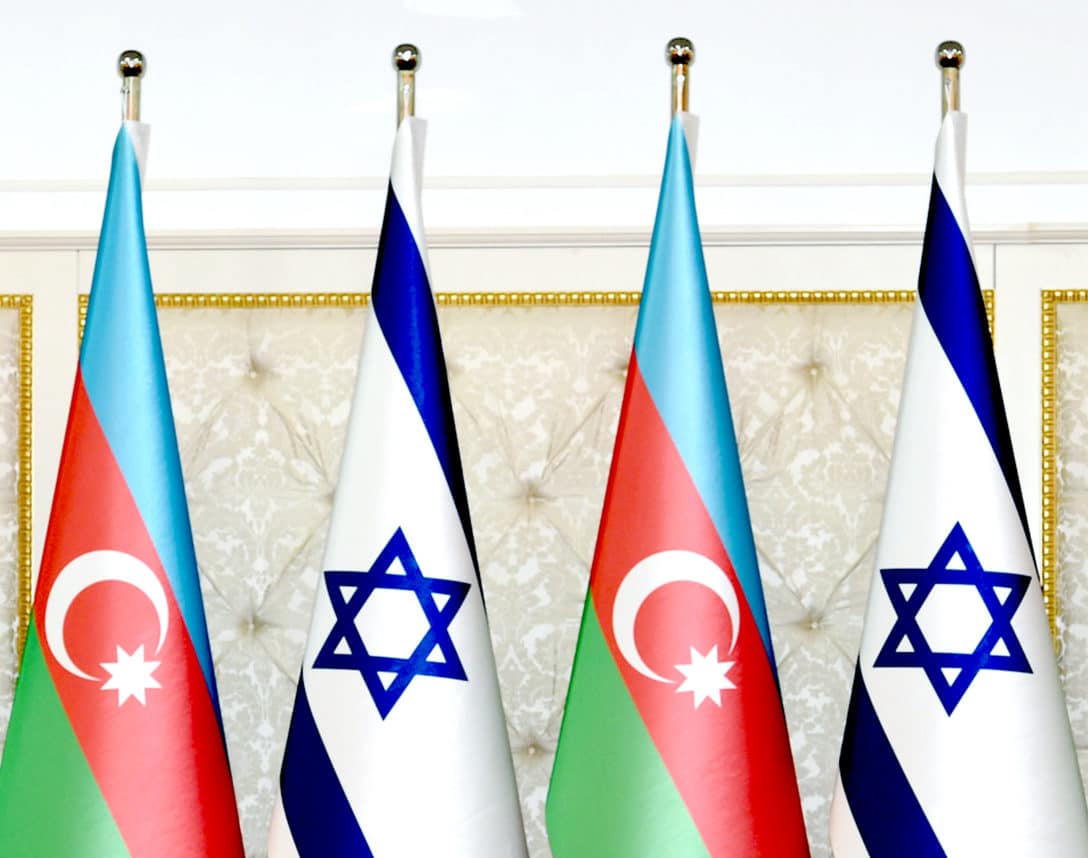
This year we celebrate Rosh Hashanah amidst an unprecedented era of uncertainty. Yet it is also an unprecedented time for hope. Just last week we saw the State of Israel sign treaties of normalization with the United Arab Emirates and Bahrain,  a significant moment for the future of peace in the Middle East. As a Jew, having lived my entire life in a majority-Muslim nation, in total peace, prosperity, equality and inclusion, I have enormous hopes for this historic occasion, that it will be far more than a moment that we celebrate; that we will still witness a profound and lasting shift in the global tensions surrounding Israel and how Muslim nations relate to Israel. 

UAE and Bahrain only stand to gain in this relationship, to show to their nations and to the world that is watching how the simple belief in respect, appreciation and celebration of diversity can not only alleviate substantial tensions, but can also contribute immensely to the society of any nation. 

I know this because I have seen the fruits of interfaith harmony here in Azerbaijan, a nation that has celebrated multifaith and multiethnic diversity for centuries; a majority-Muslim nation that is the haven and heartland to Jews from around the world, as well as Christians of nearly every denomination, Baha’is, Hare Krishnas and others. Diversity has only benefited Azerbaijan. Our scholars, leaders, artists, championed athletes and politicians represent members of our diverse community, and our successes in technology, academia, women’s rights and global diplomacy have all been supported and realized by the collective effort of the diverse people that make up our nation. 

Last year, a statue was unveiled in our capital city Baku to Albert Agarunov, Azerbaijan’s National Hero. Albert was a skillful and courageous tank commander, and one of the most heroic soldiers fighting for the territorial integrity of Azerbaijan in the early 1990s. Albert was also Jewish, a proud member of our Mountain Jewish community. Here in this majority-Muslim nation of Azerbaijan, one of the most celebrated heros, awarded the highest honor possible in Azerbaijan and with statues and even a street in Baku named to celebrate his life – was a Jewish man, who voluntarily enlisted in the army, and was killed in battle defending his nation.

Last week President Ilham Aliyev opened a new building of a school named after Albert Agarunov. It is the school where Albert was educated. Now it is named after him. 

This is far from the first time our government has recognized the Jewish community. The Republic of Azerbaijan has been helping the Jewish community for much longer than I can remember. Today, we have incomparably beautiful synagogues, a Yeshiva, schools and kindergartens, cultural centers, various community organizations, and more. Our national commitment toward inclusivity and respect has resulted in Azerbaijan being one of the safest places in the world for a Jew to live, a nation that is known to be an Oasis of Peace. 

In cadence with our values and the leadership behind them, Azerbaijan’s President Ilham Aliyev sent a letter of congratulations to the Jewish community of Azerbaijan, in celebration of Rosh Hashanah. In this letter, President Aliyev captures so much of what is paramount to our nation and values: 

“Dear Fellow Countrymen,

I cordially congratulate you on the New Year Holiday of the Jewish people – Rosh Hashanah – and extend my best regards and sincerest wishes to each of you.

Jews, along with representatives of various ethnic and religious groups, have for centuries lived in Azerbaijan, a country with rich historical and cultural heritage and centuries-old traditions of tolerance, in peace, tranquility, mutual respect and trust. Azerbaijan is one of the few places where ethnic and religious intolerance, xenophobia and antisemitism do not exist.

The state of Azerbaijan, which attaches great importance to coexistence based on democratic and constitutional principles, promotion of high tolerance and multicultural values, pays a great deal of attention and care to the preservation of cultural and spiritual values, development of language and culture of all ethnic minorities, including the Jewish community.

It is commendable that our compatriots of Jewish origin, who are actively involved in the socio-political, socio-cultural life of our country, always demonstrate their love and loyalty to Azerbaijan, making significant contributions to communicating the truth about Azerbaijan to the world community, regardless of where they live.

Dear Friends,

On the occasion of Rosh Hashanah, which epitomizes kindness, spiritual revival and renewal, I once again extend my sincere congratulations to all of you and wish prosperity to your families and abundance to your homes. Happy Holiday!

Ilham Aliyev

President of the Republic of Azerbaijan

Baku, 16 September 2020”

Much of the last Jewish year of 5780 has surely been rife with much tragedy and uncertainty, as COVID-19 continues its merciless path. Yet with so much good taking place in the world, we share a force of hope and a belief that this world can and will be a better place, for all people, and that we will overcome the trials we face today. In these sacred days of awe, I am so pleased to share this letter with all of you, from the words of our President, and to wish all my brothers and sisters in Jewish communities across the world, from my home in Baku to you, Shanah Tovah U’metukah. May this year bring to us only blessings.

Miracles are Possible After All Read More »

Israeli Pine Trees are Dying of Thirst

Intensifying droughts and severe heat are beginning to devastate the country’s pine populations. A new research study examined which pine trees could be more resistant to the new climate reality
Yael Mor, ZAVIT* Environment and Science News Agency

In early September, Israel saw an extreme and unusual heatwave with some areas reporting record temperatures. The Meteorological Service measured 42.3 degrees Celsius in Jerusalem, 46.6 degrees in Ayelet Hashahar in the north of the country, and 47 degrees in Kfar Blum, also in northern Israel.

Researchers believe that heatwaves and other extreme weather events will become more frequent in the wake of the climate crisis.

As humans, we have various means of dealing with intense heat and dryness, such as air conditioning or immediate water access. However, plants do not have the luxury of escaping extreme temperatures. In fact, the climate crisis is expected to negatively affect the growth, productivity, and survival of various plant species throughout the world and in Israel.

“We anticipate a decrease in precipitation during the winter and fall seasons as well as greater time intervals between one rain event and another,” says Prof. Marcelo Sternberg, head of the Plant Ecology Laboratory at the Tel Aviv University’s School of Plant Sciences and Food Security. “The Sequence of rainfall events is of great importance in everything related to the process of germination of plants. After the first rain in the fall, the seeds that have been in the soil all summer begin to germinate. If no more rain follows after a reasonable period, all those sprouted plants will die.”

Cloning trees

Also, in the Jerusalem pine, a trademark of the Israeli landscape, the effects of climate change have become evident. Growing pine tree mortality in recent years has been attributed to an increase in droughts. In a study conducted at the Faculty of Agriculture of the Hebrew University, in collaboration with Keren Kayemet LeYisrael – the Jewish National Fund (KKL-JNF), the researchers tried to isolate Jerusalem pine cuttings (a part detached from the mother plant that grows branches and leaves) in an attempt to increase the environmental resilience of trees planted in the future.

“In an extensive survey conducted by the KKL-JNF, it was found that about 30 percent of the Jerusalem pine have died in the country’s various forests,” explains Prof. Menachem Moshelion of the Institute of Plant Sciences and Genetics in Agriculture at the Faculty of Agriculture at the Hebrew University.

“Because mortality went up during times of drought, our working assumption was that climate change and intensifying droughts were what increased the mortality of the trees. We wanted to test how this issue could be dealt with and how damage could be reduced.”

In a study by Moshelion and research students Hadas Regev and Roni Bornstein, the relation between the sources of the various seeds and their resistance to drought will be examined in the first stage. To this end, 12 different seed sources were selected, most of them from Greece and Israel.

Those seeds were planted in a greenhouse, and the plants that grew from them were connected to a computerized system called Plant Ditech. With this technology, the researchers were able to control the environmental conditions for each plant, including the amount of nutrients, water, salinity, and more. Plant Ditech also provides real-time data on various plant parameters.

“With the help of this system, we can measure what the changes in the environment are and how the plant reacts to them,” says Moshelion.

“Among other things, we tested how much water evaporates from each plant (transpiration). This is an important parameter because the more water a plant transpires, the faster it grows. Thus, it will also be more sensitive to drought conditions because it will quickly finish its water resources and will have to wait longer until the next rain.”

“We found that no matter what seed population we worked with, the variance within that population was enormous and reached up to 150 percent. Some plants lost 100 ml per day, and others lost 1,500 ml. Therefore, we concluded that it might not help to choose a particular gene source for planting in the forests.”

Wasteful plants and conservative plants

Next, the researchers took cuttings from the plants grown in the greenhouse and planted them in a field. “We took fragments of one plant and created more plants from it genetically identical to the mother plant. The difference is that this time we already knew what their physiological profile was. We knew which of them lose a lot of water and which of them don’t. Then we divided them into groups of ‘wasteful’ and ‘conservative’ and took them out into the field. We planted plants from both groups in several areas of the country, with different environmental conditions, in order to neutralize the genetic effect and only have the environmental effect.”

According to Moshelion, in the first year, all the plants that grew fast and transpired a lot in the controlled greenhouse conditions showed beautiful growth in the field (measured by the height and thickness of the stem), and plants that lost little water grew slowly.

“In the second year, the correlation went down, and in the third, it went down even more,” he says. “We found that environmental conditions probably cause faster stress in those plants that grow a lot (which are also the ones that grow fast) because they finish their water very quickly. However, those that grew slowly and transpired water continued to grow over time. All the differences we saw in the greenhouse were reduced in the field, which strengthened our conclusion – good control of the water regime will improve the plant’s ability to survive.”

Genetic diversity is the key

During the experiment, Moshelion and his team were able to select plants that have the ability to cope with dry conditions and created clones from them – cuttings with the same genetic material, which allowed them, like the mother plant, to survive the dry conditions.

But is the practice of cloning a sensible approach to forestry in general and the conditions of the land in particular? According to Moshelion, most likely not – large systems with plants from the same genetic source can collapse quicker as the susceptibility of cuttings to a specific disease or a new pest may reach and destroy the entire population.

“The problem with cuttings is the genetic identity of the mother plant,” explains Moshelion.

“Diversity is the evolutionary basis that ensures the population’s survival and its adaptation to changing conditions.”

“There was an incidence in the Judean mountains, some time back, where a fungus invaded and killed planted pine trees that all had the same genetic source material,” says Sternberg. Genetic diversity allows the pines to deal with a potential disease, a strain, or an insect attack. With a higher genetic diversity, there will most likely always be one plant with a higher tolerance to drought conditions. The same plant that is genetically different from the other plants will be able to continue to survive and propagate,” he adds.

According to Moshelion, contrary to popular belief, the optimal way of cultivating forest trees and create genetically stable seeds is still a long way off. Simultaneously, working on tree clones is challenging, and more work and research has to be done in that field.

The best practice may be an initial sorting of physiological-genetic implants already in the KKL-JNF nurseries, in order to decide where it is more appropriate to plant each seedling and maximize its chances of survival in the field. “Although an ideal solution has not yet been found, I foresee a good future, but it will take a few more years of research,” says Moshelion.

So what is the solution we have to offer the trees, which are so vital to us in the fight against climate change? 

“We do not know enough about the unique climatic conditions of our region – both at sea and on land. There are very few studies on this in Israel because of funding difficulties. Most of the information that comes to us today is from studies abroad.

“Climate change needs to be a priority for decision-makers and policymakers, so that we can begin to explore and deal with all those changes along the way, unfortunately, they are not there today,” Sternberg concludes.

ZAVIT* Environment and Science News Agency

Israeli Pine Trees are Dying of Thirst Read More »

Home Shalom Message #25

Home Shalom promotes healthy relationships and facilitates the creation of judgement free, safe spaces in the Jewish community. Home Shalom is a program of The Advot Project.

Please contact us if you are interested in a workshop and presentation about healthy relationships, self-worth or communication tools.

“On Rosh Hashanah it is written, and on Yom Kippur it is sealed.” – Unetaneh Tokef High Holiday Prayer

This week we are in the midst of what Jewish tradition calls, Yamim Noraim, “The Days of Awe.” They are the ten days between Rosh Hashanah, the Jewish New Year, and Yom Kippur, the Day of Atonement. During this time, we are urged to hold up a spiritual mirror to ourselves to examine who we have been, what we have said, and what we have done during the year that has passed, to make amends to those in our lives whom we have hurt or ignored, and to recommit ourselves to doing better in the year ahead. 

The traditional imagery of the High Holidays is that of a celestial court, where God sits on the throne as judge and each of us stands in court with one angel as our prosecutor and another as our defender. All our deeds of the past year are presented to the court for God to consider, to determine as the Unetaneh Tokef prayer says, “who shall live and who shall die.” The imagery is so powerful and so dramatic that for thousands of years throughout the world, every Rosh Hashanah has been a time of spiritual trauma, when our very lives seem to hang in the balance and we are urged to pray with such fervor that God chooses to give us another year of life, whether our actions deserve it or not.

What is most powerful of all, however, is that this courtroom drama imagery provides one of the greatest spiritual innovations in all of Judaism, that the ultimate power rests actually not with God alone, but in our own hands. What the liturgy reminds us year after year, is that it is what we do and the choices we make that ultimately determine our fate. The quality of our lives is a direct result of the quality of our choices, and so the prayer goes on to declare, “But teshuvah, tefilah, and tzedakah, repentance, prayer and righteous behavior can avert the evil decree and change everything.” 

This is the lesson that matters most. We are not defined by our past – by our worst moment, our worst act, our worst decision. Instead, what we say today matters, what we do today matters, who we are today matters, and choices we make today are what can determine the rest of our lives. 

“On Rosh Hashanah it is written, and on Yom Kippur it is sealed,” and this is the week to choose the best vision of who we can become so that what is “sealed” on Yom Kippur is the person we are most proud to be in the year ahead.

Rabbi Steven Carr Reuben, Home Shalom

Naomi Ackerman, The Advot Project

Home Shalom Message #25 Read More »