A Moment in Time: 5781 Can’t Come Soon Enough
A Moment in Time: 5781 Can’t Come Soon Enough Read More »
Supreme Court Justice Ruth Bader Ginsburg died Sept. 18. She was 87.
Ginsburg, known as “The Notorious RBG,” died from pancreatic cancer. It was her fifth time dealing with cancer, having had prior bouts of colon and pancreatic cancer in 1999 and 2009, respectively.
“Our nation has lost a jurist of historic stature,” Chief Justice John Roberts said in a statement. “We at the Supreme Court have lost a cherished colleague. Today we mourn, but with confidence that future generations will remember Ruth Bader Ginsburg as we knew her — a tireless and resolute champion of justice.”
Ginsburg was appointed to the Supreme Court in 1993 by President Bill Clinton. The Senate confirmed her with 96 votes in favor and three against. She was hailed as a progressive and feminist icon throughout her tenure on the court.
The late Supreme Court justice said in a statement to her granddaughter earlier in the week, “My most fervent wish is that I will not be replaced until a new president is installed.”
This is a developing story.
Ruth Bader Ginsburg Dies At 87 Read More »
(JTA) — In three separate incidents this week, swastikas were painted on two monuments for Holocaust victims in Ukraine, and another one in Russia.
At the former concentration camp Bogdanovka, in southern Ukraine, a note with three swastikas was addressed to three prominent Jews: Ukrainian President Vlodymyr Zelensky, former politician Yevhen Chervonenko and Eduard Dolinsky, director of the Ukrainian Jewish Committee.
“Come to your senses, please stop, because the sale of Ukrainian land will quickly lead you to the Holocaust,” the note said.
Additional swastikas were etched and painted on the marble monument commemorating the murder of 54,000 Jews there during the Holocaust, Dolinsky wrote Tuesday on Facebook.
The same day, another incident was documented near Kirovgrad, some 100 miles north of Bogdanovka, were swastikas were spray-painted on a slab of marble commemorating the mass shooting of thousands of Jews in 1942. They wrote “Death to the kikes” at the foot of the monument.
Police are looking for the perpetrators of both incidents, the Ukrainian National Police wrote in a statement.
In Russia, police arrested a 30-year-old man for painting a cross and pouring yellow paint on a monument for Holocaust victims in Aksay, a village outside the city of Rostov-on-Don near the border with Ukraine. The man had a dispute with an employer and vented his frustration by destroying the monument, the news site Volga Kaspiy reported Friday.
The report did not say whether the employer was Jewish.
3 Holocaust Monuments Vandalized With Swastikas in Ukraine and Russia Read More »
9/11 Commemoration
“Grow, grow, grow,” we imagine angels whispering to every blade of grass. How much more so to every human soul. That kind of growth gets me thinking about the tragedy of the Sept. 11, 2001, attacks.
We were all terrorized, and yet what came of that horror? A unity that made all other differences irrelevant. Do you remember the relief we felt? Our society was divided then, too. Did we grow like blades of grass? Yes, we did. But also, like grass, we withered. We forgot what we learned and what we cherished. We returned to divisiveness and hatred.
If history teaches us anything, it is that hatred shouldn’t be taken lightly. What ends in violence always starts with words — words born of beliefs about one another and about ourselves.
When the Second Temple in Jerusalem was destroyed, the rabbis didn’t demand that we annually remember what the Romans did to us. They demanded that we turn our consciousness to ourselves and to the hatred in our own society. That is the reason our Temple was destroyed. Sinat chinam. Hatred in our hearts. Let us take that lesson to heart.
Rabbi Ron Li-Paz, Spiritual leader, Valley Outreach Synagogue & Center for Jewish Life, Calabasas
When Sports Become Political
In his column “Why Sports and Politics Don’t Mix” (Sept. 4), David Suissa wrote about how many sportswriters and announcers have supported the NBA’s move to become political. He is not alone in his views.
I would suggest that he and everyone else look up the writings of Jason Whitlock, a Black sportswriter and commentator. He has been a vocal critic of Colin Kaepernick and LeBron James, and is a sane voice in calling out all this stupidity for what it is.
Michael W. Felsenthal, Los Angeles
New Barber
I just came from the Barber,
One I’ve never used before.
I kind of had no choice now,
My former stylist was there no more.
My Barber was no longer working,
They said he had retired.
Truth of the matter, I later learned,
It turns out he was fired.
Nonetheless, a haircut,
Was needed very much.
I hoped that his replacement,
Would have the Midas touch.
It turns out that the new guy,
Was actually a girl.
She knew how to trim the back and sides,
And how to tame a loose curl.
But she chopped off too much on top, I felt,
I was quite displeased with that.
So what the heck- for the next two weeks,
I’ll just cover it up with a hat.
Alan Ascher, Via email
Israel and the UAE
I am 91 years old and survived five concentration camps including Auschwitz, Birkenau and the death march to Dachau and Muhldorf. I fought in three wars in Israel: Sinai (’56) the Six-Day War (’67) and the Yom Kippur War (’73).
I moved to the United States in 1975 to build a new life.
I never imagined that I would live to see peace between Israel and the United Arab Emirates. This is the first step toward the one dream I wish to see in my life: Peace between the Palestinians and Israelis.
Palestinians need a new government that can guarantee the security of Israel and understand the value of living side by side. Israel needs to pull all of its troops out of the Palestinian territories and not occupy — not even with one soldier. We need to work on trust and respect in a business-like manner. Love can come later.
Joshua Kaufman, Via email
Remembering Phil Blazer
We at the Ethiopian Jewry Foundation, Inc. are saddened to learn from the Journal of the death of Phil Blazer (“Broadcaster and Activist Phil Blazer, 76,” Sept. 4).
Blazer was the best friend of Ethiopian Jews. We extend our condolences to the entire Blazer family.
May his memory be a blessing.
Habtnesh Ezra, Ethiopian Jewry Foundation, Inc., Beverly Hills
Jewish-Israeli Pride
Israeli American Dean Kremer made a spectacular Major League Baseball debut for the Baltimore Orioles against their division rival New York Yankees, which was all but ignored by the Los Angeles Times. Kremer, a star pitcher in Israel and in the most recent World Baseball Classic, is the first Israeli drafted by a major league team.
May Kremer go from strength to strength and continue to make us all proud in the same manner Dodger great Sandy Koufax did so many years ago. Those were the days.
Allan Kandel, Los Angeles
Misrepresenting History
Many thanks to Gil Troy for exposing the absurd, myopic, reverse racist, anti-American view of author Isabel Wilkerson in her book “Caste” (“Isabel Wilkerson’s New Book Clings to the Past,” Sept. 11). Did Yale historian Matthew Frye Jacobson really think that white Anglo-Saxon Protestants viewed an Italian, Irish or Jewish immigrant as one of their own?
Warren Scheinin, Redondo Beach
Spare the Animals
Our community leaders have found such creative ways to reshape High Holy Days celebrations (“Preparing for the High Holy Days in Pandemic Times,” Aug. 28). Let’s maintain this vein of creative thinking, by embracing another constructive change in the run-up to 5781: going vegan.
Going vegan for Rosh Hashanah will significantly improve life on Earth for all beings. Vegan foods spare scores of sentient animals from a life in confinement and a painful death. They generate fewer emissions of harmful greenhouse gases, and lessen our sea and air pollution.
Prioritizing our health during this global crisis is more important than ever. Eating nutritious vegan foods reduces our risk of certain health conditions which would put us at higher risk of severe illness if we contracted COVID-19. Don’t forget that eating vegan saves about $23 per week on groceries, compared with those who eat meat, giving us extra tzedakah to help those in need. For a free vegan starter kit, visit here.
Jessica Bellamy, The PETA Foundation, Norfolk, Va.
Israel: An Ethnic Democracy
Melanie Phillips is correct that many progressive rabbis “support the enemies of Israel.” (“When Rabbis Should Not Keep Quiet,” Sept. 13, online). The criticism of these progressive rabbis is based on a false premise: that Israel, like the United States, is a liberal democracy. It is not. It is an ethnic democracy. Read the Balfour Declaration and the Israeli Declaration of Independence. As an ethnic democracy, a Jewish homeland is foundational to Israel. With the rise of European anti-Semitism in the 19th century and continuing into the 20th century, a Jewish ethnic democracy in what was the Yishuv was the goal.
Richard Sherman, Margate, Fla.
Ethnic Studies: Divisive and Dangerous
The new ethnic studies curriculum specifies that Jews are a privileged, white racial group, and one model suggests that students “will write a paper detailing certain events in American history that have led to Jewish and Irish Americans gaining racial privilege.”
Irish privilege? What is that, specifically? What is Jewish privilege? Fighting against university admissions quotas? Having to build hospitals so Jewish doctors would be allowed to train and practice? Fighting restrictive real estate covenants? Why not have ethnic studies students write a paper detailing these issues?
Perhaps referencing Asian Americans as “privileged” because of their great success would have elicited too much pushback from this large group, so the Irish were chosen as a safe substitute. The ethnic studies curriculum will have no actual oversight, no “guardrails” because there will be no one in the classroom monitoring if some teachers push for political advocacy and activism that will subvert the educational mission of schools.
Julia Lutch, Davis, Calif.
Now it’s your turn. Don’t be shy, write you letters to the editor. Letters should be no more than 200 words and must include a valid name and city. The Journal reserves the right to edit all letters. letters@jewishjournal.com.

Letters: 9/11 Commemoration, Spots and Activism, UAE Read More »
Kosovo Minister of Foreign Affairs and Diaspora Meliza Haradinaj announced in a Sept. 14 tweet that Kosovo will be adopting the International Holocaust Remembrance Alliance (IHRA) definition of anti-Semitism.
Her tweet stated, “In today’s #Kosovo Gov meeting, I proposed @TheIHRA
non-legally binding working definition of #AntiSemitism. Its adoption today lists [Kosovo with] its strategic allies.
“As a victim of genocidal actions & ethnic cleansing, [Kosovo] understands too well the weight of discrimination & hate.”
In today’s #Kosovo Gov meeting, I proposed @TheIHRA non-legally binding working definition of #AntiSemitism. Its adoption today lists 🇽🇰 w/ its strategic allies.
As a victim of genocidal actions & ethnic cleansing, 🇽🇰 understands too well the weight of discrimination & hate. pic.twitter.com/B0x0p83nKN
— Meliza Haradinaj (@MelizaHaradinaj) September 14, 2020
StandWithUs praised Kosovo’s decision in a tweet.
“An important step!” the Jewish group tweeted. “Thank you Kosovo for standing up to #antisemitism!”
An important step!
Thank you Kosovo for standing up to #antisemitism! pic.twitter.com/qEA4yEXiB3
— StandWithUs (@StandWithUs) September 15, 2020
The IHRA definition of anti-Semitism states, “Antisemitism is a certain perception of Jews, which may be expressed as hatred toward Jews. Rhetorical and physical manifestations of antisemitism are directed toward Jewish or non-Jewish individuals and/or their property, toward Jewish community institutions and religious facilities.”
The IHRA definition of anti-Semitism includes the demonization and delegitimization of Israel as well as holding the Jewish State to a double standard. It adds that anti-Semitism also includes “holding Jews collectively responsible for actions of the state of Israel” and that “criticism of Israel similar to that leveled against any other country cannot be regarded as antisemitic.”
The IHRA currently has 34 members, including the United States and Israel.
Kosovo’s announcement regarding IHRA comes after the country established ties with Israel on Sept. 4; Kosovo and Serbia also announced that day that they would be moving their embassies to Jerusalem.
However, the European Union (EU) warned both countries on Sept. 11 that their EU membership statuses could be threatened if they follow through on their pledges to move their respective embassies to Jerusalem.
“There is no EU member state with an embassy in Jerusalem,” European Commission spokesman Peter Stano said. “Any diplomatic steps that could call into question the EU’s common position on Jerusalem are a matter of serious concern and regret.”
Kosovo to Adopt IHRA Definition of Anti-Semitism Read More »
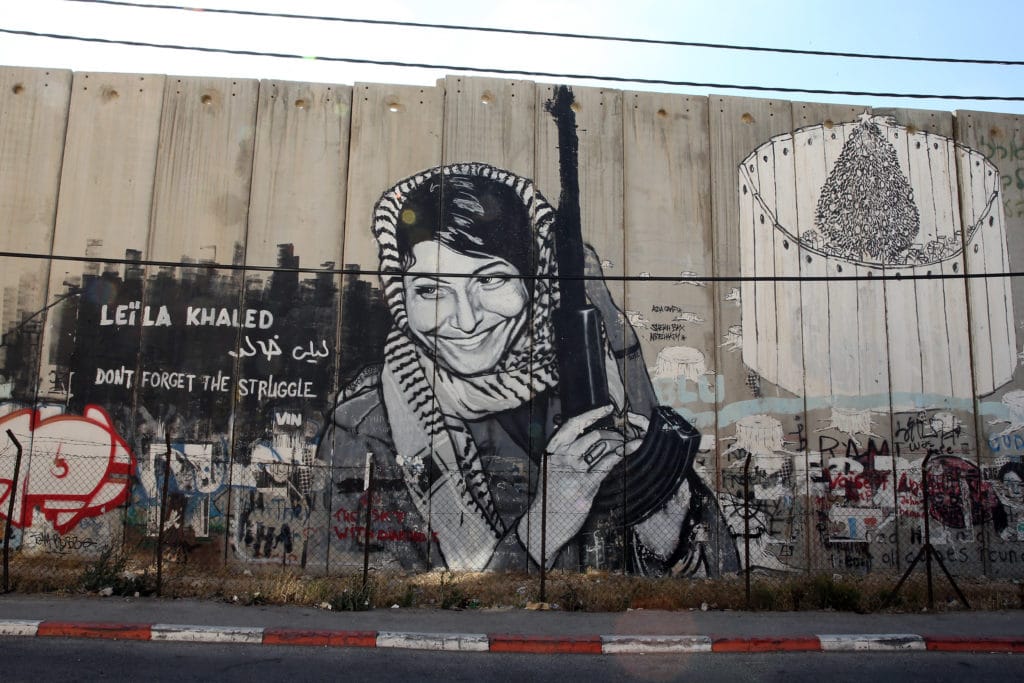
A coalition of 86 Jewish groups sent a letter to San Francisco State University (SFSU) President Lynn Mahoney asking if the upcoming event featuring Popular Front for the Liberation of Palestine (PFLP) member Leila Khaled is legitimately protected under academic freedom.
The coalition, which was spearheaded by the AMCHA Initiative, noted that Mahoney has said that just because a speaker is brought to campus doesn’t mean the university agrees with his or her point of view. However, the letter asked, “What if the intention of the faculty member who extended such an invitation and organized such an event was not to encourage students ‘to think critically and come to independent, personal conclusions about events of local and global importance,’ but rather to promote the faculty member’s own narrow political view and to weaponize students to be foot soldiers in the faculty member’s own political cause?
“Specifically, in your view, does academic freedom protect faculty who intentionally use their classrooms or other academic platforms not to educate their students but to indoctrinate them with propaganda consistent with their own political causes and to encourage their students to engage in political activism consistent with those causes?”
The letter argued that SFSU professor Rabab Abdulhadi has been open about her intention to use her position as a platform for anti-Zionist activism. As examples, the letter pointed to SFSU’s Arab and Muslim Ethnicities Diaspora (AMED) Studies department — which Abdulhadi heads — co-sponsoring an event on campus in 2013 featuring students “using stencils to create placards and T-shirts with the image of a keffiyeh-clad Leila Khaled holding an AK-47 rifle accompanied by the message, ‘Resistance is Not Terrorism,’ and other stencils with the message, ‘My Heroes Have Always Killed Colonizers.’ ”
Khaled, now 76, was among the terrorists who hijacked commercial jetliners in 1969 and ’70. Her attempt to detonate grenades on the 1970 flight were thwarted and no one was injured or killed in either incident.
Abdulhadi also has used SFSU’s AMED Facebook page to vilify Israel and promote the boycott, divestment and sanctions (BDS) movement, such as posting that then-SFSU President Leslie Wong’s statement that “welcoming Zionists to campus … [is] a declaration of war against Arabs, Muslims, [and] Palestinians.”
“We believe Abdulhadi’s continuous and intentional use of her SFSU position and the name and resources of the University to indoctrinate students with her own personal animus towards the Jewish state and its supporters and to promote anti-Israel activism, does not constitute a legitimate use of academic freedom, but an abuse of it,” the letter argued. “In addition, we believe Prof. Abdulhadi’s blatant politicization of her classroom, conference hall and other professional spaces violates state laws prohibiting the misuse of SFSU’s name and resources for personal or political purposes, including for the promotion of a boycott (e.g. CA Government Code §8314 [12] and CA Education Code §89005.5 [13]); deprives her students of access to vital information about complex topics of global importance, as well as their fundamental right to be educated and not indoctrinated; foments a divisive and toxic atmosphere, both inside and outside the classroom, that incites hatred and harm towards Jewish and pro-Israel students; and seriously erodes the public trust in your university to uphold its academic mission and ensure the safety and well-being of all of its students.
“In light of the above considerations, we ask whether you still believe the upcoming event is a legitimate expression of academic freedom, and if not, what you intend to do about it.”
Among the Jewish groups that signed the letter included the Simon Wiesenthal Center, StandWithUs and B’nai Brith International.
The Khaled event is taking on place during a Sept. 23 webinar; Khaled will be speaking along with Rula Abu Dahou, acting director of the Institute for Women’s Studies at Birzeit University in the West Bank; South African politician Ronnie Kasrils; former Black Liberation Army member Sekou Odinga; and Jewish Voice for Peace member Laura Whitehorn. Abdulhadi and SFSU Women’s Studies professor Tomomi Kinukawa will co-moderate the panel and the event. SFSU’s College of Liberal & Creative Arts website calls Khaled “controversial.”
The Journal obtained Mahoney’s response to the AMCHA letter, which stated: “I have been working closely with members of the Jewish community including faculty and student leaders, as well as SF Hillel, since the event was announced. I understand why this speaker and other events have caused great pain to some members in the Jewish community.
“But as president of a public university, I must meet a very high standard for academic freedom and freedom of expression. I know how important it is to safeguard the rights of freedom of expression and academic freedom for all members of our community and to make them feel supported and welcomed. This is not always easy and the issues complex. I encourage you to read the op ed that I wrote for the J Weekly recently.”
StandWithUs Israel Executive Director Michael Dickson said during a Sept. 15 Knesset hearing in West Jerusalem, “Hosting a PFLP terrorist is a chilling event and sends a message to Jewish students and Jews on campus in general. It says Jewish blood is cheap. It says atrocities committed against Jews do not matter. It says this form of resistance — which is included in the title of her speech — might be legitimate. This shameful event will give an unrepentant terrorist a chance to glorify her actions in a country — America — that has been so scarred by airplane hijacking. It is an affront to the 9/11 victims and all victims of terror.”
86 Jewish Groups Contest Leila Khaled’s SFSU Speaking Event Read More »
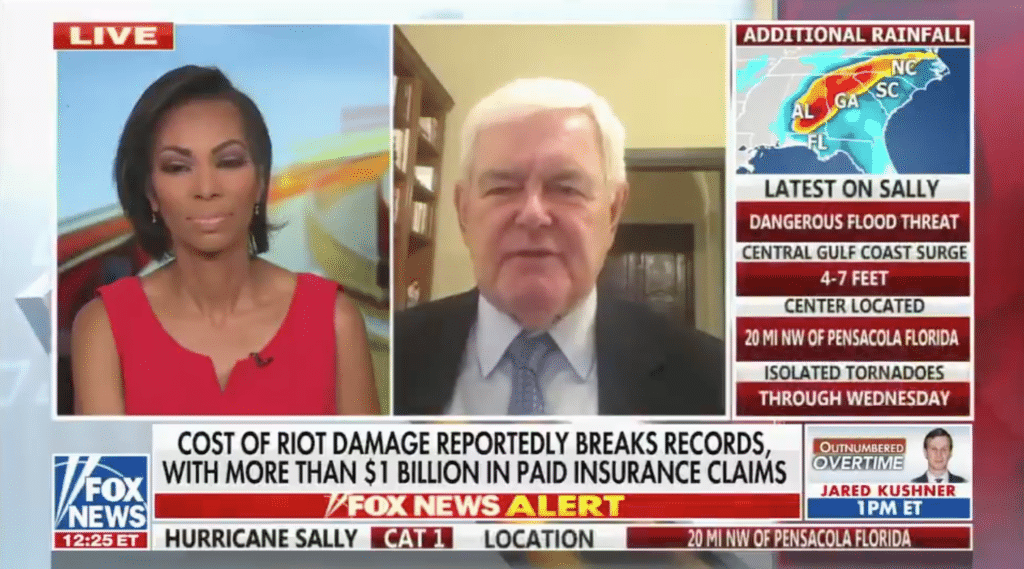
(JTA) — An exchange Wednesday on a Fox News show struck many as remarkable: Newt Gingrich, the former Republican House speaker, blamed “George Soros’ money” for violence in American cities before being shut down by two other panelists on “Outnumbered.”
The next day saw an apology — from the show for not letting Gingrich finish.
Depicting Soros — the Jewish American Holocaust survivor, financier and liberal megadonor — as President Donald Trump’s chief opponent and the source of America’s ills has become increasingly common among Republicans. He has been lambasted on Fox several times.
Fox News guests and hosts have, like Gingrich, blamed Soros for the unrest and violence accompanying protests this summer. Others have called him a “puppet master,” falsely blamed him for the migrant caravans in 2018 and talked of the “Soros-occupied State Department.” In one instance, a sitting congressman repeated the false claim that Soros helped perpetrate the Holocaust. (Fox apologized for the last two.)
Anti-Semitism watchdogs have cautioned against rhetoric demonizing Soros, saying it perpetuates anti-Semitic conspiracy theories about rich Jews secretly controlling the world with their money, spreading disease or trying to “replace” America’s white population with immigrants of color.
In 2018, based on the false allegation that Soros was behind the migrant caravan, a man sent a pipe bomb to Soros’ house. Days later, a gunman killed 11 Jews at a Pittsburgh synagogue. He, too, had demonized Soros on social media.
But last week on Twitter, Gingrich begged to differ with the notion that criticizing Soros is anti-Semitic.
“Why are some in the left so afraid of our mentioning George Soros’ name that they scream anti-semitic?” Gingrich tweeted on Sept. 9. “It IS his name. He IS funding pro-criminal, anti police district attorneys. Why is the left afraid of the facts?”
Soros has funded progressive candidates for district attorney across the country. One week after his tweet, on Sept. 16, Gingrich took his criticism a step further on “Outnumbered,” citing those campaign donations in order to blame Soros for violence in American cities.
“The No. 1 problem in almost all these cities is George Soros-elected, left-wing anti-police, pro-criminal district attorneys who refuse to keep people locked up,” Gingrich said. “Progressive district attorneys are anti-police, pro-criminal and overwhelmingly elected with George Soros’ money, and they’re a major cause of the violence we’re seeing because they keep putting the violent criminals back on the street.”
Fellow panelists Marie Harf and Melissa Francis objected to Gingrich bringing up Soros.
“George Soros doesn’t need to be a part of this conversation,” Harf said.
“So it’s verboten?” Gingrich replied.
After a few seconds of silence, the host, Harris Faulkner, said, “OK, we’re going to move on.”
Right-wing activists on Twitter were not happy with how the conversation went down.
“Why on Earth is Fox News protecting George Soros?” wrote David Harris Jr., a fellow at the Falkirk Center, the think tank at the evangelical Liberty University founded by, and named after, Charlie Kirk and the university’s ousted former president, Jerry Falwell, Jr.
“FOX News Panel Melts Down After Newt Gingrich Correctly Calls Out Lawless Soros-Funded District Attorneys,” wrote Jim Hoft, founder of the Gateway Pundit, a far-right news site.
“Fox has not disclosed why it muzzled Newt Gingrich, a former House Speaker, from discussing George Soros’ record of meddling in elections all over the country,” wrote Sean Davis, co-founder of the Federalist, a right-wing publication.
On Thursday, Faulkner apologized and called Gingrich “beloved.”
“We had a little incident on the show yesterday that was not smooth,” the show’s host said. “While I was leading the segment, we had interruptions, and I sat silently while all of that played out. Also not ideal. Our guest, former House Speaker Newt Gingrich, who is beloved, and needed to be allowed to speak with the openness and respect that the show is all about, was interrupted. Do we debate with fire here? Yes. But we must also give each other the space to express ourselves.”
She added, “We don’t censor on this show. And that’s why we’re winning weekdays at noon.”
Author and documentary filmmaker Errol Morris has turned his lens on the famous (Stephen Hawking in “A Brief History of Time,” Robert S. McNamara in the Oscar-winning “The Fog of War”) and the obscure (the motley crew in “Fast, Cheap & Out of Control”). But he’s always been fascinated by the notorious, too, as exemplified by his acclaimed 1988 death row documentary, “The Thin Blue Line,” and his 2012 bestselling book, “A Wilderness of Error,” about the infamous Jeffrey MacDonald murder case.
In 1979, MacDonald, an Army surgeon, was convicted of brutally murdering his pregnant wife and two daughters in 1970. He is serving a life sentence in prison. Morris revisits the story in the five-part FX series of the same name based on his book, written and directed by Marc Smerling (“Capturing the Friedmans,” Emmy winner for “The Jinx: The Life and Deaths of Robert Durst”).
As recounted in journalist Joe McGinniss’ 1983 book and the subsequent miniseries “Fatal Vision,” MacDonald was convicted of the murders, but was he guilty? Conflicting testimonies and evidence make for a tangled yet fascinating web. Morris and Smerling shared their insights in a virtual press conference for the docuseries, which will air its first three episodes on Sept. 25 and the final two the following week.
“One of the fascinating things about this case is that it has so many, many layers … [and] we arrive at conclusions and those conclusions may, in fact, be hopelessly biased, may avoid the truth,” Morris said. “This is a story about process, about what happened to Jeffrey MacDonald in all of these intervening years and all of this litigation that has gone on for half a century. One of the things that makes this an extraordinary story [is] evidence that almost seems to prove a case but never quite does. It’s an extraordinary exercise in ambiguity. It’s a strange case with very strange characters. It’s a really fascinating story to me.”
“We all know in our heart of hearts that real cases should have answers. If we think hard enough, if we investigate long enough, we should be able to come to some definitive conclusion. This case hasn’t taught me that there is no conclusion to be arrived at, but it certainly has taught me how difficult it can be to arrive at a conclusion.” — Errol Morris
“It’s the most popularized and probably legendary true crime out there. So many books and so many things have been done about it,” Smerling said. He enlisted Morris as an onscreen participant, to take “another deep dive into it … [and] go back to the very beginning, look at the original documents, look at the original evidence, and then try to figure it out, [see if] we could find the truth.
“When you slow this story down and you look at it over a series, you start to see things that are in plain sight. We were constantly running into documents, audiotapes,” Smerling continued. “There’s a lot of found footage in this that was extraordinary, that we had seen and heard in little pieces but had never actually heard in its entirety.”
The case was full of conflicting evidence, some that was lost, corrupted, misinterpreted or manipulated, “and the prosecution went to extraordinary lengths to manipulate evidence and to obtain a murder conviction,” Morris said. Characters who emphatically believe in MacDonald’s guilt, innocence and then change their minds “make you question the whole nature of how we look at crime and consider evidence,” he added. “To me, that is the deepest and most important message in this story.”
Neither Morris nor Smerling would definitively pronounce MacDonald innocent or guilty. “I think we did a lot of work to present evidence and tell the story, and at the end of the day, I think it’s going to be up to the people watching the series and doing their own research to decide for themselves on guilt and innocence,” Smerling said. “One of the confounding things about this case is that it’s a prism. You look through it one way and you see evidence in a certain light, and you look through it another way and now the evidence is in another light. And there’s this person or multiple people out there who claim to have been in the house the night of the murders and to have witnessed or participated in them, so it’s an incredibly difficult journey to come to some sort of solid conclusion on.”
Morris concurred. “I’m not left with a feeling of certainty about anything with this case,” he said. “We all know in our heart of hearts that real cases should have answers. If we think hard enough, if we investigate long enough, we should be able to come to some definitive conclusion. This case hasn’t taught me that there is no conclusion to be arrived at, but it certainly has taught me how difficult it can be to arrive at a conclusion.”
In conjunction with “A Wilderness of Error” (the title of which comes from an Edgar Allan Poe short story), Smerling will take a closer look into the MacDonald case and Joe McGinniss’ exploration of it in the companion podcast “Morally (In)Defensible.”
“A Wilderness of Error” premieres on FX at 8 p.m. Sept. 25 and the following day on Hulu.
‘A Wilderness of Error’ Revisits Infamous Jeffrey MacDonald Murder Case Read More »
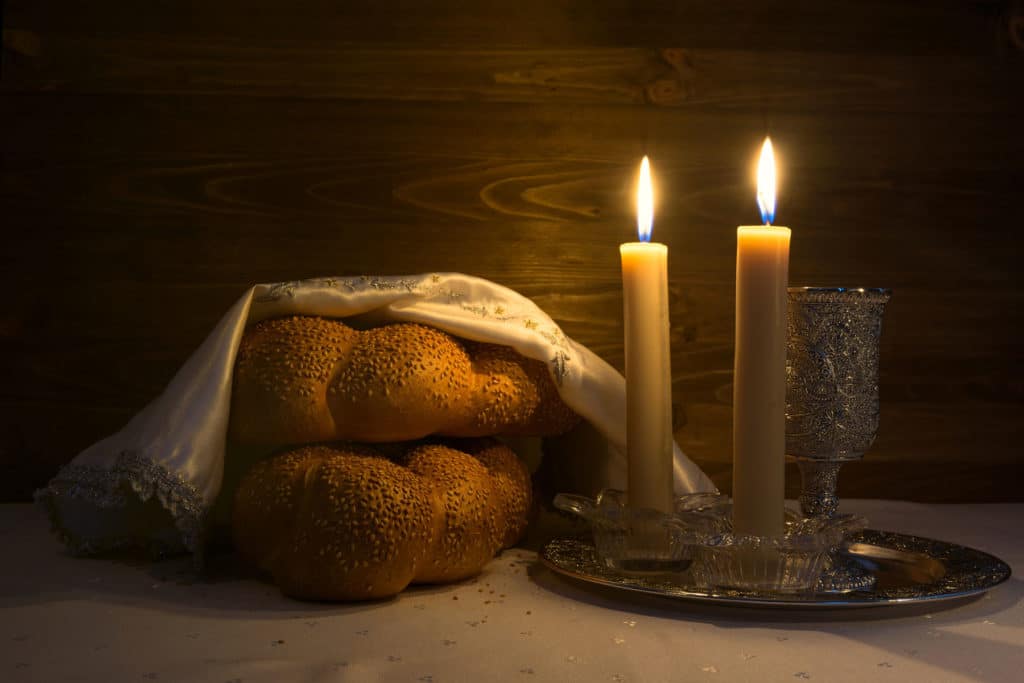
It hit me today that I’ve been receiving hundreds of “Shanah Tovah” greetings but very few of the “Shabbat Shalom” greetings I usually receive on Fridays.
Actually, the fact that Rosh Hashanah falls on a Shabbat in the year of the pandemic is a rare and unique blessing.
The deep contemplation that Rosh Hashanah demands is enhanced by the Shabbat experience. Shabbat itself calls upon us to reconnect with the essentials of life. In the same way that Rosh Hashanah helps us renew ourselves every year, Shabbat helps us renew ourselves every week.
In this bewildering year of never-ending turmoil, we need all the spiritual ammunition we can get. The divine partnership of Shabbat and Rosh Hashanah is now at our disposal. Let’s use them both.
Shanah Tovah and Shabbat Shalom.
When We Say ‘Shanah Tovah’ Let’s Remember ‘Shabbat Shalom’ Read More »
A Rosh HaSchitt’s Creek Sameach to You! Read More »