fbpx

September 8, 2020

A Moroccan Feast for the New Year

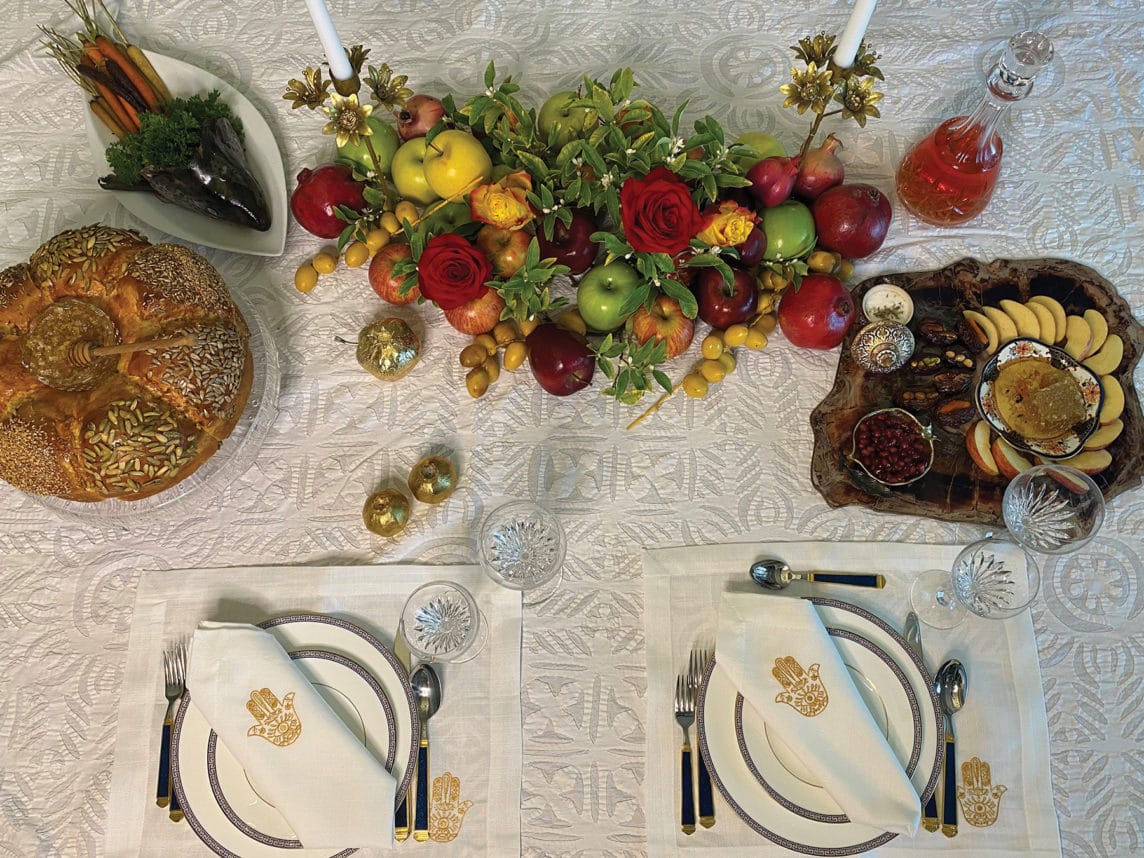
A delectable, delicious and mouthwatering French Roast stewed with onions, apricots and prunes. Perfectly glazed, patently sweet-and-sour Seville Orange Chicken. Precious pearls of couscous hand-rolled and steamed and surrounded by a bounty of the earth’s produce. A luxurious feast fit for any Rosh Hashanah table. 

Couscous, those small steamed balls of crushed semolina flour, is the staple food of the Maghreb. A food that originated among the Berbers of northern Algeria and Morocco, it had become a staple dish among Maghrebi cooks by the 12th century. A recipe for couscous from Marrakech is found in the Andalusian Muslim cookbook “Kitab al-Tabikh al-Maghrib wa’l-Andalus” (“Kitchen Writings From the Maghreb and Andalusia”). The magistrate of Granada, Spain, extolled couscous in a poem as a “noble and distinguished dish.”

Sephardic Jews adopted couscous because of this Moorish influence and, after their expulsion from Iberian lands in 1492, they carried it with them to their new homes. When they settle in Livorno, Italy, they introduced cuscussu to Tuscan cuisine. In Arab lands, this dish was often called maghrebiyya, denoting it’s place of origin. 

An extremely versatile dish, couscous can be served with meat, fish or chicken. It is almost always served with garbanzos and a broth of vegetables made with butternut squash, zucchini, carrots, celery, onions, turnip and cabbage. Caramelized onions, raisins, cinnamon and honey are stewed to produce a sweet accompaniment called Tfaya. 

Couscous is served even with fresh fruit, and Rachel remembers eating couscous with sugar and cinnamon  as a child. 

The centerpiece in the cuisine of Algerian, Tunisian and Moroccan Jews, couscous represents happiness and abundance, prosperity and blessing. Everything we could ask for in the New Year!

FRENCH ROAST WITH APRICOTS AND PRUNES 

1 teaspoon salt
1/4 teaspoon ground white pepper
1 tablespoon sweet paprika
1 tablespoon garlic powder
1 teaspoon cumin
1 teaspoon turmeric
5-pound French roast
2 large onions, sliced thinly
4 medium parsnips, coarsely chopped
1  15-ounce can chopped tomatoes
3 cups homemade beef stock or water
3 tablespoons olive oil
1 1/2 cups dried pitted prunes, whole
1/2 cup quartered dried apricots
1/2 cup chopped fresh cilantro or parsley

Position rack in bottom third of oven and preheat to 300 F.

Combine spices and rub on both sides of roast.

Line roasting pan with sliced onions and parsnips and place meat on top. Add canned tomatoes, stock or water and olive oil. Cover tightly with foil.

Roast meat 2 hours, basting every 30 minutes with pan juices.

Add prunes and apricots to pan. Cover and roast until meat is tender, about 1 hour longer.

Cool roast  uncovered 1 hour. Chill overnight.

Spoon off and discard solid fat from top.

Place roast on work surface. Slice thinly across grain.

Arrange slices in large ovenproof dish. Spoon juices with fruits and parsnips over roast. Cover with foil.

Can be made 2 days ahead and  refrigerated.

Sprinkle with cilantro or parsley before serving.

Rewarm covered meat in 350-degree oven about 30 minutes. 

Serves 8.


SEVILLE ORANGE CHICKEN

Juice of 1 orange
1/2 cup Seville orange marmalade
1/4 cup Dijon mustard
1/4 cup soy sauce
1 tablespoon sweet paprika
1/2 teaspoon ground cardamom
1/2 teaspoon ground ginger
1/2 teaspoon ground black pepper
1 whole chicken, cut into 8 pieces
Orange slices for garnish 

Preheat oven to 375. 

In large bowl, combine first eight ingredients and mix well.

Arrange chicken pieces, skin-side up in a baking dish.

Pour sauce to coat chicken and let sit 30 minutes.

Bake 1 hour.

Lower heat to 300 degrees and bake additional 45 minutes.

Serves 4-6.

VEGETABLE COUSCOUS RECIPE 

6 cups vegetable broth or water
1/2 cup extra virgin olive oil, separated
1 tablespoon salt
1 teaspoon white pepper
2 teaspoon turmeric
1 medium sweet onion
2 leeks, cut into 4 pieces
3 large carrots, peeled and cut into 2-inch sticks
1 small green cabbage, cut into quarters leaving bottom intact
1 turnip, peeled and quartered
2 stalks celery, cut into 2- inch sticks
1 large quince, peeled and quartered
4 medium zucchini, cut into sticks
1 large red bell pepper, cut into 4 large strips
17 ounces couscous (substitute quinoa for gluten-free option)

To prepare vegetables:

In large pot, boil 6 to 8 cups broth or water with 1/4 cup olive oil, salt, pepper and turmeric.

Add vegetables in order: onion, leeks, carrots, cabbage, turnip, celery and quince and cook for 10 minutes.

Then add zucchini and bell pepper and cook for additional 10 minutes. 

Remove vegetables from broth and set aside.

To prepare couscous:

Place couscous in fine-mesh strainer and rinse under cold water until water runs clear.

Place couscous on sheet pan and sprinkle with a few pinches of salt, let stand 10 minutes. 

Add about 1/4 cup olive oil to couscous and run fingers through grains to break up lumps.

Using couscousier (special couscous double boiler) or a simple double boiler, fill pot with vegetable stock (prepared at home or store-bought) halfway up sides of pot. 

Place piece of cheesecloth inside steamer so grains won’t fall into broth. When steam starts to rise, add couscous, cover pot and steam 15 minutes. 

Pour couscous onto baking sheet, add a few ladles of broth to couscous and break up any clumps with your hands.

Put couscous back into steamer and steam additional 15 minutes. If steam is escaping through sides of steamer, wrap kitchen towel or more cheesecloth around it.

Repeat process: Pour couscous onto sheet and add a few ladles of broth and separate clumps.

Typically a third steaming is done just before serving. Because couscous will have expanded so much at this point, it’s best to steam in two parts.

SWEET ONIONS AND RAISINS (TFAYA)

2 tablespoons olive oil
2 pounds onions, mixed yellow and red, thinly sliced
1 cup golden raisins, soaked
1 teaspoon cinnamon
4 tablespoons honey or sugar

In large pan, heat oil, add onions and cook slowly until golden, 30-40 minutes.

Add soaked raisins, cinnamon and honey or sugar, and cook additional 10 minutes over medium heat.

ROASTED BUTTERNUT SQUASH 

1-2 butternut squash or pumpkins
Olive oil
1 teaspoon ground cinnamon

Preheat oven to 400 F.

Peel and seed squash, cut into half-moon slices.

Place slices on cookie sheet and toss with oil.

Sprinkle with cinnamon and bake until golden.

Serve on platter with Tfaya (onions and raisins) on top.


FRIED GARBANZOS AND ALMONDS

1/2 cup oil for frying
1 cup peeled blanched whole almonds
1 3/4 cups cooked chickpeas, or 1 13-ounce can chickpeas, drained
Salt and pepper to taste

Heat oil and fry almonds first. Drain on paper towels.

Fry garbanzos and drain on paper towels.

Reheat in oven before serving and season with salt and pepper.

Assemble couscous:

Platter with vegetables.

Platter with couscous, decorated with fried garbanzos and fried almonds.

Platter with butternut squash and Tfaya.

Bowl with broth.

Serves 6-8.


Rachel Sheff and Sharon Gomperts will answer cooking questions on Instagram at SephardicSpiceGirls or on Facebook at Sephardic Spice SEC Food. They have collaborated on Sephardic Educational Center projects and community cooking classes.

A Moroccan Feast for the New Year Read More »

This Year’s High Holy Days: Challenged but Emboldened

We’re all being tested this year, and I’m not referring to the lines forming at urgent-care facilities and repurposed parking lots for swab invasions up our nostrils. We’re being tested — perhaps like never before in recent memory — for our sense of priorities, our core principles and attitudes and our underlying faith.

As these “tests” are being manifested in virtually every area of our lives, in a few weeks from now, they will take on yet another dimension for members of the Jewish community. We will be faced with the question of if/how to observe the High Holy Days of Rosh Hashanah and Yom Kippur in this challenging year.

The Days of Awe marking the start of the Jewish New Year are universally recognized by Jews — regardless of whether they otherwise regularly engage in religious practice or are affiliated with a synagogue — as a time of spiritual and communal renewal. It is a time to get that “Jewish recharge” and “soul connection” for the year ahead. Many go out of their way to attend services and observe the traditions of these sacred days, perhaps more so than at other times of the year.

So, what about these trying days when COVID-19 concerns and mandated guidelines and restrictions will make it very difficult to congregate and hold services?

To that, I say: Bring it on. As a community, we will not be aiming for mediocre simulations of what we’ve done in the past, but creative ways of making these days more special, memorable and meaningful than ever before.

This year will require creative out of the box adapting and compensating, serving to enhance — rather than detract from — the qualitative depth and richness of our celebrations. If in past years we’ve simply gone through the motions, perhaps this is the year to invest more of our heart and soul into every aspect of these auspicious days. If in past years, we’ve been somewhat on the fence (doing the minimum), perhaps this is the year to leap off that fence and do the maximum. If in past years, we’ve stayed away altogether; perhaps this is the year to show up. 

The blasts of the shofar on Rosh Hashanah are, in essence, a nonverbal declaration of “Hineini” — a triumphant cry from the soul that says, “Whatever the circumstances, I am here with God, as He is here with me. Whatever the hardship or obstacle before me, I shall muster the courage to transcend it — to persevere.” This is the way the Jewish people have responded to the trials and tribulations of our storied history. The greater the challenge, the stronger our resolve. There is nothing counterintuitive about this; it’s who we are.

Time and again, when “summoned,” our ancestors — including such figures as Abraham, Joseph, Moses and Isaiah — responded to the challenge at hand with a single word: “Hineini”  — Here I am.

Beyond a statement of mere presence and availability, Hineini connotes a sense of readiness to rise above the adversity at hand to embrace a unique mission and purpose. It speaks to a sense of renewed vitality and redoubled commitment, saying, in effect: “Rather than discourage or deter me, this challenge will motivate me to summon the greatness latent within my soul, so that I may be where I need to be and do what I need to do … ‘Here I am’ with every facet of my being.”

This year will require creative out of the box”adapting and compensating, serving to enhance — rather than detract from — the qualitative depth and richness of our celebrations.

For students of the Torah, the word “test” is interchangeable with the word “summons.” Scripture is replete with accounts of inspirational figures whose faith and devotion repeatedly were tested under the most trying of circumstances. With hindsight, we can see how those “tests” were, in fact, instances of God summoning those individuals to new heights of greatness; a greatness that would inspire future generations throughout the millennia.

It is noteworthy that the parasha traditionally read aloud in the synagogue on Rosh Hashanah — Genesis 22 — recounts one of the greatest “tests” in the Bible: The Binding of Isaac, where Abraham was summoned by God to bring his son, Isaac, as an offering on Mount Moriah. In the course of that one chapter, Abraham invokes the word “Hineini” on three separate occasions. 

When Abraham’s hand ultimately was stayed by the angel, revealing the true nature of the ordeal, a ram was offered on the altar in Isaac’s stead. One of the reasons for the sounding of the shofar, a ram’s horn, on Rosh Hashanah is to recall the unstinting faith and devotion displayed by our patriarch in response to a test of unimaginably trying proportions.

So, while none of us can claim to know what this COVID-19 “test” is really all about (at least not yet), it nonetheless should be clear to all that we each are being summoned to aspire to new heights of greatness.

At Chabad of the Conejo, we will be extending various “COVID-kosher” avenues of observance of the High Holy Days from which people can choose, depending on their preferred/required mode of congregation vs. isolation.

The rabbi’s sermons will be broadcast live on Zoom and Facebook on weekdays just before Rosh Hashanah and Yom Kippur (to avoid the use of electronic devices on the holy days) — Sept. 17 and 24, respectively — and be accessible thereafter via YouTube (for non-Sabbath/holiday viewing).

We will offer free “High Holiday Handbooks,” published specially for this year, which folks are welcome to pick up at the Center for Jewish Life in Agoura Hills (please call in advance). These handbooks, which provide detailed “How To’s” for the observance of Rosh Hashanah and Yom Kippur in the home environment, can make for an enriching and uplifting family experience.

We will be offering in-person outdoor High Holy Day services at select locations. Held under a canopy for shade, these abbreviated services — to be offered several times throughout the day at different hours — will adhere to all county health guidelines for maximum safety and precaution. While Chabad always has had an open-door policy, welcoming people to join us for services whether they’ve reserved in advance or not, with this year’s restrictions on capacity and seating proximity, we regret that attendance will have to be by reservation only.

Finally, on the second day of Rosh Hashanah, we will provide short shofar-blowing ceremonies (masks and socially distant standing required) at designated public parks throughout the Conejo Valley. (With the first day of Rosh Hashanah coinciding with Saturday, there is no sounding of the shofar on Shabbat.)

Whether it’s any of the above avenues or another mode of celebration one opts for, I strongly encourage my fellow Jews to utilize the spiritually propitious moments of the approaching High Holy Days to attain precious insight, perspective and growth — not despite the pandemic, but because of it. The challenges are real and they are great, but so is the historic opportunity to stand up and proclaim, “Hineini — Here I am, ready to serve. Ready to illuminate. Ready to bless and be blessed.”

For more information, schedules or to make arrangements or reservations, visit the website or call (818) 991-0991.


Rabbi Moshe Bryski is the executive director of Chabad of the Conejo, an outreach and educational organization serving the greater Conejo Valley area, with nine regional centers.

This Year’s High Holy Days: Challenged but Emboldened Read More »

Investigator in Case Against the Netanyahus Had a Conflict of Interest, Israeli TV Report Alleges

(JTA) — Law enforcement covered up a conflict of interest by an investigator looking into Sara Netanyahu’s alleged misuse of public funds in the Prime Minister’s Office, an Israeli news channel is reporting.

The conflict of interest also could have harmed the police investigation into one of the corruption cases against Benjamin Netanyahu, Channel 12 News reported Monday night.

Case 2000 accuses Netanyahu of cutting a deal with the publisher of the Israeli daily Yediot Acharonot, Arnon “Noni” Mozes, to harm the circulation of the free daily Israel Hayom in exchange for more positive coverage from Mozes’ newspaper. Netanyahu is charged with fraud and breach of trust in the case, and Mozes is on trial on bribery charges.

A police superintendent identified as Avi Rottenberg was having an affair with Mozes’ sister, Judy Shalom-Nir-Mozes, when he began his investigation in 2015 into Sara Netanyahu, according to the Channel 12 report. Nir-Mozes also owns shares in Yediot and was married previously to a Netanyahu rival within the Likud party.

The charges against Sara Netanyahu were reduced under a plea bargain and she paid a $15,000 fine.

Asked by his superiors in 2016 whether he was having an affair with Nir-Mozes, Rottenberg denied the claim and said he had no conflicts of interest and could continue with the investigation, according to internal police documents obtained by Channel 12. Rottenberg also was privy to explosive evidence in Case 2000, namely secret recordings of Mozes and Netanyahu, according to the report.

The head of the police anti-corruption unit eventually learned about the affair but did not report it. Rottenberg’s wife later informed the unit. Still, prosecutors declined to investigate in order not to derail the Case 2000 investigation, according to the Channel 12 report.

Rottenberg left the police in 2018 and now works as a lawyer in private practice. He told reporters that he was never privy to the evidence in Case 2000. He also said there were many investigators and set protocols in the case of Sara Netanyahu and he did not make any decisions unilaterally.

The state Attorney’s Office told Channel 12 that Rottenberg was not involved in Case 2000.

Likud officials have called for an investigation into a possible cover-up and for charges to be dropped in the corruption case against Netanyahu.

Investigator in Case Against the Netanyahus Had a Conflict of Interest, Israeli TV Report Alleges Read More »

‘Where’s the Beef?’ Serves Up Passionate Appeal for Veganism

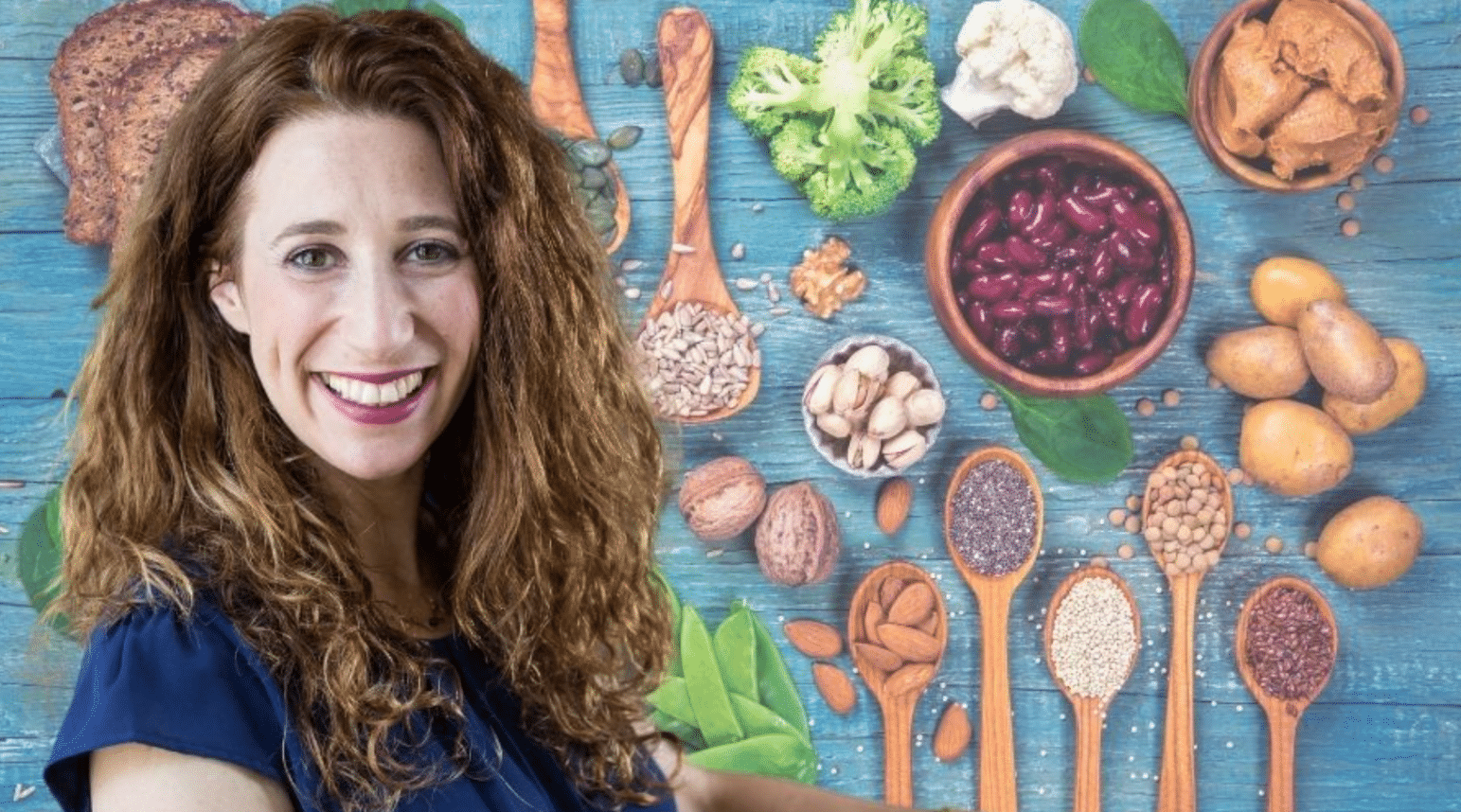
Trained as a chef and baker at Bishulim, a culinary institute in Tel Aviv, Ori Shavit was, until a decade ago, wholeheartedly a part of the flourishing Israeli food scene, working as writer and restaurant critic for Al HaShulchan (On the Table), a gourmet food magazine. At that time, Shavit’s main guiding principle was that food should taste good. One night, she had dinner with a man who told her he was a vegan. 

“My life revolved around food,” Shavit said, “cooking and baking and restaurants, so the idea of saying no to [certain] foods was unbearable. Why should I put aside all these great foods? Everyone knows that meat comes from a dead animal. … But what’s wrong with milk, what’s wrong with eggs? I started to investigate and it was a shock — to understand not just what I was eating but what I was promoting in my writing, how much violence and cruelty is involved in the [meat] industry.”

That was the opening salvo of “Where’s the Beef? Exploring Veganism in Israel & Judaism,” a Zoom event presented Sept. 2 by B’Yachad Together, American Jewish University’s recently formed online service. The discussion with Shavit was moderated by a fellow vegan, Rotem Rozental, chief curator and senior director of Arts and Culture at AJU.

Shavit said that once she became a vegan nine years ago, she not only changed her diet but her life. Case in point: Since then, she’s written a blog called “Vegan Girls Have More Fun.” 

During the 70-minute AJU program, Shavit repeatedly talked about the pain and suffering that the consumption of meat causes animals, and it was clear that her passion for veganism is grounded in her fight against the idea that humans have the right to use other species as they please. 

“If we look at this question from the point of view of the animal,” Shavit said, “the answer will be clear. No animal wants to be locked down, no animal wants to be separated from her family, no animal wants to be slaughtered, and there’s no way to do it without hurting them.”

Shavit gave similar cruelty-reducing reasons for not eating dairy or eggs.

“We’re brought up to believe that a cow needs to give milk,” she said. “But the cow has to give birth for her body to be able to produce milk, so what happens with the calves? We need to separate the cow from its calf immediately because we want the milk for our coffee, and this calf, this baby, is going to become a steak or a meatball. It’s not going to live happily ever after. So, the dairy industry is the same industry as the meat industry.”

“I think that [a vegan contestant on Israel’s ‘Big Brother’] helped turn veganism in Israel from what was a strange phenomenon into something that people understand is not just for the fringe or tree huggers but anyone, and that we’re not weirdos or aliens.” — Ori Shavit

When asked about cage-free eggs, Shavit said, “They put these beautiful images on the boxes, with hens strolling in the grass, but it’s not true. A cage-free hen’s beak is cut without anesthesia. After a few years, when they don’t lay enough eggs, they’re electrocuted. In natural circumstances, a hen will only produce one or two eggs a month. It’s the industrial use of hens that changes that. You can’t industrialize a creature without hurting them.” 

Rozental steered the conversation toward Israel, which, she said, has become “a vegan haven in recent years.” Shavit explained this, saying, “Israeli culture is young and fresh and evolving. So, I think this makes us more open to trying new things. We don’t close down when you ask us to change. … A lot of Israelis are willing to listen and at least try it out.” 

Shavit went on to say that because Israel is a Mediterranean country, “we have this beautiful sun with all this fresh produce. In Israel, going vegan is not about inventing new foods, it’s about going back to our roots. If you go back 100, 150 years ago, our ancestors living here had mostly grains and pulses and vegetables. Maybe for the holidays they slaughtered a poor little lamb, but they didn’t have it every day. So, actually, it’s not like inventing a new thing.” 

She also spoke about how Israel is a small country, so “when something catches on in Israel, it’s like a fire. Everyone hears about the new trend, the new diet. Everyone sees it.”

Rozental cited the Israeli version of the reality show “Big Brother.”

“During the 2014 season, a contestant, Tal Gilboa, came in to promote veganism,” Rozental said. “She became a national figure and won that season, which increased interest in veganism.”

Following that season of “Big Brother,” 5% of the Israeli population identified itself as vegan, the highest percentage of any country in the world.

“Yes,” Shavit said. “I think that [‘Big Brother’] helped turn veganism in Israel from what was a strange phenomenon into something that people understand is not just for the fringe or tree huggers but anyone, and that we’re not weirdos or aliens.”

Shavit said that for her, choosing to be vegan is a way of taking power. “As an individual on this planet, we live with the feeling that we have no power to change anything. We think we have no impact and that the only thing we can do is vote or go to a demonstration or write a letter and post it on Facebook, and that’s it.

“But with our food choices, we have the biggest impact one individual can have on this world. It’s tikkun olam. How do we make the world better? With this single change, you change the way you treat your body, you change the way you treat the environment and the planet, and you change the way you treat other creatures that share this planet with us.”

‘Where’s the Beef?’ Serves Up Passionate Appeal for Veganism Read More »

Volkswagen Ends Ties With Mexico City Distributor Over Nazi Photo

Volkswagen announced on Sept. 7 that the German car company has dropped its Mexico City distributor after it discovered a photo of Adolf Hitler hanging on the dealership’s wall.

The Algemeiner reported that Mexico City writer Fernanda Martinez tweeted out a photo of the image, which depicted Hitler at a Nazi rally. The image also displayed a Volkswagen Beetle.

“The fact that their historical memory is an apology for racism causes sadness and deep concern,” Martinez tweeted.

According to Reuters, Volkswagen cut ties with the dealership on Sept. 7.

“We strongly disapprove of (the distributor) showing those images at its facilities, which showed a regime that emphasized hatred and discrimination at a point in history that has fortunately been left behind,” Volkswagen’s Mexico chapter said in a statement.

Prior to Volkswagen cutting ties with the dealership, the Simon Wiesenthal Center had called for the German car company to take action.

“Last thing they need or world wants is re-connecting the car to its Nazi roots,” the Jewish group tweeted. “Volkswagen should launch global campaign to help create generation of anti-Nazis.”

Algemeiner Editor-In-Chief Dovid Efune tweeted that the incident shows that Volkswagen is “is apparently having difficulty shaking off its Nazi past. Last year, CEO Herbert Diess echoed Auschwitz slogan “Arbeit macht frei” at a meeting, telling executives ‘Ebit macht frei’ — (an inapt reference to profits.) And now this.”


Volkswagen was founded in Germany during the 1930s as the “people’s car.” Reuters noted that in May, Volkswagen rescinded an advertisement that appeared to show hands making a white power symbol.

Volkswagen Ends Ties With Mexico City Distributor Over Nazi Photo Read More »

British University Decides to Not Take Action Against Lecturer Who Said ‘Israeli Lobby’ Was Behind Anti-Semitism Allegations Against Labour

The University of Warwick in Britain decided not to take action against a lecturer who said that the “Israeli lobby” was behind the allegations of anti-Semitism against the Labour Party.

The Jewish News reported Goldie Osuri, an associate professor of sociology at the university, said in a November lecture, “The idea that the Labour Party is antisemitic is very much an Israeli lobby kind of idea, the idea that you want to discredit the Labour Party because there is support for Palestine among some members of the Labour Party.” Her lecture also featured notes arguing that Palestinians should be able to “resist and oppose the occupation and theft of their homeland by any means they deem necessary,” according to The Jerusalem Post.

Osuri later told The Warwick Tab that her remarks were a “a reference to Israeli attempts to infiltrate British politics documented by Al Jazeera” as well as “the attempt to smear any debate or discussion regarding Palestinian self-determination and human rights or criticism of the state of Israel as ‘antisemitism.’ ” She also said that all forms of anti-Semitism are wrong and that she delineated the difference between anti-Zionism and anti-Semitism in her lecture.

The Jewish student groups Jewish Israeli Society (JISoc) Warwick and Union of Jewish Students (UJS) filed a complaint against Osuri over the lecture, arguing that her “Israeli lobby” comments were anti-Semitic and that her notes essentially justified acts of terror against innocent civilians. However, the university concluded in January that Osuri’s remarks “holds within the principles and values of tolerance and free speech,” the Jewish Chronicle reported.

Jewish Israeli Society (JISoc) Warwick President Angus Taylor subsequently appealed the decision, only to be sent a letter from University Provost Christine Ennew last week week denying the appeal.

JISoc criticized the university in a Sept. 2 Facebook post.

“Despite clear evidence of problems in the disciplinary proceedings, the University has decided that they know better than Jewish students and communal leaders on what is antisemitic, and come to a conclusion which does nothing to reduce the worries of Jewish students on campus,” the post read. “It’s only become clearer how important it is for minority students to be able to define their own oppression, and for the university to adopt specific definitions of racism like IHRA [International Holocaust Remembrance Alliance definition of anti-Semitism]. The IHRA’s definition of anti-Semitism includes “Holding Jews collectively responsible for actions of the state of Israel.”

https://www.facebook.com/jisocwarwick/posts/2677133065871919

In a series of tweets, UJS alleged that the person who investigated Osuri’s remarks in January, Sociology Department head Virinder S. Kalra, had signed a 2017 letter denouncing the IHRA definition of anti-Semitism and signed a 2016 letter defending the then-president of the National Union of Students Malia Bouattia. The British Parliament’s Home Affairs Committee condemned Bouattia at the time for her past comments calling Birmingham University a “Zionist outpost” and alleged in a report that she didn’t take campus anti-Semitism seriously.

“Warwick University needs to step up, adopt the IHRA definition, protect its Jewish students, and finally start dealing properly with the accusations of antisemitism taking place on their campus,” UJS tweeted. “We will continue to stand by the Jewish students and assist in any way necessary, including by supporting the escalation of their complaint to the office of the Independent Adjudicator for Higher Education.”


Other British Jewish groups expressed support for JISoc and UJS.

“Another example of the importance of universities adopting the IHRA definition of anti-Semitism,” the Board of Deputies of British Jews tweeted. “We join @UJS_UK and Jewish students at @warwickuni in calling for the university to adopt the definition in full, without delay.”


Sussex Friends of Israel also tweeted, “We are living in a time that a major U.K. university, @warwickuni, can simply disregard & whitewash the very real & grave concerns of their Jewish students. They would not dare treat any other minority group in this way; if they did they would never be allowed to get away with it.”

The university said in a statement to the Journal, “This complaint has now been through every stage of  the University’s student complaints resolution procedure, and it was not upheld. The complainant may of course now ask the Office of the Independent Adjudicator for Higher Education (OIA) to review this matter, and we understand from reports in the media that they intend to do so. That being the case the University obviously cannot comment further until any such process is concluded.”

British University Decides to Not Take Action Against Lecturer Who Said ‘Israeli Lobby’ Was Behind Anti-Semitism Allegations Against Labour Read More »

Aish Offering High Holiday Pop-Up Shuls

As the coronavirus pandemic stretched into the summer and the possibility of in-person High Holy Days services looked less and less likely, Aish — the Jewish educational and community organization — could “see [the] way the winds were blowing,” Aish Executive Director Rabbi Aryeh Markman told the Journal. “We needed a Plan B,” he said. 

Plan B turned out to be Aish’s “Pop Up Shul.”

And while Aish’s pop-up shuls share their name with the “pop-up” trend in restaurants and retail stores, that literally “pop up” for a short period of time in neighborhoods, they also involve a “do-you-own-prep” component, similar to the way meal plan delivery programs work.

As Aish notes on its website, “Since we can’t all be together in shul during the COVID-19 pandemic, our Pop Up Shul gives you the tools you need to be the leader. You will be able to guide High Holiday services safely; hosted in your own backyard.”

To create your own Pop Up Shul, you simply log onto the site, where you can then choose from four styles of services with a downloadable machzor for each one: The Traditional Service (Ashkenazi) is closest to what you’d experience if you could still attend a brick-and-mortar synagogue, complete with familiar songs and prayers in English and Hebrew. 

The Yogi Service is meditative and experiential, which, according to Markman, makes you feel as if you’re celebrating Rosh Hashanah in India. 

The Family Service is designed for those with young children, and The Millennial Service for high schoolers and college-age students, offers topics for discussion and, Markman promised, tools designed to engage even the most recalcitrant teen. 

“We want this to be a user-friendly experience,” Markman said, “one that even those with little or no background can lead.” All the services last for approximately one hour, and can be modified to fit your family. 

“You have the home-field advantage,” he added. “If you can’t be at shul, you can be the rabbi. Your home is your synagogue.” 

Leading up to the High Holy Days, anyone can register for a series of Zoom prep classes with Aish rabbis from across the country. There’s a crash course on Rosh Hashanah prayers and songs, a challah bake, and tutorials on how to lead each of the Pop Up Shul’s services, as well as short videos that delve deeper into the meaning of specific prayers and songs. 

“We want this to be a user-friendly experience — one that even those with little or no background can lead. You have the home-field advantage. If you can’t be at shul, you can be the rabbi. Your home is your synagogue.” — Rabbi Aryeh Markman 

Rabbi Simcha Tolwin of Aish HaTorah Detroit will host the Zoom calls on how to lead each of the four services. Tolwin told the Journal he had been contemplating the idea of a pop-up shul for some time. He purchased the domain name PopUpShul.com about 10 years ago, and said the original concept was that someone would call, and Aish would bring a shul to that person’s neighborhood, perform the service, then pack up and head to its next stop. 

The idea remained just that — an idea — until the COVID-19 pandemic hit and gathering in public was no longer possible. That’s when Tolwin realized that Pop Up Shul was tailor-made for these circumstances. 

“People want to pray in a service, but they also want to pray safely,” he said, “and Pop Up Shul can give people the tools to create something that is meaningful to you and your family.”

Because these are not formal services, it is not necessary to have a minyan, Tolwin added. Rather, he explained, “We think of them as ‘prayer experiences.’ Many people, particularly millennials, are looking for meaning more than a building.” For them, he said, “the idea of ‘pray your own way’ or create your own prayer experience is appealing.” 

To date, approximately 90 families have signed up on the website, but Tolwin said he expects more signups as Rosh Hashanah draws near. 

In Los Angeles, Markman said Aish is promoting the program by putting up campaign-style lawn signs around the county. Pop Up Shul, he said, fits perfectly into Aish’s core belief that “we meet each Jew where they’re at.” He sees Aish’s mission as showing those who have stopped going to services or never went to services “why Judaism is important,” and that Pop Up Shul makes it easy for any family to try. 

He added that he’s proud of what Aish has managed to put together on a tight deadline. However, he noted, he’s not surprised they have been able to achieve it, because “Jews can pull off anything.” 

Aish Offering High Holiday Pop-Up Shuls Read More »

Louisiana GOP State Lawmaker Posts Anti-Semitic Meme to Social Media

Louisiana State Rep. Danny McCormick, a Republican, posted an image of an anti-Semitic mural to his social media accounts on Sept. 1.

The Advocate, which is Louisiana’s largest daily newspaper, reported that McCormick’s image was of a 2012 mural showing several white men who have hooked noses playing Monopoly; the Monopoly board sits on top of the backs of numerous nude Black and brown men. The mural’s caption reads: “All we have to do is stand up and their little game is over.” McCormick had posted the image with the sentence, “Public opinion controls politics.” He had deleted the post during the afternoon of Sept. 2.


Anti-Defamation League South-Central Regional Director Aaron Ahlquist condemned McCormick’s posting of the image in a statement to The Advocate.

“The sharing of this illustration comes on the heels of another deeply disturbing antisemitic reference the representative made recently and we call upon him to use his elected office constructively, rather than as a platform to make hateful statements that target vulnerable communities and further the divide in our community,” Ahlquist said. “Representative McCormick must make clear he rejects these views. Now.”

One of McCormick’s Republican colleagues, State Rep. Mark Wright, similarly tweeted, “Anti-Semitic imagery and language have no place in Louisiana politics. I hope my House colleague did this unintentionally, but it needs to be taken down and repudiated.”

McCormick’s office did not respond to the Journal’s request for comment.

McCormick previously had been criticized for comparing mask mandates to the Holocaust in a July video, where he demolished a mask with a chainsaw and a blowtorch.

“People who don’t wear masks will be soon painted as the enemy just as they did to Jews in Nazi Germany,” he said in the video. “Now is the time to push back before it’s too late. We can preserve America.”

Louisiana Gov. John Bel Edwards denounced McCormick’s comparison of mask mandates to the Holocaust as “nonsense and sad. It misses the boat on all fronts.”

The ADL, along with several other Louisiana Jewish organizations, sent letters to Bel Edwards and state GOP leadership urging them to stand against such Holocaust comparisons.

“Legitimate criticism can be made without invoking the Holocaust or Nazi Germany, and we implore you as the leaders of your respective parties to stand with us in this regard, recognizing the pain and offense that these references cause the Jewish community, and communicate that they will not be tolerated in Louisiana’s political discourse,” the letter stated, according to The Advocate.

The image that McCormick had shared on social media was the same image that rapper Ice Cube tweeted in June with the caption, “F— the new normal until they fix the old normal!” Ice Cube has since deleted the tweet.

According to The Algemeiner, the image was painted on a wall in east London in 2012 and was subsequently removed; former Labour Party leader Jeremy Corbyn opposed the mural’s removal at the time. Corbyn apologized for his opposition to the mural’s removal in 2018, when his past remarks on the matter were unearthed.

Louisiana GOP State Lawmaker Posts Anti-Semitic Meme to Social Media Read More »

Continental Kosher’s Jacob Evron Still Baking After All These Years

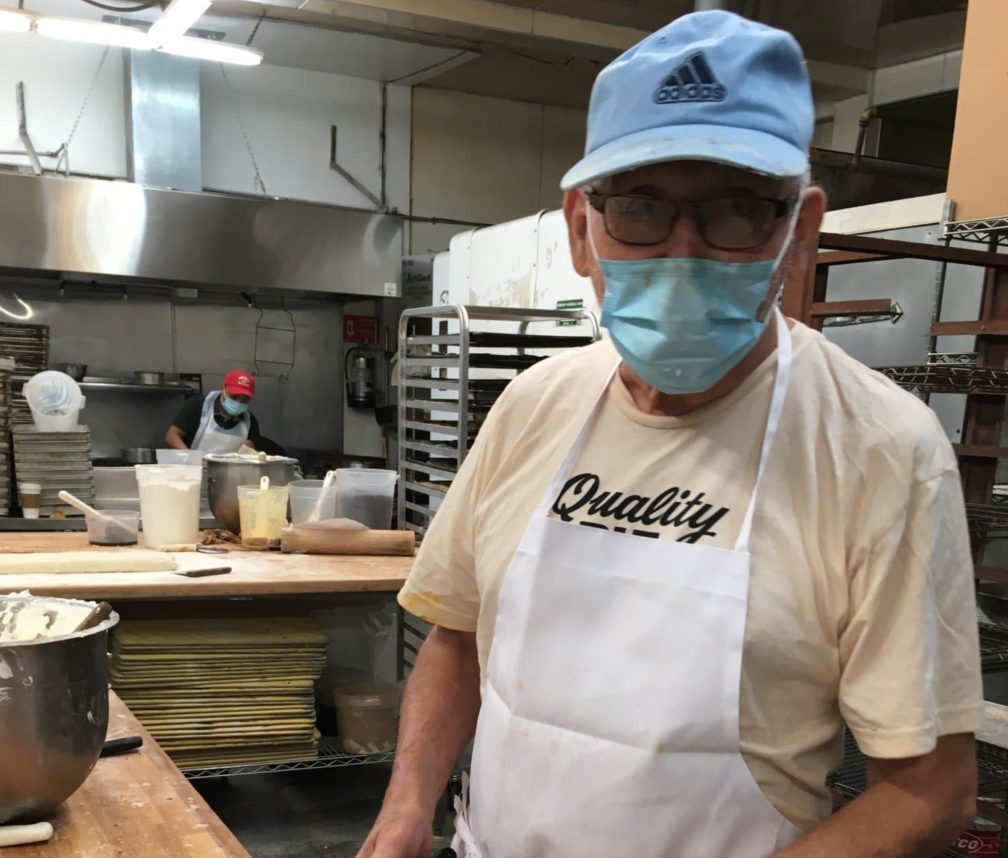
It’s around 8 a.m. on a Wednesday and 72-year-old Jacob Evron, head baker at Continental Kosher Bakery in Valley Village, is finishing his shift. But he has one last job to do before he wraps up: assembling and frosting a two-tier, strawberry shortcake wedding cake. (He is accustomed to doing much bigger cakes but because of COVID-19, he said, everything is scaled down.) 

Watching him spin the cake on a metal stand, gently gliding an improvised tool over the buttercream to create a perfectly smooth finish, is mesmerizing. He is a master. But he never planned to become a baker.

The way Evron tells it, “I arrive in Los Angeles on Thursday, I work in bakery on Friday.” The year was 1969, and Evron, who was born in Silesia (Germany/Poland) but spent most of his life in Israel, was 21. He came to Los Angeles for an American woman named Peggy whom he had met briefly in Israel. Her family took him in as one of their own, which meant working at their business: Famous Bakery on Fairfax.

According to Evron, Famous was on the “wrong” side of the street. All the other bakeries, he recalled, were on the opposite side: Diamond, Canter’s, Schwartz’s, King David and Papa Jack. But, he added, “Next door was a little beauty shop. All those ladies came to do their hair and put in their orders.”

In Israel, Evron had studied auto mechanics in high school. In the army, he repaired and serviced tanks. “Not one tank went to war without my signature,” he said. No one in his family worked in food either. Nor were they keen on him doing so. 

“My mom wanted me to become an architect,” he said. “My father wanted me to become an innovation engineer.” But Evron, who initially worked in the front of the house at Famous, found he had a knack for sales. Then one day, the matriarch of his adopted family fell ill, and Evron was asked to try his hand at baking. He also discovered that his skills as a painter translated to cake decorating. (His father had worked in a paint factory in Israel so there was always paint around for him to play with.)

Although Evron and Peggy’s relationship did not last, he ended up working at Famous for almost 20 years, sometimes working both the counter and in the kitchen simultaneously, which suited him. 

“You know what the secret of a good baker is? You have to be very lucky to work with the right person and you have to be so good and so nice they give you the recipe. I worked in 500 bakeries. I got 500 recipes, too.”  — Jacob Evron

“I cannot concentrate on one thing,” he said. “I like to work on a few things together at the same time. I used to mix five machines together and work on the bench and decorate. ‘Work on the bench’ means make coffee cake, danishes, rugelach.”

On Saturdays, his day off, he worked at another bakery in Canoga Park. And over the years, he did stints at several other Los Angeles area bakeries, most of them long gone: Dov’s, Weby’s, Plaza West, Solly’s.

“You know what the secret of a good baker is?” Evron said. “You have to be very lucky to work with the right person and you have to be so good and so nice they give you the recipe. I worked in 500 bakeries. I got 500 recipes, too.” 

Evron started at Continental in 1990. He worked full time until the pandemic hit. Now he works just a couple of days a week, arriving in the wee hours of the morning and working with a crew of mostly younger Latino men. He said if he had to pick one item to represent him and the bakery, it would be coffee cake. But his repertoire is extensive: rye bread, chiffon cakes, kichel (bow tie shaped cookies), and an array of sugar-free items for in-store sales and clients such as The Jewish Home.

This time of year, though, with the High Holy Days approaching, the kitchen also turns out a couple of specialty items: apple challah made with fresh apples and cinnamon, and taiglach, crispy dough bites made with nuts and dried fruit and touched with honey. Both items are available through Sukkot only.

Although Evron loves bread, and cake even more, he tries not to overindulge. His favorite is something you won’t find in a Jewish bakery at all. It’s the classic Mexican cake known as Tres Leches.

The septuagenarian, who lives just a few blocks from the bakery, isn’t a big one for down time. He likes to keep busy. To that end, he recently renovated his entire home by himself. He calls Home Depot “my Disneyland.” And he has started painting again. “I’m a renaissance man,” he said.

As for retirement, it doesn’t seem to be part of his vocabulary. “I just talked to my friend in Florida,” he said. “He said I’m going to work in a bakery until I die.”

Continental Kosher’s Jacob Evron Still Baking After All These Years Read More »

Israeli First Responders Help Combat California’s Fires

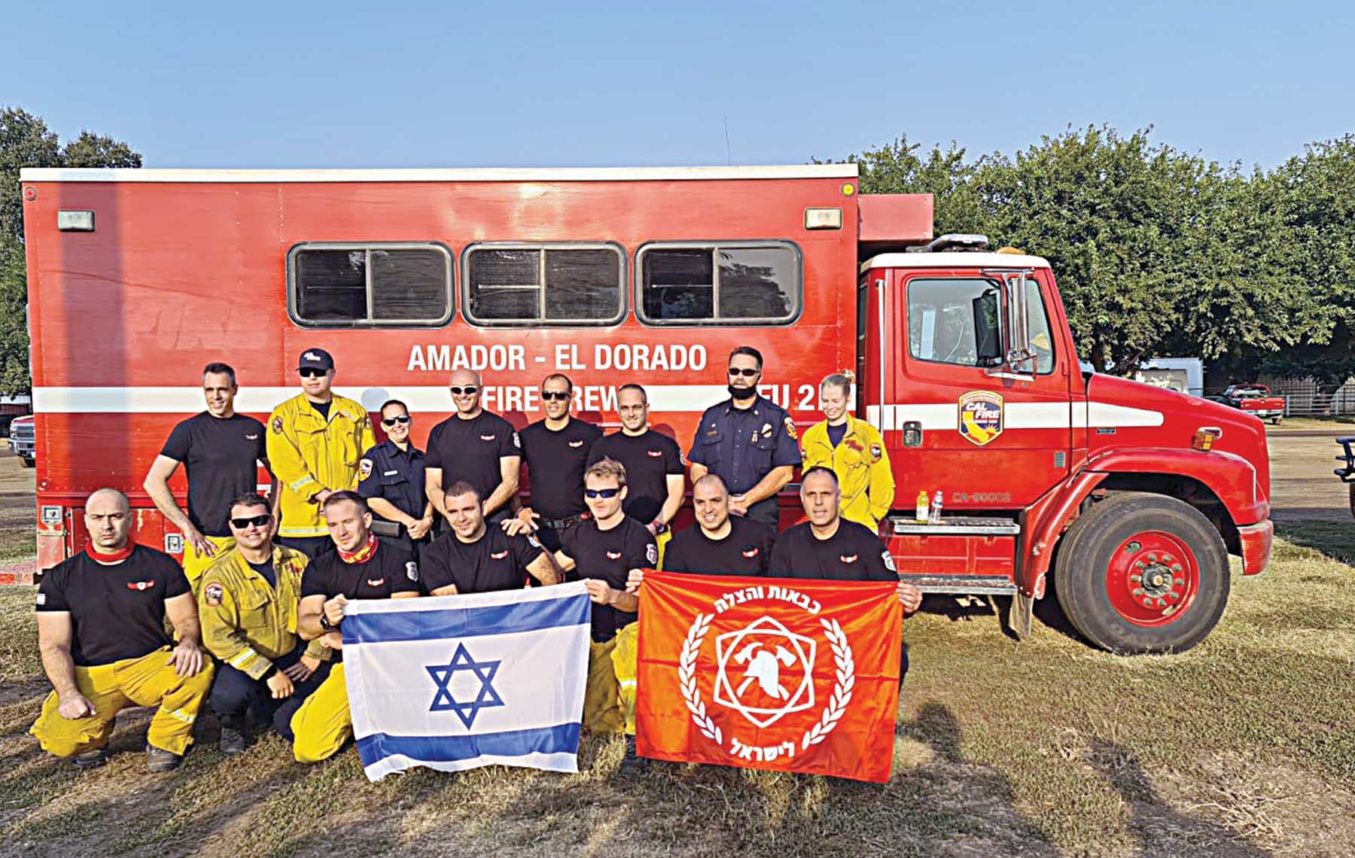
According to CAL FIRE statistics released on Sept. 7, nearly 14,000 lightning strikes and more than 900 wildfires have burned over 2 million acres, killed eight people and destroyed nearly 3,300 structures in California since Aug 15. On Sept. 5, three new major wildfires broke out in Fresno, San Bernardino and San Diego counties. On Sept. 6, CAL FIRE responded to and contained 49 new wildfires and an additional fire broke out in the Angeles National Forest in Los Angeles County. According to CAL FIRE’s website, there are currently more than 14,100  firefighters battling fires in in the state. In Northern California, 10 of those firefighters are Israelis, who arrived Aug. 30 to help their American colleagues.

“The IDF [Israel Defense Forces] does worldwide [aid] and is first to land in any emergency, but the fire department, this is new,” Doug Young, battalion chief and all-hazards coordinator-fire of the Santa Clara County Fire Department, told the Journal. He added because Israel and California have similar topography and are prone to fires, and because both areas are due for big earthquakes, the long-range goal is to make this a recurring partnership.

The Israeli firefighters were greeted in Sacramento by Mayor Darrell Steinberg and Gov. Gavin Newsom, along with the directors of California’s Office of Emergency Services (OES), Federal Emergency Management Agency (FEMA) and CAL FIRE. On Aug. 31, they reported for duty with the CAL FIRE Tehama-Glenn Rangers unit. 

The partnership was born out of a relationship forged in 2018 between Young and Col. Itzik Oz, head of the operations division at the Israel Fire and Rescue Authority, during a program run by the Advanced Security Training Institute (ASTI). ASTI was founded in 2004 by Yisroel Stefansky, an expert in practical disaster response, and one of the Israeli first responders who came to New York after 9/11. 

The ASTI program brings American first responders to Israel to learn from their Israeli counterparts. ASTI’s training program, which is funded by FEMA and the Department of Homeland Security, covers “all hazards,” Young said, including terrorism, fire and police matters, active shooter situations and coordinated attacks, as well as “how they deal with unified command and emergency in general.” 

ASTI Vice President and Chief Operating Officer Carrie Simms told the Journal Young’s first trip to Israel included participants from Washington, D.C., Virginia and Maryland, representing the fire and police departments and emergency management. After completing the program, Young stayed connected to his Israeli colleagues, and served as liaison for three ASTI trips starting in 2017.  

When the California fires broke out this summer, Young already was talking regularly to another Israeli colleague, Yoram Levy. Levy asked Young to create a presentation about the fires for Israel’s fire commissioner. After the presentation, Young said the Israelis let him know, ‘We’re going to send guys over [to the U.S.]”

According to Consul General of Israel to the Pacific Northwest Shlomi Kofman told the Journal the team came together “in basically no time” as he worked with in coordination with CAL OES, the foreign ministry in Jerusalem to coordinate and receive visas from the US Embassy.

Kofman said he worked with the U.S. Embassy in Jerusalem to obtain visas for the 10 firefighters who hail from different parts of the country. Israel’s Foreign Ministry covered the flights for the team. Some are in special firefighting units, while others are medics or have other specialties. Oz served as team leader. The team is scheduled to fly back on Sept. 13 and will spend two weeks in quarantine to ensure they have not contracted COVID-19.

“What I love about the fire service is that it doesn’t matter your race or religion. Whoever you are, we come and help. It’s the same for Israel. For these guys to come all the way out here to go to work and fight fire, that’s amazing.” — Doug Young

Simms said delegations from Canada and Australia also wanted to come but “got tied up in bureaucracy. [Young] asked the Israelis and they were here within 48 hours.”

She added that the relationships resulting from ASTI programs “help create a more secure United States. We need them and they need us,” she said. “The State of Israel is home to God’s chosen people and as believers, we need to support that. When something happens in Israel, U.S. first responders can help and when something happens in the U.S., we can utilize those relationships to bring Israelis here to help.”

Today, ASTI participants continue to reach out to their counterparts when help is needed, Simms said. “It’s been very organic and a result of relationships we have built over the years. Israel only wants to keep America safe and training [our] first responders in Israel is in our own best interest.” 

ASTI participants “recognize how critical the relationship is to them,” Simms said, comparing the Israeli team to scuba divers. “They like to be under the surface of the ocean and don’t want anybody to know what they’re doing … but I’ve explained to them that people need to know what we’ve been doing and why these relationships matter. If Doug and Colonel Oz hadn’t maintained relationships, we wouldn’t have this Israeli delegation in California right now.”  

“We are really thrilled and excited by the chance of bringing the firefighters not only as an act of having them here fighting the fire alongside their counterparts, but also as a message of solidarity,” Kofman said. “Israel is the best friend the U.S. has, not just on the political or economic level, but also people to people. Every person counts and the message of bringing people here is a message of friendship, solidarity and deep, deep, deep connection. It’s a long-term relationship that’s been there for years and will continue into the future.”

“What I love about the fire service is that it doesn’t matter your race or religion. Whoever you are, we come and help,” Young said. “It’s the same for Israel. For these guys to come all the way out here to go to work and fight fire, that’s amazing.”

Daily fire updates are available on fire.ca.gov/daily-wildfire-report/. 

Israeli First Responders Help Combat California’s Fires Read More »