fbpx

September 2, 2020

MJF on Possibly Becoming the Youngest Jewish Heavyweight Champion in Wrestling History

AEW is a new professional wrestling league headlined by Cody, Chris Jericho, The Young Bucks (Matt and Nick Jackson), Kenny Omega, Hangman Page, Jon Moxley, Mr. Brodie Lee, Matt Hardy, MJF, Nyla Rose, Hikaru Shida and Brandi Rhodes. For the first time in many years, AEW is offering an alternative to mainstream wrestling, with a growing roster of world-class male and female wrestlers that is injecting new spirit, freshness and energy to the industry. The inaugural event under the AEW banner was the sold-out “Double Or Nothing” PPV in Las Vegas’s MGM Grand Garden Arena in May 2019.

One of the AEW stars who has had people talking as of late is Maxwell Jacob Friedman, aka “MJF.” The current holder of AEW’s highly-priced Dynamite Diamond Ring, MJF is set to wrestle in the main event of this weekend’s “All Out” pay-per-view against World Champion Jon Moxley. Especially significant about this match is if MJF defeats Moxley for the AEW World Championship, he will become the youngest Jewish professional wrestler to have been a world champion; the initial title reigns of Bill Goldberg, “Macho Man” Randy Savage and other Jewish wrestling greats definitely did not take place when those athletes were under the age of 25.

Beyond being undefeated in AEW singles competition, MJF holds admiration from multiple generations of wrestling performers. He is the rare sort of modern-day talent who is simultaneously appreciated by veterans (e.g. Jim Ross, Taz, Jim Cornette, Konnan), active performers (e.g. Chris Jericho, Cody Rhodes, Brian Myers) and top-tier industry journalists (e.g. Bill Apter, Chris Van Vliet, Alicia Atout, Gary Cassidy) alike. All while being a smirking, condescending, elitist, mean-spirited individual on both his social media accounts and international weekly television.

On Aug. 31, 2020, I had the pleasure of speaking with MJF via Zoom, as embedded below. Among the topics we discussed:

    • Why AEW fans “deserve better” than Jon Moxley.
    • His feelings about potentially becoming the youngest Jewish world champion in wrestling history at “All Out” on September 5, 2020.
    • How proud he is of his Jewish roots.
    • Whether he had a theme at his bar mitzvah.
    • Why he should have placed higher than #22 in this year’s “PWI Top 500”
    • Working with “Smart” Mark Sterling, Nina and the rest of his cabinet.
    • The success of his father’s “pagels” via Bedrock Bakers.
    • Being one of the most talked-about performers on this year’s Chris Jericho’s Rock ‘N’ Wrestling Rager At Sea.


More on MJF can be found here, here, here and here.

MJF on Possibly Becoming the Youngest Jewish Heavyweight Champion in Wrestling History Read More »
Joseph Gordon-Levitt’s ‘Create Together #WithMe’ Wins an Emmy

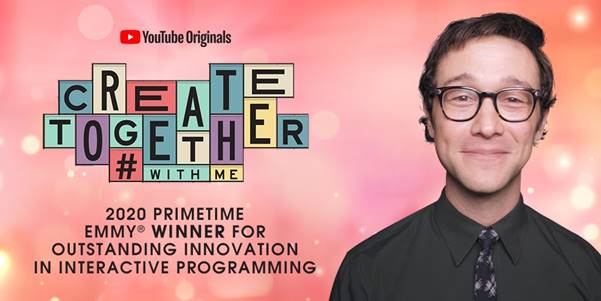
Actor Joseph Gordon-Levitt won his first Emmy Award for producing “Create Together #WithMe,” the YouTube Originals’ miniseries that he co-created and hosts. The six-episode interactive miniseries showcasing creativity around the world was selected for the Outstanding Innovation in Interactive Programming Award by a of jury panel of professionals and will be presented as part of the Creative Arts Emmys on Sept. 17. The series featured the creations of everyday people collaborating to make art while at home during the pandemic via the HITRECORD platform.

“A lot of us have been spending a lot of time online these last number of months, looking to overcome the isolation of lockdown. And for me, one of the best ways to really connect with other humans, is to make something together. Not just talk, not just look, but really try to do something that we might not have done on our own. And that’s how we made this show,” Gordon-Levitt said. “It’s how we do everything on HITRECORD. The creative process is so intimate, so nuanced, so vulnerable, I think creative collaboration provides a certain antidote to a lot of the internet’s ills. We are so grateful to the Academy for this incredible honor.”

Currently starring alongside Jamie Foxx in the Netflix sci-fi action drama “Project Power,” Gordon-Levitt will next play prosecutor Richard Schultz in Aaron Sorkin’s “The Trial of the Chicago 7,” premiering Oct. 16 on Netflix. The cast includes Sacha Baron Cohen as Abbie Hoffman and Ben Shenkman as defense attorney Leonard Weinglass.


Joseph Gordon-Levitt’s ‘Create Together #WithMe’ Wins an Emmy Read More »

E Pluribus Unum: Doctors Taking on COVID-19 Together

As a medical doctor in Los Angeles, I’ve learned something about change during the past five months. Not just that kind of change. Spare change. The kind you toss on the dresser at the end of a day. On the back of the quarter dollar, just above the eagle, resides the national motto: E Pluribus Unum (“From many, one”). As the motto implies, we are stronger and more resilient, and we discover our best selves when we face challenges collectively — particularly the countless challenges COVID-19 poses.

On March 16, with the pandemic closing in on the city, my medical group began cancelling routine office visits to protect patients and providers. By March 23, our six offices had telescoped down to one. Instead of our usual 800 patients per day, we were seeing 20. Patients with emergent medical problems were sent to emergency rooms, which struggled to separate COVID patients from others and to find the personal protective equipment (PPE) to keep staff, providers and patients safe. The ability to provide care seemed to be dissolving into chaos.

The leadership of our Primary Care program and the leadership team confronted an almost impossible set of challenges: keep us connected to our patients, support them with routine care, and develop capabilities to address the unexpected health issues that can affect anyone at any time.

Over the course of a single week, with the participation of doctors, nurses, pharmacists and administrators, the outlines of a completely new system emerged. Doctors were divided into three teams. Most provided exclusively “virtual visits” on telephone or video from home. A number of bolder or healthier doctors went to urgent care to don “space suits” and help with COVID-19 patients and others. A handful stayed at the office to care for patients with non-COVID-19 illnesses.

A key tool in the new system was the video visit. The system’s experimentation with video visits over the years generated endless discussion about their appropriateness for various medical problems, the technological barriers, and the requirements for documentation and billing. Suddenly, in the face of emergency, the barriers evaporated. The main question was how 60 primary care doctors — many “technologically challenged” — could master electronics and connect with our patients.

Over the course of a single week … the outlines of a completely new system emerged.

To address video visits and other COVID-19 challenges, the group rolled out the “primary care huddle.” Each morning, the teleconference huddle brought together all our primary care doctors from homes across the city. The problems of connecting from a tablet or cellphone were overcome. Key information about COVID-19 from our medical center epidemiologists and other sources was quickly disseminated. A central scheduling arrangement was created for video visits and for telephone visits when video was not an option. As the flow of paperwork to the abandoned offices continued unabated, a rotation was arranged for a single doctor at a nearly vacant office to handle the paperwork for all.

As South Korea had experienced COVID-19 earlier than the U.S., we arranged a teleconference call with Korean medical administrators to learn from their experiences. The Korean protocol screened patients, staff and providers for COVID-19 on arrival at the clinic, and used masks and social distancing. The clinics experienced no cases of transmission while using this protocol. Using the Korean model, our office visits began to ramp up. Taking care of those with acute non-COVID-19 medical problems offered a welcome glimmer of normality. As most of the doctors remained at home, those of us in the office acted as a pool, seeing one another’s patients and communicating with the patient’s primary care doctor.

Our doctors, nurses and pharmacists successfully restructured health care so effectively because we looked first to the needs of patients and colleagues rather than our own. From many, we were one.

As our offices progress toward a busy “new normal” that melds our innovations with standard practices, we cannot lose touch with the formula that served the patients and saved the system. It provided a rare “win” over the ravages of this capricious virus. It also offers us hope at a time when little else does. E Pluribus Unum. It’s not just a “quarter measure.” It has the power to save lives.


Daniel Stone is a medical doctor practicing in Southern California.

E Pluribus Unum: Doctors Taking on COVID-19 Together Read More »

Chief Palestinian Negotiator Saeb Erekat to Mentor Students at Harvard’s Kennedy School for International Affairs

(JTA) — Saeb Erekat, the Palestinians’ chief negotiator, is bringing his expertise to Harvard.

Erekat will mentor students and give virtual seminars as a fellow in The Future of Diplomacy Project at the Kennedy School’s Belfer Center for Science and International Affairs.

Erekat, also the secretary general of the Executive Committee of the PLO, said in a 2014 interview with Al Jazeera that “I will never recognize Israel as a Jewish state.”

The Kennedy School — among the most prestigious graduate schools for public and social policy in the world — announced Erekat’s appointment last week. The other Fisher Family Fellows include Julie Bishop, chancellor of the Australian National University; Federica Mogherini, the high representative/vice president of the European Commission from 2014 to 2019; and Peter Wittig, who served nearly 40 years in the German Foreign Service.

The new fellows “will strengthen our capacity to learn the lessons of effective diplomacy and statecraft,” faculty chair Nicholas Burns said, according to the watchdog group Honest Reporting.

Harvard announced last month that it would provide only online learning for the fall semester. The announcement said the fellows will visit the Ivy League university’s Boston-area campus in the spring to lead study groups on topics of their expertise, including the Israeli-Palestinian conflict.

Erekat’s appointment was criticized on Twitter by the Israel advocacy groups CAMERA on Campus and The Simon Wiesenthal Center, among others.

Erekat has been involved in every Israeli-Palestinian peace negotiation since 2000, according to Honest Reporting, which said he has misstated facts and accused Israel of assassinating former Palestinian leader Yasser Arafat.

“Tomorrow’s leaders should be presented with a true, fair and balanced perspective about conflicts so that they may develop their own opinions,” the watchdog group said.

Chief Palestinian Negotiator Saeb Erekat to Mentor Students at Harvard’s Kennedy School for International Affairs Read More »

Saudi Arabia Allows Israel to Use Airspace for UAE Flights

Saudi Arabia announced on Sept. 2 that Israel can use its airspace for flights to and from the United Arab Emirates (UAE).

The Saudi Press Agency said in a statement that the Saudis “approved the request received from the General Civil Aviation Authority in the United Arab Emirates, which includes the desire to allow flights coming to and departing from the United Arab Emirates to all countries to pass through the Kingdom of Saudi Arabia’s airspace.”

However, Saudi Foreign Minister Faisal bin Farhan tweeted that the announcement does not change the country’s position on the Israeli-Palestinian conflict, which is that relations with Israel won’t be normalized until Israel agrees to a two-state solution with the Palestinians involving Israeli withdrawal from the West Bank.

Israeli Prime Minister Benjamin Netanyahu hailed the Saudis’ announcement as a “tremendous breakthrough” in a video posted to social media, adding that the opening of Saudi airspace will cause flights to “be cheaper and shorter, and it will lead to robust tourism and develop our economy.”

He also said that the announcement would lead to flights from Israel to other parts of Asia to be cheaper and faster as well.

“When you fly to Thailand or anywhere else in Asia, it will save time and money,” Netanyahu said. “This is amazing news for you, the citizens of Israel. These are the benefits of a peace that is genuine.”

Netanyahu concluded the video thanking White House senior adviser Jared Kushner, who also is President Donald Trump’s son-in-law, and Sheikh Mohammed bin Zayed Al Nahyan, the Crown Prince of Abu Dhabi, for their efforts in making the Saudi announcement happen.

The American Jewish Committee tweeted, “We welcome this historic milestone on the path toward broader Arab-Israeli reconciliation, cooperation, and peace.”


British researcher David Collier tweeted, “How are the Israel-hating BDS [boycott, divestment and sanctions] guys holding up? Not the best week for them.”


The announcement came after the United States and the United Arab Emirates (UAE) officials lobbied the Saudis for the past couple of weeks to open their airspace to Israel for flights to and from the UAE, according to Axios. On Aug. 31, the first ever flight from Israel to the UAE occurred, and it flew over Saudi airspace.

Saudi Arabia Allows Israel to Use Airspace for UAE Flights Read More »

BBC Investigating Reporter Over Reported Tweets Attacking Colleague for Speaking Out Against Anti-Semitism

The BBC told the Jewish Chronicle (JC) on Sept. 2 that it is investigating a report regarding a series of tweets from a BBC senior reporter’s anonymous account.

The JC had reported the day before that BBC World news reporter Nimesh Thaker used an anonymous Twitter account called “Not That Bothered” to retweet a tweet criticizing BBC 5 Live presenter Emma Barnett, who said during her July 27 show that the rapper Wiley’s anti-Semitic tweets “burn deep” for her because her grandmother fled persecution by the Nazis in Austria and her husband’s grandmother “survived unspeakable torture in Auschwitz.” The Not That Bothered account retweeted a tweet stating that Barnett was engaging in “the same old ‘antisemitism’ excuse whenever people criticize Israel.”

Additionally, during the 48-hour boycott of Twitter over the platform’s handling of anti-Semitism, the account tweeted, “Has the level of hate and political smearing just dropped on twitter or are racists on holiday at the moment?” The account also retweeted a tweet from Jackie Walker, who was expelled from the Labour Party over allegations of anti-Semitism, stating that some of those protesting Twitter had previously engaged “anti-black/Muslim racism.”

The Not That Bothered account also features tweets that call Israel a “racist” and “white supremacist state,” the JC reported.

After the JC report, the BBC said in a statement to the JC, “The BBC takes allegations of this nature extremely seriously, and while we cannot comment on individual staff issues, we have robust processes in place to investigate any such matters with urgency.”

The JC also reported that Thaker, who has been a reporter for BBC World News for 10 years, has not responded to its repeated requests for comment and that the Not That Bothered account is now on a private setting.

International human rights lawyer Arsen Ostrovsky tweeted, “Wow! Senior @BBCWorld News journalist #NimeshThaker used anonymous social media account to support attacks on @BBC’s Jewish presenter @Emmabarnett, after she spoke out about the Holocaust and personal impact of #antisemitism on her life.”


British researcher David Collier also tweeted, “The horror of senior BBC journalist Nimesh Thaker being caught running a vile antisemitic sock account should not be underestimated. The BBC is infested with like minded haters and for years these reporters have been at the forefront of pushing a demonising anti-Israel agenda.”

BBC Investigating Reporter Over Reported Tweets Attacking Colleague for Speaking Out Against Anti-Semitism Read More »

Pompeo Cancels Plan to Film Trump Campaign Ad Geared to US Expats While in Israel

(JTA) — Secretary of State Mike Pompeo canceled plans to film a campaign ad in Israel to encourage Americans living there to vote for President Donald Trump.

The decision not to participate in the campaign by Republicans Overseas Israel followed the uproar over Pompeo’s prerecorded message from Jerusalem to last week’s Republican National Convention, and following legal consultations, Israel’s Channel 12 News reported, citing sources involved in the discussions.

Pompeo was accused of violating the Hatch Act, which forbids federal employees from participating in some kinds of political activity. His speech to the convention filmed atop the King David Hotel, with the Old City as a backdrop, triggered a congressional investigation.

Republicans Overseas Israel launched a campaign last month to encourage American-Israelis to vote for Trump and running mate Mike Pence, along with GOP Senate candidates.

Pompeo was in Israel last week following the announcement of a U.S.-brokered normalization agreement between Israel and the United Arab Emirates.

Pompeo Cancels Plan to Film Trump Campaign Ad Geared to US Expats While in Israel Read More »

Trump Moves Campaign Focus From COVID to Crime

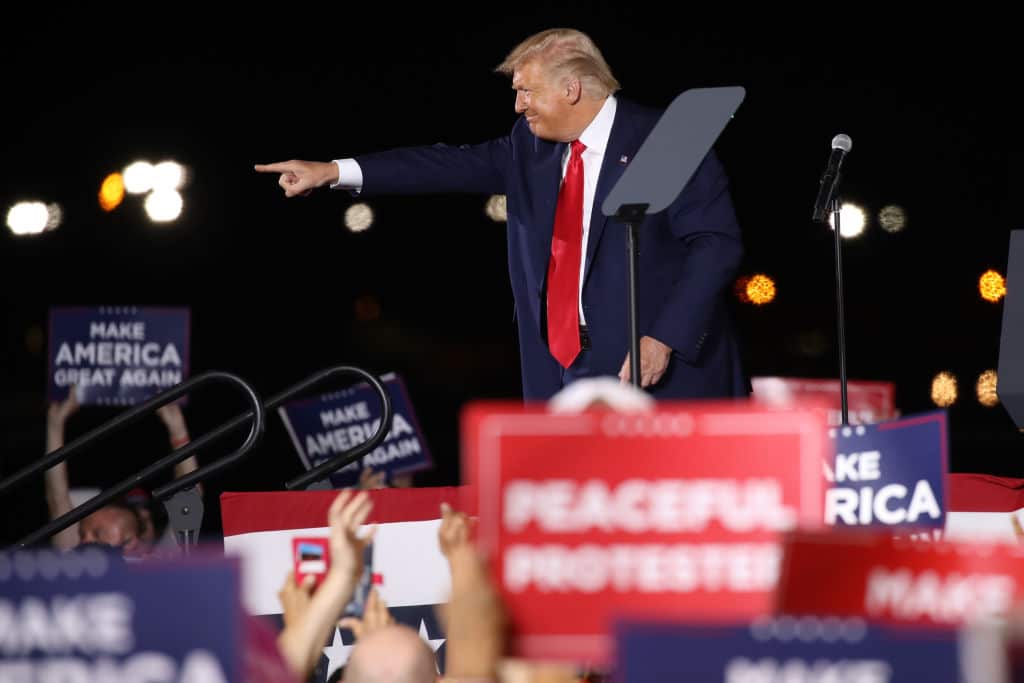
The presidential campaign has shifted its focus from COVID-19 to crime. More accurately, this is the week President Donald Trump dragged criminal justice and law-and-order issues back to center stage. How Democratic nominee Joe Biden responds to this challenge could define the election’s outcome.

In the spring, the nationwide demonstrations that spread in the aftermath of George  Floyd’s death while in police custody put Trump on the defensive, as the national conversation focused on questions of racial justice, and initial polling showed most Americans did not approve of the way their president was addressing these concerns. But as summer wore on and unrest continued in Portland, Seattle and other cities, those same polls showed Trump gradually gaining ground, then surpassing Biden on the question of which candidate would be more successful at subduing violent crime.

As the calendar now turns to fall, the police shooting of Jacob Blake in Kenosha,Wis., has greatly intensified the spotlight on these questions. The timing of the shooting and the subsequent protests enabled Trump to use his party’s convention to highlight his side of the argument for several days, with minimal pushback from Biden’s campaign.

But it’s now clear both candidates are engaging in this debate with all the force their respective camps can muster. Trump understands that public safety issues are the best remaining hope he has of winning back older voters and suburbanites who have moved away from him over the course of the coronavirus pandemic; and conflating peaceful protestors with rioters and looters would be the most effective way of convincing them to return. Biden has come to realize he cannot allow Trump to tie him to those responsible for the violence, and has begun to condemn the bloodshed more aggressively.

Biden will need to redirect the campaign dialogue back to COVID-19 and the economic and health devastation it has caused.

When the GOP convention opened, crime was barely a footnote on most voters’ list of concerns. At that time, Biden’s personal approval ratings not only were much higher than Trump’s, but well above Hillary Clinton’s numbers from the 2016 campaign. By the time the convention closed, Trump’s favorability largely was unchanged. However, Biden’s had begun to fall, most notably among independent voters. Trump was elected four years ago as the lesser-of-two-evils candidate, as he won the votes of those who disapproved of him and Clinton by a sizable margin. Biden is winning those “double-haters” now, but if voters continue to think less of him, Trump may have an opportunity to regain their support.

Biden’s challenge is twofold. The young progressives and voters from minority communities who are least enthusiastic about his campaign are exceedingly motivated by the need for police reform and racial justice. Even if Biden is successful at drawing the distinction between peaceful protestors and violent rioters, those voters will be very wary about anything he says that could be construed as overly pro-law enforcement. But it is a distinction he must draw, while establishing an equally stark divide between good cops and those who abuse their authority. Trump benefits when those lines are fuzzy; the pressure is on Biden to establish those boundaries as explicitly and unambiguously as possible.

More challenging for Biden will be his need to redirect the campaign dialogue back to COVID-19 and the economic and health devastation it has caused. If schools are not able to stay open this fall, if college football games are cancelled and movie theaters remain closed, it will be much more difficult for Trump to convince voters that their lives are returning to normal. But the president will continue to attempt to force the nation’s attention toward continuing unrest in Kenosha, Minneapolis and other cities, which could force Biden to spend much of the general election campaign on the defensive.

Biden’s challenge is not an easy one. He must simultaneously convince voters he is committed to racial justice, condemns violence, supports law enforcement and that while he cares deeply about all these issues, he believes none of them is as important as the pandemic and the economy.

That is as complicated a task as it sounds. Despite Biden’s lead in the polls, it’s becoming increasingly clear that the 2020 presidential decision is far from over.


Dan Schnur teaches political communications at UC Berkeley, USC and Pepperdine. He hosts the weekly webinar “Politics in the Time of Coronavirus” for the LA World Affairs Council Town Hall.” Find this week’s link here.

Trump Moves Campaign Focus From COVID to Crime Read More »

The Fear of Saying, and Not Saying, Certain Words

I joined “The Facebook,” as it was then known, a few months after it launched in February 2004, but it wasn’t until last week that I had my first Facebook-related panic attack.

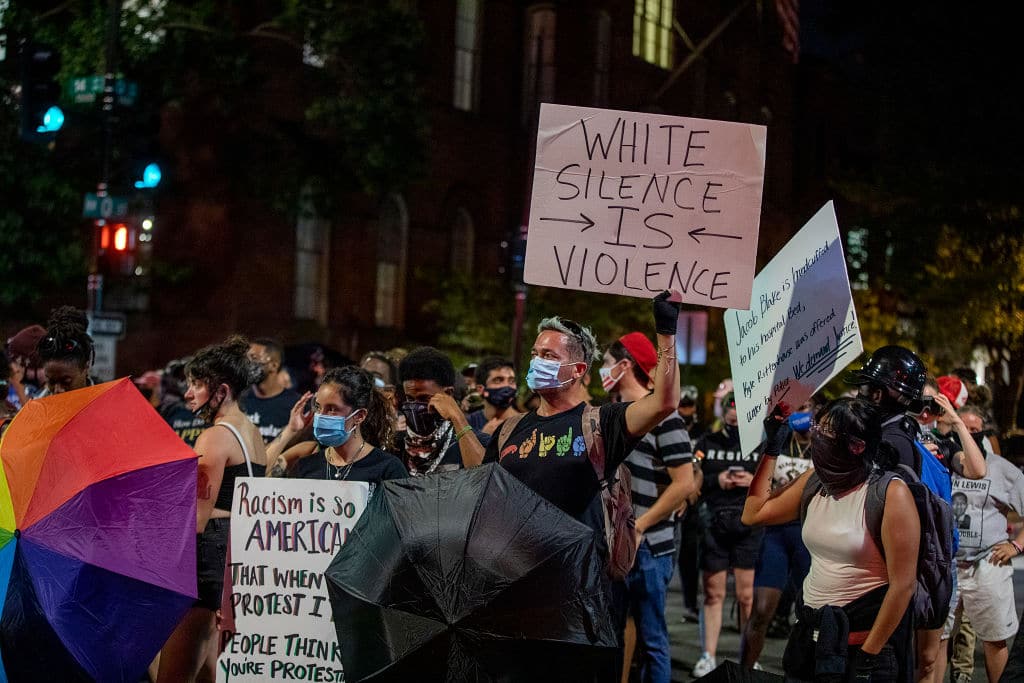
It started with a video. On Aug. 25, a group of Black Lives Matter protesters, most of them white, entered the outdoor seating area of a restaurant in Washington, D.C., and demanded customers raise their fists in solidarity while they chanted, “White silence is violence!” When one woman, Lauren Victor, refused to do so, the protesters circled her. They screamed and raised their fists while inching closer to Victor, who was seated against a wall, seemingly overwhelmed as she tried to get a word in. The more she tried to explain herself, the more they screamed in her face. I immediately had a visceral reaction and had trouble breathing. I felt like I was back in Tehran.

Several years ago, I began to speak with a therapist because I was depressed after the birth of our first son. We talked about postpartum blues, but she eventually diagnosed me with post-traumatic stress disorder stemming from my childhood in post-revolutionary Iran, where the consequences of disobeying oppressive laws were dire and the daily threat of dying from Iraqi missile attacks rendered me a traumatized survivor of the Iran-Iraq War.

I believe most people would find raised fists and being screamed at disturbing, but for me, these things take me back to the playground in Iran in the late 1980s, when I and hundreds of other hijab-clad little girls were forced to stand in uniform lines, raise our fists and scream, “Death to America! Death to Israel!” Apparently, my chants weren’t enthusiastic enough, because my teacher often beat me with a ruler after “recess” was over.

As a result, these days, I will never let anyone force me into chanting anything. After all that screaming in Iran, I know I have a choice if I want to sit somewhere quietly in this country, whether or not I agree with a cause. And yet, there are many things that happen in Iran that aren’t supposed to happen in the United States, including what happened to that helpless woman in a restaurant who was confronted by people trying to control her thoughts and words.

These days, I won’t let anyone force me into chanting anything.

Ironically, Victor told The Washington Post on Aug. 25 she had joined the Black Lives Matter protests for weeks but she didn’t like being coerced into showing support while at a restaurant. “It didn’t feel right,” she said, but added, “I’m very much with them. I’ve been marching with them for weeks and weeks and weeks.”

At a press conference on Aug. 26, Washington, D.C., Mayor Muriel Bowser said, “What I saw in those videos was highly inappropriate. It was likely against the law if they were on private property but more importantly, I don’t think it had anything to do with demands for social justice.” She added, “I also don’t think that D.C. residents would be bullied out of living their everyday lives.”

This may be one extreme incident, but it shines a light on a progression of thought control that, in the mayor’s words, can bully us right out of our everyday lives. It makes me wonder whether the slogan “White silence is violence” is, indeed, an effort to coerce and shame people into saying and doing the “right thing.”  

With the increase in online trolling and cancel culture, some people are now afraid of saying the wrong thing, whether on social media or on a private phone call, lest it be recorded and publicly released, potentially ruining careers and social connections.

I understand that fear — the fear of saying the wrong thing, and that’s bad enough. But the fear of not saying something? That is an invasion of my personal space that reminds me of a past I would much rather forget.


Tabby Refael is a Los Angeles-based writer, speaker and activist. 

The Fear of Saying, and Not Saying, Certain Words Read More »

Excerpt: When Natan Sharansky Met Nelson Mandela

ON FEBRUARY 11, 1990, FOUR YEARS TO THE DAY
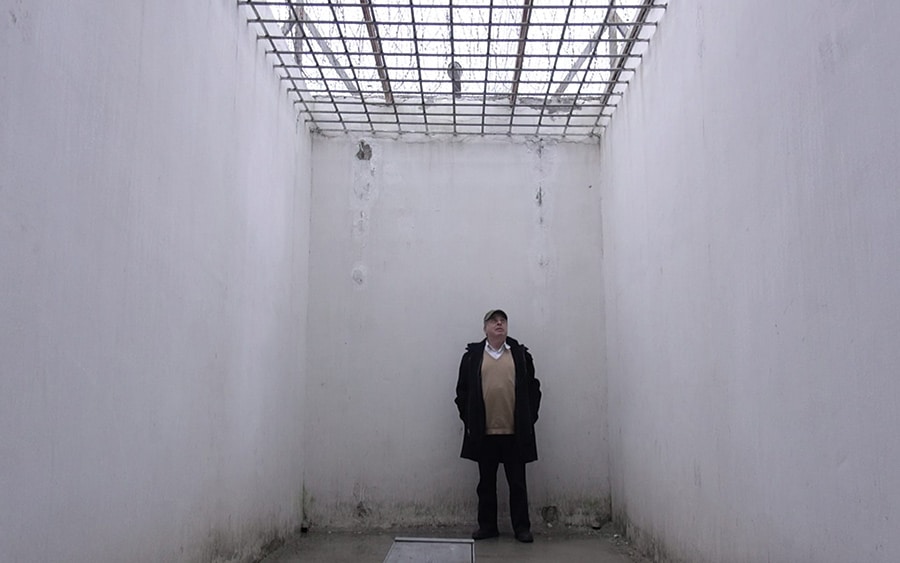
after my release, the South African government freed Nelson Mandela. He had served twenty-seven years in prison. Over the nearly three decades, some in the West had honored him, others denounced him. Now, it seemed the whole world greeted him enthusiastically.

A few weeks later, I received a phone call from Abe Foxman, the head of the Anti-Defamation League. Since we had met in Moscow during Hanukkah 1974, Abe had been my trusted accomplice. “Mandela knows who you are,” he said excitedly. “He read your book in prison and wants to meet you when he visits America.”

I was curious to meet Mandela too, wondering how he coped during his prison ordeal. I was planning to be in the United States. Abe, who hoped I would help make the case for Israel to Mandela, arranged for me to fly to Los Angeles on Friday, June 29.

When I arrived at the downtown Biltmore Hotel, where Mandela was staying, his wife Winnie told me that her seventy-one-year-old husband, who was being rushed from celebration to celebration and interview to interview, was sleeping. I sympathized, remembering my own exhausting, exhilarating freedom tour. But it was a Friday. With Sabbath approaching, I considered rescheduling. Everything in Los Angeles is too far away from everything else; if Mandela rested too long, I would not make it to my hosts in the suburbs on time. But the wait was worth it. Eventually, I met Mandela, refreshed and expansive, after his nap.

He told me that, in 1988, Helen Suzman, the only South African parliamentarian who had fought stubbornly for the right to visit him in prison, gave him a copy of Fear No Evil. Mandela was in his twenty-fifth year of imprisonment. Glancing at my four-hundred-page prison memoir, he told her, “It’s too thick. I won’t have time to read it all.” Once he started, though, Mandela said he read the book from cover to cover. “The interrogations were familiar to me,” Mandela told me, “but boy, you really suffered.”

“I suffered?” I asked, surprised. “You suffered three times worse. Twenty-seven years!”

“But,” Mandela replied proudly, “my people were with me. And you were alone.”

I was surprised how agitated his words made me. It felt like he was insulting my partners in crime, the Jewish people. “But my people were with me too,” I proclaimed, equally proudly.

Mandela smiled. “I read your book. It was all in your imagination. My people were with me in real life, all the time.”

We compared notes. While both of us had been stuck in a place called a prison, we were in vastly different institutions. Mandela explained that, during his long stretch on Robben Island, he met regularly with his comrades. They ran their revolutionary struggle from their cells. They received frontline reports, set strategy, made tactical decisions, and sent instructions to the field. He didn’t have to play chess in his head.

Was the world of my struggle only imagined? Was I really that alone?

For me, my dialogue with my people in prison was no less real than Mandela’s.

Excerpted from “Never Alone: Prison, Politics, and My People” by Natan Sharansky and Gil Troy. Copyright © 2020. Available from Bold Type Books, an imprint of Hachette Book Group, Inc.

Click here to return to the Cover Story.

Excerpt: When Natan Sharansky Met Nelson Mandela Read More »