fbpx

August 20, 2020

Letters: Trump and Israel, Kamala Harris on the Ticket

Trump and Israel
If your response to the news of the U.S.-brokered Israeli-UAE treaty was, “Oh, no, now Donald Trump will have another argument that his presidency has been a blessing for Israel,” maybe it’s time to consider the possibility that his presidency actually has been a blessing for Israel.
Robert F. Helfing, Pasadena

The Story Behind the Play
I first heard about the Fugu Plan, referenced by Gerri Miller (“Virtual Theater: ‘Fugu’ Tells Little-Known Holocaust Story,” Aug. 14), in a talk at the Brandeis Bardin Institute in 1983, given by Rabbi Marvin Tokayer, the former Chief (and only) Rabbi of Japan. The talk was spellbinding and inspiring. Tokayer, together with Mary Swartz, had published a novelized version of the story in 1979 titled “Fugu Plan: The Untold Story of the Japanese and the Jews During World War II.”
A wonderful documentary, “Sugihara: Conspiracy of Kindness,” produced by Diane Estelle Vicari, was shown on Boston’s WGBH in 2005, and was screened locally at the Skirball museum in 2011, and attended by the Consul General of Japan, Junichi Ihara, and Consul General of Israel, Jacob Dayan.

Jewish refugees escaping via this route included, Laurence Tribe, Harvard Law School professor and an official in President Barack Obama’s Justice Department; artist Peter Max; W. Michael Blumenthal, secretary of the treasury in the Jimmy Carter administration; film producer Michael Medavoy; and the entire Mirrer Yeshivah.

Some of the Jewish survivors, who fled Kovno, Lithuania, and spent World War II in Japan (and Shanghai), eventually settled in Los Angeles and San Francisco.

The widow of Chiune Sugihara, the Japanese vice consul in Kovno, who largely was responsible for aiding the Jewish emigration detailed in this story, spoke at Stephen S. Wise Temple.
Avrum Bluming, via email

Success of Jewish TV Series
Thane Rosenbaum offered an interesting perspective on the popularity of Jewish-Israeli TV programming and its jarring contrast with the stark reality of the increase in worldwide Jew hatred (“Jewish Series’ Successes Stave Off Complete Jew-Hatred,” Aug. 14). His sarcastic comment, “Anti-Semitism, after all, goes way back — even before cable,” hits right between the eyes.
Yet Rosenbaum’s historical review contains notable omissions, probably adhering to political correctness: “Centuries of Christian anti-Semitism depicted Jews as conniving … many believed Jews sported horns,” etc., yet he follows up with: “Some Muslims allege Jews or the Mossad (probably both) staged the 9-11 carnage.” 

Why does Rosenbaum paint all of Christianity as anti-Semitic based on 1,000 years ago, but then qualifies “some Muslims” in the recent past? Why does he neglect to mention that the vile Christian anti-Semitic tropes from 1,000 years ago mentioned above are alive and well today in the Muslim world — from Gaza, Iran, Egypt, as far as Malaysia, etc., depicting Jews with the identical vicious tropes inherited from medieval Christianity?

One can only hope the recent good news coming out of the United Arab Emirates is a harbinger of changing attitudes in the Arab world.
Richard Friedman, Los Angeles

A Step Toward Peace in the Mideast
Despite the COVID-19 pandemic, massive unemployment and protests, President Donald Trump brokered another bridge for Israel and Middle East peace with the United Arab Emirates.
Enriqué Gascon, Westside Village

Jews and the Palestinian Cause
David Suissa opines that Jews should “care about the Palestinian cause” (“Today, the Real Rebels Defend Israel,” online Aug. 9). This raises a few questions. Why does he — in line with the Jewish establishment — fail to insist that Palestinians should care about the Jewish cause?

One frequently reads “legitimate criticism of Israel,” but where does the Jewish establishment offer legitimate criticism of Hamas, Palestinian Authority President Mahmoud Abbas and a culture that pays pensions to incentivize the murderer of Israeli civilians?

The students who support Israel on systemically hostile campuses, compelled by their personal courage and integrity, face the intensely ugly, current form of the world’s oldest hatred mostly without any meaningful help from campus administrators or Jewish organizations. If this feels good, please explain why so very few Jewish students avail themselves of this rewarding experience.
Julia Lutch, Davis, Calif.

Kamala Harris on the Ticket
Neither of Kamala Harris’ parents have African lineage. Calling her “African American” is a misnomer.
Gary Dalin

Modiin-Maccabim-Reut, Israel
Dan Schnur made some valid points in his column about Kamala Harris (“Why Kamala Harris Was the Safe Choice,” Aug. 14), but I am puzzled by his description of her as an “African American.” He acknowledges that her mother was from India, and her father is from Jamaica. Neither of those places are in Africa.
Marc Russell, Los Angeles

Editor’s note: Sen. Kamala Harris describes herself as African American on her dot.gov website. However, unless it is part of a direct quote, the Journal’s editorial policy is to follow other major newspapers that state Harris is Black and the first Black woman of Indian descent on a major party ticket.   

So we’re supposed to welcome Kamala Harris and Joe Biden with open arms in part because she smashed a glass at her wedding, is big on hate crimes and did the blue box thing. President Barack Obama and his vice president, Biden, brokered a deal with Iran. That would have put Israel in a pine box.
Mike Kamins, Setauket, N.Y.

Steinsaltz and the Light
Street corner at twilight in Beverly-Fairfax
Waiting for the light to change
Rabbi Steinsaltz, my husband and I
Smiling at one another, enchanted
By the golden, hanging moon
I’d seen before only in Jerusalem
This iconic moon. So perfect.
Luminescent. Like the rabbi
Drawing us white like a magnet
To his presence, his genius, his sanctity
All of us — young, knowledgeable,
ignorant, broken
Equal in his eyes
Only love, he said
The light changed
Forever
Mina Stern, Venice


Now it’s your turn! Don’t be shy. Submit your letter to the editor! Letters should be no more than 200 words and must include a valid name and city. The Journal reserves the right to edit all letters. letters@jewishjournal.com.

Letters: Trump and Israel, Kamala Harris on the Ticket Read More »

U.S. Announces Process to Re-Impose U.N. Sanctions on Iran

Secretary of State Mike Pompeo announced on Aug. 20 that the United States has begun the process to re-impose sanctions on Iran lifted under the 2015 Iran nuclear deal.

Pompeo tweeted, “Today I hand-delivered a letter to @UN Security Council President Dian Triansyah Djani to formally notify the Council of something we all know too well — Iran’s failure to meet its commitments under the terrible nuclear deal.”


The letter, which was signed by U.S. Ambassador to the United Nations Kelly Craft, argued that Iran’s violations of the deal include enriching uranium and gathering heavy water far beyond the limits established under the deal.

“Despite extensive and exhaustive diplomacy efforts on the part of those [U.N. Security Council] Member States, Iran’s significant non-performance persists,” Craft wrote. “The United States is left with no choice but to notify the Council that Iran is in significant non-performance of its JCPOA [Joint Comprehensive Plan of Action] commitments.”


Britain, Germany and France rebuffed the U.S. in a subsequent statement.

“France, Germany and the United Kingdom note that the US ceased to be a participant to the JCPOA following their withdrawal from the deal on May 8, 2018,” the statement read. “We cannot therefore support this action which is incompatible with our current efforts to support the JCPOA.”

Germany is not a member of the U.N. Security Council but is a signatory to the JCPOA.

Russia and China — two signatories on the original pact — also argued that the U.S. doesn’t have legal standing to re-impose U.N. sanctions on Iran because the Trump administration exited from the deal.

Iranian Foreign Minister Javad Zarif tweeted that the Trump administration’s attempt to re-impose U.N. sanctions on Iran is “illegitimate and felonious” because the U.S. exited from the deal. The tweet featured a “fact sheet” arguing that the Trump administration has been operating in bad faith and that the administration’s current sanctions are in violation of the deal.


The White House has argued that the deal allows for countries that initially signed on to the deal to re-impose U.N. sanctions even if it has exited from the deal.

Israeli Prime Minister Benjamin Netanyahu praised the U.S. for its efforts to re-impose sanctions.

“Responsible countries should support the United States in seeking a real solution, one that will prevent Iran from building nuclear weapons,” Netanyahu said. “Israel stands proudly and firmly with the United States, as do governments across the Middle East who opposed the JCPOA quietly and now support the restoration of sanctions publicly. Ultimately, the tyrants of Tehran must understand this: If Iran wants to be treated like a normal country, it must start acting like a normal country. That has not yet happened.”


The Trump administration’s actions come after the U.N. Security Council rejected the administration’s efforts on Aug. 14 to extend the U.N.’s arms embargo on Iran, which expires in October. If the U.N. determines that the U.S. has legal standing to re-impose U.N. sanctions on Iran, then the sanctions would go back into effect in 30 days.

U.S. Announces Process to Re-Impose U.N. Sanctions on Iran Read More »

Each Person, A World: Jewish Lives Lost to the Coronavirus

This project is a partnership between Chabad.org and participating outlets. 

In Jewish tradition, an individual’s death is the entire community’s loss and so is communally mourned. The Chevra Kadisha burial society prepares the deceased; Kaddish is recited with a prayer quorum; shiva brings together family, friends and neighbors. The coronavirus has made so much of this impossible: In many places, members of the Chevra Kadisha now wear Hazmat suits; Kaddish has been postponed; shiva calls come via Zoom.

Yet the loss remains the same. Every soul, the Torah teaches, is an entire world. It is the duty of the living to remember the deceased and all the good they did. Memories must be recorded, obituaries written, and headstones erected. Most importantly, we must take to heart lessons from the way those now gone led their lives during the time allotted them by G‑d.

In response to a family requesting guidance on the language for their deceased father’s gravestone, the Rebbe—Rabbi Menachem M. Schneerson, of righteous memory—wrote, in Hebrew, that this was important, but above all, they must remember that the monument and the words inscribed were but of stone. For “the offspring of the departed are a living monument. Their deeds and behavior in their everyday lives … act as a living inscription on a living monument; the wording of this inscription is in their hands, and only theirs.”

The losses have hit the entire Jewish people, no matter which community, level of observance or socio-economic status, underlining the intrinsic unity of the Jewish nation. Since Passover of 2020, Chabad.org has been working on an ambitious project to record and recall every member of the Jewish community who has perished during this plague. 

If you have lost someone dear to you, or know someone who has, we invite you to share their story here.

If you are unable to recite Kaddish for a loved one, visit the Coronavirus Quarantine Kaddish Service page here.

May the memory of those who have passed be a blessing for the Jewish people and all humankind, and their stories a living legacy for all. To learn more about the story behind “Each Person, a World,” click hereTo have a name added click here. For correction, leave a comment below.

Each Person, A World: Jewish Lives Lost to the Coronavirus Read More »

A Democratic Scorecard: Despite Progressive Gains, Party Leaders Stick to Traditional Pro-Israel Playbook

WASHINGTON (JTA) — Five seconds of Linda Sarsour was enough for Joe Biden.

Sarsour, whom Jewish groups have accused of crossing the line from Israel criticism into anti-Semitism, appeared at a meeting — on the sideline of the Democratic convention — of Muslims who will be campaigning for Biden for president.

The Republican Party posted five seconds of her appearance on Twitter, in which she said referring to Muslim Americans, “The Democratic Party is not perfect, but it is absolutely our party in this moment.”

“If Linda Sarsour is the face of the Democrat Party, ” the Republican Jewish Coalition said, “then the Democrat Party has truly become the party of anti-Semitism and too toxic for American Jews.”

With unusual swiftness, the Biden campaign was on it.

“Joe Biden has been a strong supporter of Israel and a vehement opponent of anti-Semitism his entire life, and he obviously condemns her views and opposes BDS, as does the Democratic platform,” a spokesman said, referring to Sarsour’s embrace of the Boycott, Divestment and Sanctions movement targeting Israel. “She has no role in the Biden campaign whatsoever.”

Biden’s swift disavowal of the Palestinian-American activist was a signal of how far the pendulum had swung in the recent back-and-forth between the Democratic Party’s pro-Palestinian progressives and its more traditional centrist pro-Israel sector. At least at the top, the conventional pro-Israel view remains in place. But progressives can still point to several important developments during the past year, which activists on both sides argue means the fight is unlikely to disappear.

Here’s a rundown of what’s making each camp happy these days.

Why traditional pro-Israel Democrats are happy

Biden won: Just 10 months ago, as the Democratic primaries shifted into full gear, there appeared to be two seismic changes suggesting that progressives were winning the fight to change how Democrats talked about Israel.

In October, at a conference of J Street, the liberal Jewish Middle East policy group, three presidential candidates — Sens. Bernie Sanders and Elizabeth Warren, and South Bend, Indiana, Mayor Pete Buttigieg — said they would leverage assistance to Israel to pressure it to fall into line with U.S. policies. Viable candidates for the White House had never embraced such a position.

Then in March, Sanders and Warren boycotted the annual policy conference of the American Israel Public Affairs Committee, also technically unprecedented. (Sanders “boycotted” the conference in 2019, but actually had not been invited to speak.)

That caused speculation about the party’s drift away from Israel — but then Biden, one of the country’s longest-standing friends, a man who calls himself a Zionist and ridiculed the notion of leveraging aid to Israel at around the time of the J Street conference, became the nominee.

The platform: When Sanders endorsed Biden, they consulted on a number of areas where Sanders wanted to see Biden move left; foreign policy notably was not one of them. Biden personally intervened to keep the word “occupation” out of the party platform. The platform’s language on Israel was robust and aid was sacrosanct.

“Democrats believe a strong, secure and democratic Israel is vital to the interests of the United States,” it said.

If there were concessions to the progressives, they were affirmative — in emphasizing Palestinian rights, not in criticizing Israel. The platform condemned the boycott Israel movement, but also said it should be protected from legal retaliation, citing free speech.

Kamala: Biden’s most important hire so far has been his running mate, California Sen. Kamala Harris. The selection was greeted with dismay by progressives, mostly because of Harris’ past as a law-and-order prosecutor and state attorney general, but also because, like Biden, she is seen as aligned with AIPAC.

Harris is among the minority of Democrats in Congress who have not accepted J Street’s endorsement, and she joined a resolution that essentially denounced the Obama-Biden administration for allowing through a U.N. Security Council resolution that condemned Israel’s settlements.

Harris, whose husband is Jewish, rejects the boycott Israel movement, but like most Democrats opposes any legislation that would penalize the movement, citing speech freedoms. She rejected calls to boycott AIPAC.

Why progressives are happy

The other primaries: Yes, Biden is at the top of the ticket. But progressives registered a string of high-profile primary victories in several congressional districts.

Two freshmen congresswomen who support the boycott Israel movement — Minnesota’s Ilhan Omar and Michigan’s Rashida Tlaib — won contested primaries. A third boycott supporter won a primary earlier this month in a St. Louis district that is overwhelmingly Democratic and likely will be joining Omar and Tlaib in Congress in January.

Progressives scored big wins elsewhere this cycle, including by Jamaal Bowman, who in a June New York primary ousted Eliot Engel, the Jewish pro-Israel champion who chairs the House Foreign Affairs Committee.

Engel received the support of House leaders — but so did Omar, despite claims that she was guilty of deploying an anti-Semitic trope when she said pro-Israel politicians are bought and paid for. (Omar later apologized for some but not all of her controversial remarks.)

Omar faced a potentially tough fight due in part to the wave of pro-Israel campaign contributions to her challenger. But in the final stretch she received financial support and an endorsement from House Speaker Nancy Pelosi.

Notably, when Omar came under fire last year for her tweets about pro-Israel politicians, Harris issued a statement rejecting Omar’s arguments but also expressed concerns that the backlash was spurred in part because Omar is Black and Muslim.

A seat at the table: Harris might not have been the first (or second or third) choice of progressives. But many are happy with her hiring of Karine Jean-Pierre as senior campaign adviser. Jean-Pierre is a former official of MoveOn, the progressive group that organized the push to have candidates to boycott the AIPAC conference, and endorsed the AIPAC boycott in a big way. In an opinion piece in Newsweek on the topic, she declared “You cannot call yourself a progressive while continuing to associate yourself with an organization like AIPAC.”

To be sure, Biden has close advisers who are well known and liked in Israel, including Tony Blinken, a former deputy national security adviser, and Colin Kahl, who helped broker the deal that brought U.S. funding to Israel’s Iron Dome short-range missile defense system. But Jean-Pierre’s appointment and Pelosi’s support for Omar underscore the fact that boycotting Israel or AIPAC is not a barrier to establishment support — or a seat at the table.

Shifting sands in Congress: In the past year, Democratic lawmakers in the House and Senate openly took the fight to Israeli Prime Minister Benjamin Netanyahu over his pledge to annex parts of the West Bank and quashed a top legislative priority of the centrist and right-wing pro-Israel camps.

In June, the vast majority of Democrats in the U.S. House of Representatives signed a letter urging Netanyahu not to make good on his pledge. AIPAC’s influence was clearly visible in the House letter — there was not a hint of a threat that the U.S.-Israel relationship would be damaged if Netanyahu went ahead. But 19 Senate Democrats, among them pro-Israel stalwarts, wrote a letter to Netanyahu warning that annexation would “fray” ties with Israel. Sen. Chris Van Hollen, D-Md., proposed legislation that would keep Israel from spending U.S. money for annexation.

Democrats also effectively buried various legislative measures that would attach penalties to joining the movement to boycott, divest and sanction Israel. Pro-Palestinian progressives rejoiced, but the reason the bills went under was because of lobbying by the ACLU, which said penalizing boycotts violates speech freedoms. It didn’t help that a number of courts upheld challenges to state anti-BDS laws.

Time could be on their side: Pro-Palestinian activists attending the convention said there was a sea change coming, in part because younger Democrats did not have the same attachment to Israel.

“I do believe that in 2024, we will see a very different platform debate because they think the power balance is shifting, because the demographic balance is shifting,” James Zogby, a longtime pro-Palestinian party activist said in a meeting organized by the Arab American Institute, where he is president. “And we’re in for a very interesting ride in the next four years.”

A Democratic Scorecard: Despite Progressive Gains, Party Leaders Stick to Traditional Pro-Israel Playbook Read More »

Obligations for a New King: A Poem for Torah Portion Shoftim

I will set a king over myself, like all the nations around me

Pick a king from amongst your brothers.
How you define brother is up to you.
These days it may include sister
or another word you’re comfortable with

Do not give your king (which is another word
which may cause discomfort) too many horses.
With too many horses, they may be inclined
to read them back to Egypt. That would
defeat the whole purpose of this.

Likely, too many wives, or if you prefer partners
may violate existing local laws, even though
this whole thing is a startup and the
idea of laws is new.

Don’t pay your king, your ruler, your
let’s hope they’re benevolent, person in charge
too much. Eventually they’ll want to put
their visage on the money which may create
an unfortunate sense of ownership.

Have your King, your guardian, your person
in charge of the armies, write two Torah scrolls. It’s not
that they don’t have someone to do these kinds of things.
You just want them to stay immersed in the words.

It’s these words which overrule everything that
comes out of their divinely appointed mouths.
Surrounded by their minimal complement of horses
and wives. It’s these words that

brought us out of Egypt in the first place.


God Wrestler: a poem for every Torah Portion by Rick LupertLos Angeles poet Rick Lupert created the Poetry Super Highway (an online publication and resource for poets), and hosted the Cobalt Cafe weekly poetry reading for almost 21 years. He’s authored 23 collections of poetry, including “God Wrestler: A Poem for Every Torah Portion“, “I’m a Jew, Are You” (Jewish themed poems) and “Feeding Holy Cats” (Poetry written while a staff member on the first Birthright Israel trip), and most recently “The Tokyo-Van Nuys Express” (Poems written in Japan – Ain’t Got No Press, August 2020) and edited the anthologies “Ekphrastia Gone Wild”, “A Poet’s Haggadah”, and “The Night Goes on All Night.” He writes the daily web comic “Cat and Banana” with fellow Los Angeles poet Brendan Constantine. He’s widely published and reads his poetry wherever they let him.

Obligations for a New King: A Poem for Torah Portion Shoftim Read More »

Why America Is in Danger

Americans have long been proud of the fact that, unlike Europe, it never went the route of totalitarianism as embodied in communism, fascism and Nazism.

This achievement may be coming to an end.

In order to understand why, it is necessary to understand why European countries embraced — or fell victim to — totalitarian doctrines.

Until World War I, the primary beliefs that gave life meaning, both on a national and personal level, were Judeo-Christian religions and patriotism. What gave people moral guidance were Judeo-Christian values.

For most younger Europeans, World War I, with its seemingly senseless slaughter of millions, ended belief in Christianity and, in many cases, the people’s faith in their nations. God was deemed absent; religion unnecessary; and national identity was seen as a cause of the war.

That left a void that almost immediately was filled by communism, fascism and Nazism.

World War I led directly to the Russian Revolution. In 1917, the czar was overthrown, and later that year, the Bolsheviks took over. As awful as the czar was, there was far more freedom under him than in the Soviet Union until the fall of communism 72 years later, not to mention the deaths of  20 to 40 million people under the Soviet regime.

In Italy, the rise of fascism followed World War I. And in Germany, the Nazis came to power 15 years later. The Nazis conquered most of the European continent during World War II, and after Germany’s defeat in 1945, the Soviets imposed communism throughout Eastern Europe.

Although there were communists, communist fellow travelers, Nazi sympathizers, racists and anti-Semites in the United States, neither communism, fascism nor Nazism took root here. The primary reason was that, unlike most Europeans, Americans did not lose their faith in Judeo-Christian religions and values or in America after World War I. America remained so religious that, in 1954, the words “under God” were inserted into the Pledge of Allegiance recited daily in American schools.

However, by the 1950s, faith in America, Christianity and what we call bourgeois middle-class values was largely limited to older Americans. The post-World War II baby boomer generation already was indoctrinated in secularism and anti-Americanism. As early as 1962, the Supreme Court ruled that school prayer was unconstitutional.

By the late 1960s, vast numbers of baby boomers were attending demonstrations that were as much against America — routinely characterized as an imperialist and colonialist aggressor country with an evil military — as they were against the war in Vietnam. It was not uncommon to see America spelled “Amerikkka” or “Amerika” at protests and in graffiti.

When I was in graduate school at Columbia University in the early 1970s, I was taught that men and women are not inherently different and that the Cold War was between two superpowers (equally at fault), not between freedom and tyranny.

 Unlike most Europeans, Americans did not lose their faith in Judeo-Christian religions and values or in America after World War I.

Another generation has passed, and the post-Christian, left-wing baby boomers have come close to achieving complete success. The mainstream print and electronic media, universities, high schools and elementary schools, the arts and now sports have been conquered by the left. 

We now have the answer to the question: What will happen to America if Americans lose faith in God and country as the Europeans did after World War I? What will happen to America when Christianity dies as it did in Europe after World War I?

The way things now look, America may have its bout with some totalitarian doctrine. Liberty has never been a left-wing value. From Lenin on, wherever the left has come to power, it has suppressed liberty, beginning with free speech. Already, despite a Republican president and a Republican Senate, America has less free speech than at any time in its history. Exactly one year ago, I testified before a Senate subcommittee and wrote an op-ed for The Wall Street Journal about YouTube (owned by Google) placing more than 100 Prager University, or PragerU, videos on its restricted list.

And things have gotten much worse. Last week, PragerU was locked out of its Twitter account for retweeting a press conference of eight physicians in Washington, D.C., which already had received 17 million views, and Facebook has just informed us that if we even cite studies that show possible benefits of hydroxychloroquine (in conjunction with zinc) in the early stages of a patient with COVID-19, we will lose our Facebook account.

And then there is the “cancel culture,” which is merely a euphemism for leftist suppression of dissent. People are booted from internet platforms, fired from their jobs or have their reputations smeared and their businesses ruined for differing with the left.

We also are undergoing a nonviolent version of Mao Zedong’s Cultural Revolution, with individuals forced to issue humiliating public recantations of their beliefs and attend “reeducation” sessions.

Another communist norm taking root in America is the rewriting of the American past. We are living a famous Soviet dissident joke: “In the Soviet Union, the future is known; it is the past that is always changing.”

On almost all social issues and many economic ones, the American left is more radical than the left in Europe. Europeans across the political spectrum are more wary of ideological fanaticism because of the vast scale of death and suffering that resulted from communism, fascism and Nazism.

One might say that Europe was inoculated against fanaticism. Europeans are more preoccupied with working less, traveling more and being taken care of than with ideological movements. But America, which has not suffered under fanatical, irrational, liberty-depriving ideologies, has not been inoculated. Without such a vaccination, what replaced Christianity in Europe may well do the same in America.


Copyright 2020 creators.com. Dennis Prager is a nationally syndicated radio talk show host; president of PragerU, which has 1 billion views a year; and author most recently of volume two (Genesis) of the bestselling Torah and Bible commentary in America, “The Rational Bible.” Reprinted with permission.

Why America Is in Danger Read More »

16-Year-Old Israeli Girl Tells Police She Was Gang-Raped by About 30 Men

JERUSALEM (JTA) — A 16-year-old Israeli girl told police that she was gang-raped by about 30 men at a hotel in Eilat.

Police opened an investigation after the teen filed a report on Friday; the investigation was announced on Wednesday. Two men have since been arrested, according to Israeli news reports.

A senior official involved in the investigation told Israel’s Channel 12 on Thursday that some of the men involved in the alleged incident made recordings of the activity in the hotel room on their cellphones. Police reportedly also have taken possession of security camera footage from the hotel.

According to another report by Channel 12, citing one of the arrested suspects, the men lined up in front of the hotel room of the teen, who was very drunk, and she called them in one at a time. A friend of the teen’s said the victim was “in distress” but was unable to get help from anyone.

“This is shocking, there are no other words to describe it,” Prime Minister Benjamin Netanyahu tweeted. “This is not just a crime against this girl, it is a crime against humanity deserving of every condemnation and those responsible for it should be brought to justice.”

Defense Minister Benny Gantz tweeted: “Since yesterday I want to understand, and fail to – what is a man trying to prove when he stands in a crowded line with dozens of men on the way to a room in which a young and disoriented girl is laying?”

16-Year-Old Israeli Girl Tells Police She Was Gang-Raped by About 30 Men Read More »

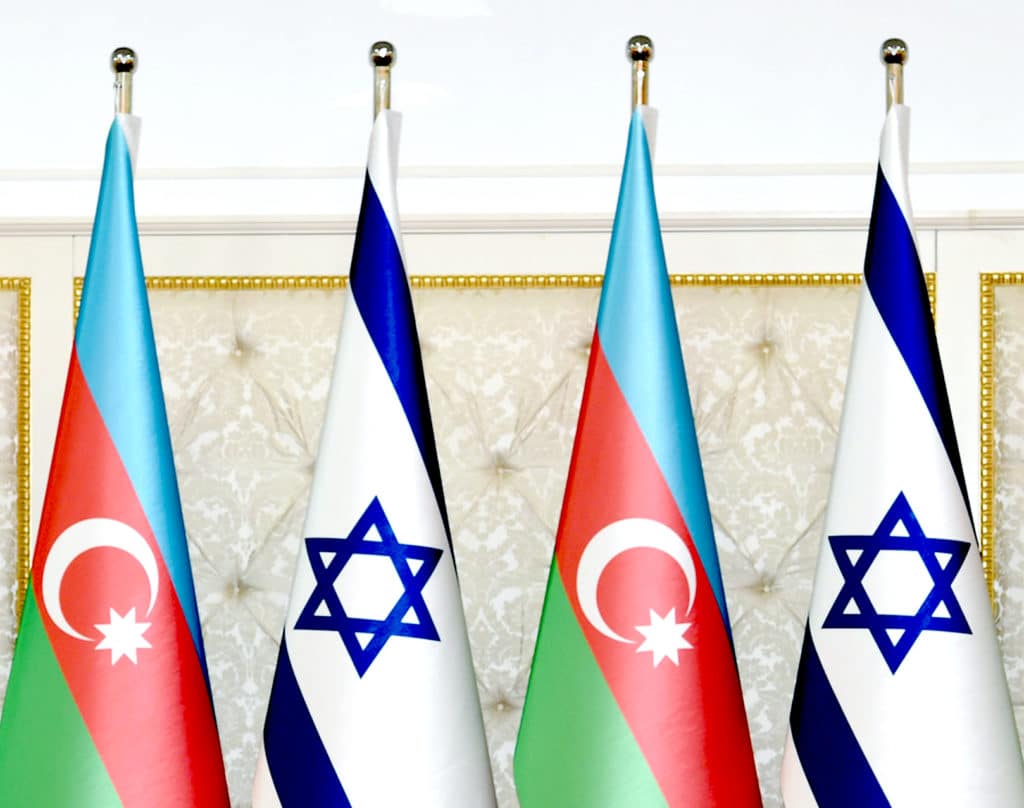
Azerbaijan-Israel Partnership is a Lesson on Muslim-Jewish Relations

The historic Abraham Accord, an agreement on the full normalization of relations between the State of Israel and the United Arab Emirates, opens up a world of opportunity for both nations, in areas of tourism, trade, academia, technology, and regional diplomacy. But perhaps what is most exciting about this historic agreement is the greater meaning behind it and the broader hope for peace it connects with. Israel has long been surrounded by a tough neighborhood and this agreement shatters the grip of that history and projects an entirely different future. 

As an Azerbaijani Jew, born and raised in a majority-Muslim country that has deep and lasting ties to Israel, I see this agreement as an opportunity for peace and unity in a region where many believe that is not possible. The economic and diplomatic gains are significant, but the identity shift for the UAE is perhaps the most meaningful thing that has begun to occur and will continue to develop exponentially. 

In Azerbaijan, we have practiced multi-faith peace for centuries, so much so that it’s considered an intrinsic characteristic of our country. Practically, this simply means that in Azerbaijan, a plurality of religion and ethnicity is considered a positive, as Jews, Muslims, various denominations of Christianity, Bahá’ís, Hare Krishnas and others practice their faith openly, share schools and society with one another with zero conflict. Quite the opposite, we all have many holidays and cultural events to celebrate for each other. There is so much good in each of our religions and we have always capitalized on that and it has always served us well. 

My hope for the UAE, and hopefully many others that will follow their historic example, is that they not only reap the binational benefits of this accord but that those nations also realize the profound benefits that come with promoting tolerance and respect as national values, positive outcomes both nations will experience domestically and diplomatically, even in areas that seem unrelated to the accord. A nation that raises itself up by the strength of tolerance and peace will not only rise high but will also establish an evolved level of depth, of security and hope for the future. 

We see this in Azerbaijan, a secular majority-Muslim nation that has been close with Israel for over 30 years, with shared goals and visions for peace, and with a shared biblical heritage, one that we can appreciate without concern or tension. And it definitely falls deeper than our connection with Israel, as Azerbaijan has been home to a large Jewish community for over 2,000 years, living peacefully and freely practicing their faith. Azerbaijan has also served as a safe haven for people of all religions for centuries, including during the Holocaust, when Azerbaijan was a rare refuge for over 10,000 Jews, a nation that fought tirelessly against the Nazis and all they stood for. 

Today Israel and Azerbaijan enjoy an advanced cooperation in the fields of energy, defense, national security, medicine, agriculture, IT, tourism, etc. Many Israeli companies operate in the country. Trade turnover between the two countries is growing each year, and some years ago it even was much bigger than Israel’s trade with France. Israel receives around 40% of its oil from Azerbaijan. Furthermore, the two countries are working closely to fight international terrorism and extremism and to achieve peace in their respective neighborhoods. This, in fact, is very important in terms of regional and international security.

I think of all this in light of what has just happened with the UAE.

I know from my own experience, of many years watching the impact of multi-faith harmony and peace on my own country, that the UAE has much to look forward to. And in that light, the world has much to look forward to, as this enormous act of solidarity and hopeful intention speaks to our profound potential as a global community, to surpass the limitations of the past and create a beautiful new pathway to peace, one accord at a time.

Azerbaijan-Israel Partnership is a Lesson on Muslim-Jewish Relations Read More »

Iran Announces Seizure of UAE Ship

Iran announced on Aug. 20 that it had seized a United Arab Emirates (UAE)-registered ship on Aug. 17.

The Iranian Foreign Ministry said in a statement, “On Monday, an Emirati ship was seized by Iran’s border guards and its crew were detained due to illegal traffic in our country’s waters. On the same day, UAE guards shot dead two Iranian fishermen and seized a boat.”

The ministry added: “The Islamic Republic of Iran once again reiterates that it will not tolerate any aggression against its interests and nationals in the Gulf and will take all necessary measures to support its vessels and nationals.”

The statement also said that the UAE apologized for the killing of the two fishermen and that the country will provide proper compensation. A source close to the UAE authorities told the Financial Times (FT) that the fishermen incident has been settled with Iran.

The UAE has not issued any public comment on Iran’s seizure of its vessel.

After the Israel-UAE agreement on Aug. 13 normalizing relations between the two countries, Iran’s state-run newspaper Kayhan stated in an Aug. 15 editorial, “The UAE’s great betrayal of the Palestinian people … will turn this small, rich country, which is heavily dependent on security, into a legitimate and easy target.”

Under the Israel-UAE agreement, the two countries will sign documents in the coming weeks that will establish economic relations and the two countries will collaborate on developing a COVID-19 vaccine. The UAE plans to establish its embassy in Tel Aviv.

Iran Announces Seizure of UAE Ship Read More »

New Website Celebrates the Creatives Behind ‘The Marvelous Mrs. Maisel’

“The Marvelous Mrs. Maisel” has been nominated for 20 Emmy Awards this year, and Amazon is celebrating the creative genius of the artists responsible for bringing the show’s 1950s milieu to life with a virtual interactive exhibit called “From Sketch to Screen: Making Maisel Marvelous.”

Screenshot from website.

Divided into chapters, the site’s video, drawings, photographs, music, and memorable lines of dialogue from the show provide insight into the creative and production processes that earned Emmy nominations for costume designer Donna Zakowska, production designer Bill Groom and directors Amy Sherman-Palladino and Daniel Palladino.

The interactive site will be available here through Aug. 31.

New Website Celebrates the Creatives Behind ‘The Marvelous Mrs. Maisel’ Read More »