fbpx

August 19, 2020

Rudy Giuliani Says George Soros Wants to Destroy Government Due to His ‘Sick Background’

(JTA) — Rudy Giuliani, President Donald Trump’s personal attorney, alleged in an interview that George Soros wants to destroy the government.

Giuliani referred to the “sick background” of the Jewish billionaire and Holocaust survivor in condemning his donations to Black Lives Matter.

“This is an illegal organization and their intent is to overthrow our government,” the former New York City mayor said Monday in an appearance on the Fox News Channel in an interview on “The Story with Martha MacCallum.”

“The president should declare them a domestic terror organization and then maybe we can stop Soros from giving them $150 million. Soros is intent on destroying our government for some sick reason of his that goes back to his sick background.”

It’s not clear what Giuliani meant by “sick background,” but one popular conspiracy theory says that Soros collaborated with or helped the Nazis. In fact, as a boy during the Holocaust, Soros hid in Budapest with a Christian man who inventoried the homes of Jewish people and sometimes accompanied him, though he did not personally confiscate any property, according to Emily Tamkin, author of a book about Soros.

He was later ordered to run errands for the Judenrat, the Jewish council that the Nazis forced to work for them, but did not round up Jews for deportation.

Soros, a Hungary-born Holocaust survivor, is a left-leaning donor to the Democrats and other liberal and pro-democracy causes in the United States and Europe. He has supported left-wing organizations in Israel, including some highly critical of the government and some that support the Boycott, Divestment and Sanctions movement. He often features in conspiracy theories on the far right about Jews controlling the world.

Some more mainstream Republicans and conservatives have accused Soros, often without evidence, of pulling the strings of government officials and being the secret hand behind various developments.

In December, Giuliani told New York magazine that “Soros is hardly a Jew. I’m more of a Jew than Soros is. … He doesn’t belong to a synagogue, he doesn’t support Israel, he’s an enemy of Israel.”

Rudy Giuliani Says George Soros Wants to Destroy Government Due to His ‘Sick Background’ Read More »

Are We Ready to Talk About Slavery in the Middle East?

When I was a child in post-revolutionary Iran, I heard a limerick titled “Black Person”: 

Black person, black person
You’re the laziest in the class
You wanted a mark of “20” (equivalent to an A+)
From the teacher
But now that you’ve flunked
I feel sorry for you
So I’ll take you to the bazaar
And sell you for four thousand [tomans]

I’d never met a Black person but the limerick painted them as inferior and synonymous with slaves.

Iran has a largely forgotten Afro-Iranian population, descendants of those who arrived during the 19th-century Indian Ocean slave trade. Today, their descendants live primarily in southern coastal provinces such as Hormozgan, which partially explains why I never saw a Black person in Tehran.

I was only 6, but I understood there was something wrong with that limerick. Nevertheless, I didn’t give it much thought until 2019, when The New York Times Magazine ran its “1619 Project” — an initiative whose goal is to depict the United States as an inherently racist country but which the Times stated is a way to “reframe the country’s history” around “the contributions of black Americans.” That’s when I was reminded of that limerick and the often-neglected history of the slave trade in the Muslim world.

Although I never learned about the history of slavery in Iran, I studied this country’s history of slavery in an American junior high, high school and college.

Iran’s history of slavery might never become part of that country’s national consciousness. So it’s outrageous when Iranian leaders accuse the U.S. of human rights abuses, given that Iran is the world’s leading state-sponsor of terrorism and persecutes women, religious minorities and the LGBT community. In response to the May 25 death of George Floyd in police custody, Iranian Supreme Leader Ayatollah Ali Khamenei tweeted on June 3: “The people’s slogan of #ICantBreathe, which can be heard in the massive protests throughout the US, is the heartfelt words of all nations against which the US has committed many atrocities.”

The response was swift and appropriate: Many people posted photos in the comments section below his tweet of Iranian prisoners, especially those hanging from cranes after being publicly executed because they were gay — a crime in Iran. 

There may still be children in Iran singing “Black Person” without realizing how offensive it is. With the regime controlling the public’s access to information, residents would have to leave the country to learn more about its history of slavery. 

If they did, they might learn from historian Roger Botte (cited in Yves Beigbeder’s 2006 book, “Judging War Crimes and Torture: French Justice and International Criminal Tribunals and Commissions”), from the ninth to the 20th century, 12-15 million Africans were brought to Muslim countries and enslaved. 

The Arab slave trade gradually was outlawed or diminished after World War I in Muslim territories because of pressure from Western nations such as Great Britain and France. Iran didn’t abolish slavery until 1929; Saudi Arabia and Yemen didn’t follow suit until 1962; Oman finally ended slavery 1972. In Mauritania, slavery was so commonplace that laws relating to its prohibition were passed three times: in 1905, when France, which colonized Mauritania, declared an end to slavery but the practice still continued; in 1981, when a presidential decree made Mauritania the last country in the world to abolish slavery; and in 2007, when the ban against slavery finally was enforced and slaveholders were prosecuted. But according to the International Dalit Solidarity Networks, which works to end caste-based discrimination, in 2018, local human rights groups in Mauritania alleged that 20% of the population was enslaved, mostly as child brides, laborers or servants.  

Slavery still exists in many countries that officially abolished the practice, including Mauritania and Libya. According to the Walnut, Calif.-based World Population Review website, which filters through and presents data in concise and accessible visuals and analysis, as of 2020, 167 countries still have some form of slavery, affecting 48 million people. (Modern-day slavery often is called “human trafficking.”)

According to a 2017 report by the International Organization for Migration, headquartered in Switzerland, hundreds of migrants, mostly young males, from sub-Saharan Africa who are emigrating to Europe are detained in North Africa by militia groups and smugglers in Libya and Algeria. They’re abducted and sold in makeshift-slave auctions in town squares and parking lots. Hundreds of female migrants, many of whom are traveling alone from sub-Saharan Africa, are rounded up by militias in Libya and sold as sex slaves.

A 2007 BBC online story titled “The Child Slaves of Saudi Arabia” detailed the devastating fate of thousands of children who are smuggled by gangs into the kingdom, mostly over the porous border with Yemen. Yemeni parents hire smugglers to traffic their children into Saudi Arabia, an effort by some parents to protect their children from war and famine as a result of Yemen’s conflict with Saudi Arabia, while other parents hope their children will work in the kingdom as unskilled laborers and provide some economic relief for the family. But after these children are smuggled out of Yemen, the gang masters who bring them to Saudi Arabia often force them to beg for money (none of which the children gets to keep, according to the BBC story). If the children refuse, they’re often beaten. 

Americans who criticize the U.S. for its racial inequity overlook the history and existence of slavery in other parts of the world.
Brazil, which welcomes millions of tourists annually, accepted more African-born people as slaves than any other country — a staggering 5 million from 1501 to 1866, according to the Trans-Atlantic Slave Trade Database, an Emory University digital library research initiative. 

I recently spoke with a friend who is passionate about supporting Black Americans and the Black Lives Matter movement. He cheers when Confederate statues are torn down and believes that the United States is an inherently racist country. He said he couldn’t wait until pandemic travel restrictions were lifted so he could take a relaxing vacation far from America’s “hateful ghosts of slavery.” His preferred destination? Brazil.  

But here’s the thing about America. In a true democracy, even a campaign that aims to paint the U.S. as inherently racist might lead to learning about life in Saudi Arabian streets, Brazilian plantations and Libyan town squares. And then you’re free to book your next vacation to Rio de Janeiro, COVID-19 travel restrictions permitting.


Tabby Refael is a Los Angeles-based writer, speaker and activist.

Are We Ready to Talk About Slavery in the Middle East? Read More »

Biden Spokesman Condemns Sarsour: ‘She Has No Role in the Biden Campaign’

A spokesman for Democratic presidential nominee Joe Biden’s campaign condemned former Women’s March, Inc. chair Linda Sarsour in an Aug. 18 statement, saying Sarsour doesn’t have a part in the Biden campaign.

Jewish Insider reported that earlier in the day, Sarsour was featured on the Muslim Delegates and Allies Assembly’s virtual panel at the Democratic National Convention (DNC). Sarsour said during the panel that the Democrat Party is “our party,” prompting President Donald Trump’s re-election campaign to claim on Twitter that Sarsour’s “extreme bigotry is welcomed by Joe Biden and Kamala Harris.”

Andrew Bates, director of Rapid Response for the Biden campaign, said in a statement to CNN’s Jake Tapper, “Joe Biden has been a strong supporter of Israel and a vehement opponent of anti-Semitism his entire life, and he obviously condemns her views and opposes BDS [boycott, divestment and sanctions], as does the Democratic platform … she has no role in the Biden campaign whatsoever.”

Bates also noted the Democrat Party platform stance on Israel: “We oppose any effort to unfairly single out and delegitimize Israel, including at the United Nations or through the Boycott, Divestment, and Sanctions Movement, while protecting the Constitutional right of our citizens to free speech.”

Additionally, a Democrat Party official told Tapper that the panel on which Sarsour was speaking “was a meeting of Muslim delegates to the convention room and not run by the DNC or the Biden campaign.”


A Democratic Party official also told The Daily Beast that “caucus and council chairs come up with their own programming and select their own speakers.”

Sarsour later tweeted to Bates, “Just came here to remind you that you need a coalition to defeat Donald Trump and that Muslim Americans are an important voter bloc in key states like Michigan, Wisconsin, Virginia, Texas, Pennsylvania & I know a little something about how to organize them.”


Tamika Mallory, another former Women’s March, Inc. chair, also spoke during a DNC Black caucus meeting calling for justice for Breonna Taylor, according to The Daily Beast. Mallory and Sarsour stepped down from the Women’s March, Inc. in July 2019 following “accusations of anti-Semitism, infighting and financial mismanagement,” The Washington Post reported at the time. The Democratic National Committee dropped its partnership with the Women’s March in January 2019 “over anti-Semitism concerns.”

Biden Spokesman Condemns Sarsour: ‘She Has No Role in the Biden Campaign’ Read More »

Ripple Effect: Guilty

I am your quintessential Jewish woman who carries guilt like an extra limb on her body. 

Guilty for not doing this, guilty for not doing that, guilty for not going here and not being there.

As a working mom I have the classic “not good enough at my work, not a good enough mom” situation going on.

Always feeling guilty for where I think I fall short. Guilty I’m not like that mom, who always seems so much better than me.

Guilty that I don’t do more, because there is so much to be done.

Guilty when I look back at the choices I made that could have, should have been better.
Guilty for the voices in my head that I really do not need to be guilty about. But, as I said, guilt is like an extra limb of my body. It grows by itself.

Many times, guilt is the color that paints my accomplishments.
I know this isn’t wise, but it is what it is. 

When I started meeting people who were found guilty in a court of law for doing truly bad things, I noticed different colors of guilt from mine. 

I observed that my students’ guilt comes with an enormous amount of realism and humility. More than anything, it comes with acceptance, acceptance of what happened and an incredible effort to be in motion, move forward, away from the act they are guilty of.

Be present and live in the day is their motto.

When you are guilty of something that you did in the past, the only way you can deal with the guilt is by moving forward and being in motion.

If you don’t, you might stay stuck in the memory of the act that you are guilty of. 

I listen to my students express their guilt.

I know when they tell me that they were a “lifer” it usually means they were guilty of something serious. I know when they talk about “taking flight” someone was beaten up, usually pretty badly. I know that there are keywords that they use instead of saying exactly what they are guilty of. Maybe not being completely direct helps with the guilt.
Maybe part of moving forward is calling things alternative names so they don’t feel so bad.

One of the most powerful things my students have taught me is to seek compassion for perpetrators, since they, too, have been victims.

When something bad happens, they talk, of course, about the victim, but there is always a moment that someone talks about holding space for the perpetrator. In the beginning, it made me feel uneasy. I would question and ask myself, if I were related to a victim, would I be able to have compassion in my heart for someone who did something to someone I love?
I am so aware of how important this is. I want to believe that with time I would. But, to be honest, I hope I will never know.

In my anger management class, I shared a personal story.

On a particular morning when I was still driving my children to school, they were being impossible, or maybe I was tired, or maybe I was holding anger from the day before. Who knows? 

It was pure chaos in the car. I got so angry I pulled the car over. I rolled down my window and I threw my favorite mug out of the window with my morning coffee.

I then turned to my children and said, “That is how angry I am!”

Everyone was shocked, them and me.  The rest of the ride to school took place in complete silence. Later that day we had a good laugh about it. Thank God I have the capacity to laugh at myself!

I shared with the students that I was embarrassed by my extreme act, and that the minute I did it, I felt guilty that I didn’t have more self-control. 

One of my students looked at me and said, “Ms., you didn’t hurt no one and you didn’t  turn around and give a whooping to your kids. You got no guilt on you. You did what you teach us to do, shift that anger and let it out somewhere else. That coffee cup of yours took a fucking beating! Your story is a good story, not a bad one.”

I laughed very hard at this comment. Then I thought to myself, maybe the key to getting over our guilt is somehow finding a good story in the bad one. Of course, not all bad stories have good in them, but there are many stories that, depending on how you look at them, can change from bad to good.

My students accept the past and use it as a propeller toward the future.

I think our guilt is a propeller for us to do better, to be better. 

More importantly, our guilt can be motivation to become who we were meant to be.

We all, really, are just constant works in progress.

When an older friend of mine told me that she went back to therapy in her late 80s, I laughed. “Naomi,” she said sternly,  “I know many of my contemporaries are dead, but I’m not, and I still can wake up and be a better me every day. Not to mention that I’d like to leave this world guilt-free.”

I think that’s a really high goal, but it’s something to think about.

I don’t know if I can let go of all of my guilt. Again, as I said, it’s a part of my body, maybe even part of my DNA, but I can rearrange how I look at it in my head. 

Want to try with me?

Ripple Effect: Guilty Read More »

Print Issue: Aug. 21, 2020

CLICK HERE FOR FULLSCREEN VERSION

Print Issue: Aug. 21, 2020 Read More »

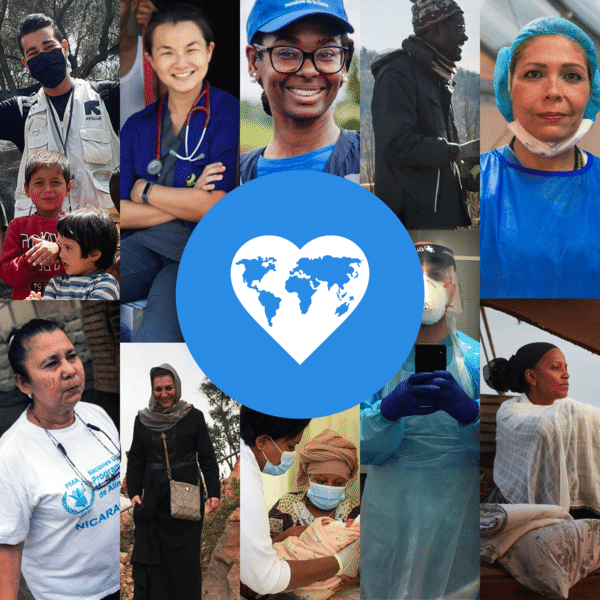
UN World Humanitarian Day 2020 #RealLifeHeroes

This is not a story… #RealLifeHeroes | World Humanitarian Day 2020

What do you call a person who runs towards danger to save others? Who is undaunted by disease, famine, drought, floods, earthquakes, tsunamis, locusts, conflict zones—and now the COVID-19 pandemic?

Would you call that person a hero? We would, too.

World Humanitarian Day is held every year on 19 August to pay tribute to aid workers who risk their lives in humanitarian service, and to rally support for people affected by crises around the world.

On 19 August 2003, a bomb attack on the Canal Hotel in Baghdad killed 22 humanitarian aid workers, including the UN Special Representative of the Secretary-General for Iraq, Sergio Vieira de Mello.

Five years later, the United Nations General Assembly adopted a resolution designating 19 August as World Humanitarian Day. Each year, World Humanitarian Day focuses on a theme, bringing together partners from across the humanitarian system to advocate for the survival, well-being and dignity of people affected by crises, and for the safety and security of aid workers. This year, the already difficult work carried out by humanitarians has been made even more so by the COVID-19 global pandemic.

We wish to pay tribute and offer the most heartfelt thanks to these #RealLifeHeroes who put everything on the line to help others, no matter how daunting the odds. Our obsession with myths and legends has been with us since the dawn of culture. Their fictional fantastic feats, embodied enemies and arduous journeys teach us how to dream big and summon the courage needed to do what’s right.

But the experiences of humanitarians—who are providing food to vulnerable people in need, providing safe spaces for women and girls in lockdown; delivering babies; fighting locusts and running refugee camps, all amid the COVID-19 pandemic—these heroes of our world are perhaps more worthy of admiration and celebration, because they’re real. As real as the people they help. World Humanitarian Day is a campaign by OCHA, the United Nations Office for the Coordination of Humanitarian Affairs.

Belitza is a lawyer working as a protection officer for UNHCR in Venezuela. She has been doing for the past 10 years and is motivated by the impact she has been able to have on the people she helps—including many women, children, and indigenous communities. She works in southern Venezuela in Guasdualito—a border town that has been receiving thousands of returnees since the onset of the COVID-19 emergency. Here she is providing assistance to those who are quarantined upon returning as a preventative measure against the pandemic.

“What I like most about what I do is the closeness with people that my work in the field allows me to have. It’s not a remote office, so I can see, know, feel people…and that has a greater impact on how we respond to the needs of people.”

Dr. Marie Roseline Darnycka Bélizaire, is a medical worker and Epidemiologist who helps fight #COVID19 in the Central African Republic. “This is what we do. We cannot leave people to die,” she says.

With her four degrees, @marieroselinebelizaire could have been any kind of doctor. But she chose community medicine to work at the grassroots level. “I want to be with and work with the community. I grew up in a big family. I used to go to the village – I love being and working in those places. The best thing we can do is prevent communities from having to be healed, by keeping them healthy.

In the age of #COVID19, doctors and other health personnel are called front-line workers. But humanitarian doctors are often quite literally on the front lines of both war and disease. Epidemiologist Dr. Marie Roseline Darnycka Bélizaire has braved violent conflict in hotspot after hotspot as she’s risked everything to help communities fight outbreaks, from HIV to yellow fever to Ebola—and now COVID-19

“What keeps me awake at night is thinking about how we would respond if a new disease emerges in the war zones of CAR at the same time as we are dealing with this pandemic. Also, keeping my team safe from both the virus and the violence, while we try to reach the most vulnerable…. And all of those who die in ambulances because we reach them too late.”

Umra Omar, from the Lamu archipelago in Kenya, is the founder of Safari Doctors, a mobile doctors unit that provides free basic medical care to hundreds of people every month from more than 17 villages in Lamu. While modern healthcare is modeled on urban realities, 70% of Kenya’s population lives in remote areas. A key perspective shift was not seeing healthcare as static, but something that could actually reach out to the people in need.

“I think humanitarian work needs to stop being a ‘by the way’ thing. It should be something that we are living as the norm.”

2019: #WomenHumanitarians 24 hours. 24 Stories.

UN World Humanitarian Day 2020 #RealLifeHeroes Read More »

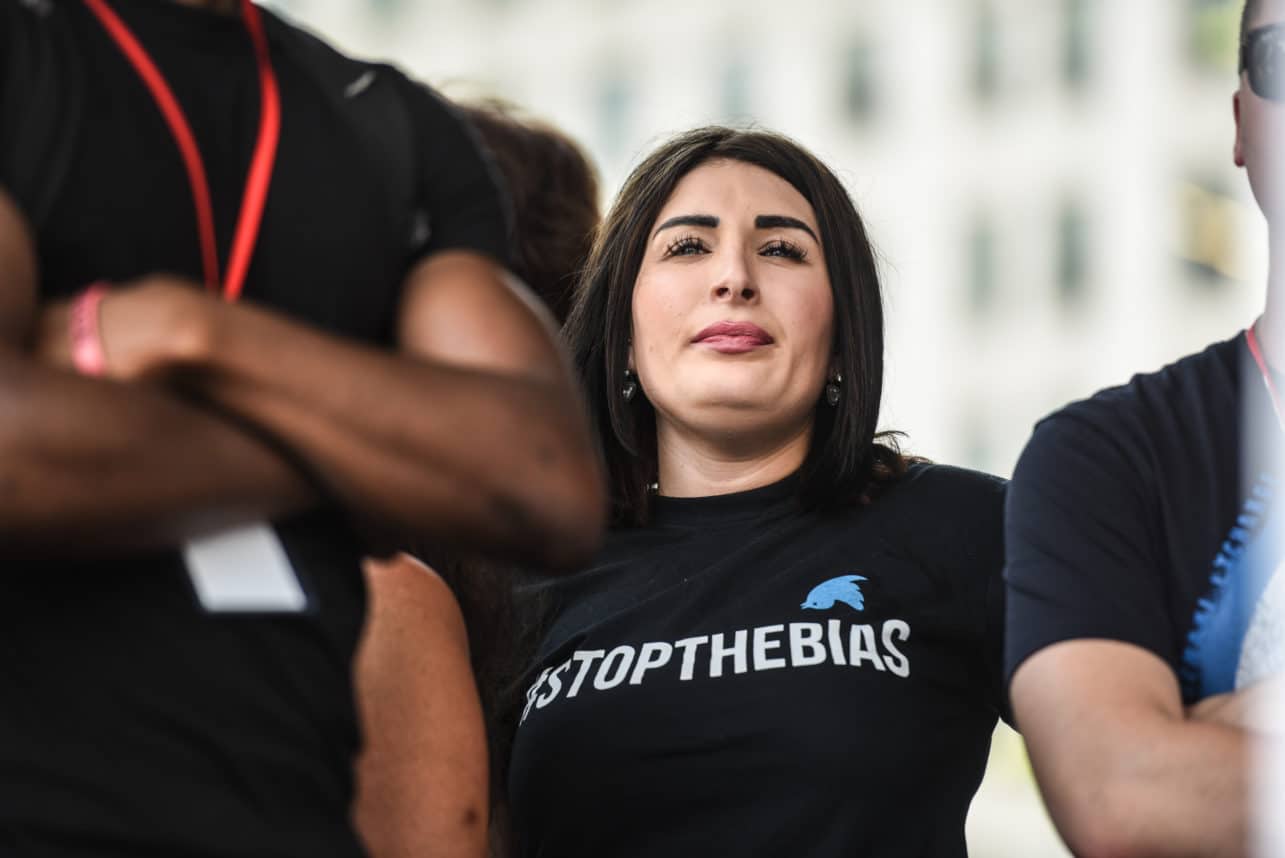
Laura Loomer, Jewish Provocateur Known for Anti-Muslim Rhetoric, Wins House Primary in Florida

WASHINGTON (JTA) — Laura Loomer, a Jewish right-wing provocateur known for her anti-Muslim rhetoric, has won the Republican primary for a House seat in the southern Florida congressional district where President Donald Trump votes.

The primary win caps a rapid rise for the 27-year-old political activist, whose provocations — and the responses to them — have made her a favorite of the right wing of the Republican Party. In 2017, Loomer, who calls herself an “investigative journalist,” was banned from Uber for calling on the rideshare service to allow riders to reject Muslim drivers. In 2018, Twitter suspended her account after she called Rep. Ilhan Omar, then a congressional candidate, “anti-Jewish.” Last year, Facebook banned her amid a purge of people the company said used the platform to promote hate.

Loomer won 42% of the vote in a six-candidate field in the primary on Tuesday. She’ll now face off in November against the Jewish incumbent Democrat, Lois Frankel, who handily bested a challenger from the left, Guido Weiss, with 87% of the vote.

Loomer is likely to lose; Frankel ran unopposed in 2018 and won 63% of the vote in 2016. But she had the endorsement of Florida Rep. Matt Gaetz, a far-right figure who is close to President Donald Trump. Trump and Gaetz both congratulated her on Twitter on Tuesday night; so did Marjorie Taylor Greene, a conspiracy theorist who last week won a primary in a heavily Republican district in Georgia.

Wins by these far-right figures are presenting a dilemma for the party’s congressional leadership, which has sought to marginalize the extremists. While Trump has frequently endorsed the candidates, he did not endorse Loomer during the primary, although they have supporters in common. Trump’s longtime adviser, Roger Stone, endorsed Loomer, and Karen Giorno, an official with Trump’s 2016 campaign, managed her campaign. After her win, Trump tweeted or retweeted five times to congratulate Loomer, an unusually robust display of enthusiasm.

The 21st District, encompassing parts of Broward County and Palm Beach, includes Trump’s Mar-a-Lago resort and is where Trump casts his vote.

Laura Loomer, Jewish Provocateur Known for Anti-Muslim Rhetoric, Wins House Primary in Florida Read More »