fbpx

August 7, 2020

david suissa podcast curious times

Pandemic Times Episode 76: Jason Greenblatt on the Elusive Dream of Mideast Peace

New David Suissa Podcast Every Monday and Friday.

A conversation with the former Mideast envoy on the dreams and harsh realities of the Israeli-Palestinian conflict.

How do we manage our lives during the coronavirus crisis? How do we keep our sanity? How do we use this quarantine to bring out the best in ourselves? Tune in every day and share your stories with podcast@jewishjournal.com.

Pandemic Times Episode 76: Jason Greenblatt on the Elusive Dream of Mideast Peace Read More »

Oakland A’s Bench Coach Apologizes for Making Accidental Nazi Salute

Oakland Athletics bench coach Ryan Christenson issued an apology on Aug. 6 for accidentally making a Nazi salute when he greeted a player in the dugout earlier the day.

The A’s had beaten the Texas Rangers 6-4 at the Oakland Coliseum that afternoon. A video clip circulating on social media shows Christenson waiting to greet pitcher Liam Hendriks in the dugout with his arm extended in what critics said looked like the Nazi salute. He and Hendriks then bump elbows and Christenson extends his arm again.


Christenson apologized in a statement, saying that the salute was completely accidental.

“Today in the dugout I greeted players with a gesture that was offensive,” he said. “In the world today of COVID[-19], I adapted our elbow bump, which we do after wins, to create some distance with the players. My gesture resulted in a racist and horrible salute that I absolutely do not believe in. What I did is unacceptable and I deeply apologize.”

The A’s said in a statement that Christenson’s gesture “looked like a Nazi salute” and condemned it.

“We do not support or condone this gesture or the racist sentiment behind it,” the baseball team said. “This is incredibly offensive, especially in these times when we as a Club and so many others are working to expose and address racial inequities in our country. We are deeply sorry that this happened on our playing field.”


The American Jewish Committee tweeted, “Thank you, @Athletics, for your unequivocal condemnation of Ryan Christenson’s deeply offensive gesture. Anti-Semitism has no place in sports or anywhere in America.”


Christenson told the San Francisco Chronicle that when he had his arm extended, Hendriks told him, “No straight arm, you have to bend your arm.” Christenson replied, “Oh no, it’s like ‘Heil Hitler.’”

The Athletic reported that sources in the A’s organization don’t believe that there was any racial intent behind Christenson’s gesture. One said that Hendriks typically does a karate chop as a gesture that’s what Christenson was waiting for. Another said that Christenson’s gesture seemed “like a coronavirus social distancing joke to me. Trying to keep distance. I’ve been running in far away from the line with my arm outstretched, too.”

Longtime Bay Area sports columnist Tim Kawakami, the editor-in-chief of The Athletic, tweeted that it’s tough to make “moral judgments” about a person from a six-second video clip.

“If the decision is whether somebody is an abominable person intentionally making an offensive gesture … or if it accidentally just looks like it out of context, I will lean toward not presuming somebody is abominable,” he tweeted. “THEN if we find out otherwise, I will lead the charge.”


Henry Schulman, the San Francisco Chronicle’s beat writer for the San Francisco Giants, tweeted, “I’m a Jew and son of Holocaust survivors. I do not believe after six years in the majors and a lengthy coaching career Ryan Christenson suddenly decided it would be fun to celebrate a win with a Nazi salute. I believe him. Glad he apologized and understands offense. Let’s move on.”

Oakland A’s Bench Coach Apologizes for Making Accidental Nazi Salute Read More »

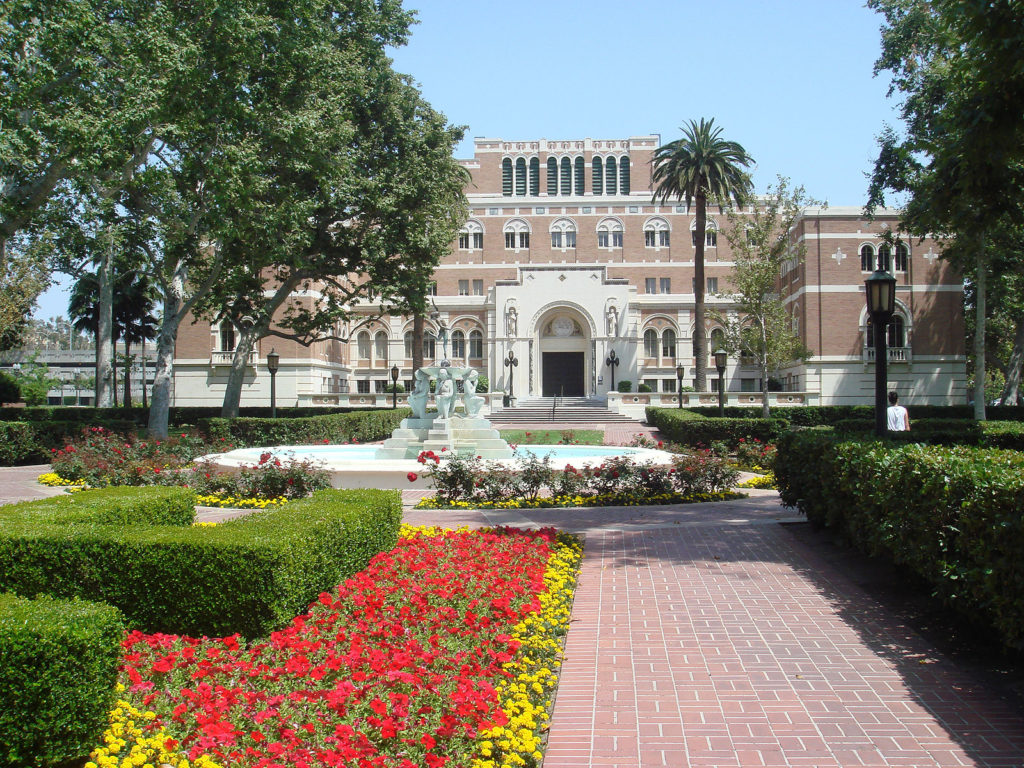
USC Student Who Launched Impeachment Campaign Against Student VP Says It Wasn’t Prompted by VP’s Zionist Views, Apologizes to Her and Jewish Community

The USC student who launched an impeachment campaign against University Student Government Vice President Rose Ritch stated in an Aug. 6 Instagram post that her call for Ritch to step down had nothing to do with her views as a Zionist.

Ritch announced her resignation in an Aug. 5 statement, saying that she had been bullied for her support for Israel, and that she had had been subjected to “an aggressive social media campaign to ‘impeach [my] Zionist a–.’”

Abeer Tijani, the student who initiated the impeachment complaint against Ritch, said in her post that she had called for Ritch to be impeached because she had remained silent on then-USG President Truman Fritz’s alleged racial remarks. According to Annenberg Media, Fritz is accused of placing “students of color into one category. Fritz was also accused of seeming unconcerned with issues pertaining to Black students and of making students uncomfortable with ‘jokes and the use of certain names.’ ” He resigned on July 7.

“I never called for either Truman’s or Rose’s impeachment/resignations due to their political views or personal identities,” Tijani said. “What I did say — and what I now regret not thinking more carefully about before I said it — was that Rose was ‘outspoken on issues that alienate Palestinian Trojans, and has failed to provide a check on the responsibilities and actions of the President when a voice of reason has been crucially needed.’ I should never have conflated the issues in such a way to suggest that Rose’s ‘support for Israel has made [her] complicit in racism, and that by association, [she is] racist,’ in her words.”

She then issued an apology to Ritch and the Jewish community.

“That was not my intention, and I want to offer my deepest apologies to Rose, and the greater Jewish community, for all the damage to her reputation, mental health, and well-being that resulted from my irresponsible wording,” Tijani said.

Tijani added that she only wanted to ensure that Palestinian voices were heard and that they might have been “difficult” to have an unabashed pro-Israel voice representing them.

“In the context that this has with the BLM [Black Lives Matter] movement, a leader should be able to graciously recognize and attempt to mitigate the ways in which his or her words — or lack of words, in the case of the silence with our student body president — have alienated a demographic of their constituency,” Tijani said. “And it is for that reason alone, and not at all because Rose identifies as a Zionist, that I called for her impeachment or resignation.”

Tijani said she was “heartened” to see Jewish organizations show support for Ritch after her resignation, but wished the university provided proper context for her remarks.

“As I type this, I am being bombarded by messages from friends and strangers notifying me that my name, pictures, and social media accounts have been plastered all over the internet by people painting me as an anti-Semite and a bigot,” she wrote.

The USC senior later added that “it simultaneously saddens and angers me that people could even entertain the idea that I sought to raise up Black students at the expense of any other group.” She also said, “There is no reason why anti-anti-Semitism and anti-racism movements cannot coexist and support one another, for we are all fighting the same evils.”

https://www.instagram.com/p/CDk6bGcDPC-/?igshid=13qytzxvf8gr5


The Daily Trojan had reported that Tijani had said in a June 27 Instagram post days after launching a petition calling for Fritz and Ritch either to be impeached or resign clarifying that being pro-Israel isn’t an impeachable offense and that to put the blame on Ritch for the Israeli government’s transgressions is anti-Semitic. She also said that her call for Ritch’s impeachment or resignation was based only on Ritch’s silence regarding Fritz’s alleged racial remarks, but added that Palestinian voices needed to be heard and “ that is greater than Rose and her personal affiliations.”

On July 7, the Louis Brandeis Center sent a letter to USC President Carol Folt and Vice President of Student Affairs Winston B. Crisp, highlighting some of the comments Ritch received on social media at the time. One comment stated, “[Fritz] and the [Z]ionist need to be impeached!” Another said Ritch “is a Zionist who indoctrinated the rest of USG to be Zionists” and another said that Ritch needed to be impeached because she has worked with AIPAC. None of the comments highlighted in the Brandeis Center’s letter were attributed to Tijani.

Folt sent a letter to the USC community on Aug. 6 calling Ritch’s resignation letter “heartbreaking.”

“As president of USC, I believe it is critically important to state explicitly and unequivocally that anti-Semitism in all of its forms is a profound betrayal of our principles and has no place at the university,” Folt wrote. “We must condemn any bias or prejudice that is based on a person’s race, religion, sexual orientation, or other personal characteristic. What happened to Rose Ritch is unacceptable, and we must all take up her challenge to do better.”

USC Student Who Launched Impeachment Campaign Against Student VP Says It Wasn’t Prompted by VP’s Zionist Views, Apologizes to Her and Jewish Community Read More »

Share the Kindness to at Least Two People Daily, You’ll Feel Better

“I love your smile.”
“A smile is an inexpensive way to change your looks.”

I’m a stand-up comedian. I’m in a profession that, if you’re good at what you do, people often heap praise on you. 

Before I step on stage, a person introduces me. “And now, ladies and gentlemen (except nowadays that has to be more gender neutral), please welcome …” and then there’s applause. If I have had a good show, afterward the applause is louder.

How many people get that when they show up for work? “And now, ladies and gentlemen, the law firm of Crumb, Bing and Wallace wants you to welcome back to the office Karen Lipmanshbybivberg. You saw her yesterday and she’ll be here all week. So put your hands together for Karen.” Applause.

Wouldn’t that be nice? Instead, when Karen finishes for the day, maybe one or two people might say goodnight to her. When I’m done, people want to hang out with me. Many people take work home with them. Nobody ever calls me at home or at my hotel after my show and says, “Hey, Mark, tell me one more joke.”  

Most people get very little applause or actual recognition in life but many of them deserve it far more than I do. Have you ever gone by yourself to visit someone who is in a coma? Unless you told someone you were going to do this, no one knows you were even there. Even Moses, with all he did for the Jews, not only got no applause, he was left out of the haggadah. In fact, many good things people do at or outside their jobs are done in private and in silence. Which is a good thing. It’s between them and God. 

If you ask most people if they need applause or recognition, they might say, “It might be nice occasionally.” But many will say no. Many will say that they chose the life they lead and if they have a happy and healthy family, then that’s applause and recognition enough for them. And that’s true. 

But occasionally telling people that they are doing a good job or that they look good or you like them or you’re happy to see them is not a bad thing. But be careful what compliments you give people these days. “That’s a nice dress” might cost you $20,000 in legal fees and your job. 

When I look in the mirror, I don’t think I’m the best judge of how I look. In fact, quite the opposite. I hardly ever think I look good. I need people to correct my vision.

Try saying two nice things to at least two people every day.

I have a cousin who’s in his mid-70s. He’s a nice guy but looks a little weather-beaten. I was with him recently and I told him that I thought he looked good and, by the way, I really did think that. In less than a second, he said, “Really?” I said, “Yeah, you look healthy.” Again, he said, “Really?” I would bet the house that no one has told him that he looked good in many years. But when I told him, he perked right up. His eyes seem to look a bit less sad. Someone saw him. He wasn’t the invisible man for a minute. When I tell people that I was just thinking about them, most of the time, they don’t believe it. 

How about saying something to brighten a person’s day? “I love your smile.” “It’s good to see you.” “Those are nice shoes.” There are hundreds of things you could say to brighten someone’s day, especially people in your family, who often are taken for granted. I once told my cousin she was my favorite cousin and she told me how much that meant to her.

So try it. Try saying two nice things to at least two people every day — especially to your spouse and kids. They’ll appreciate it. And maybe, just maybe, after 10 years of doing this, they may say something nice to you.

Then let me know you did it and I promise I’ll stand up and applaud you for it.


Mark Schiff is a comedian, actor and writer. 

Share the Kindness to at Least Two People Daily, You’ll Feel Better Read More »

Reflections on an Anniversary

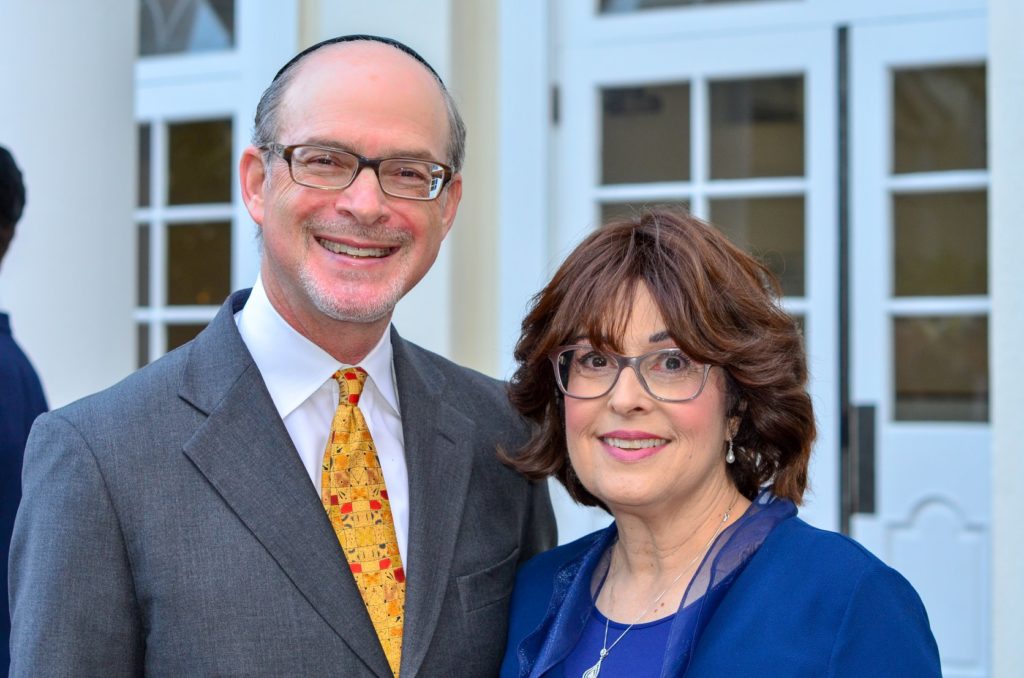
We recently celebrated two family milestones: our 33rd wedding anniversary and our oldest son’s birthday. Avi was born a few days before his due date — an unbeatable first anniversary gift. Jeff and I, and Avi and his family enjoyed dinner on the deck in our backyard in the cool of the late afternoon.

During dinner, Avi’s younger daughter, 5-year-old Leeba, piped up. “Nana and Papa don’t look anything like they did when they got married,” she observed nonchalantly between bites of chicken schnitzel. We all laughed as Jeff asked her, “In what way don’t we look the same?”

“In every way!” she pronounced firmly.

This is why God makes little kids so cute. They state the unvarnished truth and we love them even more.

It’s true. Jeff now is mostly gray, yet still about as fit as he was on July 12, 1987. I hide my gray hair with chestnut-brown dye, and have held on to the baby weight from my four pregnancies for purely sentimental reasons. Before we married, Jeff and I wondered what our future would hold. Would we be blessed with children? With satisfying careers? With good health? Would we live in times of peace or war? Through marriage, we were committing to face that unknown future together.

We didn’t fall in love, but love blossomed as we grew to know each other meaningfully. Neither of us trusted the concept of “falling in love” because falls can be dangerous. You can break your leg and need a long time to mend. Our courtship was cautious, but becoming a wife or a husband is the job of all jobs. It’s got lifetime tenure — like being on the Supreme Court. Admittedly, I eventually became impatient for a proposal, but when I got the ring, we both knew it was right.

I believe love is a decision; one that needs reaffirmation each day. This is how love grows — through the ups and downs, the unwavering commitment to give to each other, and to give space when needed. We’ve been blessed with healthy children and grandchildren, with satisfying careers, nourishing friendships and the spiritual sustenance of meaningful Jewish practice. Living through tumultuous times as we now reinforces the truth that the Torah and its teachings really are “a tree of life.”

As our granddaughter Leeba couldn’t help but notice as she compared her real-life grandparents with their wedding-day photos, Jeff and I have changed over the years, although we work hard to stay as youthful as possible. We now take a boatload of supplements from vitamin A to zinc, and make exercise a priority.

We’ve changed more on the inside. Even after three decades together, we have discovered things about ourselves and each other that came as stunning revelations. Both of us, it turned out, still carried hidden emotional baggage from our childhoods, deeply painful experiences that had caused fissures in our relationship that neither of us knew how to address. We have supported each other through this learning process, which has led to our feeling even closer.

Recently, we watched a Jerry Seinfeld stand-up show on Netflix. I was laughing uproariously from the beginning of the show, but during Seinfeld’s riffs on marriage, Jeff nearly bust a gut. The comedian joked about getting in trouble with his wife for using “that tone,” when he had no idea he even had a “tone” at all. As he played out the routine about being the unwittingly erring husband, Jeff was laughing so hard, he had to go outside to catch his breath.

Laughter is contagious, so we were both laughing until we cried. But afterward, I got Jeff to confess that I didn’t do what Seinfeld’s wife, Jessica, did. Usually.

Young adults are pushing off marriage later than ever before. While many singles are anxious about the future, nobody ever knows what the future brings. I do know this, though: With a good and loving spouse and a strong, shared sense of Jewish values, you can build a life together, supporting and strengthening each other in good times and less good times, loving each other, and sharing the healing gift of laughter.


Judy Gruen’s most recent book is “The Skeptic and the Rabbi: Falling in Love With Faith.”

Reflections on an Anniversary Read More »

Adin Steinsaltz, Acclaimed Scholar Who Made the Talmud More Accessible, Dies at 83

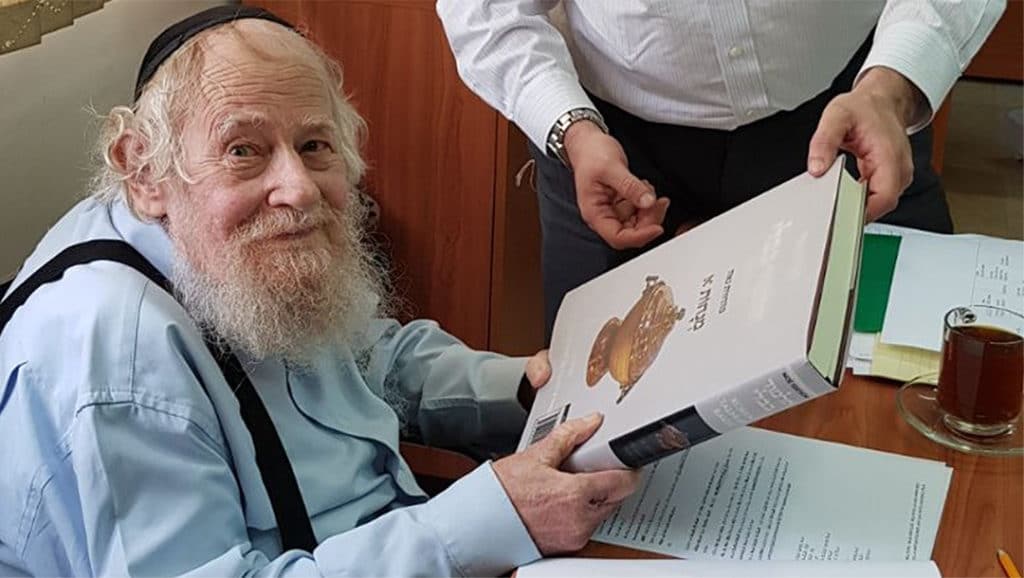
(JTA) — Rabbi Adin Even-Israel Steinzaltz, the acclaimed scholar whose landmark translation of the Talmud enabled a vast readership to access one of Judaism’s most canonical texts, has died.

Steinsaltz died Friday at 83 in Jerusalem.

Steinsaltz’s monumental translation of the 63 volumes of the Babylonian Talmud made the arcane rabbinic debates and folkloric tales easier to comprehend, unlocking the wonders of Talmud study for those lacking a high-level Jewish education. The project took 45 years to complete.

Steinsaltz not only rendered the forbidding Aramaic text into modern Hebrew, but integrated his own commentary into the sparse language of the original, filling in gaps in the text that had previously required deep familiarity with the internal mechanics of talmudic discourse to decipher.

A new English version of the Steinsaltz Talmud by the Koren publishing house, and a free version of the translation available on the website Sefaria, further expanded Steinsaltz’s reach.

“The Talmud was never meant to be an elitist book,” said Arthur Kurzweil, the author of two books about Steinsaltz and a board member of the Aleph Society, which raises funds to support the rabbi’s work. “It was meant to be for everybody. So Rabbi Steinsaltz spent 45 years trying and succeeding to make that happen.”

Described as a once-in-a-millennium scholar, Steinsaltz was renowned for his prodigious intellect and tireless work ethic. He was reputed to put in 17-hour workdays.

Authoring a comprehensive commentary on the Talmud alone put him in a category alongside Rashi, the medieval French scholar whose commentary on the Bible and the Talmud, composed 1,000 years ago, is considered the most authoritative. But Steinsaltz also wrote another 60 books on topics ranging from Jewish ethics to theology to prayer to mysticism. He also helped establish educational institutions in Israel and the former Soviet Union.

Born to secular parents in Jerusalem in 1937, Steinsaltz embraced Jewish practice as a teenager. Though his father was an irreligious socialist, he sent his son to study Talmud with a tutor at the age of 10. Steinsaltz’s intellectual gifts were evident early, when he became the youngest school principal in Israel at 23.

In 1965, Steinsaltz founded the Israel Institute for Talmudic Publications, the same year he began his Talmud translation. His work was driven by a desire to educate large numbers of Jews about their heritage. “Let my people know,” was his favorite slogan.

“The Talmud is the central pillar of Jewish knowledge, important for the overall understanding of what is Jewish,” Steinsaltz told JTA in 2010 on the occasion of the completion of the translation. “But it is a book that Jews cannot understand. This is a dangerous situation, like a collective amnesia. I tried to make pathways through which people will be able to enter the Talmud without encountering impassable barriers. It’s something that will always be a challenge, but I tried to make it at least possible.”

The completion of the translation was accompanied by a global day of Jewish learningconnecting 360 Jewish communities in 48 countries. The event has since become an annual affair.

Steinsaltz’s work was long deemed controversial. His Talmud departed from longstanding conventions, introducing punctuation and paragraph breaks, altering the pagination and placing his own commentary in the space around the main text that had previously been the domain of Rashi.

Rabbi Elazar Shach, a leading haredi Orthodox rabbi in Israel, called Steinsaltz a heretic and forbade his followers from reading his works, apparently out of concern for some passages in two works on the Bible that Steinsaltz subsequently agreed to modify. Shach insisted that all of Steinsaltz’s work was heretical, however, another eminent 20th-century authority, Rabbi Moshe Feinstein, approved of the Steinsaltz Talmud. In 1998, Jacob Neusner, a Conservative rabbi and noted scholar of Judaism, published a 250-page book entitled “How Adin Steinsaltz Misrepresents the Talmud.”

Steinsaltz was also criticized for accepting the leadership of a modern-day Sanhedrin, a recreation of the ancient rabbinic body. Steinsaltz resigned the post in 2008 out of concern for potential breaches of Jewish law.

But none of that slowed Steinsaltz’s embrace as an unparalleled scholar of Judaism, both in the Jewish world and beyond. He was awarded the Israel Prize, Israel’s highest cultural honor, in 1998, along with the inaugural Israeli Presidential Award of Distinction, the French Order of Arts and Literature, and a 2012 National Jewish Book Award. He was invited to deliver the prestigious Terry Lectures at Yale University and was a scholar in residence at the Woodrow Wilson Center in Washington. In 2016, he was invited to a private audience with the pope.

Among his best-known works beyond the Talmud translation is “The Thirteen Petalled Rose,” an introduction to Jewish mysticism first published in 1980. A follower of the Chabad Hasidic movement, Steinsaltz also authored several books on Tanya, one of the group’s core texts. In 2018, he published a translation and commentary on the Five Books of Moses.

Despite his massive intellectual achievements, Steinsaltz often appears slightly disheveled in public and had a playful streak. Kurzweil recalled an appearance at a Long Island yeshiva at which Steinsaltz encouraged the students to do everything they could to make their teachers’ lives miserable, and even suggested a source book where they could find difficult questions sure to flummox them.

“He’s a troublemaker and he’s got a gleam in his eye at all times,” said Kurzweil, who served as Steinsaltz’s driver during his visits to New York. “He’s up to mischief sometimes. He likes to question everything.”

Long plagued by ill health, Steinsaltz suffered a stroke in 2016 that left him unable to speak.

“Jewish learning is created by the Jews and is also creating the Jews,” Steinsaltz said in 2010. “When you learn, you learn about yourself. So learning one page of the Talmud is equivalent to two or three sessions with a psychoanalyst. That’s why people are interested — Jewish learning is a mirror into our soul.”

Get to know Rabbi Steinsaltz’s work and learn fresh insights into the Talmud, page by page. Sign up for A Daily Dose of Talmud here.


Adin Steinsaltz, Acclaimed Scholar Who Made the Talmud More Accessible, Dies at 83 Read More »

A Moment in Time: We Cannot Control the Wind, but We can Adjust the Sails

Dear all,
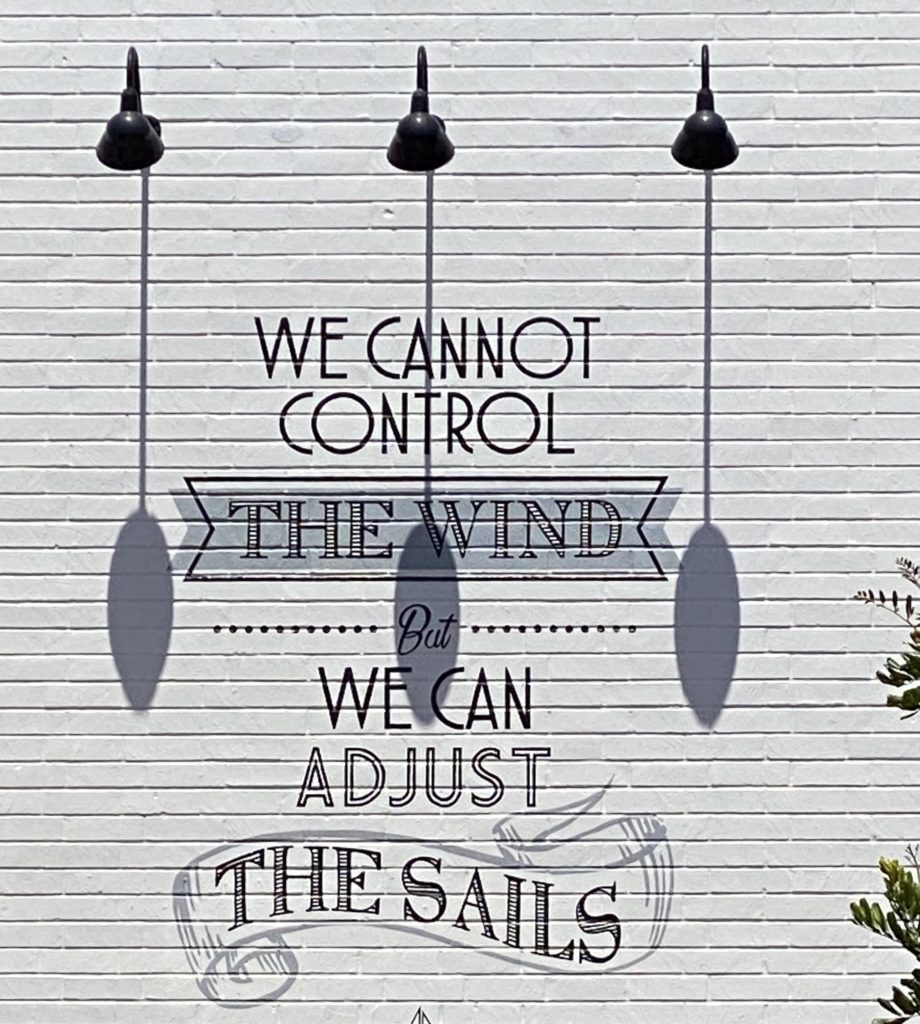
Ron and I spent time in Newport Beach recently where we came upon this sign:
“We cannot control the wind, but we can adjust the sails.”
It gave me pause…. We all want to be in control as much as possible. But sometimes there are forces out there reminding us otherwise.
And so … we still have the opportunity to adjust what we can:
Our attitude
Our expectations
Our goals
And perhaps our goals don’t change – but our journey to reach those goals might!
The wind will blow for time eternal, but we can capture a moment in time to harness its energy and focus our future.
With love and shalom,
Rabbi Zach Shapiro

A Moment in Time: We Cannot Control the Wind, but We can Adjust the Sails Read More »

Beirut Synagogue Appears to Suffer Only Minor Damage From Bombing

(JTA) — A photograph said to be of Beirut’s only synagogue shows minor damage to the interior of the 95-year-old building from a blast this week in the city.

The image of the Maghen Abraham Synagogue appeared Thursday on the page of a Facebook group called the Lebanese Jewish Community Council. Lebanon has no organized Jewish community and very few Jewish residents, if any.

More than 150 people died in the blast, which authorities initially said occurred at a storage facility for  ammonium nitrate. But President Michel Aoun on Friday said the possibility of “foreign intervention” is also being examined.

The blast obliterated some buildings and heavily damaged thousands more, rendering about 300,000 people homeless, according to The Daily Star.

The photo shows some debris and dust on the floor of the synagogue and on plastic sheets covering the pews. The walls show no cracks and it’s not clear whether the glass windows were shattered, but the frames seem to be in place.

The blast occurred on Tuesday about a mile west of the synagogue, which is adjacent to the Grand Serail government palace. That building sustained more significant damage, including doors that were torn from their hinges.

Initial reports on social media spoke of heavy damage to the synagogue as well, and some even said it had been destroyed.

The synagogue reopened last year following extensive renovations.

Beirut Synagogue Appears to Suffer Only Minor Damage From Bombing Read More »

Poem: Today I am Jewish

July 22, 2020.

I am joining a nation of people who have suffered and struggled to find acceptance and a place to call home. A people who have triumphed in the face of adversity. Learning to adapt, question the status quo and build an altar within the heart of each act, each exchange, service and rite of passage. 

An ancient people, whose blood line runs thick within the pages of time and echoes far and wide in the land of Israel. Where from so many stories have been told. A land universally recognized as “holy.” 

What I love about you: 

Your humanness
Flaws and imperfections being shown
You are funny
There is a wit in your banter
The songs
The stories reenacted so as not to forget.
“Tradition, tradition!”
Our legacy — each member responsible for their part.
You are old, and with age comes wisdom.
We draw from a collection of lived experiences, shared.
Family is EVERYTHING
Honoring our ancestors is integral to honoring ourselves.
Because we are a part of something greater than any individual. Here, there is no hierarchy. There is a circle.
Through actions, I am a living > Ritual, Ritual, Ritual <
Schnitzel, rugelach and matzo ball soup!
When I am mourning, I will not grieve alone.
In fact, I will never be alone.
I am a part of an intimate web.
To know what it is to have lost almost everything. Several times over. And to build again.
Nothing is taken for granted.
Everything is questioned.
We don’t claim to have all of the answers.
There are many ways …
I, too, will take on the stigmas and stereotypes.
Our sense of belonging does not come from outside of ourselves. Adaptability breeds resilience.
Values are upheld by the community.
Modeh Ani — Gratitude for Life and its Creator
God is everywhere and in everything.
The magic and mystery transferred is fortifying.
I am a better human with your guidance.
A call to light up the world.
Passion for life, all of its flavors and seasons included.
We are here to save ourselves.


Poem: Today I am Jewish Read More »

Biden Intervened to Keep ‘Occupation’ out of Democratic Platform

WASHINGTON (JTA) — Joe Biden personally intervened to keep the word “occupation” out of the official Democratic platform, according to a new report.

Foreign Policy reported Thursday that Biden intervened after pro-Israel groups appealed to him, citing three sources, including Jason Isaacson, the chief policy and political affairs officer at the American Jewish Committee.

“The question of whether to allow the text to refer to ‘occupation’ or use the phrase ‘end the occupation’ was taken to the vice president and he said ‘no,’” Isaacson told Foreign Policy.

Prior to Biden’s intervention, progressives in the party had secured agreement to include the word for the first time in the Democratic platform.

Ultimately, the section on Israel included more robust language defending the rights of the Palestinians to a state. It also condemned the boycott Israel movement.

The platform included a number of victories for progressives on domestic issues, including closing the wage gap and climate change. Vermont Sen. Bernie Sanders, whom Biden, the former vice president, defeated in the primaries, is working closely with Biden to shape party policies.

Biden Intervened to Keep ‘Occupation’ out of Democratic Platform Read More »