Print Issue: Aug. 7, 2020
Print Issue: Aug. 7, 2020 Read More »


It seems President Donald Trump doesn’t know how to pronounce Yosemite — one of America’s (and California’s) greatest national park treasures. He butchered the pronunciation after signing the bipartisan Great American Outdoors Act on Aug. 4. The act will pay for repairs at national parks and permanently finance the Land and Water Conservation Fund.
In his verbal gaffe, he also unintentionally endorsed a pre-existing “Yo Semite” t-shirt, created 15 years ago by Bay Area Jewish educator and digital media consultant Sarah Lefton.
Lefton showcased the shirt — which features campfire wood lettering and two trees resembling Yosemite’s famous sequoias — on social media after Trump mispronounced the name of Yosemite twice, during a press conference.
“I was there first, Trump. Get em at judaicashop.net” Lefton posted on Twitter, linking to the National Museum of American Jewish History (NMAJH) in Philadelphia, Pa., one of a few locations where the shirts are still sold.
In 2004, the t-shirt — inspired by Lefton’s time at Jewish summer camp, and particularly in her role as marketing director for Camp Tawonga — launched her entrepreneurial fashion brand, Jewish Fashion Conspiracy, which also sold shirts with ironic Jewish phrases including “Jews for Jeter,” “Geltdigger” and “Red Sea Moving Company.”
“Everything I ever needed to know I learned at Jewish summer camp,” Lefton told the Journal.

From 2001-2005, Lefton worked at Camp Tawonga, a “beloved independent Jewish summer camp located at the Hetch Hetchy gate of Yosemite Park,” she said. “You spend a lot of time in the park when you’re at camp, and so did I, especially as a new Californian. Folks in the office would intentionally mispronounce the name of the camp, ‘I’m going up to YOsemite.’ One day, I heard it. [‘Yo Semite’] came out of my mouth and I thought it would be cool on a t-shirt.”
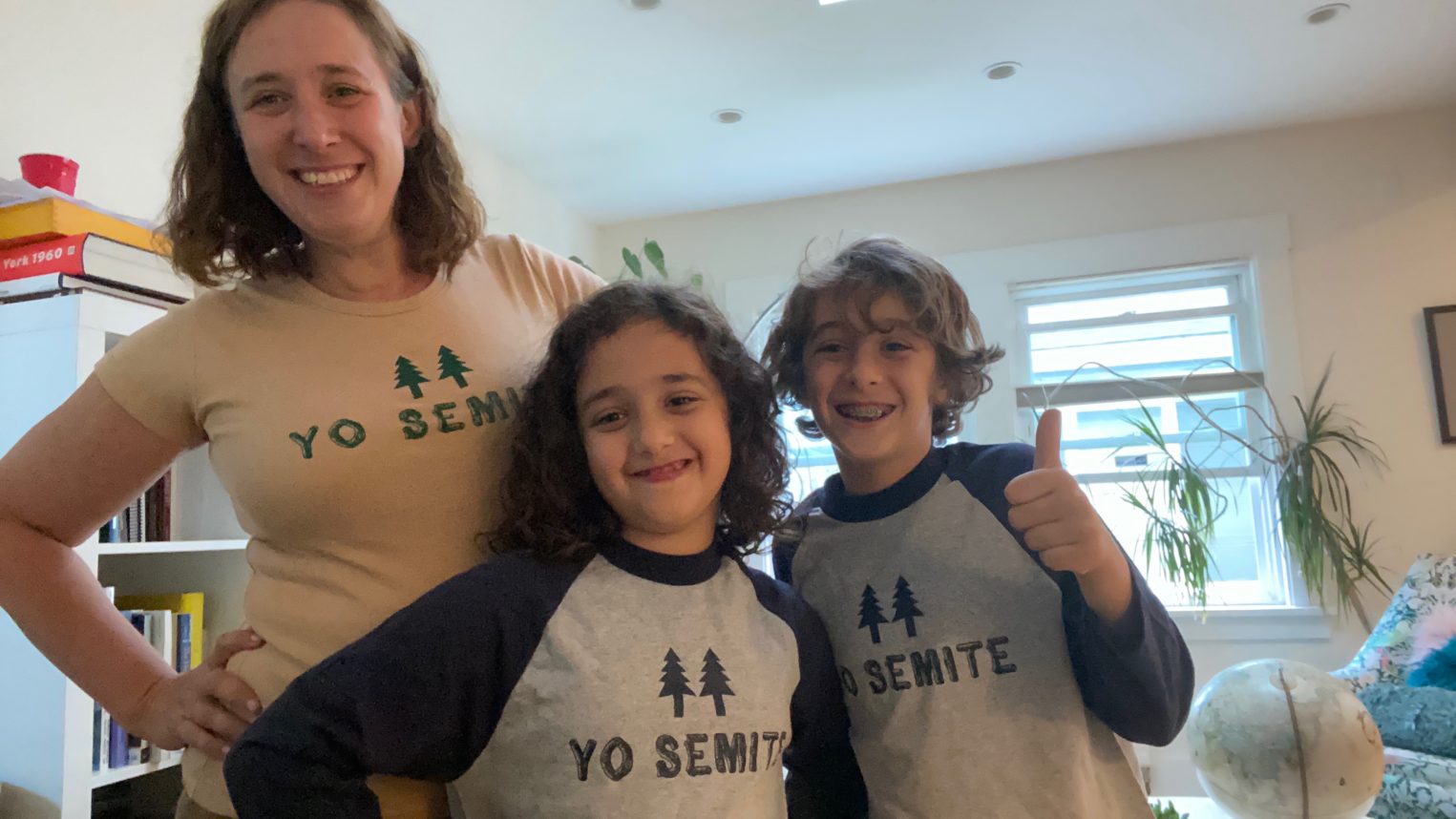
Lefton made one for herself, and during an urban hike in her San Francisco neighborhood, she ran into two Jews wearing kippahs who advised her to make more. As someone who “ordered clothes all the time” for Jewish summer camp use, she easily ordered a few dozen, put up a rudimentary website and decided to name it jewishfashionconspiracy.com.
“The internet was different 20 years ago,” Lefton reflected. After a mention on the [popular gossip website] Gawker, “there were hundreds of orders in a minute for items that didn’t exist,” she said. She gathered some friends and they began producing and shipping the shirts.
Lefton said that the success of her site eventually enabled her to leave her job and “focus on being a creative weirdo, which is what led to BimBam,” her educational technology company, which started its life at the now defunct G-dcast.com.
“Because I was working in the Jewish community and living on the internet, it came together for me,” she said. “What the Jewish outreach and educational universe needed was a fun, fresh internet presence, and it should be lighthearted animations about serious text.” After a few years of development, G-dcast.com launched in 2008 and was renamed in 2016. The company produced over 400 original videos representing more than 11 million views and 22 million minutes of watch time on YouTube before it was shuttered in April 2019.
“There was a moment when the ‘hipster Jewish thing’ was all the rage, and I was excited to join that club for a minute. Jewcy.com sold my shirts, and we all became friends, and I joined the fun Jewish league of nerds,” Lefton said.
Even after she shifted her energies to G-dcast, there were always a few shops selling ‘Yo Semite’ shirts, Leften said, including internet shops such as ModernTribe, and storefront locations like Berkeley’s Afikomen Judaica and the NMAJH in Philadelphia.
On Aug. 4, Lefton ordered a few hundred more shirts to be printed and shipped to the retailers, including Kristen Kreider, director of retail and visitor experience at NMAJH. Since COVID-19 forced the museum’s closure, Kreider told the Journal the online store has been doing “brisk online business.” While in a typical month the museum might sell a total of 15 shirts, by the morning of Aug. 5 over 500 shirts had been ordered, Kreider said, with new orders arriving every two to four minutes.
Lefton also revealed another past near-association with the current occupant of the White House: she had auditioned for—and was accepted into the second group of potential candidates—for NBC’s “The Apprentice,” which Trump hosted.
“It was because of this shirt,” Lefton said. “I thought it would be good for my apparel business. I’ll pitch myself as the Jewish character,” she said, sharing her plan to be an “edgy Jewish character” who wouldn’t report for filming on Shabbat “They liked me, but I got cut.”
You can order a “Yo Semite” shirt by visiting the Judaica Shop.
‘Yo Semite’ Shirt Makes a Comeback After Trump Mispronounces Yosemite National Park Read More »

I’ve been thinking a lot about how God must be very busy these days. His normal volume of prayers must certainly be at an all time high, given the logical equation of: Number of People on Earth Today x Global Suffering = Total Prayers. Personally, I’ve been limiting my communication with the Big guy to only the essential matters. Sometimes I’ll even tell God that I’m NOT asking for his help right now, but if he could just be on the lookout in case I do need him in the future that’d be great…thanks!
This typically Jewish mind game of God talk has me wondering why other folks don’t seem to engage in these same mental gymnastics. As Jews we worry so much we even worry about God! Is he getting enough sleep with all the extra workload? Jewish worry is so ingrained in our cultural identity it’s become a joke, a literal meme that’s shared on social media, but is all this extra ‘oy’ taking away from our collective joy? The superstitious culture of fearing the ‘ayin hara’ – the evil eye, is a catch-22 thief of joy because if you celebrate your joy you may lose it.
I love following non-Jewish moms on social media because I’m constantly amazed by their utter positivity. It shines through from their #blessed posts about everything from their morning Starbucks to their Target runs. The most obvious contrast is when it comes to pregnancy related posts. Some Jewish moms will hardly say a word online until after the bris whereas typical anglo-American culture will have you thinking Week 5 is an appropriate time to decorate the nursery. I’ve become a bit jealous of how other moms seem to have so much faith in things always turning out alright.
Now that we’re in the midst of a global Pandemic, and have a very good daily opportunity to worry, I think my ancestral inclination to lean into this anxiety is entirely unhelpful. You can’t simultaneously hold the schizophrenic belief in a good and just world and at the same time fear that not spitting after saying ‘God forbid’ or throwing salt over the wrong shoulder could result in utter catastrophe.
In Judaism we are commanded to constantly be thankful for what we have. To thank God throughout our day with every blessing. Yet in Jewish superstition we’re commanded to take every precaution to not lose that which we hold dear. I’ve found this double-edged mental pressure entirely exhausting.
So I’ve decided to have a little more faith.
I’ve decided to concentrate on my actual problems instead of worrying about things that haven’t happened yet and God forbid won’t! – Keinehora! (See what I did there?). I think in Judaism worry has become synonymous with love. The more concerned and overbearing we are about our children the more we demonstrate our love for them. Have they had enough to eat? Is their coat warm enough? How will they ever know how precious they are if we don’t constantly remind them of it? Instead, I’m going to try to demonstrate my love through trust and embrace the positive in the possibility.
In this way I hope that I will connect to God in a way that goes beyond bargaining onto his good side. As part of my pandemic parenting philosophy I hope to show my children that there is beauty and goodness in this world, even within its most chaotic appearance.
Marion Haberman is a writer and content creator for her YouTube/MyJewishMommyLife channel and Instagram @MyJewishMommyLife page where she shares her experience living a meaning-FULL Jewish family life. Marion is author of, ‘Expecting Jewish!’ She is also a professional social media consultant and web and television writer for Discovery Channel, NOAA and NatGeo and has an MBA from Georgetown University.
Is Now a Good Time to Panic? Jewish Parenting in the Time of Pandemic Read More »

In the final hours of Tisha b’Av on July 30, five spiritual communities of varying denominations gathered via Zoom for study, song and commemoration. The event, “A World Upended: From Sorrow to Hope,” involved B’nai David-Judea Congregation, IKAR, Temple Beth Am, Temple Emanuel of Beverly Hills and Temple Isaiah.
This year, more than 170 people gathered online for opening remarks, then used Zoom’s breakout rooms to divide into smaller sessions led by clergy members from the five communities.
“We are all feeling siloed, distant, alone through this experience and yet as one Jewish community, we come together to create hope, comfort and to rebuild,” Rebecca Schatz, assistant rabbi at Temple Beth Am told the Journal after the event. “Though distant, we brought even more people together. The boundaries between denominations faded away as all the participants chose classes and teachers based on interest. Through Tisha b’Av, a holiday of brokenness and separation and devastation, we, the L.A. Jewish community come together, each year, to rebuild, to collaborate and to recognize that we are always together.”
“It was soothing to see a gallery view of fellow Jews from across L.A. on a day that is defined by isolation. That comfort amplified the messages of hope [from the clergy].” — Rena Selya Cohen
Rena Selya Cohen, a B’nai David-Judea member who attends the collaborative Tisha b’Av program annually, concurred. “It was soothing to see a gallery view of fellow Jews from across L.A. on a day that is defined by isolation,” she told the Journal. “That comfort amplified the messages of hope [from the clergy].”
In her opening framing for the event, Rabbanit Alissa Thomas-Newborn of B’nai David-Judea told participants they were “joining each other in the journey from sorrow to hope,” and introduced the idea of the wounded healer, explaining that those who have been wounded can best care for others who are wounded. She challenged attendees to identify where they most need healing and to ask themselves, “When Tisha b’Av has come and gone, what would it look like for me to become a wounded healer?”
In her session, “Desperately Seeking Mashiach,” IKAR Associate Rabbi Ronit Tsadok invited people to put comments and questions in the chat as the group read through a piece of text about the Messiah. The session closed with participants responding to the question of what brings people hope. Their answers included “creativity,” “protesting racism,” “resilience,” “community hope for new leadership,” “plants growing,” “kindness” and “knowing that people have survived difficult times in the past.”
“We look at the text together. We own it and we share it. We’re all in here together,” Tsadok said.
In his session, “Tisha b’Av’s Future: A Festival,” B’nai David-Judea Rabbi Yosef Kanefsky discussed the custom of not saying Tachanun (a sorrowful prayer) on Tisha b’Av because it’s considered a holiday, and included a text from the prophet Zechariah that promised fast days would be turned into festivals.
“The seed of Tisha b’Av the holiday is embedded in Tisha b’Av the fast …” Kanefsky said. “On Tisha b’Av, you think everything is hopeless and not fixable and we’re just stuck and mired in the awfulness. We have to take a moment of Tisha b’Av and say it’s not going to be that way forever.”
The other two sessions were “Nahafokhu: Turning Tragic Memory into Uplifting Hope,” from Temple Beth Am’s Senior Rabbi Adam Kligfeld and “Renew Our Days: The Journey from Tisha b’Av to Simchat Torah,” from Temple Isaiah’s Rabbi Zoe Klein Miles.
The event also featured a musical mashup of Hebrew poet Zelda’s famous poem, “Each of Us Has a Name” and Elana Arian’s song “Nachamu,” by Rabbi Adam Lutz and Cantor Lizzie Weiss, both of Temple Emanuel of Beverly Hills.
“This is one of my favorite programs because it brings communities together,” Deb Engel Kollin, a member of Temple Beth Am, told the Journal. “It reminds me of the Limmud model. I look forward to this day every year, and I would love to see more opportunities for us to come together.”
In ‘A World Upended,’ Los Angeles Jews Gathered to Commemorate Tisha B’Av Read More »
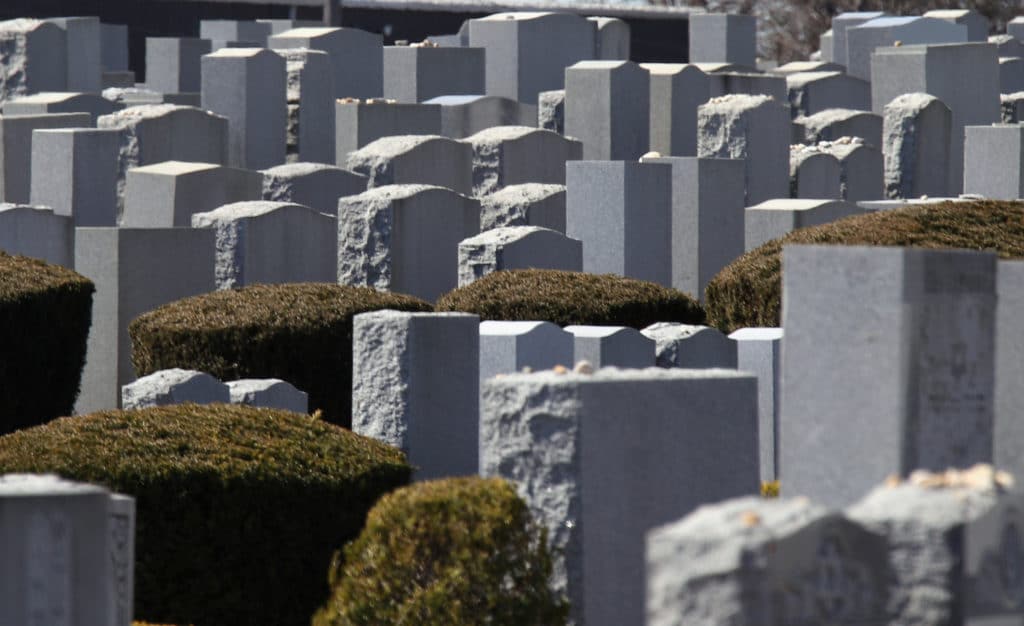
(JTA) — Two historic cemeteries in Virginia, one Jewish and one African-American, were vandalized with graffiti featuring “777,” shorthand for the triskele hate symbol.
The vandalism was discovered Monday at Richmond’s Evergreen Cemetery and at the Sir Moses Montefiore Cemetery in Henrico County on the border with Richmond, the Richmond Times-Dispatch reported.
The triskele, or triskelion, looks like three interlocking sevens and was one of many ancient European symbols appropriated by the Nazis and later by white supremacist groups, according to the Anti-Defamation League.
The “777” stand-in for the symbol was spray-painted throughout the Montefiore Cemetery, which was founded in 1886 and is the burial place of many Jewish immigrants from the former Russian Empire, according to the Times-Dispatch. Evergreen Cemetery houses multiple African American leaders “from the post-Reconstruction and civil rights eras,” including Maggie Walker, the first African American woman to charter a bank in the United States.
“These acts of hate degrade and denigrate our way of life. They are designed to stoke fear in the hearts of both Jewish and Black communities. We stand together with our Black neighbors in proclaiming that these cowardly acts have not, and will not break us,” the Jewish Community Federation of Richmond said in a statement posted on Facebook.
Jewish and Black Historical Cemeteries Vandalized in Virginia With Nazi Symbol Read More »
The American Jewish Committee (AJC) urged The Washington Post to issue a correction regarding an op-ed that called Israel “ethnically exclusive.”
The July 31 op-ed titled “The 2020 Democratic platform betrays Palestinians and again gives Israel a pass,” criticized the Democratic Platform Drafting Committee for not approving a platform referencing the Israeli occupation of the West Bank. The authors are all delegates to the Democratic National Convention (DNC).
“We asked the DNC to recognize the equal rights of Palestinians; to refrain from affirming Israel’s illegal annexation of East Jerusalem; and to support Israel as a state for all its citizens rather than an ethnically exclusive ‘Jewish state,’ which is an endorsement of institutionalized racism,” the column states. “Would we ask that the United States be recognized as a White, Christian country? None of these amendments were considered.”
The AJC took umbrage to the authors’ use of the term “ethnically exclusive.”
“Calling Israel ‘ethnically exclusive’ is a lie and an insult to 25% of Israel’s population who aren’t Jewish but are full participants in its democracy,” the Jewish group tweeted. “Issue a correction, @WashingtonPost.”
You're entitled to your own opinion, but not your own facts.
Calling Israel "ethnically exclusive" is a lie and an insult to 25% of Israel's population who aren't Jewish but are full participants in its democracy.
Issue a correction, @WashingtonPost.https://t.co/gZ7G9XXkF2
— American Jewish Committee (@AJCGlobal) August 4, 2020
Avi Mayer, the AJC’s global communications director, elaborated, “One out of every four Israelis — 2.3 million citizens, including 1.9 million Arabs — isn’t Jewish and all enjoy equal rights.
“The notion that there’s something inherently racist about a Jewish state is itself racist,” he added in a subsequent tweet. “There are dozens of democracies with dominant ethnicities. No one questions the legitimacy/democracy of any other nation state — only the Jewish one.”
The Washington Post has published a lie.
Israel isn't "ethnically exclusive" (whatever that means). One out of every four Israelis—2.3 million citizens, including 1.9 million Arabs—isn't Jewish and all enjoy equal rights.
Correct this, @WashingtonPost.https://t.co/lBOp1DyxfT pic.twitter.com/G0IkQhToq5
— Avi Mayer (@AviMayer) August 4, 2020
The notion that there's something inherently racist about a Jewish state is itself racist.
There are dozens of democracies with dominant ethnicities. No one questions the legitimacy/democracy of any other nation state – only the Jewish one.
I wonder why.https://t.co/yXBqaJDaXP
— Avi Mayer (@AviMayer) August 4, 2020
The Stop Anti-Semitism.org watchdog argued that accusing Israel of having “ ‘ethno state’ status is a favorite amongst the alt-right neo Nazis.”
A spokesperson from the Post declined to comment to the Journal on the matter.
The Democrat Party Platform Committee voted on the draft platform language on July 27. Democratic Majority for Israel President Mark Mellman said in a statement that day, “From Joe Biden on down the ticket, Democrats running on this 2020 platform will capture the imagination, and earn the votes, of a decisive majority of Americans. This platform continues and expands upon our party’s proud tradition, and Joe Biden’s long history, of supporting a strong U.S.-Israel relationship.”
AJC Calls on Washington Post to Correct Op-Ed Calling Israel ‘Ethnically Exclusive’ Read More »
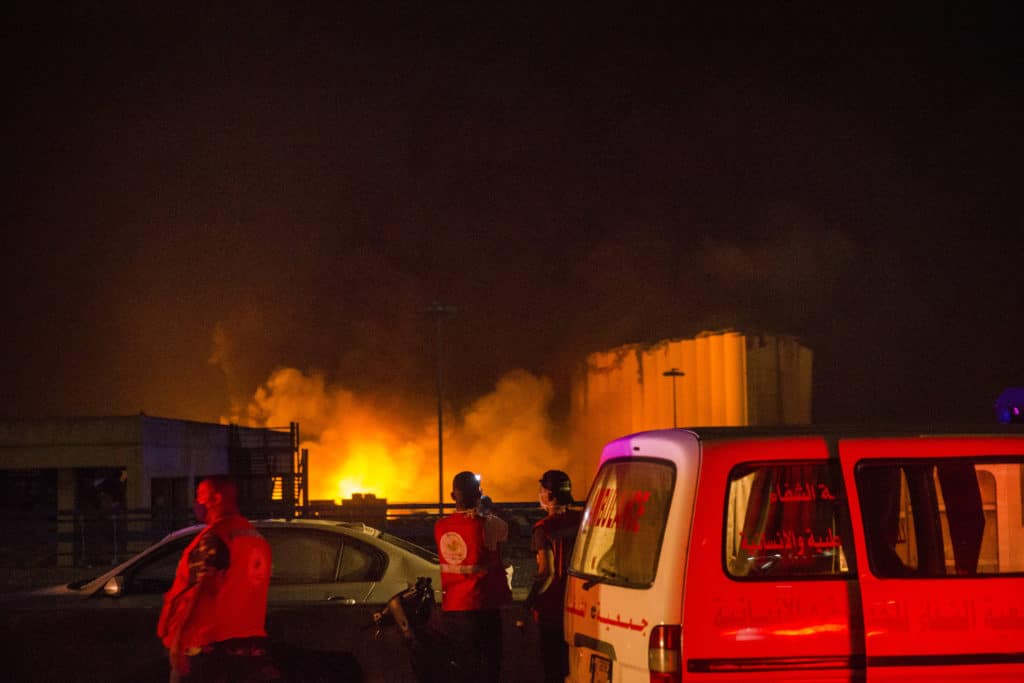
The Israeli government has offered assistance to Lebanon following two explosions at a port in Beirut on Aug. 4.
The explosions reportedly occurred at a warehouse facility. The second explosion was the larger of the two. Video footage shows fireworks going off before the second explosion. Lebanese Prime Minister Hassan Diab said that the warehouse contained 2,750 tons of ammonium nitrate, a compound used to make fertilizer and was used in the 1995 Oklahoma City bombing.
https://twitter.com/SVNewsAlerts/status/1290674216623366144?s=20
Lebanese Health Minister Hamad Hassan told reporters outside a hospital that at least 50 people were killed in the explosion and thousands were wounded.
Israeli Foreign Minister Gabi Ashkenazi and Defense Minister Benny Gantz announced in a statement Israel would offer assistance.
“Israel has approached Lebanon through international security and diplomatic channels and has offered the Lebanese government medical and humanitarian assistance,” the statement read.
Israeli President Reuven Rivlin tweeted, “We share the pain of the Lebanese people and sincerely reach out to offer our aid at this difficult time.”
We share the pain of the Lebanese people and sincerely reach out to offer our aid at this difficult time. https://t.co/E9xyZGMVnE
— Reuven Rivlin (@PresidentRuvi) August 4, 2020
However, according to the Times of Israel, the Lebanese government will likely decline the offer, as the two countries are still technically at war with each other.
Both Israeli and Lebanese officials denied claims that Israel had anything to do with the explosions.
Beirut resident Rania Masri told CNN that she had initially felt an earthquake.
“The apartment shook horizontally and all of a sudden it felt like an explosion and the windows and doors burst open,” she said. “The glass just broke. So many homes were damaged or destroyed.”
Another resident told Reuters, “I saw a fireball and smoke billowing over Beirut. People were screaming and running, bleeding. Balconies were blown off buildings. Glass in high-rise buildings shattered and fell to the street.”
Israel Offers Aid to Lebanon Following Explosions at Beirut Port Read More »
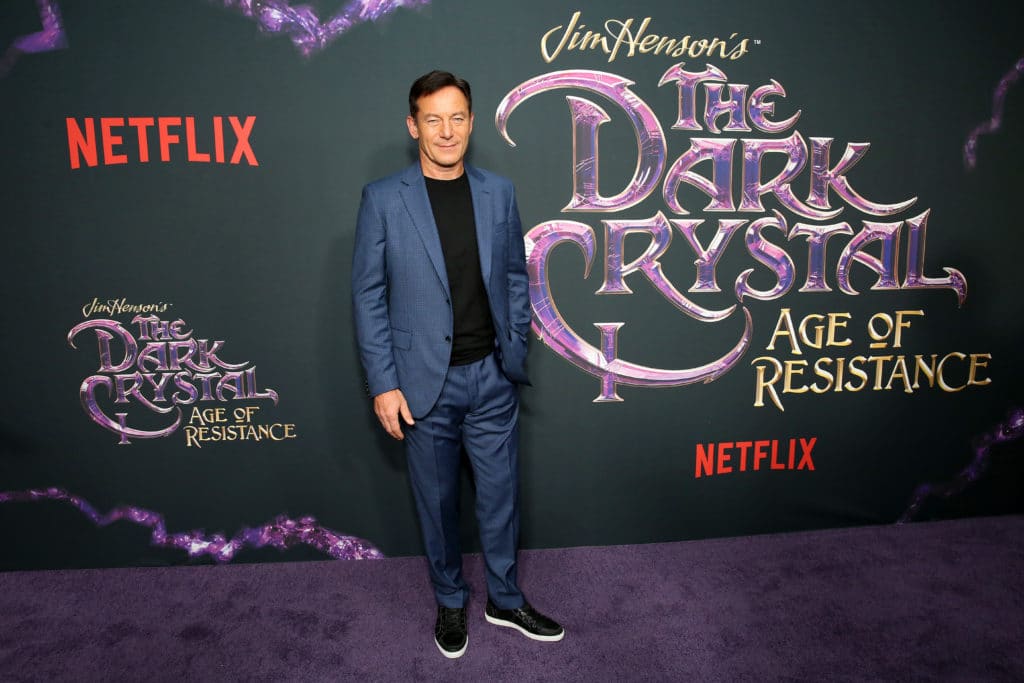
(JTA) — British Jewish actor Jason Isaacs opened up about his longtime struggle with drug addiction to the British magazine The Big Issue on Monday, saying he first got drunk at age 12 and “by the age of 16 I’d already passed through drink and was getting started on a decades long love affair with drugs.”
“Every action was filtered through a burning need I had for being as far from a conscious, thinking, feeling person as possible. No message would get through for nearly 20 years,” he said.
“I think what would surprise the 16-year-old me is that I’m okay,” he added.
Isaacs, 57, born in Liverpool to Jewish parents who have since moved to Israel, is perhaps best known for playing Lucius Malfoy in all eight “Harry Potter” films. He has spoken at length about growing up in the Jewish community, and his experience with anti-Semitism as a Jewish teenager in London.
“There were constantly people beating us up or smashing windows,” he told the Independent in 2013 about his upbringing in the suburb of Childwall. “If you were ever, say, on a Jewish holiday, identifiably Jewish, there was lots of violence around.
Read more here.
‘Harry Potter’ Star Jason Isaacs Opens up About His Struggle With Addiction Read More »
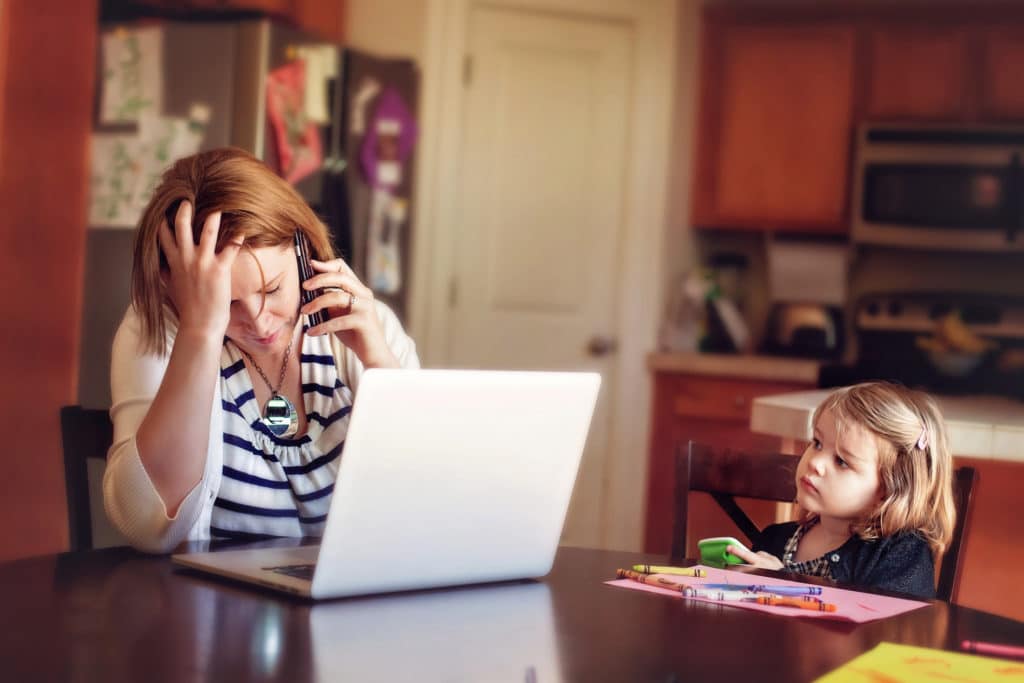
The data has caught up to something many of us working moms already know: There are days when we feel like we just can’t function and, as it turns out, neither can our economy. It’s no wonder, when nearly one-third of working Americans have school-age children.
Many of us, including me, a mother of two children younger than 4, are desperate for schools to reopen. I long for my children to learn from a professional, in person, in a world where I can make it through eight uninterrupted hours of work instead of making snacks.
Burned-out working moms and the businesses they lead and work for have been pinning their hopes on fall school reopenings — and that’s a dangerous mistake. We are entering a period of high burnout risk masquerading as a reprieve.
School reopenings will help in fits and starts, but they’re not the silver bullet on which many are banking. We need to start planning now, or find ourselves in the midst of a working-mom burnout crisis that will ricochet through our entire economy.
Pre-pandemic, the Pew Research Center reported that 56% of working parents already were struggling to make it all work. That’s more than 26 million members of our workforce, ages 25 to 54, who described juggling work and caregiving responsibilities as “difficult” or “tricky” in a world where schools and day care facilities were open daily.
Then, just weeks into widespread, pandemic-related school closures, Fortune reported in mid-April that an estimated 14% of U.S. working women had quit or considered quitting their jobs since the pandemic began. We’re at risk of losing some of our best talent to burnout, and losing ground on a half-century of progress for women’s professional achievement, leadership and earnings in the process. Working moms in the U.S. already make as little as 69 cents for each dollar earned by working dads. We simply cannot afford a backslide.
Preparing for the new crush
If the monotony of being a working parent, a stay-at-home parent and a teacher at the same time felt crushing, the pinballing of school constantly opening and shutting will bring new challenges — especially when you add into the mix siblings in different grades and schools, or teachers with their own kids at different schools. It only takes one sick parent, teacher or kid to reasonably close schools with minimal warning for weeks.
This is just as businesses are looking to school reopenings as a green light to resume “business as usual,” reopening offices and reducing flex arrangements. Such misaligned expectations are a recipe for disaster for working moms.
Will moms give up?
I hope not, but as schools continue to open and close, life is going to become even more inconsistent and unpredictable. Working moms already are breaking under the pressure of caring for kids, doing their jobs, then having to prove they’re pulling their weight at work.
According to the Harvard Kennedy School’s Women and Public Policy Program, known mothers and visibly pregnant women consistently are “judged as being less committed to their jobs, less dependable, less authoritative, more emotional and more irrational than otherwise equal, nonpregnant female managers” and their male counterparts. It’s a phenomenon called “the maternity penalty.” While it’s nothing new, it has intensified in a COVID19-world — and could get even worse in the fall.
What organizations can do today
Instead of planning for a return to normal with school reopenings, organizations must make new plans today, so they’re not caught flat-footed with working-mom-attrition tomorrow. Businesses must extend, reinstate or reimagine policies around telecommuting and remote work, paid time off, flex schedules, liberal leave and, importantly, performance evaluations. They must be prepared for more sudden changes, and for all their parent employees to have kids at home and at school at different times.
The businesses playing the long game with their people will benefit from short-term wins along the way: increased productivity and performance, decreased burnout-related attrition, and a once-in-a-lifetime opportunity to build trust and loyalty.
Randi Braun is an executive coach, consultant, speaker and the founder of Something Major, which is online.
Can We Save Working Moms and Our Economy? Read More »

President Donald Trump pronounced Yosemite National Park as “Yo Semites” during a signing ceremony on Aug. 4, sparking a series of jokes on Twitter.
Trump was announcing the signing of the Great American Outdoors Act, which will provide $9.5 billion to maintain national parks.
“We want every American child to have access to pristine outdoor spaces, when young Americans experience the breathtaking beauty of the Grand Canyon, when their eyes widen in amazement as Old Faithful burst into the sky, when they gaze upon Yo Semites,’ yo-seminites’, towering Sequoias, their love of country grows stronger,” Trump said.
VIRAL MOMENT: President Trump has trouble pronouncing 'Yosemite.' pic.twitter.com/nkMAev0udW
— The Hill (@thehill) August 4, 2020
Twitter users immediately churned out jokes on the matter.
“He said ‘yo-Semites,’ to which we say ‘Hi!’” The Forward tweeted, linking to a parody rap lyrics on the matter. Among the lyrics, which were based in part on Coolio’s “Gangsta Paradise,” were: “We’ve been spending most of our lives living like yo-Semites /Wearing the t-shirt right living like yo-Semites / Those national parks are tight when you’re a yo-Semite.”
Jewish Telegraphic Agency’s Ron Kampeas also tweeted parody lyrics on the gaffe.
“Yo Semites, So, Semites, when you gonna Go, Semites, listen up to Mo, Semites, get away from Pharoah, Semites,” he wrote.
Yo Semites, So, Semites, when you gonna Go, Semites, listen up to Mo, Semites, get away from Pharoah, Semites.
— Ron Kampeas (@kampeas) August 4, 2020
Daily Wire editor-in-chief Ben Shapiro tweeted, “Yo, where my Semites at? (Hint: they are in Yosemite.)”
Yo, where my Semites at? (Hint: they are in Yosemite.)
— Ben Shapiro (@benshapiro) August 4, 2020
Trump Pronounces Yosemite as ‘Yo Semites’ Read More »