fbpx

July 27, 2020

Questions for Peace Proponents Overseas 

Peter Beinart is the latest non-Israeli to prescribe what Israel must do to resolve its conflict with the Palestinians. Beware this prophet. A former, impassioned advocate of the two-state solution, he now calls for the establishment of “a Jewish home that is not a Jewish state” in a single entity he calls “Israel-Palestine”; effectively, a one-state solution.

Beinart’s  proposal, printed in The New York Times, is symptomatic of an U.S. political pendulum whose direction is unfavorable to the state of Israel and whose momentum is generated in significant part by strands of vocal, Diaspora Jews.

Israel must challenge him and those like him.

Below are six questions for overseas proponents of the two-state and one-state solutions to the Israel-Palestinian conflict.

Is the policy you propose implementable?

When advocating for the two-state solution, could you open a map of the land between the Jordan River and the Mediterranean Sea and demonstrate how a contiguous state for the Palestinian Arabs — incorporating Judea, Samaria and the Gaza Strip — could be established without breaching the contiguity of northern and southern Israel?

Is there evidence that concessions of Israeli land and security control will yield peace for Israel?

Since withdrawing from Gaza in 2005, Israelis have fallen prey to thousands of rockets launched from the territory vacated. More than two-thirds of the state of Israel is within range of rocket attacks from Gaza. Does that reality inspire confidence in further concessions of land or security control?

Are the majority of Israelis prepared to divide our capital city?

The people of Israel always yearned to return to Jerusalem. For millions of Israelis, Jerusalem is the heart of our existence. Thus, we believe that carving up that heart would destroy, not preserve, the broader Israeli organism. No Israeli prime minister has successfully negotiated the partitioning of Jerusalem since its reunification. Israelis are not in the business of partitioning the holy city.

If a given solution fails, will those who championed it be willing to live with the consequences of that failure?

Since Israel withdrew from Gaza in 2005, three defensive operations have been launched by the Israeli Defense Forces (IDF) in response to acts of terror from the strip. Such operations required, among others, the repeated, mass mobilization of the IDF reservists. These citizen soldiers are our fathers and our mothers, our doctors, professors, lawyers and innovators. Some of these citizen soldiers are killed. Anyone unwilling to accept such risks for themselves has no right to ask Israelis to do so.

If a given solution fails, will those who championed it be willing to have their own children face the consequences of that failure?

Most of Israel’s defenders are ages 18 to 21. In wartime, they can see the towns they defend from the forward lines of the battlefield. The IDF’s last four major, cross-border operations resulted from the land for peace formula and the relinquishing of Israeli security control. In each case, our teenage defenders were protecting a society whose children have grown up under rocket fire. Are overseas peace proponents so confident in their suggestions that they would be willing to stake the lives of their own children on its outcome?

Why do people overseas believe Israelis require any pressure whatsoever in order to fashion a peaceful way forward for ourselves and our loved ones?

The Israeli debate as to how we ensure a life of peace is alive and intense. It is Israel’s to have. Overseas pressure is not required for us to recognize the urgency of peace-making. We have made peace with enemies before. We seek to do so again. We have not, and do not, seek to do so along parameters that would imperil our very existence.

If Beinart and others like him are unable to respond with a resounding “yes” to all these questions, they ought to move away from policies they have thus far promoted and consider alternative ideas.

A stubborn unwillingness to do so is indicative of a readiness to impose upon Israelis a standard they would never accept for themselves.


Benjamin Anthony is the co-founder and CEO of The MirYam Institute. Follow his work here or at @BenAnthony1948.

Questions for Peace Proponents Overseas  Read More »

Social Media Group Shares the Stories of Being a Jew on a College Campus

We are amidst a global awakening of reevaluating systemic racism and the ways in which minorities are persecuted and mistreated.

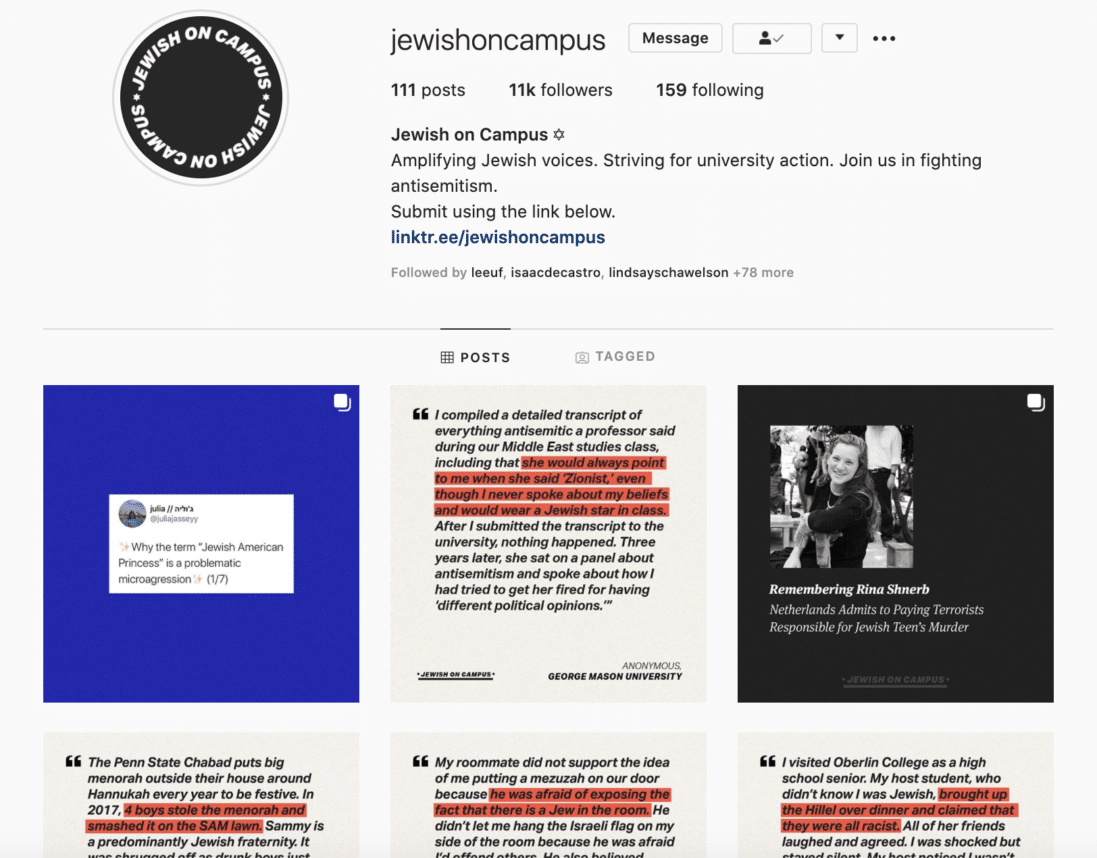
During this wave of change, a group of Jewish college students from across the country at universities including Columbia, Cornell, Stanford, Yale, UChicago, and USC–who have never met in person–has launched a platform to highlight the experience of Jewish students on campus.

In the three weeks since @jewishoncampus first posted on Instagram, the account has garnered over 11,000 followers, the team of students has since tripled in size from the original six co-founders, and the movement has received over 700 story submissions.

Like similar sharing platforms for other minority groups, Jewish on Campus amplifies young adults’ voices to anonymously share their experiences facing anti-Semitism. In recording incidents reported at 245 universities across the nation thus far, Jewish on Campus seeks to hold universities accountable, with the hope that action will be taken––regardless if this prejudice, stereotyping, microaggressions, and hate crimes come from students, professors, and faculty members.

Jewish on Campus features hundreds of posts recalling swastikas drawn in public and private university spaces, denial of anti-Semitism, common stereotypes such as Jewish power, privilege or wealth, remarks equating Jewishness with Islamophobia or anti-Arabness, and Nazi references such as ‘Heil Hitler’ or the even more graphic references to Jews burning in the oven. Such reports of abhorrent rhetoric also include acts of physical violence and hate crimes, such as at Ohio University where one student shares, “In 2018, a Jewish student at my university was pushed down a brick and concrete staircase by her floormates, one of whom was her [Resident Assistant]. They told her, ‘you should have burned in the ovens with your family.’ The RA was reported, but never lost his job, and was her RA for the rest of the year.”

The account’s quick rise to popularity exposes just how silenced many Jewish students have felt when speaking out against anti-Semitic incidents. In a letter addressed to “Institutions of Higher Learning” the Jewish on Campus team declares, “When these incidents [of anti-Semitism] occur, we’ve seen you release statements, some of which only vaguely allude to the hate we face, let alone say the word anti-Semitism . We’ve seen you let our reports slide, saying there’s not much that you can do. We can no longer overlook your lack of action.”

One post from a student at Cornell University exposes these repetitive themes of anti-Jewishness in the classroom and the institution’s public silence: “A professor once stated in a lesson about world religions that Jews are too powerful and hold disproportionate influence in the world. The same professor also said that Jews do not trust anyone except themselves and do not accept non-Jews. Students reported this to the department but no action was taken. These biased, anti-Semitic tropes were taught in lecture as facts and now sit in the notes of hundreds of students from across the country.” The student’s fear of the professor’s comments and frustration at the university’s response is further exacerbated by the knowledge that this demonization and de-legitimization of the Jewish community has now been condoned by a faculty member at such an elite institution.

In response to perceiving the hesitation, or even at times resistance, of universities to take action against people who echo anti-Semitic rhetoric, Jewish on Campus energizes students to continue to speak out, whether on social media or directly to the institution. Such a platform encourages not only Jews to talk about this anti-Jewishness that pervades the world, but all people who have experienced all kinds of harassment and violence due to their identity.

In another letter written to other Jewish students, Jewish on Campus writes, “We hope that these stories, and the fact that we’re here to tell them, inspire you to be proud of your Jewishness, to be more vocal and active, and that they make you feel less alone in this fight.” This sentiment of pride in one’s heritage is not limited to the Jewish community.

As a team member of Jewish on Campus, I extend this statement to all students and all people who experience any kind of hate, bigotry, racism, or violence. Be vocal and active. Support your community as well as other communities striving for respect, equality, and justice. I can only hope that in this time of growing awareness of racism during a pandemic and a global economic recession proves to us all that we are all interlinked. We are in this fight––for kindness, understanding, and dignity––together.


Follow Jewish on Campus on Instagram at @jewishoncampus and Twitter @jewishoncampus_ for more information or to submit your story of anti-Semitism. Contact Zohar Levy at zohar@jewishoncampus.org.

Social Media Group Shares the Stories of Being a Jew on a College Campus Read More »

Possible Drug Operation Suspected in Commercial Fire Opposite Chabad Girls School

It took 115 firefighters just over two hours on July 24 to extinguish a massive commercial fire on West Pico Boulevard opposite Chabad’s Bais Chaya Mushka Girls School. Margaret Stewart of the Los Angeles Fire Department said that investigators found evidence of a possible drug operation in the building.

Firefighters responded to a call at around 11:30 a.m. on Friday morning at 9041 West Pico Blvd. The commercial building that currently appears to be for lease had a Pico Bais Midrash sign on the front of the three to four story building. According to KTLA News, students were evacuated from a nearby school.

Smoke from the fire at 9041 W. Pico Blvd. Photo: Nili Eisenberg

KTLA also ran a live feed of the fire, which showed dozens of fire trucks and police cars rushing to the scene and thick, black smoke billowing from the building.  Under the live feed one woman posted that there was a day camp being held inside and her daughter was attending. She wrote in the post that it was a camp with “social distancing measures.”

Local community member Shlomo Walt told the Journal the mixed commercial/apartment building used to house the nonprofit charity organization Tomchei Shabbos, and was the original location of the Pico Shul.

Photo: Arnon Shorr

Rabbi Chaim Cunin, CEO of Chabad of California told the Journal the Chabad school used to be housed in the building that caught fire until 2004. The school moved when a replica of Chabad N.Y.’s 770 building was constructed next door. Cunin confirmed that there was a small summer camp operating on the premises when the fire broke out. He said, “Thank God no one has been injured. The school was unscathed.”

Adiel Nahmias, owner of Holy Grill at 8975 West Pico Blvd. told the Journal he was working when he smelled the fire.

“We thought that we somehow forgot something on the grill or the stove but there was nothing there so we went outside and we saw extreme amounts of black smoke and it smelled like fire mixed with marijuana,” he said, adding, “I’m not sure what happened but we’re hoping that everything gets under control and that whoever is affected will be able to rise back from this situation. Everyone is so sweet around here and most have been around for many years while some people and businesses are a little newer. Regardless, it’s hard enough as it is for everyone dealing with all the effects that 2020 has brought so far. We will all stay positive in our thoughts and actions and we will continue to pray for everyone as we do daily.”

The fire looking westward from Bibi’s Bakery. Photo: Esther D. Kustanowitz

Around 1 p.m. the building’s roof partially collapsed and firefighters were concerned that the entire building could be consumed. By 1:45 p.m. the fire had been extinguished. LAFD issued a statement saying that “after a long defensive battle, firefighters made good progress and are now working to hit any remaining hot spots. No other structures were damaged.”

The statement reported that there was a single-family dwelling “to the rear of the fire building with an elderly couple at home. A rescue ambulance stayed with the couple and sheltered inside their home to ensure they were safe from any smoke exposure. There was no fire risk to the structure but extra caution was taken to ensure their well-being due to smoke. No smoke was present in the home and the couple did not require medical care.”

The statement also noted that one firefighter was taken to the hospital with a nonlife threatening heat related illness. LAFD also noted that one of the operations firefighters conduct at a structure fire is called salvage and entails “removing or otherwise protecting contents of a structure, as best as possible, from suffering damage during an emergency. This usually happens inside of a home; however, at this incident firefighters took the initiative to cover three vehicles with tarps. The cars were right in the middle of the fire ground and would likely be dinged or damaged in some way.”

LAFD’s arson and counter-terrorism section is still conducting its investigation into the cause of the fire.

Journal Managing Editor Kelly Hartog contributed to this report.


Smoke from the fire at 9041 W. Pico Blvd. Photo: Nili Isenberg

Photo: Arnon Shorr


Additional reporting by Journal Managing Editor Kelly Hartog 

Possible Drug Operation Suspected in Commercial Fire Opposite Chabad Girls School Read More »

Twitter Debate Ensues After Metropolitan Museum of Art Labels Tefillin as Egyptian Amulet

(JTA) — The first time the Metropolitan Museum of Art tweeted a picture that appeared unmistakably to Jewish followers to be a ritual object used in Jewish prayer with the label “amulet,” a single follower responded with a correction.

“That is not an Amulet it is a Jewish tefillin,” wrote an account from a New York City rug gallery.

The object, which the Met says it acquired in 1962, is listed as part of the museum’s Islamic Art Department as a sixth-century amulet from Egypt. It is dated at A.D. 500–1000.

But a photo of the piece in the collection looks unmistakably like one piece of tefillin, the leather boxes and straps used in prayer by observant Jews. A shin, the Hebrew letter on the portion of tefillin that goes on the head, can be seen in the picture.

That was in November 2019. The second, third, fourth and fifth times the Islamic art collection shared the image, no one responded at all.

But over the weekend the image became the subject of an explosion of interest on Twitter after multiple accounts with many Jewish followers picked up on the item in the museum’s holdings and requested corrections.

One of the first to post it, a Jewish genealogist named Caitlin Hollander, offered a correction and tagged people who might be able to work with the Met to revise the museum’s description.

Other people who shared the image were less constructive in their criticism. And after the account @StopAntiSemites amplified the issue, criticism of the labeling included charges that the museum’s categorization was offensive to Jews.

The museum, which is currently closed because of the coronavirus pandemic, did not respond publicly over the weekend.

But Raphael Magarik, a English professor at the University of Illinois-Chicago whose studies have included the understanding of tefillin by non-Jews, posted a thread Sunday explaining that while the object pictured is likely mislabeled, there are historical arguments for the label.

“There’s no reason not to call tefillin an amulet,” Magarik wrote. “Lexically, the Greek term now commonly used to refer to them (‘phylactery’) originally meant just that, and had a long history of usage in that sense before referring to the specific Jewish items.” He added that while tefillin have been invoked in anti-Semitic discourse in the past, the Met’s labeling more likely reflects how museums catalog objects.

He also added one more point:

https://twitter.com/RaffiMagarik/status/1287442505466699776

Twitter Debate Ensues After Metropolitan Museum of Art Labels Tefillin as Egyptian Amulet Read More »

An Open Letter to Jewish Parents About ‘Opting Out’

An open letter to Jewish parents, worldwide:

In my July 24 Bisl Torah piece, I wrote on a subject that struck a nerve: the Jewish commitment to community within the pandemic, when so many of our interactions have become virtual. With the approaching High Holy Days, this is so vital to the survival of Judaism that I am expanding on that thought.

When we are forced to be separated, the choice of “opting out” of community becomes tempting. Not seeing one another understandably dissolves some of the attachment that comes with being physically present. But when temptation leads us away from strengthening the Jewish spirit, that is the exact moment we should sprint in the opposite direction. 

Many parents wonder how to teach their children the value of community. They ask how children will understand what it means to be something bigger than themselves — part of a greater cause —  and feel the essence of being Jewish. There is no greater way of imparting this lesson than with the following:

Show them. Your actions pave the way for every decision they will make in the future.

There are terms that are thrown around in an unfortunate way: opting out or taking a break. In choosing whether or not to belong to a synagogue or support nonprofit institutions, many of us are deciding to take a “year off.” Jewish professionals across the world are reaching out to colleagues and peers, understanding that if enough people decide to opt out, the Jewish world will never look the same. It will not have a solid foundation to rebuild and reconstruct in the innovative, vibrant, spiritually uplifting ways we so desperately need. Every person who decides to “sit this one out” means chipping away at the Jewish homes thousands rely upon for comfort, solace, celebration, companionship and connection.

Jewish professionals across the world are reaching out to colleagues and peers, understanding that if enough people decide to opt out, the Jewish world will never look the same.

The COVID-19 era has devastated the world. It has taken away lives. It has left others stricken financially, mentally and emotionally and impaired people’s health. Many cannot afford to rejoin our communities, and these are the members who  must hear our support and feel our love. Fellow Jews who need our emotional and financial help.  But for those who question the spiritual nourishment of online services, feel disconnected without in-person gathering and have the means to continue to join sacred communities, my plea is to you. Parents who show their children that the value of the Jewish community relies on whether or not religious school will be in-person or online don’t teach their children the value of being a link in the chain of thousands of years of Jewish history. Will you place your child before a screen every single day? Perhaps. But choosing to remain active in your synagogue, day school, religious school or camp community models for our children that when a family experiences a difficult time, we choose to hold one  another’s hands instead of fade away into the silence of resignation. A real community is one that upholds those who have fallen. A true community exists even when times are difficult and scary. A sincere community chooses to remain active when the world falls apart.

This is a beautiful opportunity to teach our children why being Jewish is so important. We learn, “All of Israel is responsible for each other.” The midrash reminds us of the story of a group of people sitting in a boat. One man drills a hole under his seat. Everyone screams. The man simply replies, “Why are you worried? I am only drilling under my own seat.” To which the passengers reply, “But you will flood the boat for us all.” When we choose to drill a hole only under our seat, thinking that we are merely separating just ourselves, we begin to puncture the ark of Judaism. Even just one hole in the ark has the potential to drown us all.

Phrases like “opting out” or “taking a break” don’t exist when you see yourself as a spark of a greater light that penetrates the darkest corners of this world. Staying a member of a community is a covenant; a promise that God can count on you to step up when your unique voice is needed. And if you find yourself not currently in a community, we welcome you to join one, strengthening all of our souls during these moments of great uncertainly and fear.

Hillel wisely said, “Do not separate yourself from the community.” Look deep inside your soul. We need you. We need one another. Next year and years after, may we look back at this time when we saw humanity join hand-in-hand, lifting up one another and letting our fellow Jews know that together we are not alone. This is the narrative I pray we share with our children, grandchildren and generations to come.

We question what our children will remember about this time, when faces are masked, parks are closed and friendships maneuvered within a social distance of six feet. But we have a choice as to what our children will remember about our own roles in  the Jewish community. May our children watch our actions, knowing that their families supported other Jews in need. May our children follow our examples, understanding that to be a Jew is to strengthen our community when the world feels bleak.

May our children be proud.


Rabbi Nicole Guzik is a rabbi at Sinai Temple. She can be reached at her Facebook page at Rabbi Nicole Guzik.

An Open Letter to Jewish Parents About ‘Opting Out’ Read More »

It’s Time to Remove the Misogyny in Everyday Life

Ever wonder why there’s no true male equivalent for a Karen?
Just like there is no true male equivalent for a slut.

“Yes there is!” I can hear some of you say.

“A Player, a Casanova, a ladies man, a Chad or a Ken.”

This is me giving you side-eye.

Those terms are bloodless, limp and cutesy when applied to men.

They are usually delivered with a wink or a guffaw.

The word slut, though—much like Karen— has a razors edge.

It will slice through your skin. Even today.

There is no male equivalent for Karen, because men, evidently, do not need a name for acting awful, uncivil, entitled, racist, and rude.

That is what we literally witnessed with Rep. Ted Yoho in calling Ocasio-Cortez a “disgusting f___ing  b____h.”

Let’s let that sink in.

And that is to say nothing of all the people I am seeing—male and female—shuting down women on the internet by dismissing them as a Karen, i.e. OK, calm down Karen” for the following crimes:

1. taking up too much conversational space

2. making a stink or getting upset about, literally anything.

3. taking bold action, even when justified.

We can and should loudly speak out against racist, awful, entitled clueless tone-dear, dangerous behavior from folks of any gender.

But intersectionality means, or should mean, you don’t get to be an ally to one marginalized group by smearing or snarking another.

Full disclosure: until recently I used the term Karen myself.

Gleefully even. It felt so satisfying; I got a sugar-rush from the triumphant snark of it all. Anyways they deserved it, I told myself.
As of today, I won’t be using that word anymore.

We can be tough on the Racists and the Awfuls and still do the right thing.

Sans the misogyny.

It’s Time to Remove the Misogyny in Everyday Life Read More »

Jewish Activists, Groups Participate in Virtual Twitter Walkout to Protest the Platform’s Handling of Anti-Semitism

Various Jewish groups, activists and other Twitter users are participating in a 48-hour virtual worldwide walkout from Twitter. Under the hashtag #NoSafeSpaceForJewHate, the walkout is a response to ongoing anti-Semitism on the platform.

The walkout began on July 27 at 9 a.m. British Standard Time and included notable British figures including Chief Rabbi Ephraim Mirvis, actor Tracy-Ann Oberman and the Jewish Chronicle newspaper.

A coalition of British Jewish activists announced in a July 25 statement that the walkout was in response to Twitter’s handling of British rapper Wiley’s anti-Semitic tweets. Wiley, born Richard Kylea Cowie Jr., posited in a July 24 tweet if it was anti-Semitic “to say Jewish people have power,” “listen to me Jewish community Israel is not your country,” and “Jewish people you make me sick,” among other queries.

The British Jewish activist statement read, “The ‘walkout’ we are announcing today is to show that the Jewish community and its allies have had enough of platforms like Twitter acting as loudspeakers for anti-Semitism, amplifying the hatred of Jews to millions of other social media users. As soon as Wiley began posting his anti-Semitic tweets on Friday Twitter was flooded with requests to have his account taken down. In response Twitter deleted a couple of his tweets and gave the grime star a brief suspension. It was a completely inadequate response.”

On the evening of July 24, Twitter suspended Wiley for 12 hours. Wiley started tweeting again on July 25 and Twitter responded by banning him again for seven days. Fiona Sharpe, one of the British Jewish activists told the Journal that the protest goes beyond Twitter’s handling of Wiley.

“This is about the ongoing hate that social media companies allow to be spread on their platforms,” Sharpe said, “and not just that they allow it. [It’s] that they amplify [hate] because with every tweet it is getting bigger and bigger.”

By 10a.m. Pacific Time on Monday, Sharpe told the Journal the #NoSafeSpaceForJewHate hashtag has been tweeted and retweeted at least 250,000 times, with most people stating they were participating in the walkout.

“I’ve never seen anything like it,” she said. “Such a huge, diverse group of people [participating]… it’s just quite amazing.”

She added that Twitter uses an algorithm to handle complaints about tweets containing hate speech and that the coalition hopes Twitter has live people handle such complaints instead of an algorithm.

“We hope that this will be the beginning of a movement to really make social media companies and platforms take greater responsibility for the content that they’re showing,” she said.

American Jewish groups were among those that announced they were participating in the #NoSafeSpaceForJewHate campaign.

“In solidarity with British Jewry, the SWC will be participating in the 48-hour @Twitter walkout, officially beginning 9 a.m. on Monday,” the Simon Wiesenthal Center tweeted. “Please check our other social media feeds for news and updates.”

The American Jewish Committee (AJC) tweeted, “Anti-Semitism, or any form of bigotry, has no place in our societies or on social media. AJC will be joining the 48-hour @Twitter walkout from 9am BST (4am ET) Monday in solidarity with our friends and allies in the UK [United Kingdom].”

StandWithUs also tweeted, “.@Twitter has allowed anti-Semitism to flourish online. It has made this platform absolutely intolerable and toxic. On Monday, we’re joining a walkout for 48 hours. If you want to take action against racism & hate, join us & spread the word.”

Liora Rez, director of the Stop Anti-Semitism.org watchdog, said in a statement to the Journal, “Jews have been screaming at the top of our lungs for years now about the vile anti-Semitism Twitter, Facebook, and Instagram allows. Perhaps if we, and our collective allies, significantly decrease our social media footprint and subsequently decrease their ad dollar flow, the social media giants will have no choice but to listen and finally act.”

Canadian Jewish groups also participated. B’nai Brith Canada tweeted: “Starting Monday, we are joining a walkout for 48 hours. Join us to take action against racism & hate. We hope this campaign will bring awareness to the cesspool of hate that is allowed to thrive on this platform.”

Twitter did not respond to the Journal’s request for comment.

Jewish Activists, Groups Participate in Virtual Twitter Walkout to Protest the Platform’s Handling of Anti-Semitism Read More »

Rapper Jay Electronica Calls Rabbi Who Spoke With Nick Cannon a Liar and a ‘Devil’

(JTA) — Rapper Jay Electronica appeared to call Jews anti-Semites in a series of tweets railing against Rabbi Abraham Cooper, who recently spoke with Nick Cannon about comments made on the TV star’s online show.

“Rabbi Abraham Cooper is a COWARD who LIED to our brother Nick Canon about the history of the caucasian race. Ask him does he stand behind the VILE TEACHINGS of the Talmud? Don’t be a coward next time Cooper you DEVIL,” Jay Electronica tweeted Saturday.

https://twitter.com/JayElectronica/status/1287187901122523136

He went on to call Black people the “TRUE Children of Israel,” use the hashtag #SynagogueOfSatan (a phrase that Nation of Islam leader Louis Farrakhan has used to describe Judaism) and link to an article by the Nation of Islam Research Group which calls The Simon Wiesenthal Center, where Cooper is associate dean, an “apologist for the Zionist State of Israel.”

Electronica also challenged Cooper to sit down and talk with Farrakhan and other Nation of Islam leaders.

“We DEFY you to challenge us on these claims publicly. You LYING antisemites,” he tweeted.

After mentioning anti-Semitic conspiracy theories on his show “Cannon’s Class” — including the idea that “Zionists” and “Rothschilds” have “too much power” — Cannon spoke with Cooper in a nearly two-hour recorded chat that was published last Tuesday. Cannon also made a donation to the Wiesenthal Center and visited its Museum of Tolerance.

Electronica, 43, is a respected rapper and producer who released his debut album earlier this year after years of releasing mixtapes to critical acclaim. He mentioned the “Synagogue of Satan” and the Rothschilds in a track on the album.

His tweets came a day after the British rapper Wiley sparked controversy with his own Twitter rant, which included the line “I don’t care about Hitler, I care about black people.”

A series of other prominent figures, including football player DeSean Jackson, former basketball player Stephen Jackson and rapper Ice Cube, have also been criticized for perpetuating anti-Semitic stereotypes online in recent months. All but Ice Cube have apologized.

Rapper Jay Electronica Calls Rabbi Who Spoke With Nick Cannon a Liar and a ‘Devil’ Read More »

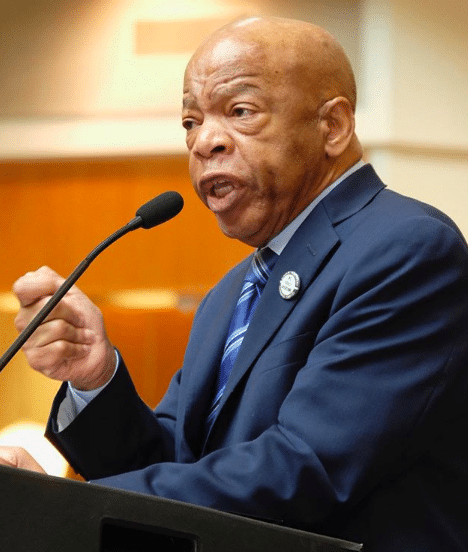
In honor of John Lewis: Make GOOD Trouble

John Lewis Good Trouble - Title

JOHN LEWIS: GOOD TROUBLE tells the story of Congressman John Lewis, an American hero who spent his life fighting for voting rights and racial justice. He fought alongside Rev. Dr. Martin Luther King Jr. during the Civil Rights Movement and helped get the Voting Rights Act passed in 1965.

However, our democracy is now under attack. Since 2013, new voter suppression tactics like strict voter ID laws and shortened voting times have intentionally made it difficult for low-income areas and Black people. But you can help. $1.50 will cover postage to help register 1 person to vote in areas where voter suppression laws and online registration systems hit hardest, like North Carolina and Georgia.

MAKE GOOD TROUBLE by fighting voter suppression and protecting the right to vote.

Visit Participant’s page to make good trouble!

Watch John Lewis: Good Trouble

THE FILM

John Lewis: Good Trouble is a new documentary about Congressman John Lewis, an American hero and inspirational symbol of civil and voting rights. Using recent interviews with Lewis, the film explores his childhood experiences, his inspiring family, and his fateful meeting with Rev. Dr. Martin Luther King Jr. in 1957.

The GOOD TROUBLE CAMPAIGN celebrates the legacy of Congressman Lewis, as we fight against the injustice of voter suppression. Current voter suppression tactics prevent millions of citizens  from having their voices heard and votes counted. This year, we’re making good trouble together to increase voter turnout and fight voter suppression.

Watch John Lewis: Good Trouble

MAKE GOOD TROUBLE

In 2013, the Supreme Court decision in Shelby County v. Holder allowed for a wave of new voter suppression laws that make it harder for poor communities, immigrant communities, indigenous communities, and communities of color to vote. This is especially true in southern states where the legacy of slavery and Jim Crow are ever-present.

To combat this, you can use your voice and privilege to support others’ right to vote.

Check out the highlighted states to see where voter suppression is already silencing voters at alarming rates (Source: Brennan Center) and then help empower disenfranchised communities by facilitating others to register to vote.

THE HANDBOOK

Watch the film and follow along with the GOOD TROUBLE handbook to learn how you can stay informed, take action, and make sure everyone has the ability to vote.

Learn more at John Lewis: GOOD TROUBLE

In honor of John Lewis: Make GOOD Trouble Read More »

After 13 Years, this Druze Pastry Maker is Taking on a New Profession

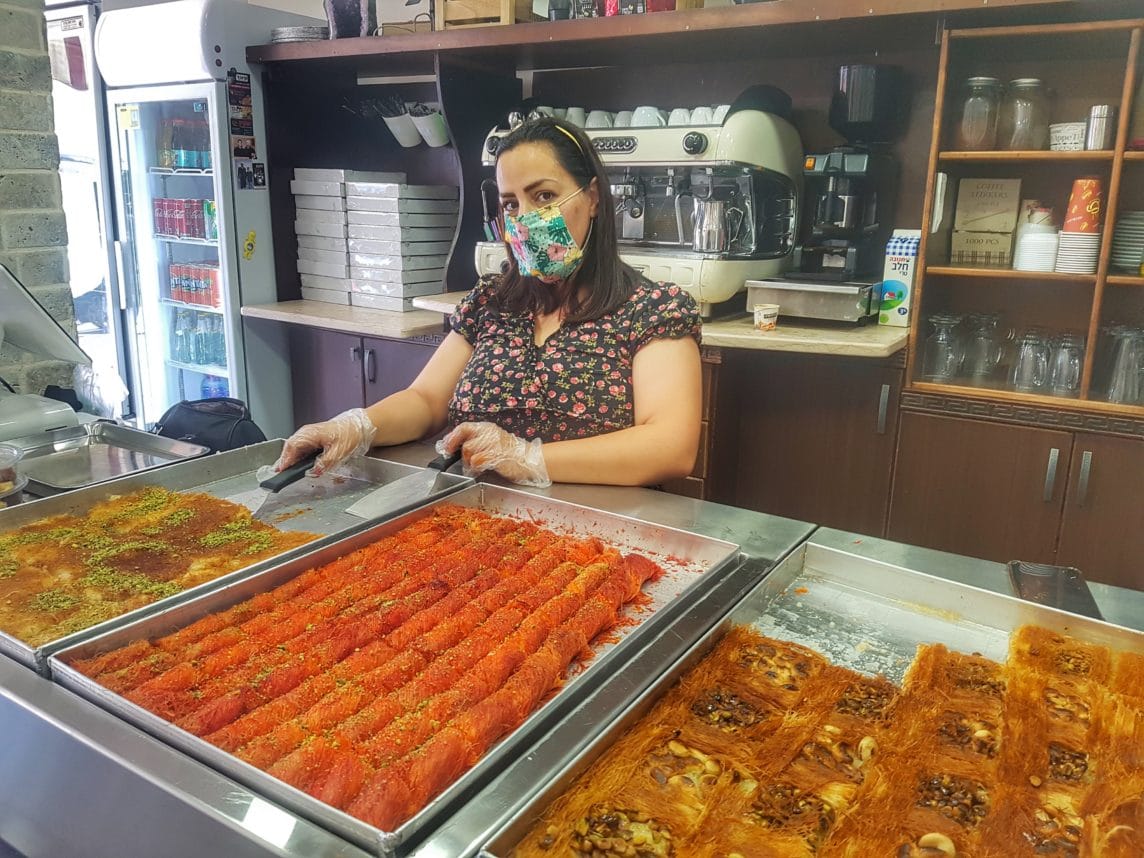
It’s Safaa Saba’s last day at her knafeh business, and the end of her career as a knafeh maker (knafeh is a Middle Eastern sweet cheese pastry). Saba is a Druze woman whose community has a history of knafeh recipes being passed down through the generations with as much solemnity and secrecy as the religion itself. 

Saba is leaving to become a full-time cosmetician. “It’s been my dream for 13 years,” the 34-year-old said. “Everything I’ve done has always been about eating, eating, eating. Finally, I’ll do something that doesn’t involve food.” 

For now, though, she’s baking nonstop in honor of the upcoming Eid-al-Adha festival, spreading handfuls of the skinny semolina threads on a shallow dish and topping it with lumps of white brine cheese. Eid-al-Adha is the only festival that Druze and Muslims share, commemorating Abraham’s sacrifice of his son Ishmael. Some Muslims fast on Eid-al-Adha. The 10 days before Eid in the Druze tradition are referred to as the “nights of Ashour” and are seen as a time for meditation and contemplation. 

Saba lives in Daliyat-al-Karmel, the southernmost Druze community — and the largest in Israel — nestled in the Carmel mountains. The 1 million adherents of this tiny religion, an 11th-century offshoot of Shiiite Islam, live mostly in Lebanon and Syria. The belief system is shrouded in mystery. Even Saba cannot explain it. She is secular, or in Druze terms, al-Juhhāl, and therefore not privy to the secrets revealed only to ʿuqqāl, those initiated in the holy books. But recently, whispers in the village about end times have been getting louder. Strange happenings occurring at the pyramids in Giza, unexplained noises, even a hushed reference to dinosaurs, may herald the return of the prophets, those whispers say. Or perhaps of Al-Hakim bi-Amr Allah, a central figure in the religion who is viewed as a divine incarnation and who will march from China to conquer the world. It is hard to follow what Saba is saying at times, and when I turn to Google for help, she laughs. “You won’t find anything there,” she said. “There is great excitement in our village. Look, I have chills just telling you these secrets.”  

“Everything I’ve done has always been about eating, eating, eating. Finally, I’ll do something that doesn’t involve food.”

Saba’s parents are more devout. Her mother wears the white veil of theʿuqqāl. But apart from a gentle scold if her neckline is too low, they have never forced her to observe the religious requirements. “My parents always let me know that it was my choice,” she said. She has much respect for the religion and says that in another life, she would’ve been more observant. “But my husband doesn’t want to. He smokes,” which is forbidden, she said, adding, “With us, it’s all or nothing.” 

Saba met her husband 13 years ago. They dated for four years because they had to wait for his older brothers to marry first. Their dating was conditioned on strict 9 p.m. curfews, she said. When they were first married, Saba and her husband held a contest to see who made the better knafeh. Saba’s voice is laced with pride when she says that by all accounts, on both sides of the family, her knafeh was tastier. 

She has never left Israel and insists that she has no desire to except under one condition: “If I can open my own knafeh business overseas, I’ll go.”   

After 13 Years, this Druze Pastry Maker is Taking on a New Profession Read More »