fbpx

July 23, 2020

Genesis Philanthropy Group Names 39-Year-Old Woman as New CEO

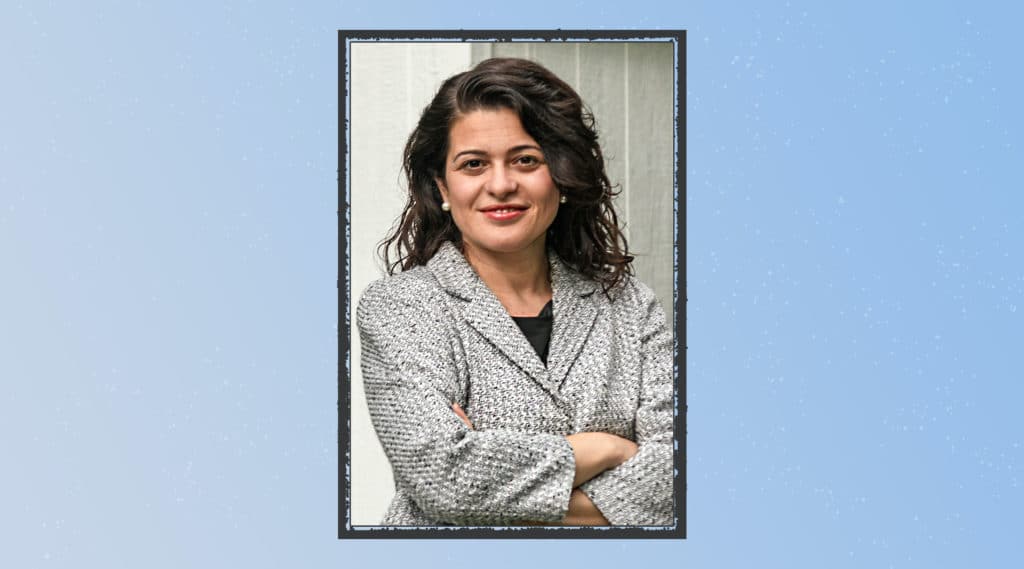
(JTA) — The Genesis Philanthropy Group, which funds Jewish identity-building efforts for Russian-speaking Jews around the world, promoted Marina Yudborovsky, who has worked for the organization since 2009, to CEO on Thursday.

Her appointment follows the sudden death of CEO Ilia Salita late last month.

“I am truly honored by the board’s confidence,” she told the Jewish Telegraphic Agency. “Ilia was an incredible leader for the foundation and in the Jewish world at large, so there is a very high standard to live up to.”

Yudborovsky, 39, will be one of the youngest and one of the few women leading a major Jewish organization.

“While there may not be as many young women leading major Jewish organizations as there could be, there are a plethora of wonderful role models — both men and women,” she said.

Yudborovsky was born in Ukraine and immigrated to the U.S. with her family in 1989. They moved here with the help of the New York Association for New Americans, which was then a refugee assistance program under the Jewish Federations of North America umbrella.

She participated in a Birthright trip to Israel in 2004 that she says inspired her to get involved in Jewish causes. The Birthright parent organization is now a recipient of Genesis Philanthropy Group funds.

Other organizations that receive funding through the philanthropy group include the PJ Library, Moishe House, Hillel International and Yad Vashem, Israel’s Holocaust museum and memorial.

“Marina has made many significant contributions to the foundation over the years and I am certain that she is now ready to take on the helm of leadership,” Gennady Gazin, Genesis Philanthropy Group’s board chairman, said in a statement. “It is a testament to this readiness and her skill set that Ilia chose to work very closely with Marina over the years, tapping her to head complex projects and implement the foundation’s vision.”

The group, which was founded by a group of Russian billionaire businessmen, is no longer associated with the Genesis Prize group, which awards an annual prize nicknamed the “Jewish Nobel.”

Yudborovsky noted that the Genesis Philanthropy Group’s work has not slowed during the COVID-19 pandemic.

“As a private foundation which doesn’t fundraise, we are fortunate enough to be in the position where not only our activities weren’t disrupted by the pandemic, but we actually increased and expanded our work in order to assist our partners and grantees around the globe in these critical times,” Yudborovsky said.

The Genesis Philanthropy Group did not disclose its annual funding numbers.

Genesis Philanthropy Group Names 39-Year-Old Woman as New CEO Read More »
From Conversion to Aliyah, Being Part of the Jewish People

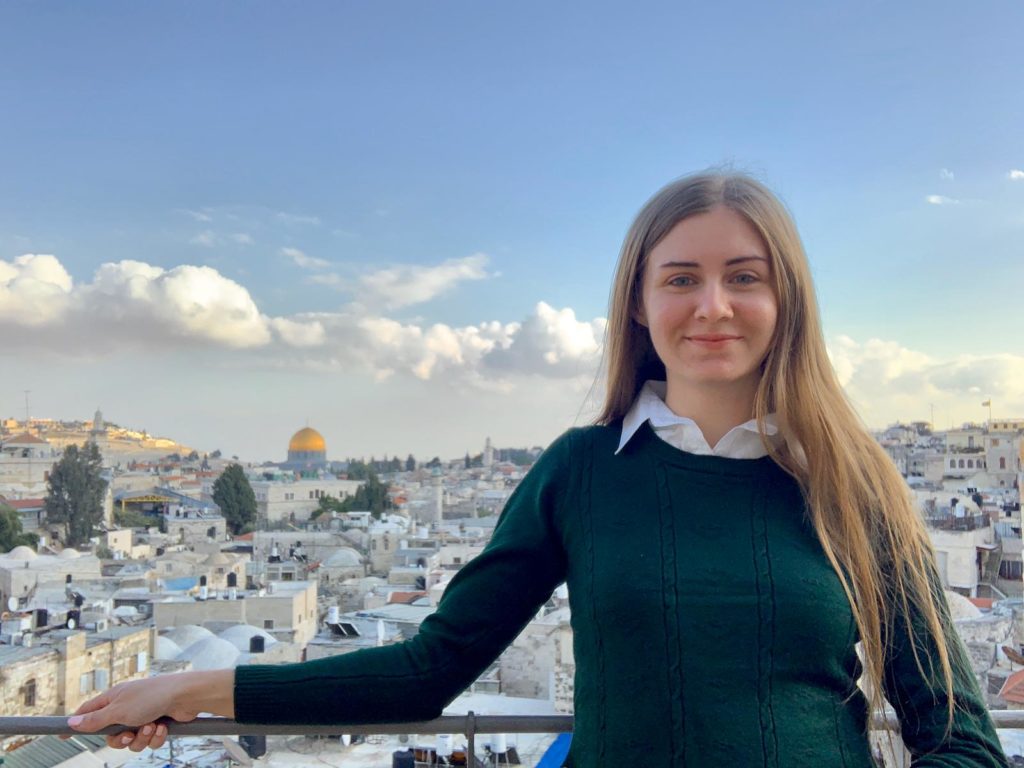
When I think about my move to Israel this month, I am vividly reminded of my first time in synagogue.

I was 14 and exploring the possibility of converting to Judaism. The cantor told me it was actually an opportune time to embark on such a journey because that day was Shavuot, the holiday in which all of the souls of the Jewish people were present at Mount Sinai to receive the Torah. Further, Shavuot is when we read the Book of Ruth, whose story centers on conversion.

In that moment, I felt that conversion was meant to be. It motivated me to keep forging ahead in the process. I was determined to be a part of Am Yisrael (the Jewish people).

That sense of Jewish peoplehood represents a notable parallel between converting to Judaism and immigrating to Israel, or even just traveling to Israel. The first time I visited the Jewish state, on a Birthright Israel trip in 2016, I felt the same connection to Am Yisrael which I first experienced during my conversion process. Growing up in San Dimas, Calif., I was not part of a bustling center of Jewish life. Today, I could have moved to a major hub of American Jewry such as Los Angeles or New York City. But nothing compares to living where the Bible says we belong as a Jewish people — and I am proud to say that being a convert does not make me any less connected to the land of Israel.

From my first trip, I already knew that I feel more alive when I am in Israel. Still, before deciding to make Aliyah, I needed to spend more time in Israel to see if living there would be right for me. During a graphic design and marketing internship in Jerusalem with the Israel Forever Foundation in the summer of 2018, I experienced the country’s routine and way of life, from the Israeli workday to taking the bus to living on a specific budget of shekels every day. I confirmed that indeed, this could be my life. 

Fast forward to 2020, and Aliyah during a pandemic is not exactly what I had been picturing the past couple of years. I never envisioned spending my first two weeks as an Israeli citizen in self-quarantine. Nevertheless, the show must go on. Nefesh B’Nefesh (NBN) has infused a comforting element of stability into the Aliyah process, especially in regard to compiling all the required documents for immigration and connecting me with an expert Aliyah advisor.

I am also eager to join the Israel Defense Forces as a lone soldier — to serve my new country. As a Jew, I believe that enlisting in the IDF is one of the best ways to support the Jewish nation.

As I begin life in Israel, it all comes back to being part of Am Yisrael. From my conversion seven years ago to my Aliyah this month, I am gratified to be connected to something larger than myself.


Ondria Rees, 22, made Aliyah with Nefesh B’Nefesh on July 20. She is a native of San Dimas, Calif., and holds a bachelor’s degree in graphic design from California State Polytechnic University, Pomona. Since its founding in 2002, Nefesh B’Nefesh, in cooperation with Israel’s Ministry of Aliyah and Integration, The Jewish Agency for Israel, Keren Kayemeth Le’Israel and JNF-USA, has facilitated the Aliyah of over 60,000 North Americans to Israel.

From Conversion to Aliyah, Being Part of the Jewish People Read More »

What Will Tisha B’Av Look Like During a Pandemic?

Tisha b’Av is the saddest day on the Jewish calendar. While in the past it may have been hard to lean into the spirit of the day, 2020 has made Tisha b’Av more accessible than ever. 

“It doesn’t take much to get into the Tisha b’Av mood of sadness and isolation this year,” said Rabbi Jason Weiner, senior rabbi and director of the Spiritual Care Department at Cedars-Sinai Medical Center, and rabbi at Knesset Israel. “We’ve been in it for months now and it makes us yearn even more for a better day.”

Every Tisha b’Av, husband and wife Sal Litvak and Nina Davidovich Litvak read Lamentations for their online community — Accidental Talmudist — but this year, they said their stream will also be focused on current events.  

“Usually on Tisha b’Av, we are enjoying the summertime, kids are in camp and we have to force ourselves to feel sad about something that happened a long time ago,” Davidovich Litvak said. “This year, everyone is experiencing sadness, loss and fear. We all know what it’s like to miss a way of life we didn’t appreciate when we had it. It will actually be easier to get into the proper mindset for Tisha b’Av, and our mourning will be more authentic and meaningful.”

Yael Friedman, owner of kosher delivery service Kitch’N Giggles, said she normally doesn’t get to go to synagogue on Tisha b’Av because she’s watching her small children. Now, she said she’s looking forward to the opportunity to participate in these services virtually.  

“I think this pandemic has made religion more accessible to so many people, especially those who normally aren’t able to attend services,” she said. “I’m really looking forward to the end of the fast, because it brings so much hope for the future. I think that’s a feeling we all need to cling to this year.”

Registered nurse Boaz Hepner said that when he was commemorating Tisha b’Av at the Kotel last year, he never could have imagined “that one year later I would be listening to it on a Zoom chat for the safety of my family. While I fast, I will be thinking of the vaccines and medical advances that will no doubt allow us to safely be with our communities in person l’shana haba’ah (next year).”

Artist Rae Shagalov, who had COVID-19, said she’s still feeling the lingering effects so she’s concerned about fasting. However, she isn’t sure how much different the day will be “unless, God willing, we’re all dancing with Moshiach,” she said. 

Yoga and doula Yulia Medovoy Edelshtain said she believes that the fasting on Tisha b’Av is critical in light of the current times. “Fasting is so holy and atones, so especially in the state of the world today, connecting to HaShem is needed more than ever.”

While I fast, I will be thinking of the vaccines and medical advances that will no doubt allow us to safely be with our communities in person l’shana haba’ah (next year).” — Boaz Hepner

Rabbi Jason Rosner of Temple Beth Israel of Highland Park and Eagle Rock said, “In truth, we’re battling to save our society and equitably restructure our entire way of life against a backdrop of outrage fatigue and uncertainty. Emotionally open conversations are what we need in order to find hope. Tisha b’Av gives us a model of how to have such conversations.”

Rabbi Elchanan Shoff of Beis Knesses Los Angeles said that in his eyes, Tisha b’Av is no different this year than any other year. “Tisha b’Av, whether in shul or at home, whether in Jerusalem or Treblinka is more important than anything else,” he said. “The incredible miracle of Jewish return to our historic homeland after 2,000 years is because of Tisha b’Av; because we never forgot. There is a lot more work for us to do on our way to a rebuilt Jerusalem. Forgetting that is forgetting our way. Don’t let this Tisha b’Av slip away. It’s the greatest tool that we have to fix all that remains broken and unfinished in this world.”

What Will Tisha B’Av Look Like During a Pandemic? Read More »

‘Teach Me, Fix Me’: Nick Cannon Opens up to Rabbi After Making Anti-Semitic Comments

(JTA) — Nick Cannon wants to make it clear — he’s ready to repent.

In a nearly two-hour discussion with Rabbi Abraham Cooper of the Simon Wiesenthal Center published on YouTube Tuesday, Cannon traversed several topics: He apologized again for making anti-Semitic comments on his online show; spoke about his study of multiple religions and his religious father; and exchanged philosophies of forgiveness and evil with Cooper.

“I didn’t do this to … ‘Oh let’s show the world we can work together.’ I did this from a place of sincerity,” Cannon said in the talk, which makes up the latest edition of his show “Cannon’s Class.”

During the spirited discussion, Cannon said that he is going to visit Jerusalem at some point and hinted that he is “studying the Torah daily.” He also said he has read Bari Weiss’ recent book “How To Fight Anti-Semitism.”

“I am asking to be corrected from your community. Give me books, teach me, I am an empty vessel, an empty broken vessel,” he said. “Teach me, fix me, lead me.”

But Cannon did not directly disavow the anti-Semitic rhetoric of Nation of Islam leader Louis Farrakhan, whom Cooper mentioned repeatedly as the source of the conspiracy theories he said Cannon was “parroting.”

On a recent episode of “Cannon’s Class,” Cannon mentioned anti-Semitic theories — including the idea that “Zionists” and “Rothschilds” have “too much power” — in a conversation with Professor Griff, a rapper best known for being a member of the early hip-hop group Public Enemy. Cannon also praised Farrakhan and claimed that Black people are the “true Hebrews.”

ViacomCBS cut ties with the TV host and actor in the wake of the statements. Fox allowed him to keep his job as host of the show “The Masked Singer” after he issued an official apology statement.

Jewish Insider reported that Cannon and Cooper recorded the interview last week, and that Cannon visited the Wiesenthal Center’s Museum of Tolerance in Los Angeles on Monday. Cannon also donated money to the center, which is dedicated to spreading awareness about the Holocaust and is currently closed to the public.

Watch the full talk, which is broken up into two videos, below.

https://www.youtube.com/watch?v=xdJ2yO7HFMM&feature=emb_logo

https://www.youtube.com/watch?v=VNTJhlMMRpo&feature=emb_logo

‘Teach Me, Fix Me’: Nick Cannon Opens up to Rabbi After Making Anti-Semitic Comments Read More »

Rosner’s Torah Talk: Parshat Devarim Collection

Parashat Devarim (Deuteronomy 1:1-3:22) is the first portion from the book of Deuteronomy. In this parsha, Moses begins his review of the story of the people of Israel in the 40 years following their exodus from Egypt. In his narrative, he recalls events such as his appointment of judges and magistrates; the wandering through the desert; the sending of the spies; the people’s spurning of the Promised Land; the wars fought against the Emorite kings; and his own words of encouragement to his successor Joshua.

Rabbi Elie Kaunfer


Rabbi Rachel Isaacs

https://www.youtube.com/watch?v=ZEz9NJO2R3g


Rabbi Alan Freedman


Rabbi Aaron Star


Rabbi Ruhi Sophia Motzkin Rubenstein


https://www.youtube.com/watch?v=cYgrXjY21uw&feature=emb_logo


Rosner’s Torah Talk: Parshat Devarim Collection Read More »