As the sound of fireworks kept me awake at 2 a.m., all I could think about was August 2021.
My sister Mira told me earlier that day that she read an article in The New York Times that said the process of developing and distributing a vaccine for coronavirus could be completed by August 2021. Mira meant to share this as encouraging news, but to me, August 2021 seemed like an eternity away. Having lived nearly four months in a state of isolation, stress and vigilance, I can’t imagine living like this for another 13 months. Could we dodge the disease for another 13 months? Can we live another 13 months without any guests entering our home and not entering anyone else’s home? How can we endure another 13 months of losing joy after joy, plan after plan?
On CNN, a Black woman named Maya Mckenzie was interviewed about a piece she wrote about being pregnant during the pandemic. She wrote “this virus hasn’t taken anyone from me. But I have experienced the deep grief of lost joy.” Indeed, in addition to taking loved ones, every day this virus steals more joy from all of us — the joy of summer adventures, birthday parties, or hugs of friends or extended family.
Or in other words, the Vav in our Shalom is broken. In the beginning of this week’s Torah portion, God gives Pinchas, Aaron’s grandson, a covenant of peace — but in the word Shalom (peace), the letter Vav, which normally stands straight and tall, is broken.
How fitting that Maya named her unborn daughter Paz (which means peace in Spanish). Even as the joy of her pregnancy was taken and replaced by anxiety about the coronavirus, Maya dreams of paz. Somehow, in all different languages around the world, the virus is eroding our peace.
Somehow, in all different languages around the world, the virus is eroding our peace.
I am reminded of two stories. The first was in a novel by Mitch Albom, called “The Next Person You Meet in Heaven.” This book tells the story of Annie, who while mourning for the death of her newborn son, decides to become a nurse. In describing her grief, Albom wrote, “She was broken open. But broken open is still open.”
The second story is one I read by P.J. Long, a mom who suffered a traumatic brain injury when she fell off a horse. In her book, Gifts from a Broken Jar, she recounts a story from India about a village boy who walked each day for several miles from the river to the village, carrying water in two clay jars, one of which was cracked. The man who bought the water would pay for one full jar of water, and one half full, since the water from the cracked jar had leaked.
One day, when the boy sat to rest on his walk, the spirit of the cracked jar apologized to the boy for leaking. The boy replied,
“Because of you, I am very lucky. A broken jar makes life beautiful. Come, let me show you.” Together they walked back to the river. One side of the path was bare and dusty. But along the other side, where water had trickled down from the broken jar, the way was strewn with wildflowers.
Long saw the years of her life following her brain injury reflected in this story. Although her recuperation entailed tremendous struggle, she discovered unexpected gifts along the way.
Indeed, there have been blessings over the last four months during the pandemic. My daughter learned to cook, we’ve taken up golf, my husband is home, and I’m writing more. But honestly, I would give them all up in a heartbeat for some peace – a day without fear and uncertainty, for a simple meal with friends talking about nothing in particular. I’d patch up the hole in the jar. I’d fill in the Vav to stand stronger again. I’d gladly fast-forward until the day that we are all vaccinated for Covid-19 – but I can’t. We can’t. All we can do is walk forward with our broken-open hearts and hope that wildflowers will grow beside our path.
All we can do is walk forward with our broken-open hearts and hope that wildflowers will grow beside our path.
In 1945, in a shelter in Cologne, Germany, where Jews were hidden during the war, American soldiers found this inscription:
I believe in the sun — even when it is not shining.
I believe in God — even when God is silent.
I believe in love — even when it is not apparent.
Inspired by the story of the broken jar, I’ll add:
I believe in sunflowers, even when I can’t see them yet.
Rabbi Ilana B. Grinblat is the vice president of community engagement for the Board of Rabbis.
The latest film from a production company behind a string of low-budget horror hits centers on a terrifying night spent carrying out an important Jewish burial ritual.
“The Vigil,” out in the United States in August, is about a formerly observant Jew who is recruited to stand guard over the body of a Holocaust survivor who dies in Brooklyn’s Hasidic Borough Park neighborhood. (Jewish law requires bodies to be accompanied from death to burial.)
A trailer released last week shows frightening events ensuing overnight.
The movie comes from Blumhouse, the production company that is responsible also for “Get Out,” “The Purge” and other recent horror movies.
Much of “The Vigil” appears to be in Yiddish, and it stars actors who have previously appeared in Jewish-themed productions. They include at least two people who grew up in Hasidic communities: Malky Goldman, who most recently appeared in “Unorthodox,” and Menashe Lustig, who starred in a 2017 semi-autobiographical feature film, “Menashe,” that was the among the first movies in the modern era to be scripted in Yiddish.
At Sunday’s government meeting, Israel’s elected leaders demonstrated their commitment to helping Jewish communities in the Diaspora. The government overwhelmingly approved a plan presented by the Diaspora Affairs Ministry to strengthen the connection between the State of Israel and Jewish communities around the world.
Diaspora Affairs Minister Omer Yankelevich heralded the move saying, “The government decision represents an acceptance of responsibility for the Jewish people, as Israel is obligated to do from the Declaration of Independence to the Nation-State Law. The framework that was approved enables us to build a stable strategic plan for the long term that won’t be dependent on the make-up of future governments.”
To be clear, as the largest and strongest Jewish community in the world, Israel is duty-bound to help the Jews of the Diaspora. Just as Jews worldwide poured their passion and money into helping Israel when it was young and vulnerable, today, Israel is morally obligated to return the favor. Between the steep rise of anti-Semitic violence and harassment from all sides of the political spectrum and the worldwide economic recession spawned by the coronavirus pandemic, the survival of Jewish communities abroad is threatened in ways never seen before.
Having settled the issue of whether Israel should help Diaspora communities by approving the framework presented by the Diaspora Affairs Ministry Sunday, the question the government now needs to answer now is how should it help them?
The framework decision approved on Sunday provides little guidance. The 10-page decision is heavy on platitudes but empty of substance. The Diaspora Affairs Ministry’s press release praising the decision said that future government programs will focus on: “Formal and informal education, activities in Israel, tikkun olam, innovation and technology, assessment and measurements, and common goals.”
The government decision itself emphasized the need to cultivate an “honest and true partnership” with Diaspora communities.
For all their vacuousness, the ministry press release and the government decision point to two potential problems moving forward. They should be put on the table and dealt with now before they put Israel in a position where it commits to programs that do more harm than good.
BERLIN, GERMANY – MAY 14: A mix of Palestinians, Jews and German leftists gather a small demonstration to protest for Palestinian rights on May 14, 2018 in Berlin, Germany. (Photo by Sean Gallup/Getty Images)
The first warning light is the ministry’s inclusion of tikkun olam, as one of the main focuses of government efforts. Today, tikkun olam, or “repairing the world,” is a verbal hologram. It can mean anything you want it to mean.
In classical Jewish texts, the goal of “repairing the world” is to bring about universal recognition of God’s kingdom among all nations of the world ushering the Messianic age complete with the return of all Jews to Israel and acceptance of God’s dominion by all humanity.
For some Jews, tikkun olam boils down to giving charity.
But today the term tikkun olam as most widely understood means something completely different from either its traditional definition or its more mundane conceptualization.
Today, tikkun olam is not a religious concept so much as a political one. To work towards tikkun olam is to act in the name of Judaism to achieve the political goals of the ideological left.
In the United States, tikkun olam, is presented as the central theme of Jewish identity not to inspire Jews to embrace ritual and religious observance or to move to Israel, but to push them to work on behalf of the ideological—and increasingly revolutionary—left.
In America today, beyond volunteering in soup kitchens and participating in clothing drives for the poor, tikkun olam campaigns often involve agitating on behalf of non-enforcement of immigration laws, campaigning for progressive politicians, protesting President Donald Trump, and supporting the revolutionary and structurally anti-Semitic Black Lives Matter movement.
Taken together, the purpose of these campaigns and activities is to redefine Judaism—particularly in the U.S.—as leftism. Tikkun olam Judaism rejects the particularism of the Jewish faith and the Jewish people in favor of a universalistic vision that is increasingly hostile to traditional Judaism, to Jewish peoplehood and to the Jewish nation-state, Israel.
CHICAGO, IL – DECEMBER 14: Demonstrators with Jewish Voice for Peace Chicago protest President Donald Trump’s decision to recognize Jerusalem as the capital of Israel on December 14, 2017 in Chicago, Illinois. The decision by the Trump administration has provoked protest throughout the U.S. and the Middle East. (Photo by Scott Olson/Getty Images)
Given that this is how tikkun olam is predominantly understood and practiced in the Jewish world today, Israel’s announced plan to develop tikkun olam programs raises the worrying possibility that the government will find itself dedicating public funds to projects that run counter to the public interest.
This brings us to the second problem with the framework that the government approved on Sunday. Which groups and communal leaders does Israel plan to develop “honest and true” partnerships with? Like the problem with tikkun olam, this problem relates primarily to Israel’s relations with U.S. Jewish communities.
Today, there are many forces in the United States—both Jewish and non-Jewish—that are investing astronomical sums to radicalize the Jewish community. [See here for details].
With many communities steeped in deep economic crisis, wealthy groups located on the leftmost edge of the political spectrum are becoming powerful actors in the Jewish community. With their deep pockets, they are able to buy massive influence over Jewish communal life.
The outcry against these subversive efforts has been muted. And the lack of significant outcry among liberal Jews points to a significant problem for Israel. Under the circumstances, any group that Israel partners with will be condemned by someone. If it partners with conservative groups and philanthropists or with Orthodox Jewish outreach organizations, Israel will be condemned by the progressives. If it joins forces with liberal and progressive groups it will be condemned by conservative groups and find itself partnering with organizations and activists that oppose its efforts to strengthen the Zionism and Jewish identity of Diaspora Jewry.
So what is Israel to do?
Israel should develop true and honest partnerships with Jews on the grassroots levels of stressed and weakened Diaspora communities by providing them with services that they need and that Israel is in a position to render. There are three areas where Israel can be of greatest assistance: education, religious services, and security.
There are three areas where Israel can be of greatest assistance: education, religious services, and security.
As the Diaspora Ministry’s program points out, particularly in the United States, only a tiny minority of Jewish children study in Jewish day schools. High tuition prices most Jews out of the system. It isn’t Israel’s job to subsidize Jewish day schools abroad and with Israel itself on the verge of coronavirus-induced economic depression, it couldn’t subsidize them even if it wanted to.
But Israel can provide two services that could decrease costs for day schools and so enable them to reduce tuition fees and enable more Jewish families to send their children to Jewish schools.
First, Israel’s Education Ministry could develop curricula and publish textbooks and other educational materials for Jewish students in the Diaspora. This wouldn’t be a new program.
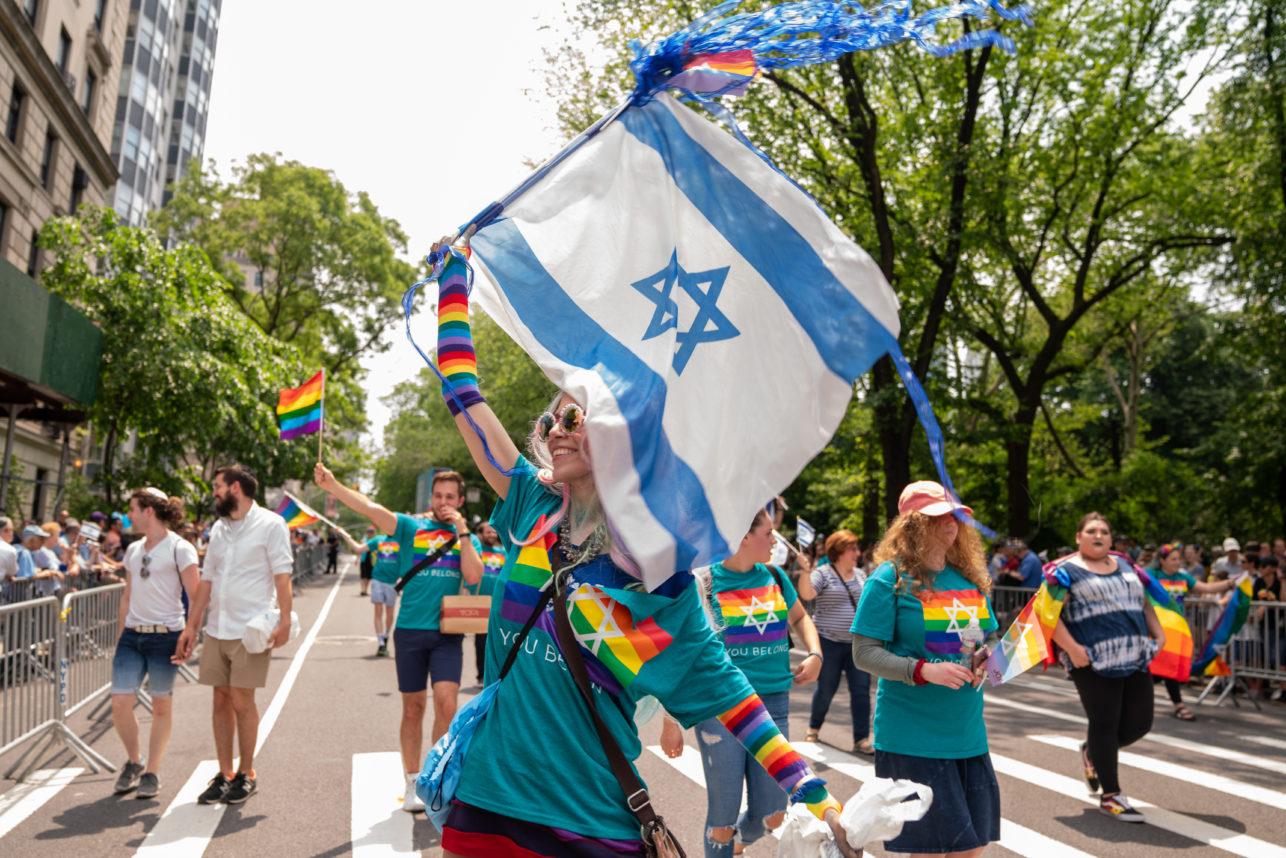
NEW YORK, NY – JUNE 02: People participate in the annual Celebrate Israel Parade on June 2, 2019 in New York City. (Photo by David Dee Delgado/Getty Images)
Decades ago, when Israel was far poorer and weaker, the Education Ministry had a department dedicated to preparing and disseminating curricula and school books for Jewish schoolchildren in the Diaspora. Textbooks included Hebrew language instruction, Jewish history, Israeli history and religious texts. The time has come to reinstate it in the department.
Second, Israel can provide teachers. Israel has a surfeit of teachers and no problem training more. It could launch a program to train teachers to teach in Diaspora communities for a period of three to five years. Such a program could include scholarships in teacher accreditation programs and dedicated training ahead of relocation. Israel can subsidize the teachers’ salaries or partner with philanthropists to finance their work abroad. The Diaspora communities could pitch in by providing housing for the teachers and their families and paying at least part of their salaries for the duration of their stay.
Like the production and dissemination of educational materials, by providing teachers—in everything from Torah to mathematics—Israel would reduce overhead costs for Jewish day schools and enable them to reduce tuition. Moreover, it would build deep, lasting partnerships and friendships between Israeli and Diaspora Jews.
NEW YORK, NY – JUNE 02: People participate in the annual Celebrate Israel Parade on June 2, 2019 in New York City. (Photo by David Dee Delgado/Getty Images)
One of the reasons for the precipitous drop in synagogue membership and ritual observance is costs. Today, there are already extraordinary programs in Israel that train young rabbis to serve as community rabbis in Diaspora Jewish communities. The young rabbis and their families move to far-flung communities for five years where they build, organize and serve the communities. The rabbis provide religious leadership and training and religious services like supervising the preparation and sale of kosher food enabling local community members to open kosher restaurants and supermarkets.
The government should support and expand these programs. By sending young Israeli rabbis abroad, Israel will lower synagogue membership costs—and through them the cost of living Jewish lives. These rabbis and their families will develop strong, lasting grassroots relationships between Israeli Jews and Diaspora Jewry.
The rise in violent attacks on synagogues and Jewish schools, grocery stores and other Jewish institutions worldwide over the past several years has made many Jews fearful of participating in communal life. Israel can and should help Jewish communities protect themselves by providing them with the means to protect their institutions.
Again, at marginal cost in terms of manpower and financial outlays, Israel can and should provide training for local Jewish security officers and when necessary, provide security officers to protect Jewish institutions from attack.
By every measure, the position of Jewish Diaspora communities is deteriorating. The steep rise in anti-Semitism; the high rates of assimilation and the rising cost of membership in synagogues and tuition costs for Jewish schools amid economic turndowns all contribute to the rapid emptying out of Jewish communities worldwide; the weakening of their ties with Israel and the rise of radical forces within the weakened communities.
The government made a critical decision on Sunday. Israel has to develop and begin implementing a strategic plan to reconnect Diaspora Jewry to Israel and to Judaism. Israel has the professional and human resources to accomplish this vital goal. Given the gravity of the situation, the government must define clear methods and goals now to ensure the success of its efforts.
Correction: In my initial article, I wrote, “Among other things, groups like Bend the Arc have developed programs to control communities by paying the salaries of rabbis. They control curricula in day schools and Hebrew schools by among other things, requiring them to use materials provided by radical groups and by training teachers and subsidizing their salaries.”
This is an error. I incorrectly recalled information I had previously discovered regarding related projects undertaken by a different organization. I apologize for the error. — Caroline Glick
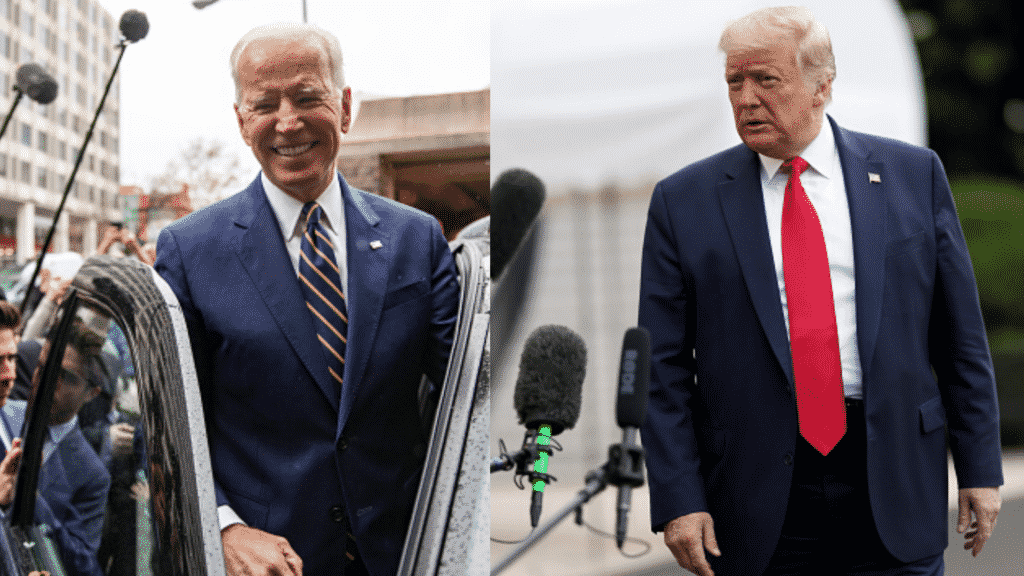
A pro-Israel friend of mine told me that he wished AIPAC would publish an unbiased list comparing the policy differences between former U.S. Vice President Joe Biden and U.S. President Donald Trump in regard to Israel. It was refreshing to hear in our current political climate someone who wanted to objectively analyze past actions and future policy positions of the candidates, as well as looking at their current foreign-policy advisers and associates.
In the minefield of American politics, trying to look at the facts in context and draw conclusions is almost impossible, as ad hominem attacks rule the day—unfortunately, many of them justified.
Trump haters see a president who is a narcissistic and racial divider, lacking intellectual depth and with a willful aversion to the truth. To others, Biden represents a person who has lost his cognitive abilities and is completely under the sway of the anti-Israel progressive wing of his party. Those progressives want to tear down America and create a Socialist republic that redistributes wealth; they call for reparations; and promote a victimhood mentality that allows Palestinians to remain as perpetual victims, while viewing Israel as a colonialist enterprise that should be sent to the scrapheap of racist regimes.
Now that I have your attention and have raised your blood pressure, let’s try, without contempt or bile, to compare what Trump and Biden have said and done concerning Israel and American Jews. The list is not exhaustive, but it should stimulate your intellectual curiosity and motivate you to Google for more answers.
Critics of Trump claim that he is the icon of white supremacists who hate Jews, dog-whistling anti-Semitic tropes that only they can hear. Biden will often cite Trump’s divisive words in at a rally in Charlottesville, Va., that exhibited anti-Jewish vitriol as the best example. Some claim that those words were taken out of context.
Supporters of Trump will claim that he is the most pro-Israel President in history, sanctioning the Israeli annexation of the Golan Heights, moving the U.S. embassy to Jerusalem, cutting off funds to UNWRA for perpetuating a false narrative that descendants of Palestinian refugees are entitled to go into Israel, penalizing the Palestinian Authority for incentivizing terrorism, and acknowledging that Israel has international legal rights over the 1967 line, allowing it to extend sovereignty into the West Bank.
For clarity, Israel truly annexed the Golan Heights because it had a previous legitimate stakeholder, Syria, whereas Israel cannot technically annex anything in the West Bank because the last legal entity, the Ottoman Empire, does not exist anymore. Article 80 of the U.N. Charter memorializes Israel’s rights in the West Bank, so the proper term would be extending sovereignty, rather than annexation. The wisdom of exercising those rights is subject to a legitimate debate between Trump and Biden supporters.
Critics of Trump claim that his one-sided actions against the Palestinians have made a two states for two people’s resolution of the conflict almost impossible. An icon of J Street and the progressive wing of the Democratic Party, Peter Beinart, went so far as to write a New York Times opinion piece titled “I No Longer Believe in a Jewish State.” Critics claim that Trump’s “Peace to Prosperity” Mideast plan grants Israel land in the West Bank, and would turn Israel into an apartheid and undemocratic state undeserving of American support. There is a new Democrat House letter demanding the end of funding for Israel in response to its “annexation.”
(Photo by Jeff Swensen/Getty Images)
Trump supporters claim that Biden, despite Iranian transgressions of the 2015 Iran nuclear deal, intends to rejoin that fatally flawed agreement, which endangers both U.S. and Israeli national security interests. Made under the Obama administration, it willfully ignored Iran’s increased human-rights abuses against its citizens, its missile development and its support of global terrorism (particularly against the Jewish state), while enriching the Islamic Republic with billions in sanctions relief.
Biden supporters claim that the JCPOA was a good, if imperfect, agreement that ended the ability of Iran to ever have a nuclear weapon. Critics claim that the deal is actually a pathway to an Iranian nuclear weapon, legitimizing their possession to a terrorist regime that has called time and again for the annihilation of America and Israel, as they have to wait only a few years for the deal’s nuclear prohibitions to expire.
Biden supporters acclaim the Obama passage of UNSC Resolution 2334, which stated that Israel would be in flagrant violation of international law if it keeps possession of any land over the 67 Line, as advancing peace and a two-state solution because it forces Israel to negotiate based on the 1967 line, which is the Palestinian position. Critics claim this hurts Israel’s security by undermining UNSC Resolution 242, which recognized Israel’s 1967 defensive line as unacceptably vulnerable to its neighbors who have repeatedly launched wars against them, acknowledging that Israel can never go back to that indefensible position.
Biden supporters claim that he and President Barack Obama were very pro-Israel, as evidenced by the largest financial-aid package ever given to Israel, the Memorandum of Understanding (MOU) worth more than $30 billion during the course of 10 years. They also say that Biden was supportive of additional aid to help Israel with its anti-missile system. Critics say that the amount of the MOU was actually reduced as punishment for Israeli Prime Minister Benjamin Netanyahu going to Congress against Obama’s wishes to fight against the Iran deal—the Obama administration’s prized foreign-policy legacy. Advocates of military aid to Israel point out that almost all the money given to Israel for defense spending goes to American contractors, thereby helping the U.S. economy, and that this is a two-way street, as Israeli soldiers are arguably doing our work for us, being our only reliable ally in a region of fickle dictatorships.
Trump supporters say that if you want to look at where Biden is going on Israel, you only have to look at the head of his foreign-policy transition team, Avril Haines. She signed a J Street letter critical of Israel advocating for a more “balanced” position in the Democratic Convention Platform, treating Israel and Palestinians equally, and would not be “silent on the rights of Palestinians, on Israeli actions that undermine those rights and the prospects for a two-state solution.”
Biden supporters say that if you want to know who Joe is, just look at his statements at AIPAC conventions over the last 30 years, and the pro-Israel letters and legislation that he has signed onto. In 2016, he said, “Israel will always exist strong and capable as the ultimate guarantor of security for Jewish people around the world. That is the abiding moral obligation we have.” Biden supporters claim that Trump crossed the line when he claimed that Jews who vote Democratic are disloyal. Biden responded, “Mr. President, these comments are insulting and inexcusable … . It may not be beneath you, but it is beneath the office you hold.”
HOLLYWOOD, FL – DECEMBER 07: U.S. President Donald Trump speaks during a homecoming campaign rally at The Diplomat Conference Center for the Israeli-American Council Summit on December 7, 2019 in Hollywood, Florida. President Trump continues to campaign for re-election in the 2020 presidential race. (Photo by Saul Martinez/Getty Images)
Trump supporters claim that the charge that he is anti-Semitic is ludicrous, as his grandchildren and daughter are Orthodox Jews. His executive action protecting Jewish students on college campuses from harassment and intimidation for expressing their pro-Israeli advocacy is now protected under the Civil Rights Act and applauded by pro-Israel supporters, but condemned as a violation of free speech by progressives who support Biden. According to AMCHA—an organization that battles campus anti-Semitism—the Holocaust Remembrance Alliance (IHRA) definition equating anti-Zionism as a form of anti-Semitism has seen a 300 percent increase in challenging that definition, something that has been incorporated into the Trump strategy to fight anti-Semitism.
In America today, getting anyone to appreciate or respect different policies and opinions is a lost cause. The visceral reaction to Trump is palpable, and his rhetoric does him no favors. For others, Biden is no different from the progressive anti-Israel “Squad” in Congress, and his articulation problems do him no favors. Biden’s much-anticipated choice of a vice-presidential candidate will be venerated on the left and excoriated on the right.
American Jews vote overwhelmingly Democrat, and for many, Trump’s divisive actions have made this an easy choice. For a minority of American Jews, Biden may be a good man, but has lost his way on Israel and would be a dangerous choice for its long-term security. His stated policy to rejoin the Iran deal poses a serious threat to Israel, and his views on the Palestinians and international law are naive at best, and dangerous at worst.
America will survive Trump or Biden. But for the minority of American Jews who have Israel as one of their top-five policy issues in voting for a president, would Biden or Trump be a better choice to enhance U.S.-Israeli relations? Or would one of them actually endanger Israel by his policy decisions?
Dr. Eric R. Mandel is the director of MEPIN, the Middle East Political Information Network. He regularly briefs members of the U.S. Senate, House and their foreign-policy advisers. He is a columnist for “The Jerusalem Post” and a contributor to i24TV, “The Hill,” JTA and “The Forward.”
The sobs came over the phone as Michael Beer described his father Ira’s lifelong commitment to Torah study and his family.
A victim of the COVID-19 pandemic that has killed hundreds of thousands of people across the world, Ira Beer had come to my attention during the course of my work on the Jewish Telegraphic Agency’s Bonds of Life project, which tells the story of the many Jewish victims of the virus. As I sat at a laptop in my living room listening to Beer’s son cry over the speakerphone, I fought hard to maintain my composure and provide a reassuring presence so he would feel comfortable enough to continue.
Over the past several months I had interviewed dozens of people like Beer, sometimes only days after the passing of a close family member. Parents, children and siblings would share cherished memories of their loved ones — funny stories, memorable vacations, the songs and books they loved. As they worked through their pain, what began as a journalistic undertaking often transformed into something akin to catharsis.
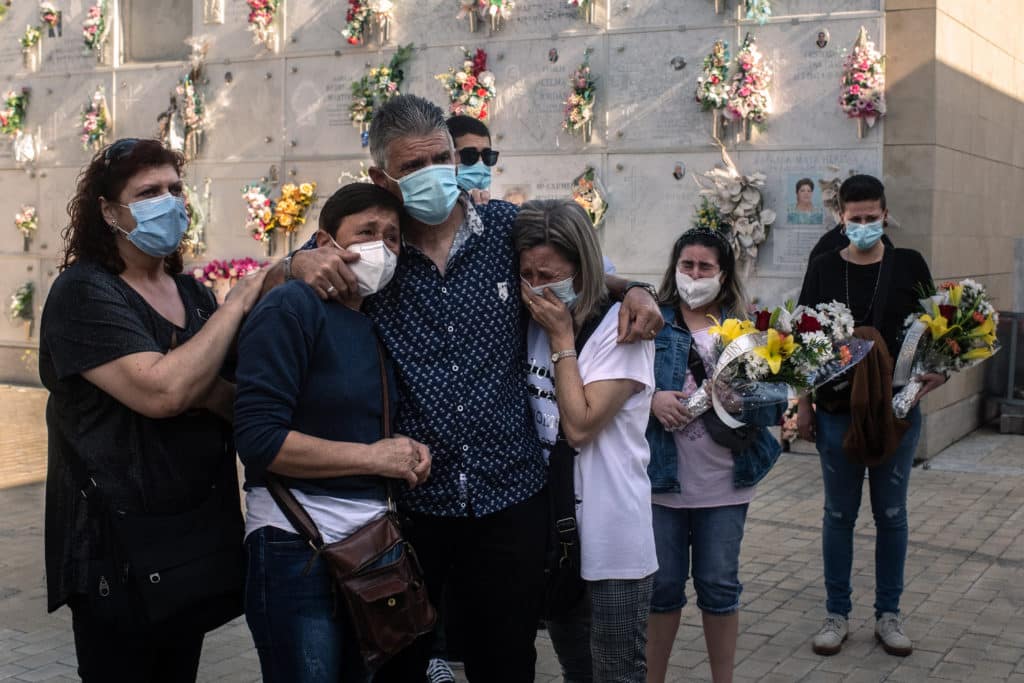
During one conversation, I listened as a mother described the loss of her 35-year old son, a pain exacerbated by being forced to sit shiva alone, receiving visitors only via Zoom or telephone because the risk of spreading further death through the traditional mourning process was too great.
Dealing with death is never easy, even for journalists who are expected to maintain an Olympian detachment from their subjects, chronicling everything yet (many seem to believe) feeling nothing themselves. And while reporters often manage to write with admirable objectivity, what we see and hear does affect us — often deeply.
One such incident occurred in 2014, when I covered the war in Ukraine for The Jerusalem Post. During an interview with Jews displaced by the fighting, Andrei Frumkin, a refugee from the separatist stronghold of Donetsk, described an incident reminiscent of the gory Normandy invasion scene from “Saving Private Ryan.”
Andrei was walking down the street one day when shells began raining down on the city. He threw himself on the sidewalk. As he hugged the ground, the rough pavement pressed against his body, he saw a woman, who had exited a nearby building only moments before, struck down by flying shrapnel. He was scuttling over to offer assistance when she suddenly stood up, one of her arms severed completely, and walked off, evidently in shock. After that, he told me, “it became impossible to be in the city anymore.”
A couple of nights later, in a hotel room in Dnipropetrovsk, I dreamed of Frumkin, imagining I was on the sidewalk with him watching bodies get torn apart. I woke up screaming and drenched in sweat. For several weeks after I had night terrors.
The following year, I covered a terror attack in my adopted hometown of Beit Shemesh, Israel, in which two Arabs armed with knives were shot to death by police after attempting to force their way on to a school bus. My daughter’s school bus passed through the neighborhood where the attack occurred and I had been walking my son to school when the first sirens went off. After making my way to the scene (where I took photographs of a pool of blood deemed too graphic for inclusion in the Post’s print edition) and filing my story, I finally allowed the fear to wash over me as I sat shaking at my desk.
The kind of suffering one encounters as a reporter is usually distinct enough from everyday experience to allow a measure of emotional distance. But covering a pandemic is fundamentally different.
For one thing, the health threat is one I face daily myself. I am an asthmatic and as such am considered a high risk for COVID-19. Early in the pandemic, I spent two days quarantined in my bedroom after I was alerted that I had come into contact with someone who had the virus. It turned out to be a false positive, but it was an intensely frightening experience.
Moreover, as I was writing obituaries, I had to worry about my own loved ones. Two of my cousins and a college buddy had caught the virus, although thankfully they all had relatively mild cases and survived. And my mother, who has survived three bouts with cancer over the past 15 years, lives in New York City, one of the worst coronavirus hot spots in the United States. She would occasionally tell me about victims in her own social circle.
Interviewing those in mourning also brought up memories of the afternoon in 2003 when I lost my own father. I was home from college for the summer and we were sitting together in the living room. I excused myself for several minutes and when I came back, he was sitting up on the couch, a vacant expression in his eyes. I came over and tried to wake him, but he was unresponsive. I tore out of the apartment and yelled for the doorman to call 911.
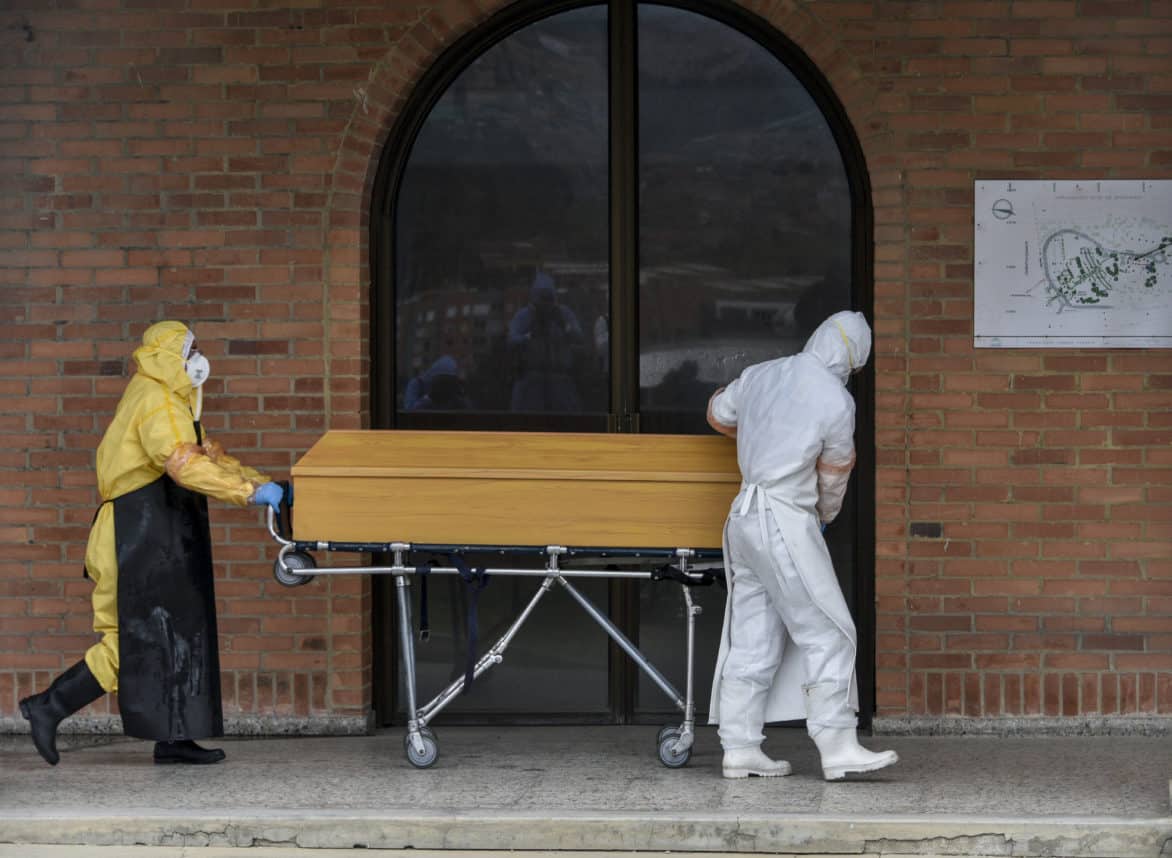
BOGOTA, COLOMBIA – JULY 04: Funeral workers wearing PPE transport a coffin with the remains of a deceased by COVID-19 at the entrance of the crematorium before being cremated at Parque Serafin cemetery on July 04, 2020 in Bogota, Colombia. The Parque Serafin Cemetery is one of the largest in Bogotá, the most affected city by contagion in the country, where most confirmed or suspected COVID-19 victims were cremated following strict health protocols. The cemetery has cremated up to 18 remains per day. (Photo by Guillermo Legaria/Getty Images)
As the EMTs worked on my father on the living room rug, I walked into the lobby to intercept my mother, who was due back from work. Within minutes, he was gone.
Writing obituaries for JTA, all these memories came flooding back. In late April, I interviewed Devora Klein-Freeman about her father, Alex, who died in New York at the age of 70 on March 28. During our phone conversation, I kept thinking about my own father, who would have been 72 had he lived.
With every interview, my own emotional wounds were torn open anew and often I felt like crying as I listened to people going through the same mourning process through which I had passed 17 years ago. Listening to them while remaining outwardly calm was difficult, but necessary. Having gone through it myself, I understood that providing a listening ear was to allow them the chance to do something for the dead. With every interview, I wished I had been able to express my own feelings to a journalist who could have given my father the memorial he deserved.
My father loved the written word, a love he passed on to me. But more than that, he taught me to love truth and dislike hypocrisy, an attitude that ultimately led me to journalism. He was intensely intellectual — trips to bookstores and museums were a regular feature of my childhood — but not pretentious, and could get along with almost anybody. (Except for one neighborhood anti-Semite, who as the family legend goes, my father impersonated so that he could have the man’s utilities cut off one winter in the 1970s.)
Telling stories of the dead, while providing the living with a measure of solace through my work, isn’t just a matter of professional pride. It’s how I honor my own father — who, like the victims of COVID-19, was lost before his time.
Footage of the St. Louis couple brandishing guns at Black Lives Matters protesters passing in front of their mansion on a private street quickly became a symbol of white resistance to calls for racial equity.
Now, an extensive report about Patricia and Mark McCloskey’s previous clashes reveals that among their many targets has been the Reform synagogue next door. From Jeremy Kohler’s story in the St. Louis Post Dispatch:
Mark McCloskey has run off trustees trying to make repairs to the wall surrounding his property, insisting that he and his wife own it. In 2013, he destroyed bee hives placed just outside of the mansion’s northern wall by the neighboring Jewish Central Reform Congregation and left a note saying he did it, and if the mess wasn’t cleaned up quickly he would seek a restraining order and attorneys fees. The congregation had planned to harvest the honey and pick apples from trees on its property for Rosh Hashanah.
“The children were crying in school,” Rabbi Susan Talve said. “It was part of our curriculum.”
The story includes a photo of the note threatening legal action that Mark McCloskey left after destroying the hives. McCloskey has previously sued his employer, his neighbors and his siblings, according to the story.
Central Reform Congregation has played a role in previous protests over racial injustice. In 2014, the synagogue offered itself as a sanctuary for people protesting the police killing of Michael Brown, an unarmed Black 18-year-old, in nearby Ferguson, Missouri. The extended protests in Ferguson represented a breakout moment for the then-inchoate Black Lives Matter movement. When protests erupted after an officer was acquitted of murder charges in a different case in 2017, the synagogue again offered refuge to protesters.
Days after Prime Minister Benjamin Netanyahu conceded that Israel had reopened “too soon,” thousands of Israelis protested the government’s response to the coronavirus pandemic in a dramatic rally in Tel Aviv’s Rabin Square.
The protesters called for swifter aid to people who have lost their jobs because of the pandemic. About 850,000 Israelis have lost their jobs, swelling the unemployment rate to 21%.
TEL AVIV, ISRAEL – JULY 11: Israeli protesters block a main junction as they protest against the government’s economy response to the corona virus crisis on July 11, 2020 in Tel Aviv, Israel. Following a rise in the cases of COVID-19, Israeli Prime Minister Benjamin Netanyahu has ordered many businesses to shut, causing people to protest about a perceived mishandling of the coronavirus pandemic and to call for the compensation promised by the government to be paid out more quickly. (Photo by Amir Levy/Getty Images)
But the protesters said more was needed to get Israelis through the crisis. Many wore shirts or carried signs with pictures of bread to symbolize the basic needs that they said are not being met by the government’s response.
Ten thousand people participated in the rally, and 20 were arrested, Haaretz reported. The rally had been authorized for 1,800 people — the square’s capacity if strict social distancing is observed. Pictures show protesters wearing masks but crammed shoulder to shoulder, days after the country reinstated strict limitations on public gatherings in a bid to head off a rapidly mounting second wave of infections.
The country registered more than 1,300 new cases on Saturday, slightly fewer than Friday’s record high. The total was more than in Germany, Spain and Italy combined, which together have more than 13 times Israel’s population, and four times the total number of Israelis who had been diagnosed with the virus when the country first imposed a stay-at-home order in mid-March.
With four months to Election Day, Joe Biden’s presidential campaign now boasts a staffer dedicated to mobilizing Jewish voters.
Aaron Keyak, who has already been working on Biden’s campaign, is filling the role, first advertised late last month. Jewish Insider was the first to report Keyak’s appointment on Friday.
Keyak is a longtime Democratic political strategist whose work has included leading a Jewish outreach effort for Barack Obama’s successful 2012 reelection bid; cofounding Bluelight Strategies, a consulting group; and briefly heading the National Jewish Democratic Council, the lobbying group that essentially folded because of lawsuits from political adversaries.
In his new role, Keyak “will build and manage a national outreach program to support the political objectives of the campaign,” according to the job posting, which is no longer online.
Last year, Keyak made the case in a Jewish Telegraphic Agency op-ed that President Donald Trump should bring on a White House Jewish liaison — a position, he wrote, that existed for more than four decades before Trump entered office.
“Even when the Jewish liaison wasn’t able to change the position of their boss, a nuanced and full understanding of the Jewish community is essential to advising the most powerful person on earth,” Keyak wrote.
NFL star DeSean Jackson, who last week apologized for posting anti-Semitic quotes attributed to Adolf Hitler and Louis Farrakhan, accepted a Holocaust survivor’s invitation to visit Auschwitz together.
Jackson, a wide receiver for the Philadelphia Eagles, accepted the invitation Saturday during a Zoom conversation with Edward Mosberg, 94, from New Jersey.
Mosberg, who chairs From the Depths, a Holocaust commemoration group, proposed the call following an outcry over Jackson’s posts on social media. Jackson deleted the posts and apologized for them.
“I grew up in L.A., and never really spent time with anyone from the Jewish community and didn’t know much about their history,” Jackson said on the call with Mosberg. “This has been such a powerful experience for me to learn and educate myself.”
“Thank you Mr. Mosberg for your valuable time and insight today,” Jackson posted on Instagram after the call, along with a screenshot showing that Mosberg wore a concentration camp uniform on the call. “I’m taking this time to continue with educating myself and bridging the gap between different cultures, communities & religions. LOVE 2 ALL!!!!!”
On the possibility of visiting the former Nazi death camp in Poland, Jackson told Mosberg: “I would be honored to come to Auschwitz and learn from you,” according to From the Depths founder Jonny Daniels, who was on the call.
“Dialogue is the key to making this crazy world we live in a better place, with everything so divided is so powerful to bring us all together,” Daniels said. “We are working with DeSean and his team to set dates for this trip to go ahead and are happy that DeSean agreed.”
The visit has not yet been scheduled. While Auschwitz is open to visitors, Americans cannot currently travel to Europe because of the coronavirus pandemic. (Mosberg most recently visited in January for a ceremony marking the 75th anniversary of the camp’s liberation.)
Jackson has also been invited to the United States Holocaust Memorial Museum by Julian Edelman, the New England Patriots receiver who identifies as Jewish and frequently speaks out against anti-Semitism. Edelman said he would also accompany Jackson to the National Museum of African American History and Culture. Both Washington, D.C., museums are currently closed because of the pandemic.
I was born in 1966 so I never witnessed the turmoil of that turbulent decade. But having read several books on it, and spoken to those were active members creating the turmoil, I know that many thought America was finished. Police brutality, massive demonstrations, racial strife, an unbridgeable political divide – all set against the backdrop of Vietnam, America’s most unpopular war – led many to believe the country was toast. But America bounced back and would go on to five of its most prosperous decades.
But here we are again, with much of the same unrest, only this time you add in a once-in-a-century pandemic that has already killed more than 130,000 Americans and collapsed our economy. One can be forgiven for being depressed about America, especially walking around a once-vibrant world capital like New York City.
The teeming streets are today largely deserted. The office buildings empty glass shells. Only the parks and the river walks seem full, which may be a good omen. But walk further and you’ll see the boarded up storefronts that remain from the looting. People walk away from each other on the streets, suspicious that each one carries the pathogen that might kill them.
And whereas TV used to be an escape, turn it on today and get ready to pop some Prozac. Trump and the Democrats are killing each other. And whereas that’s only metaphorical, incidents of police brutality have been all too real. Innocent black citizens have suffered for too long at the hands of the police who, for the most part are heroes, but contain enough bad apples that racially-charged brutality seems to have become a regular occurrence. With all this set against a level of personal loss and tragedy that the country has rarely seen in so short a space of time – I personally lost my father just a month ago – is there reason to hope? Can American come back from the brink?
We all know the answer to that question. America will of course rebound. With perhaps the sole exception of Israel, it is the most resilient nation on earth with the most durable citizens.
But the path to recovery involves first diagnosing the problems.
Our ailment is not one of politics but values. Not one of a social divide not but one of principles. Not caused by an infectious disease but rather a manifestation of a disease of the soul.
Our ailment is not one of politics but values. Not one of a social divide not but one of principles. Not caused by an infectious disease but rather a manifestation of a disease of the soul.
Americans were never united by politics. Go back to the times of Washington and Jefferson, Hamilton and Burr, and you will see Federalists and Republicans that so detested each other that they sometimes shot each other (we in Jersey know this best because Hamilton fell in Weehawken at Burr’s bullet). Andrew Jackson was as loathed by his political enemies in his time as is Trump in his. Lincoln was called a “gorilla” and “baboon” by the Northern press and, of course, no divide in America at our time is anywhere near as serious as the Civil War.
But America healed from all that based on time-honored American values with which right and left, conservative and liberal and non-aligned all agreed.
The first was that America is founded on the principle that all men are created equal, which is why the abomination of slavery could not continue and hundreds of thousands of Americans died to make that truism a reality.
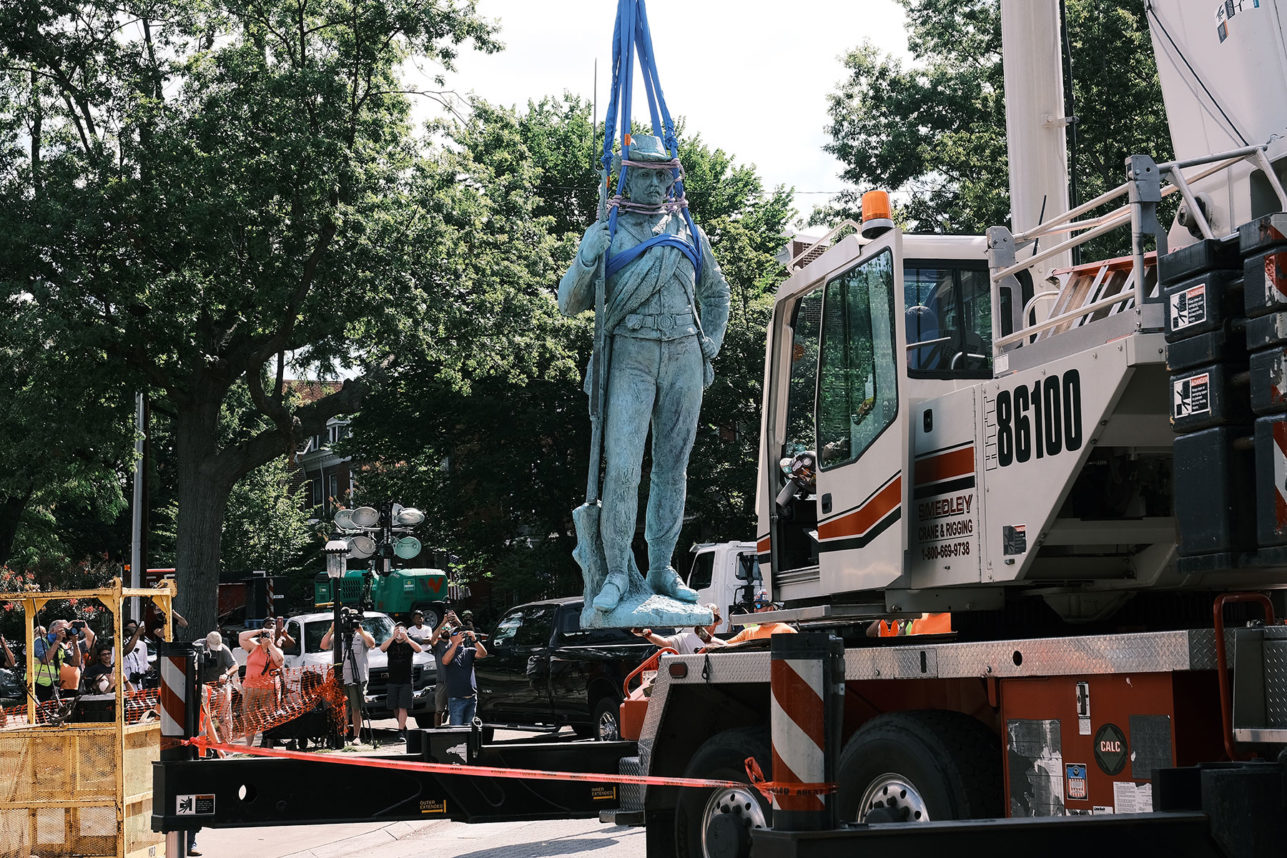
It follows therefore that those who rebelled against the United States and fought in the Confederacy do not deserve to be honored. There are imperfections and then there are unforgivable flaws. Joining a rebellion against the United States, and one fought to keep people in chains, is unforgivable. You may be a great general like Robert E. Lee, impeccable in your personal life and perhaps even personally opposed to the institution of slavery, yet it makes no difference. There should be no statue honoring you in the country against which you had taken up arms.
The Confederate soldiers and sailors statue is hoisted down to the ground by a crane on July 8, 2020 in Richmond, Virginia. (Photo by Eze Amos/Getty Images)
I was astonished to see, when I first visited Richmond with my kids, Monument Ave. with all the statues to the Confederate generals. Whatever anyone thought of states’ rights, what did that have to do with starting a war that took hundreds of thousands of lives, and then get, literally, put on a pedestal for it?
The statues to Confederate heroes should come down, but not the way it’s being done now. Because the second principle of the American Republic is law and order. We are not the French Revolution which was characterized primarily by mob rule. Crowds don’t pull down statues. Legislatures vote on them – as Mississippi has now done to remove the Confederate battle flag from its state flag – and then action is taken. And you don’t destroy the statues. They are part of our history and legacy, for good and for bad. You put them in a museum, intact, and have the museum explain the sometimes ugly history of our country and how people who fought for slavery were often lionized even after they lost.
The statues to Confederate heroes should come down, but not the way it’s being done now. Because the second principle of the American Republic is law and order.
Is that embarrassing? Yes. But a willingness to accept human flaws, imperfections, and limitations, sometimes horrible ones, is an honest truth that the United States has always accepted and forms our third core value.
European kings always portrayed themselves as ruling by divine right. Their portraits, painted by official court artists, typically showed them in glorious perfection, holding an orb as masters of the world. They lived in 100-room palaces, in an exalted station above the puny people.
Not so America, which called its leader President rather than majesty, put him in a Georgian mansion that looked like any fancy house of a well-to-do citizen, and made that magistrate go before the people every four years to receive a new mandate or be thrown out. American legend is built on highly imperfect people who strove to create a more perfect union.
And those are the statues that should remain– those of Americans who acknowledged their flaws and limitations while espousing the core virtues of the Republic. Thomas Jefferson owned slaves while still writing that he shudders for his country when he thinks that God is just and that God’s justice against slavery cannot be held long. He also gave us our founding document which every demonstration against racism invokes today, that all men are created equal and have inalienable rights. Abraham Lincoln thought of encouraging blacks to move back to Africa to Liberia. But he paid with his life to free them. Ulysses Grant had a drinking problem and he once even barred Jewish merchants from selling to the US army at Vicksburg. But he shredded the Confederacy, apologized for the incident with the Jews, and wrote a memoir where his glaring and imperfect humanity was on display for all to see.
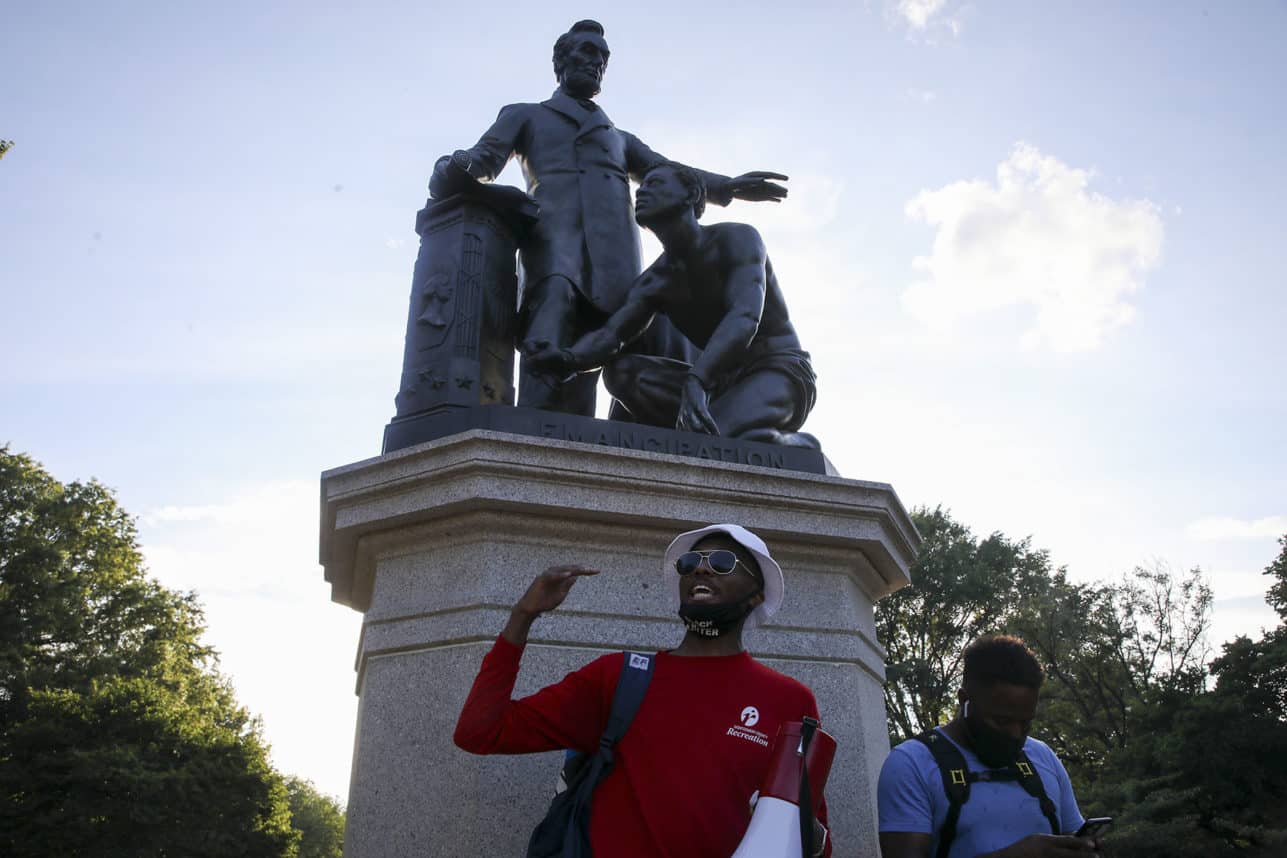
Protesters gather at Lincoln Park to demand the Emancipation Memorial be taken down on June 23, 2020 in Washington, DC. (Photo by Tasos Katopodis/Getty Images)
Why would we destroy monuments to great men who had serious flaws and who built our nation? Are we really going to pull down a statue of Lincoln – paid for by freed slaves – with a young slave boy kneeling before him in Richmond, where the slave thanked him for his freedom and Lincoln famously told him to kneel before none but God?
Are we going to vilify Teddy Roosevelt who, for all his limitations, spoke out powerfully about human liberty throughout his career and saved so much of America for conservation from those who would destroy or pollute it?
Which leads to our final American value: Forgiveness. This means a willingness to see the good in one another, our fellow citizens. We’ll need a lot more forgiveness today if we are not only to come back from the brink, but flourish in the future.
Rabbi Shmuley Boteach is the author of “Judaism for Everyone” and “Renewal: The Seven Central Values of the Jewish Faith.” Follow him on Twitter and Instagram @RabbiShmuley.