fbpx

July 9, 2020

Sacha Baron Cohen Pranks Rudy Giuliani – in Pink Drag

Notorious prankster Sacha Baron Cohen was up to old tricks on July 9 when he pranked President Trump’s attorney Rudy Giuliani at an interview at a New York hotel. Cohen, who had pre-arranged credentials, burst into the room yelling and screaming, dressed in a pink bikini. 

“This guy comes running in, wearing a crazy, what I would say was a pink transgender outfit,” Giuliani told the New York Post. “It was a pink bikini, with lace, underneath a translucent mesh top, it looked absurd. He had the beard, bare legs and wasn’t what I would call distractingly attractive. I thought this must be a scam or a shakedown, so I reported it to the police. He then ran away.” Since no crime was committed, no arrest was made. 

The motive for the shenanigans? Cohen is filming another season of his Showtime series “Who is America?” in which he dons disguises to ask people absurd questions and provoke a response. On June 28, an undercover Cohen infiltrated a right-wing rally in Washington state. 3.

As an actor, Cohen has several projects in the works. He plays Yippie activist Abbie Hoffman in the completed film “The Trial of the Chicago 7” and the tile role in “Mandrake the Magician” is on his future slate.

Sacha Baron Cohen Pranks Rudy Giuliani – in Pink Drag Read More »

600,000 Followers is Pretty Good

These are those counted of the children of Israel:
six hundred and one thousand and seven hundred and thirty

As far as numbers go, that’s pretty good.
With over six hundred thousand (not including the Levites)
you could start a medium sized town.

You could march on Washington and
still be more impressive than the last inauguration.
You’d be pretty close to the population of Baltimore

and not too far off from Louisville.
You’d be one tenth of the number of Israelites
taken during the Holocaust (back when

the term Israelite hadn’t been used for
a couple thousand years.) You’d be twenty percent
of the number of COVID-19 cases in

the United States of America as of the day
these words found space on this electronic paper.
You’d be enough to scare any small gang of bullies away.

You’d fill up six Rose Bowls…three times that many
if you were maintaining a safe social distance.
If each one had a dollar you still couldn’t

afford to buy a decent house in Los Angeles
(and you wouldn’t all fit in it anyway.)
With six hundred thousand, Jews especially,

you’d have at least seven hundred thousand opinions.
You’d have that many interpretations of these words.
And even more of the oldest words.

You’d be the beginnings of a civilization.
The begetters of millions. Award winning millions.
Noisy, noisy millions.


God Wrestler: a poem for every Torah Portion by Rick LupertLos Angeles poet Rick Lupert created the Poetry Super Highway (an online publication and resource for poets), and hosted the Cobalt Cafe weekly poetry reading for almost 21 years. He’s authored 23 collections of poetry, including “God Wrestler: A Poem for Every Torah Portion“, “I’m a Jew, Are You” (Jewish themed poems) and “Feeding Holy Cats” (Poetry written while a staff member on the first Birthright Israel trip), and most recently “Hunka Hunka Howdee!” (Poems written in Memphis, Nashville, and Louisville – Ain’t Got No Press, May 2019) and edited the anthologies “Ekphrastia Gone Wild”, “A Poet’s Haggadah”, and “The Night Goes on All Night.” He writes the daily web comic “Cat and Banana” with fellow Los Angeles poet Brendan Constantine. He’s widely published and reads his poetry wherever they let him.

600,000 Followers is Pretty Good Read More »

Jewish Agency Releases Numbers of Jewish Coronavirus Deaths From Countries Around the World

JERUSALEM (JTA) — Jewish deaths around the world from the coronavirus — excluding the United States, Israel and the countries of the former Soviet Union as well as Israel — total about 2,200, the Jewish Agency said Wednesday.

The group, which works to bolster Israel-Diaspora relations, released these numbers on a Zoom call that included the leaders of several Diaspora Jewish communities that are suffering financially from the current crisis: 33 Jewish deaths from countries in the Middle East, 40 from Chile, 50 from Mexico, 70 from Argentina and 100 from Brazil.

Jewish Agency Chairman Isaac Herzog said his organization was not able to confirm figures for the United States and the FSU.

Herzog added that some Diaspora Jewish communities have entered into “literal paralysis” due to the coronavirus crisis. Some cannot provide basic communal services, welfare services or Jewish educational activities, he said.

Jewish Agency Releases Numbers of Jewish Coronavirus Deaths From Countries Around the World Read More »

Canadian High School Students Chant ‘Jews Are Our Dogs’ at Protest Against Israeli Annexation Scenario

A group of protesters that included high school students chanted “Jews are our dogs” during a July 4 rally in Canada against Israel’s possible annexation of portions of the West Bank.

B’nai Brith Canada released a statement on July 8 stating that the protest, which took place in Mississauga, Ontario, featured 100 protesters; one of the co-organizers was a high school student. Several other high school students also attended. The protests featured chants in Arabic that included “Palestine is our country and Jews are our dogs” and “martyrs by the millions march to Jerusalem!”


B’nai Brith Canada announced in its statement the Jewish organization has filed a hate crimes complaint against the protesters.

“The display of anti-Semitism in Canada’s public squares is totally unacceptable,” B’nai Brith Canada CEO Michael Mostyn said in a statement. “Opposition to Israeli policy can never be used as an excuse to demean Jews as ‘dogs’ or to threaten violence against them.”

He added: “We have reached out to the high school attended by one of the rally’s organizers, and hope to visit at an appropriate time in order to educate students about the dark places to which rhetoric of this sort can lead.”

Toronto’s Centre for Israel Jewish Affairs (CIJA) Chair Barbara Bank similarly said in a statement, “There is a lot of room for legitimate discussion about the State of Israel and the politics of the Middle East, but our community will not accept the use of Israel as a pretence to call Jews ‘dogs.’ This is not just offensive. Hate directed at Jews and other communities has a toxic impact on our city, province and country. Hatred that starts with words all too often ends in violence.”

She also called for Canadian lawmakers to adopt the International Holocaust Remembrance Alliance definition of anti-Semitism, which states the delegitimization and demonization of Israel is anti-Semitic.

Jaspal Gill, interim director of education at the Peel District School Board, condemned the “hateful, anti-Semitic comments” at the protests.

“At this time, we are unable to confirm that any of the youth involved attend Peel District School Board schools,” Gill said. “Anti-Semitic comments like the ones made are simply unacceptable. We must, as a society, be unequivocal in our condemnation of anti-Semitism and discrimination in all its forms.”

Canadian High School Students Chant ‘Jews Are Our Dogs’ at Protest Against Israeli Annexation Scenario Read More »

Obituaries: June 10, 2020

Thom Avner died June 19 at 93. Survived by wife Carol; sons Mark (Stacey), Craig. Hillside

Jack Azoff died May 28 at 95. Survived by wife Marcelle; daughters Deborah (Barry) Wallman, Linda; son Alan (Nomie); 7 grandchildren; 3 great-grandchildren; brother William. Chevra Kadisha

Max Barrie died June 21 at 37. Survived mother Sally; father Michael; stepmother Fredrica; sister Emma; stepbrothers Oliver, Barnaby, Oliver, Augie. Hillside

Shlomo Ben-Menahem died June 13 at 80. Survived by wife Tova; sons Eyal (Anot), Ofer (Rachel), Shen (Shiraya), Roen, Yossi; 13 grandchildren; sisters Bracha Siman-Tovi, Esther (Avraham) Eudakov; brothers Moti (Esther), Ely (Aliza). Mount Sinai

Wolf Boksenbaum died June 10 at 94. Survived by sons Peter (Ella), David (Wendy). Mount Sinai

Dora June Bromberg died June 14 at 94. Survived by sons Michael, David (Gail), Jon (Michelle); 3 grandchildren. Mount Sinai

Igal Chozahinoff died June 19 at 84. Survived by wife Barbara; daughter Sharon Lieblein; son Dan (Michelle); 4 grandchildren; brother Yehoshua Nof. New Montefiore Cemetery, New York

Victoria Colombetti died June 15 at 63. Survived by sons Jason, Matthew; mother Judy; father Jay; sister Amy; brother Adam. Hillside

Fred Cowan died June 15 at 99. Survived by daughter Karla Tulchin; sons Robert, Keith. Malinow and Silverman

Elsbeth Deser died June 8 at 94. Survived by husband Stanley; daughters Abigail (Charlie Siskel), Toni (Paul), Clara (Mary Anne Schafer). Mount Sinai

Stephen Elias died March 13 at 89. Survived by wife Jill Duxbury; daughters Sousan, Janet (Richard) Nadel; sons Peter (Sandi), Eric (Jodi); 8 grandchildren. Chevra Kadisha

Samuel Feinstein died May 12 at 97. Survived by daughter Susan Schlichting; son Charles; 3 grandchildren; 1 great-grandchild. Chevra Kadisha

Benjamin Froman died June 11 at 98. Survived by daughters Julie (Ross) Myers, Sandra (Ira) Levine; 2 grandchildren; 5 great-grandchildren; brother Harry. Mount Sinai

Evelyn Gilbert died June 21 at 97. Survived by daughter Fran; son Barry (Sherri); 3 grandchildren; 1 great-grandchild. Hillside

Arnold Gittelson died June 12 at 98. Survived by sons Robert (Angela), Michael (Tina); 1 grandchild. Mount Sinai

Howard Greller died June 17 at 68. Survived by daughter Stephanie; sons Jeffrey, Spencer, Garrett; brother Larry. Hillside

Rosemarie Gurewitz died June 10 at 86. Survived by 1 grandchild. Mount Sinai

James Stephen Henerson died June 18 at 84. Survived by wife Marlene; sons Matthew (Nancy), Evan (Lauren); brother Stan (Barbara). Mount Sinai

Helen Kranther died June 20 at 91. Survived by daughters Judith, Andrea; son Michael; 1 grandchild. Hillside

Lawrence Neil Miner died June 15 at 86. Survived by wife Nicole; son Adam (Helaine); stepdaughter Karna (Morris) Ruskin; stepson Brandon (Soo-jin) Behrstock; 8 grandchildren. Mount Sinai

Marcia Oster died June 5 at 77. Survived by son David; brother Kenneth Wilder. Malinow and Silverman

Sylvia Oster died June 9 at 88. Survived by daughter Leslie (Dan Rodriguez); sons David (Lalita); Mark. Malinow and Silverman

Pearl Perlman died June 18 at 92. Survived by daughters Pauline Houston, Susan; 1 grandchild. Mount Sinai

Stanley Raymond died June 11 at 97. Survived by wife Audrey; daughters Melanie C. (Robert) Schwartz, Barbara M. (Marty) Storey. Mount Sinai

Melvyn S. Rifkin died June 14 at 95. Survived by wife Gabrielle; sons Jacques (Patricia Gum), Stephen (Tzviah); 2 grandchildren. Mount Sinai

Mendel Rittenberg died June 21 at 105. Survived by daughter Diane (Mark); sons Phillip, David; 5 grandchildren; 4 great-grandchildren; brother Jerry. Hillside 

Hilde M. Rosenblum died June 18 at 100. Survived by daughters Sandra (Peter Spiro), Deborah (Stephen) Mullen; son Steven; 2 grandchildren; sister Helen Weil; brother Erwin (Sally) Levy. Mount Sinai

Harry Rosmarin died June 17 at 67. Survived by brother Marvin. Mount Sinai

Ruth Roth died June 3 at 96. Survived by son Steven; 1 daughter; 2 grandchildren. Mount Sinai

Helen Samett died June 21 at 99. Survived by daughters Marsha (Fred), Sondra; son Michael (Raya); 3 grandchildren; 2 great-grandchildren. Hillside 

Kelly Schiffer died June 15 at 98. Survived by daughters Carole, Kim (Robert) Sims; 3 grandchildren. Mount Sinai

Charlotte Seeman died June 15 at 99. Survived by sons Daniel (Marissa), Michael (Rochelle). Mount Sinai

Charles Shubb died June 13 at 79. Survived by wife Judy; daughters Lisa, Michele; 2 grandchildren; 1 great-grandchild. Mount Sinai

Gary Trumer died June 10 at 75. Survived by sister Marilyn (Tom) Cachat. Mount Sinai

Obituaries: June 10, 2020 Read More »

SHEIN Apologizes for Selling Swastika Necklace on Their Website

Online clothing store SHEIN issued an apology on July 9 for selling a swastika necklace on its website.

The Stop Anti-Semitism.org watchdog shared a screenshot of the necklace in a July 9 tweet:


The necklace has since been removed from the website.

A SHEIN representative sent a statement to the Journal apologizing for the necklace.

“We’re very sorry for what happened,” the statement read. “The products were immediately removed from our site as soon as the problem was discovered. We’ll be more careful about the classification and display of our products. Sincerely apologize to all [who] got affected, thank you for your oversights for a better SHEIN community.”

Stop Anti-Semitism disputed SHEIN’s claim that the clothing retailer immediately removed the necklace from the site; the watchdog said that the necklace simply was renamed from a “metal swastika pendant necklace” to a “metal pendant necklace” for more than three hours until it was removed.


The SHEIN representative told the Journal that she couldn’t confirm Stop Anti-Semitism’s allegation at this point in time.

According to Buzzfeed, SHEIN issued an apology on July 4 after appearing to sell Muslim prayer mats as rugs.

SHEIN Apologizes for Selling Swastika Necklace on Their Website Read More »

Letters: Political Cartoons, Systemic Racism and Americans Who Love Their Country

Greenberg Cartoons
Perhaps for his next cartoon, instead of a police car in the lower left-hand corner opposite a concerned looking Black man (June 5), Steve Greenberg could use a representation of a Chicago gang opposite a list of their victims (men, women and even children), dozens of whom are shot and many of whom die.

One recent weekend, 114 were shot and 14 killed, including 5 children. Athlete Brandon Hendricks, 17, was killed on June 28 in New York; a yet to be named 16-year-old was killed on June 29 in Seattle’s CHOP/CHAZ; and a legion of Chicagoans including 20-month-old Sincere Gaston, shot in the chest; 10-year-old Lena Nunez, hit in the head; 17-year-old Antiwon Douglas; 31-year-old Arthur Owens; 19-year-old Tyrone D. Thomas; 49-year-old Robert Chitty; 41-year-old Dannanris Lipscomb; 30-year-old Victor Hudson; 35-year-old Kevin Applewhite; 15-year-old Jeremiah James; 24-year-old Shanon Steward, etc.  

Greenberg should ask himself: Do these lives matter?
Warren Scheinin, Redondo Beach

A week ago, I sent a letter to the Journal criticizing a cartoon condemning the proposed annexation of parts of the West Bank pursuant to President Donald Trump’s peace plan (June 26). The reason for the condemnation was that annexation would make “American Jews” and “the international community” unhappy.

My letter asked, “so what?” The point of annexation was not to add land, but to bring the Palestinians to the negotiating table. After sending that letter I learned that, sometime during the week preceding July 1 (the earliest date prescribed by the peace plan for annexation), the Palestinian Authority announced its willingness to negotiate.

Is the point of this letter that I am prescient? No.

But even the Washington Institute’s Dennis Ross didn’t seem to get it, and I don’t blame you if you didn’t get it either. But I do blame you for not publishing letters that spell it out.
Robert Helfing, Pasadena

Systemic Racism
I’m not an expert on systemic racism, although when I was preparing to attend college, the school’s admissions policies were guided by geographical considerations and, as a result, a large number of people of my faith were excluded from choosing their field of study.

Or afterward, with degrees in hand, my fellow believers were excluded from pursuing their careers in established facilities and had to create institutions for their faith’s followers. Nor did I note that members of my faith have been attacked since its coming into existence 5,000-plus years ago; Egyptians, Romans, English, Spanish, Russians and even Japanese tortured or degraded them and, of course, the Germans and  their allies killed 6 million of them.

Even today, the nation of my people is under constant siege from its neighbors and the United Nations; in this country, the movement that cares about Black lives endorses a policy to boycott, divest and sanction Israel, a country of 9 million.

I may not be able to explain what systemic racism is but I’m like Justice Potter Stewart, who said that he may not be able to explain pornography but he knew it when he saw it. I know systemic racism when I see it.
Sidney Gold, via email

Americans Who Love Their Country
My short answer to David Suissa’s question is: Yes, the vast majority of Americans still love this country — maybe in a different way for everyone (“Does Anyone Still Love America?” July 3). 

Humans make many mistakes. So do nations. Some humans make the same mistakes repeatedly. So do some nations. Isn’t the ability to experience shame for repeating the same mistakes the human emotion necessary to stop repeating those mistakes? Isn’t the inability to experience shame in such cases the human emotion, close if not identical to pride, that disables humans and nations from overcoming old and unproductive patterns of behavior?
Svetlozar Garmidolov, Los Angeles

David Suissa’s July 3 column was his best ever, so beautifully written and brilliantly articulated.
Martin Shandling, Los Angeles 

Defunding the Police
Larry Greenfield makes a cogent point in describing the risks of defunding the police (“Defunding the Police Entails Risk,” July 3). After the death of George Floyd, many activists advocated defunding police departments. Floyd died when a Minneapolis police officer used his knee to pin Floyd’s neck to the pavement. The police officer was arrested and probably will be convicted. That doesn’t mean that police departments should be defunded.

After Floyd’s death, many activist groups complained that there is systemic racism among the police departments and, on that basis, they should be defunded.

The statistics cited by Greenfield suggest that there is no systemic racism among police forces. Accusing the hundreds of thousands of law enforcement officers in the U.S. of systemic racism is accusing an entire group of guilt by association because of the actions of very few people.

In the 9/11 attacks, the actions of 19 Muslim men caused the deaths of 3,000 Americans. Americans were repeatedly admonished not to hold all Muslims responsible because a small number caused significant harm to all of us.

The movement to defund police is effectively based on assuming systemic racism among all police based on the actions of a few.
Marshall Lerner, Beverly Hills

Charedi Freedom
While I was contemplating Monica Osborne’s depiction of Esty, a character in the TV series “Unorthodox,” dressed in her “noticeably frumpy” clothes, casting off her wig in the waters, as an “unfettering” and an embracing of freedom from her ultra-Orthodox upbringing, I recalled a visit by my niece, Sara, a Charedi lifeguard pursuing a master’s degree, who is highly intelligent and now happily married, proud to wear her sheitel (wig). (“When Orthodox Women Go Trolling,” July 3).

Sara, dressed in modest, casual yet elegant attire, refused to take off her thick stockings when she waded into the ocean because she, like many other happy, fulfilled Orthodox women, devoutly believes that the laws of modesty are intrinsic to what a Jewish woman of valor is. 

Charedi women aren’t unlike other women in that their family lives impact their choices. Esty was unhappy in her early and later life so, feeling suffocated, she yearned to escape. If Esty, like my niece, came from a nurturing, empowering family, she probably never would have sought another life.
Mina Friedler, Venice


Now it’s your turn. Don’t be shy, submit a letter to the editor. Letters should be no more than 200 words and must include a valid name and city. The Journal reserves the right to edit all letters. letters@jewishjournal.com.

Letters: Political Cartoons, Systemic Racism and Americans Who Love Their Country Read More »

Why a Physical Synagogue is So Important

Thursday marks the 17th of Tammuz on the Hebrew calendar, a fast day beginning the “Three Weeks” leading up to the 9th of Av, the date when both Jewish Temples in Jerusalem were destroyed. The Mishnah in Ta’anit (4:6) lists multiple reasons why the 17th of Tammuz was deemed a fast day, with one lesser-known reason focusing on the date the Korban Tamid (daily sacrificial offering in the Temple) ceased to be offered. This “consistent korban” was meant to be sacrificed twice a day, once in the morning and once in the evening. For our family, we feel a particularly deep connection to this day, which also marks the 15th yahrzeit of our beloved patriarch, Emil Katz (Matisyahu ben Shmuel Zanvil HaCohen). He lived the ideals of the “korban Tamid” and exemplified the steadfastness of the committed, shul Jew.

My grandfather, born in 1917 in eastern Hungary near Debrecen, lived a remarkable 88 years, and I thankfully spent my entire childhood and teenage years in his presence. His life was far from easy, as he survived the Holocaust in a slave labor camp as a member of the Hungarian Labor Battalion while losing nearly his entire immediate family in Auschwitz. Just months after liberation, my grandfather married Eva Gelberger, a distant relative who herself survived Auschwitz.

The postwar era was not without its challenges, as the young couple fled Hungary before the communist takeover, ultimately settling in Los Angeles after a few years in a U.N. displaced persons camp in the U.S. zone in Austria. My grandfather made ends meet in the 1950s and 1960s while helping my grandmother raise three children (including my father) working as a bookbinder and a lay cantor, servicing different communities in the Los Angeles basin during the High Holy Days season. After a few years in North Hollywood, the young family made its way to the city, and began davening at Beth Jacob of Beverly Hills, a renowned Modern Orthodox synagogue that became my grandfather’s home away from home until his death. Sadly, my grandmother died in 1967 from a brain tumor, and my grandfather then married his first cousin, another Auschwitz survivor and recent widow herself, who moved from Montreal to Los Angeles to help my grandfather raise my uncle, then just 7 years old.

Whenever I return to Beth Jacob on annual trips to Los Angeles, I am overcome by a whirlwind of emotions as I experience our family’s history intertwined with the fabric of the shul itself.

My grandfather had been raised in an ultra-Orthodox home and spent his formative years in a local cheder and learning at a yeshiva run by an illustrious cousin, Rabbi Tzvi Hirsch Cohen (the maternal grandfather of the famous Esther Jungreis, the “Jewish Billy Graham”), in the town of Derescke. The priestly Katz family that he was born into was entrenched in a true love of Torah learning, observance and fidelity to halachah, and chazzanut, and my grandfather carried these values with him even as circumstances brought the boy from the Hungarian shtetl to the burgeoning postwar City of Angels. My earliest memories of my grandfather always involved Beth Jacob, where he was the shamash (sexton) for the early minyan, often arriving at 5:45 a.m. or earlier to open the shul and prepare for Shacharit morning prayers that took place in the downstairs chapel. He would often serve as the chazzan, including leading one of the longest weekday service of the year, the Selichot that are recited on Rosh Hashanah eve. He would stay after services to visit with his friends and attend a Daf Yomi shiur, only to return to shul later in the day for Mincha and Ma’ariv services.

I always enjoyed visiting the early minyan and seeing my grandfather running the show. The crew consisted mostly of Holocaust survivors, including my beloved maternal grandfather, who all trekked out in the early hours to begin their day with this special ritual. Our family had a beautiful custom of gathering for a Sunday morning brunch organized by my maternal grandmother, timed to start when my grandfathers returned from morning minyan. Sunday night dinners would also be timed around Mincha and Ma’ariv, as their absence from davening with the minyan at shul was simply nonnegotiable.

Together with some peers in our new community in Israel, we began the process of building a shul about two years ago. Now on the threshold of moving into our “permanent” trailer — called a caravan in Israel — my involvement in the shul is a direct influence of my grandfather and has its roots in Beverly Hills. My grandfather believed that the most important physical space in someone’s life, outside of their home (although perhaps even on par with one’s home) was the shul. Although attendance at the shul in based in halachah, as Jewish law prefers that the set prayers take place in a shul, my grandfather always recognized that shul attendance also had a social component, and was a place where aging survivors would meet twice daily to follow in the paths of their beloved ancestors and communities who had been destroyed. 

Whenever I return to Beth Jacob on annual trips to Los Angeles, I am overcome by a whirlwind of emotions as I experience our family’s history intertwined with the fabric of the shul itself. Weddings (including that of my parents), funerals, bar and bat mitzvahs, commemorations of yahrzeits and countless other familial events have taken place in Beth Jacob over the past 60 years of our family’s connection with the shul. There is something absolutely magical walking into the chapel downstairs and reflecting on the room that was my grandfather’s domain. Like the Korban Tamid offered twice a day, my grandfather would return to this room twice a day for decades, without fail. This hallowed space was a room of prayer, song, Torah study, tradition and community, and it is this multi-varied legacy which we, his descendants, hope to pass on to our children and future generations again living in the land of our ancestors.

Why a Physical Synagogue is So Important Read More »

One Israeli Soldier’s Psyche Comes to Light in ‘The Drive’

The nameless young Israeli soldier whose voice we hear in “The Drive,” a novel by Yair Assulin (New Vessel Press), is driving on the coastal highway with his father and thinking back to his tour of duty in the Israeli army. Nowadays, we hear a lot of talk by politicians about the ambitious plans that the rank-and-file soldiers of the Israel Defense Forces (IDF) will be responsible for carrying out, but we hear almost nothing from the soldiers themselves. “The Drive,” however, gives us a rare glimpse into their hearts and minds.

Assulin, born in 1986, is a columnist for Haaretz. “The Drive” was first published in Hebrew in 2011 and won several prizes, including the Sapir Prize for debut fiction. The English translation by Jessica Cohen, a winner of the Booker Prize, was supported by the Israeli Fund for the Translation of Hebrew Books, an arm of the Ministry of Culture and Sport.

The soldier thinks back to the last conversation with his girlfriend before he reported for duty. Ayala proposed they break up before the army forcibly separated them, speaking in the “Tel-Aviv-New-York-intellectual tone that she was so fond of, like a character in a Woody Allen film, always in a confident voice, the kind used by someone who knows everything.” He recalls how “just to see her eyes fill with worry,” he “described to Mom how the notification officer would knock on our door at two a.m. to inform them of my death.” And he muses on one especially dire moment when “I honestly could have cocked my weapon and shot myself.” So we are not surprised to learn that “the word ‘army’ now makes me nauseous.”

Diagnosed with asthma, he is transferred from a combat post to a base near Nablus. “It wasn’t dangerous, I know,” the soldier concedes, “not dangerous like driving in the middle of the night in a black Audi to arrest a wanted person in a village, or like sitting at a lookout post in the middle of nowhere when someone could put a bullet through your head at any minute, or like actually fighting in Lebanon or Gaza. But for me, it was soul-crushing.”

 Assulin’s narrator is a complex and believable human being rather than a character whose role is to criticize the army’s role in Israeli identity and policy.

Surely not every soldier in the IDF — or any other army, for that matter — is quite as tortured as the nameless soldier in “The Drive.” For him, the army is a Kafkaesque machine for eradicating the identity and free agency of the men and women in uniform. “Sometimes I had the feeling,” he tells us, “that in fact I hardly existed, that I had to do everything for someone who did everything for someone who did everything for someone, and sometimes I had the feeling that the ladder never ended but merely branched out endlessly and reeked and grew mold and became caked with mud.” Indeed, all of these recollections occur to him as he drives with his father to an appointment with a military psychiatrist, and we are tempted to regard him as a man who suffers from mental illness rather than a principled critic of the IDF.

“Stop your nonsense already,” his father says, and some readers will be tempted to agree with him. “You understand that without the IDF, this country could not exist.”

The author has an answer to the question. “But how does it exist now?” the soldier replies. “It has laws requiring eighteen-year-olds to enlist, it takes their best years, all their dreams, it destroys their souls, teaches them that what matters is cheating and stealing and trampling and cutting corners and occupying and winning. Is that what a state should teach people at this age?”

Then, too, Assulin’s narrator is a complex and believable human being rather than a character whose role is to criticize the army’s role in Israeli identity and policy. Raised as an observant Jew, he affirms that “one could say that I only found God in the army …, of all places, among the dirt and the hypocrisy and the human foulness He created.” But he is also uncomfortable with what the IDF is asked to do in the West Bank, and the author pointedly uses that term as a place name. Significantly, he turns to a military psychiatrist rather than an army rabbi for rescue, but he recites Psalms while waiting to see the shrink. 

“When I first got to the base, I was the religious soldier who was always going to prayers,” the soldier says of himself. “Then I was the one who kept crying to the commander, the one who kept asking questions, the one who cared about honesty and truth and made a point of correcting people’s grammar, the one who read biographies of Heine and Yonatan Ratosh and asked anyone who said they liked music whether they liked Bob Dylan and Leonard Cohen, and if they said yes, something lit up in my eyes.”

At the same time, however, Assulin insists his fictional character embodies a deeper malaise in Israeli society. If he is right, it’s something that is rarely mentioned in the public conversation about Israel in the United States. “I’d always known that the whole business with the army and values and defending your homeland was a big show,” the soldier insists, but now it is “very clear to me, clearer than all the times I had considered it previously, that no one really believed in those lofty concepts, and that all the talk about protecting the homeland and giving back to the country was the empty rhetoric of people seeking respect.”

“The Drive” is a purposefully uncomfortable tale. To be sure, Assulin is an assured and accomplished writer, and his short novel captures and holds our attention, roils our emotions, and challenges our comfortable assumptions. Above all, the author is fully aware he has created a character who is both troubled and troubling, and he makes no apology for it.


Jonathan Kirsch, author and publishing attorney, is the book editor of the Jewish Journal.

One Israeli Soldier’s Psyche Comes to Light in ‘The Drive’ Read More »

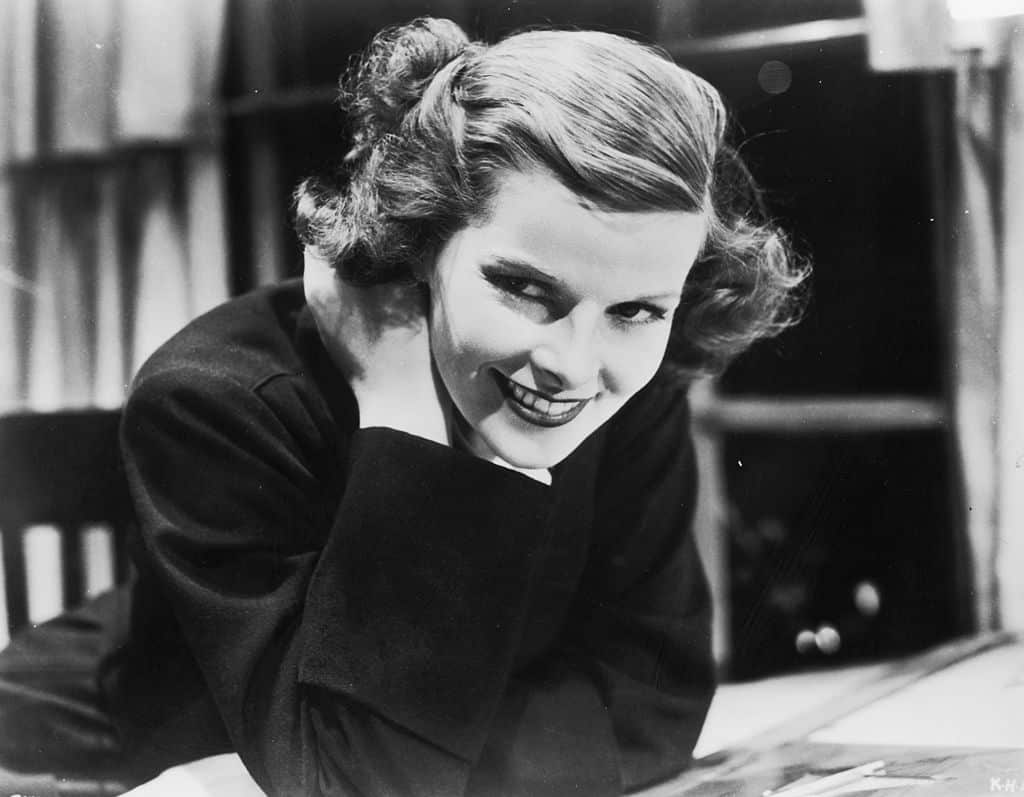
Katharine Hepburn Performed in the Theater Where I Sold Candy. She Deserved an Oscar in Kindness.

When I first started in show business, I had one of the all-time greatest jobs. I was a candy and drink guy at Broadway’s Broadhurst Theatre on 44th Street between Seventh and Eighth avenues. I was paid $7.50 a show. The hours — 7 to 9 p.m. — were great for comedian because the comedy clubs didn’t get rolling until 10 p.m. Eventually, I got fired for pilfering and jerking around. Losing a high-paying job like that is a real kick in the gut. 

The real “pay” was free admission to any other Broadway theater. They let you into their theater and you let them into yours. “A Matter of Gravity,” starring Katharine Hepburn and Christopher Reeve, was at my theater. And believe it or not, this candy guy got to be friends with Katharine Hepburn. I also had the honor of watching Hepburn and Reeve for nearly 70 performances. You would think that it would have made me a better actor but it didn’t.

One afternoon, two hours before curtain and early in the run of the play, I came in early to make sure we had enough Goobers, Chuckles and Orangeade for the evening performance. There was Katharine Hepburn, running around the theater opening every door, upstairs and downstairs. She wanted to cool off the theater. After finishing, she quickly disappeared backstage. One of the workers said to me, “She comes in everyday at 5 and opens the doors. She won’t perform in a hot theater.” 

So the next day, although I didn’t have to I came in early, I was there at 4:50 p.m. Five on the dot, Hepburn arrives and starts opening all of the doors. I worked up the courage to ask her, “Miss Hepburn, can I help you with the doors?” “Who are you?” she barked. “I’m Mark. I run the candy concession if you ever want anything.” “No, thank you,” she said. And then she said, “You need a cold theater to keep the people awake.” I said, “Why don’t you get someone to do it for you?” She said, “Can’t take the chance. They might forget.”

So, practically every day for the next two months, I came in two hours early and met with Hepburn. Eventually, she trusted me enough and let me open the upstairs doors for her. I was honored. After all the doors were open, she would say, “Good job.” Every once in a while, she would even tip me. When I said no, she made me take it.

Then amazingly, every day she would delight me for five or 10 minutes with stories about James Cagney, Humphrey Bogart, Spencer Tracy and many others. Nice stories, no nasty gossip. Just sweet recollections. It was a mind-blowing experience to hear the “First Lady of Cinema” in her New England accent say, “How are you, Mark?” 

If I could have, I’d have given you an Academy Award for kindness.

Then one day, she ran in and yelled, “Come here.” She then handed me a copy of Cagney’s autobiography “Cagney by Cagney.” Inside of the book, she’d written the most beautiful inscription. About two weeks later, I heard, “Come here.” She handed me a wrapped package and said, “Here, I did this last night.” Removing the paper, I unveiled what became one of my most treasured possessions: an original ink self-portrait of her character in full costume — a signed drawing by Katharine Hepburn for me. Mind-blowing. I imagined her sitting in bed wearing Chinese silk pajamas mumbling out loud, “Mark will love this.” The last time she called for me, she said, “Come here,” she handed me her home phone number. She said, “Give me a call if you ever want to talk.” 

This was the mid-1970s. I was 23 years old and earning $7.50 a night with no career prospects. I was living in a mouse-infested, $150-a-month slum apartment and Katharine Hepburn had handed me a self-portrait and her phone number. That would be the equivalent of the Lubavitcher Rebbe telling a new convert to come to his house to play pinochle and have dinner with him. 

Later that night, in my freezing apartment, staring at her number in disbelief, I thought, “Call her and chat about what? What do I have to say to Katharine Hepburn?”  Perhaps, “Hi, Kate, it’s Mark the candy guy. I’m fine, thanks. Listen, tonight after your standing ovations from 1,200 people, can we grab some Raisinets and then what do you say we hit a movie? Why don’t you call Cagney and Henry Fonda and see if they also want to come? Then after the movie, let’s stop at Lauren Bacall’s place for some drinks. I’m sure she’d love to meet me.” Or should I say, “My father just got a new Bell and Howell 8mm camera. You want to be in some of our home movies? I’ll direct.” 

I never made those calls but the day I did call her, peeing in my pants was the least of my problems. As her phone rang, all I could think was “What are you doing? What am I crazy? Who are you to call Katharine Hepburn?” Then I heard  that distinguished voice, “Who is it?” I said, “Hello. Hi, Miss Hepburn, it’s Mark from the theater.” She said, “Mark, how can I help you?” I said, “I just called (choke) to (choke) say hi.” “Hi to you,” she said. Then very sweetly, she said, “That’s nice of you to call. I’m having a party at my house tonight for some friends. Why don’t you come by?” The word “OK” flew out of my mouth. I hung up and thought, “What was that?” Katharine Hepburn just invited me to a party at her house. That was the last time I wore those pants. 

I can’t tell you how scared I was going by myself to a party at Katharine Hepburn’s house. What was happening? She lived at 244 E. 49th Street in a four-story townhouse in Turtle Bay. I didn’t feel worthy to even walk into her home. She greeted me at the front door and with a hardy handshake said, “Glad you’re here. Go in and have a good time.” I was so stunned that I don’t recall much from that evening. 

I do remember standing on a spiral staircase looking at little gold statues sitting out of plain sight. She saw me looking. I said, “What are these?” She said, “My Academy Awards.” She still holds the record of most Academy Awards for acting: four. 

After the play closed, I lost touch with her. If I didn’t have the book and the drawing, I might have thought I imagined the whole thing. The relationship, like the play, was a limited run. I felt incredibly grateful for the experience but something inside me told me it was over, and I respected that voice. I certainly didn’t want to ask her for help. When you’re given a gift, it’s not polite to ask for another one. 

It was the type of relationship where you wonder why a person was being so nice to you. I had absolutely nothing to offer her in return. I would just sit and listen to one of the greatest actresses who ever lived regale me with stories. Hepburn was very kind to me. What’s more amazing was she seemed to really enjoy talking to me. I think she understood I was a young kid in a difficult world trying to get a leg-up on life. It was written all over my face and she read it perfectly. 

The day we met, she easily could have told me she was busy and had no time to talk and I would have understood. Instead, she talked with me for a few minutes every day. You don’t have to be Katharine Hepburn to be kind to a new kid on the block. You just have to be sensitive. And who was more sensitive than the First Lady of Cinema?

She died in 2003 at 96. It’s nice when kind people live a long time. There are way too many who don’t. Thank you, Miss Hepburn. If I could have, I’d have given you an Academy Award for kindness. I hope I can pay it forward in a small way. After all, you can’t keep it if you don’t give it away.


Mark Schiff is a comedian, actor and writer.

Katharine Hepburn Performed in the Theater Where I Sold Candy. She Deserved an Oscar in Kindness. Read More »