fbpx

May 8, 2020

Israeli Cell Therapy Receives FDA Approval to Be Tested on Severely Ill COVID-19 Patients

Israeli medical company Pluristem Therapeutics announced in a May 8 press release that its cell therapy treatment has received approval from the Food and Drug Administration (FDA) to be tested on severely ill COVID-19 patients in the United States.

The treatment involves using placental expanded cells (PLX) to counteract an overactive immune system response from COVID-19 that can result in pneumonia. It will be used on 140 U.S. patients over a period of 28 days who “are intubated and mechanically ventilated and are suffering from respiratory failure and ARDS [Acute Respiratory Distress Syndrome] due to COVID-19,” according to the press release.

“We look forward to working with hospitals and physicians on a larger scale to deliver our PLX cells, through an off-the-shelf, easy to use PLX cell product candidate, which may potentially accelerate recovery time from life threatening conditions, and to improve survival, in the most severe COVID-19 cases,” Pluristem CEO and president Yaky Yanay said in a statement.

In April, Pluristem announced that its treatment was used on seven Israeli patients suffering from ARDS as a result of COVID-19 complications; six patients completed seven days of treatment and four of those patients saw their conditions improve.

Earlier in the week, Israeli Defense Minister Naftali Bennett announced that the Israeli Institute for Biological Research has developed several antibodies that can be used to attack and neutralize the virus from infected cells in the human body.

“This is an important milestone, which will be followed by a series of complex tests and a process of regulatory approvals,” Bennett tweeted.

As of this writing, there are 16,409 confirmed COVID-19 cases and 245 deaths from the virus in Israel.

H/T: Jerusalem Post

Israeli Cell Therapy Receives FDA Approval to Be Tested on Severely Ill COVID-19 Patients Read More »

London City Worker Secures Jewish Funeral for 95-Year-Old Man Who Died Alone

After several weeks at a London mortuary, the unclaimed body of 95-year-old Herbert Max Fraenkel was slated to be buried in a shared grave at a pauper’s funeral.

Fraenkel, who was born in 1924 in Berlin, died alone at his home in January. City workers were unable to locate or identify any of his relatives, and health officials were pressing to move his body as storage room for bodies was running out because of COVID-19 fatalities.

But thanks to the insistence and alertness of one municipal worker, he and volunteers managed to ascertain that Fraenkel was Jewish and bury him last week in accordance with his faith, the Jewish News of London reported.

The rabbi who officiated at the funeral, which was paid for by the local Jewish community, conducted it alone according to social distancing protocol and livestreamed it on Facebook to hundreds of viewers from his congregation and beyond, including some who had been involved in the effort to give Fraenkel a Jewish burial. Many left impassioned comments.

The saga began when the city worker, Paul Anastasi, noticed a menorah at Fraenkel’s home after police entered in January to collect his body. Fraenkel’s neighbors called the authorities after realizing they had not seen Fraenkel in several days.

“We found old letters and cards, as well as a menorah, which is when I thought he may be Jewish,” Anastasi, who is not Jewish, told the Jewish News, which published an article April 30 about the April 27 funeral.

Anastasi began the effort that ended with the funeral by contacting Jewish community members in the area. They referred him to Rabbi Daniel Epstein of Cockfosters & North Southgate United Synagogue.

Despite inquiring with other community members, Epstein was left with no leads.

“He passed away almost anonymously,” Epstein told the Jewish News. So he recruited a genealogist as Anastasi insisted the mortuary give them more time to locate the burial place of Fraenkel’s parents or other relatives.

The genealogist, Andrew Gilbert, traced back Fraenkel’s life story and found the burial place of his parents in London, where they came with their only son in the 1930s as refugees from Nazi Germany.

Fraenkel never married, following a love affair with a Swiss woman named Heidi that left him heartbroken, the researchers were able to ascertain from interviews with his neighbors, relatives and letters they found at his home.

He was an inventor who co-owned an engineering firm. Through an old Christmas card, Anastasi tracked down a former colleague of Fraenkel, who described him as someone who “everyone respected” and “a very knowledgeable man, a lovely man, who was very quiet, but whenever he spoke everyone listened, because they knew that what he was going to say was honest and true,” Anastasi told the Jewish News of his conversation with the former colleague.

The team also found relatives of Fraenkel, including a cousin who lives in the United States.

“There was no way I was going to let this man be buried in a shared grave,” Anastasi told the Jewish News. “My family is from the Greek community. We know the value of family and tradition and burying people according to their customs and rituals.”

London City Worker Secures Jewish Funeral for 95-Year-Old Man Who Died Alone Read More »

A Walking Miracle

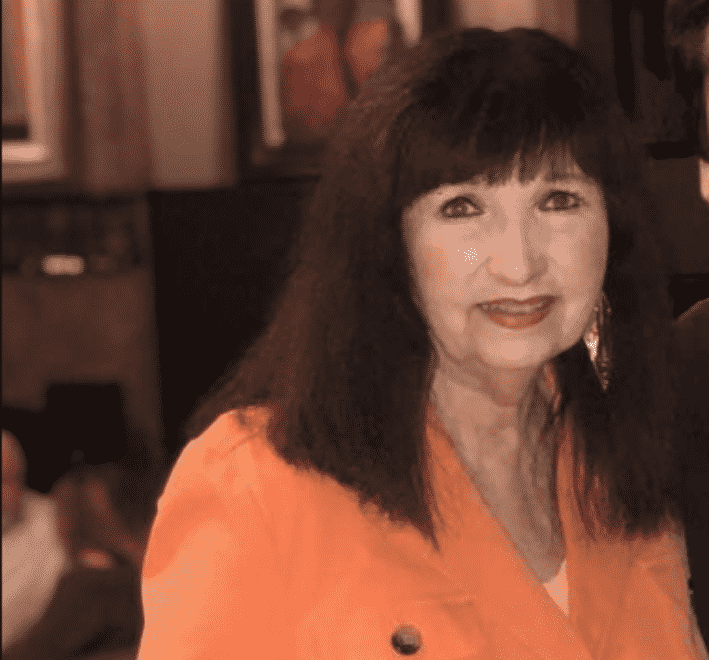
She is 79 years old, but if you guessed younger, you would not be alone. She looks fantastic. She packs as much as she can into every day—exercise, travel, good eating, and time to show others she is thinking about them. Her attitude towards life is nothing short of remarkable. And it always has been. Even under the hardest of circumstances.

Widowed at 40, she raised her two young sons as a single mother. She gave them the best life she possibly could and always surrounded them with all the love they could ever need. She was a single parent, but she has never complained or bemoaned this life. She moved on, literally and figuratively. Tired of the New York cold, she moved to Florida, later California, and finally Nevada. But, her priority was and always has been, her family. Her sons and later her four grandchildren are her life.

If family is her first love, her second love is travel. She has visited numerous countries on every inhabited continent—mostly by cruise ship. Frequently booked last minute, her sons often joke that they never knew if she was at home or in another country. She is constantly on the move.

In early March, she embarked on what was to be yet another transatlantic cruise. She had done this before. This time would be anything but normal. The timing could not have been worse. Right in the middle, the world began shutting down. Her sons and daughters-in-law began working from home. Her grandchildren’s schools were closed. Passengers on her ship began getting sick. The speed and intensity of it all was something never experienced in over a century. And, all the while, she was unaware of what was going on—the power of what being cut off from TV and internet will do.

By the time the ship got to Europe on St. Patrick’s Day, things were anything but lucky. It was a mad rush to get the passengers home. Along with her boyfriend and hundreds of other Americans and Canadians, they were packed into a plane, unknowingly with many sick people. She remembers people coughing on each other for the entire nine-hour flight from Marsielle, France to Atlanta. She was tired and hungry, but just wanted to get to her home in Las Vegas. She almost did not make it.

The nearest open airport was Phoenix. They figured they could rent a car and make the approximately five-hour drive home. It never happened. Collapsing at the airport, she was rushed to a Phoenix hospital instead, beginning a saga that lasted well over a month. The test results confirmed what her family already knew. She had picked up “the virus.” At what point along that journey is anyone’s guess. But, what followed were weeks of not knowing if she would survive and if she did, what her quality of life would be like.

First came the vent, then the oxygen, then the tubes. She was in a coma for two weeks. Her sons’ lives went on as best they could. The news was avoided. Children were cared for. Dogs were walked. But, every waking moment (and many sleepless nights) were spent in worry. Her sons made multiple daily calls to the hospital—in a city where she had no family, talking with doctors and nurses they did not know, trying to understand a diagnosis that may never be fully understood.

Prayers were said. When you are sick and your son works as a Jewish Communal Relations Council director, you get prayers from every faith. Passover was celebrated. Matzo ball soup was prepared as her son anxiously waited for a major phone call from the hospital. The seder was interrupted by that call. Still more waiting. The doctors had tried this. Now, they needed to try that. Or perhaps, this other treatment might work. All of it was as much a gamble as the Vegas strip, near where she lived.

Then one night, her son disappeared to make his nightly call to the hospital. He returned to tell his shocked wife that he had just gotten off the phone with his mother. She was groggy and slurring words, but she was beginning to wake up. A corner had been turned.

What happened in the following days and weeks was nothing short of miraculous. The vent came off. The tube was removed. When doctors turn this stuff off, it is not a good sign. Normally, that is. But, as her family knows all too well, she is anything but normal. In her case, the machines were turned off because bit by bit, day by day, their use was no longer necessary. Her slurred speech gave way to her describing her time in her hospital bed watching the same awful television shows as before. She was coming back. She was able to swallow again. A discharge date was in sight. Just as quickly as she became sick, she was getting better.

Extended family from all over the country could now call her and hear for themselves the seemingly impossible. They had feared the worst and were now shaking their heads in collective disbelief. After a week of rehab, she returned home. Her primary care physician discontinued her medication, declared her in perfect health, and called her a “walking miracle.” Truer words have never been spoken.

She is still somewhat weak; her sons have to remind her to take it easy and rest. Thanks to her recovery and the incredible medical team they will never meet, they can now do the same.

This time of year—the seven weeks between Passover and Shavuot, the Omer, are traditionally a dark time on the Jewish calendar. That period of sadness lifts on Lag B’Omer, which comes next week. Just as the plague afflicting Rabbi Akiva’s students miraculously lifted, so too, did the affliction affecting this remarkable woman. This year, that period came early for her family.  The seven weeks between her getting off the ship and getting home was its own (nearly) 49-day period of sadness.

Hannah bat Perl is her Hebrew name. It was said a lot during prayers for her over the nearly six weeks she was in the hospital. She is also known as Helene Goldberg, Ann Goldberg, Mom, or Grandma Ann. But, now you can add COVID survivor among her many names. To be sure, the plague of COVID is far from over. Her case is but one of thousands, but too often the story we might never see on the never-ending grim news cycle. Hers is a story should be shared.

The JCRC director is my husband, Matt. I am one of the daughters-in-law. This Mother’s Day, we are celebrating her recovery from afar. We do not know when we will be able to see her and hug her properly, but that is ok. Our sleep has returned. Our worry has subsided. There is light. There is hope. And, as we said on the Friday night after she went home, L’Chaim!


Lisa Rothstein Goldberg is a social worker, educator, and student in the Gesher program at the Academy for Jewish Religion. She lives in Louisville with her husband, Matt, director of the JCRC in Louisville, and their two young daughters.

A Walking Miracle Read More »

Stop and See the Roses

Look at a lot of Facebook and Instagram posts and you’ll see picture after picture of people’s gardens, patches of wildflowers that someone discovered while on a walk, and roses. So many roses.

As part of our new family quarantine rituals, we go on evening strolls. The streets of Los Angeles feel like the streets of Jerusalem. So many people walking, biking, leisurely taking in the sounds of chirping birds and children laughing. We spend many of these walks staring at the roses that line the streets of Westwood. White, red, yellow, pink … roses that always may have been there but roses we feel like we are seeing for the very first time. The phrase usually goes, “Stop and smell the roses.” Forget about smelling. This may be the first time that we realized the roses were there.

For many of us, this may be the first time that we’re discovering aspects of our lives that were already there. It may be the realization that we love to cook, draw, write or meditate. For others, it is uncovering a facet of a relationship that needed some tending. Better understanding the needs of our children, the wants of our partners, the desires of our friends, the demands of our soul. Watching something bloom within ourselves that started merely as seeds. Seeing a strength, resilience, depth and buoyancy we didn’t know was there. Seeds that are growing into roses. Roses that we’re just beginning to see. Beginning to notice. Beginning to appreciate.

The famous song “Erev Shel Shoshanim” begins, “Evening of roses, Let’s go out to the grove. Myrrh, perfumes, and incense are a threshold at your feet. The night comes slowly. A breeze of roses blows. Let me whisper a song to you quietly. A song of love.”

In the oddest of ways, the world has slowed down. The evening breezes carry messages only our souls can hear. The roses beckon, reminding us of what is blooming within — perhaps hidden aspects of our human spirit that have been revealed for the first time.

Don’t waste this moment. Stop and see the roses. They always may have been there but now we finally have opened our eyes.

Stop and See the Roses Read More »

A Prayer for a Funeral From Afar During this Pandemic

It breaks my heart

To lay you to rest this way

From a distance

Without the sendoff you deserve.

No touch, no kiss, no loving crowd in attendance.

But I know your soul has already moved on

From the body we bury today

To the place of eternal knowing and peace

In God’s shelter.


I can’t bear your casket

But I can bear witness

To your undying legacy:

I miss you.

And nothing –

No person, no joy, no accomplishment, no distraction,

Not even God

Can fill the gaping hole your absence has left in my life.

But mixed together with all my sadness,

There is a great joy for having known you.

I want to thank you for the time we shared,

For the love you gave,

For the wisdom you spread.

Thank you for the magnificent moments

And for the ordinary ones too.

There was beauty in our simplicity

Holiness in our unspectacular days

And I will carry the lessons you taught me always.


Your life has ended

But your light can never be extinguished.

It continues to shine upon me

Even on the darkest nights

And illuminates my way.


May God watch over you and bless you

As you have blessed me

With love, with grace

And with peace,

Amen.

A Prayer for a Funeral From Afar During this Pandemic Read More »

NYT Criticized for Tweeting That Israeli Defense Ministry Pioneers ‘Ways to Kill People and Blow Things Up’

The New York Times has come under fire on social media for tweeting on May 8 that the Israeli Defense Ministry has made a name for itself in developing “ways to kill people.”

The tweet was promoting a May 7 article from the Times detailing how the Israeli Defense Ministry’s research-and-development arm has been designing technology to save lives during the COVID-19 pandemic, including various tests to see if people are infected with the virus.

The full tweet read, “The Israeli Defense Ministry’s research-and-development arm is best known for pioneering cutting-edge ways to kill people and blow things up. Now it is turning to saving lives.” The lede of the article is similarly worded.

Jewish groups condemned the tweet.

“This tweet is sensationalist,” Anti-Defamation League CEO Jonathan Greenblatt tweeted. “It is irresponsible that the @nytimes buried the important story about Israel’s military developing innovative responses to #COVID19 beneath demonizing language that seems to question Israel’s legitimate security needs. They should do better.”


American Jewish Committee CEO David Harris similarly tweeted, “What a vile @nytimes statement! And on [the] 75th [anniversary] of [the] end of World War II & Holocaust, no less.”

He suggested that the Times’ tweet should have stated: “Israeli Defense Ministry’s research-and-development arm is best known for pioneering cutting-edge ways to defend #Israel since 1948 from annihilation by state/non-state actors.”


The Simon Wiesenthal Center asked in a tweet, “Would @nytimes describe [the] Pentagon or US Military researchers as developers of cutting ways to kill people or to protect their nation?”

Journal contributor and Israel-based writer Hen Mazzig also tweeted, “The @nytimes is best known for pioneering anti-Semitic headlines like suggesting that Jews are always finding new ways to kill people. Now it is turning on Israel.”

Mazzig added in a subsequent tweet: “Like how can you turn any positive news from Israel into blood libel? Is it really the time for [the] New York [Times] to bash Israel about COVID19?”

The Times did not immediately respond to the Journal’s request for comment.

In April 2019, the Times issued an apology for publishing a cartoon depicting Israeli Prime Minister Benjamin Netanyahu as a dog leading President Donald Trump, who is depicted as a blind man in the cartoon. Greenblatt and Harris condemned the cartoon as anti-Semitic.

NYT Criticized for Tweeting That Israeli Defense Ministry Pioneers ‘Ways to Kill People and Blow Things Up’ Read More »

EU May Fund Palestinian Supporters of Terrorist Groups, Official Assures Aid Recipients

(JTA) — Amid growing scrutiny in Europe of aid to the Palestinian Authority, an EU official said Brussels will not withhold funds from supporters of terrorist groups.

The official, Sven Kühn von Burgsdorff, who heads the EU mission to the West Bank and Gaza Strip, said this in a March 30 letter to Palestinian aid recipients that the NGO Monitor group on Wednesday posted on Twitter.

The EU restrictive lists include groups such as Hamas, Hezbollah and Islamic Jihad, which may not receive funding, he wrote.

However, “it is understood that a natural person affiliated to, sympathizing with, or supporting any of the groups mentioned in the EU restrictive lists is not excluded from benefiting from EU-funded activities” if the recipient is not on the list, he wrote.

Israeli diplomats protested the letter, with a Foreign Ministry spokesperson telling The Times of Israel that it’s a “violation of all our agreements with the European Union.”

In recent months, European governments have adopted a more restrictive policy on Palestinian recipients of aid over their links to terrorism or anti-Israel activities.

In November, the Dutch government cut funding to the Palestinian Authority over its salaries to terrorists serving time in Israeli jails.

In February, the Prime Minister’s Office of France said following an NGO Monitor report that it will not fund recipients in violation of the International Holocaust Remembrance Alliance’s definition of anti-Semitism, which includes claiming that the existence of a State of Israel is a racist endeavor.

EU May Fund Palestinian Supporters of Terrorist Groups, Official Assures Aid Recipients Read More »

Brett Kavanaugh Asks: Can The US Require Groups to Recognize Israel?

Those tuning in this week for just the second day of live Supreme Court broadcasts were treated to a surprise: In a case about NGOs, HIV-AIDS funding and prostitution, the discussion unexpectedly turned toward U.S. support for Israel’s right to exist.

The case features a group of NGOs that are resisting the Trump administration’s requirement that they explicitly oppose sex trafficking and prostitution as a condition for receiving funds to combat HIV-AIDS overseas from the U.S. Agency for International Development. The NGOs argue that the requirement violates speech freedoms and inhibits their ability to reach those who need their assistance.

During the questioning of the NGOs’ lawyers, Kavanaugh brought up Israel.

“Suppose the U.S. government wants to fund foreign NGOs that support peace in the Middle East but only if the NGOs explicitly recognize Israel as a legitimate state,” Kavanaugh said at Tuesday’s hearing. “Are you saying the U.S. can’t impose that kind of speech restriction on foreign NGOs that are affiliated with U.S. organizations?”

In this illustration photo, Chief Justice John Roberts speaks during oral arguments before the Supreme Court as a case is livestreamed on a laptop, May 4, 2020. (Illustration by Drew Angerer/Getty Images)

The lawyer for the NGOs, David Bowker, did not equivocate: It would be constitutionally kosher for the U.S. to require such foreign affiliates to recognize Israel.

“I don’t hear that as requiring affirmation of a belief,” Bowker said. “Rather it is in recognizing a fact that the U.S. has established a certain diplomatic relationship with Israel. And the U.S. government gets to say what that relationship is for the United States.”

Kavanaugh’s question could be seen as reflecting the increasingly important role that Israel’s well-being has taken in mainstream conservative political thought over the past two decades. At the same time, Bowker’s response was noteworthy because it comes at a time when many NGOs and their political allies on the left have resisted efforts to link government aid to Israel-related issues.

For years, pro-Israel figures and groups have been working to marginalize groups and individuals who oppose Israel’s existence as a Jewish state.

For years, pro-Israel figures and groups have been working to marginalize groups and individuals who oppose Israel’s existence as a Jewish state. There have been efforts in Congress recently to make U.S. aid to nongovernmental groups contingent on rejecting Israel boycotts. Additionally, some of the parties involved in the arguments have battled over U.S. laws that would inhibit boycotts of Israel or its West Bank settlements.

Some of the groups and figures featuring in this Supreme Court case have been involved in political battles over U.S. policy concerning Israel. The lead defendant is Alliance for Open Society International. Its parent group, Open Society Foundations, founded by the Jewish billionaire George Soros, has funded J Street, the liberal Jewish Middle East policy group that has opposed as impinging on free speech U.S. laws sanctioning Israel boycotters. (J Street opposes boycotts of Israel.)

J Street activists deliver a petition to the Senate opposing the nomination of David Friedman as ambassador to Israel, Feb. 28, 2017. Photo courtesy of J Street.

A group filing an amicus brief in support of the Trump administration is the American Center for Law and Justice, a conservative group. One of the lawyers ACLJ named to the case is Jay Sekulow, a lead private lawyer to Trump during the recent impeachment hearings who founded ACLJ and made it a platform for right-wing pro-Israel activism.

In 2013, the court ruled that the NGOs were protected by speech freedoms. The current argument, initiated by the Trump administration, is whether those freedoms extend to the foreign partners and affiliates of the U.S.-based groups.

Tuesday was the second day that the Supreme Court broadcast audio of its proceedings in real-time, a historic switch made by the high court because of the coronavirus pandemic. The hearings had only been available in real-time to people inside the Supreme Court’s building, and audio took days to be posted to its website. The justices and the lawyers participated by calling in from remote locations.

Brett Kavanaugh Asks: Can The US Require Groups to Recognize Israel? Read More »

A Moment in Time: Being Thankful for Life

Dear all,
One moment I was cresting a hill on my bike.
The next moment, I was losing control as I misjudged the steep grade of the hill.
I remember the knock as my helmet cracked against the pavement.
I felt my skin being scraped.
I recall my body contorting to protect itself.
And I can still hear the voices of the passersby asking if I was ok.
I called Ron, who came to rescue me right away.
Following visits and tests with doctors, I learned that I suffered a “stretched” ligament in my shoulder and no damage to my head.
It could have been so much worse. So much worse.
But I still remember the knock.
I still feel the scrapes.
I still have limited movement in my body.
And most important, I still hear the voices of the strangers as well as the love of Ron who were there to help. While the helmet may have saved my life, the people who were there restored my soul. And I am so very thankful for this moment in time to be alive
With love and shalom,
Rabbi Zach Shapiro

A Moment in Time: Being Thankful for Life Read More »

Obituaries: May 8, 2020

Barbara Akin died April 13 at 84. Survived by brother Richard (Margalit) Ellwood; sister Marcia (John) Rosenberg. Mount Sinai

Marvin Bernard Almeas died April 11 at 88. Survived by wife Karen Lynn Segel.

Shalom Mortuary, Riverside National Cemetery

Eleanore Bluestein died April 7 at 92. Survived by daughter Frayda; sons Joel, Evo, Jemmy; 6 grandchildren.

Paula Charlap-Hyman died April 27 at 95. Survived by daughter Jan Zussman; son Elliott Zussman (Meire); 2 grandchildren.

Morton A. Fallick died April 22 at 86. Survived by daughters Randi (Craig Steve) Denbesten, Allison (Alden) Mupas; son Larry (Laura) Jordan; 7 grandchildren; sister Barbara Marks. Mount Sinai

Laura Fineberg died April 21 at 90. Survived by daughters Sandy, Joyce (Lewis) Levy, Lynn Greenwald; 4 grandchildren; 1 great-grandchild; brother Andy (Flora) Bolin. Mount Sinai

Luba Finkel died April 25 at 86. Survived by daughters Alexandra (Vladimir) Kitover, Mila Faiman; 4 grandchildren; 4 great-grandchildren; sister Bronya (Yosef) Geller; brother Semya (Bella) Greenberg. Mount Sinai

Marjorie Forman died April 26 at 89. Survived by husband Leslie; daughter Ellyn; son Tony. Mount Sinai

Betty Liptz died April 27 at 94. Survived by daughters Carol (Craig) Stern, Deborah Primo; 2 grandchildren. Mount Sinai

William Louchheim died April 14 at 89. Survived by wife Marlene; daughters Terry, Deborah; sons Tom, Mark; 18 grandchildren; 8 great-grandchildren. Hillside

Miriam Marion died April 15 at 100. Survived by daughters Virginia, Eloise; 4 grandchildren; 4 great-grandchildren. Hillside

Orrin Kabaker died April 19 at 90. Survived by wife Betty; sons Joel (Leah), Bill (Roberta), Alan; 14 grandchildren; 10 great-grandchildren; sister Rae Fishman. Mount Sinai

Gloria Karns died April 17 at 84. Survived by son Gregory (Tobi); 3 grandchildren. Hillside

Nonna Khalfin died April 24 at 82. Survived by sons Steve (Inna), Lev (Julia); 4 grandchildren; brother Boris Moreyn. Mount Sinai

Jakob Khorsandi died April 21 at 81. Survived by daughter Simone (Robert) Cooper;  sons Shaun (Gilat), Sasha (Brittney), Jay (Jean); 11 grandchildren; brother Abraham. Mount Sinai

Susan Klein died April 26 at 72. Survived by daughter Elyse; sons Jeffrey (Jaime), Brian (Vanessa); 3 grandchildren. Mount Sinai

Winifred Kreisler died April 14 at 103. Survived by sons David (Raelene), Marty (Kathi); 4 grandchildren; 3 great-grandchildren. Mount Sinai

Michael Hal Lee died April 5 at 62. Survived by stepsister Diane Dorin; stepbrother Douglas Neistat.

Arthur Nordon died April 23 at 95. Survived by wife Gizelle; daughter Michelle (Philip); son Arthur (Leslie); 3 grandchildren. Mount Sinai

John Owens died March 11 at 82. Survived by wife Janet; sons Bruce, Todd, Jeffrey Melnik, Choon-Seung Ham; 6 grandchildren; 1 great-grandchild. Chevra Kadisha

Ross Pearlman died April 16 at 66. Survived by wife Mickie Jacobs; daughters Berrie (Ben) Goldman, A.J. (Lisa Mottet), Savannah; son Jared (Rachel Travolta); 3 grandchildren; brothers Barry (Catherine), Mitchell (Elizabeth). Mount Sinai

Barbara S. Richman died April 27 at 66. Survived by husband James; daughter Caroline Reves; son Elliot; sister Sharon Pergerson; brother Michael Skomer. Mount Sinai

Rochelle Robiner-Ardizzone died April 22 at 79. Survived by husband Joseph Ardizzone; sister Sandy Hawkins; brother Malcolm Katz. Mount Sinai

Dona Rodensky died April 1 at 97. Chevra Kadisha

Dolores Sarnoff died April 20 at 97. Survived by daughters Mellinda (John) Crues, Lenore (Bill) Fleck; son David Feinberg; 3 grandchildren. Mount Sinai

Florence Schepps died April 25 at 91. Survived by daughters Roni, Beth. Mount Sinai

Saul Socoloske died April 24 at 89. Survived by wife Fanny; daughter Sharon (Vincinent); sons Jim, Maurice; 4 grandchildren; sister Sylvia (Edward) Gonzales. Mount Sinai

Robert Thaler died April 16 at 88. Survived by daughter Lisa (Bill); son Jeff (Sheryl). Hillside

Gail Towbin died April 20 at 77. Survived by daughter Hailey (Phillip) Chavarria; son  Gary Klein. Mount Sinai

Lawrence Warner died April 23 at 89. Survived by wife Dona; daughters Karen (Ron) Lepp, Lisa Barragan, Tracy (Mike) Swan; son Scott (Robin); 9 grandchildren; 1 great-grandchild; brother, Bernard (Wynne). Mount Sinai

Stanley Wecksler died April 14 at 81. Survived by wife Lucy Gomez; daughter Amy (Steve) Schoer; son Andrew (Danielle); stepdaughter Isamar; 4 grandchildren. Mount Sinai

Robert Weil died April 12 at 73. Survived by cousin Vicki Karant. Mount Sinai

Ronald Ziff died April 13 at 83. Survived by wife Ethel; sons Richard (Laura), Benjamin; 3 grandchildren. Hillside

Obituaries: May 8, 2020 Read More »