fbpx

May 5, 2020

Virtual Benefit Raises over $1 Million for Hatzalah Emergency Response

“Saving Lives Sunday,” the virtual benefit for United Hatzalah of Israel that streamed May 3, raised more than $1,00,000,000 to support Hatzalah’s emergency response efforts in the fight against COVID-19.

The streaming telethon included an inspiring video covering Leonard Cohen’s “Halllelujah,” performed in English, Hebrew and English by international celebrities Adam Kantor, Dudu Aharon, Rona-Lee Shimon and Layon Elwazani along with first responders and people that they saved. You can watch below:

In case you missed it, the fundraiser, hosted by Jay Leno and featuring an appearance by mentalist Lior Suchard, can be viewed in its entirety here.

Virtual Benefit Raises over $1 Million for Hatzalah Emergency Response Read More »

From Summer Camp to ‘SNL’: How Chloe Fineman Found Comedy Through Jewish Life

When Chloe Fineman attended New York University to study classical theater, she envisioned her acting career filled with dramatic roles and period pieces. “But I think I came off too quirky or something because casting directors kept telling me to do comedy,” the 31-year-old “Saturday Night Live” newcomer told the Journal. “Thank God.”

Fineman is one of two new cast members on “Saturday Night Live” and already is a hot commodity. Appearing in only 17 episodes so far, her impressions and costumes have delighted viewers, bringing them back for more each week. She impersonated then-Democratic presidential candidate Marianne Williamson, the entire cast of “Little Women” and JoJo Siwa and Carole Baskin from Netflix’s documentary “Tiger King,” to name a few.

https://www.instagram.com/p/BxoHCRjFhsX/?utm_source=ig_web_copy_link

If you scroll through her Instagram, you can find even more uncanny impressions — and wigs — including Drew Barrymore, Frances McDormand, Nicole Kidman, Meryl Streep, Greta Gerwig, Natasha Lyonne, Roseanne Barr, Hannah Gadsby, Tomi Lahren and Maisie Williams.

https://www.instagram.com/p/BfPPVAZDzjS/?utm_source=ig_web_copy_link

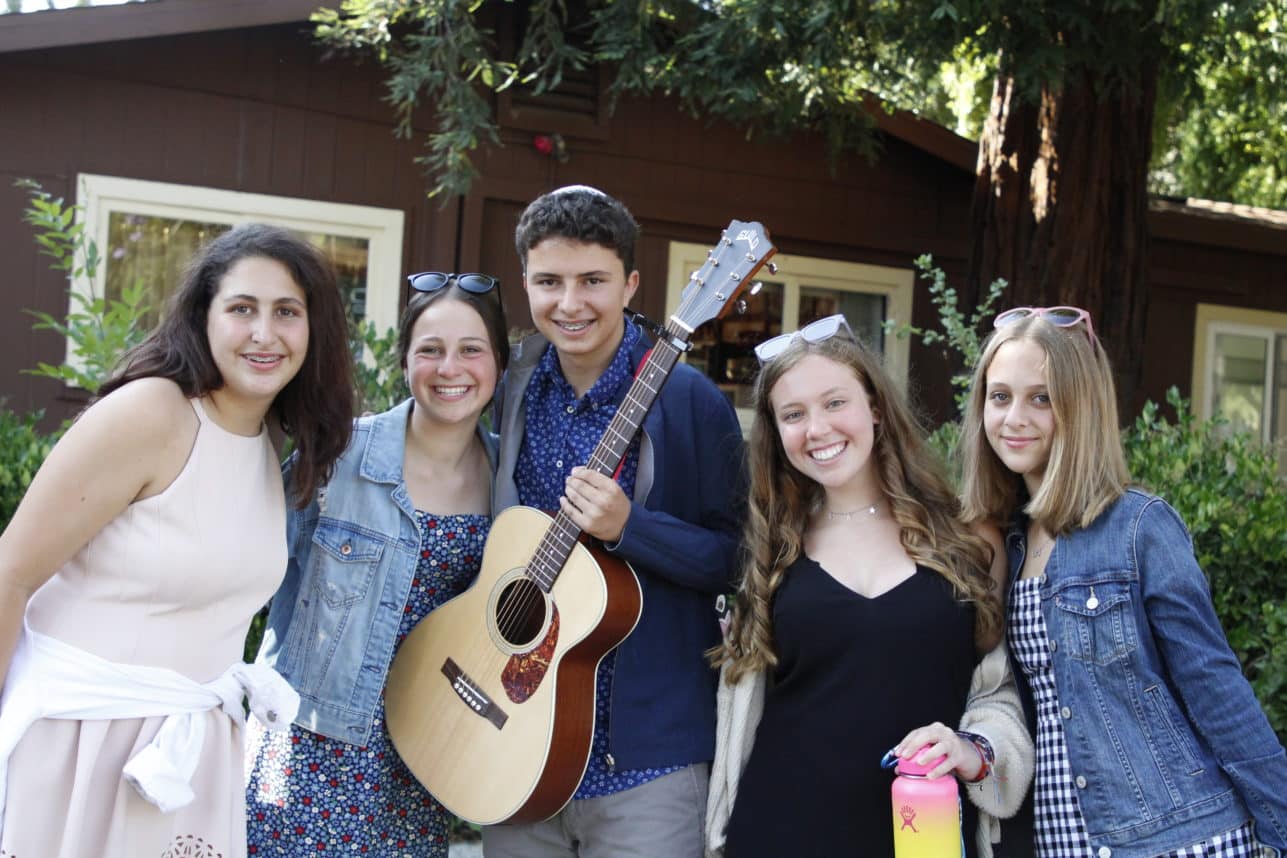
Fineman revealed it was at Camp Kee Tov in Berkeley where she discovered the art of comedy. “The camp [did] ‘skits’ every morning while counselors put sunscreen on children sitting on the grass,” Fineman said. “And dare I say, that was my first stage. Kee Tov was magic. All my friends were hilarious and still are.”

Fineman always has surrounded herself with like-minded zany people. Sometimes it’s her family who appears in her Instagram posts, her friends “Erica and Mimi, who were hilarious and loud,” or her JewBu (Jewish Buddhist) Aunt Eileen. Jewish on her father’s side, and a self-proclaimed “half WASP (White Anglo-Saxon Protestant),” she started hanging out with her friends at Hebrew school — where pizza and soda were provided. Then came Camp Kee Tov, and a hot pink-themed bat mitzvah. For Fineman, Jewish life and funny moments went hand in hand. “So much of it was just finding a funny group of friends and being in a funny warm community,” she said. “Which is my Jewish space? I think [I] connected deeper with that funny warm community … there’s just something about laughing and wolfing down food that I really need in my life.”

Fineman said her first impression was of her Aunt Eileen because she “had the most incredible Baltimore accent” and was able to mimic her voice.

Obsessed with Berkeley Rep, “Angels in America,” “The Vagina Monologues” and nude people riding bikes at protest rallies in San Francisco, Fineman started absorbing details around her that could later be used as bits. It was at the Groundlings in L.A. where she finally took classes to refine those bits, impersonate celebrities and create new characters. “I kept leaning into impressions and putting them online purely because it was fun,” she said. “It took me years to even think being on ‘SNL’ was even the slightest possibility … or a ‘goal,’ but then I started at the Groundlings and suddenly had this huge passion for dressing up in wigs so I started dreaming about ‘SNL.’ ”

Fineman falls deep into online rabbit holes of celebrity interviews and Vogue’s “72 Questions” so she can perfect each persona. She says it comes down to “finding some tic or laugh in an interview and re-watching it over and over again.”

“So much of [summer camp] was just finding a funny group of friends and being in a funny warm community,” she said. “Which is my Jewish space? I think [I] connected deeper with that funny, warm community … there’s just something about laughing and wolfing down food that I really need in my life.” — Chloe Fineman

On March 23, thousands of people tuned in to watch Fineman get married on Instagram live. It was “purely as a sketch and then a bunch of news publications earnestly report[ed] on it,” she joked.

If she were to have a virtual Shabbat dinner during quarantine and perhaps Instagram live the semi-intimate affair, she’d invite all-star comedians and performers Sacha Baron Cohen, Cazzie and Larry David, Natalie Portman, Chelsea Peretti, Nick Kroll, Adam Sandler, Lil Dicky, Max Greenfield and his daughter, Jerry Seinfeld and Tiffany Haddish.

Unfortunately, fans will have to wait for what ultimately would be hypothetical comedy Instagram gold during COVID-19, because Fineman is busy at home working on sketches for “SNL’s” quarantined shows.

“SNL” has modified its sketch comedy show so the cast and crew can work safely  during the pandemic. “SNL at Home” has so far been successful and Fineman’s experience on Instagram oddly prepared her for this situation.

“It’s been really a blessing that my boyfriend lets me store all these wigs in his garage. I just happened to have JoJo Siwa, Carole Baskin and [Timotheé] Chalamet wigs and costumes in his garage from other skits I had done at Groundlings,” she said. “Same with Airbnb [sketch]. All [these] things just lying around in the garage, [it’s] so cool to get to bring them to life.”

“SNL at Home” is similar to creating videos on Instagram, Fineman said: A sketch is written, performed in front of a small group for feedback, and then performed without a live audience. “It’s challenging but also weirdly a lot like Instagram on crack,” she added.

The “SNL” experience is still surreal for Fineman, who compared it with being a “freshman at a pretty epic high school.” She now is surrounded by creative people like her, many of whom she looked up to while growing up.

“Everyone at ‘SNL’ has inspired me,” she said. “I love Fred Armisen, Adam Sandler, Kristen Wiig, Kate McKinnon. All of them. Growing up in the Bay Area, I think The Lonely Island [comedy trio featuring “SNL’s” Andy Samberg, Akiva Schaffer and Jorma Taccone] really inspired me. And I watched them with my friends all the time, and then suddenly they were on ‘SNL’ so that — making your own videos — it could lead to stuff. That really inspired me and still does.”

From Summer Camp to ‘SNL’: How Chloe Fineman Found Comedy Through Jewish Life Read More »

L.A. County Officials to Present Guidelines for Reopening by End of the Week, Including Beaches

Los Angeles County officials said in a May 5 press briefing that officials will present guidelines later in the week for reopening the county, and beaches could reopen soon.

FOX 11 Los Angeles reported that County Public Health Director Barbara Ferrer said the county will put forward “a plan that’ll have our beaches reopen in ways that are safe.” She added the beaches could reopen “relatively soon.”

As the county prepares to start reopening, officials will monitor the county’s health care infrastructure, testing and tracing capacity as well as hospitalization and intensive care unit (ICU) rates.

“One of the saddest things would be to reopen too quickly, not only see too many deaths and too many hospitalizations, but also have to go back and tell businesses to close again,” Ferrer said. “I think we need to do everything we can to be on a steady slow path for recovery that makes sense for L.A. County.”

Los Angeles Mayor Eric Garcetti cautioned in a May 4 briefing that while California Gov. Gavin Newsom, a Democrat, has signaled that California could begin to reopen on May 8, Los Angeles County won’t reopen as quickly as other counties in the state.

“There (won’t be) a giant reopening,” Garcetti said. “This is a series of steps that we have to assess each time, and they will succeed more if we practice the prescriptions that are given to us.”

He added that people will have to wear masks and stay six feet apart from one another in public areas.

“What we should all ready ourselves for, is the new normal, no matter what is open or closed,” Garcetti said.

The county’s shelter-in-place order is scheduled to expire on May 15; it was initially implemented on March 19.

There were 1,638 new COVID-19 cases and 58 deaths from the virus in the county on May 5, bringing the county’s respective totals to 27,815 and 1,313.

L.A. County Officials to Present Guidelines for Reopening by End of the Week, Including Beaches Read More »

We’re Hibernating in Spring

Well, that time of the year has finally arrived. Spring is in the air. But are we allowed to trust that air, or is taking a deep breath — especially nearby an exhaling passerby — still a health hazard?

We aren’t going to know for sure. Venturing out will be a test of courage for some and reckless abandon for others. States slowly will reopen. Nonessential businesses will hope for the return of their tentative, halting but still loyal customers. More people will get tested for the coronavirus; others will crack open the results of their antibody tests like a Chinese fortune cookie (the virus did start in China, after all). A vaccine, apparently, is still a near-time fantasy.

Meanwhile, we are being warned that the coronavirus is sure to return in the fall with a vengeance.

What kind of a crazy virus is this?

Next winter will be utterly joyless. Black Friday sales surely will no longer tempt stampeding shoppers to risk a discounted lifespan. Zoom TV dinners will rob Thanksgiving, Christmas and Hanukkah of all festivity. Unwrapping presents will require the added feature of a Handi Wipes pat down.

Quarantines soon will have seasonal significance. Hibernation no longer will apply to bears alone. Without haircuts and hair coloring, and limited access to toilet paper, we are all feeling less human anyway. Books on how to survive the next coronavirus outbreak will top bestseller lists.

The new normal will take some getting used to. Expect protests by those who will refuse to allow a virus to impinge on their individual liberties. Conspiracy theories will be as contagious as the virus itself. San Francisco has its pre- and post-fire memories; New York City has pre- and post-9/11. This period of our lives will soon leave us with a dividing line between pre- and post-COVID-19.

Normality will be judged on a very different scale.

 Masks may end up becoming the most essential of all accessories, fashion statements that drive consumer demand like the 20th century’s Swatches, Cabbage Patch Kids and Air Jordans.

Some are projecting two years for immunities to be developed and a vaccine discovered. In the meantime, traumatized by months of home confinement and daily briefings of coronavirus-related deaths, virus phobia across global populations is inevitable. Some will never be convinced that it is safe to go outside. This virus may prove to be the cure for claustrophobia. A psychosomatic fear of germs and Chinese products might lead to a boycott of anything associated with Batman.

The ubiquity of all these masks hasn’t helped matters. The Hollywood screenwriter’s go-to dialogue, “Who is that masked man?” now applies to everyone. Masks may end up becoming the most essential of all accessories, fashion statements that drive consumer demand like the 20th century’s Swatches, Cabbage Patch Kids and Air Jordans. The fall season’s runway shows, with virtual catwalks, will feature the latest in designer facial-wear.

France will have to withdraw its burka ban now that everyone is required to hide some of their faces from public view. What makes us less recognizable, however, also makes us less human — and less free. How will we know when we are in the presence of a friendly face? Social distancing is the death of social niceties as we know it.

All this enforced separation doubtlessly will arouse suspicions. After all, shaking hands and the affectionate embrace are essential gestures of civility, which we may soon forget. Just think about the transactions once negotiated with a simple, gloveless handshake — no written contracts, no notaries, just the bond of trust created between two human beings who needed no further reassurance than the clasp of another’s hand.

But now hands carry risk, shouldn’t touch a face, and shouldn’t be shaken, either.

This week, the Supreme Court, for the first time in its history, will conduct oral arguments telephonically — audio only. The Justices will be separated from one another, presiding in their individual homes, as likely to be wearing their bathrobes as their judicial ones. Lost will be the art of eye contact; the ability to read the sincerity of a face, the sensory skill of intuition that is powerless without a true human encounter.

Imagine how fearful and avoidant we will become of crowds — no matter their size. Cleanliness will become the new ethic, precision handwashing elevated to an Olympic sport — the closest many will come to seeing an actual Olympics.

Once-popular gathering spots will be deserted: the dropping of the ball on New Year’s Eve in Times Square; Hollywood premieres at Sunset and Vine; browsing at the Glendale Galleria. What will become of air travel, elevators and mass transit? Social distancing at Dodger Stadium will invite creative ticketing — three innings only, with fans taking shifts like steel mill workers.

We have yet to fathom the myriad and imaginative ways we will be forced to redesign our public life. In order to retain a semblance of the world we once knew, we will have to adopt novel ways of circumventing our germ-filled surroundings.

The dawning of these new days soon will become more apparent. The glee of going outside will be tempered by the changes in our relationship to the outside, with all these new rules of disengagement, where keeping one’s distance is the new social etiquette. The true measure of our capacity to bounce back will depend on our acceptance of this new, surreal COVID-19 reality.

Six-feet under, at least, used to represent only the demarcation between the dead and the living. Now “six feet” denotes the distance we must stand apart from one another in order to remain among the living.

But it is not unreasonable to ask: Is this living?


Thane Rosenbaum is a novelist, essayist, law professor and Distinguished University Professor at Touro College, where he directs the Forum on Life, Culture & Society. His work has appeared in major national and global publications. He is the legal analyst for CBS News Radio and appears frequently on cable TV news programs. His most recent book is titled “Saving Free Speech … From Itself.”

We’re Hibernating in Spring Read More »

Is Israel Returning to Normalcy Too Soon?

On the evening of May 4, the family WhatsApp pinged. “The Bibi show is on,” one family member wrote. The rest of us knew what this meant: The prime minister was going live to inform his people about what had been decided concerning the fight against the coronavirus. “He loves the graphs,” wrote another family member. “Indeed, he does,” replied another, “the graphs, and his own voice.” A screen shot was shared with the family: Benjamin Netanyahu points at a graph showing how Israel is doing better than most other countries in its quest to stem the plague. At the bottom of the image, the dog stares at the TV screen. One wonders what she had in mind.

The mood was half celebratory. Netanyahu appeared with many of his ministers, thanking one, asking another for information, instructing a third to hurry up, sharing anecdotes, even answering questions from journalists. He was at the peak of his game. Commanding, assertive, confident and a little smug. He wants credit for doing the right thing, and he asks for it in a way that is almost undignified. Just a few hours before this celebration, the Supreme Court ended its two long sessions about the legality of Netanyahu’s unity agreement with former rival Benny Gantz of the Blue and White party. The prime minister didn’t look nervous or disturbed by the court. He defeated the virus, he can defeat a few justices.

As the country begins its long march back to normality, many doubts linger.

He was ebullient, but his viewers had mixed feelings. Is this really over? As the country begins its long march back to normality, many doubts linger. Will the virus have a second surge? Will businesses recover and, if so, how much time that will take? Will there be a vaccine or must we wear masks in the coming years? Can grandchildren meet their grandparents without forgetting that they mustn’t hug and kiss them? Is the country going back to semi-normalcy too soon?

It’s been a few long weeks since we were forced into quarantine, and yet, somehow, it isn’t easy to get used to the idea that we can now go back to walking around freely, meeting friends, shopping, driving. Adjusting to the quarantine wasn’t easy. Adjusting to semi-normalcy isn’t easy. For a few weeks, the whole family was home. It was sometimes crowded but also nice. For a few weeks, we didn’t run around doing things that weren’t completely necessary. It was strange but had its advantages. The virus forced us to declutter our lives. Forget the unimportant stuff, focus on what’s important.

A few weeks ago, our world suddenly halted, as if someone had pressed a pause button. A few days ago, the pause button was hit again — this time to unpause our world. And yet, the hand is still there, holding the remote, ready to pause our world again. We don’t know if the virus is beaten. We don’t know why Israel had a relatively low mortality rate. Why in Belgium, a country with a population of about 11.5 million, 8,000 people died, while in Israel, a country of about 9 million, only 200 died. Was it the quick response of Israel’s government, or public awareness, or better health system, or the weather, or our young population, or all of the above and then some luck? It might never be known if Israel was alert and agile, or hysterical and overreacted.

Some of it depends on priorities: How does one weigh the lives of 100 80-year-old people whose lives might be put in danger against the economic well-being of 100 40-year-old people who must support a family? Much can’t be judged in hindsight. The Israeli government made hundreds of decisions within a short period of time without having much data to rely on, without a clear doctrine for such occurrences, under social, political and economic pressure. Did it do well? Yes. Not because it’s clear that Israel’s path was the right path but because it’s clear that the government was trying, and at most time succeeding, in being deliberate, serious, methodical and coherent.

Now it’s hit the button to unpause. Too late? Too soon? Maybe both. Under social, political and economic pressure, it made a choice that’s not unreasonable. This is not a cause for celebration. But slight satisfaction wouldn’t be completely improper.


Shmuel Rosner is senior political editor. 

Is Israel Returning to Normalcy Too Soon? Read More »

SoCal Holds Out Hope for Summer Camps

Summer camp is a staple of Jewish life. It’s an escape to the outdoors where more can be learned in one summer than from a textbook. The coronavirus already has shut down kids’ classrooms, and now their camps appear to be headed that way, too.

Major cancelations began on April 30 when the Reform movement canceled 15 Union of Reform Judaism summer camps, affecting nearly 10,000 campers. Ramah Darom, a Conservative Jewish camp in Georgia also canceled. On May 4, Tamarack Camps, the largest Jewish overnight summer camp in Michigan announced it, too, would close for the summer. In California, Reform and Conservative camps still are deciding what to do, and many will make their decisions by May 15.

“If we can’t create a safe and meaningful experience, then we have to do what’s best for our campers,” Seth Toybes, director of Wilshire Boulevard Temple’s Camp Hess Kramer and Gindling Hilltop Camp told the Journal. “But until we think it’s not a viable option, we want to keep trying to explore and work so we can create that great and meaningful experience.”

Rabbi Bill Kaplan, executive director of Shalom Institute, which is home to JCC overnight camp JCA Shalom, told the Journal it seems as if they’ve been hurtling from one crisis to another following the deadly wildfires that affected the JCA Shalom and Wilshire Boulevard Temple camps 18 months ago.

“If we can’t create a safe and meaningful experience, then we have to do what’s best for our campers.” — Seth Toybes

“We’re kind of mobile and are able to adapt,” Kaplan said. “It’s a very challenging time. We have been in constant limbo since [the pandemic] started. It’s hard to make decisions based on the lack of information that should be coming in the next few weeks. It’s sad.”

Kaplan — along with camp director Joel Charnick — oversees three summer programs, including day and overnight camps, which now all need to be rethought for the safety of campers and staff.

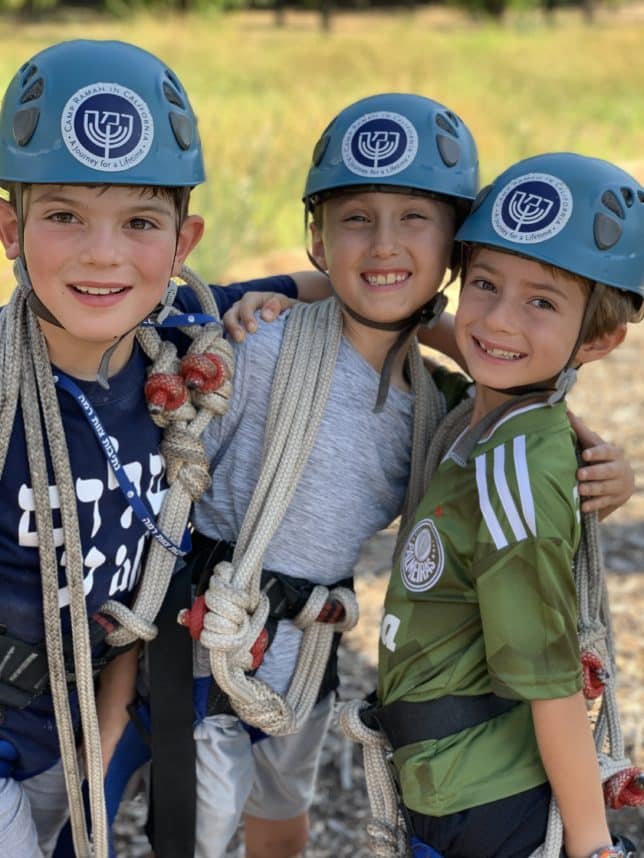
Photo courtesy of Camp Ramah in California.

JCA Shalom, Wilshire Boulevard Temple (WBT) camps, Camp Ramah in California and Camp Bob Waldorf are waiting on the latest information provided by the Centers for Disease Control and Prevention, Gov. Gavin Newsom and the American Camp Association (ACA) on safety protocols for the summer.

“The [ACA] guidelines may say ‘Go ahead and do camp, but you have to do these 25 things,’” Cari Uslan, executive vice president of Jewish Big Brothers Big Sisters Los Angeles, told the Journal. “And if the 25 requirements are so onerous that it doesn’t make camp a really enjoyable experience, that will factor into our decision making.”

She added that Camp Bob Waldorf has been figuring out how to make camp activities plausible online since early spring, when it took part in a virtual summer camp test run.

“The biggest thing we realized is that if you’re giving kids virtual programming, the best programming is where kids have materials in their homes,” Uslan said. “If we have virtual camp, we will provide our campers with [that.] It’s not finalized but we are thinking about those possibilities.”

Photo courtesy of Camp Ramah in California.

All of the camps told the Journal they desperately want camp to happen this year for the sake of parents, campers and staff . While the National Ramah Commission is allowing each specific camp to decide, California’s Camp Executive Director Joe Menashe and Camp Director Ariella Moss Peterseil said knowing they were not alone made the process less daunting.

Moss Peterseil said it surprises people to learn that even before the pandemic, Jewish summer camps had such collaborative relationships. She and Menashe have been Zoom calling with different Jewish summer camps across the country to lean on one another for support.

“It is a community,” Menashe said. “Camps are really in it together, and we care about each other and support each other and share our vulnerabilities, and that will help Jewish camping get through it.”

SoCal Holds Out Hope for Summer Camps Read More »

Airstrikes Blamed on Israel Hit Iranian Targets in Syria, Killing 14

JERUSALEM (JTA) — Airstrikes said to have been carried out by Israel struck several Iranian targets in Syria, killing 14 Iranian and Iraqi troops, according to a human rights group.

Israel has neither confirmed nor denied the report of Monday night’s strikes by the London-based Syrian Observatory for Human Rights.

The targets included Iranian forces and Iranian-backed militias in three deserts in eastern Syria and weapons warehouses near Aleppo, in the northern part of the country.

There have been reports of up to seven suspected Israeli airstrikes on Syria in the past two weeks.

“We have moved from blocking Iran’s entrenchment in Syria to forcing it out of there, and we will not stop,” Defense Minister Naftali Bennett said in a statement after an airstrike on April 28, appearing to confirm Israel’s responsibility for the attack. “We will not allow more strategic threats to grow just across our borders without taking action. We will continue to take the fight to the enemy’s territory.”

Israel has acknowledged some past airstrikes on Syria, and in recent months reportedly has struck Iranian targets in Syria, including intelligence centers, weapons depots, storage facilities, observation posts and logistics centers, as well as the T4 airbase near Homs, in northern Syria, which is believed to be controlled by Iran.

Airstrikes Blamed on Israel Hit Iranian Targets in Syria, Killing 14 Read More »

Indian Jews from the B’nei Menashe Community Face Unique Pandemic Challenges

Israel-based nonprofit Degel Menashe (Menashe’s Flag) has established a COVID-19 crisis relief fund to support members of the B’nei Menashe Jewish community in both Israel and India.

The B’nei Menashe originally hail from northeast India and identify as descendants of the Israelite tribe of Manasseh — one of the 10 “Lost Tribes” of Israel. Five thousand B’nei Menashe have immigrated to Israel since the 1980s.

Oakland, Calif.-based civil rights attorney Bryan Schwartz is among those supporting the B’nei Menashe. Schwartz, who visited the B’nei Menashe in India in 2000, told the Journal, “It’s a people who are very inspired, very faithful.”

Degel Menashe program director Isaac Thangjom — who made aliyah in 1998 — said in a statement there currently are 4,000 B’nei Menashe still in India waiting to come to Israel. However, Degel Menashe’s website states that since arriving in Israel, the B’nei Menashe have struggled to adjust to the contemporary realities of the Jewish State.

“Our statement of purpose calls for assisting the B’nei Menashe community in Israel by encouraging its integration in Israeli society, advancing it educationally and vocationally, helping to develop its younger, Israeli-born generation, and working to preserve its cultural heritage,” Thangjom stated. Meanwhile, those in the northeast Indian communities of Manipur and Mizoram – who have been unable to make aliyah due to “financial and bureaucratic obstacles,” according to Degel Menashe’s website – “are out of work due to the national corona[virus] lockdown.”

“With $9,000, you can feed 3,000 people for a few weeks. This is not Whole Foods. It’s incredible to me you can accomplish that with such a tiny amount of money.” — Bryan Schwartz

Schwartz, who also is the chairman of Scattered Among Nations, a nonprofit focusing on Jewish diversity and isolated Jewish communities, has helped to raise funds for those in India. The breadwinners have suffered severe economic hardship, he said. Jews in the U.S. can make a big difference in their lives with small donations, he added.

“With $9,000, you can feed 3,000 people for a few weeks,” Schwartz said. “This is not Whole Foods. It’s incredible to me you can accomplish that with such a tiny amount of money.”

He added feeding the B’nei Menashe in India has focused mostly around the purchase of rice during the coronavirus crisis. More than 500 families began receiving rice on April 22.

“We know there are people in need,” he said. “If you are wondering what we can do to help, this is something. This is our fellow Jewish brethren who are not as fortunate as we are.”

The Jewish Federation of New Mexico also has helped with the fundraising effort.

As of press time, India was relaxing its coronavirus restrictions. To date, the country has more than 46,000 confirmed cases of COVID-19 and more than 1,500 deaths, according to Johns Hopkins University. While it remains unclear how much longer India will remain on lockdown, Degel Menashe states on its website: “If there is a need for further relief measures among the B’nei Menashe, Degel Menashe will do its best to rise to the challenge.”

To make a contribution to the B’nei Menashe, visit the Scattered Among the Nations website

Indian Jews from the B’nei Menashe Community Face Unique Pandemic Challenges Read More »

The Worldwide Lockdown May Be the Greatest Mistake in History

The idea that the worldwide lockdown of virtually every country other than Sweden may have been an enormous mistake strikes many — including world leaders, most scientists (especially health officials, doctors and epidemiologists), those who work in major news media, opinion writers in those media and the hundreds of millions, if not billions, of people who put their faith in these people — as so preposterous as to be immoral. Timothy Egan of The New York Times described Republicans who wish to enable their states to open up as “the party of death.”

But for those open to reading thoughts they may differ with, here is the case for why the worldwide lockdown is not only a mistake, but also possibly the worst mistake the world has ever made. And for those intellectually challenged by the English language and/or logic, “mistake” and “evil” are not synonyms. The lockdown is a mistake. The Holocaust, slavery, communism, fascism, etc., were evils. Massive mistakes are made by arrogant fools; massive evils are committed by evil people.

The United Nations World Food Program (WFP) states that by the end of the year, more than 260 million people will face starvation — double last year’s figures.

The forcible prevention of Americans from doing anything except what politicians deem “essential” has led to the worst economy in American history since the Great Depression of the 1930s. It is panic and hysteria, not the coronavirus that created this catastrophe. And the consequences in much of the world will be more horrible than in the United States.

The United Nations World Food Program (WFP) states that by the end of the year, more than 260 million people will face starvation — double last year’s figures. According to WFP Director David Beasley on April 21: “We could be looking at famine in about three-dozen countries … There is also a real danger that more people could potentially die from the economic impact of COVID-19 than from the virus itself” (italics added).

That would be enough to characterize the worldwide lockdown as a deathly error. But there is much more. If global gross domestic product (GDP) declines by 5%, another 147 million people could be plunged into extreme poverty, according to the International Food Policy Research Institute.

Foreign Policy magazine reports that, according to the International Monetary Fund, the global economy will shrink by 3% in 2020, marking the biggest downturn since the Great Depression, and the U.S., the eurozone and Japan will contract by 5.9%, 7.5% and 5.2%, respectively. Meanwhile, across South Asia, as of a month ago, tens of millions already were “struggling to put food on the table.” Again, all because of the lockdowns, not the virus.

In one particularly incomprehensible act, the government of India, a poor country of 1.3 billion people, locked down its people. As Quartz India reported on April 22, “Coronavirus has killed only around 700 Indians … a small number still compared to the 450,000 TB (tuberculosis) and 10,000-odd malaria deaths recorded every year.”

The lockdown is “possibly even more catastrophic (than the virus) in its outcome: the collapse of global food-supply systems and widespread human starvation.” That was published in the left-wing ‘The Nation.’

One of the thousands of unpaid garment workers protesting the lockdown in Bangladesh understands the situation better than almost any health official in the world: “We are starving. If we don’t have food in our stomach, what’s the use of observing this lockdown?” But concern for that Bangladeshi worker among the world’s elites seems nonexistent.

The lockdown is “possibly even more catastrophic (than the virus) in its outcome: the collapse of global food-supply systems and widespread human starvation” (italics added). That was published in the left-wing The Nation, which, nevertheless, enthusiastically supports lockdowns. But the American left cares as much about the millions of non-Americans reduced to hunger and starvation because of the lockdown as it does about the people of upstate New York who have no income, despite the minuscule number of coronavirus deaths there. Or about the citizens of Oregon, whose governor recently announced the state will remain locked down until July 6. As of this writing, a total of 109 people have died of the coronavirus in Oregon.

An example of how disinterested the left is in worldwide suffering is made abundantly clear in a front-page “prayer” by a left-wing Christian in the current issue of The Nation: “May we who are merely inconvenienced remember those whose lives are at stake.”

“Merely inconvenienced” is how Rev. William J. Barber II, a Protestant minister and president of the North Carolina National Association for the Advancement of Colored People (NAACP) describes the tens of millions of Americans rendered destitute, not to mention the hundreds of millions around the world rendered not only penniless but hungry. The truth is, like most of the elites, it is Barber who is “merely inconvenienced.” Indeed, the American battle today is between the merely inconvenienced and the rest of America.

Michael Levitt, professor of structural biology at Stanford Medical School and winner of the 2013 Nobel Prize in chemistry, recently stated, “There is no doubt in my mind that when we come to look back on this, the damage done by lockdown will exceed any saving of lives by a huge factor.”

To the left, anyone who questions the lockdown is driven by preference for money over lives. Typical of the left’s moral shallowness is this headline on Salon this week:

“It’s Time To Reject the Gods of Commerce: America Is a Society, Not an ‘Economy,’ ” with the subhead reading, “America Is About People, Not Profit Margins.”

And, of course, to smug editors and writers of The Atlantic, in article after repetitive article, the fault lies not with the lockdown but with President Donald Trump. The most popular article in The Atlantic this week is titled “The Rest of the World Is Laughing at Trump.” The elites can afford to laugh at whatever they want. Meanwhile, the less fortunate — that is, most people — are crying.


Copyright 2020 creators.com. Dennis Prager is a nationally syndicated radio talk show host; president of PragerU, which has 1 billion views a year and author most recently of volume two (“Genesis”) of the bestselling Torah and Bible commentary in America, “The Rational Bible.” Reprinted with permission.


For more reactions to this column, and a response from Dennis Prager, see Letters to Editor – click here

The Worldwide Lockdown May Be the Greatest Mistake in History Read More »

IsraAID Deploys Volunteers to Southern California for COVID-19 Relief

With the advent of the coronavirus pandemic in the United States, Los Angeles pediatrician Dr. Lucy Uber has been dividing her time between working in urgent care, the Children’s Hospital of Los Angeles’ emergency room, her private practice and, most recently, volunteering at local food pantries as an IsraAID volunteer.

“Every day it seems like there are more and more people coming [to the pantry],” Uber told the Journal. “I have a little guilt. I trained in New York. The hospital I trained at has been very much on the front lines … Everyone I know is really truly in the thick of it and I felt like I wanted to do more to help the people around me.”

Uber is one of a handful of local IsraAID volunteers working to provide emergency relief to low-income families and people in need during COVID-19.

The Israeli-based nongovernmental organization adapted its work to address COVID-19 relief. It is currently supporting more than 15 countries, including the United States, affected by both the pandemic and ongoing humanitarian crises.

Uber first became involved with IsraAID in 2018. Born and raised in Los Angeles, she wanted to pay it forward to her community during COVID-19. “That’s kind of the point of why we are all here, to help each other and make something of the world we live in,” she said. “I think every person comes here with a gift and we need to figure out our role in the world and share whatever you have with other people.”

IsraAID U.S. Executive Director Seth Davis told the Journal IsraAID has been supplying volunteers and resources to the U.S. since Hurricane Katrina in 2005. Drawing on their experience with the Ebola outbreak, they’ve been using similar methods to prevent the spread of COVID-19 around the world since January, starting in China, by building containment spaces for patients.

Dr. Lucy Uber holding a food box ready to be delivered. Photo courtesy of IsraAID.

“It gave our team members the opportunity to be at the forefront, to put out notices on what to do to prepare, how to protect yourself, how to shift programs to be remote to children,” Davis said. “We actually installed water and sanitation stations to areas that didn’t have access to water. It’s been really rewarding to help on that level.”

“[IsraAID] has been deployed already for over a month. A lot of members of the Jewish community have stepped up from various shuls to a coalition we’ve built with 50 different Jewish-based organizations.”  — Seth Davis

In Los Angeles, because the demand for food pantries nearly has quadrupled since the outbreak of the virus, IsraAID wanted to help, particularly because the number of people who usually step up to help has diminished because of social distancing and fear of catching or spreading the virus. So Davis deployed a volunteer network in partnership with 50 organizations including Moishe House and Repair the World.

“We’ve been deployed already for over a month. A lot of members of the Jewish community have stepped up from various shuls to a coalition we’ve built with 50 different Jewish-based organizations,” Davis said. “In times of distress, people come together. It was important to us to put this out to many of the organizations that deal with the next generation to give them an opportunity to give back when they are needed.”

At the food pantries around Los Angeles, volunteers like Uber prepare boxes containing tomato sauce, pasta and canned fruits and vegetables for families to pick up via drive-up or walk-up service.

Sherry Weinman, U.S. IsraAID board chair, has been involved with IsraAID for nearly two decades and supervised the first IsraAID office in Palo Alto and its second office in L.A. She told the Journal it’s not just about volunteering, it’s about gaining skill sets and utilizing skilled workers in each community to give back.

“We don’t do ‘voluntourism,’ ” she said. “We don’t take unskilled people to Kenya to work with refugees. We take doctors. But we have always wanted something where people could volunteer when they didn’t have those particular skill sets.”

The team at IsraAID also understands that physical health isn’t the only element to be mindful of during an emergency. “People’s mental health is not going to stay strong,” Davis said. “We’ve already seen a few incidents of suicide and high levels of domestic violence.”

IsraAID  also has launched a free online interactive webinar, which provides practical day-to-day tools for coping. The 45-minute session, guided by mental health facilitators, provides 12 ways to reduce stress and anxiety in quarantine and allows people to connect and express their thoughts and fears in a safe space.

Photo courtesy of IsraAID.

With May being mental health month in the United States, Davis said he hopes these resources get to everyone who needs them. “Now that this is a global pandemic, people realize we are all going through the same thing and we need to support each other. We’ve become a global village.”

Before the coronavirus, the organization, founded in 2001, had assisted more than 50 countries on various emergency initiatives. One of the most popular questions people ask post-disaster is “How do we get back to normal?” Davis said.

He recommended rather than saying “new normal” or “going back to normal” the phrase to use is “post-traumatic growth. This pandemic has a lot of focus on cleanliness and washing your hands and not touching your face, and sneezing into your elbow. First of all, that is a step forward and I think people are going to use those methods that they’ve already adjusted to,” Davis said. “But also recognizing how vulnerable we all are. It can hit anywhere, any time and we have to be more thoughtful of other people when they are hit with natural disasters or pandemics and we need to respond.”

IsraAID Deploys Volunteers to Southern California for COVID-19 Relief Read More »