fbpx

April 29, 2020

Children’s E-Book ‘Cory V, The Virus’ Explains COVID-19 to Kids

Several weeks into quarantine, it’s safe to say if you haven’t had “the talk” with your kids, now is the time: the coronavirus talk.

Educational therapist Daisy Vaisburg has heard directly from her students’ parents that it’s a chaotic time for everyone in quarantine, especially if parents don’t know how to talk to their kids about the pandemic.

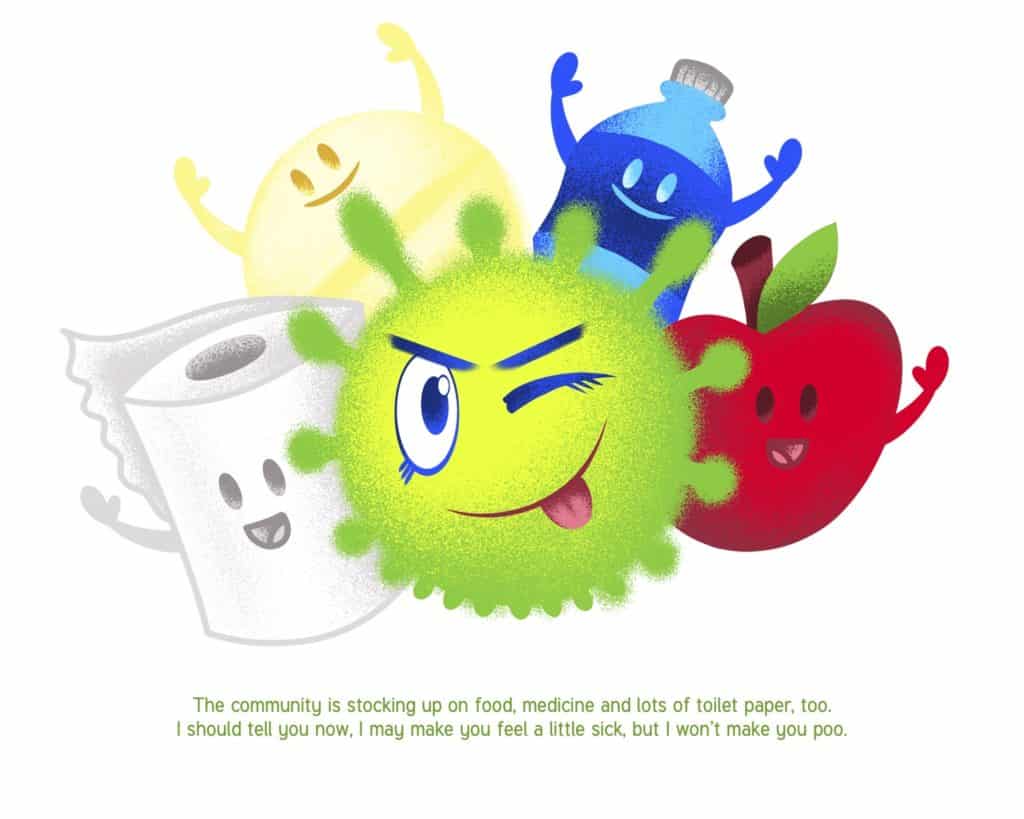
In her newly published children’s e-book “Cory V, the Virus: Explaining The 2020 Pandemic to Kids,” Vaisburg presents a “lighthearted way to explain the scary.”

The book illustrates information about the coronavirus and how to prevent the spread in a digestible way. Just like adults are trying to stay updated with the latest information, Vaisburg says kids of all ages have a right to know what’s going on, especially since it affects them directly.

“They need to know, but in an appropriate way,” she told the Journal. “ ‘There is something going on in the world; that’s why we can’t go to school and can’t go to the park.’ Things that they can understand — whether it’s a 5-year-old or 10-year-old. ‘We need to wash our hands and be careful who we are around. If you touch something, make sure you wash your hands after.’ Basic things that they can relate to that makes sense in their world.”

Photo courtesy of Daisy Vaisburg

The 31-year-old author and educator hails from San Diego and works one-on-one with children, specifically those with learning differences such as dyslexia, dyscalculia, dysgraphia, executive function weaknesses, non-verbal learning disability (NLD) and attention-deficit/hyperactivity disorder (ADHD).

When the spread of the coronavirus started to shut down schools, Vaisburg started Zoom and Skype meetings with her students to maintain normalcy. She also was careful not to “let the cat out of the bag” by telling them more information about the virus without parents providing it to them first.

“Explaining [face masks] to a child is difficult,” she said. “Whether we think kids aren’t listening, they absorb a lot more than we give them credit for. I don’t think we should pretend it doesn’t exist until they ask. I think it’s important to be real. They are little humans. We need to speak to them with age-appropriate language … they [need to] know what’s going on beyond ‘Oh, the park’s closed because they’re cleaning it.’ ”

While she tries to hold students’ attention via Zoom or Skype meetings, Vaisburg also is trying to provide support to parents, many of whom are now responsible for carrying out her lesson plans. While the state of California requires schools to provide special education-focused material to students, it still can be a big load for parents to take on.

Photo courtesy of Daisy Vaisburg

“For parents, it’s been tough having to figure out what the kids have to do, get them online to their Zoom classroom — whatever time of day that might be — and also complete their assignments, while also doing their own work or whatever they have going on,” she said. “I think we have to be lenient at this time and be OK with things not going as planned.”

Daily routines certainly are hard to stay on top of, but Vaisburg said that’s fine. “Structure is absolutely wonderful; however, in the situation we’re currently in, it’s hard to maintain,” she said. “Kids can get distracted. I tell parents it’s OK to set small goals instead of really big ones. Making modifications as needed [will] help both parents and students at this time.”

Through applied learning, Vaisburg said, kids will be able to take what they’re learning in school and have it make sense at home. She added it can be beneficial to use what’s available at home to make learning creative and engaging.

“None of us have ever been through anything like this before, where everything gets shut down overnight. Being open and having that conversation can be tough. Having a lighthearted book or a not-so-scary way to present a scary thing is a great icebreaker for that conversation.”— Daisy Vaisburg

Vaisburg also said there are learning opportunities all around the home: Baking can help students learn fractions; watching an episode of TV and having kids recap what happened will help with comprehension; making a sandwich and telling kids what each ingredient cost helps them understand money and decimals.

“It’s quality versus quantity,” she said. “It’s a learning curve for everybody. We will gradually get there. I think it’s OK for parents or students to pause on an assignment. If parents don’t know the best way to present a new concept, I think it’s OK for them to take a step back and figure out the best way they [both] can understand the concept.”

Despite her tools for fun at-home learning — Vaisburg’s e-book has colorful illustrations and a personified virus —  she doesn’t want to take away from the fact that things are still uncertain and scary.

“None of us have ever been through anything like this before, where everything gets shut down overnight,” she said. “Being open and having that conversation can be tough. Having a lighthearted book or a not-so-scary way to present a scary thing is a great icebreaker for that conversation. The book shares enough to be the conversation if parents aren’t open to having it.”

To download the book, click here. For more on Daisy Vaisburg, visit her website.

Children’s E-Book ‘Cory V, The Virus’ Explains COVID-19 to Kids Read More »
De Blasio Tells Jewish Community That NYPD Will ‘Arrest Those Who Gather in Large Groups’

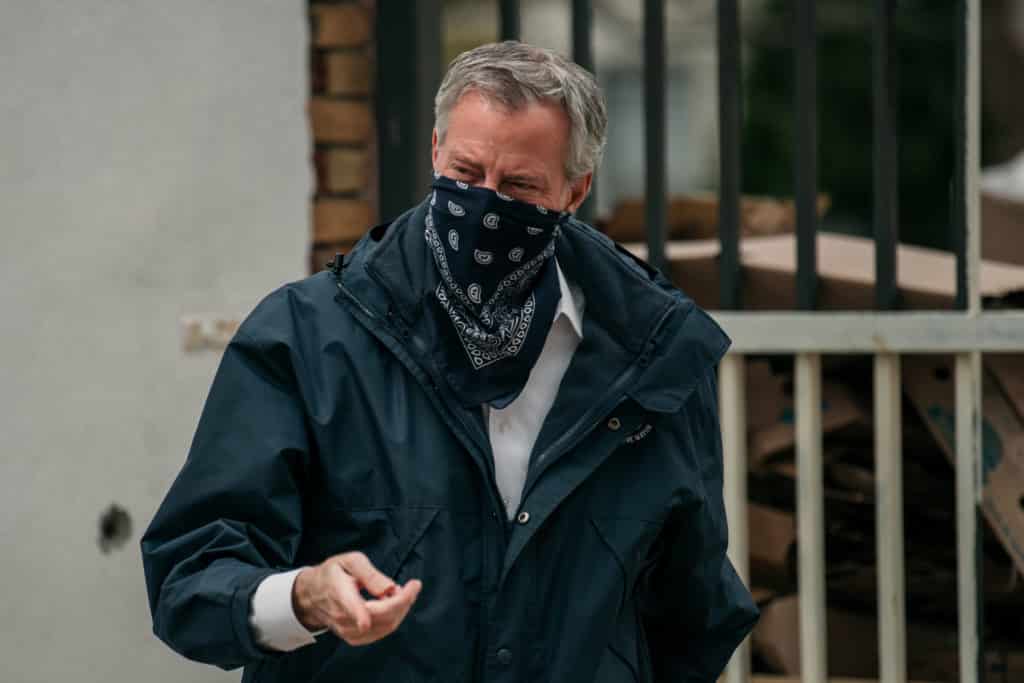
New York City Mayor Bill de Blasio warned the Jewish community on the evening of April 28 that the New York City Police Department (NYPD) will arrest people who gather in large groups.

Earlier in the evening, an estimated 2,000 people gathered in Brooklyn for the funeral of Rabbi Chaim Mertz, who died from complications related to COVID-19. Some of the attendees were wearing masks while many others didn’t observe social distancing measures, according to NBC New York. De Blasio and the NYPD showed up at the funeral to disperse the crowd. No arrests were made but The New York Times reported that 12 summonses were issued, including four for refusal to disperse, according to Police Commissioner Dermot F. Shea.

De Blasio tweeted afterward, “My message to the Jewish community, and all communities, is this simple: the time for warnings has passed. I have instructed the NYPD to proceed immediately to summons or even arrest those who gather in large groups. This is about stopping this disease and saving lives. Period.”

The Chasidic group Satmar tweeted that the city had given approval for the funeral to occur, but it was unclear if approval was granted with the conditions that participants follow virus protocols. Video of the funeral shows a large group of black-clad participants crowded on the street and on sidewalks.

New York’s ultra-Orthodox communities have been hard hit by the virus, and officials cite Chasidic residents’ inclination to gather in large groups as partly responsible, with data suggesting the numbers likely exceed other ethnic and religious groups.

The New York Times reported that “authorities have dispersed several well-attended religious gatherings since restrictions on such events were enacted in the face of the outbreak,” including weddings and funerals in New York neighborhoods with large Jewish populations.

The Times reported that Jacob Mertz, a spokesman for Mertz’s synagogue, Kahal Tolath Yakov, said in a statement that it “came up with a plan to have many streets closed, so that people participate and walk the coffin while following the social distancing rules and wearing masks.”

“Unfortunately, this didn’t pan out, and NYPD had to disperse the crowds,” Mertz, wrote, according to the Times.

He added: “We understand Mayor Bill de Blasio’s frustration and his speaking out against the gathering. As said, we thought that the procession will be in accordance with the rules, and we apologize that it turned out otherwise. It also hurts that this led to singling out the Jewish community, and for that we apologize to all Jewish people. We know that the mayor’s reaction came from his concern to the health of safety of our community and the entire city, and it wasn’t ill-intentioned. We share that concern. Health and live takes precedence to anything else, and we shall all follow those rules.”

The Orthodox Jewish Public Affairs Council (OJPAC) accused de Blasio of hypocrisy for not condemning the city’s massive crowds who watching the Blue Angels and Thunderbirds flyover earlier in the day.


Jewish groups condemned de Blasio’s tweet.

“Hey @NYCMayor, there are 1mil+ Jewish people in #NYC,” Anti-Defamation League CEO Jonathan Greenblatt tweeted. “The few who don’t social distance should be called out — but generalizing against the whole population is outrageous especially when so many are scapegoating Jews. This erodes the very unity our city needs now more than ever.”

The American Jewish Committee similarly tweeted: “Mr. Mayor, the vast majority of the Jewish community is following the guidelines. You can find us donating blood, raising money to support our neighbors, and in emergency rooms providing critical care. We deserve better from our leaders than generalizations and fingerpointing.”


A couple of members of the New York City Council, which has 51 members, also denounced de Blasio’s tweet.

“Did the Mayor of NYC really just single out one specific ethnic community (a community that has been the target of increasing hate crimes in HIS city) as being noncompliant??” City Councilmember Chaim Deutsch tweeted. “Has he been to a park lately? (What am I saying – of course he has!)”

He added in a later tweet that while people should be socially distancing, “singling out one community is ridiculous. Every neighborhood has people who are being non-compliant. To speak to an entire ethnic group as though we are all flagrantly violating precautions is offensive, it’s stereotyping, and it’s inviting anti-Semitism. I’m truly stunned.”


City Councilmember Kalman Yeger similarly tweeted: “Mr. Mayor, your words are unacceptable. To condemn our entire community over one group of people is something you would not do to any other ethnic group, and I know you long enough to know that you know this.”

David Hazony, executive director of The Israel Innovation Fund, had a differing view. He tweeted that while he doesn’t like de Blasio as a mayor and that the phrasing of the tweet was dumb, “the outrage here should be first of all at those who recklessly endanger the lives of others.”


De Blasio addressed the matter in an April 29 news conference, saying that he was angry at the funeral’s crowd and that he will call out any community that engages in such behavior. He also said that doesn’t tolerate anti-Semitism.

“If in my passion and in my emotion I said something that many view as hurtful, I’m sorry about that, that was not my intention,” he said.

De Blasio Tells Jewish Community That NYPD Will ‘Arrest Those Who Gather in Large Groups’ Read More »

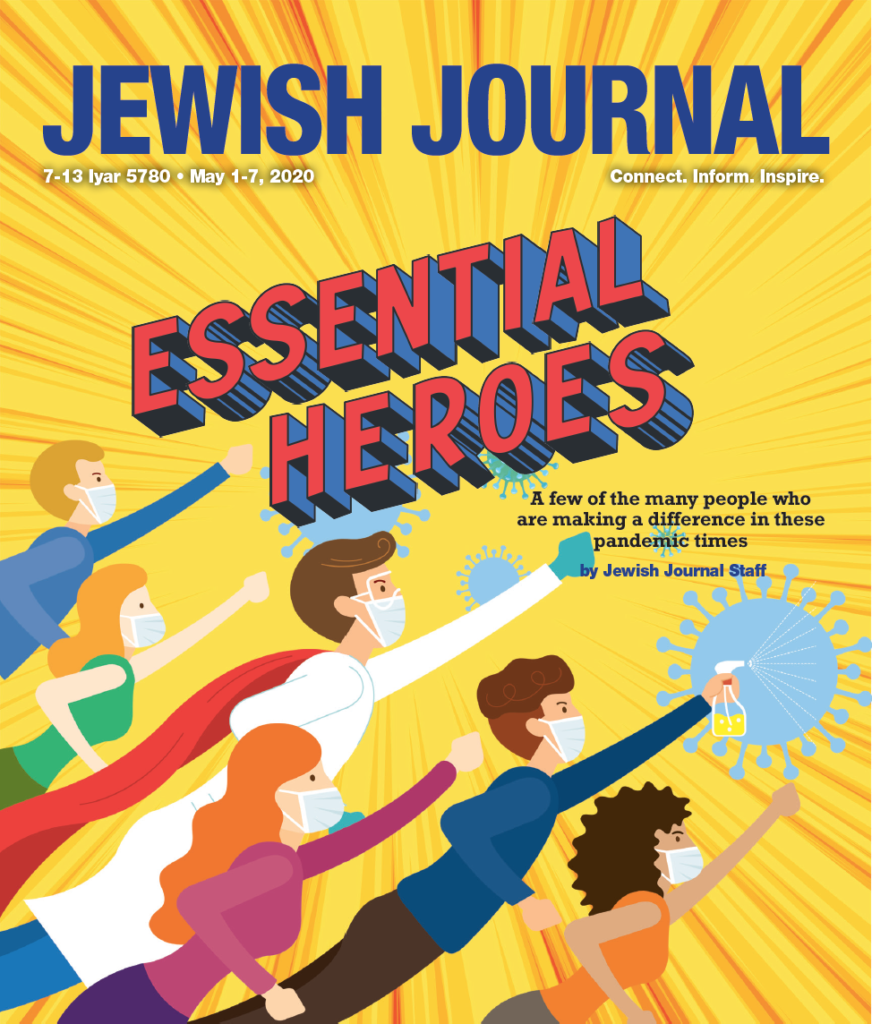
Celebrating Essential Heroes During COVID-19

As evening falls, we bang pots and clap our hands for all the essential workers, whether they are working in hospitals, delivering groceries, making masks in their living rooms or creating websites to bring together people.

Below is a small sampling of some of the Jewish essential workers who are stepping up, giving back and helping us during these pandemic times.

Karen Michelle Halaszi: Lifestyle brand manager making masks with nonprofits

“As the owner of Karen Michelle, a lifestyle and fashion brand based in Los Angeles, I’ve added manufacturing masks for those in need during the pandemic to my business…” To read Karen Michelle’s entire profile, click here.

Jacob Kraus: The teen creator of the COVID Connections website

“In an effort to support those in quarantine, 16-year-old Long Beach native Jacob Kraus developed an online network of local resources available with the click of a mouse. On March 19, he launched COVID Connections, which connects people with local volunteers who assist them with essential errands ranging from delivering groceries to picking up prescriptions…” To read Jacob’s entire profile, click here.

Dr. Sam Torbati: The Cedars-Sinai doctor 

“Dr. Sam Torbati’s role as a frontline health care worker during the coronavirus crisis has been made much more manageable thanks to the support of his community…” To read Dr. Torbati’s entire profile, click here.
Helene Chabin: The medical claims expert helping keep hospitals funded

“Chabin has been working out of her home in Queens, N.Y.  She handles appeals on behalf of hospitals when insurance companies decline to reimburse the hospitals for medical treatment of Medicaid patients…” To read Helene’s entire profile, click here.

Nicole Lavian: The UCLA pharmacist treating organ transplant patients

“The beginning of COVID-19 pandemic marked a 180-degree change in my role as a pharmacist at UCLA Health. Patients who were once coming in, receiving their medications and patient consultations, were encouraged to stay home and skip their doctors appointments, thus resulting in them not receiving their medications…” To read Nicole’s entire profile, click here.

Wendy Light: From crafting tallitot to face masks during COVID-19

“Before the coronavirus outbreak, Los Angeles tallis designer Wendy Light was creating intricate tallitot out of any fabric imaginable. Now she has switched her focus to making free, brightly patterned face-masks for anyone in need…” To read Wendy’s entire profile, click here.

Celia Bernstein: Westside Family Health Center helping low-income community

“On April 1, in the midst of the coronavirus pandemic, the Westside Family Health Center (WFHC) opened its doors at its new Culver City office. The center offers a wide range of medical services including family practice, pediatrics, prenatal, reproductive health services, flu shots, immunizations, behavioral health care as well as dental and vision services…” To read the entire profile, click here.

Niaz Khani: The clinical psychologist offering free counseling to essential workers

“After clinical psychologist Niaz Khani saw her patients’ lives uprooted by the coronavirus pandemic, she started to offer free therapy to essential workers…” To read Niaz’s entire profile, click here.
Anna Zvansky: The Hollywood hospitalist rationing supplies

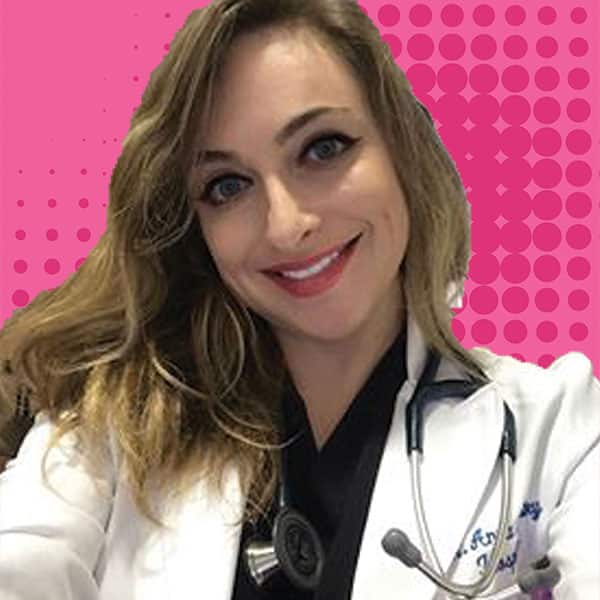
“Dr. Anna Zvansky is a hospitalist in the Hollywood area working under incredibly stressful conditions in the midst of the coronavirus outbreak…” To read Dr. Zvansky’s entire profile, click here.

Debra Stein: The former nurse who created the COVID-19 health experts website

“Debra Stein has been a registered nurse for the past 10 years. She left Cedars-Sinai Medical Center in March and started a website called COVID-19 Health Experts in April. The site gives patients access to a team of registered nurses 24 hours a day to answer COVID-19 questions…” To read Debra’s entire profile, click here.
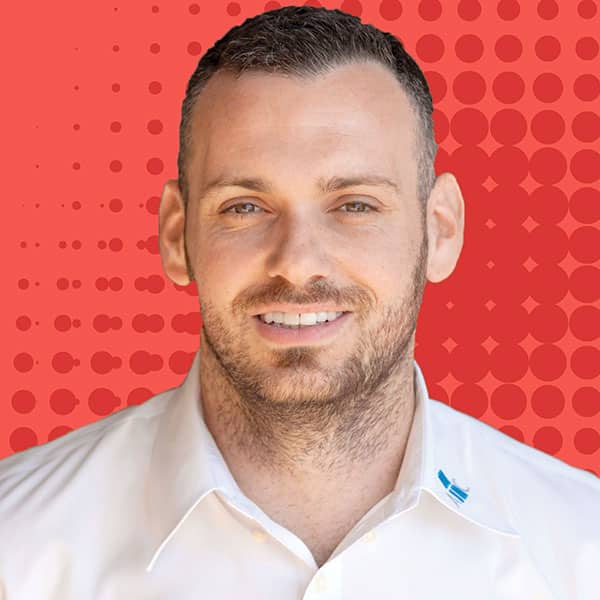
Andrew Sedler: The dental lab COO making and donating N95 masks

“Andrew Sedler is the chief operating officer at Burbank Dental Lab. Although the pandemic has forced the lab to reduce its staff from 200 people to 10, it still is treating emergency cases. When the staff isn’t handling such cases, it’s making N95 masks to donate to medical personnel…” To read Andrew’s entire profile, click here.

Ari Friedman: The Hatzolah volunteer EMT 

“As an operations supervisor at Hatzolah Los Angeles, Ari Friedman has seen the devastating impact of the coronavirus in the Jewish community. The Valley Village resident and certified EMT has been responding to medical calls from those suffering from COVID-19…” To read Ari’s entire profile, click here.
Celebrating Essential Heroes During COVID-19 Read More »

Print Issue: May 1, 2020

CLICK HERE FOR FULLSCREEN VERSION


Print Issue: May 1, 2020 Read More »

Ripple Effect: Drive-By

One of the first kids I met when I started working with incarcerated youth was a young girl who touched my soul deeply. I believe she is one of the main reasons I stay committed to this work.

She was quirky, upbeat, and fun.
You would never guess looking at her that she had such a horrific history.
She had been terribly abused as a little girl, neglected and sexually assaulted, yet her spirit was resilient and strong.

When she was 14 years old, she got into a car that did what is called in street slang a “drive-by.”

If you google “drive-by,” the definition you will get is “a shooting carried out from a passing vehicle.”

She was in a car with three young men and multiple people were killed.

A speed chase followed on the highway and when it ended, she was taken into custody. It was very clear that she had nothing to do with the drive-by. She simply got into the wrong car at the wrong time.

As a juvenile, she was given grace. I met her when she was detained in a county lockup facility. I fell in love with her tenacity, strong will and all-around beautiful soul.

I have not seen her or heard from her as years have passed. Sadly, I recently found out that she is doing a life sentence in a county jail. She has two children and I was also told that she has lost her joy, and the funny, young girl has turned into a sullen, bitter woman.

Her innocence was almost gone the moment she came into this world, but somehow as a teenager when I met her, her spirit was able to rise above her circumstances. I know she was sex trafficked and clearly life was not kind to her.

This story reminds us that the human spirit has limits and, as much as I have seen many of my students change and find the path to success, so many, oh so many, are suffering, stuck in an unfair, unjust  system that is incredibly punitive and not restorative enough.

When I met her, I remember being absolutely flabbergasted by the concept of a drive-by. It was something I thought you only see in movies.

When I heard the details of what had happened to her, it literally took my breath away.

This week I experienced another type of drive-by. It could not have been more dramatically different from the drive-by of that young girl I met years ago or the drive-by many of my students have been part of or affected by.

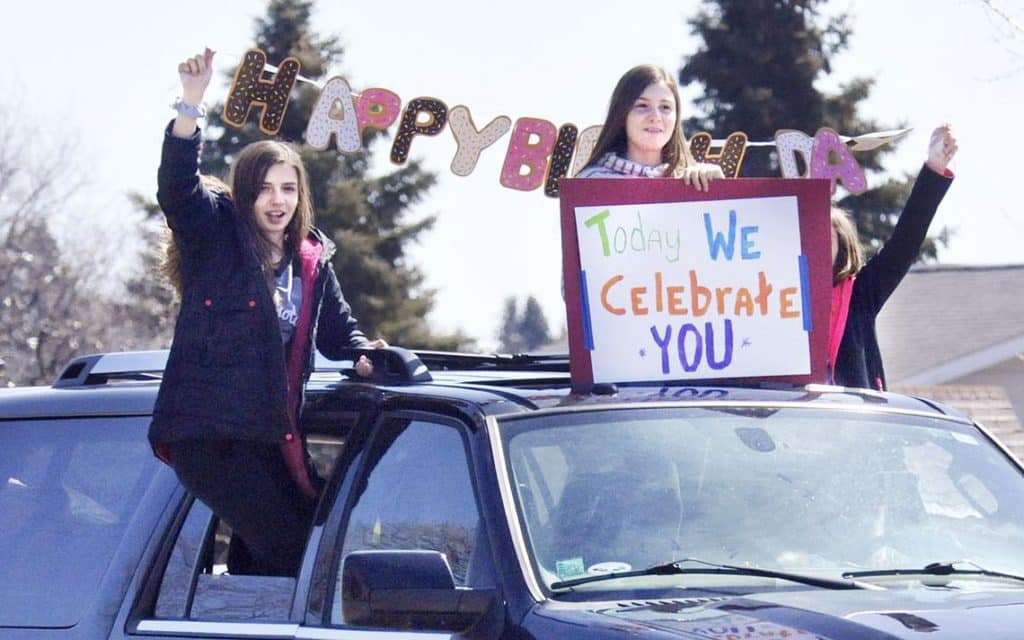
One of my daughter’s friends had a birthday. The mom organized a drive-by birthday party which seems to be kind of a norm these days.

Poster boards were drawn. Pictures were printed. Balloons were purchased and off we went to The Valley. Lined up at the end of the street were five cars. The sunroofs were all open and five sweet girls’ bodies were popping out of them holding up posters cheering and singing “Happy Birthday” to their friend as we slowly drove by.

A wave of emotion swept over me. When my daughter peeked down into the car, she rolled her eyes and said, “Are you crying? Of course, you’re crying!! Oh my god, Mommy, seriously?!” and back up she went to cheering and screaming “Happy birthday” at the top of her lungs.

Truth is, I was crying because this moment was incredibly sweet and beautiful and brought some normalcy into the crazy time we are living in. At the same time, this drive-by was a little whacky and a testament to the absolutely abnormal era of the coronavirus.

In my online Zoom class, we have been talking about our feelings and how hard it is to deal with them. One of my students shared that she relapsed and used drugs this week. She’s okay but is incredibly mad at herself. We showed her love online, told her she can do this, and gave her as much support as possible.

Another student who recently got out of jail shared that she is sad because she just got visitation days with her son, but how can she visit with him from 6 feet away?

Without thinking, I suggested she does a drive-by.

The moment I said it I realized how bad it must have sounded.

It looked like my computer froze, because everyone on that Zoom call was in shock and didn’t move.

Frankly, they were as flabbergasted by my suggestion as I was long ago when I found out that a drive-by happens in life for real.

I laughed out loud and calmed my sweet Homies down.
I explained that I don’t mean a “bang bang” shooting drive-by.

Someone said, “Oh, you mean a drive-by that we see now on social media where people go celebrating birthdays and shit.”

“Yes,” I said, “that is what I mean.”

“Thank Goodness Ms. We thought you gone bad!!” one said.


We all share a really deep laugh.

“Try and get permission to drive by your son’s house and see him from 6 feet away.” I say.

I tell them how I think it’s cool that this thing we know in our heads is horrible can be totally turned around into this kind of awesome, new tradition.

And then one of my guys nailed it.

“Ms., you can take the bad, even the really bad, and turn it into good. You just need the right intention, that’s all.”

I look at him in that tiny box on my computer and I want to lean in and give him a hug. He was really bad, and now I really don’t know anyone with a heart bigger than his.

He is incredibly calm, wise, and always reassuring that we can make things happen. He is my living proof that the bad can be turned into good.

He thinks the new drive-by is awesome, and he was in many of the other kind.

He encourages the other student. “Go for it, Girl! Drive by and see your kid.”

I am getting emotional.
In normal times, I am more emotional than most, and in this weird coronavirus time everything, and I mean everything, makes me a little teary.

“Please try over the weekend to drive by and see your son, for you and for him.”

She says she will.

We all take a breath, pick an imaginary flower, smell it, and put it on our heart.

We end the class.

My screen goes dark.

I sit for a long moment staring at my computer.

I think of that outspoken girl I met long ago. I think how the bad just got increasingly worse for her. I remember how funny and hopeful she was, and I am overwhelmed by the sadness.

Then I think of my other student.

He committed a crime when he was young.

He spent years in jail.

He then found the good.

In himself.
In the world.

Now, he is one of my teachers.

The good cannot and does not always win.

But we sure as hell can try as hard as we can to help the good in and invite it to stay.

The person who knows the girl who was in the drive-by, shared my sadness about her fate, and told me that she had loved my class.

“I hope it brought her joy.”

“Oh, it did,” he told me.


We are both quiet because we both know that, in this case, that joy was not enough.

“Sometimes there is nothing you can do,” he told me.

“I know,” I say, “but, I choose to ignore that, and keep believing I can and that my program will.”

“That’s good!” he tells me, and we both laugh.

It has been proven that the difference in a struggling youth’s life is one, ONE, individual believing in their good.

So, although the good does not always win, I will always, always, continue to believe in it.

I hope you will too.


Naomi Ackerman is a Mom, activist, writer, performer, and the founder and Executive Director of The Advot (ripple) Project a registered 501(c)3 that uses theatre and the arts to empower youth at risk to live their best life.

Ripple Effect: Drive-By Read More »

Biden Would Keep US Embassy in Jerusalem, His Foreign Policy Adviser Says

(JTA) — An adviser to Joe Biden said the former vice president would keep the U.S. Embassy in Jerusalem if elected president.

Tony Blinken, the presumptive Democratic presidential nominee’s senior foreign policy adviser, said that reversing President Donald Trump’s decision to move the embassy to Jerusalem from Tel Aviv “would not make sense practically and politically,” Jewish Insider reported.

Blinken, a former deputy secretary of state and deputy national security adviser under President Barack Obama, made the comments in a webinar Tuesday hosted by the Jewish Democratic Council of America.

The event also featured Delaware Sen. Chris Coons, a top Biden surrogate. Both Blinken and Coons declined to specify what Biden might do if Israel proceeds to annex parts of the West Bank, though Coons expressed hope that Benny Gantz and Gabi Ashkenazi, both longtime Israeli military leaders who are preparing to join Prime Minister Benjamin Netanyahu in a unity government, would counsel the premier against such a move.

“My hope would be that Ashkenazi as foreign minister and Gantz as defense minister — in what will be internal deliberations — given their deep experience in the IDF and given the security consequences of an abrupt move, would caution Bibi against some significant step like this,” Coons said.

Biden Would Keep US Embassy in Jerusalem, His Foreign Policy Adviser Says Read More »

Karen Michelle Fashion Brand Teams Up With Nonprofits to Make Affordable Masks

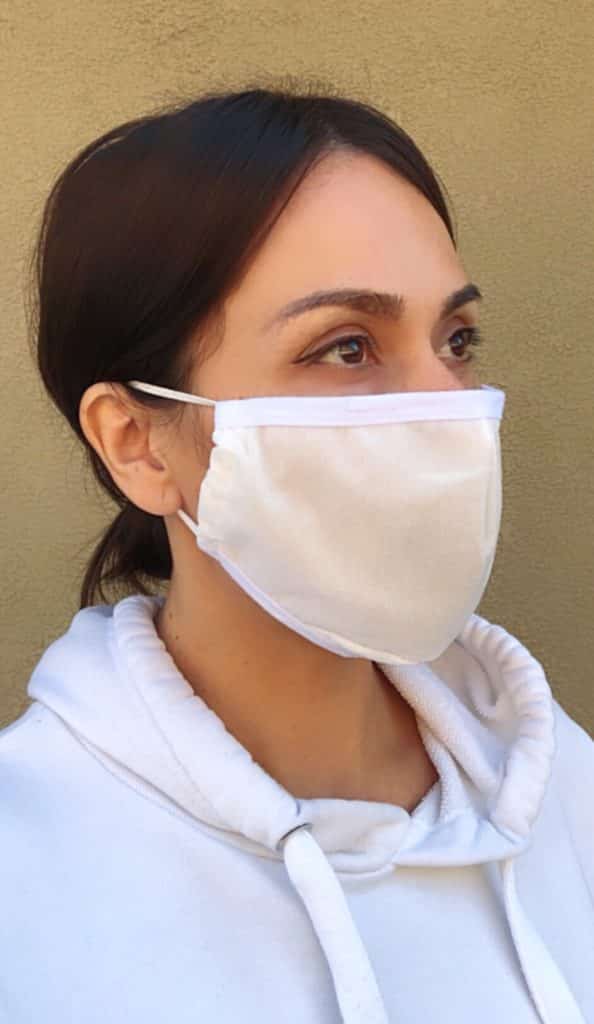
As the owner of Karen Michelle, a lifestyle and fashion brand based in Los Angeles, I’ve added manufacturing masks for those in need during the pandemic to my business.

We joined up with Artists for Trauma, a nonprofit that pairs trauma survivors with artists, activewear brand Modefywear, cosmetic brand Planet Thankful and many volunteers to manufacture and distribute washable masks.

 “We joined up with Artists for Trauma, a nonprofit that pairs trauma survivors with artists … and many volunteers to manufacture and distribute washable masks.”

We are charging $3.50 per mask, which we make right here in Los Angeles. This has become a large undertaking and is being done at cost — not for profit. Getting masks to those who need [them] is truly a group effort and I am proud to work with these generous and talented people. We are working together to do something for everyone in the community.

You can purchase mask here.

Karen Michelle Fashion Brand Teams Up With Nonprofits to Make Affordable Masks Read More »

Keeping Hospitals Funded Is Essential Work, Explains Medical Claims Expert

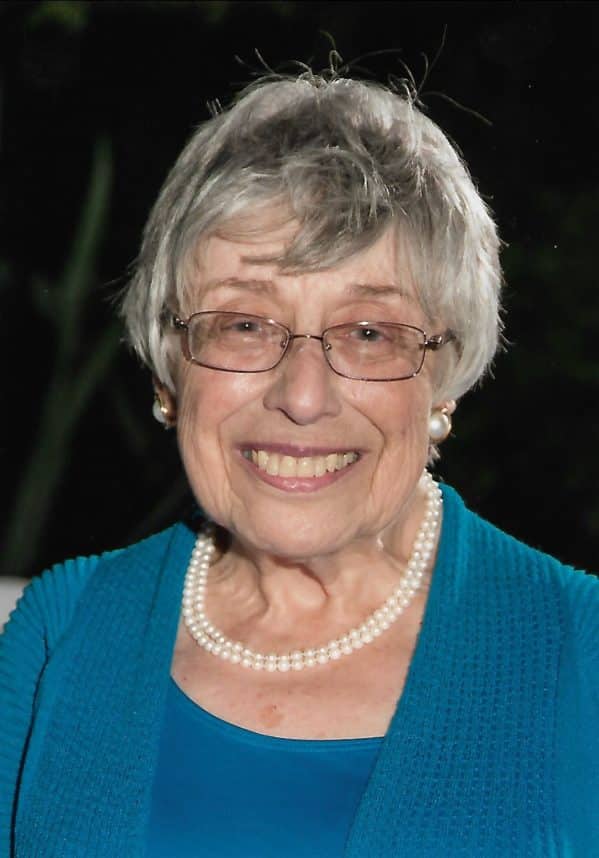
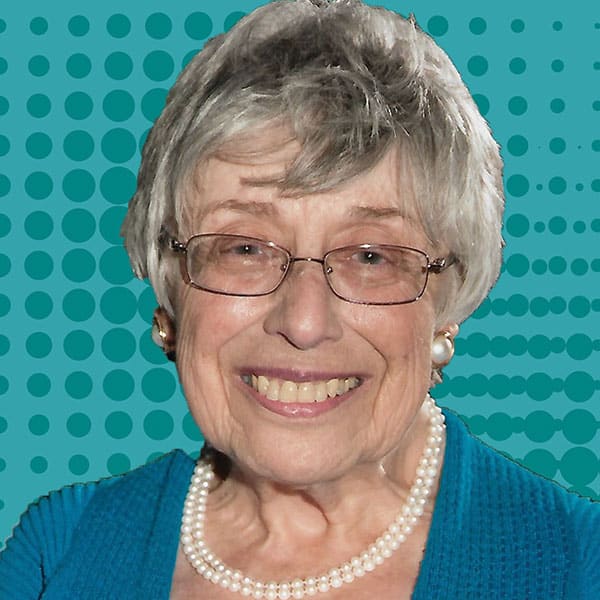
As many businesses in New York closed because of the spread of the coronavirus, Helene Chabin, 84, a hospitals medical claims expert, assumed she, too, would cease working.

“Doctors, nurses, firemen, policemen, even restaurant workers — those people I considered essential,” she said. But then she learned she was considered an essential worker.

Helene Chabin

“I didn’t consider myself essential. [But] when the head of our company sent an email and said we’re going to be open, it made sense. Hospitals can’t function if there are no funds [for them].”

Chabin has been working out of her home in Queens, N.Y.  She handles appeals on behalf of hospitals when insurance companies decline to reimburse the hospitals for medical treatment of Medicaid patients. She has been doing the work for more than 30 years, and she enjoys it.

When she’s not working, Chabin has been going on walks with her son and son-in-law. “We try to get out,” she said, adding she always wears a mask. Still, she said, “I haven’t been in the [grocery] store for weeks and weeks.”

Keeping Hospitals Funded Is Essential Work, Explains Medical Claims Expert Read More »

What It’s Like Being An Emergency Medical Volunteer During COVID-19

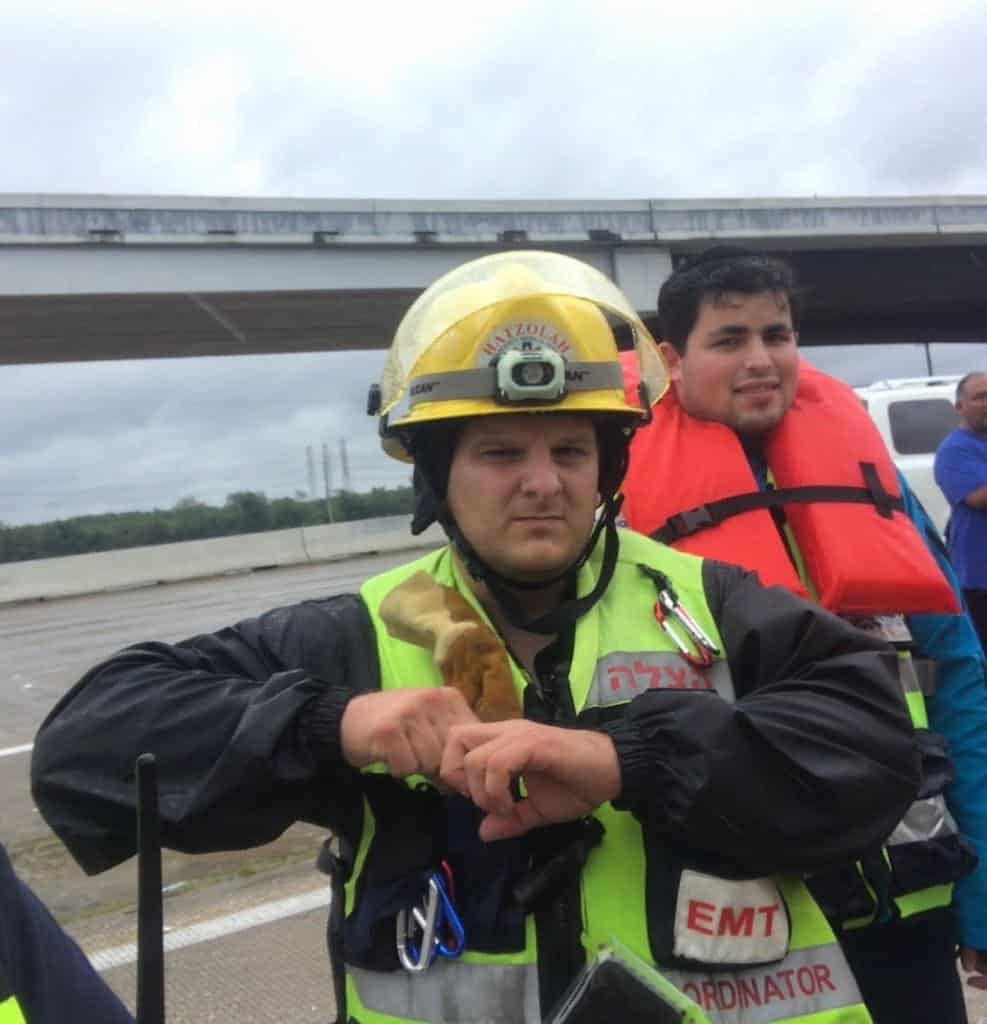
As an operations supervisor at Hatzolah Los Angeles, Ari Friedman has seen the devastating impact of the coronavirus in the Jewish community. The Valley Village resident and certified EMT has been responding to medical calls from those suffering from COVID-19.

A personal injury lawyer by profession, Friedman, 37, told the Journal, “It’s a privilege to help people in a time of need. You make a difference in one person’s life and it saves the world.”

“It’s a privilege to help people in a time of need. You make a difference in one person’s life and it saves the world.” — Ari Friedman

Hatzolah, a volunteer emergency medical service, cannot physically transport patients to hospitals. The organization must defer to the Los Angeles Fire Department for transportation, but Friedman and other Hatzolah volunteers have been checking the vitals and providing oxygen to patients who have had difficulty breathing. When responding to an in-person COVID-19 call, the goal is to “take away the imminent emergency,” Friedman said.

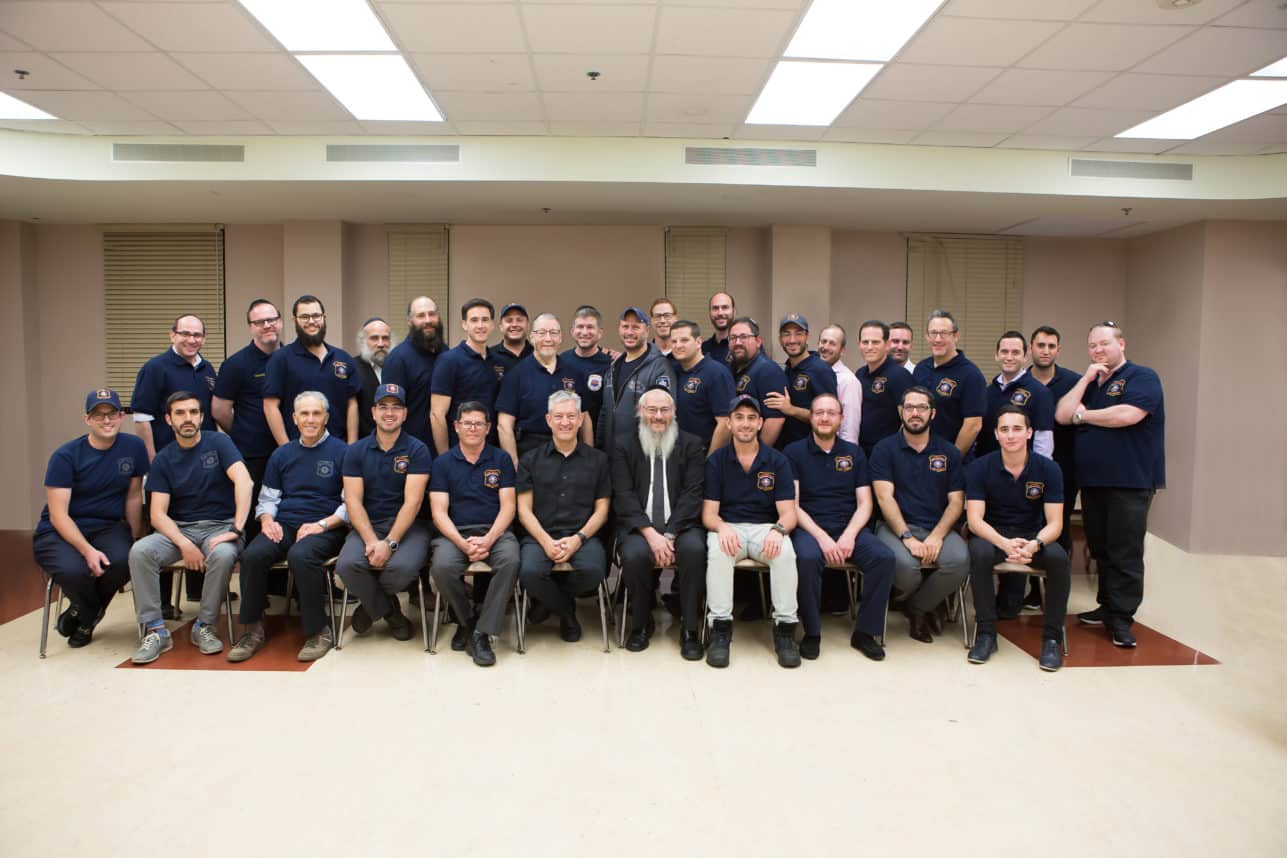
Hatzolah LA

Since the outbreak of the coronavirus, Friedman estimated that Hatzolah has responded in-person to approximately 150 calls and has had more than three times that many over the phone. The group’s busiest time was after Purim, he said, when Hatzolah’s 60 responders took up to 10 coronavirus calls each week.

Correction: A previous version of this article stated that Friedman has been delivering telemedicine. Hatzolah does not offer telemedicine. 

What It’s Like Being An Emergency Medical Volunteer During COVID-19 Read More »

Former Nurse Creates COVID-19 Website That Gives Patients 24-Hour Access to Nurses

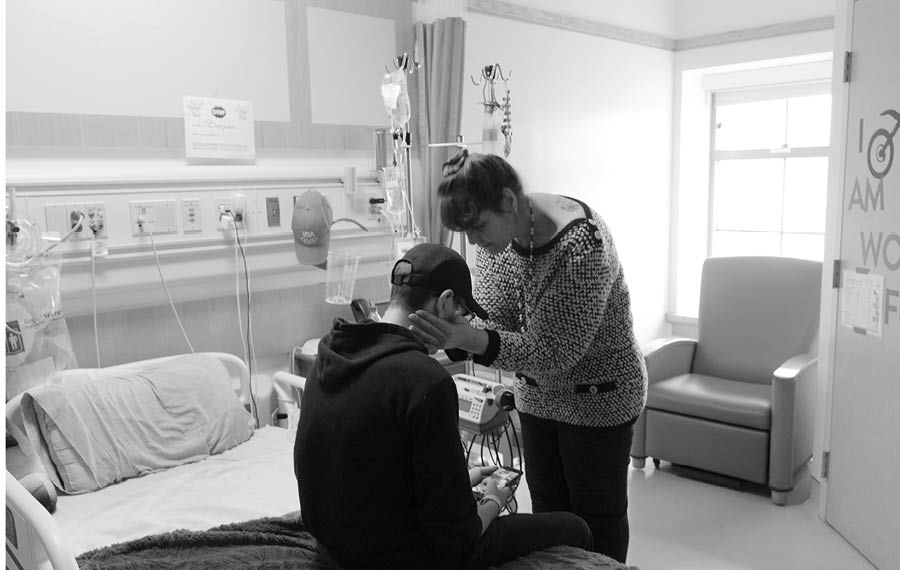
Debra Stein has been a registered nurse for the past 10 years. She left Cedars-Sinai Medical Center in March and started a website called COVID-19 Health Experts in April. The site gives patients access to a team of registered nurses 24 hours a day to answer COVID-19 questions.

Debra Stein

“I wanted to create a company that helps people at their homes so that they’re not in fear of going into the hospital at risk of getting the coronavirus,” Stein told the Journal.

Users can talk to nurses through an online instant messaging chat for $30, or a Zoom chat for $60. Stein said that a nurse would be available to each user in seconds, even during the middle of the night.

“[Users] can talk to [a nurse] about symptom management and what are the next steps and what are the best options they can take from here on out,” Stein said. A nurse can recommend that a patient go to the emergency room or to follow-up with a doctor depending on their symptoms.

“I wanted to create a company that helps people at their homes so that they’re not in fear of going into the hospital at risk of getting the coronavirus.”  — Debra Stein

She added that people also can talk to a nurse if they’re just feeling anxious about the pandemic. “I feel like this could really help a lot of people calm their nerves,” Stein said.

She also hopes to provide users with the option to purchase COVID-19 test kits in the coming weeks. She said she plans to get those test kits from a private company.

“They are basically nasal swabs and you get it in the mail and then send it back to see your results in 1-2 days,” Stein said, adding, “I’m looking forward to helping patients. I’m not treating them, but it’s more like managing their symptoms.”

Former Nurse Creates COVID-19 Website That Gives Patients 24-Hour Access to Nurses Read More »