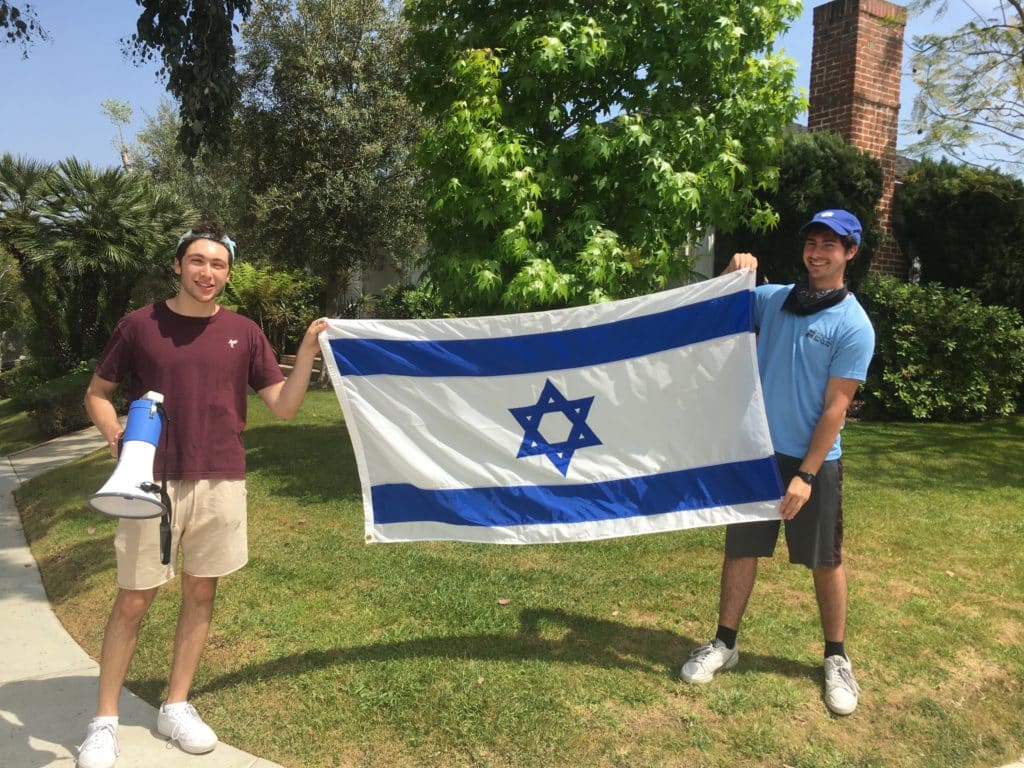
Unable to hold its Yom HaAtzmaut carnival on the rooftop this year, instead Shalhevet High School took to the local streets of Beverlywood on April 29 to celebrate Israel’s 72nd anniversary.
A parade of cars decorated with Israeli flags and blue-and-white balloons drove through the residential streets and Head of School Ari Segal stood in the flatbed of a pickup truck as it inched down Beverly Drive. Shalhevet students, together with residents, stood on street corners cheering.
“Even though we’re not physically there, we’re there in spirit,” 17-year-old Shalhevet senior Nick Fields told the Journal.
As the cars drove by, Einat Ronen stood on the corner with her daughter Mia, a first-grader at Harkham Hillel Hebrew Academy. Ronen, who is the director of human resources at pro-Israel education organization StandWithUs, said her daughter’s school usually has a big party in honor of Yom HaAtzmaut. With that not possible this year, she said she was happy to at least get outside for the occasion. “It’s nice to see other people every once in a while,” she said.
The mother and daughter came equipped with some Israel swag – a balloon hand with one finger up to indicate Israel was number one.
The Anti-Defamation League (ADL) announced in a post on its website that it was successful in lobbying for Twitter and Instagram to remove a Palestinian terrorist from their respective platforms on April 27.
The terrorist, Ahlam Al-Tamimi, was convicted in connection with the 2001 Hamas bombing of the Sbarro pizzeria in Jerusalem. The ADL described the bombing as “one of the most traumatic terror incidents in Israeli history. Tamimi reportedly selected the location for the bombing because she knew the pizzeria would be filled with children. The attack killed 15 people in total, including seven children and two American citizens.”
The Americans killed were Malki Roth, 15, and Shoshana Yehudit Greenbaum, 31. Greenbaum was five months pregnant when the bombing occurred. Al-Tamimi has openly gloated about organizing and participating in the bombing.
The ADL noted that it first flagged Al-Tamimi’s accounts on April 23. It also pointed out that this was the eighth time that Al-Tamimi has created social media accounts to spread propaganda.
“[The] ADL remains concerned that influential terrorists like Tamimi can exploit the services of major technology companies to spread hatred and terrorist propaganda,” it wrote. “While many are hurt from these messages, the most immediate impact is the re-traumatization of her victims’ families.”
Additionally, the ADL pointed out that Twitter asserts that it removes 87% of all terrorist activity on its site without needing civilians to flag it, but the social media giant admits that “claims of this sort are often not externally vetted, and, even at 87% accuracy, thousands of the worst propagators of hate are left to spew terror on the platform. The Tamimi case highlights one of the consistent failings of the big platforms’ current approach.”
The ADL concluded its post calling for tech companies to conduct better oversight of their platforms to ensure that terrorists aren’t able to spread propaganda.
“Social media companies owe it to the victims of terrorism to build a more sustainable solution to addressing terrorist content — which violates their own terms of service,” it wrote. “The current state of whack-a-mole to enforce their terms when infamous terrorists are exploiting their services is not good enough. It’s causing continued harm to grieving families.”
ADL CEO Jonathan Greenblatt tweeted, “I am proud that our team at @ADL was able to help get a known #antisemitic terrorist off of social media. But if social media companies don’t take more decisive action, this will not be the last time we find this propagator of #hate online.”
I am proud that our team at @ADL was able to help get a known #antisemitic terrorist off of social media. But if social media companies don't take more decisive action, this will not be the last time we find this propagator of #hate online. Read more: https://t.co/TTdnxHp06r
A Twitter spokesperson told the Journal that violent extremism and terrorist organizations have no place on Twitter and that Twitter’s transparency report from May shows that the organization is getting better weeding out terrorist accounts on the platform
Al-Tamimi reportedly chose the Sbarro pizzeria as the target because she knew that it was a popular spot. She dropped off the suicide bomber, Izz-al-Din Shuheil al Masri, at the pizzeria; Al-Tamimi subsequently left the pizzeria before the bomb was detonated and reported on the bombing on Palestinian television afterward. In 2003, Al-Tamimi pled guilty in an Israeli court to her role in the bombing and received a life sentence.
However, in 2011 she was released as part of a prisoner swap between Israel and Hamas; Al-Tamimi currently resides in Jordan, where she is a journalist. The U.S. issued a warrant for her arrest in 2013 and she is currently on the FBI’s most wanted list. Jordan has refused to extradite Al-Tamimi to the U.S., arguing that the two countries need a treaty in place in order for that to happen.
Monday was supposed to have been a good news day for Joe Biden: The venerable New York congresswoman Nita Lowey convened hundreds of women on a phone call to launch a new group, Jewish Women for Joe.
The timing, though, was not auspicious. The same day, Business Insider published the first on-the-record corroboration of a sexual assault claim leveled in March by Tara Reade, an aide to Biden in 1992-93.
That landed like a bombshell for the feminists and others who hope to oust President Donald Trump in November.
“This is the most persuasive corroborating evidence that has come out so far,” Michelle Goldberg, a liberal opinion columnist for The New York Times, said on Twitter. “What a nightmare.”
WASHINGTON, DC – SEPTEMBER 25: House Appropriations Committee Chairman Nita Lowey (D-NY) leaves a meeting with the House Democratic caucus one day after House Speaker Nancy Pelosi (D-CA) announced that Democrats will start an impeachment injury of U.S. President Donald Trump, on September 25, 2019 in Washington, DC. Yesterday Pelosi announced a formal impeachment inquiry after allegations that President Donald Trump sought to pressure the president of Ukraine to investigate leading Democratic presidential contender, former Vice President Joe Biden and his son, which was the subject of a reported whistle-blower complaint that the Trump administration has withheld from Congress. (Photo by Mark Wilson/Getty Images)
Two weeks ago, Goldberg concluded a column about Reade by saying that she had “doubt about Biden and doubt about the charges against him.”
Jewish feminists, including those who for years have been active in exposing sexual impropriety in the Jewish organizational context, were bowled over by the revelation, too. In one private Facebook chat launched to discuss a forthcoming book on Jewish thinking that includes writings by confessed predators, the Biden allegations superseded everything on Monday.
Avigayil Halpern, a rabbinical student in New York, posed the question on Twitter: “I’m hoping that the newly launched @JewishWomen4Joe will react swiftly to these increasingly compelling allegations of sexual assault.”
Julie Schonfeld, the Conservative rabbi who was one of the founders of the grassroots Jewish Women for Joe, said she was waiting out the latest Biden allegations to see if they had legs.
“We definitely feel that women must be taken seriously and listened to,” Schonfeld, formerly CEO of her movement’s Rabbinical Assembly umbrella group, said in an interview. But she added that allegations “have to be investigated,” and “at the moment the means of investigation happens to be through the media.”
“We are following the credible media investigation and the analyses of people who are investigative journalists. [Reade’s] story as we currently understand it has a lot of problems,” she said.
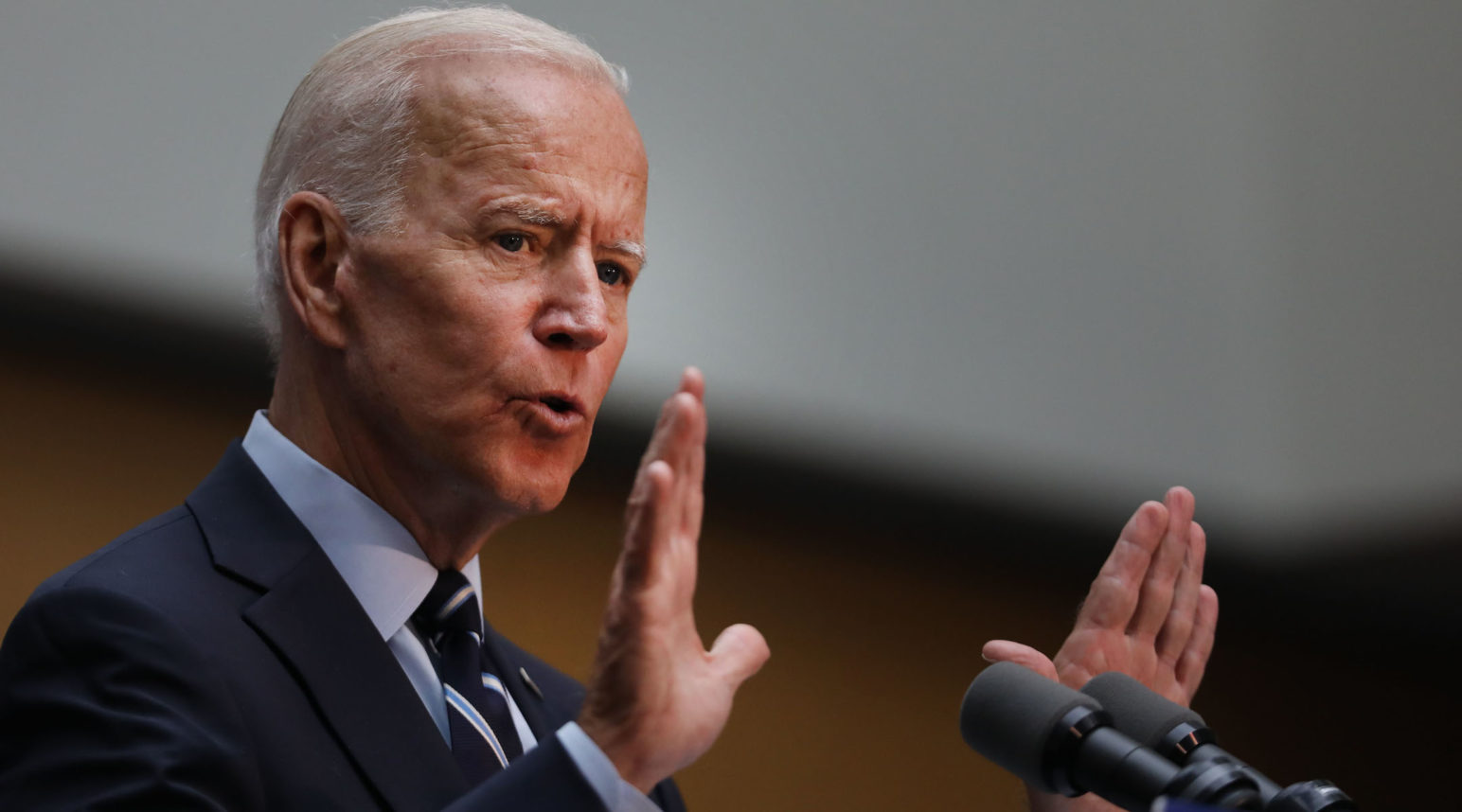
Former Vice President Joe Biden gives a speech on his foreign policy plan in New York City, July 11, 2019. (Spencer Platt/Getty Images)
Schonfeld mentioned a column by Ruth Marcus, a Jewish Washington Post opinion writer who wrote a book about the sexual assault allegations in 2018 against then-Supreme Court nominee Brett Kavanaugh.
“My gut says that what Reade alleges did not happen,” Marcus wrote two weeks ago. “My head instructs that it is within the realm of possibility, and fairness requires acknowledging that.”
Marcus listed inconsistencies in Reade’s story as she has told it over the years and, at the time her article was published, the lack of corroborating evidence. Since the latest evidence, Marcus has not delivered an opinion.
In the Business Insider story posted Monday, Lynda LaCasse, a neighbor of Reade’s in the mid-1990s, recalled her describing the assault at the time with the same details Reade first described in March. Prior to LaCasse speaking out, other associates of Reade had less specific recollections of Reade describing an incident or spoke anonymously.
Biden’s campaign continues to categorically deny Reade’s claim, adding that “women have a right to be heard — and heard respectfully,” but also that the allegations “should also be diligently reviewed by an independent press.”
Halpern, 23, said in an interview that she would vote for Biden to oust Trump “if that’s what it takes,” but she wanted a more honest accounting from Biden and his supporters.
“The problem for the Biden campaign is not that women are uplifting these increasingly well-sourced allegations, the problem is that Biden may have committed sexual assault,” she said. “There is a difference between being willing to support Biden in a general election against Trump, and even to campaign for him — which I am willing to do if necessary — and writing glowing articles about his character and supporting him specifically from the position of being a Jewish woman and feminist.”
Lowey, the New York Democrat who is retiring this year and 30 years ago helped lead the charge against the confirmation to the Supreme Court of Clarence Thomas, who was accused of sexual harassment, did not return a request for comment.
Biden as a senator and then as vice president to Barack Obama was closely identified with some of the key feminist gains of Lowey’s generation, helping to author the Violence Against Women Act and advance equal pay initiatives. For Schonfeld, that makes backing him a no-brainer.
“We are looking at every issue that is a threat to women’s health, well-being, equality, economic equality, everything that will keep women safe and alive – Joe Biden is a leader on that,” she told the Jewish Telegraphic Agency.
Biden’s record with women is not unblemished. Feminists still criticize his handling of the 1991 Thomas hearings, which he chaired, saying that he did not protect Anita Hill, Thomas’ accuser. Last year he apologized after multiple women, including, Reade, accused him of unwanted touching.
“As someone who has enthusiastically volunteered for both Obama and Clinton, I’m not yet at a point where I feel comfortable actively campaigning for Biden,” said Michaela Brown, 25, a rabbinical student at Hebrew College in Boston. “If it appears that the Biden campaign begins to take steps towards appropriately, honestly addressing his alleged history of sexual violence and harassment, I will reconsider.”
Evangelical Christians back Trump because they see him as a vehicle that advances their moral priorities, including restrictions on abortion and loosening strictures on church activism in public life. He does not need to be a model of morality himself, they argue.
WILMINGTON, DELAWARE – APRIL 08: In this screengrab from Joebiden.com , Democratic presidential candidate and former U.S. Vice President Joe Biden speaks during a Coronavirus Virtual Town Hall from his home on April 08, 2020 in Wilmington, Delaware. Senator Bernie Sanders announced that he is dropping out of the Democratic presidential race leaving Biden as the presumptive Democratic nominee. (Photo by JoeBiden.com via Getty Images)
Rabbi Avi Strausberg, who has conducted sessions for Jewish officials in Washington on moral behavior in a political setting, said that distinction might not apply in Jewish theology.
Should one seek moral leadership from a pure figure, or should one be able to learn from an impure figure while employing one’s own sense of morality to distinguish the good from the bad? Talmudic figures grapple with both paths, she said.
Strausberg, who teaches at Hadar, a New York-based institution for Jewish study, said that in the modern context, the type of person in question is key: One could seek truth from a scientist who has transgressed, but probably not from a rabbi.
That question becomes more confounding with a politician.
“It’s a tough question, they are governing but also serving as moral leaders,” she said without commenting directly on the Biden allegations.
Some feminists are wary of the allegations because they seem to have been instrumentalized by Trump defenders to neutralize the allegations against the president.
“The one thing I have little doubt about is the bad faith of those using this strange, sad story to hector feminists into pretending to a certainty they have no reason to feel,” Goldberg said in her New York Times column.
Katie Halper, the Jewish podcaster who first aired Reade’s allegations, said keeping Reade at arm’s length as a means of electing Biden is “shameful.”
“Tara wants Biden to step down, understandably, as do others who see him as a disastrous candidate,” Halper, who backed Biden’s rival Bernie Sanders in the primaries, wrote last week in the Guardian. “Others wish Tara had been listened to before Biden was the last man standing, but now see no alternative. Both positions are understandable and neither should be shamed. But what is shameful is ignoring or belittling Tara because it’s politically inconvenient to grapple with her story.
“We are in an excruciating situation with no easy solutions.”
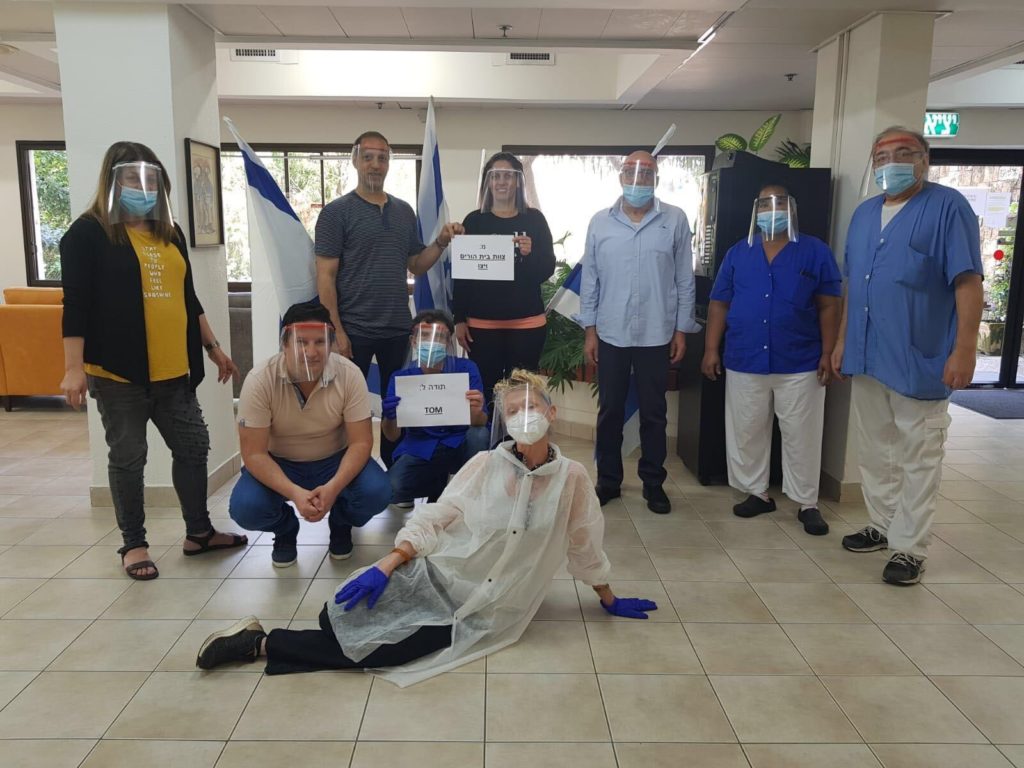
Israeli-based non-profit TOM (Tikkun Olam Makers) is one of a myriad of groups providing affordable solutions during the coronavirus pandemic to people living with disabilities, the elderly and the poor.
Founded in 2014, the non-profit organization was designed to help people who were structurally marginalized. Over the years, TOM has established communities in over 22 countries, including the United States. With the outbreak of the coronavirus, TOM decided to refocus its efforts into making specific supplies during the pandemic.
“One of the things we observed is a lot of the focus of people providing solutions has been on hospitals and emergency rooms,” TOM Founder and President Gideon Grinstein told the Journal. “But really there is a whole set of institutions. At TOM we call them second-circle institutions that have acute needs. Homes for the elderly, mental health facilities, jails and so on. Also institutions [that] are taking care of those with disabilities. In these places, a regular face mask may not work.”
TOM communities have designed and curated a list of solutions including various types of face masks, face shields, hands-free door openers, protective gowns, ventilators and hand sanitizer designed for those with disabilities and for essentials workers on the frontlines.
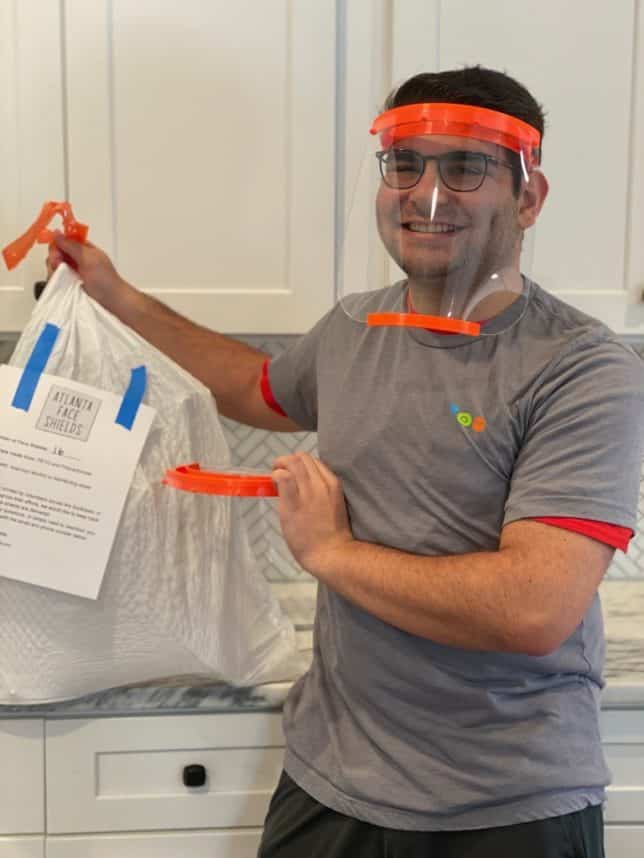
In New York City, TOM launched a partnership with Skill Mill NYC in Manhattan, and Rodeph Sholom School to print personal protective equipment (PPE) for local hospitals and health facilities. As of April 20, 100 face shields had been delivered to The New Jewish Home in New York’s Upper West Side and Mount Sinai East hospital. In Atlanta, TOM partnered with Atlanta Face Shield, led by TOM Northeastern Community Manager Max Seidel, to manufacture and distribute face shields for hospitals in Georgia. To date, they have manufactured 4,000 face shields and raised over $9,000 to fund their costs. In Miami Beach, TOM: Florida International University has completed the manufacturing of 1,000 face shields, which will be distributed to Baptist First South Florida, a health care network with seven hospitals in the Miami area.
Max Seidel, of Atlanta, Georgia, leads the TOM Community in Northeastern University. Max immediately made face shields for frontline workers. Photo by Max Seidel
In order to make their resources easily accessible around the country, TOM has built an online library of COVID-19 Solutions,and launched a plan for local governments to use and modify for their specific communities.
TOM communities use 3-D printers (on Amazon they run $300 US dollars) so they can manufacture as many products as needed, which then go directly to the community without having to deal with mail carriers. “The only way to address the need in an affordable manner is with local 3-D printers,” Grinstein said. “The software that allows us to design products, to deliver [them] to communities, is essential.”
He added, with TOM communities in 22 countries including Israel, Singapore, Kazakhstan, Greece and the United States, with a click of a button blueprints can be sent to local communities where they can then mass-produce COVID-19 supplies.
One of TOM’s first projects was designing the PJ Prosthesis Violin Module — that enabled an Israeli violinist born without her left arm to play bowed string instruments. The device costs less than $60. By comparison, a typical hand prosthesis can cost from $5,000 to $50,000.
Grinstein noted that while many of their inventions are original, sometimes the only difference between their prototype and a competitor’s is the price. “Anybody can go to the website, download the design and create their own prosthesis [using a 3-D printer] at a local school, a university, a local maker space and so on,” he said.
To date, TOM has more than 1,000 volunteers; has created 14 COVID-19 products with 25 available prototypes; 28,276 total units have been delivered by TOM communities since April 1; and 10,271 units are currently in production.
Home base for TOM will always be in Israel but the humanitarian venture has become global with the use of social media primarily on Facebook, Instagram and Twitter. Social media are also where the organization learns that a new city or country needs a TOM community.
With positive communication on social media and societal changes as whole to include people with disabilities, Grinstein said nonetheless TOM still sees pushback from certain countries that don’t want to acknowledge second-circle institutions in their plans. He said some countries still see it as a source of shame rather than going public and making a difference. He added the only way a community can thrive is if “healthy abled people are interacting with people with disabilities on an equal footing.”
Grinstein noted that each new innovation starts with a “need knower” who has a specific need that has to be fulfilled by a TOM product.
“We say to peers all around the world, ‘Find your need knower. Find a person that has a real need.’ Then around them build a team of innovators, engineers, programmers, product designers that can work with the need knower to develop the product. Find the need, call up the talent, bring them together and let them engage. This is the secret sauce.”
Grinstein said pivoting in times of crisis can be hard for all types of businesses. But like TOM, organizations need to change the way they do things in order to stay relevant.
“You have to have a team that is very cohesive, a team that has shared values otherwise it is very difficult to make these pivots,” he said. “Now especially when we are doing it from a distance. We are lucky to have a team in place and a shared comprehension of our mission and our purpose.”
CORRECTION: TOM is a 501(c)(3) not for profit organization. An earlier version of this story implied they were a company.
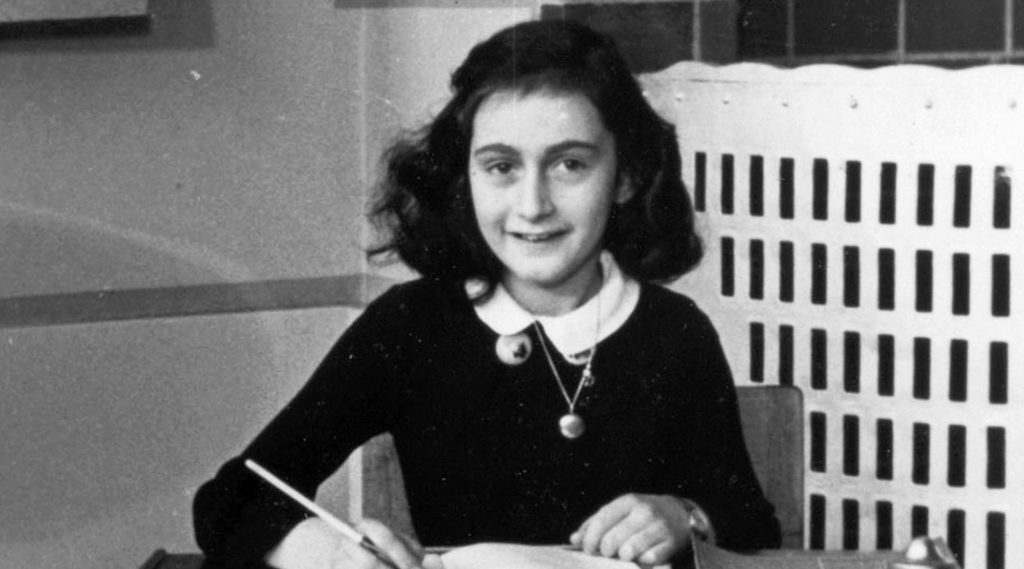
AMSTERDAM (JTA) — Young supporters of the Dutch right-wing Forum for Democracy party shared memes of Anne Frank snorting cocaine and anti-Semitic remarks in internal correspondence.
The HP/DeTijd magazine reported Wednesday on the contents of the WhatsApp group of some supporters of the Forum for Democracy’s young adult department. The party is the second-largest in the Dutch senate with 10 of the 75 seats.
The meme uses a well-known portrait of Anne, a Jewish teenage diarist who died in a German Nazi camp in 1945 after spending two years in hiding in Amsterdam with her family, of her smiling while looking up.
In the meme, it is preceded by an image of a similar-looking girl appearing to snort white powder from a spatula, creating the impression that Anne’s smile is connected to drugs.
In another message, one user wrote: “Jews are incredibly afraid of Whites. That’s why all the news organizations, led predominantly by Jews, are so busy spread anti-White rhetoric.” It was an answer to the question: “What is their interest in weakening us?”
Other remarks praised National Socialism and Anders Behring Breivik, a Norwegian ultranationalist who in 2011 killed 69 participants of a socialist event.
In a statement, Forum for Democracy called the remarks “ridiculous and damaging.” Of several authors of offensive texts, only one was officially a member and was suspended of any leadership role pending a review, the Forum said.
Forum for Democracy, led by 37-year-old lawmaker Thierry Baudet, seeks a Dutch exit from the European Union and stricter immigration policies.
We could all use a good laugh. Especially now while many of us are secluded in our homes, far away from our loved ones, with nothing better to do but watch Too Hot To Handle on Netflix. True story. Don’t watch it unless you want to feel a strong, deep, unshakable sense of shame.
If only there was an Israeli English speaking comedian who would agree to risk her life and come to our studio, to boost the national morale and give hope to our listeners around the world. How amazing would that be?
Well, unfortunately we couldn’t find anyone like that, so that’s that for today’s episode guys, stay safe! Bye!
Just kidding.
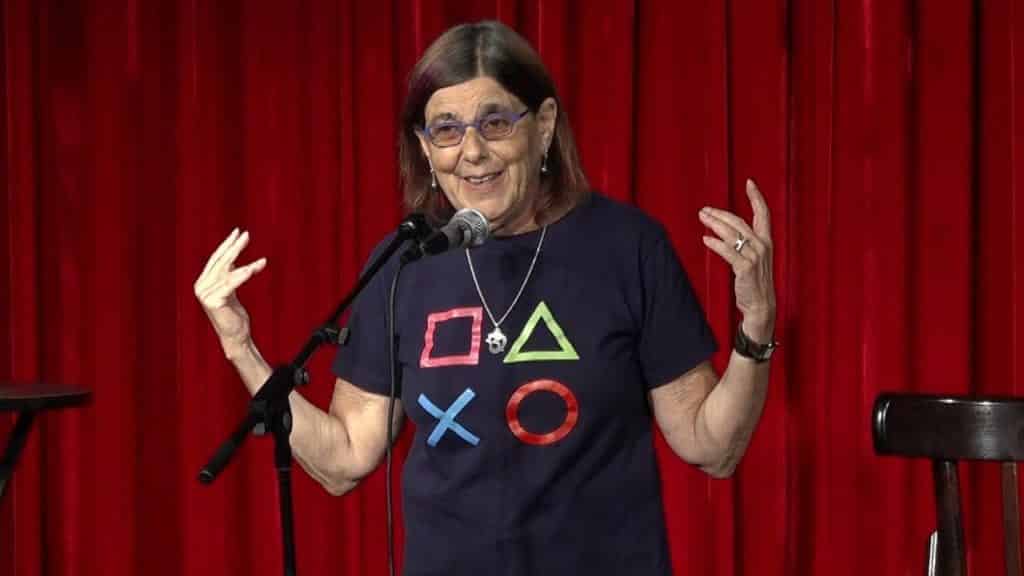
We have the perfect comedian for the job right here with us. Her name is Kandi Ableson, she’s American, she made aliyah, she’s a superstar in the local comedy clubs doing stand up IN HEBREW, at least she was when going out and comedy clubs still existed.
We’re delighted to have Kandi on the show with us today, and a quick disclaimer – this episode might include profanities!
Reflections on the Israeli miracle, and a conversation with Leora Raikin on the power of art to convey the Jewish story.
How do we manage our lives during the Coronavirus crisis? How do we keep our sanity? How do we use this quarantine to bring out the best in ourselves? Tune in every day and share your stories with podcast@jewishjournal.com.
Thank you God for Israel. Thank you God every day for the miracle of Israel that my ancestors longed and prayed for. Thank you for the miraculous salvation and the start of the Great redemption of Israel and the world.
God, protect the defenders of our Sacred land armed with rifles and prayer books. Protect Israel from baseless hatred from our enemies and ourselves.
God, Raise up Israel as a light unto the nations bringing peace and salvation to the world.
God, although we are not deserving, we are impatient. The birth pangs of Redemption are painful and we pray for an end of these 2,000 years of waiting.
Lift up our weary spirits. Fulfill your promise today. Gather the rest of your dispersed children of Israel who are spread to four corners of the Earth. Gather those who are spiritually distant. Gather those who have forgotten You. Gather those who don’t know who they really are. Gather those who love You and those who don’t recognize You.
God, You show us the signs of this impending redemption with Israel’s flowering, miraculous technology, and the bountiful harvest. Look God and see what I see — the hills and valleys, study halls and houses of prayer, rising buildings and tech start-ups — Israel is blooming. The barren sand is turning to soil. The fertile land overflowing with ripe fruit and fragrant honey. Your precious and Holy Torah once again emanates from Zion to the rest of the world.
God, make this the appointed time. Sound the great shofar for the redemption. Raise the banner of freedom; raise the banner of liberation; raise the banner of justice; gather us today from the ends of the Earth. Please God, resist being dissuaded by our narrow vision because deep down we know Israel is our spiritual home. You know because You engraved it on our hearts. Our souls yearn for home. Our souls year for redemption. Our souls yearn for peace and unity, for harmony and salvation. Redeem Your people. Why make us wait any longer?
Blessed are You, who gathers together the dispersed People of Israel. Amen, selah.
Benjamin Schaeffer, a 57-year-old Orthodox Jew and conductor for New York City’s Metro Transit Authority (MTA) who thwarted a terror attack on the subway in 2018, died from complications of COVID-19 on April 28.
The Bay Democrats, a Democratic Party club in Brooklyn, broke the news on its Facebook page.
“Bay Democrats club regrets to inform you that our long time member and community activist Ben Schaeffer, [Transport Workers Union] local 100 member and train conductor, passed away today in Maimonides Hospital from COVID-19,” they wrote. “Ben was a great caring person who brought a lot of energy and enthusiasm to every club meeting. We will always remember him. Sincere condolences to his family, colleagues and friends.”
Schaeffer’s girlfriend, Lisa Smid, who currently resides in Nashville, Tenn., told the Brooklyn Reporter that she was worried when she couldn’t get a hold of him for seven straight days during Passover. On Yom Tov, she learned that Schaeffer had been hospitalized with COVID-19 and was on a ventilator.
In October 2018, MTA passengers alerted Schaeffer to a man pouring gasoline on the floor of the train Schaeffer was working. Schaeffer immediately ordered people to evacuate the train; the man was eventually arrested. Schaeffer received a Medal for Excellence for his actions.
“I had to act fast,” Schaeffer told NBC New York. “I told everyone just, ‘Get outta the car.’ No pleasantries. No courtesy. It’s an emergency situation, just get outta the car.”
Additionally, in September, the MTA told Schaeffer he needed to provide documentation to show that he needed take time off to celebrate Rosh Hashanah. The MTA backtracked when Schaeffer contacted his union.
“This request was received after all leave slots for this day and job title had been distributed, but the supervisor involved made an exception for Mr. Schaeffer and granted him the day off,” the MTA said in a statement at the time. “This issue has been reviewed by NYC Transit supervision and no documentation will be requested in this case of Mr. Schaeffer.”
Schaeffer told News 12 that the MTA’s request for documentation was “degrading, it’s humiliating, it’s uncalled for and I just can’t see anyone ever having to be subjected to this. Not in New York City where we’re the most diverse city, I think, in the world.”
As of this writing, there are around 162,000 confirmed COVID-19 cases in New York City and 12,509 deaths from the virus.
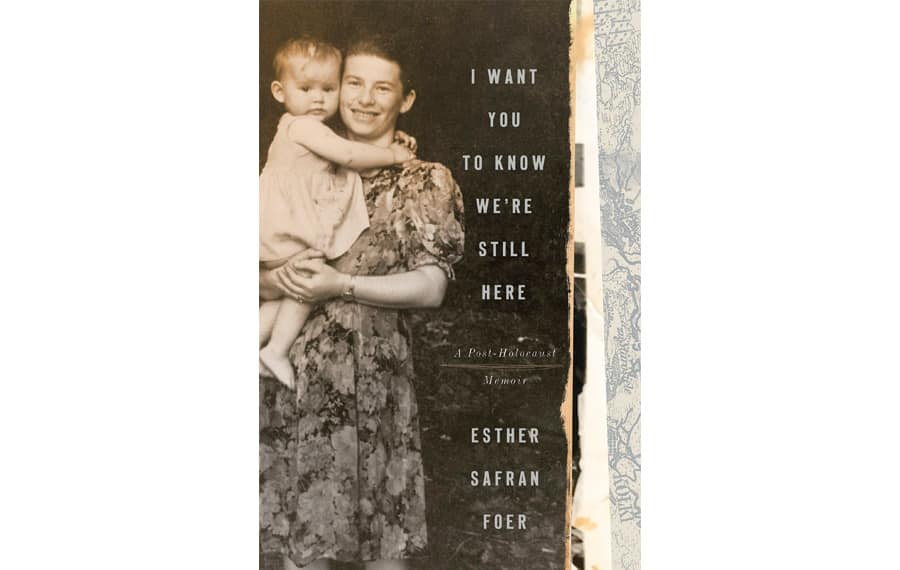
Among Esther Safran Foer’s distinctions is that she is the matriarch of America’s first family of Jewish-American letters. Her three sons are Jonathan, Franklin and Joshua, each one a best-selling author. Now that she tells her own story in “I Want You to Know We’re Still Here: A Post-Holocaust Memoir” (Random House/Tim Duggan Books), we see for ourselves where the literary DNA of the Safran family originated.
According to her birth certificate, Esther Safran was born Sept. 8, 1946, in a German town called Ziegenhain. “It’s the wrong date, wrong city, wrong country,” she reveals. “I am the offspring of Holocaust survivors, which, by definition, means there is a tragic and complicated history.”
Foer discovered her father was married to his first wife and had a daughter when Nazi Germany invaded the Soviet Union, and the Germans murdered both the wife and daughter. To put a name to her long-lost half-sister, she hired researchers in Ukraine and an FBI photo analyst in the U.S., and conducted online DNA searches, but the efforts were unavailing. Even Jonathan Safran Foer’s journey to her father’s supposed birthplace in Trochenbrod, Ukraine, which inspired the novel “Everything Is Illuminated,” failed to confirm any facts about her father or his firstborn daughter.
“Of the person closest to me killed in the Holocaust,” she writes of her half-sister, “I had not one detail, not a name, not a picture – not one piece of memory.”
The success of Jonathan’s novel ultimately prompted Esther to undertake a firsthand investigation of her own. “Like the character in Jonathan’s novel, I armed myself with maps and photographs and eventually boarded a Lufthansa fight to Ukraine in 2009,” she explains. “I set out to let my ancestors know that I haven’t forgotten them. That we are still here.” As it turns out, she succeeds magnificently in her mission.
“I set out to let my ancestors know that I haven’t forgotten them. That we are still here.” — Esther Safran Foer
Foer describes in rich detail the lives of her maternal relatives and even the circumstances of her mother’s first romance, but her father’s biography required years of arduous and frustrating research. “The more I learn, the less I know,” she writes. Thanks to the meticulous record-keeping of the Germans, however, she is able to state with precision that 20 men from Einsatzgruppe C arrived in Trochenbrod Aug. 9, 1942, and started to shoot the Jewish men, women and children who lived there. At the end of the aktion, only 60 Jews remained alive. Among those who managed to escape was her father, who had been sent to a ghetto in another town.
A few days before the defeat of Nazi Germany, Foer’s mother and father were married in Lodz. Even though Foer possesses their ketubah, the date of the wedding is yet another mystery, although she discovered she was born in Lodz on March 17, 1946, and that she was named for her “two murdered grandmothers,” Esther and Brucha. A family photograph reveals where Foer and her parents ended up — a DP camp in Germany. By 1949, they reached America, and her father died there five years later.
As she grew up, Foer quickly realized her father’s wartime experiences were something not to be talked about. “His death became part of the family canon of unspeakable stories that were to remain buried in the past,” she recalls. So dangerous was the subject that “I don’t remember saying my father’s name out loud after he died.” Even the cause of death was a mystery Foer only solved years later when she came across the letters he left behind, all written in a combination of Yiddish and English the family called “Yidglish.” As Foer now understands, even though the suffering and loss were never mentioned, their experiences distorted not only the lives of her parents but her life, too.
“I found myself rebelling against my mother’s habits of deprivation,” she recalls. “Who could blame her, this woman who once stole potatoes and hid them in pockets of her pants to survive? I, in turn, reacted to her behavior by adding a little too much extra everything. I wanted to embrace life, not to scrape by, not to live in the shadows.”
At moments, Foer’s memoir strikes sparks of humor. During the chaotic days after the war, Foer’s mother was forced to deal with a flirtatious fellow passenger on a train to Kiev, but her concern was not a matter of propriety; rather, she was worried he might detect the gold coins she was smuggling under her clothing. More recently, her mother joined Jonathan on a national television broadcast to teach Martha Stewart how to make matzo balls. “In the green room, before the show began, she told the staff that she had survived Hitler, only to have them quip, ‘Well, then, you can survive Martha.’ ”
Above all, however, Foer’s book is an intimate detective story, full of twists and turns, as the author digs ever deeper into her father’s past and draws ever closer to the moment of truth. While visiting the site of the mass murder that took place in Trochenbrod, someone shows her a Russian translation of Jonathan’s best-selling book. But we are never allowed to forget that Foer’s memoir is an account of
real life, and unlike the fictional character in Jonathan’s novel, Esther Safran Foer ultimately comes face to face with the
forbidden facts she sought to retrieve
from history.
To borrow a phrase from the title of her son’s novel, everything is illuminated in the pages of “I Want You to Know We’re Still here.”
Jonathan Kirsch, author and publishing attorney, is the book editor of the Jewish Journal.