fbpx

April 18, 2020

Israel’s Military Intelligence Technological Unit Pioneers New Way to Make Ventilators

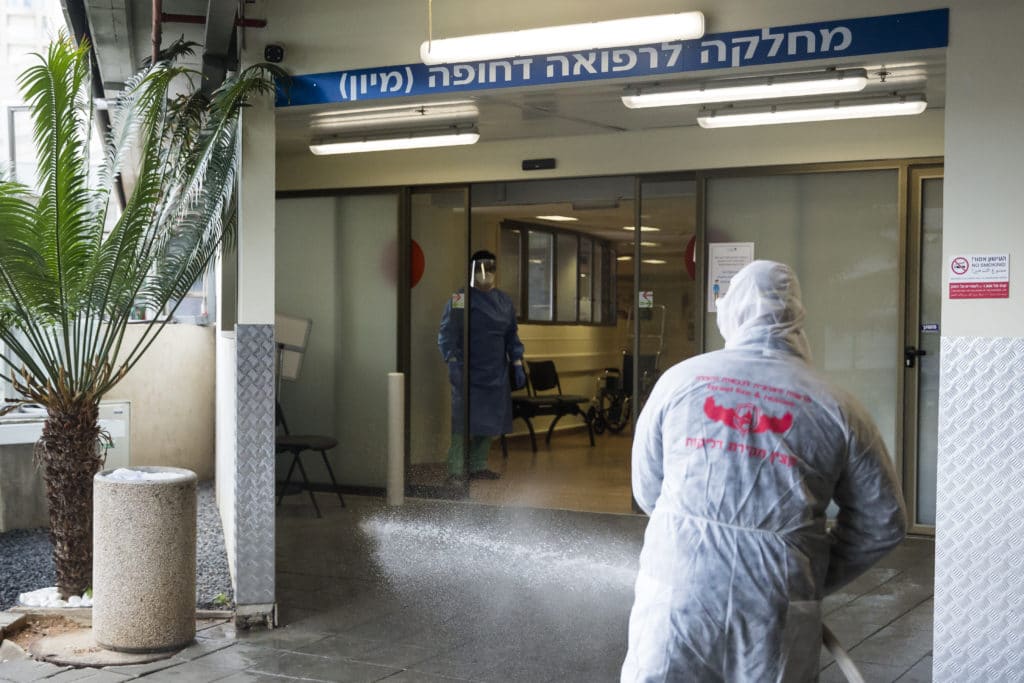
An elite technological unit in the Israel Defense Forces has pioneered a new way to convert non-invasive ventilators, commonly available in homes and medical centers of respiratory patients that are not in critical condition, and turning them into advanced invasive ventilators that are well-suited to treating COVID-19 patients.

The hospital-grade machine has been developed as part of Project Breath of Air, led by the Military Intelligence Directorate’s Unit 81, and the Sheba Medical Center at Tel Hashomer.

“After four weeks of intensive work, we finished the development of the first respiratory machine,” Maj. S., of Unit 81, told reporters by conference call on Thursday. “We found ourselves part of the Israeli efforts to deal with the challenge of a lack of hospital ventilators. We brought our top engineers from the unit to solve this problem.”

A series of trials found that the newly converted machines have the necessary capabilities to treat critically ill COVID-19 patients. The Health Ministry has ordered 1,000 machines, which are being produced by Unit 81.

The prototype was tested on an advanced simulator that recently arrived at the Sheba Medical Center in Tel Hashomer, the officer said. “We are delivering 100 machines this Sunday to Sheba,” he added. “We’re manufacturing 100 per day, this is our baseline.”
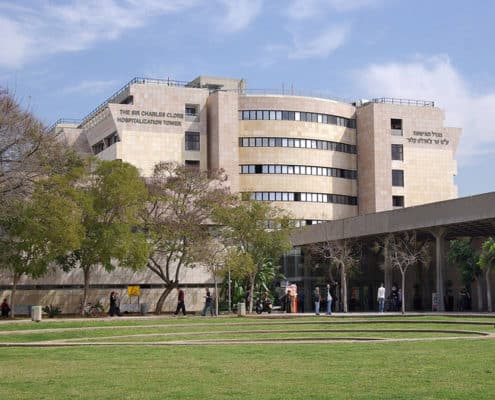
Sheba Medical Center. Tel Hashomer. Credit: Courtesy.

Unit 81 added a number of capabilities to the machines to reach its breakthrough. These include a highly sophisticated monitoring system that “gives doctors all of the information about oxygen, pressure and flow that is needed, together with an alert system, which will help the doctor deal with a few patients at the same time. The second property is filtering the patient’s air to the room [to avoid infecting medical personnel]. The third one is merging invasive ventilation with high flow oxygen, which you have to include in your solution if you want to deal with hard cases of corona patients. Last, but not least, is the communication system, which is connected to the hospital data system and the emergency monitors, to give information about all of the patients to the staff of the hospital,” said Maj. S.

“This breakthrough has the capacity to create a global shift in the fight against coronavirus,” he added. “That’s why Unit 81 and Sheba hospital believe in this.”

‘Solve each piece of problem with creative solutions’

Dr. Amit Zabtani, who is heading the project at Sheba Medical Center, added that Israeli authorities “will be more than happy to share our knowledge with other countries” over how to convert commonly found non-invasive respirators into frontline tools in the war against the coronavirus pandemic.

During normal times, Unit 81 provides technological solutions for special forces, but these days, its personnel worked closely together with doctors on the new machines.

“Our slogan is knowledge, willingness and devotion makes the impossible possible,” explained Maj. S. “But in this case, it’s not just a slogan because the 150 people worked on this project  in the last four weeks, 24-7, together with dedicated doctors, showing us that the impossible is possible. We took the problem as we take every problem in our regular professional daily work. We break every problem into small pieces and try to solve each piece with very creative solutions.”

Zabtani said the central objective was making sure that no patients find themselves without ventilators, trying to prevent such a shortage.

Non-invasive machines can provide one or two pressure levels, but are not designed to treat patients suffering from acute respiratory distress syndrome.

Since COVID-19 patients are extremely hard to ventilate, keeping them alive with special support led to a need for as many invasive ventilators as possible. “This model gave us sensing and the monitoring vital signs of our critical patients,” he added. “We took non-invasive ventilators like CPAP and BPAP machines, and added the ability to monitor and sense the patients. We are now able to ventilate invasively with the project.”

Assisting Israeli-Arab communities during pandemic

Meanwhile, the Defense Ministry announced on Wednesday that its Directorate of Procurement and Production, together with the Israel Defense Forces  and Foreign Ministry, announced that it had secure a shipment of reagents—chemicals needed for COVID-19 tests—that are sufficient for 100,000 kits. The reagents arrived on a cargo flight from South Korea and were delivered to the Health Ministry’s testing labs.
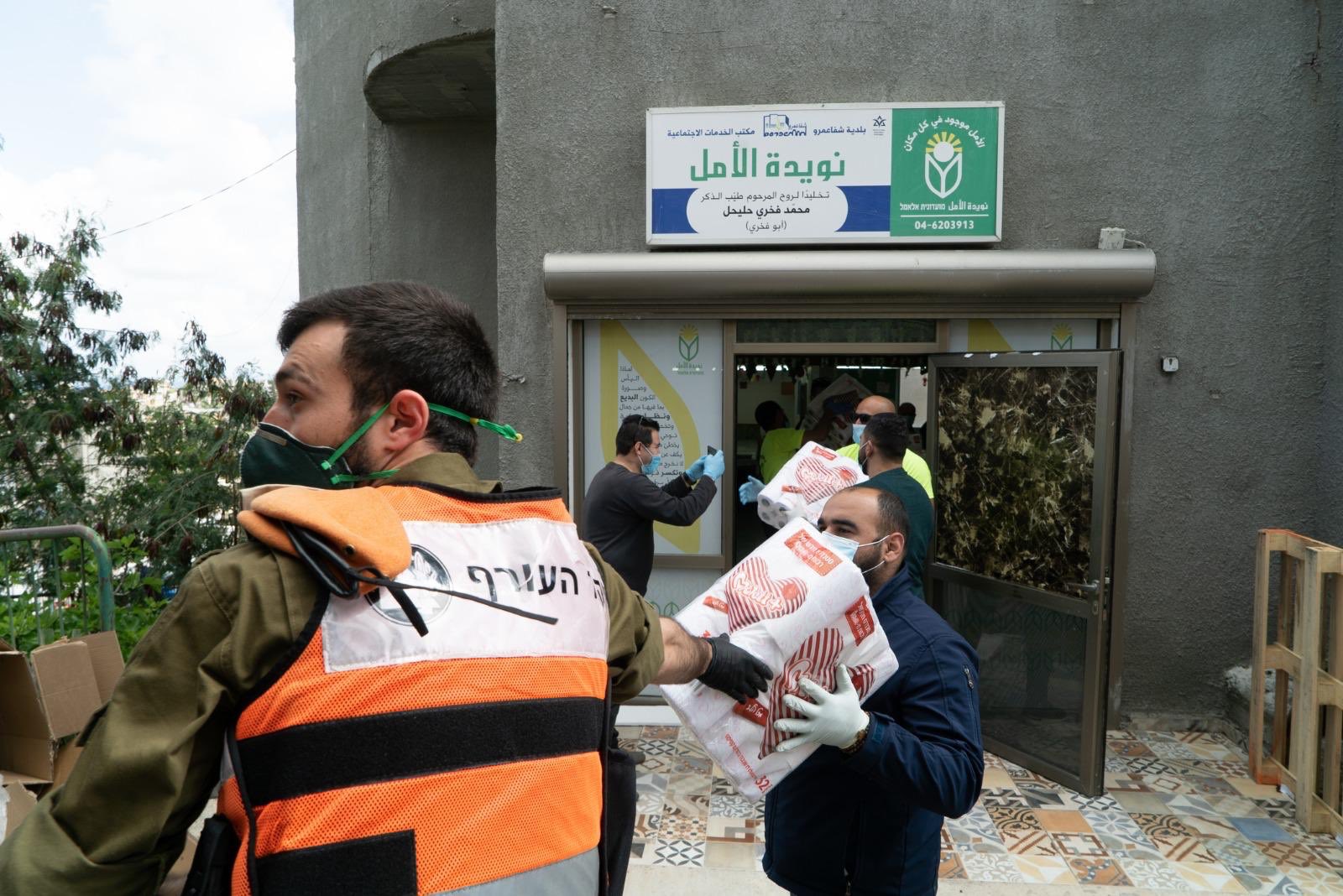
Soldiers in the Israel Defense Forces distribute meals to Israeli-Arab communities. Source: IDF via Twitter.

Separately, the IDF Home Front Command has in recent days stepped up its assistance to Israeli-Arab civilians across the country. The military distributed more than 185,000 meals in Israeli-Arab communities over the past two weeks, and recruited 80 reservists to assist Arab municipalities.

“Over the past week, approximately 3,000 hygiene kits were distributed in Bedouin communities in the Negev. Among other products, the kits include information brochures in Arabic, offered by the Ministry of Health. This was led by the Home Front Command’s Southern District and in cooperation with the Bedouin Administration,” said the IDF Spokesperson’s Unit.

It added that the Home Front Command “launched a national emergency portal in Arabic in order to provide Israeli Arabs with accessible information.”

In addition, four mobile Magen David Adom drive-through facilities were opened with the assistance of the Home Front Command in regions of eastern Jerusalem, Jisr az-Zarqa, Fureidis and the Bedouin town of Rahat in southern Israel.

Israel’s Military Intelligence Technological Unit Pioneers New Way to Make Ventilators Read More »

How To Mark Yom Hashoah, Holocaust Remembrance Day, At Home

As the Jewish world continues to confront growing ethical, practical and moral questions surrounding the coronavirus, the Tzohar rabbinical organization is calling on people all over the globe to commemorate Holocaust Remembrance Day on April 20-21 with individual ceremonies in their own homes.

The organization is specifically suggesting a format of candle-lighting and reading of texts that will be accepted as a traditional Jewish commemoration of the day. At present, while Yom Hashoah is observed across the world, there are no universally adopted personal Jewish traditions that mark the day.

“Holocaust remembrance is becoming increasingly challenging due to the passing of more and more survivors, so we need to be extra careful to ensure that this year is marked with an appropriate observance that takes the obvious challenges into account,” explains Rabbi David Stav, founder and chair of Tzohar.

Tzohar is therefore calling upon people to hold individual commemorations in their homes, marked by the lighting of six memorial candles followed by the recitation of the “Kel Maleh” memorial prayer and “Nizkor,” a poem written by Abba Kovner.

Kovner survived the Vilna Ghetto and fought as a partisan before becoming one of the most respected poets of modern Israel. The texts will be available on the Tzohar website.

“The Shoah represents the worst of national tragedies for the Jewish people in modern times and therefore demands to be recognized in a formal way that is in line with traditional modes of Jewish practice and memorial,” says Stav.  “Our hope is that what will begin this year under these difficult circumstances will become accepted throughout Jewish communities all around the world for years to come and serve as a fitting way to remember and mourn.”

How To Mark Yom Hashoah, Holocaust Remembrance Day, At Home Read More »

First Yahrtzeit of Chabad of Poway Shooting Victim Observed in Solitude

For thousands of synagogues across America, Passover marked the first time in history that their doors were closed for Yizkor. For Chabad of Poway in Southern California, it was the second time.

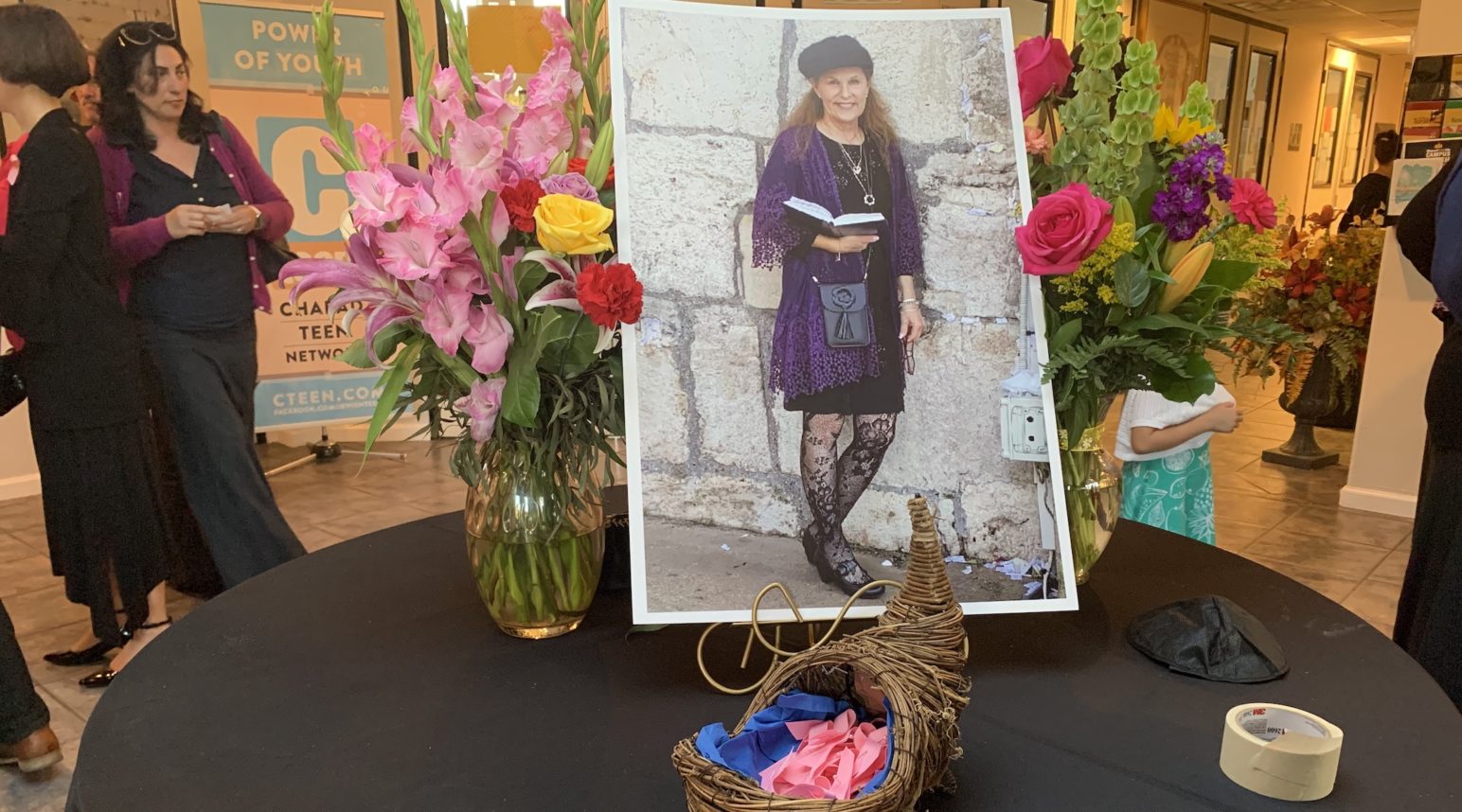
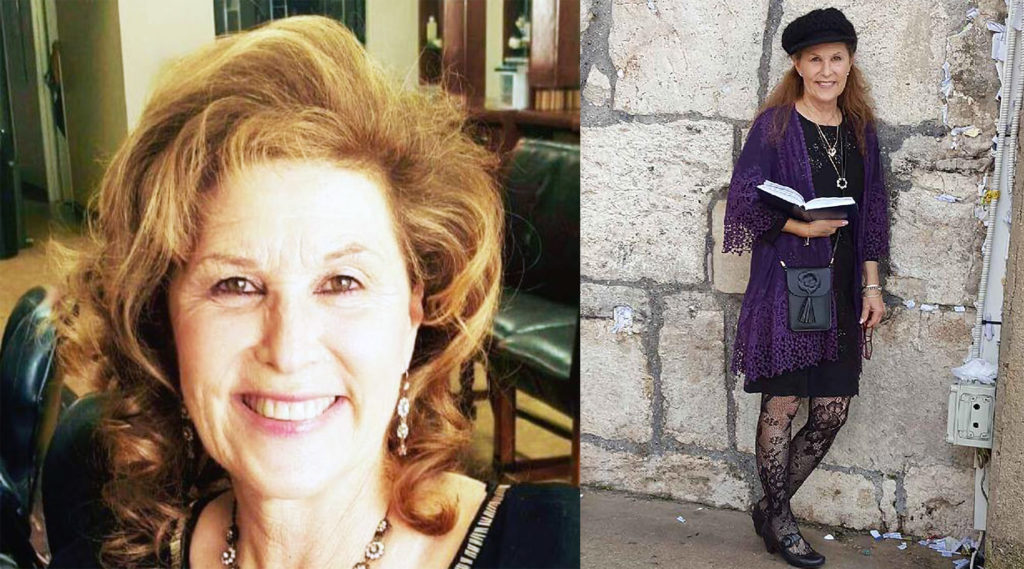
One year ago, as the Torah was being read on Shabbat morning, just moments before 60-year-old Lori Kaye planned to join the congregation in saying Yizkor for her mother, a lone gunman entered the synagogue lobby and shot her, killing her on the spot. As scores of first responders converged on the scene, services came to a halt. The Chabad center was closed, with congregants made to leave.

A photo of Lori Gilbert-Kaye at the Chabad of Poway, Calif., May 3, 2019. (Gabrielle Birkner)

As Poway’s Jewish community prepared to mark her first yahrtzeit, their synagogue is again shuttered—this time to help slow the spread of the coronavirus. Hundreds of Yizkor services, however, still took place in private homes.

For Rabbi Mendel Goldstein, who has stepped into the role of Chabad of Poway’s rabbi in place of his father, Rabbi Yisroel Goldstein, who was permanently injured in the attack on April 27, 2019, it brought to mind the aftermath of that horrific day.

“A few dozen congregants joined me in my home, where we concluded the service,” he said. “By the time we reached Yizkor, we had received the terrible news that Lori was no longer among the living, and we recited the memorial prayer for her mere hours after she passed away.”

Poway’s Jewish community united, rallying around their synagogue and lost congregant. Hundreds attended a funeral service remembering a woman who thought of others before herself. Communities around the world remembered Kaye by going to synagogue on Shabbat, putting on tefillin, lighting Shabbat candles and responding to evil with acts of goodness.

Flowers, cards, candles and heart shaped posters left by locals at the corner of Summerfield and Espola across the street from Chabad of Poway in San Diego. Photo by Oren Peleg.

Just weeks after the shooting, the community gathered to dedicate a Torah scroll in Lori’s memory. The final letter was written by her husband, Howard.

In Poway this year, there were no yahrtzeit gatherings and no communal Yizkor services while congregants are home to save lives amid the COVID-19 pandemic. But on Thursday morning, Goldstein walked to the synagogue in solitude in compliance with social-distancing measures. He opened the aron kodesh, the holy ark, touched Lori’s Torah and said a prayer for her, and for the family and community she left behind.

This article originally appeared on Chabad.org/News.

First Yahrtzeit of Chabad of Poway Shooting Victim Observed in Solitude Read More »

Rutgers University Student Government VP Instigates Anti-Semitism Online

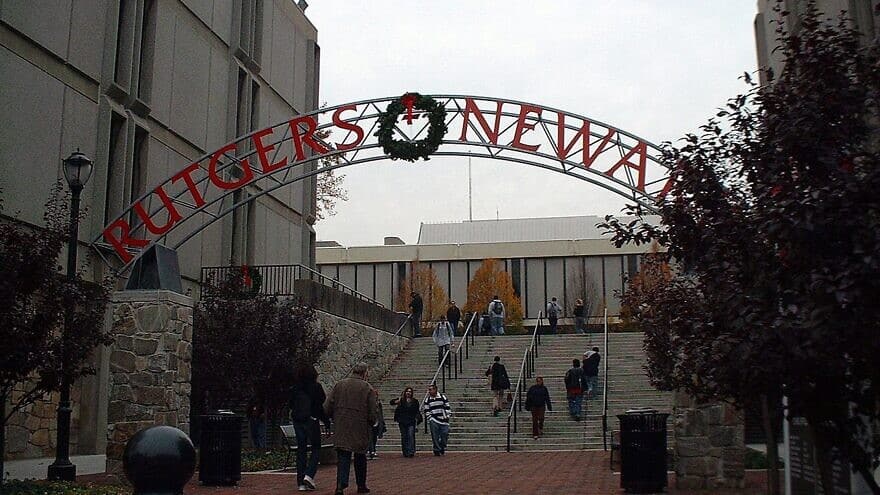
A Palestinian student who was elected this month as vice president of the student government at the Newark campus of Rutgers University has a history of posting anti-Israel and anti-Semitic content on social media.

Carolyn Assaf, a pre-med student, once posted a since-deleted 15-second cartoon video on Instagram of what appears to be an Israeli soldier with a long nose, exemplifying a Jewish stereotype, preventing what appears to be a Palestinian Muslim woman from entering the Al-Aqsa Mosque in Jerusalem’s Old City. In the full video, the woman curses the soldier as “son of a Jewess.”


Assaf retweeted a March 2015 post that read, “I stand for Gaza, I stand for Palestine. I stand against oppression. End the media blackout.”

Gaza is controlled by Hamas, a U.S.-designated terrorist group, and has had ongoing issues with the Palestinian Authority, which runs Palestinian areas in the West Bank and parts of Jeruslaem.

The following May, she tweeted, “Our stones and rocks are more powerful and stronger than their weapons!”

The following August, Assaf posted in Arabic, “I will not give up, I will not give in, and my country is yours. No, I bargain #Palestine #Jerusalem #Nablus #The right to my weapon #Palestinian #Caroline_Assaf.” The words accompanied a post of a little boy with what appears to be an automatic firearm with the caption “The right is my weapon and I will resist. Over my wounds I will resist.”

The following November, she posted also in Arabic, “I am an olive, a story about a nation, a people, and freedom ~ Revolutionary as the female revolution.” The words were in reference to a picture of a female Palestinian fighter holding what appears to be an automatic weapon and includes the caption “Revolt (for a woman), you are the revolution.”

Assaf retweeted a post from Feb. 2016 that, translated from Arabic, reads, “The effects of the confrontations that broke out between the youth and the occupation tonight in #Qalandia camp, which left a martyr and more than 10 injuries.”

At the time, Israeli Army and Border Police troops entered the refugee camp to put down a riot after Israeli soldiers apparently entered it by accident the previous night.

In June 2017, Assaf was selected as a delegate to represent Passaic County Vocational Technology School District and the State of New Jersey at the annual prestigious Congress of Future Medical Leaders in Boston.

Both Rutgers-Newark and its student government did not respond to repeated requests for comment on Assaf’s anti-Israel activity on social media.

‘Traffic in the ugliest forms of anti-Semitism’

Jewish and pro-Israel groups criticized Assaf’s anti-Israel history.

Ahead of the election, the Anti-Defamation League’s northeast division censured the Instagram video Assaf shared.

“We are deeply concerned that a student running for a position in student government at Rutgers University-Newark would post this offensive video,” the division’s vice president, Evan Bernstein, told JNS. “The segment she posted appears to be part of a longer video with additional anti-Semitic imagery, and Assaf has in the past also published posts that celebrated physical harm, including the glorifying of violence, against Israelis.”

“This latest incident fits a pattern of offensive and inflammatory social-media posts that do nothing to advance peace and understanding between Israelis and Palestinians, but rather fuels more hate and divisiveness,” he continued. “We hope she will apologize and find a way to be a more constructive voice on campus.”

Ahead of the vote, Students Supporting Israel founder and president Ilan Sinelnikov told JNS, “In recent years, we see that student [governments] across the country are being controlled by anti-Israel voices. We can’t manage who is running for positions, what we can manage is to run for such positions ourselves.”

He said that the remedy to the problem is “if pro-Israel leaders are running and winning student government races across the country.”

“What Carolyn Assaf has shown is the moral rot in higher education nowadays,” CAMERA’s Hali Haber told JNS. “Because of years of anti-Israel propaganda in academia, many ‘progressive’ professors and students are simply unable to see that they often traffic in the ugliest forms of anti-Semitism, every bit as ugly as the hate literature found in far-right circles.”

StandWithUs co-founder and CEO Roz Rothstein told JNS, that “sharing such a viciously anti-Semitic video should have disqualified anyone running for office, especially when the position involves representing Jewish students. This candidate previously posted imagery that glorifies gun violence, which is equally disturbing. There should be no place on campus for the promotion of violence and hate.”

Already, the elected president of the Rutgers-Newark student government, Dylan Terpstra, was endorsed by the school’s chapter of Students for Justice in Palestine, which stated on Instagram, “Aside from all the important issues Dylan plans to address, he has showed immense concern for the Palestinian cause, and we believe that he will use his platform to further work on Rutgers-Newark’s BDS referendum and support our ongoing Justice for Palestine mission.”

Such a referendum passed last September with 81 percent of students voting in favor, according to Terpstra. A BDS resolution was passed by the student government in 2016.

Terpstra’s Instagram shows a picture of his platform, which includes “continuing push for divestment from all companies that support or operate within the settlements of the Occupied Territories of Palestine and Syria.”


Rutgers University Student Government VP Instigates Anti-Semitism Online Read More »

Brooklyn Hasidic Neighborhoods See Spike In At-Home COVID-19 Deaths

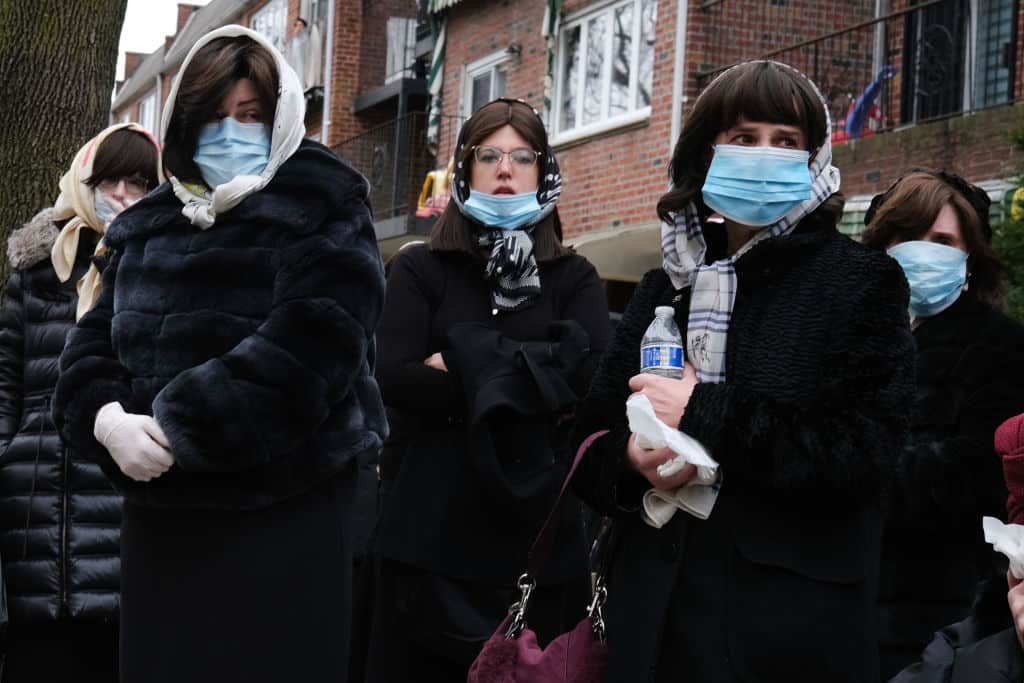
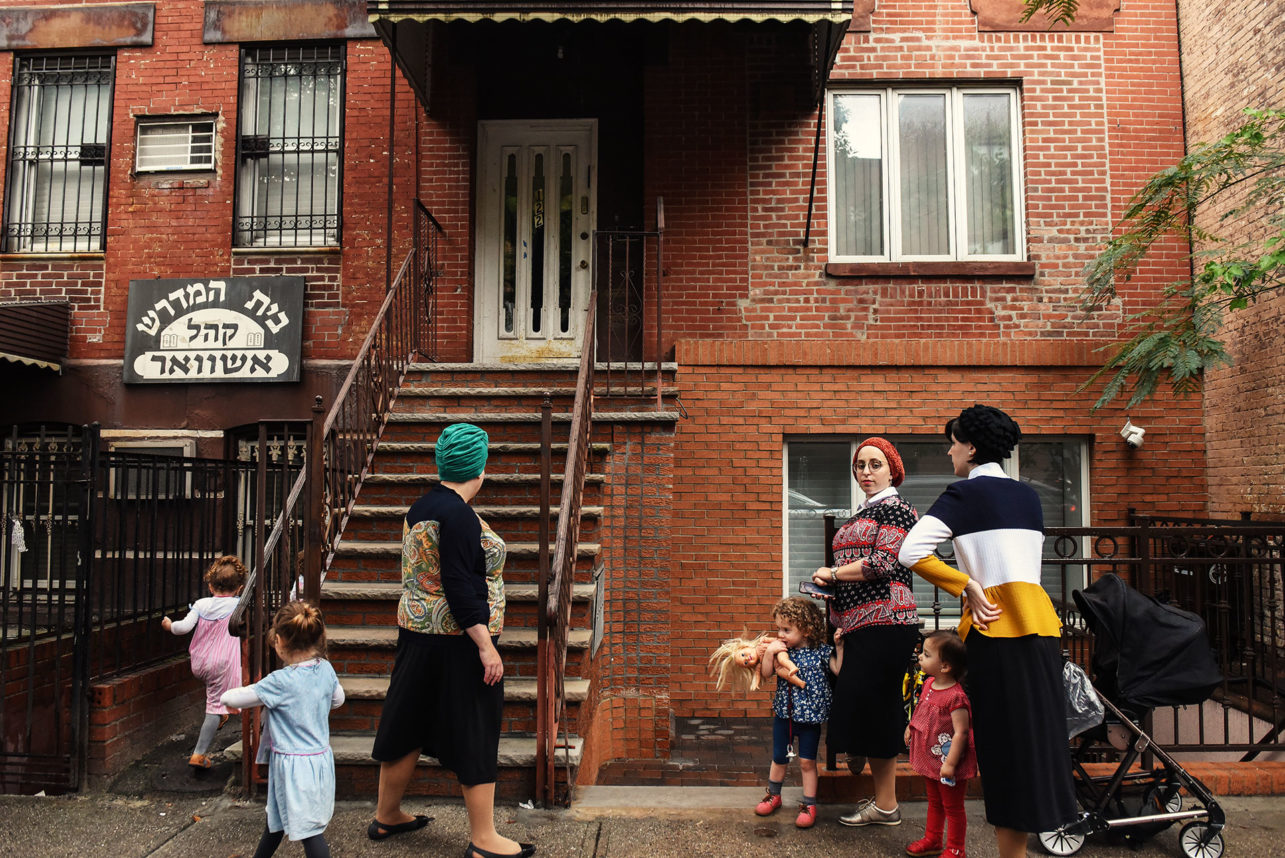
Two Hasidic Brooklyn neighborhoods that have been hard hit in the coronavirus pandemic have seen a sharp rise in people dying at home, according to a new data analysis.

At-home deaths in Borough Park and Williamsburg in March and early April were more than 10 times higher than during the same period last year, the analysis of New York City data conducted by the news organization Gothamist concluded.

The analysis provides neighborhood-by-neighborhood insights about a disturbing citywide trend: In addition to the high death toll of confirmed coronavirus patients in this city’s hospitals, more New Yorkers are dying at home during the health crisis. Mayor Bill de Blasio had said it is reasonable to assume that most at-home deaths are attributable to COVID-19. Across the city, ProPublica found, at-home deaths have increased almost sixfold.

The city has not released Zip-code level data about those deaths, or any from COVID-19. But Gothamist used calls to the Fire Department for fatal cardiac arrests to shed light on where the at-home deaths are taking place.

In the area defined as “Borough Park, Kensington and Ocean Parkway,” the analysis found, there were 27 fatal cardiac arrest calls to the FDNY between March 1 and April 13, as opposed to just two during that period in 2019. The area defined as “Greenpoint and Williamsburg” had 16 calls this year as opposed to one last year.

A haredi Orthodox man crosses the street in Williamsburg, Brooklyn. (Gil Shefler)

That makes those neighborhoods, both home to large populations of Hasidic Orthodox Jews, two of the areas with the biggest increases in at-home deaths compared to last year. Other neighborhoods with high at-home death rates are Bedford-Stuyvesant in Brooklyn, Jamaica and Astoria in Queens, and Washington Heights in Manhattan.

Borough Park and Williamsburg, along with the Orthodox Brooklyn neighborhoods of Crown Heights and Midwood, have had among the highest rates of the new coronavirus across the five boroughs, according to the New York City Department of Health. As of April 17, Borough Park has had more than 1,900 positive tests for the coronavirus, the fourth-highest number of any of the city’s Zip codes.

Motty Brauner, a member of Borough Park’s Shomrim, a volunteer Hasidic security patrol, told the Jewish Telegraphic Agency that requests have soared in recent weeks from callers seeking wellness checks on isolated relatives and friends. He said the callers want to make sure their loved ones have everything they need. If the Shomrim believes that an individual needs medical assistance, the patrol contacts Hatzolah, a Jewish emergency medical service.

Members of the Satmar Hasidic Jewish community in Brooklyn, photo by REUTERS/Stephanie Keith

Brauner related a case from April 5 in which the Shomrim was unable to reach a 50-year-old man. Upon finally being let into his apartment, the volunteers discovered that the man was dead. Brauner does not know for sure if the man died from COVID-19.

“It’s troubling to think about it,” he said. “It was difficult because we had to wait a day and a half until we were able to track down a family member to open the door.”

Brauner said the coronavirus appears to have “slowed down” in the neighborhood as residents have obeyed social distancing regulations. But he’s worried about another spike following the Passover holiday, which ended Thursday and is celebrated traditionally in large family gatherings.

“I’m a little bit concerned about what’s going to be in a week or two,” he said.

Brooklyn Hasidic Neighborhoods See Spike In At-Home COVID-19 Deaths Read More »

Joe Biden Welcoming J Street Endorsement Is A Sign of the Liberal Pro-Israel Lobby’s Increasing Influence

Joe Biden welcomed the endorsement of J Street, the liberal pro-Israel lobby, on Friday. While it might seem like a small news item today, the moment represents something much larger: a consolidation of the group’s influence among mainstream Democrats.

“I’m honored to have earned J Street’s first-ever presidential endorsement,” the former vice president said Friday. “J Street has been a powerful voice to advance social justice here at home, and to advocate for a two-state solution that advances Middle East Peace.

“I’m honored to have earned J Street’s first-ever presidential endorsement,” the former vice president said Friday. “J Street has been a powerful voice to advance social justice here at home, and to advocate for a two-state solution that advances Middle East Peace.

“I share with J Street’s membership an unyielding dedication to the survival and security of Israel, and an equal commitment to creating a future of peace and opportunity for Israeli and Palestinian children alike,” he added. “That’s what we have to keep working toward — and what I’ll do as President with J Street’s support.”

J Street committed earlier this year to endorsing the Democratic nominee, whoever she or he was, and for the first time its political action committee launched a fund to elect a Democratic president.

Vice President Joe Biden visit to Israel March 2016
Meet with PM Benjamin Netanyahu

Biden’s enthusiastic welcome, however, is significant because he has been a standard-bearer for the Democratic party’s pro-Israel mainstream — a wing that has not always seen eye to eye with J Street. At its outset in 2008, J Street scrambled to get Democrats to agree to accept its endorsement, and some rejected it outright, saying the group was too far to the left.

At its outset in 2008, J Street scrambled to get Democrats to agree to accept its endorsement, and some rejected it outright, saying the group was too far to the left.

Biden himself has differed with the group at times, including last year, when addressing J Street’s conference. He said he would not consider leveraging aid to Israel as a means of influencing policy, and he has touted his friendship with Israeli Prime Minister Benjamin Netanyahu, a figure reviled by J Street.

Biden also has been a mainstay of the annual conferences of the American Israel Public Affairs Committee, the main centrist pro-Israel group seen as a J Street rival.

Biden also has been a mainstay of the annual conferences of the American Israel Public Affairs Committee, the main centrist pro-Israel group seen as a J Street rival.

More than half of the Democratic caucus in both chambers of Congress now accept J Street’s endorsement, making it a key determinant in Democrats’ Middle East policies.

Biden is also reportedly ready to accept Bernie Sanders’ advisers on his foreign policy team. Sanders has been sharply critical of some Israeli government policies and has been credited with moving the Democratic Party left on its views on the Jewish state.

The language of J Street’s endorsement kept in line with its strong support of Sanders — it praised Biden but also emphasized that what was key was coming together to defeat Donald Trump.

“At a time when the threats to our core values both at home and abroad have never been more serious, all of us in the pro-Israel, pro-peace community know that the path to a better future begins with defeating Donald Trump at the polls,” the endorsement read.

Joe Biden Welcoming J Street Endorsement Is A Sign of the Liberal Pro-Israel Lobby’s Increasing Influence Read More »

In A Tense West Bank, Women Run the ‘War Room’

GUSH ETZION, WEST BANK:  Shai Segal’s phone doesn’t stop ringing.

“Is it important?” she says quickly into the phone. “OK, I’ll call you back.”

Ten seconds later the phone rings again.

“Where?” she says. “OK, we’ll check it out.”

Segal, 20, is an operations officer in the Etzion war room, responsible for an area that includes 22 Jewish settlements and dozens of Palestinian villages, as well as the Al-Aroub refugee camp. In the war room, computer screens flash the latest information and young women hunch over, talking quickly into phones.

“Our job is to know everything going on in the sector,” Segal told The Media Line. “There are areas in the sector that Palestinians are allowed to be in, and others where they’re not. For example, the Gush Etzion junction, which is the commercial area — Palestinians can’t walk there on foot. It’s something new. They can come in cars and shop, but if we see someone walking we have to stop and check [them].”

The Gush Etzion junction boasts a new mall as well as a large supermarket with Jewish and Palestinian employees. The nearby bus stop has been the site of a series of Palestinian attacks. Last week a1 16-year-old Palestinian girl tried to ram her car into soldiers guarding the bus stop. She did not succeed because of heavy yellow barriers recently placed in front of the bus stop. She was shot and wounded by soldiers. Small metal pieces are still scattered in front of the bus stop.

In 2015, Palestinians killed four civilians in two separate attacks in Gush Etzion, one of them a visiting American student. In 2014 a Palestinian kidnapped and killed three Israeli teenagers hitch hikers he picked up. Segal said there is stone-throwing almost every day, and the situation remains volatile. She is in charge of coordinating the Israeli response to any attacks.

“As soon as we get a report of a stabbing or a car ramming, we rush to the war room to run the incident,” she said. “We make sure the troops go there, and we give them information. If the terrorist ran away, we need to find him, and we need to update everyone – the police, the soldiers and the intelligence.”

Segal, 20, a second lieutenant, has agreed to stay in the army at least an extra year. Most women serve for two years; men for two years and eight months. She says that working in the war room is a high-pressure job for young soldiers.

“These are 18-year-old girls – they just finished high school,” she said. “One of the officers (all women) sleeps here in the office every weekend. The girls know they need to wake me up for everything – evens something small. But they are responsible for the first few minutes after an attack and it is a big responsibility.”

One of her soldiers, Noam Nechmad, has been in this job for seven months.

“It’s difficult in terms of hours and how much we get home but it’s very important. There are a lot of things to do at the same time.”

The soldiers work twelve-hour shifts, often alternating between days and nights which plays havoc with their sleep schedule.

Segal says she wanted to make a contribution to the army, and believes she is doing so.

“It is one of the jobs in the army with the most responsibility,” she said. “I know that I am responsible for the whole area, and that the security of the residents and the soldiers in my hands, if we get a report and don’t investigate it properly, it could mean the loss of life.”

Outside the war room, it is the male combat soldiers who are responsible for the area. Major Daniel Lourie, 27, is responsible for an area that includes the Al-Aroub refugee camp with about 10,000 Palestinians and two Jewish settlements, Carmei Tzur and Migdal Oz. The main West Bank road, Road 60, runs through his area, and it has been the scene of dozens of attacks.

Almost every day, he says, stones are thrown at the soldiers. Palestinians say that the West Bank, including the area of the Jewish settlements, must be part of a future Palestinian state. Since September, 2015, 47 people have been killed in terrorist attacks and almost 700 wounded, according to Israeli government figures. There have been 171 stabbing attacks and 110 attempted stabbings, 141 shootings and 55 car ramming attacks.

Lourie says that he employs a dual strategy of having a presence on the ground and trying to win Palestinian hearts and minds.

“It is a dual operation – not only the army, but how the Palestinians are being treated,” he told The Media Line. “As long as we can secure our communities, everything goes by OK on the roads, we can also give them a regular life.”

Lourie says he goes into the stores in the refugee camp and asks the owners if they are being mistreated by the soldiers. He says that he has seen a change over time.

“When something happens it’s not good for them or for us,” he said. “We see that more and more store owners are chasing the kids away or telling them not to throw stones at us.”

In A Tense West Bank, Women Run the ‘War Room’ Read More »