fbpx

March 15, 2020

A Psychiatrist’s Guide to Coping with COVID-19

It’s hard to be a human right now. We are living in unprecedented times. We are trying to navigate a reality we don’t recognize. We have never been here before and naturally, it feels terrifying.

We are receiving invaluable guidance and wisdom from the infectious disease experts, epidemiologists and physicians on the front lines here and abroad on how to minimize our risk of catching and spreading this virus. And for that, we are so grateful. But let’s also talk about our mental health.

We are all swimming in a sea of extreme uncertainty and emotional discomfort. The tides continue to change and it’s hard not to fear the tsunami that is coming. But that doesn’t mean we are all going to drown. As a psychiatrist who has been working with anxious patients for over 17 years, I’d like to share with you some strategies to cope.

Understand what anxiety is and learn how to differentiate between productive and unproductive anxiety.

Anxiety is about difficulty tolerating uncertainty and unknowns. In my initial meetings with patients, I try to help them understand the bio-evolutionary origins of anxiety and why we as humans adapted it as a means of survival. During cave times, if there was a saber tooth tiger on the horizon and we couldn’t identify what it was, our sympathetic nervous systems (aka fight, flight or freeze response) would go into overdrive. The uncertainty that tiger posed was a legitimate and immediate threat to our safety. Being anxious and reactive was the only way to stay alive.

In modern times, at least among the patients I see, most of the circumstances that trigger anxiety are not usually life-threatening. Will I get that job? What if I get stuck on the freeway? Will I get trapped in that elevator? What if I screw up this presentation? Will I have a panic attack in public and faint? I remind patients on a daily basis that just because something is unknown, it doesn’t mean it’s unsafe. It’s simply uncomfortable. Uncertainty isn’t usually dangerous, but it is unsettling. A lot of our work together is about learning how to get comfortable with the discomfort of not knowing- recognizing that we often don’t get to have control over the knowing.

But what happens when the unknown actually is unsafe? What happens when there is a genuine threat to our survival as there is right now? When is it time/ appropriate/okay to be anxious? Before I answer that question, let’s talk about the difference between productive and unproductive anxiety.

Anxiety is fueled by adrenaline. Adrenaline keeps us awake, alert and reactive enough to make vital decisions to ward off predators and avoid danger. In the context of this pandemic, the answer to the above question is yes, we do need to be anxious, enough so that we can practice hypervigilance around handwashing and be responsible about social distancing. Enough so that we can recognize our need to stock up on provisions and medications and figure out how to make changes like working from home and managing childcare. Anxiety is such an uncomfortable feeling. We try to avoid feeling it at all costs. We sometimes go so far as to resort to denial- a more primitive defense mechanism- to try to convince ourselves that maybe it’s not that bad. Typically, engaging in denial is only risky to the individual doing the denying. But in the face of this pandemic, it is dangerous. In fact, it can be deadly. We all need to rapidly evolve into our most mature adult selves. Everyone’s lives depend on it.

Unproductive anxiety is when that same adrenaline results in not just thinking and processing, but rather in obsessing and ruminating or “spinning.” When anxiety is unproductive, our minds engage in “cognitive distortions,” unhelpful ways of thinking such as catastrophizing and fortune-telling. Rather than having an accurate assessment of what is going on, eg “This is an incredibly scary time and I have to do everything I can to stay safe,” the unproductively anxious mind panics and says, “Oh my god, we are all going to die.”

Once you have allowed yourself to feel the discomfort of what’s going on and invested it in preparing and protecting yourself from things you can control, it’s time to then work on the discomfort of letting some of it go. Unless the continued anxiety is going to alter an outcome or fuel a different decision, it’s no longer productive to hold onto it with the same level of intensity. In other words, once your anxiety has motivated you to take precautionary measures, you can thank it for looking out for you and then kindly show it to the door.

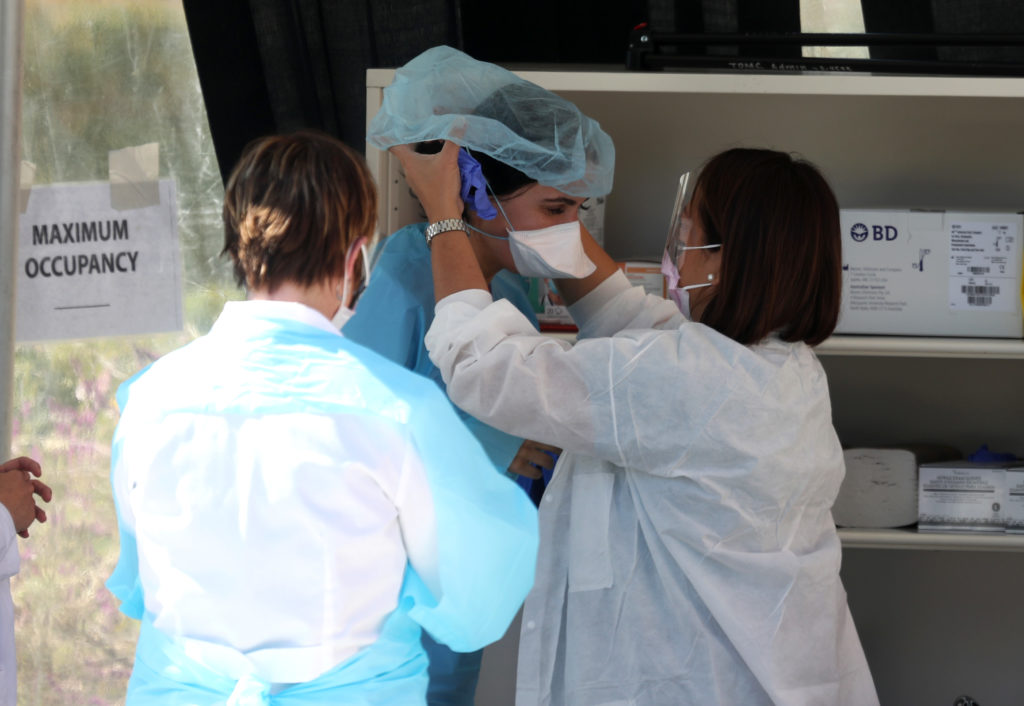
Workers inside a building at Tel HaShomer Hospital near Tel Aviv which was converted to receive the Israelis who were under quarantine on the cruise ship Diamond Princess in Japan due to the spread of the coronavirus, Feb. 20, 2020. (Avshalom Sassoni/Flash90)

Possible versus Probable

Feelings aren’t facts. That may seem obvious but remember, in times of extreme anxiety, our perceptions of reality get distorted and our minds tell us stories that aren’t true. (Naturally, it’s hard to think clearly if we feel like we are about to die.)

You may be worried that this virus will kill you or your loved ones. The uncomfortable and terrifying truth is that it’s possible. And neither I nor anyone can reassure you otherwise. But it’s important to remember that anxiety’s job is to prepare us for every possible outcome. Anxiety permanently resides in the land of possibilities. Our best defense against it is to live in the world of probabilities. To do so simply requires us to rely on the facts.

The data and evidence thus far support that the majority of COVID-19 infections are mild. 

A study of 44,672 confirmed cases in Mainland China showed that 80.9% of patients stay home with flu-like symptoms, 13.8% have severe symptoms requiring hospitalization and 4.7% end up in the ICU needing critical care. The rate of mortality is a bit trickier to figure out, but it’s estimated to be anywhere from 0.5% to 4%. So you are allowed to remind yourself that the majority of people don’t die. But that’s not our only concern.

The real threat here is people remaining in some level of denial of the seriousness of this. The feared outcome based on the data is that our healthcare system will be overwhelmed and ultimately, not have the resources to support those in need. If that provokes anxiety in you, let it. Let that discomfort in your heart and shallowness in your breath serve as a warning- think twice before you leave the house for a non-essential errand. Peoples’ lives depend on it.

Remember, we adapted a sympathetic nervous system to protect us. Let’s use it productively. It’s what inspires us to take precautions. It’s incumbent upon all of us to make room for it.

There is a space between denial and panic. Now is the time to find it. 

Try to frame it as a short-term versus long-term discomfort- it is incredibly uncomfortable to feel this anxiety right now, and yet, it will be far more devastatingly uncomfortable later on if we don’t.

Growth and comfort are on opposite ends of the spectrum. Whether we like it or not, this is happening, right here and now. We as humans have an opportunity to evolve in this moment- to learn how to hold fear and pain right alongside rational and logical thought. To learn how to practice kindness even when we’re terrified. To remember to take deep breaths even when it feels like there isn’t enough room to breathe.

It’s not comfortable. And, we can do it.

Dr. Jennifer Yashari is a psychiatrist in private practice in Los Angeles

A Psychiatrist’s Guide to Coping with COVID-19 Read More »

Israeli Cell Therapy Could Treat Coronavirus

A regenerative medicine company based in Haifa, Israel, says its placenta-based cell therapy product could be used to treat hundreds of patients who are suffering from respiratory and inflammatory complications associated with the COVID-19 coronavirus.

“We will first approach COVID-19 patients through compassionate use so we can treat them immediately,” explained Yaky Yanay, president and CEO of the company that produces the cell therapy. “We will be able to support the healthcare system and be able to help maintain and contain this disease.”
Pluristem is moving forward with these efforts through a collaborative agreement with the BIH Center for Regenerative Therapy (BCRT) and the Berlin Center for Advanced Therapies (BeCAT) at Charité University of Medicine Berlin. Together, they are conducting a joint project evaluating the therapeutic effects of Pluristem’s patented PLX cell product on patients who are developing severe respiratory disorders, a symptom of the novel coronavirus and the cause of death for most critical patients thus far.

BCRT is a cooperative translational research institution of the Charité University Hospital in Berlin and the Berlin Institute of Health (BIH).
Target patients, Yanay said, would be the aging population and those with pre-existing respiratory disorders.
In a release, Pluristem explained that its PLX cells are “allogeneic mesenchymal-like cells that have immunomodulatory properties,” meaning that they induce the immune system’s natural regulatory T cells and M2 macrophages. The result could be the reversal of dangerous overactivation of the immune system. This would likely reduce the fatal symptoms of pneumonia and pneumonitis (general inflammation of lung tissue).
Previous pre-clinical findings regarding PLX cells revealed significant therapeutic effects in animal studies of pulmonary hypertension, lung fibrosis, acute kidney injury and gastrointestinal injury.
Yanay told The Jerusalem Post that the same PLX cells received an Orphan Drug Designation for the treatment of severe preeclampsia (a complication of pregnancy) by the US Food and Drug Administration, for example, and that Pluristem is now completing pre-clinical trials requested by the FDA to support an application to conduct a Phase I clinical trial for that indication. The company has reported robust clinical trial data in multiple other indications and is currently conducting late-stage clinical trials in several indications.
“The fact that PLX is available off-the-shelf, combined with our ability to manufacture large scale quantities, is a key advantage in case many patients may need respiratory support. The primary target is to prevent the deterioration of patients towards Acute Respiratory Distress Syndrome and sepsis,” Yanay explained. “We intend to start the joint collaboration immediately, with an aim to bringing much needed treatment to a rapidly expanding global health threat.”
In Israel, the Health Ministry reported on Sunday that there are two patients in critical condition from contracting the coronavirus. However, in countries such as Italy and Spain, there are massive numbers of these patients and it is putting a strain on their healthcare systems. In many cases, there are not enough respirators, so patients are turned away.

A recent report, showed there are 21,157 cases of coronavirus in Italy and 1,441 deaths – almost the same number of people as those who have recovered from the virus: 1,966.

“This is exactly where we are opting in,” Yanay told the Post, “and supporting these patients so they don’t become severely ill or God forbid die of this.”
He said the product is already in the lab and is well-known to regulators, and that the company is confident it can present a very good safety protocol. By first approaching patients through compassionate use, Pluristem will be able to act now.
Moreover, Yanay said, through its work in Berlin, the company will have access to all of Europe, including certain parts of southern Europe that are in greater danger because the standard of care there is more limited than in Israel.
The Pluristem release stated that it contains “forward-looking statements” that are based on current expectations, and are subject to several factors and uncertainties that could cause actual results to differ. But he said, “the goal is that until people can develop a vaccine against COVID-19, we will be able to support the healthcare system.”
“Through our long-term collaboration with Pluristem, we have a thorough understanding of PLX cells and their mechanism of action,” noted Prof. Hans-Dieter Volk, director of BCRT. “We believe PLX cells can be explored as a potential therapy for patients infected with COVID-19.”

Israeli Cell Therapy Could Treat Coronavirus Read More »

Palestinian Authority: We Can’t Fight Coronavirus Alone

The surging number of confirmed coronavirus cases in Israel, 213 at press time, is deeply worrying  Palestinian Authority health officials, who warned on Sunday of a “catastrophe” if a large number of Palestinians in the West Bank are diagnosed with the disease.
The number of coronavirus patients in the West Bank stood at 38 by mid-Sunday as no new cases were registered in the PA-controlled areas, the PA Health Ministry said. Thirty-seven cases have been reported in the Bethlehem area, while only one Palestinian from Tulkarm was diagnosed with the disease.
he ministry said tests conducted on 2,361 samples from the West Bank and Gaza Strip have produced negative results.
“So far the situation in the Palestinian territories seems to be under control,” said a senior official with the PA Health Ministry. “But we are concerned about the spread of the coronavirus in Israel. Our major concern is that the disease could spread very quickly from Israel to the West Bank.”
Asked if his ministry is prepared to deal with a mass outbreak of the coronavirus in the West Bank, the official said: “I don’t want to think of such a scenario, even though we can’t rule it out. We won’t be able to deal with the crisis alone. We will need assistance from Israel and other international parties. We are already coordinating on a daily basis with Israel to prevent the spread of the virus.”
Another health official said that not all the 16 Palestinian hospitals in the West Bank would be able to cope with a large number of infected cases. “Our hospitals don’t have enough professional teams and medical equipment to deal with a large number of infected patients,” the official said.
The Union of Palestinian Hospitals decided on Sunday to prevent hospital visits except for first-degree relatives and halt movement between the West Bank and Israel. The union also urged Palestinians to limit movement between Palestinian communities as a precautionary measure to prevent the spread of the virus.
PA Prime Minister Mohammed Shtayyeh, meanwhile, said that 15 out of the 38 patients have started to show signs of recovery. He added that the signs of recovery do not necessarily mean a full recovery, but rather mean that things are moving “in the right path.”
Shtayyeh told reporters in Ramallah that six of the cases re-tested positive for the disease, with two cases described as moderate and one, a German woman, in critical condition.
He said the 21 patients who first tested positive for the virus will undergo additional tests to make sure they have fully recovered.
“This is very reassuring, but nothing will change in the measures taken,” Shtayyeh said.
In the past few days, the PA security forces arrested a number of coffee shop owners who ignored orders to shut down their businesses due to the coronavirus. A Palestinian who posted a video of himself driving into Bethlehem – in defiance of the PA security forces’ instructions, was also arrested.

Palestinian Authority: We Can’t Fight Coronavirus Alone Read More »

Israel Now Has 200 Coronavirus Cases

Israeli Prime Minister Benjamin Netanyahu on Saturday announced a partial shutdown of Israel’s economy with the aim of stemming the COVID-19 outbreak.

According to Israel’s Health Ministry, as of Sunday, there were 200 confirmed cases of COVID-19 in the country, 157 of whom are hospitalized and two of whom are in serious condition. Two of the 200 are in serious condition, 11 are in moderate condition, 178 are in light condition and four have recovered and been sent home, according to the ministry.

Some 40,000 Israelis are currently under home quarantine, as are nearly 2,500 health-care workers, including some 950 doctors.

“This is a dynamic situation, so our policy is dynamic and meant to minimize morbidity,” Netanyahu said in a press conference on Saturday.

While Israel was faring relatively well against the outbreak so far, the public’s help was needed to keep a step ahead of the virus.

“Israel is doing much better than most countries around the world. But this is a developing situation; this disease keeps changing and we’re constantly trying to keep one step ahead of it. We can overcome it and defeat it but that requires all of us to change our daily routine so as to stop the spread of the disease. This is about saving lives,” said Netanyahu.

Earlier on Saturday, it was reported that the government had received the legal go-ahead to track coronavirus patients using their cellphones and other digital devices. Netanyahu acknowledged the reports and also the privacy concerns raised by the measure, but said that in this case, public health comes first.

Urging the public to adhere to the Health Ministry directive about hygiene and social distancing, Netanyahu explained that “we are fighting an invisible enemy and we have to do everything in our power to stop it.

“We will be using technological measures. We have received legal permission to track people using digital means … yes, this compromises privacy but we are fighting a war and public health comes first. It’s paramount,” he stressed.

Netanyahu also announced that public gatherings exceeding 10 people were now barred, essentially shuttering all leisure venues, such as cafes, restaurants, theaters, cinemas and retails stores.

He stressed, however, that all essential services will continue operating, as will banks, ATMs, gas stations, health-care services and pharmacies.

“There will not be a shortage of food or medicines,” he said, following a day during which Israelis stormed supermarkets, despite multiple government officials announcing that it was not necessary to do so.

Public transportation will also be restricted, the prime minister said, adding that implementation of the move was still under review.

As part of the extensive restrictions aimed at stemming the spread of the pandemic, all educational institutions—from day-care centers to universities—would be closed beginning on Sunday, said Netanyahu. He further urges all non-essential private sector companies to let employees work from home.

The measures announced on Saturday are expected to remain in force for at least five weeks. The partial shutdown is expected to cost the economy about NIS 2 billion ($545 million) a week, Channel 12 News reported.

The decision to shutter the economy, perhaps prior to declaring a state of national emergency, followed extensive discussions with the Finance Ministry. Channel 12 News quoted Finance Minister Moshe Kahlon as saying that while shuttering the economy was obviously necessary, reviving it may prove impossible.

Meanwhile, Knesset Speaker Yuli Edelstein said that Monday’s swearing-in of the new parliament will go ahead as scheduled.

“The importance of parliamentary oversight during a period of crisis is not in doubt,” he said in a statement.

On Thursday, it was decided that the 120 lawmakers will be sworn in in three separate batches of 40, so as to comply with Health Ministry guidelines limiting gatherings to 100 people. It is unclear at this time whether this will change given the new directive limiting public gatherings to under 10.

This is an edited version of an article that first appeared in Israel Hayom.

Israel Now Has 200 Coronavirus Cases Read More »

Benny Gantz Will Get First Chance to Form Israeli Government

Israeli President Reuven Rivlin will give Benny Gantz the task of forming a new government, his office said Sunday.

Rivlin met Sunday with the heads of all the parties that won seats in Israel’s parliament in its last election earlier this month. At the end of the consultations, which were broadcast nationally, 61 lawmakers recommended Gantz form the new government, while 58 lawmakers recommended the current prime minister, Benjamin Netanyahu.

Later, Gantz and Netanyahu met with Rivlin about the possibility of forming a joint emergency government to deal with the coronavirus crisis.

Gantz received the nod from all four parties that make up the mostly Arab Joint List, a total of 15 seats, as well as from Avigdor Liberman and his Israel Beiteinu party’s seven seats. In the prior two post-election consultations, Liberman did not recommend a candidate, calling for a unity government made up of both Gantz and Netanyahu instead.

But just because Gantz has the opportunity to form a government does not mean he will succeed in bringing together a majority coalition.

Orly Levy-Abekasis, head of the Gesher Party, which ran in coalition with the left-wing Labor and Meretz parties, declined to recommend a candidate. And two Blue and White lawmakers, Zvi Hauser and Yoaz Hendel, have said they will not sit in a government with the Arab parties.

Even though Liberman recommended giving Gantz the opportunity to form a government, he called during his consultation with Rivlin for the formation of an emergency unity government in the wake of the coronavirus epidemic.

Meanwhile, Joint List head Ayman Odeh warned that his party would not support a unity government between Likud and Blue and White, saying his coalition would be its “main opponents.”

Benny Gantz Will Get First Chance to Form Israeli Government Read More »

Netanyahu’s Criminal Trial Delayed Due to Coronavirus

Prime Minister Benjamin Netanyahu’s criminal trial will be postponed until May due to emergency measures taken to combat the coronavirus.

The trial was originally scheduled to open on Tuesday in front of a three-judge panel of the Jerusalem District Court. The new trial date has been set for May 24.

On Saturday night, Netanyahu prohibited all leisure activities in Israel and placed a ban on all gatherings of more than 10 people. Later on Saturday night, Justice Minister Amir Ohana put the country’s courts in a “state of emergency” over the virus, leading to the postponement of Netanyahu’s trial, Ynet reported. Only urgent cases will be heard, according to the Jerusalem Post.

The NGO Movement for Quality Government filed a lawsuit Sunday morning to block the postponement and requested that Attorney General Avichai Mandelblit freeze the emergency order. The lawsuit noted that Ohana is an interim minister in an interim government.

Netanyahu was charged in November in three corruption cases, marking the first time that a sitting Israeli prime minister was indicted. Netanyahu has denied the charges and called the investigations against him a “witch hunt.”

Netanyahu’s Criminal Trial Delayed Due to Coronavirus Read More »

The Jewish Case for Electing Donald Trump

I know that many American Jews are not the biggest fans of President Donald Trump. But I also know that when it comes to Jewish issues, no candidate is better.

President Donald Trump is the most emphatically pro-Israel U.S. president since the Jewish state’s founding in 1948. He is the most instinctively philo-Semitic president at least since Abraham Lincoln spoke of America as an “almost chosen people” — and perhaps since George Washington himself assured the Jews of Newport, Rhode Island that each child of the “Stock of Abraham” would forever “sit in safety under his own vine and fig tree.” In addition to recognizing Jerusalem as Israel’s capital and moving the U.S. embassy there, he successfully withdrew from President Barack Obama’s capitulatory Iranian nuclear deal, a huge boon for the Jewish state, and has crippled the Islamic leadership with debilitating sanctions.

Recent Gallup polling suggests that a whopping 95% of American Jews hold favorable views of Israel. For all the hand-wringing about the role of Zionism in the future of American Jewry, these statistics speak for themselves: American Jews overwhelmingly support the world’s sole Jewish state. And there has been no greater presidential defender of that Jewish state than President Trump.

Trump has restored “peace through strength” deterrence throughout the Middle East and the confidence of our allies in the region — most recently by killing the ruthless Iranian Quds Force commander Qassem Soleimani.

Trump has restored “peace through strength” deterrence throughout the Middle East and the confidence of our allies in the region — most recently by killing the ruthless Iranian Quds Force commander Qassem Soleimani.

Palestinian-Arab nationalism has been a violent threat towards Israel since the state’s early days, and today’s Palestinian Authority continues that shameful legacy. The Trump administration has responded accordingly, closing the PLO mission in Washington, D.C. and defunding the PA due to its vile “pay-to-slay” jihad subsidization.

At the infamously anti-Israel United Nations, the Trump administration has consistently defended the Jewish state against the dictatorships that dominate that body. The administration has defunded UNRWA, the UN agency that perpetuates the Israeli-Palestinian conflict by promulgating a definition for Palestinian-Arab “refugees” different than that for every other refugee group in the world. And the administration withdrew the U.S. from UNESCO, which has passed disgraceful resolutions denying all historical Jewish claims to Jerusalem.

The Trump administration has always protected Israel’s right to defend itself from incitement from Gaza and the West Bank, and has recently recognized the legality of Jewish “settlements” in the biblical heartland of Judea and Samaria. His administration also formally recognized Israeli sovereignty over the strategic Golan Heights and has unveiled a plan for peace with the Palestinian-Arabs that is the most pro-Israel one ever offered by a U.S. president. After this “Deal of the Century” was unveiled, the administration successfully elicited hitherto unprecedented statements in support of recognition of Israel from leading Arab states.

This alone would comprise a compelling Jewish case to re-elect President Trump. But equally impressive has been the Trump administration’s profound commitment to a pro-Jewish, pro-religious liberty domestic agenda.

In December 2019, Trump signed a groundbreaking executive order to protect Jewish students across America under the statutory ambit of Title VI.

In December 2019, Trump signed a groundbreaking executive order to protect Jewish students across America under the statutory ambit of Title VI. “It shall be the policy of the executive branch to enforce Title VI against prohibited forms of discrimination rooted in anti-Semitism as vigorously as against all other forms of discrimination prohibited by Title VI,” the executive order states. This is perhaps the single most symbolically and substantively philo-Semitic executive order that a U.S. president has ever issued.

The Trump administration’s commitment to religious liberty for all has been laudable. He has fought the Obama administration’s contraception mandate tooth and nail. President Trump has also updated federal guidance to bolster protection for school prayer and has recently proposed a rule under which the government “will not discriminate based on an organization’s religious character” when it comes to grant money for social service providers. Recently, he has also proposed a rule that would undo an Obama-era regulation limiting taxpayer funding for faith-based adoption agencies that support traditional family structures.

Finally, the president has appointed roughly a quarter of all federal circuit judges — nearly all of whom are committed to a robust conception of religious liberty under the law. The salutary effects of this judicial transformation will last for decades. Jews, who have often been the proverbial canary in the coal mine when it comes to government’s treatment of religion, stand to disproportionately benefit from a systemic governmental rededication to protecting religious liberty for all.

Yet the most obvious Jewish reason for supporting Trump may well be the nature of his remaining 2020 adversaries. Bernie Sanders has surrounded his campaign with anti-Israel figures like Linda Sarsour and Rep. Ilhan Omar, and has mollycoddled problematic leaders like Jeremy Corbyn. As for Joe Biden, it was his threat to halt U.S. aid to Israel nearly four decades ago that led then-Prime Minister Menachem Begin to issue his most famous words: “I am not a Jew with trembling knees.” It would be a shande to replace the rock-ribbed pro-Jewish, pro-Israel Trump with either of these contenders.

The Jewish Case for Electing Donald Trump Read More »

The Jewish Case for Electing Joe Biden

Now that the contest for the Democratic presidential nomination in America is narrowing to a two-person race, the case for Joe Biden is even more compelling and urgent. I have known and worked with him since he entered the U.S. Senate more than 40 years ago, and then as vice president. From the start of this tortuous political contest, I never had any doubt that he deserves the overwhelming support of the American Jewish community.

Joe Biden has worked tirelessly with American Jewish organizations for tikkun olam, making our country and the world a better place and to combat growing anti-Semitism on the left and the right. As a senator, he was a champion for women’s rights, leading the fight for the Equal Rights Amendment and for the Violence Against Women Act of 1994. He has been a strong supporter of civil rights for minorities, from the Voting Rights Act to marriage equality for LGBTQ individuals. He has been a leader against gun violence, twice successfully taking on the National Rifle Association.

As vice president, he was a key figure in the passage of the Affordable Care Act, which extended health care benefits to millions of need Americans, now seeking to expand it with a Medicare option, and in defending it against the far right and Donald Trump and from the far left led by Sen. Bernie Sanders, now his principal opponent for the nomination.

From the beginning of his public career, Biden has understood the unique threats facing Israel.

From the beginning of his public career, Biden has understood the unique threats facing Israel. His first foreign trip as senator was to Israel in 1973 shortly before the Yom Kippur War, where he met with Golda Meir and Yitzhak Rabin. He was a fervent advocate for resupplying Israel with arms after the first devastating Arab attacks against Israel seriously weakened its defenses.

That early experience speaks volumes about why he told the recent AIPAC Policy Conference that he knows “Israelis wake up every morning facing an existential threat from their neighbors — a rain of rockets from Gaza just this past week, threats and missiles from Iran and Hezbollah — Israelis live each day with tremendous courage.” As vice president, he was a key supporter for Israel’s Iron Dome anti-missile and a key architect of the landmark $38 billion 10-year defense program for Israel, the highest ever reached.

The next president must be trusted by both the Israelis and Palestinians to achieve a two-state solution with the Palestinians, which Biden emphasized to AIPAC “is the best way to assure a secure and peaceful future for a Jewish and democratic State of Israel.” In negotiating with Israel during the Carter and Clinton Administrations, I learned it must have confidence that the president of the United States supports its interests. That is Joe Biden who told AIPAC, “Palestinians need to eradicate incitement in the West Bank and end the rocket attacks from Gaza. And they need to accept, once and for all, the reality and the right of a secure, democratic and Jewish State of Israel in the Middle East.”

Even though Bernie Sanders worked briefly on a kibbutz as a young man, he can hardly be a trusted negotiator after boycotting the AIPAC conference (which he has never attended) and accusing it of giving a platform for “bigotry.”

Even though Bernie Sanders worked briefly on a kibbutz as a young man, he can hardly be a trusted negotiator after boycotting the AIPAC conference (which he has never attended) and accusing it of giving a platform for “bigotry.” In last December’s Democratic debate he called the elected prime minister of Israel a “racist.” I have differences with Benjamin Netanyahu on his settlement policy, but such an epithet makes it impossible for Sanders to have any effective role in negotiations between Israel and  the Palestinians. These outbursts reflect his past positions. He has said he would use U.S. military assistance as leverage to block new settlements, and would even shift some of this military aid to Hamas-controlled Gaza.

In 2001, Sanders was in the distinct minority of members of Congress to oppose a resolution blaming the Second Intifada on Palestinian terrorism. I know from my own negotiations with Yasir Arafat that this was wrong. When I met Arafat in Ramallah in July of 2000 to report on our progress reducing Palestinian unemployment, he asked me to tell President Bill Clinton not to invite him to a summit with then Prime Minister Ehud Barak because he was not prepared to make compromises envisioned by Clinton that would have given the Palestinians 95% of the West Bank with East Jerusalem as their capital. Arafat then incited the Intifada.

Vice President Joe Biden visit to Israel March 2016
Meet with PM Benjamin Netanyahu

During the Gaza conflict in 2014, when Israel retaliated only after constant rocket attacks on southern Israel, Sanders declared that Israel had killed “over 10,000 innocent people.” This amounted to so many more casualties than even Hamas alleged that Jonathan Greenblatt, CEO of the Anti-Defamation League, criticized Sanders for his gross exaggeration.

Finally, and critically important at a time when the U.S. is deeply polarized, Joe Biden is a healer and a uniter. He stands for the best values of Judaism and our country, and he can reach out to independents and moderate Republicans. With Bernie Sanders we risk not only more division in our country through his appeal for a revolution on the left but also weaken the Democratic Party’s move toward cohesive strength to keep control of the House of Representatives, win back control of the Senate, and defeat President Donald Trump.

Stuart E. Eizenstat was Chief White House Domestic Policy Adviser to President Jimmy Carter; U.S. Ambassador to the European Union; Under Secretary of Commerce; Under Secretary of State; Deputy Secretary of the Treasury; and Special Representative of the President on Holocaust-Era Issues in the Clinton Administration; and Special Adviser to Secretaries of State Hillary Clinton and John Kerry on Holocaust-Era Issues in the Obama-Biden administration. “

The Jewish Case for Electing Joe Biden Read More »

The Jewish Case for Electing Bernie Sanders

Last Thursday, a white supremacist blogger known for targeting Muslims was kicked out of a Bernie Sanders rally in Arizona after waving a Nazi flag behind the Jewish democratic candidate.

The flag was quickly torn out of his hand by Sanders supporters, and Sanders was unaware of what happened until after the event, saying, “Obviously, it is unspeakable. It is disgusting… I got to tell you, I never expected in my life, as an American, to see a swastika at a major political rally. It’s horrible.”

The incident speaks to the stakes of the 2020 election, and the Sanders campaign in particular, in which everyday people espousing progressive ideals of equality and social justice are seeking to end a Trump presidency characterized by white nationalist cruelty and corporate greed.

Throughout his campaign, Sanders has been increasingly outspoken about the relationship between his Jewish identity and his current struggle to unseat President Trump, connecting his experiences of losing family to the Holocaust and growing up in a community full of survivors to his understanding of “how horrible people can be to each other in the name of racial superiority.”

These comments reflect a common thread in Jewish social action from today’s Jewish anti-Trump organizers to the Civil Rights solidarity of Abraham Joshua Heschel, in which Jewish identity and experience of the past become a catalyst for fighting for a shared future side by side with other oppressed people.

Such values have informed Sanders’ entire political career, in which he opposed the Iraq War, fought to protect social security, advocated environmental protection and refused to be beholden to the corporate interests that have destroyed American working communities. While he’s often branded a radical, many Americans, including many U.S. Jews, support these policies on paper even if they don’t personally subscribe to his democratic socialist ideology.

But it’s also precisely his ability to connect popular policies like Medicare for All, the Green New Deal, student loan forgiveness and ending the war on drugs into a singular vision for this country that makes him such a powerful challenger to Trump and such a threat to white nationalism. And repeated polls have shown Bernie beating Trump in a head to head match up, including among Jewish voters.

Part of what makes Sanders so effective against Trump is that rather than seeking a return to the broken status quo that produced him, Bernie recognizes him as the symptom of a systematic problem that can be fixed by addressing the demands of everyday people. Accordingly, Sanders has looked to today’s popular social movements to inform his platform and build a coalition that reflects community needs and not corporate interests.

While some Jewish voters may still be skeptical of him as a candidate, Jewish organizers have played a central role in the movements informing his platform from day one.

One of the most pressing humanitarian issues of the Trump presidency has been the border and immigration crisis, which has included family separations and mass detention of migrants, and now efforts to denaturalize documented immigrants as well. Remembering how anti-immigrant sentiment has historically been tied to systematic anti-Semitism, from the Holocaust victims turned away by the U.S. to today’s white nationalism, young Jews alongside venerable Jewish institutions like HIAS have been on the front lines with Latinx, Black, Asian, and other communities fighting back.

Under Trump, Jews have played a bloody price for such values. White nationalists like the Tree of Life shooter have cited Jewish immigration work and Soros conspiracy theories as reasons for anti-Semitic violence. Thursday’s incident in Arizona was a stark reminder of what’s at stake in this moment.

Like many Jews, Sanders ties his support for immigration justice with his own father’s story of coming to the United States as a teenager, and he knows personally that the fight against white nationalist anti-Semitism is a key racial justice issue.

Like many Jews, Sanders ties his support for immigration justice with his own father’s story of coming to the United States as a teenager, and he knows personally that the fight against white nationalist anti-Semitism is a key racial justice issue. In addition to taking on Trump’s anti-Semitism  directly and promoting gun reform, his platform includes halting the Trump deportation machine, ending family separation, and protecting and expanding DACA, while developing a just immigration system and foreign policy that addresses the root causes forcing people to flee their homes in the first place.

This same Jewish-infused racial justice outlook fuels Sander’s support for prisoners rights, abolishing the death penalty and private prisons, and rolling back the War on Drugs. He has also committed to reversing the Muslim ban and fighting Islamophobia and other forms of hate, while promoting a more amicable and just relationship between the U.S. and the rest of the world. This longtime focus on racial justice has earned him endorsements from frontline groups like the Dream Defenders who organized around the death of Travyon Martin and helped end felony disenfranchisement in Florida last year, restoring the vote to over a million formerly incarcerated people.

In refusing to back down when it comes to the fight for universal healthcare over the years, Bernie Sanders made Medicare for All a front and center issue in the democratic primary, and the policy enjoys widespread support from many Americans, including the Religious Action Center of Reform Judaism.

As Trump incompetence exacerbates a global pandemic, making the cost of denying healthcare and labor rights to working people in this country increasingly clear, Sanders’ unwavering support for Medicare for all also sets him apart, alongside his refusal to be beholden to big pharma and insurance companies rallying around rival Joe Biden.

With the endorsement of the youth-led Sunrise Movement, Sanders stands out in the democratic field when it comes to fighting climate change and ensuring a livable planet for future generations. Sanders won big in California on Super Tuesday, a state where we know firsthand the cost of Trump’s climate denialism and incompetence in response to climate disasters, like the 2018 wildfire, which killed at least 85 people and prompted the president to threaten to cut federal funding due to erroneous claims that poor forest management was to blame.

The Green New Deal has received support from Jewish environmentalists, and Sanders’ support for indigenous pipeline protests and their refusal to accept oil money lets voters know that as he fights climate change he will not be beholden to those profiting from and causing it.

While some Jewish voters may be concerned about Sanders’ criticism of Israel, which falls pretty squarely into a Liberal Zionist framework, it’s important to understand it as part of his broader anti-war foreign policy. Sanders rightly opposed the Iraq war at a time when this was a controversial and career-threatening stance, and he has sharply criticized despotic U.S. allies like Saudi Arabia.

While some Jewish voters may be concerned about Sanders’ criticism of Israel, which falls pretty squarely into a Liberal Zionist framework, it’s important to understand it as part of his broader anti-war foreign policy. Sanders rightly opposed the Iraq war at a time when this was a controversial and career-threatening stance, and he has sharply criticized despotic U.S. allies like Saudi Arabia.

As Trump paves the way for the annexation of settlements and threatening to further destabilize the Middle East by instigating conflict with Iran, we need a candidate whose foreign policy is built on pursuing peace and justice for all, even when we find that challenging. And while many Jewish voters may not share his critique of Israel or AIPAC, he represents a growing share of our community, especially among young people, who see the only path to peace as one of justice.

Ultimately what ties all of these policies together is Sanders’ belief in social and economic justice for all. It’s why he is also a leader when it comes to labor rights, housing, and education equality. Far from being an ideological lone wolf, Sanders’ platform has been consistently influenced by the partners he is accountable to, and every position he holds is shaped by his relationships with the communities demanding them.

Come November, it will not be enough for the democratic candidate to simply be “not Trump.” In order to engage voters for the turnout necessary to defeat him, we have to offer an alternative vision to white nationalist hate that reflects the needs of those failed by this system.

Bernie Sanders’ vision is not only in line with Jewish ideals of social justice, it reflects the bonds that connect us to the rest of the world and the heartfelt understanding that we will never be free until we fight together.

Rebecca Pierce is a Black and Jewish filmmaker and writer from the San Francisco Bay Area.

The Jewish Case for Electing Bernie Sanders Read More »

Israeli Election Handbook: A Gantz Coalition or a Coronavirus-Unity?

We call this format a Timesaver Guide to Israel’s Coming Elections. This will be a usual feature on Rosner’s Domain until a new government is formed. We hope to make it short, factual, devoid of election hype.


Bottom line

President Rivlin summons Netanyahu and Gantz to nudge them towards a unity government. It might take time before they come around to agree on something. Or not. (updates will be added when we have more information).


The News

Netanyahu: Israelis are not quite interested in politics right now. There is crisis. Prime Minister Netanyahu was counting on this crisis to help him form an emergency unity government. The terms were negotiable. It could be for three months, or six, or a year. One thing for sure: it would keep him as Prime Minister for the time being.

Gantz: Israel’s president Reuven Rivlin consulted with all parties. The result: 61 new Members of Knesset said they want Blue and White’s Benny Gantz to form the next government. These include the members of the following parties: B&W, Labor, Meretz, Israel Beiteinu and the Joint List.

Israel Beiteinu: Avigdor Lieberman, former Netanyahu ally, burned the last bridge and decided to go with Gantz. It is not clear how rightwing voters of Liberman will respond to such move in case of another election.

Joint List: All factions of the Arab party, including the radical Balad, recommended Gantz. This is remarkable for both them and for him. Remember, he is a general and the former IDF Chief of Staff. For a party of politicians who often call for international investigation against IDF “war criminals” recommending Gantz is no small thing. For the general, this is a huge political gambit. If there’s another election, the campaign against him is ready: He was going to form a coalition with the help of “terrorist supporters”.

Gantz’ Coalition: So why can’t Gantz just form a new government? Because of reservations within him own party. Blue and white leaders vowed prior to election day not to seat in a government supported by the Joint List. Some of them take this promise seriously and at least two MK’s (Hauzer and Hendel) refuse to support a minority coalition headed by Gantz. One member of the Labor-Meretz list (Orly Levy Abekasis) also said she would not support it. So currently he has 59 hands, not 61.

Unity: It seems as if all sides agree that unity is the proper remedy to a political deadlock in a time of crisis. The devil is in the details. Will Netanyahu be the PM, for how long, what roles will other politicians get, what parties will take part in the new government. There needs to be an agreement on all these things for a unity to be formed. But each and every one of them is thorny for various reasons.

Rivlin: On Sunday President Rivlin said that on Monday he will ask Gantz to form a government. with 61 recommendations, there was no other choice. But as Rivlin was making this early announcement he was also putting pressure on Netanyahu. The PM and Gantz were invited to see Rivlin on Sunday evening. He wanted Netanyahu to understand that if there’s no flexibility from him, Gantz will be moving forward.

Edelstein: In the meantime, to add complication, B&W asked for a Knesset vote to replace the Speaker, MK Edelstein (Likud). This is a move aimed at having control over the Knesset’s agenda, and possibly pass lows to limit Netanyahu’s ability to form a government before the end of his trial.  For now, Edelstein refuses to let the Knesset convene (he can drag his feet, but not for very long).

The following table somewhat clarifies the numerical situation:


The Next Move

There are the basic options:

  • Netanyahu and Gantz agree on unity. Time out for a while. Likely
  • They cannot agree: Gantz attempts to form a coalition and succeeds. Unlikely.
  • They cannot agree: Gantz attempts to form a coalition and fails. Netanyahu gets a chance and succeeds. Unlikely.
  • They cannot agree: Netanyahu gets a chance and fails. Likely.
  • Fourth election. Likely.

The bottom line here is clear: Unity, or a fourth election are the likelier outcomes.


Israeli Election Handbook: A Gantz Coalition or a Coronavirus-Unity? Read More »