fbpx

March 11, 2020

CS Stanislaus Professor Says Israel Will Imprison ‘Non-Jews’ Over Coronavirus

A professor at Cal State Stanislaus tweeted on March 8 that Israel will start to put non-Jews into “mass prisons” in response to the coronavirus.

Political science professor As’ad AbuKhalil’s tweet was in response to a report that Israeli Prime Minister Benjamin Netanyahu issued an edict on March 9 imposing mandatory 14-day quarantines on those returning to Israel from abroad.

“Israel will — I am sure — have different medical procedures for Jews and non-Jews,” he wrote. “Non-Jews will be put in mass prisons.”

The tweet sparked outrage on Twitter.

“Israelis assist Syrians whose leaders are butchering them, despite Syria being at war with them,” StandWithUs Israel Executive Director Michael Dickson tweeted. “Israelis are working with Palestinians to contain #Coronavirus. @stan_state Professor @asadabukhalil’s lie is the kind of anti-Semitism termed a ‘blood-libel.’ ”

Pro-Israel writer Claire Voltaire tweeted, “We’ve gone full insane conspiracy at this point. This is vile!”

AbuKhalil tweeted on March 10 that “that Zionist hoodlums have reported a tweet I wrote mocking the racism of the state of Israel, and in which I suggest that Israel may discriminate against patients of Corona on the basis of religion.” He argued that he mocked Saudi Arabia’s response to the coronavirus as potentially beheading those who are ill but no one’s accusing him of being anti-Islamic.

“Zionist hoodlums don’t know to concede that most supporters of the Palestinians are also fierce opponents of anti-Semitism which they try to pin on any free voice on Palestine,” AbuKhalil tweeted. “Those same Zionist hoodlums would forgive the ugly anti-Semitism of supporters of Israel are the true servers of the agenda of anti-Semitism by ignoring it and even condoning it when it comes from supporters of Israel.”

He added in a later tweet: “I have always called for rejection of any anti-Semitism in the pro-Palestine camp. If mocking Israeli racism is anti-Semitism, how do you deal with the true racism of the Israeli state, which was founded on series of discriminatory law[s] and which has only been adding more racist discriminatory laws ever since it was founded atop the Palestinian nation.”

Israeli-based writer Shoshanna Keats Jaskoll tweeted, “Making up crap about putting Arabs in jail en mass or providing subpar medical care is libel and lies. Come to a hospital here — at least half of the staff and patients are Arabs.”

CS Stanislaus tweeted a statement addressing AbuKhalil’s tweets.

“Views expressed by faculty members on their personal social media are their own and do not reflect the opinions, values or policies of Stan State,” the statement read. “We are committed to the just treatment of all people and do not condone statements that are in opposition to these values.”

According to the Canary Mission watchdog, AbuKhalil is a supporter of the boycott, divestment and sanctions (BDS) movement; in 2013, he called for “the removal of every vestige of Zionism from Palestine.”

CS Stanislaus Professor Says Israel Will Imprison ‘Non-Jews’ Over Coronavirus Read More »

At Least Two Americans Dead in Rocket Attack in Iraq

At least two American service members and one British soldier were killed in a rocket attack against a U.S. military base in Iraq on March 11.

Politico reported that the base was Camp Taji — located just north of Baghdad — and 18 rockets hit it. According to Agence France-Presse, the two Americans killed were a soldier and contractor. Twelve others were injured in the attack.

British Prime Minister Boris Johnson condemned the strike.

“Our servicemen and women work tirelessly every day to uphold security and stability in the region — their presence makes us all safer,” Johnson said. “The foreign secretary has spoken to the U.S. secretary of state and we will continue to liaise with our international partners to fully understand the details of this abhorrent attack.”

The perpetrators are believed to be Kataib Hezbollah, the Iranian proxy’s Iraqi militia. Kataib Hezbollah also is believed to be responsible for a Dec. 27 rocket strike against the U.S. military base in Kirkuk, Iraq, which killed an American contractor.

American Jewish Committee Los Angeles Assistant Director Siamak Kordestani tweeted, “Not that many people are paying attention to the fact that Iran-backed militias killed at least two Americans and one Brit in a rocket attack today. This is a major escalation …”

At Least Two Americans Dead in Rocket Attack in Iraq Read More »

The Golden Opportunity of a Global Pandemic

The coronavirus might as well have been designed in a lab to ravage Jewish communities. Close physical contact is not merely embedded in our tradition, it is inscribed in our history, dating back to the very origin of our nation at Mount Sinai. Judaism is not a religion best observed or practiced alone. We don’t get zen that way. We need a minyan. We need to have other people over for Shabbat lunch. We need a chavruta.

Everywhere you look is a disease vector disguised as a mitzvah, so this plague poses a different challenge for us. Already, the fear of getting sick has accomplished something even the most divisive political issues never could: It has kept people from going to shul. And this may be only the beginning. For the most part, the American Jewish community has erred on the side of caution with people’s health, and is trying to mitigate the religious losses as a secondary concern. On Purim, several synagogues broadcast the Megillah via live feed, so seniors and people with health conditions could fulfill the mitzvah of hearing the Megillah at home.

I felt comfortable attending in person, and with my parents playing it safe at a private reading, newly obligated to be present at the rowdiest possible convening. Even with kids running around and the rabbi acting out the story, it felt more somber than usual — were boomers the ones supplying the cheer all this time? — and certainly the crowd was not as large or as loud as last year’s. Still we booed Haman lustily. The parallels with the Megillah were easy to spot, even with no human malice at work in our pandemic: the will of God is obscured; we are once again praying for a complete reversal of fortune. We should probably fast, too. (Again.)

There is something beautiful about the way the virus has revealed the hidden architecture of Jewish life, a unique interconnectedness that always has made us stronger than our numbers. That network is created and re-created through the performance of mitzvot — from kissing the Torah to delivering mishloach manot to pouring wine out of a Kiddush cup into shot glasses. It is strengthened by institutions that play centralizing roles in Jewish life — from the pushke to the mikveh, from the bakery to the deli, from sleepaway camp to a Facebook group for kosher housing. Yes, Jewish geography is the essence of our community.

It’s Purim. I’m not even drunk, and I can’t tell the difference between a blessing and a curse. That indestructible network now looks like a double-edged sword. One contagious Jew goes to AIPAC, and the rest of us are touched. (Except Bernie Sanders, bli ayin hara.) If the virus is on one person’s Purim basket, it will be on everyone’s. Even if it isn’t, it is; all Jews are beholden to one another, and when one of us is sick, all of us are.

There is something beautiful about the way the virus has revealed the hidden architecture of Jewish life, a unique interconnectedness that always has made us stronger than our numbers.

The greater Jewish community is faced with the impossible task of disconnecting in the interim. If school and shul closures are already in play, who knows how much more dramatic things could become? Many people already have canceled trips to Israel for Passover. Soon we could be looking at Shacharit being led on Instagram Live and Purell added to the seder plate.

What I have found encouraging is the way the coronavirus has sprung our community into joint action at not
only the institutional level but the individual level, too. I’m talking about the ba’alei kriah who worked overtime to make sure everyone heard the Megillah this year, the people who hosted private readings, and even the folks who overcame their FOMO to stay home. This is the same hidden architecture in action, but it’s a more dynamic, democratic egalitarian manifestation. In this format — a temporary one — we all have a role to play in leading our community.

The Jewish social fabric will endure this global pandemic not in spite of how hopelessly tangled our community is, but because of it. The coronavirus has killed thousands in just a few months; it will take miraculous coordination of global and local planning to reverse its spread. But it may as well have been designed in a lab to bring out the best in us. It newly challenges each thread in the tapestry not to pull apart, to instead find new ways to adhere to one another and to God. Those solutions amd connections don’t have to be temporary.


Louis Keene is a writer living in Los Angeles. He’s on Twitter at @thislouis.

The Golden Opportunity of a Global Pandemic Read More »

A Virus is Uniting Us, Whether We Like it or Not

I read in The New York Times this week that Chancellor Angela Merkel warned that two thirds of the German population could end up infected by the coronavirus.

That would be 55 million people—in one country alone.

Meanwhile, all of Italy is under quarantine. I think that’s worth repeating: All of Italy is under quarantine.

The World Health Organization (WHO) has officially labeled the coronavirus outbreak a pandemic. A pandemic is a disease that is spreading in multiple countries around the world at the same time.

A tiny virus is taking on humanity, and so far, it’s winning.

In America, the #1 virus in recent years has been politics. It has dominated our consciousness, infected our culture and divided us into warring tribes.

God must have a great sense of humor because, while we were fighting over politics, he sent us… a real virus. A virus with real power—the power to enter our lungs and kill us.

This virus passes every purity test—it is 100 percent bipartisan, attacking all bodies regardless of race, color, ethnicity, class or legal status. It doesn’t care who you vote for, where you come from, where you live or how much you make. It’s just looking to attack a human lung, any lung.

That’s why I’m unimpressed by the scattered efforts to politicize this pandemic. For one of the rare times, politics will have to play second fiddle.

When you’re afraid of going to a restaurant or a supermarket or a business meeting or a work site because the virus might catch you and YOU MIGHT DIE, your priorities instantly change. You worry more about your personal safety than your political party.

It’s called being human. The coronavirus has done the impossible and brought us together around a common threat. Now, we all need to hear the same advice and learn to take the same precautions.

You can already see how both parties are starting to unite to combat this pandemic for the sake of the whole nation.

“We would like the country to realize that as a nation, we can’t be doing the kinds of things we were doing a few months ago. It doesn’t matter if you’re in a state that has no cases or one case,” Dr. Anthony Fauci, director of the National Institute of Allergy and Infectious Diseases, warned during a White House briefing Tuesday.

“If and when the infections will come — and they will come, sorry to say, sad to say — when you’re dealing with an infectious disease… we want to be where the infection is going to be, as well as where it is,” Fauci said, referring us to the new Coronavirus.gov website for details on the best precautions to take.

Eventually, the brutal, unrelenting reality of this disease will concentrate our minds and we will take those precautions. The only policy that matters at the moment is how to protect ourselves from a wildly contagious disease with no cure or vaccine. An insidious aspect of this virus is that you can be infected and contagious before showing any symptoms. In that scary scenario, people can fear both giving it or getting it.

One sacrifice we’ll need to get used to is what’s called “social distancing.” This means not getting too physically close to other people and generally staying away from crowds. That’s why we’re seeing so many public events being cancelled. They’re even talking of rescheduling this summer’s Olympic Games in Japan.

There’s no playbook for this kind of crisis. We’re not used to having our freedoms curtailed— especially our freedom to go places. But America in the age of coronavirus is a different, more humbled America.

Should our country have been better prepared? Absolutely. Bill Gates warned us in 2015 to prepare for such a pandemic and even laid out a blueprint. Should we be upset that our leaders didn’t heed that kind of wise advice? Yes, we should.

But even this protesting will run dry in the face of the urgent threat to our physical well-being. Post-mortems and committees can come later. Right now, we’re in the midst of a nasty war against a sneaky and lethal enemy we can’t see.

In this war, all of humanity is on the same side, whether we like it or not.

A Virus is Uniting Us, Whether We Like it or Not Read More »

State Department Now Calls East Jerusalem Palestinians ‘Arab Residents’ or ‘Non-Israeli Citizens’

WASHINGTON (JTA) — The State Department referred to Palestinians living in East Jerusalem as “Arab residents” and “non-Israeli citizens,” ditching the traditional term “Palestinian residents” in a move that continues the Trump administration’s recognition of Jerusalem as Israel’s capital.

Reuters first reported the change Wednesday, which was evident in language in the latest State Department human rights report. West Bank residents are still described as Palestinian in the report.

Why it matters:

The overwhelming majority of Palestinians in Jerusalem, numbering some 340,000, prefer to be known as “Palestinian.” Palestinians have long sought East Jerusalem as the capital of a future Palestinian state.

The move could inflame tensions in the debate over President Trump’s recently released Middle East peace plan, which would see Israel incorporate land that much of the international community sees as illegally occupied.

“Palestinian Jerusalemites are Palestinians, and they’ve been living there for centuries,” Hanan Ashrawi, a senior Palestine Liberation Organization official who lives in Jerusalem, told Reuters. “Just to decide this, to eradicate their identity and history and culture and rename them at will, is not only preposterous, it’s unconscionable.”

State Department Now Calls East Jerusalem Palestinians ‘Arab Residents’ or ‘Non-Israeli Citizens’ Read More »

Save A Heart Gala, NCSY West Coast Turns 50

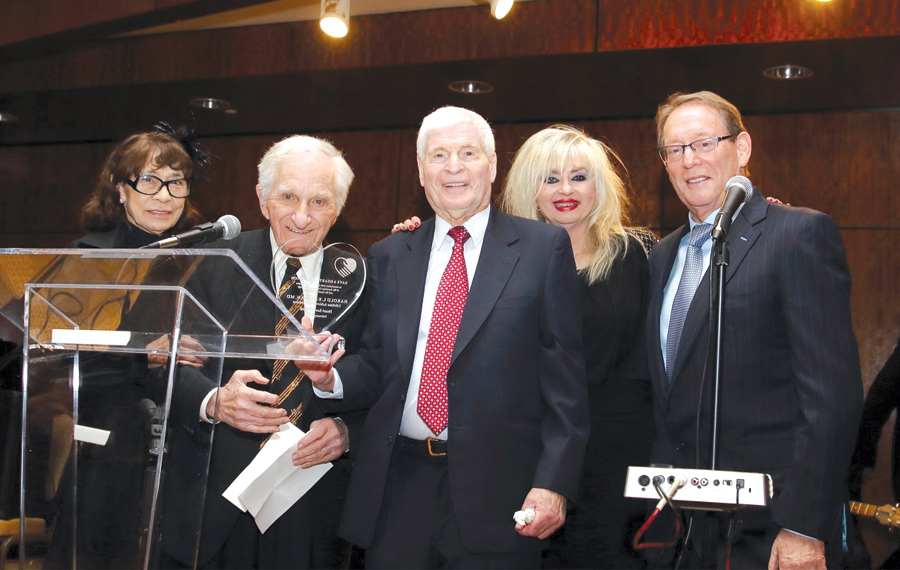
Save A Heart Foundation (SAHF) celebrated its annual gala at Sinai Temple on Feb. 8.

The foundation honored Beverly Hills cardiologist Dr. Harold Karpman with the Heart Saver Award, and the California chapter of the American College of Cardiology awarded the Elliot Rapaport Cardiologist of the Year Award to Dr. Yzhar Charuzi, founder and president of SAHF.

“We would like to take credit for several hearts who found their counterparts through Save A Heart Foundation functions over the years,” Charuzi said.

Charuzi noted that the organization has trained over 45 fellow Israeli doctors, mostly at Cedars-Sinai Medical Center, who now are the backbone of Israeli cardiology. He said the SAHF fellows have been industrious and productive researchers, and have returned to Israel to assume leadership positions in their respective fields. One of SAHF’s graduates, Doron Zahger, serves as the president of the Israel Heart Society.

Save A Heart Foundation recently joined forces with the American College of Cardiology and the Israel Heart Society to continue the mission of SAHF. The plan is to expand research opportunities for Israeli fellows to many academic cardiology programs in California, including Cedars-Sinai, Stanford University and USC.

Master of ceremonies Dr. Eli Gang welcomed the honorees and introduced the event’s chairwoman, Sarit Finkelstein-Boim, an executive board member at SAHF who has been volunteering with the organization for the past 30 years.

A special performance of the Israeli and U.S. national anthems featured a group from Shevet Harel, the Israeli scouts.

Maestro James Conlon, music director of the Los Angeles Opera, led a performance. Jimmy Gamliel and his band entertained the more than 200 guests, starting with the horah and continuing with more modern songs.
— Ayala Or-El, Contributing Writer


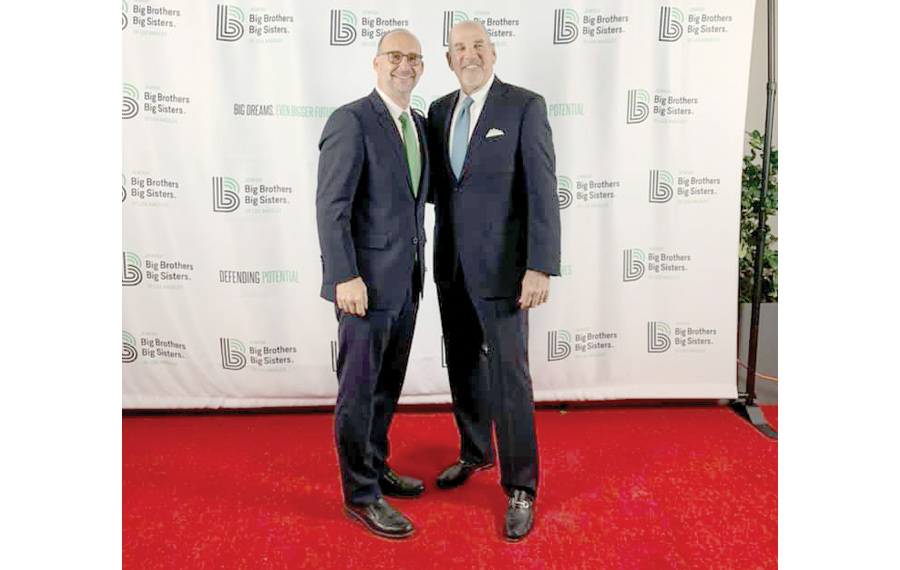
From left: Jewish Big Brothers Big Sisters of Los Angeles (JBBBSLA) CEO Randy Schwab and JBBBSLA honoree Mark Kuperstock. Photo by Chad Savage, courtesy ofCourtesy of JBBBSLA

Jewish Big Brothers Big Sisters of Los Angeles (JBBBSLA) held “Big Event 2020: A Taste in Hollywood” on Feb. 6 at NeueHouse in Hollywood.

The event, which kicked off with cocktails and dining, honored Mark Kuperstock with the Inspiration Award and raised more than $300,000 to support JBBBSLA’s mission.

According to JBBBSLA, Kuperstock’s involvement with the organization began in 1987 when he became a Big Brother to a 9-year-old named Joey. The friendship between the two continues to this day.

The honoree previously served as board president of JBBBSLA for three years and has served as a member of the board of directors since 2012.

Kuperstock, a principal and founding partner of Mulholland & Kuperstock Asset Management who lives with his wife, Caroline, and their son, Evan, in West Los Angeles, also has been involved with other youth charities and is a founding member of the Children’s Library Foundation.

“There is no doubt that my connection to JBBBSLA has been the most impactful and personally satisfying of all my community-related activities, and I look forward to continue supporting all that we do for many years,” Kuperstock said.

Established over 100 years ago, JBBBSLA “has provided innovative and impactful programs that have helped more than 100,000 children from across Los Angeles reach their potential,” according to the organization. It offers one-to-one mentoring, college guidance and scholarships, connects teens to social and emotional peer support, and owns and operates Camp Bob Waldorf.

Also in attendance was JBBBSLA CEO Randy Schwab.


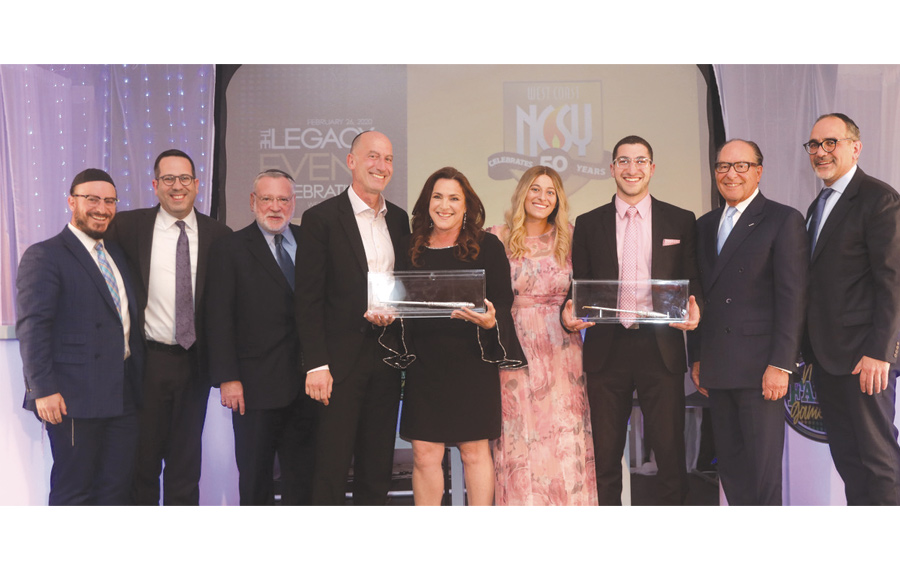
More than 225 people attended NCSY West Coast’s anniversary celebration, including (from left) Rabbi Derek Gormin, Rabbi Micah Greenland, Allen Fagin,
Jonathan, Daphne, Eliza and Jesse Orenshein, Lee Samson and Dr. Moshe Benarroch. Photo courtesy Etan Vann

More than 225 people attended NCSY West Coast’s 50th anniversary celebration at The Mark for Events in Pico-Robertson on Feb. 26.

The evening centered around “Saluting the Past, Supporting the Future” and focused on the organization’s work over the last five decades in inspiring Jewish teens on the West Coast.

The honorees were Steve and Eytan Darrison and Daphne and Jesse Orenshein, two parent-and-child pairs who are involved in various aspects of NCSY and continue to care about impacting the community around them, according to the organization, formerly known as the National Conference of Synagogue Youth.

Steve Darrison was involved with NCSY as a teenager growing up in San Jose. He eventually started a Sephardic chapter in the San Fernando Valley. Following in his father’s footsteps, Eytan has served as the West Coast NCSY adviser for Shabbaton programs and regional events.

When Daphne Orenshein was a teen, she was involved in all kinds of NCSY programs. Likewise, her son, Jesse, has been involved in a number of capacities.

Comedian Elon Gold hosted an NCSY family game show during the event.

NCSY, the Orthodox youth group under the auspices of the Orthodox Union (OU), connects Jewish teens to their roots through inspiration and leadership skills, according to the OU website. The West Coast is the largest NCSY region in the U.S.

“NCSY’s West Coast region has been a leader in educating Jewish teens and enhancing the spirituality and growth of thousands of our young people through innovative programs and services,” OU President Moishe Bane said in a statement. “We are so proud of their efforts as we celebrate this important milestone.”


Israeli actor Roy Horovitz performs the one-man show, “Do I Win or Do I Lose?” during a Friends of Sheba Medical Center event. Photo courtesy of Friends of Sheba Medical Center

Friends of Sheba Medical Center (FSMC) held a performance of the theater production “Do I Win or Do I Lose?” on Feb. 23 at The Pico in Los Angeles.

The one-man show, written and performed by Israeli actor Roy Horovitz, follows the perspective of a young man named Jerry as he recounts the both comedic and tragic story of his gambling addict grandfather’s battle with pancreatic cancer.

After the play, Horovitz and FSMC Executive Director Molly Soboroff participated in a Q&A session.

FSMC raises funds and awareness for Sheba Medical Center in Israel, which describes itself as the “leading medical center in the Middle East with advance treatment and research.”


Wanna be in Movers & Shakers? Send us your highlights, events, honors and simchas.
Email ryant@jewishjournal.com.

Save A Heart Gala, NCSY West Coast Turns 50 Read More »

What’s Happening: Purim Carnivals, Noa Sings, Joel Stein Talks

SAT MAR 14

“Sex, Addiction & Love”
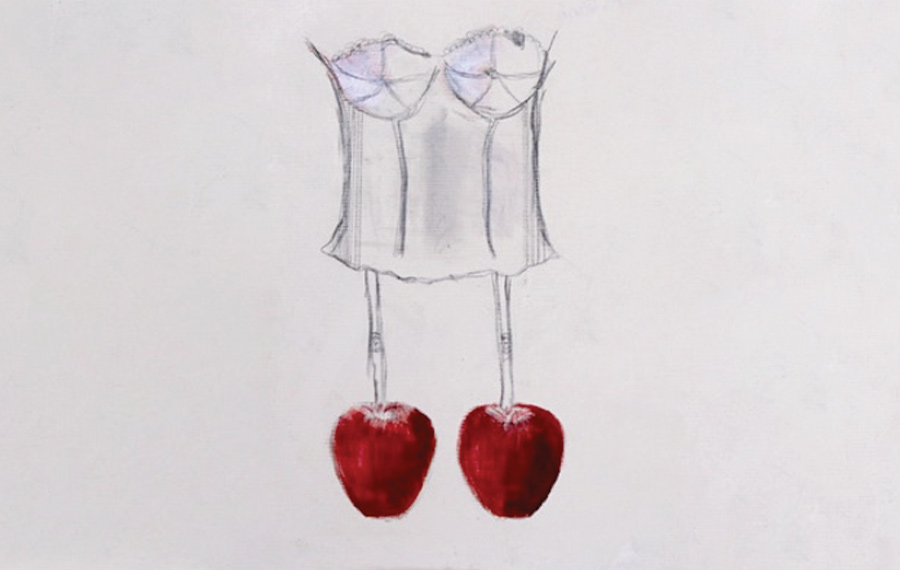
Jewish Women’s Theatre’s new production, “Sex, Addiction & Love in the 21st Century,” runs through March 24. The love-centered storylines may sound outrageous — even dangerous — but more often they are tender stories of love’s greatest hits: the first crush, the joy of holding hands and the sexual awakening of a high school freshman. For tickets and locations, visit Jewish Women’s Theatre online.

SUN MARCH 15

“Passover Around the World”
A multimedia concert featuring memorable Passover melodies in many languages and a cast of renowned musicians: Chloe Pourmorady, performing in Judeo-Persian and Ladino; Asher Shasho Levy, performing in Judeo-Arabic; and Jewlia Eisenberg and Jeremiah Lockwood, performing in Yiddish. Other attractions include food samples from around the world highlighting Passover traditions, catered by Got Kosher; an introduction to endangered Jewish languages, from Jewish neo-Aramaic to Judeo-Tat, by professor Sarah Bunin Benor of Hebrew Union College-Jewish Institute of Religion; a haggadah supplement with songs and images; and a raffle. 7-9:30 p.m. $15-$25. Pico Union Project, 1153 Valencia St., Los Angeles.

Noa Concert
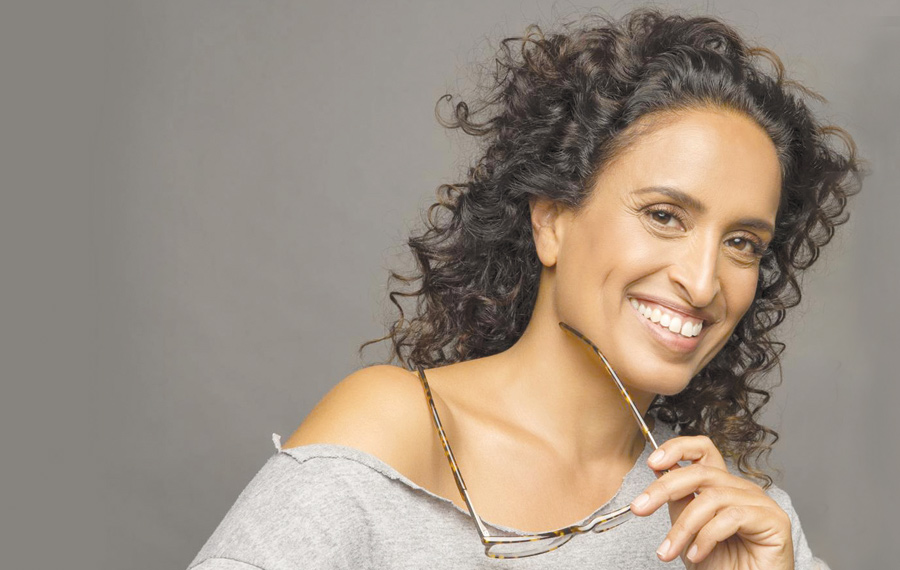
Israeli superstar Noa (Achinoam Nini) — who has entertained at the White House, Carnegie Hall and leading European venues — performs in Orange County at the Irvine Barclay Theatre. At the heart of Noa’s concert are songs from her original repertoire and “Letters to Bach,” her newly released album, produced by Quincy Jones. She appears with her musical director and guitarist Gil Dor. 7 p.m. $38-$100, reserved seats. Irvine Barclay Theatre, 4242 Campus Drive, Irvine.

SUN MAR 15

POSTPONED: Temple Judea Purim Carnival
Temple Judea’s Purim carnival features more rides than ever, along with food, games and more. 10 a.m.-3 p.m. $1 admission, $50 wristbands for rides only. Tickets required for food and games. Temple Judea, 5429 Lindley Ave., Tarzana.

Purim at Temple Akiba
Temple Akiba’s Purim carnival features a silent auction, laser tag, games, jumbo slides, tasty food, bake sale, cakewalk and prizes. 9 a.m. shpiel. 10 a.m.-2 p.m. carnival. $1 per ticket. $40, wristbands. Temple Akiba, 5249 S. Sepulveda Blvd., Culver City.

POSTPONED: The Yiddishe Beats
A concert with a beat celebrates the beauty of klezmer, Yiddish and cantorial music. Performers include Cantor Benzion Miller, the Mostly Kosher klezmer rock band, Cantor Netanel Baram and Rinat Shlomo Choir. Professor Mark Kligman, a professor of ethnomusicology and musicology at UCLA, conducts the performance. Noon-2 p.m. $18 regular, $35 premier seats, $100 VIP. Pre-RSVP requested. Beverly Hills Synagogue, 9261 Alden Drive, Beverly Hills.

TUE MAR 17

“Men, Marriage and Masculinity”
Believing that men face unique issues in becoming husbands and fathers, psychologist Jeffrey Marsh, a married father of three adult sons, speaks on “Men, Marriage and Masculinity: Reflections on Intimacy, Fatherhood and Career.” A Stephen Wise Temple member for decades, Marsh pioneered the temple’s father-child programs in the 1980s and he facilitates a private group there. His discussion offers insights into how to keep marriage vibrant and elevate the marital bond through meaningful communication while balancing the stresses of ordinary life. 7:30 p.m. $15 temple members, $20 general. Stephen Wise Temple, 15500 Stephen S. Wise Drive, Los Angeles.

WED MAR 18

Barry Sonnenfeld

Barry Sonnenfeld
Filmmaker Barry Sonnenfeld (“Get Shorty,” “Men in Black”) sits down for an intimate conversation with fellow filmmaker Rob Reiner as part of the downtown-based Live Talks L.A. series. Together they explore Sonnenfeld’s new memoir, “Barry Sonnenfeld, Call Your Mother: Memoirs of a Neurotic Filmmaker.” 8 p.m. $53 reserved seat and book, $43 general admission and book, $20 general admission. Aratani Theater, Japanese American Cultural & Community Center, 244 S. San Pedro St., Los Angeles.

“Violins of Hope”
The Los Angeles Museum of the Holocaust debuts its monthlong exhibition, “Violins of Hope,” featuring 12 Holocaust-era violins that have been restored by violinmakers Amnon and Avshalom Weinstein in Tel Aviv and are on a worldwide tour. Many of the violins, including instruments that were played by Jewish prisoners in concentration camps, are accompanied by stories of their previous owners. The event will include remarks by Avshalom Weinstein and program chair Susanne Reyto, along with a special violin performance. Exhibit runs through April 19. 7-8:30 p.m. $10 suggested donation. Los Angeles Museum of the Holocaust, 100 The Grove Drive. (323) 651-3704. lamoth.org. On March 15, Sephardic Temple, as part of its Sunday afternoon movie series, holds a screening of “Violins of Hope,” a documentary about the Weinsteins’ efforts to restore the violins recovered from the Holocaust. Refreshments served. 4:30 p.m. Free. Sephardic Temple, 10500 Wilshire Blvd., Los Angeles.

THU MAR 19

Joel Stein

CANCELLED: Joel Stein
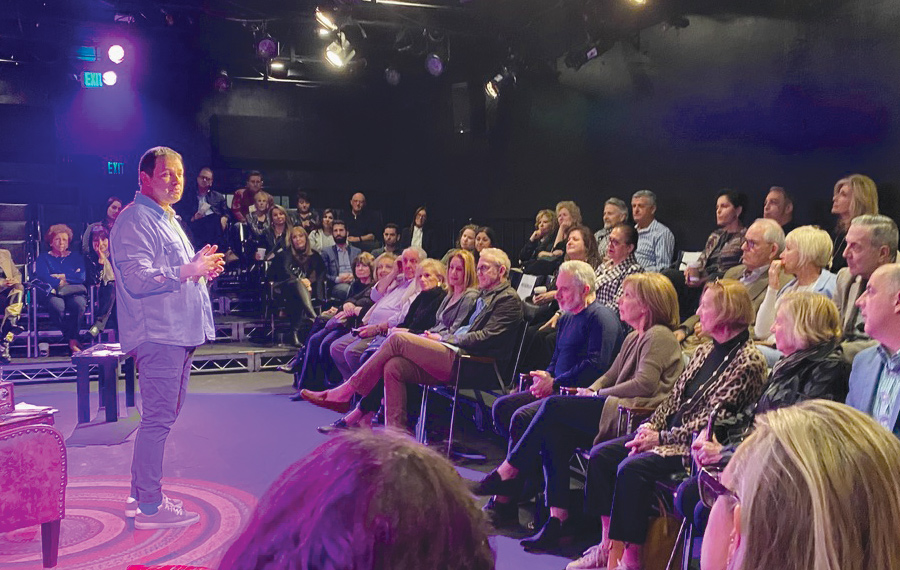
Former L.A. Times columnist Joel Stein — whose latest book is “In Defense of Elitism”— joins Rabbi David Wolpe for a dialogue at Sinai Temple. Their topic is “Bridging Differences,” how to respectfully engage as a community while retaining one’s own identity. 7:30-10 p.m. Free for Sinai members. $15 for general. Sinai Temple, 10400 Wilshire Blvd.

Update, March 11: The Joel Stein event has been cancelled because of the coronavirus.


Have an event coming up? Send your information two weeks prior to the event to ryant@jewishjournal.com for consideration. For groups staging an event that requires an RSVP, please submit details about the event the week before the RSVP deadline.

What’s Happening: Purim Carnivals, Noa Sings, Joel Stein Talks Read More »

Can You Make Your Own Hand Sanitizer?

Amid coronavirus fears, the Centers for Disease Control and Prevention (CDC) has reiterated that one of the best ways to fight germs is to wash your hands with soap and water. In theory, this is a great idea, but it’s not always convenient to get to a sink after you’ve touched a germy surface. They don’t have sinks on the Metro.

The next best alternative is to use a hand sanitizer, but lately it is impossible to find in stores thanks to hoarders. So, what’s a person to do?

You’ve probably seen posts on social media about how you can make your own hand sanitizer from alcohol and aloe vera gel. Good Housekeeping even ran an article about how you can use vodka as one of the ingredients, but it has since pulled it after the makers of Tito’s Vodka refuted this claim. (According to the CDC, a hand sanitizer must contain at least 60% alcohol to be effective, and most vodkas have 40% alcohol content.)

Since I’m always looking out for my readers, I decided that I would share with you all a tutorial about the correct way to make your own hand sanitizer. Unfortunately, things did not go as planned.

For your reference, here is the recipe you’ll find online:

2/3 cup rubbing alcohol
1/3 cup aloe vera gel
Drops of essential oil (optional)

Mix well and pour into bottles

Problem No. 1: Finding rubbing alcohol

To make hand sanitizer, you need isopropyl alcohol that is at least 91% alcohol. That way, when it’s diluted with the aloe vera gel, the total alcohol content will still be above 60%. But just as hand sanitizer has disappeared off the shelves, so has rubbing alcohol. I searched two Walgreens, one Rite Aid, one CVS, one Ralphs and a Target and could not find it. I almost resorted to looking for 190 proof Everclear Grain Alcohol, which has an alcohol content of more than 90%. Finally, I checked a third Walgreens and found a bottle of isopropyl alcohol. Yea! Now I just needed some aloe vera gel.

Problem No. 2: Finding aloe vera gel

Well, I couldn’t find any aloe vera gel, either. In fact, at the CVS I visited, the cashier said they were out of aloe vera, but they did have one bottle of actual hand sanitizer. I decided to check supplies online first before heading out to more stores, and I found out that the Target on La Cienega had some in stock. So I hopped on the Metro immediately and went to that store but, alas, the aloe vera shelf was cleaned out. I thought maybe a health store would have aloe vera, and lo and behold, I did find some at my local Whole Foods. Excellent, I thought. Now I was ready to make this germ-fighting concoction.

Problem No. 3: Mixing the two ingredients

In a mixing bowl, I measured the correct amounts of alcohol and aloe vera gel. And then I stirred. And stirred. And stirred. But the two ingredients did not combine. They separated so that there was alcohol on top and a gloppy mess of aloe vera on the bottom. There was no way this was going to work as hand sanitizer. Perhaps the aloe vera gel I found was too thick and needed to be more watery to blend in with the alcohol. But I was not in the mood to run all over town looking for more brands of aloe vera gel to test their compatibility with alcohol.

After my DIY hand sanitizer fail, I guess I’ll have to find a sink to wash my hands whenever I can. Now if only I can figure out how to make my own toilet paper.


Jonathan Fong is the author of “Flowers That Wow” and “Parties That Wow,” and host of “Style With a Smile” on YouTube. You can see more of his do-it-yourself projects online.

Can You Make Your Own Hand Sanitizer? Read More »

Obituaries: March 13, 2020

Elinor Aaronson died Jan. 31 at 99. Survived by daughter Amy; son Arthur; 7 grandchildren; 11 great-grandchildren. Hillside

Edviga Adelman died Jan. 19 at 84. Survived by son Chris (Lisa); 2 grandchildren. Hillside

Martha Bayer died Jan. 25 at 98. Survived by daughters Harriet, Donna; 2 grandchildren; 5 great-grandchildren. Hillside

Sheila Beller died Feb. 17 at 84. Survived by daughters Marla (Jim) Gilb, Ylana (Carmine) Beller Marino; son Mark (Rachel); 9 grandchildren. Mount Sinai 

Anne Berg died Feb. 15 at 103. Survived by son Harvey (Michele);3 grandchildren; 3 great-grandchildren. Mount Sinai 

Howard Bodenheimer died Feb. 19 at 69. Survived by wife Michele Stein; son  Gabriel (Tayja) Stein-Bodenheimer. Mount Sinai 

Bernice June Cheifer died Feb. 12 died at 97. Survived by daughters Arlene Germann, Barbara (Wim) Degroot; son Cary. Mount Sinai  

Jerold Perry Drucker died Feb. 9 at 87. Survived by daughter Dena; son Craig (Cynthia); sister, Eleanor Guy. Mount Sinai 

Martin Joseph Dusig died Feb. 13 at 82. Survived by wife Maxine; daughter Michelle (Lorin) Wiener; son Matthew (Laura Dicterow); 2 grandchildren. Mount Sinai 

Herbert Engelhardt died Jan. 21 at 70. Survived by daughter Bonni; son Casey (Simone); 4 grandchildren. Hillside

Harriet Evans died Jan. 20 at 92. Survived by daughter Joan (Michael); son Neil (Jody); 7 grandchildren; 1 great-grandchild. Hillside

Bertram Finmark died Jan. 29 at 94. Survived by wife Wilma; daughter Pamela; sons Bryan,  Gary; stepson Mark; 3 grandchildren; sister Sybil. Hillside

Robert Friedman died Jan. 29 at 85. Survived by wife Carole; daughters Karen, Jill; son Mark; 5 grandchildren. Hillside

Esther Gabel died Feb. 18 at 96. Survived by daughter Ellen (Peter Frayne) Gabel-Frayne; son Fred Geiger; 6 grandchildren; 5 great-grandchildren; sister Ursula Gisler. Mount Sinai 

Nathan Goodfriend died Jan. 28 at 98. Survived by wife Louise; daughter Karen; sons Mark (Elaine), Michael (Pam); 5 grandchildren; 3 great-grandchildren. Hillside

Joyce Goodstein died Jan. 19 at 90. Survived by daughters Randi, Wendy; 4 grandchildren; 2 great-grandchildren. Hillside

Samuel Halper died Jan. 31 at 91. Survived by wife Sylvia; sons Louis, William (Joyce); 7 grandchildren; 2 great-grandchildren. Hillside

Myron Holburt died Feb. 3 at 95. Survived by wife Idell; daughter Sharon (Neil); sons Ernest (Susan),  Jonathan (Maria); 5 grandchildren; 3 great-grandchildren. Hillside

Roni Katzil died Jan. 28 at 14. Survived by mother Dana; father Yaron; sister Adi; brother Eyal; grandparents Rachel, Mashih, Haya, Pinchas. Hillside

Mervin Kurtzman died Jan. 19 at 95. Survived by daughter Ilene; sons Gary (Maria), Steven; 5 grandchildren; 1 great-grandchild. Hillside

Hertha Leshner died Jan. 18 at 94. Survived by cousins Leigh, Carol. Hillside

Pearl Levine died Jan. 30 at 93. Survived by daughter Marsa. Hillside

Susan Rose Littwin died Feb. 9 at 81. Survived by husband Larry; sons Alex (Inna), Andrew (Emma); 2 grandchildren. Mount Sinai 

Marianne Lockman died Jan. 30 at 97. Survived by husband Howard; daughter Tere. Hillside

Talma Maguen died Feb. 3 at 76. Survived by husband Ezra; daughter Shira (Matthew); sons Barak (Jennie), Jonathan; 4 grandchildren. Hillside

Joan Proffitt died Jan. 20 at 97. Survived by daughter Laurie; son Gary (Sheryl); 3 grandchildren;  6 great-grandchildren; sister (Jeannie). Hillside

Merle Ribnick died Feb. 15 at 91. Survived by son Wayne (Kirsten); daughter  Wendy (Neil) Firstand; 4 grandchildren; 2 great-grandchildren. Mount Sinai 

Naomi Sandler died Jan. 29 at 78. Survived by husband Barry; stepson Evan; brother Edward. Hillside

Esrak Sassoon died Jan. 28 at 88. Survived by wife Seemah; daughter Deborah; son Aaron; 6 grandchildren. Hillside

Lillian Schlagel died Feb. 13 at 97. Survived by daughter Susan (Yossi) Havusha; 2 grandchildren. Mount Sinai 

Matthew Schwartz died Jan. 29 at 67. Survived by wife Isadora; son Aaron (Courtney); sister Narda. Hillside

Ethel Shaper died Feb. 2 at 98. Survived by daughter Judy; son Paul (Tammy). Hillside

Mary Silver died Jan. 30 at 84. Survived by daughter Debi; sister Arlene. Hillside

Stanley Spiro died Jan. 17 at 84. Survived by wife Nola; daughters Vivienne, Lee; son Errol; 6 grandchildren. Hillside

Jean Surmi died Feb. 14 at 89. Survived by daughter Vanessa Bechtol; 1 grandchild; sister Elena Surmi Uranga. Malinow and Silverman 

Irving Vigdor died Feb. 13 at 90. Survived by wife Betty; sons James, Edward, William (Julie); 3 grandchildren. Mount Sinai 

Adele Weinstein died Jan. 17 at 103. Survived by sons Roy (Julia), Mark; 5 grandchildren; 3 great-grandchildren. Hillside

Obituaries: March 13, 2020 Read More »

LA County Health Department Announces First Coronavirus Death in the County

A woman has become the first person to have died from the coronavirus in Los Angeles County.

The Los Angeles County Department of Public Health Director Barbara Ferrer announced the death on March 11 during a press conference. Ferrer said the woman, who was in her 60s, was not from the county but was visiting friends in the county. She had recently traveled, which included a lengthy layover in South Korea.

Ferrer also announced that there were six new cases of coronavirus in the county, bringing the current total of cases in the county to 27. Three of the new cases were in household contact with someone who already tested positive for the virus; two of the new cases had recently traveled and one case is believed to be a community transmission.

“We all know that there are more cases in our community that have yet to be diagnosed and we need everyone to help us try to slow the spread of this infection,” Ferrer said, urging everyone to engage in “social distancing.”

One of the cases in Los Angeles County is believed to be a parent of a student at Hillel Harkham Hebrew County who attended the America Israel Public Affairs Committee (AIPAC) policy conference in Washington, D.C. from March 1-3. A Riverside County resident who tested positive for the virus attended the StandWithUs AIPAC reception at the Renaissance Hotel on March 1. There have been at least six reported instances of AIPAC attendees testing positive for coronavirus.

The full press conference can be seen below:

https://www.facebook.com/lapublichealth/videos/256672045332633/

LA County Health Department Announces First Coronavirus Death in the County Read More »