fbpx

February 12, 2020

In Op-Ed, Congressman, Former FBI Agent Urge Congress to Designate White Supremacists as Foreign Terrorists

Rep. Max Rose (D-N.Y.) and former FBI agent Ali Soufan called on Congress to designate white supremacists as foreign terrorist organizations in a Feb. 11 New York Times op-ed.

Rose, who is also an Army veteran, and Soufan argued that white supremacist organizations have an international reach in Western countries; they compared them to al-Qaida.

“They transcend national barriers with recruitment and dissemination of propaganda,” they wrote. “And just as jihadists exploited conflicts in Afghanistan, the Balkans and Syria, so too are white supremacists using the conflict in Ukraine as a laboratory and training ground.”

As examples, Rose and Soufan pointed to the Azov Battalion, an organization that trained “several of the men responsible for fomenting violence at the Unite the Right rally in Charlottesville, Va., in August 2017.” They also noted that the Australian suspect in the shootings at a mosque and an Islamic center last March in Christchurch, New Zealand, wore an Azov symbol.

Additionally, Rose and Soufan highlighted the neo-Nazi Atomwaffen Division, which uses “ISIS-style recruitment videos.” Two British men were convicted of terror charges in June for promoting Atomwaffen and the Atomwaffen-inspired Sonnenkrieg Division, they wrote.

Rose and Soufan argued that it is imperative to designate such white supremacist organizations as terrorists to ensure that law enforcement can use their full arsenal of tools and methods.

“First, they could monitor communications between people connected to the designated groups,” they wrote. “Second, they could share intelligence with our allies overseas, an important asset when dealing with international terrorism. And third, they could bring charges for providing material support to the designated groups, with appropriately severe penalties attached.”

Rose and Soufan concluded: “Terrorism is terrorism, however its perpetrators justify it inside their twisted minds. If these peddlers of hate hoped to silence us by attacking us online, they have failed. They’ve only hardened our resolve.”

Jewish groups praised the op-ed.

“This is a tremendously important piece and a must-read from @Ali_H_Soufan
and @MaxRose4NY, breaking down why we need to treat the spread of white supremacy as the global terror threat that it is,” Anti-Defamation League CEO Jonathan Greenblatt tweeted.

The American Jewish Committee tweeted, “Jihadists and white supremacists both seek to undermine our diverse nation. Neither can be ignored in the fight against hate in America.”

New York Times columnist and opinion editor Bari Weiss tweeted, “It was a pleasure to work with @MaxRose4NY and @Ali_H_Soufan–two people I admire tremendously–on this important piece about why we need to designate white supremacist groups as foreign terrorist organizations.”

In Op-Ed, Congressman, Former FBI Agent Urge Congress to Designate White Supremacists as Foreign Terrorists Read More »

What’s Happening: Dershowitz Debates, Schatz Installation

FRI FEB 14

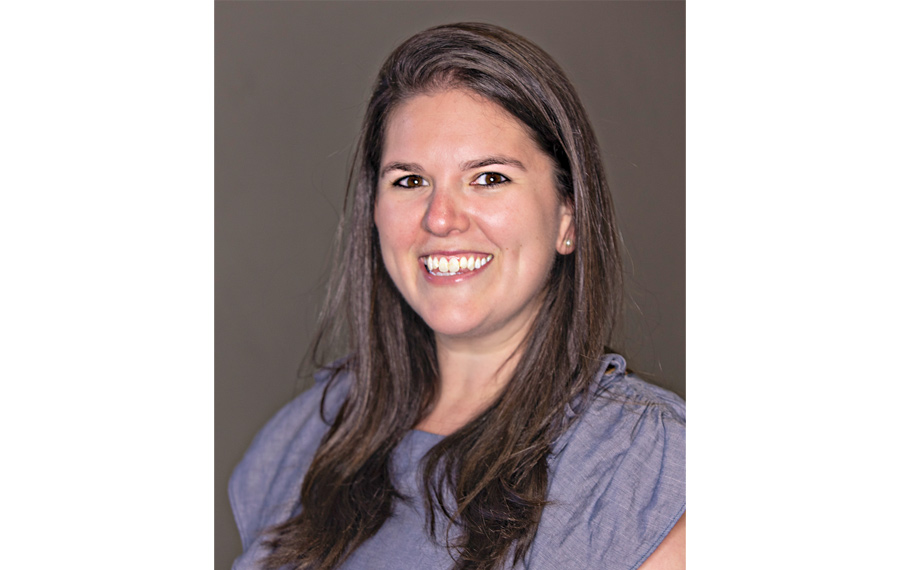
Rabbi Rebecca Schatz

“Fighting for the Right to Fight”
A traveling exhibition at the Museum of Tolerance (MOT) focuses on the quiet courage of African American men and women in the military and on the home front during World War II. Originally at the National World War II Museum, the exhibition recently opened a three-month run at the MOT. One theme emphasizes how bravely they fought to free others from the tyranny of Axis powers while being denied similar freedoms in their homeland. Through May 6. 10 a.m.-5 p.m. Sunday through Thursday. 10 a.m.-3:15 p.m. Fridays. $15.50 adults, $12.50 seniors, 62 and older, $11.50 students and children ages 5 and older. Free for military personnel. Museum of Tolerance, 9786 W. Pico Blvd.

Schatz Installation
Ordained at Ziegler School of Rabbinic Studies at American Jewish University, Rabbi Rebecca Schatz is installed as assistant rabbi. Adas Israel Congregation Rabbi Aaron Alexander, former associate dean of the Ziegler School, will be installing Schatz. 5 p.m. Shabbat Sovev services, installation, community dinner and learning with Alexander. Dinner $25 adults, $15 for ages 2-12. Temple Beth Am, 1039 S. La Cienega Blvd. RSVP requested. Saturday night, Melava Malka and learning. 7:30 p.m. RSVP for address.

Mohammed Al Amawi
Born in 1986 in Yemen to Muslim parents who taught him to hate Jews and the West, Mohammed al Samawi was so desperate to escape during Yemen’s civil war he thought about killing himself. Author of “The Fox Hunt: A Refugee’s Memoir of Coming to America,” he speaks with Joe Goldman from HIAS about his frantic flight and the issue of borders, boundaries and opportunities. 8 p.m. Nonmembers should bring a photo ID. Temple Isaiah, 10345 W. Pico Blvd.

SAT FEB 15

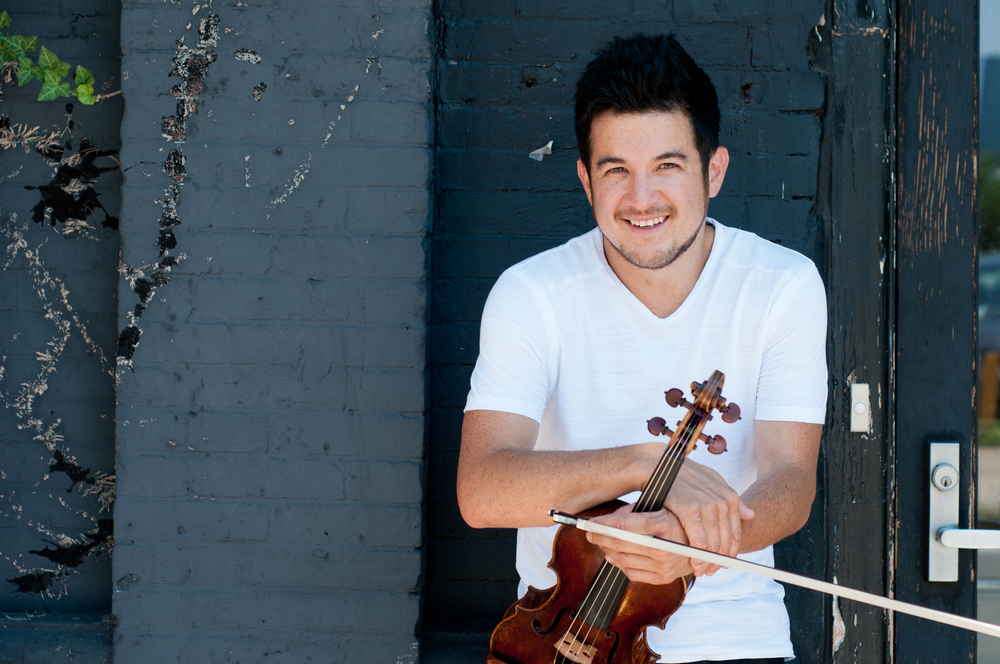
Nick Kendall

Gershwin-Debussy Concert
Violinist Nick Kendall performs George Gershwin’s magnum opus, “Porgy and Bess.” Based on the 1925 novel “Porgy,” Gershwin’s opera debuted in 1935. The program also includes Aaron Copland’s “Fanfare for the Common Man” and Debussy’s “La Mer.” 2 p.m., 8 p.m. $35-$127. Ambassador Auditorium, 131 S. St. John Ave., Pasadena.

SUN FEB 16

“It Shoulda Been You”
What’s a somewhat emotional Jewish mother to do when her daughter intends to marry a Catholic boy? “It Shoulda Been You” was nominated for a dozen awards following its 2015 Broadway debut. 7-10 p.m. Tickets start at $30. Alex Theatre, 216 N. Brand Blvd., Glendale.

Tu B’Shevat Hike
A post Tu B’Shevat moderate seven-mile roundtrip hike with members and friends of IKAR Green Action and Temple Beth Am. Bring water, sunscreen, hiking boots and a picnic lunch. Meet at the trailhead at the end of Brentwood’s Westridge Road and hike to the Nike Missile site. Led by Jeff Zimmerman and Rabbi Keilah Lebell. 9:45 a.m.-1:30 p.m. Free.

MON FEB 17 


Alan Dershowitz

Alan Dershowitz
Lawyer and professor Alan Dershowitz, who has defended President Donald Trump, debates the politics of impeachment with USC political science professor Robert Shrum. They discuss “Why Can’t Americans of Different Political Views Talk Anymore? What’s Happened to our Society?” Moderators are Temple of the Arts Rabbi David Baron and former Ninth Circuit Judge Alex Kozinski. Organized by the Republican Jewish Coalition and StandWithUs, among others. 6 p.m. doors open. 7:30 p.m. program. $25. Free for college and high school students. Saban Theatre, 8440 Wilshire Blvd., Beverly Hills. (323) 658-9100. dershowitzatthesaban.eventbrite.com. Dershowitz also appears Feb. 15 at Nessah Synagogue at 10:30 a.m. 142 S. Rexford Dr., Beverly Hills.

“Many Voices, One Song”
Celebrating its 50th birthday, Gindi Maimonides Academy stages the concert “Many Voices, One Song,” at the Wiltern Theater, featuring singers Hanan Ben-Ari, Benny Friedman, Baruch Levine and Mordechai Shapiro. Group tickets available. 5:45 p.m. doors open. 6:30-9:30 p.m. concert. $20-$1,000. The Wiltern, 3790 Wilshire Blvd.

The Thirty-Year Genocide
Historian Benny Morris discusses his recent book, “The Thirty-Year Genocide: Turkey’s Destruction of Its Christian Minorities,” with Robert Nicholson of the Philos Project. Morris’ work is a reappraisal of the massacres perpetrated by the Ottoman Empire and the then Turkish Republic against their Christian minorities. 7 p.m. Free. Los Angeles City Hall, 200 N. Spring St., Los Angeles. Parking information at City Hall provided upon RSVP.

TUE FEB 18

Growing Up in Gaza
Yousef Bashir was a boy in Gaza when, during the Second Intifada in 2000, Israeli soldiers took over his home. His father refused to leave because he feared losing the family and believed in peaceful co-existence. Bashir speaks with Rabbi David Woznica about the release of his new book, “The Words of My Father.” 7:30 p.m. $15 members, $20 general. Stephen Wise Temple, 15500 Stephen S. Wise Drive. RSVP by clicking the link above.

The Nazi Collaborator
Journal contributors Tom Teicholz and Michael Berenbaum discuss Teicholz’s book, “Ivan of the Extermination Camp: How the Trials and Denials of Nazi Collaborator John Demjanjuk Added to Our Understanding of the Holocaust,” an account of the notorious Nazi collaborator’s 30-year legal battle in the U.S., Israel and Germany. 7:30 p.m. Free. Wilshire Boulevard Temple Westside Irmas Campus, 11661 W. Olympic Blvd.

WED FEB 19

“Steam Dream 2020”
Five women who have worked in medicine, design, rocketry, research and finance discuss their journeys and their dreams with YULA’s next generation of leaders. 10:30 a.m. Free. YULA Girls High School, 1619 S. Robertson Blvd. 

THU FEB 20

Paris Chansons
Led by producer-vocalist Julia Kantor, musical ensemble Paris Chansons performs authentic live French music, including the sounds of French-Armenian singer Charles Aznavour and French singer-songwriters Joe Dassin and Edith Piaf. 8 p.m. $20. Culver Hotel, 9400 Culver Blvd., Culver City.

Jewish View on Abortion
What ought to be the Jewish response to a wave of recent legislation that seeks to tighten access to abortion nearly a half-century after Roe v. Wade? Rabbi Rachel Sabath Beit-Halachmi and Daphne Lazar Price of the Jewish Orthodox Feminist Alliance weigh the ethical and practical implications. 7-9 p.m. Free. Temple Emanuel of Beverly Hills, Corwin Family Sanctuary, 300 N. Clark Drive, Beverly Hills.

“On the Map”
A discussion and screening of the documentary “On the Map” — a story of the Maccabi Tel Aviv basketball team’s triumph over the Soviet Union’s Red Army team in 1977. 1 p.m. $10. American Jewish University, Burton Sperber Jewish Community Library, 15600 Mulholland Drive.

Challah Bake
Boys and girls join the adults in the kitchen for a challah bake. 6:30 p.m. Kehillat Ma’arav, 1715 21st St., Santa Monica.

Have an event coming up? Send your information two weeks prior to the event to ryant@jewishjournal.com for consideration. For groups staging an event that requires an RSVP, please submit details about the event the week before the RSVP deadline.

UPDATED FEB. 13: This article was updated to reflect that only Time for Three’s violinist, Nick Kendall, will be performing on Feb. 15 at the Ambassador Auditorium.

What’s Happening: Dershowitz Debates, Schatz Installation Read More »

JNF Breakfast, Yad Vashem Event, ‘Shoah’ Screening

American Society for Yad Vashem held the first of its three-part series “#EducateAgainstHate” at Sfixio restaurant in Beverly Hills, on Jan. 30.

During the event, award-winning filmmaker Roberta Grossman screened her documentary “Who Will Write Our History,” the story of Emanuel Ringelblum and the secret archive of the Warsaw Ghetto.

Attendees included Holocaust survivor and Yad Vashem benefactor Susanne Czuker; Stanley Stone, executive director at American Society for Yad Vashem; and Donna Elyassian, the organization’s senior director of development.

The next two events in the Yad Vashem series will be held at the same location. On Feb. 27, USC history professor Steven J. Ross will discuss his book “Hitler in Los Angeles: How Jews Foiled Nazi Plots Against Hollywood and America,” and participate in a Q&A session with Frank Mottek of KNX-AM. On March 26, Yad Vashem Holocaust historian Na’ama Shik will discuss “Women in Resistance: The Heroic Role of Women in the Holocaust,” with a Q&A moderated by Academy Award-winning Israeli filmmaker Guy Nattiv.

American Society for Yad Vashem supports the efforts of Yad Vashem, the Holocaust remembrance center in Jerusalem.


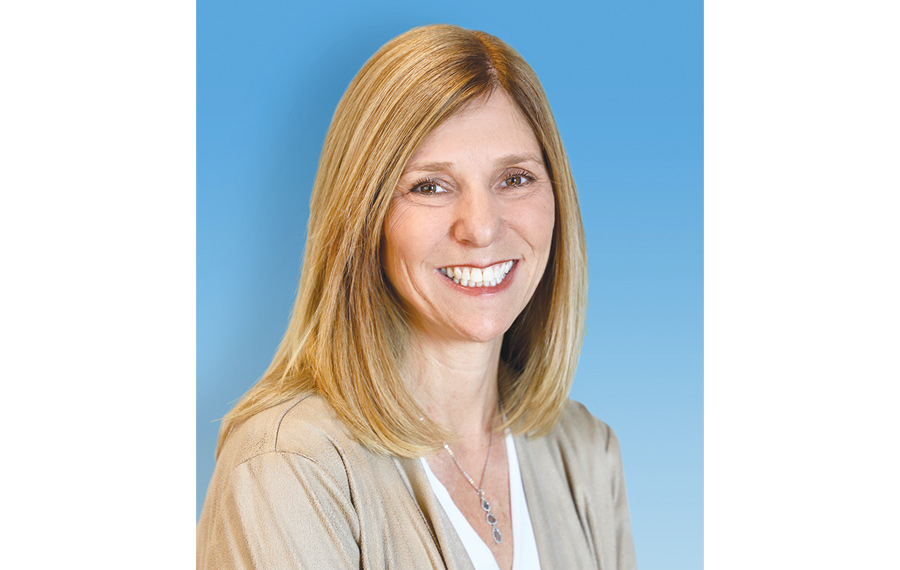
Lori Klein, vice president of the Center for Designed Philanthropy at the Jewish Community Foundation of Los Angeles. Photo courtesy of the Jewish Community Foundation of L.A.

The Jewish Community Foundation of Los Angeles (JCFLA) has named Lori Klein vice president of its Center for Designed Philanthropy, also known as “The Center.” 

According to a Jan. 31 announcement, Klein will be responsible for managing grantmaking programs and helping donors establish meaningful charitable legacies that maximize the impact of their giving.

“We are pleased to welcome Lori Klein to The Center and as a member of our senior management team,” JCFLA President and CEO Marvin Schotland said in a statement. “She brings extensive experience in strategic planning, program development and management, grantmaking, volunteer management, mentoring, and organizational and board development.”

Klein previously served as the executive director of the nonprofit Students 4 Students, which seeks to end college homelessness, and as associate chief program officer and senior vice president of the Caring for Jews in Need initiative at The Jewish Federation of Greater Los Angeles.

With more than $1 billion in assets, the Jewish Community Foundation of Los Angeles describes itself as the “largest manager of charitable assets and planned-giving solutions for local Jewish philanthropies.”


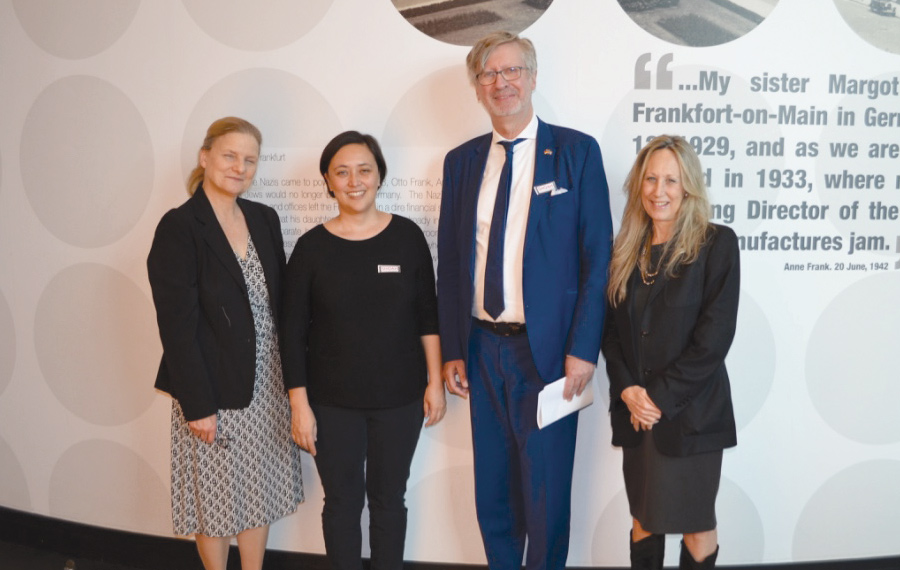
From left: Lorraine Sais of the Museum of Tolerance; Lien Heidenreich-Seleme, director of Goethe-Institut Los Angeles, Consul General of the Federal Republic of Germany Stefan Schneider and Hilary Helstein, executive director of the Los Angeles Jewish Film Festival. Photo courtesy oftheL.A. Jewish Film Festival

A screening of “Shoah” was held at the Museum of Tolerance (MOT) on Jan. 27 in commemoration of International Holocaust Remembrance Day and the 75th anniversary of the liberation of Auschwitz. The 1985 documentary by renowned French filmmaker Claude Lanzmann ran in its entirety for 9 1/2 hours.

According to Hilary Helstein, executive director of the Los Angeles Jewish Film Festival, which organized the screening in cooperation with MOT and the Goethe-Institut, roughly 150 people attended.

Attendees included Lorraine Sais of the Museum of Tolerance, Lien HeidenreichSeleme, director of Goethe-Institut Los Angeles, and Consul General of the Federal Republic of Germany Stefan Schneider.

The screening was one of several programs held throughout the day to commemorate International Holocaust Remembrance Day.


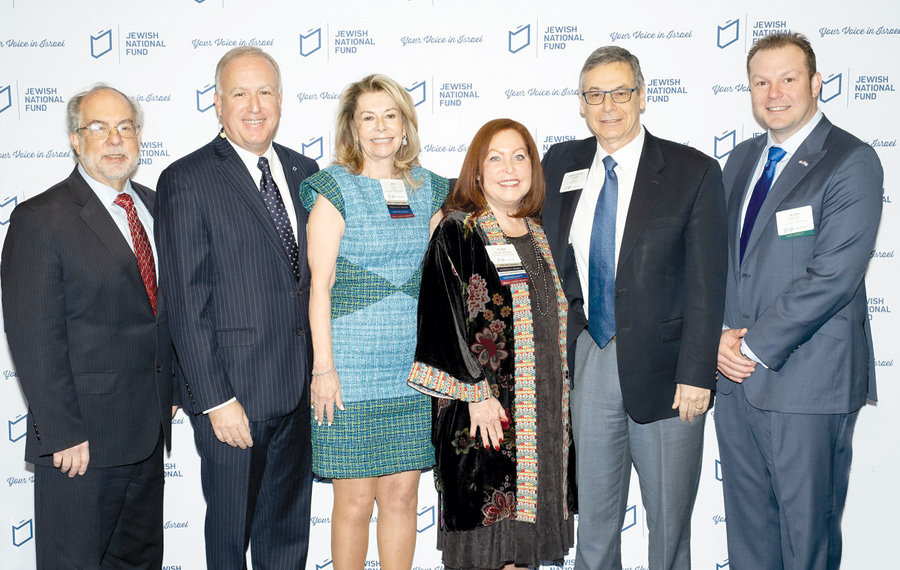
From left: Valley Beth Shalom Rabbi Ed Feinstein, JNF LA Board Member Mark Wittcoff, JNF Breakfast Co-Chair Judy Levin, LA Board President Alyse Golden Berkley, former Israeli Ambassador to the U.S. Danny Ayalon and Breakfast Co-Chair Allen Brodetsky.

Jewish National Fund (JNF) held its fourth annual Breakfast for Israel on Feb. 4 at the Hilton in Woodland Hills. 

The event featured former Israeli Ambassador to the United States Danny Ayalon in conversation with Valley Beth Shalom Rabbi Ed Feinstein on “No Hate, No Fear: A Discussion About Anti-Semitism.” They broached topics including the Mideast peace plan recently proposed by President Donald Trump, the resurgence of anti-Semitism and the work being done by JNF “to strengthen and support Israel,” according to a release by JNF.

“Israel is where it is today thanks in large part to Jewish National Fund,” Ayalon said during the conversation. 

Appearing in the Los Angeles area in advance of Tu B’Shevat, Ayalon credited JNF with the abundance of trees planted in Israel, saying, “Israel is the only country in the world that has more trees today than it did 50 years ago.”

Ayalon approved of Trump’s Israeli-Palestinian peace plan saying, “I appreciate the plan because it doesn’t pay lip service to Israel’s security and doesn’t compromise on recognizing Israel as a Jewish state.”

Judy Levin and Allen Brodetsky chaired the event, which also featured JNF Los Angeles Executive Director Lou Rosenberg, who discussed the work JNF does on the ground in Israel and the organization’s “One Billion Dollar Roadmap for the Next Decade” campaign.


Want to be in Movers & Shakers? Send us your highlights, events, honors and simchas.
Email ryant@jewishjournal.com.

JNF Breakfast, Yad Vashem Event, ‘Shoah’ Screening Read More »

A Religious Life Is a Sustainable One

If he were alive today, would the Lubavitcher Rebbe Menachem Mendel Schneerson be a vegetarian?

A few months ago, I read a thoughtful article in The Jerusalem Post that told the story of Rabbi Schneerson’s environmental activism. In a televised address in 1981 — with the United States weighing offshore drilling in light of the Soviet Union’s emergence as a leading oil producer, and amid early warnings of global warming — the Rebbe spoke in favor of solar energy investment.

“We have an open and clear path to utilize the sun,” he said. “This is a resource that this nation in particular, in its southern regions, has in very great abundance. This can all be achieved if it is based on the foundation of God’s help, and on faith in God.”

If only the nation had heeded the Rebbe’s advice sooner. It took until May 2018 for California to pass a law requiring new single-family homes to be fitted with solar panels, making it the first state to do so. By now the country (and the planet) needs much more than solar panels to stave off further environmental calamity. Higher global temperatures have already produced longer droughts and heavier storms, resulted in floods and crop failures, melted glaciers and put communities underwater. We are already in the midst of a mass extinction; we just haven’t begun to feel it yet.

Make no mistake: The climate crisis is a religious issue that strikes at the core of our Jewish values. From our origin story as people entrusted with the stewardship of God’s garden to our religious imperative to fix the world, responsibility to the planet has always been central to Jewish identity. But the feeling of urgency is hard to internalize when we feel so safe. When it comes to the climate, most Jewish Californians would be hard-pressed to complain — our neighborhoods don’t seem vulnerable to flooding or wildfires. (Though that’s not the case for our brothers and sisters in Houston, many of whom lost homes and some of whom drowned in recent hurricanes.)

Make no mistake: The climate crisis is a religious issue that strikes at the core of our Jewish values. From our origin story as people entrusted with the stewardship of God’s garden to our religious imperative to fix the world, responsibility to the planet has always been central to Jewish identity.

After all, what can one person do? One truth is that a single person can’t change much acting alone. The other truth is that without people acting alone, nothing can happen in aggregate. And the final truth — considered “extremely likely” by the Intergovernmental Panel on Climate Change — is that individual choices created this mess to begin with. 

The three major sources of human-caused greenhouse gas emissions are electricity and heat, farming and forestry, and transportation, and within that second category, beef production makes up the vast majority. That should put hamburgers, hot dogs and even fleishig cholent in the crosshairs for Jews if we’re going to make a sincere commitment to change. For many, this would be more than giving up a luxury — it would be tantamount to sticking the fork in some age-old Jewish traditions. But the question isn’t really about how painful it would be to cut our beef consumption or give it up entirely. It’s about whether we would be willing to endure such a change — even as a tiny minority group — if it only benefited people we never met. 

That seems to me the greatest reckoning for our faith in the era of climate change: As Jews, are we willing to make major lifestyle changes even if their effect barely registers for us? Much of Jewish halachah and tradition already answers this question. Indeed, this imperative is the essential challenge of moral action, a call that we must answer constantly as we create and re-create the society we live in, stopping at stop signs even when no one is around. It is the organizing principle of a faith-based life.

As Jews, are we willing to make major lifestyle changes even if their effect barely registers for us? Much of Jewish halachah and tradition already answers this question.

I don’t doubt that the Lubavitcher Rebbe would have given up meat — maybe sticking to poultry, whose carbon footprint is much smaller — if he thought it might make the world better for one other person. But he’s no longer with us, and contemporary Judaism doesn’t have a moral lighthouse to lead the way. Instead, we have hard evidence — another winter without rain, sweater weather in Antarctica, waterlogged Chumashim and moldy Sheetrock on the front lawn, the house on fire — informing our choices. 

It’s not just meat, of course. Jews, especially observant ones, tend to live in geographic clusters, with our needs of daily life — shuls, groceries, schools — all within walking distance. We should be at the forefront of nonmotorized transportation. That means not only driving less and joining carpools, but advocating for safer streets for pedestrians and cyclists. Take the train or the bus to the beach next time you go. 

It will feel different, maybe even uncomfortable, to order schnitzel instead of a burger, or to leave your car at home. But it’s just as likely that your first, small change — whatever it ends up being — helps you see the environment, and your place in it, in a more religious way.


Louis Keene is a writer based in Los Angeles. He tweets at @thislouis.

A Religious Life Is a Sustainable One Read More »

Obituaries: Feb. 14, 2020

Maureen Armand died Jan. 1 at 87. Survived by daughter Helene; son David; 3 grandchildren; sisters Irene, Jeanette. Hillside

Stanley J. Berk died Dec. 27 at 86. Survived by daughters Pamela, Karen (Damian) Smith; 3 grandchildren; brother Eugene. Mount Sinai

Martin Berman died Jan. 2 at 74. Survived by brothers Barry, David. Mount Sinai 

Earl Brookner died Dec. 21 at 83. Survived by wife Sheila; sons Darin, Allan Gregoire, Kevin Gregoire, Ken (Lisa) Gregoire; 2 grandchildren; sister Rena Shultzman. Mount Sinai 

Louis N. Buch died Nov. 26 at 93. Survived by wife Pauline; sons Charles (Donna), Michael (Noel), Jeffrey (Susan); 6 grandchildren; 1 great-grandchild. Chevra Kadisha

Yevgeniya Bykova died Dec. 29 at 87. Survived by daughter Alla (Oleg) Ashkinazi; son Michael (Valentina); 3 grandchildren; 4 great-grandchildren. Mount Sinai 

Bernice Cohen died Jan. 2 at 93. Survived by sons Preston (Norma) Fields, Craig Fields; 2 grandchildren. Mount Sinai 

Leatrice Cohen died Dec. 29 at 93. Survived by daughter Melinda (Dan); 6 grandchildren; 1 great-grandchild. Hillside

Robert Cohen died Jan. 1 at 73. Survived by sister Judith. Hillside

Donald P. Crasnick died Dec. 20 at 89. Survived by niece Laurie; nephews Richard, Michael. Mount Sinai

Shirley Cytron died Dec. 3 at 99. Survived by daughter Sally Cytron Gati; son Dan Cytron; son-in-law Frank Gati; 1 grandchild.

Rhea Dersh died Dec. 24 at 88. Survived by daughters Cynthia (Mark) Schein, Laurie (Kim) Williamson; son Steven (Jennifer); 5 grandchildren; 2 great-grandchildren. Mount Sinai 

Robert Jay Edrick died Dec. 24 at 94. Survived by wife Dorothy; daughter Lisa; son Alan. Mount Sinai 

Jerry Engle died Dec. 30 at 98. Survived by daughters Sherry Godfrey, Bonnie Flamm; 1 grandchild; sister Honey Bencomo. Mount Sinai 

Sherry Fishman died Jan. 7 at 70. Survived by husband Joel; daughter Dena; son Marc; 8 grandchildren; brothers Warren, Jeffrey. Hillside

David Foster died Dec. 23 at 90. Survived by wife Jackie; sons Tim, Gary (Lisa), Greg (Marci); 5 grandchildren. Hillside

Donald Gelberg died Dec. 25 at the age of 96. Survived by daughter Francee (Brad) Dawson; son Scott (Tobi) Martin; 4 grandchildren; 2 great-grandchildren. Mount Sinai 

Helen Gershen died Dec. 27 at 94. Survived by daughter Paulette (Mick). Hillside

Barbara Gilmour died Dec. 29 at 84. Survived by daughter Susan (Tim); son David (Robin); 4 grandchildren; 1 great-grandchild. Hillside

Edward Goodman died Dec. 28 at 97. Survived by wife Anne; daughter Laura Reiland; son Victor; 4 grandchildren. Mount Sinai 

Rae Kaplan died Dec. 20 at 99. Survived by daughter-in-law Sandy; 2 grandchildren. Beth El Cemetery, Paramus, N.J.

Maryanne Korn died Jan. 2 at 88. Survived by daughters Janis Semmelmayer, Cindy (Gregg) Rumbaugh, Lori (Michael) Rubin, Lisa (Fredd) Eichman; 4 grandchildren; brother Richard (Selma) Edelstein. Mount Sinai

Miriam Krause died Jan. 3 at 96. Survived by daughter Dawn (Robert); son Evan (Sherry); 5 grandchildren; 6 great-grandchildren. Hillside

Mark Lamken died Jan. 2 at 86. Survived by wife Norma; daughter Kathi; son Jeffrey; sister Laurie; 4 grandchildren. Hillside

Marilyn June Levy died Dec. 25 at 88. Survived by husband Charles; daughter Karen (John) Butterfield; sons Stevan (Susan), John (Lisa); 9 grandchildren; sister Janet (Allen) Halper. Mount Sinai 

Sidney Jurman died Jan. 4 at 79. Hillside

Frank Locascio died Jan. 7 at 86. Survived by daughters Elyse (Ron) Linn, Jill; sons Mark (Debbie), Stuart (Barbara); 6 grandchildren; 5 great-grandchildren. Mount Sinai

Adeline Mansfield died Dec. 29 at 97. Survived by nieces Frances (Joseph) Segal, Anne Marie (Philip) Klahr. Mount Sinai

Marcy Mintz died Dec. 20 at 66. Survived by sons Michael (Laurel), Brian (Tina); 3 grandchildren; brothers Steve (Avima) Shanker, Glenn Shanker. Mount Sinai 

Elkin S. Mittelman died Dec. 25 at 100. Survived by wife Marian; stepdaughter Susan Park; stepson David Park; 1 step-granddaughter; 1 step-great-granddaughter. Mount Sinai

Edith Muriel Moster died Dec. 24 at 94. Survived by sons Richard (Beverly Trunk-Moster), Ross (Laura Lee Coles); 1 grandchild; sister Arlene Rhodes. Mount Sinai 

Michael Newman died Dec. 31 at 102. Survived by wife Eva; daughter Francine Markow; son Joel; 2 grandchildren; 5 great-grandchildren. Mount Sinai

Belle Offstein died Dec. 29 at 103. Survived by sons Gary (Lois), Gerald (Elaine); 1 grandchild; 3 great-grandchildren. Mount Sinai

Bonnie Payne died Dec. 27 at 79. Survived by sister Barbara Sugarman. Mount Sinai 

Flora Pekar died Dec. 31 at 74. Survived by husband Nick; daughter Matasha (Alex) Zelener, Galina (Leo) Shterenberg; 4 grandchildren; brother Arkadiy Feldman. Mount Sinai

Elliott Politi died Dec. 19 at 87. Survived by sons Jeffrey (Aundrea), Mark; 4 grandchildren. Hillside

Donald Prell died Dec. 28 at 85. Hillside 

Seymour Prell died Dec. 27 at 97. Survived by daughters Judy, Nancy; sons Richard, Gary; 7 grandchildren. Hillside

Wayne Provisor died Dec. 20 at 77. Survived by daughters Rachel (Anwar), Jillian; 3 grandchildren. Hillside

Gary Rabin died Dec. 31 at 54. Survived by daughter Lila; sons Harrison, Charles; father Alexander; brother Jonathan. Hillside

George Richman died Dec. 26 at 85. Survived by sons Andrew (Susan), Darryl Steven (Heather); 2 grandchildren. Mount Sinai 

David Rittenberg died Dec. 27 at 92. Survived by wife Nina. Mount Sinai 

Elaine Ritterband died Jan. 3 at 76. Survived by daughter Julie (Ken); son David; 2 grandchildren. Hillside

Sally Rockoff died Dec. 16 at 84. Survived by sons Matthew “Matt” (Karen), Rodney “Rod” (Melissa); 4 grandchildren. Malinow and Silverman

Dora Rosenfeld died Dec. 30 at 90. Survived by daughter Elizabeth (Allen); 4 grandchildren; 2 great-grandchildren. Hillside

Marilyn Rosenwald died Dec. 19 at 85. Survived by husband Al; daughters Patricia, Susan. Hillside

Naomi Elizabeth Ruderman died Dec. 25 at 83. Survived by daughters Cimi Morgan, Teri Kidon; son Barry; brother Sanford Traves. Mount Sinai 

Jerry I. Senft died Dec. 27 at 93. Survived by wife Geraldine; daughter Cheri (Paul) Cohen; sons Steve (Marsha), David (Eva); 7 grandchildren; 3 great-grandchildren. Mount Sinai 

Barbara Shapiro died Dec. 15 at 71. Survived by husband Ernest; daughter Jennifer “Jenny” (Craig) Handjian; son Michael (Stephanie); 2 grandchildren. Malinow and Silverman

Bernard J. Shapiro died Dec. 21 at 89. Survived by wife Rena; daughters Susan (Jamie) Gesundhett, Linda Manasee, Gayle (Mitch) Pleassner; son Allan (Tammi); 13 grandchildren; 5 great-grandchildren; brother Leonard (Annette); sister-in-law Sharon Yadley. Mount Sinai

Adelynne F. Siegel died Dec. 31 at 89. Survived by daughter Marcia; son Robert; sister Sally Sylvia (Morton) Rich. Mount Sinai 

Robert Sirull died Jan. 2 at 92. Survived by daughters Beth (Jon), Hope (Sidney); son Julian; 6 grandchildren; brother William. Hillside

Ann Louise Sperber died Dec. 24 at 89. Survived by daughters Teri (Ronald) Sellz, Marcia (Lyle) Michelson, Carol (Larry) Ross; 8 grandchildren; 9 great-grandchildren. Mount Sinai

Edward Sterling died Dec. 28 at 91. Survived by daughter Michele; son Richard. Hillside

Stephen Strocker died Dec. 21 at 72. Survived by wife Barbara Avishay; daughters Carly (Louis) Epstein, Jenna (grant) Stern; sons Jason (Stefanie) Avishay, Ari (Brooke) Avishay; 7 grandchildren; sister Carol (Arnold) Yalam. Mount Sinai 

Arlene Sharon Tanzer died Dec. 25 at 78. Survived by daughter Kim; son Jason. Mount Sinai 

Michael Tenzer died Dec. 30 at 89. Survived by wife Jacqueline; sons Gary (Nancy), Marc (Laurie); 1 grandchild; sister Alice. Hillside

Ronnie Tiefer died Dec. 17 at 73. Survived by daughters Andrea Howe, Tammy; brothers Robert (Karin) Winnick, Ralph (JoAnne) Winnick. Malinow and Silverman

Yevgeniya Trostanetskaya died Dec. 20 at 67. Survived by husband Arkadiy; daughter Yelena; son Alex; 3 grandchildren. Hillside

Lev Tsukerman died Dec. 27 at 87. Survived by son Oleg (Katrina); 2 grandchildren. Mount Sinai 

Miriam Ulman died Dec. 17 at 90. Survived by daughter Jill Reder; son Larry (Jane) Ulman; 6 grandchildren; 4 great-grandchildren. Malinow and Silverman

Elaine Veltman died Dec. 20 at 94. Survived by daughter Randi (Ilan); sons Ross (Susan), Jim; sister Gerre; 7 grandchildren; 4 great-grandchildren. Hillside

Jason Wagner died Dec. 29 at 21. Survived by daughter Vera; father Phillip. Mount Sinai

Melvin Weber died Jan. 5 at 96. Survived by wife Pearl; daughter Janice (Robert) Sostrin; son Robert; 4 grandchildren; 2 great-grandchildren; brother Harvey. Mount Sinai 

Lee M. Weiss died Dec. 27 at 97. Survived by daughter Emily (Jon) Puro; son John; 1 grandchild. Mount Sinai 

Michael Weiss died Jan. 4 at 76. Survived by daughter Carrie (David); son Andrew (Stephanie); 5 grandchildren; sister Beth. Hillside

Sanford Wesler died Jan. 6 at 94. Survived by daughter Denise; son Michael; 4 grandchildren. Mount Sinai 

Marlene Wilk died Dec. 20 at 81. Survived by husband Sanford; daughters Beth (Todd), Dayna; 9 grandchildren; 1 great-grandchild; 1 brother. Hillside

Allee Willis died Dec. 24 at 72. Survived by sister Marlen Frost. Mount Sinai

David Wolf died Dec. 21 at 54. Survived by mother Joyce; father Robert; sisters Linda, Wendy; brother Michael (Patricia). Mount Sinai

Obituaries: Feb. 14, 2020 Read More »

Express Your Love With a Yiddish Sweethearts Banner

Every February in time for Valentine’s Day, stores stock up on Sweethearts candy conversation hearts, those chalky confections with sayings printed on them like “Kiss Me” and “Be Mine.” They don’t taste particularly good, but they are fun to receive. And you know what would make these candies even better? If the messages were in Yiddish. 

In that spirit, here’s a festive idea for a Valentine’s Day decoration — a banner of hearts featuring Yiddish terms of endearment. I’ve used craft foam sheets, but you can use colored paper if you have that around the house. These hearts also make great individual valentines. And if you don’t celebrate Valentine’s Day, you can save this idea for Tu B’Av in August. 

What you’ll need:
Colored craft foam sheets
Heart template
Pen
Scissors
Red marker
Hole punch
String


1. Draw a heart on a piece of paper to use as a template. This way, all your hearts will be the same size and shape. Place it on a craft foam sheet or piece of colored paper and trace with a pen.


2. Cut out the heart shape with scissors. Repeat with several colors to get that Sweethearts candy look. 


3. With a red marker, write your favorite Yiddish terms of endearment in the center of each heart. Full disclosure: I got some help from Google.


4. Punch a hole on the left and right edge of each heart and run a string through the hearts to create a banner.


Jonathan Fong is the author of “Flowers That Wow” and “Parties That Wow,” and host of “Style With a Smile” on YouTube. You can see more of his do-it-yourself projects online.

Express Your Love With a Yiddish Sweethearts Banner Read More »

Eva Robbins Surgically Explores the Mishkan

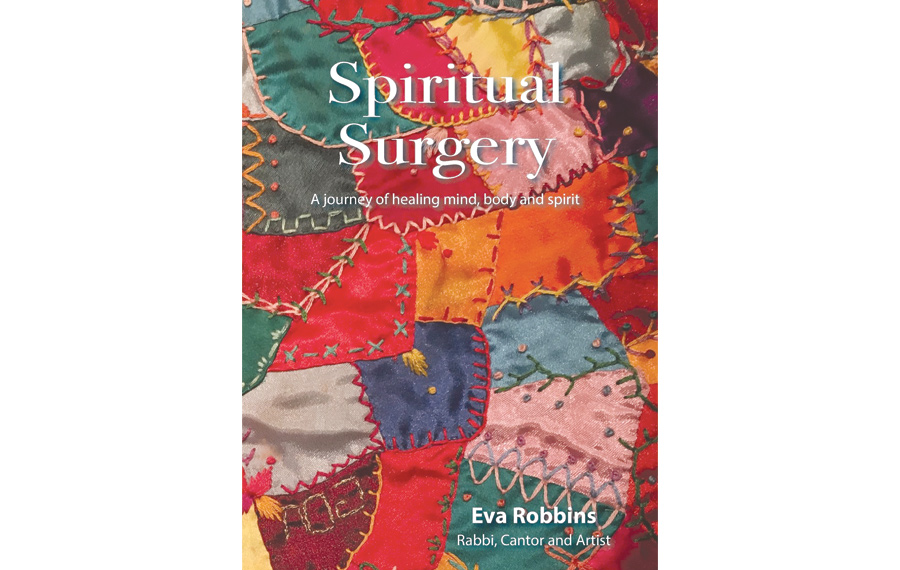
“Spiritual Surgery: A Journey of Healing Mind, Body and Spirit” by Eva Robbins draws on all of her skills, experiences and roles in life. Robbins is both the cantor and a rabbi at N’vay Shalom synagogue (which she co-founded with her spouse, Rabbi Stephen Robbins), a teacher of meditation and a fine artist.

“Through words, spiritual practice music and art, I knew there was a fundamental connection to healing in Judaism,” declares Robbins, who yearned “to weave spiritual yearning with creative energy,” a process of “repair and mending” that she calls “spiritual surgery.”

The carefully chosen words in the mission statement for her book, which is published by the author and available on Amazon.com, allow us to see what matters most to Robbins. Another clue is found on the cover of the book — a detail from a work of hand-stitched textile art fashioned by the author herself. Just as a surgeon uses needle and thread to close an incision, Robbins seeks to do something similar for the heart and soul. 

Thus does Robbins prepare us for the many-faceted jewel that is the core of her book — an extraordinarily rich and well-informed contemplation of the Mishkan, the tent-like mobile sanctuary that is described and discussed in no less than 13 of the 40 chapters of the Book of Exodus. “Torah presents one chapter on the creation of the world, which is to be a home for humankind,” she points out, “while it dedicates thirteen chapters to the creation of the Mishkan, which is to be a home for God.”

Her artist’s eye enables Robbins to perceive the Mishkan as a physical object, and she wants to know what it was made of and how it was assembled. “It was a large oblong structure with three central areas, consisting of fifteen different materials,” the author explains. “It boggles the mind that such a structure was put together and taken apart on a regular basis as the Israelites traveled through the desert, not to mention the sheer weight of all the metals, fabrics, woods and skins that were carried and used.” 

Eva Robbins looks beyond the “simple or literal,” as she puts it, and seeks to find the “interpretative, metaphorical, psycho-spiritual … secret or mystical” meanings of the Mishkan.

Drawing on the specifications that we find in the Torah, Robbins offers a site plan of the Mishkan, complete with linear measurements and placement of the Ark, the altars, the menorah, the bread table and the water basin. She provides a list of building materials — gold, silver, copper, bronze and wood — and the furnishings and tools that were used inside the Mishkan: tables, lampstands, pails, scrapers, basins, flesh hooks and fire pans. As a
textile artist, she pays special attention to “the fabric hangings of fine twisted linen in an open weave pattern” and the
screen fashioned of “blue, purple and crimson wool.”

But she also looks beyond the “simple or literal,” as she puts it, and seeks to find the “interpretative, metaphorical, psycho-spiritual … secret or mystical” meanings of the Mishkan. Expertly reviewing the writings of the commentators — ancient, medieval and contemporary — she considers both the practical uses and the higher symbolism of the structure. Ramban regarded the Mishkan as “the place where sacrifices are to be offered and the perpetual fire is to burn.” Avivah Zornberg suggests that the divine command to build the Mishkan was a test of Israel’s repentance for the sin of worshipping the Golden Calf. 

Drawing on the work of Mircea Eliade, Robbins sees a commonality between the Mishkan and all sacred sanctuaries in the ancient world, each of which was “a place … for cultic observance where space and ritual intersected.” The Mishkan and all that it contained, she writes, “created a ‘world in miniature,’ a universe encompassing all the many facets of Divine grace, becoming that ‘axis mundi’ where heaven and earth touched and God and man embraced.” 

For Robbins, however, another explanation stands out.

“[I] believe the Mishkan was a necessary healing instrument,” she affirms. “Living and working in the dark and painful environment in Egypt created an empty space, bereft of beauty and grace.” The experience of the Israelites in the Sinai, where God manifested as thunder and lightning, was terrifying: “Sinai was like plugging into a nuclear power plant — it felt as if their lives could be destroyed.” By contrast, “[t]he Mishkan would provide, among other things, a new path, a transformative experience, bringing light, glowing color, beauty and sanctity into their lives.”

A secular reader might wonder if the Mishkan as it is described in the Torah ever actually existed. Robbins herself does not go there. But she readily acknowledges that both the Mishkan and the Temple in Jerusalem are now long gone, and she insists that the biblical account provided Judaism with divine guidance on how to replace both of them.

“The irony is that God uses the words Chochmat Lev, heart of wisdom, as the essential requirement for the building of the Mishkan, whose main focus was the Sacrificial Cult,” she writes, “which would morph into a religion based on the true essence of what these words would come to represent — deep understanding, Torah and prayer.”

Or, as Robbins puts it in her own authentic words: “We were created to create,” she concludes. “Creativity, in all of its many forms, has the potential to open a pathway to wholeness and healing.” Exactly here we find the author’s most accurate and precise definition of the phrase that she uses as a title for a book that is both wise and enchanting.


Jonathan Kirsch, attorney and author, is the book editor of the Jewish Journal.

Eva Robbins Surgically Explores the Mishkan Read More »

Jewish Actress Brings ‘Escape to Margaritaville’ to the L.A. Stage

From “Mamma Mia!” and “Beautiful: the Carole King Musical” to “The Cher Show” and “Jagged Little Pill,” jukebox musicals built around the songs of pop music icons have been a big draw on Broadway in recent years. 

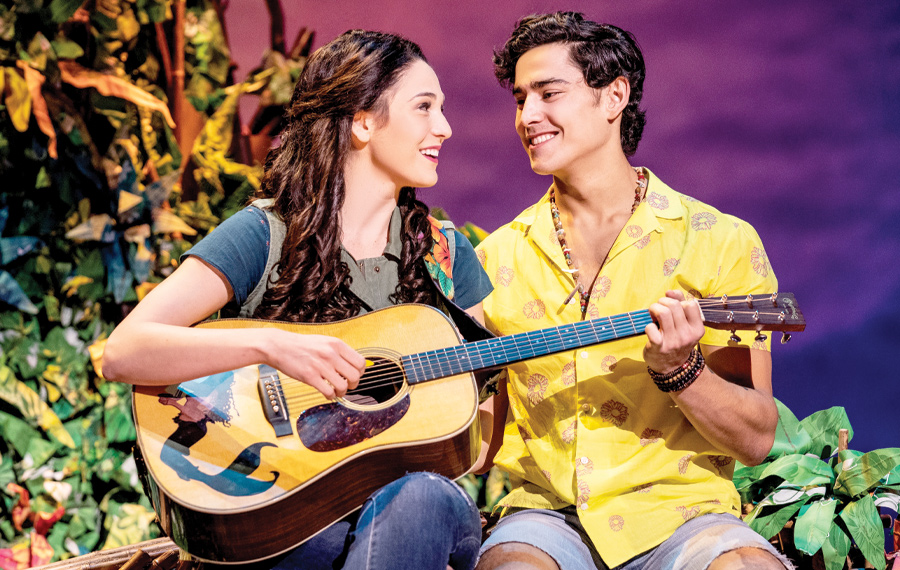
“Escape to Margaritaville,” featuring the music of Jimmy Buffett, ran on Broadway for four months in 2018 and is now on a national tour that begins a three-week run at the Dolby Theatre in Los Angeles on Feb. 18.

With music and lyrics by Buffet and a book by Greg Garcia and Mike O’Malley, the show takes place at a rundown Caribbean island hotel called Margaritaville, providing the setting for a pair of romances between scientist Rachel and bar singer Tully, and their respective best friends Tammy and Brick. In her first touring company role, Sarah Hinrichsen, a native of Upland, Calif., and a graduate of the Orange County School of the Arts, plays Rachel. 

Speaking with the Journal from an earlier California stop in Palm Desert, Hinrichsen said she was eager to perform for a hometown audience and family and friends. “My parents are born and bred Californians who grew up in downtown L.A.,” she said. “Getting to come home is a huge gift.” 

She has been with the show since its launch in Washington, D.C., in October and will be on the road through August, although the run may be extended. “It’s been a learning process for sure, but I really love it,” she said. “Our cast is a huge family and everyone is so kind. We’ve been places I would have never gone if it hadn’t been for the show.” She cites Disney World in Orlando and Bing Crosby’s childhood home in Spokane. “And it’s nice to see family and friends in different cities, who I wouldn’t get to see if I was home in New York. Overall, it’s been a dream come true.”

“It’s two hours of high-impact, energetic fun. You are going to have a good time. And you’ll be surprised how many Jimmy Buffett songs you know.” —Sarah Hinrichsen

After attending an open call, Hinrichsen attended a series of callbacks for casting, production and ultimately, Jimmy Buffett himself before landing the role of Rachel. She had seen the show on Broadway the year before, but it wasn’t until she started to learn the songs that she “realized I knew them better than I thought I did.” Among her songs are “It’s a Job,” “Son of a Son of a Sailor” (a Rachel-Tully duet), and ensemble numbers “Changes in Attitudes, Changes in Latitudes” and “Margaritaville.”

Getting to know Buffett has been a welcome perk of the job, she said.  

“He’s everything you want him to be. He’s so funny. He’s the nicest guy in the entire world.” She added that he’s “pretty hands-on” with the show. “We joke that there must be six of him, because he’s touring, he’s an author, he’s working on this show. He’s been to quite a few of our rehearsals. He surprised us a couple of times on the road and played in the finale. It’s definitely exciting when he’s around.”

Hinrichsen also expressed enthusiasm for her character, an overworked scientist who is working on a method to turn potatoes into a clean energy source. “I think she’s one of the coolest women in the musical theater canon. When she meets Tully, a bar singer without a care in the world, they have to find a balance between work and play,” she said. “They learn so much from each other.” 

They’re also physically a good match. Standing 6 feet, Hinrichsen is grateful that 6-foot-4 actor Chris Clark was cast opposite her.

A career in the theater has been Hinrichsen’s dream ever since she first saw her parents, a director and an actress, at work in productions at the Candlelight Theater in Claremont. Her first role was at age 6 in “Carousel.” “They said, ‘She’s going to be here anyway so we might as well put her in the show,’” she said. She acted in productions from elementary school through college. She then moved to New York and landed roles off-Broadway and in regional theater. 

Hinrichsen was raised in her mother’s Jewish faith, and has fond memories of celebrating Hanukkah and Passover with her maternal grandparents. While at college in Oklahoma City, Okla., she went to a latke festival with a theater professor who was active in the Jewish community. Judaism “is an important part of me. I don’t even realize how deeply rooted it is in me because it’s always been such a big part of my life,” she said.

Hinrichsen hasn’t played a Jewish character yet, but “Fiddler on the Roof” is a dream show for her, as is Anna in “The King and I” and Jo March in “Little Women.” “I did it a couple of years ago in summer stock and I’d love to play her again before I age out of it,” she said.  “ ‘Wicked’ was the show that made me realize I wanted to do this so I’d love to do that someday,” she added, mentioning its star Idina Menzel as one of her role models, along with Audra McDonald and Jessie Mueller.

Having ended a relationship before the tour began, Hinrichsen joked that she’s “married to the show right now. It’s tough being on the road, but it’s an exciting career because things can change so quickly and you never know what to expect.” 

As for “Escape to Margaritaville” audiences’ expectations, she promises “two hours of high-impact, energetic fun. It’s a love story. You’re not going to leave questioning the existence of the universe, but you are going to have a good time. And you’ll be surprised how many Jimmy Buffett songs you know,” she said. “It’s the perfect show for our environment right now. With what’s going on in the world, it’s the perfect escape.”

“Escape to Margaritaville” runs Feb. 18-March 8 at the Dolby Theatre.

Jewish Actress Brings ‘Escape to Margaritaville’ to the L.A. Stage Read More »

Legendary Director Joel Zwick Takes on a Hollywood Play

A career spent shuttling between film, TV and live theater is bound to have its zigs and zags, and director Joel Zwick’s is no exception. From his training at New York’s La MaMa Experimental Theatre Club to directing more than 650 episodes of television, to his creative partnership with actor and writer Hershey Felder (“George Gershwin Alone”), Zwick has covered a lot of ground and generated a lot of laughs. 

His credit list is exhaustive, ranging from 33 episodes of “Laverne & Shirley” under the stewardship of Zwick’s comedy mentor, Garry Marshall, through “Bosom Buddies,” starring a then largely unknown Tom Hanks, through “Webster,” “Perfect Strangers” and “Full House,” plus Disney Channel favorites including “Shake It Up” and “Girl Meets World.”

When you’re that prolific, you get some unexpected assignments. There was a time in the 1990s when Zwick was, in his own words, the “go-to black director in TV” despite being the son of a cantor, the nephew of a rabbi and related to Chasidic Jews on his father’s side. 

“Somehow, because I was out of the streets of Brooklyn and had seen a black person somewhere in my life, they thought maybe I could do better directing these things because there weren’t black directors out there to give a shot,” the 78-year-old director who is directing the new play “The $5 Shakespeare Company” in North Hollywood, told the Journal. “It doesn’t make me proud. In the course of my doing ‘The Jamie Foxx Show’ and ‘The Wayans Bros.’ and ‘Family Matters,’ I could basically understand what they were doing and who they were and what they needed to do. So that worked out well for me.”  

He added, “But I built up some African American assistant directors who turned out to be quite good directors. So there’s a whole lineage of people who have watched me work and, theoretically, learned what I was doing. That makes me feel good.”

Over lunch with Zwick at a Woodland Hills eatery, the word “legacy” comes up more than once. Although he retired from sitcom directing two years ago after completing an episode of “K.C. Undercover,” Zwick isn’t ready to bring the curtain down just yet. He is scheduled to reteam with Felder for the world premiere of “Anna & Sergei” about composer Sergei Rachmaninoff in April at the Laguna Playhouse. He routinely checks in on the progress of solo shows he has directed for performers Deborah Ehrhardt (“Cock Tales”) and Annie Abbott (“Giving Up Is Hard to Do”).

“I do understand the drive and the need of people to be expressing themselves because they’re not going to get the jobs right away off-Broadway or jobs on Broadway.” — Joel Zwick

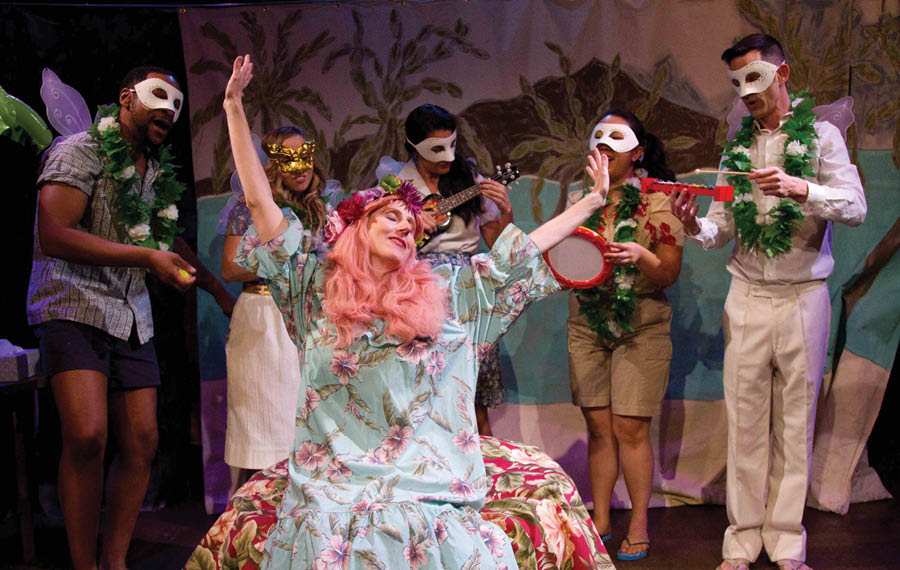
As for his current project, Zwick said, “This may be turn out to be the best thing I’ve done. Its potential is that good.” Produced by 6th Act and written by the company’s co-artistic director, Matthew Leavitt, “The $5 Shakespeare Company” tracks the foibles of a ragtag Hollywood-based classical company looking to stage a production of “A Midsummer Night’s Dream” at one of the city’s multiple 99-seat venues. The mandate to keep prices down, combined with Los Angeles’ much-debated [Actors’] Equity waiver provision that basically forces artists to work for free, is the play’s inspiration. The production runs through March 8 at Theatre 68 in North Hollywood.

A longtime family friend of the Zwicks, Leavitt was delighted when Zwick attended a reading of the play and asked to direct a future production. “It was the last thing in the world I expected,” Leavitt recalled. “ ‘Wow, Joel Zwick wants to direct this? Yeah, Joel Zwick will direct this!’ He works so fast and so efficiently. It’s just a dream. There’s absolutely no wasting time. It’s tremendous.” 

Running a company in Los Angeles, Leavitt said his 6th Act members certainly understand the world of “$5 Shakespeare.” Zwick’s own theater resume, which includes a Tony Award nomination in 1975 for his choreography for “Dance With Me,” has a different frame of reference. Nonetheless, having worked in theaters across the country, Zwick said he fully gets the urge to perform at all costs, or lack thereof.  

“I do understand the drive and the need of people to be expressing themselves because they’re not going to get the jobs right away off-Broadway or jobs on Broadway,” he said. “I trained at La MaMa, and if you were in New York, forget about TV and movies. In those days, it just wasn’t happening, so there was something else driving these exceptionally talented people who got the chance to say what they wanted to say artistically that nobody else was giving them the chance to do.

“This is a 10-character play,” he continued. “Can you name another company in Los Angeles that would produce a 10-character play? It can’t be done. The only way you can do it is in one of these Equity-waiver houses, and so I decided I had to get behind this.”

There were other enticements. Zwick and Leavitt had been friends for more than 30 years. “The $5 Shakespeare Company” had a plum role for Zwick’s son, Jamie. And Zwick managed to persuade longtime friend and La MaMa classmate Andy Robinson (“Dirty Harry,” “Star Trek: Deep Space Nine”) to take a role, fulfilling a pact that the two men would reunite creatively. 

“It’s been 50 years since we worked together,” Zwick said. “We’ve been promising and promising it, and now the promise is there. Andy and I were lost souls in the ’60s. We were in trouble and we had to figure out who the hell we were as people, never mind as artists. La MaMa gave us that chance.”

The other part of Zwick’s legacy is “My Big Fat Greek Wedding,” the 2002 sleeper hit about a young Greek woman and her crazy family, which remains the highest-grossing romantic comedy of all time. In the early 2000s, Zwick was getting discouraged with TV and wanted to try his hand at a feature film. He called up former “Bosom Buddies” pal Hanks and asked whether he would look over a script Zwick was considering. Hanks sent him back Nia Vardalos’ script for “Greek Wedding” and asked him to direct it. 

“I would have directed the phone book if Tom had said, ‘Will you direct the phone book for me?’ ” Zwick said. “We spent the next nine months cutting and shaping it, and all he ever said to me was, ‘You remember how you used to play with us on “Bosom Buddies”? That’s what you have to do [here]. Let these people play.’ ”

Asked whether the “let them play” approach applies to live theater, Zwick said, “To me, it does.” Extensive stage direction and looking into subtext can bog things down, he said. Zwick likes to get his actors on their feet and let them figure everything out later.

“When the actors have enough information to be able to question what you’re doing, that’s when the thing starts to lift up and you start to play.”

“The $5 Shakespeare Company” plays through March 8 at Theatre 68, 5112 Lankershim Blvd. Visit the website. 

Legendary Director Joel Zwick Takes on a Hollywood Play Read More »

Michael Chabon on the Eternal Relevance of ‘Star Trek’ and Jewish Themes in ‘Picard’

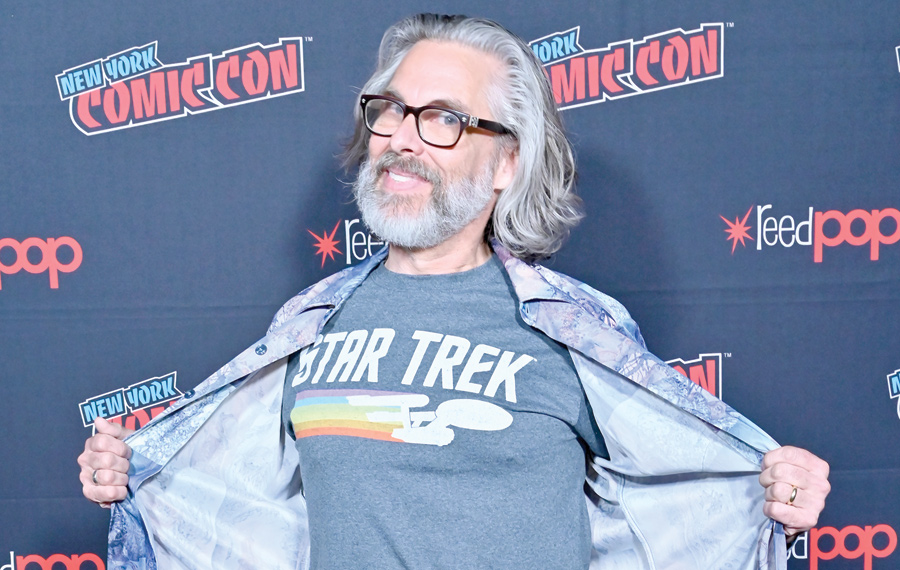
Pulitzer Prize-winning novelist Michael Chabon is best known for his acclaimed novels “The Amazing Adventures of Kavalier & Clay,” “Moonglow,” “Wonder Boys” and “The Yiddish Policemen’s Union.” In the last decade, he’s had success in Hollywood as the screenwriter of “Spider-Man 2,” “John Carter” and the Netflix miniseries “Unbelievable,” which he created and produced with his wife, novelist Ayelet Waldman. His latest project takes him into the “Star Trek” universe, and happily back to his fanboy childhood, as the creator, writer and showrunner of the CBS All Access series “Star Trek: Picard.”

“I’ve been a fan since I was 10 years old,” Chabon told the Journal of the franchise that began 54 years ago. He added he first saw the original “Star Trek” TV series when he was 4, with his father, not realizing what it was. He’s thrilled to be working on “Picard,” which is different from previous “Trek” incarnations on several levels. Atypical for TV, it stars a septuagenarian, “The Next Generation’s” Patrick Stewart, as Jean-Luc Picard. And it doesn’t follow the usual template of a spaceship crew exploring planets and encountering alien species. “It’s about a man who is no longer a Starfleet officer, not in command of a vessel, who assembles a makeshift group of people who go on a personal mission that has to do with his history and unfinished business that he has,” Chabon said. 

Nevertheless, “Picard” has DNA in common with the “Treks” that came before it. “From the beginning, ‘Star Trek’ offered good writing, storytelling, characters and an interesting mixture of drama, action and humor. It offered an optimistic vision of the future — that was actually a vision of the present — in which we put our differences aside to work together,” Chabon said. 

He added, “ ‘Star Trek’ has always deliberately tried to be relevant, to reflect the time in which it was made: the Cold War era and the looming threat of Armageddon, the Vietnam War, racial politics, the dangers posed by unchecked technology. All of the things that people were worried about at the time were reflected in it, and that’s what made it relevant then and makes it eternally relevant now.”

“ ‘Star Trek’ has always deliberately tried to be relevant, to reflect the time in which it was made. All of the things that people were worried about at the time were reflected in it, and that’s what made it relevant then and makes it eternally relevant now.” — Michael Chabon

Although Chabon’s novels often contain Jewish characters and stories, that’s not the case with “Picard.” But he does find Jewish themes in it. “It’s very much a show about teshuvah and atonement and a reckoning with what one has done and has not done in the past,” he said. “It’s driven by Picard’s sense that he missed the mark and failed to live up to his ideals and promises that he made. He’s on a journey to make amends and do what he can to repair the damage that was done by falling short of the mark.”

With Eastern European roots on both sides, Chabon grew up in Columbia, Md., in a “not especially observant home” but “identified very strongly as Jewish. I had a bar mitzvah, we celebrated the High Holy Days and occasionally lit candles on Friday night,” he said. 

In the past, he attempted to connect more deeply with the religious side of Judaism by becoming more involved in spiritual practice and synagogue attendance but found it difficult to justify. “So many problems in the world are the result of religious intolerance. I tried for 10 years to ignore how religions treat gay people and women, but I couldn’t do it,” he said. “But the cultural heritage of it, the history, experience, Yiddish language, literature, art, music, humor and all of that, it’s incredibly powerful and meaningful to me. I can find my own meaning in Torah without having to study it in a traditional framework.”

Under a production deal with CBS, he and Waldman will produce a miniseries for Showtime based on “The Amazing Adventures of Kavalier & Clay,” about a pair of Jewish cousins who are aspiring comic book creators. Chabon has been trying to get it made for years, and almost did in 2006. “There was a time when Adrien Brody would have been perfect for it but now he’s too old,” he said. He and Waldman will write and serve as showrunners, which means stepping back from showrunning “Picard” in Season Two, although he will still write episodes. An adaptation of Waldman’s memoir, “A Really Good Day,” is in the works for Showtime.

The parents of four children ages 17 to 25, all now out of their house in Berkeley (the youngest is at boarding school), Chabon and Waldman also are working on new books. They most recently collaborated on the anthology “Fight of the Century: Writers Reflect on 100 Years of Landmark ACLU Cases.”

“We love being together and working with each other. We crack each other up all the time,” Chabon said of Jerusalem-born Waldman, whom he met in 1992 on a blind date set up by mutual friends and proposed to three weeks later. “I delight in the way her mind works, her thoughts and perceptions. She has an interesting way of looking at people and the world. I presume she feels the same way about me.” 

Chabon finds it much more difficult to take pride in his accomplishments than “the nachas I’ve received from my kids, maybe because I’m dissatisfied with the things I’ve done,” he said. “Looking back after finishing something, I see the shortcomings in it.” But he is proud of the work he did as chairman of the MacDowell Colony, an artists’ residency in New Hampshire. “I’m glad I accepted the opportunity when my natural inclination was to say no.”

Looking ahead, “I just want to keep doing what I do. I hope I’m fortunate enough to keep writing books, working in television, and be able to stay healthy and sane for as long as possible,” he said. “And not putting pressure on anybody, but it would be nice to get a grandkid or two in the near term.”

New episodes of “Star Trek: Picard” stream Thursdays on CBS All Access.

Michael Chabon on the Eternal Relevance of ‘Star Trek’ and Jewish Themes in ‘Picard’ Read More »