fbpx

January 15, 2020

Calabasas Man Refuses to Remove Anti-Semitic Messages from Condo Balcony

A Calabasas man who allegedly posted swastikas and other anti-Semitic messages on a balcony in the Park Sorrento Condominiums on Jan. 14 is refusing to remove them.

The Los Angeles Times reports that the signs featured “Nazi emblems alongside American flags and profanity-laced diatribes.” The signs also criticized Vice President Mike Pence and Sen. Mitt Romney (R-Utah), among other politicians.

A police report was filed on the signs, but the police told KTLA that “they could not make the man take down the messages since they were posted in his private residence.”

The condo’s board members told ABC7 that the man refuses to permanently remove the signs, despite the board constantly fining him. 

Video footage from KTLA shows a man shouting, “Call the White House!” as he throws papers down to reporters featuring the same messages as the signs on the balcony.

Calabasas Mayor Alicia Weintraub condemned the signs in a statement to ABC7.

“This type of material and language has no place in our community and we will do everything we can to get it down,” she said. “Thank you to the residents who contacted the sheriff. I know we all feel sick that someone can so freely put up such hateful language in our community.”

American Jewish Committee Los Angeles Regional Director Richard S. Hirschhaut said in a statement to the Journal, “This obviously is a troubled individual in need of intervention by the appropriate social service agencies. It is particularly sad and disturbing that his social pathology includes a toxic stew of antisemitism and hate. Putting his vitriol on display is understandably unnerving to his neighbors and the community.” 

The Los Angeles Human Rights Commission released a report on Sept. 25 stating that anti-Semitic hate crimes in Los Angeles increased 14% from 2017 to 2018.

UPDATE: Weintraub announced in a Facebook post, “The City of Calabasas has notified the homeowner on Park Sorrento he has 24 hours to remove the offensive material posted on his property since it violates city code covering inflammatory language and threats to others.”

Anti-Defamation League Los Angeles Senior Associate Regional Director Matt Friedman told the Journal in a phone interview that the signs had the swastikas in conjunction with the words “Death to America,” which he said was disturbing rhetoric. He added that he hoped community pressure would cause the signs to be taken down.

“People… understandly would like to see this type of rhetoric stop and I hope that as a community we can find an amicable solution to this,” Friedman said.

Calabasas Man Refuses to Remove Anti-Semitic Messages from Condo Balcony Read More »

Swastika Found on Orangevale Sikh Temple Property

On the morning of January 13, a swastika and the words “white power” were discovered on a sign in front of a Sikh temple in the Sacramento area.

The Sacramento Bee reports the targeted Sikh temple is the Guru Maneyo Granth Gurdwara Sahib Sikh Center in Orangevale, which celebrated its official grand opening on January 12. The graffiti has been painted over and is being investigated as a hate crime.

Temple volunteer Dimple Bhullar told the Bee, “We’re a very peaceful religion. We accept all religions as equal and just want the respect from other religions that we give to them. We would appreciate the same for any of our places of worship.”

Sikh Coalition attorney Cindy Nesbit told Fox 40, “We are grateful to local law enforcement for responding immediately to this ugly vandalism, and expect them to continue investigating it as a bias-motivated incident. Now is the time for the community to stand together and denounce racism with one shared voice.”

Anti-Defamation League CEO Jonathan Greenblatt tweeted, “As incidents of #hate escalate nationwide, it is incredibly disturbing to see houses of worship targeted. We stand strong with the Sikh community against this display of bigotry.”

Swastika Found on Orangevale Sikh Temple Property Read More »

What’s Happening: King Day Celebrations, Women’s Health

FRI JAN 17

“From Captivity to Freedom”
A massive Unity Shabbat Weekend celebration, highlighting different kinds of heroes, takes place tonight and tomorrow at Sinai Temple. For the Ted and Hedy Orden and Family Friday Night Live, Rabbi David Wolpe, Craig Taubman, the Sinai clergy and interfaith community leaders gather to honor the life of Martin Luther King Jr. During Shabbat morning services, in recognition of the 75th anniversary of the liberation of Auschwitz, Holocaust liberators and survivors are celebrated with the help of special musical guests Mostly Kosher. After services, Holocaust survivors, liberators and World War II veterans attend a special Shabbat lunch. To RSVP to the lunch, contact Rabbi Nicole Guzik at nguzik@sinaitemple.org. Friday service 7:30-9 p.m. Saturday morning service 9:30 a.m. 10:45 a.m. Shabbat Live. 12:15-2 p.m. lunch. Sinai Temple, 10400 Wilshire Blvd.

Brenda Stevenson
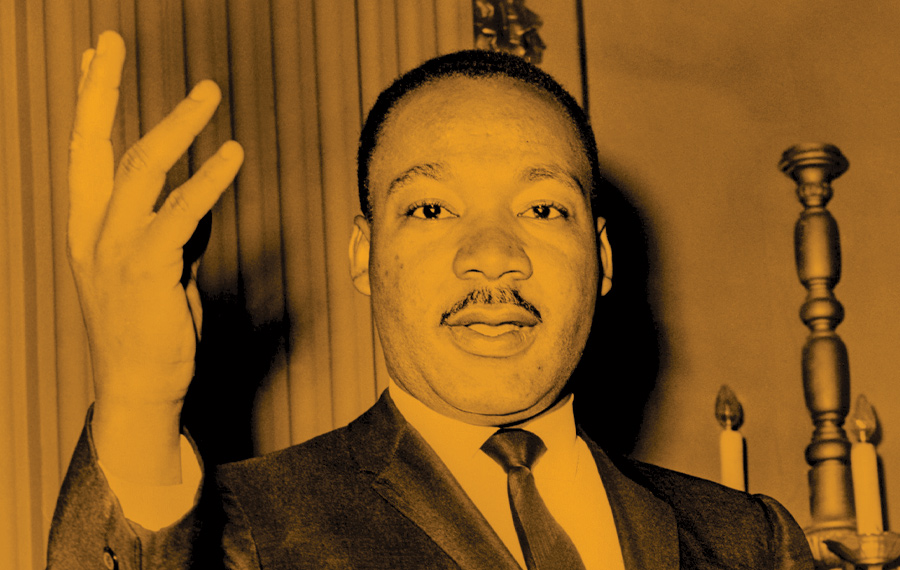
The Temple Isaiah community marks Martin Luther King Day with an interfaith service followed by dinner and a lecture on “Race in America” with UCLA professor Brenda Stevenson. At services, Isaiah’s HaSharim choir is joined by the First AME Church’s FAME Chior. On Jan. 19, to continue celebrating the power of community, Isaiah Senior Rabbi Zoë Klein Miles leads a group of Isaiah members to the First AME Church in Koreatown
for the 9:55 a.m. service. For tonight, 5:45 p.m. pre-oneg. 6:15 p.m. Shabbat service. 7:30 p.m. dinner. Free. Temple Isaiah, 10345 W. Pico Blvd.

N’ranena Shabbat
Adat Ari El holds a powerful musical experience for all who come to the Conservative synagogue in Valley Village for N’ranena Shabbat services.  For dinner, Adat Ari El provides the challah. Attendees bring a dairy or vegetarian picnic meal and a dessert to share. Advance registration required. No payment at the door. 6-8:30 p.m. $10. Adat Ari El, 12020 Burbank Blvd., Valley Village.

Shabbat Spark! MLK JR.
Commemorating the life of Rev. Martin Luther King Jr., Temple Emanuel of Beverly Hills (TEBH) holds a congregational dinner, musical Shabbat service and more. During dinner, fuel your body before you refuel your spirit, then enjoy “Shabbat Spark!” a participatory service, part-rock, part-soul. Put down the prayer books, follow the words on the screen and jam out with TEBH’s electric six-piece rock band, student Soul Singers, junior cantors and religious school students as they lead the service. Sign up to bring dessert here. Dinner 5:45 p.m. 6:30-8 p.m. services. Free for members, non-members and guests $15. Temple Emanuel of Beverly Hills, 300 N. Clark Drive, Beverly Hills. RSVP at the link above.

SAT JAN 18

Nessah Israel Teens Luncheon
Imagine the laughter, the fun, the storytelling and the serious conversations as teenagers come together on Shabbat. If you are from 13-18-years-old, you are invited to the Nessah Israel Teens Luncheon. Best of all it’s free. Noon luncheon follows 9 a.m. services. Simcha Hall, Nessah Synagogue, 142 S. Rexford Drive, Beverly Hills.

“Mapping of the Mind”
Although mental illness isn’t a laughing matter, Jewish Women’s Theatre stages “Mapping of the Mind,” a range of stories and poems of courage and heart but also humor. Through Jan. 28 at various locations. Tonight: 8 p.m. $45. $50 at the door. Jewish Women’s Theatre at The Braid, 2912 Colorado Ave., No. 102, Santa Monica.

SUN JAN 19


“Into the Light”

“Into the Light” Exhibit
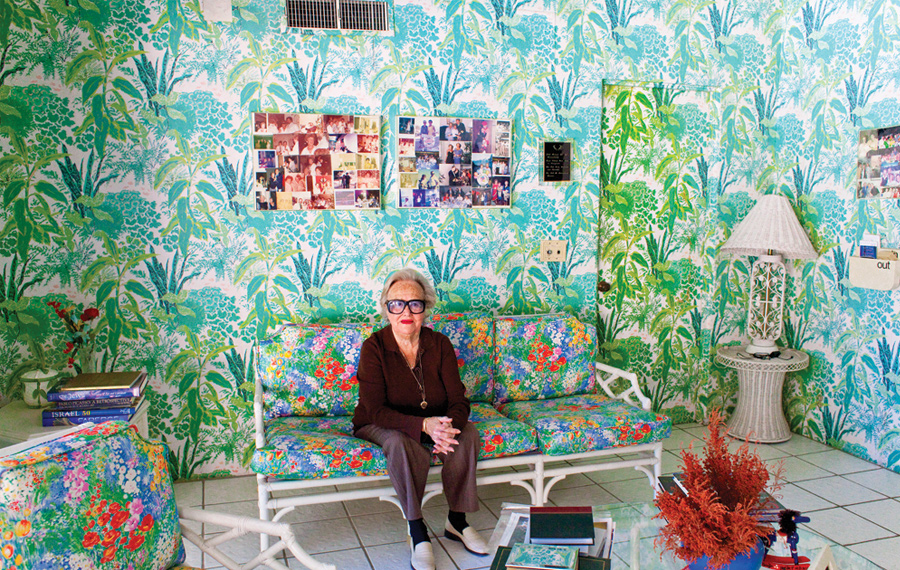
The Los Angeles Museum of the Holocaust (LAMOTH) holds a reception for photographer Nancy Baron, whose portraits feature Holocaust survivors who live in the Palm Springs area. Her exhibit, “Into the Light,” opens today at LAMOTH. Disturbed by a growing number of Holocaust deniers, Baron was motivated to capture the final generation of survivors. Her photos show the wisdom, resilience and humor of the survivors. 3-5 p.m. $10 suggested donation. Los Angeles Museum of the Holocaust, 100 The Grove Drive, Pan Pacific Park.

“Diagnosis Female”
A frank discussion about women’s health at Shomrei Torah Synagogue. Journalist Emily Dwass moderates the panel discussion. In her new book, “Diagnosis Female,” she profiles women whose stories show that medical practitioners often dismiss their claims or disregard their symptoms. Light bagel breakfast is served. 9:30 a.m. Free. Shomrei Torah Synagogue, 7353 Valley Circle Blvd., West Hills.

TUE JAN 21


Rabbi Jonathan Sacks

Rabbi Jonathan Sacks
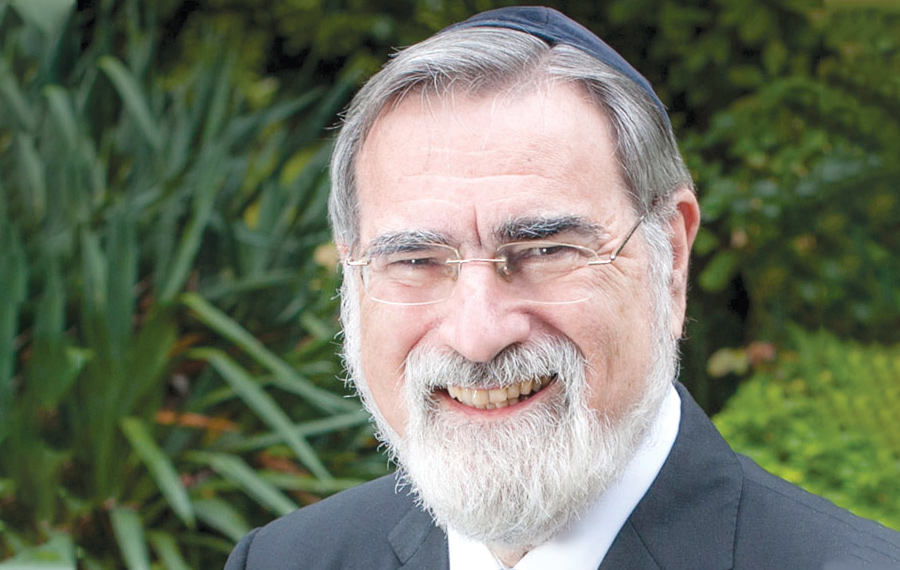
One of the world’s most revered rabbis, Rabbi Jonathan Sacks, former chief rabbi of Great Britain and author of 25 books, makes a much-anticipated speaking appearance at the Sephardic Temple. Titled “Judaism in the 21st Century: Challenges and Opportunities,” Sacks examines Israel, anti-Semitism and Jewish identity. Among the most widely quoted contemporary rabbis, Sacks has taught at Yeshiva University and NYU. 7 p.m. Sold-out. Contact the synagogue to be placed on the waitlist. $50 per person. Sephardic Temple, 10500 Wilshire Blvd.

WED JAN 22

Times’ Lopez at VBS
Steve Lopez, a popular news columnist with the Los Angeles Times, tackles homelessness, a subject on which he is regarded as an authority. He joins Rabbi Noah Farkas at Valley Beth Shalom for a conversation titled “Come Home: How We Win Against Homelessness.” Lopez has been a Pulitzer Prize finalist and Farkas is the former chairperson of the Los Angeles Homelessness Services Authority. The event is part of a weeklong Mitzvah Week at VBS, featuring a food drive, blood donations, comedy night, homeless count and more. 7-9:30 p.m. Free. Valley Beth Shalom, 15739 Ventura Blvd., Encino.

Rabbi Guzik and Survivor
Surviving the Holocaust may have been the first amazing event of Dr. Jacob Eisenbach’s life but not the last one. When Rabbi Nicole Guzik interviews him at Sinai Temple, he will talk about his life as a practicing full-time dentist at the age of 92. “I love my job so much, it’s like a hobby,” says Eisenbach, the subject of a new biography, “Where You Go, I Go: The Astonishing Life of Dr. Jacob Eisenbach, Holocaust Survivor and 92-year-old Full-Time Dentist” by Karen McCartney. 7-9 p.m. Free. Sinai Temple, 10400 Wilshire Blvd., Los Angeles.

Three Religions, Three Views
American Jewish University’s (AJU) series of interreligious trialogues on contemporary topics examines the teachings of Judaism, Islam and Christianity on matters of wealth and poverty and how they relate to social conditions. AJU Rabbi Adam Greenwald, UCLA professor emeritus Scott Bartchy and Shakeel Syed, executive director of Orange County Communities Organized for Responsible Development, are the panelists. The topic is “Am I My Brother’s and Sister’s Keeper?” Reinhard Krauss, executive director of the Academy for Judaic, Christian and Islamic Studies, moderates. 7:30 p.m. $10. American Jewish University, Shapiro Memorial Synagogue, 15600 Mulholland Drive.

Counting the Homeless
The annual Los Angeles County count of homeless is seeking volunteers in
West Los Angeles, southeast Los Angeles and the South Bay. A count of the homeless of the South Robertson Boulevard neighborhood convenes from 8 p.m.-midnight at the Alcott Center for Mental Health Services, 1433 S. Robertson Blvd., Los Angeles. For more information, visit the link above. 

THU JAN 23


Younes and Soraya Nazarian

Award for Nazarians
The Jewish Federation of Greater Los Angeles holds a gala dinner at the Beverly Wilshire Hotel honoring philanthropists Younes and Soraya Nazarian with the 2019 Lifetime Achievement Award. Younes Nazarian, a 90-year-old native of Iran who was originally a construction contractor, lost his fortune in midlife in the 1979 Iranian Revolution. Migrating to this country, he rebuilt his wealth. The Nazarians are prominent donors in the Jewish communities of American and Israeli interests. Michael Milken appears in conversation with Sam Nazarian. Proceeds benefit the Federation’s Next Generation Leadership Training Programs. 6-9 p.m. $350 for 35 and younger, $1,000 for others. Beverly Wilshire Hotel, 9500 Wilshire Blvd., Beverly Hills.

Film Noir at the Skirball
Stanley Kubrick’s 1956 film noir classic, “The Killing,” returns to the big screen at the Skirball Cultural Center, followed by a panel discussion with actor Malcolm McDowell and one of the film’s producers, James B. Harris. They discuss Kubrick’s photography and filmmaking. They also will take questions. From heists to horse races, “The Killing” features numerous themes Kubrick captured earlier in his career when he was a photographer for Look magazine. 7:30 p.m. $15 general, $10 members, seniors, full-time students. Museum admission included. Skirball Cultural Center, 2701 N. Sepulveda Blvd.


Have an event coming up? Send your information two weeks prior to the event to ryant@jewishjournal.com for consideration. For groups staging an event that requires an RSVP, please submit details about the event the week before the RSVP deadline.

What’s Happening: King Day Celebrations, Women’s Health Read More »

Sports Stars at JNF Event, Yachad Leadership Dinner

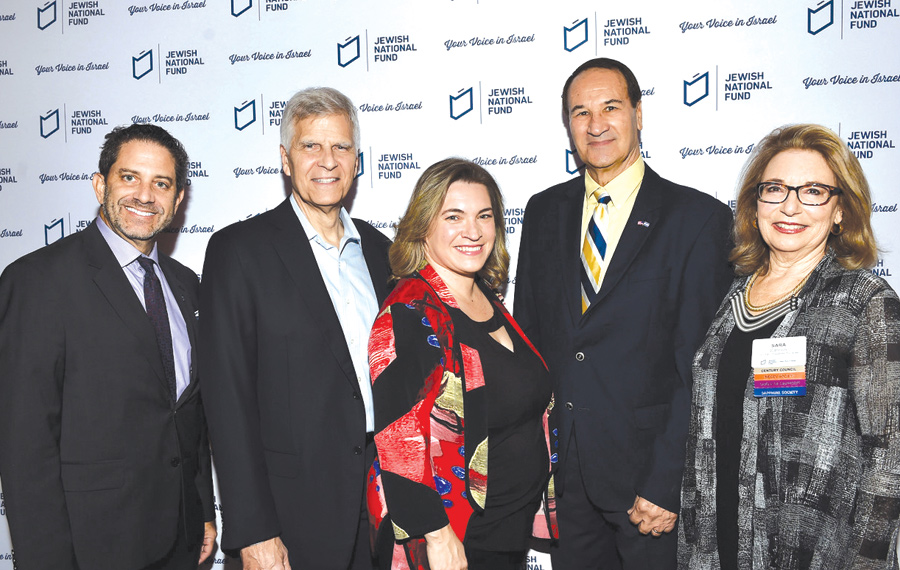
In a show of support for Jewish National Fund (JNF), over 1,000 people filled the ballroom at the Beverly Hilton for JNF’s 15th annual Breakfast for Israel on Dec. 3. The program included a discussion about “The Success of Jews in Sports” with nine-time Olympic gold medalist swimmer Mark Spitz and Goodwill Ambassador of Israel Tal “Mr. Basketball” Brody.

ESPN’s Ramona Shelburne moderated the panel with Spitz and Brody.

Consul General of Israel in Los Angeles Hillel Newman kicked off the program with inspiring words. “We’ve learned a lot from sports: Teamwork and spiritual conviction are needed to succeed,” he said. 

This message was echoed in remarks from the panelists. Brody shared how, in 1965, he took one year out of his life and potential NBA career to go to Israel and change the mood and spirit of the country. One year turned into 54 and he has never looked back. Among his many professional accomplishments was leading an Israeli basketball team, Maccabi Tel Aviv, to the country’s first professional European championship in 1977.

Spitz recounted his experience at the 1972 Munich Olympics where his seven gold medals were overshadowed by the massacre of 11 Israeli athletes by Palestinian terrorists. He also spoke about the pride he has in being the only non-Israeli athlete to light the torch at the 1985 Maccabiah Games, where he was joined by three children of the Munich victims.

Brody discussed the psychological damage inflicted on Israelis as a result of rockets blasted into the country from Gaza. He thanked JNF for providing psychological support through resilience centers, bomb shelters and more. 

The event was co-chaired by Sara Cannon and Fred Toczek.

“It was such an amazing breakfast with sports fans and Israel fans alike,” the co-chairs said in a statement. “Our guests left inspired and with a better understanding of the importance of what Jewish National Fund does for the State of Israel. It’s incredible to see such support for Israel and all the work JNF does every day. The Jewish community has so much to be proud of and we can add superb athleticism to that list!” 

JNF Executive Director Lou Rosenberg took to the stage and gave an overview of JNF’s work.

“Last year, I stood on this very stage and shared how our brothers and sisters living along the Gaza border are dealing with terrorist threats and hundreds of rockets launched every single day,” he said. “Here we are one year later, our friends and family are still being attacked and our children are still suffering from PTSD (post-traumatic stress disorder). Jewish National Fund was there last year, is there today, and will stand with Israel tomorrow and forever.”


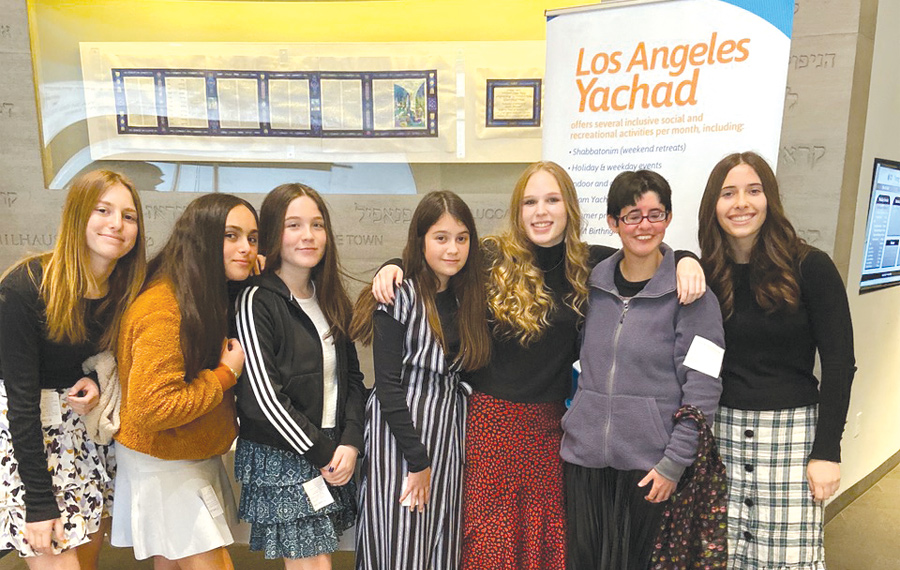
Los Angeles Yachad’s inaugural community inclusive leadership Shabbat celebration drew students from local Jewish day schools, among others. Photo by Esther Beron

Yachad, an organization dedicated to supporting those with disabilities, held its inaugural Community Inclusive Leadership Shabbat dinner on Dec. 20 at Young Israel of Century City.

The event provided an opportunity for up-and-coming young leaders to learn about inclusion via sensitivity training. Attendees also discussed how to implement these tools to make everyone feel welcome. According to a spokesperson for the organization, Yachad’s sensitivity training program provides students and community members with hands-on experiences that effectively convey the challenges that people with special needs face, allowing mainstream participants to understand their peers and community members with developmental disabilities.

Students and members enjoyed speakers, breakout sessions, food from Pat’s Catering and programming for all training levels. Speakers included Rabbi Joshua Spodek, head of YULA Girls High School; community member and Yachad parent Cynthia Steinschreiber; and Maimonides Academy teacher Jamie Bunin.

More than 100 people turned out, including eighth-grade students from Maimonides Academy, community leaders and local rabbis, high school students from Jewish schools throughout Southern California, and college students who work as volunteers for Yachad members, among others.

Monica Rukhman, director of L.A. Yachad, welcomed everyone. She thanked and praised her staff and colleagues for helping create such a unique opportunity for families. 

“After having spoken to every student here, it is a bit surreal to see that it has all come to fruition. It is truly my pleasure to work with and help everyone in our community,” Rukhman said. “A lot of hard work has gone into planning this extraordinary Shabbat dinner, but I already know it was all worth it.”

Yachad L.A. provides social, recreational and educational programming for individuals with developmental disabilities, including inclusive summer camp options and trips to Israel with Birthright. 


Board members and supporters of the David Labkovski Project gathered on Dec. 4 at a private home in Hidden Hills. Photo courtesy of the David Labkovski Project

Consul General of Israel in Los Angeles Hillel Newman, along with board members and supporters of the David Labkovski Project, gathered on Dec. 4 at a private home in Hidden Hills to launch the David Labkovski Project (DLP) docent training program.  

The new community service opportunity for students in grades 8-12 provides Holocaust education through the art of David Labkovski and facilitates students being able to educate their peers and act as docents for the “Documenting History Through Art” traveling exhibition. 

The program operates under the leadership of DLP Education Director Stephanie Wolfson and Leora Raikin, executive director of DLP.

The DLP’s project-based program fuses art, history and technology, and was piloted in 2016. It has since been implemented in middle schools, high schools and colleges with students from all backgrounds who have become curators of an exhibit to their community and in the process educate their peers about the Holocaust.

Newman spoke about the importance of bearing witness to history and the need for Holocaust education.  

David Labkovski, a Lithuanian Israeli artist, survived the Holocaust while a prisoner in Siberia. His over 400 paintings and sketches document life before, during and after the Holocaust in
Vilnius, Lithuania, as well as his renewal in Israel.

At the event, guests experienced the virtual reality component of the traveling exhibition. Jeff Kobulnick, a partner at Brutzkus Gubner, was announced as the DLP 2020 Legacy of Hope Award recipient.


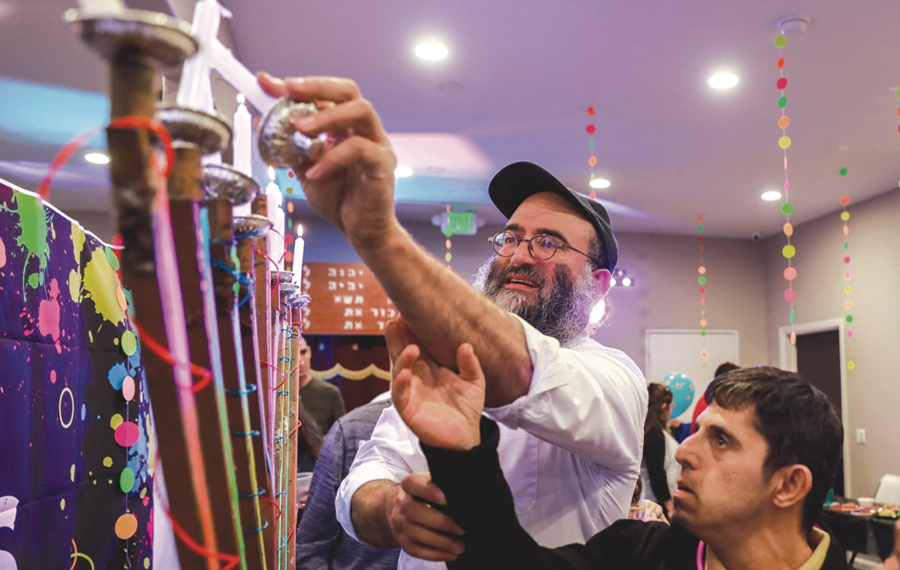
Rabbi Michy Rav-Noy, executive director of Friendship Circle Los Angeles (FCLA), leads a menorah lighting at the FCLA Hanukkah party. Photo courtesy of Friendship Circle of Los Angeles

A crowd of over 300 children who have special needs, along with
their families, teen volunteers and community members, joined Friendship Circle of Los Angeles (FCLA) at its “Glow in the Dark Chanukah” holiday program on Dec. 22.

Amid the black light in its main room, FCLA held a silent dance party. It allowed each participant to dance to music from wireless headphones rather than using a speaker system. Music was broadcast via a radio transmitter so each person was able to choose their own song and set the volume, “a win-win for everyone,” the organization said.

Holiday craft activities abounded as children and young adults with special needs had their faces painted with menorahs and other Jewish symbols. They also enjoyed take-home art projects such as scratch art and glow-in-the-dark car magnets.

Parents enjoyed the mini-meditation retreat with relaxing meditation through which each person came out refreshed from the opportunity to rewind.

Of course, there was a grand menorah lighting with Rabbi Michy Rav-Noy, executive director of FCLA. Children had the chance to light a candle while reciting the blessing. Everyone joined together in song.

The program ended with each child with special needs and their siblings receiving a gift donated by Looking Beyond Next Gen, the Kleinman Family, Anton Schiff and Jacques Stambouli. Looking Beyond also invited some young adults who volunteered with kids and took part in the activities. They gave away bikes, Barbie dolls, electronics, craft sets, board games and more. There also was a raffle of gifts.

One of FCLA’s longtime donors, the Joy and Jerry Monkarsh Family Foundation, sponsored the program.


Want to be in Movers & Shakers? Send us your highlights, events, honors and simchas.
Email ryant@jewishjournal.com.

Sports Stars at JNF Event, Yachad Leadership Dinner Read More »

Can A Bad Jew on the Big Screen Be Good for the Jews?

Howard Ratner, a New York City jeweler with colossal gambling debts and thugs snapping at his heels, cheats on his wife, misses work deadlines, draws his family into his increasingly dangerous predicament and spends his daughter’s school play locked naked in the trunk of his car. And this is all before the family seder.

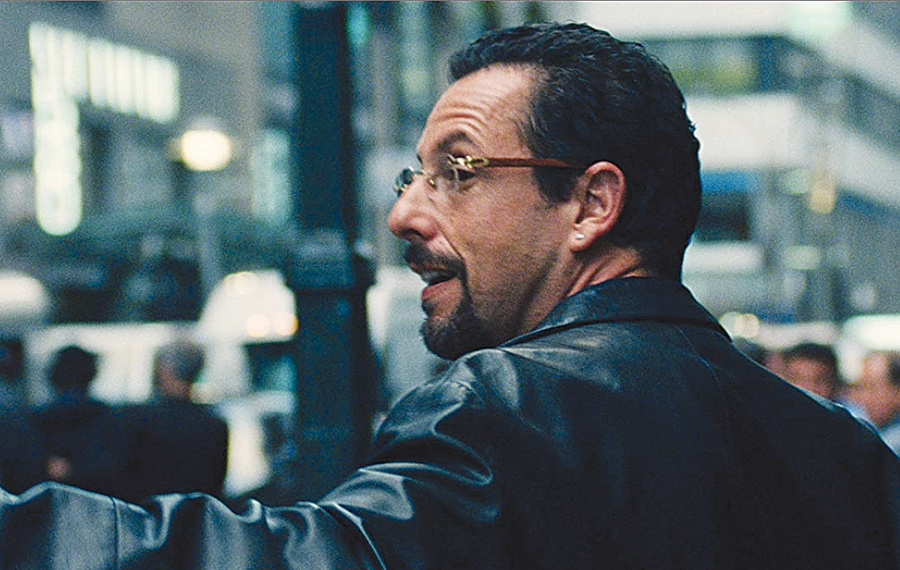
If you haven’t seen “Uncut Gems,” the two-hour adrenaline rush written and directed by Josh and Benny Safdie, you may be unnerved by Ratner, the lead character played by Adam Sandler in a rare dramatic performance. Chasing down a rare black opal that promises to pay off his debts, Ratner defies Hollywood’s various archetypes of the male Jewish lead. Nowhere to be found are Woody Allen’s neuroses or the hypermasculinity of Israeli commandos in “Fauda” or even the florid virility of the Zohan (another Sandler character).

Instead, Ratner seems to embody all the negative Jewish stereotypes that persist beyond the silver screen. He’s scheming, slovenly and volatile. He robs Peter to pay Paul and he’s helplessly attracted to shiny objects. Ratner’s wife — the conscience of “Uncut Gems” to the extent the film has one — tells her philandering husband after the seder that he is “the most annoying person I’ve ever met in my life.” 

And yet, I could not help but feel that if we’re considering cultural texts in terms of their worth for people of the tribe, “Uncut Gems” is Good For The Jews. That’s largely thanks to Sandler, who breathes sensitivity and earnestness into Ratner as his deals, relationships and wagers alternately save and doom him. His character is transparently flawed, thoroughly human. You find yourself rooting for him in spite of, or perhaps because of, his bold, bad choices. He resonates.

We don’t get to decide how Jews are represented in movies, although if we’re being honest, we have more say than any other religious or ethnic group. All we can hope for is that Jewish characters look and act like real people 

— like uncut gems.

Ratner is unmistakably Jewish even without the seder scene, even without the paunch and the accent, even without the diamond district backdrop. He’s known around town, he’s obsessed with the New York Knicks and he thinks being a little smarter than everyone else affords him a little extra sinning. He’s tender, but he knows that he is.

We don’t get to decide how Jews are represented in movies, although if we’re being honest, we have more say than any other religious or ethnic group. All we can hope for is that Jewish characters look and act like real people — like uncut gems. After all, the contemporary fight against anti-Semitism is our fight not to be seen as fundamentally good people, but as complete people, merely people. In the endearing, disgraceful Ratner, the Safdie brothers pick one bad apple without cutting down the whole tree.

“Uncut Gems” does not have a moral so much as an essence. It captures the feeling of intoxication at one’s believed destiny, carrying the plot on one man’s conviction that the next layer of leverage will tip the scales back into balance. Maybe this outlook is closer to contemporary Jewish reality than we’d like to admit.

Ratner is unmistakably Jewish even without the seder scene, even without the paunch and the accent, even without the diamond district backdrop. He’s known around town, he’s obsessed with the New York Knicks and he thinks being a little smarter than everyone else affords him a little extra sinning.

The movie hits theaters at a time when many American Jews, like Ratner, feel cornered. Resentment is snowballing toward our wealth, our power and our affiliation with a foreign country that is seen to be behaving badly. And like Ratner, we have scrambled to re-leverage our political and financial relationships to ward off our reckoning. Rather than owning our shortcomings and paying our debts, many American Jews have doubled down on asserting moral unassailability both at home and abroad. The essence of “Uncut Gems” is seeing how big a bill can be racked up in service of a myth.

“Uncut Gems” is anything but vintage Sandler, but the writer of the only Hanukkah song that matters is still perceptible behind Ratner’s black shades and tired jowls. The unmistakable Sandler sense of humor is what makes Ratner’s haphazard string-pulling as plausible as it is thrilling. But I know not all viewers, Jewish or otherwise, will see the movie that way. 

Going solo to the movie, I found myself sitting next to a man my age wearing a yarmulke, and his date. They hated it. When I ran into them in the lobby, it turned out they were friends from high school. We caught up, they detailed their complaint and we agreed to disagree. In life, as in art, acknowledging that we are all unique is a great place to start.


Louis Keene is a writer based in Los Angeles. He tweets at @thislouis.

Can A Bad Jew on the Big Screen Be Good for the Jews? Read More »

Obituaries: Jan. 17, 2020

Marion Adler died Oct. 26 at 97. Survived by daughter Elise; son Elliot (Rhiea); 2 grandchildren; brother Jerry (Elaine) Forman. Mount Sinai

Richard Allen died Oct. 31 at 96. Survived by daughters Emily, Susie (Richard DiCarlo); sons Nick, Arthur (Margaret Talbot); 10 grandchildren; 4 great-grandchildren. Malinow and Silverman 

Barbara Alpert died Nov. 24 at 88. Survived by daughters Teri (Phil Waldman), Nancy; son Alan (Sophie); 7 grandchildren; 7 great-grandchildren. Mount Sinai

Annette Benveniste died Nov. 11 at 96. Survived by daughters Dale (Richard Sigel), Valerie (Norman Miller), Bonnie; 4 grandchildren; 3 great-grandchildren. Malinow and Silverman

Robert M. Concoff died Nov. 25 at 90. Survived by wife Marilyn; daughter Diana (Simmcayal) Concoff Morgan; sons William (Barbara), Richard (Heather); 4 grandchildren. Mount Sinai

Dennis Davis died Nov. 21 at 73. Survived by wife Jessica; brother Larry (Karen). Mount Sinai

Joseph Davis died Nov. 1 at 98. Survived by wife Sarah; daughters  Shirley D. (Mark) Bilfield, Judy; son Edward Davis; 1 grandchild. Mount Sinai

Victor Henry Deutsch died Sept. 12 at 95. Survived by wife Ailsa Lange Deutsch; daughter Judith Sharon; 1 grandchild; sister Muriel Deutsch Lezak. Neptune Society

Helen Diamond died Nov. 8 at 94. Survived by daughter Fredda (Scott) Manzo; son Alan (Steven Palmer) Glasser; 1 grandchild. Mount Sinai

Tessie Edlen died Oct. 14 at 99. Survived by daughter Jaelline Jaffe; sons Michael (Anita Wendy), Jerni; 2 grandchildren; 4 great-grandchildren; sister Bernice North. Mount Sinai

Paul Ehrlich died Nov. 3 at 93. Survived by his sister Helene. Chevra Kadisha

Sofia Elperin died Nov. 10 at 89. Survived by daughter Betty Zwierankin; son  William (Gail) Zwierankin; 3 grandchildren; 3 great-grandchildren. Mount Sinai

William Gerber died Oct. 25 at 80. Survived by wife Merlee; daughters Andrea (Louie) Ackmann, Jennifer (Steve) Badillo; 3 grandchildren; sister Toni Hope. Mount Sinai

Maurice Glick died Nov. 18 at 86. Survived by wife Joanne; daughter Jennifer Pearlman; sons Owen (Lou Konstas), Craig (Kimberly); 4 grandchildren; sister  Doris Pepper. Mount Sinai 

Barry Gold died Nov. 4 at 75. Survived by wife Judy; daughter Lisa Thayer; sons Darrin (Patricia), Kenn (Catherine), Andy Thayer; 5 grandchildren; sister Shirley Newman. Mount Sinai

Herbert Goldberg died Nov. 6 at 86. Survived by daughter Jill Goldberg Nadley; sons Jason, Jeffrey; 5 grandchildren. Mount Sinai

Feny Goldman died Nov. 23 at 92. Survived by daughter Alla Glazov; 4 grandchildren; 3 great-grandchildren. Mount Sinai 

Fela Goldman-Friedman died Nov. 11 at 96. Survived by husband Rubin Friedman; stepsons Norman (Monica), Aaron (Susan); 4 grandchildren; 2 great-grandchildren. Mount Sinai

Marshall Goldman died Nov. 26 at 75. Survived by wife Susan; daughters Cheryl (Tsafi) Lev, Julie (Steve) Wang, Jennifer; son Mark (Alanna); 10 grandchildren. Mount Sinai 

Janine “Jenny” Goldstein died Nov. 19 at 101. Survived by daughter Patricia “Patty” (Daniel) Berman; 2 grandchildren, Benjamin; 1  great-grandchild. Mount Sinai

Marvin Gross died Nov. 6 at 72. Survived by daughters Tara Rangarajan, Becky (Austin); son Daniel (Anu); 3 grandchildren; sister Frances Schnall; brother Richard (Roberta). Mount Sinai

Sylvia Gordon died Oct. 28 at 93. Survived by daughter Cheryl; sons Mark (Amy), David (Siri); 3 grandchildren; brother Sam (Sandra) Kresner. Mount Sinai

Ira Gottfried died Oct. 29 at 87. Survived by wife Judith; sons Richard, Glen, David; 5 grandchildren; sister Dora Light. Mount Sinai

Sheila Hartman died Nov. 14 at 73. Survived by husband Howard; daughter Diana Baker; son Jeff; 4 grandchildren; brothers Barry Gluck, Larry Gluck. Mount Sinai

Judy Kane died Nov. 12 at 72. Survived by husband John; daughters Buffy Schlesinger, Rori (Justin) Albert; 4 grandchildren; sisters  Wendy Cash, Bonnie Okun. Mount Sinai

Ellie Kligman died Nov. 13 at 80. Survived by brother Ronald. Mount Sinai

Susan Kollins died Nov. 9 at 97. Survived by daughter  Estelle Grus; son Steven (Melanie); 5 grandchildren. Mount Sinai

Harriet Korn died Oct. 31 at 100. Survived by daughter Adrienne (Barry) Resnick;2 grandchildren; 3 great-grandchildren. Malinow and Silverman

Samuel Kremen died Nov. 13 at 90. Survived by daughters Ruth, Robin; son Paul;  6 grandchildren; sister Ethel Kett; brothers Howard, Irwin, Bennett. Mount Sinai

Lary Lawrence died Nov. 17 at 70. Survived by wife Konjit; daughters Deleyza (Rayn Malloky), Simone; brothers Greg (Shelley), Keith (Fabienn). Mount Sinai

David Levinson died Nov. 4 at 80. Survived by wife Jan; daughters Amy, Melissa (Manuel Vasquez); stepdaughter Anne (Scott MacInnis); stepson Peter (Carmen) Shutan. Mount Sinai

Barry Lowenkron died Nov. 20 at 78. Survived by wife Roberta; son Matthew; stepdaughter Denise (Asaf) Tamam; stepson Aaron (Dana) Seltzer; 6 grandchildren; sister Seena; brother Lawrence. Mount Sinai

Harvey Brian Mahler died Nov. 13 at 82. Survived by wife Diana; sons Joshua (Rose), Matthew; brother Gary (Susan). Mount Sinai

Michael Malka died Nov. 24 at 88. Survived by wife Regina; step-daughter Irene (Richard) Gobuty; sons Joseph, Benjamin (Laura); 6 grandchildren. Mount Sinai

Daniel Mannis died Nov. 2 at 79. Survived by sister Leslie Frederick. Malinow and Silverman

Anne Esther Marder died Nov. 10 at 96. Survived by daughter Faye (Jonathan) Kellerman; son Allan, Yisroel (Libba); 7 grandchildren; 12 great grandchildren. 

Cathy Ellen Marks died Nov. 13 at 59. Survived by husband Randal; daughter Alexandra; son Jared; mother Marlene Berman;  sister Susan Grossblatt. Mount Sinai 

Bernard Martin Mendelsohn died Nov. 15 at 87. Survived by daughter Julie (Todd) Hertel; son William (Debra); stepdaughter Erika Applebaum; stepson Zachary Zemby; 10 grandchildren. Mount Sinai 

Willis Meyerson died Nov. 9 at 64. Survived by husband Ivor; daughters Romy, Cherise (Sean); sons Victor, Marlon; mother Froma; sister Ruth. Mount Sinai

Noel Mor died Sept. 30 at 31. Survived by husband Rob; daughter Leia; sister Kelly Teacher; mother Lori Teacher; father Brian Teacher. Chevra Kadisha

Aaron Mudrick died Nov. 25 at 91. Survived by daughter Laurie; sons Michael, Jeffrey; 4 grandchildren; sister Lillian; brother Joseph. Mount Sinai

Dorothy Osman died Nov. 7 at 75. Survived by daughters Jacqui (Todd), Gabrielle (Ben) Osman Siegel, Rochelle (Michael) Osman Seeman; son Lawrence (Laura); 13 grandchildren; sister Valerie (Denny) Brachya. Mount Sinai

David Joel Pasternak died Nov. 21 at 68. Survived by wife Cynthia; sons Gregory (Sara), Kevin (Bianca), Matthew; sister Marlene (Lou) Anapolsky; brother Mark (Mila); brothers-in-law Dana (Jannine) Rosen, Michael (Rachel) Rosen. Mount Sinai 

Morris Pavey died Nov. 11 at 94. Survived by wife Doreen; daughters Mischelle Ray, Barbara (Warren) Minett, Laura (Joshua) Grenrock; sons Keith (Michelle) Lissak, Chad (Cayce) Lissak, Donald; 6 grandchildren; brother Irving. Mount Sinai

Glenda L. Watson Rahmani died Oct. 31 at 79. Survived by niece Kelly (Judy) Watson;  nephew Dale (Meri) Watson. Chevra Kadisha

Kamran Ramesh died Nov. 10 at 72. Survived by mother  Mansoureh; brother Kambiz (Virginia). Mount Sinai

Jeffrey Rosen died Oct. 28 at 64. Survived by sons Jason, Andrew; sister Claudia Hoag; brother Steve Rosen; sister-in-law Nancy Schulman. Mount Sinai

Paul Richard Rosen died Oct. 6 at 54. Survived by mother Iris Mene; sister Melissa Breiter; brother David. Chevra Kadisha

Ann F. Rossine died Nov. 20 at 96. Survived by son Len (Cindy) Rossine; 6 grandchildren; 1 great-grandchild. Mount Sinai

Dorothy Rothman died Oct. 30 at 99. Survived by daughter-in-law  Shelley Spoerlein. Mount Sinai

Herbert M. Rubin died Nov. 13 at 98. Survived by wife Helen; daughter Rachelle (Scott) Adler; son Stewart; 1 grandchild. Mount Sinai

Sally Schechter died Nov. 23 at 104. Survived by son Edward (Esther); 3 grandchildren; 6 great-grandchildren. Mount Sinai 

Robert Leon Sherman died Nov. 23 at 89. Survived by wife Joyce; sons Jeff (Anna), Michael (Lisa), Stewart (Reina); 6 grandchildren; 1 great-grandchild. Mount Sinai

Munro Jordon Silver died Nov. 10 at 91. Survived by son Lance (Claire) Silver; daughter Faith Silver Smith; 3 grandchildren; 3 great-grandchildren. Mount Sinai 

Marlene Rose Solomon died Nov. 15 at 86. Survived by husband Alvin; daughter Heidi Orlick; son Lee; 3 grandchildren. Mount Sinai

Flory Touriel died Nov. 16 at 74. Survived by sister Reina “Renee”; brothers James, Albert. Malinow and Silverman

Barbara Pfeffer Weiss died Nov. 23 at 89. Survived by daughter Rachel Pfeffer; son Andrew Pfeffer; stepdaughter Jane Weiss; stepsons Donald Weiss, Andrew (Paulette) Weiss; 10 grandchildren; 6 great-grandchildren. Mount Sinai

Helga Weiss died Nov. 8 at 80. Survived by sons, Monte (Lori), Derek, Marc (Annabelle); 6 grandchildren. Mount Sinai

Alex Wenger died Nov. 1 at 92. Survived by wife Bertha; daughter Eileen (Paul)
Pan; 3 grandchildren; 5 great-grand-children; sister Claire Weinstein. Mount Sinai

Barry Weintraub died Oct. 31 at 96. Survived by daughter Ava; son  Michael (Ruth); 3 grandchildren. Mount Sinai

Jacob Weisberg died Oct. 30 at 90. Survived by daughters Terry (Robert) Hanna, Sue (Gary) Keir, Teri (Eli) Solomon, Rhona (Ron) Nadel; sons Stephen (Gayle Hopper), William (Shoshana Siegel); 14 grandchildren; 4 great-grandchildren. Malinow and Silverman 

Dan E. Weisburd died Nov. 4 at 85. Survived by daughter Elizabeth Buck; son Steven (Amy); 3 grandchildren. Mount Sinai

Eugene Werner died June 24 at 89. Survived by daughters Nancy Torn, Vicky Balmot. Chevra Kadisha

Mildred Werner died Oct. 24 at 89. Survived by daughters Nancy Torn, Vicky Balmot; sister Elaine Jacobs; brother Morton Schwartz. Chevra Kadisha

Michael Wineman died Oct. 12 at 78. Survived by daughter Dana (Eric) Shine; son David Shaffer; 5 grandchildren. Mount Sinai 

Stanley Zieve died Nov. 21 at 87. Survived by daughters Dana Gallenberg, Eve Smith; 1 grandchild; sister Sally Rusen. Mount Sinai 

Obituaries: Jan. 17, 2020 Read More »

DIY Coconut Oil Lip Balm

When the temperatures drop in the winter, my skin gets dry and my lips feel like sandpaper. I used to buy a tub of petroleum jelly and slather it on my lips to soothe them, but it was a little gross. I have a better solution now — I make my own lip balm. 

It’s actually super easy to make lip balm. Beeswax pellets, which you can find on Amazon, and coconut oil are the main ingredients.  Then you can customize it with essential oils or pantry items like vanilla and honey. I’ve heard of people adding Kool-Aid packets for color and flavor. I just keep it simple by including a few drops of lavender essential oil. 

This lip balm also works really well on your hands. It moisturizes without feeling greasy, and it absorbs nicely into your skin. I keep some at my desk at all times, in an Altoids tin.  So I’m ready if anybody comes by and wants to shake my hand or kiss me.

What you’ll need:
Beeswax pellets
Coconut oil
Essential oil


1. Wash and dry your containers. A mint tin is great for having some lip balm on the go. Small, shallow jars are also perfect vessels.


2. Measure one part beeswax pellets and two parts coconut oil. This proportion creates a very solid balm. If you want your balm a little creamier, increase the amount of oil. Place these ingredients in a glass Mason jar or a Pyrex measuring cup.

Note: I used white beeswax pellets, so my balm turned out white. They are also available in yellow.


3. Make a double-boiler by pouring about an inch of water into a pot, and place your glass jar in the water. Make sure no water gets into the jar. As the water simmers, the beeswax will melt. Occasionally stir with a wooden skewer until the wax is completely melted. Add about 20 drops of an essential oil of your choice and stir.


4. Using an oven mitt, pour the melted ingredients into a shallow jar or mint tin. If you are using a tin, make sure you don’t fill it above the holes in the hinges, or some of the lip balm solution will seep out. Let it solidify overnight.


Jonathan Fong is the author of “Flowers That Wow” and “Parties That Wow,” and host of “Style With a Smile” on YouTube. You can see more of his do-it-yourself projects here.

DIY Coconut Oil Lip Balm Read More »

Rosove Shares His Progressive Take on Israel and Its Future

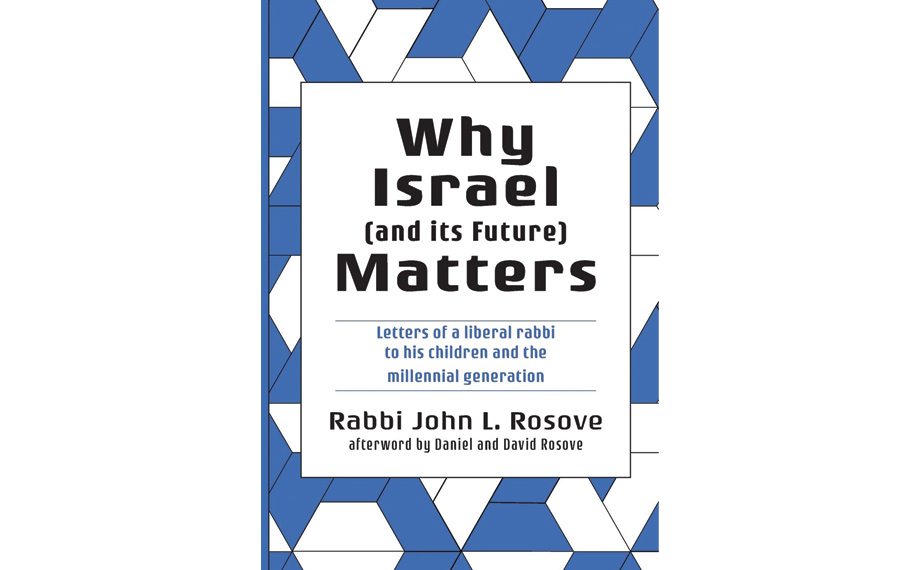
The key to understanding why Rabbi John L. Rosove wrote his latest book, “Why Israel (and Its Future) Matters: Letters of a Liberal Rabbi to His Children and the Millennial Generation” (Ben Yehuda Press), is found in a single crucial phrase that appears in the subtitle of his new book: “the millennial generation.” 

“I hope to stimulate conversation and dialogue between parents and their grown children,” he explains in the preface, “as well as in synagogue communities, chavurot, teen programming, Hillel chapters, and university classes.”

Rosove, the senior rabbi emeritus of Temple Israel of Hollywood and a prominent voice in the Reform movement, looks at Israel from the stance of someone who proudly calls himself a progressive and an activist. He understands that the case for Israel must be made for American Jews who embrace these values and believe the pursuit of social justice is a core value of Judaism. For Rosove, as for the State of Israel and the Zionist world, the problem to be solved is the gap between Israel and the Diaspora, and millennials are the ones who must close the gap.

“Here we’ve been called to see our own face in the face of the stranger, to honor the rights of others, to value social justice and compassion,” Rosove insists. “The distance between here and there — the Israel that is and that ought to be, and the America that is and ought to be — is vast, and you and your generation will be the ones to carry that vision into the future.”

“Why Israel Matters” is a sequel to “Why Judaism Matters,” which was reviewed in the Journal in 2017. Rosove adopts the same approach in both books — he makes his arguments in letters addressed to his grown sons, David and Daniel, that are signed, “Love, Dad,” and they respond to their father’s letters in an afterword. Each chapter includes a short list of “Discussion Questions” that are meant to inspire the readers to think and speak for themselves.

“As you listen to and read the news about Israel, have you at any time felt that your liberal Jewish values are in conflict with the choices and the military of Israel have taken?” Rosove asks the reader in one such question. “If so, what specific actions have challenged you and your values?”

To his credit, Rosove does not understate or oversimplify the tensions that exist in the Jewish world. “At its best, Israel is filled with intellectual vigor, a spirit of self-criticism, and the particularly Jewish habit of constantly questioning itself,” he writes. “[T]here’s also a growing intolerance among some sectors of the population, especially from the religious right wing that is threatened by honest criticism and debate.” But he insists that “we can maintain our connection with Israel even when the Israeli government behaves in ways we find morally objectionable.”

For Rosove, as for the State of Israel and the Zionist world, the problem to be solved is the gap between Israel and the Diaspora, and millennials are the ones who must close the gap.

Rosove enlivens his arguments with recollections of his own engagement and commitment over a long and distinguished career. He was studying Hebrew in Jerusalem in advance of his first year of rabbinical studies when he heard the air raid sirens that signaled the outbreak of the Yom Kippur War in 1973. He volunteered to take the place of young Israelis who had been called to the fighting front by working on the night shift at a commercial bakery during the blackout hours. 

“I remember thinking for the first time in my life that from the center of the Jewish world in the holiest city in Judaism, I was participant in Jewish history,” he recalls.

Many of Rosove’s memories hark back to his own education as a Jew and a Zionist here in Southern California. The late Rabbi Leonard Beerman of Leo Baeck Temple, a pacifist and a human rights activist, became “a rabbinic model and a cherished friend.” Shlomo Bardin, founder of what is now called the Brandeis-Bardin Institute, bestowed upon Rosove “a less intellectual and more visceral cultural sense of Jewish identity.” And he eventually came to think of himself as “a liberal Reform aspirational Zionist” whose “liberalism demands acceptance of the other.”

Rosove is equally vigorous and exacting when it comes to debunking the “incendiary statements tossed into conversations about the Israeli-Palestinian situation,” including what he calls “the ‘Zionism is Racism’ Argument,” “the ‘Israel is an Apartheid State’ Argument” and “the ‘Jews were never there’ Argument.” But he also insists that criticism of a specific policy of the government of Israel — “and especially with regard to the occupation of the Palestinians in the West Bank” — is not equivalent to anti-Semitism. Indeed, he argues that “being pro-Israel also means being pro-Palestinian,” and that “justice for the Palestinians is essential for a lasting peace.” 

Like all progressives, Rosove is an unabashed optimist. “I’m not blind to the truth that Israel, like all democracies, is imperfect,” he writes. “I don’t excuse the occupation of another people for a minute. … But all things considered, Israel is an extraordinary success story, an experiment that has inspired hopes and dreams not just of the Jewish people, but of many peoples around the world. Even Israel’s enemies esteem what it created.”

The book ends with an argument for Jewish exceptionalism. Is the Jewish state just one country among many countries, all of which assert the right to act solely in their own best interest? Or does Israel hold itself to a higher authority? His answer will come as no surprise: “It’s clear that Isaiah’s vision that the Jewish people ought to be an or lagoyim — ‘a light unto the nations’ (42:6) — is manifesting itself in a thousand rays of light.” 

One such ray of light is “Why Israel (and Its Future) Matters.” Crucially, Rosove seeks to open, rather than change, the minds of his readers, to “provoke conversation between American liberal Jews and Israelis.” But the conversation must start here in America, where Israel has become a volatile subject to bring up among Jews with different points of view. If Rosove’s challenging but also compelling book allows us to find a way to speak to one another, his optimism will be justified.


Jonathan Kirsch, attorney and author, is the book editor of the Jewish Journal.

Rosove Shares His Progressive Take on Israel and Its Future Read More »

Fighting Fires and Personal Demons in ‘9-1-1 Lone Star’

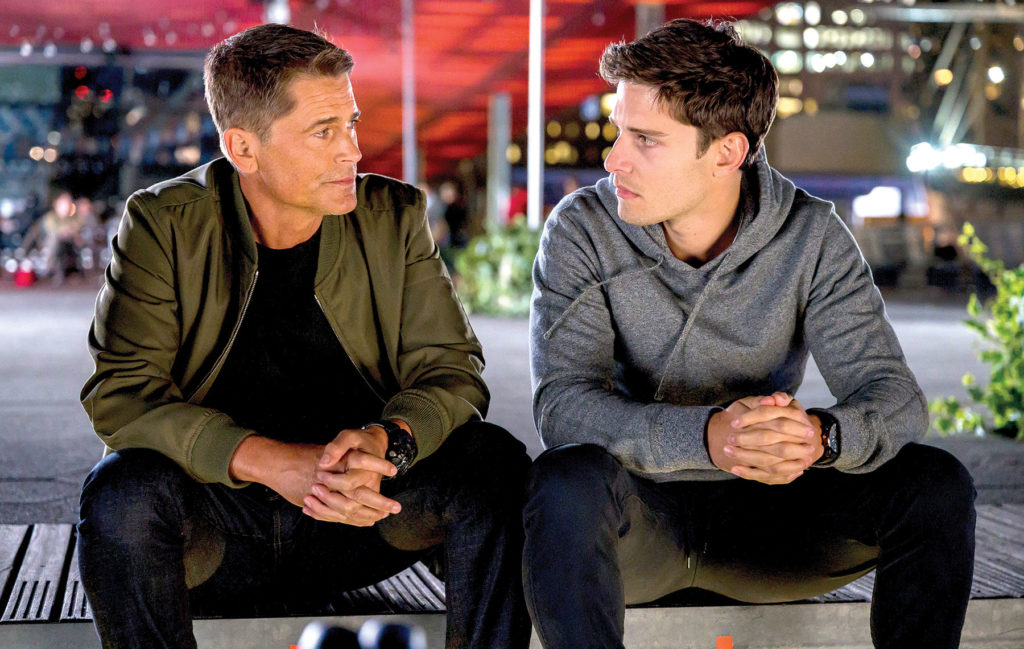
A spinoff of the hit first responder series “9-1-1,” Fox’s “9-1-1 Lone Star” aims to re-create the winning formula of outrageous-but-true emergencies mixed with personal drama. It stars Rob Lowe as Owen Strand, the sole survivor of his New York City firehouse after the Sept. 11, 2001 attacks, who is suffering from ground zero-related cancer. Tasked with re-staffing a fire station decimated by tragedy in Texas, he heads to Austin with his son named TK, an opioid addict who nearly dies in a suicide attempt after a breakup with his boyfriend. Ronen Rubinstein, best known for the Freeform series “Dead of Summer,” plays TK.

“I like that he’s troubled. I like that he has layers,” Rubinstein told the Journal. “It’s a very complex character to play. I grew up in Staten Island, N.Y., where there’s a bad opioid epidemic. I saw it in high school a lot, and I know how dark and rough it can be,” he said. On the brighter side, a new romance is in the offing. TK meets a police officer in the first episode, “and that develops into something really beautiful, something really fiery.”

After “sparks flew immediately” in a chemistry read with Lowe, Rubinstein was cast in his highest-profile role to date. “I’ve done television but nothing of this magnitude,” he said. “It’s a true honor to be included and to not only work with true legends like Rob and Liv Tyler, but to watch and learn from them every single day on set,” he said. 

To prepare for the role, Rubinstein spent a day with the crew at a fire station in Van Nuys. “We ate with them, went out on calls with them,” he said. “An older lady had fallen and cracked her forehead open. I saw how they handled the situation, and it was pure calm. I focused on their body language and their demeanor in these situations because we’re going to see some hairy stuff.”

Rubinstein, 26, also had to get used to maneuvering in full firefighting gear. “With the [oxygen] tank it’s probably 60 pounds. To be in that gear for 12-14 hours takes a real toll on you, and you realize what these men and women go through in real life.” 

Rubinstein, 26, also had to get used to maneuvering in full firefighting gear. “With the [oxygen] tank it’s probably 60 pounds. To be in that gear for 12-14 hours takes a real toll on you, and you realize what these men and women go through in real life.” 

Moving to Austin to film was much less of an adjustment. “I fell in love with [Austin],” he said. “Luckily, I had a lot of days off and had time to explore. I met and hung out with the locals and got an incredible tour of the city. I can see myself living there in the next couple of years.”

A native of Rehovot, Israel, and the son of Russian immigrants, Rubinstein moved to the United States with his family when he was 5. His father, a dentist, served in the Israeli army and didn’t want the same for his children. “We didn’t grow up religious but my parents instilled pride in us in the traditions, the history and the culture of the Jewish people,” he said. “We observe the holidays every year, but my parents are in New York and my sister is in Seattle so it’s hard to get everyone together.”

Rubinstein was always interested in film, but sports took precedence until a guidance counselor suggested he try out for theater. “I was a troubled kid, and he said, ‘You need to get your act together.’ As cliché as it sounds, theater saved me,” he said. “I auditioned and got the lead in a play, and the rush of being on stage was everything; being on set all day and learning about the craft. I was hooked and I knew it was what I wanted to do with my life.”

Rubinstein moved to Los Angeles three years ago and immediately felt at home. “I think it’s because my roots are in Israel, where the climate is similar and it’s connected to nature. Blue skies and palm trees.” His first break was the lead role in the independent film “It Felt Like Love,” which screened at the Sundance Film Festival in 2013, and he has since appeared in “Orange Is the New Black” and the 2019 TV movie “Less Than Zero.”

“I’m proud of everything I’ve done but [‘9-1-1 Lone Star’] is the pinnacle,” he said.

He envisions a future that includes “important, meaningful projects, whether it’s on television or film. Writing and directing are in the back of my mind,” he said. He hasn’t been back to Israel since he left, “but I hope to go back soon. I’d love to do a movie there.” 

An animal lover with two pet pit bulls, Rubinstein actively supports Stand up for Pits, which advocates for the breed. “There’s a lot of prejudice toward them and I’m trying to change the narrative,” he said. He also supports the Humane Society and Leonardo DiCaprio’s foundation to protect wildlife. “I’d like to try to help save this planet,” he said. “We have to wake up.”

Rubinstein’s main objective in whatever he does is to “always learn,” he said. “I always want to get better, as a professional, as a human and actor.”

“9-1-1 Lone Star” premieres Jan. 19 on Fox.

Fighting Fires and Personal Demons in ‘9-1-1 Lone Star’ Read More »

Murder and Anti-Semitism in 1900s-Set ‘Vienna Blood’

A young criminal profiler teams up with a veteran detective to solve a series of grisly murders in a new TV miniseries. Although it sounds like the latest spinoff of “FBI” or “Criminal Minds,” “Vienna Blood” is actually a BBC-produced period mystery set at the turn of the last century that pairs a Jewish student of Sigmund Freud with a skeptical, by-the-books Austrian police inspector. 

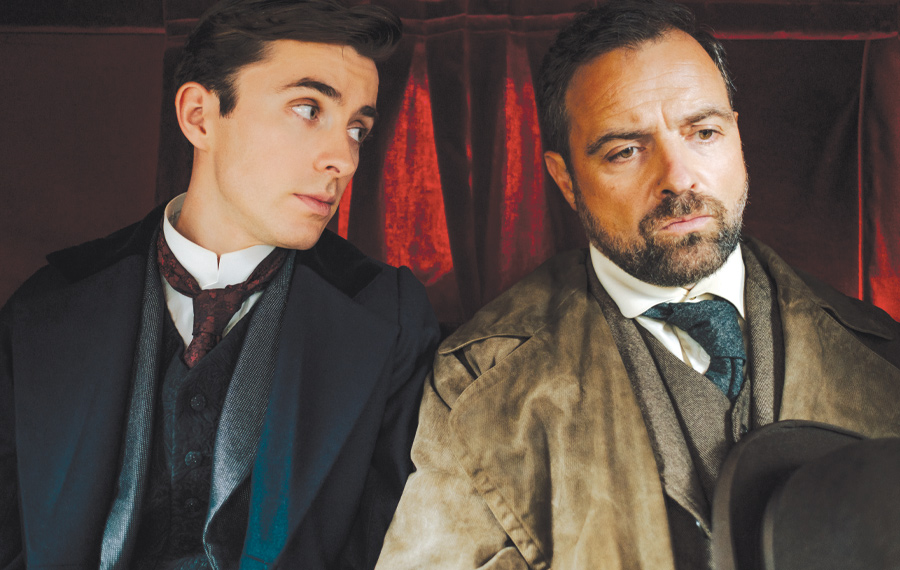
Based on a series of novels by Frank Tallis, the six-hour PBS drama stars Matthew Beard as Max Liebermann and Jürgen Maurer as Oskar Rheinhardt. Cases involve gruesome cult killings, the murder of a spiritualist medium (reflecting the séance fad of the time) and mysterious deaths at a military academy, all set against a backdrop of enlightenment in the arts and the alarming rise of right-wing nationalism and anti-Semitism. The latter is woven into stories that depict Liebermann’s observant Jewish family and his romantic life. 

Director Robert Dornhelm was more interested in these sociopolitical elements and the period milieu than in the crime aspect. “Vienna in 1900 is a very potent period,” he said in an interview with the Journal. “You have a revolution in the arts and a renewal in the domains of architecture, music, painting. But hand in hand with that is nationalism, intolerance and a disregard for human life. There was a strong German nationalistic movement and a rise in anti-Semitism dating back to the 1880s,” he said. “Adolf Hitler just jumped on the bandwagon.”

At a press conference for the series in Vienna, Dornhelm said a reporter accused him of “making Austria look bad.” He responded that the history wasn’t his invention and that’s the way it was at the time. “Obviously, the sensitivity is still there,” he said. “What I’m hoping to convey is how quickly human beings are reduced to sheep, go to war and forget their humanity. It should be a warning.”

For Romania-born Dornhelm, who grew up in Vienna but has lived in Los Angeles since 1982, the project was a chance to go home. “I’ve done a lot of work there; documentaries for television. My parents and grandparents are buried there. My brother and my daughter live there.” 

“What I’m hoping to convey is how quickly human beings are reduced to sheep, go to war and forget their humanity. It should be a warning.” 

— Robert Dornhelm 

On set, Dornhelm said, “It was interesting to see the British cast interact with the Austrians,” his lead actors in particular. “It was tense in the beginning, which was perfect because Max and Oskar had to get used to each other. They became really good friends and  Jürgen  was teaching Matthew all kinds of Viennese slang words and jokes,” he recalled. “Nothing pleases me more than a good, playful atmosphere on the set. Most of my colleagues like tension and get creativity out of it. With me, it’s the opposite. There’s enough tension anyway with having to finish on time. People give you more when they’re relaxed.”

Dornhelm’s resumé includes several other period projects for television including a “War and Peace” miniseries (2007); “The Crown Prince” (2006), about Rudolf, the last of the Hapsburgs; and, most recently, a miniseries about Austrian Empress Maria Theresa (2017). He received an Oscar nomination for his 1977 documentary, “The Children of Theatre Street,” about the Kirov Ballet, and an Emmy nomination for “Anne Frank: The Whole Story” (2001). 

Growing up in Romania with religious Jewish grandparents and parents who were less so, Dornhelm was studying for his bar mitzvah when his family made “a very adventurous escape” to Vienna in 1960. “I never had the bar mitzvah,” he said. 

When he first came to Hollywood in the late ’70s, he signed with agent Paul Kohner, who represented many of his favorite directors. “[Luis] Bunuel, [Ingmar] Bergman, Billy Wilder, William Wyler — I got to meet them all,” he said.

Kohner was Jewish but didn’t realize that his new client was, too. “He said, ‘I have a project you’d be perfect for, but the producers want someone Jewish.’ ” Dornhelm promptly began reciting the Four Questions. Kohner asked him, “Why didn’t you tell me?” To which Dornhelm replied, “I didn’t want to get the job only because I’m Jewish.” 

Around the same time, Dornhelm had a Jewish producer friend “who wanted to bring me back to the tribe and reunite me with my forgotten rituals, and he did. I can say a few prayers but I can’t say I’m a religious person,” he said. 

In the future, Dornhelm said he’d be interested in exploring other Jewish subjects on film and would not be opposed to directing additional “Vienna Blood” episodes. He hopes those who tune in get a sense of the time and place in which it is set, and appreciate it for more than its aesthetics. “To have nice costumes and architecture aren’t enough,” he said. “I’m not trying to pretend that this will change the world, but I hope you’ll understand the time in which it takes place, and that you will be inspired and entertained.”

“Vienna Blood” premieres Jan. 19 on PBS.

Murder and Anti-Semitism in 1900s-Set ‘Vienna Blood’ Read More »