WASHINGTON (JTA) — A House bill introduced Tuesday would extend penalties for boycotting Israel to compliance with boycotts organized by international organizations.
The Israel Anti-Boycott Act introduced Tuesday by Rep. Lee Zeldin, a Jewish Republican from New York, would add language to 1970s-era anti-boycott laws that targeted the Arab League boycott of Israel to include “international governmental organizations.”
It ratchets up pressure on Democrats who in recent years have increasingly opposed expanding penalties targeting Israel boycotters, saying they impinge on speech freedoms. A separate anti-BDS bill in the Senate last year garnered the support of just over half the party’s caucus. Rep. Nancy Pelosi of California, the House speaker, has resisted considering the measure in the U.S. House of Representatives.
The bill specifically names the United Nations and affiliated bodies, and the European Union, entities that in recent years have recommended boycotts of goods made in Israeli settlements.
It had 59 co-sponsors, 58 of them Republicans. The sole Democratic co-sponsor is Tom Suozzi of New York.
In a statement Zeldin, whom Republicans have designated as their lead Israel spokesman, said the measure targeted the Boycott, Divestment and Sanctions movement targeting Israel.
“This legislation would not only reinforce Congress’ opposition to the BDS movement, but protects American companies from being forced to provide information to international organizations that peddle this hate-filled movement, and holds those who attempt to violate that protection accountable,” he said.
Unlike the 1970s laws, the bill does not include criminal penalties, but it preserves the earlier laws’ monetary punishment.
Two days after the massive Jan. 5 “No Hate. No Fear.” solidarity march in New York City, I heard Elan Carr, U.S. Special Envoy for Monitoring and Combating Anti-Semitism, speak at Central Synagogue. Given that Central, like most Reform temples, prides itself on its leftist politics, I was curious how the evening was going to go down.
Sponsored by the UJA-Federation of New York, the panel discussion — “The Challenge of Anti-Semitism in New York, on Campus, and Around the World” — also included Jonathan Goldstein, chairman of Britain’s Jewish Leadership Council, and Rebekah Thornhill Tokatlilar, director of the Bronfman Center for Jewish Life at New York University.
Both Carr and Goldstein did not mince words. “Jewish unity is a powerful force,” Carr said. “We need to put aside partisanship and stand together. The same standards need to be applied to the left and the right. It’s not that complicated.”
Carr called President Donald Trump’s executive order applying civil rights protections to Jews a “game-changer.” Only about a half-dozen in the sanctuary packed with 600 people applauded. Carr paused, then said, “Shouldn’t a ‘Thank you, Mr. President’ have followed this breakthrough? Why is that so hard to do?”
Carr softened the blow by mentioning something that hadn’t yet been reported. The African Americans attacking Jews in the New York City area are being influenced by militant Islam, especially Louis Farrakhan, and the radical left, but also by neo-Nazi groups, Carr said, which “have begun an operation to turn blacks against Jews. Just like the far right has united with anti-Israel groups on campus.”
“The post-Holocaust honeymoon is clearly over,” said David Moore, moderator and chair of the Federation board. Said Goldstein: “But if Jews stand together, the innate decency of the American people will carry the day.”
Goldstein told the crowd “the left needs to be called out and condemned when it’s being anti-Zionist.” Prior to the Dec. 12 vote that ousted Labour Party leader Jeremy Corbyn, British Jews were “strongly Labour.” In the December election, only 6% of Jews voted Labour. Unity and truth-telling made that happen, he said.
Echoing philosopher Edmund Burke, Goldstein said, “Bad things happen in society when good people remain quiet.”
As for remedies, the panelists had a few. Goldstein said to ditch the term anti-Semitism. “We need to call it what it is: anti-Jewish racism. Being called a racist makes people uncomfortable today, and this is indisputably racism.”
Carr added: “The remedy for anti-Semitism isn’t censorship because often it is protected speech. The remedy is condemnation. The eggshell walking has to end.”
“Our own students aren’t educated enough about Jewish history,” Goldstein said. “But education starts in the home.”
Carr said that Jewish donors need to stop giving to universities that have anti-Semitic professors and feature anti-Semitic speakers.
Tokatlilar said that the Bronfman Center’s response to the “alarming and unprecedented” incidents is more public displays of Jewish pride. “We’re not encouraging students to hide their Magen David necklaces or take off their yarmulkes. We’re encouraging them to be more Jewish, prouder of their identity.”
Central Synagogue should be commended for holding this event. This is precisely the community that needs to get involved in the fight. It’s simply not enough to march for one day and then go home and allow Democratic politicians, professors in classrooms and faux journalists to get away with anti-Jewish racism.
“Am echad b’lev echad,” Carr said. “One nation with one heart. This is the real tikkun olam. With unity, we will make the world a better place.”
Karen Lehrman Bloch is an author and cultural critic living in New York City.
The Talmud says that we should always judge other people favorably. We must also judge ourselves favorably. — Rabbi Nachman of Breslov
You’re being judged no matter what, so be who you want to be. — Anonymous
Mark: Listen, Mom. You’re not my judge. Mother: Oh yes, I am.
An expression you hear a lot these days is, “I don’t know what to believe anymore.” I also heard it a lot as a kid. Growing up, I constantly was judged for certain things I said and did. At times, the “judgments” were right. Drawn from “Aesop’s Fables,” I was labeled “the boy who cried wolf.”
I can’t tell you how many times while growing up, people said to me, “Is that true?” “We can’t tell with you.” “You say everything with such a straight face.” “I’d like to believe you.” “You’re a little faker.” A few times, when I asked my aunt or uncle something, they would look at my parents and ask, “Is he on the level with this?” I guess if you’re 6 and you ask your uncle to lend you $1,000 for a week and won’t tell him why, then adults aren’t quite sure what to think.
In school, I used to raise my hand to answer a question and the teacher would say, “Mark, if I call on you, are you going to be funny or are you going to answer the question?” I never knew how to answer that because I never knew what was going to come out of my mouth.
When I became a comedian, it got worse. Almost everyone I met would say things like, “I can’t tell when you’re joking and when you’re not joking.” If a person can’t tell when a comedian is joking, that’s a bad sign. Often I’m not joking and really want to say something I think is important but it’s frustrating when I’m trying to be serious and I see people waiting for a punch line that’s never coming.
Being a character means that life is generally never dull. The little boy who cried wolf did it because things got dull.
In 1990, I got married and started a family. You would think at least these people would get me. Not the case. My wife and kids can’t figure me out. They say things like, “Oh yeah, sure.” Or, “Show me where you read that.” Or, “You’re making that up.” Unless it’s confirmed that I have either smallpox or diphtheria, they think I’m exaggerating if I say I’m sick (although when I was a kid, I did stick the thermometer under hot water so I could stay home from school. I never understood why my mother didn’t call the doctor when I handed her the thermometer and it read 109 degrees).
Even now, if one of my kids gets ill and I tell them that I’ve had what they have, I hear, “We know you’ve had every disease known to man. It’s amazing you’re still alive. What diseases haven’t you had?” When I was young, my mother would say to me, “Mark, you’re not normal. Nobody acts the way you act.” I know I exaggerate and at times, make up things. That’s nothing new to me.
In spite of my obvious character flaws, the good news is that people seem to like hanging out with me. I think it’s because I’m what people call a “character.” I’ve been blessed that people seem to like characters and are willing to put up with me. Accusing me of being a character is something I’ve never minded. I’ve heard, “You know, Mark, you’re a real character.” or “You little character, you.”
I must admit it made me feel good. It seems special. Being a character means that life is generally never dull. The little boy who cried wolf did it because things got dull. Being a character means keeping yourself and other people on their toes. Being a character is fun. As long as no one gets hurt, why not?
If you think I’m joking about any of this, I’m not. Or am I? I don’t even know myself anymore.
WASHINGTON (JTA) — Much of Elizabeth Warren’s presidential campaign narrative subtly casts her as the anti-Obama, the potential president who will not broker sweetheart deals for big business.
That was the subtext — actually it was the overt text — of a buzzy Politico magazine article in September titled “‘Why Are You Pissing In Our Face?’: Inside Warren’s War With the Obama Team.” It chronicled tensions at the beginning of Barack Obama’s first term, when Warren, then a Harvard law professor, was the most prominent critic of the bailout championed by the president.
It’s been a narrative useful to the Massachusetts senator as she vies with Sen. Bernie Sanders to be the no-compromise candidate the party’s left is dreaming about.
But there was a hiccup in the anti-Obama narrative last month when reports emerged that Obama was “talking up” Warren in private conversations with donors.
Now a CNN story on Warren’s foreign policy team reveals that her Middle East policy advisers are nearly all Obama-ites.
As the story notes, Warren has been uncharacteristically silent about her foreign policy, delivering only one speech and an article about it in the year or so she’s been campaigning. She fumbled at an October debate on a foreign policy question when she readily agreed with another candidate, Rep. Tulsi Gabbard, saying “I don’t think we should have troops in the Middle East.”
Warren later backtracked, and an aide told the Jewish Telegraphic Agency that she was referring only to combat troops. But the impression remained that she was not deeply immersed in the issue.
It didn’t help that the same month she told J Street, the liberal Jewish Middle East policy group, that she was ready to leverage aid to Israel to pressure the country into compliance with U.S. policy — but was short on details.
Her campaign consultants, as outlined in the CNN story, offer a clearer picture and distinguish Warren from two of her main rivals for the Democratic nomination, Sanders and Joe Biden, the former vice president.
Among them is Ilan Goldenberg, who helped shape Iran policy under Obama. Goldenberg later was chief of staff to Martin Indyk, who tried to broker a Middle East peace deal in 2013-14. Warren also is talking with Hady Amr, Indyk’s deputy during that doomed peace deal attempt.
They join a raft of Gen-Z foreign policy wonks who served under Obama.
Here are some takeaways from the revelations in the CNN article:
Assistance to both Israel and the Palestinians: Warren’s pledge to J Street to consider cuts to Israel assistance notwithstanding, Goldenberg and Amr are steeped in an understanding of Middle East peace brokering that uses American carrots, and not sticks, for both sides.
Indyk and Secretary of State John Kerry went out of their way to offer Israelis incentives for sticking with the talks, notably including U.S. investment in defense infrastructure in the West Bank to assuage Israeli concerns about ceding any security control in the region.
That process was packed as well with economic incentives for the Palestinians — Amr’s brief . That’s consistent with the Warren pledge to resume the assistance to the Palestinians that President Donald Trump has eliminated.
The anti-Biden: Biden has taken on board as senior advisers boomer wonks like Tony Blinken and Nicholas Burns. Blinken held senior posts in the Obama administration, but got his start on President Bill Clinton’s National Security Council. Burns was a career diplomat through the Reagan, Clinton and George W. Bush administrations.
Those are resumes that reflect the last vestiges of the post-World War II vision of an expansive U.S. role on the planet. Warren’s consultants, by contrast, are more identified with Obama’s retreat from using U.S. military power as leverage. They have a harder-nosed outlook of the limits of U.S. influence, but at the same time repudiate the “America first” isolationism that Trump has come to embody.
The anti-Sanders, too: Goldenberg, Amr and Warren’s other consultants are nonetheless seasoned executive branch diplomats and policymakers.
Sanders, typical of his brand, is taking advice from activists and thinkers he has recruited from outside the Democratic establishment. His top foreign policy adviser, Matt Duss, for a time was the president of the Foundation for Middle East Peace, which has as its focus two-state advocacy and is sharply critical of Israel policy in a way that Democrats until recently were not.
“Eid-eh shoma mobarak,” I said to my aunt over 30 years ago in Iran, wishing her a happy Persian New Year.
“Thank you, Tabby joon. Do you know what year it is?” she asked.
“No, auntie. What year is it?”
“It’s 1366.”
1366 sounded like a pretty big number, until HIAS brought my family to Italy as refugees, and my mother enrolled my sister and me in a Jewish day care program.
“Yeladim,” the rabbi asked us one day, “Who knows what year it is?”
Just as I was about to raise my hand, he said, “It’s 5745.”
I was astounded. 5745 sounded even bigger than 1366.
The following year, I sat in a first-grade classroom in a Beverly Hills public school and watched with rapt attention as the teacher wrote a number on the chalkboard.
“Kids, when you come back from winter break, do you know what year it’ll be?”
Thank goodness she didn’t look to me for an answer. I’d already embarrassed myself enough those first few months at my new American school, especially given that I was learning English mostly from the TV show “The A-Team” and responding to the teacher’s questions with quotes from Mr. T. I wanted to blurt out “5745,” but I didn’t need another clueless notch on my acculturation belt.
I began to dig deeper and welcomed the constant renewal as a great blessing to maintain a self-audit every three months.
The teacher proceeded to write 1990 on the board, handed out some candy canes and dismissed the class.
That night at our family dinner table, I was more confused than ever.
“Mom, do the Americans have their own year coming up soon?” I asked.
My mother thought and responded, “I think that’s the day Jesus became a rabbi.”
“No, no, no,” interjected my father, who, in the mid-1970s, went to college in the U.S. “That’s the day he was born, I think.”
As we later learned, Christmas marked the celebration of Jesus’ birth, and no one in our family is still quite sure when he was rabbinically ordained.
So began the charm of identity confusion as an Iranian American Jew: a new year in the fall (Rosh Hashanah), a new year in the winter (per the Gregorian calendar), and finally, another new year in the spring (Persian New Year/the spring equinox).
As a child, it was all fun and frivolous, until I grew up and faced not one, but three annual backbreaking attempts at new years’ resolutions. That’s a lot of renewed and canceled gym memberships.
Eventually, I began to dig deeper and welcomed the constant renewal as a great blessing to maintain a self-audit every three months or so, as a compassionate way to ask myself with truth and accountability, How am I doing?
Most people look toward Jan. 1 as the somber day when “all the fun stops” and the resolutions begin, but if I’ve learned anything as a Jew, it’s that you can’t resolve any past unethical behavior until you access recognition, remorse and commitment to do better. This, in essence, is teshuvah, and it’s at the heart of Rosh Hashanah.
It’s primarily because I’m one of those sadists who loves a good self-audit that I revel in having three new years. In the fall, I look deeply for the roots to my emotional and physical drawbacks and identify ways to strengthen them. In the winter, I check to see how I’m doing.
There’s no guilt. Only compassion. But I won’t lie. The January assessment often involves a bathroom scale.
Finally, in the spring, I recommit myself to areas that still need work, understanding that the seeds to my growth simply may have been dormant that winter and waiting to sprout.
I think it’s an excellent, compassionate and above all, sustainable system in an age of trendy, vapid self-care and “self-renewal” gimmicks. You don’t have to be Persian or Jewish to give yourself not one, but three annual opportunities to live up to your soul’s highest potential.
It’s not as hard as it seems, especially not compared with the bane of my existence: Mother’s Day, which has its own version in the Persian calendar, only with twice the guilt.
Tabby Refael is a Los Angeles-based writer and speaker.
The last thing I expected when I first met Rabbi Uri Herscher in the late 1990s was tears. All I knew about him was that he was a major player on the Jewish scene launching an extraordinary project near Mulholland Drive called the Skirball Cultural Center. He was coming to my ad agency to review some creative ideas that might help promote his labor of love.
We showed him a billboard design with the line, “Freedom Celebrated Daily.” He said nothing. A few seconds later, I could see his eyes tear up. That was my introduction to Uri. Throughout our friendship, I have seen it often: If he feels something deeply, he will share it. That day at the agency, he shared tears of appreciation.
Several decades earlier, at his high school graduation, he had seen the tears of his father as he handed Uri a stack of old family letters.
“This is your legacy,” his father told him.
As Uri reminisced during a keynote address in 2011, “They were letters written in Yiddish … and [my father] said, ‘What I’ve done, Uri … I’ve translated them from Yiddish to German, and now it’s your turn to translate them from German to English,’ and that’s what I did. And I did it with a lot of tears.”
Two of those letters hang in his office. One is from his maternal grandmother, who had just received a visa to go to Mandate Palestine but refused to go. She wrote to Uri’s father: “You know, I’ve just taken in a child born out of wedlock, and I will not leave without the child.”
The grandmother and the child ended up perishing in Auschwitz. As Uri said in his address, “Had she thought of herself alone, she would have left the child. But there was no such thing.” That letter, he added, “says you come from a stock where a grandmother would not neglect a child she took in and she would not go to what would have been her life and freedom without the child.”
When Uri says the letters from his grandmothers are “anchors” to the Skirball and have given him ‘enormous strength,’ it’s easy to believe him.
The second letter was from his paternal grandmother. Uri’s father was worried about her. In a letter, he asked: “Dear Mother, are you hungry?” The mother wrote back: “Dear Son, I’m not hungry, but let me tell you: The day that I would feel that I’m hungry, that’s the day when somebody comes to my door and asks for food and I don’t have enough to share.”
When Uri says the letters from his grandmothers are “anchors” to the Skirball and have given him “enormous strength,” it’s easy to believe him. The stories have clearly infused in him a deep sense of compassion; while the freedom he celebrates daily in America — which his two bubbes never got to enjoy — have clearly infused in him a deep sense of gratitude.
In a way, the Skirball embodies a marriage of these two sentiments — compassion and gratitude.
It is with both sentiments that Uri has approached one of the most important acts of his professional life: handing the leadership of the Skirball on July 1 to his chosen successor Jessie Kornberg, who has been running Bet Tzedek (The House of Justice) for the past five years.
This passing of the torch, which is the subject of our cover story by Managing Editor Kelly Hartog, is a key milestone for our community. For one thing, the Skirball has become one of our most treasured institutions. It serves as a uniquely popular bridge between the Jews and America, merging the particularity of the Jewish experience with the universality of the American experience. What philosophers talk and write about, the Skirball has done in practice.
In a way, the Skirball embodies a marriage of these two sentiments — compassion and gratitude.
Few organizations are as attached to their leaders as the Skirball is to Uri Herscher. He has nurtured the center since its inception. Gradually, with the support of a devoted team and the backing of generous donors, he has thoughtfully expanded and enriched the center to create a “city on a hill” fully dedicated to the Skirball vision.
Just as thoughtfully, as you’ll read in our story, Uri has helped select and groom his successor.
When he shared the news about Kornberg over lunch recently, you’d think he had just won the lottery. He was brimming with joy. As our story reports, finding the right successor has weighed heavily on him for years. Now he found her. He was both relieved and grateful.
It is customary, when major figures pass the baton, to soften the edge of the goodbye by saying things like, “They’re not really retiring” and “They’ll still be involved.”
It’s certainly true that Uri will still be involved with his beloved Skirball and with other causes, but it’s also true that this represents the end of a memorable chapter — both for Uri and for our community.
We can only hope that the Jewish communal world will continue to develop leaders of Uri’s caliber — leaders who can hear the stories of our ancestors and create exquisite spaces of light and inspiration for all of God’s children.
As we honor Uri for all he’s done for our community, one way we can thank him is to shed tears of appreciation.
The Hasidic Jewish community in Melbourne, Australia is an extremely closed community – they have no access to Radio or Television, boys and girls are separated as early as 8 years old, and the Rabbi has the final say on all issues.
In 2008 the community was in havoc, due to a number of girls who complained that their school principal, Malka Leifer, sexually assaulted them when they were children at the school. The school immediately bought Leifer plane tickets and she fled to Israel before facing any charges. Leifer remains in Israel to this day, as Australia’s extradition request is suspended in endless trials and legal processes.
How many Malka Leifers are there in the Orthodox communities in Israel and worldwide? It’s extremely hard to know. With a clear tendency to avoid any discussion on sex or sexuality, has the Orthodox community doomed itself to simply suffer quietly, exposing the vulnerable?
In the last 15 years, one man has been trying to make sure that’s not the case. His name is Rabbi Yakov Horowitz, and he’s the author of “Let’s Stay Safe!”, a children’s book about sexual safety. Yaakov has devoted his life in recent years to fighting sexual abuse in the Orthodox community. He’s now in Israel as 15 thousand copies of his book are being printed in Hebrew and distributed for free.
Rabbi Horowitz is Founding Dean of a Monsey, NY Yeshiva and Director of The Center for Jewish Family Life/Project YES, and we’re honored to have him on the show.
The last few years of my parents’ lives we knew they were sick and that that their death was near. There was this intense sense of the “last” Passover, the “last” birthday, the “last” something for us to celebrate together.
Then, my mom died. There was the “first” Hanukkah without her. Then the “first” New Year she wasn’t alive. My dad died eight months after her. It was the “first” time I was without parents.
Six weeks after his death, my oldest daughter was born.
First child. First time being the adult. First of many firsts.
So many “firsts” that the sadness of the “lasts” that came with my parents’ deaths ebbed a little. Although I must say, it was hard being a mom when I had just lost mine.
First times and last times. We remember them. They are significant.
My husband and I were just on a family trip to Hawaii with our three kids. With my oldest a junior in high school, this felt like one of our last trips as a family.
I remember the first camping trip we took.
My youngest had just started crawling.
She was dirty the entire time from crawling on the ground in the dirt of the campground.
In every single picture her body is covered in dirt and leaves, her smile big, her eyes shining with mischief.
I look at my teenage children who right now are not so fond of spending time with their mom. I can’t imagine all of them not being on a family trip with us, but I know that day is not far off.
First, last, never.
There is something incredibly significant about the first time you do something and the last.
“Ms., this was the first time I was sober with my family.”
“That was the first time I walked away and did not fight back.”
“Ms., that was the last time I will get locked up,” he told me after he was detained for a few months because he fought with a co-worker.
“I spent the past 15 years of my life in and out of those walls. No more! That’s it!”
“Okay,” I say. “I’m with you.”
“Ms., I ain’t never been in love.” This young woman’s story can break the strongest of hearts. It broke mine.
“I ain’t gonna trust no one ever. You feel me?”
“Never is a long time,” I say.
“Keep your options open. There could be a first time for love. There always is,” I add.
Someone from the other side of the room says, “Well, this was the last time I am getting married. Had me three husbands. No more. Find you some love,” she says with compassion to the girl. “Just don’t marry the fucker.”
We all laugh.
“I got the job!” she tells me over the phone.
“That’s amazing,” I say.
“What did you say to them?” she asked me. I was her reference.
“I told them the truth. That you were amazing, hard-working and smart,” I tell her.
“Where did you tell them you met me?”
“I told them you did my program. They didn’t ask me where. I didn’t think they needed to know.” She laughs out loud.
You see, I met this young woman when she was 16 and incarcerated.
She has been out for a while and we have been in and out of touch.
This young woman is incredibly creative and landed a job interview with a small party planning business. I have spent a lot of time with my mentors learning how to vouch for the people I teach. This is no simple task, making sure I don’t get them or myself in trouble. Never say something you can’t stand behind or don’t know.
One colleague told me, “Speak from your heart. Tell the truth, and don’t share information that, how shall I say, can be incriminating.”
That’s funny, I think, considering many of them have criminal backgrounds.
Now, I am a master of doing exactly that. Saying what is needed without adding what isn’t.
“I got the job,” she told me.
“Amazing!” I say.
She is quiet
“This is my first real job,” she says quietly.
“The first of many,” I say.
“What if it’s the last?” she asks.
“What about my tats (Her tattoos. She has many.) and what if they find out?”
When you are incarcerated as a minor at some point your record can be expunged. That means erased and it cannot pop up in some background check. It is as if it never happened. Hers had been, yet she was afraid.
“Then they will find out,” I say calmly.
She was having a panic attack on the phone.
“Listen,” I tell her. “I hear you. Just go and be yourself. Do the job. Be the best you can be. It will fall into place. If it doesn’t, we’ll figure it out together.”
I said this with conviction to convince her and to convince myself, too.
I have heard from my adult students of the nightmares of trying to get a job or rent an apartment when you have a record. The stories are beyond disturbing.
This girl needs this job. It’s a real deal breaker.
I am well aware of what is at stake.
“You got this,” I add. “Breathe!”
She does.
First job.
First paycheck.
First bank account.
First promotion.
First moment of pride.
So many firsts.
I hadn’t heard from her in a while. I recently got a phone call:
“Nomi,” she said. I know things have changed once they call me by my name and not “Ms.” anymore.
I am already beyond happy. She really needs to say no more.
I found out she is doing well. She moved away.
New start, cheaper city, and now has her own little company and is mentored by the brilliant woman who hired her after my recommendation.
“Nomi,” she said. “You opened the door for me to walk into my first job. That was the last time I doubted myself and I’m never going back.”
I am quiet.
“Hello?”
“I’m here,” I say.
“Damn,” she says. “That’s the first time I’ve heard you shut up and be so quiet,” she says.
“Very funny,” I say wiping my tears.
First time.
Last time.
Never.
She tells me more.
These kids drift in and out of my life. Throughout the years it’s fun to hear where they have been and what they have been up to, especially when it is a success story.
“I never thought this would happen,” she tells me.
“I really thought that first day would be my last.”
“Well it wasn’t,” I say.
“Thank goodness!” she says.
We continue to catch up.
I am so proud.
I am so relieved that she is doing well.
“I’ll call you again in a few months. Okay?’ she says.
I am happy, so incredibly happy to know that this is NOT the last time I will hear from her.
Naomi Ackerman is a Mom, activist, writer, performer, and the founder and Executive Director of The Advot (ripple) Project a registered 501(c)3 that uses theatre and the arts to empower youth at risk to live their best life.
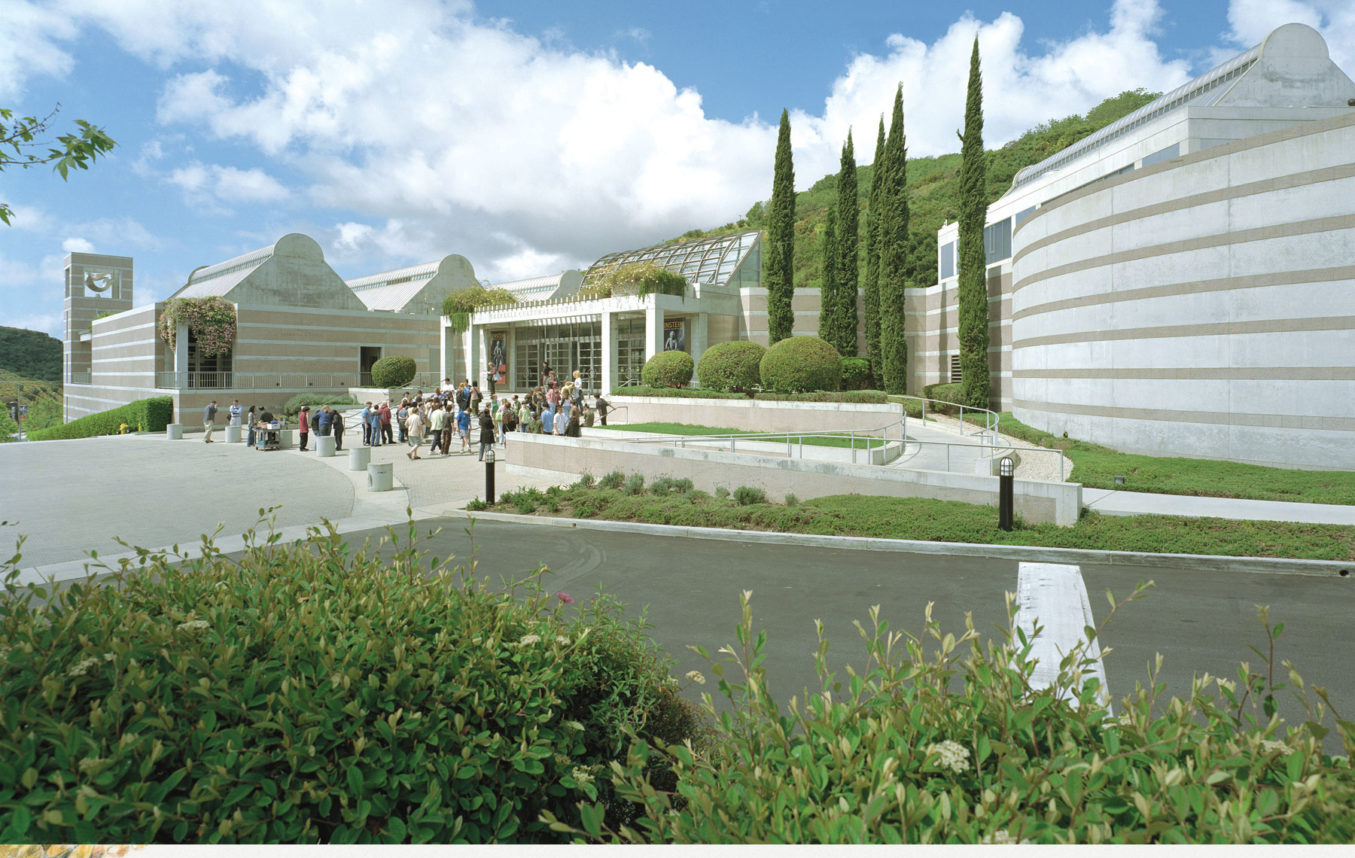
It’s hard to imagine that the 15-acre site housing the Skirball Cultural Center at the base of the Santa Monica Mountains didn’t exist 24 years ago. The landmark center that opened in 1996 and links West Los Angeles and the San Fernando Valley has become a permanent fixture alongside the Getty museum in the Los Angeles landscape, and to date has drawn nearly 10 million visitors.
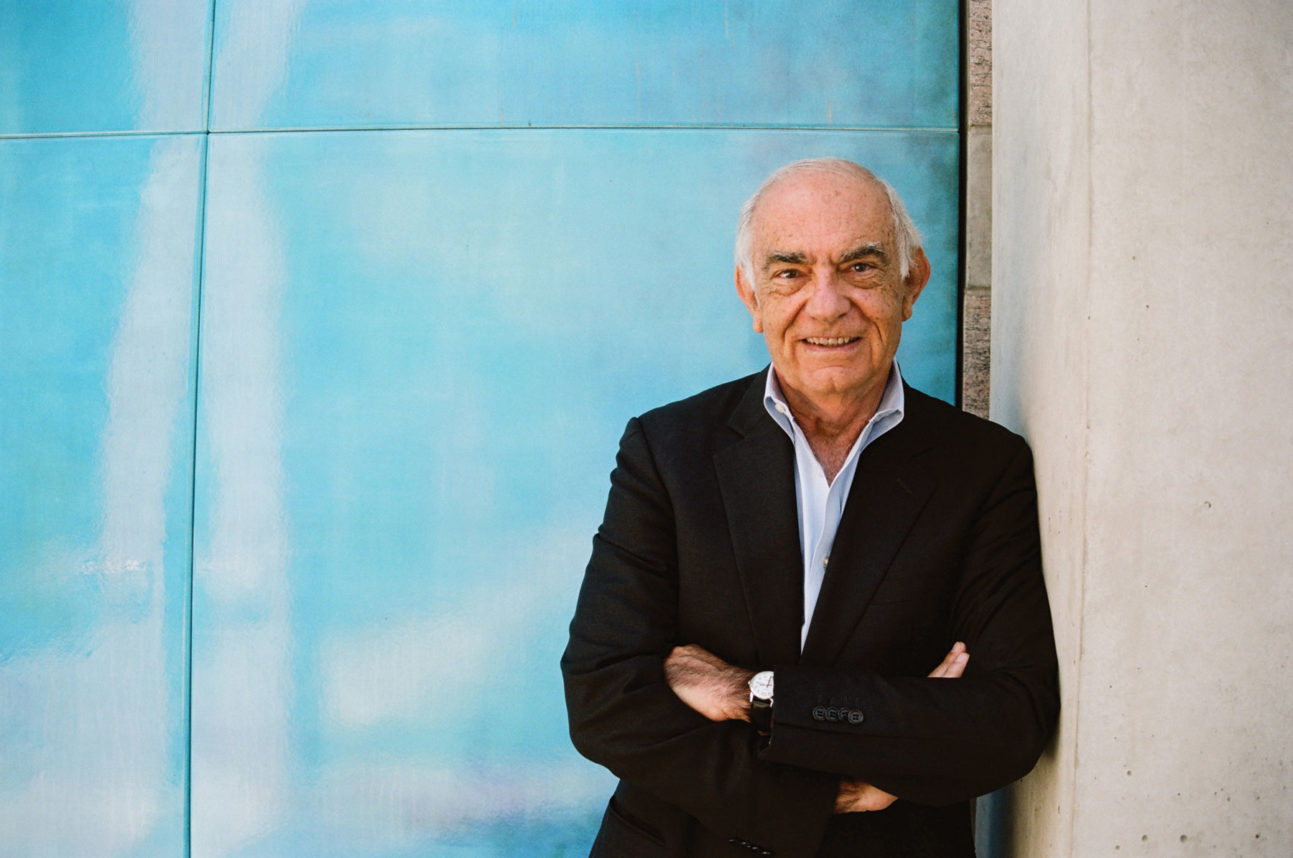
But the vision for this remarkable structure that boasts a permanent museum alongside regularly changing exhibitions, film events, music and theater performances and cultural programs belongs to 78-year-old Rabbi Uri Herscher, its founding president and chief executive.
And while Herscher first floated the idea to the Reform movement’s Hebrew Union College-Jewish Institute of Religion (HUC-JIR) in 1980, the seeds for the center stretch all the way back to his boyhood in Tel Aviv, where he was born and raised until the age of 13, when his family came to the United States and settled in San Jose in 1954.
Herscher is one of the most revered people in the community — a rabbi, a professor, a teacher, a mentor, a philanthropist, an author, a historian and a seeker, who has used his talents to raise millions of dollars and bring Jews and non-Jews together.
Anyone who has met him and has spent time in the company of this erudite man whose love for Judaism and all humanity is infectious will tell you that Herscher is one of the most generous and warm people they’ve met.
Indeed, on my visit to Herscher’s vast office, despite the large, wooden desk in one corner, I’m ushered to a series of soft armchairs in the opposite corner, situated around a low, circular table. Late afternoon light bounces off the large window overlooking the Skirball’s sun-dappled courtyard. Herscher, dressed casually in gray slacks, an open-necked cornflower blue shirt and soft, black leather loafers sinks into one chair and gestures for me to take the one next to him.
We’re here for a serious interview; for Herscher to announce his official retirement on June 30 and discuss his successor, Jessie Kornberg, the young, dynamic president and CEO of Bet Tzedek, the nonprofit human and poverty rights organization. And yet, there is nothing formal about this interview as Herscher settles in for what can only be described as an almost two-hour chat.
Despite the extraordinary institution Herscher has built, he refuses to take sole credit for the Skirball. “There is no ‘I’ in Judaism,” he says. “We say ‘anachnu’ (we) in Jewish prayers. When I speak with Moshe Safdie (the Israeli-born architect who designed the Skirball Cultural Center), we always say, ‘Mah Shlomeinu?’ (How are we?)”
Which is why, Herscher explains, he’s been cognizant of succession since his late 40s. “I also was very frightened by the history where successors did not do well in passing the baton and I was not going to be one of those people,” he says. “My goal was all about the Skirball and not about me. You can’t do anything alone and the Skirball was built with that knowledge. I call upon everybody constantly. This is an open door and it feels safe but it also takes one person to lead this institution.”
He then reveals that he started to take the issue of succession seriously eight to 10 years ago, when he was in his late 60s. And despite four decades between them, Herscher says that 37-year-old Kornberg is absolutely the right person to succeed him.
“Her lenses are so clear on the world and we want [the Skirball] to remain young, and she is a young woman with a timeless soul,” he says. He also cites Kornberg’s “character, her integrity, out-of-the-box thinking, courage, knowledge and her passion for advocating for those who need it most,” along with her “intelligence and eloquence and her capacity to connect with everyone meaningfully in the room and her commitment to pursuing social justice in whatever she does.”
Early sketch of the Skirball Cultural Center by Safdie Architects.
Herscher says he is confident Kornberg “will lead the Skirball in expanding our reach and fulfilling in new ways, perhaps, our mission to create a more civil and a more just society.”
In a separate phone interview, Kornberg says, “I am so excited. It’s been a long time coming. It’s still a ways off. I’ve been keeping the excitement at bay.” She adds that while she’s thrilled about taking on this role, “I’m also totally cognizant of the challenge. The Skirball is a huge institution with a really serious responsibility, not the least of which is Uri’s legacy. Replacing a founder, the creative genius behind the vision and the construction of the place is not a small thing, and I care about protecting his legacy and his vision.”
As to their generation gap, Kornberg says, “I’ve always been lucky to be in intergenerational environments. I grew up very close to my grandparents. We were kids who sat at the adults’ table. At Bet Tzedek, we are not just an agency that has a unique focus on elder law and delivering services to low-income seniors, but we are a community made possible by the volunteerism of retired lawyers and judges and a staff with real intergenerational exchange.”
Kornberg also speaks passionately about the warmth that Herscher generates, describing him as “warm and welcoming. I felt so at ease with Uri and felt so lucky that he was willing to spend time with me. I walked away from [our] first meeting feeling really special. But what I’ve come to appreciate over the years is that really is how he is with everyone. It is not we who are special but he who is special. He just really opens himself up and creates with people in an extraordinarily short amount of time a deep connection.”
And while both Herscher and Kornberg attest to their deep connection, to truly understand how and why Herscher chose Kornberg also requires an understanding of his legacy and vision. Publicity material on the Skirball emphasizes that the center is a place for all people to come together, guided by the Jewish tradition of welcoming the stranger and inspired by the democratic ideals of freedom and equality.
The center itself is designed to be like a sukkah and open on all four sides, much like the biblical Abraham’s tent. It’s built around essential Jewish tenets, welcoming the stranger being just one of them. The others are building community, pursuing justice, seeking learning, showing kindness and honoring memory.
Herscher’s vision was so singular and unique, when asked where his ability to dream big came from, he hesitates and says, “I’m not sure, but let’s try it.” After a few moments, he declares, “It has to start very early. My brother, who is seven years younger, and I were born in the basement, and there’s no question that I always desired light.”
Uri Herscher likens Los Angeles to Ellis Island. “It still remains an immigration port and I wanted to be with other immigrants. I was one myself. I couldn’t think of a better place to build a Jewish institution embracive of the total community.”
It’s an incongruous statement given that his name, Uri, means “my light,” in Hebrew. In 1948, during the establishment of the State of Israel, Herscher was only 7. “Tel Aviv was bombed,” he recalls. “My mother remembers my giving her a heart attack by not being in the shelter and then she sent out some people to find me. They found me with a slingshot aiming at the Arab airplanes. I can’t tell you what drove me to do that. I think I became a fighter at that time because the first Israeli young soldiers died then and they paraded them in a funeral procession on Sderot Rothschild in Tel Aviv. I was standing on a bench watching it. I saw their yellow feet. They were dead. And I heard crying. And the spirit that I instilled in myself was that I’m alive and I have to do something to make a difference.”
That passion also was fueled by the summers he spent on kibbutzim in Israel, where his cousins lived. “My mother’s brothers were all kibbutzniks,” he says. “I appreciated the ideology — of how important equity and social justice was; how important it was to create a safe community. Everybody was equal. I loved it.”
Uri Herscher
He also recalls how culture would be brought into the kibbutzim by inviting poets and writers and musicians-in-residence. “So I got a flavor of what that culture meant and how elevated that was for me. It very much defined my thinking about what is right and what is wrong when it comes to the treatment of human beings.”
Officially, Herscher conceived the Skirball as an outreach effort of HUC-JIR when he was executive vice president and dean of faculty. He moved his office from Cincinnati to Los Angeles in 1979, and in 1980 approached HUC-JIR’s board of governors about his radical idea for a cultural center.
He knew after graduating from HUC in 1970 that he would not become a congregational rabbi. “I struggled with theology,” he says. “So I think [the cultural center] vision started while I was still a student and then as a member of the faculty.”
He chose Los Angeles to create his vision because “L.A. was not and still is not rooted, allowing us to have the type of freedom rarely seen in other cities. No group ran the city of Los Angeles and that was a huge attraction for me. There was always that opportunity for new thoughts. And this was a mighty thought.”
Herscher likens Los Angeles to Ellis Island. “It still remains an immigration port and I wanted to be with other immigrants. I was one myself. I couldn’t think of a better place to build a Jewish institution embracive of the total community.”
He confesses the meeting with the board of governors was “tough. I think HUC had different plans for me. It was an academic institution. Basically, I was reaching out beyond the walls of study. I was saying, ‘Let’s take our learning to the streets.’ There’s a really important space for the ivory tower. But I was born in the streets and I wanted to go back there.”
Which is why, Herscher believes, the seeds for the center were first planted during his high school graduation, when his father gave him a stack of old family letters written by his grandmothers. While Herscher’s parents had escaped Germany in the 1930s and fled to Israel, most of his family (on both of his parents’ sides) perished in the Holocaust. Herscher’s paternal grandmother’s last telegram in 1942, a month before she was sent to Auschwitz, said “Kiss Uri for me.”
“My goal was all about the Skirball and not about me. You can’t do anything alone and the Skirball was built with that knowledge. I call upon everybody constantly. This is an open door and it feels safe but it also takes one person to lead this institution.” — Uri Herscher
That telegram is framed on Herscher’s wall, along with letters and photographs from family members who perished. “I took that kiss and wrote my own narrative,” Herscher says. “I don’t know what was in [my grandmother’s] mind, but I think what she was messaging to me was, ‘I hope you create safe environments.’ ”
Then, after graduating from UC Berkeley in 1964, Herscher hitchhiked through Europe for 3 1/2 months to learn his family’s history. That trip had a profound effect on him and, he notes, “I think my grandmother’s hopefulness helped create a safe place on Sepulveda Boulevard.”
He also credits his parents with having the courage to leave their families and homeland — first from Germany and then from Israel — “to come here [to San Jose]. We were fully welcomed by our neighbors, and that was a very special embracive welcome.”
Herscher talks about how his parents were blue-collar immigrants (his mother was a laundress and his father a cabinetmaker) and how their employers did not always treat them with dignity. “That’s why when I talked about the Skirball and its creation, I wanted to make sure everyone felt respected and valued.”
He also speaks of having always seen the Skirball as a storyteller. “Our core exhibition is the story of the Jewish people,” he says. “[The] Noah’s Ark [exhibition] is the story of immigration. Every visitor becomes Noah and is taught to take people in a storm and find shelter for them. The story has to do with when we first immigrate, we stick with our groups because we are unsafe. As we journey toward the rainbow, we no longer need to be in these groups because we feel safer. The rainbow is all about possibilities and the Skirball is all about possibilities, and I see the rainbow within us.”
This was also part of Herscher’s evolving vision for the Skirball, and after he was appointed to the Ethics Commission of Los Angeles in 2001, he expanded the Skirball’s mission statement to go beyond just the Jewish community and include “people of every ethnic and cultural identity.”
Back in 1980, Herscher told HUC-JIR’s board that he wanted the center to attract unaffiliated Jews. “I knew at the time 80% of Jews in L.A. were unaffiliated. I said they were uninspired and I felt the Skirball could possibly bring them back to being affiliated through culture and learning about their heritage.”
It’s one of many things that Herscher and Kornberg bonded over. Kornberg, who was born in San Diego and raised in Northern California before moving to New York as a teenager, didn’t move to Los Angeles until 2004, to study law at UCLA.
“My Jewishness has been largely cultural,” Kornberg says. “I don’t come from a religious family, and what I have learned over time is that makes me more similar to more people my age who identify as Jewish than I realized.”
She notes that 90% of Jews in America are unaffiliated “and for a long time that identity of Jewish by tradition and heritage and not active and organized made me feel like I was getting it wrong and that I wasn’t fully a member of the community that was still my identity.”
In spending time at the Skirball, though, over these past five years, Kornberg says it has been a “gift. It’s a place that is overtly and expressly Jewish that tells me I am welcomed and I belong and I’m OK.”
Herscher and Kornberg first met when Kornberg was appointed president of Bet Tzedek. Herscher recalls attending her first Bet Tzedek gala in February 2015.
“I had such an appreciation for her elegant character,” he says. “With all of her great achievements, humility is at her core. There is no egomania here.” He rattles off some of those achievements, including her expansion of Bet Tzedek, and the number of people whom she has brought in to support the organization, which he says, “is very much because of her leadership. She has a leadership gene.”
And in terms of the Skirball’s mission, Herscher says his and Bet Tzedek’s dovetail. “We apply them differently,” he explains, “but it’s essentially the same mission. We do it through performance and the arts and they do it as legal aid.”
Jessie Kornberg
He also recalled her speech that night describing Bet Tzedek’s mission. “It certainly entered my heart,” he says. “I’m just so confident that she is a star in this community. For me, she gets a standing ovation for what she’s achieved.”
The two got to know each other better after Kornberg approached Herscher at that gala five years ago.
“I was aided in my transition [as president of Bet Tzedek] by several of my predecessors, Mitch Kamin and David Lash,” Kornberg explains. “They helped me by putting a list together of people they felt I had to know in my first 60 days. The list was like 400 people long and right at the tippy-top of it was Uri Herscher, who I had not known before.”
Herscher recalls Kornberg approaching her at the gala and saying, “You’re at the top of my list. You’ve been suggested as a leader in the community to meet with and learn from as it applies to my job.” And so, over the next few years the two would meet for lunch.
“[Herscher] gave me great advice about thinking about a board of directors and thinking about managing the finances of a nonprofit and thinking about leadership,” Kornberg says. “He has deep experiences with all of those things and I had a very shallow experience with those things. He was a mentor, really, from my very first days.”
She also recalls initially calling him up every six to 12 months and they’d have lunch. “We’d check in and I’d share with him how things were going at Bet Tzedek. Over time, looking back, I realized we transitioned from me inviting myself over to him saying, ‘Come on up. I haven’t seen you in a while.’ It really became a friendship.”
At some point, Kornberg says, Herscher started to talk to her about his own professional plans and the idea that he was thinking about succession and retirement, but she didn’t think it had anything to do with her. It was only a year ago, she says, that he started specifically talking to her about taking over from him. For his part, Herscher says he spent the entire five years interviewing Kornberg for the position without her knowledge. Kornberg laughs upon hearing this and quips, “The next time someone says a hiring process seems slow, I’m going to make sure to revisit that story.”
“Those meetings were meetings of trust and confidentiality,” Herscher reveals. “I think it was [philosopher Martin] Buber who said all living is meeting. [Kornberg] certainly was the person I met who brought enlightenment to my journey.”
“Jessie Kornberg’s lenses are so clear on the world and we want the Skirball to remain young, and she is a young woman with a timeless soul.” — Uri Herscher
Herscher was also delighted to learn that Kornberg has a background in ballet and was a professional dancer for a time, and Kornberg says she feels lucky “to have come circuitously back into arts and culture. It’s a gift and I’m so excited about that.”
The Skirball, she adds, is doing a little bit of what she did as a dancer, “which is stewarding the original creator’s work. My mother is a poet, my sister is an artist, my uncles are musicians and I always looked at those creators as very special, precious people who are able to share their view of beauty in the world in a way that can bring beauty to mine. And I’m just thrilled and lucky to get to participate in that kind of work again.”
Moving away from the law may seem like a seismic shift, but Kornberg says, “What I came to feel was that my work at Bet Tzedek is the best job I’ll ever have with my law degree and that I could either do it for the rest of my life or try a different direction.”
She saw the opportunity Herscher handed her as the “chance to learn new skills, different from the legal work that I have done but also in a context in which my experience will be useful and I will be of value to the institution. It is hopefully of mutual benefit. To have an opportunity professionally like that at a place that is also inspiring and personally meaningful is incredibly rare.”
And it’s why, Herscher says, it’s easy to pass the baton to Kornberg. “There’s that talmudic statement: ‘It’s not for us to complete the task.’ I live that, he says. “I’m totally realistic. The baton was passed to me by my mentors telling me, ‘We have confidence in you, Uri,’ just as I have confidence in my successor. They were my cheerleaders as I am the cheerleader of my successor.”
Mentors, Herscher says, have guided him his entire career, starting with those letters from his grandmothers and his family, to his teachers at HUC, other philanthropists, Safdie and, of course, rabbi, real estate developer, film producer and philanthropist Jack Skirball, for whom the center is named.
When the HUC-JIR board of governors approved the center, they told Herscher he would have to raise the funds independently. Skirball was among the first to invest in Herscher’s vision and also was instrumental in locating the site.
Herscher first met Skirball in 1965 when Skirball was on HUC-JIR’s board and established a sermon prize. Herscher was one of the first to give his sermon, on the life of Moses.
“[Skirball] came up and introduced himself and said, ‘I want to congratulate you. You will win the prize.’ ” Herscher recalls asking him how that was possible given that there were still many people who hadn’t given their sermons. Skirball told him, “I was impressed with the content, but truthfully much more impressed by your brevity. I doubt others will be as brief.”
From that point on, Herscher says Skirball became his “lifelong mentor and he championed [the center’s] mission. I was looking for the grandmothers and grandfathers I lost and he became a surrogate grandfather.”
Kornberg also cites a list of mentors, including Kamin — her mentor at both Bet Tzedek and the law firm she worked at before moving to Bet Tzedek, her family, including her husband, her parents and her late grandfather, whom she calls a “teacher and a discoverer and a pioneer.”
After his death, Kornberg’s sister found an interview her grandfather gave to a television station where he said his advice to young people was, “Be bold because you don’t have as much time as you think. This chance to do something bold and audacious is fleeting, so make the most of it.”
Kornberg says, “I have turned back to that advice in moments of insecurity and at forks in the road and said, ‘Don’t settle for complacency.’ That advice has been empowering for me.”
She also confesses to a mentor/hero she’s never met that “comes out of left field”: Dolly Parton.
“I think that she is an incredibly inspiring person,” Kornberg says. “She is an artist, an incredibly talented creative person, but I also think of her as this very strong spark that flew out of the Smoky Mountains and has lit up so many homes and minds, and she does it in a way that I’ve described Uri and the Skirball. She does it for everyone. She refuses to allow her message to be made exclusive.”
“I promise to come to the Skirball every day with my heart open to the visitors I meet there. I promise to be at the Skirball every day to welcome, the way that [Uri] welcomed me. And I promise to do for others what he has done for me, which is to raise the horizon of the future I saw for myself to something I had yet to imagine.” — Jessie Kornberg
None, though, she says, have had as transformative an effect on her life as Herscher. Although she had visited the Skirball in the early 2000s with her father (who is an architect) and had attended a wedding at the center, it wasn’t until she met with Herscher that she appreciated “how differently the security and informational staff acted with the community compared with other institutions. The parking attendants, the docents in the lobby and every person I interacted with was, to use a word important to the Skirball, so welcoming. And that, of course, is an echo of the welcome Uri extended to me, and that is an important value the Skirball continues to express every single day.”
Herscher concurs. “The biggest, most wonderful surprise [over the years at the Skirball] has to do with the relationships; the depth and strength of collaboration that kindness does exist, that goodness persists. ‘May I help you?’ is the first word out of everyone’s mouth. People who serve as guards also say, ‘Do you remember where you parked? Can I help you find your car?’ Those to me are the tenets that help undergird the Skirball.”
In taking the reins on July 1, Kornberg says she is willing to talk about one aspect of her vision for the center, with the caveat that “anything I say is automatically in the context of speaking from the outside.”
The Skirball’s mission, she says, “speaks of Jewish values broadly and then articulates one in particular and that is to welcome the stranger. That resonates strongly with me. It’s often referred to in the context of stories of migration and immigration. At Bet Tzedek, I have been up close and personal with the day-to-day experiences of underserved immigrants. One of the things I have longed for is a place where immigration advocates and migration storytellers and immigrant communities could come together to think more creatively and more audaciously about what the future could hold for similar people in similar circumstances.”
In passing the baton, Herscher says he is particularly proud of how the recognition of what the Skirball stands for has evolved. “We have now become embedded in the community with a mission that is recognized by the community and the pride in this place now has no boundaries,” he says. “People don’t just give you money because you’re Uri Herscher. You have to have a mission. And the non-Jewish community has funded this place to so many millions of dollars because they understand that we’re Jewish and they like that, because they don’t like people who hide.”
“The Skirball is a huge institution with a really serious responsibility, not the least of which is Uri’s legacy. Replacing a founder; the creative genius behind the vision and the construction of the place is not a small thing, and I care about protecting his legacy and his vision.” — Jessie Kornberg
In trying to pinpoint a couple of things at the Skirball that have stood out for Herscher, among them are the summer concert programs. “They are so welcoming and embracing of everyone, and the fact that we often give a first stage in America to some of these groups.”
From the center’s changing exhibitions, he chooses two “from hundreds”: the Albert Einstein exhibition in 2004-2005 and the 2018 Notorious RBG (Justice Ruth Bader Ginsburg) exhibition. He picked out the Einstein exhibition because “it introduced people to an Einstein we didn’t know. Everyone knows about his science and Nobel Prize but very few people knew his Jewish ethical compass.”
Both Einstein and Ginsburg, Herscher says, were “united in their pursuit for justice: one through science, the other through the law. [Ginsburg’s] story is seen through the Jewish values with which she was raised, and she quotes all the Jewish [biblical passages] that deal with justice, including ‘tzedek, tzedek tirdof,’ (justice, justice, shall you pursue.”)
Asked what he will miss most, Herscher flips the question on its head and says, “What I wish not to miss is the companionship of this community. I love to come here every day. I’ve never lived in such a kind and enriching community. I don’t want to miss that.”
Asked what she would like to say to Herscher, Kornberg says, “I think ‘thank you’ feels too small. The best way to repay his kindness is with the work that comes ahead. I promise to come to the Skirball every day with my heart open to the visitors I meet there. I promise to be at the Skirball every day to welcome, the way that he welcomed me. And I promise to do for others what he has done for me, which is to raise the horizon of the future I saw for myself to something I had yet to imagine before I met him but what has been made possible because of him. And better than to thank him for that is to do it for someone else, and that is what I promise to keep trying to do.”
As for what he would like to say to Kornberg, Herscher says he has to quote his dear friend, the late Rabbi Harold Schulweis, who died in 2014. He picks up a sheet of paper and says, “These are his last words he said to me before he died: ‘Uri, continue the dream. Expand the vision. Bring us together into a brighter, kinder, saner world. Remind us to sanctify our quest for meaning and purpose, to connect the shining stars above with the foundation stones below. We have come into being to build, to unite, to bless. To labor and to love the families of the Earth.’
“I would say to Jessie: ‘Continue the dream. Expand the vision.’ ”
Kelly Hartog is the Managing Editor for the Journal.