fbpx

December 11, 2019

Swastikas Found on Massachusetts College Campus

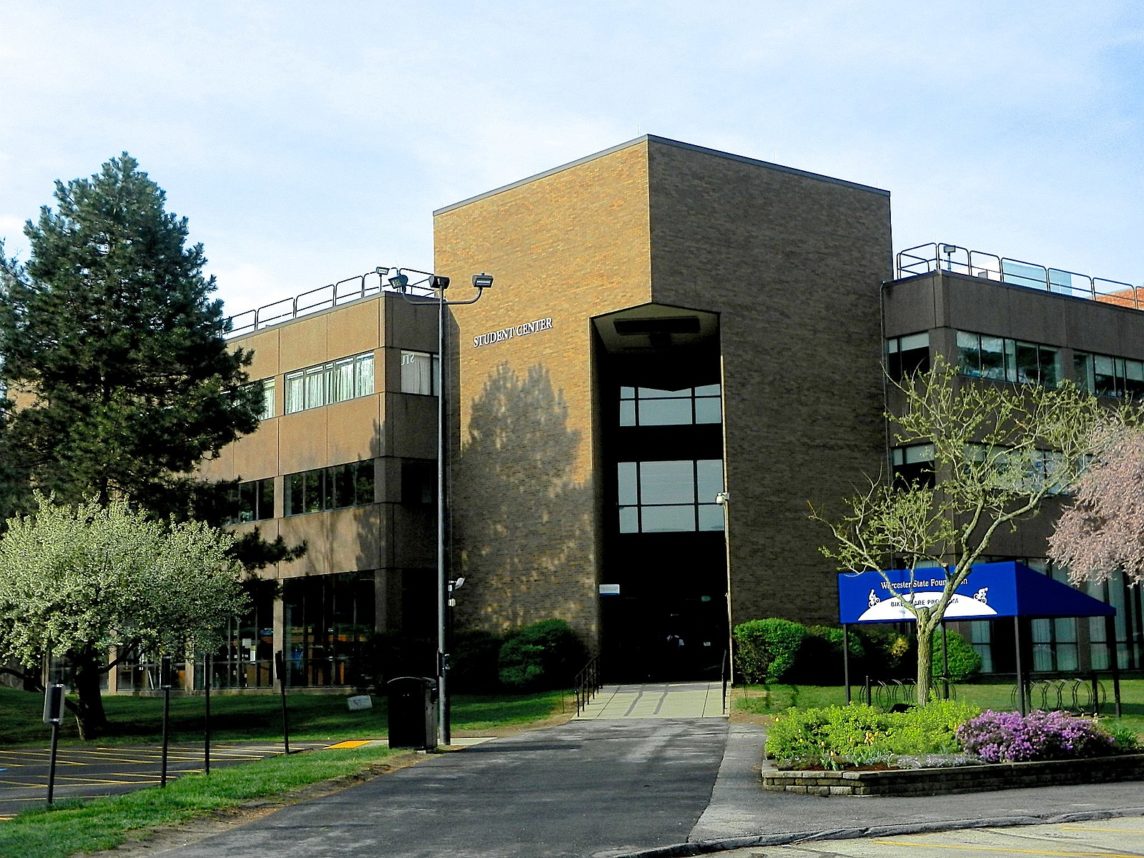
Several swastikas were found on a bathroom door at Worcester State University in Massachusetts on Dec. 6, the city’s local newspaper, the Telegram & Gazette, reported.

Worcester Dean of Students and Chair Student Affairs Officer Julie A. Kazarian wrote in a Dec. 7 email to students that the swastikas have since been removed and an investigation is underway.

“Worcester State University does not condone offensive symbols, language or artifacts that disparage or otherwise target an individual, protected group or diverse segments of our population,” Kazarian wrote. “The University strives to create a welcoming, inclusive learning environment where all students, staff and faculty — regardless of background — can thrive.”

Anti-Defamation League Senior Associate Regional Director Peggy Shukur said in a statement to the Journal, “The swastika incident at Worcester State is not an isolated incident, nor is it unique to the university. It is a part of a bigger trend we are witnessing where swastikas regularly deface schools and college campuses across the region and the country.”

She added: “We commend the university for swiftly condemning the incident. We believe that ongoing conversations by the school community after a bias incident is an essential element in the fight against hate.”

Other recent instances of swastikas on Massachusetts college campuses include five swastikas found on the University of Massachusetts Amherst on Oct. 30 and eight found on Smith College on Oct. 24.

Swastikas Found on Massachusetts College Campus Read More »

Israel to Have a Third Round of Elections

Israel will have its third round of elections since April 2019 after the Knesset failed to meet its December 11 deadline to form a government.

According to The Jerusalem Post and Times of Israel, the third round of elections currently is currently slated to occur on March 10, but the Knesset is debating a bill that would move the elections to March 2 because March 10 coincides with Purim.

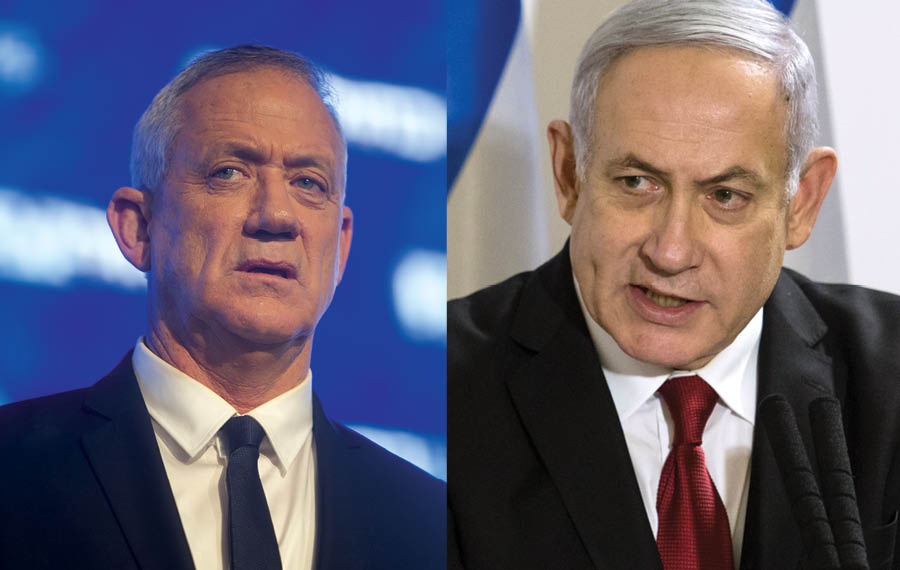
The Knesset had 21 days to form a government after Israeli Prime Minister Benjamin Netanyahu (Likud Party) and Blue and White Party leader Benny Gantz each were unable to form a coalition.

Axios reports that Netanyahu and Gantz have blamed each other over the failure to form an Israeli unity government. A plurality of Israelis surveyed (41%) in a Channel 13 poll published on Dec. 10 blamed Netanyahu for the political deadlock.

The poll also found that Blue and White would win 37 seats and Likud would win 33, putting their respective coalitions blocs at 60 and 52, respectively.

Israel to Have a Third Round of Elections Read More »

Jewish Community on Edge After Jersey City Supermarket Attack

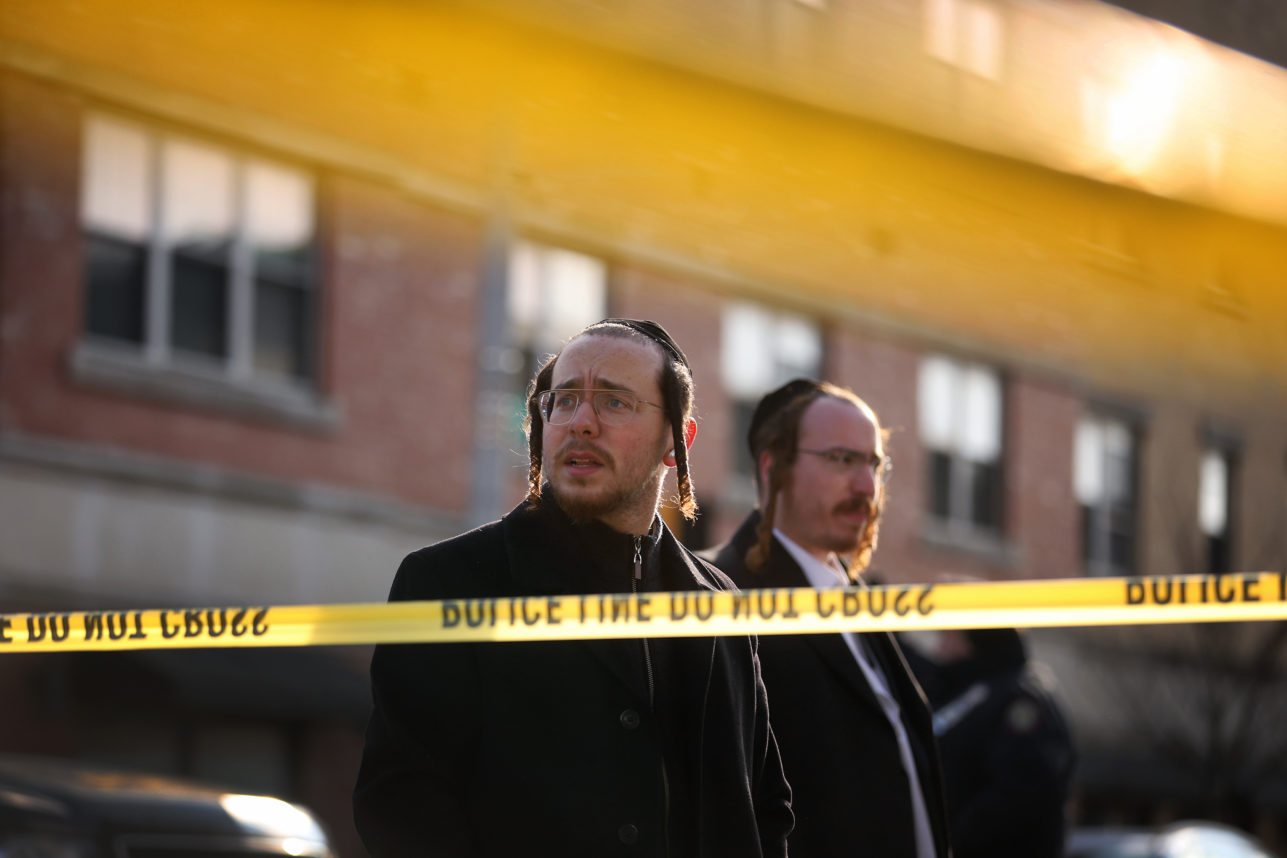
The week after the anti-Semitic attack on a kosher supermarket in Jersey City, N.J., has brought more information but little comfort to the Jewish community in what New York authorities are now calling “an act of domestic terrorism.”

The perpetrators fired hundreds of bullets inside the JC Kosher Supermarket in a siege that lasted more than two hours and left three civilians dead. Store proprietor Leah Mindel Ferencz was 33 and a mother of three. Her husband had stepped out of the store moments earlier to pray at a nearby synagogue. The body of 24-year-old rabbinical student Moshe Deutsch was riddled with bullet holes. Store employee Douglas Miguel Rodriguez, 49, had a daughter. He was shot and killed after holding the store’s back door open for Deutsch’s cousin, who managed to escape.

Det. Joseph Seals, 39, was killed by the perpetrators in a nearby cemetery where he had previously gone to meet a confidential informant. A fundraising campaign by the Jewish community raised more than $50,000 for his family in less than 24 hours.

A fundraising effort to support the Ferencz family aimed even higher, and six hours before it closed, the Charidy campaign had raised more than $1.2 million of its $1.5 million goal.

Simon Goldberger, a 24-year-old Satmar Chasid from Williamsburg, Brooklyn, was in his car outside the supermarket on Dec. 10 when two black-clad assailants burst out of a U-Haul rental van and ran into the store. Goldberger crouched beneath his steering wheel and called 911. He gave the police his license plate and model of car and asked them to rescue him. He waited for more than 20 minutes, during which he heard rounds of ammunition being shot from the long rifles. 

“I didn’t know if I was going to be alive the next minute,” Goldberger told the Journal.  

A black police truck pulled up and was positioned between Goldberger’s car and the supermarket so he could safely run to the police vehicle. Police then drove him a couple of blocks away and dropped him off.

The perpetrators were identified as David Anderson, 47, and Francine Graham, 50, members of the black nationalist extremist sect Black Hebrew Israelites. They lived in the van, which authorities later discovered was filled with arms and had been armored on the inside with bulletproof material.

New York City Mayor Bill de Blasio called the attack “an act of terror,” and while Jersey City officials initially said it was not aimed at the Jewish community, video shows the assailants jumping out of the van across the street, guns pointed toward the supermarket. 

Jersey City Mayor Steven Fulop, who is Jewish, said on Dec. 11, “It was a targeted attack on the Jewish kosher deli.” The New Jersey attorney general did not officially deem it a terror attack until Dec. 12. Fulop later told reporters he believed the original targets were the 50 schoolchildren studying in the yeshiva next door.

Fulop met Dec. 11 with leaders of the Charedi community from Jersey City and Brooklyn. Afterward, he tweeted: “I just finished a long meeting with leaders of the Orthodox Jewish community here in Jersey City. I explained in detail all of the information we have [made] public. The bottom line is that we are thankful this community is part of JC and we will heal together.”

Sen. Chuck Schumer (D-N.Y.) paid a shivah visit to the Deutschs’ home in Brooklyn and said, “The anti-Semitism is greater than I’ve ever seen in my life.” Devorah Halberstam, the mother of 16-year-old Ari Halberstam, who was murdered in 1994 by a terrorist as he and others traveled to visit the then-ailing Lubavitcher rebbe in a Manhattan hospital, also attended the shivah.

Chasidic Jews from Brooklyn began moving to the Greenville neighborhood of Jersey City about two years ago in search of more affordable housing. There are now about 100 Chasidic families living there. While their community has its own local synagogues and school, other Jersey City Jews also have been upset by the attack.

“Everyone is pretty shaken up,” said Rabbi Bronwen Mullin, spiritual leader of Jersey City’s Congregation B’nai Jacob, situated a few blocks from where the attack took place. On the evening of Dec. 10, she held a virtual community vigil online, “because we couldn’t ask people to leave their homes” just a few hours after the midday shooting.

A larger community healing gathering was held Dec. 11 at Temple Beth El, the local Reform temple where Fulop is a member.

With what is sure to be a larger visible police presence around Jersey City, Mullin said her congregants fear that it will ratchet up already existing tensions between the local black and Jewish communities. 

“Whenever there’s heavy policing of an area with a large black community and a large number of Orthodox Jews, it seems like the assumption is that they’re there to protect the Jews,” she said. “This just aggravates tensions between these two communities that are already on thin ice.”

The attack also is having ramifications beyond New Jersey. A booth for a visible security guard was erected outside the Bais Ruchel girls school in Williamsburg on Dec. 11. Security also is being beefed up at Jewish schools in the area. And now kosher shoppers are wondering if they need to worry about being targeted when they go to buy food.

A Jewish mother in Brooklyn, who declined to give her name, told the Journal, “I don’t even know what to say to my kids now about the new horrifying reality. We may as well be back in the old country with targets on our backs.” 

This story has been updated since orgional publication. 


Debra Nussbaum Cohen is a freelance journalist in New York City.

Jewish Community on Edge After Jersey City Supermarket Attack Read More »

Political Chaos and the Tzadik

Every year on the anniversary of the death of Rabbi Elimelech of Lizhensk, thousands of Jews journey to pray at his grave. He was an important Chasidic leader, a prominent student of the Maggid of Mezeritch and one of the founding fathers of Chasidism in Poland. He died on the 21st of the Hebrew month of Adar. In 2020, this date falls on March 17. 

March 17 was the natural choice for Israel’s third election, until someone was reminded that the day would be Elimelech’s yahrzeit. The Jews who flock to Poland on this date vote primarily for one party: United Torah Judaism. So the party objected to the proposed date, and the other parties obliged. The Likud Party is not in the mood to mess with its natural Charedi ally, and the Blue and White Party is working to convince the Charedis that it is not their enemy. Call it ridiculous, bizarre or outrageous. Call it whatever you want. The fact is, that Elimelech, from his grave, still affects our lives. It may be the clearest evidence that he was a true tzadik. 

In his famous book, “Mipeninei Noam Elimelech,” the rabbi emphasized the role of the tzadik in spreading Ahavat Israel, the love among the Jewish people. He also wrote about the power of the tzadik: “By his holy acts, the Tzadik can abolish all bad judgments. … The Tzadik decrees and the Lord complies.” Unfortunately, the tzadik can command the Lord but this power does not extend to commanding Israel’s politicians. Earlier this week, these politicians seemed to have little patience for great teachings as they busied themselves with last-minute maneuvers and blame-game manipulations. 

Three main themes emerged as these politicians (and Israel) moved closer to the political deadline. The possibility of immunity for Prime Minister Benjamin Netanyahu and the feasibility of him serving as the prime minister when his trial takes place; the whose-fault-is-it blame game, in which all parties strived to convince voters that the chaos is someone else’s doing; and the what’s-next discussion, whether for a last-minute rescue from the calamity of a third election or for having a reasonable outcome in the next election that could enable a government to finally form.

These themes serve all political actors as they strive to make a case for themselves. And they serve them well among their own voters. That is to say: Netanyahu convinces his voters, and Blue and White’s leader Benny Gantz convinces his. Of course, this means that no one switches sides and no one is able to show real political gains. 

Here is an example of how this works: In a survey by Israel’s Democracy Institute, the question that was presented to voters was, “Who, in your opinion is mainly responsible for the fact that over the past two months no government has been formed?” Who is winning this argument? If one looks at the public as a whole, it is clear that Gantz is the winner. The highest percentage of Israeli citizens (43%) blame Netanyahu for Israel’s political deadlock. Only a few (7%) see Gantz as the person who makes things difficult. 

A win for Gantz? Not so fast. Gantz voters and voters of other parties opposing Netanyahu see the prime minister as the main culprit of deadlock. But Netanyahu voters don’t. They see Avigdor Liberman as the problem (38% of Israelis). Among members of the right bloc, only 23% blame Netanyahu, while more than a half (57%) blame Lieberman. Interestingly, on the morning of Dec. 10, 36 hours before the deadline to form a coalition, the main newspaper identified with the bloc, Israel Hayom, dedicated its main headline to the “block on one.” Lieberman is the block that prevents the bloc from forming a coalition. 

But the most interesting finding of this survey comes from the question what Netanyahu should do now. Among Likud voters, the largest group (27%) believes that Netanyahu should stay in his job as the law permits. About the same number say he should be given immunity. Less than 20% want him to temporarily retire until the trial is over (and return if exonerated). A little more than 10% want him to resign. 

Why is this so interesting? Because it is almost identical to the response of Israeli voters half a year ago. With all the headlines and scandals, rhetoric and bombast, political twists and turns, the public hasn’t change its mind. That’s why Israel is deadlocked.


Shmuel Rosner is senior political editor. For more analysis of Israeli and international politics, visit Rosner’s Domain.

Shmuel’s book, #IsraeliJudaism, Portrait of a Cultural Revolution, is now available in English. The Jewish Review of Books called it “important, accessible new study”. Haaretz called it “impressively broad survey”. Order it here: amzn.to/2lDntvh

Political Chaos and the Tzadik Read More »

Deconstructing Israel Through Pop Music

Uri Levin has a long scruffy beard that makes you do a double take. Is he a hipster or a Chassidic Jew? Levin jokes that he had to go all the way to Melbourne, Australia, just to come back to Tel Aviv with a trendy Herzl-esque beard. 

During his second stint as a shaliach (emissary from Israel), in Melbourne (his first was in Omaha, Neb.), Levin had an “aha moment.” “Everyone knows about Bibi and Gantz, but no one knew who was popular on the radio, what theater shows were the ‘Hamilton’ of Israel,” he said. 

Currently completing his master’s degree in educational management by focusing his research on Generations X and Y, Levin knows a thing or two about Jews under 40. With a background in production, specifically theater and radio, he combines his cultural know-how with an informal educational style in specially curated musical workshops about Israel. Having premiered at the Australian Limmud Oz festival, Levin’s workshop takes the audience on a musical journey through contemporary Israeli society.

Levin opens his laptop to a screenshot of the popular Galgalatz Top Hits list. Galgalatz is a radio station run by the Israel Defense Forces, and according to Levin is the ultimate barometer of Israeli society. “This is going to tell us about the society itself: politics, factions, etc.,” Levin said. His choose-your-own-adventure workshop invites the audience to select a song and then deconstruct an aspect of Israeli society through music and other popular cultural tropes. 

We start with Netta Barzilai, Israel’s unlikely pop diva and the 2018 Eurovision Song Contest winner. Watching the video clip to her winning song, “Toy,” we discuss the #MeToo movement and whether it has made a similar impact in Israel as it has in America. We talk a bit about the K-pop influences in Netta’s visual styling. Levin ends with the clip of her winning Eurovision and saying, “Next year in Jerusalem.” 

Levin helps translate Israeli society to
non-Israelis through contemporary music.

But Eurovision 2019 wasn’t in Jerusalem, it was in Tel Aviv. Levin explains that the song contest took place in Tel Aviv because “everything here is political,” and then speaks about the right-wing government’s pushback about hosting something over Shabbat in Jerusalem.

We move from pop to rock, and from #MeToo to post-traumatic stress disorder (PTSD). Levin plays Israeli rock band Full Trunk’s biggest hit, “As a Stone,” which Levin uses as a jumping-off point to discuss the emotional and psychological impact of Israel’s compulsory military service. Levin then talks about his own service as a naval officer, with multiple deployments in Gaza, exploring PTSD with his audience on both the personal and national level.

Levin believes the younger generation is poised to relate to Israel through the cultural and societal trends he explores in his presentation. “Those younger ones, because of technology, are connecting better,” he said. “Someone on Birthright (Israel) or MASA can now listen to Cafe Shahor on Spotify, but they don’t understand what it means within the context of Israeli society.” 

And that’s where Levin comes in, helping translate Israeli society to non-Israelis through contemporary music. And yes, he will share his playlist with you.  

Deconstructing Israel Through Pop Music Read More »

Make No Mistake, Anti-Semitism Happens Everywhere

Articles about rising anti-Semitism and attacks on Jews in German streets often are paraded as proof as that European Jewry has no future, and why Jews belong only in Israel.

You rarely find articles about another trend: Israelis leaving Israel.

Israelphiles might not think the miraculous country is such a stressful, troubled, difficult place to live, because pro-Israel propagandists post messages about how Israel is so strong; how it effectively fights terrorism (while actually having a record of giving in to terrorism, i.e., the Oslo Accord and Gaza pullout); how, statistically, Israelis are happier than others; how only in Israel can you walk on biblical lands; how Jews rose from the ashes to create self-sovereignty.

It’s true that Israelis live lives of great purpose. Some — especially immigrants from Western countries, who make the greatest material sacrifices — feel better about this great purpose when the media goes berserk about anti-Semitism in Europe. I know I used to.

People often ask if I’m scared living in Germany. Not as scared as I was living in Israel during the Second Intifada, when I was afraid to go on a bus, eat in a café or dance in a nightclub lest I get blown up. Those were the hardest years of my life. But I stayed and fought through the violence out of my love for Israel.

But journalists aren’t as interested in the frenzy of violent Palestinian anti-Semitism. Israel probably has more “no-go zones” per capita than Europe. Religious Jews wouldn’t dare set foot in some Arab-Israeli towns. In Palestinian cities, where Israelis aren’t allowed to enter, I’m not even sure what would happen to a kippah-wearer, because it’s hardly been tried. In Jerusalem’s Old City, Jews repeatedly have been attacked simply for looking Jewish. The kind of Jew-hatred taught in “Palestine” — under Israel’s nose — is second to none.

Mainstream foreign media usually bury such stories or, worse, blame the “Occupation.” Zionists worldwide will not blame the Israeli government for its weakness in combating anti-Semitism on its own turf; rather, they’ll attack Europe and the media for standing idly by. I guess it’s much nobler to die under a Jewish government in Israel as a “martyr” (even if Judaism doesn’t have “shahids”).

Journalists aren’t as interested in the frenzy of violent Palestinian anti-Semitism. Israel probably has more “no-go zones” per capita than Europe.

Sometimes I wonder if this “rising European anti-Semitism” narrative is being hyped up or deliberately crafted. Pop psychology dictates you materialize what you focus on. No wonder that weeks after Germany’s anti-Semitism czar, Felix Klein, announced Jews shouldn’t wear kippahs in public, they were attacked in Berlin and Hamburg.

It’s as if the pundits want there to be more anti-Semitism, especially the right-wing brand, which distracts from the politically incorrect Islamic breed. The topic of anti-Semitism gives journalists juicy subject matter as well as reasons for nonprofits to send out email solicitations. Meanwhile, people mostly ignore the Islam-appeasing, anti-Israel left (epitomized by the U.K.’s Jeremy Corbyn).

Most Israelis like to think persecution only comes in the form of the “goy.” Unfortunately, on a day-to-day basis, I often have felt more mistreated by social, economic and security policies of the quasi-socialist Israeli government than I have in Germany.

I was reminded of that during a recent visit to Israel. My joy was cut short because Islamic Jihad decided to shoot rockets at Israel for the umpteenth time. For an entire day, without warning, the government shut down schools all over the country. My friends and family didn’t go to work unless their offices had shelters. Everyone complied as if rockets are simply rain. But for some reason, anti-Semitic attacks have been allowed to become routine in Israel.

As most Israelis living in Europe can attest, life is much easier there. I’ll go so far as to say the modern Germany day-to-day system seems to operate more by the golden rule: Treat residents as they want to be treated.

Less red tape makes it easier to start a business; unlike in Israel, with its highly regulated, monopoly-filled economy that makes it among the most difficult for starting a business within the Organization for Economic Cooperation and Development (OECD) countries. Cost of living matches salaries, unlike in ever-expensive Israel. Traffic moves and it’s easier to get around, unlike in Tel Aviv, where the ill-organized subway construction has caused chronic gridlock for years. My German clients generally and generously pay me on time, unlike some Israeli employers. And don’t get me started on a third election, which displays contempt for the electorate. But I suppose that kind of contempt can’t be categorized as anti-Semitism.

Zionists will argue that the meaning of Israel overrides such “material” opportunities, but that logic gives the Israeli government a pass from creating conditions for citizens to live better, easier and in more dignity with all they go through.

I’ve been accused of bad-mouthing Israel when Israel needs all the support it can get. However, braggadocio and bravado don’t necessarily make people like Israel or Jews any better. Honest vulnerability often is much more attractive and results in sympathy. And honest, public discussion should spur the Israeli government to enable the truly secure, peaceful, easy day-to-day life Israeli citizens deserve.

Knowing Israel also is my home gives me confidence to live in Germany. I’m so thankful for Israeli citizens who are on the front lines. Let’s support and protect one another, not try to “best” each other as to whom is the better Jew or Zionist. Let’s work together to ensure Jews feel safe everywhere — especially in Israel, where I’ve felt the most scared living as a Jew.


Orit Arfa is a journalist and author based in Berlin. Her website is oritarfa.net.

Make No Mistake, Anti-Semitism Happens Everywhere Read More »

Theologians Tackle Climate Change Crisis

This Thanksgiving, a “bomb cyclone” menaced northern California. In the Los Angeles area, the Getty fire temporarily closed the American Jewish University (AJU) main Familian campus; the Easy fire burned just five miles from AJU’s Brandeis-Bardin campus.

Amid these fires, evacuations and power blackouts, religious leaders met to encourage current and emerging clergy to address climate change from the pulpit. Religious institutions are among those suffering the impacts of an expanding climate crisis. In 2018, wildfires destroyed multiple churches in Paradise, Calif., and caused the temporary closure of the Pepperdine University campus. Also in 2018, fires destroyed three Jewish summer camps, including one in Malibu. It has been one of the driest period in California’s history.

The Los Angeles Symposium on Ecologically Informed Theological Education took place Nov. 3-5 at AJU’s Brandeis-Bardin campus near Simi Valley. Jewish, Christian and Muslim speakers included the deans of Hebrew Union College and the Ziegler School of Rabbinic Studies of AJU; faculty from Fuller Theological Seminary, the largest Christian seminary in the United States; priests from the Los Angeles Catholic Archdiocese and the Orthodox Christian Church; and the founding president of Bayan Claremont Islamic graduate school. The 75 participants included priests, pastors, rabbis, imams, theological school professors, students and environmental scientists.

Climate scientist A. Park Williams noted how a hotter California means plants are drying out more, becoming more likely to burn. The symposium, which took place just five miles from the Easy fire, was the result of an unfortunate opportunity for gathered faith leaders to address integrating religion and ecology in their institutions.

As Rabbi Brad Artson, dean of the Ziegler School of Rabbinic Studies at AJU, said, “If Judaism claims to be one of the world’s preeminent wisdom traditions, then surely it has something to say to remind us of our status as creatures, as stewards of creation, responsible for the sustenance of life on this Earth. This conference brought together an extraordinary gathering of scholars, clergy and committed leaders who are intent on applying the bounty of religious insight and faith to a commitment to fight for sustainability, so that we can once again experience life in this garden as the paradise it was meant to be!”

The symposium empowered religious seminary faculty and students to address the connection between religion and ecology. It was co-organized by the Interfaith Center for Sustainable Development, the Methodist Theological School in Ohio, the Green Seminary Initiative, the Martin Gang Institute for Intergroup Relations, and AJC LA.

This year, the world has experienced ecological impacts on an unprecedented scale. Hurricane Dorian hit the Bahamas and caused damage as far north as Nova Scotia, Canada. Houston experienced record flooding for the third time in as many years. Eastern Australia experienced record fires. A recent New York Times opinion article by Eugene Linden revealed how climate scientists have drastically underestimated the pace and intensity of climate change, with severe impacts arriving this year that were not anticipated until 2100.

This deepening ecological challenge requires a response from all aspects of society, including religion. Los Angeles is the second-largest center for rabbinical training outside of Israel. It is time to engage future rabbis.

A survey by the Public Religion Research Institute and the American Academy of Religion found “most Americans who attend religious services at least once or twice a month hear little from their clergy leaders about the issue of climate change. Just over one-third of Americans say their clergy leaders speak about climate change often (11%) or sometimes (25%). More than 6 in 10 Americans say their clergy leaders rarely (29%) or never (33%) reference climate change.”

The survey also reported a correlation between clergy speaking about climate change and congregants who believe climate change is occurring and caused by humans, and noted that “Americans who say their clergy leaders speak at least occasionally about climate change also score higher on the Climate Change Concern Index.”

Some L.A.-area rabbis, such as Sharon Brous and David Kasher of IKAR, have made speaking and teaching on climate change a congregational priority. But this is by no means across the board, and rare in Orthodox synagogues.

With most clergy remaining silent on the ecological crisis, the majority of Americans do not view climate change as a moral or religious issue, according to a poll by Yale and George Mason universities. In addition, 83% of Americans continue to misunderstand how the 97% consensus of climate scientists agrees that global warming is occurring and caused by humans.

Why don’t American clergy, including many rabbis, speak out about ecological sustainability? It’s partly because not enough congregants request their clergy speak about it, and partly to do with training. Most theological schools in North America, Israel and elsewhere do not offer courses or significant instruction on religion and ecology.

According to the Report on Ecologically Informed Theological Education in North America, which I co-authored, only 24% of seminaries offered instruction. Most programs that train clergy do not even offer a one-hour talk by an ecological scientist. The prevailing view among many of those involved in rabbinic and theological education is that religion deals with Bible, liturgy and pastoral counseling, while ecology is the domain of ecologists. Such a view perpetuates an alienation of religion from science and ecological behavior, and prevents religion from making itself relevant to younger members who care more about sustainability than they do about Torah.

Rabbi Yosef Kanefsky of the Modern Orthodox B’nai David-Judea Congregation spoke at the symposium, noting, “Everyone has a role to play in the effort to confront the profound and existential challenges posed by climate change. Religious people have a distinct role, that of translating our supreme religious value of preventing and alleviating human suffering, into decisions and deeds that will blunt climate change’s most devastating impacts. And it is the responsibility of rabbis to articulate and deliver this message in language and categories that resonate intuitively in their congregants’ Jewish souls.”

According to Hebrew Union College-Jewish Institute of Religion Los Angeles Dean Joshua Holo, who spoke at the symposium, “Jews widely, almost universally, appreciate the urgency of climate change. Our future leaders need to master Judaism’s unique idiom of covenant and Torah, to orient us in our responsibility for action.”

We are facing an evolutionary crisis, a spiritual crisis. It is a cry of warning, a call for awakening. What are we doing to Creation? Our warming planet is a warning to us. The role of spiritual leadership is to guide the course of humanity.

Britain’s Rabbi Jonathan Sacks teaches “Judaism is the rejection of tragedy in the land of hope.” We are inheritors of a spiritual tradition that offers profound teachings on sustainability. We can access 3,000 years of spiritual consciousness and help our children and grandchildren inherit a livable planet. The choice is ours. If not now, when?


Rabbi Yonatan Neril is the founder and executive director of the Interfaith Center for Sustainable Development.

Theologians Tackle Climate Change Crisis Read More »

Artists Represent Best of Israel

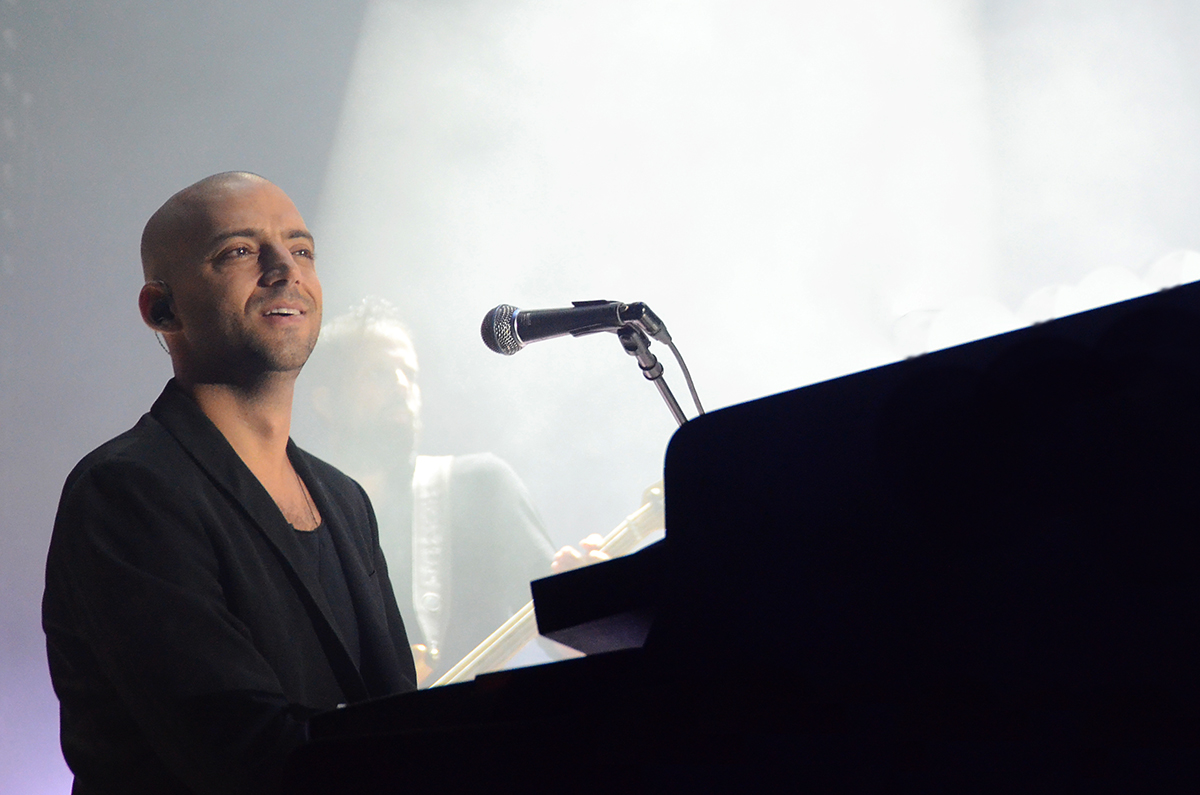
“Art writes the code that pushes humanity forward,” said Israeli singer, songwriter and musician Idan Raichel at the 80th anniversary of the America-Israel Cultural Foundation (AICF) on Nov. 17 at Jazz at Lincoln Center in New York City. “My goal has been to score the soundtrack of Israel.”

Raichel was one of five iconic Israeli artists chosen to be the inaugural recipients of the Israeli Culture & Arts Awards. The others were Ron Leshem for film/TV (“Euphoria”; “Beaufort”); Ohad Naharin for dance (Batsheva Dance Company); Hanna Azoulay Hasfari for theater (“Orange People”); and Vania Heymann for visual arts (“Like a Rolling Stone” video).

“These are the next generation of ambassadors for Israel,” said Scott Mortman, chair of AICF Israel. “They carry with them messages of harmony, rhythm and peace.”

Since its founding in 1939, AICF has supported 18,000 artists — including famed violinist Itzhak Perlman — through scholarships and grants, and has disbursed more than $160 million to benefit Israeli culture. Many leading artists in Israel today began with support from AICF. “These artists have not only made an impact on the arts, but on the entire State of Israel as well as the global cultural landscape,” said Joshua-Marc Tanenbaum, president of AICF’s board of directors.

“The contribution of AICF to the lives of so many artists is unique,” Batsheva’s artistic director Naharin said. “In the most fragile times of our lives as young artists, we found support, understanding and caring that made a huge difference in our careers.”

For those mired in the political turbulence surrounding Israel, the panel discussion before the award ceremony was a bit surreal: The artists talked about creating art as though Israel always has been treated like any other country. But unlike some artists here, whose anger and overt politicization deadens their work, these five artists discussed their desire to reconnect humanity through compassion; their struggle to be unique — to create from the soul; and the inspiration they derived from their “beloved country.” 

“Don’t be managed by your ambition,” Naharin said. “Be inspired by your passion and love.”

Raichel, who fuses ancient Hebrew texts and experimental Ethiopian music, performed in the magnificent theater. His work is so sensually spiritual I kept thinking about Michelangelo’s “Creation of Adam” — God reaching out to touch Adam’s hand. “The unique DNA of empathy in folk music is lasting and will create bonds,” Raichel said.

“The unique DNA of empathy in 

folk music is lasting and will create bonds.” 

— Idan Raichel

Universal and unifying, yes, but in watching the other performances — from contemporary dance to more classical music — the inherent power of Israeli art seems to go deeper. The connection of ancient Hebrew with innovative work is so mystical, so intoxicating, that it seems to demonstrate the most profound possibilities of art.

Although much has been written about Israel’s revolutions in technology and medicine, its art typically has been considered an afterthought. But visionary Israeli artists already have crossed boundaries, transcended differences, and have the ability to reshape Israel’s image in ways that the realm of hasbara can’t. 

Raichel has been vocal in the view that Israeli artists have a duty to play an active role in helping tell the truth about Israel and the light it emits.

The AICF has created an Israeli artist network listing emerging and established Israeli artists in film, theater, music, dance and visual arts. What if every Jewish event in the United States featured an Israeli performer, exhibition or film? Much has been discussed on how to revitalize Jewish pride. What if we start with how visionary artists are modernizing the ancient words and music of an ancient people in order to transcend politics and transform the world? Imagine what this could do to not only reunite young Jews with their Judaism but to reshape how the world views Israel.


Karen Lehrman Bloch is an author and cultural critic living in New York City.

Artists Represent Best of Israel Read More »

Kamala Harris’ Plan to Fight White Nationalists Can’t Die with Her Campaign

Kamala Harris, who suspended her presidential bid on Dec. 3, never dominated the polls. She lacked Elizabeth Warren’s economic expertise, Joe Biden’s nostalgia with voters and Bernie Sanders’ populist ideology.

However, there was one crucial thing only Harris had: a plan to stop white nationalists from terrorizing America. The remaining contenders have provided more lip service than policies.

“White supremacist extremism is currently the most lethal form of extremism in the U.S.,” American University professor Cynthia Miller-Idriss told Congress this September. 

Under President Donald Trump, the FBI’s efforts to stop domestic terrorism “came to a grinding halt,” said George Selim, who ran counterterrorism under George W. Bush. According to Reuters, Trump attempted to rename the Countering Violent Extremism program to “Countering Radical Islamic Extremism” — erasing white nationalist violence from its mission.

In contrast, Harris unveiled a detailed strategy to take on this issue. Along with an abundance of enactable policies, the California senator planned to commit $2 billion to counter white nationalist violence.

Biden said of white nationalism that the “threat to this nation was unlike any I had ever seen in my lifetime.” Six months later, Biden has yet to propose any policies to curb this extremism.

What about Warren, who appears to have a plan for everything? We’re still waiting for her solution to this problem. Yes, Warren pledged to fight white nationalism, but she’s yet to articulate a strategy. 

None of this will comfort Jews who are terrified to step into a synagogue because an anti-Semite might shoot it up.

Given that Bernie Sanders is a Jew, you’d think he would be particularly invested in stopping white terrorism. The Democratic socialist said he “will go to war with white nationalism.” This week, Sanders promised to order the Justice Department to prioritize fighting white-nationalist violence and immediately appoint a special envoy to monitor and combat anti-Semitism. This is encouraging — but too general and insufficient.

That’s why, although Harris’ campaign is dead, her policies on combatting white nationalism must live on.

Based on Harris’ suggestion, the next president should expand the purview of terror-related intelligence bodies such as the National Counterterrorism Center (NCTC). Although the NCTC is tailored to combat white nationalist violence, Congress has prohibited it from taking domestic terrorism cases.

“There was one crucial thing only Harris had: a plan to stop white nationalists from terrorizing America.”

In this gory cycle of mass shootings and manifestos, 42% of domestic terrorists exhibit disturbing behavior before their crimes. The candidate who scores the nomination can resuscitate Harris’ game plan by allowing federal courts to issue domestic terrorism prevention orders. These mandates would seize the firearms of suspected terrorists, disarming extremists who may commit a hate crime.

Even Trump, as a die-hard Second Amendment defender, could follow Harris’ lead. He would be adhering to his own counterterrorism policies. Trump’s National Strategy for Counterterrorism includes preventing terrorists from acquiring weapons. He needs to treat white nationalists like the terrorist group they’ve proven to be.

White nationalists recruit and radicalize just like ISIS. Both groups prey on young Americans. Both murder innocent Americans.

That means resurrecting Harris’ promise to order the FBI to vigilantly monitor white supremacist websites and put pressure on platforms such as 4chan and Reddit to take down extremist content. This approach isn’t radical; we already de-platform websites that facilitate sex trafficking.

White nationalists are terrorists. Kamala Harris knows we need to treat them as such.


Ariel Sobel is a screenwriter, filmmaker and activist, and won the 2019 Bluecat Screenplay Competition. 

Kamala Harris’ Plan to Fight White Nationalists Can’t Die with Her Campaign Read More »

Silence on Israel Results in Fear on Campus

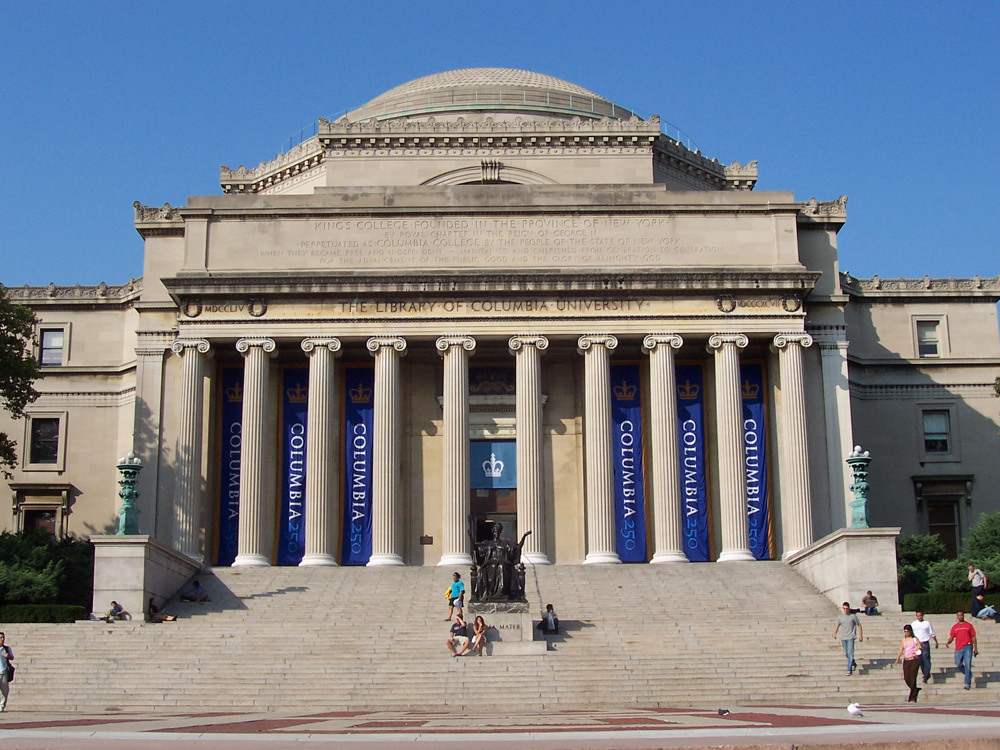
As a freshman at Columbia University in September 2000, the toxic anti-Israel atmosphere burgeoned in front of my eyes with the start of the Second Intifada. My roommate, a political science major, went toe to toe with anti-Semitic professors in classrooms, who presented Israel as an apartheid, imperialist state. He received hate email for his “dissenting” views, and we felt compelled to lock our door at night. I thought to myself, “He could fight the fight better than me.”

I was silent.

The predecessors of Students for Justice in Palestine filled College Walk, physically intimidating Jews walking to the dorms.

The evidence appeared before me, but I remained silent.

Fifteen years ago, I was a music major at Columbia University and a Talmud major at the Jewish Theological Seminary, removed from university politics, both on campus and in the world at large. I had a purpose and a goal: Enter rabbinical school and serve the Jewish people as a pulpit rabbi. Israel was a personal subject; a place I knew I loved; an illustration to my daily prayerbook; a homeland to which my grandfather made aliyah at the age of 80, following three of his children and more than 20 grandchildren.

Late last month, the Columbia College Student Council voted to hold a referendum to gauge student support for whether the university should divest itself from certain Israeli companies (BDS). I was sad and disappointed. The university that allowed me to think critically now allows its students to promote a position of BDS, which hides behind the mask of anti-Semitism.

College students are running to their rabbis, fearful of speaking about Israel on their campuses.

I now recognize the consequences of remaining silent; if I had used my voice when I was a student, today’s students — many with no knowledge of Israel’s history and mission — would be facing a different college experience.

As a rabbi at Sinai Temple, I listen to the stories of Jews exiled from their home countries simply because they are Jews. For them, Israel was the only place of refuge in the world. So many of our parents and grandparents came to the United States to distance themselves from anti-Semitism. For the past century, they have lived the American dream, freely expressing their Judaism and love of Israel.

Yet, nothing has changed. College students are running to their rabbis, fearful of speaking about Israel on their campuses, hiding their Stars of David, and asking us what to do.

In fall 2007, Columbia University invited then-Iranian President Mahmoud Ahmadinejad to address the student population. Today, it is not only the former Iranian president but students in the classroom and on public sidewalks who spew hatred of Israel and of the Jewish people. While I understood as a student that my rabbinic career would include political activism and the responsibility to teach a love of Israel, I never imagined the need to prioritize the defense of the Jewish people and our right to exist in a sovereign state.

Today, as I see the attacks on Israel getting worse, I am speaking up. I am silent no longer.

On the last night of Hanukkah, I am scheduled to travel to Israel with the AIPAC Leffell Fellowship in an effort to teach rabbinical students from around the country and across denominations how to preach Israel from the pulpit, sharing the intricacies of Israel’s relationship with Jews, Christians and Muslims alike. I will explain how my closest friends are pastors, with our only common bond being a love of Israel.

It is easy to sit in a room, raise your hand to vote for a BDS referendum and tell the world the wrongs of Israel. It is difficult yet fulfilling to stand up, tell the truth and make friends across a divide to create a better tomorrow.

Israel can, should and will bring us together.

Today, I speak loudly. Not only for myself, but for all those students walking silently to their classes, who fear raising their voices. I speak for them so one day, they can speak for themselves.


Rabbi Erez Sherman is a rabbi at Sinai Temple.

Silence on Israel Results in Fear on Campus Read More »